LISSINAGROAGH WINDFARM, CO. LEITRIM ENVIRONMENTAL IMPACT ASSESSMENT SCOPING REPORT
←
→
Page content transcription
If your browser does not render page correctly, please read the page content below
LISSINAGROAGH WINDFARM, CO. LEITRIM
ENVIRONMENTAL IMPACT ASSESSMENT

          SCOPING REPORT

                                  www.tobin.ie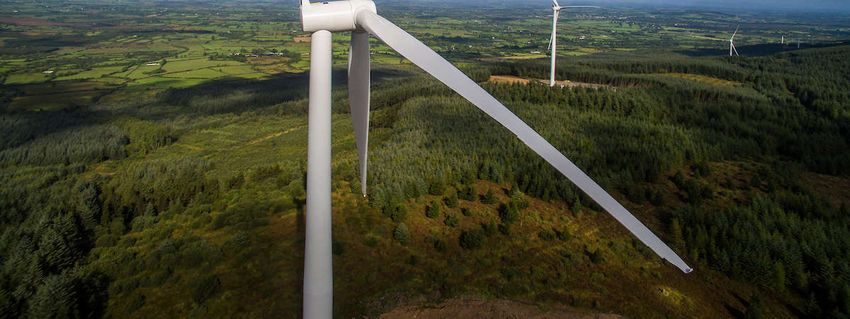
LISSINAGROAGH WIND FARM
EIA SCOPING REPORT

                                                Document Control Sheet
 Document Reference         10955-R-003
 Report Status              Final
 Report Date                07 May2021
 Current Revision           C
 Client:                    Coillte
 Client Address:            Dublin Road,
                            Newtownmountkennedy,
                            Co. Wicklow,
                            A63 DN25
 Project Number             10955

 Galway Office                             Dublin Office                         Castlebar Office
 Fairgreen House,                          Block 10-4,                           Market Square,
 Fairgreen Road,                           Blanchardstown Corporate Park,        Castlebar,
 Galway,                                   Dublin 15,                            Mayo,
 H91 AXK8,                                 D15 X98N,                             F23 Y427,
 Ireland.                                  Ireland.                              Ireland.
                                           Tel: +353 (0)1 803 0406
 Tel: +353 (0)91 565 211                                                         Tel: +353 (0)94 902 1401

                                                               Reviewed                   Authorised
 Revision          Description        Author:        Date                      Date                        Date
                                                                  By:                        by:
                                                                 KMN
     C             Final Issue         MMC         04/05/21                 05/05/21        MMC          07/05/21
                                                                 EML

                                             TOBIN Consulting Engineers

 Disclaimer
 This Document is Copyright of TOBIN Consulting Engineers Limited. This document and its contents have been
 prepared for the sole use of our Client. No liability is accepted by TOBIN Consulting Engineers Limited for the use
 of this report, or its contents for any other use than for which it was prepared.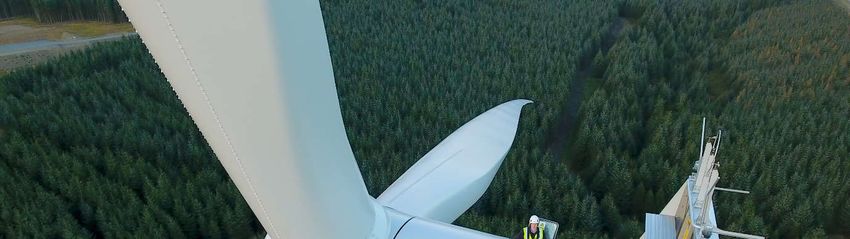
Table of Contents

1.0 Introduction ......................................................................................................... 1
1.1      Background................................................................................................................................................... 1
1.2      Need for Environmental Impact Assessment (EIA) ........................................................................ 2
1.3      Purpose of EIA Scoping............................................................................................................................. 2
1.4      Coillte.............................................................................................................................................................. 3
1.5      EIA Team........................................................................................................................................................ 6
1.6      Scoping Report Structure ........................................................................................................................ 7
1.7      Project Description .................................................................................................................................... 7
1.8      Site Location ................................................................................................................................................. 8
1.9      The Proposed Development ................................................................................................................... 8
2.0 Environmental Impact Assessment ............................................................ 12
2.1      Project Summary ..................................................................................................................................... 12
2.2      The Scoping Process ............................................................................................................................... 13
2.3      Baseline Assessment .............................................................................................................................. 13
2.4      Assessment Methodology .................................................................................................................... 13
2.5      Assessment of Effects ............................................................................................................................ 14
2.6      Potential Mitigation................................................................................................................................ 18
2.7      Non-Technical Summary and Construction Envrionmental Management Plan ............... 18
3.0 Reasonable Alternatives ................................................................................ 20
3.1      Alternative Sites ...................................................................................................................................... 20
3.2      Alternative Design .................................................................................................................................. 20
3.3      Alternative Technology/ Alternative Processes........................................................................... 20
4.0 Policy, Planning and Development Context ............................................ 21
5.0 Population and Human Health ..................................................................... 24
5.1      Introduction............................................................................................................................................... 24
5.2      Study Area.................................................................................................................................................. 25
5.3      Sensitive Receptors ................................................................................................................................ 25
5.4      Desktop and Field Surveys ................................................................................................................... 25
5.5      Cumulative Effects .................................................................................................................................. 26
6.0 Biodiversity ........................................................................................................ 27
6.1      Introduction............................................................................................................................................... 27
6.2      Study Area.................................................................................................................................................. 27
6.3      Sensitive Receptors ................................................................................................................................ 27
6.4      Desktop and Field Survey ..................................................................................................................... 28
6.5      Cumulative Effects .................................................................................................................................. 30
6.6      Appropriate Assessment ...................................................................................................................... 30
7.0 Land, Soils and Geology .................................................................................. 31
7.1      Introduction............................................................................................................................................... 31

                                                                                                                                                      -i-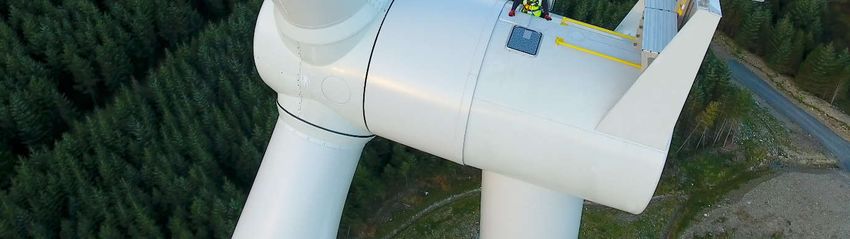
7.2      Study Area.................................................................................................................................................. 31
7.3      Sensitive Receptors ................................................................................................................................ 31
7.4      Desktop and Field Survey ..................................................................................................................... 32
7.5      Cumulative Effects .................................................................................................................................. 34
8.0 Hydrology and Hydrogeology ...................................................................... 35
8.1      Introduction............................................................................................................................................... 35
8.2      Study Area.................................................................................................................................................. 35
8.3      Sensitive Receptors ................................................................................................................................ 35
8.4      Desktop and Field Surveys ................................................................................................................... 35
8.5      Hydrological Assessment ..................................................................................................................... 36
8.6      water quality assessment ..................................................................................................................... 36
8.7      flood risk assessment ............................................................................................................................. 36
8.8      Cumulative Effects .................................................................................................................................. 38
9.0 Air Quality and Climate .................................................................................. 39
9.1      Introduction............................................................................................................................................... 39
9.2      Sensitive Receptors ................................................................................................................................ 39
9.3      Desktop and Field Survey ..................................................................................................................... 39
9.4      Cumulative Effects .................................................................................................................................. 40
10.0 Material Assets: Shadow Flicker ................................................................. 41
10.1     Introduction............................................................................................................................................... 41
10.2     Study Area.................................................................................................................................................. 41
10.3     Sensitive Receptors ................................................................................................................................ 41
10.4     Desktop and Field Survey ..................................................................................................................... 41
10.5     Cumulative Effects .................................................................................................................................. 42
11.0 Material Assets: Aviation, Telecommunications & Electromagnetic
Interference .................................................................................................................. 43
11.1     Introduction............................................................................................................................................... 43
11.2     Study Area.................................................................................................................................................. 43
11.3     Sensitive Receptors ................................................................................................................................ 43
11.4     Desktop and Field Survey ..................................................................................................................... 43
11.5     Cumulative Effects .................................................................................................................................. 44
12.0 Noise and Vibration ......................................................................................... 45
12.1     Introduction............................................................................................................................................... 45
12.2     Study Area.................................................................................................................................................. 45
12.3     Receiving Environment ......................................................................................................................... 45
12.4     Assessment of Impacts .......................................................................................................................... 46
12.5     Cumulative Effects .................................................................................................................................. 47
13.0 Landscape and Visual Impact Assessment ............................................... 48
13.1     Introduction............................................................................................................................................... 48
13.2     Study Area.................................................................................................................................................. 48
13.3     Sensitive Receptors ................................................................................................................................ 48

                                                                                                                                               - ii -
13.4     Survey Methods ....................................................................................................................................... 50
13.5     Impact Assessment ................................................................................................................................. 51
13.6     Cumulative Effects .................................................................................................................................. 53
14.0 Forestry ............................................................................................................... 54
14.1     Introduction............................................................................................................................................... 54
14.2     Impact Assessment ................................................................................................................................. 54
14.3     Methodology ............................................................................................................................................. 54
14.4     Mitigation Measures .............................................................................................................................. 55
15.0 Cultural Heritage.............................................................................................. 57
15.1     Introduction............................................................................................................................................... 57
15.2     Study Area.................................................................................................................................................. 57
15.3     Sensitive Receptors ................................................................................................................................ 57
15.4     Desktop and Field Surveys ................................................................................................................... 57
15.5     Cumulative Effects .................................................................................................................................. 59
16.0 Traffic and Transport ...................................................................................... 60
16.1     Introduction............................................................................................................................................... 60
16.2     Study Area.................................................................................................................................................. 60
16.3     Sensitive Receptors ................................................................................................................................ 60
16.4     Desktop and Field Survey ..................................................................................................................... 60
16.5     Cumulative Effects .................................................................................................................................. 62
17.0 Interaction of the Foregoing ......................................................................... 63
18.0 Schedule of Mitigation Measures................................................................ 63
19.0 Consultation ...................................................................................................... 63
19.1     Scoping Consultation ............................................................................................................................. 63
19.2     Public Consultation................................................................................................................................. 64

                                                                                                                                               - iii -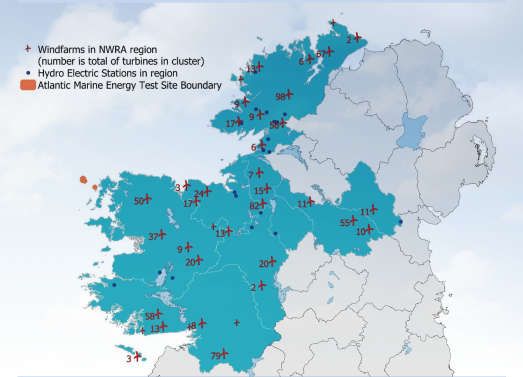
Table of Figures

Figure 1.1 – Study Area Map ................................................................................................................................ 1

Figure 1.2 – Example Photo of Operational Wind Turbines at Sliabh Bawn Wind Farm in Co.
Roscommon (Source: Coillte) ............................................................................................................................... 4

Figure 1.3 – Example Photo of Operational Wind Turbines at Sliabh Bawn Wind Farm in Co.
Roscommon (Source: Coillte) ............................................................................................................................... 5

Figure 4.1 – Windfarms in RSES Spatial Area.............................................................................................. 22

Figure 13.1 - Method for assessing Landscape Impact significance and Visual Impact significance
(based on GLVIA – 2013) .................................................................................................................................... 51

Table of Tables

Table 2.1: Descriptions of Effects (as per Table 3.3 of the August 2017 Draft Guidelines on the
information to be contained in Environmental Impact Assessment Reports). ................................ 15

Table 4.1: RSES Regional Policy Objectives (Wind & Renewables) ..................................................... 22

Table 4.2: CDP Policies (Renewables, Wind & Electrical Grid Infrastructure) ................................ 23

Table 19.1: EIAR Consultees ............................................................................................................................. 63

                                                                                                                                       - iv -
1.0 INTRODUCTION
1.1 BACKGROUND
Coilllte Cuideachta Ghníomhaíochta Ainmnithe (hereafter referred to as ‘Coillte’) intends to
develop the Lissinagroagh Wind Farm near Manorhamilton in County Leitrim and has
commenced preparing an Environmental Impact Assessment Report in support of a future
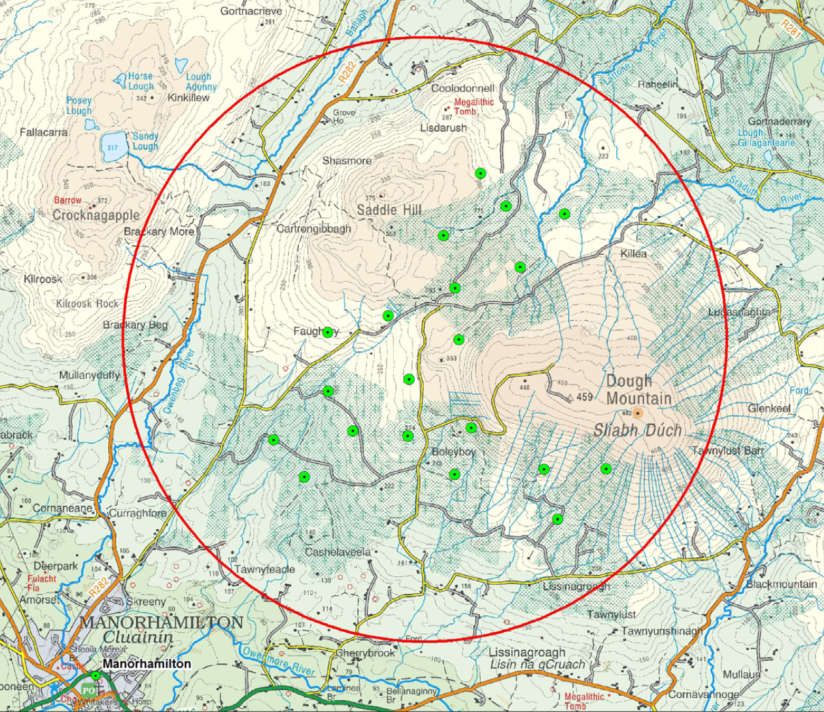
planning application for same. It is currently proposed that the wind farm will comprise up to 20
no wind turbines. The study area in which the wind farm will be located is shown in Figure 1.1.
below.
Figure 1.1 – Study Area Map
Page | 1The final application site boundary is to be finalised and will include both Coillte and other third
party landholders.
Given the scale of the project, Coillte will engage with An Bord Pleanála under the Strategic
Infrastructure Development (SID) consultation process to determine the planning consenting
route for the wind farm. As the wind farm is expected to exceed 50 MW energy output, it is
considered likely based on similar scale wind farms that the Bord would determine that the
application is made directly to the Bord itself as an SID project.
1.2 NEED FOR ENVIRONMENTAL IMPACT ASSESSMENT (EIA)
The proposed Lissinagroagh Wind Farm will exceed the relevant Environmental Impact
Assessment (EIA) threshold, as detailed in the Planning and Development Regulations 2001 (as
amended), Schedule 5, Part 2, Class 3(I), which states:
“Installations for the harnessing of wind power for energy production
(wind farms) with more than 5 turbines or having a total output greater
than 5 megawatts”1.
Given that the proposed wind farm will exceed the above threshold, Coillte will prepare an
Environmental Impact Assessment Report (EIAR) in support of a future planning application for
this development.
1.3 PURPOSE OF EIA SCOPING
The purpose of the scoping for EIA is to provide a framework for the approach to be taken for
the individual specialist’s evaluations, to identify environmental topics for which potential
significant environmental impacts may arise, to provide a framework for the consultation
process to take place with planning and environmental stakeholders as part of the
environmental assessment work. The scoping report also sets out a structure for the
preparation of the EIA Report to be prepared and the information required to be included
therein.
1
http://www.irishstatutebook.ie/eli/2010/act/30/section/78/enacted/en/html
Page | 2The European Commission’s, “Guidance on EIA Scoping" (EU 2001) notes the following in Part
B of the guidance, as being the benefits of scoping:
“It helps ensure that the environmental information used for decision making provides
a comprehensive picture of the important effects of the project, including issues of
particular concern to affected groups and individuals;
It helps focus resources on the important issues for decision-making and avoids wasted
effort on issues of little relevance;
It helps ensure that the environmental information provides a balanced view and is not
burdened with irrelevant information;
It stimulates early consultation between the developer and the competent authority,
and with environmental authorities, other interested parties and the public, about the
project and its environmental impacts;
It helps effective planning, management and resourcing of the environmental studies;
It should identify alternatives to the proposed project and mitigating measures which
ought to be considered by the developer;
It can identify other legislation or regulatory controls which may be relevant to the
project and provide opportunities for the necessary assessment work for different
control systems to be undertaken in parallel, thereby avoiding duplication of effort and
costs for all concerned;
It reduces the risk of delays caused by requests for further information after
submission of the development consent application and the environmental
information; and
It reduces the risk of disagreement about impact assessment methods (baseline
surveys, predictive methods and evaluation criteria) after submission of the
environmental information.
1.4 COILLTE
Coillte, one of Ireland’s largest semi-state companies with a history in forestry development, has
expanded in recent years to include three high potential businesses including Forestry, Land
Solutions and MEDITE SMARTPLY.
Within the “Land Solutions” business, Coillte partner, develop and add value where Coillte lands
are suited to activity other than forestry, e.g., Renewable Energy projects, and they provide
potential partners and clients with expertise in areas such as project management, planning and
Page | 3development, construction, land sales, legal, finance, community engagement procurement and
communications.
Renewable Energy: Wind Farms
If Ireland is going to meet its binding national commitments on combatting climate change and
de-carbonising the economy, we must develop successful renewable energy projects. Coillte has
been at the forefront of this effort and intends to continue to be so through partnership in
projects and by continuing to make suitable lands available.
High quality wind farms have been built on Coillte lands and, as Ireland continues to promote
new sectors such as solar, storage and biomass, Land Solutions will ensure that Coillte continues
to be a key contributor to the re-shaping of Ireland’s renewable energy supply landscape.
Coillte has been a supporter of wind energy since the earliest days of the sector in Ireland in the
1990s. Of the approximately 3GW of wind farms now in operation here, nearly one-third are
located on Coillte lands. They range from the Galway Wind Park, the biggest wind farm in
Ireland at 169 MW, to small scale sites such as Cranemore 0.5 MW.
Figure 1.2 – Example Photo of Operational Wind Turbines at Sliabh Bawn Wind Farm in Co. Roscommon
(Source: Coillte)
Page | 4Figure 1.3 – Example Photo of Operational Wind Turbines at Sliabh Bawn Wind Farm in Co. Roscommon
(Source: Coillte)
The majority of these wind farms are operated by third party developers but, in recent years,
Coillte’s strategy has been to lead the development process and also take responsibility for
bringing wind farms into construction and operation.
Coillte’s experienced development team is committed to working with leading sectoral experts
to deliver best-in-class projects. Coillte are also deeply committed to open and transparent
consultation with local communities and other stakeholders about both existing and
prospective projects.
Social Responsibility
Commitment
Coillte’s commitment to communities which they are close to, or which might be interested in
their operations, ensures they always include them in the relevant consultation processes.
Coillte’s forestry plans are always available online and they have developed a bespoke wind
farm Community Engagement process for communities close to their wind farms to ensure that
they are appropriately involved and can share the benefits of these projects.
Coillte believe that living in the locality of a Coillte Wind Farm should be a positive experience
not only from a sustainable energy perspective but also from a local development perspective.
Coillte therefore develop a bespoke wind farm Community Benefit Scheme for communities
close to their wind farms that run for the lifetime of the wind farm. The design of the scheme is
unique to each project and this design is driven by the community that administer and avail of it.
Page | 5Consultation
Coillte has a long history of working with communities and their experience around the country
has generated an inherent understanding that each community and receiving environment with
which they interact is unique.
When developing their projects, they aspire to work with the communities surrounding their
projects and wish to be good neighbours and to build a healthy relationship based on trust and
respect. Community engagement should be undertaken in an appropriate manner with the
communities in the environs of the development, at all stages of the project lifecycle, from
Development, Construction through to Operations.
The intention of their engagement process is to:
ensure that all persons living and working in the environs of their developments are kept
informed of ongoing and proposed works throughout the project lifecycle.
maintain a proactive flow of accurate messaging from Coillte, in order to avoid
misinformation circulating.
be transparent in order to contribute towards building respect and trust as a good
neighbour in the long term.
develop an understanding of the communities surrounding their projects and determine
if there are community needs and/or requirements that will be addressed by a future
Community Benefit Scheme.
be visible and accessible to the community and stakeholders to find out about project
updates and the Community Benefit Scheme.
ensure communications and public/stakeholder engagement at all stages of the project
lifecycle from Development and Construction through to Operations.
1.5 EIA TEAM
TOBIN have been engaged by Coillte to coordinate the Environmental Impact Assessment and
prepare the EIAR for the proposed development. The relevant specialists included in the Study
Team, who are both experienced and competent in their areas of expertise, are noted here:
TOBIN staff will provide expertise in relation to Project Direction, Project Management,
EIAR Production and expertise in relation to the environmental evaluation of the
following topics: Planning, Reasonable Alternatives, Biodiversity, Land, Soils & Geology
including Slope Stability Assessment, Hydrology & Hydrogeology, Flood Risk
Assessment, Traffic, Population and Human Health, Shadow Flicker, and Air Quality &
Climate Impact Assessment;
Ground Investigations Ireland – Geotechnical Site Investigation;
Page | 6 MKO –Ornithology;
Macro Works – Landscape & Visual Impact Consultants & Production of
Photomontages;
AWN Consultants – Noise & Vibration;
TLI Group – Substation and Grid Connection Design;
Western Forestry Co-Op - Forestry; and
IAC Archaeology – Cultural Heritage.
Compliance Engineering Ireland (CEI) -Telecommunications, Electromagnetic
Interference & Aviation Assessment
1.6 SCOPING REPORT STRUCTURE
Individual specialists will undertake their evaluations of the environment including evaluation
under following topics:
Reasonable Alternatives
Policy, Planning and Development Context
Population and Human Health
Biodiversity
Land, Soils and Geology
Hydrology and Hydrogeology
Air Quality and Climate Assessment
Material Assets: Shadow Flicker
Material Assets: Aviation, Telecommunications and EMF
Noise and Vibration
Landscape and Visual Impact Assessment
Forestry
Cultural Heritage
Traffic and Transport
Interaction of the Foregoing
1.7 PROJECT DESCRIPTION
The project comprises of a development of a wind farm of up to 20 no. wind turbines and all
associated infrastructure including turbine foundations, hardstanding areas, borrow pits, access
tracks, an on-site 110kV electrical substation and a grid connection comprising either a loop-in
connection into the 110 kV Cathleen Falls-Srananagh 110 kV line or alternatively a tail-fed
Page | 7connection into the Srananagh 220 kV Substation. The project will also comprise facilitating
works on the public road network and at private properties to accommodate the delivery of
turbine components.
1.8 SITE LOCATION
The study area for the proposed Lissinagroagh Wind Farm is north of Manorhamilton in north
County Leitrim. The final application site boundary is to be finalised and is likely to include both
Coillte and other third party landholders.
The study area is also located in close proximity to the Northern Ireland border in County
Fermanagh which is approximately 3km to the north.
The spatial area in which the turbines are currently proposed ranges in elevation from 170 to
380m AOD, bordering the Dough/ Thur Mountains Natural Heritage Area (NHA) at its upper
elevation. The northern turbines are situated within the Saddle Hill Coillte property at
elevations between 280 and 310m AOD generally in undulating terrain. The southern area of
the forest block is located between 170m and 380m AOD.
The study area where close to the proposed turbine locations are typified by a number of flashy
watercourses in deep ravines, the majority of which have existing crossings in place, as part of
existing forest road network.
Access to the wind turbine locations from the regional (R282) and local road network is good.
Within the existing Coilllte landholdings there are forest roads which provide good coverage
and are well maintained and in good condition. There are also several local roads both within
and adjacent to the turbine locations.
1.9 THE PROPOSED DEVELOPMENT
1.9.1 INTERNAL ACCESS ROUTE AND TURBINE LOCATIONS
The exact number, siting and scheme layout for the turbines will be decided as part of the design
and EIA process.
In addition, the internal access route layout, access route types and construction methodologies
will be designed and the location of the proposed entrance to the wind farm site will be
confirmed. The initial layout design will be optimised by the design team in consultation with the
community between Q2 to Q4 2021 and assessment of potential access points through which
Page | 8turbine components and construction related deliveries may be made will commence at that
stage.
1.9.2 WIND TURBINE SPECIFICATIONS
The exact rating and design of the proposed turbine, subject to completion of the statutory
processes, will be subject to a competitive tender and will be detailed by the turbine
manufacturer on award of the contract. However, the proposed turbines will be the typical three
bladed, horizontal axis type.
Details of the maximum hub height, maximum rotor diameter, maximum tip height and the
overall proposed capacity will be decided in the design and EIA process. The initial wind turbine
specifications are based on a maximum tip height of 185m. The potential installed capacities for
the wind turbines and the wind farm as a whole will be proposed as part of the design process.
Based on turbines available at the scale initially considered, the output from the wind farm could
be approximately 120 MW.
1.9.3 ELECTRICAL/MECHANICAL EQUIPMENT
The main mechanical and electrical components associated with the development include the
following:
Turbine components (tower sections, nacelle, hub, rotor blades);
110 kV on-site substation;
Electrical cable;
SCADA cable; and
Main and assist cranes.
1.9.4 FORESTRY OPERATIONS MANAGEMENT
Coillte will ensure that the Forestry Operations division of the business are involved in the
layout design and phasing of the Lissinagroagh Wind Farm. In particular, the forestry consultant
contributing to the EIAR will liaise with the Forestry Operations division of Coillte to confirm
relevant details including details relating to forestry sections and sub-sections, tree species
planted on site, tree planting dates, yield class, thinning and felling regimes and planned felling
coupes and schedules.
Page | 91.9.5 GRID CONNECTION
Coillte has identified two potential grid connection options for the Lissinagroagh Wind Farm
which are to be explored as part of this project. These are:
1. A 110kV Loop-In Connection into the Cathleen Falls – Srananagh 110kV Line; and
2. A dedicated 110kV tail-fed connection to Srananagh 220kV Substation (34km).
1.9.6 DECOMMISSIONING
The proposed turbine will have a design lifetime of approximately 30 years without replacement
of major components. In certain circumstances, Coillte may wish to replace turbines prior to the
end of the design lifetime. Such a decision would be made on the merits of economic and
technical factors at the time of assessment and undertaken in consultation with the local
authorities.
Turbine design renders the decommissioning process as a straightforward process. In the
decommissioning phase, cranes disassemble each turbine section and remove from the site. The
upper sections of the foundations projecting above ground will be removed, and the remainder
of the foundations will be covered by soils typical of the surrounding environment and then re-
seeded or left to re-vegetate according to ecological requirements. Underground cables will be
cut back at the turbine termination points and will either be recycled or left buried in situ (de-
energised). It is proposed that site routes would remain to allow access through the site either
for further alternative development of the site, for ongoing forestry operations and/or for
amenity purposes, as considered appropriate at the time.
Site materials will be recycled where practicable or disposed of in accordance with current
waste legislation and best practice guidelines. Based on current commodity prices, principally
steel and copper, material returns achieved through recycling may exceed current financial
costs associated with site decommissioning.
Decommissioning activities are typically similar to construction activities, having similar type
risks and sensitive receptors associated with them. The potential impacts of decommissioning
activities will be assessed accordingly in the EIAR.
1.9.7 REHABILITATION/CONCURRENT OR FUTURE USE OF THE SITE
The land on which the majority of wind turbines will be located are Coillte’s own commercial
forestry enterprise and the phased use of these areas of the site for the purpose of forestry
Page | 10operations will continue during the operation of the wind farm. Any areas of high biodiversity
identified during the initial constraints study and the EIA site surveys will remain intact.
Page | 112.0 ENVIRONMENTAL IMPACT ASSESSMENT
2.1 PROJECT SUMMARY
In the case of a wind farm development, the final project which will be subject to a planning
application will have gone through a number of iterations during the EIA, including changes to
design proposals, numbers of proposed turbines and turbine layouts.
It is proposed that the following EIA guidelines will be followed during the process:
Guidelines on the Information to be contained in Environmental Impact Statements”
(EPA, 2002);
“Advice Notes on Current Practice in the Preparation of Environmental Impact
Statements” (EPA, 2003);
“Draft Guidelines on the Information to be contained in Environmental Impact
Statements” (EPA, September 2015);
“Draft Advice Notes on Preparing Environmental Impact Statements” (EPA, September
2015); and
Draft Guidelines on the information to be contained in Environmental Impact
Assessment Reports (EPA, August 2017).
In addition to the Regulations and Guidelines above, the Lissinagroagh Wind Farm EIAR will be
prepared with cognisance to the “Wind Energy Development Guidelines for Planning
Authorities (2006)”, the proposed draft revisions to these guidelines (December 2013), the
Preferred Draft Approach to these guidelines as announced by the Government in June 2017
and the “Draft Revised Wind Energy Development Guidelines (December 2019)”.
A Screening for Appropriate Assessment (AA) and a Natura Impact Statement (NIS) will be
prepared for the proposed wind farm project. The purpose of the AA/NIS will be to inform the
Consenting Planning Authority in its undertaking of an ‘Appropriate Assessment’ of the project,
as required under Article 6(3) of the EU Habitats Directive (92/43/EC). This is an assessment of
the potential for significant or adverse effects resulting from the project, both individually and
in-combination with other activities, plans and projects, on European Site(s) as designated under
the EU Habitats Directive and the conservation objectives for their qualifying species and
habitats.
Page | 122.2 THE SCOPING PROCESS
This report will form the basis for the scoping process to be undertaken by Coillte with the
Consenting Planning Authority and the prescribed Statutory Bodies.
The scoping process will provide all relevant planning and environmental stakeholders with the
opportunity to provide information, data or additional guidance to facilitate the iteration of the
design and EIA process, to determine what the main potential significant effects might be and
what sub-topics the EIAR should focus upon.
2.3 BASELINE ASSESSMENT
Following an introduction to the EIAR, the following information will also be presented:
Description of the Existing Environment – a detailed description of the existing
environment to allow the baseline conditions to be understood and existing areas of
sensitivity to be recorded (as per the EPA EIAR Guidelines).
Description of the proposed development, including site layout and infrastructural
details, construction procedures and the materials required, the operational and
maintenance phases in addition to the decommissioning and rehabilitation phases.
Consideration of Reasonable Alternatives – This provides a detailed assessment of
alternatives considered in the selection of site location and site layout.
2.4 ASSESSMENT METHODOLOGY
In the case of each of the environmental topics, it is proposed that the following elements will be
evaluated, and that the format of the EIAR will follow the standard methodology and be
presented in accordance with the above-mentioned legislation and guidelines. Individual
chapter topics are discussed further below in this section. The wind farm will be assessed and
described within each environmental topic in terms of:
Introduction - includes a background to the assessment and describes the study
methodology employed in carrying out the assessment.
Existing Environment – Describes and assesses the existing environment in the context
of the relevant environmental categories. This section also takes account of any other
proposed and existing developments in the vicinity.
Potential Effects - Provides the description of the potential specific direct, indirect and
cumulative effects, associated with the development. This is done with reference to the
Page | 13existing environment and characteristics of the proposed development, while also
referring to the magnitude, duration, consequences and significance of the effect
associated with the construction and operation and decommissioning of the
development. This section also considers cumulative effects with other proposed or
permitted developments.
Mitigation Measures - A description of any remedial, or mitigation measures that are
either practicable or reasonable having regard to the potential effects. It will also
outline, where relevant, monitoring proposals to be carried out should consent be
granted in order to demonstrate that the project in practice conforms to the predictions
made.
Residual Impacts - Provides the description and assessment of the predicted residual
impact associated with the development on the surrounding environment.
Conclusion – Provides a summary of the salient points of the assessment chapter.
2.5 ASSESSMENT OF EFFECTS
As stated in the “Draft Guidelines on the Information to be contained in Environmental Impact
Assessment Reports’ (EPA, August 2017), an assessment of the likely significant effects of a
proposed development is a statutory requirement of the EIAR process. The criteria for the
presentation of the characteristics of potential significant effects will be described with
reference to the magnitude, spatial extent, nature, complexity, probability, duration, frequency,
reversibility, cumulative effect and transboundary nature (if applicable) of the effect.
The classification and description of effects in the Lissinagroagh Wind Farm EIAR will follow the
terms provided in Table 3.3 of the Draft EPA Guidelines (2017) referenced above (and
duplicated in Table 2.1 below for information purposes).
According to the Guidelines, the relevant terms listed in the table below can be used to
consistently describe specific effects, but all categories of terms do not need to be used for every
effect.
The use of standardised terms for the classification of effects will ensure that the EIAR employs
a systematic approach, which can be replicated across all disciplines covered in the EIAR. The
consistent application of terminology throughout the EIAR will facilitate the assessment of the
proposed development on the receiving environment.
Page | 14Table 2.1: Descriptions of Effects (as per Table 3.3 of the August 2017 Draft Guidelines on the
information to be contained in Environmental Impact Assessment Reports).
Quality of Effects Positive Effects
It is important to inform the non-specialist A change which improves the quality of the
reader whether an effect is positive, negative environment (for example, by increasing
or neutral species diversity; or the improving
reproductive capacity of an ecosystem, or
by removing nuisances or improving
amenities).
Neutral Effects
No effects or effects that are imperceptible,
within normal bounds of variation or within
the margin of forecasting error.
Negative/adverse Effects
A change which reduces the quality of the
environment (for example, lessening species
diversity or diminishing the reproductive
capacity of an ecosystem; or damaging
health or property or by causing nuisance).
Describing the Significance of Effects Imperceptible
‘’Significance’ is a concept that can have An effect capable of measurement but
different meanings for different topics – in without significant consequences.
the absence of specific definitions for
different topics the following definitions may
be useful (also see Determining Significance
below).
Not significant
An effect which causes noticeable changes
in the character of the environment but
without significant consequences.
Slight Effects
An effect which causes noticeable changes
in the character of the environment without
affecting its sensitivities.
Moderate Effects
An effect that alters the character of the
environment in a manner that is consistent
with existing and emerging baseline trends.
Significant Effects
Page | 15An effect which, by its character, magnitude,
duration or intensity alters a sensitive
aspect of the environment.
Very Significant
An effect which, by its character, magnitude,
duration or intensity significantly alters
most of a sensitive aspect of the
environment.
Profound Effects
An effect which obliterates sensitive
characteristics
Describing the Extent and Context of Effects Extent
Context can affect the perception of Describe the size of the area, the number of
significance. It is important to establish if the sites, and the proportion of a population
effect is unique or, perhaps, commonly or affected by an effect.
increasingly experienced.
Context
Describe whether the extent, duration, or
frequency will conform or contrast with
established (baseline) conditions (is it the
biggest, longest effect ever?)
Describing the Probability of Effects Likely Effects
Descriptions of effects should establish how The effects that can reasonably be expected
likely it is that the predicted effects will occur to occur because of the planned project if all
– so that the CA can take a view of the mitigation measures are properly
balance of risk over advantage when making implemented.
a decision.
Unlikely Effects
The effects that can reasonably be expected
not to occur because of the planned project
if all mitigation measures are properly
implemented.
Describing the Duration and Frequency of Momentary Effects
Effects
Effects lasting from seconds to minutes
‘Duration’ is a concept that can have
different meanings for different topics – in Brief Effects
the absence of specific definitions for
different topics the following definitions may Effects lasting less than a day
be useful.
Temporary Effects
Page | 16Effects lasting less than a year
Short-term Effects
Effects lasting one to seven years
Medium-term Effects
Effects lasting seven to fifteen years
Long-term Effects
Effects lasting fifteen to sixty years
Permanent Effects
Effects lasting over sixty years
Reversible Effects
Effects that can be undone, for example
through remediation or restoration
Frequency of Effects
Describe how often the effect will occur
(once, rarely, occasionally, frequently,
constantly – or hourly, daily, weekly,
monthly, annually)
Page | 172.6 POTENTIAL MITIGATION
The strategies for identification of appropriate Mitigation Measures, as detailed in the EPA EIAR
Draft Guidelines (2017), will be followed in the preparation of the Lissinagroagh Wind Farm
EIAR.
There are four established strategies for effects mitigation - avoidance, prevention, reduction
and remedy/offsetting. As noted above, following the iteration of the design and EIA process,
and following implementation of any design mitigation, the description of any remedial, or
mitigation measures that have been incorporated into the design will be included to offset or
minimise identified potential adverse impacts.
In accordance with the guidelines, these measures can mitigate
impacts:
By Avoidance
When no impact is caused (often through consideration of alternatives).
By Prevention
When a potential impact is prevented by a measure to avoid the possibility of the impact
occurring.
By Reduction
When an impact is lessened.
By Remedy/Offsetting
When an adverse impact is resolved by a remedial action or balanced by a positive
impact.
2.7 NON-TECHNICAL SUMMARY AND CONSTRUCTION
ENVRIONMENTAL MANAGEMENT PLAN
The non-technical summary (NTS) provides an overview and summary of the main EIAR using
non-technical language. It is a standalone document which presents a clear and concise
summary of the existing environment, characteristics of the proposed development, a clear
outline of the potential significant impacts/effects which could result from the proposed
development and mitigation measures adopted into the design of the development to minimise
impacts on the surrounding environment.
A standalone Construction Environmental Management Plan (CEMP) will also be prepared
which will set out the details of proposed construction compounds, construction methodologies,
Page | 18environmental mitigation measures and proposed reinstatement measures. The CEMP will
incorporate the relevant construction phase mitigation measures which will have been
integrated into the project, EIAR and AA.
Page | 193.0 REASONABLE ALTERNATIVES
As set out in the EIA Directive, the EIAR is required to provide a description of the reasonable
alternatives studied by Coillte, which are relevant to the proposed project and its specific
characteristics, and an indication of the main reasons for selecting the chosen option, including
a comparison of the environmental effects.
3.1 ALTERNATIVE SITES
In respect of consideration of alternative sites, the EIAR will set out the reasonable alternative
sites available to Coillte which will include consideration of suitable land banks held in
ownership by Coillte. Details on the assessments carried out to identify the proposed site
location as appropriate for this project will be provided.
3.2 ALTERNATIVE DESIGN
In the context of alternative design (incorporating scale and size), this section of the EIAR will
set out the processes and assessments that were followed to arrive at the proposed turbine
layout, turbine envelope and infrastructure layout. This section will be informed by
comprehensive site surveys and ground investigations.
3.3 ALTERNATIVE TECHNOLOGY/ ALTERNATIVE PROCESSES
The proposed wind farm development at Lissinagroagh will support European and National
policy in decarbonising electricity generation and contribute to Ireland’s target to generate 70%
of the country’s electricity from renewable sources by 2030. There are a number of different
renewable energy technologies available on the market, however not all will be viable at the
proposed development location. This section will consider the various renewable energy
alternatives (such as solar) and will assess the alternative wind turbine technologies available.
Page | 204.0 POLICY, PLANNING AND DEVELOPMENT CONTEXT
The proposed Lissinagroagh Wind Farm has potential to accommodate up to 20 no. wind
turbines with a total electrical output of up to 120 MW. Given the scale of the project, Coillte
will engage with An Bord Pleanála under the Strategic Infrastructure Development (SID)
consultation process to determine the consenting route for the project.
Within the EIAR, the planning assessment will include a review of relevant European, national
and local planning policy documentation, planning legislation, strategies and plans and set the
local context of the project.
At an international and European level, this will include:
The European Green Deal 2019;
Europe 2020 Climate and Energy Framework;
Europe 2030 Climate and Energy Framework;
Energy Roadmap 2050; and
Renewable Energy Directive 2009/28/EC & Recast Directive 2018/2001/EU.
At a national level this will include:
National Energy and Climate Plan (NECP) 2021-2030;
Climate Action Plan 2019;
Ireland 2040 - Our Plan (National Planning Framework) [2018];
National Development Plan 2018-2027;
Government White Paper – Ireland’s Transition to a Low Carbon Energy Future 2015-
2030;
National Renewable Energy Action Plan 2010;
National Wind Energy Guidance Documents including:
o Wind Energy Development Guidelines 2006;
o Draft Revised Wind Energy Development Guidelines – December 2019;
o Interim Guidelines for Planning Authorities on Statutory Plans, Renewable
Energy, and Climate Change (2017);
o Code of Practice for Wind Energy Development in Ireland on Guidelines for
Community Engagement (DCCAE, 2016).
At a regional level, the assessment will consider the Regional Spatial and Economic Strategy
(RSES) for the North West Region. Figure 4.1 illustrates the operational windfarms in the NWRA
Page | 21region. In addition, Table 4.1 identifies the Regional Policy Objectives which are relevant to wind
energy and wider renewable energy projects.
Figure 4.1 – Windfarms in RSES Spatial Area
Table 4.1: RSES Regional Policy Objectives (Wind & Renewables)
Regional Policy Description
Objective
RPO 4.16 The NWRA shall co-ordinate the identification of potential renewable energy sites
of scale in collaboration with Local Authorities and other stakeholders within 3
years of the adoption of the RSES. The identification of such sites (which may extend
to include energy storage solutions) will be based on numerous site selection
criteria including environmental matters, and potential grid connections
RPO 4.17 To position the region to avail of the emerging global market in renewable energy
by:
Stimulating the development and deployment of the most advantageous
renewable energy systems
Supporting research and innovation
Encouraging skills development and transferability
Raising awareness and public understanding of renewable energy and
encourage market opportunities for the renewable energy industry to
promote the development and growth of renewable energy businesses
Encourage the development of the transmission and distribution grids to
facilitate the development of renewable energy projects and the effective
utilization of the energy generated from renewable sources having regard
Page | 22to the future potential of the region over the lifetime of the Strategy and
beyond
RP0 4.18 Support the development of secure, reliable, and safe supplies of renewable energy,
to maximise their value, maintain the inward investment, support indigenous
industry, and create jobs
RPO 4.19 Support the appropriate development of offshore wind energy production through
the adequate provision of land-based infrastructure and services, in line with
national policy and in a manner that is compatible with environmental, ecological
and landscape considerations
RPO 5.1 The Assembly will support through Climate Change Action Plans (CARO) and Local
Authorities the preparation and implementation of Local Climate Strategies which
will, inter alia, address vulnerability to climate risks and provide prioritised actions
in accordance with the guiding principles of the National Adaptation Framework.
In addition, at local level all relevant planning and wind energy development policies included in
the Leitrim County Development Plan (CDP) 2015 - 2021 and any emerging County
Development Plan will be considered. It should be noted that the CDP states that wind farm
development that can clearly demonstrate, to the satisfaction of the Planning Authority, that
they would not have a significant adverse impact on the amenities of a dwelling or a building
occupied, or capable of being occupied, by people, or would not compromise the integrity of an
environmentally sensitive area, will be ‘open for consideration’.
Table 4.2 identifies the policies relating to renewables, wind and electrical grid infrastructure.
Table 4.2: CDP Policies (Renewables, Wind & Electrical Grid Infrastructure)
CDP Policy / Description
Objective
Policy 128 It is the policy of the Council that all windfarm applications will be assessed
on the full range of criteria including those mentioned herein and those
identified in the Windfarm Development Guidelines, 2006 (or any
subsequent update) published by the Department of Environment, Heritage
and Local Government.
Objective 125 It is an objective of the Council to support infrastructural renewal and
development of electricity transmission networks in the County.
Consistent with the Border Regional Planning Guidelines, Leitrim County Council
will facilitate the provision and or enhancement of energy networks in principle,
provided that it can be demonstrated that:
Policy 127
the development is required in order to facilitate the provision or retention
of significant economic or social infrastructure;
Page | 23You can also read


