Mediterranean Vision on water, population and the environment for the 21st Century
←
→
Page content transcription
If your browser does not render page correctly, please read the page content below
R, POPULATION AND THE ENVIRONMENT FOR T
                   VISION ON WATE                                         HE 21
         RRANEAN                                                                            ST
                                                                                                 CENTUR
MEDITE                                                                                                    Y

                         Mediterranean Vision
                                on water,
                               population
                         and the environment
                          for the 21st Century
                                        Jean Margat
                                       Domitille Vallée

               Document prepared by the Blue Plan for the Global Water Partnership/Medtac
                in the programme of the World Water Vision of the World Water Council.

                                               Blue Plan
                                             January 2000
R, POPULATION AND THE ENVIRONMENT FOR T
                   VISION ON WATE                                         HE 21
         RRANEAN                                                                  ST
                                                                                       CENTUR
MEDITE                                                                                          Y

                           Table of contents
                                   List of countries and territories   V
                                     Table of codes and acronyms       V
                                                       Foreword        VII

                                                   Introduction        1

                              Mediterranean permanence                 5
                                      Physical and human setting       5
                             Water abundance and water scarcity
                                 coexist in Mediterranean region       6
                     Water plays an important role in the life and
                      economy of the Mediterranean population          8
                                            Lasting contrasts need
                                  for a vision at the regional level   14

                              Contemporary trends and
                                       growing problems                17
                                                       Stakes          17
                                           Growing problems            19
Strong trends in water management in the Mediterranean region          24

                          Three Mediterranean scenarios                29
                             The “Conventional Mediterranean”
                                                 (trend scenario)      32
                                   The “Mediterranean in Crisis”
                        (undesirable scenario, exacerbated trend)      41
                                “The Sustainable Mediterranean”
                             (sustainable development scenario)        43

                    Conclusion: Mediterranean Vision                   51
 Appendix I. Current water demand in the Mediterranean
  countries and territories (according to national sources)            55
                   Appendix II. Variables, water deand factors         57
         Appendix III. Sources for the figures in tables 7 and 8       58
                                                   List of tables      59
                                                  List of figures      59
                                                   List of boxes       59

                                                      Bibliography     60
R, POPULATION AND THE ENVIRONMENT FOR T
VISION ON WATE HE 21
RRANEAN ST
CENTUR
MEDITE Y
List of countries and territories
The North or greater Europe: East : South:
Albania (AL), Cyprus (CY) Algeria (DZ)
Bosnia-Herzegovina (BA) Israel (IL) Egypt (EG)
Croatia (HR) Jordan (JO) Libya (LY)
Spain (ES) Lebanon (LB), Morocco (MA)
France (FR) Syria (SY), Tunisia (TN)
Greece (GR) Territories under the
Palestinian Authority:
Italy (IT)
Gaza (GZ)
Malta (MT) West Bank (WE)
Monaco (MC) Turkey (TR)
Portugal (PO)
Slovenia (SL)
F.R. of Yugoslavia (YU)
Table of codes and acronyms
AEP Alimentation en eau potable / Drinking water supply
CEDARE Centre for Environment & Development for Arab region and Europe
CEMAGREF Centre National de Machinerie Agricole, de Genie Rural, des Eaux et des Forêts (France)
CIHEAM Centre International de Hautes études agronomiques Méditerranéennes
EU European Union
ESMC East and South Mediterranean Countries
IME Institut méditerranéen de l’eau
IPTRID International Program for Technology and Research in Irrigation and Drainage
GWP Global Water Partnership
MCSD Mediterranean Commission on Sustainable Development
METAP Mediterranean Environmental Technical Assistance Program
MEDWET Mediterranean Wetlands
MEDTAC Mediterranean Technical Advisory Committee
MIO/ ECSDE Mediterranean Information Office
0ECD Organisation for Economic Co-operation and Development
RME Réseau Méditerranéen de l’eau
PAC Politique agricole commune de l’Union Européenne / EU common agricultural policy
MAP-UNEP Mediterranean Action Plan – United Nations Environment Programme
SEMIDE Système euro-méditerranéen d’information dans le domaine de l’eau.
UNESCO United Nations Education, Sciences and Culture Organisation
MEDTAC - Blue Plan
Drainage canals and rice fields - Egypt.
Ph. : © Verseau
vR, POPULATION AND THE ENVIRONMENT FOR T
VISION ON WATE HE 21
RRANEAN ST
CENTUR
MEDITE Y
World Water Vision:
its origin and purpose
Over the past decades it has become gradually evident for those directly involved that
there is a chronic, pernicious crisis in the water world. The participants in the 1st
World Water Forum in Marrakech in 1997 called for a World Water Vision to increase
awareness of the water crisis throughout the population and develop a widely shared
vision of how to bring about sustainable use and management of water resources.
THE WORLD WATER VISION draws on the accumulated experience of the water
sector, particularly through sector visions and consultations for Water for People (or
Vision 21), Water for Food and Rural Development, Water and Nature, and Water in
Rivers. It draws on the contribution of regional groups of professionals and stakehol-
ders from different sub-sectors that have developed integrated regional Visions
through regional and national consultations in more than 15 geographic regions. As
the Vision developed and evolved, more and more networks of civil society groups,
NGOS, women, and environmental groups joined in and contributed to the consulta-
tions.
The participatory process that led to the WORLD WATER VISION makes it special.
Since 1998, about 15,000 women and men at local, district, national, regional and
international levels have shared their aspirations, as well as developed strategies for
practical action towards the sustainable use and management of water resources. The
recent availability of Internet communications made such a consultation possible in
the short timeframe. This is not an academic exercise. It is the start of a movement.
Over the coming months and years stakeholders will develop action plans to imple-
ment the recommendations of the World Water Commission and the strategies pre-
sented herein.
THE WORLD WATER VISION aspires to be an inspiration to women and men to
overcome obstacles and achieve fundamental changes. Its message is for everybody,
particularly for the leaders and professionals who have the power and knowledge to
help people to turn visions into reality. It challenges those directly affected by the
water crisis to initiate action and to call on their leaders to bring about sustainable
water resources use and management.
The vision recognizes that is sustainable water resources use and management is to be
achieved, people’s roles must change. The main actors will be individuals and groups
in households and communities who, with new responsibilities for their use of water
and water-related services, form/are part of a collective strategy. Public authorities will
need to empower and support them, and carry out the work that households and com-
munities cannot manage for themselves. Water sector professionals and environmen-
talists will provide these stakeholders with the information they need to participate in
decision-making and help implement their decisions. All these groups working toge-
ther can achieve this Vision.
World Water Vision Unit.
MEDTAC - Blue Plan
Majorca, noria mechanism.
Ph. : © Verseau
VIIR, POPULATION AND THE ENVIRONMENT FOR T
VISION ON WATE HE 21
RRANEAN ST
CENTUR
MEDITE Y
Foreword
In 1975, when the Mediterranean countries, increasingly concerned by the damage being done to the sea, their
natural link and common heritage, signed the Barcelona Convention and launched their "Mediterranean Action
Plan" (MAP), they intended it to include an examination of the possibilities open to the Mediterranean Basin that
would prompt a decision in favour of the sort of socio-economic development that would leave the environment
unharmed.
This was the origin of the Blue Plan, a MAP regional activity centre which analyses and forecasts the relationships
between the environment and development throughout the region and draws up proposals to be submitted to the
different Mediterranean countries and to the European Commission. Its initial results, published in 1989, aroused
keen interest in the Mediterranean area as well as at the 1992 Rio Conference. They revealed the extent to which
trend-based scenarios could later give rise to problems and deadlocks and how vital it was to seek alternative sce-
narios more in line with the demands of sustainable development.
Prospective is an especially worthwhile and relevant discipline when applied to water, a basic element of most eco-
systems and an essential asset for man and his various endeavours; but this resource is far from unlimited and
must be effectively managed and preserved for future generations. This is an issue that takes on particular signi-
ficance in the Mediterranean. In the majority of Mediterranean countries, water withdrawal is approaching the
level of available resources, whilst demographic growth and economic changes are exerting increasing pressure on
an area whose overall resources are already stretched to the limit. Consequently, we have reached a point at which
traditional solutions - increasing supply - have lost any relevance they might once have had. New water policies,
giving priority to better management and regulated demand need to be spelled out and brought into effect imme-
diately.
This forward-looking initiative, conceived and implemented by the Mediterranean countries for more than 20
years, today forms the basis of work being carried out worldwide under the aegis of the World Water Council and
the Global Water Partnership (GWP). The “Global Vision on Water, Population and the Environment in the 21st
Century” is based on a series of regional exercises presented at the World Water Forum at the Hague in March
2000 together with two other global studies: “Mapping” (an analysis of strategic co-operation) and the
“Framework for Action” (a strategic action plan).
The GWP has set up a number of technical committees to oversee the work in each of the regions. The
Mediterranean Committee – MEDTAC – consists of 7 institutions or networks1 , including the
Mediterranean Water Institute, which provides the secretaryship, and the Blue Plan, which has been asked
to prepare the “regional vision” presented below.
I would like to thank Jean MARGAT (advisor to the Bureau de Recherches Géologiques et Minières and
Vice-Chairman of the Blue Plan) and Domitille VALLEE (Head of Studies for the Blue Plan) for their work
in preparing this document, as well as all the Blue Plan members who contributed to it.
In order to obtain the opinions of the Mediterranean representatives, a number of regional meetings took
place in 1999:
MEDTAC - Blue Plan 1 - IME, RME, CIHEAM-Institute of Bari, IME, METAP, MIO, Blue-Plan-MAP/UNEP.
VIIIR, POPULATION AND THE ENVIRONMENT FOR T
VISION ON WATE HE 21
RRANEAN ST
CENTUR
MEDITE Y
• Discussion of scenarios making up the regional vision of the Conference on “ Water Security in the
Mediterranean”, Como, Italy, 15 April 1999, organised by the UNESCO with the support of the Blue
Plan.
• Workshop on the theme “Water for Food and Rural Development in the MENA Region (Middle East and
North Africa)”, Bari, 28-29 May 1999, organised by HR Wallingford, CEMAGREF, CIHEAM IPTRID and
the Blue Plan.
• Discussion: “Water for the People of the Mediterranean” at the General Assembly of the Mediterranean
Water Institute, Montpellier, France, 18 June 1999.
• Discussion on the trends and future risks in the Mediterranean organised by the Blue Plan and held at the
General Assembly of the Mediterranean Water Network and the Water Managers’ Meeting, Malta, 4 July
1999.
• Discussion on the Mediterranean scenarios during “The 9th Stockholm Water Symposium, 9-12 August
1999.
• Presentation of the draft regional vision to the 2nd Euro-Mediterranean Conference on Local Water
Management (Turin, 18-19 October 1999) and the 11th Meeting of the Contracting Parties to the
Barcelona Convention (Malta, 27-29 October 1999).
• Mediterranean experts written consultation.
Despite the short preparation period and limited means available for this exercise, we were nevertheless
able to gather precious opinions and comments which allowed us to progressively enhance and develop this
document, which was initially based on the work, experience and documentary resources of the Blue Plan.
I would like to thank all the experts who made a great contribution to the final result.
During the different consultations, a large number of Mediterranean representatives emphasised the need
to take full account of local and national visions. The regional vision is simply insufficient and one can only
urge the Mediterranean countries to carry out national and local exercises enabling them to draw up action
plans. These plans should be designed to provide a more operational follow-up to the decisions made in
November 1997 in Tunis, when they adopted the recommendations on water demand control made by the
MAP’s Mediterranean Commission for Sustainable Development (MCSD). In this respect, it is very reassu-
ring that demand control and the drawing up of both local and national scenarios are among the priorities
upheld by the Euro-Mediterranean partnership (after the Turin Conference), and that these priorities may
again be highlighted at the Forum in The Hague.
Michel BATISSE
Chairman of the Blue Plan
for the Environment
and Development
in the Mediterranean
MEDTAC - Blue Plan
IXR, POPULATION AND THE ENVIRONMENT FOR T
VISION ON WATE HE 21
RRANEAN ST
CENTUR
MEDITE Y
Introduction
Mediterranean countries are undergoing intensive demographic, social, cultural, eco-
nomic and environmental changes. Where will these changes lead? What lies ahead
for the Mediterranean countries? How will they confront the ever-increasing difficul-
ties encountered in managing water and aquatic ecosystems?
This document aims to answer some of these questions by investigating several pos-
sible future scenarios. Thus, this exploratory work seeks to highlight “the unsustai-
nability” of development processes, which do not readily anticipate the risks of dis-
ruption, and to suggest the path to follow in order to shift from unacceptable to desi-
rable development. This document should be used as a basis for analysing future pro-
blems and seeking appropriate solutions.
Before investigating the different scenarios for the future of the Mediterranean region,
it is important to specify the context in which this vision stands.
The Mediterranean region
The Mediterranean is one of the rare borders in the world that separates two adjacent
areas with opposite demographic characteristics and contrasted levels of development.
This region, through its diversity, is representative of the rest of the planet and is thus
a life-size laboratory for the World Vision exercise.
The Mediterranean region considered here includes 25 countries or territories borde-
ring the Mediterranean Sea. Three sub-regions were identified in order to make com-
parisons easier:
- the North or greater Europe: Portugal, Spain, France and Monaco, Italy, Malta,
Bosnia-Herzegovina, Croatia, Slovenia, F.R. of Yugoslavia, Albania, Greece;
- the East: Turkey, Cyprus, Syria, Lebanon, Israel, Palestinian territories of Gaza and
the West Bank, Jordan;
- the South: Egypt, Libya, Tunisia, Algeria, Morocco.
Active regional cooperation
For thousands of years, there have been strong bonds between the peoples of the
Mediterranean, due to the geography and history linked by a common sea. Despite
political, economic, and cultural differences, they have understood that their destiny
lies in solidarity and, in particular, that joint action is imperative to prevent the dete-
rioration of the environment in which they live.
Since the nineteen seventies, the Blue Plan, under the auspices of the Mediterranean
Action Plan of the United Nations Environmental Program, has sought to identify,
through systemic and prospective analysis, the possible changes in relationships bet-
ween populations, natural resources, environmental conditions and development sec-
MEDTAC - Blue Plan
Newspaper clipping.
Source : Jean Margat.
1R, POPULATION AND THE ENVIRONMENT FOR T
VISION ON WATE HE 21
RRANEAN ST
CENTUR
MEDITE Y
tors throughout this undeniably specific region. Since this time, the countries them-
selves have been engaged in forecasting and long-term planning efforts.
The work of the Blue Plan clearly shows that stability and prosperity in this region are
based on a better consideration for environmental and water management issues as
well as on closer co-operation between the Northern developed Mediterranean coun-
tries and developing countries in the South and East of the Mediterranean (Grenon
and Batisse, 1989). The Euro-Mediterranean Declaration of Barcelona in November
1995, followed by the Euro-Mediterranean conferences in Marseilles (November
1996) on water management, in Helsinki (November 1997) on the environment, in
Stuttgart (1999) and in Turin (October 1999) on water, are important steps in the
development of this vital solidarity.
Preparing the regional vision
This vision explores several possible scenarios for water management development.
Three contrasted scenarios2 prepared at the world level by a panel of experts were sub-
mitted to the World Water Vision. They were later adapted to the Mediterranean
context. The scenarios for 2010 and 2025 are the following:
1. The “Conventional Mediterranean”, where trends continue at a moderate rate.
2. The “Mediterranean in Crisis”, where trends are exacerbated
3. The “Sustainable Mediterranean”, with determined policies for sustainable deve-
lopment.
This vision for the future of water in the Mediterranean region is largely based on the
prospective studies of the Blue Plan, published in 1989 and updated in 1996, the Blue
Plan scenarios having, in many respects, prefigured the world scenarios. Moreover,
this Vision also benefited from contributions of the MEDTAC networks, the Vision
Unit and sectoral consultations (Water for Food, Water for Nature, Water for People);
These scenarios illustrate a variety of hypotheses for the future and the existence of
various types of future development. Such a macro-economic approach inevitably
blurs the very contrasted situations within the sub-regions and countries themselves.
Nevertheless, it serves to highlight the stakes (whether in space or time) involved in
water management for Mediterranean people.
The Mediterranean experts who met during these consultations emphasised the need
to rely on local and national visions, to move beyond narrative reports, and to quan-
tify the goals to be reached and their future impact. Such goals should be defined in
the countries themselves by the appropriate government authorities and administra-
tions, with the support of local populations and users.
We hope that this work at the regional level will stimulate similar exercises at local
and national levels.
MEDTAC - Blue Plan 2 - This exercise used the global scenarios initially put forward by the Global Vision “ scenarios ” panel. A second generation of scenarios was deve-
loped after work on this report began, too late to be fully incorporated into this document.
2R, POPULATION AND THE ENVIRONMENT FOR T
VISION ON WATE HE 21
RRANEAN ST
CENTUR
MEDITE Y
Structure of the document
The study of possible future scenarios for water must not disregard either the impor-
tant, permanent, specific characteristics of the Mediterranean world or contemporary
trends in terms of change. Chapters 2 and 3 give a brief overview of these specific cha-
racteristics and trends. The deliberately contrasted scenarios, adjusted to the World
Vision scenarios, are described in Chapter 4. To conclude, this document puts forward
the main ideas and guidelines, which should allow recommendations to be made.
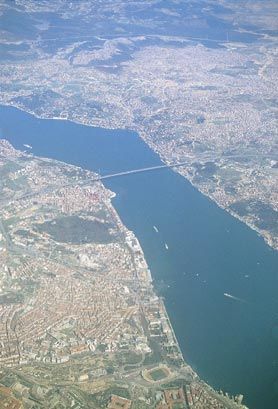
Bosphorus, Turkey.
Ph. : © Verseau
MEDTAC - Blue Plan
3R, POPULATION AND THE ENVIRONMENT FOR T
VISION ON WATE HE 21
RRANEAN ST
CENTUR
MEDITE Y
Mediterranean permanence
Projected or anticipated future scenarios for water in the Mediterranean region will in
all cases be strongly influenced by the permanent physical and human features of the
region, by the nature of Mediterranean water resources as well as by the dominant cha-
racteristics of water saving in this region.
PHYSICAL AND HUMAN SETTING
Mediterranean regions share between them and also with the rest of the world a series
of environmental and development problems, in particular concerning the manage-
ment and development of water resources and the control of water pollution.
Nevertheless, there are certain major contrasts between the two shores of the basin
that influence the way in which these issues arise.
Demographic burden
Population issues are the dominant factor in economic, social and environmental
changes. According to United Nations (UN) estimations, the total population of the
region will rise from 420 million inhabitants in 1995 to 446 million in 2000, to 508 –
579 million in 2025.
Within one generation, the total population in the Eastern and Southern countries tri-
pled, and in 1995 it was over 223 million, whilst the population in Northern coun-
tries tends to stabilise or decrease. Nevertheless, a drop in the fertility rate has been
noted in the South and the East.
We are therefore confronted with two fundamentally different dynamics. A young and
rapidly expanding population in Southern and Eastern countries, and an ageing popu-
lation with low growth rates in the North. In some countries, like Italy for example,
upper limits have been reached and the population is now decreasing. These changes
have an important impact on employment, food supply, the financing of pensions and
health care charges, land use planning, environmental pressure, pollution and of
course on water demand.
This demographic change is exacerbated by increasingly intensive urbanisation, cau-
sing a higher concentration of population and activity, particularly in coastal areas.
Level of economic development
There is also great economic disparity between the Northern and Southern and
Eastern countries: 90% of the overall GNP of all the Mediterranean countries ($ 4000
billion in 1995) is produced by the five EU countries alone.
This situation results in sharp contrasts in investment capacities at a national level,
and thus the need for the poorest countries to appeal to external sponsors. Moreover,
national investors have differing approaches: in the South and East, private investment
is made either in housing or in businesses abroad…
In addition, the level of foreign investment in the Southern Mediterranean countries
is low and on the decline; today this represents only 2% of total worldwide direct
investment made overseas3.
3 - Comments by Ms Walker-Leigh, Malta, December 1999. MEDTAC - Blue Plan
Alexandria - Egypt.
Ph. : © Verseau.
5R, POPULATION AND THE ENVIRONMENT FOR T
VISION ON WATE HE 21
RRANEAN ST
CENTUR
MEDITE Y
Living standards
These demographic differences go hand in hand with another equally sharp North-
South contrast in terms of living standards. The per capita GDP is about thirty times
higher in the Mediterranean area of France than it is in Egypt, or ten times higher in
Italy than in Algeria. The gap between the North and the South-East (and some of the
Balkans countries) is widening even more due to the populations’ poverty level. When
calculating “human poverty indexes”, the UNDP established a set of criteria for deve-
loping and developed countries in which poverty groups exist. In 1997 the poverty
indexes in some of the Southern and Eastern countries ran from 10% in Jordan to
more than 34% in Egypt or 40% in Morocco.
This economic context intensifies the phenomenon of migration from South to North.
Migration is part of Mediterranean history, but population flows were not always as
significant, nor did they occur in the same directions; for a long time since the begin-
ning of the Century, migration from South to North increased, but since 1970 this had
tended to decrease and stabilise.
Physical setting: strengths and weaknesses
The common feature of the so-called “Mediterranean” climate is a dry, more or less
long summer, which creates major irrigation needs. However, here too, there is a sharp
contrast between the Northern coast (including Turkey), backed by temperate regions
which supply it with abundant water resources, and the Southern and South-Eastern
coasts, adjacent to dry and desert areas with very limited water resources (with the
exception of Egypt with its Nile river feed from the tropics).
WATER ABUNDANCE AND WATER SCARCITY COEXIST IN
THE MEDITERRANEAN REGION
Mediterranean water resources are limited, fragile and threatened. They are already
intensely utilised, especially in the South and East, and they are often badly uti-
lised. Natural input (renewable water resources) is shared very unequally between
countries and populations: (72% in the North, 23% in the East, 5% in the South4).
Moreover, their distribution on a domestic level, which determines each country’s
degree of independence as regards water resources, is also very uneven (fig. 1).
This input is also subject to a very irregular time scale, and generally tends to be very
low. Mediterranean water resources are particularly sensitive to drought. During the
dry years which occur approximately every ten years, natural input can be as low as a
third of average input (Box 1). Also, the mobilisation of surface water requires the
construction of costly regulatory storage systems (dams – reservoirs) of unequal fea-
sibility and sustainability.
The scarcity and disparity of water resources are:
● exacerbated by the different levels of usability – and therefore mobilisation costs
– and particularly environmentally sustainable usability. Water quality also differs.
Only a part of natural water resources can be contained and utilised. Basin mana-
gement is generally recommended but is not common practice; it is unsuitable for
arid areas (with no functional basin), large karstic zones or highly fragmented
basins.
● intensified by the threat and impact of human activity which disrupts water
regimes and leads to a deterioration in water quality, and also by the vulnerable
MEDTAC - Blue Plan 4 - Countries are considered in their entirety, and since many of them stretch to the North and East beyond the Mediterranean basin and the
Mediterranean climate region (Spain, France, Portugal, Turkey, F.R. of Yugoslavia…) this naturally accentuates the contrast and imbalance in
resources between the countries.
6R, POPULATION AND THE ENVIRONMENT FOR T
VISION ON WATE HE 21
RRANEAN ST
CENTUR
MEDITE Y
nature of some chronically over-utilised resources: salinisation of coastal aquifers
(Spain, Israel…), and even the disappearance of sources (Tunisia);
● made more complex by partitions between numerous countries (the Balkans, the
Middle East, the Nile basin).
Figure 1:
Natural water
resources per capita
HR in Mediterranean
FR SI countries and
YU territories (from
BA national sources and
using 1995 popula-
AL
PO ES tion figures).
TR
IT SY
MT CY LB
GR
MA IL
DZ TN WE
GZ
JO
© Plan Bleu, 1999
LY
Ressources en eau par habitant (mm3/an) EG
Water ressources per inhabitant (m3/year)
ressources internes - internal ressources
ressources externes - external ressources
13000 7000 3000 1000 500 0 300 600 900 km
Box 1: Drought: a Mediterranean speciality
Temporary droughts can be defined as lower than average precipitation of
varying severity, duration and scale.
In the Mediterranean region, their consequences are particularly severe, both
for:
• water resources, where they lead to a deficit in the rainwater and snowmelt
input in winter and spring;
• soils and agriculture when normal summer drought is exacerbated.
Nearly everywhere, relatively severe yearlong droughts occur at least every ten
years. Consecutive drought years are not infrequent in the Mediterranean. They
aggravate the situation, causing water reserves in soils and subsoils to dry up.
During the last few decades, most Mediterranean countries have experienced
memorable long-term droughts, for example: 1980–85 in Morocco; 1982–83 in
Greece, Spain, Southern Italy and Tunisia; 1985–89 in Tunisia; 1988–90 in Greece;
1988–92 in Mediterranean France; 1989–91 in Cyprus; 1990–95 in Spain and
Morocco; 1993–95 in Tunisia; 1995–96 in Sardinia; 1995–98 in Cyprus… This list
is far from exhaustive.
MEDTAC - Blue Plan
7R, POPULATION AND THE ENVIRONMENT FOR T
VISION ON WATE HE 21
RRANEAN ST
CENTUR
MEDITE Y
The ecosystems formed by aquatic environments and wetlands, associated with per-
manent river or lake water, are just as unequally shared, rare and fragile in the
Mediterranean region, especially in the South. Their ecological value – particularly
that of wetlands, which for a long time were branded as unhealthy zones – has finally
been recognised. However, they cannot be evaluated purely in economic terms.
The will to preserve the ecological functions of permanent water resources, which are
so rare, requires an integrated approach to land use and water management at the
drainage basin level. This implies that certain conditions be respected for the sustai-
nable use of water as a resource as well as an environment for receiving wastewater
discharge.
The Mediterranean area’s natural water is not only threatened, it is also threatening.
Floods caused by violent surges in Mediterranean watercourses, as well as landslides
and mudslides caused by extreme rainfall levels, represent the main risk of natural
disaster in the region. Moreover, these risks are amplified by the growing concentra-
tion of population and human activity in exposed areas. During the 20th Century, at
least fifteen floods each took more than 100 to 1000 victims5 in Mediterranean coun-
tries. Preventing these risks is a major objective of water management, along with the
mobilisation of resources in a large number of Mediterranean basins.
Natural water also attacks the environment. Soil erosion caused by rainfall and uncon-
trolled run-off has been a constant problem in a number of Mediterranean basins,
where it serves to increase the irregularity of water flow.
WATER PLAYS AN IMPORTANT ROLE IN THE LIFE AND
ECONOMY OF THE MEDITERRANEAN POPULATION
Rising demands
In this context of scarcity, the Mediterranean demand6 for water is high. Today, the region
uses around 300 billion cubic metres, broken down as follows (cf. the data for each country
from national sources, presented in the table in Appendix 1):
Table 1.
Water use sectors* (km3/year)
Current sectorial water
demand in the three Sub-regions Communities Agriculture Industry Energy Total
sub-regions. not supplied power
plants
North 23 65,5 20 47 155,5
East 7,5 43 4 0 54
South 7,5 72,5 8,5 0 88,5
Total 38 181 33 47 299
*This does not include the costs of incidental development and evaporation loss from
reservoirs, which is considerable, even in Northern countries (700 million cubic
metres per year in France and 1,500 in Spain).
MEDTAC - Blue Plan 5 - A. Villevieille, Les risques naturels en Méditerranée, Blue Plan booklet, 10, 1997.
6 - Demand for water supply, including water losses in the transport and distribution system.
8R, POPULATION AND THE ENVIRONMENT FOR T
VISION ON WATE HE 21
RRANEAN ST
CENTUR
MEDITE Y
Two out of three Mediterranean countries now use over 500 cubic metres per year per
inhabitant – mainly because of intensive irrigation. But these per capita demands are
irregular and extremely varied – from a little over 100 to more than 1,000 cubic metres
per year (see Table in Appendix I).
Generally, demand has doubled since the beginning of the 20th Century and increased
by 60% over the last 25 years. These changes vary according to the different countries
(Figure 2):
● Demand is growing very slowly and tending to stabilise or even fall in Northern
countries (in line with demographic changes) and in some Southern countries
(where demand is regulated due to water shortages – Cyprus, Israel and Malta: see
Box 2).
● Demand is growing in the other countries but actually falling on a per capita basis.
However in some countries demand per inhabitant is still growing – either because
demand is still low (Algeria) or because water development schemes and particu-
larly irrigation are developing more rapidly than the population itself (Lebanon,
Libya and Turkey).
m3/an par habitant
m3/year per capita Figure 2:
1300 Changes in water demand
per inhabitant (for all uses)
in recent decades
Egypte in Mediterranean countries
in m3/year.
Egypt
1000
Chypre Spain/OECD
Spain
Italie Italy Libya
Espagne
Yugo. France
Espagne/OCDE Greece
Turkey
Israël
500
Morocco
France Lebanon
Turquie Yougo. Israel
Cyprus
Liban Tunisia
Tunisie Algeria Jordan
Algérie
100 Jordanie
0 Années
1970 1975 1980 1985 1990 1995 Years
Source: based on national statistics. The lack of coherency in some national or international statistics on
changes in water demand, notably in Europe, at times makes it impossible to establish a reliable time series for
this index. This is particularly true of Spain, where national statistics do not correspond to those published by
the OECD and are therefore presented separately.
MEDTAC - Blue Plan
9R, POPULATION AND THE ENVIRONMENT FOR T
VISION ON WATE HE 21
RRANEAN ST
CENTUR
MEDITE Y
Box 2:
An emerging trend: a fall in water demand
A decline in gross water demand (i.e. the production of water required), parti-
cularly in agricultural irrigation, began at the end of the 20th century in several
Mediterranean countries whose conventional water resources were
“exhausted”. In Cyprus, the quantity of water used fell by more than half bet-
ween 1985 (540hm3/year) and 1998 (235 hm3 /year), while in Israel demand fell
from 2,000 hm3/year in 1985 to less than 1,500 in 1991, before rising to 1,700 in
1994(1). In Malta, total water production (including desalination) fell from 47.2
hm3/year in 1992-93, to 40.8 in 1997-98(2).
On the left: Israel. 160 000
Changes in water 2500
demand from 1984
to 1994 (1). 140 000
2000
On the right: Malta. Total 120 000
Changes in water
Million cubic meter
production from 100 000
August 1994 to July 1500
1998 (2). Agricultural 80 000
RO: Reverse Osmosis
1000 60 000
Domestic
40 000
500
20 000
0
0
84
86
88
90
92
94
94
95
96
97
4
95
96
97
5
5
6
6
7
97
8
8
19
19
19
19
19
19
9
99
99
99
99
99
99
99
19
19
19
19
19
19
19
19
9
.-1
i-1
.-1
i-1
.-1
i-1
.-1
i-1
ut-
ut-
ut-
ut-
v.-
v.-
v.-
v.-
ma
ma
ma
ma
fév
fév
fév
fév
ao
no
ao
no
ao
no
ao
no
Groundwater RO Production
These reductions are due to a combination of water saving efforts, particularly
increased efficiency of use and the reduction in losses during distribution.
However, figures will tend to stabilise once maximum savings have been rea-
ched in terms of use and transport. This stabilisation will be followed by a
period of slow growth, corresponding to the growth in non-conventional water
production.
Note that these trends are apparent in relatively developed countries, able to
bear the costs involved in water saving programmes and non-conventional
water production. This will not be easy to transpose to other economic and
social contexts.
(1) Israel Water Commission, quoted by H. J. Bruins, 3rd Conf. Internat. Gestion
de las sequias, Valencia / IIIe Milenio, UNESCO, Dec 1997.
(2) Malta, Water Serv. Corp., Annual Report 1997-98.
MEDTAC - Blue Plan
10R, POPULATION AND THE ENVIRONMENT FOR T
VISION ON WATE HE 21
RRANEAN ST
CENTUR
MEDITE Y
Specific characteristics of water saving
Two seasonal uses accentuate the fluctuation in demand throughout the year:
- Irrigation, which is required nearly everywhere for agricultural production, is the
predominant sector of use in most countries (with the exception of France and the
Balkans). Overall, this represents 60% of total water use, but in the Southern coun-
tries this figure reaches 82%. The major demand for irrigation water is concentrated
in a few months of the year when input is low or non-existent, increasing the need
for regulatory storage.
- Tourism, which is steadily developing (the Mediterranean basin is the world’s N° 1
tourist destination), also increases local demand for drinking water, especially in the
summer (and especially in the islands). A telling example of this is Spain: the popu-
lation of 27 municipalities on the Costa Brava swells from 150,000 in winter to 1.1
million in mid-August.
This high, temporary pressure on resources may lead to conflicts in water uses.
An increase in urbanisation accompanied, as often, by intensified housing and activity
along the Mediterranean coast – including tourism – lead to the concentration of
water demand in relatively small areas. This has a negative effect on the “empty” rural
areas, with resources being diverted to built-up areas on the coast. This coastal
concentration increases the final consumption of wastewater (water discharged at sea
is difficult to re-use). While coastal development seems to be stabilising, the artificia-
lisation of the coastline continues to increase.
Despite the increasing scarcity of water and the shortages already felt, water use is still
far from efficient. In the Mediterranean countries as a whole, nearly half of the water
supplied is lost in transport and distribution or is badly used, especially in irrigation.
However, part of this loss does re-enter the system and can be used again, except in
coastal zones. This is particularly true for a large part of Egypt’s drainage water.
However, this does not concern the coastal areas and still causes a pointless increase
in the costs of mobilisation, transport and treatment (for drinking water).
In most countries the economic costs of water development and water supply (inclu-
ding water treatment, water protection and flood protection) already make up a signi-
ficant part of national expenditure – from 1 to 2 per cent in the most developed coun-
tries (around 2% of GDP in France, 1998) and no doubt more in the other countries.
These estimates could be improved through closer analysis of national budgets.
The overall “ water ” budget (investment and functioning) for the Mediterranean
countries as a whole could presently be in the order of 75 billion US dollars or Euros
per year (estimate based on partial, approximate figures).
Water as a development factor
The role of water use as a factor in socio-economic development depends essentially
on the contributions made to development by high water-consumption sectors: in the
Mediterranean region these respective contributions are not proportionate to the
quantity of water used.
The most obvious distortion is that of irrigated agriculture, which in most
Mediterranean countries represents most of the water used, but only a small share of
GDP (Table 2).
MEDTAC - Blue Plan
11R, POPULATION AND THE ENVIRONMENT FOR T
VISION ON WATE HE 21
RRANEAN ST
CENTUR
MEDITE Y
There has been much debate on this issue, which has influenced water policies in
several Mediterranean countries, from Spain to Israel. Questions regarding the alloca-
tion of resources and the generally very low cost of irrigation water have been raised.
However, this strictly macro-economic vision of agriculture should be set against
social, economic and ecological considerations and the important role that this sector
plays in the Mediterranean for:
- managing territories at the lowest ecological cost (prevention of natural disas-
ters, limiting coastal urbanisation etc.);
- social stability in terms of number of jobs and regional balance (maintaining a
major activity in rural areas where a large part of the population still lives (30
to 50%);
- its contribution to exports as a source of foreign currency (generally this only
concerns the most productive farms, which represent only a small share of agri-
cultural assets).
Table 2.
Some economic data on % of % of DGP % of % of active % of
agriculture (data 1990 or COUNTRY agricultural generated by exports population rural
around 1990). use in fatal agricultural from employed in population
water use production agriculture agriculture
(generally (1997)
irrigated)
SPAIN 79 1,25 9,5 7,5 23
CYPRUS 88 5.4 21 10 46
ISRAEL 72 5 3 9
JORDAN 74 6 12 - 29
EGYPT 87 17 - 35 55
TUNISIA 86 16 - 26 43
TURKEY 72 16 15 48 31
MOROCCO 86 13 - 39 52
Source: FAO /Aquastat; Spain: Polagwat, 99 (only irrigated agriculture).
Increased dependence on imported foodstuffs
Some strategic considerations linked to food self-sufficiency can also be added to this.
The nutritional intake in the region’s Southern and Eastern countries (3070 Kcal) is
reasonable: 56% cereals, 16% meat products and 28% other products (olives, sugar,
vegetables, fish etc.). However, the intake of a large share of the population remains
insufficient. In spite of sustained growth in cereal production over recent decades
(2.7% per annum) the Southern and Eastern region7 has been unable to meet the
population’s growing demand and has thus increased its imports. In 1995 the region
was 33% dependent on the international market for its 123 M tonnes of cereal
consumption.
MEDTAC - Blue Plan 7 - Included in the MENA region (Middle East and North Africa) in the terminology of the World Bank.
12R, POPULATION AND THE ENVIRONMENT FOR T
VISION ON WATE HE 21
RRANEAN ST
CENTUR
MEDITE Y
These imports make the region a significant user of “virtual water”8 . It can be said that
an estimated 40 km3 of virtual water for cereals was transferred in 1995 . It is probable
that this trend will continue.
In the short term, this situation is considered as a good economic opportunity. It is
based on an increase in the production of export crops (mainly irrigated), and in the
import of low priced basic foodstuffs. However in the long term, this creates a certain
vulnerability linked to dependence on world markets.
Water for the population
Drinking water production represents only a small part of the total quantity of water
mobilised and used in the Mediterranean region: 15 to 20% in the developed coun-
tries to the North; less than 10% in countries with a high demand for irrigation water
(Egypt, Libya, Syria).
The changes in production per inhabitant vary greatly depending on the country:
slower increase or stabilisation, or even a decrease (France) to the North or in coun-
tries with strictly limited resources (Israel, Malta); increase in the Maghreb (where the
starting point was very low); decrease in Egypt (Figure 3).
Service levels for “healthy water” are satisfactory in urban areas (100% or nearly 100%
in most countries), although to the South and East the high rates quoted partly
include service from water points in the vicinity and conceal frequent problems
encountered in the regularity and quality of the water supply. This remains insufficient
in rural areas (less than 60% in the South). Sanitation lags behind the supply of
drinking water and water treatment is non-existent in several Southern and Eastern
countries. The recent conflicts in the Balkans and in Algeria have caused the situation
to deteriorate even further (delay in providing facilities, cholera outbreaks etc.).
m3/an par habitant Litres / jour
m3/year per capita Liter / day
140
Figure 3: Changes in
130 drinking water production
Spain per inhabitant in several
120 Greece
countries over recent decades
110 Israel 300 (in m3/yr and litres/day)
France (national sources)
100
90 Egypte
80 Israël
200
70 Morocco
France
Grèce Egypt
60
50 Espagne
Algeria
40
100
30 Tunisia
Tunisie
20 Algérie
Maroc
10
0 0
1950 1960 1970 1980 1990 Années /
Years
8 - i.e. the quantity of water which equivalent agricultural production in importing countries would have consumed. (Tony Allan, Bari, 1999). MEDTAC - Blue Plan
13R, POPULATION AND THE ENVIRONMENT FOR T
VISION ON WATE HE 21
RRANEAN ST
CENTUR
MEDITE Y
LASTING CONTRASTS: NEED FOR A VISION
AT THE REGIONAL LEVEL
The Mediterranean world of water shares common characteristics, but it is also cha-
racterised by sharp and lasting contrasts.
The different forms of adaptation to either abundance or scarcity of water in
Mediterranean countries came as a reaction to geographical diversity and climatic fac-
tors relating to water resources and demand. The Mediterranean world is far from
being homogeneous either in terms of potentiality, water usage or resulting tensions
between them, or in terms of the prevailing socio-economic or political conditions.
Differences are greater than similarities, including within the largest countries, espe-
cially when a large part of the territory is situated outside the Mediterranean basin
(Spain, France, Turkey, Morocco…).
Thus, a regionalisation of the different scenarios is just as important as a sectoral
approach.
A North / South contrast
In the Mediterranean region, a traditional opposition exists between:
● The developed “water rich North” (globally speaking), with a low population
growth and increase in water demand, exerting low to moderate (quantitative)
pressure on water resources.
● The developing “water scarce South”, with high demographic growth and rising
water demand, exerting high to sometimes excessive pressure on water resources.
All things considered, demand is growing the least in those places where water availabi-
lity is the greatest and where it is still possible to intensify outtake. Inversely, demand is
growing the most in places where water resources are scarcest and most utilised.
Furthermore, water-related costs will raise the most as a proportion of the GDP in the
less developed countries, those with the lowest income.
This simplistic opposition is somewhat succinct, the context and problems of each
Mediterranean country being very specific and there are often, for the larger countries,
differences between the regions themselves. The “North / South” contrast is even more
obvious in the Western part of the Mediterranean region, less so in the East and the
Middle East.
Regionalisation: a necessity
The first step towards more relevant regionalisation would depend on the State and
trends in available water resources and water demands in three groups of countries.
(see Table 3 and map Figure 4):
● Group 1: European countries rich in water (above 3000 m3/year/cap) and where
water demand is stable, or even decreasing, without quantity shortage problems
(except for short periods of time and for localised areas) until 2025 and more, but
having to face water quality degradation and meet the increasing needs of environ-
mental protection.
● Group 2: Western Mediterranean or Middle East countries, with overall excess
resources (1000 to 3000 m3/year/cap), but where demands are more or less increa-
sing, more sensitive to short term or structural shortages, in certain areas, with the
risk of extension after 2025.
MEDTAC - Blue Plan
14R, POPULATION AND THE ENVIRONMENT FOR T
VISION ON WATE HE 21
RRANEAN ST
CENTUR
MEDITE Y
● Group 3: countries from North Africa, the Middle East, or islands where the
resources (less than 1000 m3/year/cap) are already saturated or are becoming so
(whether demands be high or low), are already experiencing structural shortages,
with possible future aggravation in places where demographic growth is strong.
Figure 4:
Mediterranean region.
Classification of the
FR countries in hydro-
SI HR
IT geopolitical sub-units.
BA YU
PO
AL
ES GR
TR
MT CY
LB
MA TN I LWE
DZ GZ
JO
UnitŽ Unit
m /an/hab m /year/inhab LY EG
> 3000
1000 - 3000
IDDPB.APR
< 1000
300 0 300 600 Kilometers
© Plan Bleu, 1999
Water resources per capita Water demand per capita
Table 3. Hydro-
geopolitical
Group of countries or Population Average groups of
Current forecast Current countries
territories change Trends Trends
m3/year 2025 in m3/year
m3/year
France, Italy, Stability or > 3000 Stability > 2000 Low to Slight increase
Group Portugal,
Greece, decrease (> 20000 until 2025 moderate or reduction
1 Slovenia, the Balkans) and after 700-800 in
Croatia, EU
Bosnia- 200-400 the
Herzegovinia, Balkans
Albania,
FR of
Yugoslavia.3
Spain, Cyprus, Stability in > 1000 Stability in ES > 3000 Moderate Decrease Spain,
Group Syria, Lebanon, Spain Max: TR Spain; decline Southern to high Cyprus, Morocco
2 Maroc,
Turquie. growth in 3200 in the South and Eastern 300 to > increase Turkey,
South and East and the East countries < 1000 Lebanon
countries 1000
Malta, Israel, Moderate 500 below More or less from 100 to Low in the Slight to
Group Palestinian to high 100 (GZ, rapid 300 Levant, in moderate
3 Territories of
increase
Gaza and the MT) decline EG ~ 600 Malta, in increase in the
West Bank, Egypt: LY < 50 the Maghreb Maghreb
Jordan, ~1000 100 to 400 stabilisation in
Algeria, high in Israel
Tunisia,
Egypt, Libya. Egypt and reduction in
in Libya 800 Egypt, Libya
to 1000
However, this division into groups is not sufficient. National and even local visions are
needed to build strategies adapted to future crises.
MEDTAC - Blue Plan
15R, POPULATION AND THE ENVIRONMENT FOR T
VISION ON WATE HE 21
RRANEAN ST
CENTUR
MEDITE Y
Multiple national and local contexts
In addition to these contrasted hydraulic conditions, there are multiple economic,
social and political situations.
Other factors thus determine each country’s strategy towards its food and water requi-
rements:
● Dependence on water resources. Some countries depend on the natural resources
of other countries: the case of Egypt is well known, at nearly 100%, but this also
applies to Syria, at 80% or Israel at 55%. Such dependence is bound to accentuate
political problems in these countries as far as sharing resources is concerned.
● Energy dependence. Southern countries generally have plenty of fossil energy
along with a high solar potential at their disposal. This is an advantage when it
comes to developing energy consuming technologies (desalination, wastewater
treatment, etc.) and to ensuring the transition towards “virtual water” imports.
● Growing dependence on foreign funding sources for the financing of water and
irrigation sectors. A lack of timely public investment (in hydraulic equipment and
supply systems) and accrued debts are frequent in the South and East, much more
so than in the North. For the moment, Northern developed countries have a large
hydraulic capital, but they will have to finance the rehabilitation of the whole
system in the future.
● Dependence on foreign markets and in particular on food imports. Demographics
will for a large part determine other factors such as the type of economic develop-
ment that Mediterranean countries will undergo and the conditions under which
the association between the Southern and Eastern countries and the European
Union will take place within the framework of the free-trade zone, defined at the
Barcelona Conference of November 1995. It will have a major influence on the
capacity for the Eastern and Southern countries to catch up and succeed in their
attempts to be a part of the globalisation phenomenon.
The political context and the dynamics of social change are prerequisites to the suc-
cess of any reforms of the water management framework and their social acceptabi-
lity. Water demand management using only sectorial reallocation can give rise to poli-
tical problems.
The visions of the future that correspond to the different scenarios should not,
however, be limited to the sub-regional or national levels, where indicators are based
on averages - which do not fully reveal all the problems - but they should also focus
on possible critical local situations, or “dark areas”, with priority given to prevention.
Unfortunately, such an objective of national or local disintegration cannot be achieved
on the regional scale of this exercise. According to the analytical approach and the
objective, several groups of countries may be used.
However, for the sake of convenience, we will refer below to the traditional sub-
regions: the North (Southern Europe), the South (Northern Africa) and the East
(Middle East).
MEDTAC - Blue Plan
16R, POPULATION AND THE ENVIRONMENT FOR T
VISION ON WATE HE 21
RRANEAN ST
CENTUR
MEDITE Y
Contemporary trends and
growing problems
The identifiable contemporary trends and problems in the water sector should not
become a springboard for extrapolations, which are always hazardous – even for
trend-based scenarios – but rather they should serve to determine more dynamic ini-
tial conditions in order to promote a prospective approach.
STAKES
Population growth and risk of social instability
Demography and its social implications will largely determine other factors such as
the type of economic development for the countries of the region.
The decrease of per capita resources indicates major pressure on the resource when it
reaches less than 1000 m3/year and a structural water shortage at less then 500
m3/year. With an uneven population growth, per capita resources tend to show the
sharpest decrease in the poorer countries (all the Southern and Middle Eastern coun-
tries: Cyprus, Syria, Lebanon, Israel, Palestinian Territories, Jordan, Egypt, Libya,
Tunisia, Algeria, Morocco, Malta). However, each country evolves at its own pace.
In Southern and Eastern Mediterranean countries, given the demographic pressure,
the major concern is maintaining social stability. Maintaining a balance between
urban and rural development is the objective set for current agricultural investments.
This leads to a political will to expand irrigated land areas according to the resources
and financial means available. e.g. Turkey (Southeast Anatolian Project) and Egypt
(New Valley project).
Greater tendency to resort to food imports and
concerns regarding free trade
Greater integration into the world economy is recognised as a legitimate objective.
Nevertheless, for countries with fragile social and environmental stability, the evolu-
tion towards a free market economy should be progressive and controlled. The
Southern and Eastern countries are in favour of regulated free trade (opening to the
European market, but maintaining import barriers). This scenario will favour agricul-
tural exports with the risk of increasing pressure on water resources9.
In the Mediterranean region, some less populated countries (e.g. Israel, Cyprus,
Malta) have demonstrated that a quick change into an urban type of service society
and integration into the international market, along with a partial reallocation of water
to other sectors, is possible. Yet, adhering to a time limit for integration into the world
economy and the respect of certain socio-economic and political conditions are consi-
dered to be key elements.
At present, agriculture is not included in the future Euro-Mediterranean Free Trade
Zone, but some bilateral agreements were reached on a product-by-product basis.
The possible extension of free trade to this sector is presently under discussion at the
Mediterranean and world level (World Trade Organisation multilateral negotiations
aborted in Seattle). For the Mediterranean region, this is a key issue.
9 -MENA, Consultation meeting on water for food and rural development, Bari, May 99. MEDTAC - Blue Plan
17R, POPULATION AND THE ENVIRONMENT FOR T
VISION ON WATE HE 21
RRANEAN ST
CENTUR
MEDITE Y
Less competitive on a global scale in the production of meat and cereals, the agricul-
tural sectors of Southern and Eastern Mediterranean countries are showing a deficit in
their trade balance (except Turkey), although on the other hand, some sectors (fruit
and vegetables in particular) are being exported to the European Union (e.g. tomatoes
from Morocco or market garden produce from the coastal plains of Syria).
However, such agriculture fulfils a dual ecological and social function, – e.g. Turkey
and Morocco with around 40% of the active population in agriculture, or Syria with
more than 30% in agriculture.
The complete and abrupt institution of a Euro-Mediterranean free trade zone by 2010
is likely to have an important impact on the agricultural sector and the environment,
though the trade of agricultural goods is not yet included in the negotiations. Export
sectors are likely to be boosted, creating increased pressure on local water resources
(temptation to resort to short term overuse). Some sectors of Mediterranean agricul-
ture might be completely doomed, especially cereal growing and cattle breeding. This
could endanger land management in the Mediterranean area and the socio-environ-
mental equilibrium in Southern and Eastern countries, while increasing their food
dependence.
For these reasons, Mediterranean states should aim for a better appreciation of what
is at stake and ensure that social, environmental and food security criteria are inte-
grated into future regional and multilateral negotiations10.
Strong influence of international, and especially
european, policies in the region
Water management institutions vary considerably across the Mediterranean region,
but are generally fragmented among various public bodies. Water resource manage-
ment continues to be handled by technical ministries while the supply of drinking
water and irrigation water is increasingly provided by autonomous services. There is
a growing tendency to privatise or to delegate drinking water services. In France and
in Italy, this is an old tradition in the water supply and sanitation sectors. It is sprea-
ding in Southern countries as other sectors actively seek to improve competitiveness
(electricity, gas…).
European Union directives have a major influence in the EU countries of the region,
as well as in countries undergoing the integration process (Slovenia, Malta, Cyprus),
or wishing to join (Turkey). The future Framework Directive for Water (which will
probably be adopted in 2000) will set common rules for Northern Mediterranean
countries (compulsory water management at the drainage basin level, environmental
criteria, economic assessment of action, participation). In the other countries, the will
to instate integrated water management is also asserted in planning documents and in
water legislation.
Combined water and sanitation costs are increasing in order to pay for investments in
the sanitation sector. In the Southern countries of the region, wastewater treatment
technologies and regulations should be adapted to local conditions (climate, but also
possible degrees of technical and financial autonomy) in order to guarantee their prac-
ticability and equipment maintenance and to avoid unjustified (and thus, unsustai-
nable) sophistication.
The agricultural sector is influenced by the WTO agreements and European policy,
with the Common Agricultural Policy in the North and all the Southern and Eastern
MEDTAC - Blue Plan 10 - A working party of the Mediterranean Commission for Sustainable Development is analysing the possible impact of the free trade zone on the
environment.
18You can also read


