National Library of New Zealand - 2019-2022 Digitisation Plan
←
→
Page content transcription
If your browser does not render page correctly, please read the page content below
National Library of New Zealand
Digitisation Plan     2019-2022

TE HURI MŌHIOTANGA HEI UARA –NGĀ TOHUTOHU RAUTAKI KI 2030
                     TURNING KNOWLEDGE INTO VALUE – STRATEGIC DIRECTIONS TO 2030
                        The National Library has new strategic directions to 2030 that focus on achieving greater impact through collaboration.
                        The three themes Taonga, Knowledge, and Reading highlight the areas of focus until 2030. The following are outcomes
                        and impacts from the strategy that apply and inform this plan.

     TAONGA                                                                     MŌHIOTANGA                                                              PĀNUI
                                                                                KNOWLEDGE                                                               READING
  Outcome:                                                                     Outcome:                                                                 Outcome:
  New Zealanders will trust that their                                         New Zealanders will easily access, share and                             New Zealanders will have the literacy
  documentary heritage and taonga are                                          use New Zealand’s knowledge resources to                                 skills to achieve social, educational and
  collected, preserved and accessible, enabling                                innovate and create new knowledge.                                       employment success and be inspired to
  the creation of new knowledge.                                                                                                                        create new knowledge.
                                                                                Impact:                                                                 Impact:
   Impact:                                                                    • New Zealand knowledge resources available                               •       Te reo Māori will be revitalised
 • New Zealand’s collections of documentary                                     from libraries, educational, cultural and                               and used throughout New Zealand.
   heritage and taonga will be well-managed and                                 research institutions will be digitally accessible
   consistently cared for.                                                      to all New Zealanders.
                                                                                                                                                        •       Te reo speakers and learners will
                                                                                                                                                        engage with Māori language reading and
                                                                              • All physical knowledge resources important to
 • New Zealand’s collecting institutions will have                                                                                                      learning resources wherever they are.
                                                                                New Zealanders will be digitised. Nationwide
   access to expertise to use new technologies
                                                                                licensing agreements will be in place to provide
   and tools that preserve digital heritage.
                                                                                more digital content.
 • Collections in New Zealand’s cultural and                                  • Well-designed, seamless points of access to
   heritage institutions will reflect the diversity of                          knowledge will be provided through
   people in New Zealand and the Pacific, and the                               investment in innovative systems.
   importance of Māori as tangata whenua.
                                                                              • Creation and use of knowledge resources in te
                                                                                reo Māori will increase.

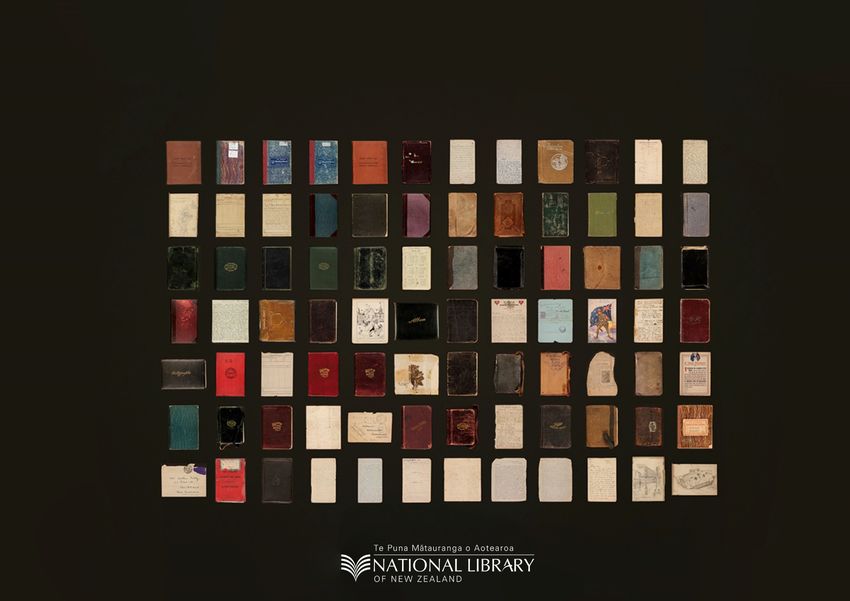
Cover Image: Some of the letters and diaries digitised in 2013, composition by Ish Doney. For more information see: https://natlib.govt.nz/blog/posts/off-at-last-the-goodbye-would-have-been-too-awful
Background to Digitisation Plan 2019-22
Our Mission The National Library works with stakeholders including iwi Māori
The National Library will create
and other partners to enable New Zealanders to access knowledge How to read this plan
and share it more easily. Digitisation is one of the ways in which this
cultural and economic value for Four goals for digitisation 2019-2022 are
is achieved. This three-year plan outlines how we will work to
New Zealanders through outlined on the next four pages. They are:
digitise our own collections and how we will collaborate and partner
leadership and collaboration. with others in digitisation initiatives so that physical knowledge
We will remove bavrriers to 1. Build digitised collections for enhanced access
resources that are important to New Zealanders are digitised and and use
knowledge, ensure New Zealanders made available online. The plan will be reviewed and updated
have the skills to create knowledge annually. 2. Increase capability to digitise at scale
and preserve knowledge for future
generations. This plan replaces and is informed by the Digitisation Strategy 2014- 3. Make more te reo Māori resources more
2017*. The National Library of New Zealand “Turning knowledge readily available
into value – strategic directions to 2030”, published in December 4. Measure the impact of digitisation
2016, provides the strategic vision and context for the Digitisation
Plan 2019-2022. The Crown’s Strategy for Māori Language Each goal has been broken down into objectives
Revitalisation, Maihi Karauna, and the Digital Government Strategy (left column) and then into activities and sub
Our Principles inform the broader context in which the Library operates. activities (middle column).
• We lead and collaborate Digitisation is defined as the end-to-end process that transfers The right hand column contains a timeline which
• We are trusted experts analogue materials to a digital format. It makes it possible for shows which year the work will be undertaken and
knowledge resources to be processed and transmitted using which business unit (or units) are taking the lead.
• We develop literate citizens
• We inspire knowledge creation computer technology enabling preservation, online access and new
• We champion equity of access methods for discovering and reusing knowledge. This document
focuses on digitisation of analogue material already held. Collection
of born-digital objects is covered in the National Library of New Business Unit Key
Zealand Collections Policy** and is not within the scope of this
document. Learning and Literacy
Collection Services (Alexander Turnbull and
*https://natlib.govt.nz/files/strategy/Digitisation-Strategy-2014-2017.PDF
**https://natlib.govt.nz/about-us/strategy-and-policy/collections-policy/national-library-of-new- National Library of New Zealand)
zealand-collections-policy Digital NZ
1
Office of National Librarian
Digitisation (Alexander Turnbull and
National Library of New Zealand)
1. See Appendix 1 for a more in depth break down of the digitisation processGoal 1 Build digitised collections for enhanced access and use
Objective Activities Timetable
1.1 Agreed digitisation targets delivered through Alexander Turnbull
Objective 1: Deliver on funded 2019-2020 2020-2021 2021-2022
digitisation outputs efficiently Library and Content Services work programmes
and effectively 1.1.1 Newspaper digitisation programmes
1.1.2 Collaborative newspaper digitisation programme
1.1.3 Periodicals digitisation programme
1.1.4 Annual digitisation of access and preservation items from
Alexander Turnbull Library (including Audio-visual)
1.1.5 Public requests fulfilled
1.1.6 Investigate sustainable funding options
Objective 2: Explore and evaluate 1.2 Pilot projects delivered and evaluated
new methods to increase 1.2.1 Investigate digitisation at the point of acquisition
digitisation and access to digitised
content 1.2.2 Evaluation of existing commercial partnerships to digitise
heritage material onsite.
1.2.3 Release of digitised content as open data
1.2.4 Pilot text capture of handwritten documents
1.2.5 Scope functional requirements and potential collections for digitisation
1.2.6 Book digitisation programme made available on Papers Past
Objective 3: Improve digitisation 1.3 Tools and processes are investigated and improvements
workflows implemented
1.3.1 Implement software for automated quality assurance checking
Objective 4: Increase involvement 1.4 Actively engage with external stakeholders to identify common
with stakeholders for system areas of interest.
wide digitisation initiatives 1.4.1 Increase diversity of collections by working with different
communities
1.4.2 Learning & Literacy identify items to support teaching, learning,
and reading engagement and digitised collections can be used across
the whole school sector.
1.4.3 Collaborative periodicals programme to be scopedGoal 2 Increase capability to digitise at scale
Objective Activities Timeframe
Objective 1: Understand what is 2.1 Develop prioritisation framework for the library 2019-2020 2020-2021 2021-2022
important to New Zealanders to 2.1.1 Explore ‘what is important to New Zealanders’
digitise and develop a 2.1.2 Develop a prioritisation framework to support the selection of
transparent approach to content for digitisation.
prioritise digitisation activities 2.2 Methods for achieving digitisation at scale are investigated and
Objective 2: Prepare to scale up implemented
digitisation 2.2.1 Research and document requirements for processes and
technology to support scaled up digitisation programme/s. For
example, workflow management
2.2.2 Explore collaboration and partnership opportunities working
with publishers, licensing bodies and other stakeholders
2.2.3 Investigate digital delivery through Papers Past of material
already digitised by external agencies including development of
guidelines for agencies wanting to digitise.
2.2.4 Explore opportunities for an Archives New Zealand and National
Library joint digitisation programme
2.2.5 Investigate how access might be provided to New Zealand
content already digitised and held within national and international
repositories e.g. digital repatriation.
2.2.6 Implement audio-visual digitisation project starting 2021
Objective 3: Enhance copyright & 2.3 Increase the Library’s rights research and copyright capability and
rights management within the capacity
Library 2.3.1 Implement RightsStatements.org across the library collections
2.3.2 Investigate need for a copyright & rights specialist to develop and
implement policies and guidelines across the LibraryGoal 3 Make more te reo Māori resources more readily available
Objective Activities Timeframe
Objective 1: Increase the 3.1 Digitisation of te reo Māori is prioritised 2019-2020 2020-2021 2021-2022
amount of te reo Māori 3.1.1 Work with iwi to identify digitisation priorities and scope
material that is digitised and 3.1.2 Digitise items identified in Books in Māori and make content
available online available online through Papers Past
3.1.3 Digitise serials that are of importance to Māori
3.1.4 Deliver Alexander Turnbull Library annual programme of digitised
items of Māori content
3.1.5 Complete analysis of unpublished collections to identify te reo Māori
content for digitisation
3.1.6 Literacy and Learning identify items for digitisation to support
teaching, learning and reading engagement
3.1.7 Complete Te Upoko o Te Ika partnership work
Objective 2: Increase the 3.2 Work with iwi Māori and other partners to improve accessibility of
accessibility of online te reo digitised material
Māori collections, including 3.2.1 Research and develop approaches to improve online discovery and
sound and film interaction with digitised te reo content for speakers in support of
language revitalisation, research and scholarship. Books in Māori priority
for years 1 and 2
3.2.2 Expand the use of Māori Subject Headings | Ngā Upoko Tukutuku to
support a te Ao Māori lens (i.e. relationship/whakapapabased) on digitised
material internally and across the GLAM sector
3.2.3 Develop strategy and policy for open data sets related to te Ao Māori
3.2.4 Develop a policy on access and indigenous rights in consultation with
iwi.Goal 4 – Measure the impact of digitisation
Objective Activities Timeframe
4.1 Develop and implement a framework for measuring the impact of 2019-2020 2020-2021 2021-2022
Objective 1: Develop consistent digitised resources
measures that can be used over 4.1.1 Documentary heritage hui to explore frameworks for impact
time measurement
Objective 2: Share stories that
4.2 Document stories that show the impact of digitised content in
illustrate the impact of enriching the cultural and economic life of New Zealand
digitisationAppendix 1 – Digitisation End-to-End Process1
Stage Detailed Step
Scope Select Selection for digitisation
Stakeholder engagement
Prioritisation
Rights management
Assess Collection characteristics
Condition assessment
Collection location
Plan Project approach Filename requirements
Capture standards
Equipment / software requirements
Data storage requirements
Design monitoring requirements for output
Skill assessment
Delivery mechanism
Cost / Resourcing
Retain originals
Retention Retain digital object
Digital Preservation
Retrieval
Process Prepare Conservation treatment (including microfilm duplication)
Transportation
Scan
Text capture
Capture Post processing incl. colour correction
Text correction
Transcription
Enrich Phonetic / voice/ face recognition
Assembly complex objects (incl. epub, pdfs)
Measure output against targets
Refine Project methodology
Quality checks – Validation
Refine Quality checks – Image and textual
Customer acceptance
Accept Record metadata
Store
Online publication
Describe Harvest for use in discovery tools
Deliver Publish Customer use
Stakeholder Management
Communication
Monitor Digital Preservation
1 Developed by Digitisation Working Group as part of the Strategic Partnership between NLNZ and ANZ.You can also read


