New Medical Treatments for Nasal Polyps - February 7, 2020 Brian Modena, MD, MSc - National Jewish ...
←
→
Page content transcription
If your browser does not render page correctly, please read the page content below
New Medical Treatments for Nasal Polyps

   February 7, 2020

Brian Modena, MD, MSc

                                              1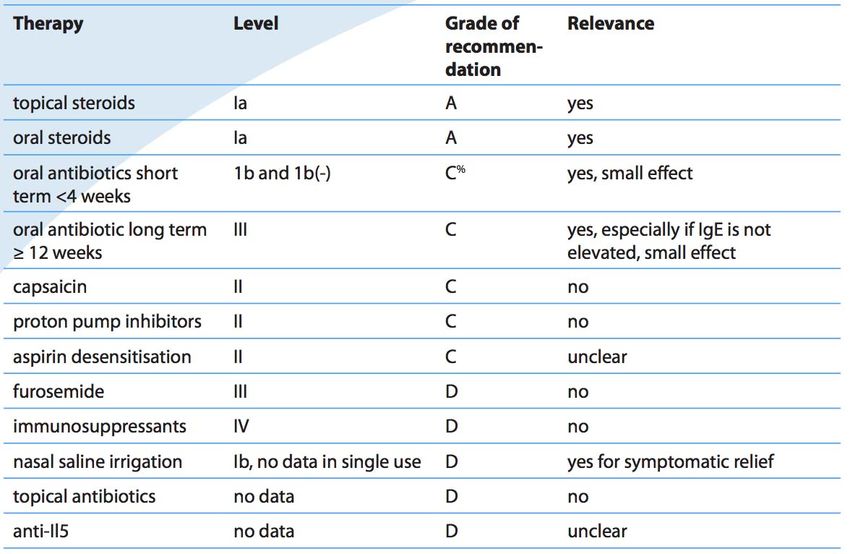
Disclosures

Research support:
NHLBI‐Supported Researcher
Self Care Catalysts: architect of Health StorylinesTM
app

Personal Fees:
AstraZeneca, GSK, Regeneron, Sanofi
42nd Annual Pulmonary and Allergy Update
Objectives

1. Discuss the epidemiology, biology, pathophysiology, and symptoms
   of CRS with nasal polyposis (CRSwNP).
2. Review treatment guidelines and recommendations for CRSwNP.
3. Review the many scoring systems used to evaluate CRSwNP.
4. Discuss in detail the Phase II and Phase III clinical trials using
   biologics for treatment of CRSwNP.
Nasal Polyposis Epidemiology
Prevalence = ~4%1; (CRS = ~11‐12%)2                                                                           Costs:
                                                Genetic inheritance = ~14%                       CRS = ~$8 billion/year2
Increases with age; peak ~50 years
                                                Caucasians = Th2‐driven inflammation.            Per patient per year: $13,000;
Male to female = 2:1                                                                             $26,000 if surgery performed.
                                                Asians = Th1‐driven inflammation.
Association with allergic rhinitis is weak.                                                      Surgeries/year = ~500,000
                            Disease                Prevalence estimates
                                                                                1.   Hastan, Fokkens, et al, 2011
                        Allergic rhinitis        Adult: 0.1%; Children 1.5%1    2.   Lange, Holst, et al., Clin Otolaryngol 2013.
                                                                                3.   Mygind. JACI. 1990 Dec;86(6 Pt 1):827‐9.
                            Asthma                         5‐22%                4.   Schleimer RP. Annu Rev Pathol. 2017;12:331‐57.
                                                                                5.   Hunter TD, DeConde AS, Manes RP. J Med Econ. 2018;21(6):610‐5.
                              CRS                        20‐25%1‐4              6.   Palmer JN, Messina JC, Biletch R, et al. Allergy Asthma Proc.
                                                                                     2018;39:1‐9.
                       NSAID intolerance                  36‐72%                7.   Pearlman AN, Chandra RK, Chang D, et al. Am J Rhinol Allergy.
                                                                                     2009;23(2):145‐8.
                 NSAID intolerance and asthma               80%                 8. Tomassen, Vandeplas et al, JACI, 2016

                    Allergic fungal sinusitis               80%
                  Eosinophilic granulomatosis               50%
                    with polyangiitis (EGPA)
                         Cystic fibrosis          Adult 40%; Children 10%
                   Primary ciliary dyskinesia               40%
                  Inflammatory bowel disease               17.5%
                       Atopic dermatitis                   16.5%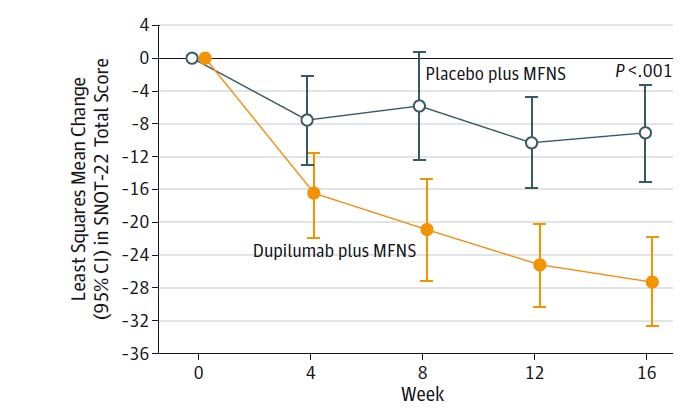
Definition: European Position Paper on Rhinosinusitis and Nasal Polyps
Rhinosinusitis in adults                                  Rhinosinusitis in children
                         Definition:                                               Definition:
• inflammation of the nose and the paranasal sinuses      • inflammation of the nose and the paranasal sinuses
characterized by two or more symptoms, one of which       characterized by two or more symptoms, one of which
should be either nasal blockage/obstruction/congestion or should be either nasal blockage/obstruction/congestion or
nasal discharge (anterior/posterior nasal drip):          nasal discharge (anterior/posterior nasal drip):
      o ± facial pain/pressure                                  o ± facial pain/pressure
      o ± reduction or loss of smell                            o ± cough
                         Summary definition: inflammation            of nasal cavity and
and either                                                and either
• endoscopic signs of: paranasal sinuses characterized           by 12 signs
                                                          • endoscopic   weeksof: of persistent
                         symptoms that include (1) congestion,
      o nasal polyps, and/or                                              (2) discharge,
                                                                o nasal polyps, and/or      (3) pain
      o mucopurulent discharge primarily from middle            o mucopurulent discharge primarily from middle
                         or facial pressure, (4) impairment        in sense of smell, and (5)
        meatus and/or                                             meatus and/or
      o edema/mucosal fatigue.
                          obstruction primarily in middle       o edema/mucosal obstruction primarily in middle
        meatus                                                    meatus
and/or                                                    and/or
• CT changes:                                             • CT changes:
      o mucosal changes within the ostiomeatal complex          o mucosal changes within the ostiomeatal complex
        and/or sinuses                                            and/or sinuses
                                                                            Fokkens, Lund et al. European Postion Paper on Rhinosinusitis and Nasal Polyps 2012.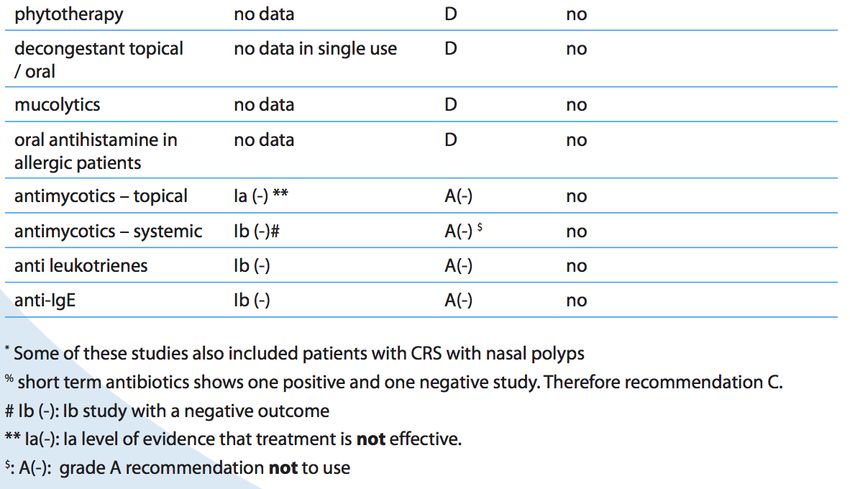
Question: Which of the following is false?

1. With a peak at ~50 years of age, nasal polyps are more common in
   males than females.
2. Caucasians are more likely to have Type‐inflammatory as a driver
   for nasal polyps than Asians.
3. Greater than 80% of patients with asthma and NSAID allergy have
   nasal polyps.
4. Allergic rhinitis is strongly associated with CRSwNP.
5. CRS is defined as inflammation of nasal cavity and paranasal sinuses
   characterized by 12 weeks of persistent symptoms that include (1)
   congestion, (2) discharge, (3) pain or facial pressure, (4) impairment
   in sense of smell, and (5) fatigue.
Question: Which of the following is false?

1. With a peak at ~50 years of age, nasal polyps are more common in
   males than females.
2. Caucasians are more likely to have Type‐inflammatory as a driver
   for nasal polyps than Asians.
3. Greater than 80% of patients with asthma and NSAID allergy have
   nasal polyps.
4. Allergic rhinitis is strongly associated with CRSwNP.
5. CRS is defined as inflammation of nasal cavity and paranasal sinuses
   characterized by 12 weeks of persistent symptoms that include (1)
   congestion, (2) discharge, (3) pain or facial pressure, (4) impairment
   in sense of smell, and (5) fatigue.
Definition: Acute vs. Chronic; Severity (EPOS)

                                                    Acute                                                    Chronic
 (1) < 12 weeks                                                                        (1) ≥ 12 weeks
 (2) Complete resolution of symptoms                                                   (2) Without complete resolution of symptoms (may be
                                                                                           subject to exacerbations)

    Visual Analog Scale (VAS): Rating system from 0
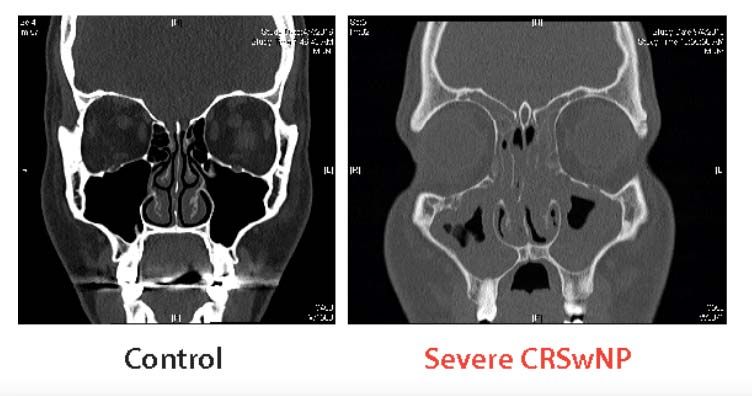
              (none) to 10 (most severe)                                                        Radiographic findings in CRSwNP

Fokkens, Lund et al. European Postion Paper on Rhinosinusitis and Nasal Polyps 2012.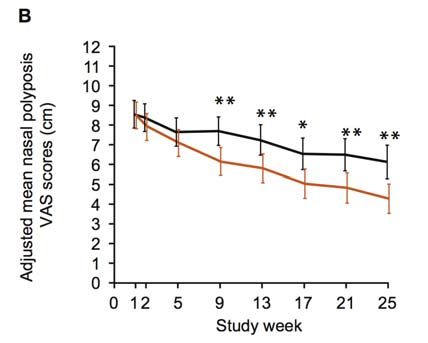
Histology of polyps
1. Described as a ‘fluid filled sack”
                                                                Edematous
   originating in the sinuses                                     stroma
2. Edematous and fibrotic stroma
3. Thickened basement membrane                Epithelial
                                                layer
4. Thickened epithelial layer
5. Eosinophils (> 60%); particularly
   prevalent between epithelial cell layer        Basement
   and thickened basement membrane.               membrane
6. Increased #’s of degranulated mast cells
7. Lymphocytes
8. B‐cells/lymphoid tissue
                                                    Cellular
                                                   infiltrate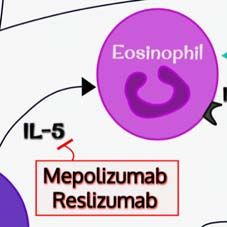
Mechanisms of Inflammation in Nasal Polyps
    Effectors                                                      Evidence                                            Likely role(s)
      Th2 cells                  (1) Elevated IL‐4, IL‐13 in nasal lavage                        IL‐4, IL‐5, and IL‐13, secreted by Th2 cells and ILC2 cells,
                                 (2) Success of dupilumab (anti‐IL4Ra/IL13Ra                     are the major drivers of NP formation.1‐2
                                     antibody)

    Eosinophils                  (1) 60% of NPs                                               (1) Accumulation of eosinophils via IL‐5 is likely first step
                                 (2) IL‐5 & eotaxin in nasal lavage                               in polyp formation
                                                                                              (2) Leukotriene production
                                               Summary definition of                          (3)Sacs
                                                                                         polyps:  Release of cytotoxicof
                                                                                                       consisting      and
                                                                                                                         a neurotoxic
                                                                                                                           thick products
     Mast cells                                basement
                                 (1) Degranulated  mast cellsmembrane       holding(1)
                                                             in NPs (IgE mediated?)  fluid  and eosinophils
                                                                                        Activates eosinophilic‐rich
                                 (2) Tryptase &inflammatory
                                                histamine in nasalcells
                                                                   lavagethat
                                                                          and NP    (2) Produce
                                                                              have grown     fromMMP‐9
                                                                                                   the &sinuses
                                                                                                          TGF‐betainto
                                                                                                                    ‐‐> remodeling
                                                                                                                          the
                                 fluid                                              (3) Leukotrienes production
                                               middle meatus.                       (4) Continuous release of histamine
         B cells                 (1) Lymphoid tissue in NPs                                      (1) IgE production contributes to inflammation.
                                 (2) IgE to staphylococcal enterotoxins within NPs
                                 (3) Elevated total IgE in patients NPs

  Epithelial cells               (1) Thickened, increased mucous‐producing cells                 Activated epithelial cells contribute to persistent
                                                                                                 underlying inflammation.
1. Khan A, Vandeplas G, Huynh TMT, et al. Rhinology. 2019;57(1):32‐42.
2. Peters AT, Spector S, Hsu J, et al. Ann Allergy Asthma Immunol. 2014;113(4):347‐85.
Microbiome alteration in patients with CRSwNPs.
Controls: mostly
AERD: many pathogenic S. Aureus has been
Corynebacterium, i.e.
bacterial species implicated in driving
normal flora
inflammation.Question: Which of the following is false? 1. Polyps can be described as ‘fluid filled sacs.’ 2. Polyps are characterized by a thickened basement membrane surrounding edematous and fibrotic stroma. 3. Eosinophils can make up over 60% of nasal polyps. 4. There are increased numbers of degranulated mast cells present. 5. Polyps typically originate in nasal cavity outside of the sinuses.
Question: Which of the following is false?

1. Polyps can be described as ‘fluid filled sacs.’
2. Polyps are characterized by a thickened basement membrane
   surrounding edematous and fibrotic stroma.
3. Eosinophils can make up over 60% of nasal polyps.
4. There are increased numbers of degranulated mast cells present.
5. Polyps typically originate in nasal cavity outside of the sinuses.
Affect of CRSwNP on Quality of Life is Significant and Underappreciated.

                         Early symptoms                                                                                                      Late symptoms
Rhinorrhea                                                                                Congestion (93.5% most common)
Sneezing                                                                                  Waking up tired (69.9%; 3rd most common)
                                                                                          Loss of sense of smell/taste
                                                                                          Pain or facial pressure
                                                                                          Fatigue
Quality of life issues*
•    Symptoms often last for many years
•    Socially unacceptable nasality of the voice
•    Loss of sense of smell and taste
•    Fatigue
•    Lack of sleep
•    Feelings of being ‘unwell,’ affecting confidence and self‐identity.
•    Using the SF‐36, NPs significantly reduced QoL across 7/8 domains, including bodily pain, general health, vitality, role emotional, social functioning, mental health, and role physical1
•    Leads to workplace absenteeism2
•    15% of patients have 4‐6 procedures in 8 years3

* Note: tools to define disease severity are not well defined at this point.

1.   Alobid, Benitez, et al. Allergy 2005.
2.   Sahlstrand‐Johnson P, et al, Rhinology 2011
3.   Bhattacharyya N, et al, Otolaryngol Head Neck Surg 2011
Treatment Evidence and Recommendations for CRS WITHOUT Nasal Polyps Fokkens, Lund et al. European Postion Paper on Rhinosinusitis and Nasal Polyps 2012.
Treatment Evidence and Recommendations for CRS WITH Nasal Polyps

                                            Summary: Mainstay of treatment are intranasal steroids,
                                            short courses of steroids, antibiotics and saline rinses; but
                                            only steroids are given a Grade A recommendation.

                                          Summary: In general, less likely to respond to antibiotics and
                                          more likely to respond to corticosteroids.

                                          Summary: Good evidence to support aspirin desensitization
                                          if +AERD.

                                          Summary: ~1/3 are not controlled with current standard of
                                          care approach.
Fokkens, Lund et al. European Postion Paper on Rhinosinusitis and Nasal Polyps 2012.
Question: Which of the following is false? 1. ~1/3 of patients with CRSwNP are not controlled with current standard of care approach. 2. It is recommended to give oral steroids must courses of 3 weeks or more. 3. CRSwNP subjects are less likely to respond to antibiotics and more likely to respond to corticosteroids. 4. Short courses of oral steroids are Grade A recommendation.
Question: Which of the following is false?

1. ~1/3 of patients with CRSwNP are not controlled with current
   standard of care approach.
2. It is recommended to give oral steroids must courses of 3 weeks or
   more.
3. CRSwNP subjects are less likely to respond to antibiotics and more
   likely to respond to corticosteroids.
4. Short courses of oral steroids are Grade A recommendation.
Steroids for treatment of CRSwNP
Topical Nasal Steroids Systemic Steroids
• Nasal steroid spray reduces rhinitis symptoms and • Short‐term use of oral steroids (1‐3 weeks) reduces
polyp size, delays the recurrence of polyps after polyp size and improves symptoms, although
polypectomy. improvements are typically temporarily.
Note: nasal steroids have limited effect on the • Associated with increased risks of gastrointestinal
size of nasal polyps. disturbance, insomnia and long‐term risks of
• Typically more effective in mild disease obesity, loss of bone mineralization, diabetes,
• Required after nasal surgery hypertension, heart disease.
Grade A Recommendation Note: Even repetitive short‐term use of
systemic corticosteroids is associated with
significant health risks.
• Recommended typically at short courses (5‐10
days) for severe nasal obstruction and always in
combination with topical nasal steroids.
Grade A RecommendationNasal Surgery
Nasal surgery ranges from simply polypectomy to full removal of polypoid mucosal tissue
from sinuses.
• ~500,000 CRS surgeries per year1‐2
• ~90,000 uncontrolled despite recent oral corticosteroids or surgery
• 59% undergo revision surgery
• 30% multiple surgeries, sometimes up to 15‐20X’s*
• 23% 4 or more revision surgeries (GALEN Study)
• 40% recurrence of polyps after surgery (~18 months)3
• Summary:
80% inadequately New
controlled and3 better
within therapies
to 5 years are needed to spare
after surgery
patients from repeated sinus surgeries and systemic steroids.
*Subsequent surgeries tend to take longer and be more difficult.
1. Bhattacharyya, Orlandi et al, 2011
2. Schleimer, Robert. Annual Rev Pathol. 2017
3. DeConde, Mace et al, The Laryngoscope, 2017.Mechanism of Action of the 5 Asthma Biologic Therapies Doroudchi, Mohini et al., Annals of Allergy, 2019
Phenotypes of Asthma

Doroudchi, Mohini et al., Annals of Allergy, 2019
Many Scoring Systems and Measures of Efficacy
Note: Correlation of endoscopy scoring systems and disease‐specific quality of life (QoL) measures have found no or (at best) weak correlations.1
Score Type Description
Ranges 0‐8. 0 = no polyps, 1 = polyps confined to the middle meatus, 2 = multiple polyps occupying
Total nasal endoscopic polyp
Endoscopic scoring system the middle meatus, 3 = polyps extending beyond middle meatus, 4 = polyps completely obstructing
score (TPS)
the nasal cavity. Both sides added.
Ranges 0‐24. The paranasal sinuses and ostiomeatal complex are assigned a score of 0 (no
Lund‐Mackay CT score
abnormality), 1 (partial opacification) and 2 (complete opacification).
UPSIT Symptom/QoL score Ranges 0‐40, measures olfactory improvement; higher scores 35‐40 = normal sense of smell
VAS Symptom/QoL score 0‐10 cm, asks ‘how troublesome are your symptoms of rhinosinusitis?”
SNOT‐22 Symptom/QoL score Validated, CRS‐specific outcome measure consisting of 22 items
Non‐CRS specific measure of health status that assesses physical functioning, physical role, bodily
SF‐36 QoL score
pain, general health, vitality, social functioning, emotional role functioning and mental health.
Symptom/QoL score Validated, CRS‐specific outcome measure consisting of 31 items and grouped into 7 domains:
RSOM‐31
nasal, eye, sleep, ear, general symptoms, practical problems and emotional.
Asthma‐specific, health‐related quality of life instrument including 32 items assessing both physical
AQLQ QoL score
and emotional impact of disease.
ACQ5 Symptom/QoL score Validated, simple questionnaire to measure the adequacy of asthma control.
Physiological
Nasal airflow (PnIF) Inexpensive, rapid, objective measure of the nasal airflow during maximal inspiration.
measurement
MOU2
Sniffin’ Sticks Screening Smell test 12 different odors presented and asked to identify a source from a list of 4 options.
1. Deconde A. International forum of allergy & rhinology. 2016.Slide 23 MOU2 Microsoft Office User, 1/15/2020
Dupilumab: FDA‐Approved for Treatment of Nasal Polyposis.
Mechanism What it means? FDA Approval
Type 2 cytokines, IL‐4 and IL‐13 drive many
(1) Atopic dermatitis (12 years and older) (300mg dose)
of the small airway and mucosal changes
Effectively and directly (2) Asthma (12 years and older) with an eosinophilic
associated with asthma.
blocks Type 2 phenotype (150mg or 300mg dose) or with oral
Binds the IL‐4 receptor α chain (IL‐4R),
inflammatory signaling corticosteroid dependent (300mg dose)
blocking both IL‐4 and IL‐13 receptors and
(3) Adults with CRSwNP
their signaling
Phase II Trial; DBRCT; 60 total patients; Dose = 600mg loading, 300mg weekly doses x 15
(Bachert et al., Effect of Subcutaneous Dupilumab on Nasal Polyp Burden in Patients With Chronic Sinusitis and Nasal Polyposis, JAMA, 2016)
Structure: 4‐week run‐in; 16 weeks of treatment, 16 weeks of follow up;
Treatment with mometasone furoate 100 mg each nostril twice daily during run‐in and through‐out
Inclusion criteria: Ages 18‐65, bilateral nasal polyposis refractory to steroids (at least 2 months of intranasal steroids)
Required:
(1) total endoscopic nasal polyp score ≥ 5 and a minimal 2 in each nostril
(2) ≥ 2 of the following symptoms: nasal obstruction or discharge, facial pain or pressure, reduction or loss of sense of smell
Exclusion criteria: (1) Received steroids, monoclonal antibodies, immunosuppressive treatment in last 2 months, OR (2) any nasal surgery in
last 6 months or > 2 NP surgeries total, OR previously part of a dupilumab trial.
Asthma patients (~50%) had to have FEV1 > 60% predicted, ICS dose ≤ 1000 g, no systemic steroids or hospitalization in 3 months
Primary Efficacy End Point = Δ total endoscopic nasal polyp score (BL Week 16) [included independent, blinded review of video
recordings]
Secondary Efficacy End Points = Δ Lund‐Mackay CT score, % maxillary sinus occupancy, SNOT‐22, UPSIT, PnIF, Patient rated reports of nasal
congestion or obstruction, anterior and posterior rhinorrhea, loss in sense of smell, nocturnal awakenings, and overall symptoms.
Exploratory End Points in Asthma = FEV1, ACQ5Phase II Dupilumab Trial Results
Population Baseline: 30 (Placebo) vs. 30 (Tx)
Endoscopic NPS • Age 47‐50 years
• M>F (53‐60%)
PnIF • 97‐100% White
• 53‐63% Asthma
• Endoscopic TPS: ~5.7‐5.9
• ∆ drop out rates: 23% (placebo) vs. 6%
(treatment)
Results
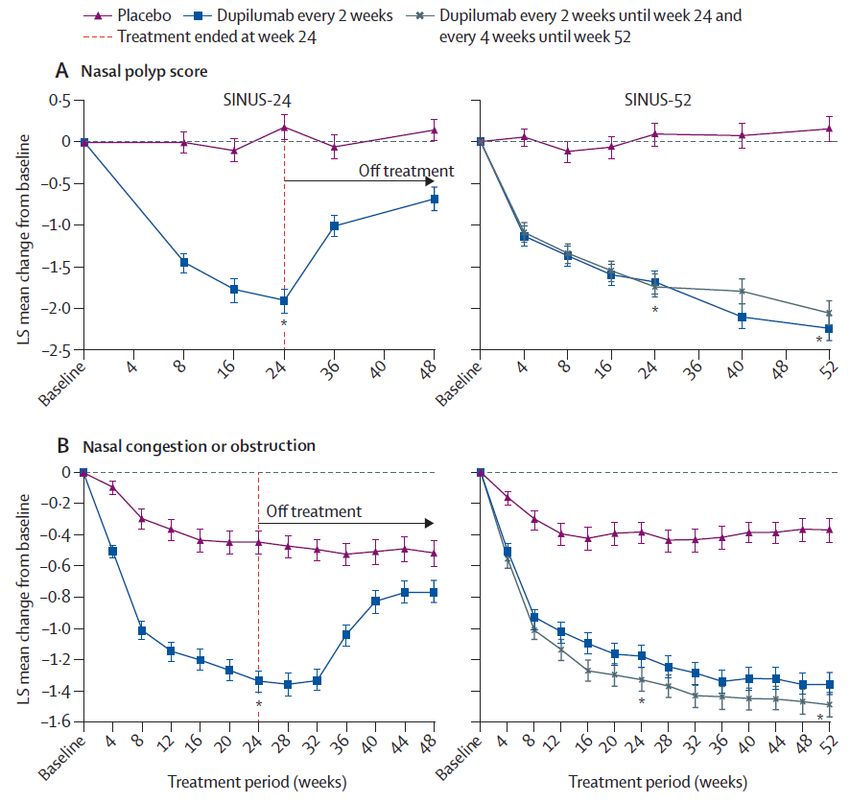
1. NPS score reduction: ‐1.9 vs. ‐0.3; PDupilumab: Phase III Trials (LIBERTY NP SINUS‐24 & SINUS‐52)
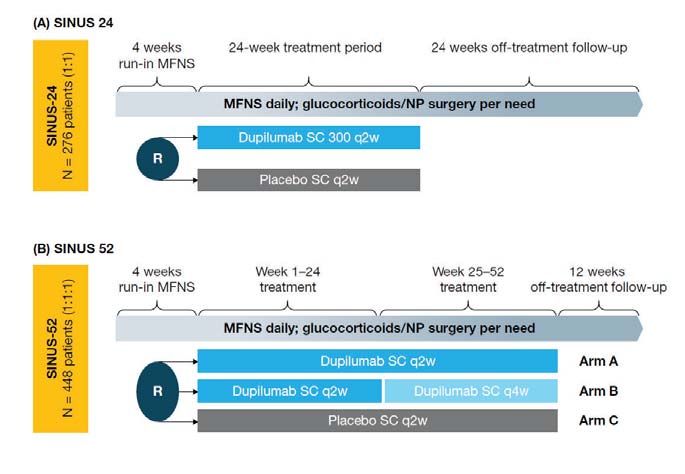
Phase III Trials; 2 DBRCT; 276 (LIBERTY NP SINUS‐24) and 448 (LIBERTY NP SINUS‐52); Dose = no loading,
300mg every 2 or 4 weeks
(Bachert et al., Efficacy and safety of dupilumab in patients with severe chronic rhinosinusitis with nasal
polyps (LIBERTY NP SINUS‐24 and LIBERTY NP SINUS‐52): results from two multicentre, randomised, double‐
blind, placebo‐controlled, parallel‐group phase 3 trials, Lancet, 2019) Study Designs
Structure: See diagram.
Treatment with mometasone furoate 100 mg each nostril twice daily during run‐in and through‐
out
Inclusion criteria: Ages 18 or older, bilateral nasal polyposis refractory to intranasal steroids
Required:
systemic steroids in the past 2 years (or intolerance to systemic steroids) OR previous sinus
surgery
Total endoscopic nasal polyp score ≥ 5 and a minimal 2 in each nostril
≥ 2 of the following symptoms: nasal congestion or obstruction, and at least one other
symptom: discharge, reduction or loss of sense of smell
50% with AERD or asthma
Exclusion criteria: (1) biologic/ immunosuppressive treatment in last 2 months, (2) experimental
monoclonal in last 6 months, (3) anti‐IgE in last 130 days, (4) any nasal surgery in last 6 months, (5)
previously part of a dupilumab trial, OR (6) antrochoanal nasal polyps, acute CRS, EGPA, CF, AFS, ciliary
disease
Asthma patients with FEV1 ≤ 50% predicted.
Primary Efficacy End Point = Δ total endoscopic nasal polyp score AND nasal congestion severity (based on
monthly average) [both NPS and Lund‐Mackay CT scan scoring was done centrally by masked review of the
video recordings]
Secondary Efficacy End Points = Δ Lund‐Mackay CT score, a composite severity score, SNOT‐22, UPSIT,
reported loss of smellPhase III Dupilumab Trial Results
Population Baseline:
Summary: Highly significant improvements in all objective
Age 50‐53 years
Endoscopic NPS M>F (53‐65%)
and subjective measures (PMepolizumab: Phase II Data Supporting Efficacy; Phase III Trials Completed.
Mechanism What it means? FDA Approval
IL‐5 = eosinophil development Effectively reduces blood and
and survival; promotes airway tissue eosinophils.
(1) Asthma (6 years and older) with an
inflammation. IL‐5 has key role in NP
eosinophilic phenotype (100mg dose)
Mepolizumab, an IL‐5 antibody, pathogenesis.
(2) Adults with EGPA (300mg dose)
binds and removes IL‐5 NP are characterized by local
systemically. eosinophilic inflammation.
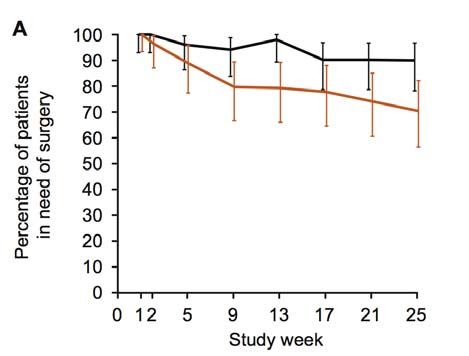
Phase II Trial; DBRCT; 105 total patients; Dose = 750mg IV every 4 weeks (only dose available at SoS)
(Bachert et al., Reduced need for surgery in severe nasal polyposis with mepolizumab: Randomized trial, JACI, 2017)
Structure:
Inclusion criteria: Ages 18‐70, severe recurrent bilateral nasal polyposis, 1 prior nasal surgery, refractory to steroids (at least
3 months of nasal steroids and 1 short course of oral steroids).
Required surgery according to:
(1) endoscopic nasal polyp score ≥ 3 in 1 nostril and minimal 2 on the other side AND
(2) VAS > 7 (how much trouble in each of the following: rhinorrhea, mucous in throat, nasal blockage, loss of smell)
Exclusion criteria: oral steroids continuously, recent biologics (≤12 months), recent hospitalization for asthma (≤4 weeks).
Primary Endpoint = no longer met criteria for surgery based on endoscopic nasal polyp score and VAS 4 weeks after final
dose (Week 25).
Secondary Endpoints = # meeting surgery criteria at each time point, ∆ VAS (total & individual; 25 weeks), ∆ TPS (25 weeks),
r
∆ SNOT‐22 (25 weeks), EuroQual 5‐Dimensions [EQ‐5D] (25 weeks), ∆ PnIF, Sniffin’ Sticks Screening‐12, lung function, blood
eosinophils and pharmacokinetics.Phase II Mepolizumab Trial Results
Population Baseline: 50 (Placebo) vs. 51 (Tx)
• Age ~50 years
2nd Phase II Results were Similar: [Gavaert, Van Bauaene et • al.,
M>FJACI, 2011]
Phase 2, DBRCT featuring 750mg IV every 4 weeks in adult• subjects
96‐98% (n=30)
White with
severe NPs (grade 3 or 4 or recurrent after surgery) refractory to steroids;
• 75‐81% Asthma (mild or moderate)
60% vs. 10% had improvement in TPS by 8 weeks [1.3
Need for surgery
• Highest VAS scores:vs.
score reduction nasal polyposis (~8.5), blockage
0.0; P=0.028] (~8), loss of sense of smell (~9)
VAS Scores
• Endoscopic TPS: ~6.3
55% showed CT improvement [Lund‐McKay]
• ∆ drop out rates: 37% (placebo) vs. 22% (treatment)
Results
Endoscopic NPS
1. Need for surgery: 15 [30%] vs 5 [10%]; P=0.006
37% vs. 8% in subset with aspirin sensitivity
Summary: Significant reductions in requirement of surgery
2. VAS score reduction: ‐2.9 vs. ‐0.8; P=0.001
with both objective (NPS, PnIF) and subjective evidence
3. NPS score reduction: ‐1.9 vs. ‐0.6; P≤0.05
(VAS, SNOT‐22) for improvement with treatment.
4. Individual VAS scores all significantly reduced
Interestingly, it did not depend on blood eosinophil levels. 23 vs. 11
5. SNOT‐22 Reduction:
6. LS mean PnIF higher at Week 25: ∆ 26.7; P=0.027
Individual VAS Scores 7. Baseline blood eosinophil count did not effect
response rates.Omalizumab: Phase II Efficacy Trial
Mechanism What it means? FDA Approval
Effectively reduces IgE; (1) Moderate to severe persistent asthma (6 years and
Binds to the Fc region of IgE and blocks its reducing mast cell older) with a positive skin test or in vitro reactivity to
binding to the high‐affinity IgE receptor, degranulation, IgE receptors a perennial aeroallergen
FceR1. Omalizumab reduces free IgE by 96%. and signaling effects on (2) Chronic idiopathic urticaria in adults and adolescents
immune cells 12 years of age and older
Phase III Trial; DBRCT; 24 total patients (23 treated); Dose = varied based on total IgE levels
(Gevaert et al., Omalizumab is effective in allergic and nonallergic patients with nasal polyps and asthma, JACI,
2012)
Structure: 2‐week run‐in period; 2:1 randomization; 16 weeks of Tx; 20 weeks total
Inclusion criteria: Ages 18 and older with CRSwNP and comorbid asthma (based on GINA guidelines and diagnosed
by a respiratory physician) for > 2 years and a total IgE between 30 and 700 kU/mL
Primary Efficacy End Point = Δ total endoscopic nasal polyp score (BL Week 16)
Note: Significant differences in polyp score grading noted from more recent scales.
Secondary Efficacy End Points = Δ Lund‐Mackay CT score, nasal and asthma symptoms, lung function testing, SF‐
36, RSOM‐31. AQLQPhase II Omalizumab Trial Results
Endoscopic NPS Population Baseline: 8 (Placebo) vs. 15 (Tx)
Rhinorrhea
• Age 45‐50 years; M>F (2:1)
• 50% aspirin sensitivity; 100% asthma
• 75‐87% with prior sinus surgery
• TPS ~6; Lund‐Mackay ~12
• FEV1 ~ 89‐99%
• Eos = 390‐475
Nasal congestion Loss of smell
Results
1. NPS score reduction: ‐2.7 vs. ‐0.12; P=0.02
2. CT score: 17.613.6 (‐4) vs. 17.818.3 (0.5)
3. QoL and Symptoms scores: UPSIT, AQLQ, SF‐
36, and symptoms of loss of smell, congestion,
rhinorrhea, physical health and AQLQOmalizumab: Phase III Trials (POLYP1 & POLYP2)
Phase III Trial; DBRCT; 138 (POLYP1) and 127 (POLYP2) total patients; Dose
= varied based on total IgE levels
(Gevaert et al., Omalizumab is effective in allergic and nonallergic
patients with nasal polyps and asthma, JACI, 2012)
Structure: 5‐week run‐in period; 1:1 randomization; 24 weeks of therapy;
4‐6.5% drop out rate; 4 week follow‐up period
Background therapy: Intranasal mometasone furoate
Inclusion criteria
NPS ≥5 with score of ≥2 for each nostril;
SNOT‐22 score ≥20 at baseline
Treatment with nasal mometasone 200 µg BID (or QD if
intolerant to BID) during run‐in, with ≥70% adherence
Treatment with nasal mometasone ≥200 µg QD (or equivalent
of another INCS) for 1 month prior to first screening visit
Nasal congestion score (NCS) ≥2 (with presence of nasal
discharge and/or reduced smell) at first screening visit and
weekly average NCS >1 at randomization
Eligibility for dosing (i.e., serum IgE level ≥30 to ≤1500 IU/mL
and body weight ≥30 to ≤150 kg at screening)
Exclusion Criteria: (1) Treatment with immunosuppressants, other than systemic steroids, in prior 2 months, (2) Nasal surgery in last 6 months, (3)
Treatment with leukotriene antagonists/modifiers, unless stable dose for ≥1 months, (4) anaphylaxis/hypersensitivity to omalizumab, OR (5)
Treatment with investigational drugs in past 12 weeks or monoclonal antibodies in past 6 months
Co‐Primary Efficacy End Point = Δ total endoscopic nasal polyp score (BL Week 24); Δ daily NCS (BL Week 24)
Secondary Efficacy End Points = Δ in total nasal symptoms score (TNSS), SNOT‐22 and UPSIT (BL Week 24)Phase III Omalizumab Trial Results – Primary Efficacy End Points
Population Baseline:
• Age ~49‐52 years; M>F (62‐67%); 32‐42% Asthma (3‐16% severe)
• Endoscopic TPS: ~6.1‐6.3
• Eosinophil counts: 310‐357 cells/L
Need for surgery
VA Scores
Individual VAS ScoresPhase III Omalizumab Trial Results – Secondary Efficacy End Points
POLYP 1 POLYP 2
Omalizumab Placebo P value Omalizumab Placebo P value
Mean Change From Baseline to Week 16 (n=72) (n=66) (n=62) (n=65)
NCS at week 16 (0–3) −0.89 −0.32 < 0.0001 −0.80 −0.21 < 0.0001
NPS at week 16 (0–8) −0.98 0.03 < 0.0001 −1.20 −0.29 0.0002
Mean Change From Baseline to Week 24
SNOT‐22 (0–110) −24.70 −8.58 < 0.0001 −21.59
Need for surgery−6.55 < 0.0001
Sense of smell score (0–3) −0.56 −0.23 0.0161 −0.58 −0.13 0.0024
TNSS (0–12) Summary: Significant
−2.97 improvements
−1.06 in both objective
0.0001 VA Scores and
−2.53 −0.44 < 0.0001
Patients with comorbid asthma
subjective measures
42
on therapy
32
with results observed
38
as
39
AQLQ ≥ 0.5 (MCID), n (%)* 20/37 (54.1) 9/31 (29.0) 0.0492 20/35 (57.1) 12/38 (31.6) 0.0396
Postnasal drip score (0–3)
early as Week 4.−0.72 −0.16 0.0001 −0.55 −0.00 0.0001
Runny nose score (0–3) −0.77 −0.34 0.0023 −0.70 −0.08 < 0.0001
UPSIT smell assessment (0–40) 4.44 0.63 0.0024 4.31 0.44 0.0011
Omalizumab Placebo
Pooled Outcome (n=134) (n=131)
P Value
3/129 (2.3%) 8/129 (6.2%)
Required rescue treatment (SCS for ≥ 3 consecutive days or
62.5% relative reduction in systemic steroid usage but with small number of 0.1639
NP surgery), n (%)
steroid‐requirement events and not statistically significant
*Not significant per SAP or not included in the type 1 error control plan. AQLQ, asthma quality of life questionnaire; NCS, nasal congestion score; NPS, nasal polyps score; SNOT‐22,
sinonasal outcome test 22; TNSS, total nasal symptom score; UPSIT, University of Pennsylvania smell identification test.Future direction: Algorithm Development and Endotyping Efforts
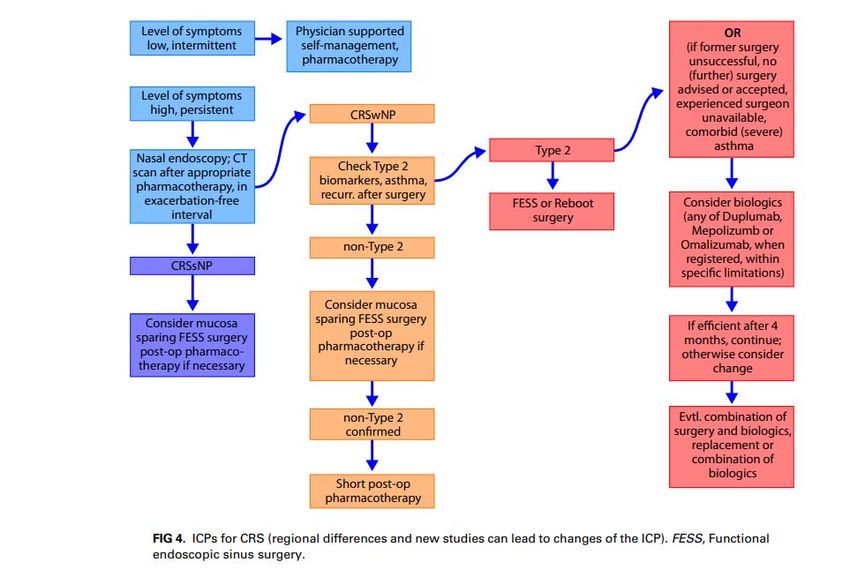
Type 2 ‘High’ vs. Type 2 ‘Low’:
Bachert, Zhang et al. Endotype‐drive care pathways in patients with chronic
rhinosinusitis, Clinical reviews in allergy and immunology, JACI, 2018. Possible markers of Type 2 disease: Caucasian, comorbid asthma
(early and late onset), history of atopic march, blood eosinophilia,
high blood IgE, multiple positive skin tests or blood specific IgEs,
sputum eosinophilia, high Type gene signature in airway epithelial
cell brushings, AERD, recurrence after sinus surgery.True or False? For most patients, newer biologics are preferable to sinus surgery for the initial treatment of polyps because surgery costs more, it has higher morbidity, and is more than likely going to be unsuccessful anyway.
True or False? For most patients, newer biologics are preferable to sinus surgery for the initial treatment of polyps because surgery costs more, it has higher morbidity, and is more than likely going to be unsuccessful anyway. FALSE, surgery will likely be successful, and will be cheaper for most patients. Biologics will play a role in those with disease that is refractory to surgery and first line therapies.
Summary Statements
• Nasal steroids and short courses of oral steroids are the only Grade A
  recommendations, although it’s common practice to recommend
  saline rinses.
• Antibiotics are more recommended with CRSsNP than CRSwNP.
• Dupilumab FDA‐approved for CRSwNP
• Omalizumab Phase II and III trials were both positive.
• Mepolizumab Phase II trials positive, Phase III trial ended Dec. 2019
• With a ~60% success rate and costing ~$15‐20K, surgery likely the best
  first option prior to biologic therapy.
• If AERD, consider aspirin desensitization procedure & biologic therapy
  after nasal surgery.
You can also read


