NEW SKILLS FOR THE NEW ECONOMY - THE LEEDS TALENT AND SKILLS PLAN 2017-2023 - Leeds City Council
←
→
Page content transcription
If your browser does not render page correctly, please read the page content below

NEW SKILLS FOR
THE NEW ECONOMY
THE LEEDS TALENT AND SKILLS PLAN 2017-2023

2 LEEDS TALENT AND SKILLS PLAN
CONTENT

                               1. CONTEXT                      00

                               2. COLLECTIVE CALLS TO ACTION   00

                               3. SECTORES AND INTERVENTIONS   00

                               4. CONCLUSION AND NEXT STEPS    00

LEEDS TALENT AND SKILLS PLAN                                        3
4 LEEDS TALENT AND SKILLS PLAN

FOREWORD BY THE LEADER OF THE COUNCIL

Earlier this year I was pleased to present the Leeds Inclusive Growth Strategy for consultation. The Leeds Talent and Skills
Plan builds on that firm commitment to inclusive growth, enabling everyone to benefit from the growing strength of our
economy, through the development of the skills and talent our businesses and our city need.

Skills and talent are fundamental to our continuing economic success. Increasingly it is skills, not just qualifications, that
employers look for first – whether they be in the private sector, where Leeds is home to global as well as local businesses,
many of them small and medium sized enterprises, or in our significant public sector bodies across health, government,
and education.

The City’s continuing economic growth creates both opportunities and challenges. The pace of growth is outstripping the
supply of skilled labour in some key sectors and businesses invest where they can recruit the workforce they need. Brexit
is already impacting the supply of skilled workers from abroad and we need to seize the opportunity now to invest in and
grow the City’s talent pool.

We recognise that we need to do more as a city to improve the skills of our people, creating a better match between what
employers are looking for and the system provides. That includes making better links between industry and education,
helping to bridge the gap between learning and the application of learning, and enabling everyone to better understand
how the skills needs of the city are changing as our economy changes.

This plan sets out how as a city we can collectively improve the supply of skills that our residents need to play a full and
more productive part in the labour market, and that our businesses need to thrive, helping to create a more inclusive
                                                                                                                                 Councillor Blake, Leader,
economy in a compassionate city. It draws on much existing good practice both within the council and the city, including our
More Jobs, Better Jobs Breakthrough Project, but also in the wider city region and nationally, where we have led the way in
                                                                                                                                 Leeds City Council
calling for growth to be more inclusive and equitable.

As well as putting forward interventions in support of specific sectors, the plan sets out a series of actions for growth in
the form of six challenges. Those challenges are, I believe, shared by stakeholders across the city – and I welcome their
support in making our case to Government for real change in the education and skills system. We have already done a
great deal to be proud of as a city, and are committed to doing more. In some cases that will require new and meaningful
commitments from Government to help us build a truly inclusive economy, recognising that we as a city know our needs
best.

As part of this plan we are seeking firm commitments from businesses and stakeholders to offer support for our city. As
in the Inclusive Growth Strategy, some major stakeholders have already indicated their enthusiasm for working with us to
achieve our ambitions, and we look forward to developing these commitments, and welcoming further pledges, through the
consultation period.

LEEDS TALENT AND SKILLS PLAN                                                                                                                                 5
6 LEEDS TALENT AND SKILLS PLAN

INTRODUCTION

This Plan provides a framework for improving the supply       insecurity, and the Plan recognises the importance that
of skills that our residents need to play a full and more     low wage sectors have in our economy and how we might
productive part in the labour market (whether through         address improving productivity in them. While some
direct employment or self-employment), and that our           sectors may not experience high levels of employment
businesses need to thrive, helping to create a more           growth, such as manufacturing for example, they still
inclusive economy in a compassionate city. It sets out a      provide jobs and incomes, and many have high job
series of actions for growth in the form of six challenges,   replacement requirements and support essential public
as well as putting forward interventions in support of        services such as social care.
specific sectors.
                                                              Building a Plan centred on inclusive growth means
There is a need to raise our collective game on skills to     providing everyday jobs in everyday places. The people
ensure everyone in the city contributes to and benefits       of Leeds will be at the heart of the Plan, from equipping
from the economy to their full potential. There is a need     our young people with the right skills and careers advice,
to do more to tackle productivity, but also poverty, which    to enabling in-work progression, retraining and lifelong
is driven not just by worklessness but by low pay and job     learning in our ever changing labour market.

LEEDS TALENT AND SKILLS PLAN                                                                                               7
8 LEEDS TALENT AND SKILLS PLAN

1. CONTEXT

LEEDS TALENT AND SKILLS PLAN                9

Leeds is an economically buoyant and thriving
city, the key driver of the Leeds City Region, and a
primary driver of the Northern Powerhouse.

10                                                     LEEDS TALENT AND SKILLS PLAN
THE STARTING POINT OF OUR JOURNEY

Leeds is an economically buoyant and thriving city, the              We can reflect positively on the role that the Council and                 to promoting apprenticeships as a meaningful and
primary economic driver of the Leeds City Region, and a              our partners have played in this success. We have not just                 rewarding pathway to a career through our support of
key driver of the Northern Powerhouse economy.                       sat back and left it to the market to provide the economic                 the annual Leeds Apprenticeship Recruitment Fair, the
                                                                     recovery. We have intervened proactively to kick-                          biggest such event in the North of England. Through the
The city’s economy is performing well, with 8% growth                start development and regeneration projects, support                       use of obligations on Council contracts and planning
since the end of June 2014 giving it a higher growth                 businesses to grow and invest, and to help people into                     permissions, we have supported over 2,300 people into
rate than London since the launch of the Northern                    work. Whether it be stepping in to unlock development                      work, an approach recognised by independent evaluation
Powerhouse programme, and outperforming the capital                  as the city faced and then emerged from recession,                         as best practice nationally, and now adopted by the West
and Manchester in terms of job creation rates (9.5%).                working in partnership with the private sector to bring                    Yorkshire Combined Authority in its procurement of major
The city is experiencing the fastest private sector jobs             forward the South Bank and Aire Valley Enterprise Zone,                    development schemes.
growth of any UK city. Leeds has one of the highest rates            forward funding the new railway station at Kirkstall
of business start-ups and scale-ups amongst UK cities.                                                                                          So there is much to be positive about, despite the
                                                                     Forge, helping bring forward a major brownfield
We are a smart city: with a high proportion of knowledge                                                                                        challenging economic climate following the recession.
                                                                     development project with 1000 new homes, to using our
intensive jobs; the University of Leeds spins out more AIM                                                                                      And the future also looks increasingly healthy: Leeds’
                                                                     funding to secure a substantial programme of European
listed companies than any other UK university, and the                                                                                          economy is set to grow by 12.8 per cent in the next 10
                                                                     Structural Investment Funded employment support for
city experiences a “brain gain” with more undergraduates                                                                                        years.
                                                                     residents furthest from the labour market (in partnership
and graduates moving into the city than leaving. Leeds is            with the City of Bradford), to our ongoing commitment
a top five UK retail and tourism destination.

                                      GVA In Leeds (2009 To 2015 Actual; 2016 To 2023 forecast)
                                                                                                                              Positive growth of 6.4% per annum
                                           40                                                              High
                                                                                                         scenario
                                                                                                                              results in £11bn in additional GVA
                                           35                                                                                 between 2017 and 2023.
                                           30
                                           25
                               GVA (£bn)

                                                                                                                              GVA growth continues at trend rate of
                                           20                                                             Central
                                                                                                         scenario
                                                                                                                              2.0% per annum. This results in £3bn
                                           15                                                                                 additional GVA over the plan period.

                                           10
                                            5
                                                                                                                              GVA stagnates and so there is no
                                                                                                           Low
                                                                                                         scenario
                                                                                                                              change from the 2015 level of GVA.
                                              97
                                              99
                                              01
                                              03
                                              05
                                              07
                                              09
                                              11
                                              13
                                              15
                                              17
                                              19
                                              21
                                              23
                                           19
                                           19
                                           20
                                           20
                                           20
                                           20
                                           20
                                           20
                                           20
                                           20
                                           20
                                           20
                                           20
                                           20

                                                                Central     Low      High                           Source: Regional GVA, ONS (2016); Volterra forecast

LEEDS TALENT AND SKILLS PLAN                                                                                                                                                                             11
While growth is positive, it is also a challenge. In some Joseph Rowntree Foundation (JRF) and Leeds City means our education providers: our schools, colleges,
sectors, the pace of growth is outstripping the supply of Region Enterprise Partnership (LCREP), the “More Jobs, universities, and training providers, need to do more to
skilled labour, leaving us dependent on in-migration or Better Jobs” research programme was established in ensure the supply of labour is adequate and appropriately
at risk of companies relocating elsewhere to be closer February 2013 to provide a 4 year programme of practice skilled.
to supply. That risk is likely to be exacerbated by the focused research to identify what can be done, by whom,
This is not just a social ask: there are clear and sound
process of leaving the European Union and the impact at city and city-region level to create more and better
economic and fiscal benefits too. The more residents we
on economic migration and the supply of skilled workers jobs that help lift people and places out of poverty. The
can move into economic activity, and good jobs, the less
from abroad. Council has been implementing some of the findings
we will spend on employment welfare and other benefits.
from this research through our More Jobs, Better Jobs
The other risk is that growth is not inclusive. The The more income residents will have to spend locally. The
Breakthrough Project, accelerating new ways of working
Council’s ambition is to see a strong economy in a city lower the demands will be on our health and social care
and delivery through partnerships between Council
that is compassionate, and where all our residents can services, including mental health support. The benefits
services and partners.
benefit from inclusive growth. We do not wish to just of a household with people in work, good work, and no
see jobs, but good jobs – a key theme of our partnership We are not going to say that this is easy. Employers are longer in poverty, and the positive impact this has on
with the Joseph Rowntree Foundation and the Leeds City already under strain from a range of policy interventions children and other dependents, their school attendance
Region Enterprise Partnership. Better jobs are jobs that and legislative commitments that we touch on shortly. and attainment, and their own ambitions for a working
enable progression, that avoid the social and economic To have a labour market that is more inclusive and life, are profound and far-reaching.
challenges of low pay, and in-work poverty. economically productive, we need more of our residents
to be equipped with the skills that employers need. That
Text box: Through the Council’s partnership with the
Growth scenarios – 2017 to 2023
Additional Additional • Reducing
Jobs GVA unemployment
UNCERTAINTY AND EXOGENOUS FACTORS
• Invest in skills and
R&D
LEVEL OF POSITIVE INTERVENTION
High
62K £11bn
scenario • Inclusive growth
• Boost exports
• Support start-up
and scale ups
Central
21K £3bn
scenario
• Uncertainty caused
by Brexit
• R&D funding
limited
Low
(39K) £0bn • Poor national
scenario
economic
performance
12 LEEDS TALENT AND SKILLS PLANAS WITH THE CITY’S DIGITAL SKILLS ACTION PLAN, THE PLAN SEEKS TO INFORM
AND SHAPE THE MARKET SO THAT PROVIDERS CAN BRING FORWARD SOLUTIONS –
NOT OFFER A PRESCRIBED APPROACH. THAT SAID, THREE PRINCIPLES UNDERPIN IT
AND THE ACTIONS WE HOPE WILL BE TAKEN AS A RESULT OF IT:
1 2 3
GOOD GROWTH IS INCLUSIVE, EQUITABLE ALIGN AND COMPLIMENT THE LIVING PLAN
AND SUSTAINABLE
The interventions that are proposed here and The Plan should be a living document which
It is not detached from local people, and should brought forward should be aligned to and changes in both ambition and actions as time
not happen around people, rather it should directly complement existing provision where that is passes. It should not be static, or unchanging, as
enhance their opportunities and maximise the appropriate. Activity should not duplicate existing this would undermine the action focused principle.
potential for them to benefit from a strong economy. work, although challenge should be welcomed. While we hope all actions will be achieved,
This Plan seeks to enable all of our residents to circumstances and events will give rise to more
contribute to inclusive economic growth, countering needs which the living Plan should accommodate
disadvantage and inequity and address
LEEDS TALENT AND SKILLS PLAN 13THE NATIONAL CONTEXT
The education and skills landscape at the local level construction, digital, engineering and manufacturing,
is profoundly affected by decisions made by the health and science, and social care. While the introduction
Government and a range of executive agencies including of such qualifications and a focus on technical education
the Education and Skills Funding Agency, the Institute is welcome, this is long overdue, and the impact on the
for Apprenticeships, and others. While devolution is an labour market of these developments will be subject
important part of our plan, and we set out a number to a lag, even if the traditional perception of vocational
of interventions in this document that make asks of qualifications as being ‘second choice’ can be overcome.
Government for powers, freedoms and flexibilities,
At the time of writing, the impact of Brexit on the labour
national policy will continue to have a huge impact on
market in the short, medium and long term is unclear.
what we can achieve here in the city, and how we achieve
This Plan does not seek to forecast what that impact will
it.
be, or even to speculate, other than to state that is likely
It is worth, then, setting out very briefly some of the to be very significant in a number of ways. The Plan, and
policy and economic context in which the Plan is set. This the interventions contained in it, seek to build flexibility
does not seek to be exhaustive or comprehensive as the into the local labour market, but at some point in the
context is so broad, but highlights issues which we think not too distant future it may be necessary to revisit this
are key. thinking when clarity around the impact of Brexit is better
understood.
From the perspective of employers, education providers,
and learners, the last two years have seen what could The changing face of the labour market is something we
reasonably be called a revolution in education and skills need to recognise. The rise of the gig economy, zero hours
policy and funding including: contracts, and an increase in insecurity of work, is likely
to continue. This seems to be the trade-off for increasing
• Mandatory pension provision and auto-enrolment
volumes of work.
• The national minimum wage and the national living
wage Increasing automation of tasks, increasingly including
those in service industries, is a challenge that is already
• The change from apprenticeship frameworks to
on us. The development of artificial intelligence and its
standards, apprenticeship funding reforms, and the
application to the world of work might lead to the loss of
Apprenticeship Levy
around 47% of jobs. Those may be replaced by new jobs,
The Government has recently set out a strong focus but they will be different, requiring new skills. We need
on technical and vocational skills through the Post-16 to be alert to these changes and ensure our skills system
Skills Plan and the announcement of the development can respond to them.
of T-levels, with 15 proposed study routes including
14 LEEDS TALENT AND SKILLS PLANTHE REGIONAL CONTEXT
Leeds is the main economic centre for Leeds City Region,
and a driver of growth for Yorkshire, the Northern
Powerhouse and the national economy. This plan
aligns with and contributes to the Leeds City Region
Employment and Skills Plan and will contribute to the
delivery of inclusive economic growth with the Leeds City
Region Local Enterprise Partnership and West Yorkshire
Combined Authority, partners across Yorkshire, the
Northern Powerhouse and, in the context of the national
Industrial Strategy, with central Government.
RIPON
Across the City Region, at district level and below, there
are marked differences in how jobs are distributed and SETTLE
the skills profile of its residents, however, there are
many common challenges. Inclusive growth requires
HARROGATE
collaboration to deliver the improved connectivity between
SKIPTON YORK
people and jobs at both the overall City Region level but
also within the local labour market. We will continue to
work with our city region partners to make sure we have
a skills and employment support system that works for all
and that the City can play its part in shaping and delivering
BRADFORD LEEDS SELBY
any future devolution deal.
HALIFAX
WAKEFIELD
HUDDERSFIELD
BARNSLEY
LEEDS TALENT AND SKILLS PLAN 15THE LOCAL CONTEXT
Leeds is an economically buoyant city, experiencing telecoms and data storage infrastructure, and creative to four universities, one of the largest colleges in the
the fastest private sector jobs growth of any UK city. products and services being created. country in Leeds City College, and specialist provision
It has the largest city concentration of financial and through Leeds College of Building and Leeds College
The city’s leisure and retail offer has been transformed
professional services and digital jobs in the UK outside of Music, many of which have undertaken significant
in recent years through the First Direct Arena, Trinity
London. It is a major hub for health innovation, data expansion programmes in recent years, supported by the
Leeds, and Victoria Gate. New office space has been
analytics, innovative manufacturing, and knowledge Leeds City Region Skills Capital funding. Our education
created in the city centre, at Kirkstall Forge, Thorpe
intensive jobs. The city also has the second highest institutions offer a broad range of qualifications, including
Park and White Rose, and major new industrial spaces
productivity levels (GVA per hour) of the core cities. There apprenticeships and degree apprenticeships, which are
developed in the Aire Valley Enterprise Zone, Thorpe Arch
are positive signs of wage growth, with average earnings increasingly developed in partnership with employers,
and West Leeds. While the arrival of High Speed 2 rail
increasing 6% over 2014 – 2015. and encourage work placements so that students can
is over a decade away, the city region is already putting
develop their experience of the world of work while
Leeds is a great place to start-up and scale up in place a strategy to ensure residents and businesses
studying. Many of our schools are rated as good or
businesses, and to commercialise innovation. The city benefit from the transformational opportunity it offers,
outstanding by OFSTED, and there are a range of partners
has the highest number of fast growing firms in the both in terms of the project and the wider economic and
working to improve connections between the business
UK outside London and Cambridge. In recent years the employment growth we are forecasting it will deliver.
community and schools.
University of Leeds has created more than 100 spin Residential development is increasing – over 3,300 new
out companies, the second highest number of any UK and converted homes were developed in Leeds last year,
university. the highest number across the Core Cities.
There is dynamism in the Leeds economy with new firms, We have significant educational assets in the form of our
digital products and processes, medical technologies, higher and further education institutions, being home
+ =
HIEGHER EDUCATION FURTHER EDUCATION TOTAL
62,745 33,500 96,245
16 LEEDS TALENT AND SKILLS PLANEmployment support is available to many residents, Region Enterprise Partnership, and in recent years the
through statutory provision in Job Centres, to the Council’s West Yorkshire Combined Authority, to drive growth at the
own network of Job Shops, which in 2016/17 helped sub-regional level, and especially in making the case for
over 6,500 people into work. Substantial programmes of increased devolution of powers and funding to drive our
support secured from European funding, such as the STEP economic future. We share the city region’s ambitions for
programme, will support over 1,500 residents from hard to growth, and support the Strategic Economic Plan and the
reach backgrounds into work by 2019. Our adult learning Employment and Skills Plan – ‘Skilled People, Better Jobs’.
programme supported over 7,500 people to learn new Many of our own ambitions for the city can only be achieved
skills in 2016/17, and we are seeking the full devolution of through working in partnership at the city region level,
the adult education budget from central government to the where key programmes such as the Skills Service, which
city region to ensure provision is more closely matched to has supported over 9,000 people to acquire new skills
the needs of learners and the city. while in work, are delivered, and the Enterprise Advisor
Programme, which has connected over 100 business
While this Plan focuses on the city, we recognise and
leaders and over 130 schools since February 2016. The
welcome our role as the key driver of the Leeds City Region.
Talent and Skills Plan is strongly aligned to these city
The Council works in close partnership with the Leeds City
region ambitions and programmes of activity.
LEEDS TALENT AND SKILLS PLAN 17WHAT ARE THE CHALLENGES?
Not everyone is benefiting from or contributing to At the very beginning of the skills supply chain, while employers collaborate with education providers to
economic growth to their full potential. Over 170,000 many of our schools are rated as good or outstanding, develop skills provision are being brought forward.
people in Leeds live in neighbourhoods that are ranked in we know that poor educational attainment is an issue for
And whilst in addition to this, many employers are leading
the 10% most deprived neighbourhoods in England. Over a number of our young people, including at GCSE level.
the way in terms of staff development, apprenticeships,
26,400 children were living in poverty in the city in 2015. While there is a debate to be had about the relevance
creating opportunities for school leavers, career
Unemployment has been reducing, but is still too high in of GCSE qualifications to what makes a young person
changers, people returning to the workforce, and those
some parts of the city. a productive employee, it is inescapable that this basic
with health barriers and disabilities, more can be done.
level of attainment is usually fundamental to achieving
A fast changing economy has implications for the skills
employment, whether in a job or apprenticeship.
people need to access jobs, progress within their careers
and be resilient to economic shocks. Low pay is a growing More broadly, skills levels in the city are not adequate.
issue. It is estimated that one-fifth of all Leeds working As the requirements of employers evolve, an increasing
residents earned less than the Real Living Wage (as number of employees with higher level skills (level 4
defined by the Living Wage Foundation) in 2016, affecting and above ) are needed. The city does not have them.
nearly 65,000 residents. In fact, a number of our residents do not have any
qualifications at all, and far too many have only Level 1
Productivity (the economic output per worker / hour
and 2 qualifications. We have seen and continue to see
worked) in the Leeds economy has not risen significantly
a hollowing out in the labour market, where mid-skilled
since the recession, and lags well below the national
jobs decline and low and high-skilled jobs increase, and
average, in common with our northern peers. This is
too many of our residents are being left behind by this
partly because firms held on to workers in the downturn,
change. In a new economy, with new jobs, people need
and people have taken lower paid jobs or become self-
new skills and improved skills in order to share in the
employed. But it also reflects insufficient investment in
benefits of growth.
training, exports, research and development, premises
and plant, and infrastructure. If we can raise productivity, The Council and its partners in the Leeds City Region are
we can increase the value and resilience of economic already taking steps to address some of these challenges
activity. through the delivery of a range of programmes. These
include support for individuals already in employment
Worklessness and skills sits at the root of all of these
to help them acquire new and improve existing skills,
issues. Without a concerted drive to improve skills (not
opening up new possibilities for progression and
necessarily qualifications) the city will never be able to
increased pay, delivered by a consortium of West
approach its full economic potential.
Yorkshire FE colleges. New programmes to support
18 LEEDS TALENT AND SKILLS PLANLEEDS TALENT AND SKILLS PLAN 19
20 LEEDS TALENT AND SKILLS PLAN
2. COLLECTIVE CALLS TO ACTION

LEEDS TALENT AND SKILLS PLAN                                   21
WHAT AND WHY?

22                   LEEDS TALENT AND SKILLS PLAN
There are a number of significant issues which the city needs to tackle in order to achieve
                               the ambition to address skills gaps and shortages and enable our residents to achieve their
                               full economic potential. These issues are framed as our city calls to action, as achieving
                               them will only happen through all stakeholders working together. Additionally, some of
                               them can only be achieved through the support of Government in progressing devolution of
                               powers, freedoms and flexibilities. In some cases this will require a collective voice greater
                               than just Leeds, working through partners such as the Northern Powerhouse (where Leeds
                               is the lead city on skills), or the Core Cities.

                               The first three calls are reflective of the same ‘big ideas’ set out in the Growth Strategy, but
                               focus more on the skills and employment aspects of those ideas.

LEEDS TALENT AND SKILLS PLAN                                                                                                      23
1 We are committed to building our Skills Plan around
the city’s children and young people. Investing in
systemic change. Young people are not emerging
from the education system ready for the world of
children offers the greatest returns and we are work, and with unclear or unrealistic career ambitions
committed to giving our children the best start are far more likely to spend time not in education,
possible, research shows that the most cost effective employment and training, or stuck in a trap of low pay
public sector investment is in the early years, with and low skills. Schools are not preparing them for
benefits through childhood and into adult life and work, partly because of the all-encompassing drive for
work. results, meaning many school leaders and teachers
PUTTING CHILDREN are not familiar with modern labour markets and
AT THE HEART OF THE We will continue to protect and promote the
are not incentivised to prepare pupils for the world
SKILLS PLAN successful and vital network of early years services,
of work. Government has not put in place structures
providing support to parents and carers to enter, stay
that will challenge this, and our challenge to them is
and progress in work, through children’s centres
to work with us to develop an approach to careers
• Strengthening the role of schools in and childcare, and more targeted services such as
education that works.
developing students to contribute to the the Stronger Families initiative. We will also work
economy to their full potential, including with employers to encourage and support parents We will work with businesses and schools to
getting them ready for the world of work, returning to work after a period of childcare, including improve careers advice. This should focus on raising
raising educational attainment, improving in higher skill roles where there are currently skill aspirations and meeting the needs of the individual,
careers advice and business engagement
shortages. 34% of working age mothers do not enabling young people to make informed choices
in schools
work; this increases to 45% of single mothers; and about all the possible routes into work. We will do
decreases to 28% of coupled mothers who share care more to promote the benefits of apprenticeships,
• Extending Early Years provision, linking
with a partner. Supporting more of this cohort into including degree apprenticeships, rather than
this to supporting more parents to get into
economic activity will have a significant benefit. prioritising traditional academic paths, and work to
work or to progress into better jobs
encourage much greater gender and ethnic diversity
The proportion of Leeds schools judged to be good or
across our workforce, particularly in sectors such
outstanding is in line with England and above regional
as manufacturing, construction and digital. We will
but we are not complacent. Leeds will continue to
explore how a new approach to work experience can
raise aspirations and standards and develop our role
benefit young people, giving them a more rounded
as part of the City Region and Northern Powerhouse
insight into the world of work while they are still
strategies for schools.
in school, and how teachers might benefit from
Careers education, information advice and guidance increased information and understanding of the local
(CEIAG) in schools is failing to prepare young people economy and our key employment sectors.
for the world of work, and requires fundamental and
24 LEEDS TALENT AND SKILLS PLANLEEDS TALENT AND SKILLS PLAN 25
2                                                  We will work with employers, schools, colleges,
                                                   universities and training providers to shape a
                                                                                                              levels. The Leeds City Region Careers Development
                                                                                                              Fund is another opportunity, and we will promote this
                                                   skills system that meets the needs of our economy.         to employees across the city.
                                                   Employers and education providers need to work
                                                                                                              As the labour market changes, with increasing
                                                   more closely together, with business involvement
                                                                                                              automation a particular feature, some jobs in
                                                   directly in the classroom and the lecture theatre
                                                                                                              particular industries and involving particular tasks
                                                   to mentor and inspire young people, and to help
                                                                                                              will be lost. We will work with partners to provide
                                                   educators in primary, secondary and further and
             EMPLOYERS AND                         higher education better understand the needs of
                                                                                                              support to people who lose their jobs, with a particular
           RESIDENTS TOGETHER                      industry. There is much good practice to draw on,
                                                                                                              focus on retraining to enable them to enter other
                                                                                                              sectors where appropriate, or to consider starting
           AT THE HEART OF THE                     with the the Leeds City Region Enterprise Adviser
                                                                                                              their own business. This will build on the good
          EDUCATION AND SKILLS                     Programme, and the ESIF Future Jobs Programme
                                                                                                              relationships we have developed with a number of
                 SYSTEM                            working well in many of our schools. But we need
                                                                                                              key employers through our key account management
                                                   to scale this up, and crucially, ensure that these
                                                                                                              approach.
                                                   programmes are reaching young people at the right
     • Bringing employers and education            times in their school and education pathways. Greater      An increase in graduate level jobs is forecast, but
       providers together to develop and           collaboration will help to develop and commission          some major employers report challenges in attracting
       commission education and training to meet   education and training that is tailored to the needs of    graduate applicants, despite Leeds experiencing a
       employers’ needs and economic priorities    employers and our economic priorities, but to unlock       slight “brain gain” with more undergraduates and
                                                   the real power of this collaboration we will continue to   graduates moving into the city to study and work than
     • Supporting our current and future           make the case to Government for greater investment         those leaving. We will continue the strong start to
       workforce to be resilient to economic       and more local control over the skills system,             working with our universities and our businesses to
       change                                      including the devolution of the Adult Education Budget,    improve students’ awareness of Leeds as a place to
                                                   which in Leeds is valued at £19m per annum and in          stay and build a career in businesses ranging from
     • Tackling skills gap at all levels           2015/16 supported 36,450 learners in the city.             global corporates to independent micro-enterprises,
                                                                                                              or to start their own business. We will work with
                                                   We will look at how we can work with employers
                                                                                                              our universities and FE colleges in widening the
                                                   and providers to improve the skills of the existing
                                                                                                              participation of Leeds residents in higher education,
                                                   workforce to enhance people’s productivity,
                                                                                                              and with businesses guiding the way, expanding the
                                                   progression and resilience. The Apprenticeship Levy
                                                                                                              range of degree apprenticeships that can help new
                                                   offers one mechanism for achieving this, and there
                                                                                                              entrants and people wanting to improve their skills to
                                                   are already encouraging signs of businesses not just
                                                                                                              earn while they learn, as well as avoiding significant
                                                   recruiting new staff onto apprenticeships, but enabling
                                                                                                              levels of graduate debt.
                                                   existing staff to upskill and progress through doing
                                                   an apprenticeship, particularly at higher and degree

26                                                                                                                                               LEEDS TALENT AND SKILLS PLAN
LEEDS TALENT AND SKILLS PLAN 27
3                                                  Previous economic thinking that ‘a job, any job’ is
                                                   the best route out of poverty does not reflect the
                                                                                                             nature of many job roles and in some cases making
                                                                                                             them obsolete.
                                                   modern economy. Too many people have become
                                                                                                             Increasing the responsiveness of the skills system to
                                                   stuck in low paid work and are unable to raise
                                1                                                                            reflect these changes is no small task. The Council
                                                   themselves above the poverty line despite working.
                                                                                                             and the LEP are sharing labour market data with our
                                                   This disproportionately impacts on certain groups of
                                                                                                             higher and further education providers, giving them
                                                   people and those that work in certain sectors such
                                                                                                             an understanding of the changing conditions to help
                                                   as retail and care. Too many businesses likewise
             BETTER JOBS –                         are stuck in a low pay, low skill, low productivity
                                                                                                             inform provision, and employers can access funding
          TACKLING LOW PAY AND                     cycle, when those who invest in skills see associated
                                                                                                             from the LEP Skills Service to help identify skills gaps
              PRODUCTIVITY                         improvements in competitiveness, productivity and
                                                                                                             and development needs linked to their growth plan
                                                                                                             objectives. This has resulted in the upskilling of over
                                                   growth that in turn support higher wages. The trend of
                                                                                                             9,000 workers and £3.93m of grants approved, 35%
                                                   low skill and low pay is set to continue, compounded
                                                                                                             of which were to businesses in Leeds. We recognise
                                                   by a hollowing out of the mid-level labour market.
                                                                                                             that as the pace of change increases, we will need to
                                                   All of this works together to hold people back from
     • Encouraging employers to pay the Living                                                               be increasingly flexible to ensure we both capitalise
                                                   fulfilling their potential, puts the brakes on economic
       Wage                                                                                                  on the economic opportunity, but also ensure our
                                                   growth and output, and leads to a higher welfare and
                                                                                                             residents are not disadvantaged as the labour market
                                                   service bill for government.
     • Initiatives to support firms and people                                                               evolves.
       to improve their skills and progress into   Text box/graphic In 2014/15, for every out-of-work
       better jobs                                                                                           The Council’s ‘More Jobs, Better Jobs’ partnership
                                                   claimant that moved into a job that paid the Living
                                                                                                             with the Joseph Rowntree Foundation has led to the
                                                   Wage (then £7.45 per hour), the government gained,
                                                                                                             development of the collaborative and systematic
                                                   on average, almost £6,900. The local economy
                                                                                                             approach to engaging with anchor institutions, large
                                                   benefited, on average, by more than £14,000 per year
                                                                                                             employers in both public and private sectors, on
                                                   every time an unemployed person began a Living
                                                                                                             an innovative new framework to support action on
                                                   Wage job.
                                                                                                             employment, low pay, procurement and supply chain
                                                   Leeds has a broad based economy that changes              management. Building on the More Jobs, Better Jobs
                                                   rapidly and consequently many people in the labour        Anchors Programme, we will focus on two main
                                                   market don’t have the right skills, have skills which     priorities: encouraging more employers to pay the
                                                   are not transferable, or their skills are out of date.    Living Wage to their staff and through their supply
                                                   These shifts are often accelerated by advancing           chain; and an initiative to support employers to
                                                   technology, creating further demand for digital skills,   enhance the skills and progression of their lowest
                                                   but through increasing automation changing the            paid workers which will include making the most of

28                                                                                                                                              LEEDS TALENT AND SKILLS PLAN
the LCR Career Development Fund programme. Graphic text box: The City Council has led the way by adopting the West Yorkshire Combined Authority’s Low Pay Charter committing the Council to initiatives that improve how lower paid staff are supported, including training and development, and paying a minimum of £8.45 per hour We recognise that employers are already under significant pressure from a range of sources, and that a call for the living wage to be paid in the city adds to that pressure. We will make the case that investment in staff leads not just to productivity gains that justify wage increases, but that tackling low pay has a long run impact on significant social and economic issues that are a vast cost to the UK economy, and that it is in the best of interests of business to make this commitment. LEEDS TALENT AND SKILLS PLAN 29
4                                                    Too many people who could be economically
                                                     productive are not participating in the labour market,
                                                                                                               in it, because of criminal behaviour. The underlying
                                                                                                               theme for most is a poor start to life and the lack of
                                                     sometimes as a result of their own apprehension           sustainable work. Usually by their mid-30’s most
                                                     about employment offering a route out of poverty,         offenders) are looking for a way out of a life of crime,
                                                     but also sometimes as a result of employer                and supporting more to do so through employment
                                                     misunderstanding about their capacity to work,            generates a significant return on investment for both
                                                     or what it might involve to support someone with          employer and the community.
                                                     a disability, for instance, to work. Improving the
           INCREASING LABOUR                         employment opportunities for these groups, enabling
                                                                                                               And a significant number of our residents face
          MARKET ACTIVITY AND                        them to make a contribution to the economy, is to their
                                                                                                               circumstances often beyond their control, including
         PRODUCTIVITY THROUGH                        benefit as individuals, to the benefit of employers
                                                                                                               being taken into care as a child, health conditions,
         A MORE REPRESENTATIVE                       as productive members of the workforce, and to the
                                                                                                               including mental ill-health, and learning and physical
               WORKFORCE                             benefit of the city as whole.
                                                                                                               disabilities that are working to exclude them from the
                                                                                                               labour market. In many cases these barriers don’t
                                                     At a time when the pension age is increasing, and         just prevent them getting into work, but also hinder
     • • Encouraging employers to employ older       young people can expect to have to work longer than       them staying in work. The Council has been working
       people, people with disabilities and health   the previous generation, increasing the longevity         to address some of these challenges with our care
       barriers, and people with responsibilities    of the working population has never been more             leavers, and some innovative work for people affected
       that need flexibility of employment           important. Many very experienced and productive           by autism to progress into apprenticeships, but the
                                                     workers are lost to the labour market every year for      scale of the challenge calls for a more collective
     • • Encouraging employers to employ care        no good reason. Helping employers to understand           approach in partnership with businesses.
       leavers, armed forces leavers and people      the value of older workers, and to support them
       with criminal convictions                                                                               We want more employers to adopt innovative and
                                                     effectively, is a priority.
                                                                                                               inclusive recruitment practices to increase the
     • • ensuring the workforce is more              Some of our residents may be unfamiliar with the          representation of such groups in their workforce, and
       representative of the diversity of the city   labour market as a result of serving their country,       build capacity in their businesses to support these
                                                     despite having expertise and experience that can be       individuals through, for example, becoming a Mindful
                                                     very attractive to employers across sectors. There        Employer.
                                                     are some great examples of businesses who have
                                                                                                               This is not just about asking employers to do more.
                                                     a particular focus on recruiting ex- members of the
                                                                                                               As a city, partners involved in employment support
                                                     Armed Forces who can act as ambassadors to the
                                                                                                               such as Jobcentre Plus and organisations like Leeds
                                                     wider business community.
                                                                                                               Community Foundation, PATH Yorkshire, Remploy and
                                                     Some of our residents have spent time out of the          others, already do great work supporting residents to
                                                     labour market, or sometimes have never engaged            access the labour market despite barriers. We need to

30                                                                                                                                                 LEEDS TALENT AND SKILLS PLAN
collectively do more so that residents are supported to work, and businesses can have confidence in their capacity to support them. LEEDS TALENT AND SKILLS PLAN 31
5                                                  While the city has a positive story to tell about
                                                   attracting young people to study here, and retaining
                                                                                                              Widening participation in further and higher education
                                                                                                              has long been a priority for the city, but we recognise
                                                   them after study, there is more we can do to promote       that this should not come at the price of following an
                                                   the city as an attractive destination for professionals,   educational pathway that isn’t right for them. In this
                                                   not just a student city. That might be for young           context, the development of T-levels are a welcome
                                                   people thinking of their first job and not realising       sign that the Government is heeding the voice of
                                                   the incredible diversity of work on offer in Leeds, or     business, putting vocational education on a par with
                                                   experienced professionals looking to return or move        traditional academic education, and supporting the
            ATTRACTING AND                         to the north.                                              further expansion of apprenticeships. We support
          RETAINING TALENT IN                                                                                 T-levels, and will promote them to schools and young
         THE CITY, AND WIDENING                    The Council and the universities, along with our
                                                                                                              people as a serious and ambitions programme of
            PARTICIPATION IN                       further education colleges, are already working
                                                                                                              study, and encourage businesses to recognise them as
        EDUCATION AND TRAINING                     together with business to create a programme of
                                                                                                              meaningful qualifications and measures of a learner’s
                                                   activity to help tell the Leeds story to students and
                                                                                                              potential for work.
                                                   encourage more of them to stay and work in the city.
     • Do more to keep talented people who study   Initiatives such as InLeeds, which enables students        Getting more people into apprenticeships, especially
       here working in Leeds businesses            to visit a number of businesses in the course of a         at higher levels, remains a very important ambition
                                                   day, and a drive to increase the number of work            for the Council and the city. We will continue to support
     • Increase the number of people               placements offered to students, are helping but            the annual Leeds Apprenticeship Recruitment Fair at
       participating in further and higher         there is more we can do. We are particularly keen to       the Leeds Arena, the biggest event of its kind in the
       education                                   see more interaction between students and smaller          country. We will work with training providers, colleges,
                                                   businesses, through student/business challenge             and universities, to promote apprenticeships to our
                                                   projects for example, and more of our students             residents, and encourage businesses to take on more
                                                   leaving education to work in our large and diverse         apprentices – paying the living wage, not the national
                                                   SME community, or starting a business of their own.        apprenticeship minimum wage.

32                                                                                                                                               LEEDS TALENT AND SKILLS PLAN
LEEDS TALENT AND SKILLS PLAN 33
6                                              Leeds has increasing opportunities for employment
                                               growth as physical development takes place in
                                                                                                       inadequate transport connections. Our Core Strategy
                                                                                                       and draft Leeds Transport Strategy are already
                                               locations such as the South Bank, and the potential     underpinned by such a commitment.
                                               doubling in size of the city centre, the Innovation
                                                                                                       We are already ensuring that the £173m of funding
                                               District, the Enterprise Zone, Thorp Arch, White
                                                                                                       for transport improvements announced in 2017
                                               Rose Shopping Centre, and the airport. But evidence
                                                                                                       is invested in a way that improves accessibility
                                               suggests there is a growing spatial mismatch
                                                                                                       and connectivity to centres of employment, with
                                               between the location of housing and major centres of
         IMPROVE CONNECTIONS                   employment, and inadequate transport links between
                                                                                                       projects including rail connections to Thorpe Park,
         BETWEEN EMPLOYMENT                    the two. This is especially the case for lower income
                                                                                                       the White Rose Centre and the airport proposed. We
          OPPORTUNITIES AND                    groups as low-skilled occupations have become
                                                                                                       will also seek to influence the spending of the West
              RESIDENTS                        increasingly dispersed to out-of-town locations.
                                                                                                       Yorkshire Plus Transport Fund to maximise these
                                                                                                       kinds of connections. The arrival of High Speed
                                               Our employment growth locations, including those        Two into Leeds city centre by 2033 offers a further
                                               outside the city centre, need to be well-connected      opportunity to improve connectivity and open up
     • Ensure no-one cannot work or does not   to people who are looking for work, with better         increasing numbers of jobs, particularly in knowledge
       work because of inadequate transport    connections and new infrastructure in places, allied    intensive businesses, across the city region, as does
       connections                             to targeted interventions that help people overcome     the emerging Northern Powerhouse Rail proposal,
                                               a wide range of barriers to making journeys beyond      creating better links between the city and other
                                               their communities. We will work with partners,          northern cities, making opportunities outside Leeds
                                               including transport providers, to develop a more        more accessible to our residents.
                                               integrated transport solution that means that no-one
                                               is disenfranchised from taking a job as a result of

34                                                                                                                                      LEEDS TALENT AND SKILLS PLAN
LEEDS TALENT AND SKILLS PLAN 35
36 LEEDS TALENT AND SKILLS PLAN
3. INTERVENTIONS

LEEDS TALENT AND SKILLS PLAN                      37
OUR SECTORAL FOCUS

     The Leeds Inclusive Growth Strategy sets out seven              In this Plan we focus on a subset of those sectors. This is
     sectors which cover a large part of the economy and a           because these are the sectors where we consider there is
     range of jobs at all skill levels. They are:                    the greatest risk and reward from intervention, whether
                                                                     that be because of forecast growth, or issues around pay
                                                                     and productivity. They are:
     •   Health, medical and the ageing population

     •   Financial and professional services

     •   Creative and digital

                                                                               HEALTH                    CREATIVE AND
     •   Construction                                                         AND CARE                      DIGITAL

     •   Manufacturing

     •   Retail and the visitor economy

                                                                         CONSTRUCTION AND              MANUFACTURING
     •   Social enterprise and the third sector                           INFRASTRUCTURE               AND ENGINEERING

     However, we do identify some potential interventions which address skills shortages and gaps in other
     sectors under a general heading towards the end of this section.

38                                                                                                  LEEDS TALENT AND SKILLS PLAN
CHARACTERISING THE INTERVENTIONS
The interventions that are set out in the remainder of the Plan can be characterised in two Some of the interventions can be achieved, and can deliver results, in the short term.
ways. This is a practice we adopted in the development of the Leeds Digital Sector Skills Some will take longer to both implement and deliver. We have classified each intervention
Action Plan, and which we have found helps to clarify the nature of the activity and the in terms of the short, medium and long term deliverability and potential impact.
outcome it aspires to achieve.
DRIVING INCLUSIVE GROWTH THROUGH CREATING AND PROMOTING IMPROVING CONNECTIONS BETWEEN EMPLOYERS AND EDUCATORS
ENTRY POINTS AND PROGRESSION PATHWAYS INTO AND THROUGH TO ENSURE SUPPLY MORE EFFECTIVELY MEETS DEMAND (VOLUME,
SECTORS TO LOCAL, NATIONAL AND INTERNATIONAL TALENT: QUALIFICATIONS, CAPABILITIES):
All of our growth sectors are under pressure to recruit, retain and ideally progress While creating and promoting entry routes to the sector, both to alleviate short term
employees. Some of this pressure is driven by policy such as the Apprenticeship pressures and to develop a more robust supply of skilled individuals, is vital, we
Levy, but much of it is due to growth, changing workforce requirements, and need to look beyond these entry points and work to improve the dialogue between
changing workforce demographics. Ensuring pipelines of talent into our growth employers and education providers to ensure supply more appropriately meets
sectors, and progression through them, is key. demand. This means creating targeted interventions to ensure that employers and
education providers are better connected, giving employers the opportunity to inform
the development of provider offers, and providers the opportunity to inform their
offer with what employers really need. It also involves making better connections
between employers and the education system to drive an increase in young people,
especially women, entering our growth sectors, with work experience and work
placements a vehicle to enthusing them about the opportunities on offer.
LEEDS TALENT AND SKILLS PLAN 39THE ADVANCED MANUFACTURING AND
ENGINEERING SECTOR
While employment numbers in the city have declined over But the sector faces serious challenges in attracting new
recent years, reflecting national trends as the service entrants, at a time when replacement demand is at an
sector increasingly grows in influence, the sector remains all-time high. The sector also lacks diversity, with only 7%
a significant employer with just under 30,000 jobs, or of the UK workforce female, and poor representation from
6.7% of the city’s workforce, and 1,615 businesses in the BME communities.
sector.
Some of these gaps and shortages can be tracked back
Just as important is the critical nature of the sector in to school-age education. Insufficient numbers of young
enabling the city to grow economically, and in offering people are taking STEM subjects, the underpinnings of
opportunities to our residents all along the skills further/higher education and entry to the sector. The
spectrum. There are high levels of innovation and R&D Advanced Manufacturing and Engineering University
in our manufacturing and engineering businesses, Technical College in the city’s education quarter is
supported by research strengths in the city (particularly addressing this challenge, but even at full capacity can
at the University of Leeds) but also in the wider city only make a start on ensuring the city has a pipeline of
region. This is a key enabler of growth. skilled engineers and technicians entering the sector.
And with major engineering schemes like HS2 on the Finally, we have seen how the pace of industrial change
horizon, there is an opportunity to enhance the position can have a damaging effect on businesses in particular
of the city as a centre for rail engineering and associated subsectors. While employment in the sector will continue
manufacturing, building on the presence of employers to slowly decline, we need to do more to retain skilled
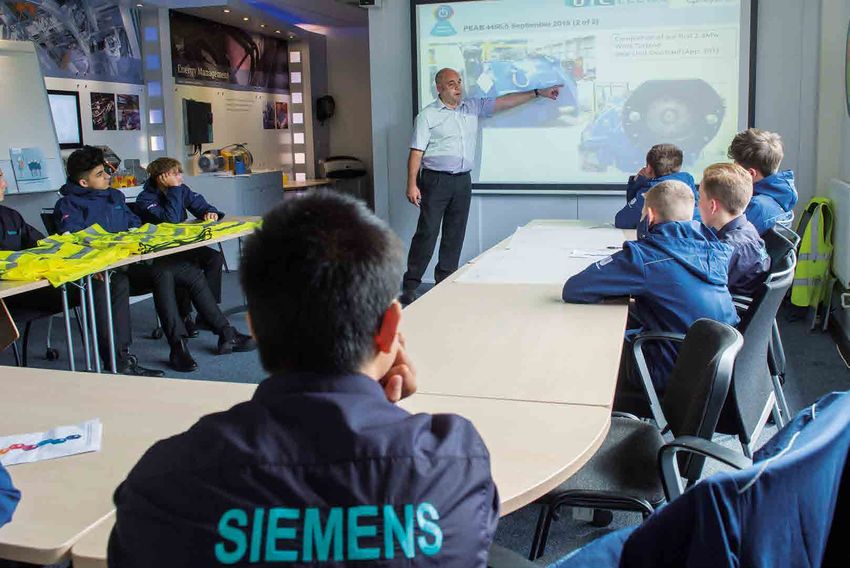
such as Siemens and their mechanical drives facility in employees within the wider sector when economic shocks
Hunslet, and William Cook in Cross Green. do occur.
SECTOR INFORMATION
CHANGE IN
% OF ALL JOBS JOB NUMBERS NUMBER OF
TOTAL JOBS IN LEEDS SINCE 2010 BUSINESSES GVA (MILLIONS)
29,400 6.7 -2,100 1,615 1,709
40 LEEDS TALENT AND SKILLS PLANINTERVENTIONS
DRIVING INCLUSIVE GROWTH THROUGH CREATING AND PROMOTING IMPROVING CONNECTIONS BETWEEN EMPLOYERS AND EDUCATORS
ENTRY POINTS AND PROGRESSION PATHWAYS INTO AND THROUGH TO ENSURE SUPPLY MORE EFFECTIVELY MEETS DEMAND (VOLUME,
SECTORS TO LOCAL, NATIONAL AND INTERNATIONAL TALENT QUALIFICATIONS, CAPABILITIES
ACTION: SUPPORT FOR AND SUSTAINABILITY OF THE FUTURE JOBS PROGRAMME ACTION: RETAINING THE WORKFORCE THROUGH ECONOMIC SHOCKS AND INDUSTRIAL
The ESIF funded Future Jobs Programme is providing support to schools across EVOLUTION
the city region to promote careers in the sector. We will promote the programme The pace of change in the sector through industrial evolution is fast, and this can
to Leeds schools, and encourage employer support for it, but we want to ensure have serious implications for employers. The sector, and particular subsectors,
that programme activity can be sustained beyond its current life (to 2019). are also exposed to economic shocks that can prove critical for the local
workforce.
There is a significant opportunity to align this work to the LCR HS2 Growth
Strategy, which calls for a funded programme of careers insight and education While we would always wish to avoid redundancies, sometimes they are
running to 2033. Manufacturing and engineering is a key plank of the HS2 skills inevitable. But it should not be inevitable that those affected are lost to the
SHORT
TERM
challenge. labour market for good, or even from the sector as a whole. Programmes exist to
support those affected by redundancy to reskill, and this is one way of supporting
the growth of other sectors. But we will also look to work with employers in
the broader sector to develop links in the hope that where demand is buoyant,
ACTION: EVERY SCHOOL TO BE AWARE OF THE TOMORROW’S ENGINEERS AND WISE they may be able to offer opportunities to those people unfortunately affected.
CAMPAIGN, AND MORE EMPLOYERS TO PARTICIPATE IN BOTH In doing so we aim to retain more skilled workers within the sector’s workforce
SHORT
TERM
Tomorrow’s Engineers and Women in Science and Engineering are two campaigns more generally.
which seek to improve the understanding of young people, women in particular,
of the science and engineering world. Using employer ambassadors they promote
careers, including apprenticeships, in the sector in schools. We will ensure that
every school is aware of their offer, and promote membership to our cohort of
MEDIUM
TERM
businesses in the sector.
ACTION: EVERY SCHOOL TO HAVE ACCESS TO A STEM EMPLOYER GOVERNOR
Employer governors are increasingly present in Leeds schools, both primary
and secondary. They play an important role in helping school leaders and
staff understand the skills needs of industry, as well as promoting sectors
that may have an image problem. We want every school in Leeds to have an
employer governor from, or with significant knowledge, of STEM and advanced
manufacturing and engineering.
TERM
LONG
LEEDS TALENT AND SKILLS PLAN 41THE DIGITAL AND TECHNOLOGY SECTOR
Leeds is rapidly establishing itself as the digital centre challenge for the industry. In March 2016 the Leeds Digital
of the North, with a thriving private sector anchored by Board launched the Leeds Digital Skills Plan, focusing on
major businesses including Sky’s national technology attracting and training talent for the digital sector. Since
centre of expertise and our first tech unicorn (a then we have seen four very successful digital jobs fairs,
company valued at over £1 billion) in the form of SkyBet, the launch of degree apprenticeships, the development of
internationally important digital infrastructure, a an accelerated two year degree programme, and more.
significant public sector presence through NHS Digital, So we’re making good progress on these ambitions, but
world leading academic research and innovation in big there is more to do to make the sector more inclusive
data through the Open Data Institute and Data Mill North, and accessible for more of our residents, and to facilitate
and an approach to growing the sector based on close growth for our businesses.
collaboration between the Council and stakeholders in
the shape of the Leeds Digital Board. Our impact was
recognised in the Government’s Digital Skills Strategy as
being good practice.
The digital economy is growing significantly faster than
the wider economy, and this pace of change means that
attracting high skilled labour is now the number one
SECTOR INFORMATION
CHANGE IN
% OF ALL JOBS JOB NUMBERS NUMBER OF
TOTAL JOBS IN LEEDS SINCE 2010 BUSINESSES GVA (MILLIONS)
29,500 6.7 6,900 3,465 1,286
42 LEEDS TALENT AND SKILLS PLANINTERVENTIONS
ACTION: THE LEEDS DIGITAL CAREERS FAIR
DRIVING INCLUSIVE GROWTH THROUGH CREATING AND PROMOTING Now into its fourth staging in its home of the Leeds Arena, the Leeds Digital Careers
ENTRY POINTS AND PROGRESSION PATHWAYS INTO AND THROUGH Fair, hosted by Herd, is a critical part of the sector’s recruitment activity and wider
SECTORS TO LOCAL, NATIONAL AND INTERNATIONAL TALENT awareness raising for residents of the incredible range of jobs in tech. Exhibitor
take up has grown alongside visitor numbers, with feedback about the range of job
SHORT
TERM
opportunities and potential candidates consistently high.
ACTION: DEVELOPING A PILOT LEEDS DIGITAL ‘BOOTCAMP’
While the supply of skilled labour into the sector from education remains ACTION: PROMOTING APPRENTICESHIPS INCLUDING DEGREE APPRENTICESHIP
insufficient, there is both a need and an opportunity to increase supply for career OPPORTUNITIES
changers and people returning to the labour market, through short, intensive New apprenticeship standards for digital sector roles are increasingly available in
courses which equip people with key skills. Many such courses are endorsed by the city, and offer an entry route to the sector which is likely to be very appealing to
employers, with some offering job guarantees on successful completion. young people in particular, but also creates an opportunity for existing employees
MEDIUM
Since the launch of the Digital Skills Action Plan in 2016, it has become clear that to develop new skills and gain a qualification. For those employers who are liable to
TERM
there is the need for a pilot programme to prove the concept of a boot camp for both the Apprenticeship Levy, there is a significant financial incentive.
employers and potential candidates.
ACTION: SUPPORT THE EXTENSION OF CODE CLUBS TO ALL LEEDS PRIMARY SCHOOLS
The Council will work with partners in the sector to work up a proposal for a pilot
Code clubs are a great way to get young children interested in tech and have wider
scheme to demonstrate the value and impact of the approach, with a particular
benefits beyond learning to code. Problem solving and logical thinking skills are
focus on residents from our disadvantaged communities. There may be an
useful for a range of other disciplines including maths. Code clubs are also a great
opportunity to align this work with the WYCA/LCR LEP proposal to create ‘digital way to get girls interested in tech at an early age. Many of our primary schools are
bursaries’ to support training in digital skills, and to use National Coding Week already part of the programme, supported by employer volunteers. By the start of
SHORT
TERM
activity to identify possible candidates. the 2018-19 school year we want to see every primary school regularly hosting
TERM
LONG
Code Clubs.
ACTION: SUPPORT AND PROMOTE NATIONAL CODING WEEK
IMPROVING CONNECTIONS BETWEEN EMPLOYERS AND EDUCATORS
National Coding Week aims to give adults a taste of coding through short
TO ENSURE SUPPLY MORE EFFECTIVELY MEETS DEMAND (VOLUME,
introductory sessions often delivered by volunteers. In Leeds, a number of
employers have been very supportive of NCW, and in 2016 the city was close to the QUALIFICATIONS, CAPABILITIES
top ranking for cities providing taster sessions.
These taster sessions are useful in their own right in terms of digital literacy, but ACTION: STAGE A DIGITAL SKILLS SUMMIT
offer a real chance for residents to get a flavour of what is involved in just one In March 2018 we will stage a Digital Skills Summit, celebrating the two year
aspect of the sector. It also gives employers an opportunity to scout talent and anniversary of the launch of the Digital Skills Plan, reviewing progress, and
potential recruits. identifying new priorities where appropriate.
We will continue to support and promote National Coding Week, with an ambition to The summit will also be an opportunity for employers and education and skills
host sessions in every ward of the city, and more sessions than any other city in the providers to come together to discuss how the skills system can respond to the
SHORT
SHORT
TERM
TERM
UK. needs of the industry
LEEDS TALENT AND SKILLS PLAN 43You can also read


