Next Generation .NET Vulnerabilities - Presented by Paul Craig Security-Assessment.com Syscan 2007 - Singapore
←
→
Page content transcription
If your browser does not render page correctly, please read the page content below
Next Generation .NET Vulnerabilities

        Presented by Paul Craig
        Security-Assessment.com
        Syscan 2007 - Singapore

                                  © 2007 Security-Assessment.com
 Who Am I?
    Paul Craig, Security Consultant
    Security-Assessment.com

 My Role
    Web application penetration tester.
    “I break web applications”
        40 hours a week.
        48 weeks a year.

 Based in Auckland, North Island of New Zealand

                                                   © 2007 Security-Assessment.com
Contents
The Basics: .NET a Brief Overview
The Defense: Security Advancements in .NET
Common .NET Configuration Mistakes
Hacking .NET Web Applications
Hacking the CLR
New Tool : .NET Reverse Shell Dropper
Conclusion

© 2007 Security-Assessment.comThe Basics:
.NET An Overview
© 2007 Security-Assessment.comThe Basics: .NET An Overview
.NET is a large topic
This presentation focuses on .NET web applications.
Target Environment.
IIS6/7
CLR v1.1, v2.0, v3.0
www.company.com/myonlinestore/Login.aspx
Outsourced online store.
© 2007 Security-Assessment.comThe Basics: .NET An Overview
.NET was designed to replace all legacy Microsoft development
languages.
J++, C++, ASP, Visual Basic
Offers Language Uniformity
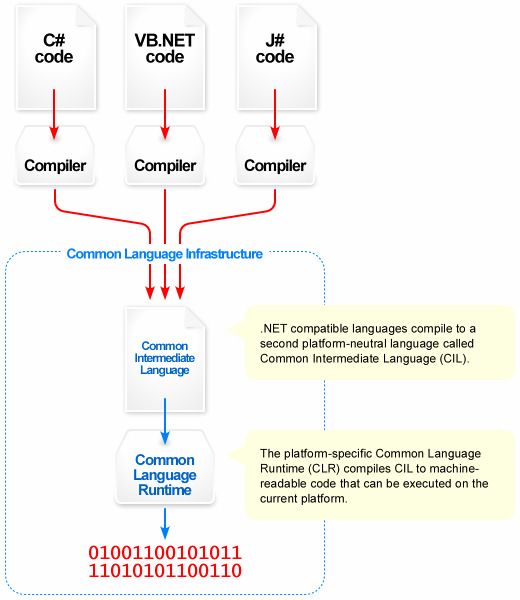
J#, C#, etc, compiled into one language.
Common Intermediate Language.
CIL concept based on CLI
CLI is a standard, not a language (ECMA-335)
J#, C#, VB.NET compile into an CIL language.
Formally called MSIL (Microsoft Intermediate Language)
None interpreted, Just-In-Time (JIT) compiled code.
Native byte code for the .NET sandbox, think Java.
© 2007 Security-Assessment.comThe Basics: .NET An Overview
Each Client Has a CLR (Common Language Runtime)
Executes CIL, OP codes are ran, program runs.
Welcome to the Sand Box
The CLR is your sandbox.
Provides a safe environment for code execution.
‘Saving developers from their own mistakes.’
.NET Is A New Level of Abstraction When Compared to ASP
Remote users talk to the CLR, not directly to the script.
Suspicious requests are denied.
© 2007 Security-Assessment.comThe Basics: .NET An Overview
© 2007 Security-Assessment.comSecurity Advancements in .NET
© 2007 Security-Assessment.comSecurity Advancements in .NET
1996. Microsoft released ASP v1.0 with IIS 3.0!
The most popular Microsoft based web development
language.
Used in banks, e-commerce, telecommunications,
government.
Widely exploited development language!
Most ASP Developers Are Unable To Write Secure Code
Language is too versatile and flexible!
Allows developers to take shortcuts.
Security must be implemented by the developer.
Good developers write secure ASP web apps.
Secure ASP is not easy to write.
“Hacked before my coffee is cold”
© 2007 Security-Assessment.comSecurity Advancements in .NET
.NET Strongly Enforces the Microsoft Mantra “Do it Our Way”
Microsoft know that developers write insecure applications.
Security by design, by default.
By default .NET is secure.
“The Microsoft Way” is secure and easy.
Hard work to make a .NET application insecure.
.NET aggressively implements security.
Harder to hack
Increased level of security
Idiot proof.
In Short: My coffee gets cold.
© 2007 Security-Assessment.comSecurity Advancements in .NET
Request Validation
Protects sites from Cross Site Scripting (XSS) attacks.
CLR validates all user supplied input for XSS attempts.
By default .NET protects all GET/POST variables.
Test.aspx?value=a Allowed
Test.aspx?value=< Allowed
Test.aspx?value=Security Advancements in .NET
Path and File Validation.
System.IO namespace validate all path characters.
System.IO.Path.CheckInvalidPathChars
System.Web.Util.FileUtil.IsSuspiciousPhysicalPath
Prohibited bytes.
0x01-0x08, 0x0e-0x1f, 0x22, 0x3c, 0x3e, 0x7c
BackSpace LineFeed “ < > ; |
STDOUT redirect attacks.
Legitimate filenames never contain > or <
Also used in Response.Writefile
Suspicious characters raise an exception.
© 2007 Security-Assessment.comSecurity Advancements in .NET
Directory Traversal Prevention.
Cannot access files outside the document root.
Test.aspx?readfile=../../../boot.ini
Implemented in some (not all) file handling methods.
Size Validation
Fully qualified filename must be less than 260 characters.
Directory names must be less than 248 characters.
Path Expansion Not Supported.
%SYSTEMROOT% does not equal C:\windows\system32
© 2007 Security-Assessment.comSecurity Advancements in .NET
ViewState and EventValidation
ASP method of keeping application state:
Test.asp?user=1011&m=3&age=25&name=paul...
Easy to manipulate application state “I am user 1012”
__VIEWSTATE is an application state container.
Maintain state between multiple postback requests.
“Holds all your variables”
Serialized base64 encoded data.
Viewstate contents can be encrypted.
__EVENTVALIDATION
Integrity hash of the Viewstate.
Contains the path of the originating .NET page.
© 2007 Security-Assessment.comSecurity Advancements in .NET
Viewstate and Eventvalidation Really Kill the Fun.
Exception Created When:
Modify a Viewstate variable
Viewstate is decoded and modified, re-encoded.
Invalidates Eventvalidation hash.
POST request missing Viewstate and/or Eventvalidation.
You cannot directly POST to an arbitrary .NET page.
Postback data must come from another page.
Viewstate and Eventvalidation are unique to each page
Cannot replay Postback information from another page.
Manipulating Application State is No Longer Easy!
GREATLY reduces the amount of vulnerabilities found.
© 2007 Security-Assessment.comSecurity Advancements in .NET
Control Postback Validation
Protects pre-populated data controls from manipulation.
‘Data controls’ are uneditable controls
ListBox.
Example:
Each UserID value is kept in the Viewstate.
User supplied list control compared to Viewstate whitelist.
Only whitelist values allowed.
UserID = 30121,30122,30123
Protects all pre-populated data controls from any type of
attack.
SQL Injection, XSS, Modification
© 2007 Security-Assessment.comSecurity Advancements in .NET
Cryptography
Cryptography is easy in .NET
Developers will only implement cryptography when its easy.
Developers encouraged to use cryptography.
MSDN samples use cryptography
“Secrets must be stored securely”
HashPasswordForStoringInConfigFile()
Strong cryptography now common in web applications.
ASP developers rarely implemented cryptography.
© 2007 Security-Assessment.comSecurity Advancements in .NET
Why no crypto in ASP? Function AndW(ByRef pBytWord1Ary, ByRef pBytWord2Ary)
Dim lBytWordAry(3) DoubleToWord = lBytWordAry
End Function
Dim lLngIndex
Function WordToDouble(ByRef pBytWordAry)
For lLngIndex = 0 To 3 WordToDouble = CDbl((pBytWordAry(0) * (2 ^ 24)) + (pBytWordAry(1) * (2 ^ 16)) +
(pBytWordAry(2) * (2 ^ 8)) + pBytWordAry(3))
lBytWordAry(lLngIndex) = CByte(pBytWord1Ary(lLngIndex) And pBytWord2Ary(lLngIndex))
End Function
Next Function DMod(ByRef pDblValue, ByRef pDblDivisor)
Dim lDblMod
AndW = lBytWordAry
lDblMod = CDbl(CDbl(pDblValue) - (Int(CDbl(pDblValue) / CDbl(pDblDivisor)) *
End Function CDbl(pDblDivisor)))
If lDblMod < 0 Then
Function OrW(ByRef pBytWord1Ary, ByRef pBytWord2Ary)
Generating a SHA1 hash
lDblMod = CDbl(lDblMod + pDblDivisor)
Dim lBytWordAry(3) End If
DMod = lDblMod
Dim lLngIndex
End Function
For lLngIndex = 0 To 3 Function F( ByRef lIntT, ByRef pBytWordBAry, ByRef pBytWordCAry, ByRef pBytWordDAry)
If lIntTSecurity Advancements in .NET
Generating a SHA1 hash in C#
byte[] input = new byte[100];
byte[] output;
SHA1CryptoServiceProvider sha;
sha = new SHA1CryptoServiceProvider();
output = sha.ComputeHash(input);
Developers are lazy!
Only easy solutions are adopted!
5 lines of C#.
Microsoft encourage developers to write secure code.
Security is now easy.
© 2007 Security-Assessment.comSecurity Advancements in .NET
SQL Injection
ASP developers frequently used dynamic SQL
SQL generated on the fly from user supplied values.
Countless SQL injection vulnerabilities:1,440,000 Google results
Microsoft new approach "All Input is evil”
Parameterized SQL queries recommended.
obj.Parameters.Add("@Name", NameTextBox.Text);
obj.Parameters.Add("@Password", PasswordTextBox.Text);
Trust the framework.
© 2007 Security-Assessment.comSecurity Advancements in .NET
So Where’s the Beef?
CLR has a huge impact on security.
Fewer attack vectors!
Classic ASP Vulnerabilities, Gone!
Postback variable manipulation
Cross Site Scripting
Directory traversal
Path/File manipulation
Attacking application state
Is my job in danger?
What does a penetration tester do, when the apps are secure!
© 2007 Security-Assessment.comSecurity Advancements in .NET
“There are Always Vulnerabilities”
Developers always make mistakes.
It all comes down to one person on a keyboard.
Developer has a bad week, makes mistakes.
Its all just so new.
Millions of C++, ASP, VB developers now migrating to C#
“Most .NET developers I interview are completely
uneducated about how to correctly code .NET”
Poorly hacking C# together like as if they were coding ASP.
.NET is only secure when used correctly.
Doing things ‘your way’ is usually insecure.
© 2007 Security-Assessment.comCommon .NET Configuration Mistakes
© 2007 Security-Assessment.comCommon .NET Configuration Mistakes
Server Deployment Scenario.
‘Build Team’ builds an IIS web-server for new website.
Developers deploy the web application.
OPS Team Responsible for the Security of the Server.
Painstaking BEST security practices implemented.
System administrators understand security requirements.
Developers Responsible for the Web Application
Does not really understand security principles.
“I just write code”
Who is Responsible for the .NET Configuration File?
Developer Said: “OPS, it’s an application configuration. “
OPS Guy said: “Developers, it’s a code thing!”
Config’s are poorly maintained, modified ad-hoc by developers.
© 2007 Security-Assessment.comCommon .NET Configuration Mistakes
Error Messages and Stack Traces
.NET raised exceptions contain a stack trace.
By default stack traces are not shown to remote hosts.
First thing a developer enables, 90% of the time enabled.
Contains the object call stack.
Error messages can also contain.
Physical Path
.NET CLR version number
© 2007 Security-Assessment.comCommon .NET Configuration Mistakes
Determine if Stack Traces are Enabled.
http://www.host.com/default|.aspx
System.IO.Path.CheckInvalidPathChars Exception
Guaranteed to create an exception.
Physical Path Disclosure
Invalidate .NET Monitoring with a virtual directory identifier.
http://www.host.com/default~.aspx
Only absolute paths allowed.
Only ‘default’ .NET error message to disclose physical path!
© 2007 Security-Assessment.comCommon .NET Configuration Mistakes
Trace Information
.NET supports detailed application level trace information.
http://www.host.com/trace.axd
Contains the last 10 requests to the server.
Including POST, GET, State, Cookies, Headers
Easily compromise other user accounts or sessions.
Most fatal mistake to make in .NET configuration.
Highest severity, game over!
Only seen remotely accessible tracing enabled once!
© 2007 Security-Assessment.comCommon .NET Configuration Mistakes
Storing Sensitive Values In Web.config.
Database connection strings.
Web application administrator password.
NET promotes a secure password hashing method.
HashPasswordForStoringInConfigFile
Developers not encouraged to salt hashes.
MSDN does not mention salts.
A lot of developers copy/paste from MSDN.
Never seen a salted hash in use!
Vulnerable to memory-trade-off attacks.
Rainbow Tables.
© 2007 Security-Assessment.comHacking .NET Applications
© 2007 Security-Assessment.comHacking .NET Applications
“I Used To See Web Applications With Flaws.
But Now I See Just See The Flaws.”
All developers make mistakes.
Most developers make the same mistakes!
10 developers read the same “Learn C# in 24-hours book”
Similar misconceptions and gaps of knowledge.
Same Bug Different Developer
Examples of Common Developer Mistakes.
Following scenarios are real!
Critical applications in large organizations.
Originally developed by 100% authentic developers.
Common mistakes, not how you should write .NET
© 2007 Security-Assessment.comHacking .NET Applications
Attacking The PostBack
This.IsPostBack()
Method to identify a request as PostBack or GET.
Postbacks need a valid Eventvalidation/Viewstate.
Developers have more trust for PostBack requests.
“We must be in the middle of something, I trust you”
The Scenario.
Administrative section.
Developer assumed all Postback requests came from
authenticated users.
Admin credentials not revalidated.
If IsPostBack() = true will skip authorisation requirements.
POST requires valid EventValidation/Viewstate.
© 2007 Security-Assessment.comHacking .NET Applications
The Script.
Process_gridview.aspx
Responsible for updating a grid control with current sales
figures.
Accepts both GET and POST requests.
GET /admin/process_gridview.aspx (“Please Login”)
GET /admin/process_gridview.aspx?generategrid=1
Ajax function, renders an empty grid.
We want to POST “command=showsalesresults”
Need a Viewstate/Eventvalidation!
Remember.
Eventvalidation is unique to each page.
Eventvalidation hash must be valid but Viewstate contents are
irrelevant.
© 2007 Security-Assessment.comHacking .NET Applications
!This.IsPostBack.
We cannot POST.
But we can GET.
AJAX function generategrid=1 output contains a new form
with an empty grid control.
Containing a valid __VIEWSTATE and __EVENTVALIDATION.
Never gets sent back to the server (No submit button)
Viewstate is empty and contains nothing!
© 2007 Security-Assessment.comHacking .NET Applications
© 2007 Security-Assessment.comHacking .NET Applications
URL Encode Viewstate/Eventvalidaiton
Replay to the server.
This.IsPostBack = True
POST command=showsalesresults
© 2007 Security-Assessment.comHacking .NET Applications
Exploiting.
Exploitation requires the target to implicitly trust all PostBack
requests.
Postback information carries as much trust as credentials!
Found in pages which do not directly accept requests
themselves.
Server.Transfer from another page.
Need to render a server-side form via a GET request.
Page toggles (?rendernav=1, ?displayad=true)
GET based AJAX functions.
Find another way to generate a valid Viewstate/Eventvalidation
value for a page.
© 2007 Security-Assessment.comHacking .NET Applications
Control Accessibility Vulnerabilities
.NET forms can contain multiple uniquely accessible controls.
Used by client side Postback requests.
Each control has a specific control ID.
CLR event handlers process events for controls (OnClick).
Controls are accessed through the __EVENTTARGET variable.
Directly post to controls name.
&ButtonX=Submit
Only visible controls are accessible.
© 2007 Security-Assessment.comHacking .NET Applications
The Scenario
AccountOptions.aspx
Page allowing authenticated users to change account settings.
Content divided between two tabs.
Account Settings and Change password.
Clicking each tab generates a PostBack request.
POST __EVENTTARGET ctl00_NavMenu_0
OnClick event handlers generate the tab content.
2 control ID’s: Ctl00_NavMenu_0, ctl00_NavMenu_1
© 2007 Security-Assessment.comHacking .NET Applications
First Rule of Penetration Testing: Change Everything
What about ctl00_NavMenu_2?
__EVENTTARGET = ctl00_NavMenu_2
Access administrative content event handler.
Developer hid the control by not displaying the Admin tab.
All the frame controls were accessible.
One was not ‘clickable’
You just had to know the right control ID value.
© 2007 Security-Assessment.comHacking .NET Applications
Disabled Controls.
What's wrong with this logic?
if ((string)Session[“IsAdministrator"] == "yes"))
Control1.Enabled = true;
} else {
Control1.Enabled = false;
}
If your not an Administrator, then you don’t get access to the
control.
Its disabled.
© 2007 Security-Assessment.comHacking .NET Applications
Maybe not.
You cannot click a disabled control, but you can access it.
User | Administrator privilege separation.
Security by User Interface:
Removing the graphical pathway to a control.
You cant ‘click’ a disabled control.
Found in text boxes, gridviews, custom controls.
Disabled buttons? Please, is this 1994?
© 2007 Security-Assessment.comHacking .NET Applications
How to Click a Disabled Button
Click an enabled button, create a Postback.
Capture the request in a web proxy (Web Scarab, Burp Proxy)
Add a new POST variable named the ID of the control
It can have any value
Change __EVENTTARGET if its in use.
© 2007 Security-Assessment.comHacking .NET Applications
Control accessibility is based on control VISIBLITY! (.Visible)
Only .Visible = true controls can be accessed!
‘Why Do Developers Keep Making This Dumb Mistake’?
Disable: To make unable or unfit; weaken or destroy the
capability of; cripple; incapacitate.
Visible: That can be seen; perceptible to the eye.
If I Wanted To Remove A Control From A Page Would I:
Incapacitate it, or hide it from sight?
Security teaches us to incapacitate and disable, not hide.
Disable is a stronger term!
Disabled controls are inaccessible in other languages.
Developers trust the framework. “But its disabled..”
© 2007 Security-Assessment.comHacking .NET Applications
Control Sequence Attacks
PostBack & Viewstate maintain state across multiple pages.
Multiple requests to multiple unique pages.
You cannot spoof a POST request to an arbitrary page.
What about control sequence attacks?
Multiple controls on one page.
Each control acting as a separate page?
Scenario: ForgottenPassword.aspx
One page with three label controls accessible via a TabStrip.
1: Select Username
2: Answer Secret Question
3: Reset Your Password
© 2007 Security-Assessment.comHacking .NET Applications
Step 1:
Select Username control: Ctl00_tabstrip_00
Has a link to a “New User Registration” page.
Takes user input NameTextBox.Text
Sets a local Viewstate variable of whatever you enter.
ViewState.Add(“Username",NameTextBox.Text)
Posts back information to second ASP:Panel control.
“Answer Secret Question”
© 2007 Security-Assessment.comHacking .NET Applications
Step 2:
Answer Secret Question: ctl00_TabStrip_01
Secret question is returned from Viewstate[“username”]
Form allows user input QuestionAnswer.text input box.
Postback answer to self and validates input.
Secret Question Answer Correct??
Sets another Viewstate variable.
ViewState.Add(“KnowsAnswer",”1”)
User knows the secret question answer.
Postback to third control ctl00_TabStrip_2.
© 2007 Security-Assessment.comHacking .NET Applications
Step 3:
Reset Password: ctl00_TabStrip_02
Validates the previous 2 steps occurred.
You must have two Viewstate variables set.
Username
KnowsAnswer
This application is highly exploitable, can you see how?
© 2007 Security-Assessment.comHacking .NET Applications
Exploiting.
Goal: Change the “Administrator” password.
No EVENTVALIDATION in use?
Decode, modify, recode Viewstate, we win.
Very unlikely situation.
Viewstate Encryption or Validation?
Must use application logic to manipulate Viewstate.
Each tab is a separate, enabled and visible control.
We can post to each control at any time.
Controls validate the previous step occurred.
Skipping forward tabs does not work.
© 2007 Security-Assessment.comHacking .NET Applications
First we register a new user “Jack”
His childhood hero is Superman, and his password is “password”
Forgotten Password.
Viewstate username = Jack
Viewstate knowsAnswer = 1
We end up here.
Click arrow and modify request.
__EVENTTARGET = ctl00_TabStrip_00
© 2007 Security-Assessment.comHacking .NET Applications
Actually my username is Administrator
Click blue arrow.
Skip this stage, Viewstate ‘knowsAnswer’ is equal to 1 already!
Post, modify __EVENTTARGET to ctl00_TabStrip_02
Reset my (Administrator) password to Password please.
© 2007 Security-Assessment.comHacking .NET Applications
Control Sequence Attacks
Multiple controls on one page, acting as separate pages.
Each step in the process is a separate control.
ASP:Panel
Controls can be accessed out of sequence.
Access any control ID
Skip forwards, backwards.
Same page for all steps.
We can post to any step and any control!
Any visible control is accessible.
Eventvalidation would stop us skipping forward pages.
Cannot generate valid Postback information arbitrarily.
© 2007 Security-Assessment.comHacking .NET Applications
The Golden Rule Of Web Security
“Do not keep anything sensitive inside the document root”
Web.config is most important and sensitive file in .NET.
A normal file inside the document root.
Containing usernames, passwords, connection strings.
MachineKey and DecryptionKey.
Hack a .NET App? Get the Web.config.
Decrypt and encrypt Viewstate
Regenerate Eventvalidation
Completely compromise application state.
One file disclosure vulnerability.
© 2007 Security-Assessment.comHacking the CLR
© 2007 Security-Assessment.comHacking the CLR
Attacking the Viewstate
Viewstate is kept in a serialized base64 encoded format.
“1 in 5 audited applications encrypted Viewstate”.
__VIEWSTATE variable contains application state.
Application variables and control attributes.
Viewstate contents can be decoded using a ViewState Decoder
http://www.pluralsight.com/tools.aspx
Can rarely modify Viewstate contents.
__EVENTVALIDATION must be explicitly disabled
It never is!
Typically we can only observe the Viewstate and its contents.
© 2007 Security-Assessment.comHacking the CLR
Determine the Presence of an Invisible Control.
__VIEWSTATE maintains current control visibility.
Postback validation uses the Viewstate to determine visible
controls.
Control’s not rendered on page are kept inside the Viewstate.
Decoded Viewstate from a form with a hidden asp:Panel
Contains the controls visibility state.
“Visible = False”
Page contains an invisible control.
© 2007 Security-Assessment.comHacking the CLR
Display Values of Pre-Populated Invisible Disabled Controls
Take an input box “passwrd”, give it a value “AdminPassword”
User is not an admin? Hide the box. (Invisible & Disabled)
Passwrd.value is Kept Inside the Viewstate.
Even though the control is disabled, and invisible!
Viewstate is working correctly.
.Value is an attribute of a control.
© 2007 Security-Assessment.comHacking the CLR
More Invisible Disabled Pre-Populated Controls.
Gridviews : Show_sales_figures.aspx
A Gridview control is pre-populated with values on
Page_Load
Checks the remote users authorisation.
Not in sales department?
Disable, hide the MyDataGrid ASP:Panel ‘ThePanel’
Gridview is inside MyDataGrid and also disabled/invisible.
The complete Gridview contents are kept in the Viewstate.
© 2007 Security-Assessment.comHacking the CLR
NULL Bytes
Standard C POSIX systems terminate all strings with a NULL
byte (\x00, %00).
\x31\x32\x33\x00\x11\x11.
Strings are terminated at the first NULL byte.
\x11\x11 does not exist.
Certain sections of the .NET namespace allow NULL byte input.
NULL bytes are just considered data.
.NET strings are not terminated by a NULL byte.
Interoperability issues when .NET uses native C API calls.
.NET string is not terminated at the first NULL
Windows C API call terminates string at first NULL byte
© 2007 Security-Assessment.comHacking the CLR
String Termination Attacks
Vulnerable methods allow NULL bytes in user supplied input.
User supplied data is used in a standard C function call.
Somewhere within the .NET method.
Object.Method(String.Concat(Request.QueryString["a"],”XX”));
Request.QueryString[“a”] = “12345%00”
value = Object.Method(“12345XX”)
String goes into the method: 12345XX
String comes out (variable value) 12345
“XX” was removed from the end of the string.
© 2007 Security-Assessment.comHacking the CLR
MyFictitiousFileUploader
Allows developers to easily add file upload functionality.
Malicious characters prohibited (../)
NULL bytes allowed.
.uploaded is appended to all filenames uploaded.
Evil.aspx will become not so evil Evil.aspx.uploaded
We supply the filename Evil.aspx%00
ProcessFile() uses a custom string validation routine.
Which uses a direct strncpy call.
String termination vulnerability.
Filename of Evil.aspx%00 becomes Evil.aspx
Not .uploaded.
© 2007 Security-Assessment.comHacking the CLR
Zero Day!
NULL byte injection attacks inside the .NET framework!
Multiple different attack vectors.
“Released at Syscan ‘07”
Patches were originally planned for May.
Then June..
Now July!
Responsible vulnerability disclosure.
No patch, no disclosure.
Advisories coming soon.
Interested in .NET hacking and .NET vulnerabilities?
http://www.security-assessment.com/
© 2007 Security-Assessment.comHacking the CLR
Session Fixation
Forcing a user to authenticate to a known session ID value,
then stealing the users session.
.NET Session ID’s are vulnerable to session fixation.
Exploitable in cookieless session configuration.
Session ID is kept in the URI, not in the cookie.
http://host.com/(0f3cxnzjskr2ltaiabj2oqp2)/Login.aspx
0f3cxnzjskr2ltaiabj2oqp2 = Encoded random number
Session ID is not part of an algorithm or sequence of
numbers.
.NET does not validate the legitimacy of the session ID.
Any 24 character string works.
testtesttesttesttesttest is a valid session ID.
© 2007 Security-Assessment.comHacking the CLR
(0f3cxnzjskr2ltaiabj2oqp2)
“Please Login”
(testtesttesttesttesttest)
“Please Login”
No difference between the two.
Phishing Attacks.
Spam login pages with hard-
coded session ID values.
Monitor the pages until a
user logs in and the session
is validated.
Account compromised.
© 2007 Security-Assessment.com.NET Reverse Shell Dropper
© 2007 Security-Assessment.com.NET Reverse Shell Dropper
Drop And Pop
.NET Reserve Shell “Dropper and Popper”
Produces a .NET reverse shell.
575kb of C#!
Embedded version of netcat.exe and cmd.exe.
Files packed with a custom version of ‘Dragon Armor’.
Drops files to disk and spawns reverse shell.
.NET user prohibited access to local cmd.exe
Very useful in file upload attacks.
Graphical remote shells are nice
But some times I want the “Little Black Box”.
http://ha.cked.net/dropandpop.zip
© 2007 Security-Assessment.com.NET Reverse Shell Dropper
http://ha.cked.net/dropandpop.zip
© 2007 Security-Assessment.comConclusion
© 2007 Security-Assessment.comConclusion
“There are Always Vulnerabilities”
Parts of the .NET framework allow developers to take shortcuts
Not all developers are created equal.
Shortcuts make meet deadlines!
Next Generation Vulnerabilities Focus on the Presentation Layer.
Vulnerabilities are getting simpler!
.NET Framework protects against easily identifiable exploits
XSS, input manipulation.
Control accessibility is not as regimented as page accessibility.
CLR Can Never FULLY Protect Against Human Stupidity.
“Only two things are infinite, the universe and human stupidity “
© 2007 Security-Assessment.comConclusion
Questions?
Email Me:
paul.craig security-assessment.com
© 2007 Security-Assessment.comYou can also read


