NXP RF Solid State Cooking White Paper - Robin Wesson, System Architect, NXP RF Power Innovation
←
→
Page content transcription
If your browser does not render page correctly, please read the page content below
NXP RF Solid State Cooking
White Paper
Robin Wesson, System Architect, NXP RF Power Innovation

1 SUMMARY                                                  amps, or broadcast television and radio signals around
Microwave oven technology is on the cusp of a              the world, and even beyond it. High power transistors,
revolution. Solid state electronics can now deliver        while not the subject of Moore’s law, have gradually
comparable power levels to the magnetron which             increased in efficiency, power density and voltage
has been the engine of the microwave oven since the        capability through many generations of technology
first products were launched seventy years ago. The        development, and can now compete with one of the
new technology brings with it many new techniques          last valve applications that very few people realise they
that can significantly enhance the control of energy       still have in their own home.
delivery.   These   techniques   represent   scope   for
innovation that will change the user’s experience of       3 THE MAGNETRON
cooking with high power RF energy. The technical           The magnetron is the heart of every microwave or
implications and possibilities are examined in this        combination oven in use today. The magnetron is a
paper which should be of interest to engineers or food     type of valve integrated with magnets and resonant
scientists keen to improve the results achievable with     chambers which generates a high power RF signal
industrial or consumer RF heating appliances.              used for cooking, heating and drying in consumer and
                                                           industrial applications.
2 BACKGROUND
Since the 1950’s the humble transistor has all but         Discovered early in the last century, the magnetron
totally replaced electronic vacuum tubes, (valves),        design was improved and applied during the 1940’s
in electronics applications. The transistor is the         for radar applications. Over time, the design has
driving force behind ubiquitous computing and              been perfected and the magnetron now delivers high
communication capabilities beyond our imagination          power with good efficiency and at relatively low cost.
just a decade or two ago. Moore’s famous ‘law’ has         For cheap raw power, the magnetron remains a great
observed that the number of transistors per square         solution.
mm of silicon has doubled year on year, delivering an
exponential increase in processing power. This growth      Radar applications have evolved beyond use of the
is responsible for ever more powerful computers,           magnetron, because the signals it generates cannot
handheld devices, highly efficient and clean engine        deliver the accuracy and control needed for high
control systems, medical instrumentation, gaming           performance measurement systems. Frequency is
platforms and a plethora of other electronic systems       approximate and dynamic, and accurate control
touching every aspect of our lives today.                  of amplitude or phase is not possible. The entire
                                                           communications industry also relies on accuracy of
Not all transistors are better when small, however. A      modulation and for these reasons a better solution was
single large device can switch currents of hundreds of     required.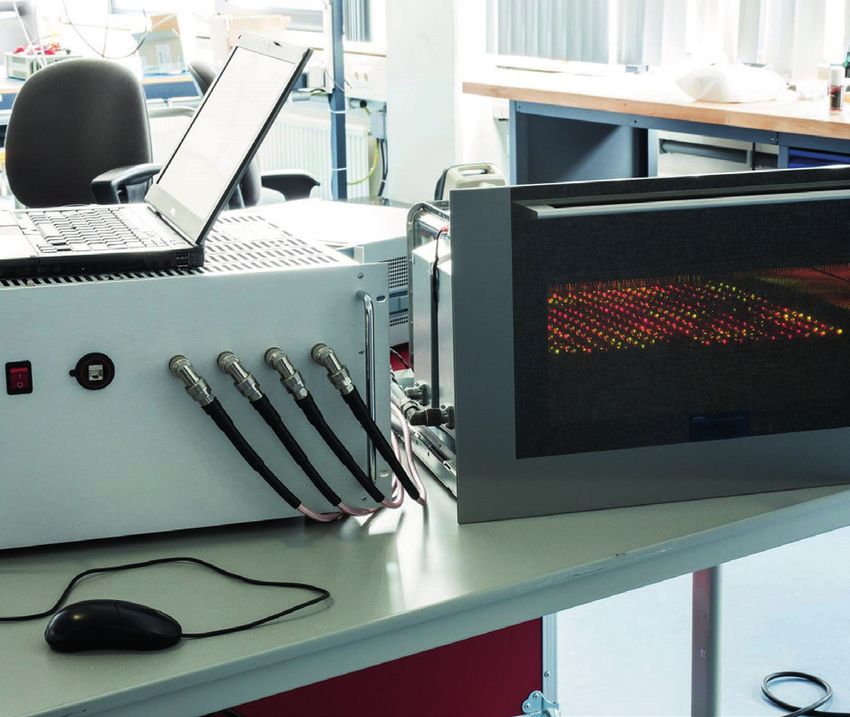
In contrast, much of the innovation in microwave                      hot air system it is possible to create meat dishes with
cooking in recent decades has been in food additives                  pleasing surface texture and taste, cooked in around
and meal packaging techniques designed to give the                    half the time compared to a conventional oven.
best results with the existing heating technology. (IMPI
conference 2013, Providence, RI). A regular complaint                 Regardless of the energy source, be it magnetron
aired was that an additive, special recipe or innovative              or solid state amplifier, the electromagnetic energy
package that delivered good performance in one oven                   interacts with the cavity to create patterns of standing
would do something different in another example                       waves that are responsible for the simultaneously
of the same kind of oven. Variability from one test to                overcooked and raw food recognisable to our typical
another was claimed to be too great.                                  user. Solid State does not eliminate the existence of
                                                                      hot spots.
The root cause of these complaints is the variability of
the engine of the microwave oven. High performance                    The interaction of electromagnetic energy with the
microwave cooking requires a new approach.                            food is also unchanged. Electromagnetic energy is
                                                                      absorbed by food depending on the frequency used
                                                                      and the dielectric properties of the food. In most
                                                                      foods, contrary to the urban myth of heating from the
                                                                      middle, consumer microwave ovens operating around
                                                                      2450MHz directly heat only to a depth of a couple of
                                                                      centimetres.

                                                                      In both the examples given previously, the known
                                                                      shortcomings of the microwave oven are mitigated
                                                                      by recognising the nature of electromagnetic heating
                                                                      and avoiding the potential drawbacks. This can be
                                                                      achieved by reducing the volume of the individual
Magnetron spectral emissions in microwave oven operation – 3 traces   pieces of the food to ensure that a few centimetres of
   of 30 seconds captured from same oven with the same load.
                                                                      dielectric heating depth is sufficient.
4 THE MICROWAVE COOKING EXPERIENCE
Most of us are familiar with the results: microwave                   Another way to work around the drawbacks of the
ovens deliver rapid heating but can result in food with               microwave oven today is to apply a second source of
overcooked, dehydrated parts and cold or raw parts.                   heat that can act to even out the hotspots. This can
For these reasons microwaves are not widely trusted to                be done by using the grill in a combination oven when
cook raw meats, and are often used simply to reheat                   cooking meat, or by allowing steam to build up around
leftover food, or perhaps to heat a mug of water or                   vegetables to equalise the heating effect.
milk quickly for making a hot drink.
                                                                      When cooking larger items, it is important to allow
It is fair to say that with a little ingenuity, many more             enough time for thermal conduction to raise the core
foods can be heated quite well in a microwave. A                      temperature to a safe and palatable level. Allowing
spoonful of water in a covered bowl of broccoli or                    enough time is as important for homogeneous heating
sliced carrots creates a fast steamed vegetable side                  with a magnetron as it is with conventional ‘surface
dish that is well cooked and nutritious. Combining                    only’ heating processes.
the use of a microwave at low power, with a grill or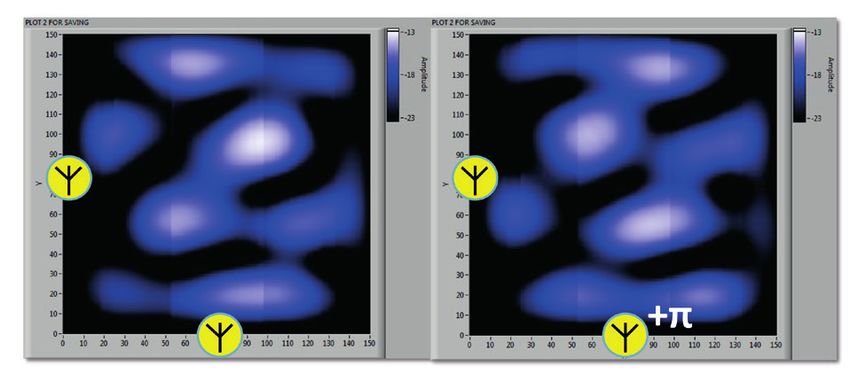
5 MICROWAVE OVEN CHARACATERISATION                          6 MOTIVATING HOTSPOTS AND CAVITY
Microwave oven performance is characterised, as most          BEHAVIOUR
technology is, through the use of standardised tests.       Simulation of microwave oven cavities and foods can
Microwave ovens are specified today on their ability        be a complex process, and while good results can be
to heat one litre of water, which presents a large load     achieved, it is only known to be a good result once
to the system and is very easy to heat. Standards and       it is benchmarked with a real measurement. Once
specifications drive the performance optimisation           a cavity is built, tests with the real hardware can be
process, which leads to products that are optimised         significantly faster to run than simulations.
for heating a load that will rarely be encountered
in real world usage. Optimisation of conventional           Complex simulations are not required to explain the
microwave ovens has little to do with the magnetron         existence of hotspots in even a simple single port
itself, as this has no direct controls. Tuning instead      cavity. A modified version of the simple Friis free
focusses on the geometry of the system, with the goal       space formula can be put to good use.
being to optimise the efficiency and power of energy
transfer into a large load located in the centre of a
cavity.

                                                                            Free space propagation model

                                                            Conventionally this is used to predict far field signal
                                                            propagation in space or under idealised terrestrial
                                                            conditions. However, by introducing a tile scheme
                                                            and folding the paths geometrically, a many-reflection
                                                            version of the Friis formula can be synthesised.
                Tuning of a microwave oven

                                                            In the simplest form, point A’ has the same phase and
Since there is no accurate control of the frequency
                                                            power as point A, and B’ has the same phase and
of operation, these tests must perform well whatever
                                                            power as at point B.
frequency the magnetron operates at from moment
to moment.
                                                            Extra layers have been added to this model. For
                                                            example, a pi-radians phase shift for each reflection
When evaluating a new technology, with new
                                                            models the boundary conditions for reflection from
capabilities   and    performance        goals,   revised
                                                            a metal plane. A small attenuation factor applied
optimisation procedures may also be required to
                                                            per reflection models reflection losses. Finally beam
deliver the full promise. Efficient energy transfer to
                                                            shaping has been added for each antenna, in this
a one litre load may not be the key metric for future
                                                            case using a cosine function to weight amplitude with
solid state systems, since in the past this has not
                                                            angle. The results shown below are achieved with the
delivered high performance cooking as a result.
                                                            model in this form.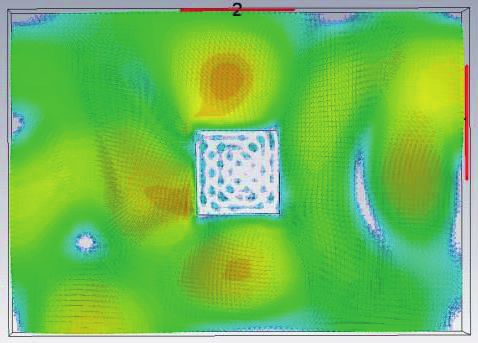
7 SCOPE FOR INNOVATION
                                                                  After the brief examination of the behaviour of
                                                                  magnetrons and the optimisation processes used
                                                                  with microwave ovens today, we can examine the
                                                                  capabilities of solid state systems which define the
                                                                  scope for innovative new solutions to RF heating
                                                                  applications. Taken singly, specific characteristics
                                                                  may be useful in some end applications and have no
                                                                  value in others, however together they represent
                                                                  the   landscape    of   new     capabilities    from      which
                                                                  breakthroughs in heating performance will emerge.

                                                                  7.1 POWER CONTROL
                                                                  Microwave ovens today implement power control by
                                                                  switching the magnetron on and off over periods of
              Folded geometry cavity field model                  several seconds. A 900W oven when operating at 90W
                                                                  might produce 900W for five seconds and then switch
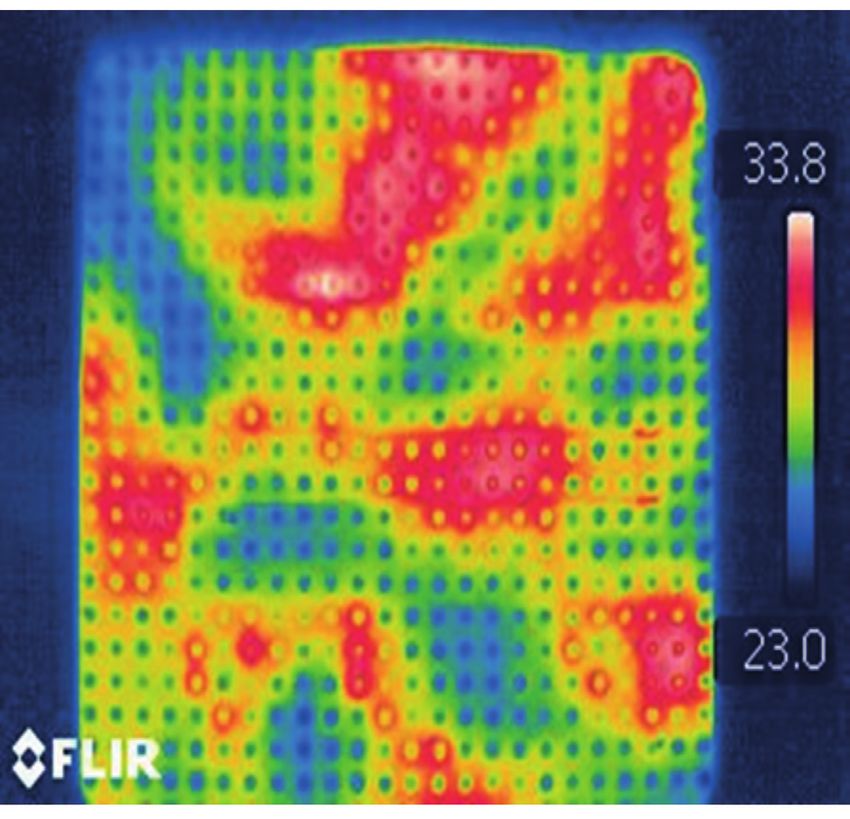
Without resorting to simulation of complex near field             off for forty five seconds. The response time of the
effects, highly representative cavity field intensity             valve technology is limited by the time taken for the
patterns are predicted, as compared to a thermal                  device to reach its operational temperature, much like
capture of a heated display board.                                an incandescent light bulb. Depending on the type of
                                                                  food being heated, temperature cycling at the edges
                                                                  of the food can cause quality degradation.

                                                                  Solid state systems are much more flexible. They
                                                                  can also perform this kind of power control, known
                                                                  as pulse-width-modulation. However, the period of
                                                                  the modulation can be milliseconds or microseconds
                                                                  making the heat delivery much more linear. If required,
Folded geometry hot spot model of a two antenna system with and   truly linear power control is also possible.
              without phase shift at one antenna

                                                                  The effect of the different modes of power control can
                                                                  be demonstrated with a simple two pixel model where
                                                                  a large load is placed in the centre of a cavity, and
                                                                  heated by RF dielectric heating such that the outer
                                                                  1.5cm is evenly heated. As the outer layer heats, it
                                                                  begins to conduct heat to the core.

               Thermal image of a detector board                              ‘Two Pixel’ RF and conductive heating model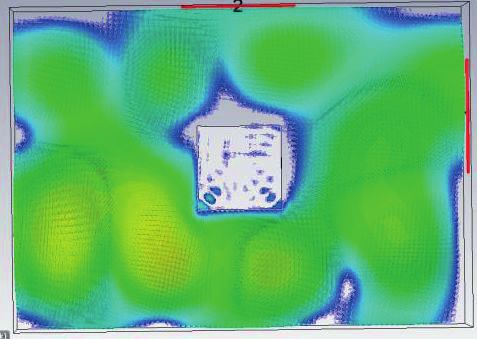
When the load is heated with long period PWM, in            The discussion on power control is not an abstract
this case ten seconds of heating followed by ninety         one. A conventional oven is infrequently used at its
seconds of relaxation, the result is that the edges are     maximum temperature, as different rates of heating
regularly heated and then allowed to cool. This creates     are suitable for cooking different foods.
a saw-tooth temperature progression during heating.
                                                            Ultimately it is for the food scientists to fully explain
                                                            the impact of temperature cycling on food quality,
                                                            we can simply show that the flexibility of a solid state
                                                            systems power delivery gives us as the user back the
                                                            control of power delivery that we take for granted from
                                                            an electric oven or a gas grill.

                                                            One further aspect of the power control of solid
                                                            state is useful to consider. Both the magnetron and
                                                            amplifier deliver less power when warm. However, the
                                                            solid state RF amplifier output can be modulated. In
              Long term PWM heating prediction
                                                            a properly designed solid state heating system, the
When reduced period PWM is applied, for example             variation of power and gain with temperature can be
one second on, nine off, the resulting temperature          corrected with a closed loop power control system.
profile is closer to the ideal situation.                   This is common practice in RF communications
                                                            systems. The benefit of this is that the power delivery
                                                            will stay the same as the system heats up. A solid state
                                                            system will cook the second and third meals exactly
                                                            the same as the first, something todays magnetron
                                                            based systems fail to do.

                                                            7.2 FREQUENCY ACCURACY AND STABILITY
                                                            The magnetron is an uncontrolled oscillator, without
                                                            feedback mechanisms to monitor or set the frequency.
                                                            Whilst some systems have a mode stirrer which can
                                                            modulate the impedances seen by the oscillator
             Short term PWM heating prediction
                                                            causing a load pull effect, this is at best a coarse
Indeed, solid state systems can operate with truly linear   mechanical form of modulation rather than accurate
power control, something impossible with the magnetron,     frequency control.
eliminating the over-heat-and-relax cycle entirely for
those heating tasks requiring less than maximum power.      In wireless communications, by contrast, a narrow
                                                            band of spectrum is allocated for use by a specific
                                                            system. The narrow band must contain all of the
                                                            modulated signal power, which makes accurate
                                                            frequency control essential for spectrum efficiency and
                                                            error free wireless communications.

                                                            When moving from a magnetron based system to one
                                                            using solid state amplifiers, it is possible to benefit
                                                            from much of the development into communications
                                                            technology that has been undertaken in recent
                                                            decades. Mobile communications is a high volume
            Linear power control heating prediction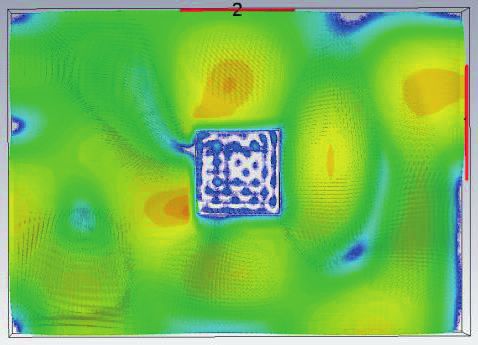
cost sensitive market that requires accurate phase and
amplitude modulation. Use of Solid state amplifiers
in RF energy generation enables reuse of modulator
technology and digital signal processing techniques
which could be a potential game changing approach
for any other market segment, including RF heating.

7.3 FREQUENCY TUNING
Bluetooth is a well-known wireless communications
system used for short range device to device
                                                                                    Empty cavity
connectivity.    Bluetooth     operates       in   the   same
band as most consumer microwave ovens. Many
networks of Bluetooth devices can coexist in one
area without excessive interference through use of
frequency hopping spread spectrum. Short packets
of data are sent on an agreed channel, after which
both the transmitter and receiver quickly hop to a
new frequency. In this way, the clashes between
asynchronous networks occur only intermittently,
allowing higher level link management functions
ensure    that     the   functionality   of    the   network
                                                                  Cavity containing microwave oven ready popcorn
continues unaffected. This technology requires low
cost frequency agile synthesisers that can change
frequency very quickly.

Microwave ovens of the future will reuse this kind of
synthesiser technology to spread the power in the
frequency domain in the most optimal way to heat a
particular food.

Examining the responses of a cavity loaded with
different quantities and types of food provides a
characteristic fingerprint, which may suggest different           Cavity containing a distributed load of potatoes

frequency and phase states for the heating process.
In the following graphs, different loads have been
swept over frequency and characterised with a view to
choosing one or more frequencies for use in a heating
algorithm.

The red and white lines represent the return loss on
each port, and green the combined ‘compound’ return
loss. (Return Loss is a measure of how well matched an
RF circuit or antenna is. It effectively means ‘how much
of the power that is transmitted doesn’t reflect back’.
                                                                Cavity containing a large water load, centrally located
It is an inverse measure of cavity power retention
efficiency).
These plots demonstrate that different foods give           This may seem counter intuitive, but it is a real
different cavity characteristics and are consequently       phenomenon. Due to the coherent nature of the
likely to require heating in different ways. This implies   signals, the amplitude and phase of signals emitted
that amplifiers used for solid state heating should         at any one port will affect the field distribution
be able to deliver peak power and efficiency at any         throughout the entire cavity. Consequently, changing
frequency in the band, as the cavity power retention        phase on channel 1 will change the power reflected
optima    can   occur   at   any   frequency.   Although    from all other channels. Since all port return losses
magnetrons are tuned to operate around 2.45GHz,             change, the compound return loss will also change.
amplifiers should be specified for operation across the
whole band.

7.4 MULTI-SOURCE PHASE LOCKING
Another aspect of solid state systems, enabled by
the synthesisers used in mobile communications or
Bluetooth devices, is the fact that many separate
sources can emit energy on exactly the same frequency.
Systems typically use only a single magnetron, but two,
four, or twenty solid state amplifiers can emit energy
into one spectrally pure mode. This freedom can
result in different product form factors, enable power
combining in the cavity, or reduce direct heating effects
                                                                    Port 1, 2 and compound return loss v phase of channel 2
where the food absorbs the RF energy straight from
the antenna rather than allowing it to reflect around the
cavity and heat from all sides.                             7.6 CAVITY SENSING AND ALGORITHMS
                                                            Working out how much power is reflected back from
Increasingly the mobile communications world relies         the cavity, and adaptively managing this, provides a
on use of multiple antennae to mitigate channel             degree of heating process control unavailable with
fading and deliver signals to specific users, a             open loop systems. With the additional control and
problem which corresponds directly to the hotspots          feedback from the cavity comes the requirement to
encountered in a microwave oven. Antenna diversity          define a heating strategy, or algorithm.
has evolved into MIMO, the Multi-Input and Multi-
Output communications scheme where signals are              In some cases the goal might be to sweep phase and
sent through multiple antennae to combine optimally         frequency (and therefore field distribution pattern)
at the location of a specific user. Techniques that have    methodically over the widest range of states. In other
evolved to mitigate the negative consequences of a          cases it might be best simply to find the highest return
complex multipath propagation environment in mobile         loss modes to ensure the maximum power is retained
communications may also have value in an oven.              within the cavity where it is available for heating the
                                                            load.
7.5 PHASE CONTROL
With multiple sources come additional possibilities         There are often a number of food-specific programs
for control of the signals and resulting field strength     available on microwave ovens, however the engine
distribution inside a cavity. In addition to controlling    of the oven has only two states, on and off. Future
frequency, the relative phase of the signals can be         microwave ovens will be able to tailor the frequency
adapted. As with frequency, phase has a direct effect       and phase and power to a specific task, giving millions
on the energy distribution in the cavity, moving the hot    of states that can be built into complex sequences for
spots but also changing the return loss on each RF port.    heating different types of food.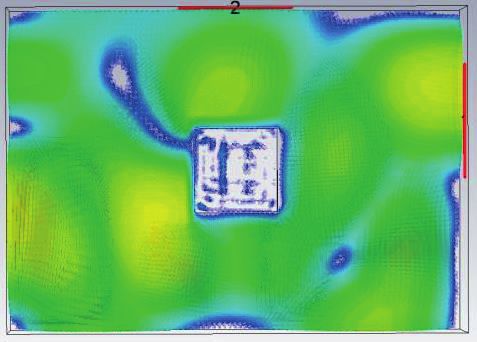
By way of example, the different profiles of cooked                    return loss measured over frequency at evenly spaced
pancake batter shown were achieved by using the                        times through the cooking of a beef burger.
spectrum firstly in an even way across all frequencies,
and secondly by adaptively biasing towards only                        Changes in the behaviour of the cavity are clearly
modes with very good cavity power retention.                           visible at some frequencies as the food changes
                                                                       during the cooking process. Other frequencies remain
                                                                       largely unaffected. Different foods generate different
                                                                       changes in the cavity fingerprint during heating.
                                                                       Reflected phase also varies as the cooking process
                                                                       evolves.

 A thick pancake batter demo load heated first using all frequencies
 evenly, and secondly with an adaptive heating algorithm biased to
    use only the best modes for efficient cavity power retention.

The algorithm that biased towards only efficient
coupling of energy into the cavity and load heated the
centre of the batter most directly, causing the middle
to rise faster than the edges. The algorithm that used
all frequencies rose evenly.

Many RF Engineers will already be familiar with the
vector network analyser. This is a measurement system
that can characterise the amplitude and phase of
signals into, through and back from active and passive
circuits. This is a key instrument for design of filters,
amplifiers, mixers and other electronic building block
circuits for communications.

NXP’s solid state heating demo systems are effectively
un-calibrated high power vector network analysers.
The food can be sensed as part of the microwave oven
cavity and changes over time can be measured.

Today many microwave ovens use a moisture sensor
to provide feedback from the cooking process. Solid
state systems provide an entirely new dimension to
sensing. Simply measuring how much of the available
RF power is reflected from the cavity allows a system
to modify cooking time appropriately. Further, foods
are complex substances that are modified by the
heating process. Turning a microwave oven into a
measurement system raises additional possibilities.
The following plots show a sequence of frames of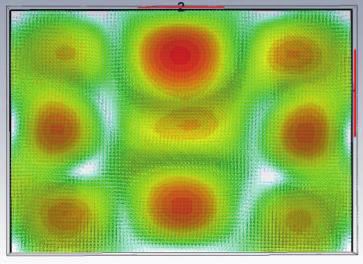
Empty Cavity       Small Water Load   Large Water Load
2400 MHz
2420 MHz
2440 MHz
2460 MHz
2480 MHz
2500MHz    (88-118 dB mV/m)   (88-118 dB mV/m)   (77-107 dB mV/m)
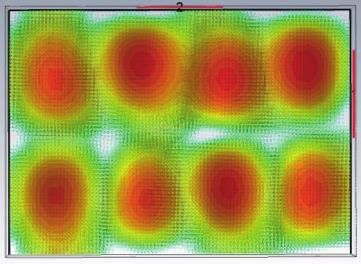
When frequency and phase are swept, this detector
                                                                  provides clear visual evidence of the effect on the field
                                                                  distribution of the controls available with solid state
                                                                  systems.

     Evolution of return loss V frequency during the cooking of
                            a beef burger

7.7 LIFETIME AND RELIABILITY
Lastly, but not least important when considering
switching to a solid state RF energy delivery
mechanism, is reliability. Magnetrons, like lightbulbs,
have a limited lifetime. Consumer magnetrons may
last for five hundred hours, industrial grade parts                   NXP demo system showing an LED tri-colour field detector
perhaps a year in continuous operation. Mobile                                           board in use

communications systems must work reliably in the                  However, this simple and practical demonstration
field for fifteen years, 24/7. The base station must              does not tell the full story. Simulations of cavities in an
work on the last day as well as it did on the first. Tests        empty state and with small and large loads show very
on our own ovens have shown that the power output                 different patterns of field intensity. In the simulation
is reduced by a third long before the magnetron                   results illustrated, an empty cavity displays a strong
fails completely. Potentially one of the barriers to              mode pattern at 2500MHz. However placing a small
integration of RF heating into high performance                   load in the cavity collapses this mode entirely.
cooking systems has been the low lifetime and low
reliability of the magnetron. The typical buyer is                In general, the fields in an empty cavity are unrelated
likely to have a different expectation of lifetime and            to the fields of a loaded cavity. This renders the LED
reliability from a high end range oven than a counter             demonstration a handy visual aid for demonstrating
top microwave.                                                    the control effectiveness of a solid state oven, but not
                                                                  a useful tool for working out how best to heat food.
8 EMPTY V LOADED CAVITY
The hotspot model presented previously is based                   The heavily loaded cavity demonstrates another
on superposition of many reflected waves inside a                 important    behaviour.     The     field   patterns    display
cavity. This model demonstrates a highly characteristic           relatively larger areas at peak field strength. This might
pattern of field strength which is affected by the                at first glance seem counter intuitive. Why would the
phase and frequency controls available with solid                 fields be more evenly distributed in a heavily loaded
state cooking systems. These patterns can be seen                 cavity? As in the case of outdoor RF propagation, the
in practice by placing a number of neon lamps                     superposition effects can be both constructive and
inside the cavity and applying power. This idea has               destructive. Multi-path radio communication signals
been extended to create field pattern detector                    can occasionally combine in phase to create a location
boards with arrays of LEDs. Three colours are used,               of especially high signal strength. However, in general
each connected to a short antenna in the X, Y or Z                the field components will not all arrive in phase and
polarisation planes.                                              will be partially destructively combined.
In situations with many signal paths between two 9 FREQUENCY BAND CHOICES
points, as in a city landscape or a microwave oven One important consideration when applying solid
cavity, damping the interactions and reflections state heating technology is the frequency band
can remove the opportunity for multipath fading. to use. Electromagnetic absorption by dielectrics
The same mechanisms that are responsible for varies significantly with frequency. EM penetration
much of the complexity in short and medium range depth estimations (to 37% signal power) have been
communications channels are also responsible for the performed for some example foodstuffs for three
hotspot patterns in a microwave oven cavity. license exempt frequency bands currently in use for
dielectric heating applications around the world.
Observation of this effect quickly teaches the user that
large loads, relative to cavity size, are easy to heat. Another key aspect of microwave oven functionality
Increased cavity damping leads to reduced interaction is evident from the table. 2.4GHz microwave ovens
between antennae, and less variation of field patterns cannot, as many assume, heat from the middle of
with frequency or phase shifts. Taken to an extreme, if the food. Heating occurs predominantly within the
a two channel solid state microwave oven was entirely first couple of centimetres of the surface of the food.
filled with water, the emitted power would dissipate This is deeper than heating by conventional means
within a few multiples of the electromagnetic energy such as infra-red or hot air convection, but falls far
penetration distance of each antenna. The cavity short of the ideal goal for a heating appliance of
would cease to respond as a resonant structure at all, homogeneous volumetric heating.
and signals from the two antennae would not interact
in any measurable way. Phase and Frequency would The controllability of solid state heating systems
cease to affect the heating process. is vastly enhanced compared to magnetron based
ovens, and cavity feedback is a vital new step in
When a large load couples energy strongly from enabling better heating algorithms, but physics
the field in this way, there may be less control, limits the capabilities of every new technology.
but by definition these loads are easy to heat. Understanding these boundaries is also key.
Conversely, we should expect that the precision and
controllability of a solid state heating system is most Food εr Tan-δ 433 MHz 915 MHz 2450 MHz
valuable for tackling the real world heating jobs that Raw
38 0.37 4.67 2.21 0.83
Pork
we as consumers might more frequently undertake. Cooked
40.5 0.28 6.48 3.07 1.15
Beef
We might never operate an oven empty, and rarely
Raw
49 0.29 4.88 2.31 0.86
load it to its maximum to try to boil a large volume Beef
Cooked
of water. Most real world tasks fall in between these Cod
47 0.26 6.92 3.27 1.22
extremes, where the uncontrolled magnetron is less Mashed
64 0.33 4.04 1.91 0.71
Potato
effective as the heating patterns are still strongly
Peas 62 0.27 5.43 2.57 0.96
modal and frequency dependant.
Soup 70 0.27 5.17 2.457 0.91
It is interesting to recall that the standardised test Gravy 73 0.32 3.95 1.87 0.7
used for specifying magnetron based microwave Carrots 70 0.26 5.17 2.45 0.91
oven power output and efficiency uses the one litre
Water 77 0.14 8.59 4.06 1.52
water load as shown in the simulation results. For a
system with limited control, it is best to specify power (http://www.sfu.ca/phys/346/121/resources/physics_of_microwave_
ovens.pdf)
and efficiency in a situation where control is less
critical.Both infra-red and hot air convection heating consumer microwave ovens, and to sweeten the deal,
technologies can achieve surface temperatures of 250 the achievable electrical efficiency of these amplifiers
degrees Celsius or even more, delivering a result that is increases significantly.
pleasing to our palate but requiring significant time for
heat energy to be conducted from the surface to bring 10 CONCLUSION
the core of the food to a safe temperature of seventy When microwave oven development engineers begin to
degrees or so work with solid state cooking systems, the questions they
ask are illuminating.
EM heating on the other hand acts mainly (but not I
f the power reflecting from the oven varies depending
solely) on the polar water molecule, which can limit on where we put the food and what shape it is…
the maximum temperature achievable due to the I
f we can only effectively heat a few centimetres near
evaporation of the substance that couples power the foods surface…
from the field. An ideal combined heating effect can I
f small loads need accurate tuning where large loads
be foreseen when RF heating is used to bring the core do not, but we are optimising cavity geometry for large
temperatures rapidly to the desired level, and hot air loads…
convection or infra-red heating methods are used to T
hen how have we ever developed ovens that work?
create a pleasing surface texture, even surface heating
and a desirable taste. As users, perhaps, we may feel that we already know the
answer.
Having proposed this optimal combination heating
mechanism, it can be seen that the more evenly and Solid state energy delivery addresses many of the
deeply the EM energy penetrates the food, the less time drawbacks associated with microwave ovens using
will be needed for a desired quality of result. More even magnetrons. As discussed in detail in this article, the
volumetric heating means less time is needed for thermal new technology brings with it a landscape of new design
conduction to complete the job of spreading the heat choices, techniques and capabilities.
from strongly heated areas to more weakly heated areas. E
nhanced lifetime
In turn faster and more even heating mechanisms mean F
requency accuracy of a few PPM
less opportunity for the food to dry out or overheat in F
requency tuning and fast frequency hopping
the more directly heated areas. P
hase locking of multiple sources
P
hase control
These principles hold true even for conventional cooking E
nhanced power control through Linear and fast PWM
techniques, which is why it can be difficult to deliver a techniques
consistently succulent roast beef joint or a truly moist C
losed loop power control enabling repeatability
festive season turkey. The energy is not homogeneously C
avity reflection sensing and feedback of power and
applied, and long cooking times are required which can phase
dry the most directly heated areas. E
nergy generation at new frequencies with compact
form factor
To achieve the goal of more even, deeper volumetric
heating to best complement – and accelerate - a hot air Taken together, application of these new techniques
or infra-red cooking system, a lower frequency may be in the cooking and heating products of the future will
desirable simply due to the physics of RF and dielectric allow product differentiation by performance rather than
interaction. styling.
Magnetrons are resonant structures and therefore Instead of innovation in microwave heating being
rapidly increase in size, cost and weight when designed focussed on food additives and packaging, innovation
for lower frequency operation. Solid state amplifiers are will soon be all about how to build the best new RF
still very realisable at a tenth of the frequency of today’s engine, and learning how to use it.www.nxp.com © 2015 NXP Semiconductors N.V. All rights reserved. Reproduction in whole or in part is prohibited without the prior written consent of the copyright owner. The Date of release: March 2015 information presented in this document does not form part of any quotation or contract, is believed to be accurate and reliable and Document order number: 9397 750 17647 may be changed without notice. No liability will be accepted by the publisher for any consequence of its use. Publication thereof Printed in the Netherlands does not convey nor imply any license under patent- or other industrial or intellectual property rights.
You can also read


