Oil & Gas Industry Recent Economic Developments, Workers' Rights and Trade Union Situation - IndustriALL Global Union
←
→
Page content transcription
If your browser does not render page correctly, please read the page content below
Oil & Gas Industry
  Recent Economic Developments,
  Workers’ Rights and Trade Union
             Situation

Kemal Özkan - Assistant General Secretary
Diana Junquera – Energy Industry Director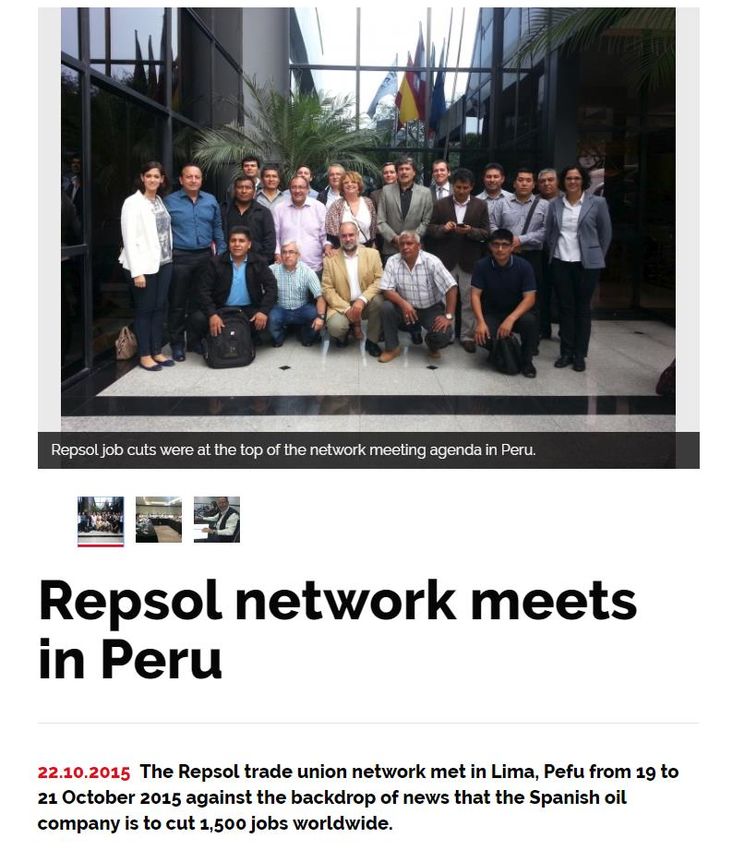
Global Economy
Global growth continues
Real Gross Domestic Product (GDP)
The strengthening of economic activity
hasn't been uniformly shared in countries
and regions
An increasingly restrictive trade environment
may hinder medium-term growth prospects

The acceleration of economic growth makes
more necessary to examine its relationship with
environmental sustainability
The economic rebound could impact climate
change
The transition to sustainable energy
advance slowly
Global New Investment in Renewable Power and Fuels

World employment trends
•     2018:
      – The total number of unemployed is expected to remain (above 192 million)

•     2019:
      – Global unemployment rate is expected to remain essentially unchanged.
      – The number of unemployed is projected to grow by 1.3 million.

                                                                  13%
               42%                       26%

    Vulnerable employment         Gender gap            Youth unemployment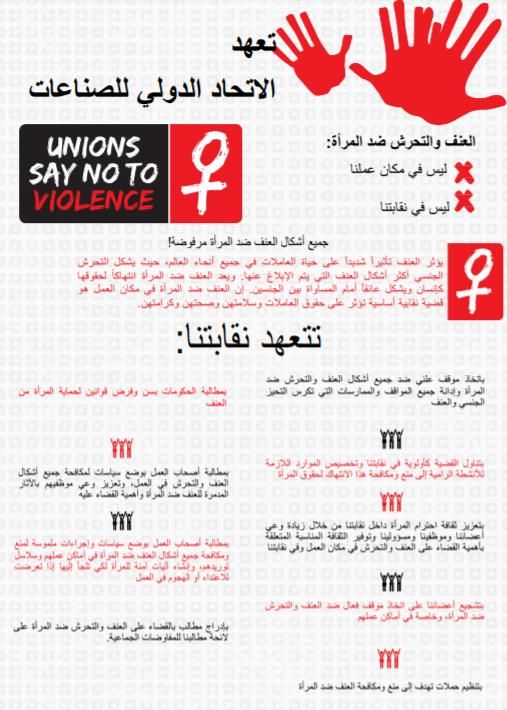
Global Energy Sector
     Overview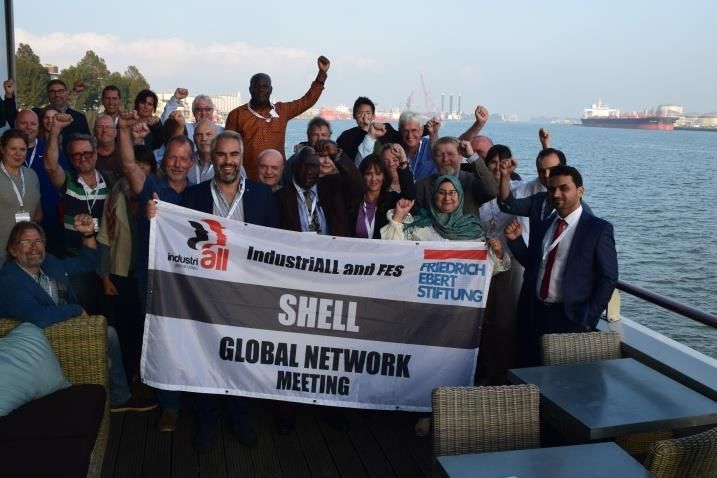
Global Overview
• Factors to take into account in the energy
  context

  – The United States is turning into the undisputed global leader for oil & gas
  – Solar PV is on track to be the cheapest source of new electricity in many
    countries
  – China’s new drive to “make the skies blue again” is recasting its role in
    energy
  – The future is electrifying, impulsed by electric vehicles & digitalization

• These changes brighten the prospects for
  affordable, sustainable energy & require a
  reappraisal of approaches to energy security
India takes the lead, as China energy growth slows
A world in motion…
•   Change in world energy demand by fuel

        Low-carbon sources & natural gas meet
         85% of the increase in global demand
…as China moves global energy
markets, again
• Change in world energy demand by fuel
China’s switch to a new economic model &
a cleaner energy mix drives global trendsSolar PV forges ahead in the global
power mix
• Global average annual net capacity additions by type
China, India & the US lead the charge for solar PV, while
Europe is leading onshore & offshore windThe future is electrifying
• Electricity generation by • Sources of global
selected region electricity demand
growth
India adds the equivalent of today’s EU to its electricity
generation by 2040 while China adds the eq. of today’s USElectric Cars are on the way, but oil demand still keeps rising • Electric Car (EC) fleet • Global oil demand ECs are helping to transform energy use however, trucks, aviation, shipping & petrochemicals keep oil on a rising trend
US becomes undisputed leader of oil
& gas production
•   Oil and gas production in the United States

The US is already switching to become an exporter of gas &
          becomes an exporter of oil in the 2020s
LNG ushers in a new global gas order Global Gas Trade Gas exporters Gas Importers
A new strategy for energy &
  sustainable development
• The Sustainable                            • Global CO2 emissions by scenario
  Development Scenario
  (SDS) in 2040
        •   875M electric vehicles

        •   2 times more efficient than
            today

        •   3.250 GW Global Solar PV
            capacity

        •   580 bcm additional gas
            demand

  Only 15% additional investment              The SDS reduces CO2 emissions in line with the
 is required to 2040 to achieve the       objectives of the Paris Agreement, while also tackling air
                SDS                           pollution and achieving universal energy access
Conclusions
• The oil and gas boom in the United States is changing trends,
with important implications for markets, trade flows,
investment and energy security
• The Chinese energy revolution will boost cost reduction for a
wide range of clean energy technologies
• The Sustainable Development Scenario for sustainable energy
shows that actions to tackle climate change are compatible
with universal access to energy and air quality
• Electrification and digitalization are the future of many parts
of the global energy system, creating new opportunities
• Despite the penetration of renewable energies, the demand for
oil and gas is expected to be stable in the futureGlobal Oil &Gas Overview
Distribution of proved reserves: 1996,
  2006 and 2016 (Percentage)
• Oil
                                     • Reserves in 2016 =
                                       15 billion barrels

                                     • Sufficient to meet
                                       50.6 years of
                                       global production
                                       at 2016 levels

• Gas
                                     • Reserves in 2016 =
                                       1.2 trillion cubic
                                       metres

                                     • Sufficient to meet
                                       52.5 years of
                                       global production
                                       at 2016 levels
Production/consumption by region
• Oil Production Consumption
Production Consumption
• GasOil consumption per capita 2016 (Tonnes)
Gas consumption per capita 2016
(Tonnes oil equivalent)
Forecasting

  WTI
Crude oil
  price

              • Forecasts
                indicate that
                oil and gas
                prices will
                remain stable

 Henry
  Hub
 natural
gas price
(Revenue - billions)
Top 10 oil&gas companies (Market Value - billions)
($236.8 b) ($264.9 b)
($363.3 b) ($210 b)
($274.6 b)
($203.8 b) ($102.1 b)
($57.1 b)
($129.9 b) ($80.8 b)
($192.3 b) ($51.1 b)
($143.4 b)
($121.9 b) ($42.2 b)
($50.6 b)
($283.6 b)
($90.4 b)
($89.9 b)
($36.8 b)Trade Union Networks
Trade union networks in the
             Energy Industries
• Subsector Networks
  • Nuclear (INWUN)
• Sub-sectoral regional networks
  • Electricity (LAC, MENA, SAEN, APEN)
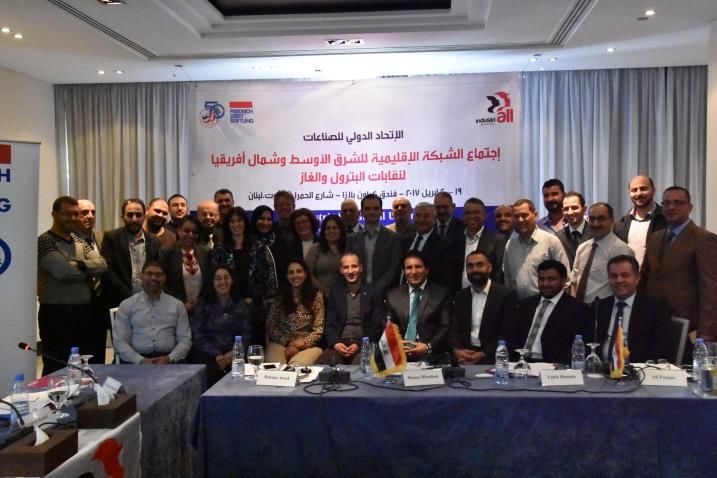
  • Oil and Gas (MENA, APEN) (LAC and SAEN in process)
• Global Business Networks
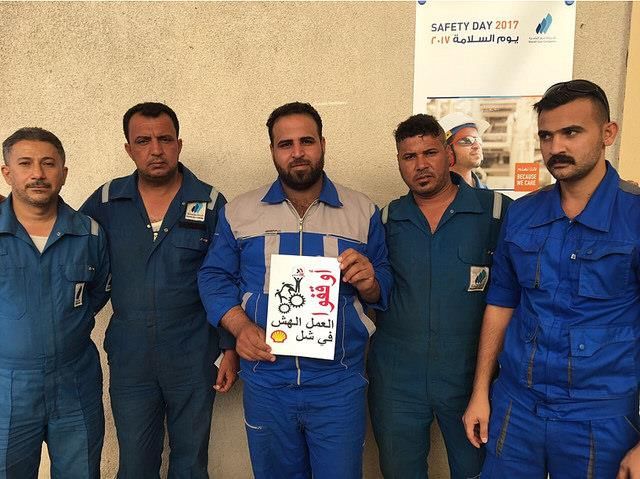
  • SHELL
• Regional business networks (Latin America)
  • REPSOL
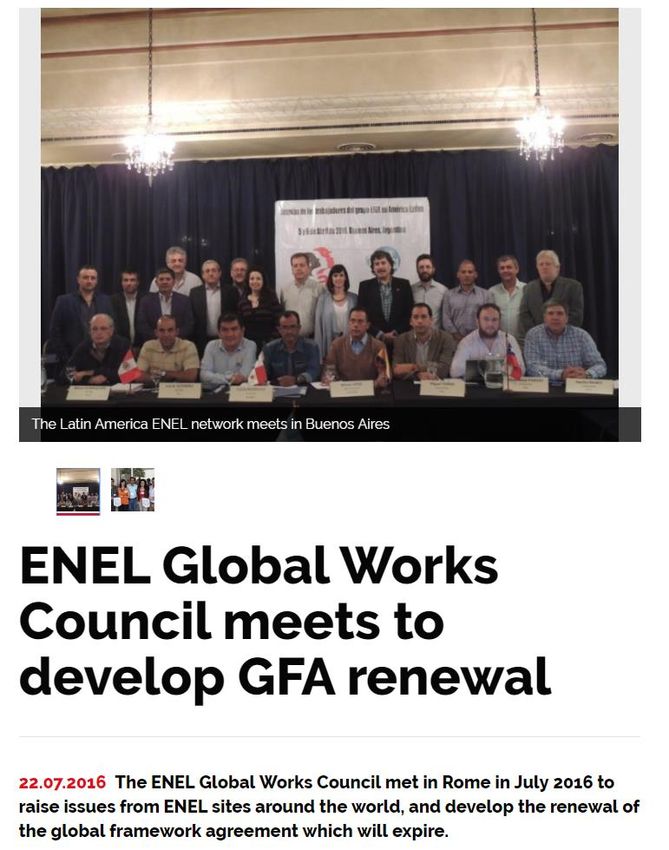
  • ENEL
Sub-sectoral regional networks
Sub-sectoral
  regional
 networks
Sub-sectoral
  regional
 networks
Sub-sectoral regional networks
Global Business Networks
         SHELL
Regional networks
Global Framework Agreements
           (GFAs)
     in Energy Industries
What are we focused in now?
SHELL
CAMPAIGN
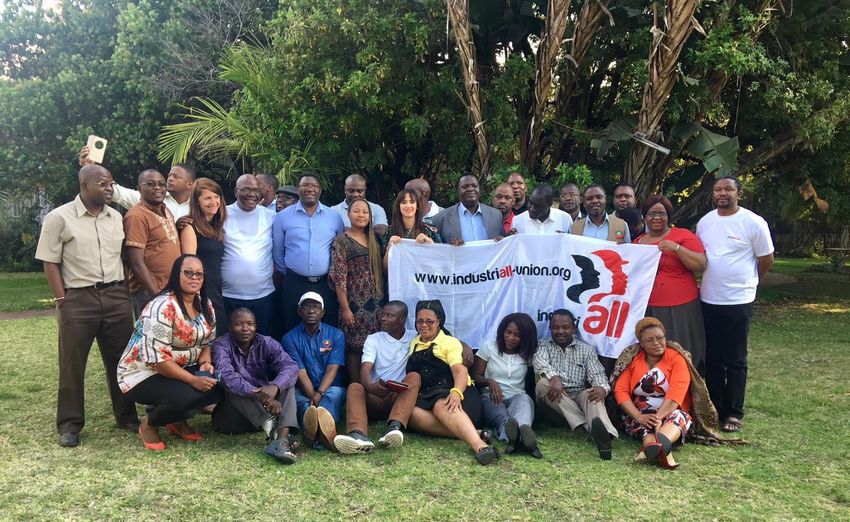
IndustriALL
“Building Union Power    Global Union's
 in Energy Industries”        World
                         Conference for
                           the Energy
                            Industries

                         25-26 July 2018

                         St. Petersburg
                             Russia
IndustriALL Women Committee http://www.industriall-union.org/issues/building-strong-unions/women
Challenges in organizing women                         Challenges faced by women
    •    Lack of interest to join the union
                                                               in sectors
    •    Difficulties to change the mind-set       •    Inequality and discrimination
         of male reps                              •    Horizontal and vertical segregation
    •    Difficulties to get the works             •    Lack of maternity protection (working
         councils to have women interests               conditions during the pregency,
         in mind                                        security of job)
    •    Difficulties for traditionally male       •    Violence and harassment against
         dominated unions to know                       women
         women’s interest
    •    Time constraints and caring
         responsibilities
    •    Fear of job loss (women-head of
         households)                               Including women issues in CBA

Specific Organizing strategies:                •       Monitoring of decrease of gender
                                                       wage gap
•       Establishing quotas
                                               •       Improving maternity protection
•       Establishing women’s structures
                                               •       Language on Childcare and
•       Training (women                                Family rights
        organisers/leadership training)
                                               •       Language on violence and
•       Campaigns to increase women’s                  harassment at work
        representation
                                               •       Leaves for domestic violence
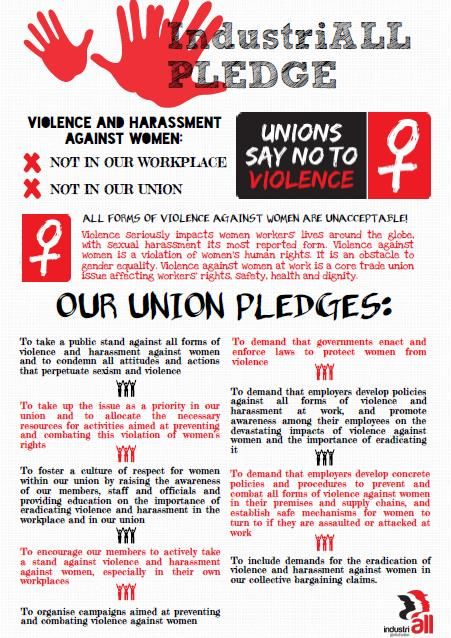
IndustriALL Campaign against violence at workplace
IndustriALL
Pledge:
Violence and
Harassment
against
Women:
Not in my
Workplace!
Not in My
Union
IndustriALL
Pledge:
Violence and
Harassment
against
Women:
Not in my
Workplace!
Not in My
Union
Take the
Pledge!
• Formal Adoption
  (Signature/ Vote)

• Dissemination
  throughout the
  unions of this pledge

• Ensure that the act of
  signing is well
  understood and
  publicized by and
  within the union
Thanks for your attention
 Kemal Özkan
 kozkan@industriall-union.org
 Diana Junquera Curiel
 djunquera@industriall-union.org

 @IndustriALL_GU

 @IndustriALLGlobalUnion

www.industriall-union.org
You can also read


