One North A Proposition for an Interconnected North - July 2014
←
→
Page content transcription
If your browser does not render page correctly, please read the page content below
One North
                                                                  A Proposition for an Interconnected North

                                                                  July 2014

ONE NORTH: AN INTERCONNECTED TRANSPORT PROPOSITION
         LIVERPOOL   MANCHESTER   LEEDS   SHEFFIELD   NEWCASTLE
one north         3

    Contents
    Preface  .  .  .  .  .  .  .  .  .  .  .  .  .  .  .  .  .  .  .  .  .  .  .  .  .  .  .  .  .  .  .  .  .  .  .  .  . 4

    Executive Summary  .  .  .  .  .  .  .  .  .  .  .  .  .  .  .  .  .  .  .  .  .  .  .  .  .  .  .  .  .  .  .  . 5
    Introduction  .   .   .   .   .   .   .   .   .   .   .   .   .   .   .   .   .   .   .   .   .   .   .   .   .   .   .   .   .   .   .   .   .   .   .  5
    Why Transport and Logistics are a Top Priority for the North  .   .   .   .   .   .   .   .   .   .   .   .   .   .   .   .   .   .  5
    Guiding Principles . . . . . . . . . . . . . . . . . . . . . . . . . . . . . . . . . 6
    Economic Benefits .   .   .   .   .   .   .   .   .   .   .   .   .   .   .   .   .   .   .   .   .   .   .   .   .   .   .   .   .   .   .   .   .  7
    The Proposition  .  .  .  .  .  .  .  .  .  .  .  .  .  .  .  .  .  .  .  .  .  .  .  .  .  .  .  .  .  .  .  .  .  . 7
    Next Steps and Consultation  .  .  .  .  .  .  .  .  .  .  .  .  .  .  .  .  .  .  .  .  .  .  .  .  .  .  .  .  . 10

1   The Challenge  .  .  .  .  .  .  .  .  .  .  .  .  .  .  .  .  .  .  .  .  .  .  .  .  .  .  .  .  .  .  .  .  .  . 11
    Why Transport and Logistics are a Top Priority for the North’s Economy  .   .   .   .   .   .   .   .   .   .   .   .   .   . 11
    What the Strategic Economic Plans say about Connectivity  .   .   .   .   .   .   .   .   .   .   .   .   .   .   .   .   .   . 12
    What Transformed Connectivity can bring in Practice   .   .   .   .   .   .   .   .   .   .   .   .   .   .   .   .   .   .   .   . 13
    European Comparisons  .   .   .   .   .   .   .   .   .   .   .   .   .   .   .   .   .   .   .   .   .   .   .   .   .   .   .   .   .   .  14

2   Current Plans and Developments  .   .   .   .   .   .   .   .   .   .   .   .   .   .   .   .   .   .   .   .   .   .   .   .   .   .   . 18
    Highways  .   .   .   .   .   .   .   .   .   .   .   .   .   .   .   .   .   .   .   .   .   .   .   .   .   .   .   .   .   .   .   .   .   .   .  18
    Logistics  .   .   .   .   .   .   .   .   .   .   .   .   .   .   .   .   .   .   .   .   .   .   .   .   .   .   .   .   .   .   .   .   .   .   .   . 20
    Rail     .   .   .   .   .   .   .   .   .   .   .   .   .   .   .   .   .   .   .   .   .   .   .   .   .   .   .   .   .   .   .   .   .   .   .   .   . 21
    Airports   .   .   .   .   .   .   .   .   .   .   .   .   .   .   .   .   .   .   .   .   .   .   .   .   .   .   .   .   .   .   .   .   .   .   .   . 24
    In Summary  .   .   .   .   .   .   .   .   .   .   .   .   .   .   .   .   .   .   .   .   .   .   .   .   .   .   .   .   .   .   .   .   .   .  24

3   The Proposition: A New Strategic Approach  .  .  .  .  .  .  .  .  .  .  .  .  .  .  .  .  .  .  .  .  .  .  .                                           25
    The Key Argument .   .   .   .   .   .   .   .   .   .   .   .   .   .   .   .   .   .   .   .   .   .   .   .   .   .   .   .   .   .   .   .           25
    One North: A Proposition for an Interconnected North  .   .   .   .   .   .   .   .   .   .   .   .   .   .   .   .   .   .   .                          25
    Elements of the Proposition Explained  .  .  .  .  .  .  .  .  .  .  .  .  .  .  .  .  .  .  .  .  .  .  .  .                                            28
    Broad Timescales for Delivering the Proposition  .  .  .  .  .  .  .  .  .  .  .  .  .  .  .  .  .  .  .  .  .  .                                        33

4   Next Steps   .   .   .   .   .   .   .   .   .   .   .   .   .   .   .   .   .   .   .   .   .   .   .   .   .   .   .   .   .   .   .   .   .   .   .   34
    Benefits of Working Together on an All Modes Strategy  .  .  .  .  .  .  .  .  .  .  .  .  .  .  .  .  .  .  .                                           34
    Finalising the Proposition             .  .  .  .  .  .  .  .  .  .  .  .  .  .  .  .  .  .  .  .  .  .  .  .  .  .  .  .  .                             34
    How the Strategy will be Delivered  .   .   .   .   .   .   .   .   .   .   .   .   .   .   .   .   .   .   .   .   .   .   .   .   .   .                35
4   one north                                                                                                                                                                                            one north   5

                 Preface                                                                                     Executive Summary

                One North is a strategic proposition for transport in the North.
                                                                                                            Introduction
                Led by the city regions of Leeds, Liverpool, Manchester, Newcastle and Sheffield, One
                                                                                                            In the recent report HS2 Plus, the benefits of HS2 in terms of better links
                North reflects the critical importance of transport for vibrant, sustainable economic
                                                                                                            between northern cities and the Midlands/London were highlighted. Sir
                growth across the North. It is our initial response to the challenge set out by Sir David
                Higgins in his report HS2 Plus: to come together to develop a coherent strategic            David Higgins posed the question of whether this alone would be sufficient
                transport plan integrating HS2 with the existing rail network, transforming connectivity    to achieve a full transformation of northern connectivity and the North’s
                across the North. Already the Chancellor has identified the need for a new strategic        economy. The challenge he set essentially concerns connectivity between
                approach to connect cities to drive growth, including the principle of a northern east-     northern cities and their connections to the international ‘gateways’:
                west high speed rail link.                                                                  airports and ports.
                The 15m population of the North is larger than London and almost as big as the              We agree this is the key outstanding issue to address and it provides the
                Netherlands but our economy is not doing as well. Our ambition is for the North to be       basis of this proposition for One North. It has been prepared, mindful of
                a dynamic counterweight and complement to the London and South-East economy, a              the needs of the whole of the North of England, by the city regions of
                destination of choice for investors, helping rebalance and grow the national economy        Leeds, Liverpool, Manchester, Newcastle and Sheffield. It follows on from
                in the decades ahead.                                                                       the speech by the Chancellor of the Exchequer in June, where he observed
                                                                                                            that “the cities of the North together can be greater than the sum of their
                Transport – for freight and people - is central to our ambition. Just as the transport
                                                                                                                                                                                          “...a highly
                networks in London and the Netherlands – internally, with surrounding areas and             parts”. He identified the need for a new strategic approach to connecting
                beyond – are fundamental for their economic success, transport is fundamental for           cities to drive growth and outlined the idea of a new east-west high-speed    interconnected region
                the North. But journey times across the North are much slower, service frequencies          rail link for the North.                                                      of thriving cities and
                are lower and the interconnectivity of our transport networks is much weaker.
                                                                                                                                                                                          towns, providing a
                Transport connectivity across the North needs to change.
                                                                                                            Why Transport and Logistics are a Top Priority                                valuable counterweight
                The dominant method of travel in the North today is by road. Our motorways need to
                be kept moving through extended managed motorways east-west on the M62/M60
                                                                                                            for the North                                                                 to London”
                and north-south on the M1 and M6 and through tackling network gaps on the A1 and            Our proposition places a transformation of connectivity at the heart of an
                links to ports. But our already congested highways cannot be expected to meet all the       aim to maximise economic growth in the North.
                burden of growth.
                                                                                                            The strategic economic plans of all five city regions, prepared by the
                Rail is the travel sector that is growing strongest. Alongside fast frequent links to       respective LEPs earlier this year, each recognised the importance of
                Birmingham and London provided by HS2, the North requires a new trans Pennine               improving transport links to achieve economic growth.
                route and a faster route to Newcastle. City region rail networks need more capacity,
                electrification and new rolling stock to meet growing demand. They need to be closely       Our proposition builds on this common perspective and aims to create
                interconnected with the new intercity network of services and with metro/tram               a North of England that is a powerful and integrated series of economic
                services, bus and cycle. With this the North will be better placed to take advantage of     geographies. This will be a highly interconnected region of thriving cities
                the lower barriers to trade with the South that HS2 will bring, multiplying the benefits    and towns, providing a valuable counterweight and complement to London
                of investment in high-speed rail to the benefit of the country as a whole.                  and helping to re-balance and deliver growth for the national economy in
                One North sets out our proposition for transport in the North and the principles we have    the decades ahead.
                adopted in developing it. It provides a platform for consideration by the LEPs and both
                private and public sector organisations across the North. Our next steps will be to work
                with these organisations to develop a prioritised set of economically driven investments
                to deliver our ambition. The prize is considerable. A transport network that supports a
                strong and vibrant and more productive North of England economy for the 21st century.
                Councillor Keith Wakefield, Leader of Leeds City Council
                Joe Anderson, Mayor of Liverpool
                Councillor Sir Richard Leese, Leader of Manchester City Council
                Councillor Nick Forbes, Leader of Newcastle City Council
                Councillor Julie Dore, Leader of Sheffield City Council
6   one north                                                                                                                                                                           one north   7

                Guiding Principles                                                                      Economic Benefits
                We have used the following six guiding principles in setting out our vision.            Better connectivity means improved journey time reliability, better travel
                                                                                                        quality and shorter journeys that will widen and strengthen the North’s
                1.	 Our aim is to grow the national economy by invigorating the North’s
                                                                                                        labour markets and improve business efficiency by:
                    economy as a whole, delivering higher levels of productivity and greater
                    competitiveness through designing a programme of transformed connectivity              Stimulating business investment and innovation by supporting
                    for the North.                                                                         economies of scale and new ways of working.
                2.	 The vision is ‘multi-modal’ both for logistics and for personal travel. It             Achieving agglomeration economies by bringing firms and their
                    recognises that the dominant means of travel today is by road. Steps are               employees closer to business rivals and partners.
                    needed to improve the reliability and resilience of the road network across the
                                                                                                           Enabling firms to access a larger labour supply and providing wider
                    North for all user groups. But the highway network cannot meet the burden
                                                                                                           employment opportunities for workers and those seeking work.
                    of expected growth. Extra capacity needs to be added elsewhere. The rail
                    network is extensive across the North yet it fails to offer a sense of a joined        Increasing competitiveness through access to new and larger markets
                    up network (in the way that London Underground does, for example). This                with the benefits of increased labour market specialisation.
                    is where additional capacity and transformational connectivity can be best             Reducing trading costs and using more efficient logistics networks.
                    provided. Water and air transport is relevant too, especially because of the
                    scope for greater activity through the North’s ports and airports.                     Strengthening the existing comparative advantages of the North as a place
                                                                                                           to do business.
                3.	 Rail is the means of travel that is growing strongest and the network will have
                    to play a much increased role in the decades to come. This means investment.        All these things mean a more productive northern economy, which means
                    Better rail service provision offers improved connectivity, but the use of          higher wages, profits and tax receipts for the Exchequer.
                    out-dated rolling stock and infrastructure together with loosely integrated
                    patterns of operation restrict the potential for improved quality of service.       The Proposition
                    Our proposition has therefore been cast in terms of service requirements at a
                                                                                                        Connectivity and capacity between the northern cities needs to undergo
                    strategic level and an outline investment programme. Following investment,
                                                                                                        transformational change. To become an economic powerhouse the North
                    growing demand and lower operating costs may result in services becoming
                                                                                                        requires:
                    more commercially viable. The target is greater capacity, transformed
                    connectivity and a means to drive down the level of public subsidy required for        Optimisation of strategic highway capacity for both freight and personal
                    rail services.                                                                         travel through extended managed motorways and addressing strategic
                                                                                                           gaps in the road network (including links to ports), with a particular
                4.	 Our proposition anticipates growth. It is based on national and regional
                                                                                                           emphasis on improving reliability for freight and business.
                    projections of population increases. Our expectation is that the North’s
                    economy will become more productive, more competitive and more efficient               A very high quality (fast and frequent) intercity rail network joining the
                    as it competes in global markets, playing to its strengths, helped by the              centres of the city regions. This will require a new trans Pennine route
                    economies of scale that come from a balanced, transformed interconnected               and a faster route to Newcastle to provide the additional capacity and
                    network.                                                                               better connectivity we are seeking for the North’s economy. It will
                                                                                                           deliver direct, fast and frequent access to Manchester Airport for all the
                5.	 The proposition seeks to maximise value by prioritising the investment that
                                                                                                           North’s city regions to help northern businesses access global markets.
                    delivers the best overall return to the taxpayer in terms of net national growth.
                                                                                                           City region rail networks that provide the additional capacity needed
                6.	 The proposition is transformational in intent and that means that major capital
                                                                                                           to sustain city centre growth. These will be interconnected with HS2
                    expenditure is required, to be justified by the economic benefits. HS2 and
                                                                                                           services, new intercity services, metro/tram services and with much
                    the North’s interconnected city regions will together make the North a new
                                                                                                           expanded park and ride facilities. They will combine the need to
                    destination of choice for mobile international businesses: One North.
                                                                                                           connect into city region hubs with new direct cross-city services. This
8   one north                                                                                                                                                                                                         one north   9

                                           requires electrification, new rolling stock (a matter of urgency for the                    development and regeneration around stations with HS2 services. HS2
                                           North in terms of quality and sufficiency), higher service frequencies,                     is a key catalyst for northern city regeneration, and not simply a means
                                           new services and the removal of network pinch points.                                       to shorten journey times. All of the city regions have plans to be ready
                                                                                                                                       for HS2 and are committed to its success.
                                           A ‘digital’ infrastructure that offers consumers and businesses full real-
                                           time information systems, improved ticketing options, provides greater                      The new trans Pennine route could also deliver a new integrated east-
                                           network resilience and reliability, more capacity for growth and much faster                west rail freight capability linking the major port estuaries and north-
                                           connections between key centres.                                                            south rail routes, connected to a number of major rail linked distribution
                                                                                                                                       centres that can reduce industry’s trading cost base.
                                           Good access that enables the efficient and timely movement of large
                                           quantities of freight by rail, road and water covering not only ports, rail
                                                                                                                                    The outcomes from this proposition are:
                                           links and large distribution centres but also light commercial vehicles
                                           and airports for premium logistics.                                                         The North becomes a destination of choice for investors and a dynamic
                                                                                                                                       counterweight and complement to the London and South East
                                           Building HS2 early – extending Phase 1 of HS2 to Crewe as envisaged
                                                                                                                                       economy.
                                           in ‘HS2 Plus’ and bringing forward delivery of HS2 between Leeds
                                           and Sheffield. HS2 services start in the North in 2026 and the work of                      Higher levels of productivity and greater competitiveness of northern-
                                           the Lord Deighton Growth Task Force illustrated the scope for early                         based businesses, delivered in a highly inter-connected, multi-centred
                                                                                                                                       regional economy able to function as achieved in Germany’s Rhein-Ruhr
                                                                                                                                       region, the Netherlands’ Randstad and elsewhere.
                New city region networks                                                                                               Modern infrastructure for our growing logistics industry, supporting
                Inter city rail networks                                                                                               trade and industry, offering the efficiencies that stem from high levels of
                                                                                         Newcastle
                Increased Highway capacity                                                                                             reliability and resilience.
                Managed Motorway Network
                                                                                                                                       A broadening and deepening of the economic benefits that HS2 brings
                                                                                                   New Rail
                                                                                                                         Teesport
                                                                                                                                       to the North.
                                                                                                   Route
                                                                              the motorway
                                                                                   network

                                                                                                                         Humber
                Liverpool                         Manchester                             Leeds                           Ports

                                                                                                                                                                            £10-15bn
                                                                         New
                                                                         Trans Pennine
                                                                         Route                     HS2 brought forward

                                                   HS2 brought forward

                                                                                         Sheffield
                                                                                                                                                     Improved Reliability     +100% to                33-50% Faster
                                                                                                                                                     and Resilience           150% Capacity
10 one north one north 11
1. The Challenge
A new trans Pennine route, Next Steps and Consultation Why Transport and Logistics are a Top Priority for
connected to the HS2 lines and the The development of this vision by the five city regions provides a platform the North
existing rail network, tunnelled as for consideration by all of the major towns and cities and Local Enterprise
The national economy is unbalanced. A large capital and world city in London
needed, linking the five city regions Partnerships of the North. The prize, once developed into a clearly
attracts and consumes high levels of investment, including in transport. In
together with Manchester Airport prioritised strategy, will be considerable. It will provide a strong strategic
contrast with most other developed economies, the next tier cities are much
and the ports. context for city region transport investments. It will enable the North of
smaller. Compared with our equivalents in Europe, our GDP/capita in the
A facility that will need to be planned England to compete more effectively for future resources and strengthen
North is weak against the national average, and investment in connectivity
for intensive use as a high-reliability the national economy.
has been neglected. This reduces national prosperity as well as that of the
all-weather central component in the We will use a transparent appraisal framework to develop a clearly North. This proposition seeks to redress these imbalances focussing transport
North’s transport system. prioritised list of economically driven investment programmes and investment for maximum economic gains.
interventions to deliver our ambition. This strategic investment plan will
Poor transport links could be sapping the competitiveness of the North.1
cover all modes of travel and can inform national and local decision-making
East–west rail journeys in the North take about twice as long as equivalent
over multiple Comprehensive Spending Review periods.
journeys in the South.2 GDP per capita performance of the northern city
Alongside active government leadership, we will work with the key national regions is slipping compared to London and smaller southern towns and cities. “...The opportunity is
transport agencies – Network Rail, the Highways Agency and HS2 Ltd – to Experience with Scotland and London - where there are significant spending
ensure that across the North and in each city region the best way is found
to achieve the benefits
powers - is that devolved authorities invest more substantially in transport.3
to maximise the value of each investment. of a larger market that
While the individual cities of the North may be relatively small, experience
in the most prosperous European nations shows that clusters of highly greater connectivity
interconnected cities can perform very well in economic terms. The North across the North can
of England population is similar to the Netherlands and bigger than London,
bring”
Tokyo and New York. The challenge and opportunity is to achieve the benefits
“…The cities of the north are individually strong, but collectively not
of a larger market that greater connectivity across the North can bring. Faster
strong enough. The whole is less than the sum of its parts….We need
growing regions are characterised by better infrastructure and connectivity to
a Northern Powerhouse ….Not one city, but a collection of northern
global markets.4
cities - sufficiently close to each other that combined they can take on
the world.” There is a continuum of evidence that enhancing connectivity between the
North’s city regions, within the North’s city regions and to international gateways
The Rt Hon George Osborne MP
and London needs to be an integral part of any strategy to accelerate the North’s
Museum of Science and Industry, Manchester. 23 June 2014 economic growth. The Northern Way, Eddington and the House of Commons
Transport Committee have all come to this general policy prescription.5
The 2014 Strategic Economic Plans for the largest city regions in the North
each identify connectivity as a key aim – both across the North (see Leeds City
Region) and internationally (see the North East, Manchester, Liverpool and
Sheffield Strategic Economic Plans).
1 ‘Never Walk Alone’ The Economist April 19th 2014
2 Manchester to Hull (95 miles) is 1hr 53m by train versus London to Chippenham (95 miles) is 69mins
3 Liverpool John Moores University (Parkinson et al 2014)
4 IPPR North and the Northern Economic Futures Commission (2012)
5 ‘The Economic Case for Transport Investment in the North’ The Northern Way (March 2011). The
Eddington Transport Study (Dec 2006). Transport and the Economy, House of Commons Transport Select
Committee 2011
12   one north                                                                                                                                                                                                one north   13

                                                                                             What Transformed Connectivity can bring in
                 What the Strategic Economic Plans say about                                 Practice
                 Connectivity                                                                The Department for Transport’s trans Pennine study of 2011 confirmed
                                                                                             that enhancing the Leeds-Manchester-Sheffield triangle of corridors would
                 Leeds City Region
                                                                                             support the economic growth of these large city region economies. Given the
                 Better connectivity is the lynchpin of our plan. Gaps in connectivity are   extensive use of these three corridors by longer distance trips between the
                 the missing links to developing a second UK economic powerhouse             North’s city regions (including Tees Valley, Hull/the Humber and Lancashire),
                 to compete for the country globally, alongside London and the South         the study found that connectivity enhancements across this triangle would
                 East. We have a formidable set of economic assets: what we need is a        lead to balanced economic growth of the wider North.
                 high performing transport network to connect people, places and jobs        Currently, city region economies function largely in isolation from one another.
                 seamlessly and attract new investment.                                      Commuting between Manchester and Leeds City Regions, for example, is
                 Greater Manchester City Region                                              40% lower than expected given the physical proximity of the two cities. A 20
                                                                                             minute reduction in train journey times between Manchester and Leeds would
                 Greater Manchester has consistently placed connectivity and transport       be worth £6.7 billion across the whole of the North of England (with only £2.7
                 investment at the heart of our economic strategy. We will continue to       billion captured within the two city regions and £4bn spread across the wider
                 focus investment on the city region’s strategic transport network to        North).6 Bringing the North’s city regions closer together will improve labour
                 further enhance local, national and international connectivity.             market efficiency and enable firms to access a wider labour force. Improved
                 Liverpool City Region                                                       transport links will widen employment opportunities across the North for
                                                                                             those seeking work. Direct cross city connectivity and improved links from
                 To build on international connectivity and brand recognition. Our           remoter areas to centres with education and training facilities (such as Carlisle
                 investment will be targeted at establishing a globally connected            and Middlesbrough) are needed to reduce the number of people not in
                 City Region, driving the attainment of the SuperPORT concept and            employment, education or training.
                 enhancing our internationally recognised visitor economy assets.
                 The Liverpool City Region will exploit these opportunities to establish     Widening and strengthening labour markets and improved business efficiency
                 itself as a centre for trade and export led growth, as well as a leading    by improving journey time reliability, travel quality and travel times will:
                 location for inward investment.                                                 Stimulate business investment and innovation by supporting economies of
                 Sheffield City Region                                                           scale and new ways of working.
                                                                                                 Achieve agglomeration economies by bringing firms closer (in space or
                 Our Ambition — To improve SCR’s external connectivity, nationally and
                                                                                                 time) to other firms or workers in the same sector.
                 internationally, by air, road and rail, including maximising the benefits
                 of high-speed rail.                                                             Improve labour market efficiency, enabling firms to access a larger labour
                                                                                                 supply, and providing wider employment opportunities for workers and
                 North East                                                                      those seeking work.
                 In order to achieve the vision set out in our strategic economic plan, it       Increase competitiveness by opening access to new markets, principally by
                 will be necessary for people to travel and for goods to be transported          increased labour market specialisation.
                 within, into and out of the area. Without this, the economy cannot
                 function effectively and commercial competitiveness and social
                 inclusion both suffer. The presence and effectiveness of road, rail, air
                 and sea connections can place a limitation on how aspirational the
                 North East Local Enterprise Partnership area can be.                        6 ‘Strengthening economic linkages between Leeds and Manchester’ Overman et al, SERC The Northern Way
                                                                                             2009. This study showed a broadly similar level of benefit from high-speed rail links between these cities and
                                                                                             London – as now being created by the HS2 plans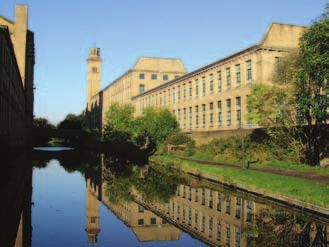
14 one north one north 15
GDP per Capita
Increase domestic and international trade by reducing trading costs.
Attract globally mobile activity to the UK, by providing an attractive
business environment and good quality of life.
Euros
In practice East-West connectivity and HS2 would be growth multipliers for the Germany
North and nationally, with each increasing the impact of the other. HS2 lowers 70,000
Netherlands
barriers to trade between the North and the South; East-West connectivity makes
England
the North a more productive and thus better trading partner, which increases the 60,000
returns to the additional trade that HS2 unlocks.
50,000
European Comparisons 40,000
The ability of a very large city such as London to sustain economic growth has
been demonstrated through recessionary times. Less well understood is the 30,000
resilience of regional economies based on several competing/collaborating
“...East-West connectivity cities. We identified two European benchmarks, Randstad in the Netherlands
20,000
and HS2 would be and Rhein-Ruhr in Germany, to illustrate what can be achieved. The GDP per
10,000
growth multipliers for inhabitant is higher in both of these European city regions and, unlike the North,
the Rhein-Ruhr region’s GDP per capita is growing faster than its capital city,
the North and nationally, Berlin.
0
with each increasing the
le
m
n
r
g
ag
d
n
t
ll
rf
d
d
s
ol
te
ch
l
ur
st
el
se
Hu
ed
Kö
da
un
or
do
po
Ha
es
ca
effi
re
isb
Es
The striking feature of the transport systems in these two comparator regions
df
Le
er
rtm
el
ch
er
w
Ut
n
a
Du
st
Sh
ss
impact of the other”
Ne
Liv
De
an
Br
Do
Am
Dü
is the complex and interconnected nature of the public transport and highway
M
networks combining hub and spokes with cross city routes. On major city to city
rail flows, journey times tend to be shorter, frequencies higher and services are
timed to interconnect at key interchanges. But there are also through direct
services between most places and there is no single spine route that dominates, Source: Eurostat - most recent data (for 2011)
given the spatial pattern of the city ‘cluster’. All cities are connected directly
to the key airports. Both regions rely upon port, waterway and rail freight
infrastructure to support their economies. The distances between city centres is greater in the North of England compared
to the European examples and the geography of the Pennines has proved to
be a barrier to east-west highway and rail development especially between
Manchester and Sheffield. This means we need to work harder on connectivity to
develop the advantages of a unified regional economy.
The evidence from the study by SERC for the Northern Way in 2009 7 is that
improving east-west connectivity in effect brings to the North about the same
benefit as does HS2. Addressing the connectivity challenge can be expected to
double the benefits HS2 brings the North. The European examples show there
is no fundamental reason why the North’s economic performance cannot be
uplifted dramatically.
7 Ibid
16   one north                                                                                                                                                                                             one north   17

                 Randstad, Netherlands                                                                       Rhein-Ruhr, Germany
                 The Randstad is bounded by the four cities of Amsterdam, Rotterdam, Den Haag                The 10 million population of the Rhein-Ruhr region in Germany is shared over five
                 and Utrecht. With a population of 7 million, the Randstad benefits from excellent           large cities (Köln, Düsseldorf, Duisburg, Essen and Dortmund) and 10 smaller cities.
                 airport (Schiphol) and port (Rotterdam) links. City to city distances are about 30 - 50     The economy accounts for about 15% of Germany’s GDP. It has one major airport
                 miles and the Randstad benefits from an intensive road network. The Dutch cities            (Düsseldorf) which carries a similar level of passengers as Manchester – and a high-
                 are interconnected with fast rail services each 15 minutes, supplemented by local           speed rail link to Frankfurt (equivalent to Heathrow in size and function) taking just
                 services, interconnected with city region light rail and bus networks and they also         50-55 minutes (from Köln). The region has the most intensive Autobahn network
                 have an all-night fast hourly service. The Port of Rotterdam is linked by a waterway        in Germany and there is a rail network of fast intercity, interurban and metro style
                 freight corridor and a dedicated freight railway.                                           services. These both rely on interchange at key hub stations and provide for direct
                                                                                                             through services across the region. Rail speeds between centres are typically 60-
                                                                                                             70mph with a frequency in excess of 4 trains per hour. A regional transport alliance
                                                                                                             (VRR) coordinates regional public transport. Duisburg is the largest inland port in
                                                                                                             Europe, supporting heavy industry and distribution parks.

                                                                       Amsterdam
                                                                                                                 The Rhein-Ruhr has higher speed and higher

                                                                                                                 Duisburg                                                Essen                  Dortmund
                                                                                                                                                                65mph/5tph
                                                                                      36mph

                                                                                                                                                   78mph/7tph                      63mph/6tph
                                                           ph
                                                            t

                                                                                           /4tph
                                                         /2
                                                      ph

                                                                                                                                      72mph/8tph
                                                                    9tph
                                                       m
                                                     26

                                                                 ph/
                                                                47m

                                                                                                                              69mph/4tph
                                                                                                                                                                              ph
                                                                                                                                                                           /3t
                                                                                                               Düsseldorf                                                ph
                                                                                                                                                                     m
                                                                                                   Utrecht                                                        51
                                                                          h
                                                                36mph/4tp

                                                                                                                                      69mph/4tph
                     Den Haag
                                                                              /4tph
                                      28                                   ph
                                         mp                             m
                                           h/
                                             6tp                      35
                                                 h

                                                                                                                       Köln
18 one north one north 19
2. Current Plans
and Developments
On connectivity, exciting progress is being made at last, but more needs to be There is a project pipeline that the Government should commit to urgently.
done. Looking ahead, the managed motorways concept can be applied further to
congested sections of the strategic network in the North, and new approaches
Starting in 2006, the Northern Way Transport Compact forged a strong pan-
to non-motorway strategic links can be found. But, we cannot expect the
northern strategic direction for transport, driven by economic objectives.
existing highway network to bear the brunt of expected demand growth.
Focussed on links between city regions and with international gateways the
strategy identified strategic delivery gaps and priorities for investment at a Our proposition demands not only the use of managed motorways and
pan-northern level. technology to achieve the very best possible network performance but also
completion of long standing gaps in strategic links. There is a Highways Agency
Many of the short and medium term priorities (for start by 2016) identified
study underway looking at the Sheffield – Manchester corridor but it is unlikely
by the Northern Way are now complete, under construction, in programme
to conclude in favour of a new road link given the environmental constraints.
or in a project pipeline. These include the Northern Hub, rail electrification in
We believe this corridor needs to be considered on a multi-modal basis.
the North West and the North Trans Pennine corridor and highway schemes
covering network gaps and the most congested sections of our motorways.
This is a good indication of the North’s ability (with partners and the support
of Government) to make rapid progress. However, more needs to be done.
Beyond 2016 the Northern Way highlighted the need for trans Pennine as well
as north-south rail strategies involving new high-speed lines and an ongoing
Journeys by road are no quicker than by rail
priority to complete gaps in the strategic highway network and to address
congestion. These issues remain highly pertinent in 2014 and the years ahead.
Newcastle
“...we cannot expect the Highways
)
(M
A1
existing highway network A section of managed motorway has been completed on the M62 between A1
(M
)
A1
(M
)
s
in
Leeds and Bradford and another is under construction on the M1 around
to bear the brunt of
m
ns ins
43
Wakefield as is the A1 upgrade to motorway in North Yorkshire. Work on mi m
1h
6
expected demand h5 2 9
)
s/
A1(M
managed motorways is due to start in the next year on the M1 around /2 h
ile
le s /2
growth” i es
m
Sheffield and on sections of the M60 and M62 around Manchester, along with 4m
98
17
il
4m
work to upgrade part of the Newcastle Gateshead bypass, the A556 (M56 to
mins
14
M6) and access to the Port of Immingham. Leeds
s
h 15
Continued increases in congestion are leading to extended journey times and ins in
M6
2
1 h 23 m 6m
s /
2
less reliable journeys which have an economic cost. The head of the Highways mile /5
iles/
73 s
ile
62
M62
46 mile
Agency recently suggested that with traffic expected to grow, we may need
M
4m
98 m
to get used to speeds declining, with 40mph becoming the ‘new normal’.8 Manchester 62
4
M
Further improvements to the strategic highway network in the North will be Liverpool M62 34 miles/44m
s/48 m
ins
M62
needed to address the emerging air quality problems around specific sections 42
and to complement HS2 plans in specific locations. 77 m m
38 iles
ins
iles mi /1h
/1h l es 1 6
48m
M1
Northern interconnectivity at present is very dependent on the M62 in /1h m
M1
ins
12 in
particular across the Pennines. There is inevitably a limit to its capacity and the A57 mi
n
A6
28
resilience of all trans Pennine routes at times of severe adverse weather is an A5
7
issue. Sheffield
8 Interview: Graham Dalton, Highways Agency Civil Service World May 201420 one north one north 21
Logistics
The efficient movement of freight is central to the economic growth ambitions Inland distribution centres that are rail linked can offer occupiers competitive
of the North. Whilst the highway and rail network is publicly funded, the ports advantage, as can rail linked ports. But to take advantage of this, the North
and distribution centres are mostly private sector owned and operated and needs a rail network that allows longer haul trains to both reach and use the
subject to competitive forces. Freight services are provided in a competitive principal north-south rail corridors. By expanding rail terminals in the Mersey
market-place. The North of England has 14m m2 of large warehouses. This and East Coast ports to serve (respectively) Irish and Continental ferry and
stock is concentrated along the M62 corridor on both sides of the Pennines, container services and expanding trans Pennine rail capacity and capability, a
in South Yorkshire, where the M18 provides important connectivity to the realistic alternative for some freight traffic on the M62 could also be created.
expanding logistics sector in Doncaster, and in the major ports. In some
cases, these warehouses play a national distribution role, one that could be Rail
expanded, given improved network capability.
Northern Hub, due for completion in 2018, addresses the capacity and network
Within the North of England, the M62 plays a particularly important role. Freight constraints in and around Manchester. With the roll out of electrification in
accounts for about 40% of traffic on this key trans Pennine route. It is crucial to the North West, Midland Main Line and northern trans Pennine, studies are in
the North’s economy – and any vulnerability (for instance at times of adverse hand to consider where to prioritise further electrification of the North’s rail
weather) can be damaging. The M18 and M1 also perform a significant role network. But the fundamental limitations on much of the rest of the network “…Victorian
and, together with the M62, provide important links to the Humber Ports. remain, constraining service options and with much of the route capacity fully infrastructure… requires
Rail freight in Britain has grown, driven by the need to move containers used especially on the approaches and at city centres. Not all the Northern Hub
from ports to central distribution points while retailers are beginning to use outputs are committed and even when Northern Hub is complete and the main major investment to offer
intermodal services for domestic distribution. Northern ports account for trans Pennine route electrified, the network will be operating close to capacity. the higher frequencies
30% of all port unit load traffic, with particular strengths in serving Ireland, With very strong growth on commuter lines, the existing rail services across and interconnected
Scandinavia and the Benelux ports. each city region are under pressure. They link a growing catchment to growing services that are a
Teesport has led in the development of port-centric distribution (e.g. for labour markets in the key urban centres across the North.
Tesco and Asda) which has the potential to attract logistics activity to sites feature of rival regions in
For freight, electrification of the Northern Hub routes will deliver the required
with efficient low cost transport networks. Liverpool is the North’s leading
W10 clearance for container traffic between Liverpool and Doncaster. Europe”
container port, and the Liverpool 2 and superPORT plans envisage major
The extension of gauge clearance to the Humber Ports (recently approved
expansion building on the opportunities provided by the changing patterns
through the Humber LEP Strategic Economic Plan) and Teesport provides the
of international shipping. The Humber is the largest trading estuary in the
opportunity to develop competitive intermodal services from both banks of the
UK (by tonnage) and second nationally in handling roll-on roll-off freight. It
Humber, Teesport and the Mersey ports across the Pennines. But rail network
is experiencing strong year-on-year growth. All these developments need
capacity and the provision of rail-linked distribution parks are critical, and there
complementary transport access capacity measures.
is competition for paths between rail freight and passenger services on the rail
There is already some joint working underway in promoting the opportunity network, especially in the Manchester/Liverpool area and in Yorkshire.
of increased connectivity and the benefits that might accrue. The Atlantic
Looking ahead, the core problem facing the North’s railways is that Victorian
Gateway initiative, spanning the LEP areas of Greater Manchester, the
infrastructure, including at the key junctions in the network, requires major
Liverpool City Region and Cheshire and Warrington, is a collection of assets
investment to offer the higher frequencies and interconnected services that
including transport infrastructures that, via their cross-boundary combination,
are a feature of rival regions in Europe. Demand growth has exposed significant
already represents an opportunity for growth. This includes the strategic road
overcrowding problems in the North’s rail network on approaches to and at city
and rail network as well as canal infrastructures, access to the Port of Liverpool
centres. There is a shortage of rolling stock to be put right and an urgent need
as a priority, and logistics assets in each of the three sub-regional LEP areas on
to improve its quality.
sites at which jobs can be created.22 one north one north 23
Trans Pennine Maximising the Economic Benefits of HS2
Each of the core trans Pennine rail routes is under examination for HS2 is a central part of this proposition for the North. It provides the
electrification. With growth in commuting from intermediate locations – such capacity and transformational connectivity needed southwards (to London,
as in the Calder and Hope Valleys – electrification can help fit in a mix of Birmingham and connections to Heathrow Airport). It offers – as the Growth
stopping services needed to serve such locations and faster longer distance Task Force has identified – substantial regeneration opportunities around
trains. A concentrated investment in a single corridor may achieve better HS2 stations – both where new stations are built and where existing stations
journey times (for instance between Leeds and Manchester) but would leave are adapted to accommodate HS2 services. Northern cities are committed to
other cities no better off (Sheffield and Bradford, for example). None of the being ‘HS2 ready’.
trans Pennine routes offers direct access to the North’s international gateway
Early delivery of HS2 would help accelerate the economic stimulus it will
airport; and because of the need to operate through congested city centres
bring to the North. There would be advantages, for instance, in building the
none of them offers a resilient route for rail freight.
section of route linking Leeds and Sheffield early and connecting it into the
While electrification of the rail routes and deployment of good quality and existing network (and stations) rather than awaiting delivery of the full ‘Y’
sufficient rolling stock is an urgent and primary aim for the next 5-10 years, it package. This would have the great benefit of freeing up the local network in
is clear that in the longer term, for capacity as well as connectivity reasons, it Yorkshire which has some of the slowest services – as well as creating capacity
would be right to examine a new rail-based route across the Pennines for the for speeded up long distance services such as those that operate between “...HS2 is a central part of
longer term. Newcastle, Leeds, Sheffield and Birmingham.
this proposition for the
While recognising that the Manchester – Leeds corridor is one of the most In general, HS2 as planned provides excellent interconnectivity with city
important linkages between the North’s city regions, what is region networks – for instance in Liverpool, Manchester and Newcastle. In North”
needed is an approach that brings benefits across the some places, the design of the second phase of HS2 can be refined to ensure
whole of the North, improving connectivity Newcastle that further integrated city centre hubs are created, maximising its value
between all of its cities and LEP areas. to the wider city regions it serves. Planning the best overall arrangement
involves examining all of the rail service requirements together. In some
locations, existing capacity constraints might be overcome by developing new
ph
t
arrangements to reduce the number of local trains terminating in central
/2
ph
stations – a potentially expensive use of crucial platform capacity that could be
m
Current rail linkages are slow
71
Leeds freed up for HS2 trains.
HS2 will release capacity for new services, and this creates the opportunity
ph
t
h
/1
ph/1 to provide places such as Bradford with a much better, hourly fast connection
tp
ph
60m
tp h
with London for example, as identified in the Yorkshire Rail Study.9 In other
m
61
ph/2
ph
locations – north of Crewe, for example – the phased HS2 plans create a need
tph 5t
ph/1 / to upgrade existing lines to add capacity for freight and shorten journey times
47m ph
63 m
Liverpool m
48 for the onward extension of HS2 services. The North also awaits with interest
the current studies of extending HS2 further north, as linkages with Scotland
57mph
47mph/4tph
are another important part of the connectivity challenge.
40mph/1
/1
tph In order to maximise the economic benefits, HS2 must be considered as an
44
tph
mp integral part of this proposition for northern connectivity.
Manchester h/2
tph
Speed and frequency of fast trains Sheffield 9 Yorkshire Rail Network Study, March 2012 - Metro, SYPTE and Leeds City Region24 one north one north 25
3. The Proposition: A
New Strategic Approach
Airports
The Key Argument
The North is well provided with growing regional airports with Newcastle,
Liverpool and Leeds Bradford each handling over 3 million passengers per There is an opportunity for the North to become a stronger
year. Growing airports in the North and expanding the number of routes they economic zone. There are prime examples of similar multi-city
are able to offer is a key consideration. Newcastle is connected by the Tyne regions succeeding in Germany and the Netherlands.
& Wear Metro and Liverpool via Liverpool South Parkway rail station, but This is principally about productivity and building on our existing
a suitable rail/light rail connection to Leeds Bradford airport remains as an competitive advantage, which means the North delivering more
ambition that, under this proposition, needs to be turned into a fully realised national output and tax receipts for the Exchequer. Measures that
project. deliver the best growth return on investment need to be prioritised.
The international gateway of Manchester Airport handles over 20 million HS2 will bring a huge connectivity benefit for the North and its
passengers per year. Here, the Airport Master Plan to 2030 recognises that connections with the Midlands and London.
surface access plays a crucial role in spreading the economic benefits across The evidence points to poor interconnectivity between the cities
the wider North West. This needs to be broadened to address the whole of of the North. The gains that HS2 can bring would be doubled if this
the North. The reason for doing so is to help create the demand for more weakness is put right.
direct flights and drive Manchester Airport up the international league table so When looking at the type of connectivity improvements needed,
that it increasingly meets the needs of northern businesses without the need improvements are needed on both the highway and rail networks,
to interchange at another European hub airport. but it is the rail network where demand is growing strongest and
With the majority of people arriving by car, road access to Manchester where there is greatest scope for transformational change.
Airport is a major strategic issue with the M56 forecast to be close to capacity We need to develop a new strategic investment plan across all
by 2015. Journey times and frequencies by rail to Manchester Airport are modes of transport to guide national and local investment decisions
poor: nearly 3 hours for Newcastle and 2h 30 minutes for Hull (both with over the next twenty years, developed through a prioritisation
an interchange en route), 1h 20 minutes for Sheffield and 1h 05 minutes for process that maximises connectivity, productivity and GVA outputs.
Liverpool. The scope to grow airport use will increasingly become constrained
by road network capacity and so there is a need for enhanced rail connectivity
(especially in an east-west direction),light rail connectivity and direct cross city One North: A Proposition for an Interconnected
services to the North’s principal international gateway airport. North
Robin Hood Airport Doncaster Sheffield is the international gateway to The key elements in the proposition are:
Sheffield City Region for passengers and is part of the Sheffield City Region A set of highway improvements continuing the Highways Agency programme
logistics hub. Over £113m is currently being invested via RGF and the Sheffield of prioritised investment in addressing pinch points and best practice
City Region Growth Deal to improve its surface connectivity which will increase operational management, to which this proposition adds some investment in
passenger numbers, and hence heighten its strategic significance and GVA key missing strategic links, including for enhanced port access.
benefit to the north. As part of the airport strategic growth plan, further
A new 125 mph trans Pennine route, connected to the HS2 lines and the
investments are planned over the coming years.
existing rail network, tunnelled as needed, linking the five city regions together
In Summary with Manchester Airport and the ports. It will be a facility that will need to be
planned for intensive use as a high-reliability all-weather central component in
There are important changes taking place across the North’s transport the North’s transport system.
networks, and they will bring much-needed and welcome benefits. But they
Good access that enables the efficient and timely movement of large
will still leave identifiable gaps in the strategic networks and elsewhere. More
quantities of freight by rail, road and water covering not only ports, rail
of the same, as the North grows, will not achieve the transformational change
links and large distribution centres but also light commercial vehicles and
in connectivity and capacity needed to re-boot the North’s economy.
airports for premium logistics.26 one north one north 27
New city region networks
Inter city rail networks The intention is that this proposition should complement individual Local
Newcastle
Increased Highway capacity Transport Plans at the city region and local level.
Managed Motorway Network
Early adoption of key elements of HS2 as a key catalyst for northern city
New Rail
Teesport
regeneration, in part to be built from the north (as well as the south) and to
Route
the motorway be integrated with the new trans Pennine link.
network
Outputs from this proposition are:
An increase in commuting capacity for each city region to meet the levels
Humber of growth forecast for an expanding economy, which means increasing peak
Liverpool Manchester Leeds Ports capacity by:
120- 150% for Leeds and Manchester.
New 100- 130% for Liverpool, Sheffield and Newcastle.
Trans Pennine
Route HS2 brought forward
Transformed journey times between the five city regions and therefore for
the wider North.
A new east-west route serving Manchester Airport supporting its expansion
HS2 brought forward
and direct access from every city in the North.
A European gauge freight route across the Pennines, suitable for port
based logistics and unitised loads. This could also be used for Eurotunnel
Sheffield style lorry shuttles.
This means spending £10-15bn on:
A new trans Pennine route, supporting high quality connections between the
cities of the North.
A programme of investment for railfreight, concentrated on port
connections and rail-linked distribution centres, and taking advantage of Newcastle
the new trans Pennine route which will link with the major ports estuaries
and north-south rail routes; connected to a number of major rail linked
distribution centres. This can help reduce industry’s trading cost base.
60
Ensuring that South and West Yorkshire connectivity is enhanced to address
key gaps in the strategic networks, better linking the adjoining city regions.
A new railway between Newcastle and the Darlington area, designed to
save 10 minutes journey time (using the 140mph capability of the new
Liverpool Manchester Leeds
IEP train fleet) – a journey time saving that will be of value to East Coast
services in the medium term as well as HS2 services later; this is a scheme 30
that will also free up capacity to enhance commuter rail provision between 20 20
Tees Valley, Wearside and Tyneside. 30 30
For each city region, a programme of city region rail service development, 10
helping to broaden the benefits of HS2, characterised by new rolling stock 30
operating European style cross city region networks, centred on hub stations
Sheffield
but also allowing for direct connections to maximise connectivity gains.
30
Manchester Airport28 one north one north 29
City regions equipped with new European-style cross-city networks. Logistics
A set of new freight and logistics terminals and increased gauge port access In order to support a strong and growing knowledge based economy the
routes. northern city regions need to have good transport access, enabling the
A set of highways investments to complete the national network in the North. efficient and timely movement of large quantities of freight by rail, road and
water. The access must cover not only ports, rail links and large distribution
Together with HS2, this will re-balance capital expenditure/capita to allow the centres but must also include light commercial vehicles and airports required
North of England to secure a level of transport investment which is more in for premium logistics.
keeping with its significance and its economic role.
National distribution centres that are rail linked (and so allowing users to save
The outcomes from this proposition are: the cost of long distance road delivery) can offer occupiers competitive advantage,
A rebalancing of the national economy, with locations across the North able as can rail linked ports. In that way, the lower land and labour costs in the
to attract and retain new businesses - a strengthened locational magnet for North can grow market share in the price sensitive warehousing and container
investment. port market. A number of the northern ports offer the prospect of significant
growth (for example the new deep sea facility – the Liverpool 2 project – is
Higher levels of productivity and greater competitiveness of northern-
planning to double the container handling capacity at the Port of Liverpool).
“...Higher levels of based businesses, achieved by a multi-centred regional economy able to
Hull and Humber Ports similarly have significant opportunities for growth with
function dynamically (just as is achieved in Germany’s Rhein-Ruhr region,
productivity and the UK’s largest Enterprise Zone (484 ha of land for port and renewable uses).
the Netherlands’ Randstad and elsewhere).
greater competitiveness To realise the potential there needs to be additional network capacity for
A modern logistics network, supporting trade and industry, offering the
of northern-based efficiencies that stem from high levels of reliability and resilience.
freight, generally on routes that can offer adequate loading gauge for 2.9m
High Cube containers (W10 loading gauge). In practice this means establishing
businesses, achieved by A broadening and deepening of the economic benefits that HS2 brings to a limited network of routes that can connect northern ports and new or “...A modern logistics
a dynamic multi-centred the North. existing large rail linked sites (east-west) with the principal north – south network offering the
regional economy” routes. The new trans Pennine route offers this capability as well as the
efficiencies that stem
Elements of the Proposition Explained potential for a drive-on facility for road freight, in the style of Eurotunnel. This
from high levels of
could offer an all-weather trans Pennine freight capability, and transform the
Strategic Highways
freight functionality of the North. reliability and resilience”
Transforming connectivity in the North in this way would lead to:
The proposition for highways combines innovative approaches to achieving
greater capacity from the network and removing strategic pinch points A 65% increase in freight train movements between the north and the south.
with more transformational approaches to the use of the highway network A 60% increase in freight train movements accessing these south-bound
for freight and passengers. As a minimum the proposition would secure all corridors from Manchester, Leeds and Sheffield and surrounding areas.10
programme and pipeline projects for delivery by 2019 and thereafter:
HS2 Connecting up the North
Manage congestion by filling in the gaps in managed motorways across
the M62/M60/M56 network and on the M1 and the M6/M61 north-south HS2 creates the opportunity for:
corridors. Passenger hubs – where the HS2 station is fully integrated with the local/
Remove network gaps from the North East to South Yorkshire and regional rail network and other transport modes.
northwards towards Scotland. New services on the main lines where capacity is released by HS2 – in
Improve highway connectivity between Sheffield and Manchester. particular to allow more trains to run from places such as Bradford/
Wakefield to London directly.
The proposition needs to address strategic gaps in the network with a particular
emphasis on improving reliability for freight and business and other traffic.
10 MDS Transmodal analysis30 one north one north 31
Restructuring of services around HS2 hubs will work best where integrated
stations are planned. Passengers from cities not directly served by HS2
services should be able to choose between an interchange offering a faster
overall journey and a direct (if slower) service. Newcastle
There is an important interface between the design of HS2 and measures that
need to be taken in the North. There are three locations where this is most evident:
Manchester Leeds
In the case of Liverpool, there is an ambition to achieve a fast connection
into the city. An upgraded or new line into Liverpool from the east could
both speed up trans Pennine services to Manchester and beyond, and
create a better connection for HS2.
Liverpool TUNNEL Hull
In Yorkshire, there is an opportunity to increase the use of the planned
north-south HS2 line, by integration with the proposed new trans Pennine Freight Freight
Terminal Terminal
connection. If linked both southwards and northwards into the HS2 line a
trans Pennine connection would bring many benefits of synergy. This would
increase the value of investment in a trans Pennine link in the process and
Sheffield
open it up to a rich set of fast intercity services between the North West
and North East and the North West and East Midlands.
In the North East, capacity enhancements are required between Newcastle
and Northallerton to further enable the provision of fast intercity services This might be developed in phases, but will require tunnelling and take time
across the north, and to ensure that HS2 services can be operated in to build. It should allow for speeds of 125mph and our target of a 30 minute
addition to existing strategic services. journey time between Manchester, Leeds and Sheffield city centres. The key to
The early building of the Leeds – Sheffield section of HS2 in conjunction with a success is to ensure that the route is well connected to both the east and west
new trans Pennine connection would itself provide a major increase in speed and designed to dovetail with HS2, enhancing its benefits. On the eastern side
and capacity across the North. it should link into the north-south HS2 line with a delta junction arrangement
to allow fast services from northern centres such as Newcastle, York and
A New All-mode Trans Pennine Connection for the 21st Hull as well as centres in the Midlands and the south, such as Nottingham,
Century to access the route. To the west, the line should serve Manchester Airport
directly, and Liverpool/Chester as well as Manchester city centre. But we
The M62 and other trans Pennine routes will become more congested in
also need to see connections with the existing rail network for long distance
the decades ahead; for some connections, journey times are already very
railfreight. We will need to examine the case for purpose-designed terminals
poor; all-weather resilience is not guaranteed; and too much of the North’s
so that the corridor can offer a drive-on facility for road freight too, in the style
economy is dependent on a few crucial road links.
of Eurotunnel. This could offer an all-weather trans Pennine freight capability,
Further electrification of trans Pennine rail routes is a crucial first step. It is long and in the longer term help transform the freight functionality of the North.
overdue and will bring benefits to many parts of the northern economy and We would anticipate cost levels of £5bn+ and a target delivery date of 2030.
the costs of rail franchises. Further incremental improvements in Manchester
While this is a major investment, it should be realised that investments of
to Leeds journey times could reduce journey times to 40 minutes by 2020. In
this scale are now routinely contemplated for London and the south. The
this proposition though, better connectivity between the major cities is not the
alternative of route improvements will not be capable of delivering the
only aim; it cannot be allowed to compromise local connectivity and freight
transformational change this proposition calls for, benefitting all parts of the
capacity. And journey times need to be tightened further. Hence the need for
North’s geography in a balanced way.
the new trans Pennine corridor.You can also read


