Open / FAIR research data in Horizon 2020 - Daniel Spichtinger DG RTD, Unit A.6.
←
→
Page content transcription
If your browser does not render page correctly, please read the page content below

Open / FAIR research data in
       Horizon 2020
       Daniel Spichtinger
       DG RTD, Unit A.6.

 Daniel.spichtinger@ec.europa.eu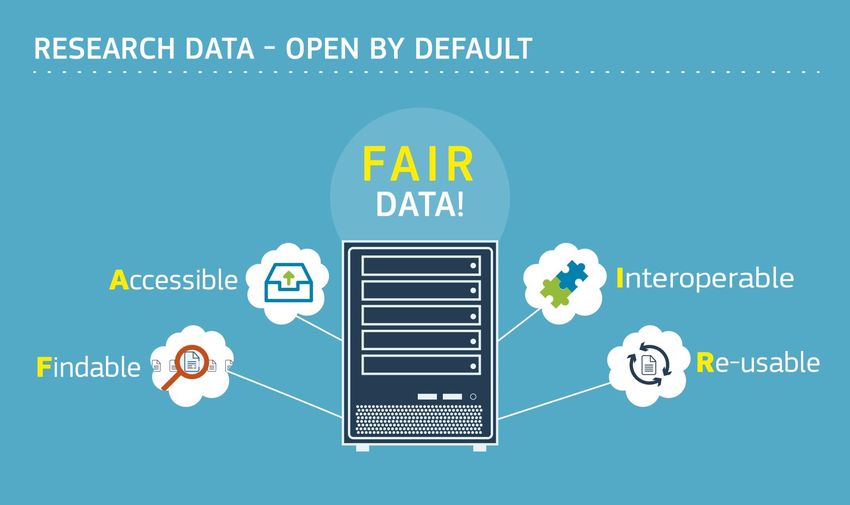
Content

1. Background: political support and legal base

1. State of Play: provisions in H2020 and uptake

The Need to be                           Open
Open                                   Science

A systemic change in
the modus operandi
of science and
research

Affecting the whole
research cycle and
its stakeholders

        Commissioner Carlos Moedas
  Open Science Presidency Conference
            Amsterdam, 4 April 2016
Open Access (OA)
OA = online access at no charge to the user
• to peer-reviewed scientific publications
• to research data ( data management implications)
Two main OA publishing business models (for publications)
• Self-archiving: deposit of manuscripts & immediate/delayed OA
provided by author ("Green OA")
• OA publishing: immediate OA provided by publisher ("Gold OA"),
e.g. 'author-pay' model (APC)What OA is NOT • Not an obligation to publish • Not at odds with patenting (see graph) • OA publications go the same peer review process
Why open access in Horizon?
Goal: optimise the impact of publicly-funded research and
innovation
Expected impacts of opening up scientific information:
   • Better science (build on previous results)
   • More efficient science (avoid duplication & promote re-use)
   • Economic growth (accelerated and open innovation)
   • Improved transparency (involving citizens & society)
How?
   • Open up scientific information resulting from EU-funded research
     (Horizon 2020)
   • Work with Member States to encourage co-ordination of policies
Political basis: Scientific information package (Communication &
Recommendation to MS) and ERA Communication, July 2012
Open access in Horizon 2020 Regulation establishing Horizon 2020 "To increase the circulation and exploitation of knowledge, open access to scientific publications should be ensured. Furthermore, open access to research data resulting from publicly funded research under Horizon 2020 should be promoted, taking into account constraints pertaining to privacy, national security and intellectual property rights" Open access to scientific publications resulting from publicly funded research under Horizon 2020 shall be ensured [...]. Open access to research data resulting from publicly funded research under Horizon 2020 shall be promoted. [...].
State of play

             OA to publications in H2020

   • Obligation to provide OA, either through the Green or Gold way in
     all areas (deposition mandatory either way)

   • Allowed embargoes: 6/12m

   • Gold open access costs eligible for reimbursement as part of the
     project budget while the project runs & post-grant support being
     piloted through OpenAIRE

   • Authors encouraged to retain copyright and grant licences instead
Open Research data
Open Research Data Pilot (2014-2016)
As of the Work Programme 2017: extended to
cover all thematic areas of Horizon 2020 ('open by
default')
• Projects may still opt-out at any stage (IPR, personal
data protection, national security, other reasons)
• Mainly concerns data underlying publications (other data
optional)
• Data Management Plan obligatory by M6 (not part of
project evaluation)
Approach: as open as possible, as closed as necessaryResults from the Open Research Data
Pilot (Finalised data 2014-2016)
Year Core areas (CA) Non-core Sample
areas (NCA) Size
(signed
GAs)
--- Stay in Opt-out Opt-in
2014- 67,44% 32,56% 2,5% 390 (CA)
2015 3244
(NCA)
2015- 68,13% 31,87% 15,25% 935 SGA
2016 (CA)
6250
(NCA)
Average 67,78% 32,21% 8,87%Opt-out reasons
70 2014-2015
2015-2016
60
Average
50
40
30
20
10
0
IPR Privacy National No data Against Other
Security generated Main
ObjectiveClarifying terminology…
In the past our policy mainly addressed
the 'accessibility' part of FAIR.
• Started off with 'open access to research
data'
• Moved towards open (research) data with
the ORD pilot (which also covered further
aspects)
• We are now seeing openness as one
component of FAIR data and aim to
address all of the FAIR aspects in
Horizon 2020A FAIR DMP has to address that data are o 'Findable', i.e. discoverable with metadata, identifiable and locatable by means of a standard identification mechanism; o 'Accessible', i.e. always available and obtainable; o 'Interoperable', i.e. both syntactically parseable and semantically understandable, allowing data exchange and reuse between researchers, institutions, organisations or countries; and o 'Reusable', i.e. sufficiently described and shared with the least restrictive licences, allowing the widest reuse possible and the least cumbersome integration with other data sources.
FAIR Data Management DMP
o Template DMP (Annex to Guidelines on FAIR Data Management)
Provided as a service, its use is currently optional
o Standard DMP template is light and flexible
Set of questions + summary table
o One DMP per project not per dataset
but mention if there are specific issues for a particular dataset)
o DMP as a living document
Updated as part of periodic evaluation and/or at least at the end of the
project for final reportingGuidelines on FAIR Data Management
• Available here on the
Participant Portal!Ressources Open innovation, open science, open to the world. A vision for Europe http://bookshop.europa.eu/en/open-innovation-open-science-open-to-the- world-pbKI0416263/ NPR report https://ec.europa.eu/research/openscience/pdf/openaccess/npr_report.pdf#vie w=fit&pagemode=none H2020 guidance http://ec.europa.eu/research/participants/docs/h2020-funding- guide/cross-cutting-issues/open-access-dissemination_en.htm NEW May 2016 Council Conclusions http://data.consilium.europa.eu/doc/document/ST-9526-2016-INIT/en/pdf NEW Uptake of ORD pilot (dataset) https://data.europa.eu/euodp/data/dataset/open-research-data-the-uptake-of- the-pilot-in-the-first-calls-of-horizon-2020
We welcome your input

Contact us
Mail: RTD-open-access@ec.europa.eu
Web: http://ec.europa.eu/research/openscience/index.cfm
Twitter: @OpenAccessEC
Questions and Answers
You can also read


