Pancreatic Cancer Treatment Information for Patients - UPMC
←
→
Page content transcription
If your browser does not render page correctly, please read the page content below
Pancreatic Cancer Treatment
Information for Patients

About the UPMC Pancreatic Cancer Center
Our team of expert surgeons, medical and radiation oncologists,
gastroenterologists, and other specialists work together to provide
comprehensive, compassionate care to patients with pancreatic
cancer and related conditions.

Conditions We Treat                                                  If surgery is recommended, your surgeon will decide which
       • Exocrine pancreatic cancer/adenocarcinoma of the pancreas          type of procedure is best for you based on the type, stage, and
                                                                            location of your cancer, your overall health, and your goals
       • Endocrine pancreatic cancer/islet cell tumors                      for treatment.
       • Locally advanced pancreatic cancer, which has spread to
         nearby organs and tissues                                          Medical Oncology
       • Metastatic pancreatic cancer, which has spread to distant          Chemotherapy plays an important role in pancreatic cancer
         parts of the body                                                  treatment. It can be used alone, or together with other
       • Ampullary cancer                                                   therapies like surgery and radiation. UPMC’s doctors were
       • Bile duct cancer (also called cholangiocarcinoma)                  among the first to use chemotherapy before surgery (called
                                                                            neoadjuvant chemotherapy) to treat pancreatic cancer, which
       • Cysts and cystic neoplasms, including intraductal papillary        can have a positive impact on survival rates. Our surgeons
         mucinous neoplasms (IPMNs) and mucinous cystic                     and medical oncologists work together to help deliver
         neoplasms (MCN)                                                    individualized treatment plans before and after surgery based
       • Pancreatic solid pseudopapillary tumors (SPN)                      on a patient’s tumor.
       • Acinar cell carcinoma
       • Polyps and cancers of the first part of the small intestine,
         also called the duodenum
       • Pancreatic sarcoma, an extremely rare cancer that
         develops in the tissues that hold together pancreas cells
       • Benign (non-cancerous) pancreatic diseases

       Treatments and Services
       All patients undergo a thorough medical/family history,
       physical examination, and evaluation to confirm the type and
       stage of their cancer, which may include diagnostic imaging
       tests like a CT scan, MRI, PET scan, Gallium scan, and endoscopic
       ultrasound, and a needle biopsy via endoscopic ultrasound.

       Once a patient’s diagnosis is confirmed, our experts work
       together to develop an individualized treatment plan based
       on their overall health and goals for treatment. Treatments
       may include surgery, chemotherapy, radiation therapy, enroll-
       ment in clinical trials, or a combination of therapies. Supportive
       services to help manage symptoms and address the physical            Radiation Oncology
       and emotional aspects of care are also included in each
                                                                            Radiation therapy can be given alone, or together with
       patient’s treatment plan.
                                                                            chemotherapy before or after surgery. At UPMC, our patients
                                                                            have access to the latest variety of advanced radiation
       Surgery                                                              planning and delivery systems, including stereotactic body
       UPMC’s pancreatic surgery program is one of the busiest in           radiotherapy (SBRT), a precise form of radiation therapy that
       the world, providing traditional open, minimally invasive,           targets tumors in a pinpoint fashion and minimizes damage
       and robotic-assisted surgeries. Our surgeons were among              to the healthy tissue around a tumor.
       the first to develop robotic pancreas surgery and have more
       experience with these procedures than anyone in the United           Clinical Trials
       States, including more than 750 robotic Whipple procedures
                                                                            UPMC offers clinical trials for patients with all stages of
       and more than 1,200 robotic pancreatic operations. Studies
                                                                            pancreatic cancer. While clinical trials are not right for every
       show that patients who receive surgery at a high-volume
                                                                            patient, our expert team can assess your individual needs
       center, like UPMC, have better outcomes.
                                                                            and determine if a trial is the right approach for you.

SURGERY BY THE NUMBERS
Total Pancreas Surgeries at UPMC per Year: 250 | Total Robotic Pancreas Surgeries at UPMC per Year: 150
Supportive Therapies and Services
Our team understands the physical and emotional aspects
of pancreatic cancer treatment and works together to help
patients at each step of the way. Our supportive therapies
and services include:

•   Nutritional support
•   Fertility preservation for patients of childbearing age
•   Psychological counseling
•   Palliative care for symptom management, family support,
    psychological care, and spiritual care, as well as help with
    discharge planning and integration with outpatient and
    home-based services
• UPMC Hillman Cancer Center’s Wellness and Integrative
    Oncology Program, which uses movement, touch, nutrition,
    and mindfulness within conventional cancer care to address
    and improve symptoms and quality of life
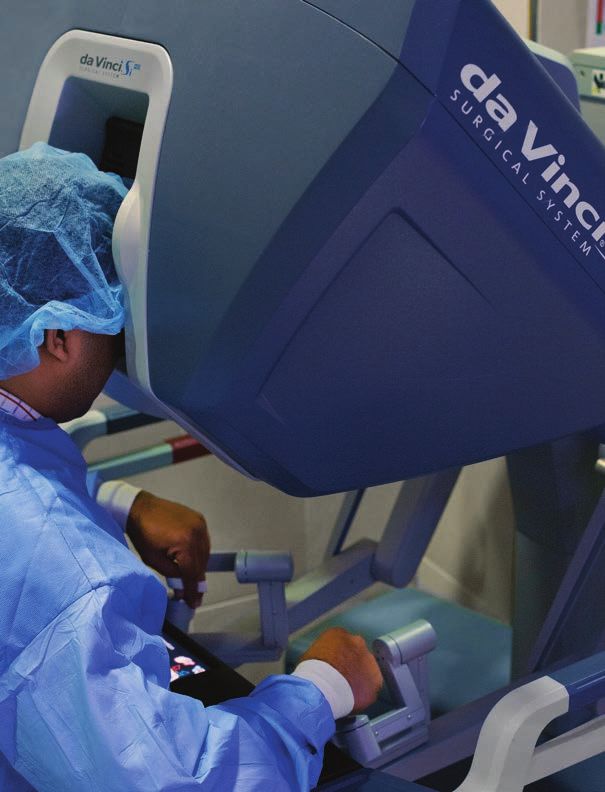
                                                                   During robotic surgery, the surgeon uses a surgical robot
                                                                   with special tools, including a camera and other instruments,
Frequently Asked Questions                                         to make small cuts in the patient’s abdomen. The surgeon
What is the difference between open surgery and                    operates the tools from a computer console next to the
robotic surgery?                                                   patient. Robotic surgery allows the operation to be performed
During open surgery for pancreatic cancer, the surgeon             with less blood loss and fewer complications. After surgery,
makes a large cut to open a patient’s abdomen to remove            patients usually stay in the hospital for 6-8 days and recovery
the tumor and organs/tissues affected by the cancer. After         can be faster than with open surgery.
surgery, patients usually stay in the hospital for 10-12 days,
                                                                   What questions should I ask my doctor(s)?
and recovery takes several months.
                                                                   It’s important to understand the type of pancreatic cancer that
                                                                   you have and what your treatment plan will be. We recommend
                                                                   asking your doctor/surgeon the following questions:

                                                                   •   What type of pancreatic cancer do I have?
                                                                   •   Has it spread to other parts of my body?
                                                                   •   What is my treatment plan?
                                                                   •   How do I know if my surgery or treatment has worked?
                                                                   •   Do I need chemotherapy before or after my surgery?
                                                                   •   How much experience do you have treating
                                                                       pancreatic cancer?
                                                                   • How many pancreatic surgeries have you performed?
                                                                   • How many Whipple surgeries have you performed?
                                                                   • What kind of follow-up treatment will I need?

                                                                   WHIPPLE EXPERTISE
                                                                   The American Cancer Society recommends choosing
                                                                   a center that performs at least 15-20 Whipple procedures
                                                                   each year. UPMC’s surgeons perform an average of 120
                                                                   Whipple surgeries each year, of which 80 are robotic.
Our Experts
Program Leadership

                                 Amer H. Zureikat, MD, FACS
                                 Co-director, UPMC Pancreatic Cancer Program
                                 Vice Chair of Surgery for Surgical Oncology
                                 Associate Professor of Surgery,
                                 University of Pittsburgh School of Medicine

Surgical Oncology                                                          Nutrition Services
Kenneth K. Lee, MD                                                         Joyce Diacopoulos, RD
Alessandro Paniccia, MD                                                    Eric Capozzoli, MS, RD
Amer H. Zureikat, MD                                                       Michelle Davies, MS, RDN

Medical Oncology                                                           Nurse Coordinator
Vikram Gorantla, MD                                                        Shavala Thomas, LPN
Anuradha Krishnamurthy, MBBS, FRCPC
                                                                           Physician Assistants
John C. Rhee, MD
                                                                           Lauren Stitt, PA-C
Roby A. Thomas, MD
                                                                           Heather Jones, PA-C
Radiation Oncology
Susannah Ellsworth, MD

Gastroenterology
Randall Brand, MD
Adam Slivka, MD
Kevin M. McGrath, MD
Jennifer Chennat, MD
Rohit Das, MD
Kenneth E. Fasanella, MD
Asif Khalid, MD
Harkirat Singh, MD
Savreet Sarkaria, MD

For more information, please call 1-833-655-1762.

A $23 billion health care provider and insurer, Pittsburgh-based UPMC is inventing new models of patient-centered, cost-effective, accountable care. The largest nongovernmental employer in Pennsylvania, UPMC
integrates 92,000 employees, 40 hospitals, 700 doctors’ offices and outpatient sites, and a 4 million-member Insurance Services Division, the largest medical insurer in western Pennsylvania. In the most recent fiscal
year, UPMC contributed $1.4 billion in benefits to its communities, including more care to the region’s most vulnerable citizens than any other health care institution, and paid more than $800 million in federal, state,
and local taxes. Working in close collaboration with the University of Pittsburgh Schools of the Health Sciences, UPMC shares its clinical, managerial, and technological skills worldwide through its innovation and
commercialization arm, UPMC Enterprises, and through UPMC International. U.S. News & World Report consistently ranks UPMC Presbyterian Shadyside among the nation’s best hospitals in many specialties and
ranks UPMC Children’s Hospital of Pittsburgh on its Honor Roll of America’s Best Children’s Hospitals. For more information, go to UPMC.com.

UPMC policy prohibits discrimination or harassment on the basis of race, color, religion, ancestry, national origin, age, sex, genetics, sexual orientation, gender identity, marital status, familial status, disability, veteran
status, or any other legally protected group status. Further, UPMC will continue to support and promote equal employment opportunity, human dignity, and racial, ethnic, and cultural diversity. This policy applies to
admissions, employment, and access to and treatment in UPMC programs and activities. This commitment is made by UPMC in accordance with federal, state, and/or local laws and regulations.

CANC522976 GD/AK 10/21                                                                                                                               © 2021 UPMC All trademarks are the property of their respective owners.
You can also read


