Partnership Schools 2020-2021 Reopening Guide
←
→
Page content transcription
If your browser does not render page correctly, please read the page content below
NEW YORK   CLEVELAND

Partnership Schools
2020-2021 Reopening Guide

August 2020

As our first day of school on September 8 approaches, we are committed more than ever to our
belief that we are made for each other. We know that the 2020-2021 school year will be
historic, and that we will overcome the challenges we face as a community because we are
better together.

The Partnership Schools reopening plans, outlined below, are grounded in four beliefs:

   ● We believe that children learn best in person, and so all of our decisions center on
     the goal of maintaining five-day-a-week, in-person instruction for as long as we are
     able.

   ● We understand that our communities cannot flourish in an environment where the
     virus flourishes. Therefore, our schools will meet or exceed health and safety
     guidelines issued by the national, state, and local health officials to ensure our schools
     can open safely.

   ● Particularly given the evolving and sometimes unexpected challenges this pandemic
     has brought, we are reminded that we are always learning and situations may change.
     In humility, we recognize that flexibility is key. While our aim is to preserve in-
     person instruction for as long as possible, we are planning for the likelihood that
     individual classrooms or schools will need to close for short periods of time throughout
     the year–either due to government directives or because of local community spread of
     COVID-19. Therefore, we are implementing teaching and learning plans that will allow
     us to adjust our instruction to meet the health and safety needs of our students and
     teachers.

   ● As Catholic educators, we believe that parents are our partners. Therefore, we will
     continue to communicate with you throughout the year to ensure you are kept
     informed about changes to our plans, progress of your children, and more.

   ● We know we are better together. The continued collaboration of our network,
     teachers, staff, parents, students, and wider community are all integral to ensuring that
     our students grow and thrive this year. And our driving belief that God loves each of us
     and wants us to flourish will help us create a safe and supportive environment for every
     student we serve this year.

You’ll find below information on the parts that schools and families play in ensuring a healthy
school year. We ask you to read them fully and to keep them at hand as we all develop new
routines that keep our communities safe.

                                                                                                  1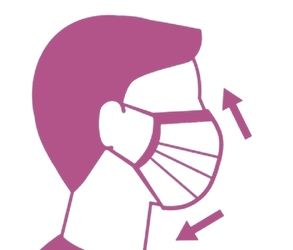
Table of Contents

Plan for Learning                                                 3
   ● In-Person Instruction
   ● Remote Learning
   ● Changing Your Plan

Virus Mitigation Routines, Spaces, and Cleaning                   4
   ● Social Distancing and Cohort Grouping
   ● Cleaning and Sanitizing
   ● Adapting Our Spaces

Student and Parent Community Prevention                           6
   ● Preparing to Enter School Buildings
   ● Communicate to School Immediately If…
   ● How Do I Quarantine?

Inside the School Building                                        9
    ● Mask Policy
    ● PreK Protocols

Plan for Interruptions                                            10
   ● One Positive Test, Student or Staff
   ● Two Positive Tests, Student or Staff, Same Classrooms
   ● Two Positive Tests, Student or Staff, Different Classrooms

Conclusion                                                        12

                                                                       2
Plan for Learning
In-Person Instruction
Full-time, five-day-a-week, in-person instruction will begin on September 8, our
first day of the 2020-2021 school year. As outlined below, some of the routines
students and teachers have followed in the past will change to ensure that classes
take place in accordance with health and safety guidelines. The sections that
follow will include more complete details of those guidelines.
Remote Learning
We understand that there are some members of our community for whom the threat of COVID
poses a significant risk to their family—a risk too great to justify participation in in-person
instruction. That is why we will offer a Partnership Schools-wide remote learning option
beginning September 8th, to ensure academic growth and development can continue until
each child is able to rejoin the school community in person.
Student expectations: Remote instruction will include a balance of synchronous and
asynchronous instruction. That is, students will come together for short bursts of teacher-led
instruction (i.e., “synchronous instruction”) each day. In addition, when not attending live
virtual lessons, students will be tasked with independent learning assignments derived from
our core curriculum.
Just as they would if they were attending in person, students will be
expected to submit assignments and will receive individualized feedback
and grades from their teachers. In addition, remote students will have
dedicated check-in time to meet with their teachers for support. Each
school will release school- and grade-specific expectations, student
schedules, and remote learning requirements in the weeks ahead.
Opting-in: Remote learning will be provided to families in the following scenarios:
● As an option: All families have been given the opportunity to choose to begin the year
either in person or remote. For those who have chosen it, remote instruction will begin
on September 8 and will continue until at least the end of the first quarter (November
10). Every student who has opted into remote learning will have the opportunity to
rejoin the class for in-person instruction at the beginning of the next quarter.
● As a health measure: For families who have opted for five-day-a-week, in-person
instruction, students may need to transition to remote learning periodically throughout
the year. In particular, in-person students will need to pivot to remote learning if a
cohort- or school-wide quarantine is required. (Please see the Plan for Interruptions
below for more detail on when classroom-specific or schoolwide quarantine may be
required.)
3Changing Your Plan
All Partnership Schools families have already elected to begin the year either in person or
remotely. While families may opt into remote instruction with the approval of the school
principal at any point, students may only return to in-person instruction at the start of a new
quarter. The first opportunity to rejoin the class for in-person instruction will be on November
10th, the beginning of the second quarter.
Virus Mitigation Routines, Spaces, and Cleaning
Social Distancing and Cohort Grouping
Guidance from the Centers for Disease Control (CDC) and from health experts emphasizes the
importance of maintaining physical distance, wearing masks when social distancing isn’t
possible, limiting the number of people who interact together in a community, and of avoiding
large crowds. In order to accommodate these health and safety recommendations, all
Partnership Schools will:
● Practice cohort isolation when in the school buildings. This means that cohorts of
students, often defined by the homeroom to which the student is assigned, will be isolated
to the extent possible, and students will come into physical proximity of only those
students and staff needed to facilitate the day. A cohort includes all staff or students who
regularly come in contact. More on cohort grouping appears in the Plan for Interruptions
below.
● Maximize ALL of a campus’s indoor and outdoor spaces, weather permitting, to ensure we
can safely bring all of our students together for in-person learning.
● Follow the American Academy of Pediatrics’ (AAP) guidelines
which recommend that students maintain a minimum of three feet
of physical distance.
● Limit breakfast and lunch to classrooms or other designated areas where safe, unmasked
eating is possible.
● Postpone all whole-school events and assemblies until the threat of the virus wanes. This
also means that our schools will not have whole-school Masses until it is safe to do so,
although we will continue to pray and worship in classroom cohorts each day.
4Cleaning and Sanitizing
Across our Partnership Schools, we have always ensured that all buildings are thoroughly
cleaned at the end of each day. To ensure the health and safety of our community through the
pandemic, we have enhanced daily cleaning and sanitizing in the following ways:
● Each campus will designate a “sanitizing specialist” who will be tasked with cleaning high-
traffic areas, classrooms, bathrooms, and commonly used materials throughout the day.
The sanitizing specialist will be trained in the proper use of our electrostatic misting
machines. These machines spray an electronically charged mist of disinfectant which
bonds with all hard surfaces and allows for rapid, thorough, and frequent sanitizing
throughout the building.
● During the school day, the sanitizing specialist will move through the entire building
misting all unoccupied spaces. For instance, a classroom will be disinfected whenever the
students of that room move to another space, such as outdoor recess or a bathroom break.
All high-touch surfaces will be wiped down throughout the school day–i.e., bathroom
fixtures and door handles.
● Each classroom will be supplied with a touch-free hand sanitizer dispenser,
sanitizing wipes, disposable gloves, extra disposable masks, face shields for staff
members, and student desk shields. These items are provided for use by our
teachers and students and are in addition to the school-wide sanitizing process
done by the maintenance staff.
Adapting Our Spaces
● Signage will be placed throughout the building to encourage social distancing, to remind
faculty, staff, and students of our mask and hand washing policies, and to help facilitate
movement through the building. These will include circles placed in all hallways six feet
apart to provide visual cues for our students while moving around the school.
● Each classroom will have desk shields for each student–along with disposable masks, hand
sanitizer, and sanitizing wipes.
● We will install large outdoor tents on most of our playgrounds. These will allow for some
outdoor classroom space, as well as protection from the elements during recess.
● Increased air circulation: Every classroom has operable windows, and portable fans will be
added to all classrooms that do not already have ceiling fans.
5Student and Parent Community Prevention
Preventing the spread of illness takes all of us working together. Even before students enter
the building, parents play a crucial role in keeping our whole community safe. As outlined
below, school staff will work with parents and students each day on preventing community
spread of the illness.
Preparing to Enter School Buildings
● If you feel sick, please stay home. Watch for symptoms. The Center for Disease Control
offers the following guidance regarding the wide range of symptoms associated with
COVID-19, from mild symptoms to severe illness:
○ Symptoms may appear 2-14 days after exposure to the virus. People with these
symptoms may have COVID-19:
■ Fever or chills (100.4 and above)
■ Cough
■ Shortness of breath or difficulty breathing
■ Fatigue
■ Muscle or body aches
■ Headache
■ New loss of taste or smell
■ Sore throat
■ Congestion or runny nose
■ Nausea or vomiting
■ Diarrhea
This list does not include all possible symptoms. The CDC provides a
daily checklist for students that we have included for your use here.
Additional resources on symptom tracking are linked here.
● When all individuals arrive at school, a staff member will take
your temperature before entering the building. The temperature check will be for
everyone arriving to school, as well as everyone you arrived with as you transported from
home to school–so those in a carpool or a group walking to school together will all be tested.
If temperatures are at or above 100.4, we will require you to go home.
● If you are asked not to enter the school building because of a high temperature
based on CDC guidelines: Individuals must show a temperature under 100°F without
fever-reducing medications for at least 72 hours. If you would like to return to school
before the 72-hour window, you must receive medical clearance from a physician before
you can return to school. Please have a medical professional complete a re-entry form. See
your school teams for a copy of the form.
6● When all individuals arrive at school, they will be asked several critical questions
related to COVID included in the overall screening. We will be altering the usual
entrance and exit schedule to accommodate completing the daily screenings, maintain
classroom and teacher cohorts, and significantly reduce entryway density, prioritizing the
safety of staff and students that are needed in the building most.
● If you are not feeling well while in school, what do you do? All individuals who do
not feel well during the school day, or who have been identified by school staff to be
exhibiting symptoms consistent with COVID, should proceed to the nurse’s office for
follow-up and additional screening. After additional screening and temperature tests,
students or staff may be asked to go home and monitor symptoms.
● If you are not feeling well and want to get a test for COVID-19, but do not know
where to go: Please email or call your school teams for information on which testing sites
are close to your home and meet your needs.
● You just completed a quarantine for 14 days after a positive test and/or after
close contact to someone who tested positive for COVID-19. When can you re-
enter the school building? If it has been 14 days since symptoms first appeared and at least
72 hours with no fever without fever-reducing medication, and other symptoms as listed
above have improved, you may return to school.
Communicate to School Immediately if...
Schools can be reached regarding coronavirus concerns at:
School Email & Phone
Archbishop Lyke covidresponse@archbishoplykeschool.org
216 991 9644
Immaculate Conception covidresponse@icsfamily.org
718 585 4843
Mt. Carmel-Holy Rosary covidresponse@mchrschool.org
212 876 7555
Our Lady Queen of Angels covidresponse@olqaeastharlem.org
212 722 9277
Sacred Heart covidresponse@shhighbridge.org
718 293 4288
St. Athanasius covidresponse@stathanasiusbronx.org
718 542 5161
7St. Charles Borromeo covidresponse@stcharlesnyc.org
212 368 6666
St. Mark the Evangelist covidresponse@saintmarkschool.org
212 283 4848
St. Thomas Aquinas covidresponse@stthomas-aquinas.com
216 421 4668
Please communicate immediately with the school in the event of any of the following:
You have had close contact to someone who has a confirmed case of COVID-19.
1) Stay home, do not go to the school building.
2) Quarantine for 14 days after your last contact with a person who has COVID-19.
3) Contact the school COVID email to notify them of close COVID contact and set
up a test date.
4) Continue to monitor your symptoms; the school team will also be in contact to
understand your changing symptoms.
What counts as close contact? (refer to CDC guidelines in determining
close contact linked here & pasted below)
● You were within six feet of someone who has COVID-19 for a total of 15
minutes or more
● You provided care at home to someone who is sick with COVID-19
● You had direct physical contact with the person (hugged or kissed them)
● You shared eating or drinking utensils
● They sneezed, coughed, or somehow got respiratory droplets on you
○ CDC Guidance: For all of the close contact scenarios, even if you test negative
for COVID-19 or feel healthy, you should stay home, since symptoms may
appear two to 14 days after exposure to the virus. More on this here.
You have tested positive for COVID-19.
1) Stay home, do not go to the school building.
2) Quarantine for 14 days after you last had symptoms.
3) Contact the school COVID email to notify them of your positive test and the
date.
4) You should continue to monitor your symptoms; the school team will also be in
contact to understand your changing symptoms.
○ Confidentiality will be maintained on who tested positive, but those in
your cohort will be told of a positive test so that they can monitor
symptoms, quarantine, and prepare to move to remote instruction.
8You have traveled to restricted states/locations that are on the NY state
advisory.
○ The travel advisory in New York refers to travel since 12:01 a.m. Thursday, June
25, 2020.
○ If you have traveled from within one of the designated states with significant
community spread, you must quarantine when you enter New York for 14 days
from the last travel within such designated state, provided on the date you enter
into New York State that such state met the criteria for requiring such
quarantine.
○ More information here on which states are restricted is linked here.
○ We know that some families are currently traveling to New York before the
start of school. As required by the state advisory, we expect you to follow the
above guidelines.
○ You will need to be back by Tuesday, August 25th in order to begin in-person
instruction by September 8th (in order to quarantine for 14 days prior to the
start of school).
How Do I Quarantine?
Always quarantine if you have had close contact to someone who has a confirmed case of
COVID-19 or you have tested positive.
● Follow CDC guidance and stay home for 14 days.
● Watch for fever (100.4◦F), cough, shortness of breath, or other symptoms of COVID-19.
● If possible, stay away from others, especially people who are at higher risk for getting very
sick from COVID-19.
● Be sure to contact your school team to access remote learning if you feel well enough.
Inside the School Building
Mask Policy
One of the most effective ways to protect against the spread of COVID-19 is to
ensure all members of the community wear masks that cover both the mouth
and nose while inside. In order to ensure that every person entering our
building has access to a clean, effective mask, Partnership Schools will
provide child-size and adult-size disposable masks to all students, faculty,
staff, and visitors.
9In addition, every Partnership School will require:
● Students, faculty, staff, and visitors to wear a clean disposable mask, which will be
provided by the school.
● Schools will have access to additional disposable masks should a student need a fresh
mask during the course of the day.
● When inside the building, students are required to wear their masks unless eating, or
during early childhood naps.
● There will be a clear desk shield on every student desk.
● Students will be provided with ample outdoor time in which they will be permitted to
remove their masks.
PreK Protocols
Our youngest learners require some additional measures, given that their instructional days
differ from older students:
Nap Time
● Student nap mats will be spaced with six feet of distance and will be arranged
head to toe.
● Nap materials will be stored in a large Ziploc bag.
● Nap materials will be sent home every Friday to be laundered and returned.
● Students will not wear masks during nap time.
Toys
● Only toys that can be sanitized will be used for students. Toys and learning
materials will be sanitized daily.
● Students will have individual school materials.
Plan for Interruptions
While we are committed to in-person learning, families and staff can expect that closures–by
classroom, gradeband, school, or city–will likely be routine in the 2020-21 school year. The
details below are to help us all plan for that eventuality. Our closing and reopening plans are
based on recommendations from the NYCDOE.
We know that the closure of classrooms with very short notice can be difficult for working
parents, but we are committed to make every effort to help keep families and staff as safe as
possible with the new information on cases and the health of our community every day. When
possible, we will provide families a status update by 7 p.m. as to whether the building will be
closed the next morning.
10Different circumstances will prompt different forms of closure:
One Positive Test, Student or Staff
● If at least one person–a student or staff member–reports having a positive coronavirus
case, that class will close, along with the cohort, which includes staff or students who have
come in contact with the class. School staff will contact any individual who has tested
positive for more details and to ask whom the infected person may have exposed to the
virus beyond their cohort.
● All school community members who came in contact with the person who had the positive
test will be notified within 24 hours of the school learning of a positive case.
Students and staff members in close contact with the individual in or out of school will be
asked to quarantine for 14 days so that the total cohort will continue learning remotely,
remaining away from the school building.
● School teams will follow up regularly with families and staff to monitor symptoms, follow-
up on test results, ensure quarantine is occurring as expected, and to provide resources as
needed.
● After 14 days, and no additional new positive COVID tests or increased persons with
COVID symptoms, the cohort will reopen.
Two Positive Tests, Student or Staff, Same Classrooms
● If more than one person–staff or students–in a school tests positive for the virus and those
individuals are in the same cohort, the class and all those in contact will be closed for 14
days, and all affected staff and students will quarantine for 14 days and monitor symptoms.
The class will only reopen after continual monitoring for all reveals no new cases.
● While quarantined, students will transition to remote learning.
Two Positive Tests, Student or Staff, Different Classrooms
● If more than one person–staff or students–in a school tests positive for the virus, but follow
up and interviews from the school team reveal no clear link of exposure within the school,
the whole building, including every grade, will be closed for 14 days. All members of staff
and students will quarantine for 14 days and monitor symptoms.
● If a link between cases is determined outside the classroom, the school will reopen but the
classrooms with the positive test will remain closed. School will only reopen after
continual monitoring for all cohorts reveal no new cases.
● As always, while quarantined, students will continue learning remotely.
11● The school site team will monitor the health and wellness of those in your cohort closely
over the next 14 days. If you test positive, please quarantine until you have confirmed a
negative result or no symptoms after 14 days.
The chart below summarizes the guidance we will follow on closing and re-opening school.
Conclusion
We will continue to reach out with additional information. Because flexibility is key, these
policies may change as we learn more from health authorities and from each other. We are
made for each other, and together, we can ensure that our students learn, grow, and flourish
this year, and that our shared efforts to make that happen fill us with the joy of knowing that
we are, as our faith teaches us, Christ to one another.
12You can also read


