Phenotypic characteristics and prognosis of inpatients with COVID-19 and diabetes: the CORONADO study - Diabetologia
←
→
Page content transcription
If your browser does not render page correctly, please read the page content below
Diabetologia
https://doi.org/10.1007/s00125-020-05180-x

 ARTICLE

Phenotypic characteristics and prognosis of inpatients with COVID-19
and diabetes: the CORONADO study
Bertrand Cariou 1 & Samy Hadjadj 1 & Matthieu Wargny 1,2 & Matthieu Pichelin 1 & Abdallah Al-Salameh 3 &
Ingrid Allix 4 & Coralie Amadou 5 & Gwénaëlle Arnault 6 & Florence Baudoux 7 & Bernard Bauduceau 8,9 &
Sophie Borot 10 & Muriel Bourgeon-Ghittori 11 & Olivier Bourron 12 & David Boutoille 13 &
France Cazenave-Roblot 14,15 & Claude Chaumeil 16 & Emmanuel Cosson 17,18 & Sandrine Coudol 2 &
Patrice Darmon 19 & Emmanuel Disse 20 & Amélie Ducet-Boiffard 21 & Bénédicte Gaborit 22 & Michael Joubert 23                      &
Véronique Kerlan 24 & Bruno Laviolle 25 & Lucien Marchand 26 & Laurent Meyer 27 & Louis Potier 28 &
Gaëtan Prevost 29 & Jean-Pierre Riveline 30,31,32 & René Robert 33 & Pierre-Jean Saulnier 34 & Ariane Sultan 35 &
Jean-François Thébaut 16 & Charles Thivolet 36,37 & Blandine Tramunt 38 & Camille Vatier 39,40 & Ronan Roussel 28                 &
Jean-François Gautier 30,32 & Pierre Gourdy 38 & for the CORONADO investigators

Received: 23 April 2020 / Accepted: 7 May 2020
# The Author(s) 2020

Abstract
Aims/hypothesis Coronavirus disease-2019 (COVID-19) is a life-threatening infection caused by the severe acute respiratory
syndrome coronavirus-2 (SARS-CoV-2) virus. Diabetes has rapidly emerged as a major comorbidity for COVID-19 severity.
However, the phenotypic characteristics of diabetes in COVID-19 patients are unknown.
Methods We conducted a nationwide multicentre observational study in people with diabetes hospitalised for COVID-19 in 53
French centres in the period 10–31 March 2020. The primary outcome combined tracheal intubation for mechanical ventilation
and/or death within 7 days of admission. Age- and sex-adjusted multivariable logistic regressions were performed to assess the
prognostic value of clinical and biological features with the endpoint. ORs are reported for a 1 SD increase after standardisation.
Results The current analysis focused on 1317 participants: 64.9% men, mean age 69.8 ± 13.0 years, median BMI 28.4 (25th–
75th percentile: 25.0–32.7) kg/m2; with a predominance of type 2 diabetes (88.5%). Microvascular and macrovascular diabetic
complications were found in 46.8% and 40.8% of cases, respectively. The primary outcome was encountered in 29.0% (95% CI
26.6, 31.5) of participants, while 10.6% (9.0, 12.4) died and 18.0% (16.0, 20.2) were discharged on day 7. In univariate analysis,
characteristics prior to admission significantly associated with the primary outcome were sex, BMI and previous treatment with
renin–angiotensin–aldosterone system (RAAS) blockers, but not age, type of diabetes, HbA1c, diabetic complications or glucose-
lowering therapies. In multivariable analyses with covariates prior to admission, only BMI remained positively associated with
the primary outcome (OR 1.28 [1.10, 1.47]). On admission, dyspnoea (OR 2.10 [1.31, 3.35]), as well as lymphocyte count (OR

A complete list of the CORONADO trial investigators is provided in the
Electronic supplementary material (ESM).
Bertrand Cariou, Samy Hadjadj and Matthieu Wargny contributed
equally to this article.
Electronic supplementary material The online version of this article
(https://doi.org/10.1007/s00125-020-05180-x) contains peer-reviewed
but unedited supplementary material, which is available to authorised
users.

* Bertrand Cariou
  bertrand.cariou@univ-nantes.fr
* Samy Hadjadj
  samy.hadjadj@univ-nantes.fr

Extended author information available on the last page of the article
Diabetologia

0.67 [0.50, 0.88]), C-reactive protein (OR 1.93 [1.43, 2.59]) and AST (OR 2.23 [1.70, 2.93]) levels were independent predictors
of the primary outcome. Finally, age (OR 2.48 [1.74, 3.53]), treated obstructive sleep apnoea (OR 2.80 [1.46, 5.38]), and
microvascular (OR 2.14 [1.16, 3.94]) and macrovascular complications (OR 2.54 [1.44, 4.50]) were independently associated
with the risk of death on day 7.
Conclusions/interpretations In people with diabetes hospitalised for COVID-19, BMI, but not long-term glucose control, was
positively and independently associated with tracheal intubation and/or death within 7 days.
Trial registration clinicaltrials.gov NCT04324736.

Keywords BMI . COVID-19 . Death . Diabetes . HbA1c . Hypertension . Mechanical ventilation

Abbreviations                                                    DPP-4            Dipeptidyl peptidase 4
ALT              Alanine aminotransferase                        ICU              Intensive care unit
ARB              Angiotensin II receptor blocker                 MERS-CoV         Middle East respiratory syndrome-related
AST              Aspartate aminotransferase                                       coronavirus
CKD-EPI          Chronic Kidney Disease Epidemiology             MRA              Mineralocorticoid-receptor antagonist
                 Collaboration                                   OSA              Obstructive sleep apnoea
CORONADO         Coronavirus SARS-CoV-2 and Diabetes             RAAS             Renin–angiotensin–aldosterone system
                 Outcomes                                        SARS-CoV-2       Severe acute respiratory syndrome coronavi-
COVID-19         Coronavirus disease-2019                                         rus-2
CPK              Creatine phosphokinase
CRP              C-reactive protein
CT               Computed tomography
Diabetologia
Introduction COVID-19 patients with diabetes. The study was spon-
sored by CHU (centre hospitalier universitaire) Nantes,
Since the first case in China in December 2019, the epidemic of designed in accordance with the declaration of Helsinki
coronavirus disease-2019 (COVID-19), a disease caused by the and conducted in accordance with French legislation
severe acute respiratory syndrome-coronavirus-2 (SARS-CoV- with approval obtained from the local ethics committee
2) virus, rapidly spread worldwide and was declared a pandemic (Institutional Review Board/Institutional Ethics
by the World Health Organization on 11 March 2020 [1, 2]. Committee – GNEDS [groupe nantais d'éthique dans le
It is well known that people with diabetes have increased domaine de la santé]; Ref. CORONADOV2), the
infection risk, especially for influenza and pneumonia [3, 4]. CEREES (comité d'expertise pour les recherches, les
Moreover, diabetes was previously reported as a major risk études et les évaluations dans le domaine de la santé;
factor for mortality in people infected with the 2009 H1N1 n° INDS [institut national des données de
pandemic influenza and, more recently, with the Middle East santé]:1544730) and the CNIL (commission nationale
respiratory syndrome-related coronavirus (MERS-CoV) [5, de l'informatique et des libertés; DR-2020-155/920129).
6]. Epidemiological studies have quickly and consistently In light of the purely non-interventional design of this
pointed out diabetes as one of the major comorbidities asso- observational study and the emergency situation related
ciated with COVID-19 and affecting its severity. to the COVID-19 pandemic, the CNIL and the GNEDS
The prevalence of diabetes in patients with COVID-19 was have repealed the systematic collection of written
first reported to range from 5% to 20% in Chinese studies, informed consent. They recommended that we collect
increasing with the severity of the disease [7]. More recently, an ‘oral non-opposition to participate’ as far as possible
Grasselli et al have reported a diabetes prevalence of 17% in (in particular by publishing study information via post-
patients admitted to intensive care units (ICUs) for severe ers in the hospitals). Living patients who were unable to
COVID-19 infection in Lombardy, Italy [8]. Furthermore, give consent on admission all received information
the COVID-19-Associated Hospitalisation Surveillance about their inclusion in the CORONADO study before
Network (COVID-NET) reported a diabetes prevalence of discharge, and therefore had a clear and free choice to
28.3% in hospitalised patients in the USA [9]. object to the use of their clinical data. Any patient
More importantly, all studies published so far have report- declining to participate in the study or expressing his
ed a two- to threefold higher prevalence of diabetes in patients or her opposition to data collection from hospital infor-
in ICUs compared with those with less severe disease and an mation systems, even after hospital discharge, was
increased mortality in people with diabetes [10–14]. For excluded from the study.
instance, in a retrospective study from Wuhan, diabetes was
present in 19% of 191 COVID-19 inpatients but its prevalence Study design and participants The aim of the CORONADO
raised to 31% in deceased people compared with 14% in those study was to describe the phenotypic characteristics and
who survived [12]. A recent meta-analysis further demonstrat- prognosis of individuals admitted to hospital with
ed that diabetes was associated with a more than doubled risk COVID-19 between 10 March and 10 April 2020.
for ICU admission and a more than tripled risk for death [14]. Inclusion criteria were (1) hospitalisation in a dedicated
In this context, patients with diabetes have been listed as COVID-19 unit with COVID-19 diagnosis confirmed
people at higher risk for severe illness from COVID-19 by biologically (by SARS-CoV-2 PCR test) and/or clinical-
several health authorities and learned medical societies [15]. ly/radiologically (i.e. as ground-glass opacity and/or
However, precise data regarding diabetes characteristics in crazy paving on chest computed tomography [CT]
hospitalised people with COVID-19 are still lacking. scan); (2) personal history of diabetes or newly diag-
Moreover, the relationship between diabetes-related pheno- nosed diabetes on admission (i.e. HbA1c ≥48 mmol/
types and the severity of COVID-19 remains unknown. mol [6.5%] during hospitalisation).
CORONADO (Coronavirus SARS-CoV-2 and Diabetes Owing to the rapid recruitment rate and in order to make
Outcomes) is a nationwide multicentre observational study clinically relevant findings available as quickly as possible,
that aims to identify the clinical and biological features asso- the scientific committee, on 5 April 2020, suggested a prema-
ciated with disease severity and mortality risk in people with ture database lock on 18 April 2020 for participants admitted
diabetes hospitalised for COVID-19. in the period 10–31 March 2020, and continuation of recruit-
ment with no further modification. A first set of analyses was
performed in 1317 participants selected according to the
Methods following criteria: (1) meeting the eligibility criteria; (2) avail-
able information on the main outcome, recorded on day 7
Study oversight The CORONADO study was launched in all following admission; (3) available data on age and sex (see
French hospitals volunteering to share data on hospitalised flowchart in Fig. 1).Diabetologia
1521 people screened with diabetes
admitted to hospital for COVID-19 31 patients (2.0%) ruled out for not meeting inclusion
10–31 March 2020 criteria:a
- 7 without COVID-19
- 10 without diabetes mellitus
- 5 with legal protection
- 10 database duplicates
- 1 opposition
Total of 1490 patients reviewed for
availability of the main outcome
173 patients (11.6%) without information regarding
the main outcome
Total of 1317 patients analysed
- 382 primary outcome (29.0%)
267 tracheal intubations (20.3%)
140 deaths (10.6%)
- 237 alive and discharged on day 7 (18.0%)
Admitted to ICU (n=410; 31.1%) Not admitted to ICU (n=907; 68.9%)
- 267 tracheal intubations (65.1%) 100 deaths (11.0%)
25 deaths (9.4%) 580 still hospitalised on day 7 (63.9%)
242 alive on day 7 (90.6%) 227 alive and discharged on day 7 (25.0%)
• 224 still in ICU on day 7
• 18 discharged from ICU on day 7 including
2 hospital discharges
- 143 without tracheal intubations (34.9%)
15 deaths (10.5%)
128 alive on day 7 (89.5%)
• 73 still in ICU on day 7
• 55 discharged from ICU on day 7 including
8 hospital discharges
Fig. 1 Study flowchart. aTwo patients ruled out for not meeting inclusion criteria were in two categories
Patient follow-up and clinical outcomes The composite was the result of a routine determination in the previous
primary endpoint combined tracheal intubation for mechani- 6 months. Microvascular complications were defined as
cal ventilation and death within 7 days of admission. severe diabetic retinopathy (proliferative retinopathy and/or
Secondary outcomes included death on day 7, tracheal laser photocoagulation and/or clinically significant macular
intubation on day 7, admission to ICUs and discharge oedema requiring laser and/or intra-vitreal injections) and/or
on day 7. Participants discharged before day 7 were diabetic kidney disease (proteinuria [AER ≥300 mg/24 h;
systematically contacted to check for the non- urinary albumin/creatinine ratio ≥300 mg/g; urinary
occurrence of these events on day 7. albumin/creatinine ratio ≥30 mg/mmol creatinine; proteinuria
≥500 mg/24 h] and/or eGFR equal to or lower than
Data collection Data collection was performed by clinical 60 ml min−1 [1.73 m]−2, using the Chronic Kidney Disease
research associates and physicians in participating centres. Epidemiology Collaboration [CKD-EPI] formula) and/or
They were instructed to systematically review the medical history of diabetic foot ulcer. Macrovascular complications
files of all COVID-19 inpatients, select those with diabetes, were defined as ischaemic heart disease (acute coronary
extract data from their medical files and, if needed, contact the syndrome and/or coronary artery revascularisation) and/or
patient’s general and/or specialist practitioners, regular phar- cerebrovascular disease (stroke and/or transient ischaemic
macist or biomedical laboratory. Collected data included clin- attack) and/or peripheral artery disease (amputation owing to
ical data (age, sex, ethnicity, BMI), classification of diabetes ischaemic disease and/or lower limb artery revascularisation).
as noted in the medical file by the physician in charge of the In addition, COVID-19-related clinical, radiological and
patient, duration of diabetes, recent glycaemic control (i.e. two biological characteristics were collected at admission as well
most recent HbA1c levels determined before admission), as their clinical evolution during the hospital stay.
microvascular and macrovascular complications and comor-
bidities. HbA1c considered in the analysis was determined Statistical analysis Quantitative data were expressed as mean
locally in the 7 days following admission or, if not available, ± SD or median [25th –75th percentile]. Categorical variablesDiabetologia
Table 1 Clinical characteristics prior to admission of CORONADO participants, according to primary outcome (tracheal intubation and/or death
within 7 days of admission), and death on day 7
Clinical features Number of people All Primary outcome (n = 382) Death (n = 140)
with available data OR (95% CI) OR (95% CI)
Sex (female/male) 1317 462/1317 (35.1) 0.77 (0.60, 0.99) 0.80 (0.55, 1.17)
Age (years)a 1317 69.8 ± 13.0 1.00 (0.99, 1.01) 1.09 (1.07, 1.11)
Age class (years) 1317Diabetologia
Table 1 (continued)
Clinical features Number of people All Primary outcome (n = 382) Death (n = 140)
with available data OR (95% CI) OR (95% CI)
Comorbidities
Heart failure 1206 140/1206 (11.6) 0.78 (0.52, 1.17) 2.28 (1.42, 3.66)
NAFLD or liver cirrhosis 1107 119/1107 (10.7) 1.23 (0.81, 1.86) 0.70 (0.34, 1.41)
Active cancer 1282 194/1282 (15.1) 1.08 (0.77, 1.50) 1.55 (0.99, 2.42)
COPD 1278 133/1278 (10.4) 0.96 (0.64, 1.43) 1.36 (0.80, 2.32)
Treated OSA 1189 144/1189 (12.1) 1.44 (0.99, 2.08) 1.81 (1.12, 2.93)
Organ graft 1302 38/1302 (2.9) 1.14 (0.57, 2.28) 0.46 (0.11, 1.93)
End stage renal failure 831 60/831 (7.2) 0.66 (0.35, 1.27) 0.62 (0.24, 1.60)
Routine treatment before admission
Metformin 1317 746/1317 (56.6) 0.95 (0.75, 1.21) 0.59 (0.42, 0.84)
Sulfonylurea/glinides 1317 367/1317 (27.9) 1.03 (0.79, 1.34) 0.74 (0.49, 1.13)
DPP-4 inhibitors 1317 285/1317 (21.6) 1.01 (0.75, 1.34) 0.85 (0.55, 1.32)
GLP1-RA 1317 123/1317 (9.3) 1.36 (0.92, 2.01) 0.64 (0.32, 1.29)
Insulin 1317 504/1317 (38.3) 1.01 (0.79, 1.29) 1.71 (1.20, 2.43)
Loop diuretics 1317 252/1317 (19.1) 1.10 (0.81, 1.48) 2.49 (1.70, 3.64)
Thiazide diuretics 1317 267/1317 (20.3) 1.08 (0.81, 1.45) 0.98 (0.63, 1.52)
Potassium-sparing diuretics 1317 59/1317 (4.5) 1.17 (0.67, 2.05) 1.77 (0.88, 3.58)
MRA 1317 53/1317 (4.0) 0.96 (0.52, 1.78) 2.03 (1.00, 4.13)
β-blockers 1317 442/1317 (33.6) 1.03 (0.80, 1.32) 1.84 (1.29, 2.62)
ACE inhibitors 1317 354/1317 (26.9) 1.17 (0.90, 1.52) 1.43 (0.99, 2.08)
ARBs 1317 389/1317 (29.5) 1.22 (0.94, 1.57) 1.15 (0.79, 1.67)
ARBs and/or ACE inhibitors 1317 737/1317 (56.0) 1.32 (1.03, 1.68) 1.58 (1.09, 2.28)
ARBs and/or ACE inhibitors and/or MRA 1317 752/1317 (57.1) 1.29 (1.01, 1.65) 1.67 (1.15, 2.43)
Statins 1317 627/1317 (47.6) 1.03 (0.81, 1.31) 1.19 (0.84, 1.68)
Data are presented as numbers (%) and mean ± SD, or median [25th–75th percentile] if not normally distributed
a
For quantitative variables, OR corresponds to an increase of 1 SD. Only BMI was natural log transformed before OR calculation
Ethnicity: EU (Europid), MENA (Middle East North Africa); AC (African or Caribbean), AS (Asian)
HBA1c corresponds to the HBA1c value determined in the 6 months prior to or in the first 7 days following hospital admission
Diabetic kidney disease defined as eGFR ≤60 ml min−1 [1.73 m]−2 and/or proteinuria
MRAs include spironolactone and eplerenone
ACS, acute coronary syndrome; CAR, coronary artery revascularisation; COPD, chronic obstructive pulmonary disease; GLP1-RA, glucagon-like
peptide 1-receptor agonist; LLAR, lower limb artery revascularisation; NAFLD, non-alcoholic fatty liver disease; TIA, transient ischaemic attack
were given as number (percentage) of participants. As Multivariable logistic regression models were used to sepa-
prespecified in the protocol, the main objective of the study rately assess the association of the primary outcome and death
was descriptive. We calculated that a population size of 300 on day 7 with clinical and biological features. A
participants with an attrition of 20% for missing data, and a standardisation process was also applied using z scores for
percentage of 16% of our main outcome, would give us a 95% the purpose of direct comparison. In our initial statistical anal-
CI equal to 11.7–21.1% using the Clopper–Pearson estimate. ysis plan, four covariates were systematically forced in the
Univariate logistic regression models were used to calcu- models: age, sex, BMI and HbA1c. However, since HbA1c
late OR associated with primary outcome or death on day 7. did not contribute to the risk of either the primary outcome
Natural log transformation was consistently considered in or death on day 7, and owing to a significant number of miss-
cases of skewed distribution, which applied to BMI and ing data for HbA1c and BMI, our multivariable models ulti-
biological features. mately took only age and sex into account. Other variables
Age- and sex-adjusted ORs for the primary outcome were were considered only if associated with the main outcome in
plotted for BMI, HbA1c and admission plasma glucose using univariate analysis (threshold: two-sided p value ≤0.10) and
degree 2 fractional polynomial approaches [16]. selected in the final model after a stepwise backward/forwardDiabetologia
Table 2 COVID-19-related clinical, radiological and biological characteristics on admission in CORONADO participants, according to primary
outcome (tracheal intubation and/or death within 7 days of admission), and death on day 7
Characteristic Number of people All Primary outcome Death (n = 140)
with available data (n = 382) OR (95% CI)
OR (95% CI)
COVID-19 symptoms 1313 1237/1313 (94.2) 3.20 (1.58, 6.49) 2.21 (0.79, 6.13)
Time between symptom onset and hospital admission (days) 1302 5 [2–8] 1.01 (0.99, 1.03) 0.96 (0.92, 0.99)
Clinical presentation
Fever 1288 1003/1288 (77.9) 1.07 (0.80, 1.44) 0.73 (0.49, 1.10)
Fatigue 1239 773/1239 (62.4) 1.15 (0.89, 1.49) 1.13 (0.77, 1.65)
Cough 1270 872/1270 (68.7) 0.99 (0.76, 1.29) 0.87 (0.59, 1.28)
Cephalalgia 1193 157/1193 (13.2) 0.85 (0.58, 1.25) 0.44 (0.21, 0.92)
Dyspnoea 1292 798/1292 (61.8) 2.56 (1.95, 3.36) 2.29 (1.51, 3.47)
Rhinitis and/or pharyngeal symptoms 1178 111/1178 (9.4) 0.78 (0.49, 1.23) 0.39 (0.16, 0.99)
Ageusia and/or anosmia 1073 136/1073 (12.7) 0.73 (0.47, 1.12) 0.34 (0.14, 0.85)
Digestive disorders 1236 427/1236 (34.5) 0.83 (0.64, 1.08) 0.88 (0.60, 1.30)
Chest CT imaging
Abnormal chest CT 896 844/896 (94.2) 1.16 (0.61, 2.21) –
Ground-glass opacity/crazy paving 818 736/818 (90.0) 1.83 (1.02, 3.28) 1.70 (0.66, 4.32)
Biological findings
Positive SARS-CoV-2 PCR 1268 1227/1268 (96.8) 2.44 (1.02, 5.85) 1.54 (0.47, 5.06)
Admission plasma glucose (mmol/l)a 940 9.20 [6.80–12.62] 1.28 (1.12, 1.48) 1.20 (0.98, 1.46)
Plasma creatinine (μmol/l)a 1196 91 [69–133] 1.24 (1.10, 1.40) 1.56 (1.33, 1.82)
eGFR (ml min−1 [1.73 m]−2)a 1196 69 [41.7–89.5] 0.82 (0.73, 0.93) 0.61 (0.52, 0.71)
ALT (%ULN)a 1068 0.62 [0.41–0.99] 1.25 (1.10, 1.42) 0.84 (0.67, 1.06)
AST (%ULN)a 1053 1.05 [0.75–1.51] 1.78 (1.54, 2.06) 1.34 (1.14, 1.59)
GGT (%ULN)a 983 0.94 [0.56–1.73] 1.25 (1.10, 1.43) 0.97 (0.78, 1.20)
Haemoglobin (g/l)a 1276 129 [114–143] 0.95 (0.84, 1.07) 0.96 (0.81, 1.14)
White cell count (103/mm3)a 1269 6440 [4930–8610] 1.27 (1.12, 1.44) 1.43 (1.19, 1.70)
Lymphocyte count (103/mm3)a 1211 990 [685–1400] 0.69 (0.60, 0.80) 0.75 (0.60, 0.92)
Platelet count (103/mm3)a 1273 193 [151–246] 0.86 (0.76, 0.97) 0.86 (0.73, 1.02)
D-dimers (μg/l)a 397 830 [350–1571] 0.93 (0.76, 1.15) 1.25 (0.84, 1.86)
CRP (mg/l)a 1208 77.8 [38.4–132.7] 1.99 (1.69, 2.34) 1.49 (1.20, 1.84)
LDH (UI/l)a 566 351 [268–496] 2.43 (1.85, 3.18) 1.62 (1.10, 2.39)
CPK (UI/l)a 549 145 [72–319] 1.56 (1.30, 1.88) 1.68 (1.31, 2.17)
Fibrinogen (g/l)a 658 6.0 [4.8–7.2] 1.32 (1.09, 1.58) 1.05 (0.84, 1.31)
Data are presented as numbers (%) or median [25th–75th percentile] if not normally distributed
a
All biological quantitative variables were natural log transformed. OR corresponds to an increase of 1 SD
eGFR was calculated according to the CKD-EPI formula
GGT, γ-glutamyl transferase; LDH, lactate dehydrogenase; ULN, upper limit of normal
selection process. In the event of obvious collinearity (such as comorbidities) and routine medications; (2) the second
alanine aminotransferase [ALT] with aspartate aminotransfer- included covariates related to medical presentation on
ase [AST], or white cell count with lymphocyte count), only admission, such as COVID-19 symptoms and biological
the variable associated with the smaller p value was consid- determinations. This corresponds to the situation of a
ered for multivariable analysis. In the final model, interactions physician in an emergency room or department, assessing
were checked between all pairs of covariates. the prognosis of his/her patient.
We built two distinct multivariable models both sepa- All statistical tests were two-sided with a type 1 error set at
rately for the main outcome and for the risk of death: (1) 5%. All analyses were performed on available data, without
the first included covariates related to patient history prior imputation, and using statistical software R version 3.6.2
to admission (chronic diabetes complications and other (https://cran.r-project.org/bin/windows/base/old/3.6.2/).Diabetologia
Results Of interest, diabetes-related disorders were reported in
11.1% of the participants on admission with 132 episodes of
Population and clinical outcomes The present analysis severe hyperglycaemia, including 40 of ketosis, of which 19
focused on 1317 participants with diabetes and confirmed were ketoacidosis, as well as 14 hypoglycaemic events, while
COVID-19 admitted to 53 French hospitals during the period severe anorexia was reported in 83 participants (6.3%).
10–31 March 2020.
A total of 382 patients (29.0%; 95% CI 26.6, 31.5) met Factors prior to admission associated with study outcomes In
the primary outcome. Overall, 410 patients (31.1%; 95% univariate analysis considering the primary outcome, male sex
CI 28.6, 33.7) were admitted to ICUs within 7 days of was more frequent (69.1% vs 63.2%, p = 0.0420) and BMI
hospital admission, including 267 individuals who was significantly higher (median 29.1 [25.9–33.6] vs 28.1
required tracheal intubation for mechanical ventilation [24.8–32.0] kg/m2, p = 0.0009) in patients who met the prima-
(20.3%; 95% CI 18.1, 22.5). One hundred and forty ry outcome compared with the others, as was the use of RAAS
deaths (10.6%; 95% CI 9.0, 12.4) were recorded on day blockers (61.5% vs 55.3%, p = 0.0386) (Table 1 and electron-
7. In contrast, 237 participants (18.0%; 95% CI 16.0, ic supplementary material [ESM] Table 1).
20.2) were discharged on day 7 (see flowchart in Fig. 1). Furthermore, several characteristics prior to admission
were associated with the risk of death on day 7 including
Demographic and diabetes-related characteristics The clini- age, hypertension, micro- and macrovascular diabetic compli-
cal characteristics of the whole population are shown in cations and comorbidities such as heart failure or treated
Table 1. Mean (± SD) age was 69.8 ± 13.0 years and 64.9% obstructive sleep apnoea (OSA). Among prior medications,
were men. The classification of diabetes cases mainly includ- metformin use was lower in people who died. In contrast,
ed type 2 diabetes (88.5%), and less frequently type 1 diabetes insulin therapy, RAAS blockers, β-blockers, loop diuretics
(3.0%) or other aetiologies (5.4%). In addition, 3.1% of the and MRAs were found to be associated with death on day 7
participants were newly diagnosed with diabetes on admission (Table 1 and ESM Table 1).
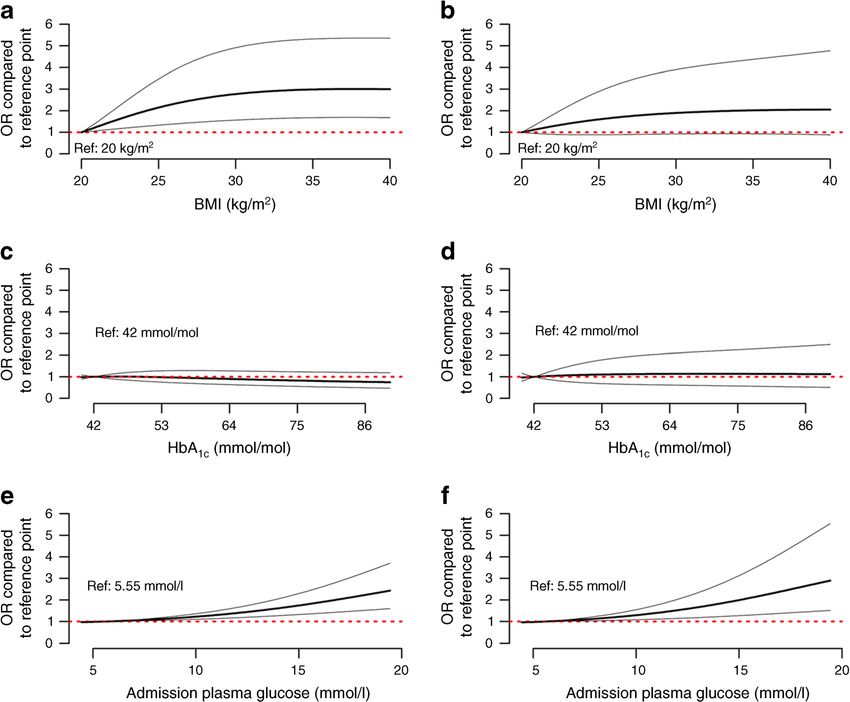
(HbA1c ≥48 mmol/mol [6.5%]). The median BMI was 28.4 When using age- and sex-adjusted nonlinear models, BMI
(25th–75th percentile 25.0–32.7) kg/m2. The mean HbA1c was significantly and positively associated with the primary
value was 65 ± 21 mmol/mol (8.1 ± 1.9%). A medical history outcome (p = 0.0001) but not with death on day 7 (p = 0.1488)
of hypertension and dyslipidaemia were found in 77.2% and (Fig. 2). In contrast, HbA1c level was neither associated with
51.0% of the participants, respectively. Microvascular and the primary outcome nor with death on day 7.
macrovascular complications were reported in 46.8% and Multivariable analyses were then conducted with charac-
40.8% of individuals, respectively. Regarding routine teristics prior to admission. BMI remained associated with the
glucose-lowering medications, 38.3% of the participants were primary outcome in a model where sex and age were forced
on insulin therapy while 56.6% received metformin and into models. When comorbidities and routine treatment were
21.6% dipeptidyl peptidase 4 (DPP-4) inhibitors. Moreover, entered in an adjusted model with stepwise selection, BMI
treatment with renin–angiotensin–aldosterone system was the only independent factor associated with the primary
(RAAS) blockers (ACE inhibitors and/or angiotensin II recep- outcome, with an adjusted OR of 1.28 (95% CI 1.10, 1.47)
tor blockers [ARBs] and/or mineralocorticoid-receptor antag- (Table 3). Finally, age, history of microvascular or
onists [MRAs]) and statins was used by 57.1% and 47.6% of macrovascular complications, and treated OSA were found
the participants, respectively. to be independently associated with the risk of death on day
7 (Table 4). A sensitivity analysis conducted only in patients
Characteristics of COVID-19 on admission Characteristics of with a positive SARS-CoV-2 PCR test found similar results
COVID-19 on admission are provided in Table 2. The for both the primary outcome and death (data not shown).
median duration of symptoms before admission was 5 days
(25th–75th percentile, 2–8 days). As expected, the most Factors on admission associated with study outcomes
common signs were fever (77.9%), cough (68.7%), fatigue Regarding COVID-19 symptoms on admission, dyspnoea
(62.4%), dyspnoea (61.8%) and digestive disorders was positively associated with the primary outcome
(34.5%). SARS-CoV-2 PCR testing was performed in and with death on day 7, whereas cephalalgia, upper
1268 participants, with a positive result in 96.8%. respiratory tract symptoms (rhinitis and/or pharyngeal
Thoracic CT imaging demonstrated typical ground-glass symptoms), and ageusia/anosmia, as well as time
opacity and/or crazy paving in 818 individuals (90.0%). between symptom onset and admission, were negatively
Biological findings were consistent with obvious infection associated with death on day 7 (Table 2 and ESM
as illustrated by a median C-reactive protein (CRP) at 77.8 Table 2). Several biological parameters reflecting the
(38.4–132.7) mg/l. Median plasma glucose at admission severity of the infection were also associated with both
was 9.20 (6.80–12.62) mmol/l. primary outcome and death on day 7, such as CRP,Diabetologia
Fig. 2 Sex- and age-adjusted ORs for the main outcome and for death, OR for admission plasma glucose for the primary outcome (e; p = 0.0001)
using logistic regression models with degree 2 multiple fractional poly- and for death (f; p = 0.0059) on day 7 (reference value 5.55 mmol/l; n =
nomials. (a, b) OR for BMI for the primary outcome (a; p = 0.0001) and 940). The thick black line gives the OR compared with the reference
for death (b; p = 0.1488) on day 7 (reference value 20 kg/m2; n = 1117). point, the thin grey lines are the 95% CI, and the red dotted red line
(c, d) OR for HbA1c for the primary outcome (c; p = 0.2897) and for death (OR = 1) corresponds to a similar risk-level as the reference point
(d; p = 0.9129) on day 7 (reference value 42 mmol/mol; n = 846). (e, f)
creatine phosphokinase (CPK) and lymphopaenia. and sex-adjusted nonlinear models, admission plasma
Reduced kidney function, assessed by admission glucose was significantly and positively associated with
eGFR, and increased plasma AST level, was associated the primary outcome (p = 0.0001) and with death on day
with both outcomes (Table 2 and ESM Table 2). In age- 7 (p = 0.0059) (Fig. 2).
Table 3 Multivariable analysis of the primary outcome in CORONADO participants: covariables prior to admission
Model ‘prior to admission’: Model ‘prior to admission’:
fully adjusted stepwise selection with age and sex forced
Patient characteristics OR (95% CI) p value OR (95% CI) p value
Age (+1 SD) 1.05 (0.90, 1.21) 0.5495 1.06 (0.92, 1.22) 0.4448
Sex (female/male) 0.76 (0.57, 1.03) 0.0777 0.75 (0.56, 1.01) 0.0559
BMI (+1 SD) 1.24 (1.06, 1.44) 0.0064 1.28 (1.10, 1.47) 0.0010
Treated OSA 1.15 (0.76, 1.73) 0.5036 – –
ARBs and/or ACE inhibitors and/or MRAs 1.15 (0.86, 1.54) 0.3493 – –
Models were applied in 1020 participants yielding 281 primary outcomes (27.5%)
BMI was natural log transformed. For quantitative variables, OR corresponds to an increase of 1 SD after standardisation
MRAs include spironolactone and eplerenoneDiabetologia
Table 4 Multivariable analysis of
the risk of death on day 7 in Model ‘prior to admission’: Model ‘prior to admission’:
CORONADO participants: fully adjusted stepwise selection with age and
covariables prior to admission sex forced
Patient characteristics OR (95% CI) p value OR (95% CI) p value
Age (+1 SD) 2.39 (1.67, 3.42)Diabetologia
Table 6 Multivariable analysis of
the risk of death on day 7 in Model ‘clinical and Model ‘clinical and biological’:
CORONADO participants: biological’: stepwise selection with age and
covariables on admission fully adjusted sex forced
Patient characteristics OR (95% CI) p value OR (95% CI) p value
Age (+1 SD) 4.28 (2.64, 6.94)Diabetologia
particular, physicians should be warned not only of the risk of levels and the severity of COVID-19, as previously reported
ketoacidosis but also of hypoglycaemia, probably favoured by in critically ill patients [26]. However, we speculate that this
COVID-19-induced anorexia without concomitant adaptation observation is rather the consequence of the severity of the
of glucose-lowering drugs. infection than a causal primary factor.
With the aim of providing clinicians with criteria to evalu- Another important result concerns the identification of the
ate the risk of severe COVID-19 on an individual level in prognostic factors of early death in people with diabetes and
people with diabetes, we performed multivariable analyses COVID-19. Compared with the primary outcome, which
to identify pre-admission and on-admission prognostic reflects aggressive management in ICUs with tracheal intuba-
factors. Since some preclinical studies previously highlighted tion, death on day 7 was more prevalent in elderly participants
potential mechanistic links between glucose control, immune with an OR >14 for people older than 75 years, compared with
response and MERS-CoV infection [21], we were particularly younger individuals. In addition, these individuals also very
interested in studying the relationship between long-term frequently exhibited complications of diabetes (microvascular
glucose control and COVID-19 prognosis. In fact, we failed and macrovascular complications, mainly coronary heart
to find any association between HbA1c (even with the highest disease) as well as pulmonary diseases (such as OSA). As
values, >75 mmol/mol [9.0%]) and either the primary expected, they were also more frequently on insulin therapy
outcome or death on day 7. On the basis of this result and in and taking multiple drugs (such as diuretics). Conversely,
order to increase the sample size for our analyses, we decided metformin use was associated with a reduced risk of early
not to force HbA1c in the multivariate models. death, probably reflecting a less advanced stage of diabetes
An interesting finding is the association of BMI with study with fewer comorbidities (such as severe chronic kidney
outcomes. Indeed, in our study, BMI was positively and inde- disease) that contraindicate its use. In multivariable analyses,
pendently associated with the primary outcome, which is age, diabetic complications and treated OSA remained signif-
largely driven by tracheal intubation. Interestingly, a recent icantly and independently associated with death on day 7. In
report on COVID-19 patients in ICU showed an association addition, dyspnoea, reduced eGFR and platelet count, and
between BMI and the requirement for mechanical ventilation, increased AST and CRP on admission were independent
irrespective of diabetic status [22]. However, such an associ- markers of early death.
ation with BMI was no longer statistically significant when The discrepancy between the primary combined outcome
considering death on day 7. It should also be noted that the (mainly driven by tracheal intubation) and death on day 7
increased risk for the primary outcome appears to be less could be explained by the fact that there were medical deci-
pronounced in patients with morbid obesity (grade 3, BMI sions not to pursue aggressive therapy in this frail population.
≥40 kg/m2) compared with those who were overweight or In contrast, our data can be considered reassuring for the
with grade 1–2 obesity, a situation previously described as majority of people living with type 1 diabetes. Indeed, there
the ‘obesity paradox’ in ICUs [23]. Additional studies are was no death in participants with type 1 diabetes younger than
clearly warranted to decipher the link between obesity, meta- 65 years. Additional data collection is currently ongoing to
bolic complications and COVID-19 severity with specific provide a precise picture of the rare individuals with type 1
attention to fat mass distribution, insulin resistance and diabetes hospitalised for COVID-19.
inflammatory/immune profiles. Some limitations must be acknowledged in the current
While hypertension was previously reported as the most analysis. We focused on hospitalised COVID-19 cases and
prevalent comorbidity in the general population with severe our results cannot be generalised to all people with COVID-
COVID-19 [2, 9, 12], it was not independently associated 19 and diabetes, especially those with a less severe form of the
with the severity of the disease in the study. In addition, disease. A secondary limitation is the size of our study popu-
RAAS blockers (ACE inhibitors, ARBs and MRAs) were lation and the large proportion (i.e. 35.7%) of patients without
not independently associated with the main outcome, available HbA1c. This is in accordance with the observation
supporting the recent recommendation not to discontinue that only 55% of the people with diabetes had had three or
RAAS blockade [24]. Moreover, we found no association more HbA1c determinations in the previous year according to
between glucose-lowering drugs, including DPP-4 inhibitors, French national registry data [27]. Finally, the present report
that have been suggested to potentially interfere with corona- focuses only on short-term prognosis (i.e. 7 days after admis-
virus infection and COVID-19 prognosis [21, 25]. sion) and one cannot exclude the possibility that diabetes char-
Our complementary multivariable approach was suitable acteristics prior to admission could be associated with severe
for the identification of characteristics on admission associat- COVID-19 outcomes in the longer term. However, strengths
ed with COVID-19 prognosis, of particular relevance for the must be acknowledged such as the originality of the medical
management of people with diabetes in the setting of an emer- question leading to the CORONADO initiative and the inclu-
gency room. Notably, we found an age- and sex-independent sion of participants on a national basis. In addition, a large
association between increased admission plasma glucose majority (>93%) of COVID-19 cases were confirmed with aDiabetologia
positive PCR test, with few cases diagnosed from medical non-financial support from Sanofi, and non-financial support from
Amgen. SB reports personal fees from Novo Nordisk, personal fees from
and/or radiological observations only. We also structured data
Sanofi, personal fees from Eli Lilly, personal fees from Medtronic, and
collection in order to obtain a precise and standardised record- personal fees from Abbott. PD reports personal fees from Novo Nordisk,
ing of phenotypic characteristics of the diabetic study personal fees from Sanofi, personal fees from Eli Lilly, personal fees from
population. MSD, personal fees from Novartis, personal fees from Abbott, personal
fees from AstraZeneca, personal fees from Boehringer Ingelheim, and
In conclusion, the CORONADO study refined the pheno-
personal fees from Mundipharma. BG reports personal fees from Eli
types of COVID-19 individuals with diabetes admitted to Lilly, personal fees from Novo Nordisk, personal fees from Mellitus
hospital and showed that chronic glycaemic control did not Care, personal fees from Isis Diabetes, and grants from Boehringer
impact the immediate severity of COVID-19. Elderly popula- Ingelheim. MJ reports personal fees and non-financial support from
Sanofi, personal fees and non-financial support from Eli Lilly, personal
tions with long-term diabetes with advanced diabetic compli- fees and non-financial support from Novo Nordisk, grants and personal
cations and/or treated OSA were particularly at risk of early fees from Boehringer Ingelheim, grants, personal fees and non-financial
death, and might require specific management to avoid support from Medtronic, personal fees and non-financial support from
contamination with SARS-CoV-2. BMI also appears as an Abbott, personal fees and non-financial support from BMS, personal fees
and non-financial support from MSD, and grants, personal fees and non-
independent prognostic factor for COVID-19 severity in the
financial support from AstraZeneca. LP reports personal fees and non-
population living with diabetes, requiring hospital admission. financial support from Sanofi, personal fees and non-financial support
from Eli Lilly, personal fees and non-financial support from Novo
Acknowledgements We thank the sponsor (DRCI [délégation à la Nordisk, and personal fees and non-financial support from MSD. RR
recherche clinique et à l'innovation] CHU Nantes), the Clinical Project reports grants, personal fees and non-financial support from Sanofi,
Manager (M. Saignes, CHU Nantes, Nantes, France) and assistant (J. grants, personal fees and non-financial support from Novo Nordisk,
Saunier, CHU Nantes, Nantes, France), Clinical Research Associates personal fees and non-financial support from Eli Lilly, personal fees from
(S. El Andaloussi [CHU Nantes, Nantes, France], J. Martin-Gauthier Mundipharma, personal fees from Janssen, personal fees from Servier,
[CHU Nantes, Nantes, France], E. Rebouilleau, [CHU Nantes, Nantes, grants and personal fees from AstraZeneca, personal fees from MSD,
France]) and data managers (B. Guyomarch [CHU Nantes, Nantes, personal fees from Medtronic, personal fees from Abbott, grants from
France], T. Roman [CHU Nantes, Nantes, France]). We are grateful to Diabnext, and personal fees from Applied Therapeutics. JFG reports
P. Tucker (Trets, France) for editing the manuscript. We acknowledge all personal fees and non-financial support from Eli Lilly, personal fees
medical staff involved in the diagnosis and treatment of patients with and non-financial support from Novo Nordisk, personal fees and non-
COVID-19 in participating centres. We thank all general practitioners, financial support from Gilead, and personal fees and non-financial
specialists, pharmacists and biological laboratories responsible for support from AstraZeneca. PG reports personal fees from Abbott, person-
hospitalised patients for providing additional medical information to al fees from Amgen, personal fees from AstraZeneca, personal fees from
investigators. We thank the Société Francophone du Diabète (SFD) and Boehringer Ingelheim, personal fees from Eli Lilly, personal fees from
Société Française d’Endocrinologie (SFE) for disseminating the study MSD, personal fees from Mundipharma, grants and personal fees from
design and organisation, and the Fédération Française des Diabétiques Novo Nordisk, personal fees from Sanofi, and personal fees from Servier.
(FFD) for participating in the study organisation. All other authors declare that there are no relationships or activities that
might bias, or be perceived to bias, their work.
Data availability A data-sharing statement is available in the ESM.
Contribution statement BC, SH and MW had full access to all of the data
Funding This study received the following funding: the Fondation in the study and take responsibility for the integrity of the data and the
Francophone de Recherche sur le Diabète (FFRD), supported by Novo accuracy of the data analysis. BC, SH and MW contributed to the work
Nordisk, MSD, Abbott, AstraZeneca, Lilly and FFD (Fédération equally and should be regarded as co-first authors. Concept and design:
Française des Diabétiques) – CORONADO initiative emergency grant; BC, JFG, PG, SH, MP, RRoussel, MW. Acquisition, analysis, or inter-
Société Francophone du Diabète (SFD) – CORONADO initiative emer- pretation of data: BB, DB, BC, FC-R, CC, J-FG, PG, SH, VK, BL, MP,
gency grant; Air Liquide Health Care international. All research facilities RRobert, RRoussel, J-FT, CT, MW on behalf of the scientific committee
are acknowledged for providing research associates and research techni- of the study (the list of scientific committee is available in the ESM).
cians for clinical investigations pro bono. The funders of the study had no Statistical analysis: MW, SC, PJS. Patient recruitment: AA-S, IA, CA,
role in study design, data collection, data analysis, data interpretation or GA, FB, SB, MB-G, OB, BC, EC, PD, ED, AD-B, BG, J-FG, PG, SH,
writing of the report. The corresponding authors (BC and SH) had full MJ, VK, LMarchand, LMeyer, LP, GP, J-PR, RRoussel, AS, CT, BT,
access to all the data in the study and had final responsibility for the CV. Fundraising: BC, PG, SH, MP and BB. Drafting the manuscript: BC,
decision to submit for publication. PG, SH, MP, MW. Critical revision of the manuscript for important
intellectual content: all co-authors. All authors have approved the final
Authors’ relationships and activities BC reports grants and personal version of the manuscript.
fees from Amgen, personal fees from AstraZeneca, personal fees from
Akcea, personal fees from Genfit, personal fees from Gilead, personal
fees from Eli Lilly, personal fees from Novo Nordisk, personal fees from
MSD, grants and personal fees from Sanofi, and grants and personal fees Open Access This article is licensed under a Creative Commons
from Regeneron. SH reports personal fees and non-financial support from Attribution 4.0 International License, which permits use, sharing, adap-
AstraZeneca, grants and personal fees from Bayer, personal fees from tation, distribution and reproduction in any medium or format, as long as
Boehringer Ingelheim, grants from Dinno Santé, personal fees from Eli you give appropriate credit to the original author(s) and the source,
Lilly, non-financial support from LVL, personal fees and non-financial provide a link to the Creative Commons licence, and indicate if changes
support from MSD, personal fees from Novartis, grants from Pierre Fabre were made. The images or other third party material in this article are
Santé, personal fees and non-financial support from Sanofi, personal fees included in the article's Creative Commons licence, unless indicated
and non-financial support from Servier, and personal fees from Valbiotis. otherwise in a credit line to the material. If material is not included in
MP reports personal fees and non-financial support from Novo Nordisk,Diabetologia
the article's Creative Commons licence and your intended use is not 15. Centers for Disease Control and Prevention (2020) Coronavirus
permitted by statutory regulation or exceeds the permitted use, you will Disease 2019 (COVID-19): groups at higher risk for severe illness.
need to obtain permission directly from the copyright holder. To view a Available from https://www.cdc.gov/coronavirus/2019-ncov/need-
copy of this licence, visit http://creativecommons.org/licenses/by/4.0/. extra-precautions/groups-at-higher-risk.html. Accessed 21 April
2020
16. Sauerbrei W, Meier-Hirmer C, Benner A, Royston P (2006)
Multivariable regression model building by using fractional poly-
nomials: description of SAS, STATA and R programs. Comput
References Stat Data Anal 50(12):3464–3485. https://doi.org/10.1016/j.csda.
2005.07.015
1. Huang C, Wang Y, Li X et al (2020) Clinical features of patients 17. Pornet C, Bourdel-Marchasson I, Lecomte P et al (2011) Trends in
infected with 2019 novel coronavirus in Wuhan, China. Lancet the quality of care for elderly people with type 2 diabetes: the need
395(10223):497–506. https://doi.org/10.1016/S0140-6736(20) for improvements in safety and quality (the 2001 and 2007
30183-5 ENTRED Surveys). Diabetes Metab 37(2):152–161. https://doi.
2. Guan WJ, Ni ZY, Hu Y et al (2020) Clinical characteristics of org/10.1016/j.diabet.2011.02.001
coronavirus disease 2019 in China. N Engl J Med 382(18):1708– 18. Yang X, Yu Y, Xu J et al (2020) Clinical course and outcomes of
1720. https://doi.org/10.1056/NEJMoa2002032 critically ill patients with SARS-CoV2 pneumonia in Wuhan,
3. Shah BR, Hux JE (2003) Quantifying the risk of infectious diseases China: a single-centered, retrospective, observational study.
for people with diabetes. Diabetes Care 26(2):510–513. https://doi. Lancet Respir Med 8(5):475–481. https://doi.org/10.1016/S2213-
org/10.2337/diacare.26.2.510 2600(20)30079-5
4. Muller LM, Gorter KJ, Hak E et al (2005) Increased risk of 19. CDC COVID-19 response team (2020) Preliminary estimates of the
common infections in patients with type 1 and type 2 diabetes prevalence of selected underlying health conditions among patients
mellitus. Clin Infect Dis 41(3):281–288. https://doi.org/10.1086/ with coronavirus disease 2019 – United States, February 12–
431587 March 28, 2020. MMWR Morb Mortal Wkly Rep 69(13):382–
5. Yang JK, Feng Y, Yuan MY (2006) Plasma glucose levels and 386. https://doi.org/10.15585/mmwr.mm6913
diabetes are independent predictors for mortality and morbidity in 20. Huang I, Anthonius M, Pranata R (2020) Diabetes mellitus is asso-
patients with SARS. Diabet Med 23(6):623–628. https://doi.org/10. ciated with increased mortality and severity of disease in COVID-
1111/j.1464-5491.2006.01861.x 19 pneumonia – a systematic review, meta-analysis, and meta-
6. Alqahtani FY, Aleanizy FS, Ali El Hadi Mohamed R et al (2018) regression. Diabetes Metab Syndr 14(4):395–403. https://doi.org/
Prevalence of comorbidities in cases of Middle East respiratory 10.1016/j.dsx.2020.04.018
syndrome coronavirus: a retrospective study. Epidemiol Infect
21. Kulcsar J, Coleman CM, Beck SE, Frieman MD (2019) Comorbid
147:1–5. https://doi.org/10.1017/S0950268818002923
diabetes results in immune dysregulation and enhanced disease
7. Yang J, Zheng Y, Gou X et al (2020) Prevalence of comorbidities in
severity following MERS-CoV infection. JCI Insight 4(20):
the novel Wuhan coronavirus (COVID-19) infection: a systematic
e131774. https://doi.org/10.1172/jci.insight.13177
review and meta-analysis. Int J Infect Dis 94:91–95. https://doi.org/
22. Simonnet A, Chetboun M, Poissy J et al (2020) High prevalence of
10.1016/j.ijid.2020.03.01
obesity in severe acute respiratory syndrome coronavirus-2 (SARS-
8. Grasselli G, Zangrillo A, Zanella A et al (2020) Baseline character-
CoV-2) requiring invasive mechanical ventilation. Obesity (Silver
istics and outcome of 1591 patients infected with SARS-CoV-2
Spring). https://doi.org/10.1002/oby.22831
admitted to ICUs of the Lombardy region, Italy. JAMA 323(16):
1674–1581. https://doi.org/10.1001/jama.2020.5394 23. Schetz M, De Jong A, Deane AM et al (2019) Obesity in the crit-
9. Garg S, Kim L, Whitaker M et al (2020) Hospitalization rates and ically ill: a narrative review. Intensive Care Med 45(6):757–769.
characteristics of patients hospitalized with laboratory-confirmed https://doi.org/10.1007/s00134-019-05594-1
coronavirus disease 2019 – COVID-NET, 14 States, March 1–30, 24. Vaduganathan M, Vardeny O, Michel T, McMurray JJV, Pfeffer
2020. MMWR Morb Mortal Wkly Rep 69(15):458–464. https:// MA, Solomon SD (2020) Renin–angiotensin–aldosterone system
doi.org/10.15585/mmwr.mm6915e3 inhibitors in patients with COVID-19. N Engl J Med 382(17):
10. Onder G, Rezza G, Brusaferro S (2020) Case-fatality rate and char- 1653–1659. https://doi.org/10.1056/NEJMsr2005760
acteristics of patients dying in relation to COVID-19 in Italy. 25. Drucker DJ (2020) Coronavirus infection and type 2 diabetes
JAMA. https://doi.org/10.1001/jama.2020.4683 shared-pathways with therapeutic implications. Endocr Rev 41(3):
11. Bhatraju PK, Ghassemieh BJ, Nichols M et al (2020) Covid-19 in bnaa011. https://doi.org/10.1210/endrev/bnaa011
critically ill patients in the Seattle region – case series. N Engl J 26. Van den Berghe G, Wouters P, Weekers F et al (2001) Intensive
Med. https://doi.org/10.1056/NEJMoa2004500 insulin therapy in critically ill patients. N Engl J Med 345(19):
12. Zhou F, Yu T, Du R et al (2020) Clinical course and risk factors for 1359–1367. https://doi.org/10.1056/NEJMoa011300
mortality of adult inpatients with COVID-19 in Wuhan, China: a 27. Fosse-Edorh S, Mandereau-Bruno L, Piffaretti C (2018). Le poids
retrospective cohort study. Lancet 395(10229):1054–1062. https:// du diabète en France en 2016 Synthèse épidémiologique. Santé
doi.org/10.1016/S0140-6736(20)305 publique France:8p; available from https://www.
13. Wu C, Chen X, Cai Y et al (2020) Risk factors associated with acute santepubliquefrance.fr/maladies-et-traumatismes/diabete/
respiratory distress syndrome and death in patients with coronavirus documents/rapport-synthese/le-poids-du-diabete-en-france-en-
disease 2019 pneumonia in Wuhan, China. JAMA Intern Med. 2016.-synthese-epidemiologique. Accessed 21 April 2020 [Article
https://doi.org/10.1001/jamainternmed.2020.0994 in French]
14. Roncon L, Zuin M, Rigatelli G, Zuliani G (2020) Diabetic patients
with COVID-19 infection are at higher risk of ICU admission and Publisher’s note Springer Nature remains neutral with regard to jurisdic-
poor short-term outcome. J Clin Virol 127:104354. https://doi.org/ tional claims in published maps and institutional affiliations.
10.1016/j.jcv.2020.104354Diabetologia
Affiliations
Bertrand Cariou 1 & Samy Hadjadj 1 & Matthieu Wargny 1,2 & Matthieu Pichelin 1 & Abdallah Al-Salameh 3 &
Ingrid Allix 4 & Coralie Amadou 5 & Gwénaëlle Arnault 6 & Florence Baudoux 7 & Bernard Bauduceau 8,9 &
Sophie Borot 10 & Muriel Bourgeon-Ghittori 11 & Olivier Bourron 12 & David Boutoille 13 &
France Cazenave-Roblot 14,15 & Claude Chaumeil 16 & Emmanuel Cosson 17,18 & Sandrine Coudol 2 &
Patrice Darmon 19 & Emmanuel Disse 20 & Amélie Ducet-Boiffard 21 & Bénédicte Gaborit 22 & Michael Joubert 23 &
Véronique Kerlan 24 & Bruno Laviolle 25 & Lucien Marchand 26 & Laurent Meyer 27 & Louis Potier 28 &
Gaëtan Prevost 29 & Jean-Pierre Riveline 30,31,32 & René Robert 33 & Pierre-Jean Saulnier 34 & Ariane Sultan 35 &
Jean-François Thébaut 16 & Charles Thivolet 36,37 & Blandine Tramunt 38 & Camille Vatier 39,40 & Ronan Roussel 28 &
Jean-François Gautier 30,32 & Pierre Gourdy 38 & for the CORONADO investigators
1 17
Département d’Endocrinologie, Diabétologie et Nutrition, l’institut Assistance Publique Hôpitaux de Paris, Hôpital Avicenne,
du thorax, Inserm, CNRS, UNIV Nantes, CHU Nantes, Hôpital Université Paris 13, Sorbonne Paris Cité, Département
Guillaume et René Laennec, 44093 Nantes Cedex 01, France d’Endocrinologie, Diabétologie et Nutrition, CRNH-IdF, CINFO,
2 Bobigny, France
CIC-EC 1413, Clinique des Données, CHU Nantes, Nantes, France
18
3 Université Paris 13, Sorbonne Paris Cité, UMR U557 Inserm /
Département d’Endocrinologie, Diabétologie et Nutrition, CHU
U11125 INRAE / CNAM / Université Paris13, Unité de Recherche
Amiens, PeriToxUMR_I 01, Université de Picardie, Amiens, France
Epidémiologique Nutritionnelle, Bobigny, France
4
Département d’Endocrinologie, Diabétologie, Nutrition, CHU de 19
Département d’Endocrinologie et de Diabétologie, Hôpital de la
Angers, Angers, France
Conception, Assistance Publique Hôpitaux de Marseille,
5
Département de Diabétologie, Centre Hospitalier Sud Francilien, Marseille, France
Corbeil Essonne, France 20
Département d’Endocrinologie, Diabétologie et Nutrition, Hospices
6
Département d’Endocrinologie, Diabétologie et Maladies Civils de Lyon, CarMeN Laboratory, Inserm 1060, Lyon, France,
Métaboliques, Centre Hospitalier Bretagne Atlantique, Université Claude Bernard Lyon 1, Lyon, France
Vannes, France 21
Département d’Endocrinologie et de Diabétologie, Centre
7
Clinique d’Endocrinologique Marc-Linquette, Hôpital Claude- Hospitalier Départemental de Vendée, La Roche sur Yon, France
Huriez, CHRU de Lille, Lille, France 22
Département d’Endocrinologie et de Diabétologie, Hôpital Nord,
8
Département de Diabétologie, H.I.A. Begin, Saint Mandé, France Assistance Publique Hôpitaux de Marseille, Marseille, France
9
Fondation Francophone pour la Recherche sur le Diabète (FFRD), 23
Département de Diabétologie, CHU de Caen, Caen, France
Paris, France 24
Département d’Endocrinologie, CHU de Brest, EA 3878 GETBO,
10
Département d’Endocrinologie, Diabétologie et Nutrition, CHU de Brest, France
Besançon, Besançon, France 25
Université de Rennes, CHU Rennes, Inserm, CIC 1414 (Centre
11
Département d’Endocrinologie, Diabétologie et Nutrition, d’Investigation Clinique de Rennes), Rennes, France
Assistance Publique Hôpitaux de Paris, Université Paris Saclay, 26
Département d’Endocrinologie et de Diabétologie, Centre
Hôpital Antoine Béclère, Clamart, Hôpital Bicêtre, Le Kremlin
Hospitalier St. Joseph - St. Luc, Lyon, France
Bicêtre, France
27
12 Département d’Endocrinologie, Diabétologie et Nutrition, Hôpitaux
Sorbonne Université, Assistance Publique Hôpitaux de Paris,
Universitaires de Strasbourg, Strasbourg, France
Département de Diabétologie, CHU La Pitié Salpêtrière-Charles
28
Foix, Inserm, UMR_S 1138, Centre de Recherche des Cordeliers, Département d’Endocrinologie, Diabétologie et Nutrition, Hôpital
Paris 06, Institute of Cardiometabolism and Nutrition ICAN, Bichat, Assistance Publique Hôpitaux de Paris, Centre de
Paris, France Recherche des Cordeliers, Inserm, U-1138, Université de Paris,
13 Paris, France
Département des Maladies Infectieuses et Tropicales, CHU Nantes,
29
Nantes, France Département d’Endocrinologie, Diabétologie et Maladies
14 Métaboliques, CHU de Rouen, Université de Rouen, Rouen, France
Département des Maladies Infectieuses et Tropicales, CHU de
30
Poitiers, INSERM U1070, Poitiers, France Département Diabète et Endocrinologie, Hôpital Lariboisière,
15 Assistance Publique Hôpitaux de Paris, Paris, France
Société de Pathologie Infectieuse de langue Française (SPILF),
31
Paris, France Paris Diderot–Paris VII Université, Paris, France
16
Fédération Française des Diabétiques (FFD), Paris, FranceYou can also read


