Policy Brief - Promoting Trade in Vaccines and Related Supplies and Equipment - 2021/SOM2/CTI/009
←
→
Page content transcription
If your browser does not render page correctly, please read the page content below
___________________________________________________________________________
                                                     2021/SOM2/CTI/009
                                                       Agenda Item: VII.a

   Policy Brief – Promoting Trade in Vaccines and
          Related Supplies and Equipment
                         Purpose: Information
          Submitted by: Policy Support Unit, APEC Secretariat

                                     Second Committee on Trade and
                                               Investment Meeting
                                                    25-27 May 2021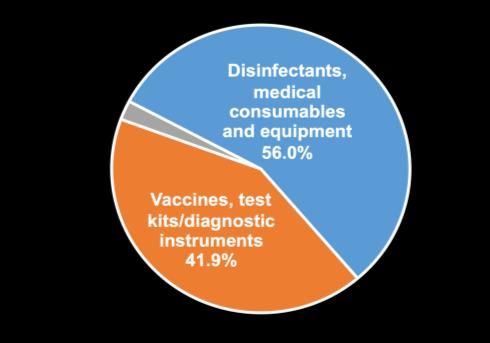
APEC Policy Support Unit
POLICY BRIEF No. 40
May 2021
Promoting Trade in Vaccines and
Related Supplies and Equipment
By Carlos Kuriyama
KEY MESSAGES
The global trade in vaccines and related supplies and equipment is significant, equivalent to
USD 418.5 billion in 2019, with further growth prospects based on trade estimates in 2020.
APEC is a net importer of vaccines and related goods. Most of these products imported by
APEC economies come from other APEC economies. While most vaccines for human use
imported by APEC originate in Europe, APEC economies are collectively responsible for the
majority of the world’s COVID-19 vaccine production. Moreover, most of the goods vital for
COVID-19 vaccine manufacturing and distribution also originate from within the APEC region.
Five APEC economies explain more than 80 percent of APEC exports of vaccines and related
supplies and equipment. Similarly, over 75 percent of APEC imports involved five APEC
economies.
Most-favoured nation (MFN) tariffs on vaccines are very low in most APEC economies.
However, other products within the vaccine supply chain face higher tariff rates in a number of
APEC economies, including alcohol solutions, freezing equipment, packaging and storage
materials, vials and rubber stoppers.
Trade policy could facilitate the provision of COVID-19 vaccines. APEC economies could
discuss initiatives to reduce or eliminate tariffs on vaccines and related goods, and refrain from
implementing export restrictions and prohibitions on those goods.
APEC economies could also discuss initiatives on trade facilitation to secure supply lines and
minimise disruptions in the vaccine supply chain. They also need to look at issues related to
intellectual property and standards and conformance to help increase vaccine production
levels within a short timeframe.
One of the strategies to control the COVID-19 underlined that facilitating access to safe, effective
pandemic is by enhancing testing capacity and and affordable COVID-19 vaccines is one of the
deploying comprehensive vaccination programmes to critical steps for any effective strategy to safeguard
protect the population against COVID-19. Creating people’s health in the context of this pandemic.
testing kits, as well as producing, distributing and
administering vaccines are not easy tasks, as they The general situation in most of the world is critical
involve vast resources in research, logistics and and APEC economies have been responding quickly
complex global supply chains. to the challenges. However, the COVID-19 pandemic
is far from being under control. APEC economies need
In November 2020, APEC Leaders recognised that to take not just individual, but also collective action to
‘extensive immunisation against COVID-19 is critical fight this pandemic. The situation is unprecedented
in order to bring the pandemic to an end’. 1 They and there is a sense of urgency to look beyond
reaffirmed the need to cooperate on different aspects business-as-usual considerations to propose effective
of the fight against COVID-19, including the various measures.
phases of the vaccine supply chain. The Declaration
1
APEC, “2020 Leaders’ Declaration,” 27th APEC Economic 2020, https://www.apec.org/Meeting-Papers/Leaders-
Leaders’ Meeting, Kuala Lumpur, Malaysia, 20 November Declarations/2020/2020_aelm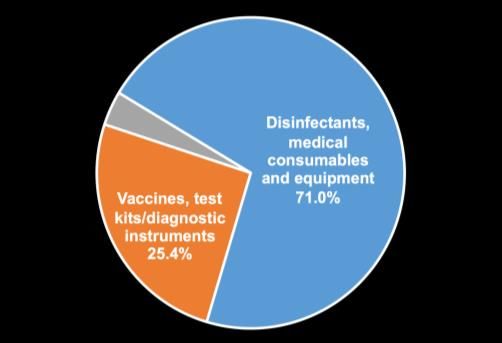
2

                 Figure 1. Trade in vaccines and related supplies and equipment, World and APEC
                                                    (USD billion)
                         Annual 2010–2019                                  1st Semester of 2018, 2019 and 2020

    Note: For comparison purposes, data in the chart on the right for the first half of 2018, 2019 and 2020 only takes into
    account 79 economies, including 15 APEC members. Within APEC, 2020 quarterly data are not available yet for Brunei
    Darussalam; Hong Kong, China; Indonesia; Mexico; Papua New Guinea; and Viet Nam.
    Source: International Trade Centre (ITC) Trade Map; APEC Policy Support Unit (PSU) calculations.

Trade policy could contribute to tackling this crisis.             World Health Organization (WHO) on vaccines and
This Policy Brief seeks to study the importance of the             related supplies and equipment,2 and the list included
trade in vaccines and their related supplies and                   in a 2021 Organisation for Economic Co-operation
equipment, as well as identify issues affecting COVID-             and Development (OECD) study on selected vaccine-
19 vaccine trade. In addition, the Policy Brief analyses           related inputs. 3 Among the products, 11 are
existing tariff levels and non-tariff measures affecting           categorised as vaccine ingredients; 7 as vaccines, test
those products in the APEC region, and provides                    kits, instruments and apparatus used in diagnostic
policy recommendations to facilitate the provision of              testing; and 24 as disinfectants, medical consumables
COVID-19 vaccines and related products, which are                  and equipment related to vaccines 4.
necessary to advance vaccination efforts.
                                                                   Calculations take into account trade flows of these 42
Trade in Vaccines and Related Supplies and                         products using the harmonised system (HS)
Equipment                                                          nomenclature at the 6-digit code level, as indicated in
                                                                   the WCO and OECD lists. Trade figures may be
Any vaccine supply chain is very sophisticated.                    overestimated in some cases, as some of these 6-digit
Components used to produce a vaccine for human                     codes may include products unrelated to any vaccine
use include preservatives, adjuvants, stabilisers,                 supply chain. Trade data at a higher level of
inactivated ingredients, antibiotics and lipid                     disaggregation (e.g., 8- or 10-digit codes), which could
nanoparticles. Vaccines also require proper                        provide a more accurate estimation, are not
packaging for storage and distribution, which means a              harmonised across economies and not publicly
need for products such as ampoules, vials, stoppers,               available in some cases.
insulated cartons, cold boxes, dry ice and freezing
equipment. The vaccine administration stage usually                At the global level, the amount of trade in vaccines and
requires trained staff to use medical products like                related supplies and equipment is significant (Figure
disinfectant, gauze, and syringes with needles in a                1). The world trade of these products doubled from
safe manner.                                                       USD 208.3 billion to USD 418.5 billion between 2010
                                                                   and 2019 and have been increasing since the start of
In order to estimate the amount of trade in vaccines               the pandemic. Similarly, APEC economies increased
and related supplies and equipment, this Policy Brief              their exports of vaccines and related supplies and
takes into account 42 products from the list developed             equipment by 70.9 percent from USD 87.1 billion to
jointly by the World Customs Organization (WCO) and                USD 148.9 billion over the same period. APEC

2
  World Customs Organization (WCO), “HS Classification             Distributing Vaccines” (OECD, 2021),
Reference for Vaccines and Related Supplies and Equipment,”        https://www.oecd.org/coronavirus/policy-responses/using-
2020, http://www.wcoomd.org/-                                      trade-to-fight-covid-19-manufacturing-and-distributing-
/media/wco/public/global/pdf/topics/facilitation/activities-and-   vaccines-dc0d37fc/
                                                                   4
programmes/natural-disaster/covid-19-list-for-vaccines/hs-           See Annex for the details of the HS sub-headings included in
classification-reference-vaccines-english.pdf?la=en                this Policy Brief.
3
  Organisation for Economic Co-operation and Development
(OECD), “Using Trade to Fight COVID-19: Manufacturing and
3
Figure 2. Distribution of APEC trade in vaccines
and related supplies and equipment by category, 2019
APEC Exports APEC Imports
Note: Percentages obtained from trade data expressed in nominal USD.
Source: ITC Trade Map; APEC PSU calculations.
Figure 3. Distribution of APEC trade in vaccines
and related supplies and equipment by economy, 2019
APEC Exports APEC Imports
CDA=Canada; PRC=China; JPN=Japan; MEX=Mexico; SGP=Singapore; USA=United States
Note: Percentages obtained from trade data expressed in nominal USD.
Source: ITC Trade Map; APEC PSU calculations.
imports also went up from USD 82.4 billion to USD In APEC, a majority of trade in vaccines and
181.3 billion, an expansion of 120.1 percent. related supplies and equipment is explained by
disinfectants, medical consumables, and
While data for year 2020 is only available for the first equipment related to vaccines.
half of the year, it is very likely that the trade flows of
these products increased worldwide in 2020, as their In 2019, most of APEC exports of vaccines and
trade flows grew 2.9 percent year-on-year in the first related goods is explained by disinfectants, medical
half of 2020. Likewise, APEC exports and imports consumables and equipment related to vaccines
increased by 4.3 percent and 8.9 percent, (71.0%) (Figure 2).5 In other words, a majority of these
respectively. exports in terms of value are related to goods that are
critical for the distribution and administration of
In addition, with COVID-19 vaccinations beginning to vaccines. Vaccines, test kits, and apparatus for
roll out at the end of 2020, it is possible that the diagnostic testing represented 25.4 percent of those
emerging COVID-19 vaccine trade had a significant exports. Ingredients to produce vaccines accounted
positive effect on the trade statistics of vaccines and for only 3.6 percent of those exports. From the import
related supplies and equipment during the second half perspective, 56.0 percent of those APEC imports
of 2020. correspond to disinfectants, medical consumables
and equipment related to vaccines; 41.9 percent to
vaccines, test kits, and apparatus for diagnostic
testing and 2.2 percent to vaccine ingredients.
5
Since trade data for 2020 is not available for all APEC
economies, this Policy Brief analyses trade flows using data
from year 2019, unless otherwise stated.4
Products related to diagnostic test kits,
Table 1. Top 5 APEC exports of vaccines and vaccine distribution and administration are
related supplies and equipment, 2019 more traded by APEC economies than
vaccines for human use.
Type HS 2017 Description USD Share
Code billion
DMCE 901890 Vaccine carriers 26.9 18.1% In 2019, the most exported products by the APEC
DMCE 854370 Ultra-violet 24.7 16.6% region in the vaccine supply chains were related
irradiation to the stages of vaccine distribution and
equipment for administration. Vaccine carriers, ultra-violet
disinfection irradiation equipment for disinfection purposes
DMCE 901839 Needles used in 15.3 10.3%
medical science and needles used for medical science accounted
VTKD 300215 Test kits based 13.4 9.0% for nearly 45 percent of the exports of the products
on immunological in the vaccine supply chain, followed by test kits
reactions based on immunological reactions and
VTKD 382200 Test kits based 11.8 8.0%
on polymerase polymerase chain reactions, which accounted for
chain reaction 9 percent and 8 percent respectively of these
Total Top 5 APEC 92.1 61.9% exports (Table 1).
exports
Total APEC 148.9 100.0%
exports
Together, the top five products in the vaccine
DMCE=disinfectants, medical consumables and equipment supply chain represented 61.9 percent of these
related to vaccines; VTKD=vaccines, test kits/instruments exports. In contrast, vaccines for human use only
and apparatus used in diagnostic testing accounted for 2.2 percent of these exports
Source: ITC Trade Map; APEC PSU calculations.
In APEC, test kits based on immunological
reactions topped the list of imports of vaccines and
Table 2. Top 5 APEC imports of vaccines and related goods, representing 23.4 percent of the
related supplies and equipment, 2019 total. Similar to the top products in the export list,
the main imported products were related to
Type HS 2017 Description USD Share vaccine distribution and administration. Vaccine
Code billion carriers, ultra-violet irradiation equipment for
VTKD 300215 Test kits based 42.3 23.4%
on immunological
disinfection purposes and needles used for
reactions medical science also appeared in the top five main
DMCE 901890 Vaccine carriers 30.6 16.9% products imported by the APEC region. Vaccines
DMCE 854370 Ultra-violet 22.6 12.4% for human use complete the list of top five APEC
irradiation imports.
equipment for
disinfection
DMCE 901839 Needles used in 14.2 7.8% On the whole, the top five imported products in the
medical science vaccine supply chains accounted for 67.2 percent
VTKD 300220 Vaccines for 12.0 6.6% of the imports in the APEC region.
human use
Total Top 5 APEC 121.8 67.2%
imports
A few APEC member economies account for a
Total APEC 181.3 100.0% significant percentage of APEC exports and
imports imports of vaccines and related goods.
DMCE=disinfectants, medical consumables and equipment
related to vaccines; VTKD=vaccines, test kits/instruments In 2019, the United States and China accounted
and apparatus used in diagnostic testing for 63.4 percent of the exports of vaccines and
Source: ITC Trade Map; APEC PSU calculations.
related supplies and equipment by APEC
economies (Figure 3). The top five APEC
exporters, which also included Japan; Mexico; and
Singapore, accounted for 82.4 percent of APEC
exports. On the other hand, the relative share of
the top five importers (the United States; China;
Japan; Canada; and Mexico) was slightly lower
(75.8 percent of APEC imports), with the United
States and China representing 54.5 percent of the
APEC imports of vaccines and related supplies
and equipment.5
Figure 4. Trade in vaccines for human use (HS 300220) (USD billion)
Annual 1988–2019 1st Semester of 2018, 2019 and 2020
35.0 16.0 14.9 15.2
30.2
30.0 14.0 13.2
25.0 12.0
10.0
20.0
8.0
15.0 6.1
12.0 5.6
6.0
10.0 4.1
4.0
5.0 3.2
1.6 1.5 1.2
2.0
-
0.0
1988
1989
1990
1991
1992
1993
1994
1995
1996
1997
1998
1999
2000
2001
2002
2003
2004
2005
2006
2007
2008
2009
2010
2011
2012
2013
2014
2015
2016
2017
2018
2019
World Trade APEC Exports APEC Imports
World Trade APEC Exports APEC Imports 2018 S1 2019 S1 2020 S1
Source: ITC Trade Map; World Integrated Trade Solution (WITS); APEC PSU calculations.
Note: For comparison purposes, data in the right chart for the 1st half of 2018, 2019 and 2020 only takes into account
79 economies, including 15 APEC members. Within APEC, 2020 quarterly data is not available yet for Brunei
Darussalam; Hong Kong, China; Indonesia; Mexico; Papua New Guinea; and Viet Nam.
A majority of the APEC imports of all types of Table 3. Main sources of APEC imports of
vaccines for human use and related supplies and vaccines and related supplies and equipment
equipment come from within the APEC region, (USD billion)
followed by Europe. 2019 Share
Total 181.3 100.0%
In 2019, 55.6 percent of APEC imports of vaccines United States of America 30.5 16.8%
China 22.4 12.3%
and related supplies and equipment originated within Germany 21.4 11.8%
the APEC region (Table 3). Another importance Mexico 16.0 8.8%
source for APEC economies was Europe, in particular Ireland 15.9 8.8%
those economies within the European Union and the Japan 9.3 5.2%
Belgium 5.9 3.3%
European Free Trade Association (EFTA), as well as Switzerland 5.8 3.2%
the United Kingdom, which collectively contributed to United Kingdom 4.2 2.3%
39 percent of APEC imports. In fact, the list of top 10 Canada 4.1 2.3%
economies supplying those products to the APEC Others 45.8 25.2%
From APEC 100.8 55.6%
region comprised five APEC members (the United From EU+EFTA+UK 70.8 39.0%
States; China; Mexico; Japan; and Canada) and five EFTA=European Free Trade Association;
European partners, accounting for nearly 75 percent EU=European Union; UK=United Kingdom
of APEC imports. Deepening economic relationships Source: ITC Trade Map; APEC PSU calculations.
within APEC and with European partners could
facilitate the provision of goods that are essential for
the production, distribution and administration of imports of vaccines would record a higher value in
vaccines. 2020 than in 2019, particularly since COVID-19
vaccines only became available at the end of 2020.
Trade in vaccines for human use has increased
significantly worldwide. Imports by APEC Figure 4 shows exponential growth in the global trade
members have risen considerably. in vaccines for human use. Between 1988 and 2019,
their global trade multiplied 416 times, from USD 73
In 2019, vaccine trade worldwide reached USD 30.2 million to USD 30.2 billion. Certainly, trade
billion, a 50.7 percent growth from the level recorded liberalisation has played an important role in
in 2010. Likewise, APEC imports of vaccines also facilitating the accessibility of vaccines for human use
jumped from USD 5.5 billion to 12 billion during the worldwide. In the 1990s, most-favoured nation (MFN)
same period, equivalent to an increase of 120.6 tariffs for these vaccines were at least 5 percent in at
percent. On the other hand, APEC exports of vaccines least 73 economies and at least 10 percent in 30
declined by 32.9 percent, falling from USD 4.8 billion
to 3.2 billion.
Data from the first half of 2020 show a global increase
in the vaccine trade, as well as a higher level of APEC
imports in comparison to similar periods in 2018 and
2019. This suggests that global trade and APEC6
Table 4. Global trade and APEC imports of vaccines by source, 2019
Global APEC Imports
Source USD billion Share Source USD billion Share
Total 30.2 100.0% Total 12.0 100.0%
Belgium 9.4 31.1% Belgium 4.5 37.3%
Ireland 5.3 17.7% Ireland 3.1 26.0%
France 4.3 14.1% United States 1.3 10.8%
United Kingdom 3.4 11.3% France 0.9 7.3%
United States 2.0 6.7% Canada 0.5 3.7%
Italy 1.1 3.7% Italy 0.4 3.1%
India 0.8 2.6% United Kingdom 0.3 2.1%
Netherlands 0.6 2.0% Germany 0.3 2.1%
Poland 0.6 2.0% Switzerland 0.2 1.8%
Germany 0.5 1.7% Netherlands 0.2 1.6%
Others 2.2 7.3% Others 0.5 4.1%
APEC 3.2 10.7% APEC 2.1 17.4%
EU+EFTA+UK 26.1 86.5% EU+EFTA+UK 9.9 81.8%
EFTA=European Free Trade Association; EU=European Union; UK=United Kingdom
Source: ITC Trade Map; APEC PSU calculations.
Table 5. COVID-19 vaccine production as of 03 March 2021 (million doses)
Economy No. of vaccines Share Manufacturer
produced
Total 413.0 100.0% All
China 141.6 34.3% CanSino, AstraZeneca, Beijing/Sinopharm, Sinovac
United States 103.0 24.9% Pfizer/BioNTech, Moderna
Germany/Belgium 70.5 17.1% Pfizer/BioNTech
India 42.4 10.3% AstraZeneca, Bharat/ICMR/NIV
United Kingdom 12.2 3.0% AstraZeneca
Netherlands/Belgium 10.5 2.5% AstraZeneca
Russia 10.5 2.5% Gamaleya Research Institute
Switzerland 5.5 1.3% Moderna
Korea 1.6 0.4% AstraZeneca
Others 15.2 3.7%
Source: Airfinity.
economies. 6 By 2019, only eight economies around While the 2019 statistics do not reflect any trade of
the world imposed MFN tariffs above 5 percent and COVID-19 vaccines, the information could help to
only two economies charged tariffs reaching 10 identify those economies with the capacity to meet
percent. Good Manufacturing Practices (GMP). GMP is
required to produce vaccines for human use, including
European partners dominate the world trade of COVID-19 vaccines. Table 4 suggests that the APEC
vaccines for human use. Most of the APEC region may be relying on Europe for the supply of
imports of vaccines for human use are purchased COVID-19 vaccines being manufactured in Europe,
from those partners. as well as on the development and production of those
vaccines within the APEC region.
Members of the European Union and EFTA, and the
United Kingdom, exported collectively 86.5 percent of COVID-19 Vaccine Production in the APEC
the global trade of vaccines in 2019. Only 10.7 percent Region
of the total exports of vaccines originated from the
APEC region. The United States was the only APEC COVID-19 vaccine production is ramping up
member in the top 10 list of vaccine exporters quickly in the APEC region and Europe, but
worldwide. production levels are clearly insufficient to meet
demand.
Most of the vaccines imported by APEC also came
from Europe. 81.8 percent of the vaccines imported by Some APEC economies have already started
APEC economies came from their European partners. manufacturing COVID-19 vaccines. Data as of early
Only 17.4 percent of the APEC imports of vaccines March 2021 show that China tops the production of
were sourced from within the APEC region. The vaccines with 141.6 million doses, followed by the
United States and Canada were the only APEC United States with 103 million doses. Russia and
economies in the top 10 list of suppliers of vaccines Korea have also produced 10.5 million and 1.6 million
for the APEC region.
6
APEC, “APEC Regional Trends Analysis – Globalisation: The https://www.apec.org/Publications/2017/05/APEC-Regional-
Good, the Bad, and the Role of Policy,” (Singapore: APEC, Trends-Analysis-Globalisation-The-Good-The-Bad-and-the-
May 2017), 7, Role-of-Policy7
Figure 5. Main sources of APEC imports of supplies and equipment necessary for the production,
distribution and administration of vaccines, 2019 (Share in APEC imports)
Cold boxes Aluminum Salts
Freezing equipment USA 30%, China 22%, China 28%, USA 22%, Sorbitol
China 31%, USA 15%, Japan 11% Indonesia 13% China 33%, Indonesia 20%,
Mexico 15% France 15%
Vaccine carriers Thimerosal
USA 21%, Mexico 19%, India 20%, Argentina 18%,
Germany 12% Syringes Germany 16%
USA 21%, China 12%,
Needles Mexico 11%
Mexico 22%, USA 21%, Sterols
Ireland 11% China 34%, USA 16%,
Japan 16%
Alcohol solution
Mexico 44%, USA 20%, Stoppers
Brazil 18% China 23%, Japan
13%, USA 12%
Dry ice
USA 28%, Israel 10%, Vials
China 9% Antibiotics Formaldehyde
China 33%, Mexico
China 37%, Italy 10%, USA 38%, Canada 23%,
16%, USA 8%
India 10% Chinese Taipei 13%
Source: ITC Trade Map; APEC PSU calculations. Image from Shutterstock.
doses, respectively. 7 These four APEC members According to the Duke Global Health Innovation
account for 62.2 percent of the global COVID-19 Center, an optimistic forecast by the end of 2021 is to
vaccine production as of early March 2021. produce 12 billion doses of COVID-19 vaccines. 10
However, to achieve this, producers have to ramp up
The current production capacity falls short of meeting their production capacity to levels never achieved
the global demand for COVID-19 vaccines, including before. According to the WHO, the global market
in the APEC region. As of early March 2021, an volume of all types of vaccines (against flu and other
estimated 413 million doses have been produced. 8 diseases) was around 5.5 billion doses in 2019.11
Considering that the global population is 7.9 billion,
assuming that two doses are needed to fully vaccinate Difficulties in ramping up production include shortage
one person, around 14.2 billion doses are required to of trained staff; intellectual property rights (concerning
vaccinate 90 percent of the population, which is a safe the manufacturing of COVID-19 vaccines and vaccine
estimated level that could lower the number of new components) being in the possession of a few firms;
cases and eventually stop the spread of the disease.9 lack of laboratories with the capacity to meet GMP to
produce safe vaccines; trade barriers affecting
Similarly, the APEC region with a population of 2.9 vaccine components and related goods; and other
billion people will require around 5.2 billion doses to unexpected events disrupting the COVID-19 vaccine
cover 90 percent of the population. However, since the supply chain.
vaccines are not 100 percent effective and it is
possible that some vaccines may require a booster as Since vaccine production relies on a specialised
they may lose their effectiveness against new supply chain with multiple inputs originating from
variants, more vaccine doses will be needed to
achieve herd immunity.
7
Airfinity, “COVID-19 Vaccine Production” (presented at the n=true. This paper mentions that a decent safety margin to
Global COVID-19 Vaccine Supply Chain and Manufacturing achieve herd immunity is vaccination levels of around 86 to 90
Summit, International Federation of Pharmaceutical percent of the population.
10
Manufacturers and Associations, 8 March 2021), Duke Global Health Innovation Center, Launch and Scale
https://www.ifpma.org/wp- Speedometer, accessed 07 May 2021,
content/uploads/2021/03/Airfinity_global_summit_master_final. https://launchandscalefaster.org/covid-
pdf 19/vaccinemanufacturing
8
Airfinity, “COVID-19 Vaccine Production”. 11
World Health Organization, “Global Vaccine Market Report,”
9
K. Kadhhoda, “Herd Immunity to COVID-19: Alluring and December 2020, 1,
Elusive,” American Journal of Clinical Pathology 155, no. 4 https://www.who.int/immunization/programmes_systems/procu
(April 2021): 471–2, rement/mi4a/platform/module2/2020_Global_Vaccine_Market_
https://academic.oup.com/ajcp/article/155/4/471/6063411?logi Report.pdf?ua=18
across the APEC region and the rest of the world,
Table 6. Number of APEC member economies per range
this further underscores the importance of
of average MFN tariff, 2020
Duty All Vaccines, Test Disinfectants, Vaccine
ensuring that global supply chains are functional
Range Vaccine- Kits/Diagnostic Medical Ingredients and resilient. The economic interdependence
related Instruments Consumables invariably means that free and open trade will
Products and help ramp up COVID-19 vaccine production
Equipment
0 2 4 2 5
quickly. This, together with addressing supply
09
Table 9. APEC average MFN tariffs on disinfectants, medical consumables and equipment related
to vaccines, 2020
# HS Description Average MFN
Code Tariff (%)
1 220710 Alcohol solution. Undenatured, containing by volume 80% or more ethyl alcohol 77.2
2 220890 Alcohol solution. Undenatured, 70% ethyl alcohol 29.5
3 220720 Alcohol solution. Denatured ethyl alcohol, of any strength 14.6
4 841840 Freezers of the upright type, not exceeding 900 l capacity 8.5
5 841830 Freezers of the chest type, not exceeding 800 l capacity 8.2
6 841850 Furniture incorporating refrigerating or freezing equipment 6.8
7 392310 Cold boxes for storage or distribution 5.8
8 841869 Other freezing equipment 5.6
9 481950 Other packing containers, including record sleeves 5.3
10 481960 Box files, storage boxes of paper or paperboard 5.3
Note: Latest available data was from year 2019 for Brunei Darussalam; Chile; and Papua New Guinea; 2018 for
Indonesia and Peru; and 2017 for Viet Nam.
Source: WTO Data Portal; UNCTAD TRAINS Database; APEC PSU calculations.
economies impose MFN tariff rates above 5 percent APEC could further facilitate trade on vaccines and
for both vials and rubber stoppers. related supplies and equipment by reducing or
eliminating tariffs on those products that are important
The highest MFN average tariffs are on in the vaccine supply chain on a permanent basis.
disinfectants, medical consumables and This could help in tackling the COVID-19 pandemic
equipment related to the production, distribution, and getting the APEC region more prepared when
storage or administration of vaccines. other pandemics emerge in the future.
A review of the 10 products with the highest average Sixteen of the 42 HS sub-headings in the list of
MFN tariff in the APEC region shows that almost all of products covered in this Policy Brief concern at least
them are disinfectants, medical consumables, or two-thirds of the APEC membership (14 economies)
materials or equipment that are required in the stages with MFN tariffs above 5 percent (Figure 6). Those
of vaccine production, distribution, storage or products are as follows: alcohol solutions (HS 220710,
administration (Table 9). 220720 and 220890), clinical waste from vaccination
procedures (HS 382530), cold boxes for storage and
Three types of alcohol solutions, which are important distribution (HS 392310), stoppers (HS 401699),
to disinfect the area where vaccines are administered, insulated cartons, containers and boxes for storage
recorded average duty rates of 77.2 percent, 29.5 and distribution (HS 481910, 481930, 481940,
percent and 14.6 percent. 12 These average MFN 481950 and 481960), glass vials or phials (HS
tariffs are high because many economies implement 701090) and freezing equipment (HS 841830,
high non ad-valorem duties, as those products could 841840, 841850 and 841869).
also be used for purposes unrelated to health.
Thirteen APEC economies have an MFN tariff rate or Since the emergence of the pandemic, several APEC
ad valorem equivalent higher than 10 percent for at economies have implemented measures to facilitate
least one of those alcohol solutions. Only four APEC trade of medical products, including those that are part
economies record tariff rates or ad valorem of the vaccine supply chain. According to the WTO,
equivalents of below 5 percent for the three alcohol nine APEC economies have reduced or eliminated
solutions. import tariffs below reported MFN tariff rates on a
temporary basis. 13 Those facilitating measures are
Other important products with high MFN tariffs in usually for alcohol solution, vaccine ingredients, test
some economies are freezing equipment and kits, syringes and needles. While those measures
packaging materials for vaccine storage and could help facilitate access to vaccines on a temporary
distribution. For example, eight APEC economies basis, a better outcome could be obtained by making
impose MFN tariff rates of 10 percent or above for those measures long-lasting. Only Mexico; New
some freezing equipment. For two of them, their tariff Zealand; and Singapore reported measures that seek
duties are equivalent to 30 percent. In the case of
packing containers and storage boxes made of
paperboard, two APEC economies record MFN tariff
rates greater than or equal to 20 percent.
12 13
Ad-valorem MFN tariff rates and ad-valorem tariff Other measure implemented by some APEC economies to
equivalents over 100 percent have been reported in some facilitate trade of vaccine-related products is to exempt those
APEC member economies. imported products from value-added taxes and income taxes.10
Figure 6. Number of APEC economies with MFN tariffs > 5%, 2020
Note: Latest available data was from year 2019 for Brunei Darussalam; Chile; and Papua New Guinea; 2018 for
Indonesia and Peru; and 2017 for Viet Nam.
Source: WTO Data Portal; UNCTAD TRAINS Database; APEC PSU calculations.
to keep the elimination of those import tariffs on demand, some governments outside APEC have
vaccines and related goods in the long term.14 issued measures to restrict exports of COVID-19
vaccines through export controls. One of these
Other Measures Affecting Trade in Vaccines measures comes from the European Union, which is
and Related Supplies and Equipment one of the most important vaccine suppliers for the
APEC region. The European Union has put in place
While export restrictions on vaccines and related an export authorisation scheme, effective until 30
supply and equipment are in place in few APEC June 2021. This could have an impact on APEC
economies, export controls in the European Union members, as exports of COVID-19 vaccines to APEC
may also affect supplies to the APEC region. economies could be affected if vaccine producers
within the European Union cannot produce enough to
According to the WTO database on COVID-19 execute the Advance Purchasing Agreements with the
measures affecting trade in goods, only two non-tariff European Union.17
measures restricting trade on vaccines and related
supplies and equipment are in force within the APEC If export restrictions are placed on vaccines in either
region. Those two measures include a conditional the APEC economies or the European Union, this
prohibition on exporting certain pharmaceutical could certainly affect the provision of vaccines to
products in cases of drug shortages and a temporary APEC members, given that APEC and the European
measure to request an authorisation to export Union export vaccines to APEC members (Table 4)
syringes and hypodermic needles.15 Since the start of and the importance of several economies in the two
the pandemic, four other measures implementing regions as COVID-19 vaccine producers (Table 5).
temporary export restrictions or bans have been Such restrictions could affect negatively vaccine
repealed. They affected products such as alcohol production capacity as well, by discouraging
solution, disinfectant preparations and bandages.16 investments and restricting the use of economies of
scale. 18 If export restrictions are also applied to
However, in recent months, as the production of important products in the vaccine supply chain,
COVID-19 vaccines has not been able to meet the vaccine production could be further affected.
14
World Trade Organization (WTO), “COVID-19: Measures 18
S.J. Evenett et.al. “The Covid-19 Vaccine Production Club:
Affecting Trade in Goods,” as of 23 April 2021, Will Value Chains Temper Nationalism?” (Policy research
https://www.wto.org/english/tratop_e/covid19_e/trade_related_ working paper no. 9565 (World Bank, March 2021),
goods_measure_e.htm http://documents1.worldbank.org/curated/en/24429161499153
15
WTO, “COVID-19: Measures Affecting Trade in Goods.” 4306/pdf/The-Covid-19-Vaccine-Production-Club-Will-Value-
16
WTO, “COVID-19: Measures Affecting Trade in Goods.” Chains-Temper-Nationalism.pdf
17
WTO, “COVID-19: Measures Affecting Trade in Goods.”11
Bottlenecks on intellectual property rights could Policy Recommendations
affect plans to expand the production of COVID-19
vaccines in the short term. Fighting any pandemic requires collective action.
APEC economies need to work together and
Trade in COVID-19 vaccines is certainly being governments need to join forces with the private
affected by bottlenecks that are affecting their sector. One strategy to combat the pandemic is to
production. In the opinion of some experts, one of the implement comprehensive vaccination programmes
bottlenecks concerns intellectual property rights. to protect the population. To support this, APEC
Producing a vaccine requires a number of processes economies could take action in the following areas.24
and components, which means that ownership of
intellectual property could be scattered among several Trade Liberalisation: The world trade in
companies. Hence, negotiating those licences to vaccines and related supplies and equipment is
enable a vaccine to be produced could take some significant and keeps growing. Trade is essential
time19. In addition, the intellectual property rights for for the provision of vaccines. No economy has all
some vaccine components could be held by very few the resources to produce sufficient vaccines and
companies.20 their components in an affordable and efficient
manner. APEC economies should discuss
The WTO Agreement on Trade-Related Aspects of initiatives involving the reduction or elimination of
Intellectual Property Rights (TRIPS) allows tariffs on vaccines and those goods that are
governments, subject to meeting certain conditions, to essential to the production, distribution and
issue a compulsory license to allow someone to administration of vaccines. This is crucial as
produce a patented pharmaceutical product or several goods in the vaccine supply chain such
process without the consent of the patent owner, and as disinfectants, freezing equipment, vials and
export those products under compulsory license to stoppers still face MFN tariff rates of above 5
developing and least-developed economies lacking percent in a number of APEC economies. In
the capacity to produce those products. However, addition, APEC economies could commit to
some experts have advised on certain disadvantages refraining from implementing unnecessary non-
of using the compulsory license during a pandemic. tariff measures, such as export restrictions and
The process to meet the requirements to issue these prohibitions affecting trade in vaccines and
licenses could take time, and tackling a pandemic related goods.
requires immediate action to produce vaccines and
other necessary goods that are part of the vaccine Trade Facilitation: The vaccine supply chain is
supply chains.21 sensitive to disruptions affecting any of its
components. It is therefore important that APEC
There are regulatory challenges to meet GMP. economies keep supply lines open even as
Divergence in protocols among economies could movement restrictions on passenger travel have
further complicate plans to ramp up production of led to fewer flights, and thus less cargo capacity
vaccines. and higher prices. Strategies will also be needed
to ensure that vaccines and their components
To expand vaccine production is not an easy task as can be procured from more than one source in
facilities also need to meet GMP to produce safe order to prevent any unexpected events from
vaccines and other vaccine-related components. 22 affecting the provision of any goods in the
Biosecurity conditions to produce vaccines for human vaccine supply chain. In addition, vaccines and
use are stringent and one of the biggest regulatory other components are sensitive to temperature
challenges for vaccine developers is ensuring that and require special equipment during the
GMP in vaccine manufacturing facilities are met.23 In transportation and distribution process. Efforts to
addition, further complications may appear because of implement cold chain equipment and storage at
differences in the protocols that economies put in strategic locations, including in communities far
place to assure that the vaccine meets proper quality from the main urban centres, are required to keep
criteria. several types of vaccines in good condition.
19
A. Irwin, “What It Will Tale To Vaccinate the World against Foundation, April 2021), https://www.orfonline.org/wp-
COVID-19,” Nature 592 (8 April 2021): 176–8. content/uploads/2021/04/ORF_IssueBrief_456_TripsWaiver.pd
https://www.nature.com/articles/d41586-021-00727-3 f
20
Irwin, “What It Will Take to Vaccinate.” 22
Irwin, “What Will It Take To Vaccinate.”
21
R. Labonte and B.K. Baker, “Dummy’s Guide to How Trade 23
F. Mirasol, “GMPs Guide COVID-19 Vaccine
Rules Affect Access to COVID-19 Vaccines,” The Manufacturing,” in BioPharm International, Regulatory
Conversation, 10 January 2021, Sourcebook (BioPharm International, eBook, October 2020),
https://theconversation.com/dummys-guide-to-how-trade-rules- 9–10, https://www.e-digitaleditions.com/i/1300450-biopharm-
affect-access-to-covid-19-vaccines-152897; P. Ranjan, “The october-regulatory-sourcebook/7
24
Case for Waiving Intellectual Property Protection for Covid-19 These actions could also support APEC economies in
Vaccines,” (Issue Brief no. 456, Observer Research fighting future pandemics.12
Intellectual Property: In order to produce the in mind inclusion aspects. The pandemic will not end
necessary quantities of vaccines, partnerships unless a significant part of the population has access
between academia, government and private to vaccines. In this sense, the implementation plan of
sector are required globally. In the case of the the APEC Putrajaya Vision 2040 provides an
COVID-19 vaccines, the intellectual property on opportunity for APEC members to include a strong
components and processes are held by several cross-cutting component on inclusion for the years to
firms. Technology transfer is an important aspect come.
that APEC economies should promote to ramp
up production levels. Licensing intellectual
property rights to third parties within a short time
could play an important role in increasing vaccine
production. In addition, as identified by the WTO, Carlos Kuriyama is a Senior Analyst with the APEC
some intellectual property-related actions are Policy Support Unit. The views expressed in this
already being implemented by a number of Policy Brief are those of the author and do not
parties to assist in the development and represent the views of the APEC member
manufacturing of vaccines, such as committing to economies.
non-exclusive and royalty-free licensing, or
issuing non-enforcement declarations in relation The author would like to thank Allan Goh Chye Soon
to patent rights in some or all jurisdictions, for his research assistance and Denis Hew,
publishing scientific data on a free-to-use basis, Emmanuel San Andres and Aveline Low for their
publishing technical specifications of vital comments.
equipment and sharing knowledge.25
The views expressed in this Policy Brief are those of
Currently, there is a proposal at the WTO on a the authors and do not represent the views of APEC
temporary waiver on certain TRIPS obligations in member economies.
response to COVID-19, with the intention of
accessing vaccines and medicines in a timely This work is licensed under the Creative Commons
and affordable manner and to scale up Attribution-NonCommercial–ShareAlike 3.0
production of essential medical products. 26 It Singapore License.
would be ideal if APEC economies could bring a
common position to the discussions at the WTO
on the matter. The APEC Policy Support Unit (PSU) is the policy
research and analysis arm for APEC. It supports
Standards and Conformance: To facilitate the APEC members and fora in improving the quality of
production of vaccines, APEC economies need their deliberations and decisions and promoting
to ensure that their domestic regulations policies that support the achievement of APEC’s
incorporate the WHO’s GMP guidelines. In goals by providing objective and high quality
addition, they could collaborate on mutually research, analytical capacity and policy support
recognising GMP inspections and approvals to capability.
ensure that the quality assurance for vaccines
produced in one economy is valid for the other Address: 35 Heng Mui Keng Terrace, Singapore
economies as well. 119616
This crisis provides an opportunity for APEC to Website: www.apec.org/About-Us/Policy-Support-
strengthen regional cooperation and ensure that Unit
APEC refocus its efforts on trade liberalisation and
E-mail: psugroup@apec.org
facilitation with the aim of ensuring equitable access
to vaccines for all people and all economies in an APEC#221-SE-01.4
attempt to end this pandemic. Trade policy efforts to
facilitate the provision of vaccines clearly need to keep
25
WTO, “Developing and Delivering COVID-19 Vaccines 26
WTO, “TRIPS Council to Continue to Discuss Temporary IP
Around the World” (WTO, 22 December 2020), Waiver, Revised Proposal Expected in May,” 30 April 2021,
https://www.wto.org/english/tratop_e/covid19_e/vaccine_report https://www.wto.org/english/news_e/news21_e/trip_30apr21_e
_e.pdf .htmAnnex. Harmonised System classification for vaccines and related supplies and equipment
# HS Description WCO OECD
Code
1 220710 Alcohol solution. Undenatured, containing by volume 80% or more ethyl alcohol X
2 220720 Alcohol solution. Denatured ethyl alcohol, of any strength X
3 220890 Alcohol solution. Undenatured, 70% ethyl alcohol X
4 281121 Dry ice (solid carbon dioxide) X X
5 283322 Aluminum salts. Adjuvants X
6 285210 Thimerosal. Preservatives X
7 290544 Sorbitol. Stabilisers X
8 290613 Sterols. Lipid nanoparticles (LNP) in mRNA vaccines X
9 291211 Formaldeyde. Inactivating ingredients to kill viruses or inactivate toxins X
10 294110 Penicillins and their derivatives with a penicillanic acid structure, salts thereof X
11 294120 Streptomicins and their derivatives; salts thereof X
12 294130 Tetracyclins and their derivatives; salts thereof X
13 294140 Chloramphenicol and its derivatives; salts thereof X
14 294150 Erytromycin and its derivatives; salts thereof X
15 294190 Other antibiotics X
16 300215 Test kits based on immunological reactions X
17 300220 Vaccines for human use X
18 300590 Wadding, gauze, bandages, cotton sticks and similar articles X
19 380894 Alcohol-based hand sanitiser or other disinfectant preparations X
20 382100 Prepared culture media for the maintenance of a viral sample or cells X
21 382200 Test kits based on polymerase chain reaction X
22 382530 Clinical waste X
23 392310 Cold boxes for storage or distribution X
24 401699 Stoppers X
25 481910 Cartons, boxes and cases, of corrugated paper or paperboard X
26 481920 Folding cartons, boxes and cases, of non-corrugated paper or paperboard X
27 481930 Sacks and bags of paper, paperboard, cellulose wadding or fibres having a base of X
a width of 40cm or more
28 481940 Sacks and bags, including cones of paper, paperboard, cellulose wadding or fibres X
having a base of a width of 40cm or more
29 481950 Other packing containers, including record sleeves X
30 481960 Box files, storage boxes of paper or paperboard X
31 701010 Ampoules X
32 701090 Vials or phials X X
33 841830 Freezers of the chest type, not exceeding 800 l capacity X X
34 841840 Freezers of the upright type, not exceeding 900 l capacity X
35 841850 Furniture incorporating refrigerating or freezing equipment X
36 841869 Other freezing equipment X
37 841920 Medical, surgical or laboratory sterilisers, including autoclaves X
38 854370 Ultra-violet irradiation equipment for disinfection. X
39 901831 Syringes, with or without needles X X
40 901832 Tubular metal needles and needles for sutures X
41 901839 Needles used in medical science X
42 901890 Vaccine carriers X
WCO=World Customs Organization, OECD=Organisation for Economic Co-operation and Development
Note: Based on the Harmonised System 2017 classification.You can also read


