QUEENSTOWN LAKES DISTRICT COUNCIL - Mt Cardrona Station Of - Queenstown ...
←
→
Page content transcription
If your browser does not render page correctly, please read the page content below

A Market Demand Study prepared for
QUEENSTOWN LAKES DISTRICT
                COUNCIL
                                     Of
              Mt Cardrona Station
                                    Date
                            October 2006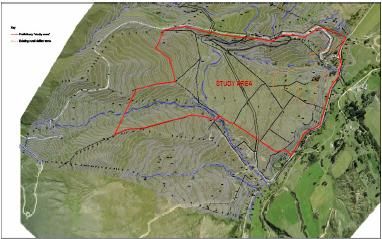
Market Demand Study
                                                                                                                                                                  Mt Cardrona Station
                                                                                                                                                                        October 2006

                                                                                      Contents
                                                                                                                                                                                     Page
                                                                                      1          Executive Summary .................................................................. 4
                                                                                                 1.1      Opinion......................................................................... 4
                                                                                                 1.2      Overview ....................................................................... 5
                                                                                                 1.2      Study Objectives ............................................................ 6
                                                                                                 1.3      Background ................................................................... 6
                                                                                                 1.4      Demand Projections....................................................... 8
                                                                                                 1.5      Limitations ................................................................... 13
                                                                                                 1.6      Authors........................................................................ 13
                                                                                      2          Introduction ........................................................................... 14
                                                                                                 2.1      Background ................................................................. 14
                                                                                                 2.2      Objectives.................................................................... 14
                                                                                                 2.3      Scope .......................................................................... 15
                                                                                                 2.4      Critical Assumption ...................................................... 16
                                                                                      3          Methodology ......................................................................... 17
                                                                                                 3.1      Introduction ................................................................. 17
                                                                                                 3.2      Primary Research ......................................................... 17
                                                                                                 3.3      Secondary Research ..................................................... 18
                                                                                      4          Background ........................................................................... 19
                                                                                                 4.1      Location Analysis – Cardrona Valley, including the existing
                                                                                                          Village and Study Area................................................. 19
                                                                                                 4.2      Site Analysis – Study Area............................................. 21
                                                                                                 4.3      Population Profile......................................................... 23
                                                                                                 4.4      Key Findings ................................................................ 24
                                                                                      5          Development Potential and Site Capacity................................ 25
                                                                                                 5.1      Overview ..................................................................... 25
                                                                                                 5.2      Site Capacity / Building Typology ................................. 26
                                                                                                 5.3      Key Points .................................................................... 27
                                                                                      6          Residential Analysis................................................................ 28
                                                                                                 6.1      Overview ..................................................................... 28
                                                                                                 6.2      Catchment Methodology .............................................. 28
                                                                                                 6.3      Population Analysis ...................................................... 29
                                                                                                 6.4      Homeownership / Affordability..................................... 34
                                                                                                 6.5      Absentee Owners......................................................... 36

                                                                    RESEARCH & CONSULTING

                                                                                                                          2
F:\Research\consultancy projects\Cardrona\Cardrona Station - Market Demand Study, Master Final.doc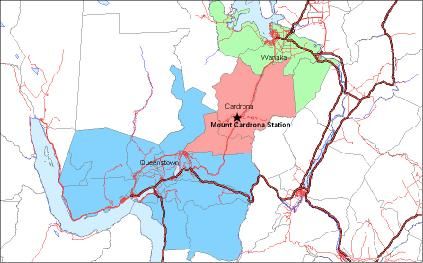
Market Demand Study
                                                                                                                                                                 Mt Cardrona Station
                                                                                                                                                                       October 2006

                                                                                                 6.6      Property Supply............................................................ 38
                                                                                                 6.7      New Residential sections and Apartment Absorption ..... 39
                                                                                                 6.8      Remaining Capacity..................................................... 41
                                                                                                 6.9      Proposed Development – Residential Demand Forecast 42
                                                                                      7          Tourism Analysis - Short Stay Visitors ...................................... 45
                                                                                                 7.1      Visitor Analysis – QLDC Level....................................... 45
                                                                                                 7.2      Short Stay Accommodation Market............................... 54
                                                                                                 7.3      Short Stay Demand Drivers........................................... 59
                                                                                                 7.4      Key Findings – Short Stay Visitors.................................. 70
                                                                                                 7.5      Proposed Development – Short Stay Accommodation
                                                                                                          Forecast....................................................................... 71
                                                                                      8          Business Analysis - Long Stay Workers.................................... 75
                                                                                                 8.1      Overview ..................................................................... 75
                                                                                                 8.2      Worker Market ............................................................. 75
                                                                                                 8.3      Proposed Development – Long Stay Accommodation
                                                                                                          Forecast....................................................................... 77
                                                                                      9          Overseas Experience.............................................................. 80
                                                                                                 9.1      Overview ..................................................................... 80
                                                                                                 9.2      Observations ............................................................... 80
                                                                                                 9.3      Key Findings ................................................................ 82
                                                                                      10         Conclusion ............................................................................ 84
                                                                                                 10.1 Indicative Demand & Timing/Staging of Development .. 84
                                                                                                 10.2 Mt Cardrona Station - CBRE Opinion .......................... 86

                                                                    RESEARCH & CONSULTING

                                                                                                                          3
F:\Research\consultancy projects\Cardrona\Cardrona Station - Market Demand Study, Master Final.doc
Market Demand Study
Mt Cardrona Station
October 2006
1 Executive Summary
1.1 Opinion
We summarise our key opinions as follows:
• CBRE’s demand analysis indicates that demand for residential and
visitor/worker accommodation in Cardrona will be considerably
greater over the 18 years between 2009 and 2026 than MCS’s
proposed capacity of 969 units. In our opinion therefore, there will
be sufficient demand to facilitate the successful development of the
wider Cardrona area, including MCS and the existing village.
• In our opinion, the demand profile for the area should enable the
creation of an integrated development catering for a wide range of
uses which should, over time, lead to a vibrant and sustainable
year round community.
• We would not expect the feasibility of MCS to be at the expense of
development of Cardrona Village. To the contrary, we would
expect the above described demand shift to have a positive impact
on demand for property at Cardrona Village.
• Cardrona has the necessary attributes to facilitate development of
an integrated and sustainable village over the medium/long term.
• At present, the valley has very much a winter focus, but we are of
the opinion that over the medium term, summer activities can be
enhanced and developed. This will result in a less seasonal
demand profile, more in line with Queenstown and Wanaka, and
more supportive of a sustainable village environment. This
expectation is consistent with overseas experience. Furthermore,
we note that within a 20 – 55 minute drive, there are a wide range
of summer and further winter activities as well as commercial and
township amenities.
• Cardrona currently has a population of 66 and any incremental
growth from this base will not be material. However, as Cardrona
develops, spear-headed by development of MCS, we would expect
a “demand shift”, and comparatively material new demand. The
recent development of Benbrae in Cardrona Village illustrates the
potential demand shift that can occur. This high density
development of 90 proposed units has already achieved (within a
comparatively short time frame) 67 sales and presales. This
almost doubles the number of units in Cardrona. In our opinion,
within 18 years of the commencement of MCS (by 2026), there will
be more than sufficient demand to absorb the development
capacity of both MCS and Cardrona Village. As a result of this
RESEARCH & CONSULTING
4
F:\Research\consultancy projects\Cardrona\Cardrona Station - Market Demand Study, Master Final.docMarket Demand Study
Mt Cardrona Station
October 2006
demand, and assuming adequate design flexibility to meet market
demand sectors, development of MCS would be feasible.
The above opinions are based on forecasts which rely on our research
and analysis of the factors likely to impact the demand for development
at Cardrona Valley. They reflect our best estimate of future demand
relative to our knowledge as at the date of this report. However, like
any forecast, the figures presented and relied upon in forming our
opinions represent only one permutation of many possible future
scenarios. To this extent, our opinions are indicative estimates of
potential future demand at Cardrona Valley.
1.2 Overview
Mount Cardrona Station (“MCS”) is a substantial land holding located
at the base of Cardrona Ski field and with frontage to Cardrona Valley
Road.
The land already has existing use development rights, however, the
owners of Mt Cardrona Station have reached agreement with
Queenstown Lakes District Council (“QLDC”) to proceed with a plan
change to improve the form and quality of future development.
At this preliminary stage, the exact form and location of the new zone
has not been confirmed. However, the Plan Change would provide
zoning to encourage visitor accommodation and residential
development while minimising effects on the impressive landscapes in
the vicinity of the site.
The following table compares the future capacity of Cardrona Village
and the proposed capacity of MCS, either through a plan change or
development of the existing zone.
Cardrona Mt Cardrona Station
Type Village Existing Zone Plan Change
Scenario 1 Scenario 2
Visitor Accommodation - 372 1,259 595*
Residential - 452 213 374
Total 574† 824 1,472 969
* includes high density residential
† Additional development capacity - may be over stated due to the inclusion of potential development on
a floodplain
Source: RA Skidmore Urban Design Ltd
It is acknowledged that QLDC wish to ensure that MCS and the existing
Cardrona Village develop in a complementary way, which enables a
sustainable and integrated community to establish within the valley.
RESEARCH & CONSULTING
5
F:\Research\consultancy projects\Cardrona\Cardrona Station - Market Demand Study, Master Final.docMarket Demand Study
Mt Cardrona Station
October 2006
1.2 Study Objectives
The agreed objective of this study is as follows:
Based on an analysis of current and projected demand, as well as the
shift in demand that additional development at Cardrona may create,
determine the feasibility of the proposed development and answer the
following questions:
Will there be sufficient demand to feasibly support:
• Transient accommodation (quality hotel, mid market hotel, budget
or backpacker accommodation)
• Staff accommodation
• Residences for permanent (owner occupier) accommodation
• Residences for owner occupier holiday accommodation
• Other uses as proposed, or potentially permissible.
In addition, provide advice as to the likely uptake of the proposed
development to the extent that this may impact staging from a market
demand perspective.
Please note that our analysis has not explicitly considered the
requirement for commercial facilities. The objective of this study was to
determine the feasibility of the proposed development. While
commercial facilities are obviously integral to the success of an
integrated village, the size and extent of commercial facilities is directly
correlated to the creation of a sustainable village, with a mix of
permanent residents and short stay occupants. This report does
address our opinion as to whether a sustainable village can be created
at MCS.
1.3 Background
1.3.1 Location
Cardrona is located in a spectacular mountain environment with
excellent proximity to a range of winter activities. It is en-route between
two larger and established townships, Queenstown and Wanaka. MCS
features an elevated plateau well suited for development.
The current permanent population of Cardrona is 66 and existing
development in Cardrona Village is a mix of short stay and owner
occupier accommodation. The extent of this development is relatively
limited, with less than 25% of the capacity of the existing village having
been developed. The village currently relies heavily on the surrounding
RESEARCH & CONSULTING
6
F:\Research\consultancy projects\Cardrona\Cardrona Station - Market Demand Study, Master Final.docMarket Demand Study
Mt Cardrona Station
October 2006
winter activity, with limited existing summer and shoulder season
attractions.
While Cardrona has a strong history, extending back to the late 1800s,
there is limited ability for tourists to observe and participate in the
heritage of the valley.
The lack of development and infrastructure at Cardrona means that
skiers or workers in the valley predominantly travel from Wanaka and
Queenstown.
1.3.2 Permanent Residents
QLD has experienced strong growth since 1996. QLDC is anticipating
continued strong resident population growth over the next 20 years, with
the population more than doubling over this period.
Absentee owners represent a material proportion (estimated by CBRE to
be approximately 60% to 80%) of purchases of property stock in the QLD,
in new, integrated mixed use developments.
1.3.3 Tourism
Not surprisingly, skiing is the overwhelming driver for winter visits.
However, Queenstown has a strong and more sustained tourism period
through the summer months. The greater QLD market exhibits a peak
summer period of around six months, winter period of three months, and
a three month off-peak/shoulder period.
Given the range of existing winter activities at Cardrona, demand for
accommodation facilities in Cardrona during the three peak winter
months (July-September) is already established. Indeed, the greater
Wanaka area (including Treble Cone, Cardrona, Snow Farm, and Snow
Park) has a 50% market share of ski field visitor days in the QLD
(335,000) with the balance (335,000) being within Wakatipu at
Remarkables and Coronet Peak.
Forecast visitor night growth in QLD is expected to increase 3.4% per
annum through to 2012, compared to the New Zealand average of
2.9%. This growth expectation is consistent with the expected growth in
passenger numbers at Queenstown International Airport , where within 6-
7 years, it is anticipated that there will be daily flights from Australia.
Similarly, while Wanaka Airport is at present utilised mainly for non-
scheduled charter flights, it is anticipating material passenger growth and,
ultimately, by around 2021, scheduled Boeing 737 and AS320 flights.
RESEARCH & CONSULTING
7
F:\Research\consultancy projects\Cardrona\Cardrona Station - Market Demand Study, Master Final.docMarket Demand Study
Mt Cardrona Station
October 2006
Locally, the Snow Farm and Park in Cardrona have experienced very
strong visitor growth over recent years with 60,000 skier days in 2006.
The existing (comparatively small) horse-trekking facility in Cardrona
attracts some 3,500 visitors annually. Other existing summer attractions
include limited walkways and mountain bike tracks.
1.3.4 Overseas Experience
We are privy to a report prepared by Ecosign Mountain Resort Planners
Ltd dated September 2006. This report seeks to draw comparisons
between MCS and other ski resorts in Australia, Canada, and the
United States. Key findings from this evaluation are:
• It appears that when ski resorts are in their initial development
stages, they primarily rely upon winter season demand. As they
mature, it is apparent that more summer orientated facilities are
progressively developed to decrease seasonality.
• Most ski resorts are characterised by a low permanent resident
population (18 to 50%).
• The growth and development of resorts varies. For example, Sun
Peaks in Canada (which has an approved Master Plan for up to
6,000 units) had 68 dwelling units in 1994, and this had grown to
1,435 by 2005. Similarly, in the Three Sisters Resort in Canada
(which has a Master Plan for development of 4,000 units), 1,100
dwelling units were developed between 1996 and 2005, with
another 250 currently under construction.
• The number (supply) of accommodation units typically represents
between approximately 0.4% and 0.6% of skier numbers.
1.4 Demand Projections
In establishing our demand projections, we have individually modelled
our forecasts for residential accommodation, short stay visitor, and
worker accommodation demand, and have then combined these findings
to determine an overall demand profile and an estimate of the
cumulative demand for accommodation units (whether resident, visitor, or
worker) in Cardrona Valley. These forecasts have then been used to
analyse and consider the probable staging of development.
Fundamentally, our demand projections reflect the fact that:
• There is already sufficient (and growing) demand to support a
material demand shift in supply in Cardrona Valley over the three
month ski season from July to September, as evidenced by the
Benbrae development as previously discussed.
RESEARCH & CONSULTING
8
F:\Research\consultancy projects\Cardrona\Cardrona Station - Market Demand Study, Master Final.docMarket Demand Study
Mt Cardrona Station
October 2006
• Within QLD, there is a considerable amount of travelling between
ski fields, whereas MCS and Cardrona Village can provide
accommodation immediately at the base of three snow related
activities.
• There is material population growth expected for QLD. In our
opinion, given the established attraction of Cardrona and
assuming a good development strategy for greater Cardrona,
Cardrona Valley could capture a reasonable percentage of this
new growth. However, the extent of medium to long term market
share growth will depend on the ability to develop summer
demand drivers.
• In our opinion, development of summer attractions at Cardrona
can reasonably be expected to be possible, given overseas
experience and the experience at QLD and Wanaka, and also
given the real potential to develop/establish:
o A heritage profile for the valley
o Walkways
o Mountain biking
o 4WD tracks
o Year round hospitality businesses based on the convention /
conference, and spa markets
o Other outdoor related attractions, and potentially
o A golf course.
Our detailed analysis and findings are found in Sections 6.9, 7.5 and
8.3 respectively, however for each of the key demand sectors, we note
as follows:
1.4.1 Residential Demand – Permanent and Non-permanent (absentee)
The fundamental assumptions in determining residential demand are as
follows:
• We have considered the main catchment area population growth
for QLD (based on QLDC projections of approximately 1,000 p.a.)
and, based on a household density of 2.4 people per household,
estimated the number of new households in QLDC to meet this
demand.
• We consider that (based on our comments in Section 6.9)
Cardrona Valley would capture approximately 4% of all new
households (one in 25) in the main QLD catchment area,
particularly if some of the housing satisfies the medium to lower
value market which will improve the liquidity of the development
RESEARCH & CONSULTING
9
F:\Research\consultancy projects\Cardrona\Cardrona Station - Market Demand Study, Master Final.docMarket Demand Study
Mt Cardrona Station
October 2006
product. We would expect the total market share for Cardrona to
grow to between 6 and 7% as development establishes and a
demand shift occurs.
• We have assumed that 35% of all residential unit sales will be to
permanent residents (owner occupiers), with the balance being
absentee owners (see section 6.5). We are aware that other
studies relative to Wanaka estimate that approximately 50% of all
residential unit sales will be to permanent residents (owner
occupiers) – while we do not concur with this estimate we have
illustrated the impact of a 50/50 split on demand for
comparative/sensitivity analysis purposes.
• Our forecasts represent demand for between 50 and 97 additional
units per annum over the forecast period, which compares
favourable with Cromwell which experienced an average annual
take-up over the 5 years between 2001 and 2005 of 71, or 14% of
sales in the main catchment area. It also compares favourably
with the number of units added by the Benbrae development in
Cardrona Village (40 units completed thus far and 50 more to be
built – 74% sold).
• We forecast total residential demand (permanent and absentee
owners) at 734 units by 2018 and 1,493 units by 2026.
1.4.2 Visitor/Short Stay
We have considered this sector of the market under two sections,
namely demand for hotel style accommodation and demand for
budget/backpacker accommodation.
We have assumed that much of the non- permanent residential housing
(absentee ownership), as discussed above, will be sold with the ability to
be within a ”management pool” for short/medium stay
accommodation, as is typical in many modern resorts in New Zealand
and Australia. As a result of this structure, dedicated short stay
accommodation demand (such as a purpose built hotel unit) is to a
large extent offset by the non-permanent residential accommodation
that is likely to be available under a serviced apartment model.
Bearing this in mind, our key assumptions are noted as follows:
• We are aware of actual QLD hotel and backpacker stay units
nights (see section 7.1.2), and have forecast these over the forecast
period.
RESEARCH & CONSULTING
10
F:\Research\consultancy projects\Cardrona\Cardrona Station - Market Demand Study, Master Final.docMarket Demand Study
Mt Cardrona Station
October 2006
• We forecast that Cardrona will capture 2% of the total QLD hotel
and backpacker markets, rising to and stabilising at just under 5%
by 2016.
• We consider a hotel or backpacker operator would accept a 52%
initial occupancy rate (Year 1) with an expectation that this would
increase to around 70% within 5 years.
• We forecast demand for Cardrona Valley for around 340 hotel
rooms and 156 backpacker units by 2018, and 536 hotel rooms
and 206 backpacker units by 2026.
1.4.3 Worker Accommodation
We estimate that approximately 51,000 worker days (accommodation
nights) would exist in 2009 in Cardrona, with this demand resulting
from employees associated with skiing, the proving ground,
commercials/films and on site hotel/restaurant workers.
We expect that the quality of accommodation demanded by these
workers will vary between mid to high end accommodation, and budget
accommodation, with the latter being in greater demand. 51,000
worker days results in feasible demand of 97 accommodation units in
2009, rising, conservatively, to 111 units by 2018 and 125 by 2026.
The growth in demand for worker accommodation is low partly because
part of this demand will be able to be satisfied by the residential
accommodation provided within the development that (as discussed),
when not occupied by owners, is available within a “management pool”
for short/medium stay accommodation.
1.4.4 Overall Demand and Possible Supply/Staging
The following table summarises our projections for the resident/visitor
and worker demand components for Cardrona:
2009 2010 2011 2012 2013 2014 2015 2016 2017 2018 2019 2020 2021 2022 2023 2024 2025 2026
Permanent resident take up annual 17 20 23 20 24 30 32 34 27 29 30 32 34 29 31 34 36 39
cumulative 17 37 60 81 105 135 167 201 228 257 287 320 354 383 414 448 484 523
Non permanent Resident take up annual 32 37 43 38 45 55 59 63 51 54 57 60 63 54 58 62 67 72
cumulative 32 69 112 150 195 250 309 373 423 477 534 594 657 711 769 831 898 971
T otal residen tial take up annua l 50 57 66 58 70 85 91 97 78 83 87 92 97 83 89 96 103 112
cum ulative 50 106 172 230 300 385 476 573 651 734 821 913 1010 1094 1183 1279 1382 1493
M id /high end sho rt sta y accom . annua l 86 14 16 25 27 37 44 54 18 19 20 21 22 24 25 26 28 30
cum ulative 86 100 116 141 168 205 249 303 321 340 360 381 403 427 452 478 506 536
M id /high end worker accom. annua l 42 1 1 1 1 1 1 1 1 1 1 1 1 1 1 1 1 1
cum ulative 42 43 43 44 45 45 46 47 47 48 49 50 50 51 52 53 53 54
B udg et sho rt sta y acco m. annua l 56 7 5 10 8 16 20 23 5 5 5 6 6 6 6 6 7 7
cum ulative 56 63 69 78 86 103 122 146 151 156 162 167 173 179 185 192 199 206
B udg et wo rke r accom . annua l 97 1 1 1 2 2 2 2 2 2 2 2 2 2 2 2 2 2
cum ulative 97 98 100 101 103 104 106 108 109 111 112 114 116 118 119 121 123 125
Total annua l
cum ulative 330 410 500 595 702 842 1,000 1,177 1,280 1,389 1504 1625 1753 1868 1991 2123 2263 2414
Source: CB Richard Ellis
RESEARCH & CONSULTING
11
F:\Research\consultancy projects\Cardrona\Cardrona Station - Market Demand Study, Master Final.docMarket Demand Study
Mt Cardrona Station
October 2006
In summary, we forecast that there is demand for 1,389 units in
Cardona (including MCS and Cardrona Village) within a 10 year time
frame and 2,414 units by 2026. For comparative/sensitivity analysis
purposes, if we assume that the split between permanent and absentee
owners is 50/50, the total demand falls to 1,169 units within a 10 year
time frame and 1,966 units by 2026.
Our forecast for development staging/timing (supply) is shown below:
2009 2010 2011 2012 2013 2014 2015 2016 2017 2018 2019 2020 2021 2022 2023 2024 2025 2026
Residential Dem and
annual 50 57 66 58 70 85 91 97 78 83 87 92 97 83 89 96 103 112
cum ulative 50 106 172 230 300 385 476 573 651 734 821 913 1010 1094 1183 1279 1382 1493
Residential Supply
residential exc.non permanent units available for short stay (66.6%) 39 44 51 45 54 67 71 76 61 65 68 72 76 65 70 75 81 87
non permanent residential units available for short stay (33.3%) 11 12 14 13 15 18 20 21 17 18 19 20 21 18 19 21 22 24
Total Residential Supply
annual 50 57 66 58 70 85 91 97 78 83 87 92 97 83 89 96 103 112
cum ulative 50 106 172 230 300 385 476 573 651 734 821 913 1010 1094 1183 1279 1382 1493
Mid to high end short/long stay demand
Short stay visitor 86 100 116 141 168 205 249 303 321 340 360 381 403 427 452 478 506 536
Long stay worker 42 43 43 44 45 45 46 47 47 48 49 50 50 51 52 53 53 54
Total mid to high end short/long stay demand 128 142 159 185 213 250 295 350 368 388 409 430 453 478 504 531 560 590
Less non permanent residential units available for short stay (33.3%) 11 23 37 50 65 83 103 124 141 159 178 198 219 237 256 277 299 324
Purpose built mid to high end short/long stay demand
annual 117 2 3 13 12 19 25 34 2 2 2 2 2 6 6 6 6 6
cumulative 117 119 122 135 148 167 192 226 227 229 231 233 235 241 247 254 260 266
Purpose built mid to high end short/long stay supply
annual 125 75 50
cum ulative 125 125 125 125 200 200 200 200 250 250 250 250 250 250 250 250 250 250
Budget short/long stay demand
Short stay visitor 56 63 69 78 86 103 122 146 151 156 162 167 173 179 185 192 199 206
Long stay worker 97 98 100 101 103 104 106 108 109 111 112 114 116 118 119 121 123 125
Total budget short/long stay demand
annual 153 9 7 11 10 18 21 25 7 7 7 7 8 8 8 8 9 9
cumulative 153 162 168 180 189 207 228 253 260 267 274 281 289 297 305 313 322 331
Purpose built budget short/long stay supply
annual 175 75 75
cum ulative 175 175 175 175 175 250 250 250 250 250 325 325 325 325 325 325 325 325
Total Supply
annual 350 57 66 58 145 160 91 97 128 83 162 92 97 83 89 96 103 112
cum ulative 350 406 472 530 675 835 926 1,023 1,151 1,234 1,396 1,488 1,585 1,669 1,758 1,854 1,957 2,068
Note: some rounding errors apply Source: CB Richard Ellis
We note that:
• Based on our assumptions with development staging, and
assuming a development start date of 2009, we forecast total
feasible supply to reach 1,234 units by the end of 2018 and 2,068
units by 2026. The forecast supply within the ten year horizon is
less than the forecast demand (of 1,389 units) as a result of the
likely “stepwise” (or “lumpy”) nature of supply relative to demand.
• Notwithstanding that resorts such as that proposed at MCS require
established summer activities for overall success, it is interesting to
note the relationship evident at overseas resorts between skier
numbers and the number of accommodation units for ski resorts.
The expected total feasible supply of 1,234 units by 2018
RESEARCH & CONSULTING
12
F:\Research\consultancy projects\Cardrona\Cardrona Station - Market Demand Study, Master Final.docMarket Demand Study
Mt Cardrona Station
October 2006
represents 0.6% of current skier numbers (which we expect to
increase over the next 10 years) in greater Cardrona (Cardrona
together with the Snow Farm and Park). These parameters are
comfortably in line with the experience of ski-focussed resorts
overseas, particularly given that as skier numbers increase, this
ratio will reduce.
1.5 Limitations
Reliance upon this document by anyone other than Queenstown Lakes
District Council and the proprietors of Mount Cardrona Station is not
authorised by CB Richard Ellis and CB Richard Ellis is not liable for any
loss arising from such use or reliance. The document should not be
reproduced without our written authority.
This document may contain information which is directly derived from
other sources, without verification by us. Where the content of this
document has been derived, in whole or in part, from sources other
than CB Richard Ellis, CB Richard Ellis does not warrant or represent
that such information is accurate or correct.
Our assessments and forecasts rely to a large extent on information
which is directly derived from other sources, without verification by us.
Additionally, it should be noted in relation to the assessments and
forecasts contained in the report that some variables cannot be
estimated with certainty and our assessments and forecasts represent
assumptions which are not guaranteed to hold. Accordingly, our
assessments and forecasts should only be considered in an illustrative
rather than definitive context and no warranties are provided as to their
actual and eventual accuracy.
1.6 Authors
This report was prepared by:
1. John Schellekens, Senior Director Valuation and Advisory Services.
John holds a B.Com (VPM) and a Master of Property Studies (with
Distn) from Lincoln University and is a Senior Member of the New
Zealand Property Institute.
2. Zoltan Moricz, Director Research and Consultancy. Zoltan holds a
MA (1st Class Honours) from the University of Auckland and a Post
Graduate Diploma in Finance from Massey University.
RESEARCH & CONSULTING
13
F:\Research\consultancy projects\Cardrona\Cardrona Station - Market Demand Study, Master Final.docMarket Demand Study
Mt Cardrona Station
October 2006
2 Introduction
2.1 Background
MCS is a substantial land holding located at the base of Cardrona Ski
field and with frontage to Cardrona Valley Road.
The land already has existing development rights, however, the owners
of Mt Cardrona Station have reached agreement with Queenstown
Lakes District Council (QLDC) to proceed with a plan change to
improve the form and quality of future development.
At this preliminary stage the exact form and location of the new zone
has not been confirmed. However, based on urban design analysis the
Plan Change is likely to provide zoning to encourage a mix of visitor
accommodation and residential development while minimising effects
on the impressive landscapes in the vicinity of the site.
Objectives have been agreed between QLDC and MCS as per a report
to Strategy Committee of 12 October 2005.
2.2 Objectives
The agreed objective of this study is as follows:
Based on an analysis of current and projected demand, as well as the
shift in demand that additional development at Cardrona may create,
determine the feasibility of the proposed development and answer the
following questions:
Will there be sufficient demand to feasibly support:
• Transient accommodation (quality hotel, mid market hotel, budget
or backpacker accommodation)
• Staff accommodation
• Residences for permanent (owner occupier) accommodation
• Residences for owner occupier holiday accommodation
• Other uses as proposed, or potentially permissible.
In addition, provide advice as to the likely uptake of the proposed
development to the extent that this may impact staging from a market
demand perspective.
It was agreed that CBRE would complete a detailed analysis of supply in
Cardrona and the greater Queenstown Lakes District (QLD) area,
however, undertake only a high level consideration of supply in the
balance of the QLD area. As the proposal is a semi “greenfields”
RESEARCH & CONSULTING
14
F:\Research\consultancy projects\Cardrona\Cardrona Station - Market Demand Study, Master Final.docMarket Demand Study
Mt Cardrona Station
October 2006
development and is unique, being a proposed largely self-contained
and freestanding village with its own infrastructure, supply analysis
across the QLD area was not a focus of this study.
In terms of determining “feasibility”, we were to provide our advice from
a high level perspective, but with opinions based on thorough
underlying research.
We acknowledge that the draft objectives agreed between QLDC and
MCS are:
• To ensure that development within the zone has a significantly
lesser effect on the outstanding natural landscape of the Cardrona
Valley (as compared to the current zoning)
• To ensure that development is contained and that a defined urban
edge is established in order to ensure against sprawl
• To ensure a high quality mixed use and mixed density
development, which provides accommodation for residents,
visitors, and seasonal workers in an integrated manner
• To require best practice urban design principles to be employed
throughout
• To ensure that the MCS land and the existing village develop in a
complementary way, which enables a sustainable and integrated
community to establish within the valley
• To provide for and encourage recreational opportunities within the
zone and in connection with other development areas in the vicinity
• To enhance the ecological values of the Mount Cardrona site
• To recognise and enhance the heritage values that exist within the
zone
• To ensure that infrastructure is provided in an environmentally
acceptable manner and where practicable, is co-ordinated with the
existing Cardrona village.
2.3 Scope
Our scope included:
• Providing a context for the site (in terms of physical characteristics
and location), or setting the scene for the primary demand analysis
• Investigating current demand - firstly within New Zealand, then to a
regional level (QLD) and then down to the specific Cardrona level.
Investigations included:
• Demographics
RESEARCH & CONSULTING
15
F:\Research\consultancy projects\Cardrona\Cardrona Station - Market Demand Study, Master Final.docMarket Demand Study
Mt Cardrona Station
October 2006
• Tourism
• Demand Drivers, including:
o Detailed analysis of ski fields
o Development of an events calendar – and understanding the
demand implications of these events
o Business
o Other
• Considering Cardrona’s point of difference
• Understanding the likely demand shift - research the potential
demand shift resulting from completion of the proposed
development and seek to find international comparisons of semi
“greenfield” developments developed in similar ski field locations
to determine the demand shift.
• Apart from a ski field focus as above, we also sought to research
other related demand that is “self generated” from a new settlement
of the type proposed.
• Finally, given the above, we considered the feasibility of
implementation of either the existing zone or the proposed plan
change.
2.4 Critical Assumption
In forming our opinion as to the feasibility of the proposed
development, we have assumed the following:
• We are aware that Transit is unlikely to adopt the Crown Range
Road as a State Highway. Our report assumes that the Crown
Range Road will remain open to all forms of traffic, including buses,
coaches and shuttles, and continue to provide a quality of access at
least equivalent to that provided at present.
RESEARCH & CONSULTING
16
F:\Research\consultancy projects\Cardrona\Cardrona Station - Market Demand Study, Master Final.docMarket Demand Study
Mt Cardrona Station
October 2006
3 Methodology
3.1 Introduction
Our methodology involved a combination of primary and secondary
research, together with reliance on information and insights from within
CBRE, to provide a basis for forming an opinion as to the feasibility of
the proposed Cardrona development.
3.2 Primary Research
CBRE visited Cardrona Valley and locations within the greater QLD and
conducted a number of interviews. Specifically, we met with:
• John Lee, previous owner of Cardrona Ski field and current
owner/operator of the Snow Farm
• Sam Lee, operator of the Cardrona Snow Park
• Shaun Gilbertson, previous (recent) manager of Cardrona Ski Field
and current manager of Southern Hemisphere Proving Ground
• Duncan Kennedy, CEO of Destination Queenstown
• Jenny Parker, as a representative of QLDC
• Duncan Smith, manager of Coronet Peak and Remarkables Ski
Fields
• Richard Hanson, part owner of Treble Cone Ski Field
• The manager of the Cardrona Hotel
We also conducted telephone interviews with:
• Andy Chapman, current manager of Cardrona Ski Field
• Chris Read, Manager of Queenstown Airport
• Debbie Thompson, owner of Back Country Saddles (Horse Trekking)
• Department of Conservation, Wanaka Office
• Wanaka Tourism
• Ben O’Malley, Millbrook Development Manager
• Warrick Kerr and Barry Robertson, Bayleys Real Estate
• Mark Simpson, Mac Property
The objective of these interviews was to gain an insight into the key
operational successes and challenges of businesses in the greater QLD,
with a focus on Cardrona.
RESEARCH & CONSULTING
17
F:\Research\consultancy projects\Cardrona\Cardrona Station - Market Demand Study, Master Final.docMarket Demand Study
Mt Cardrona Station
October 2006
3.3 Secondary Research
Details of the information sources include:
1. Information obtained from interviews with real estate agents,
tourism operators, QDLC and Destination Queenstown
2. Statistics New Zealand
3. Research reports completed by third parties, including:
a. Wanaka 2020
b. Property Economics
4. Urban Design Study, by R A Skidmore Urban Design Ltd. March
2006
5. Rural Visitor Zone – MCS, Yield Assessment, by R A Skidmore
Urban Design Ltd. October 2006
6. Vehicle movement information (Crown Range Road), provided by
QLDC. Sample counts in 2004, 2005 and 2006.
7. The Economic Significant of the Southern Lakes Ski Areas – 2005
Winter Season. New Zealand Tourism Research Institute.
December 2005.
8. Regional Visitor Monitor. Angus & Associates Ltd. April 2006.
9. Housing Affordability in Queenstown Lakes District. David Mead,
Hill Young Cooper and Tricia Austin, University of Auckland. June
2004.
10. New Zealand Regional Tourism Forecasts 2006-2012, Lake
Wanaka RTO & Queenstown RTO. Tourism Research Council.
11. Southland Visitor Statistics. Department of Conservation.
September 2005.
12. Snow Park Village. Snow Park NZ.
13. RPNZ Limited Property Database
14. Resort Evaluation Matrix, Ecosign Mountain Resort Planners, Ltd.
September 2006
15. Queenstown and Wanaka Growth Management Options Study
16. Queenstown Lakes District Council Long Term Community Council
Plan, Queenstown Lakes District Council
17. AMP / Massey University Home Affordability Report
18. QLDC Population Projections
RESEARCH & CONSULTING
18
F:\Research\consultancy projects\Cardrona\Cardrona Station - Market Demand Study, Master Final.docMarket Demand Study
Mt Cardrona Station
October 2006
4 Background
4.1 Location Analysis – Cardrona Valley, including the existing
Village and Study Area
4.1.1 Overview
MCS has a spectacular mountain setting, en route between Queenstown
and Wanaka and close to a range of existing, predominantly winter
focussed, recreational activities.
The existing village at Cardrona comprises some 16 hectares of Rural
Visitor Zoned land. Existing development is focussed on the western
side of the road (and river), although previously there were two historic
villages on either side of the river.
Current uses (described from North to South) in the village include:
Use Comments Zoning
Recreation Monster Trucks. RGZ
Ski Access Access to Cardrona Ski Field. RGZ
SUBJECT Access to subject development.
Ski Access Access to Snow Park, Snow Farm and Proving Ground. Buildings
RGZ
associated with the Proving Grounds.
Lodge Hot Toddy Lodge. RGZ
Church Early character church. RGZ
Rural / Lifestyle Pringles subdivision. 12 lots of 8,000sqm to 8ha in size.
RVZ
development Approximately half of the sites are built on.
Accommodation Four proposed owner occupier units. RVZ
Short Stay Three accommodation units, apparently with approval for three further
RVZ
Accommodation units.
Land for development 4,900 sqms of development land currently for sale. Zoned Rural Visitor
RVZ
Zone.
Hotel and Cardrona Hotel with restaurant and 16 hotel style units. Significant
RVZ
Accommodation Brand Value for location.
Short Stay Benbrae development. 90 units planned, some completed and sold
Accommodation and some under construction. One, two and three bed configuration. RVZ
Mostly sold. Potentially a restaurant and bar to be developed.
Land for development Two vacant development sites (approx. 4,350 and 4,700 sqms)
RVZ
currently for sale. Zoned Rural Visitor Zone.
Accommodation Established residences, together with some flood prone land that is
RGZ
currently being filled and may have further development potential.
Accommodation Cardrona Valley townhouses. Under development. Potentially eight
RGZ
units (duplexes).
Rural / Res. subdivision Proposed subdivision of 6 sites, together with additional development
RGZ
land.
Horse Trekking Commercial horse trekking business operated from a small farmlet. RGZ
RGZ – Rural General Zone, RVZ – Rural Visitor Zone
RESEARCH & CONSULTING
19
F:\Research\consultancy projects\Cardrona\Cardrona Station - Market Demand Study, Master Final.docMarket Demand Study
Mt Cardrona Station
October 2006
4.1.2 Proximity to Other Settlements
Proximity to nearby villages
Village Travel Distance Travel time Travel Distance
(kms) (mins) from Queenstown
(kms)
Wanaka 25 15-20 69
Arrowtown 32 25-35 20
Queenstown 44 40-55 0
Cromwell 68 60 60
4.1.3 Proximity to Infrastructure
The proximity of Cardrona to key infrastructure and facilities is
summarised as follows:
Proximity to infrastructure and facilities
Facility Travel
Distance (kms)
Airports
Wanaka Airport 29
Queenstown Airport 39
Ski Facilities (to ski carpark)
Cardrona Ski Field 14
Snow Farm/Park 14
Treble Cone Ski Field 53
Coronet Ski Fieled 51
Remarkables Ski Field 55
Walkways
Roaring Meg 0.5
Cardrona River (potential) 0.5
Golf Courses
Millbrook 35
Kelvin Heights 46
Wanaka Golf Club 24
Lakes / Boating
Lake Wanaka 24
Lake Hayes 33
Wanaka Library 23
Schools
Primary 24
Secondary 26
Queenstown Events Centre 38
Wanaka Events Centre 24
Conference Facilities
Wanaka 20
Queenstown 39
Commercial Facilities / Services
Wanaka 25
Queenstown 44
RESEARCH & CONSULTING
20
F:\Research\consultancy projects\Cardrona\Cardrona Station - Market Demand Study, Master Final.docMarket Demand Study
Mt Cardrona Station
October 2006
4.1.4 Roading Connections
The Crown Range Road/Cardrona Valley Road creates the main axis
through the valley and the main focus for existing and proposed
development. We note:
• Being a main traffic route, Cardrona Range Road effectively
operates as a through road
• The existing roading/parking layout in the existing Cardrona Village
is not particularly well suited for passing vehicles wanting to stop and
use local facilities
• Typical vehicle movements per week in both directions range
between 9,000 and 12,000. Interestingly, vehicle movements
appear to be broadly consistent through winter and summer months.
The other key roads in the area include the main access road to
Cardrona Ski Field which is located some two kilometres to the north of
the existing village and alongside MCS RVZ, while the access road to
the Snow Farm, Snow Park and the Proving Grounds is immediately
opposite.
4.2 Site Analysis – Study Area
4.2.1 Site Attributes
Mt Cardrona Station is a large land holding. The study area including
the existing RVZ:
• Has well formed access off the Crown Range Road, almost opposite
the entry to the Snow Farm and Snow Park access road
• Generally rises moderately some 30 – 40 metres above the Crown
Range Road to a large naturally terraced area that rises some 70 -
80 metres over a distance of some two kilometres, to the foot of
Mount Cardrona
• Has an easterly aspect, overlooking the Cardrona Valley and toward
Mount Pisa
• Enjoys early morning sun and is sufficiently to the east of Mount
Cardrona so that it does not lose the sun in the afternoon in winter
until approximately 3:00 – 4:00pm
• Is approximately two kilometres north of the existing Cardrona
Village (Cardrona Hotel), being a walkable distance
RESEARCH & CONSULTING
21
F:\Research\consultancy projects\Cardrona\Cardrona Station - Market Demand Study, Master Final.docMarket Demand Study
Mt Cardrona Station
October 2006
The following photographs illustrate the site and surrounds:
Cardrona Valley, western view
Mount Cardrona Station
Mount Cardrona Station, plateau.
4.2.2 Resource Management Overview
Approximately 16.2 hectares of land (some 15 ha of which is owned by
MCS) on the subject site is zoned Rural Visitor Zone, being a zone that
enables relatively flexible development including visitor accommodation
to a relatively high density. The Rural Visitor zoned land is currently
located close to the Cardrona Valley Road and is some two kilometres
to the north of the existing Cardrona Village (also Rural Visitor Zoned
land).
RESEARCH & CONSULTING
22
F:\Research\consultancy projects\Cardrona\Cardrona Station - Market Demand Study, Master Final.docMarket Demand Study
Mt Cardrona Station
October 2006
As part of a strategic planning exercise for the entire District, in
December 2003 the QLDC co-ordinated a workshop with local
residents of Cardrona to set out a community vision, strategic goals and
priorities for the next 10 to 20 years for the Cardrona community. The
resulting “Cardrona Community Plan” was endorsed by the Council
and provided key community outcomes for Cardrona Valley.
This plan recommended shifting the location of the Rural Visitor Zone
located on MCS on to the terrace above Cardrona Valley Road and
identified the need to create a linkage between the two Rural Visitor
Zoned locations.
The current owners of MCS were approached by QLDC to initiate a
Plan Change to relocate the boundaries of the Rural Visitor Zoned land
on MCS and improve the basis of the zone to ensure an appropriate
mix of uses, incorporating permanent residential housing, visitor
accommodation, worker housing and ancillary small scale commercial
amenities.
4.3 Population Profile
The following table presents a high level analysis of the surrounding
population profile. Please note that the population estimates
summarised in this section (based on Statistics New Zealand figures)
relate to a catchment area that is slightly larger than the catchment area
used for the dedicated QLDC population numbers. A detailed analysis
can be found in Section Six of this report.
Population
2001 Ave. HH Income
Cardrona 66 $29,809
Wanaka 3,750 $49,604
Queenstown 11,949 $58,149
Source: Statistics New Zealand
• The 2001 census reported 66 usual residents in Cardrona Valley.
Reflecting the rural and mountainous nature of the valley, the
average household income is low; close to $30,000 pa. The
greenfields nature of the existing Cardrona Valley makes it difficult
to forecast population with any confidence.
• In contrast, the wider Wanaka region is forecast to have around
5,200 people by 2006, representing a 39% increase over the 2001
census. The average household income for this area was just under
$50,000 pa.
• Queenstown had a 2001 usually resident population of around
12,000 people. Over the five years to 2006 this is forecast to
RESEARCH & CONSULTING
23
F:\Research\consultancy projects\Cardrona\Cardrona Station - Market Demand Study, Master Final.docMarket Demand Study
Mt Cardrona Station
October 2006
increase to 13,000, representing 9% growth over the period. The
average household income is the highest amongst our comparables
at just over $58,000 pa.
4.4 Key Findings
• Cardrona is located in a spectacular mountain environment with
excellent proximity to a range of winter activities.
• It is en route between two larger and established townships,
Queenstown and Wanaka.
• The current usually resident population of Cardrona is 66. As at the
date of this report there are approximately 100 to 105 units
(including owner occupier units, hotel rooms and short stay
accommodation units), with further units currently under
construction.
• At present the amount of development in Cardrona is limited and, as
such, the village relies heavily on the surrounding winter activity, with
comparatively limited existing summer attractions. The lack of
development at Cardrona also means that any skiers or workers in
the valley predominantly travel from Wanaka and Queenstown.
• Nevertheless, within a 20 – 55 minute drive, there are a wide range
of summer and further winter activities as well as commercial and
township amenities.
• The site provides excellent opportunities for the development of a
mixed use zone.
• The current Cardrona Village is located on a busy through road with
development focused on the western side.
• The greenfields nature of the existing village and the lack of
development makes it difficult to forecast population growth with any
confidence.
• The average household income of the existing Cardrona Valley
population is materially below both Wanaka and Queenstown.
RESEARCH & CONSULTING
24
F:\Research\consultancy projects\Cardrona\Cardrona Station - Market Demand Study, Master Final.docMarket Demand Study
Mt Cardrona Station
October 2006
5 Development Potential and Site Capacity
5.1 Overview
The study area (which comprises the existing MCS Rural Visitor Zone
and the area proposed for the new zone under a proposed plan
change) is a substantial land holding located at the base of Cardrona
Ski field and with frontage to Cardrona Valley Road.
The following plan illustrates the Study Area (provided August 2006):
The primary difference between the implementation of a plan change
and that that would be permitted under the existing zone, is that under
the existing zone, development would have been clustered in a smaller
area closer to the ski access road; an area with largely inferior
topography and slightly further from existing development in Cardrona.
The current proposal encapsulated by the plan change utilises the
elevated terraced area of the site with better connection to the existing
village. It is less visible from the Crown Range Road than development
that would occur in the RVZ.
RESEARCH & CONSULTING
25
F:\Research\consultancy projects\Cardrona\Cardrona Station - Market Demand Study, Master Final.docMarket Demand Study
Mt Cardrona Station
October 2006
5.2 Site Capacity / Building Typology
R.A. Skidmore Urban Design Limited have undertaken a yield
assessment report for the existing zone and plan change are which
estimates that the plan change would provide a mix of low to high
density development and would provide capacity for around 1,000
units.
The following table provides a comparison of the existing Cardrona
Village, the existing use rights and proposal at MCS.
Cardrona Mt Cardrona Station
Type Village Existing Zone Plan Change
Scenario 1 Scenario 2
Visitor Accommodation - 372 1,259 595*
Residential - 452 213 374
Total 574† 824 1,472 969
* includes high density residential
† Additional development capacity - may be over stated due to the inclusion of potential development on
a floodplain
Source: RA Skidmore Urban Design Ltd
Based on the existing zone provisions, it is estimated that the existing
Cardrona Village has additional capacity of around 574 units. It is
noted that this capacity relates to a village with limited infrastructure in
terms of services such as sewage disposal, a lack of integration of uses,
somewhat fragmented development to date, roading issues with a
major arterial route bisecting the development and flood plain areas,
particularly off the eastern side of the Crown Range Road.
To put the potential development of the existing zone at MCS into
perspective:
• The Jacks Point development is expected to provide approximately
650 residential units in the short term, provided by way of primarily
low density development, however, the overall development is likely
to provide a total capacity of 2,375 units with one dwelling per 1.9
hectares.
• The Kawarau Falls development is likely to provide some 1,100 units
within 15 precincts with a very strong focus on tourism
accommodation and with development generally to a high density.
The total land area is 4 hectares.
• The Peninsula Bay development in Wanaka provides for
approximately 400 low density residential lots at a density of one
unit per 5.3 hectares.
• The Remarkables Park Zone for integrated development with the
potential to accommodate 1,800 units.
RESEARCH & CONSULTING
26
F:\Research\consultancy projects\Cardrona\Cardrona Station - Market Demand Study, Master Final.docMarket Demand Study
Mt Cardrona Station
October 2006
• The Benbrae development will on completion provide 90 visitor
accommodation units; 40 are already complete and sold and 27are
sold subject to completion. This development reflects a density of
157 units per ha.
5.3 Key Points
• The yield from the existing zone is between 824 and 1,400 units.
• The plan change proposes approximately 1,000 units.
• The existing village currently provides some 100 to 105 units (as at
the date of this report) with potential for a further approximate 574
units.
RESEARCH & CONSULTING
27
F:\Research\consultancy projects\Cardrona\Cardrona Station - Market Demand Study, Master Final.docMarket Demand Study
Mt Cardrona Station
October 2006
6 Residential Analysis
6.1 Overview
This section provides an overview of the population profile using the
2001 and 2006 census, the forecast resident population by QLDC (out
to 2026), a high level analysis of affordability issues, the proportion of
absentee owner sales (domestic and international), as well as
Cardrona’s future property supply. The section concludes with the
potential demand from residents.
6.2 Catchment Methodology
In order to profile the population living in and around Cardrona, it is
necessary to define geographic regions.
A number of factors determine a locality catchment area. These
include:
• The site attributes and building typology
• The accessibility of the site through the roading network
• Geographical constraints that act as barriers
• The network of competitive facilities.
Section 4 of this report provides an overview of the material site
attributes including its easterly aspect, distance from the existing
Cardrona Village and surrounding ski fields and facilities, the site’s
proximity to other settlements and key infrastructure and facilities as well
as providing an outline of the roading infrastructure.
Earlier in this report, we have provided an overview of development
potential and site capacity within MCS.
There are geographical constraints to the site’s catchment area from the
surrounding mountainous terrain. This results in areas of very little or
no population over significant tracts of land within what otherwise
would serve as Cardrona’s potential catchment area.
Another factor influencing the shape and extent of the chosen
catchment areas is the boundaries of the spatial units on which the
census population data is based. Area Units are the most convenient
spatial statistics unit for the analysis of the various catchments’
demographic characteristics as they are the smallest statistical units for
which Statistics NZ produces population forecasts. However, in the case
of Cardrona, the sparseness of the population outside the main urban
areas means that Area Units are too large to provide a suitable basis
for our analysis. Therefore, we used the smallest units for which Census
RESEARCH & CONSULTING
28
F:\Research\consultancy projects\Cardrona\Cardrona Station - Market Demand Study, Master Final.docMarket Demand Study
Mt Cardrona Station
October 2006
Demographic and Socio Economic data is available. These units are
called Meshblocks. The catchment area boundaries reflect meshblock
boundaries, which in some cases distorts the shape of the catchment
area. This, in our opinion, does not have a material impact on the
study.
For the purpose of profiling various catchments, we have provided three
catchments within the wider Cardrona locality:
• Cardrona - Encompassing MCS and the Cardrona Valley from
approximately the base of the Crown Range, north to the outskirts
of Wanaka
• Wanaka – Including both the urban and rural outskirts of the
Wanaka Township. It extends east to include the townships of
Luggate and Albert Town
• Queenstown - Including the core Queenstown and Frankton
townships and their growing periphery. In addition it includes
Arrowtown and Lake Hayes.
The following map provides an outline of the various catchments used in
the preceding and forthcoming population profile.
6.3 Population Analysis
This section primarily deals with the historic population levels of the
catchment areas as well as the key socio economic characteristics of this
population. The basis of the information is Statistics New Zealand’s
(SNZ) 2001 Census. We then use SNZ census 2006 provisional results
to analyse the potential growth in the market from 2001 to 2006.
RESEARCH & CONSULTING
29
F:\Research\consultancy projects\Cardrona\Cardrona Station - Market Demand Study, Master Final.docYou can also read


