REEF RESPONSIBLE Protect the ocean, choose sustainable fish - The Nature Conservancy
←
→
Page content transcription
If your browser does not render page correctly, please read the page content below

REEF RESPONSIBLE Protect the ocean, choose sustainable fish
What is the Reef Responsible Initiative?
In the Caribbean, coral reefs are affected by factors such as overexploitation,
contamination by sewage, chemicals and sedimentation, and the destruction
of essential habitats including mangroves, wetlands and seagrass beds. In
addition, the introduction of the lionfish, an invasive Indo-Pacific species, has
increased stress on the region’s reefs.
Reef Responsible was created to promote sustainable consumption and
better management of seafood products, which in turn fosters economic
stability and food security. This initiative aims to inform restaurants and
consumers about the origin of seafood, the fishing gear with which it was
captured, and the laws and regulations that protect the species.
The main objective of Reef Responsible is to work with restaurants and
consumers to promote the sale and consumption of local species that are
Why Join the Reef
well managed and in good condition. We believe that through outreach,
Responsible Initiative? education and active participation, we can achieve our goal of preserving our
Restaurants that participate in natural resources while supporting local economies and sustainable fishing.
Reef Responsible will benefit from
positive exposure in the community
for their commitment to the
environment and for promoting
Making Sustainable Choices
The following categories have been developed for local commercial species:
sustainable fishing.
Participating restaurants will receive:
GOOD CHOICE
• Contact with local fishers and These species are in good condition and
fish markets to obtain fresh, have adequate management practices.
sustainably harvested seafood
• Recognition from the Puerto Rico GO SLOW
Department of Natural and These species are important to the marine
Environmental Resources environment and there are concerns about
how they are managed or caught.
• Outreach and education materials
on serving and consuming local,
LEAST RECOMMENDED
sustainable seafood
These species are particularly important
• Trainings on local and federal for local ecosystems. Overexploiting or
fishing laws and regulations and harvesting them in a harmful way will have
sustainable seafood best practices a negative impact on other marine species
and the surrounding marine environment.
DO NOT EAT
The capture, possession and consumption
of these species is prohibited by law.
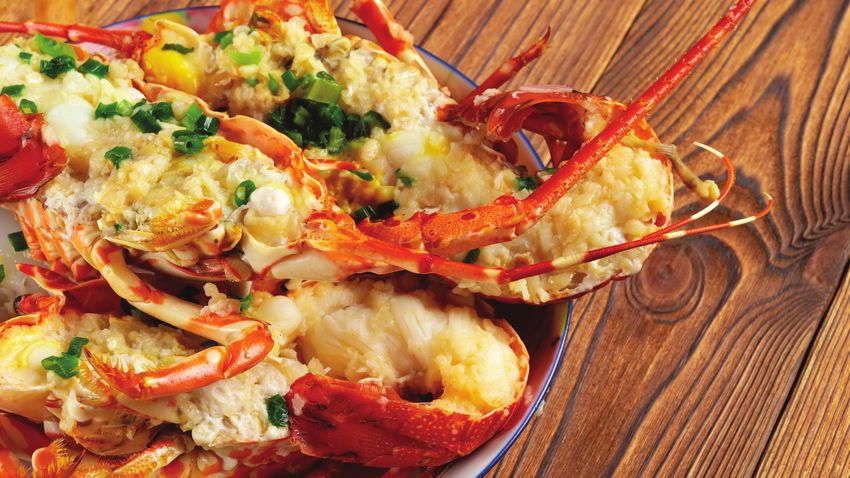
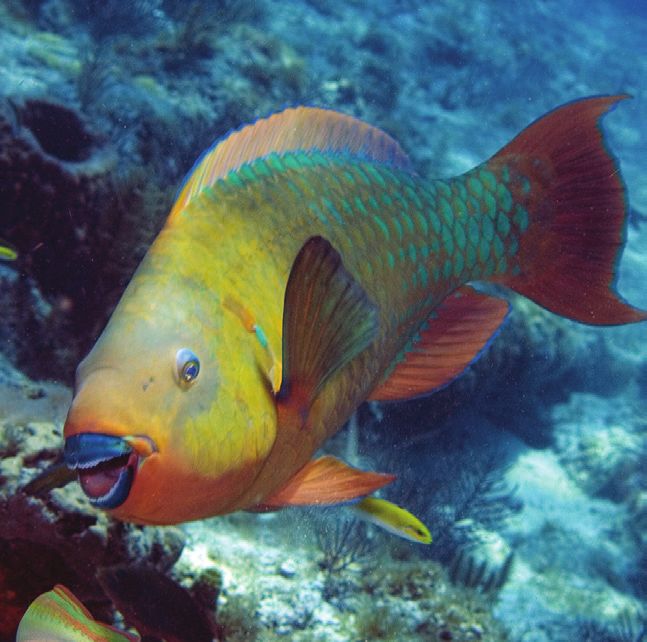
first page iStockphoto; this page Puerto Rico DRNA inset, top
Lionfish Jeff Yonover inset, bottom Rainbow parrotfish Ken Marks
REEF RESPONSIBLE Ӏ PUERTO RICO 2
Species Guide
GOOD CHOICE
• Lionfish (Pterois volitans) • Swordfish (Xiphias gladius)
• Spiny lobster (Panulirus argus) • Wahoo (Acanthocybium solandri)
• Silk snapper (Lutjanus vivanus) • Skipjack (Katsuwonus pelamis)
• Yellowtail snapper (Ocyurus chrysurus) • Bigeye tuna (Thunnus obesus)
• Lane snapper (Lutjanus synagris) • Diamond squid (Thysanoteuthis rhombus)
• Blackfin snapper (Lutjanus buccanella) • King mackerel (Scomberomorus cavalla)
• Dolphinfish (Coryphaena hippurus) • Cero mackerel (Scomberomorus regalis)
• Queen triggerfish (Balistes vetula)
Restaurant Commitment GO SLOW
• Mutton snapper (Lutjanus analis) • Honeycomb cow fish (Lactophrys
• Comply with local and federal polygonia)
• Queen conch (Lobatus gigas)
regulations by not serving species • Octopus (Octopus briareus)
• Red hind (Epinephelus guttatus)
that are in seasonal closures • Hogfish (Lachnolaimus maximus)
• Queen snapper (Etelis oculatus)
• Buy and serve local species that • Scrawled cow fish (Lactophrys • Yellowfin tuna (Thunnus albacares)
meet the minimum capture size in quadricornis)
local and federal waters
• Promote and support local fisheries LEAST RECOMMENDED
• Atlantic bluefin tuna (Thunnus thynnus) • Red grouper (Epinephelus morio)
• Share knowledge about laws,
regulations and best practices of • Queen parrotfish (Scarus vetula) • Black grouper (Epinephelus bonaci)
fisheries management • Redtail parrotfish (Sparisoma • Tiger grouper (Mycteroperca tigris)
chrysopterum) • Yellowedge grouper (Hyporthodus
• Promote alternatives under the • Stoplight parrotfish (Sparisoma viride) flavolimbatus)
Good Choice category • Yellowfin grouper (Mycteroperca • Snook (Centropomus undecimalis)
venenosa)
• Never serve species that are
prohibited or under the Do Not
Eat category DO NOT EAT
• Spread awareness of sustainable • Nassau grouper (Epinephelus striatus) • Purple land crab (Gecarcinus ruricola)
fisheries through restaurant staff • Goliath grouper (Epinephelus itajara) • Hairy crab (Ucides cordatus)
and patrons • Atlantic tarpon (Megalops atlanticus) • Mangrove crab (Goniopsis cruentatus)
• Great barracuda (Sphyraena barracuda) • Nurse shark (Ginglymostoma cirratum)
• Provide information regarding
• Black jack (Caranx lugubris) • Midnight parrotfish (Scarus coelestinus)
species being served, their origin
• Greater amberjack (Seriola dumerili) • Blue parrotfish (Scarus coeruleus)
(fisher, municipality, fishing villa)
• Blackback land crab (Gecarcinus lateralis) • Rainbow parrotfish (Scarus guacamaia)
and management strategies
This guide includes some of our recommendations for the most popular fish
and seafood and will be constantly reviewed and edited as necessary. For the
complete list, please contact Alberto Mercado at alberto.mercado@tnc.org.
this page TNC; last page Chelsea Harms-Tuohy
REEF RESPONSIBLE Ӏ PUERTO RICO 3
For more information:
                                  The Nature Conservancy
                                    Puerto Rico Program
                                   Cupey Professional Mall
                             359 San Claudio Avenue, Suite 305A
                                San Juan, Puerto Rico 00926

                                  PescaSostenible@tnc.org
                                     +1 787 620 0052
                                   nature.org/PuertoRico

    This report was prepared by The Nature Conservancy under cooperative agreement award
#NA16NOS4820106 from the National Oceanic and Atmospheric Administration’s (NOAA) Coral
Reef Conservation Program, U.S. Department of Commerce. The statements, findings, conclusions,
 and recommendations are those of the author and do not necessarily reflect the views of NOAA,
       the NOAA Coral Reef Conservation Program, or the U.S. Department of Commerce.

You can also read


