RESEARCH NEWS No 1 / May 2015 - Bund.de
←
→
Page content transcription
If your browser does not render page correctly, please read the page content below
RESEARCH NEWS

No 1 / May 2015

Dear Readers,                                                                           n Spatial Development
                                                                                           Europe – a territory full of
Against the background of European integration and globalisation, regional                 differences – page 2
statistical maps, data and information on spatial development on various territorial       Nineteen ESPON Contact Points
levels become more and more important in order to analyse e.g. regional living             jointly brought territorial evidence
conditions, to create benchmarks of cities and regions or to make location decisions.      closer for decision-making – page 3
With two new products, the BBSR has recently set the pattern in this context.              INKAR – indicators and maps on
                                                                                           spatial and urban development in
With thematic maps and regional statistics presented in the new INKAR online atlas         Germany and Europe – page 4
of the BBSR, interested persons can see how the living and location conditions in          Transnational Perspectives for Small
Germany vary according to each region. Maps of all counties in Germany on nearly           and Medium-Sized Enterprises –
all social topics can be produced in a few steps. We are particularly proud that           page 5
the information can be provided free of charge. In this way, we act in line with        n Building and Architecture
the German Federal Government and the EU Commission according to which so                  7th International Conference on
far inaccessible data and information of authorities shall be available in the most        Applied Energy – page 6
convenient way to everybody.                                                               Concerted Action III of the Energy
                                                                                           Performance of Buildings Directive
The ESPON Altas demonstrates by maps, infographics and explanations how the                – page 7
regions in Europe develop. For the Atlas, data referring to many topics and, for the       Life cycle assessment of buildings.
first time, to all regions of the countries involved were collected in the context of      Assessing the global ecological
the European Spatial Oberservation Network ESPON. The results of these regional            quality of a building with eLCA –
                                                                                           page 8
analyses were summarised by the BBSR as the lead partner of an international
                                                                                           Harmonization of building material
ESPON project within the Atlas. The Atlas really benefitted from this European
                                                                                           data sets and databases for LCA in
cooperation. We are therefore very happy that the ESPON Programme will be                  Europe – page 9
continued.
                                                                                        n Latest Map
You are invited to test our new offers. We would appreciate it!                            EU2020 indicators – latest data on
                                                                                           poverty and social exclusion –
The editors                                                                                page 10
2 RESEARCH NEWS, No 1/2015 – Spatial Development
Spatial Development
Europe – a territory full of differences
How many people in Europe live in cities? How and climate and infrastructure. The Atlas also
do city regions contribute to the economic includes analyses of the regional aspects of
performance? How does the population the EU 2020 Strategy, the territorial dimension
distribution change? What were the regional of the EU policy and transnational cooperation
impacts of the economic and financial crisis? in the context of Interreg.
How do regions develop in the context of the
The Atlas can be downloaded EU 2020 Strategy? For those who do not know it: The aim of
from the website of the ESPON the European Spatial Planning Observation
Programme at http://www.espon.
eu (Publications/ESPON ATLAS Answers to these and other questions Network ESPON is to improve the knowledge
2013). concerning spatial structures and trends and information bases for the European spatial
in Europe can be found in the ESPON Atlas development policy. Analyses and tools on
Printed versions of the ESPON
Atlas can be ordered at the
published at the end of 2014. With about regional and urban trends promote the further
ESPON Coordination Unit 180 maps and infographics as well as short development of EU and national funding
michaela.gensheimer@espon.eu. explanations, it provides a synopsis of the policies. The ESPON Programme involves
living conditions in European regions, how they 28 EU member states, Norway, Switzerland,
develop, what are their strengths and common Liechtenstein and Iceland as well as the
grounds, where they reveal disparities and European Commission.
where these disparities threaten to increase.
The Federal Institute for Research on Building, The Atlas summarises research findings
Urban Affairs and Spatial Development as of about 70 ESPON projects. It addresses
the lead partner of an international project administrative and political decision-makers,
groups has drawn up and produced the Atlas seeking to learn about the development
in cooperation with the ESPON Coordination perspectives of their regions, as well as
Unit. scientists and students. Teachers may use the
Contact:
maps for their lessons.
Volker Schmidt-Seiwert
The Atlas starts with a description of cities and
Division I 3
rural regions and their significance for spatial Furthermore, the Atlas is provided as an
European and
Spatial Development development. It then presents other key issues interactive online version, in which maps and
Phone: +49 228 99401 2246 being of special importance for the growing figures can be zoomed. It is also possible to
volker.schmidt-seiwert@ together of regions in Europe: society and zoom in sections within maps. The Atlas online
bbr.bund.de integration, labour and economy, environment version can be found at http://atlas.espon.eu.
Natural and agricultural land lost Accessibility potential travel,
Major migration flows between ESPON countries due to urban development, 2000–2006 multimodal, by urban-rural typology
BE
AT UK 2006–2007 average
Southern
BG SK only flows > 10,000 persons Europe Multimodal
CH SI accessibility
SE 5,000 persons
Y
C
Western
CZ
Europe
RO
Central
PT
Europe
rural
regions
DE
Eastern
Europe
PL
Northern
DK
Europe
NO
urban
EE
regions
EL
intermediate
NL
0% 10% 20% 30% 40% 50% 60% 70% 80% 90% 100%
total immigrants regions
T
arable land and
M
pastures and
LV
ES LU forests Accessibility potential to population
LI
LT total emigrants permanent crops mosaic farm (ESPON average = 100)
FI IT grassland, open space
FR
HU IE IS sclerophylous 50 75 100 125 150
Source: MIMOSA, 2009 Source: ESPON EU-LUPA, 2012 Source: ESPON TRACC, 2013
Origin of data: S&W 2013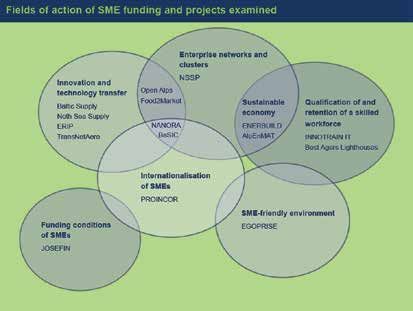
RESEARCH NEWS, No 1/2015 – Spatial Development                                                                                     3

                                                                                                      Spatial Development

Nineteen ESPON Contact Points jointly brought territorial
evidence closer for decision-making

Analytic evidence on territorial development         on the specificities of a macroregion. The
is produced on the national and European level       wider public, citizens, families, youth could
in order to support decision-making. However,        get to know Europe through ESPON in various
the way how the information on territorial           public events. In Germany, stakeholders
development is actually utilised and how the         matched ESPON results with their practical
use of territorial evidence can be enhanced,         experience at a workshop in Bonn organised
is a challenge faced by the national Contact         in cooperation with the Cologne-Bonn region
Points of the ESPON programme (ECPs). In             (Region Köln/Bonn e.V.). Citizens learned
their role to capitalise ESPON results, 19 ECPs      about Europe through ESPON during the Open
joined their experience and resources to carry       Days of the Federal Government at the stand of
out a Transnational Networking Activity of           the BBSR in Berlin and a wide audience at the
the ESPON 2013 Programme to bring ESPON              euregia fair on regional development in Leipzig
evidence closer for decision-making. The             could get familiar with topics like the regional
BBSR coordinated the ESPONontheRoad                  impact of the economic crisis or territorial
project as a Lead Partner.                           scenarios for Europe.

During the relatively short project lifetime of      Journalistic activities supplemented the work
one year, the participating ECPs in 2014 brought     of some ECPs and supported communication
ESPON closer to the local and regional level         in some countries with a high media presence
and in physical and virtual forms to citizens.       in national newspapers, TV, radio or blogs.
The project built a bridge between issues on         However, as a main information source, the
the local level and scientific evidence on EU        project website, where all information about
territorial development policy themes.               the activities was made available and the
                                                     e-library developed by previous projects was
Already in the preparation phase of the project,     integrated, served the audience. The project
it turned out that there is a wide range of policy   also benefitted from the use of social media.
and political issues with high actuality not         Short, quick information post with maps,
only on the European, but also on the national       diagrammes, videos related to recent issues
or regional level. After taking stock of the         of policy, politics or events within ESPON
most recent policy issues in each national           reached more than 300 people on Facebook
context, ECPs formed transnational working           and more than 200 on Twitter regularly.
                                                                                                          Contact:
groups to have a common understanding of
the messages coming from ESPON results.              Based on the experiences within the project          Adam Radvanszki
                                                                                                          Division I 3
In this way, ESPON results were put into the         and previous projects, the ECPs involved
                                                                                                          European Spatial and Urban
macroregional context of West, South, North          formulated recommendations for the ESPON             Development
and Central-Eastern areas, and both the              2020 Programme to enhance the use of ESPON           Phone: +49 228 99 401 1341
content-related and the organisational tasks         evidence in the future. The results of the project   adam.radvanszki@
were organised in a balanced way.                    are available at www.esponontheroad.eu.              bbr.bund.de

To facilitate the use of ESPON results,
European territorial development trends
were interpreted with the specificities for
the macroregion and the consequences for
the local-regional level in brief information
materials, which help users even in national
languages.

33 events throughout Europe mostly targeted
stakeholders at the local-regional level and
served as a meeting place for scientific
evidence on European territorial development
and the perception of territorial development at
local level. Altogether 1800 people participated
in 22 national events for stakeholders. In
addition, five transnational events focussed
4                                                                               RESEARCH NEWS, No 1/2015 – Spatial Development

Spatial Development

                            INKAR – indicators and maps on spatial and urban development
                            in Germany and Europe – now online free of charge

                            In which regions do people earn the most?             INKAR has proved to be a useful instrument
                            Where do they live the longest? Which                 for city/town and county administrations,
                            municipalities have the highest debts? The            for regional and federal state planners, for
                            BBSR’s new web application provides detailed          associations, universities offering spatial
                            information about the living conditions in            science-related study courses but also in
                            Germany and Europe. More than 600 indicators          geography lessons at high/grammar schools.
                            enable comparisons of urban and rural regions         INKAR is furthermore used by Federal
                            as well as analyses over time.                        Government bodies such as the German
                                                                                  Bundestag, the Federal Press Office and
                            INKAR offers regional statistical information         by the scientific service of the Office of the
                            concerning themes of social importance such           Federal President.
                            as education, social affairs, demography,
                            economy, housing and environment. The                 Special features
                            indicators depict the related current state
                            of spatial development. They are primarily            n INKAR offers the largest and most detailed
                            based on official statistical data of the Federal       regional statistical information basis
                            Government and the federal states. Both                 currently available based on various official
                            administrative and non-administrative units             and non-official including own statistical
                            serve as territorial reference units. Most              sources. Information is available for the
                            of the statistics used go back to 1995 thus             whole German territory and the regions of
                            enabling to compare trends easily.                      the European Union.

                            INKAR can be intuitively used. Tables or              n In Germany, the indicators do not only refer to
                            thematic maps of all counties and regions               administrative units such as municipalities,
                            or similar in Germany and Europe can be                 counties, federal states but also to related
                            produced in a few steps.                                comparative categories (e.g. urban-rural
                                                                                    relations, east-west, types of settlements)
                            The BBSR and INKAR address many groups of               and other types of regions.
                            users:
                                                                                  n The statistical parameters mainly refer to
                            n Cities, towns and municipalities may use              time series (18 years and more) and enable
                              these local data as a basis for planning              unlimited comparisons over space and time.
                              activities and political decisions.
                                                                                  n Flexible access to the information basis
                                                                                    allows to collect the information according
                            n For scientists, teachers and market                   to theme, territorial reference unit and time
                              researchers, INKAR is a user-friendly                 and to export it into current formats.
Further information:          instrument and large investigation pool
                              helping to create regional benchmarks,              n The whole INKAR information basis is
www.inkar.de
                              subject materials or potential analyses.              available free of charge.

                            n Journalists are able to underpin their reports      This free availability meets with the open
Contact:                      statistically with their investigation results      government idea of the German Federal
                              and to illustrate them graphically.                 Government and the EU Commission. The
Helmut Janich
Division I 6
                                                                                  idea is practised via various projects as well
Urban, Environmental and    n Companies and associations use the                  as through laws and regulations, that have
Spatial Monitoring            detailed, small territorial unit-based              already come into force. Open government
Phone: +49 228 99401-2258     information for geographical profiles and           means that German federal authorities shall
helmut.janich@bbr.bund.de     market analyses.                                    provide their geodata as completely as
                                                                                  possible and free of charge for every purpose.

                                                                                  The principle is: What is financed by taxes, is
                                                                                  free to everyone. This is also the opinion held
                                                                                  by our Minister, Dr Barbara Hendricks.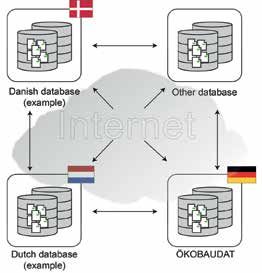
RESEARCH NEWS, No 1/2015 – Spatial Development                                                                                         5

                                                                                                   Spatial Development

Transnational Perspectives for Small and Medium-Sized
Enterprises

How does transnational cooperation support         measures dealing with age management in
small and medium-sized enterprises (SMEs)?         enterprises to tapping bigger markets in very
This question forms the main subject of the        different areas. In all these cases, the projects
publication “Transnational Perspectives            benefit from the transnational dimension. In
for Small and Medium-Sized Enterprises”,           contrast to other EU funding programmes,
in which the results of a theme-related            Interreg offers the possibility to launch
evaluation of 15 Interreg IV B projects with       innovations and to advance creative pilot
German participation will be presented.            approaches. What is more, Interreg projects
                                                   make it possible to unite strategy and actual
Small and medium-sized enterprises form            implementation in situ and to promote joint
the backbone of the European economy. This         transnational awareness.
category accounts for more than 98 per cent
of all enterprises and makes up two thirds of      Until recently, SMEs have less formally been
all jobs in the private sector. The term “SME”     involved as project partners in transnational       The publication is available
encompasses quite different enterprises:           cooperation, but were mainly target group           in English and German and
micro-enterprises with few employees as            and beneficiaries of project activities and         can be ordered free of charge
well as “seasoned” small- and medium-              their achievements. There is a greater focus        at beatrix.thul@bbr.bund.de,
                                                                                                       keyword: SME
sized enterprises, craft businesses rooted         on SMEs in the new programming period
in a specific locality but also internationally    2014–2020 and its alignment with the Europe         For more information on the
oriented world market leaders, so-called           2020 strategy: Although SME promotion is            project see www.bbsr.bund.de
                                                                                                       > Programme> MORO > Studien
“hidden champions”. In times of economic           not a priority of the transnational Interreg
                                                                                                       > Thematische Auswertung der
crisis, small and medium-sized enterprises         programmes in the new programming period            transnationalen Zusammen-
have proved to be an important stabilizing         either – the promotion of SMEs is assured           arbeit …
factor in the economic structure of many           through a cross-sectoral approach – the
regions in Europe.                                 involvement of for-profit companies is now
                                                   explicitly encouraged in all six Interreg
If we want to maintain our competitiveness         programme areas with German participation.          Contact:
and promote intelligent, sustainable and
                                                                                                       Brigitte Ahlke
inclusive growth in line with the objectives       We therefore seek with this brochure to show
                                                                                                       Division I 3
of the “Europe 2020” strategy, it is therefore     project stakeholders such as towns, cities and      European Spatial and Urban
particularly important to support SMEs.            regions, but also SMEs themselves, the added        Development
Accordingly, there is a large number of            value that this transnational cooperation may       Phone: +49 228 99401-2330
programmes, initiatives and projects both on       offer to small and medium-sized enterprises.        brigitte.ahlke@bbr.bund.de
the European and German level addressing
SME and offering attractive overall conditions
for SMEs. Strategic approaches such as the
European Small Business Act (SBA) or the
national initiative to support small and medium-
sized enterprises show that a policy oriented
towards SMEs encompasses several fields
of action. Transnational cooperation (better
known under the name of Interreg B) can play
an important role here. The project examples
presented in this brochure demonstrate how
transnational projects could help to promote
these fields of action (see figure).

Although Interreg is a relatively small
support programme, the examples presented
nevertheless show how it is possible to
successfully implement a large spectrum
of measures with Interreg B which serve
to promote and support SMEs. They range
from the joint development of seals of quality,
6 RESEARCH NEWS, No 1/2015 – Building and Architecture
Building and Architecture
The BBSR at the 7th International Conference on Applied Energy
(ICEA)
The BBSR presented the results of a joint concurrent specified meetings on a variety
research project with the University of Naples of topics related to applied energy ranging
at the 7th International Conference on Applied from advanced energy systems to policy and
Energy (ICEA) in Abu Dhabi. economics through to energy efficiency. This
year’s host of the conference was the Masdar
The editors of the international journal Institute of Science and Technology of Abu
“Applied Energy” established this global Dhabi supported by the Mälardalen University
conference in order to provide a framework of Sweden.
for immediate exchange among the scientific
community publishing in the journal as well as The paper presented by the BBSR deals with
to promote the dialogue between scientists, the protection against summer overheating
young academics and public stakeholders in non-residential buildings required by the
from administrations and businesses. This is German DIN 4108 standard. In this context,
why, the conference gave a useful opportunity the DIN standard of 2003 and the current
to get in contact with scientists from around version of 2013 are compared. Additionally,
Contact: the world and to extend the scientific network passive methods aiming to enhance the
of the BBSR. thermal comfort in existing buildings during
Thomas Tschirner
Division II 7 summertime are explored. It seems odd to
Energy-Optimized Building The topic of this year’s conference was discuss passive cooling methods in a place
Phone: +49 30 18401 3427 “Clean, Efficient and Affordable Energy for a where air conditioning and mechanical cooling
thomas.tschirner@ Sustainable Future”. The conference included are already omnipresent. Nevertheless,
bbr.bund.de plenary sessions, keynote lectures, and also many participants arrived from countries
with climate conditions similar to those in
Germany. Thus, preserving resources is one
of the primary goals of sustainable energy
usage and it is highly recommended to operate
with passive methods to prevent summer
overheating as often as possible.
About 90 sessions with ten parallel sessions
took place over three days and about 500
papers on a wide range of topics were
presented. Nevertheless, it was an inspiring
experience to meet so many people who are
eager to lead the world into a more sustainable
future.
All conference papers will be published in the
open access journal “Energy Procedia” by
ELSEVIER (http://www.journals.elsevier.com/
energy-procedia/special-issues/).RESEARCH NEWS, No 1/2015 – Building and Architecture 7
Building and Architecture
Final meeting of Concerted Action III of the Energy Performance
of Buildings Directive (2010/31/EU)
The Concerted Action of the Energy
Performance of Buildings Directive (EPBD) is a
network funded by the European Commission
enabling European Union Member States
experts involved in the implementation of the
Directive to discuss common problems and
to share experiences. The Federal Institute
for Research on Building, Urban Affairs and
Spatial Development within the Federal Office
for Building and Regional Planning is the
appointed German contract partner for this
network.
The final meeting of Concerted Action III EPBD
took place in Tallinn, Estonia, from 2nd to 4th
March 2015. In most sessions of this meeting,
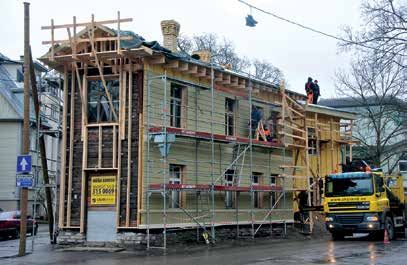
the discussion was dominated by two general Refurbishment of a traditional Estonian wooden building
topics.
One of them is "nearly-Zero Energy Buildings" Furthermore, experts discussed in Tallinn
(nZEB). From 2019, all new public buildings how EPCs could be more user-friendly, how
and, from 2021, new buildings in general in energy savings achievable by modernisation
all Member States have to meet the nZEB could be estimated more realistically in the For more information of the
standard. Preliminary to the obligation, the certificates, how they could be useful for the BBSR concerning the Concerted
nZEB standard has to be defined. Some monitoring of the renovation rate and which Action EPBD, please see
Member States have already introduced a data can be used sufficiently. http://www.bbsr-energie
einsparung.de/EnEVPortal/DE/
definition, while others like Germany are still Europa/Aktion/aktion.html
due to define the standard. During some of the Member State experts and the European
sessions in Tallinn, the existing definitions of Commission agree that there is still a need For the official homepage
of the Concerted Action EPBD,
Member States were compared, the status for networking in this field; the Concerted please see
and the obstacles of the implementation of Action EPBD should continue after the http://www.epbd-ca.eu/
the nZEB standard in all Member States were Tallinn meeting. Especially the revision of the
discussed, outstanding examples of best EPBD stipulated in Article 18 of the Directive
practices concerning the implementation should be a subject for further networking.
were presented and prototypes of high The Member States decided to apply to the
performance buildings in various Member European Commission for another funding
States were put forward. Estonian projects of period (Concerted Action IV EPBD) and the
multi-family buildings which were refurbished Commission intends to support four more Contact:
according to nZEB-standards were the subject years. Once more, the Federal Institute for
Isabel Ahlke
of a study tour on 5th March 2015 subsequent Research on Building, Urban Affairs and
Division II 2
to the meeting. Spatial Development will act as the German Energy Saving, Climate
partner and looks forward to continuing the Protection
A second focus was on the Energy Performance fruitful cooperation and collaboration with Phone: +49 228 99401-2726
Certificates (EPC), which all Member States the other European Union Member States and isabel.ahlke@bbr.bund.de
have introduced. The European Commission Norway.
requires Member States to check the quality
of the issued EPCs, therefore a representative
percentage of them has to be controlled by
an independent system. In Germany, this is a
task of the federal states (“Bundesländer”)
which is the reason why the transposition
still needs a great effort of coordination.8 RESEARCH NEWS, No 1/2015 – Building and Architecture
Building and Architecture
Life cycle assessment of buildings
Assessing the global ecological quality of a building with eLCA
Apart from the architectural and functional in the Assessment System for Sustainable
quality of a building, the ecological quality as Building (BNB).
well has become more important in the last few
years. One reason are the global requirements The arithmetical assessment of the ecological
set by the assessment systems for sustainable quality of a building over its whole life cycle is
building. While in the usual planning process, provided by the so-called life cycle assessment
the environmental effects of the energy (LCA) for a building.
requirements of a building are considered in
line with the Energy Saving Ordinance, the eLCA, an LCA tool for buildings
integrated planning approach, which forms
the basis of sustainable building, also takes The BBSR has developed the eLCA tool,
the ecological quality of the building materials which is easy to use and which helps the user
used into account. Environmental impacts generate a BNB-based life cycle assessment
resulting from the production and disposal of for buildings. With eLCA, both new buildings
materials and from maintaining a building are and existing buildings, which have to be
thus to the same degree considered in the global refurbished, can be assessed. In addition to
assessment as the energy required during the LCA for buildings, it is possible to assess
the use of a building. Based on this extended the transports based on the building materials
http://www.bauteileditor.de approach, the environmental effects of a used.
building are assessed over its whole life cycle,
from its construction to its demolition. The The ÖKOBAUDAT data sets required for
ecological assessment of buildings is based on the assessments have already been fully
the ÖKOBAUDAT database. ÖKOBAUDAT is an integrated in eLCA. One important reason
Contact:
open source internet database of the German for developing eLCA was to depict all data
Federal Ministry for the Environment, Nature and the assessments based on them in a
Stephan Rössig
Conservation, Building and Nuclear Safety comprehensible, transparent way. Especially
Division II 6
Construction and
which can be found at www.oekobaudat. eLCA’s core component, the component
Environment de. It provides various building material data editor, supports the user in entering the
Phone: +49(0)3018-401-3417 sets and their global ecological qualities. The building components. A dynamic diagram
stephan.roessig@ ÖKOBAUDAT data sets are based on strict depicts the modelled components and allows
bbr.bund.de quality criteria and are laid down as basic data a visual control.
The calculations performed with eLCA
can also be interpreted and understood by
1 Entering building components with the eLCA component editor unexperienced users. Following an intensive
330 Exterior walls BUILDING - BUILDING CONSTRUCTIONS test phase at universities, within research
Facade_ East [1835] ELEMENTS
projects and in the context of assessing
General
buildings according to the BNB, users now
have a life cycle assessment tool for buildings
Name * Interior paint dispersion paint rub-resistant
Attributes 1
Facade_East 2 Gypsum plaster (plaster), 20.00 mm
OZ
U-value R-value
7
3 Brick section , 240.00 mm at hand by which they are able to assess new
and existing buildings according to the BNB.
1 3 4 5 6 4
2 8
Description Insulation, 100.00 mm
BNB 4.1.4 5
Dismantling Separation Utilization
6
7 Synthetic resin plaster - VDL, 2.00 mm
The tool was presented to the public during
Installed capacity * Reference value *
368 mm 8 Insulating glass double-paned, 24.00 mm
the BAU 2015 in Munich.
400 m 2
Save Adopt as template
Linked building elements
Building element (opaque) Installed capacity DIN 276
1. Gypsum plaster/paint 350 m² 336 Exterior wall claddings, interior Edit I Remove I Delete
2. Bricks 24 cm 350 m² 331 Load-bearing exterior walls Edit I Remove I Delete
3. ETICS 350 m² 335 Exterior wall claddings, exterior Edit I Remove I Delete
Building element (non-opaque)
1. Windows_insulating glass 50 m² 334 Exterior doors and windows Edit I Remove I Delete
Add new buildingRESEARCH NEWS, No 1/2015 – Building and Architecture 9
Building and Architecture
Harmonization of building material data sets and databases
for LCA in Europe
Sustainability considerations in the building materials-related data, will be able to
construction sector are nowadays generate data with a tool of their own, the
established in many European countries open source LCA modelling tool “openLCA”
often using certification schemes to evaluate was developed allowing to create suitable
the sustainability of buildings. The life cycle EPD data which subsequently can be imported
assessment (LCA) of buildings is a central into ÖKOBAUDAT.
instrument to evaluate the ecological quality
of a building, e.g. global warming, ozone The possibility to directly import data into an
depletion, photochemical ozone creation, online database (this could be a European
http://www.oekobaudat.de
acidification and eutrophication potential. joint database) within a given harmonised data
format which follows the generally accepted
As part of the Sustainable Building programme European standards is a great chance for a
in Germany, the Federal Government provides consistent and comparable LCA establishment
important infrastructure to choose suitable within the context of the sustainability
building products. The ÖKOBAUDAT online considerations in the field of construction.
database provides the required building Some European countries are already highly
material data sets (generic data and data from interested in using the data format developed
environmental product declarations EPD) and in finding a way of integrating their data
and the eLCA calculation tool for the LCA of into the ÖKOBAUDAT or a joint data network. Links
buildings. These developments of the new data format www.oekobaudat.de
and organisation in an online data system are www.nachhaltigesbauen.de
One of the milestones of ÖKOBAUDAT was in the phase of initial application. There is a high www.bauteileditor.de
to develop a data format which meets the EN potential for a harmonised and consistent way
15804 standard, but also follows an extended of using material- and product-relevant LCA or
International Reference Life Cycle Data EPD data for the LCA of buildings within Europe.
System (ILCD) format. As an internet-aware
data format, it was designed to explicitly allow On March 27th, 2015, a first meeting of several
data to be published and linked as resources European member states (Austria, Belgium, Contact:
via the internet. The advantage of this new Denmark, Germany, Norway, Spain) was
Dr.-Ing. Tanja Brockmann
approach is that existing software tools with organized by the BBSR in Berlin to discuss joint Division II 6
built-in support for the ILCD format can be activities concerning the harmonization of LCA Construction and
easily enabled to support the new EPD data data sets and databases in the construction Environment
set as well with only minor changes to its sector in Europe. Further meetings and joint tanja.brockmann@
internal information structures. It should be research projects are planned to be carried out. bbr.bund.de
emphasized that ÖKOBAUDAT is running on an
open source software platform (soda4LCA),
which allows the development of further
modules by which new features can be used
or added to procedures.
Nowadays, in many European countries a
rising number of EPD conform to EN 15804
is produced by national EPD programme
operators. Hence, it should be emphasized,
that data from any national as well as
European EPD programme operator can be
easily imported into the online database. In
Germany, for example, the “Institut Bauen
und Umwelt e.V. (IBU)” as an important EPD
programme operator has equipped its own
database application with tools to directly Idea of a European LCA data
import its data online into ÖKOBAUDAT. As not network for sustainable
all institutions, which are able to offer suitable building (example)10 RESEARCH NEWS, No1/2015 – Latest Map
Latest Map
EU 2020 indicators – latest data on poverty and social exclusion
More information The Europe 2020 strategy is the EU’s agenda or social exclusion by 2020. This target
The results are part of a for growth and jobs for the current decade, is monitored using the headline indicator
larger analysis presented by succeeding the Lisbon strategy. It puts for- ‘percentage of the population at risk of poverty
Tobias Panwinkler and Peter ward three mutually reinforcing key priorities: or social exclusion’. It is an aggregate of three
Schön at the EU2020 Special smart growth, sustainable growth and inclu- sub-indicators: people living in households
Session of the RSA Confe- sive growth. Under those priorities, the EU with very low work intensity; people at risk
rence in Piacenza this year. adopted five headline targets. Those headline of poverty after social transfers; severely
targets are monitored using a set of nine head- materially deprived people.
line indicators and additional sub-indicators.
In addition, the strategy has identified seven Due to data availability, the baseline year for
policy areas that serve as engines for growth the monitoring process is 2008. Within the
and jobs. They are put forward through seven next ten years, the number of people at risk of
Contact: flagship initiatives. poverty or social exclusion must be reduced
from 116.6 million to 96.6 million in order to
Tobias Panwinkler
Division I 3
Within the key priority ‘Inclusive Growth’, two reach the headline target of 20 million people
European Spatial an Urban headline targets are defined. One target on lifted out of the risk.
Development poverty and social exclusion and one target
Phone: +49 228 99401 2227 on employment. The target on poverty and Eurostat recently published the data for 2013
tobias.panwinkler@ social exclusion is defined by lifting at least offering the possibility to monitor the progress
bbr.bund.de 20 million people out of the risk of poverty at half-time. Assuming a linear decrease, the
number of people at risk of poverty or social
Europe
Europe 20202020 – poverty
–poverty andexclusion
and social social exclusion exclusion must be lowered by 10 million or to
a total number of 106.6 million after five of ten
years. This leads to a theoretical average of
21.2 % of the population in all regions.
The development within the last years –
especially due to the impact of the economic
and financial crisis – made it difficult to reach
the target. Instead of decreasing, the number
of people at risk of poverty or social exclusion
even increased to almost 122.6 millions at its
peak in 2012. At that time, even 26 million people
would need to be lifted out of the risk in order to
reach the original headline target. At present, it
cannot be expected that the original headline
target, , can still be reached.
The map shows the present situation of
Europe’s regions (or member states) with
regard to their progress towards the poverty
and social exclusion target. As there is no
uniform and consistent system of national
targets for this indicator, the national/regional
situation is compared to the European target,
i.e. nations/regions that are below the 21,2 %
500 km © BBSR Bonn 2015
threshold are coloured in blue, those above
in red. The map shows that many regions in
Headline indicator 'People at risk of poverty Data basis: Spatial Monitoring System
or social exclusion' Europe, Eurostat REGIO [ilc_peps11] Eastern Europe (except parts of the Czech
Percentage of total population in 2013 All data 2013 except BE 2011, AT 2012
Geometric basis:
Republic, Slovakia and Slovenia) and some
GfK GeoMarketing, NUTS 2 regions regions in Southern and Western Europe
9 to < 13 21,2 to < 25 BE, EL, HR, HU, NL, PL: NUTS1
DE, FR, PT, RS, UK: NUTS0 (bordering the Mediterranean Sea or the
13 to < 17 25 to < 29 Author: T. Panwinkler
British Isles) are lagging behind in terms of
17 to < 21,2 29 and more no data combatting poverty and exclusion.RESEARCH NEWS, No 1/2015 – Publications 11
Publications
Länderneugliederung in Deutschland Zuwanderung, Armut, Verantwortung
Reorganisation of the federal states in Germany Immigration, Poverty, Responsibility
Informationen zur Raumentwicklung (IzR), Issue 5.2014, Ed.: Informationen zur Raumentwicklung (IzR), Issue 6.2014, Ed.:
BBSR, Bonn 2014 BBSR, Bonn 2014
With the Solidarity Pact expiring in 2019 and the Germany is the most popular country to immigrate to following
constitutionally established debt brake coming into force at the USA. Especially since the end of 2013, the immigration
the same time, some federal states are likely to reach the issue has been intensively discussed in Germany. The reason
limits of their performance. Financial solidarity among the is the free movement of labour established for the EU countries
states also seems to come up against limiting factors as Romania and Bulgaria. Since 1 January 2014, immigrants from
shown by the actions filed by the federal states of Bavaria these countries are permitted to work in Germany without
and Hesse against the financial equalization scheme among any restriction and without professional qualification. In
the federal states. 2011 already, the free movement of labour had come into
force in Poland. At that time as well, people feared large
Against the background of the permanent discussion immigration flows, also to the social systems and that social
about the federal organisation in the Federal Republic of peace would be endangered, which retrospectively proved to
Germany, the Academy for Spatial Research and Planning be unfounded. The argument of apparent “social tourism” in
founded a working group “Reorganising the German federal the context of immigration was disproved by current studies.
territory or promoting a cooperation of the federal states?” Taxes and social security contributions paid by immigrants
at the end of 2011. Within this group, experts deal with the go beyond the sum of transfer payments so that the German
territorial organisation of the federal states and analyse social systems are even relieved. The existing shortage of
chances, opportunities and limits but also alternatives for skilled labour as well is being reduced.
reorganisation.
This IzR issue deals with the various aspects of immigration
In this IzR issue, some working group members get a chance and analyses how Germany might better meet its responsibility
to present their opinions on the following key issues: for the living and working conditions of immigrants.
n Should tasks be performed homogeneously for the whole
German federal territory or should distinctions between
regions be admitted or even promoted?
n How can the specific German federalism be supported and
further developed in a way that it does not represent the
pure administrative reality of growing centralism?
The journal IzR is available in German language with English
abstracts. Some issues contain articles in English language. The
abstracts are available as free downloads (www.bbsr.bund.de >
English > publications > Informationen zur Raumentwicklung).
The IzR can be obtained from the Franz Steiner Verlag (service@
steiner-verlag.de) and from bookshops as single issue or by yearly
subscription. The price for a subscription is 72 euros, a single issue
costs 19 euros. All prices plus postage and packing.12 RESEARCH NEWS, No 1/2015 – Imprint / News
Editor, Producer and Publisher Selbstverlag des BBSR, Postfach 21 01 50, 53156 Bonn, Germany
Federal Office for Research on Building,
Urban Affairs and Spatial Development
within the Federal Office for Building and Regional Planning, Bonn Z
Harald Herrmann, Dr. Karl Peter Schön
Editing
Brigitte Ahlke, Marion Kickartz, Beatrix Thul
Contact for subscriptions and change of address
beatrix.thul@bbr.bund.de
Print
Federal Office for Building and Regional Planning, Bonn RESEARCH NEWS is published twice a year.
Citing: It is available in the internet on the website
Research News BBSR 1/2015 – May of the BBSR at www.bbsr.bund.de
Print copies can be ordered free of charge.
ISSN 1437 – 5850 Free to reprint. Please send a voucher copy to the editor.
News
Cooperation between the BBSR, the University of Naples Federico II and
the University of Sannio
In December 2014, an agreement regarding actual activities. The first meeting took place
the bilateral collaboration of the BBSR and the from 20th to 24th April 2015 in Naples and
University of Naples Federico II was signed. Benevento (location of University of Sannio).
This was the official starting point for the joint From the BBSR, Dr. Kaltenbrunner (AL II) and
work of both institutions on projects aiming Dr. Böttcher (RL II7) participated.
to improve the energy efficiency of buildings.
The main goals of the cooperation will be the First results of the trilateral collaboration
following: do already exist. During the visiting periods
n sharing research activities by coupling data of Fabrizio Ascione in Berlin and Uta Krone
measurements and simulation studies; in Naples, two scientific papers were
developed and submitted at the International
n joint publications and joint participation at
Conference on Applied Energy. Following a
national and international conferences ;
process of peer-review, both papers were
n short-term mobility of researchers; accepted by the conference committee and
n visiting lectures in the context of seminars, were presented at the conference in Abu
workshops, conferences or university Dhabi (27th-31st April 2015). Furthermore, the
courses; papers will be published in the international
n developing projects of common interest. journal “Energy Procedia”, an open access
publication by ELSEVIER.
Meanwhile, a similar agreement was
concluded with the University of Sannio in During the meeting period, Dr. Böttcher was
March 2015. Both Italian universities have invited to give a lecture at the University of
already intensively collaborated in a lot of Sannio. The main focus of the lecture was
projects in the field of energy efficiency. This on energetic aims in the German building
is why the agreement with the University of sector in general and the special energetic
Sannio is a logical conclusion and reasonable target specifications for the buildings of the
advancement of the agreement with the Federal Government. Especially the energy
University of Naples. In the context of both concepts of these buildings and the results
Contact: agreements, annual meetings of the project of the monitoring were very inspiring for the
Dr.-Ing. Olaf Böttcher
coordinators are foreseen. The main objectives students. The different technologies used,
Division II 7 of the meetings are to evaluate the projects their practical implementation via the energy
Energy-Optimized Building realised and to arrange new projects but also supply concept and the experiences from the
Phone: +49 30 18401-2770 to improve the exchange of knowledge and to operational phase of the buildings were lively
olaf.boettcher@bbr.bund.de give information to all parties involved about discussed.You can also read


