ROADSIDE WEED AND PEST
ANIMAL CONTROL STRATEGY
        2015 - 2020

               ADOPTED 25 May 2015
←
→
Page content transcription
If your browser does not render page correctly, please read the page content below
ROADSIDE WEED AND PEST
ANIMAL CONTROL STRATEGY
2015 - 2020
ADOPTED 25 May 2015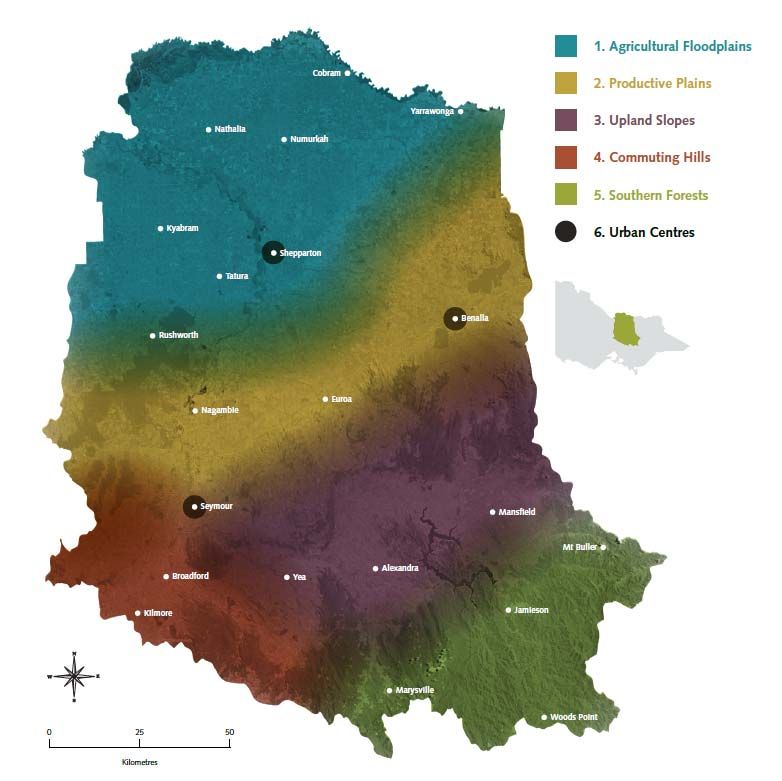
CONTENTS
VISION .................................................................................................................................... 1
AIM.......................................................................................................................................... 1
ACKNOWLEDGEMENT OF TRADITIONAL LAND OWNERS ............................................... 1
EXECUTIVE SUMMARY ........................................................................................................ 1
OBJECTIVES AND STRATEGIES ......................................................................................... 3
BACKGROUND ...................................................................................................................... 4
SCOPE ................................................................................................................................... 6
PURPOSE .............................................................................................................................. 6
LAND MANAGEMENT CONTEXT ......................................................................................... 7
LEGISLATIVE CONTEXT ....................................................................................................... 7
POLICY CONTEXT ............................................................................................................... 10
COUNCIL STRATEGIES AND PLANS ................................................................................. 13
BEST PRACTICE ................................................................................................................. 14
INVASIVE PLANT CLASSIFICATIONS ................................................................................ 15
EXISTING PARTNERS ......................................................................................................... 16
COMMUNITY ........................................................................................................................ 17
EXISTING COUNCIL ACTIVITIVES ..................................................................................... 18
TREATMENT AND PRIORITISATION ................................................................................. 19
WEED TREATMENT CRITERIA .......................................................................................... 19
PEST ANIMAL (RABBITS) TREATMENT CRITERIA ........................................................... 20
BEST PRACTICE PRINCIPLES ........................................................................................... 21
MONITORING, EVALUATION, REPORTING AND IMPROVEMENT .................................. 22
OPTIONS .............................................................................................................................. 23
CONCLUSION ...................................................................................................................... 25
REFERENCES ..................................................................................................................... 25
APPENDIX 1- IMPLEMENTATION PLAN (RECOMMENDED OPTION) ............................. 26
APPENDIX 2 – WEED CLASSIFICATIONS ......................................................................... 29
APPENDIX 3: COUNCIL ROADSIDE WEED AND PEST CONTROL PLAN 2012 – 2015 .. 30

MOIRA SHIRE COUNCIL | ROADSIDE WEED AND PEST ANIMAL CONTROL STRATEGY 2015-2020
VISION
A healthy and resilient natural environment supported by our community

AIM
Weeds and pest animals are managed on roadsides throughout the Shire to improve native
vegetation quality, farmland productivity, landscape values, biodiversity, and waterway
habitats.

ACKNOWLEDGEMENT OF TRADITIONAL LAND
OWNERS
Moira Shire Council acknowledges the Yorta Yorta peoples as the Traditional Custodians of
the land on which the Moira Shire is located.

EXECUTIVE SUMMARY
As part of an amendment to the Catchment and Land Protection Act 1994 (CaLP Act), the
responsibility for the management of Regionally Prohibited and Regionally Controlled weeds
on Council managed roadsides has been placed onto Local Government.

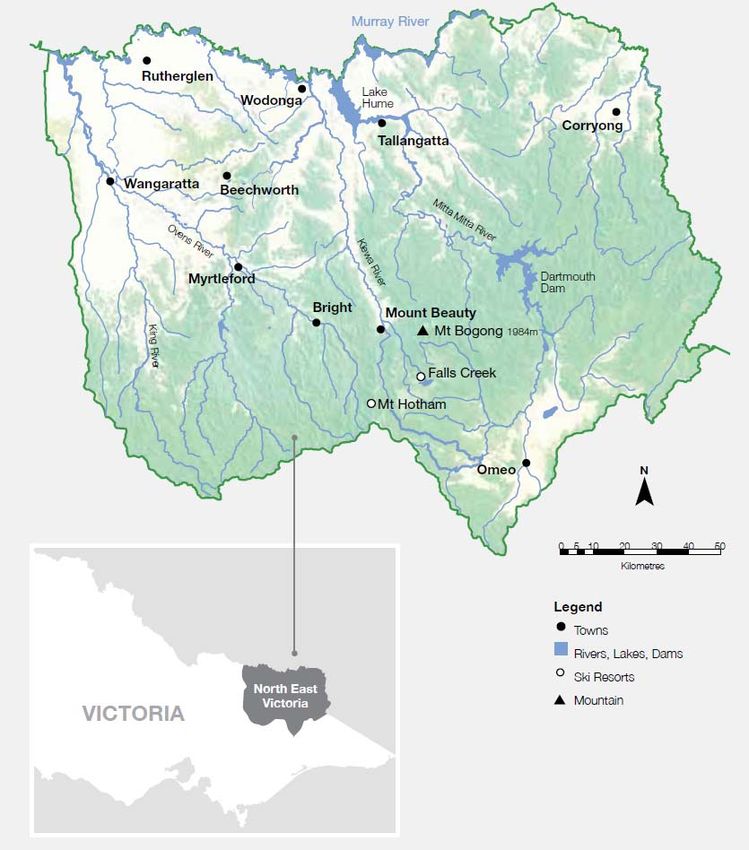
Within the region the North East and Goulburn Broken Regional Catchment Strategies
outline a number of key priorities for our catchment regions. Weed control is an important
objective at achieving many of the characteristics of a healthy catchment, such as
biodiversity, vegetation quality and healthy waterways. Moira Shire is comprised mostly of
the Goulburn Broken Catchment, with a small section that is included within North East
Catchment.

The Moira Shire Roadside Weed and Pest Animal Control Strategy aims to take an
integrated approach to weed and pest animal management on Council managed roadsides,
while ensuring Council fulfils its legislative requirements. The Strategy aligns with the
biosecurity approach outlined in the Invasive Plants and Animals Policy Framework (IPAPF)
(DPI, 2010) which underpins the weed strategies of the Goulburn Broken and North East
Catchment Management Authorities (GBCMA and NECMA).

As part of the change in legislation, Moira Shire received a grant from Department of
Environment and Primary Industries (DEPI) to develop and implement a Roadside Weed
and Pest Control Plan which was developed with a focus on treating and mapping noxious
weeds of Regionally Controlled and Regionally Prohibited status, and European Rabbits
(Oryctolagus cuniculus).

The plan targeted weeds species on roadsides of high conservation significance as a first
priority. The State funding for the implementation of this plan has allowed Council to target,
map and partially treat approximately 30% of roadsides. This funding ran for three years
from 2012-2013. Funding of future works may be from Councils rate revenue unless Council
is successful in obtaining further funding through any future State Government program.

                                                                                       Page | 1
MOIRA SHIRE COUNCIL | ROADSIDE WEED AND PEST ANIMAL CONTROL STRATEGY 2015-2020
This Strategy has been designed to build on the Roadside Weed and Pest Control Plan in
the view of a longer term approach at weed and pest control on Council managed roadsides
within Moira Shire.
This Strategy is built around best practise approach to weed and rabbit control. The
treatment criteria outlined within the Strategy are based on the ability to achieve best
practice. These criteria are used to identify priorities for treatment of weeds and pests on
Council managed roadsides.
The treatment criteria are:
Regionally Controlled and Regionally Prohibited weed species;
Conservation value of the roadside with higher priority being roadsides of highest
quality with the least infestations;
Neighbouring property asset value such as roadsides adjoining conservation or
bushland reserves;
Population density (in the case of rabbit control); and
Cost efficiencies
This strategy draws alignment with a number of Council endorsed plans and strategies
which are detailed within.
The basis for this strategy is a planned and targeted approach over a period of time, to
minimise costs and maximise effectiveness while addressing legislative responsibilities
through the mapping and treatment of weeds and pest on Council managed roadsides.
The Strategy is based on an effective and strategic long term program to control weeds and
pest animals on roadsides throughout the Shire. The Strategy involves a relatively high initial
(five year) investment aimed at eradicating regionally prohibited weeds and preventing the
growth and spread of regionally controlled weeds and pests.
Following the initial five year implementation it is anticipated that an annual maintenance
schedule will be sufficient to manage Council roadsides from a weed and pest animal
perspective.
Page | 2
MOIRA SHIRE COUNCIL | ROADSIDE WEED AND PEST ANIMAL CONTROL STRATEGY 2015-2020OBJECTIVES AND STRATEGIES
THEME 1: WEEDS
OBJECTIVES
Council meets its legal obligations as specified under the Catchment and Land
Protection Act 1994 (CaLP Act), while maximising resource efficiency
The spread of weeds is minimised
STRATEGIES
Apply the weed treatment prioritisation criteria (listed in this Strategy) when
implementing Council’s annual weed program which takes into account the
classification of weeds under the CaLP Act, the efficient use of Council resources and
the location and conservation value of sites
THEME 2: PEST ANIMALS (RABBITS)
OBJECTIVES
Council meets its legal obligations for pest animal management as specified under the
CaLP Act
STRATEGIES
Apply the pest animal treatment prioritisation criteria (listed in this Strategy) when
implementing Council’s annual pest animal program which takes into account the
location and conservation value of the site and the efficient use of Council resources.
Page | 3
MOIRA SHIRE COUNCIL | ROADSIDE WEED AND PEST ANIMAL CONTROL STRATEGY 2015-2020BACKGROUND
Moira Shire Council is responsible for conducting weed and pest animal control works
across all Council managed roadsides across the shire.
The Moira Shire Roadside Weed and Pest Animal Strategy 2015-2020 sits within a broader
State and Federal response to weeds and pest animals. This Strategy clearly defines the
Shire’s priorities for roadside weed and pest animal control activities and ensures Council’s
resources are allocated effectively.
The Strategy expands on the existing Roadside Weed and Pest Control Plan which has a
focus on treating and mapping noxious weeds of Regionally Controlled and Regionally
Prohibited status, and European Rabbits (Oryctolagus cuniculus) on roadsides of high
conservation significance.
This Strategy aims to take an integrated approach to weed and pest animal management on
Council managed roadsides, while ensuring Council fulfils its legislative requirements. The
Strategy aligns with the biosecurity approach outlined in the Invasive Plants and Animals
Policy Framework (IPAPF) (DPI, 2010) which underpins the weed strategies of the Goulburn
Broken and North East Catchment Management Authorities (GBCMA and NECMA).
Why is it important to treat weeds and pests on roadsides?
Invasive weeds are among the most serious threats to Australia's natural environment and
primary production industries. They displace native species, contribute significantly to land
degradation, and reduce farm and forest productivity (Australian Government 2014).
A weed is any plant that requires some form of action to reduce its effect on the economy,
the environment, human health and amenity. Weeds typically produce large numbers of
seeds, assisting their spread and are often excellent at surviving and reproducing in
disturbed environments. A weed can be an exotic species or a native species that colonises
and persists in an ecosystem in which it did not previously exist. Weeds can inhabit all
environments; from our towns and cities through to our oceans, deserts and alpine areas
(Australian Government 2014). It is estimated that the agricultural cost of weeds to Australia
is in the vicinity of $4 billion per annum. The cost to nature conservation and landscape
amenity is thought to be of a similar magnitude (NRMMC2007).
The effective management of weeds can also significantly impact on fire management. In
many circumstances weedy roadsides of the same vegetation type will tend to pose a higher
fire risk than those dominated by natives. To take grasslands as an example, Phalaris can
grow to two metres high, with fuel levels of 29 tonnes per hectare. This contrasts with fuel
levels of 6 tonnes per hectare measured for native grasslands dominated by Kangaroo
Grass (Themeda triandra) during January in an average year (CFA 2011).
Page | 4
MOIRA SHIRE COUNCIL | ROADSIDE WEED AND PEST ANIMAL CONTROL STRATEGY 2015-2020Pest animals are invasive species that have been introduced or could be introduced into
Victoria or Australia. These species threaten native flora and fauna in a number of ways,
including but not limited to, creating competition with native fauna for the same resources
and creation of additional grazing pressure on native vegetation communities and
agricultural systems.
In the case of rabbits, more than 2 rabbits per hectare virtually eliminate the regeneration
potential of plant species (Government of South Australia 2011), and 16 rabbits exhibit the
same grazing pressure as 1 dry sheep equivalent. The overall loss caused by rabbits to
agriculture was recently estimated to be around $206 million per annum (Gong et. al, 2009).
The implication of this is that there is a clear conservation and economic need to act
strategically to control these species.
Page | 5
MOIRA SHIRE COUNCIL | ROADSIDE WEED AND PEST ANIMAL CONTROL STRATEGY 2015-2020SCOPE
This Roadside Weed and Pest Animal Strategy applies to:
Council managed roadsides;
Regionally Controlled and Regionally Prohibited noxious weeds declared under the
Catchment and Land Protection Act 1994;
environmental weeds, including Australian natives from other regions whose growing
populations have caused concern as they are a threat to agriculture or native
vegetation and habitats; and
established rabbit populations on Council managed roadsides.
This strategy does not apply to:
native fauna, including perceived problem wildlife;
pest animals other than rabbits;
invertebrates;
diseases or plant pathogens; and
species or controls covered by the Domestic Animal Management Plan 2013 – 2017.
This Strategy has a primary focus on roadsides managed by Council.
PURPOSE
The purpose of the Weed and Pest Animal Strategy is to:
Identify a set of Council priorities for weed and pest animal control actions
Establish a weed and pest animal management framework using best practice
principles which takes a conservation based approach that is effective and cost
efficient
Establish a robust monitoring, evaluation, review and improvement program
Page | 6
MOIRA SHIRE COUNCIL | ROADSIDE WEED AND PEST ANIMAL CONTROL STRATEGY 2015-2020LAND MANAGEMENT CONTEXT
Management of weeds and pests on public land is complex, involving multiple state
government departments and agencies as well as various Council departments.
The following matrix sets out who is responsible for weed and pest animal management on
public land in Moira Shire.
Location Sub-location Responsible Department /
Agency
Roads and Local roads in townships Moira Shire Council
Roadsides Local roads outside townships Moira Shire Council
Arterial roads VicRoads
Rail reserves Rail reserves VicTrack
Public and Council Reserves (Kinnairds) Moira Shire Council
Council Recreation and sporting reserves Moira Shire Council
reserves State Parks, Regional Parks, Flora Parks Victoria / DELWP(*)
Reserves & Crown Land
* DELWP – Department of Environment, Land, Water and Planning
Table 1: Stakeholders responsible for weed and pest animal management on public
land within Moira Shire
LEGISLATIVE CONTEXT
Catchment and Land Protection Act 1994
In Victoria, the CaLP Act is the main piece of legislation with the objective to provide for the
control of noxious weeds and pest animals. The Department of Economic Development,
Jobs, Transport and Resources is the regulating authority for enforcing Council obligations
under the CaLP Act.
The State Government have recently replaced the weed and pest animal provisions of the
CaLP Act. These new provisions are intended to improve some of the powers for
enforcement of weeds but also to make it much easier and quicker to make alterations to the
listing of species. As a result weed control planning needs to be ready to adapt to any
change. Good species distribution data will facilitate this planning, and is likely to be
particularly pertinent for new and emerging species.
State Government responsibilities
The CaLP Act specifies that the responsibilities of the Secretary of the Department of
Economic Development, Jobs, Transport and Resources are to take all reasonable steps to:
eradicate State Prohibited weeds from all land in the State
control restricted pest animals on any land in the State; and
eradicate regionally prohibited weeds on roadsides on Crown land.
The State Government is also responsible for enforcing the CaLP Act as it applies to private
land owners. The Secretary delegates responsibilities to Authorised Officers employed by
the Department of Environment and Primary Industries to issue enforcement notices as a
result of a landowner’s failure to meet their obligations under the Act. This means that land
Page | 7
MOIRA SHIRE COUNCIL | ROADSIDE WEED AND PEST ANIMAL CONTROL STRATEGY 2015-2020owners who fail to control noxious weeds or established pests on their land can be issued
with directions or land management notices. Failure to comply with these notices can result
in fines or court action.
Land owner obligations
Land owner obligations take into consideration any land owner, including Councils, private
land owners and other land management bodies. Section 20 of the Act includes in the
general duties of a landowner that a landowner must take all reasonable steps to:
eradicate regionally prohibited weeds;
prevent the growth and spread of regionally controlled weeds; and
prevent the spread of, and as far as possible eradicate, established pest animals.
The CaLP Act also states that a person must not (without a permit from the Secretary)
transport within Victoria a noxious weed or any part of a noxious weed capable of growing.
This has implications for treatment methods and the removal of treated materials for both
public and private land managers.
Obligations relating to roadsides
In addition to its responsibilities under Section 20 of the Act for land owned or managed by
Councils, in 2013, the CaLP Act was amended to clarify that municipal councils are
responsible for controlling declared species on roadsides if the land is a municipal road.
These amendments also introduced the opportunity for the Minister for Environment to
require municipal councils to prepare a Roadside Weed and Pest Control Plan. Under the
CaLP Act, a weed and pest animal management plan must have regard to—
any information provided by the Minister; and
any regional catchment strategy applying to the declared municipal district.
The Moira Shire Roadside Weed and Pest Control Plan which was required by the Minister
has been used as a basis for the development of this Strategy.
Declared noxious weeds and pest animals
Weeds and pest animals are given different classifications for different catchment
management areas. The latest list of noxious weeds and pest animals declared under the
CaLP Act were gazetted on 21 August 2014.
Non-declared weeds and pest animals
Non-declared weeds and pest animals are those species which are not listed under current
legislation. It is important that Council recognise the impact these species can have on the
natural, agricultural and economic environments and, consequently work to minimise their
impact.
From an effectiveness and efficiency standpoint, it is advisable that Council also treat non-
declared weeds on roadsides alongside the treatment of declared noxious weeds in these
areas.
Page | 8
MOIRA SHIRE COUNCIL | ROADSIDE WEED AND PEST ANIMAL CONTROL STRATEGY 2015-2020Note: An up to date list of declared noxious weeds for the Goulburn Broken and North East
catchment management areas, as well as environmental and agricultural weeds commonly
found in the Shire can be found by accessing the DELWP website.
Relationship to other legislation
There is a significant history of enforcement of the CaLP Act for several species reinforcing
the impetus to take reasonable steps to control listed species. However this does come with
an obligation not to contravene other Acts such as those that protect native species or sites
of cultural heritage significance. Relevant related Acts include the:
Commonwealth Environment Protection and Biodiversity Conservation Act 1999
(EPBC Act);
Victorian Planning and Environment Act 1987 (P&E Act);
Victorian Flora and Fauna Guarantee Act 1988 (FFG Act);
Victorian Aboriginal Heritage Act 2006;
Victorian Traditional Owner Settlement Act 2010 (and associated Land Use
Agreements) and;
Victorian Wildlife Act 1975
For example ripping of rabbit warrens is the best way to achieve long term control of rabbits,
however, in a native grassland context this may create an impact that would be in breach of
federal law – i.e. the EPBC Act – due to the high conservation status of many grassland
communities and associated grassland species. In addition, ripping may impact sites of
Aboriginal cultural heritage sensitivity which are protected under the Aboriginal Heritage Act
2006. In this instance fumigation may be more suitable.
The Wildlife Act 1975 also makes it illegal to “disturb” or “molest” protected wildlife without
authorisation or an order from the Secretary for the DELWP Protected wildlife comprises all
the indigenous fauna in the State. That is, any actions that aim to control indigenous fauna
such as cockatoos or kangaroos, requires approval from the State Government and,
therefore, cannot be considered as a part of general pest control. In addition, any pest
control activities, such as baiting or shooting, need to be designed to avoid adverse impacts
on native wildlife.
Various model codes of practice and standard operating procedures provide guidance about
the humane treatment of pest animals. These should be taken into account when deciding
on a treatment techniques.
Page | 9
MOIRA SHIRE COUNCIL | ROADSIDE WEED AND PEST ANIMAL CONTROL STRATEGY 2015-2020POLICY CONTEXT
Regional Strategies
The CALP Act 1994 gives rise to much of the policy related to weeds and pest animals. It is
through the requirements of the CaLP Act that the Catchment Management Authorities were
created and given the directive to establish Regional Catchment Strategies (RCS). The
RCSs are intended to set the overarching direction for environmental management policy
within catchments. Therefore it is important that Council documents align with the objects of
RCSs which in turn supports working in partnership and funding opportunities.
Goulburn Broken and North East Regional Catchment Strategy 2013-2019
The Goulburn Broken and North East Regional Catchment Strategies list invasive plant and
animal control, fire and flood management and continued habitat loss and degradation as all
putting pressure on farm productivity and sustainability. The Strategies note that threats
such as weed and pest animal invasions will also change with climate change, causing the
likely extinction of some species.
Page | 10
MOIRA SHIRE COUNCIL | ROADSIDE WEED AND PEST ANIMAL CONTROL STRATEGY 2015-2020Figure 1: Goulburn Broken Catchment area map with Sub-catchment social-ecological
systems
Page | 11
MOIRA SHIRE COUNCIL | ROADSIDE WEED AND PEST ANIMAL CONTROL STRATEGY 2015-2020Figure 2: North East Catchment area map
Page | 12
MOIRA SHIRE COUNCIL | ROADSIDE WEED AND PEST ANIMAL CONTROL STRATEGY 2015-2020COUNCIL STRATEGIES AND PLANS
Controlling weeds on Council managed roadsides aligns with many plans and strategies
which have been endorsed by Council, specifically:
1. Council Plan 2013/14 – 2016/17: “Develop and implement a State Government
approved Roadside Weed and rabbit control plan”
2. Goulburn Broken Local Government Regional Climate Change Adaption Plan 2011: “to
conserve native vegetation and habitats through a range of mechanisms”
3. Environment Sustainability Strategy 2012: “Contribute to the protection and
management of areas with significant conservation value”
4. Guidelines for Roadside Revegetation: “associated works must not compromise
existing biodiversity values”
5. Moira Shire Council Roadside Management Plan: “To ensure that legal responsibilities
for controlling pest plants on roadsides are adhered to”
6. Moira Shire Municipal Strategic Statement: “Weeds and pest animals pose a threat to
natural assets and agricultural production”
7. Roadside Biodiversity Risk Management Protocols 2007: “enhance biodiversity as a
result of activities undertaken in road reserves”
8. Road Management Plan: It is a responsibility to keep roads clear of obstructions,
including circumstances relating to weeds affecting visibility.
Page | 13
MOIRA SHIRE COUNCIL | ROADSIDE WEED AND PEST ANIMAL CONTROL STRATEGY 2015-2020BEST PRACTICE
Striving for best practice is essential as are many factors that can confound or interrupt the
effect of treatment works, and many treatment methods in isolation can tend to have a
limited effect. Most weed species also create a seed bank in the soil that can be viable for
many years. In the case of Gorse, seed can last as long as 20 – 30 years.
As the biology and ecology of species vary, Best Practice Management Manuals have been
developed for each of the Weeds of National Significance. This expertise should be drawn
upon for decision making. For further details on the best practice principles please refer
below under the treatment and prioritisation section.
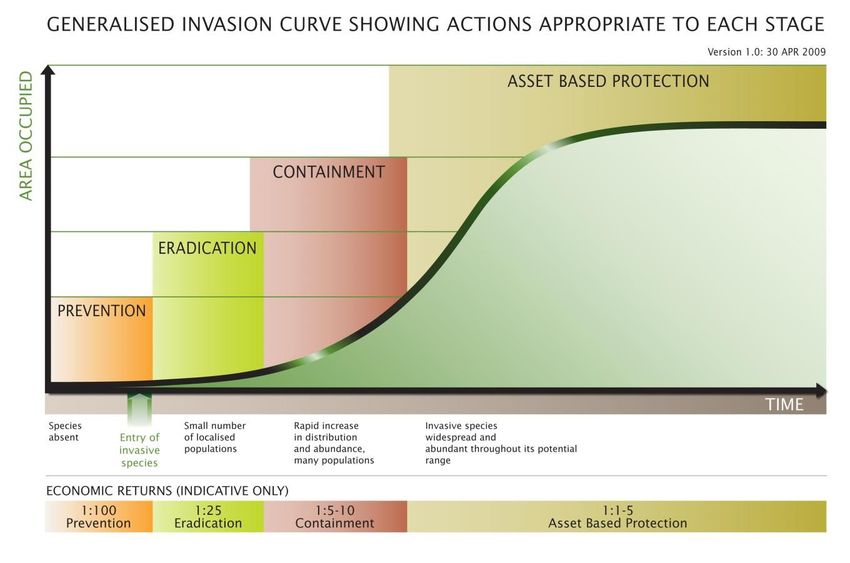
Figure 3: Generalised Invasive Curve. (DELWP, www.delwp.vic.gov.au accessed 29
May 2014)
Further detail about best practice principles appears later in this document (page 23 and 24).
Page | 14
MOIRA SHIRE COUNCIL | ROADSIDE WEED AND PEST ANIMAL CONTROL STRATEGY 2015-2020INVASIVE PLANT CLASSIFICATIONS
Declared noxious weeds
Under the CaLP Act certain plants are declared as noxious weeds in Victoria. These plants
cause environmental or economic harm or have the potential to cause such harm. They can
also present risks to human health. The CaLP Act defines four categories of noxious weeds:
State prohibited weeds
These invasive plants either do not occur in Victoria but pose a significant threat if they invade,
or are present and pose a serious threat and can reasonably be expected to be eradicated. If
present, infestations of a State prohibited weed are relatively small.
Regionally prohibited weeds
Regionally prohibited weeds are not widely distributed in a region but are capable of spreading
further. It is reasonable to expect that they can be eradicated from a region and they must be
managed with that goal. Land owners, including public authorities responsible for crown land
management, must take all reasonable steps to eradicate regionally prohibited weeds on their
land.
Regionally controlled weeds
These invasive plants are usually widespread in a region. To prevent their spread, ongoing
control measures are required. Land owners have the responsibility to take all reasonable steps
to prevent the growth and spread of regionally controlled weeds on their land.
Restricted weeds
This category includes plants that pose an unacceptable risk of spreading in this State and are
a serious threat to another State or Territory of Australia. Trade in these weeds and their
propagules, either as plants, seeds or contaminants in other materials is prohibited.
Page | 15
MOIRA SHIRE COUNCIL | ROADSIDE WEED AND PEST ANIMAL CONTROL STRATEGY 2015-2020EXISTING PARTNERS
Management of weeds and pest animals requires integrated management through
partnerships with state government agencies, Catchment Management Authorities and the
community.
Stakeholder Type of partnership / activity
Department of Environment, Land, Water and Community grants and Good Neighbour
Planning Program. Control of State Prohibited weeds
Enforcement of the CaLP Act
Working with private landholders
Department of Economic Development, Jobs, Funding provided to Council’s for roadside
Transport and Resources weed and pest animal management (3 year
funding ending June 2015)
Parks Victoria Management of weeds and pest animals on
neighbouring State managed parks and
reserves
Arterial Roads Management of weeds and pest animals on
arterial roads
Catchment Management Authorities Peak natural resource management body in
the catchment
Goulburn Murray Water Manages weeds on water storage, delivery
and drainage systems involving 70% of
Victoria’s stored water.
Neighbouring Councils Partnership with grant programs through
Landcare and the CMAs.
Information sharing about partner programs
and grant opportunities.
Landcare networks Community led action that encourages private
land owners to take action to tackle specific
weeds.
Table 2: Stakeholder Partnerships Summary
Page | 16
MOIRA SHIRE COUNCIL | ROADSIDE WEED AND PEST ANIMAL CONTROL STRATEGY 2015-2020COMMUNITY
Weeds
The community in Moira Shire strongly values the natural environment, is generally well
informed about conservation principles and is relatively active in terms of responding to
environmental threats.
Council takes into account a range of criteria when prioritising its weed control works. Sites
which are the subject of individual community requests will be considered according to the
treatment priority criteria described below.
Community expectations may exceed resources, hence the purpose of the strategy is to
guide priority works, however the longer term aim is to ensure all roadsides will be surveyed
and treated.
A key to communication is promoting the importance of implementing this strategy and
ongoing works to the public and groups such as Landcare Networks and Conservation
Management Networks.
Organic Properties
Moira Shire is home to a number of Organic agricultural properties adjacent to numerous
Council managed roadsides. In an effort to minimise potential impacts the treatment of weed
and pest species may have on organic property certifications, Council have a collated list of
each organic property in the Shire. It is essential that any employee of the Shire be equipped
with this list, and is aware of the organic properties which reside in Moira Shire.
It is highly important that when treating weeds along roadsides adjoining organic farms that
the landowner be contacted for their consent prior to treatment.
Page | 17
MOIRA SHIRE COUNCIL | ROADSIDE WEED AND PEST ANIMAL CONTROL STRATEGY 2015-2020EXISTING COUNCIL ACTIVITIVES
Annual weed control program
As part of the changes to the CaLP Act, Council were required to develop a Roadside Weed
and Pest Control Plan through consultation with the former DEPI (now the Department of
Economic Development, Jobs, Transport and Resources). This plan was endorsed by the
State Government and Council was provided with funding to assist in implementing works
set out in the plan. This funding totalled $150,000 over three years, and Council commenced
works on the annual Roadside Weed and Pest Control Plan in 2012-2013.
With these State Government funds, contractors have been engaged to conduct the works to
treat and map weed species on Council managed roadside. The mapping is essential to
document and assess the weed species present, current weed coverage, and to allow for
appropriate planning for future control programs.
With this funding over the three year period, Council was able to achieve the mapping of all
Council managed roadsides within the Shire, as well as partial treatment of approximately
30% of our roadsides. The 30% of roadsides are all considered to be high conservation
significance areas.
At the time of preparing this final strategy the State Government had recently announced
funding for rural and regional councils under the Roadside Weeds and Pests Program. Moira
Shire will assess the program details and funding criteria when it becomes available.
Depending on these details Council may apply for funding to undertake roadside weed and
pest animal control; alternatively Council will fund future works from rate revenue.
Pest animal control
As part of the Roadside Weed and Pest Control Plan, sites of rabbit infestations along
roadsides have been mapped and are documented for potential control depending on
funding allocations or allowances. There are certain limitations to pest control on roadsides
such as no baiting in a road reserve, no deep ripping of burrows, and no damage to cultural
heritage.
Other Activities
In addition to on-ground works, Council also encourages programs run by Conservation
Management Networks, Landcare networks and other organisations and non-for-profit
groups.
Note: The Roadside Weed and Pest Control Plan is attached as an appendix to this strategy
Page | 18
MOIRA SHIRE COUNCIL | ROADSIDE WEED AND PEST ANIMAL CONTROL STRATEGY 2015-2020TREATMENT AND PRIORITISATION
The volume of work necessary to treat the weeds and pest animals on approximately
7000km of roadside amounting to thousands of hectares of Council managed roadsides
each year is always likely to exceed the available budget.
As a result a robust method needs to be implemented to determine priorities to enable
treatment of roadsides on a rotational basis. This will enable the most effective treatment
and the highest return on investment by taking action at sites that pose the biggest threat to
environmental, economic and social assets. It will also address the liability that Council faces
as a land manager through the potential for prosecution related to CaLP Act listed weeds.
WEED TREATMENT CRITERIA
A prioritisation framework has been established as a part of this Strategy which enables
Council to attribute a priority score for each weed and pest animal control site in the Shire.
This will enable Council to maximise efficiency and effectiveness by allocating its resources
to the highest priority sites.
A combination of the following criteria informs the priority score for each site:
1. Conservation value – higher priority given to sites supporting high quality native
vegetation, including species or communities listed under the Environment Protection
Biodiversity Conservation Act, Flora & Fauna Guarantee Act, or included on the
DELWP’s threatened species advisory lists. Roadsides have already undergone an
conservation significance assessment, and this is currently mapped out on a GIS
layer, which will provide a strong support basis for roadside priorities.
Note: In simpler terms, we will be working from the highest quality roadsides with the
least infestations out to the most infested
2. Weed classification – higher priority given to sites containing regionally prohibited or
regionally controlled weeds (declared under the CaLP Act). Medium priority given to
regionally restricted weeds, and lower priority given to sites supporting unlisted
environmental and agricultural weeds only.
3. Neighbourhood – higher priority given to sites adjoining land with high conservation
value, such as conservation or bushland reserves. This will include boundaries with
other Shires and treat new threats and areas where there are other treatment
programs being implemented e.g. Parks Victoria, Conservation Management
Networks, Landcare Networks.
Note: that chemical weed control on sites immediately adjoining certified organic
farms will be avoided where possible.
4. Cost efficiencies – higher priority given to sites where multiple weed species are
present that require the same method of treatment at the same time.
Page | 19
MOIRA SHIRE COUNCIL | ROADSIDE WEED AND PEST ANIMAL CONTROL STRATEGY 2015-2020PEST ANIMAL (RABBITS) TREATMENT CRITERIA
Previous surveys and the low number of resident requests relating to rabbits on roadsides
suggest that this problem is relatively isolated and low level. This does not mean that
Council should be complacent about rabbit control. Instead low infestation levels mean that
a small investment in control works now can prevent major costs in the future.
The criteria below will be used to identify works as additional data is collected relating to
rabbit activity in the Shire. Council may need to budget or apply for funding to address
community requests for pest animal control works.
1. Population density – higher priority given to sites with a high population density
2. Neighbourhood – higher priority given to sites where complementary control is being
undertaken by partners (e.g. Landcare, CMNs and CMAs)
3. Conservation value – higher priority given to sites supporting high quality native
vegetation, including species or communities listed under the EPBC Act, FFG Act, or
included on DELWP’s threatened species advisory lists
It is noted that Council’s rabbit program will be limited to treatment of rabbits declared under
the CaLP Act.
Treatment of non-declared pests and problem wildlife will not form part of Council’s
treatment works. Instead Council plays a support and advisory role in relation to these
species.
Note: Destroying warrens instead of the rabbits themselves is the most effective way to
minimise breeding and spread.
Page | 20
MOIRA SHIRE COUNCIL | ROADSIDE WEED AND PEST ANIMAL CONTROL STRATEGY 2015-2020BEST PRACTICE PRINCIPLES
There are some general principles that can be broadly applied. These include:
Integrated management – this involves a long term management approach, using as
many management techniques as possible. Using several methods of control reduces
the chance that species will adapt to the control technique used – e.g. through herbicide
resistance.
Integrated management also involves coordinating weed control, pest animal
management and revegetation to maximise resources and achieve improvements in
vegetation quality. As a general principle, weed and pest animal control should occur
before revegetation to ensure new plantings survive. Similarly, treatment of woody
weeds can have the dual effect of controlling invasive flora species, while also removing
harbour for rabbits and foxes.
Appropriate scale – species such as rabbits are very mobile. Research shows that the
likelihood of reinvasion is greatly reduced if there is no significant warren within 3km of
the given treatment site. Therefore, rabbit control needs to take a landscape scale
approach to be effective.
Long term time frames with follow up – many species develop extensive seed banks
that can be stimulated by disturbance, so a lack of follow-up can allow a bigger problem
to emerge.
Chemical control – chemical control is the most commonly thought of measure for
weed and pest animal control. The effectiveness of his technique depends on the choice
of chemical, timing of application, rate of application to suit the circumstance, and even
changing chemicals to avoid plants developing resistance.
Physical control – grooming can virtually remove the fire risk of standing biomass
without the need to gain permits to transport weed material from a site.
Controlled burning can remove biomass and stimulate the seed bank of weeds and
natives to germinate, thus allowing more efficient follow up, potentially reducing the
duration of a weed seed bank, and expediting site rehabilitation.
Cultural control – humans are the most efficient cause of spread for weed and pest
animal species. Behavioural measures, such as the cleaning of vehicles to remove
seeds (especially slashers), can drastically reduce the spread of species such as
Chilean Needle Grass (Nassella neesiana).
Biological control – in some areas biological controls, such as the Bridal Creeper rust
and mite that are already present in the landscape can help reduce the vigour of
infestations ahead of other integrated controls.
Biosecurity – taking a biosecurity approach involves preventing incursions of new
species, eradicating high threat species that have low infestation levels, containing
species that are wide spread but could spread further, and only targeting wide spread
infestations that have reached their natural range where they threaten areas of high
conservation or agricultural value. This approach is cost effective as it maximises the
return from investment in weed and pest control. A diagrammatic explanation of a
biosecurity approach is provided at Figure 3. This approach generally aligns with the
classification of weed species for each catchment as defined under the CaLP Act.
Page | 21
MOIRA SHIRE COUNCIL | ROADSIDE WEED AND PEST ANIMAL CONTROL STRATEGY 2015-2020MONITORING, EVALUATION, REPORTING AND
IMPROVEMENT
Sophisticated mapping technologies now exist to record relevant data and inform future
planning and decision making. Ongoing mapping with treatment to monitor trends over time
and allowing for seasonal variations is considered best practice and essential for the
implementation of a successful and efficient long term program. Mapping allows for the
monitoring of kilometres of roadside treated, species present and treated, and density and
distribution of weed and pest species.
Weed and pest
control program
according to
treatment priorities
Update strategy as Monitoring and
required evaluation
Review if weed
classification
system changes as
a result of
legislative review
Figure 3: Flow diagram representing the procedure of monitoring, evaluation,
reporting and improvement
Mapping information provides the weather, wind speed and direction, chemical used,
number of people required and time estimation of each site. This supports future planning
and assessments, feedback to the community, and also a reference to previous treatments
should there be any complaints. The monitoring and mapping of new and emerging weed
species is also a priority, especially taking careful note of the Shire’s borders to identify
emerging invasions.
Page | 22
MOIRA SHIRE COUNCIL | ROADSIDE WEED AND PEST ANIMAL CONTROL STRATEGY 2015-2020OPTIONS
With the responsibility for roadside weed management under the CaLP Act, a strategic
approach including budget is needed to adequately manage the extensive area for which
Council is responsible.
It is important that Council’s weed and pest animal activities are monitored and evaluated to
facilitate improvements. This will ensure Council’s investment is as efficient and effective as
possible.
In preparing this strategy a number of treatment options were developed for consideration.
The options varied in the scale and cost of works to be delivered each year and in the long
term effectiveness (and ongoing cost) of treatment.
A Draft Roadside Weed and Pest Animal Control Strategy 2015 – 2020 was made available
to the public for a period of consultation and feedback. The draft document detailed three
treatment options.
In light of receiving no comments from the public, the Roadside Weed and Pest Animal
Control Strategy 2015-2020 presents the ‘recommended’ treatment option from the draft
strategy for implementation.
This provides Council the ability to target the roadsides according to priorities proposed in
this strategy and work through a staged process according to best practice principles to
effectively treat roadsides across the Shire on a three year rotation.
It is anticipated that after two cycles of treatment across the municipality (six years) the
funds required to manage weeds and pests will be significantly reduced as areas of weed
and pest infestation are controlled or eliminated.
Note: Effective and efficient treatment of weeds is impacted significantly by weather and
seasonal conditions. The cost estimate below is indicative only and treatment of weeds will
vary according to the particular seasonal and climatic conditions.
Page | 23
MOIRA SHIRE COUNCIL | ROADSIDE WEED AND PEST ANIMAL CONTROL STRATEGY 2015-2020Treatment details Financials Strength Weakness
$175,000 Response to legislative responsibilities New ongoing
Mapping and per annum for 5 Council
treatment: years then Applies best practice principals involving budget item
Mapping of 100% ongoing treatment of Regionally Prohibited and
roadsides p.a management Regionally Controlled weeds and rabbits
Complete regime $50,000 on priority roadsides (allows for multiple
treatment of p.a or follow up treatments, seasonal
approx. 30% of variation and/ or species diversity)
roadsides p.a Contractor and
internal Avoids potential financial penalties and/
resources or larger infestations that are more costly
included in costs to treat
Aim to eradicate Regionally Prohibited
weeds and prevent the spread of
Regionally Controlled weeds
Reduce biosecurity and bushfire risk
High quality roadsides and increased
environmental value
Support agriculture industry and
community interests
Table 3: Treatment details
Page | 24
MOIRA SHIRE COUNCIL | ROADSIDE WEED AND PEST ANIMAL CONTROL STRATEGY 2015-2020CONCLUSION
This Strategy aims to effectively and strategically manage weeds and pest animals on
roadsides throughout the Moira Shire.
The treatment described in this strategyrequires a relatively high initial investment (five
years) after which an annual maintenance schedule is anticipated to be sufficient to manage
Councils roadsides from a weed and pest animal perspective.
REFERENCES
Australian Government (2014), Weeds in Australia,
http://www.environment.gov.au/biodiversity/invasive/weeds/index.html, accessed 15 December
2014
Country Fire Authority (CFA) (2011), Fire Ecology, guide to environmentally sustainable
bushfire management in rural Victoria
Department of Environment and Primary Industries (DEPI) (2009), Generalised Invasion
Curve, www.depi.vic.gov.au, accessed 29 May 2014
Department of Environment and Primary Industries (DEPI) (2010), Invasive Plant and Animal
Policy Framework (IPAPF)
Gong W, Sinden J, Braysher M and Jones R (2009). The Economic Impacts of Vertebrate
Pests in Australia. Invasive Animals Cooperative Research Centre, Canberra.
Goulburn Broken Catchment Management Authority (GBCMA) (2013), 2013-19 Goulburn
Broken Regional Catchment Strategy
Natural Resource Management Ministerial Council (NRMMC) (2007), Australian Weeds
Strategy – A national strategy for weed management in Australia
South Australia State Government (2011),Rabbit Technical Note 2 How Much Do Rabbits
Eat?
Steel, J. Kohout, M. and Newell G. (2008), Whither the weeds under climate change,
Department of Primary Industries, Melbourne.
Page | 25
MOIRA SHIRE COUNCIL | ROADSIDE WEED AND PEST ANIMAL CONTROL STRATEGY 2015-2020APPENDIX 1- IMPLEMENTATION PLAN
Theme 1: Weeds on Roadsides
Objectives Action Measure Resources
Council addresses Implement an annual Number of Council Conducted by
its legal obligations weed treatment for managed roadsides external
relating to pest Council managed sites treated each year contractors utilising
animal roadsides as outlined and over the life of the Council’s annual
management as in this strategy. strategy. weed and pest
specified in our program budget
approved Roadside Target 30% p.a allocation
Weed and Pest
Control Plan under Give highest Density and spread Estimated cost:
the CaLP Act. 1994 priority to the of Regionally $175,000 p.a
treatment of sites Controlled and
that contain Regionally
Regionally Prohibited weeds
Controlled or
Regionally
Prohibited weeds
Give priority to Number of sites
sites that have over the life of the
been treated Strategy that
previously (to transition from
reduce regrowth) requiring annual
treatment to
requiring
monitoring only
Give medium Density and
treatment priority spread of
to sites that
contain restricted
weeds
Treat Restricted weeds
environmental Density and spread
weeds of environmental
weeds.
Continue to Number of Council Conducted by
implement an annual managed roadsides external
mapping and sites mapped and contractors utilising
monitoring program monitored each year Council’s annual
for Council managed and over the life of the weed and pest
roadsides as outlined strategy program budget
in this strategy allocation
Target 100% p.a
Page | 26
MOIRA SHIRE COUNCIL | ROADSIDE WEED AND PEST ANIMAL CONTROL STRATEGY 2015-2020Objectives Action Measure Resources
Council addresses Promote vehicle Number of Internal resources
its legal obligations hygiene practices contractors
relating to pest within Council, implementing
animal including the use of vehicle hygiene
management as engineered solutions practices
specified in our to prevent the
approved Roadside transport of seeds on Develop a Standard
Weed and Pest vehicles (eg, slasher Operating Procedure
Control Plan under covers, wash downs with Council staff and
the CaLP Act. 1994 etc) contractors
Implement regular Number of sessions Internal resources
vehicle hygiene delivered on an as
training sessions needed basis
with Council staff
and contractors Review Standard
Operating
Procedures for
training a number
of Council staff to
implement
appropriate vehicle
hygiene practices
Investigate Review Standard Internal resources
incorporating vehicle Operating Procedures
hygiene practices for the inclusion of
into the position vehicle hygiene
descriptions for practices into relevant
council staff position descriptions
operating machinery
Monitoring and Recording data on Annual decrease in
Evaluation weeds and sites and density of
treatment to weeds on
evaluate success of roadsides
program
Page | 27
MOIRA SHIRE COUNCIL | ROADSIDE WEED AND PEST ANIMAL CONTROL STRATEGY 2015-2020Theme 2: Rabbits on Roadsides
Objectives Action Measure Resources
Council Continue to implement Number of Council Council’s
addresses its an annual rabbit managed roadsides annual weed
legal control and mapping sites treated each and pest
obligations program for Council year and over the program
managed roadsides as life of the strategy budget
relating to
outlined in this strategy allocation
pest animal
management
as specified
in our
approved
Roadside
Weed and
Pest Control
Plan under
the CaLP Act.
1994
Take into account the Alignment of pest
model codes of animal control Internal
practice and standard techniques
operating procedures employed and the Resources
for pest animal control recommendations
that include guidance in the relevant
and best practice codes of practice
directions about and standard
humane techniques operating
procedures
Monitoring and Recording data on Annual
Evaluation rabbits and treatment decrease in Contractor and
to evaluate success sites and
of program density of Internal
rabbits on
roadsides
Page | 28
MOIRA SHIRE COUNCIL | ROADSIDE WEED AND PEST ANIMAL CONTROL STRATEGY 2015-2020APPENDIX 2 – WEED CLASSIFICATIONS
Please refer to the Department of Environment, Land, Water and Planning website for up to
date lists of weeds and their classifications in the region.
Page | 29
MOIRA SHIRE COUNCIL | ROADSIDE WEED AND PEST ANIMAL CONTROL STRATEGY 2015-2020APPENDIX 3: COUNCIL ROADSIDE WEED AND
PEST CONTROL PLAN 2012 – 2015
Roadside Weed and Rabbit Control Plan
Council Details:
Council Name: Moira Shire Council
Postal Address: PO Box 578, Cobram, VIC, 3644
Key Contact:
Name: Sally Rice
Position: Manager: Safety, Amenity and Environment.
Contact Details: 0358 719 222 srice@moira.vic.gov.au
Regional Context of Noxious Weed and Rabbit Management
Moira Shire is located in the Central Murray region of Victoria and covers a total area of 4,057
square kilometers. Moira Shire has four major towns; Cobram, Nathalia, Numurkah and
Yarrawonga and 17 smaller communities as well as a rural residential population.
Moira Shire is bounded by the Murray, Goulburn and Ovens Rivers. It enjoys an environment
with a range of natural features dominated by river systems, wetlands, plains woodlands and
grasslands.
Moira Shire makes up a large part of Victoria’s productive food bowl. Agriculture is the primary
land use in the municipality which encompasses major irrigation centered on the Goulburn
Murray Irrigation District and extensive dry land farming areas. It is one of the nation’s major
agricultural areas in terms of productivity, economic value and production and diversity of
product.
Moira Shire has a responsibility for the management of approximately 3,500 km of local road
network. This equates to approximately 7,000km of roadside. The management of rural
roadsides has many complexities and Council has developed a Roadside Management Plan
(2004) and Roadside Biodiversity Risk Management Protocols (2007) to help guide sound
management of roadsides.
The Roadside Management plan indicates that roadside vegetation assessment data will be
used to locate areas of serious noxious and environmental weed invasion and control methods
will be targeted to roadsides of Very High and High conservation value as a first priority. Further
priorities of this plan included:
preparation and production of weed maps;
undertaken to play a leading role in the control and eradication of weeds on roadsides
Page | 30
MOIRA SHIRE COUNCIL | ROADSIDE WEED AND PEST ANIMAL CONTROL STRATEGY 2015-2020for which Council is deemed responsible; and
priority will be given to actions that are part of a co-operative community weed action
plan.
Between 2008 and 2012 an evaluation of the Shires roadsides was undertaken. This
information produced an assessment of indigenous vegetation and indications of rabbits
(Oryctolagus cuniculus) and weeds on roadsides including relative abundance of identified
species. This information exists as an MS Access Database. More detailed and current mapping
is required.
Moira Shire Council is aware that proposed amendments to the Catchment and Land Protection
Act 1994 will clarify responsibility for management of noxious weeds and pest animals on
roadsides and provide for the introduction of a management plant prepared by municipal
councils.
Moira Shire undertakes general roadside spraying to control weeds on Councils roadsides. For
example in the 2012/13 financial year this involved spraying along 1167km (2334km of
roadside) of road. Currently Moira Shire has no rabbit invasions therefore no work has been
carried out; monitoring for rabbits is continuous.
Council conducts regular training for staff to assist in their management of Councils roadside
assets. This includes relevant staff undertaking the ‘Weed Stop’ training program and for
example in May 2013 approximately 25 of Councils Operations staff attended an Environmental
Works Planning day. This training was to improve management of environmental assets during
works, ensure good practice and compliance with legislative requirements.
Community Consultation
Moira Shire stays in touch with community concerns via attendance at meetings and participation in
activities of the Goulburn Murray Landcare Network as well as other meetings of relevant community
groups including local Landcare Groups, Broken Boosey Conservation Management Network, Lower
Goulburn Conservation Management Network, Township Community Coordinator groups,
GeckoClan Landcare Network and via direct phone calls and correspondence from individuals,
school groups etc. Council also has an Environment Sustainability Advisory Committee that meets 4
times per year.
The Shire has specifically requested community views on the issue of roadside weeds and rabbits via
300 randomly selected landholder mail survey and interviews with key stakeholders (please see
below for list) and maintains a record of feedback. There were also 39 interviews conducted face-to-
face or over the phone.
Council also keeps records of community concerns reported including pest and weeds, via general
communications such as the council website, and Customer Request system.
Page | 31
MOIRA SHIRE COUNCIL | ROADSIDE WEED AND PEST ANIMAL CONTROL STRATEGY 2015-2020Stakeholder Consultation
The following key stakeholders have been consulted in the development of this plan.
Benalla Rural City
Broken Boosey Conservation Management Network
Broken Creek Improvement Group
Bunbartha Kaarimba Zeerust Landcare Group
Burramine Tungamah Land Management Group
Country Fire Authority
Dookie Land Management Group
Department of Environment and Primary Industries
GeckoClan Landcare Network
Goulburn Broken Catchment Management Authority
Goulburn Murray Landcare Network
Goulburn Valley Environment Group
Indigo Shire Council
Invergordon District Environment Group
Koonoomoo Landcare Group
Lower Goulburn Conservation Management Network
Muckatah Landcare Group
Naringaningalook Landcare Group
Nathalia Tree Group
North East Catchment Management Authority
Parks Victoria
Picola Land Management Group
Riverine Plains Group
South Yarrawonga Landcare Group
Superb Parrot Project
Victorian Farmers Federation
Yarrawonga Urban Landcare Group
Warby Ranges Landcare Group.
Relevant Local and Regional Policies and Strategies
State
Invasive Plants and Animal Policy Framework
Catchment and land Protection Act 1994
Roadside Management Act 2004
Aboriginal Heritage Act 2006
Road management Act 2004. Code of Practice. Worksite Safety – Traffic Management.
Road management (Works and Infrastructure) Regulations 2005
DSE Roadside Vegetation Policy for Bushfire Risk Mitigation purposes.
Page | 32
MOIRA SHIRE COUNCIL | ROADSIDE WEED AND PEST ANIMAL CONTROL STRATEGY 2015-2020You can also read


