SHEPPARTON NORTH NEIGHBOURHOOD CENTRE - ECONOMIC IMPACT ASSESSMENT JANUARY 2017 - JMACRORANDIMASI - ENGAGE VICTORIA
←
→
Page content transcription
If your browser does not render page correctly, please read the page content below
Shepparton North Neighbourhood Centre

              Economic Impact Assessment

                             J a n u a r y 2017

                            JMacroRanDimasi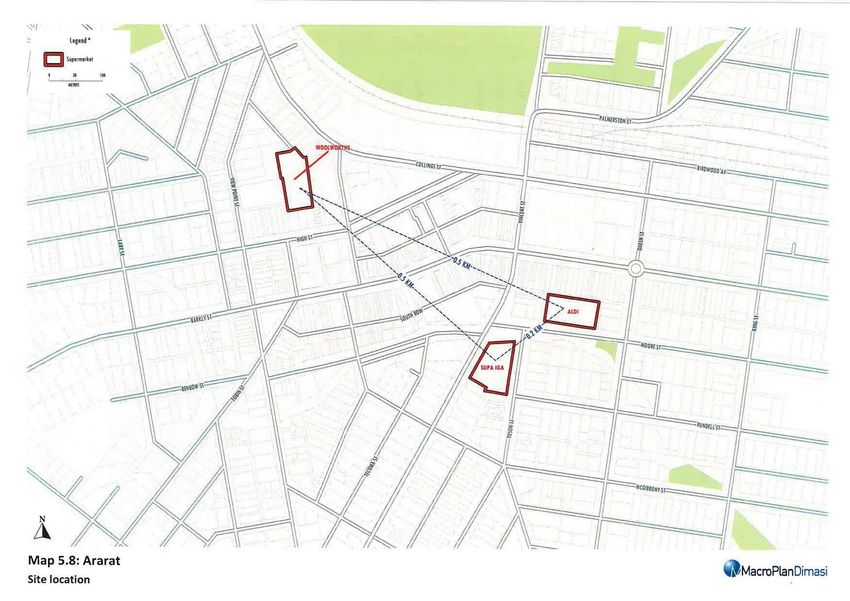
MacroPlan Dimasi

MELBOURNE                                  SYDNEY

Level 16                                   Level 6

330 Collins Street                         39 Martin Place

Melbourne VIC 3000                         Sydney NSW 2000

(03) 9600 0500                             (02) 9221 5211

BRISBANE                                   GOLD COAST

Level 15                                   Level 2

111 Eagle Street                           89 -91 Surf Parade

Brisbane OLD 4000                          Broadbeach QLD 4218

(07) 3221 8166                             (07) 3221 8166

ADELAIDE                                   PERTH

Ground Floor                               Level 1

89 King William Street                     89 St Georges Terrace

Adelaide SA 5000                           Perth WA 6000

(08) 8221 6332                             (08) 9225 7200

Prepared for: Lascorp Development Group

MacroPlan Dimasi staff responsible for this report:

Tony Dimasi, Managing Director - Retail

Ellis Davies, Manager - Retail

Ziggy Gelman, Consultant - Retail

Table o f contents

Executive summary

Introduction                                                                      iv

Section 1:     Site context and planning framework                                1

       1.1     Regional context and site location                                 1

       1.2     City of Greater Shepparton Commercial Activity Centres Strategy    4

       1.3     Proposed development                                               6

Section 2:     Trade area analysis                                                8

       2.1   Trade area definition                                                8

       2.2   Trade area population                                               11

       2.3   Socio-demographic profile                                           14

       2.4   Trade area retail spending                                          17

Section 3:     Competition                                                       22

       3.1   Competitive context                                                 22

       3.2   Superma rket/foodstore floorspace provision                         24

Section 4:   Centre retail sales potential and distribution                      26

      4.1    Estimated sales potential                                           26

      4.2    Origins of centre sales                                             31

Section 5:   Economic impact considerations                                      33

      5.1    Economic and social benefits                                        33

      5.2    Employment stimulus                                                 34

      5.3    Consideration o f trading impacts                                   36

      5.4    Potential impacts on the Shepparton CBD                             57

      5.5    Summary and net community benefit                                   58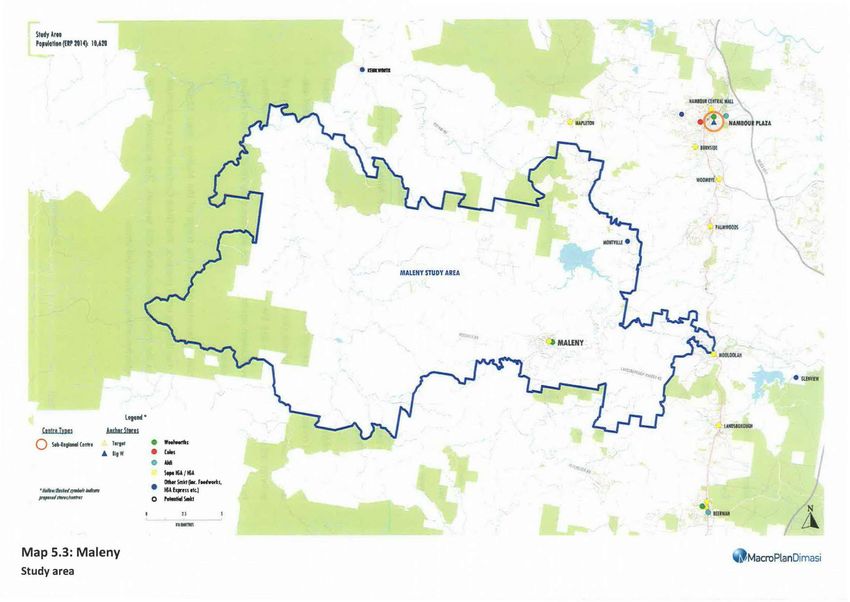
Executive summary

•    Shepparton is situated approximately 190 km north of Melbourne and acts as a major

     industrial, employment and service centre for northern Victoria. The subject site for a

     proposed neighbourhood centre in Shepparton North is located at the south-eastern

     corner of Numurkah Road (the Goulburn Valley Highway) and Ford Road. Goulburn Valley
     Highway is a major traffic route and is the main north-south carriageway through

     Shepparton.

•    The Commercial Activity Centres Strategy, which was prepared by Essential Economics for

     the City of Greater Shepparton in July 2015 and adopted by Council in February 2016,

     identifies Shepparton North as an appropriate location for additional retail facilities. In

     particular, Shepparton North Action 3 details that "...In indicative terms, an increase

     of 6,000m2    in shop floorspace may be supported on land outside the existing
     Commercial 1 Zone at Shepparton         North,   which   is sufficient to    accommodate

     a 2nd supermarket and supporting retail such as specialty shop...".

•    The extent of the trade area expected to be served by the proposed Shepparton North

     Neighbourhood Centre reflects the high profile location o f the site on the Goulburn Valley

     Highway, the surrounding competitive context and proposed composition of the centre.

     The trade area for the proposed Shepparton North Neighbourhood Centre is defined to

     include a primary and a secondary sector. The main trade area population is estimated at

     22,220 people in 2015, including 16,030 residents within the primary sector. Shepparton
     North is planned as a major growth area in the regional city, and over the forecast period

     the main trade area population is projected to increase by 300 residents per year and is

     estimated at 25,520 at mid 2026.

•    In terms o f retail facilities within the trade area, a Fairleys Supa IGA is located in
     Shepparton North, some 500 metres south of the subject site, while two foodstores are

     located at Numurkah some 30 km north of the subject site. Beyond the trade area, the

     most notable retail facilities include the Shepparton CBD, located 3.5 km south of the
     subject site, Shepparton Plaza and Shepparton Marketplace.

                                                          Shepparton North Neighbourhood Centre
    iiMacroPIanDimasi
                                                                       Economic Impact Assessment
•    There is a planning permit for additional specialty retail floorspace to be provided to the
     north of Fairleys Supa IGA centre. The permit was granted in April 2012, however the
     application is currently deferred. Fairleys Supa IGA revealed plans for a $30 million
     expansion to the existing centre, which was planned to increase the amount of retail and
     commercial floorspace to around 14,000 sq.m. It is our understanding that an updated
     plan for the site has recently been lodged with Council for a new IGA supermarket, with

     an Aldi supermarket and specialty stores to be provided within the current IGA
     supermarket building.

•    There is currently a substantial underprovision of supermarket floorspace in the trade

     area. There is one supermarket and two foodstores located in the trade area, which has a
     resident population of 22,220, with over 16,000 residents in the primary sector. The
     primary sector population alone is considered sufficient to support two supermarkets,
     particularly if the supermarkets are located on the Goulburn Valley Highway.

•    The total retail sales potential of the centre is estimated at $41 million at 2017/18
     (expressed in constant 2014/15 dollars). This estimate of sales potential reflects the
     location of the site on a major traffic route, the available population within the defined

     main trade area and the limited provision of supermarket floorspace within the
     surrounding area.

• The proposed Shepparton North Neighbourhood Centre is likely to result in a range of
     economic impacts, with the key positive impacts including:

        - Addressing the underprovision of supermarket floorspace in the trade area;

        - Serving the future residential growth in Shepparton North;

        - Creating a focal point for local residents;

        - Substantially improving shopping choice, convenience and amenity for local
           residents; and

        - Creation of additional employment opportunities.

                                                                    N o t ] N o i b o L J r u c o Ecritro
    .I"1acrcP1anOrrias
                                                                                                        lit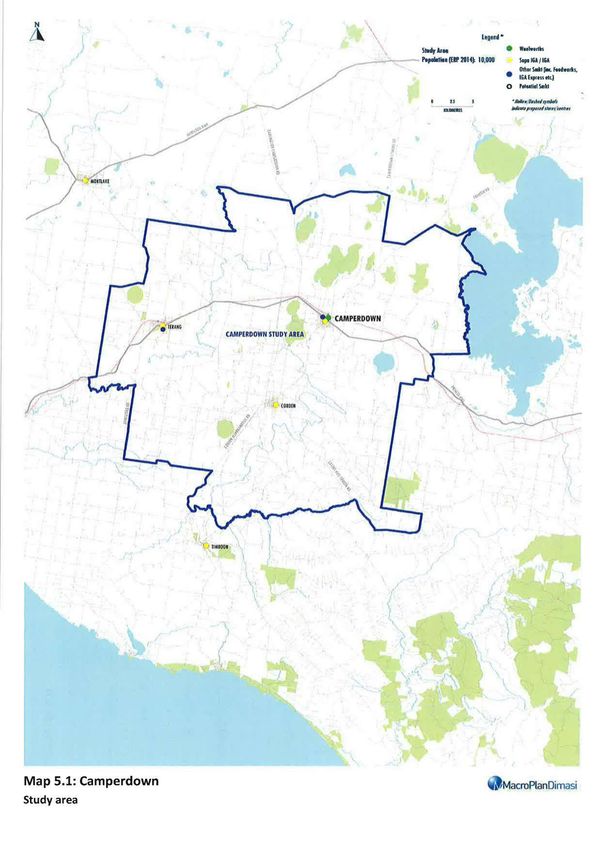
Furthermore, the proposed development would meet the objectives outlined in the City of

Greater Shepparton Commercial Activity Centres Strategy, in particular:

    - At present, the limited mix of uses in the Shepparton North activity centre is not
      consistent with the expectations of both planning policy and the general community;

    - An increase of 6,000 sq.m in shop floorspace may be supported on land outside the
       existing Commercial 1 Zone at Shepparton North, which is sufficient to accommodate

       a second supermarket and supporting retail such as specialty shops; and

    - An appropriate site in the area fronting the Goulburn Valley Highway between Ford
       Road in the north and Hawkins Street in the south can be endorsed for this extension

       to the Commercial 1 Zone.

•   Against these benefits, some impacts are projected on centres in the surrounding area.
    The   potential   trading   impacts   arising   from   the   proposed      Shepparton              North

    Neighbourhood Centre would be dispersed across a range of retail centres. The potential

    impacts are not expected to threaten the ongoing viability of any existing retail centre or
    retail shop, and in particular would not impact the retail facilities within the Shepparton

    CBD. Therefore, it can be concluded that a net community benefit will result from the
    proposed development, particularly as the development will provide greatly increased
    shopping choice for local residents while also creating job opportunities for the local

    community.

                                                           Sheppai ton North Neighbourhood Centre
      NilacroPtan
                                                                         [:oIiornIc I 1 r r   A ' ro,ni1
Introduction

This   report   presents an    independent assessment of the         market potential for a
neighbourhood centre at 221-229 Numurkah Road in Shepparton North, as well as the

economic impacts arising from the proposed development. The report is structured as
follows:

.   Section 1 provides an overview of the regional and local context o f the site, reviews the

    proposed development and discusses the relevant planning framework.

.   Section 2 examines the trade area available to the proposed centre, including estimates
    and projections of population and retail expenditure levels in the trade area, as well as

    detailing the socio-demographic profile o f trade area population.

•   Section 3 reviews the competitive environment o f the surrounding area.

•   Section 4 assesses the likely sales potential and market shares for the proposed

    neighbourhood centre.

•   Section 5 outlines the potential economic and social benefits, and also assesses the

    impacts that can be anticipated from the proposed development.

JkM
  / acroPa
         lnDm
            i asi                                        Shepparton North Neighbourhood Centre
                                                                         Economic Impact Assessment
                                                                                                      iv
Section 1:                                         L.

This section details the context o f the site and the proposed development and also discusses

the relevant planning framework.

1.1   Regional context and site location

Shepparton is situated approximately 190 km north of Melbourne (refer Map 1.1) and acts as

a major industrial, employment and service centre for northern Victoria.

Shepparton is an important agricultural and horticultural production centre. The municipality

forms part of the 'Food Bowl o f Australia', which accounts for 25% o f the total value of

Victoria's agricultural production. Other major industries in the region include construction,

manufacturing, healthcare and retail trade. Greater Shepparton also acts as a logistics hub

for several iconic companies operating in the region.

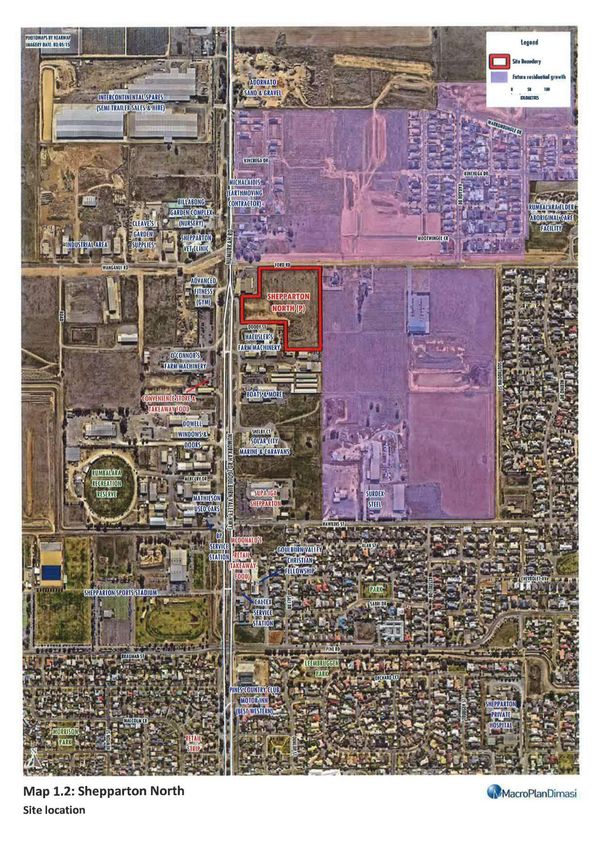
The subject site for the proposed neighbourhood centre is located at 221-229 Numurkah

Road (the Goulburn Valley Highway) in Shepparton North. Map 1.2 shows the subject site as

well as the surrounding land uses including large areas o f land planned for future residential

development to the immediate north and east of the site. The existing retail facilities

provided on the Goulburn Valley Highway are also shown including the location of the

Fairleys Supa IGA supermarket to the south o f the subject site.

The Goulburn Valley Highway connects Shepparton with Cobram to the north and Seymour

to the south. According to VicRoads Traffic   Volume Data for Victoria (July 2014),   there were

an average of 9,000 vehicle movements per day in both directions on the Goulburn Valley
Highway between Numurkah Road and Barmah-Shepparton Road.

 ,)MacroPIanDimasi                                       Shepparton North Neighbourhood Centre
                                                                      Economic Impact Assessment
N

                                                                                       I
                         /

                                                                                                                    AI.AWO1GA                        coJrnk
                                                                                                        IN
                                                                                  NUMbft
                                                                                                                                              --
            N

                                                                                                                                             WANCAIA,(

                             I(                                                       JI

                                                                                           SHEPPARTON

                                                            - --- -
                                                                                                             --i:
                                                    -       -       TAIA

                                         w$tt

                                                ç
                             I

                     -

                                                                I
                                                                                                                                     Legend
                                  *7WA

                                 7                                         ,--&It W
                   -r-
            -                               -       -                                                                             PozkI.id
       /                             (MELEOURIIE            /
                     - -
                                            -.          -
                                                                                                                                  hUw.yLIu/Ilwry5tufian

Map 1.1: Shepparton                                                                                                             JAMacroPtanDimasi
Regional context
Map 1.2: Shepparton North   MacmPtanD1masi
Site location
Site

1.2    City of Greater Shepparton Commercial Activity Centres Strategy

The Commercial Activity Centres Strategy (the Strategy), which was prepared by Essential

Economics for the City of Greater Shepparton in July 2015 and adopted by Council in
February 2016, identifies Shepparton North as an appropriate location for a sub-regional

centre.

At page 23, the Strategy states as follows:

          Although Shepparton North has been identified as a sub-regional centre in

          the hierarchy, in reality the centre currently serves a more limited role that

          is dominated by a single use (supermarket) and a lack o f diversity in retail
          and commercial activities. This is in contrast to the greater scale, range

          and diversity o f uses presented in the Riverside and Mooroopna CBA

          centres.

At page 40, the Strategy states as follows, regarding the Shepparton North Centre:

          Fairleys IGA is a popular grocery shopping destination and is one o f the
          best-performing independent supermarkets in Victoria.

          However, the role o f the centre in meeting community need is limited by
          the lack o f supporting specialty shops and other non-retail uses that would

          typically characterise a centre o f this type. This has been reflected in

          previous planning policy considerations relevant to the centre (for example

          Amendment C119).

Additionally, at page 40, identifying the main features and issues for the Shepparton North

Activity Centre, the Strategy states as follows:

          Main Features and Issues

          Considerations f o r the Strategy relevant to the Shepparton North activity

          centre include:

          •   Potential Expansion - the opportunity exists f o r the Shepparton North

              activity centre to expand within the existing planning framework f o r the

      MacroPIanDimasi                                     Shepparton North Neighbourhood Centre
                                                                         Economic Impact Assessment
centre that includes a shop floorspace cap o f 8,000m2 and significant
land in the Commercial 1 Zone that is currently vacant. This opportunity
f o r expansion has not been realised.
• Growing Demand - the northern parts o f the Shepparton urban area
continue to experience population growth, and this is expected to
continue f o r the foreseeable future. Development o f the north-east
growth area that has been identified by Greater Shepparton and is
located a short distance to the east will further increase demand for
additional facilities required to meet the needs o f this expanding
population.
• Mix o f Uses - at present, the limited mix o f uses in the Shepparton
North activity centre is not consistent with the expectations o f both
planning policy and the general community.
• Future Role - as the Shepparton North centre expands to meet the
needs o f surrounding residents and a large regional hinterland, an
enhanced role f o r the activity centre hierarchy as a sub-regional centre
is anticipated. For this to occur, the centre must contain a broader
range o f retail and commercial functions consistent with this definition
within the hierarchy.
Finally, at page 114, regarding an additional location for an expansion o f retail floorspace in
the Shepparton North area:
Shepparton North Action 3:
Ensure that future development o f the Shepparton North centre takes
place in a manner supported by appropriate urban design and planning
guidance. In indicative terms, an increase o f 6,000m2 in shop floorspace
may be supported on land outside the existing Commercial 1 Zone at
Shepparton North, which is sufficient to accommodate a 2nd supermarket
Shepparton North Neighbourhood Centre
qMacroPtanDimasi
Economic Impact Assessmentand supporting retail such as specialty shops. This should be subject to
detailed assessment through application o f the Planning and Development
Assessment Criteria to any proposal.
An appropriate site in the area fronting the Goulburn Valley Highway
between Ford Road in the north and Hawkins Street in the south can be
endorsed for this extension to the Commercial 1 Zone.
13 1 - -.
The proposed centre at 221-229 Numurkah Rd, referred to in this document as the proposed
Shepparton North Neighbourhood Centre, is planned to be developed at the south-eastern
corner of Numurkah Road (the Goulburn Valley Highway) and Ford Road. The centre is
proposed to be anchored by a supermarket and include a number of supporting specialty
shops and services.
Table 1.1 details the proposed composition of the centre, with the supermarket to occupy
3,960 sq.m, while Figure 1.1 illustrates the indicative plans for the site.
Category GLA
(sq.m)
Supermarket 3,960
Specialty retail 2,030
Total retail 5,990
Medical 300
Council/community 100
Total centre 6,390
Sheppaton North Neighbourhood Centre
cMcroP1anDirnas
Economic Impact A!;asmentI
c
69E AKALYM
SUPEFOAARKETILIO" 396W
SPECIALTY RETAIL 203
TOTAL RETAIL
COMiMTYCEN1RE
TOTAL CARS PROVIDED ONSIT 446 -
WT LEY SAYS 17
T O W N PLANNING
! a * O * O
-a-- itt:
flPPARTfl4Section 2: Trade area analysis
This section of the report analyses the trade area available to the proposed Shepparton
North Neighbourhood Centre at 221-229 Numurkah Road, including current and projected
population levels, the socio-demographic profile of the population, and the estimated
current and future retail expenditure capacity of trade area residents.
2.1 Trade area definition
The extent of the trade area or catchment that is served by any shopping centre, or retail
facility, is shaped by the interplay of a number o f critical factors. These factors include:
i. The relative attraction o f the retail facility or centre, in comparison with alternative
competitive retail facilities. The factors that determine the strength and attraction of
any particular centre are primarily its scale and composition (in particular the major
trader or traders that anchor the centre); its layout and ambience; and carparking,
including access and ease of use.
ii. The proximity and attractiveness o f competitive retail tenants, or centres. The
locations, compositions, quality and scale of competitive retail facilities all serve to
define the extent o f the trade area which a shopping centre or retail facility is
effectively able to serve.
iii. The available road network and public transport infrastructure, which determine the
ease (or difficulty) with which customers are able to access a shopping centre, or
retail facility.
iv. Significant physical barriers which are difficult to negotiate, and can act as
delineating boundaries to the trade area served by an individual shopping centre, or
retail facility.
JM
/i acroPa
lnDm
i asi Shepparton North Neighbourhood Centre
Economic Impact Assessment
8The key determinants of the trade area expected to be served by the proposed Shepparton
North Neighbourhood Centre include the following:
The high profile location of the site fronting the Goulburn Valley Highway, which is the
main north-south traffic route through Shepparton.
• The surrounding competitive context, which includes a Supa IGA anchored centre in
Shepparton North, two foodstores located in Numurkah, and the Shepparton CBD
situated 3.5 km south of the subject site.
• The composition o f the proposed centre, which is to include a new supermarket together
with a range o f supporting specialty shops and services.
Map 2.1 illustrates the trade area defined for the proposed centre, which includes a primary
sector and a secondary sector, described as follows:
• The primary sector encompasses the area of Shepparton generally north of Goulburn
River and Balaclava Road and includes the towns of Tallygaroopna and Katandra West.
• The secondary sector encompasses the towns of Numurkah and Wunghnu as well as the
surrounding rural area.
In combination, the above sectors form the main trade area for the proposed Shepparton
North Neighbourhood Centre.
Shepparton North Neighbourhood Centre
MacroPlanDimasi
Economic Impact Assessment1oOO*QS UIAUTAII
SECONDARY NORTH
W1DIQANU
KATANDRA WEST
TO YATODPNA
PRIMARY
-
- slwA IU* 91P?411Oo
SHEPA1NMAN
KMARTcONTRE
Legend*
U f t A 1 A
Y: Centre Types
(OLtS3OlOUt5U SHEPPARTON Anther Stores
£I)I000IAWIIE A DOW 0
MAI&E'T!tACE Sub-Regineel Centre Woolvoilbo
C o l e s high ( -
FOOEWOOK5011EPeAITWI
A (marl Aldi
11MDE PLAZA Harris Senile Supo G
I A / IGA
/
Other Smkl (lee. Foodwurks,
10* Express eli.)
, U t h 0 Potential Sinki
enoiors
Map 2.1: Shepparton North Neighbourhood Centre JMacroPtanDmasi
Main trade area and competitive contextSection 2: Trade area analysis
2.2 Trade area population
Table 2.1 details the estimated current and future population levels within the Shepparton
North Neighbourhood Centre trade area. This information has been collected from a range
of sources including the following:
e Australian Bureau o f Statistics (ABS) Census o f Population and Housing (2011);
ABS Dwellings Approvals and Estimated Residntial Population Data (2011-2016);
• Population projections prepared by forecast.id for the City of Greater Shepparton in
August 2015;
• Victoria in Future 2016 Population Forecasts prepared by the Department of
Environment, Land, Water and Planning; and
. Other investigations o f future residential developments.
The main trade area population is estimated at 22,220 people in 2015, including
16,030 residents within the primary sector. Over the most recent intercensal period (2006 to
2011), the main trade area population increased by an average of 320 people per annum.
Shepparton North is one o f the key growth areas in the regional city, and the area has
capacity for approximately 1,500 - 2,000 new dwellings. Figure 2.1 illustrates the land
planned for future residential development in northern Shepparton, which is sourced from
the Greater Shepparton Housing Strategy (prepared for the City of Greater Shepparton in
May 2011).
Over the forecast period to 2026, the main trade area population is projected to increase by
300 residents per year and is estimated at 25,520 at mid 2026, including 19,100 residents in
the primary sector.
Shepparton North Neighbourhood Centre
MacroPtanDimasi
Economic Impact AssessmentSection 2: Trade area analysis
Estimated population Forecast population
Trade area sector 2006 2011 2015 2018 2021 2026
Primary 13,390 14,910 16,030 16,870 17,710 19,110
Secondary 6,030 6.110 6,190 6250 6,310 6,410
Main trade area 19,420 21,020 22,220 23,120 24,020 25,520
Average annual growth (no.)
Trade area sector 2006-11 2011-15 2015-18 2018-21 2021-26
Primary 304 280 280 280 280
Secondary 16 20 20 20 20
Main trade area 320 300 300 300 300
Average annual growth (%)
Tiade area secLoi 2006-11 201 1-15 2015-16 2016-21 2021-26
Primary 2.2% 1.8% 1.7% 1.6% 1.5%
Secondary Q o QZo
Main trade area 1.6% 1.4% 1.3% 1.3% 1.2%
Shepparton North Neighbourhood Centre
MacroPIanDimasi 12
Economic Impact AssessmentG R ! A P SMU'PANTOS
I ( o i . . i t g Swat.:7
a-
a
S
$0.
U
Sheppton Naitt
Gfcwttl
Managwmit PIN
Oils'
I
RESIDENTIAL
- L)EVELOPENT
UNDERWAY
-J!Us0II*LISJIIU
SUPAIGA'1:I
ESIDTIHI
OEVELOP.YS5
UNDERWAY "•000_,•'.-.I
- -
--
-
-
•
16 jp , I
if
U.S. ssovrwfamvdkn
'
-
-
0 7 1.4cc c Figure 2.1
mmm- ae 4.
ccc
WWI
DAVID LOCK ASSOCIATES 55Section 2: Trade area analysis
2.3 Socio-demographic profile
Table 2.2 and Chart 2.1 detail the socio-demographic profile of the Shepparton North trade
area population, sourced from the 2011 ABS Census of Population and Housing. The profile is
compared with benchmarks for non-metropolitan Victoria, with the key points to note
including the following:
. Main trade area residents earn below average per capita income levels compared with
the benchmark for non-metropolitan Victoria and Australia, however average household
income levels are slightly above the benchmark for non-metropolitan Victoria.
• The trade area has an younger age profile compared with non-metropolitan Victoria, and
contains an above average proportion o f children and below average proportion of
residents aged 60 years and over.
• The proportion of Australian born residents in the main trade area is comparable to the
non-metropolitan Victoria benchmark.
• The main trade area contains an above average proportion of traditional families
(i.e. households comprising couples with dependent children) and a below average
proportion of lone person households.
Shepparton North Neighbourhood Centre
MacroPlanDimasi 14
Economic Impact AssessmentSecton 2: Trade area analysis
Primary Secondary Main Non-metro Vic Aust.
Census item sector sector TA avg. avg.
Per capita income $27,693 $24,525 $26,773 $28,382 $34,467
Var. from Non-metro Vic benchmark -24% -13.6% -5,7%
Avg. household income $74,325 $58,802 $69,445 $68,117 $88,205
Var. from Non-metro Vic benchmark 9.1% -13.7% 1.9%
Avg. household size 2,7 2.4 2.6 2.4 2.6
Age distribution (% of population)
Aged 0-14 22,2% 19.5% 21.4% 19.2% 19.3%
Aged 15-19 7.3% 6.5% 7.1% 6.8% 6.5%
Aged 20-29 11.1% 9.1% 10.5% 10.7% 13.8%
Aged 30-39 12.8% 10.4% 12.1% 11.3% 13.8%
Aged 40-49 14.3% 13.2% 14.0% 13.7% 14.2%
Aged 50-59 12.8% 14.3% 13.3% 14.0% 12.8%
Aged 60+ 19.4% 27.0% 21.6% 24.2% 19.6%
Average age 37.3 41.6 38.6 40.1 37.9
Housing status (% of households)
Owner (total) 72.02(a 74ta 72.8% 74.0% 68.7%
• Owner (outright) 32.9% 40.0% 34.9% 39.6% 32.9%
• Owner (with mortgage) 39.1% 34.5% 37.8% 34.3% 35.8%
Renter 27.1% 24.3% 26.3% 25.2% 30,4%
Other 0.9% 1.1% 0.9% 0.8% 0.9%
Birthplace (% of population)
Australian born 86.4% 93.3% 88.4% 89.0% 74.0%
Overseas born 13.6% 6.7% 11.6% 11.0% 26.0%
• Asia 3.9% 0,8% 3.0% 1.8% 8.6%
• Europe 5.9% 4.2% 5.4% 7.1% 10.5%
• Other 3.8% 1.7% 3.2% 2.1% 7.0%
Family t v e (% of households)
Couple with dept children 48.7% 41.8% 46.5% 41,9% 45.3%
Couple with non-dept child. 7.2% 6.5% 7.0% 6.5% 7.7%
Couple without children 20.8% 26.8% 22.7% 25.6% 23.0%
One parent with dept child. 11.5% 8.6% 10.6% 9,8% 9.2%
One parent non-dept child. 2.7% 2.7% 2.7% 3.1% 3.5%
Other family 0.7% 0,6% 0.7% 0.8% 1.1%
Lone person 8.4% 12.9% 9.8% 12.3% 10.2%
Shepparton North Neighbourhood Centre
,MacmPI.anDimasi is
Economic Impact AssessmentSection 2; Trade area analysis
A g e distribution
30%
eShepparton North MTA Non-metro V i c A u s t . Avg. 24%
2 5 4 1 21% 22%
19% 19% 20%
20%. -
L LT
14% 14% 14%14% 14% 13% 14% 13%
15% 12%
10%
Aged 0-14 Aged 15-19 Aged 20-29 Aged 30-39 Aged 40-49 Aged 50-59 Aged 60+
00 Income levels
$88,205
Shepparton North MTA Non-metro Vic Aust Avg.
$80,000 $69,445
$88,117
$60,000
- -
$40,000 $34,467
$28773 $28,382 I
-
$200::
Per capita income Avg household income
Country o f birth
100% 68% 89%
* Shepparton North MTA e Non-metro Vic Aust. Avg.
80%
60% -
'4-
40%
26%
20% I 12%
11%
0%
Australian Born Overseas Born
F a m i l y type
50% -
42%
40% - e Shepparton North MTA . Non-metro Vic Aust Avg.
30% 23% 26% 23%
20%
7 % 1 1 % 10% 10% 12% 10%
8% 9%
10% 6% 3% 3% 4%
0%
Couple with Couple with non- Couple without One parent with One parent with Lone person
dependent children dependent children children dependent children non-dependent
children
JMacroPtanDm
i asi Shepparton North Neighbourhood Centre
Economic Impact Assessment
162.4 Trade area retail spending
The estimated retail expenditure capacity of the main trade area population is sourced from
Marketlnfo, which is developed by Market Data Systems (MDS) and utilises a detailed micro
simulation model of household expenditure behaviour for all residents of Australia. The
model takes into account information from a wide variety of sources including the regular
ABS Household Expenditure Surveys, national accounts data, Census data and other
information. The Marketinfo estimates for spending behaviour prepared independently by
MDS are used by a majority of retail/property consultants.
Chart 2.2 details the estimated retail spending levels o f the main trade area population on a
per capita basis in 2014/15. Retail spending per person within the main trade area is
estimated at $12,478. All spending figures presented in this report are expressed
including GST.
Shepparton North Neighbourhood Centre
MacroPtanDimasi 17
Economic Impact Assessmentretail
$18,000
Shepparton North MTA w Non-metro Vic Aust Avg. 13,591
$14000
,
13,169
1247R
$12,000
$10,000
7,348 7,703 7.748
$8,000
L
5,1305,466 5.844
$6,000
$4,000
$2,000
$0
Total Food Total Non-rood Total Retail
Food
$3,500 3212 3,278
3,134 Shepparton North MTA * Non-metro Vic Aust. Avg.
$3,000
I}
Ei1
$2.500 2,135
2,038 2.137
$2,000 1 w I I I1 1,415 1,502 1.710
$1,500 i
i__J-1--
883 769
Fresh Food Other Food & Groceries Packaged Liquor Food Catering
Non-food
$3,000
2,407 * Shepparton North MTA Non-metro Vic Aust. Avg.
$2,500 2,258
2,119
$2,000 -
$1,500 1.148
926 1,003 1,043
$1,003
599 647 655
338 364 395
$500
Apparel Household Goods Leisure General Retail Retail Services
Shepparton N o r t h N e i g h b o u r h o o d Centre
MacroPbn U masi 18
Economic Impact AssessmentTable 2.3 presents projections of the estimated retail spending capacity of the main trade
area population over the forecast period of 2015 - 2026. Total retail expenditure by the
main trade area population is estimated at $277 million in 2015, including $199 million by
the primary sector population. The retail expenditure capacity of the main trade area
population is projected to increase to $356 million by 2026, presented in constant 2014/15
dollars (i.e. excluding retail inflation).
Year ending Primary Secondary Main
June sector sector TA
2015 198,9 77.7 276.6
2016 204,3 78.7 2829
2017 209.7 79.6 289.3
2018 215.2 80,6 295.8
2019 220.9 81.7 302.6
2020 226.8 82.7 309.5
2021 232.9 83.9 316.8
2022 239.3 85.1 324.3
2023 245.6 86.3 331.9
2024 252.2 87.5 339.7
2025 258.9 88.8 347.7
2026 265.8 90.1 355.9
Average annual growth (SM)
2015-2026 6.1 1.1 7.2
Average annual growth (%)
2015-2026 2.7% 1.4% 2.3%
Table 2.4 presents the retail spending capacity of the main trade area population across key
retail categories, as well as the category definitions. Take-home food, grocery and packaged
liquor (FLG) expenditure by main trade area residents, which is the key segment of the retail
market for supermarkets, is estimated to increase from $132 million in 2015 to $172 million
at 2026 (presented in 2014/15 constant dollars). Table 2.5 provides the same information for
the primary sector population.
Shepparton North Neighbourhood Centre
.MacroPIanDimasi 19
Economic Impact AssessmentSection 2: Trade area analysis
Year ending FLG Food Apparel Household Leisure General Retail Total
June catering goods retail services retail
2015 132.2 31.2 25.3 46.8 13.2 20.4 7.5 276.6
2016 135.3 32.1 25.8 47.8 13.5 20.8 7.6 282.9
2017 138.5 33.1 26.3 48.8 13.7 21.2 7.8 289.3
2018 141.7 34.0 26.8 49.8 14.0 21.6 8.0 295.8
2019 145.1 35.0 27.3 50.8 14,2 22.0 8.2 302.6
2020 148.5 36.0 27.8 51.9 14.5 22.4 8.4 309.5
2021 152.1 37.1 28.3 53.1 14.8 22.8 8.6 316.8
2022 155.9 38.2 28.9 54.2 15.1 23.3 8.8 324.3
2023 159.6 39.3 29.5 55.4 15.4 23.7 9.0 331.9
2024 163.5 40.5 30.0 56.6 15.7 24.2 9.2 339.7
2025 167.5 41.7 30.6 57.9 16.0 24.7 9.5 347.7
2026 171.5 42.9 31.2 59.1 16.3 25.1 9.7 355.9
Average annual growth ($M)
2015-2026 3.6 1.1 0.5 1.1 0.3 0.4 0.2 7.2
A v s r s e annual growth (%)
2015-2026 2.4% 2.9% 1.9% 2.2% 1.9% 1.9% 2.4% 2.3%
Retail expenditure category definitions:
• FLG: take-home food and groceries, as well as packaged liquor.
• Food catering: expenditure at cafes, take-away food outlets and restaurants.
• Apparel: clothing, footwear, fashion accessories and jewellery.
• Household goods: giftware, electrical, computers, furniture, homewares and hardware goods.
• Leisure: sporting goods, music, DVD5, computer games, books, newspapers & magazines, stationery and
photography equipment.
• General retail: pharmaceutical goods, cosmetics, toys, florists, mobile phones and pets.
• Retail services: hair & beauty, optical goods, dry cleaning, key cutting and shoe repairs.
Shepparton North Neighbourhood Centre
gMacroPtanDimasi 20
Economic Impact AssessmentSection 2: Trade area analysis
Year ending FLG Food Apparel Household Leisure General Retail Total
June catering goods retail services retail
2015 94.1 22.8 18.7 33.8 9.5 14.7 5.4 198.9
2016 96.7 23.5 19.1 34.6 9.8 15.0 5.5 204.3
2017 99.4 24.3 19.5 35.5 10.0 15.4 5.7 209.7
2018 102.1 25.1 19.9 36.4 10.2 15.7 5.8 215.2
2019 104.9 25.9 20.4 37.3 10.4 16.0 6.0 220.9
2020 107.8 26.7 20.8 38.2 10.7 16.4 6.2 226.8
2021 110.8 27.6 21.3 39.2 10.9 16.8 6.3 232.9
2022 113.9 28.5 21.8 40.2 11.2 17.2 6.5 239.3
2023 117.0 29.5 223 41.2 11.4 17.6 6.7 245.6
2024 120.2 30,4 22.8 42.2 11.7 17.9 6.9 252.2
2025 123.6 31.4 23.3 43.2 11.9 18.3 7.1 258.9
2026 127.0 32.5 23.8 44.3 12.2 18.8 7.3 265.8
Average annual growth ($M)
2015-2026 3.0 0.9 0.5 1,0 0.2 0.4 0.2 6.1
Average annual growth (%)
2015-2026 2.8% 3.3% 2.3% 2.5% 2.3% 2.3% 2.8% 2.7%
Shepparton North Neighbourhood Centre
'MacroPtanDimasi 21
Economic Impact AssessmentSection 3: Competition
This section provides an overview of the competitive context of the surrounding area, and
details the supermarket floorspace within the main trade area.
3.1 Competitive context
Table 3.1 details the provision of retail facilities within the main trade area, as well as major
retail centres located beyond the trade area. The previous Map 2.1 illustrates the locations
o f these centres.
Retail Dist, by road from
Centre GLA Major traders subject site
(sq.m) (km)
Within trade area
Shepparton North 4,000 Supa IGA 0.5
Gateway North (Numurkah Rd) 1,500 - 0.5
Numurkah 5,500 IGA, Foodworks 32.0
Outside trade area
Shepparton CBD 85,000 3.5
• City Central Plaza 10,000 Target
• Kmart Centre 11,000 Kmart, Coles
Other (strip retail) 64,000 Harris Scarfe, Aldi, Dan Murphy's
Shepparton Plaza 12,500 Woolworths 4.5
Shepparton Marketplace 15,500 Big W, Woolworths 6.0
Riverside Plaza 13,900 Coles, Harvey Norman 6.5
Benalla Rd Bulky Goods Precinct 40,000 Bunnings, Forty Winks, The Good Guys 6.5
Mooroopna 14,000 Woolworths, Coles, Supa IGA, Aldi 7.5
Gateway South (Melbourne Rd) 6,000 - 7.5
Shepparton North Neighbourhood Centre
¼MacroPLanDimasj 22
Economic Impact AssessmentThe main retail facilities located within the defined main trade area including the following:
A Fairleys Supa IGA o f approximately 3,400 sq.m is located in Shepparton North, some
500 metres south of the subject site at the corner of Hawkins St and Numurkah Road. The
supermarket centre also includes a small number of adjoining specialty shops.
. A number o f food catering stores are located south o f Hawkins Street including
McDonalds, Subway, Eagle Boys and Crust Pizza.
. A small number of bulky goods retailers are situated in this area, which together form the
Gateway North (Numurkah Road) precinct.
• Numurkah, situated 30 km north of the subject site in Moira Shire, includes two
foodstores - IGA and Foodworks - as well as some 40 specialty shops.
The Shepparton CBD is located approximately 3.5 km south of the subject site and extends
from Knight Street in the north to Hayes Street in the south. The Shepparton CBD includes
approximately 85,000 sq.m of retail floorspace, with City Central Plaza being the main
enclosed centre which is anchored by a Target discount department store. Other major
retailers include a Kmart discount department store and a Coles supermarket at the Kmart
Centre, as well as Harris Scarfe, Aldi and Dan Murphy's. Shepparton Plaza, which is anchored
by a Woolworths supermarket, is located immediately east of the Shepparton CBD on the
Midland Highway.
Shepparton Marketplace is the largest enclosed shopping centre in Shepparton and is
anchored by a Big W discount department store and a Woolworths supermarket. The centre
is located on the southern side of the Midland Highway/Benalla Road, to the east o f the
Shepparton CBD.
Riverside Plaza is a mixed uses centre including a supermarket, specialty shops and
homemaker/bulky goods facilities. Expanded in 2015, Riverside Plaza now includes a
7,400 sq.m Harvey Norman store and a Fun City recreation facility.
Shepparton North Neighbourhood Centre
MacroPtanDimasi 23
Economic Impact AssessmentThe largest concentration of bulky goods facilities in the Shepparton area is located on
Benalla Road to the east of Shepparton Marketplace. The precinct includes Home Central, as
well as a range of other major retailers such as Bunnings and The Good Guys.
Mooroopna is situated 7.5 km south-west of the subject site and includes an estimated
14,000 sq.m of retail floorspace, including Woolworths, Coles, Aldi and Supa IGA
supermarkets
Future retail facilities
There is a planning permit for additional specialty retail floorspace to be provided to the
north of Fairleys Supa IGA, however the application is currently deferred. The permit was
granted in April 2012 for a total of 8,000 sq.m of floorspace. Fairleys Supa IGA also revealed
plans for a $30 million expansion to the existing centre, which was planned to comprise a
total of approximately 14,000 sq.m of retail and commercial floorspace. It is now our
understanding that an updated plan for the site has recently been lodged with Council for a
new IGA supermarket, with an Aldi supermarket and specialty stores to be provided within
the current IGA supermarket building.
31 cetd, Jrspa
There is currently only one supermarket and two foodstores located within the main trade
area - the 3,400 sq.m Supa IGA in Shepparton North and the IGA (approximately 800 sq.m in
size) and Foodworks (600 sq.m) foodstores in Numurkah. In combination, these
supermarkets/foodstores provide a total of 4,800 sq.m of floorspace. The main trade area
population is estimated at 22,220 in 2015, which is a substantial population to be served by
only one supermarket, with the population projected to increase solidly in the future.
Across the nation, there is an estimated 330 sq.m of supermarket floorspace (defined as
stores over 500 sq.m in size) provided for every 1,000 residents. In rural and regional
Australia, the average provision is noticeably higher than the national average, for a number
of reasons. First, the provision of alternative food and grocery shopping destinations
available in rural and regional areas is much lower than is the case in the major metropolitan
,,~,,',MacroPlanDimasi Shepparton North Neighbourhood Centre
24
[ccii, cc Iiripert Asesryreritareas (e.g. fresh food markets, specialty food stores). Second, because the concentrations of
population are much lower in rural and regional areas, and because supermarket operators
still tend to build typically sized stores in order to be able to provide a full range of products,
the floorspace provision relative to population tends to be higher. In rural and regional
areas, supermarket floorspace provisions in excess of 400 sq.m per 1,000 people are not
unusual, and even levels as high as 700 sq.m per 1,000 people or greater have been
observed for towns such as Camperdown, Yarrawonga, Muiwala and Ararat.
Using the national average, the main trade area population in 2015 could potentially support
7,300 sq.m of supermarket floorspace. If a figure of 400 sq.m per 1,000 people was applied,
the amount of supportable supermarket floorspace would total 8,900 sqm. By 2026, using
the national average, the main trade area population of 25,500 could potentially support
8,400 sq.m of supermarket floorspace, which would increase to 10,200 sq.m of supermarket
floorspace if a higher figure of 400 sq.m per 1,000 people was applied.
This analysis demonstrates the significant underprovision of supermarket floorspace in the
trade area, requiring local residents to travel beyond the local area to access supermarket
facilities (i.e. to the Shepparton CBD).
M a c r o P L a n D Y i c p p a r t o n 1 0 Ln IN, Ircurilm
,
CentrSection 4: Centre retail sages potential and
distribution
4.1 Estimated sales potential
In order to be able to consider the question of potential economic benefits and impacts that
might arise from the proposed Shepparton North Neighbourhood Centre, the first step is to
quantify the level o f sales which the proposed centre can reasonably expect to achieve.
The sales performance o f any particular retail facility, be it an individual store or a collection
of stores provided in a shopping centre or precinct, is determined by a combination of the
following factors:
• The quality o f the facility, with particular regard to the major trader/traders which anchor
the centre; the strength o f the tenancy mix relative to the needs of the catchment which
it seeks to serve; the physical layout and ease of use; the level of accessibility and ease of
parking; and the atmosphere/ambience of the centre.
• The size o f the available catchment which the centre seeks to serve. This factor sets the
upper limit of the sales potential able to be achieved by the centre or store.
. The location and strengths of competitive retail facilities and the degree to which those
alternative facilities are able to effectively serve the needs of the population within the
relevant trade area.
The key considerations for the proposed Shepparton North Neighbourhood Centre are as
follows:
• The site is well located on the Goulburn Valley Highway, the main north-south traffic
route through Shepparton. The proposed centre would therefore enjoy excellent
exposure to passing traffic and would be easily accessible for local residents.
Shepparton North Neighbourhood Centre
MacroPIanDimasi 26
Economic Impact Assessment• The available population within the main trade area defined for the Shepparton North
Neighbourhood Centre is estimated at 22,220, with over 16,000 residents within the
primary sector. The population of the primary sector is estimated to grow solidly over the
forecast period and reach over 19,100 residents by 2026.
• There is only a limited provision of supermarket floorspace within the main trade area,
with the Supa IGA in Shepparton North the only supermarket located within the trade
area. There are two small foodstores (IGA and Foodworks) located in Numurkah, some
30 km north of the subject site.
Supermarket
The key points taken into consideration when assessing the sales potential for a supermarket
on the subject site are as follows:
• Supermarkets generate almost all of their sales from the take-home food, grocery and
packaged liquor (FLG) retail expenditure category, as detailed in Section 2 o f this report.
The primary sector population will provide the majority of the sales for the proposed
supermarket at the subject site. The available FLG spending generated by the primary
trade area sector population is estimated at $94 million at 2015, and is expected to
increase, in real terms, to $127 million by 2026.
• Typically, Australians direct between 65% - 80% of food and grocery spending to
supermarkets and major foodstores (i.e. grocery stores greater than 500 sq.m). This ratio
can vary from location to location and is dependent upon the provision of supermarkets
and foodstores within the particular area or region, as well as the socio-demographic
profile of the population. The likely share directed to supermarkets is expected to be at
the higher end of this range for the Shepparton North trade area, which is typical in
regional towns and rural locations where there is a lower than average provision of fresh
food options such as food markets and grocery stores.
• There are currently three supermarkets/foodstores located in the main trade area - the
Supa IGA supermarket in Shepparton North and the IGA and Foodworks foodstores in
Shepparton North Neighbourhood Centre
MacroPtanDimasi 27
Economic Impact AssessmentSection 4: Centre retail sales potential and
Numurkah. The provision of supermarket/foodstore floorspace in the trade area is
estimated at just 215 sq.m per 1,000 sq.m, which is substantial below the national
average o f 330 sq.m per 1,000 residents.
The estimation of sales potential for the proposed supermarket firstly considers the
appropriate expenditure category, which is the take-home food and packaged liquor (FLG)
market. The typical proportion of this expenditure directed to supermarkets is then
assessed. Finally, the market shares of this retail expenditure market are estimated for each
sector of the main trade area, while there is an allowance for some business to be captured
from beyond the trade area.
The sales potential for a 3,960 sq.m supermarket (including packaged liquor) at the
proposed Shepparton North Neighbourhood Centre at 2017/18 is estimated at $33 million
(constant 2014/15 dollars and including GST). The estimate of sales potential reflects an
initial trading level of approximately $8,330 sq.m, which is considered a successful initial
trading level.
Specialty floorspace
The indicative plan for the proposed Shepparton North Neighbourhood Centre has a
provision of 2,030 sq.m of specialty floorspace, which includes the provision for a chemist.
The types of stores considered supportable at the proposed centre by retail category as
follows:
. Fresh food - a number of fresh food stores are considered supportable including possibly
a fresh produce store, a bakery, a butcher and/or a poultry shop.
. Food catering - two food catering outlets are likely to be supportable including a take-
away food store, as well as a cafe.
. General retail - two stores are considered to be supportable in this category including the
planned pharmacy as well as possibly a discount variety store or a florist.
Shepparton North Neighbourhood Centre
MacroP1anDimasi 28
Economic Impact Assessment4: Centre retail on
. Retail services - a beauty salons/hairdressers and a drycleaner are considered to be
supportable.
In addition to retail specialty stores, non-retail tenants, which are destinational in nature, are
generally provided at supermarket based centres. A neighbourhood centre of the nature and
scale proposed at Shepparton North could support a number of non-retail outlet such as a
fitness centre, a medical centre and possibly a real estate agent or a travel agent.
Total centre retail sales potential and market shares
Table 4.1 provides the total retail sales potential estimated for the proposed Shepparton
North Neighbourhood Centre. The total retail sales potential of the centre is estimated at
$41 million at 2017/18 (expressed in constant 2014/15 dollars).
GLA Est. sales potential
Category (sq,m) ($000) ($/eq.m)
Maior tenants
Supermarket 3,960 33,000 8,333
Retail specialties 2,030 8,000 3,941
Total centre - retail 5,990 41,000 6,845
Table 4.2 presents the estimated centre market shares o f available retail expenditure at
2017/18. The estimated market shares of available food and non-food retail spending are
calculated based on the following key points:
I. The total estimated sales potential of each component of the proposed centre as
detailed previously (supermarket and specialty stores) is split into food and non-food
sales, taking account of the typical sales distribution for each retailer type.
Shepparton North Neighbourhood Centre
iMacroPLanDimasi 29
Economic Impact AssessmentCentre retail sales potential and distribution
ii. The total sales that are expected to be generated by the centre from each trade area
sector are then estimated, taking into account the likely shopping patterns of trade
area residents.
iii. The total available retail expenditure within each trade area sector is calculated, based
on the Marketlnfo estimates (refer Section 2).
iv. The estimated market shares expected to be achieved by the new centre, of both food
and non-food expenditure in each trade area sector, are then calculated by dividing
the estimated centre sales from each sector by the projected retail expenditure
available in each sector.
The proposed Shepparton North Neighbourhood Centre is estimated to potentially achieve a
12.5% market share of total retail spending of the main trade area population, comprising an
18.0% share of food spending and a 4.4% share of non-food spending. The majority of centre
sales would be drawn from the primary sector ($29.9 million), with $7 million estimated to
come from the secondary sector. In addition, the proposed centre is estimated to capture
$4.1 million of retail spending from people residing beyond the main trade area.
Retail spend ($M) Centre retail sales ($M) Market share
Trade area Food Non-food Total Food Non-food Total Food Non-food Total
Primary 127.2 88.0 215.2 25.6 4.3 29.9 20.1% 4.9% 13.9%
Secondary 485 32.1 80.6 6.0 tQ LQ 12 i2Lo 8.7%
Main TA 175.7 120.1 295.8 31.6 5.3 36.9 18.0% 4.4% 12.5%
Sales from beyond TA 3.5 0.6 4.1
Total centre retail sales 35.1 5.9 41.0
Shepparton North Neighbourhood Centre
çMacroPEanDimasi 30
Economic Impact Assessment4.2 Origins of centre sales
Map 4.1 attached shows the expected origins of centre sales, highlighting the proportions of
centre sales expected to originate from the east, west, south and north.
As shown on Map 4.1, the anticipated distribution of centre sales by origin is as follows:
• Approximately 30% of centre sales are expected to originate from the south-western
quadrant of the defined primary trade area. These customers would enter the site from
the south, travelling along Goulburn Valley Highway to access the centre, having accessed
the highway via Brannan Street, Branditt Avenue, Grutzner Avenue or Balaclava Road.
• An estimated 33% of the centre sales are expected to access the centre generally from
the east or south-east. These customers would access the site either off Ford Road,
directly into the carpark, or from the south along Goulburn Valley Highway, having
previously accessed the highway via Hawkins Street, Pine Road, Graham Street, or
Balaclava Road.
• Approximately 27% of total centre sales are expected to originate from the north, with
those customers accessing the site off Goulburn Valley Highway south of Ford Road.
• Approximately 10% of centre sales are expected to be drawn from beyond the trade area,
and almost all of these customers would originate from the south, i.e. from the balance of
the Shepparton and Mooroopna urban areas.
In summary therefore, slightly more than one-quarter of total centre business (27%) is
expected to enter the site from the north via Goulburn Valley Highway.
i*'MacroPtanDimasi Shepparton North Neighbourhood Centre
31
Economic Impact AssessmentA
ITw
ioosm
SECONDARY
SECONDARY
EST, POP. 2016: 6,750
WUNNP4U
PROP O F MTA POP: 27%
(St. PROP OF TOTAL CENTRE SALES: I7
KATANDI! WLST
TALL OAROPNA
NORTH
PRIMARY ES!, POP. 7811: 2,482
flOP O F MIA POP 114
ESE. PROP OF TOTAL CENTRE SALES: 10%
EST. PROP OF TOTAL CENTRE SALES
FROM BEYOND TA: 10%
SOUTH-EAST
£51. PD?. 20I8: 1,548
541FA 114 TED? O F MIA POP 33%
SOL11H WEST 1 [ST. PROP OFTOTAL ([HIRE S A S
[ 33
ES!, POP. 2618 6,630
POOP O M14 ?OP: 3 2 '
151. TOOT OF TOTAL EETFUI E 50115 305
SI6EPPAI101I 14WAR
RMARTaM11!
a
( . , SHUPARTOM Celtic Types Arickot Slott
* Sub-Rei.eel Centre A Bill • Wosleseth
)
- -
0 . F l tI f f A 1 F TgnI S (else
WW!5ThS A S
K
mw
U Mi
( JMIUZA * Hor,ueSrte SupeiRA/IRA
OIhrS,AIF..weth,
• W A [press etc.)
,
roe tint St
• o
Map 4.1: Shepparton North Neighbourhood Centre MacroptanDmasr
Estimated distribution of centre sales by originSection 5:
This section outlines the potential economic benefits and impacts that can be anticipated
following the development of the proposed Shepparton North Neighbourhood Centre.
5.1 Economic and social benefits
The proposed Shepparton North Neighbourhood Centre is likely to result in a range of
economic impacts. From a trading point of view, impacts may be experienced by some
competitive facilities located in the surrounding region, and the likely extent o f these trading
impacts is considered further later in the report. On the other side of the equation, the
proposed development will result in a range of economic benefits, particularly for residents
of the main trade area. The key positive impacts will include the following:
1. Addressing the underprovision o f supermarket floorspace in the trade area
There is currently a substantial underprovision of supermarkets in the trade area. There is
one supermarket and two foodstores located in the trade area, which has a resident
population of 22,220, with over 16,000 residents in the primary sector. The primary
sector population alone is considered sufficient to support two supermarkets, particularly
if the supermarkets are located on the Goulburn Valley Highway. Furthermore, The City of
Greater Shepparton Commercial Activity Centres Strategy identifies that there is a need
for an expansion o f retail floorspace in Shepparton North, which could potentially
accommodate a second supermarket and supporting retail specialty shops.
2. Serving the future residential growth in Shepparton North
Shepparton North is a major growth area o f the regional city. The primary sector
population is projected to increase by around 280 residents per year and is estimated to
grow to over 19,100 at 2026, an increase o f over 3,000 residents over the forecast period.
The proposed Shepparton North Neighbourhood Centre would be ideally located to
service this growing demand, with the subject site located in close proximity to the land
planned for future residential development in the surrounding area.
Shepparton North Neighbourhood Centre
MacroPlanDimasi 33
Economic Impact AssessmentSection 5: Economic impact cc -,
3. Creating a focal point for local residents
Being located at the gateway to the residential growth area o f Shepparton North, the
proposed Shepparton North Neighbourhood Centre, which is to include a major
supermarket and a range of specialty shops and services, will assist in creating a focal
point for community activity and interaction in the area, including both existing and
future residents in the area.
4. Substantially improving shopping choice and convenience for local residents
The proposed Shepparton North Neighbourhood Centre would greatly improve shopping
choice and convenience for trade area residents. The centre is proposed to include a new
supermarket and a range of supporting specialty stores, and would offer local residents
greatly increased choice, convenience and amenity for food and grocery shopping. In
particular, local residents would be able to undertake their food and grocery shopping in
a modern and easily accessible shopping centre.
5. Creation of additional employment opportunities
The proposed Shepparton North Neighbourhood Centre would create a number of
additional jobs, both for the construction and related industries during the construction
phase, and ongoing jobs when the centre is completed. The additional employment
creation is discussed further later in this report.
5.2 Employment stimulus
This sub-section provides estimates of the employment levels likely to be created by the
proposed Shepparton North Neighbourhood Centre. The methodology used in estimating
the number of potential news jobs at the centre is regularly used in retail economic impact
assessments. The purpose is to provide a general indication of the number of jobs potentially
created from the development.
Table 5.1 details the employment likely to be created by the proposed Shepparton North
Neighbourhood Centre. Based on the amount and nature of floorspace to be included in the
proposed development, we estimate that approximately 280 ongoing jobs would be created
by the proposed retail development.
Shepparton North Neighbourhood Centre
MacroPtanDmasi 34
Economic Impact AssessmentEstimated Shepparton North
Type of use employment GL.A Employment
per 000 sq.m (sqm) (persons)
Supermarket 40 3,960 158
Specialty shops 60 2,030 12
Total centre1 5,990 280
Net increase2 266
As the retail expenditure generated by the .trade area population increases, new retail
developments will provide new job opportunities that will not necessary impact on the
number of jobs at existing centres. Nevertheless, it may be argued that some job losses will
occur at other centres as a result of the proposed Shepparton North Neighbourhood Centre.
In estimating the net employment opportunities, we have allowed for 5% of the additional
employment that is likely to be created at the future centre to be absorbed in job losses at
other centres, resulting in a projected net employment increase of 266 jobs.
The proposed Shepparton North Neighbourhood Centre will also create a number of new
jobs during the construction and related industries during the construction phase, and for
the economy generally once they are completed. Table 5.2 provides an estimation of both
direct and indirect employment that would arise from the proposed Shepparton North
Neighbourhood Centre. Based on the estimated construction costs of the project of
$10 million, we consider that during the construction period of the project approximately
43 direct jobs would be created.
Further jobs in the broader community would also be created from supplier induced
multiplier effects during this period (based on the appropriate ABS input/output multipliers).
Jobs created include both full-time and part-time positions.
Shepparton North Neighbourhood Centre
.tMacroPEanDimasi 35
Economic Impact AssessmentSection 5: Economic impact considerations
Original stimulus Direct Direct Supplier Total
employment employment employment
(long-term) (constn period) multiplier effects
Centre employment' 266 106 373
Construction of project 2
($lOm. est. capital 68 ill Job years
costs)
Total 266 43 175 464
5.3 Consideration of trading impacts
The purpose of an impact assessment is to provide guidance as to whether or not there is
likely to be a net community benefit or disbenefit from any proposed development. In
particular, if there is a real possibility of some existing facilities potentially being impacted to
such a degree that they may be lost to the community and if the service or services provided
by those facilities are not at the very least replaced by the proposed new facilities, then a
community disbenefit could result.
In order to understand whether any particular centre may be impacted to the extent that its
continued viability may be in question, we have estimated specific retail impacts that we
expect across the surrounding competitive network if the proposed supermarket based
development at Shepparton North were to proceed as planned.
These estimates provide indications as to whether the scale of the proposed retail
development is reasonable and whether any surrounding centres are likely to be at risk to
the extent that the community would suffer a net disbenefit, attributable to the proposed
retail development. In considering likely trading impacts on any individual centre or
individual retailer, it must first be acknowledged that such estimation can only realistically
expect to provide a broad indication of likely outcomes, since there are many factors which
Shepparton North Neighbourhood Centre
MacroPtanDimasi 36
Economic Impact AssessmentYou can also read


