STEM-CELL THERAPIES RESTORING VISION - The Foundation Fighting Blindness
←
→
Page content transcription
If your browser does not render page correctly, please read the page content below
SUMMER 2018

     STEM-CELL THERAPIES
     RESTORING VISION
     TWO GROUND-BREAKING STUDIES SHOW VERY PROMISING RESULTS
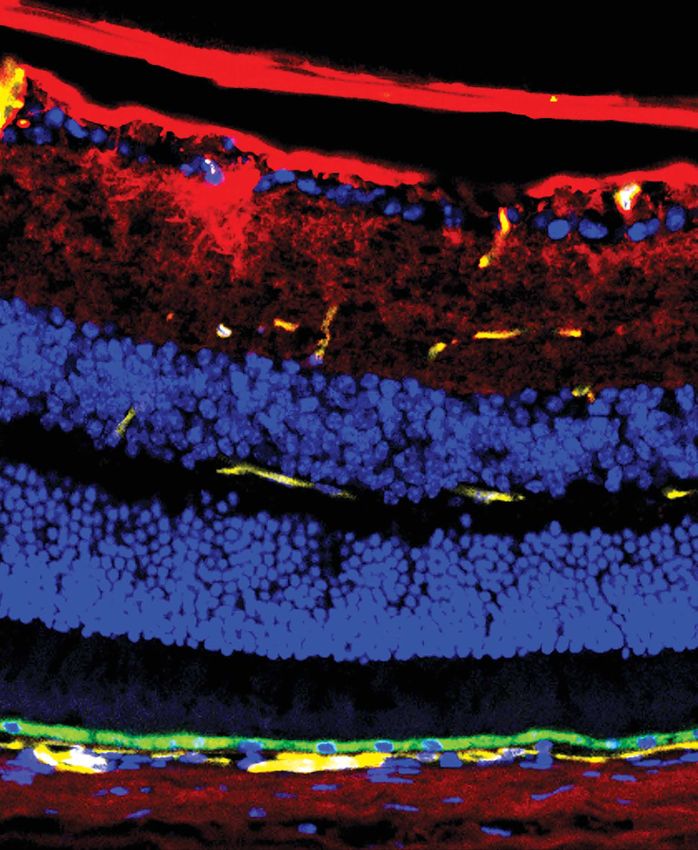
Picture: Magnified cross-section of an eye

STEM                          VISION
CELLS &                       HEALTH
VISION                        SUMMER
REPAIR                        TIPS

PP. 3-4                       P. 5

890 Yonge St. 12th floor Toronto ON M4W 3P4   1.800.461.3331 | ffb.ca
PROMISING RESULTS SHOW THE POTENTIAL
      FOR STEM-CELL THERAPIES TO RESTORE VISION

I n many blinding eye diseases, cells that are
  essential for vision die. Scientists around the
world, including Foundation Fighting Blindness
                                                           photoreceptor cells. These new RPE cells were
                                                           created by coaxing stem cells to turn into (or
                                                           “differentiate”) into RPE cells. The RPE cells were
(FFB)-funded scientists, are working to create             placed onto a synthetic “patch” and delivered to
stem-cell treatments to replace these crucially            the eye as a fully formed and connected cell layer.
important vision cells and restore sight.
                                                           The second trial, led by Dr. Mark Humayun, also used
Recently, two ground-breaking clinical trials fueled our   stem cells to create a layer of RPE cells, which were
excitement about the future of stem-cell therapeutics      attached to a special material that was bioengineered
because both trials reported incredibly promising          to replicate an important part of the eye (Bruch’s
results about different experimental stem-cell             membrane). The RPE cells were connected to the
treatments for age-related macular degeneration            bioengineered material to form an implant that could
(AMD). (To learn about AMD, see the side bar on p. 2.)     be transplanted into patients living with dry AMD
                                                           (see photo on p. 2).
The first trial, led by Dr. Peter Coffey, aimed to
restore vision to patients living with a severe form of    Both studies reported tremendously encouraging
wet AMD by replacing damaged cells with a “patch”          results. One patient who had lost his sight regained
of new cells. The transplanted patch contained a layer     the ability to read! Both studies reported that patients’
of retinal pigmented epithelial (RPE) cells. RPE           vision improved! These positive results illustrate
cells support and nourish the eye’s light-sensitive        the tangible research progress that is being made.

      TRANSPLANTING RPE CELLS TO RESTORE VISION IN AMD

      Stem cells grown                       RPE cells removed                  RPE cells transplanted into
      into retinal cells                      and attached to                  eye where they connect with
         in the dish                      bioengineered material              retinal cells and restore vision

1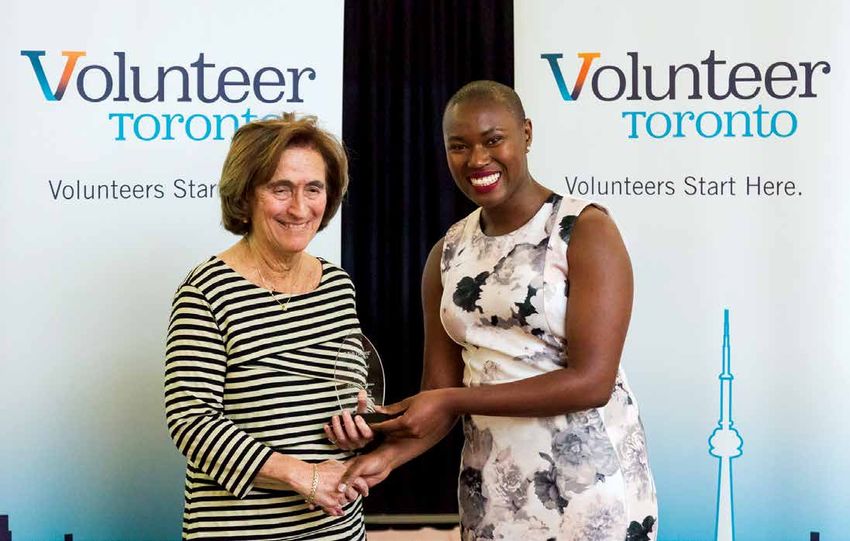
A GE-RELATED MACULAR
                                                                DEGENERATION (AMD)
                                                             AMD affects more than a million Canadians and is
                                                             the most common blinding eye disease in people
                                                             over the age of 50. There are two forms of AMD –
  The tiny eye implant is composed of                        dry and wet.
  a single layer of stem cells attached to
                                                             In AMD, important vision cells, including retinal
  bioengineered material.
                                                             pigmented epithelial (RPE) cells and photoreceptor
                                                             cells, slowly die. As a result, the central part of
(Continued from page 1)                                      the person’s vision begins to appear dark, blurred
                                                             or distorted. This gradual loss of central vision is
It’s important to remember that these are experimental       called dry AMD. Currently, there are no treatments
treatments that are being tested in clinical trials, which   for dry AMD.
are a special type of study that is used to develop safe
and effective therapies. These experimental stem-cell        About 10% of people with dry AMD will develop
treatments are showing promising results – but more          wet AMD, the more severe form of the disease,
research needs to be done before safe and effective          which can cause rapid and severe vision loss.
treatments are available.                                    Thanks to incredible research progress, there are
                                                             now sight-saving treatments for wet AMD called
The extraordinary potential for stem cells to treat a        anti-VEGF therapies. Vascular endothelial growth
variety of different blinding eye diseases is why, thanks    factor (VEGF) is a substance that is normally produced
to incredibly generous donors, the FFB funds so many         by our bodies, which tells new blood vessels to
different stem-cell research projects. We are thrilled       form. However, in wet AMD, vision loss is caused
to see progress happening around the world, and right        by abnormal blood vessel growth; anti-VEGF
here in Canada (see sidebar, p. 2 and the centre-spread      therapies stop this growth and prevent vision loss.
for more about FFB-funded stem-cell research). Every
positive result brings us one step closer to a cure! ❚       Scientists are developing innovative new
                                                             stem-cell treatments for both dry and wet AMD.
                                                             Thanks to FFB donors, Dr. Andras Nagy is developing
                                                             a new stem-cell based treatment for wet AMD
                                                             that would deliver stem cells to the eye that have
                                                             been genetically engineered to release anti-VEGF
                                                             therapy. His goal is to restore vision and prevent
                                                             further vision loss with a “one-shot” therapy. ❚

                                                             Sabiha Hacibekiroglu is studying with
                                                             Dr. Nagy to develop a new stem-cell
                                                             treatment for AMD. During her research,
                                                             she took the photograph featured on
                                                             the cover of InVision.

                                                                                                                      2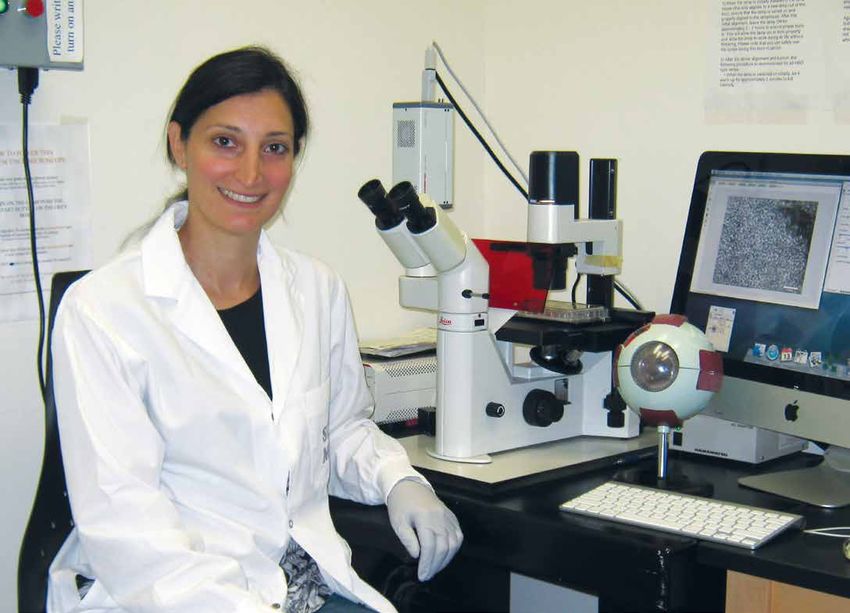
STEM CELLS &
VISION REPAIR                                                                    RETINA           RETINA

CAN WE TREAT IT
                                                                                               CROSS SECTION
                                                Cornea

WITH STEM CELLS?                                                                                     RETINA
The eye is a complex organ, but
luckily, also one that is a good target                       Lens
for stem-cell treatments.
It is self-contained, so requires little
support from other organs or tissues
and is also relatively easy to reach and
to measure the effects of treatment.                                              Optic
                                                                                  Nerve

    WHEN WILL TREATMENTS BE AVAILABLE?
    It’s difficult to predict exactly when treatments will be ready, but we know that every dollar donated
    accelerates the pace of research.
      EARLY/PRE-CLINICAL RESEARCH:
      FFB is funding essential laboratory research to improve our understanding about how stem cells work.
      Discoveries by FFB-funded scientists will help ensure that future stem-cell therapies are safe and effective.
      IN CLINICAL TRIALS:
      This stage of research involves testing experimental treatments in people who are living with blinding
      eye diseases. Currently, there are no stem-cell clinical trials in Canada, but there are a few for AMD
      in the UK, Japan, and the USA. Always talk to your doctor before joining a clinical trial.
      APPROVED CLINICAL THERAPY:
      There are no approved stem-cell therapies for blinding eye diseases! Thank you to FFB-donors for
      funding essential research that is accelerating the development of new treatments.

3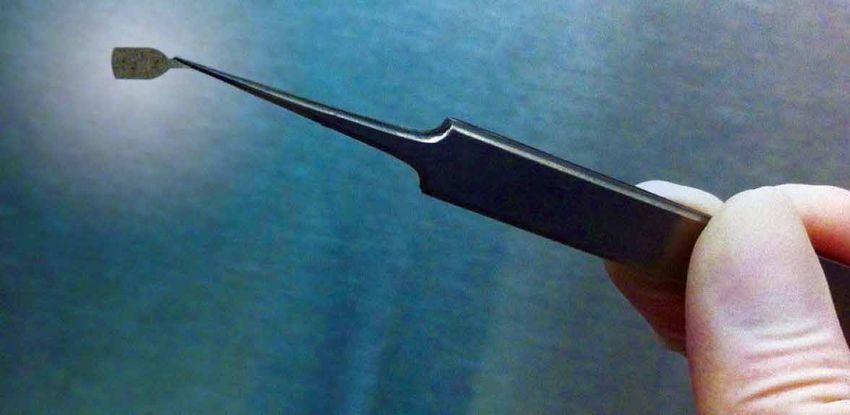
PHOTORECEPTORS
Transplanting photoreceptors to restore vision
Restoring vision to people living with inherited retinal diseases (IRDs) or
late-stage AMD will require transplanting photoreceptors, the eye’s light-sensitive cells.

IRDs are the leading cause of childhood blindness. IRDs share these traits:
1. They involve the progressive loss of retinal cells, including photoreceptors, which leads to blindness.
2. They are caused by genetic mutations. The more common IRDs include: retinitis pigmentosa,
   Stargardt disease, choroideremia, Usher syndrome, Leber congenital amaurosis, and X-linked
   retinoschisis. Currently there are no stem-cell treatments for IRDs.
FFB-funded scientists are studying how stem cells make rod and cone photoreceptors.
They are also developing new photoreceptor transplantation techniques to restore sight.

                       Creating cone
                                                           How do
                      photoreceptors                                                          Bioengineering
                                                          stem cells
                         to restore                                                          solutions for cell
                                                         become rods
                        high-acuity                                                          transplantation
                                                          or cones?
                           vision

Dr. Gilbert Bernier                    Dr. Michel Cayouette              Dr. Brian Ballios

RETINAL PIGMENTED EPITHELIAL (RPE) CELLS
Transplanting RPE cells to restore vision
Restoring vision to people with wet AMD can be done by transplanting RPE cells, which provide
nourishment and support to the eye’s photoreceptors.

AMD is the third most common cause of blindness and is increasing in countries with aging
demographics. Currently there is no cure for AMD. This is one reason why researchers
are testing stem-cell methods, as possible ways to restore sight.

                        Combining
                                                         Movement of                            Developing
                       cell and gene
                                                          RPE cells in                            an RPE
                        therapy to
                                                         development                            substitute
                        treat AMD

Dr. Andras Nagy                        Dr. Sarah McFarlane               Dr. Stéphanie Proulx

                                                                                                                  4
TOP 5 VISION HEALTH TIPS THIS SUMMER

❚1. GET TESTED
School may be out, but there’s still one more test to take.
If you have an inherited retinal disease such as retinitis
pigmentosa (RP), it’s important to have a clear picture of
your genetic history. The best way to get this is through a
genetic test. Ask your ophthalmologist or optometrist for
a referral and visit ffb.ca to learn more.

❚2. TAKE A SCREEN VACATION
Research is ongoing, but at this point there’s no definitive
evidence that blue light from electronic devices is harmful
to vision. That’s the good news. The bad news is that screen
time can lead to eye strain, fatigue, and headaches. We live in
a culture of screens – if you can, take a break from them and
rest your eyes.

❚3. GET WET SWIMMING, NOT WET-AMD
If you have dry age-related macular degeneration (AMD), it’s
important to ensure it isn’t progressing into wet-AMD. The
easiest way to do this is with an Amsler grid. If you don’t have
one handy, visit ffb.ca to download a copy, or focus on an
object or background with straight, parallel lines. If they are
curved or distorted, call your ophthalmologist or optometrist.

❚4. STAY HEALTHY                                                  National Partner In Accessibility
The eyes are an important part of the body, so they benefit
from exercise and a healthy diet as well. This is particularly     AMI is a not for profit media
                                                                   company that entertains, informs
the case with eye diseases that are linked to other health         and empowers Canadians who
problems, such as diabetic retinopathy. Your eyes will be          are blind or partially sighted.
grateful if you stay healthy and active.                           Operating three broadcast
                                                                   services, AMI tv and AMI audio
                                                                   in English and AMI télé in French,
❚5. SUPPORT SCIENCE ALL SUMMER!                                   AMI’s vision is to establish and
                                                                   support a voice for Canadians
Things slow down in the summer, but FFB-funded scientists          with disabilities, representing
                                                                   their interests, concerns and
don’t take a break. They’re racing to develop cures for
                                                                   values through accessible
blindness and vision loss, and you can accelerate their work       media, reflection and portrayal.
by donating to the FFB! ❚

5
LORNA ROSENSTEIN: A PILLAR OF HOPE, STRENGTH
      AND DEDICATION IN THE FFB COMMUNITY

T   hose who donate to the Foundation Fighting
    Blindness (FFB) may quite luckily find
themselves on the phone with our dedicated
volunteer, Lorna Rosenstein.

For more than two decades, Lorna has been volunteering
her time by being the voice of the FFB’s donor thank
you call program as well as connecting with people
affected with vision loss and offering personal support.

Both she and her sister have retinitis pigmentosa (RP),
a retinal disease that causes progressive vision loss,     Lorna Rosenstein receiving the prestigious
but this hasn’t stopped Lorna from becoming a              Volunteer Toronto Legacy Award.
cherished pillar of hope, strength and dedication in
the FFB community.
                                                                  JOIN OUR MONTHLY GIVING
Along with being a generous monthly donor since                      PROGRAM TODAY >>
2004 and serving on the Board of Directors from
                                                                 YOU CAN RESTORE HOPE & SIGHT
1998 to 2015, she has also been an active fundraiser
for Cycle for Sight, having personally raised over              For as little as $10 a month (just 33 cents a day)
                                                               you can support vision research year-round and
$62,000. Although not a rider herself, she instead
                                                                change the lives of people living with vision loss.
participates by volunteering on event day and
enthusiastically cheering on the cyclists.                                 MONTHLY GIVING IS

                                                                 Effective • Affordable & Flexible • Convenient
So, what keeps Lorna motivated to raise money,
give of her time and personally donate? She says:                       Contact Josie Koumandaros at
                                                               1.800.461.3331 ext. 262 | jkoumandaros@ffb.ca
“Giving back is very important to me. It’s not about
what you have. What matters is what you do with
what you have. If I can’t access a cure in my lifetime,
I feel strongly that the next generation will.”                         LEAVE A LEGACY >>
                                                             Support vision research by leaving the FFB in your will.
In April 2018, we were thrilled when, out of hundreds                      DONATE SECURITIES
of nominations, Lorna was chosen as a recipient of               A gift of stock can maximize the value of your
the Volunteer Toronto Legacy Award. Congratulations                     donation and your tax advantage.

on this very well-deserved honour, Lorna!

The FFB is grateful to continue to be the benefactor
of Lorna’s wonderful generosity. Her unwavering
support has helped to make huge strides in vision                For more information on these or other ways
research. Because of Lorna and donors like her,                     to make a gift contact Ann Morrison at
                                                                 1.800.461.3331 ext. 232 | amorrison@ffb.ca
treatments and cures are truly within reach. ❚

                                                                                                                        6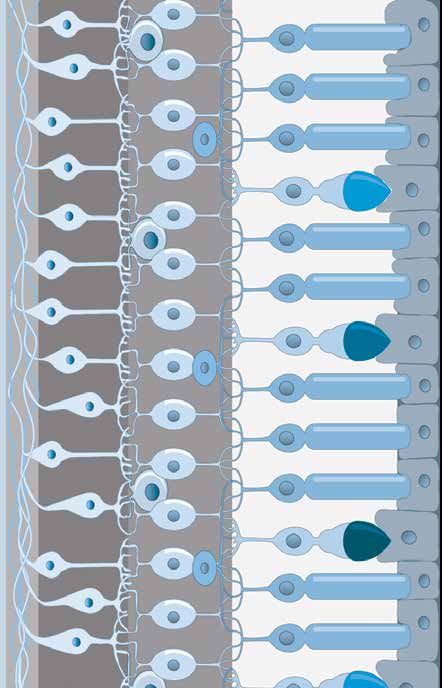
GET INVOLVED

     VISION QUEST                                    FUNDRAISING
     EDUCATION SERIES                                EVENTS
Vision Quest is an educational program
for individuals and families living with         ❚COMIC VISION
vision loss.                                     Comic Vision is Canada’s favourite
                                                 comedy fundraising tour, spreading
                                                 hope and humour coast-to-coast

 UPCOMING VISION QUEST                         since 1999. Join us in laughter and
                                                 help us restore hope and sight!
   2018 EVENTS                                   comicvision.ca
    Toronto      Symposium             Sept 15
 Edmonton       Lunch & Learn          Oct 12    ❚CYCLE FOR SIGHT
 Edmonton        Symposium             Oct 13    Bring your family and friends and join
    Victoria    Lunch & Learn          Nov 6
                                                 hundreds of sighted, low vision and
                                                 non-sighted riders at one of Canada’s    cycle
    Toronto     Lunch & Learn          Nov 12    premiere cycling fundraisers. Register
                                                 today to see what you’re made of.
                                                                                          for
                                                                                                sight
Not able to attend in person?
Visit ffb.ca to view or listen to
                                                 cycleforsight.ca
presentations from these events.

 SUMMER RETREAT ANYONE?
                                                 ❚RIDE FOR SIGHT
                                                 From its humble beginnings, Ride
         Looking for active women,               for Sight has grown from a small
    living with vision loss, who want to         local fundraising event to a national
        play, laugh, learn, cry, share,          initiative. Ride alongside us as we
          connect, eat & drink at a              take a united stand against vision
                                                 loss and continue to make history.
    3-DAY RETREAT
    ON LAKE SIMCOE                               rideforsight.com
           (1 hour north of Toronto)

           If interested contact
 donnagreen045@gmail.com | 416-461-5083

7      890 Yonge St. 12th floor Toronto ON M4W 3P4                          1.800.461.3331 | ffb.ca
You can also read


