Summer School Alpbach 2019 - Workshop Preparation Project Phases, Team Building, Team Structuring
←
→
Page content transcription
If your browser does not render page correctly, please read the page content below

Summer School Alpbach 2019

     Workshop Preparation
     Project Phases, Team Building,
     Team Structuring
     P. Falkner (ESA)
     16-July 2019

ESA UNCLASSIFIED - For Official Use
Content

         • Objective of the Workshop
         • The Workshop & Activities of the four student teams
         • Workshop timetable
         • The role of Tutors
         • Structure of the teams
         • Project phases
         • Information on the infrastructure available at the Summer School
         • Project evaluation by the Jury
         • Advices (Lessons learned from previous Summer Schools)
         • Post Alpbach

ESA UNCLASSIFIED - For Official Use                                       P. Falkner | 16/07/2019 | Slide 2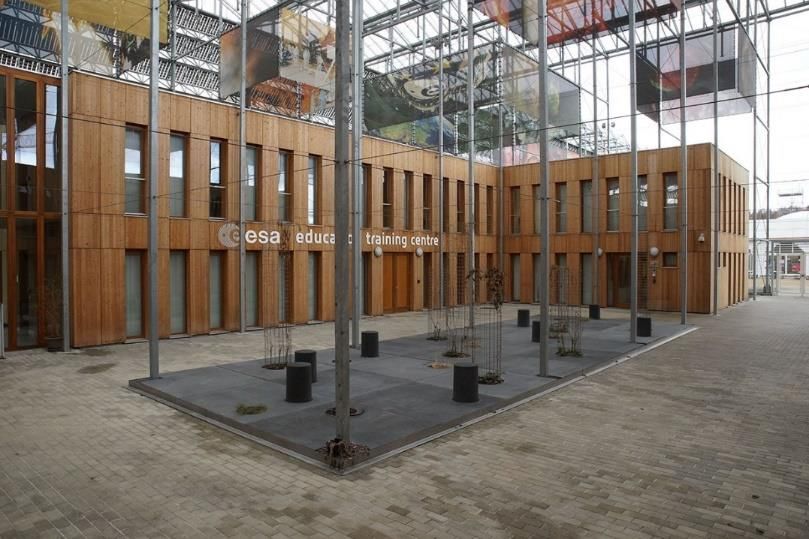
Topic 2019

          Geophysics From Space Using Nano - or Microsatellite Constellations

          The Summer School students will attend lectures on past achievements and
          current issues, and will be invited to propose ideas for new satellite missions to
          observe the magnetic and gravitational field of the Earth from space with high
          resolution in space and time using a mission configuration that goes beyond all
          missions that have been realized so far.

ESA UNCLASSIFIED - For Official Use                                              P. Falkner | 16/07/2019 | Slide 3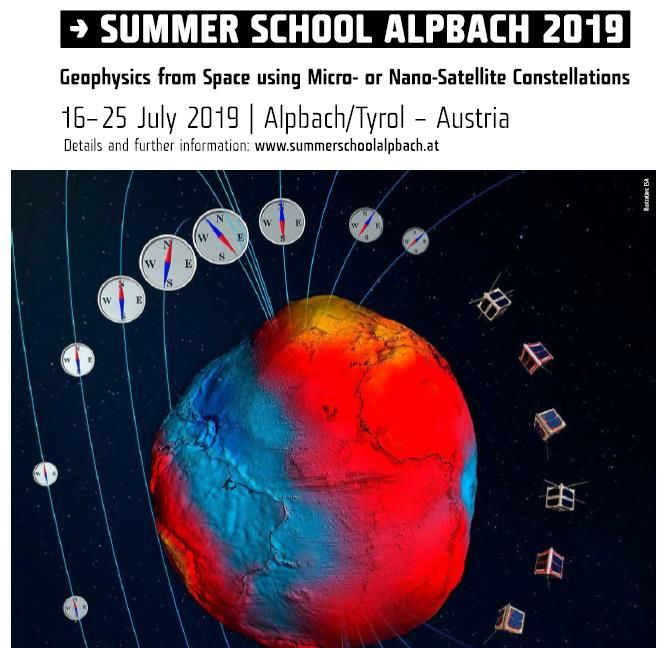
Objectives of the Workshop

   How to design a space mission that will meet the specific goals related to
   Geophysics from Space using Micro- or Nano-Satellite Constellations, by:
     • defining the mission objectives and scientific requirements

     • designing the spacecraft, payload and ground segment

     • learning the details of the scientific and technical methodology needed to achieve the stated objectives

     • understanding the need of iterations between requirements and solutions

     • forming and working in international teams that bring together a range of scientific and technical expertise

     • experiencing the pressure of a project with objectives that need to be met within strict constraints of
       resources and time, with imaginative but realistic cost

     • braking the barrier in an integrated team (engineers, scientists, manager)

     • to gain a multidisciplinary end-to-end view

ESA UNCLASSIFIED - For Official Use                                                                    P. Falkner | 16/07/2019 | Slide 4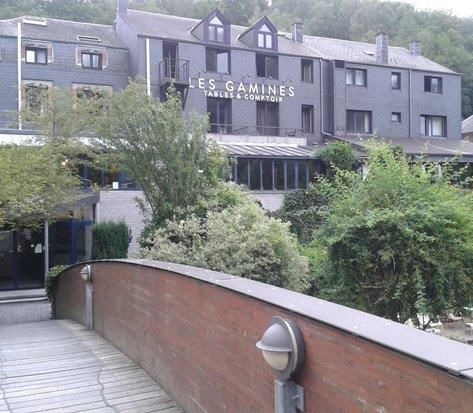
Activities of the Four Student Teams

                    1.     define scientific objectives and rationale related to the Geophysics from Space using
                           Micro- or Nano-Satellite Constellations that can be best achieved by a space mission

                    2.     define the technical requirements that a space mission must fulfil to meet the
                           scientific objectives identified as the goals of the mission

                    3.     design a space mission: spacecraft, payload, mission (launch vehicle, orbits, etc.),
                           operations and ground segment including observation strategies

                    4.     assess critical points, development plan & ROM cost of the mission

                    5.     prepare a written report (10 pages) of the above tasks

                    6.     prepare and present the outcome (1 hour) of the workshop project to the Summer
                           School Jury and all participants

ESA UNCLASSIFIED - For Official Use                                                                               P. Falkner | 16/07/2019 | Slide 5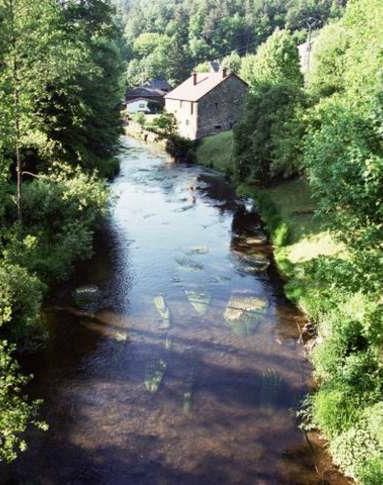
Workshop Focused Timetable

                              Tue          Wed            Thu            Fr        Sa           Su             Mo           Tue          Wed            Thu
                          16/07/2017    17/07/2017   18/07/2017     19/07/2017 20/07/2017 21/07/2017       22/07/2017    23/07/2017    24/07/2017    25/07/2017
                 09:00     opening       lectures      lectures      lectures                               lectures     workshop      workshop     presentation
                           lectures      lectures      lectures      lectures              preparation      lectures     workshop      workshop     presentation
                 12:00     lectures      lectures      lectures      lectures  Organized preparation        lectures     workshop      workshop     presentation
                             lunch         lunch         lunch         lunch      Tour      preparation       lunch        lunch         lunch         lunch
                 14:30       lunch       lectures     workshop      workshop               preparation     workshop      workshop      workshop     presentation
                           lectures      lectures     workshop      workshop               preparation     workshop      workshop      workshop     presentation
                 17:00     lectures     workshop      workshop     REQ review              preparation    PDR review    FDR review    workshop      presentation
                 18:00     lectures     workshop      workshop      workshop               preparation     workshop    workshop        workshop
                 19:00      Dinner        Dinner        Dinner        Dinner     Dinner       Dinner        Dinner      Dinner          Dinner        Dinner
                 21:00                 preparation   preparation   preparation preparation preparation    preparation preparation     preparation     farewell
                                       preparation   preparation   preparation preparation preparation    preparation preparation     preparation     farewell
                 24:00                 preparation   preparation   preparation preparation preparation    preparation preparation       Delivery      farewell

                         Lectures      Lectures                                Optional, but useful
                                       WS Dedicated                            Usually Intensive

                                         Time table for indication purpose only: please refer to the official programme for details

ESA UNCLASSIFIED - For Official Use                                                                                                                 P. Falkner | 16/07/2019 | Slide 6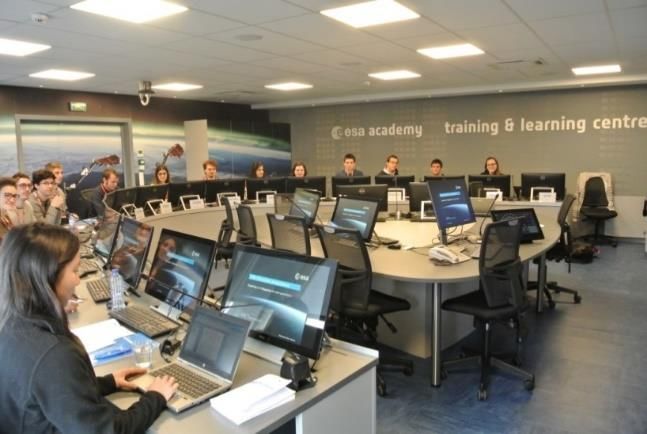
The Role of Tutors
Team Tutors: each team has two dedicated tutors (1 Engineering + 1 Science)
• Engineering Team Tutor
• brings practical space project expertise to help with engineering topics
• helps in integrating the engineering tasks fully into the activities of the teams
• Science Team Tutor
• to bring science expertise to help with science topics
• will help in integrating the science tasks fully into the activities of the teams
• Team Tutors are available to their assigned teams throughout the summer school
• Team Tutors help with organisational tasks
Roving Tutors
• provide support to all four teams for end-to-end design, science aspects, mission costing…
• Roving tutors are available to all teams of the Summer School
Students are encouraged to approach ALL tutors, ALL lecturers and other students with questions
ESA UNCLASSIFIED - For Official Use P. Falkner | 16/07/2019 | Slide 7
Tutors
                Head Tutor: Peter Falkner, ESA

               ENGINEERING TUTORS:                                             Tutor    Stay   See Tutor
       AT      Günter Kargl, Space Research Institute, Graz                     E1     15/26
       NO      Tyler Jones, Norwegian Space Agency                              E2     15/26
                                                                                               Expertise
       DE      Adriana Elizabeth Nuncio Quiroz, DLR                             E3     15/26   on server
       FI      Jaan Praks, Aalto University                                     E4     15/26
       DE      Marcus Hallmann, DLR                                              R     17/26
       IT      Michele Lavagna, Politecnico di Milano                            R     15/24
       AT      Werner Magnes, Space Research Institute Graz                      R     15/20
       DE      Klaus Schilling, University of Würzburg                           R     15/21

               SCIENCE TUTORS:
       NO      Elise Knutsen, Norwegian University of Science and Technology    S1     15/26
       ESA     Olivier Carraz, ESA                                              S2     15/26
       BE      Jerome Loicq, University of Liege                                S3     15/26
       LU      Qiang Chen, Université du Luxembourg                             S4     15/26
       CH      Andrew Jackson, ETH Zürich                                       R      21/24
       ESA     Roger Haagmanns, ESA                                             R      17/23
       IT      Enkelejda Qamili, ESA                                            R      15/22

ESA UNCLASSIFIED - For Official Use                                                               P. Falkner | 16/07/2019 | Slide 8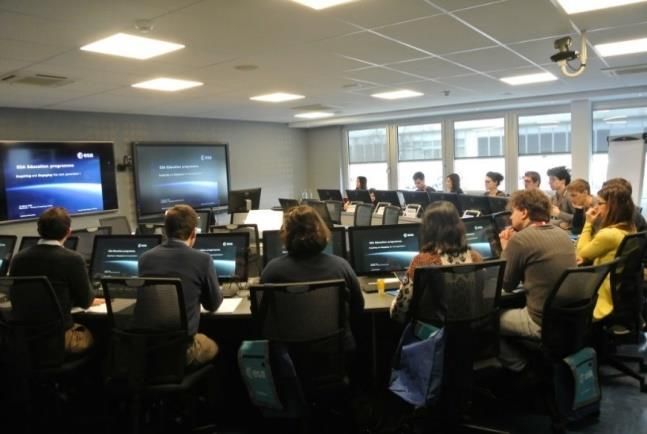
Structure of the Student Teams
Out of the 60 students four teams are formed (red/green/blue/orange)
• Each team has to elect/select one spokesperson(s)/team leader to report daily on progress in the
team ( can change over time).
• Each team has to assign the tasks to small specialist groups in the team to study specific aspects of
the selected mission (e.g. spacecraft, payload, science requirements,…).
These specialist groups are fluid/dynamic – students take part in multiple aspects of their team’s
mission design.
• Each team has to select/elect their presenter(s) for the final presentation.
• Each team has two dedicated Team Tutors who provide support, scientific and technical advice.
ESA UNCLASSIFIED - For Official Use P. Falkner | 16/07/2019 | Slide 9
The Four Student Teams
                                     Working Groups
             Blue                                 Green                                             Orange                                                   Red
First Name   Last Name         Nationality      First Name      Last Name         Nationality      First Name   Last Name                  Nationality      First Name   Last Name      Nationality
Fanny        Boutier           Switzerland      Niklas          Anthony           Sweden           Hannah       Collier                    Ireland          Antonius     Adler          Germany
David        Byrne             Ireland          Matthieu        Archimbaud        France           Simon        Deggim                     Germany          David        Apellaniz      Austria
Daniele      Calvi             Italy            Sarah           Beeck             Denmark          Bartosz      Drozd                      Poland           Christina    Bornberg       Austria
Sreemoyee    Chakraborty       United Kingdom   Ingrid          Bjorge-Engeland   Norway           Evangelia    Gkaravela                  Bulgaria         Colin        Dandumont      Belgium
Marie        Fayolle-Chambe    Netherlands      Emmanuel        Bogacz            Ireland          Elena        Lopez-Contreras Gonzalez   Spain            Oceane       Dhuicque       France
Lidia        Luque Fernandez   Norway           Veronica        Camplone          Italy            Riccardo     Lasagni Manghi             Italy            Marthe       Faber          Luxembourg
Fabian       Mueller           Germany          Vladlen         Galetsky          Portugal         Bjorn        Linder                     Sweden           Sotirios     Kechagias      Greece
Samuel       Ocana Losada      Spain            Matthias        Noeker            Germany          Matteo       Manzi                      Netherlands      Serena       Lisi           Italy
Tatu         Peltola           Finland          Lena            Salfenmoser       Germany
                                                                                                   Trym         Nielsen                    Norway           Viktor       Lundstedt      Sweden
Alice        Praet             France           Elena-Andreea   Savu              Romania
                                                                                                   Cecilie      Olesen                     Denmark          Martynas     Milasevicius   Lithuania
Wolfgang     Senoner           Austria          Marcel          Stefko            Slovakia
                                                                                                   Alexander    Putz                       Austria          Ana          Pagu           Romania
Jan          Snizek            Czech Republic   Martin          Eizinger          Austria
                                                                                                   Ilham        Said                       United Kingdom   Florian      Vidal          France
Panagiotis   Trifa             Greece           Eligius F.M.    Weterings         Netherlands      Giovanni     Salvia                     France           Lucas        Schreiter      Switzerland
Jesus        Vilaboa Perez     Belgium          Jerome          Woodwark          United Kingdom   Tom          Syndercombe                United Kingdom   Jacob        Smith          United Kingdom
Sebastian    Zieba             Austria          Reinhard        Zeif              Austria          Adam         Vigneron                   Germany          Sindre       Steinsvik      Norway

Team Tutors                                     Team Tutors                                        Team Tutors                                              Team Tutors
ETT: Adriana Elizabeth Nuncio Quiroz, DLR       ETT: Jaan Praks, Aalto University                  ETT: Günter Kargl, IWF Graz                              ETT: Tyler Jones, Norwegian Space Agency
STT: Jerome Loicq, University of Liege          STT: Qiang Chen, Université du Luxembourg          STT: Elise Knutsen, NO U Science & Technology            STT: Olivier Carraz, ESA

                                •        Printout of the team allocation is available at the end of my presentation
                                •        Team tutors will hand-out coloured stickers to be applied on both sides of your badge
                                                             Please wear your badge all the time !

ESA UNCLASSIFIED - For Official Use                                                                                                                                         P. Falkner | 16/07/2019 | Slide 10
Project Phases - First Week
Tuesday: team partitioning is announced, team get-together
Wednesday: first workshop:
introductions, preliminary discussion of science topics/goals and target object
election of team spokesperson (before dinner)
Thursday/Friday: definition of scientific objectives
• outline of requirements,
• preliminary definition of mission scenario,
• identification of specialist needs for the workshop study (people, scientific
and technical questions)
• intensive consultations with tutors, lecturers established
Friday: Objectives and Requirements Review (~16:30h)
ESA UNCLASSIFIED - For Official Use P. Falkner | 16/07/2019 | Slide 11Project Phases - Second Week
Monday: specialist groups in the team work on all aspects of the mission (scientific case, technical
implementation of payload and spacecraft, mission scenario):
Preliminary Design Review (~16:30h)
Tuesday: integration of the components of the mission, iteration with specialists/tutors/lecturers,
preliminary discussion of the report and the presentation:
Final Design Review (16:30h)
Wednesday: writing of report, iterations and preparation of the presentation, test runs, final iterations
Final Rehearsals (internal)
submission of the report and presentation (deadline 24:00h)
Thursday: Presentations nail-biting Jury results celebrations! (fare well dinner)
ESA UNCLASSIFIED - For Official Use P. Falkner | 16/07/2019 | Slide 12Infrastructure at the Summer School
Access to the internet:
• fixed windows laptop allocated to each team, one per classroom (via LAN)
• personal laptops via WiFi network
• PC’s in the computer room
Material centrally available for the use of students:
• Books (library in computer room), reports, internet address lists
• Printer
• Server (e.g. for uploading info material/tools by tutors & lecturers)
Rooms:
• one room per team (incl. 1 key)
• lecture hall (“audimax”) Team Password
blue *****
• computer room
orange *****
• administration office red *****
green *****
team server \\10.0.0.20\team
general server \\10.0.0.20\public
ESA UNCLASSIFIED - For Official Use P. Falkner | 16/07/2019 | Slide 13School Staff SUMMER SCHOOL DIRECTOR: Michaela Gitsch, FFG VICE SUMMER SCHOOL DIRECTOR: Wolfgang Baumjohann, IWF Graz HEAD TUTOR: Peter Falkner, ESA SCIENTIFIC COORDINATOR: Hans Sünkel, Technical University Graz CHAIRMAN OF THE JURY: Roger Bonnet, ISSI SUMMER SCHOOL ADMINISTRATION: Silvia Wenger, ISSI TECHNICAL MANAGEMENT: Thomas Margreiter, Alpbach PHOTOGRAPHER: Michel A. Jakob, Austria ESA UNCLASSIFIED - For Official Use P. Falkner | 16/07/2019 | Slide 14
Programme Committee
                           PROGRAMME COMMITTEE MEMBERS:
                           • Roger Bonnet, ISSI
                           • Paal Brekke, Norway
                           • Natacha Callens, ESA
                           • Peter Falkner, ESA
                           • Rune Flogerghagen, ESA
                           • Achim Friker, DLR
                           • Andreas Geisler, FFG
                           • Andrian Jäggi, University of Berne
                           • Pekka Janhunen, Finnish Meteorological Institute
                           • Serge Habraken, Centre Spatial de Liège
                           • Vassilios Karastathis, Geodynamics, Institute of the National Observatory of Athens
                           • Arpad Kis, Geodetic and Geophysical Institute of the Research Centre for Astronomy and Earth Sciences,
                             Hungarian Academy of Sciences
                           • Otto Koudelka, Graz University of Technology
                           • Dan Alin Nedelcu, Astronomical Institute of the Romanian Academy
                           • Mioara Mandea, CNES
                           • Mark McCaughrean, ESA
                           • Jens Dalsgaard Nielsen, University of Aalborg
                           • Johannes Ortner, Austria
                           • Andris Slavinskis, University of Tartu, Estonia
                           • Jose Carlos del Toro Iniesta, Spain
                           • Giancarlo Varacalli, ASI
                           • Tonie M van Dam, University of Luxembourg

ESA UNCLASSIFIED - For Official Use                                                                                         P. Falkner | 16/07/2019 | Slide 15
Summer School Lecturers See list for
availability
• Peter Falkner, ESA
• Olivier Carraz, ESA
• Eberhard Gill, TU Delft Space Institute
• Karl Heinz Glassmeier, Technical University Braunschweig
• Roger Haagmans, ESA
• Marcus Hallmann, DLR
• Andrew Jackson, ETH Zürich
• Tyler Jones, Norwegian Space Agency
• Michele Lavagna, Politecnico di Milano
• André Laurens, CNES
• Jean-Yves LeGall, CNES
• Werner Magnes, Space Research Institute, Graz
• Torsten Mayer-Gürr, Graz University of Technology
• Luca Massotti, ESA
• Enkelejda Qamili, ESA
• Reiner Rummel, Technical University of Munich
• Klaus Schilling, University of Würzburg
ESA UNCLASSIFIED - For Official Use P. Falkner | 16/07/2019 | Slide 16Summer School Jury
JURY CHAIRMAN: Roger Bonnet, ISSI
JURY Members:
• Roger Bonnet, ISSI
• Karl Heinz Glassmeier, TU Braunschweig
• Hugo Maree, ESA
• Hans Sünkel, Graz University of Technology
• Franco Ongaro, ESA
• Stephan Ulamec, DLR
Observing Members:
• Peter Falkner, ESA, Head Tutor
• Andreas Geisler, FFG
SUMMER SCHOOL OSCARS ARE AWARDED FOR THE BEST
PROJECTS IN THE CATEGORIES
• The Science Case for the Mission
• The Technical Case for the Mission
• The Competitiveness of the Mission
• The Quality of Presentation
ESA UNCLASSIFIED - For Official Use P. Falkner | 16/07/2019 | Slide 17Project evaluation guidelines for the Jury 1/2
The team projects will be evaluated by the Jury according to the following criteria:
A. The case for the mission:
• The overall importance of the mission topic and its objectives in the context of
this years school topic
• Statement of the mission requirements to meet the stated objectives
• How much the expected results from the proposed mission advances the field
B. The technical case for the mission
• The suitability of the proposed payload as a whole and of the individual instruments to meet the stated
goals (matching of payload and instruments to the requirements and mission goals)
• The technical feasibility of the proposed payload, including accommodation and other spacecraft resource
requirements such as mass, power and telemetry
• The feasibility of the whole mission concept, including launch and orbit requirements and launcher
constraints
• Feasibility of the operational concept and its matching to the mission goals, identification of enabling
technologies
important to be considered by the teams during preparation!
ESA UNCLASSIFIED - For Official Use P. Falkner | 16/07/2019 | Slide 18Project evaluation guidelines for the Jury 2/2
C. The competitiveness of the mission
• How well the mission goals compete with, or complement those of other missions
in the field of Geophysics from Space using Micro- or Nano-Satellite Constellations
approved or planned (complementarity – innovation) including ground based
observations
• The value for money of the mission; the quality and breadth of the contribution
compared with the expected cost category of the mission
• The identification of de-scoping options and their impacts on the scientific
capability of the mission
D. Quality of
• Presentation
• Final report
• Answers to questions
important to be considered by the
teams during preparation!
ESA UNCLASSIFIED - For Official Use P. Falkner | 16/07/2019 | Slide 19Advice 1 (lessons learned)
• Plan the work sensibly, identify decision to be taken and various tasks to be done
• Identify as early as possible the main questions and problem areas related to the selected mission
concept and start gathering information, solutions from the tutors, lectures and the internet
• Establish the project essentials (scientific objective, target object, mission scope), as soon as possible
• Prepare all reviews on time and use these as milestones in the scheduling of all the tasks
• Involve the whole team – everyone can contribute & everyone is needed to complete the tasks in the
given time
• Once decisions are taken get behind the chosen course of action, even if it was not your choice
• Be a good team worker (share, listen, be helpful, understand, …)
• Do not hide behind your expertise but explain to colleagues with a different background
• Do your assigned work within agreed time & come to the joint working sessions
• Be active
ESA UNCLASSIFIED - For Official Use P. Falkner | 16/07/2019 | Slide 20
20Advice – 2 (lessons learned)
• Iterate frequently within the whole team, so that completion of tasks can be monitored, progress and status
reviewed, unproductive paths abandoned
• Everyone in the team needs to know the baseline, otherwise useful contributions are nearly impossible
• Use all the resources of the Summer School: ask tutors and lecturers for advice and help — that’s why they
are here!
• Remember that the report and presentation take time to prepare, start early on the organisation of this part
of the activity, preferably at the start of the second week of the Summer School.
• Listen to provided feedback (particularly from reviews) - don’t be advice resistant, but consider it.
• Work hard and serious, but do not forget to enjoy, relax and have fun!
• Don’t forget to recharge YOUR battery (not only that of the smart-phone)
ESA UNCLASSIFIED - For Official Use P. Falkner | 16/07/2019 | Slide 21Delivery of Final Report and Final Presentation
Deliverables (latest delivery on Wednesday 24-Jul-2019, 24:00h)
• 1 USB stick with
• Final Presentation in Adobe-pdf
• Final Report in Adobe-pdf
For the Jury to read
• 1 Notebook (your choice) with
• Final Presentation installed with all needed material and verified to show/play all material
(slides, animations, videos, sound, …..)
Verify that the presentation with the beamer in the Audimax
to secure smooth presentation next day
the Notebook will be locked in the administration office over night
Final Report: limited to 10 pages (including all references) – hard limit (!)
Final Presentation: targeting exactly 1 hour (plus 30 min Q&A)
ESA UNCLASSIFIED - For Official Use P. Falkner | 16/07/2019 | Slide 22Final Presentation Day (Thursday 25/07/2019)
• Each team presents for 1 hour, followed by 30 min Q&A (questions mainly from Jury)
• Team presentation sequence by drawing of lots (“lucky drawing box”) – one by one
• Head Tutor is chairing the final presentation with strict timekeeping
• ~2-3 presenters per team (all team members have to join for the Q&A)
• non presenting team members should be active at Q&A (part of evaluation)
• After last presentation
• Jury will decide on Oscars per criterion
• Teams clean up their class rooms & return the key
• Jury announcement at joint farewell dinner handover of Oscars and certificates
• Summer School 2019 end
ESA UNCLASSIFIED - For Official Use P. Falkner | 16/07/2019 | Slide 23Post Alpbach
date: 25-29 Nov. 2019
ESA UNCLASSIFIED - For Official Use P. Falkner | 16/07/2019 | Slide 24Post Alpbach:
PostConcept
Alpbach concept
• ALL Alpbach Summer School 2019 students are invited to apply
• Some of the Alpbach tutors will participate in the Post Alpbach Summer School Event 2019
• 24 students will be selected to attend the Post Alpbach Summer School Event 2019
• Selected students will carry on with one of the Alpbach missions which was found best suited by the Jury
• Result: scientific paper for presentation at a congress and/or in a scientific journal
• Financial support from ESA via FFG for travel expenses, accommodation including meals and local
transport
• The event will be organised at ESA Academy’s Training and Learning Facility at ESEC-Galaxia,Transinne,
Belgium
• Students will be offered the opportunity to use the Educational Concurrent Design Facility (CDF)
ESA UNCLASSIFIED - For Official Use P. Falkner | 16/07/2019 | Slide 25Post Alpbach: Logistics
Logistics
When: 25-29 November 2019
Where:
ESA Academy Training and Learning Facility
ESEC-Galaxia, Transinne, Belgium
(New facility!)
ESA UNCLASSIFIED - For Official Use P. Falkner | 16/07/2019 | Slide 26Post Alpbach: Logistics
Logistics
• Accommodation & dinners : Hotel Le Val de Poix, Poix Saint Hubert, Belgium
ESA UNCLASSIFIED - For Official Use P. Falkner | 16/07/2019 | Slide 27Post Alpbach: Logistics
Logistics
Travel dates: Sunday 24/11 afternoon - Friday 29/11 afternoon
How:
– To/from hotel
airplane + train, train or car to the hotel
– To/from ESEC-Galaxia
by bus
Who:
– 20 students from among the Alpbach 2019 teams
– 2 -3 experts from among the Alpbach 2019 tutors
– 2 ESA (CDF) system engineers
– 1 ESA Education Office coordinator
ESA UNCLASSIFIED - For Official Use P. Falkner | 16/07/2019 | Slide 28Post Alpbach: Procedure
• ALL Alpbach students are invited to apply by 6. September 2019 by
sending an e-mail to michaela.gitsch@ffg.at
• Admissions committee will select 24 students from among the applicants by 27 September 2019
• ESA invitation for selected 24 students will be extended by 4 October 2019 via FFG
• Students will be offered to follow a short introduction course to OCDT via Webex a few weeks
before the event
• Application form https://esaeducation.wufoo.com/forms/m19noysu0yswxup/
ESA UNCLASSIFIED - For Official Use P. Falkner | 16/07/2019 | Slide 29Alpbach Workshop preparation: Conclusion
• Team partitioning printouts
• Once you found your team put a colour sticker on your badge
• You will get the stickers from your team tutors
Please wear your badge
Server Access for lectures & reference material
windows: \\10.0.0.20\public\
MAC: smb://10.0.0.20/public/
User: student password: abc123
For your team server access: ask me or your team tutors or
Thomas Margreiter
Questions ?
next 19:00 Joint Dinner at Böglerhof
ESA UNCLASSIFIED - For Official Use P. Falkner | 16/07/2019 | Slide 30The FourWorking
Student Teams
Groups
First Name Last Name Nationality First Name Last Name Nationality First Name Last Name Nationality First Name Last Name Nationality
Fanny Boutier Switzerland Niklas Anthony Sweden Hannah Collier Ireland Antonius Adler Germany
David Byrne Ireland Matthieu Archimbaud France Simon Deggim Germany David Apellaniz Austria
Daniele Calvi Italy Sarah Beeck Denmark Bartosz Drozd Poland Christina Bornberg Austria
Sreemoyee Chakraborty United Kingdom Ingrid Bjorge-Engeland Norway Evangelia Gkaravela Bulgaria Colin Dandumont Belgium
Marie Fayolle-Chambe Netherlands Emmanuel Bogacz Ireland Elena Lopez-Contreras Gonzalez Spain Oceane Dhuicque France
Lidia Luque Fernandez Norway Veronica Camplone Italy Riccardo Lasagni Manghi Italy Marthe Faber Luxembourg
Fabian Mueller Germany Vladlen Galetsky Portugal Bjorn Linder Sweden Sotirios Kechagias Greece
Samuel Ocana Losada Spain Matthias Noeker Germany Matteo Manzi Netherlands Serena Lisi Italy
Tatu Peltola Finland Lena Salfenmoser Germany
Trym Nielsen Norway Viktor Lundstedt Sweden
Alice Praet France Elena-Andreea Savu Romania
Cecilie Olesen Denmark Martynas Milasevicius Lithuania
Wolfgang Senoner Austria Marcel Stefko Slovakia
Alexander Putz Austria Ana Pagu Romania
Jan Snizek Czech Republic Martin Eizinger Austria
Ilham Said United Kingdom Florian Vidal France
Panagiotis Trifa Greece Eligius F.M. Weterings Netherlands Giovanni Salvia France Lucas Schreiter Switzerland
Jesus Vilaboa Perez Belgium Jerome Woodwark United Kingdom Tom Syndercombe United Kingdom Jacob Smith United Kingdom
Sebastian Zieba Austria Reinhard Zeif Austria Adam Vigneron Germany Sindre Steinsvik Norway
Team Tutors Team Tutors Team Tutors Team Tutors
ETT: Adriana Elizabeth Nuncio Quiroz, DLR ETT: Jaan Praks, Aalto University ETT: Günter Kargl, IWF Graz ETT: Tyler Jones, Norwegian Space Agency
STT: Jerome Loicq, University of Liege STT: Qiang Chen, Université du Luxembourg STT: Elise Knutsen, NO U Science & Technology STT: Olivier Carraz, ESA
• Printout of the team allocation is available at the front desk in the lecture room
• Team tutors will hand-out coloured stickers to be applied on both sides of your badge
Please wear your badge all the time !
ESA UNCLASSIFIED - For Official Use P. Falkner | 16/07/2019 | Slide 31You can also read


