Support to the local tool market post-Typhoon Haiyan
←
→
Page content transcription
If your browser does not render page correctly, please read the page content below
STUDY BRIEF

                                                                 Blacksmith Alfredo Tabada, Sr., tends to a fire heating up the
                                                                 blades he crafts into machetes and other tools in his workshop in
                                                                 Carigara, Philippines. Laura Elizabeth Pohl for CRS.

Support to the local tool market
post-Typhoon Haiyan
PROGRAM CONTEXT
Super Typhoon Haiyan struck Leyte and Eastern Samar in the Philippines in November 2013. CRS
responded by initiating a program in 2014 to support the livelihoods recovery of 5,250 agriculture-based
households. The Livelihood Early Recovery Support to Agricultural Households Affected by Typhoon
Yolanda program, funded by Disasters Emergency Committee (DEC) and the Catholic Agency for
Overseas Development (CAFOD), gave people access to agricultural inputs and training on short-term
crop production to reestablish agricultural production. CRS also helped local blacksmiths restore the local
market for agricultural tools—a form of indirect support to production.
WHAT MARKET SUPPORT                                                        IMPORTANCE OF MARKET SUPPORT
WAS PROVIDED                                                               One challenge to recovery was a lack of accessible
                                                                           and affordable agricultural inputs for farmers,
CRS PROVIDED $230 CASH GRANTS TO                                           such as tools, seeds and fertilizer. These inputs
BLACKSMITHS POST-TYPHOON HAIYAN FOR                                        were previously sourced through formal supply
THE PURPOSE OF INVESTING IN ASSETS TO                                      channels from nearby urban centers including
RESTART TOOL PRODUCTION BUSINESSES.                                        Tacloban, Borongon, Guiuan, and Cebu. However,
                                                                           damage by the typhoon to shops, supply routes,
WHAT IMPACT IT HAD
                                                                           warehouses, stocks, and transportation networks
                                                                           hindered vendors from meeting the demand for
• PROGRAM BENEFICIARIES GAINED ACCESS
                                                                           inputs. These market disruptions created critical
  TO PREFERRED PRODUCTS AT LOCAL
                                                                           pitfalls in the recovery process.
  MARKETS. BLACKSMITHS SUPPORTED BY
  THE PROJECT PROVIDED 88% OF SUNDANGS                                     Demand for tools for clearing land, planting, and
  (LOCAL MACHETES) PURCHASED IN CRS-                                       pruning was high; but tools such as sundangs and
  SPONSORED INPUT FAIRS.                                                   bolos (smaller machetes) were difficult to find and
                                                                           had doubled in price due to low supply.
• BLACKSMITHS ADAPTED THE TYPES AND
  QUALITY OF TOOLS PRODUCED BASED ON                                       As CRS mapped out the supply chains for seeds,
  FARMER REQUESTS.                                                         tools, and other inputs, staff identified a strong
                                                                           consumer preference for locally produced tools
• BLACKSMITHS REPORTED INCREASED                                           over imported tools. Agricultural tools had been
  BUSINESS KNOWLEDGE AND CAPACITY                                          produced in several nearby towns, including Guiuan
  DUE TO THE PROGRAM.                                                      in Eastern Samar and Carigara in Leyte. These areas
                                                                           are known for high quality bolos and sundangs.
                                                                           The blacksmiths in these towns had lost virtually all
                                                                           business assets, such as grinders and other capital
                                                                           equipment, to the typhoon, and were finding it
                                                                           difficult to restart production. In order to promote
                                                                           agricultural recovery, CRS provided direct support
                                                                           to the blacksmiths, as the market intermediaries, to
                                                                           help them provide tools to beneficiaries and other
                                                                           community members at reasonable prices.

                                                                           HOW IT WORKED
                                                                           CRS provided $230 cash grants to five blacksmiths
                                                                           to promote tool production. Blacksmiths chose
                                                                           between a direct cash transfer (cash provided in-
                                                                           person) or a transfer through a remittance agency.
                                                                           CRS allowed participating blacksmiths to spend
                                                                           the grant on whatever inputs were necessary to
                                                                           restart their businesses. In return, participating
                                                                           blacksmiths agreed to produce at least 300 tools
                                                                           each, and agreed to make these tools available for
                                                                           sale at CRS-sponsored agricultural input fairs. (This
                                                                           production requirement was identified as a limitation
                                                                           and later removed from the program.) During fairs,
                                                                           program beneficiaries were provided with vouchers
                                                                           to buy agricultural inputs, including seeds and tools.
                                                                           Blacksmiths thus benefited from the cash grant, as
                                                                           well as increased sales from vouchers.
Fred Tabada (left) and his father, Alfredo Tabada, Sr. (right), both
blacksmiths, pose for a picture holding machetes inside Alfredo’s
workshop. Laura Elizabeth Pohl for CRS.

                                                                       2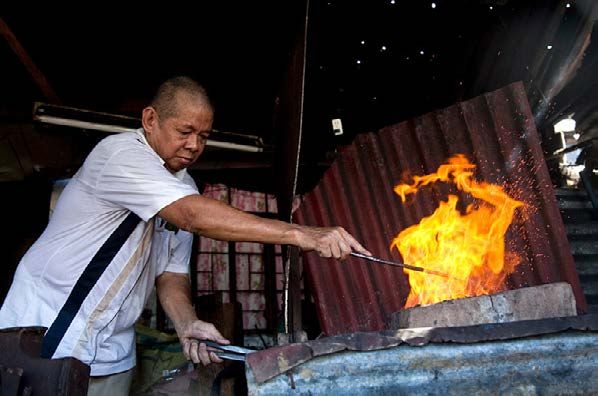
RESULTS
Blacksmiths met the demand for locally produced
tools, which enabled program participants to resume
agriculture activities. A combination of factors led to
the successful implementation of the program.

SUCCESSFUL USE OF CASH GRANTS
The cash grants were intended to jumpstart
agricultural tool production by enabling blacksmiths
to rebuild production capacity. Key informant
interviews with participating blacksmiths indicated
that most funds were used to purchase raw
materials, reestablish workspace, repair equipment,
and provide transportation to the blacksmith to
acquire needed inputs. CRS staff did not note any
evidence of misused funds.

INCREASED INCOMES
FOR LOCAL BLACKSMITHS
Blacksmiths derived significant business through
participation in agricultural input fairs. Tools
were the third-most purchased commodity at the
fairs and, by comprising 70% of all sales, had the
highest overall sale value. Post-program feedback
by blacksmiths indicated that at least 50% of their
business following the typhoon came from CRS fairs.
Their businesses had expanded outside of the fairs
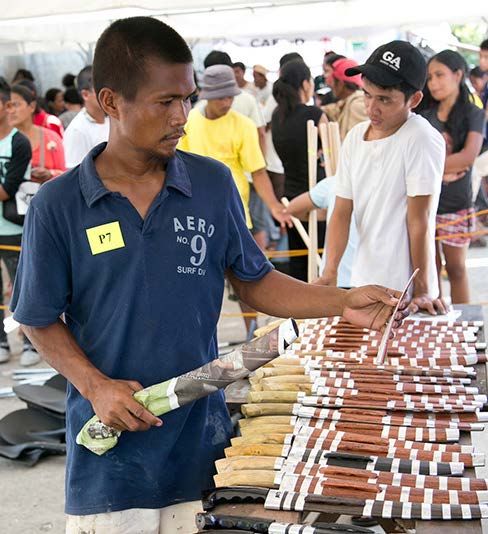
because people needed these tools for recovery in                 Bolos are sold by local blacksmiths at agriculture fairs to meet the
addition to regular seasonal demand.                              high demand by coconut farmers effected by Typhoon Haiyan.
                                                                  Jennifer Hardy/CRS.

EXPANSION CAPACITY                                                demands set by local communities. Blacksmiths
OF THE LOCAL MARKET                                               participated in all of the agricultural input fairs, and
The local market was able to support blacksmith                   were able to sell tools in each of the fairs. Ultimately,
activities at scale and within the necessary timeline.            this is evidence that blacksmiths were able to
While blacksmiths noted that raw materials had                    navigate the post-typhoon market environment
become more expensive and took longer than                        effectively with the conditional cash grant.
normal to procure, they were able to meet the

            TOTAL TOOL SALES IN AGRICULTURAL INPUT FAIRS
                                            SALES            % OF SALES         QUANTITY          % COMPARED
             TOOLS
                                            VALUE (PHP)      PER ITEM           SOLD              TO ALL SALES

             Sundang (machete)                 435,250                40%                592                22%

             Bolo (small machete)               221,350                20%               638                24%

             Tinamban (sickle)                   76,950                 7%               128                  5%

             Rake                                52,940                 5%               149                  6%

             Total Sales                      1,081,640                                2,659

            * Totals reflect additional tools not included in this table

                                                              3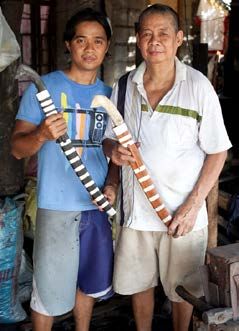
CHALLENGES

                                                                     PRICE VARIABILITY OF TOOLS
                                                                     The combination of cash grants for blacksmiths and
                                                                     repayment of those blacksmiths using vouchers
                                                                     proved to link consumers with producers in an
                                                                     efficient and transparent manner; yet some reports
                                                                     indicate that tool costs in the vendor fairs were
                                                                     higher than market prices. One survey revealed
                                                                     that 44% of beneficiaries felt that tools sold in the
                                                                     fairs were more expensive than market prices. CRS
                                                                     confirmed that in the market, bolos were available
                                                                     for 200–250 Philippine Pesos (PhP), which fell
Vouchers allow farmers to individually select and purchase a
                                                                     in the middle range of bolos sold by blacksmiths
variety of products sold by local vendors. Jennifer Hardy/CRS.       in the fairs (130–550 PhP). CRS staff noted that
                                                                     while blacksmiths’ tool prices were higher, their
                                                                     products were considered to be of very high quality
ADDITIONAL BENEFITS OF CASH GRANTS                                   by the beneficiaries. Blacksmiths also funded their
While the cash grants were intended to support                       own transportation to fairs in Samar, which likely
increased tool supply in the market, blacksmiths                     contributed to price variation.
reported additional positive outcomes, including:
                                                                     INITIAL PARTICIPATION IN CASH PROGRAMS
• Ability to invest in equipment needed to furnish
  tools. The cash grant reestablished key productive                 CRS staff observed that vendors were initially
  assets for blacksmiths, through which future,                      hesitant to participate in fairs due to various factors:
  longer-term business goals can be met and
                                                                     • Unfamiliarity with a voucher system
  expanded. Blacksmiths reported that the ability to
  invest in equipment was an important benefit of                    • The need to incur additional costs, such as new
  the cash grant.                                                      staff and transportation

• Business expansion. Blacksmiths reported that they                 • No guarantee that they would generate enough
  were able to expand their own business sales and                     profits to cover their expenses
  operations due to participation in the fairs, and new
  relationships with consumers and the community.                    These factors probably discouraged some vendors
                                                                     who were concerned about meeting profit margins.
• Capacity building. Blacksmiths reported an                         However, after several fairs, the vendors were
  improvement in their time management skills,                       able to adapt their supply to the demand of the
  planning for production cycles, and documentation                  beneficiaries. Voucher invoices demonstrated that
  for transparent operations.                                        blacksmiths offered primarily bolos and sundangs
                                                                     during the first fairs, but then expanded to selling
• Increase in business capital. Higher profits were
                                                                     shovels, rakes, axes, and other tools.
  a benefit due to both the cash grants and
  voucher fairs.                                                     Another limitation of the program is the exclusion
                                                                     of some blacksmiths with a smaller production
• Better understanding of customer needs and
                                                                     capacity, who could not commit to CRS’ initial
  demand. Constant interaction with consumers
                                                                     requirement of producing 300 tools.
  in the voucher fairs allowed blacksmiths to
  tailor tool production to the specific needs of
  consumers, thereby increasing value and creating                   WHAT WE LEARNED
  competitiveness with other tool vendors.                           Providing support to markets early in the recovery
                                                                     phase is key. Capable, resourceful and motivated
                                                                     blacksmiths were able to supply the market with
                                                                     tools, thus connecting agricultural households with
                                                                     much-needed, high-quality tools that met local
                                                                     preferences. Blacksmiths’ own livelihoods were
                                                                     restored in the process, and there were further
                                                                     unanticipated benefits for the blacksmith businesses.

                                                                 4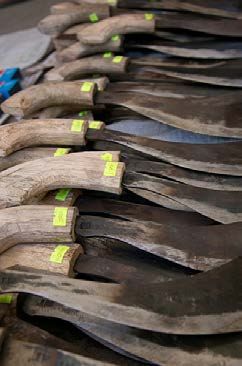
CRS vouchers are used to purchase goods by local blacksmiths participating in the program. Jennifer Hardy/CRS.

The CRS program itself was also more effective due                    Conditionality of any grant must be carefully
to market support activities, as CRS would not have                   analyzed. Initial grants were conditional on the
been able to procure locally preferred tools for the                  production of 300 tools for sale at the voucher
beneficiary population otherwise.                                     fair, or the blacksmiths would have to repay the
                                                                      cash grant. After blacksmiths expressed concern
Market-based programs provide access to locally                       that they would be unable to meet the terms of the
preferred products. Local community members                           conditional grant, CRS removed the requirement and
considered the personal pride of possessing a                         continued with unconditional grants. While vendors
quality sundang to be as important as the tool’s                      met expectations nonetheless, the initial requirement
utility in agricultural work. While CRS had originally                excluded smaller vendors who would have otherwise
considered importing tools to meet the high                           been able to take part in the program. Thus,
demand, CRS staff determined that communities                         conditionality should take into account the size and
placed strong confidence in the capabilities of local                 capacity of vendors, if the program wants to
blacksmiths and preferred to purchase from them.                      support small-scale vendors.
Market support thus enabled people to access their
preferred products.
                                                                  5
A local farmer uses tools purchased with vouchers from a CRS sponsored agriculture fair in April 2014. Jennifer Hardy/CRS.
Tying market support to a voucher program may New loan solutions may be needed in the future.
stimulate purchases of higher-value products. Blacksmiths initially requested loans, which could
Data from assessments and consultation indicated not be provided due to CRS’ internal operational
that beneficiaries prioritized their voucher spending policies. As an alternative, CRS provided direct
to acquire tools first, with seeds and other items cash transfers to blacksmiths for their varied needs.
following. Beneficiary feedback noted that this Future cash-based programs should consider
trend reflected the high value they placed on local alternative methods capital support, such as
tools. In the post-Haiyan context, demand for microfinancing and microcredit options, depending
tools was so high that they would have likely been on context, staff capacity, and local financial service
purchased readily in local markets even if CRS providers. Market support schemes also offer
had not provided vouchers. However, it was noted opportunities for impact investment.
that vouchers created an immediate demand for
Programs should be flexible enough to change
tools, and thus an immediate market for project-
modalities midcourse. Blacksmith grants were
supported blacksmiths. This lesson was noted for
not part of CRS’ initial program but, upon further
future programs where market support activities are
needs and market assessments, it became clear that
targeted at high-value products and there is a need
market support was a good strategy. CRS worked
to stimulate demand.
with the donor to ensure that this support could be
provided within the terms of the program.
Catholic Relief Services 228 W. Lexington Street, Baltimore, MD 21201, USA
For more information, contact emergencies@crs.orgYou can also read


