Sustainability-Oriented Business Model Evaluation-A Literature Review - MDPI
←
→
Page content transcription
If your browser does not render page correctly, please read the page content below
sustainability

Review
Sustainability-Oriented Business Model Evaluation—A
Literature Review
Anika Süß * , Kristina Höse and Uwe Götze

                                          Faculty of Economics and Business Administration, Chemnitz University of Technology,
                                          09111 Chemnitz, Germany; kristina.hoese@wiwi.tu-chemnitz.de (K.H.); uwe.goetze@wiwi.tu-chemnitz.de (U.G.)
                                          * Correspondence: anika.suess@wiwi.tu-chemnitz.de

                                          Abstract: Since the need of sustainable development is indisputable, companies are forced to strive
                                          for resources, processes, and products that are sustainable. Thus, their business models as the
                                          main representation of their activities should be designed in an ecologically, economically, and
                                          socially beneficial way. However, designing and developing sustainable business models is closely
                                          linked to their evaluation. Sustainable business model evaluation as a vital part of business model
                                          development has been addressed in literature in the past with increasing frequency. As a consequence,
                                          the plethora of different approaches of sustainability-oriented business model evaluation calls for
                                          a systematic literature review. Thus, in this study, we reviewed existing articles on sustainability-
                                          oriented business model evaluation and identified four main categories of evaluation methods: single
                                          indicators (I), indicator system/framework (II), simulation-based evaluation (III), and multi criteria
                                          decision-making (IV). By analyzing and structuring the proposed approaches, their benefits and
                                          limitations are revealed, pointing out gaps and future research needs for successfully designing and
                                          evaluating business models today and in the future.

                                   Keywords: business model evaluation; sustainable business model evaluation; sustainability;
Citation: Süß, A.; Höse, K.; Götze, U.    sustainable business models; literature review; sustainability assessment
Sustainability-Oriented Business
Model Evaluation—A Literature
Review. Sustainability 2021, 13, 10908.
https://doi.org/10.3390/su                1. Introduction
131910908
                                                While facing drastic global effects of climate change, growing population, and an
                                          ongoing pandemic, it seems obvious that present business practices are not sufficient for
Academic Editor: Guido Perboli
                                          enabling a sustainable and bright future. Rethinking resource consumption and production
                                          conditions and taking actions for the achievement of Sustainable Development Goals [1] is
Received: 2 September 2021
Accepted: 28 September 2021
                                          more than ever relevant nowadays. Therefore, business sustainability is a highly important
Published: 30 September 2021
                                          topic and accordingly already addressed in research [2]. However, present literature reveals
                                          a plethora of different approaches to consider sustainability within the development and
Publisher’s Note: MDPI stays neutral
                                          evaluation of business models [3,4].
with regard to jurisdictional claims in
                                                This raises the question, how to choose a suitable method for each individual eval-
published maps and institutional affil-   uation task. Moreover, it impedes the application of such an evaluation for practitioners
iations.                                  and at the same time hinders the development of sustainable business models, as well.
                                          To overcome this problem, this paper provides an overview on existing approaches of
                                          business model evaluation in order to enable the rethinking and developing of business
                                          models to achieve enhanced sustainability. For this reason, literature on sustainability-
Copyright: © 2021 by the authors.
                                          oriented business model evaluation is reviewed in terms of methods used. Additionally,
Licensee MDPI, Basel, Switzerland.
                                          the methods used are structured to support the choice of a suitable one depending on the
This article is an open access article
                                          specific evaluation task.
distributed under the terms and                 In Section 2, an overview of sustainability and sustainability evaluation as well as
conditions of the Creative Commons        business models and business model evaluation is given. After that, the method of the
Attribution (CC BY) license (https://     systematic literature review is presented in more detail (Section 3). The results of the
creativecommons.org/licenses/by/          literature review are presented in Section 4. There, the identified sustainability-related
4.0/).                                    business model evaluation approaches are categorized and analyzed in more detail. The

Sustainability 2021, 13, 10908. https://doi.org/10.3390/su131910908                                  https://www.mdpi.com/journal/sustainability
Sustainability 2021, 13, 10908 2 of 15
method (of literature review) as well as the results are discussed in Section 5. Finally, a
conclusion (Section 6) completes the paper.
2. State of the Art—Sustainability and Business Models
2.1. Sustainability and Sustainability Evaluation
Sustainability is a term often applied and discussed in various contexts of econ-
omy, politics, and science, e.g., mobility, demographic development or climate change [5].
For a better understanding of the term sustainability, it seems to be necessary to refer
to its historical development, e.g., VON C ARLOWITZ’ forest management principles, the
Brundtland-Report and the Rio-Conference (for an overview see [5]). First thoughts about
sustainability are based on VON C ARLOWITZ, who claims for a sustainable forest manage-
ment in 1713 [6]. In 1987, in the Brundtland-Report published by the World Commission
on Environment and Development the term “sustainable development” was described as
the necessity to meet the current generations’ needs without putting future generations
in a worse position [7,8]. Following this, in 1992 the participants of the United Nations
Conference on Environment and Development in Rio de Janeiro negotiated and adopted
documents to incorporate sustainability in a formal concern, which represents the be-
ginning of implementing sustainability in policy [5,9]. Even though the importance of
sustainability in economy, science and policy is undoubted, no clear and common definition
of sustainability exists. However, for a holistic consideration of sustainable development
the three dimensions of sustainability (economic, ecological, and social) need to be consid-
ered in a balanced way. Economic sustainability aims at the long-term economic continuity
of a system (e.g., a company). Ecological sustainability has the same target in an ecolog-
ical manner. Social sustainability considers systems in relation to human by addressing
problems like discrimination among others [5].
However, how can the overall sustainability of systems be measured and assessed?
G ÖTZE ET AL . presented an overview of approaches for the assessment of sustainabil-
ity on different levels—company, technology, product, and process [10]. Here, the sus-
tainability balanced scorecard is mentioned as an approach considering all three dimen-
sions of sustainability. However, the other approaches named there refer to only one or
two dimensions of sustainability (e.g., life cycle costing—economic dimension, life cycle
assessment—ecological dimension, social life cycle assessment—social dimension, life
cycle engineering—economic and ecological dimensions). Concluding, it is not sufficient to
choose only one of these concepts for an assessment of the overall sustainability. A solution
approach for this problem is the life cycle sustainability assessment, first mentioned by
Z HOU ET AL . [11], a concept proposing to integrate methods to assess particular dimensions
of sustainability to a method for performing an overall assessment of sustainability [12,13].
Several authors already performed integrated sustainability analyses for specific
tasks (e.g., [14–16]). One possibility for a sustainability assessment is the usage of indi-
cators/ratios. D AHLGREN AND A MMENBERG, for example, propose a set of economic,
ecological, and social-related indicators (e.g., total cost of ownership, greenhouse gas emis-
sion savings, noise) to assess different bus technologies [16]. However, ratio systems seem
to be more suitable than single indicators, as the relationship between different targets can
be illustrated, among others [17]. The sustainability balanced scorecard, a ratio system
including all sustainability dimensions in one concept, is applied by several authors (e.g.,
by [15] to analyze a Brazilian agricultural company). However, it should be mentioned that
the Balanced Scorecard is a concept focusing on strategy implementation and management
control [17] without having assessment as the main task. The life cycle sustainability assess-
ment was also used by several authors to assess the sustainability-related performance of
processes or products (for an overview of 21 case studies applying life cycle sustainability
assessment in the manufacturing domain see [13]). One example is the case study of
E KENER ET AL ., who developed a life cycle sustainability assessment methodology by
using multi criteria decision analysis to integrate the results of the assessments of each
sustainability dimension [18].Sustainability 2021, 13, 10908 3 of 15
G ÖTZE ET AL . present a concept for the assessment of human-robot collaborations
using a decision theory-based procedure model. For each sustainability dimension, they
suggest target figures and methods or concepts for their determination. Regarding the
economic dimension, the net present value is calculated by applying the net present value
method. The ecological target figure, carbon footprint, is determined by analyzing the
same input and output quantities as consulted for economic assessment in an ecological
manner. For the social dimension, the ergonomic load is ascertained by application of key
indicator method. A second social-related target figure, the acceptance by the employee, is
considered by conducting interviews. Finally, the single target figures are weighted and
afterwards aggregated to enable a holistic sustainability assessment. For that, G ÖTZE ET AL .
suggest to apply the utility value analysis to determine the utility value as sustainability
target figure [14]. The methodology presented by G ÖTZE ET AL . is accompanied by the idea
to integrate methods referring to several sustainability dimensions to a holistic assessment
of sustainability, similar to the concept of life cycle sustainability assessment.
As a conclusion, a variety of concepts and methods for sustainability assessment of
companies, technologies, processes, and products does exist without having “the” one
methodology that can by proposed for every case.
2.2. Business Models and Their Evaluation
The business model concept has become prevalent in the 1990s, driven by the growth
of the Internet and E-Commerce, although business models have been an essential part
of economic behavior for much longer [19,20]. With increasing importance, the number
of definitions of the term business models increased as well. A compilation of definitions
can be found in [21,22]. The different definitions can be clustered into two groups [23]: On
the one hand, a business model can be understood as a description of the key principles
of value creation on an abstract level (e.g., [24]); on the other hand, it is interpreted as the
specific design how one company creates value in practice, i.e., in form of the realization
of the business model [25]. Accepting the latter definition enables evaluating a specific
business model and lays the ground for the following thoughts of this paper.
One point plenty of authors of business model definitions have in common is the
use of a semantic structure to describe the different elements, sometimes within different
dimensions, their definition of a business model contains. This is described by the term
ontology and examples or variations can be found in [26,27], or the probably best known
in [28]. O STERWALDER started his business model ontology from four main areas or pillars
(product, customer interface, infrastructure management, financial aspects) [28] and refined
them on a more detailed level into nine business model elements. Together with P IGNEUR,
a further developed version was published, namely the Business Model Canvas including
the elements customer segments, value proposition, channels, customer relationships,
revenue streams, key resources, key activities, key partnerships, and cost structure [24].
Many authors describe the process of developing an idea into a business model as well.
According to [21,22], this process is divided into six steps: development of business model
ideas (1), feasibility analysis (2), prototyping (3), decision-making (4), implementation (5),
and monitoring and controlling (6). The order of these steps is rather a suggestion to follow,
as business model development is an iterative process with many feedback loops. Along
with that go many different evaluation steps throughout and linked with the business
model development.
Z IEGENFUSS [29] gives an extensive overview of methods that can be used for the
evaluation of business models. Therefore, a classification into qualitative, semi-quantitative,
and quantitative methods is done. The methods are categorized depending on their focus
of evaluation—the whole business model or specific dimensions of a business model (e.g.,
financial dimension) [29].
In the literature, many approaches evaluate business models qualitatively. One
qualitative evaluation is proposed by [30], who summarized success factors of business
models by the acronym NICE, considering the ability to create innovations (novelty), toSustainability 2021, 13, 10908 4 of 15
protect strategic resources from competitors (lock-in), to complementarily use resources
(complementarity), and to organize in a transaction cost-effective way (efficiency). H AMEL
proposes different key success factors for the value of business models in order to evaluate
them, addressing the ability to deliver customer benefits in an efficient way, the inimitabil-
ity of the business model, the fit among the elements and the potential of generating above
average-returns [25]. Although it might be worthy of discussion if the consideration of
success factors is to be declared as an evaluation, it is at least a way to get a holistic idea of
the business model and its potential. However, it should be combined with a quantitative
evaluation [31].
A quantitative approach is presented by OSTERWALDER and PIGNEUR, who devel-
oped questions for each business model element basing on their ontology. To answer these
questions, they propose a scale from one to five to measure e.g., customers’ satisfaction or
the substitutability of strategic resources [22].
Another quantitative performance indicator for evaluating business models is the net
present value (NPV) [23]. Based on the NPV, S CHALLMO introduces the business model
value that calculates the net monetary gain from the business model by discounting all
estimated future cash inflows and outflows related to the business model [22,32]. Over
the last years, the use of another method for simulating complex business activities, such
as business models, and quantitatively estimating their success increased [31]: system
dynamics uses equations to describe business model elements and the interdependencies
among them over time [29,33]. Z IEGENFUSS suggests a model using system dynamics
to describe and evaluate elements of business models and their interdependencies [29].
However, this approach does not focus on sustainability aspects.
Methods for business model evaluation are manifold, as shown above. Nonetheless,
they largely have been focusing economic success and have been disregarding ecological or
social responsibilities for a long time. To analyze the state-of-the-art of approaches aiming
at an evaluation of business models from a more sustainability-centered view, a systematic
literature review is conducted.
3. Method
The aim of this literature review is to identify publications that address the sustainability-
oriented evaluation of business models and to analyze these approaches. To get an overview
of recent methodological developments and preliminary findings in business model evalua-
tion, a systematic literature review was conducted, using a database-search-based method-
ology. Therefore, we identified relevant keywords and scientific databases to find suitable
articles that address the topic of sustainability-oriented business model evaluation. After a
bibliometric analysis, we scanned the results regarding titles and abstracts to choose the
most relevant papers and analyzed them in detail.
We chose four different databases and searched on 1 October 2020 for literature with
search terms given in Table 1 in the title, resulting in a list of 215 articles in total. After
removing duplicates, 84 articles remained. Based on this result, a bibliometric analysis was
conducted at the first.
The analysis of the publication time shows the beginnings of research on this topic
around 14 years ago and a sharp increase over the last 6 years (see Figure 1). That implies
that the need for sustainable business models and an approach to evaluate the sustainability
of business models attract more and more attention, especially in research and presumably
in business practices as well.
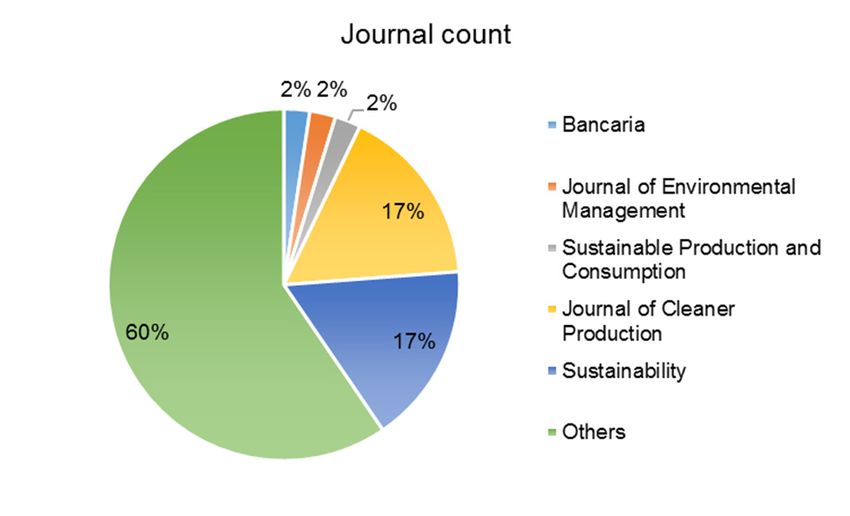
Figure 2 shows in which journals relevant paper were published, indicating a high
amount of articles published in Journal of Cleaner Production and Sustainability, but there is
also a large number of journals listed only once. The resulting 84 publications were studied,
neglecting articles which are not written in English language, which are not accessible, or
with a purpose other than evaluating business models or a deviating understanding of the
terms business model, evaluation, or sustainability. Various articles deal with sustainability
in terms of economic viability, neglect the social and environmental dimension and wereSustainability 2021, 13, 10908 5 of 15
excluded
Sustainability 2021, 13, x FOR PEER REVIEW from our analysis for this reason. Other publications focus on reviewing 5otherof 15
articles instead of presenting methodological approaches. These literature reviews were not
included in the analysis itself, but the most relevant of them were screened and one could
be used to identify further articles of interest [3]. Two of the articles cited there fulfilled
Table 1. Results of literature review.
the criteria (named above) and were added to the list (see Table 2). This step identified the
most relevant publications resulting in a list of 18 articles. The procedure of the literature
Platform
review is presented
“Business Model*”inAND Figure 3.
EBSCO ScienceDirect Scopus Web of Science
“Sustainab*” AND
Table 1. Results of literature review.
evalua* 3 3 7 6
assess* 9 6 14
Platform 10
anal*
“Business Model*” AND 18 10 30 25
EBSCO ScienceDirect Scopus
review* AND
“Sustainab*” 12 9 29 24 Web of Science
evalua* 42 3 28 3 80 7 65 6
Total
assess* 9 6 215 14 10
Total without duplicates 84
anal* 18 10 30 25
review* 12 9
The analysis of the publication time shows the beginnings29 24
of research on this topic
around 14 years ago and a sharp 42
increase over the28
last 6 years 80 Figure 1). That65implies
(see
Total
that the need for sustainable business models and an approach215 to evaluate the sustaina-
bility of business models
Total without duplicates attract more and more attention, especially
84 in research and pre-
sumably in business practices as well.
Number of publications over time
20
15
10
5
0
2007 2009 2010 2012 2013 2014 2015 2016 2017 2018 2019 2020
Sustainability 2021, 13, x FOR PEER REVIEW 6 of 15
Figure1.
Figure 1. Number
Number of
of resulting
resultingpublications
publicationsover
overtime.
time.
Figure 2 shows in which journals relevant paper were published, indicating a high
amount of articles published in Journal of Cleaner Production and Sustainability, but there is
also a large number of journals listed only once. The resulting 84 publications were stud-
ied, neglecting articles which are not written in English language, which are not accessible,
or with a purpose other than evaluating business models or a deviating understanding of
the terms business model, evaluation, or sustainability. Various articles deal with sustainabil-
ity in terms of economic viability, neglect the social and environmental dimension and
were excluded from our analysis for this reason. Other publications focus on reviewing
other articles instead of presenting methodological approaches. These literature reviews
were not included in the analysis itself, but the most relevant of them were screened and
one could be used to identify further articles of interest [3]. Two of the articles cited there
fulfilled the criteria (named above) and were added to the list (see Table 2). This step iden-
tified the
Figure
Figure most relevant
2. Journal
2. count. publications resulting in a list of 18 articles. The procedure of the
count.
literature review is presented in Figure 3.
The remaining papers were analyzed regarding several criteria. First, they were cat-
egorized into general papers and papers with specific application (areas). Afterwards, the
proposed or applied methodology for a sustainability-oriented evaluation of business
models or elements of business models of each paper was analyzed in more detail (see
Section 4).Sustainability 2021, 13, 10908 6 of 15
Table 2. Resulting list of articles (* relevant primary sources identified in [3]).
Ref. Author(s) Year Title Industry/Area
Barbieri, R., Lopes Sustainable Business Models and
[34] 2020 Health
Santos, D.F. Eco-Innovation: A Life Cycle Assessment
Value mapping for sustainable business
[35] * Bocken, N. et al. 2015 General
thinking
Sustainability as a Driver for Value
Broccardo, L., Creation: A Business Model Analysis of
[36] 2020 Utilities sector
Zicari, A. Small and Medium Enterprises in the
Italian Wine Sector
Systematic Assessment of Tritical—based
Biorefinery Strategies: Investment
[37] Chambost, V., et al. 2018 Utilities sector
Decisions for Sustainable Biorefinery
Business Models
The Business Model Evaluation Tool for
[38] * Díaz-Díaz, R. et al. 2017 Smart Cities: Application to Smart Public services
Santander Use Cases
Impact Assessment of Additive
Production
[39] Godina, R., et al. 2020 Manufacturing on Sustainable Business
technologies
Models in Industry 4.0 Context
Høgevold, N. M., A Sustainable Business Model in Services:
[40] 2015 Hotels
et al. An Assessment and Validation
An Assessment of the Early Stages of a
[41] Hutchinson, D., et al. 2012 Sustainable Business Model in the Utilities sector
Canadian Fast Food Industry
Lüdeke-Freund, F., Sustainability-Oriented Business Model
[42] 2017 General
et al. Assessment-A Conceptual Foundation
Sustainability Assessments and Their
[43] Melkonyan, A., et al. 2017 Implementation Possibilities within the Utilities sector
Business Models of Companies
‘Plan A’: Analysing Business Model
[44] Morgan, E. 2015 Innovation for Sustainable Consumption Fashion
in Mass-Market Clothes Retailing
Performing Quantitative Analyzes
towards Sustainable Business Models in
[45] Moschetti, R., et al. 2018 Construction
Building Energy Renovation Projects:
Analytic Process and Case Study
Business Model in the Context of
Sustainable Urban Water
[46] Müller, N. A., et al. 2016 Management—A Comparative Utilities sector
Assessment between Two Urban Regions
in Australia and Germany
Sustainable Banking; Evaluation of the
[47] Nosratabadi, S., et al. 2020 Banking
European Business Models
The Social Side of Sustainable Business
[48] Rotondo, F., et al. 2019 Models: An Explorative Analysis of the Mobility
Low-Cost Airline Industry
Surviving the Energy Transition:
Development of a Proposal for Evaluating
[49] Wagner, O., et al. 2020 Sustainable Business Models for Utilities sector
Incumbents in Germany’s Electricity
MarketSustainability 2021, 13, x FOR PEER REVIEW 6 of 15
Sustainability 2021, 13, 10908 7 of 15
Table 2. Cont.
Ref. Author(s) Year Title Industry/Area
An Emerging Industrial Business Model
Considering Sustainability Evaluation Production
[50] Watanabe, E. H., et al. 2016
and Using Cyber Physical System technologies
Technology and Modelling Techniques
AHP-ANP-Fuzzy Integral Integrated
Network for Evaluating Performance of
[51] Zhao, X., et al. 2017 Construction
Innovative Business Models for
Sustainable Building
Figure 2. Journal count.
Figure3.3. Method
Figure Method of
of literature
literaturereview.
review.
Table 2. Resulting list of articles
The remaining (* relevant
papers primary sources
were analyzed identified
regarding in [3]).
several criteria. First, they were
categorized into general papers and papers with specific application (areas). Afterwards,
Ref. Author(s) Year Title Industry/Area
the proposed or applied methodology for a sustainability-oriented evaluation of business
Barbieri, R., Lopes Sustainable Business Models and Eco-Innovation:
[34] models or elements
2020 of business models of each paper was analyzed in more detail (see
Health
Santos,Section
D.F. 4). A Life Cycle Assessment
[35] * Bocken, N. et al. 2015 Value mapping for sustainable business thinking General
4. Results Sustainability as a Driver for Value Creation: A
Broccardo, L., Zi-
[36] 2020 Business
The resulting Model
list includes Analysisarticles
18 scientific of Small and Medium
dealing with theEn- Utilities sector
sustainability-oriented
cari, A.
evaluation of business models, terprises in theinItalian
as shown Table Wine Sector
2. Remarkably, most of the articles refer
to specific contextsSystematic
or industries, e.g., health
Assessment industry, utilities
of Tritical—based sector, or fashion industry.
Biorefin-
[37] Chambost,Thus,
V., etthere are only
al. 2018 erytwo articles solely
Strategies: conceptual
Investment or without
Decisions an exampleUtilities
for Sustainable of application.
sector
Referring to the remaining 18 articles, we performed
Biorefinery Business Models an in-depth analysis of the
evaluation methods Theproposed
Business and/or
Modelapplied in each
Evaluation Toolpaper. Thereby,
for Smart Cit-different evaluation
[38] * Díaz-Díaz,types
R. etwere
al. identified
2017 and were used subsequently to structure our findings. Public services
ies: Application to Smart Santander Use Cases
All papers deal with the three sustainability dimensions (economic, ecological, social),
Impact Assessment of Additive Manufacturing on
due to our definition of the term sustainability (see Section 2.1). Next to the sectors that
Production are
tech-
[39] Godina, R., et al. by 2020
focused Sustainable
the papers, Business
the papers Models inconcerning
were analyzed Industry 4.0theCon-
methods used to assess
nologies
the sustainability of business models. We text distinguished the following categories: single
Høgevold,indicators A Sustainable
N. M., et (I), indicator Business (II),
system/framework Model in Services: Anevaluation
simulation-based As- (III), and multi
[40] 2015 Hotels
al.criteria decision-making (MCDM) sessment andofValidation
(IV). Some the papers using single indicators (category
An Assessment
I) refer to argumentative of the on
analyses based Early Stagesmodel
business of a Sustainable
ontologies, such as presented
Hutchinson, D., et
[41] in Section 2.2. There,
2012 the ontologies
Business Model inbuild the frameFast
the Canadian for the
Foodchosen
Indus-indicators
Utilities(e.g., [40]).
sector
al.
Some of the frameworks (category II) regard try to one specific instrument (e.g., Balanced
Scorecard [39]), others connect different instruments (e.g., Balanced Scorecard with an
ontology [42]). Simulation-based evaluation methods (category III) apply indicators as
well. However, they focus on the analysis of interdependencies using simulations andSustainability 2021, 13, 10908 8 of 15
therefore, they are seen as an own category, here. Additionally, they are suggested for
evaluating business models in general, as discussed in Section 2.2 (referring to [29]). Finally,
papers using MCDM (category IV) are considered. The approaches of this category base on
indicators, as well. However, they especially have in common, that they apply a MCDM
method which usually addresses the issue of multiple targets, in this case regarding the
dimensions of sustainability [32].
As a result, the selected 18 papers were classified with one of the four categories (I, II,
III, IV), as shown in the following Table 3.
Table 3. Classification of sustainability-oriented business model evaluation methods.
Method Description References
(I) Single Indicators
Single Indicator based evaluation Evaluation based on sustainability related indicators [34,36,45,46,48–50]
Argumentative analysis based on Argumentative analysis based on indicators derived
[35,40,41,44]
Business Model Ontologies from business model elements
(II) Indicator System/Framework
Balanced scorecard structure for evaluating economic,
Balanced Scorecard [39]
ecological, and social impacts
Based on a business model logic and Balanced
SUST-BMA [42]
Scorecard structure
Business Model Canvas Structure complemented by
Value of Business Model (VBM) social and ecological elements, indicators for some [38]
elements
(III) Simulation based evaluation
Using System Dynamics to analyze interdependencies
System Dynamics [43]
using simulation methods
(IV) Multi Criteria Decision Making (MCDM)
Utility Value Analysis Incorporating and weighting a set of criteria [37]
Prioritizing business model components and/or
Analytical Hierarchy Process [47,51]
criteria in terms of sustainability
The first evaluation type comprises Single Indicators (I). Apparently, most single in-
dicators are derived from the context of the business model. For example, to evaluate
sustainability of business models of the urban water management, indicators like wa-
ter sources, degree of cost pressure, degree of customer participation, or water costs are
used [46]. Another example is the evaluation of the business model of building reno-
vation projects based on specific indicators, such as indoor air quality in the renovated
building, total life cycle costs for building owners, or the direct life cycle energy related to
the building renovation [45]. The use of such specific indicators enables an evaluation or
comparison of similar business models in the same scope, but makes it harder to apply the
method to another industry. Some more general indicators are used by B ROCCARDO and
Z ICARI, who compare business models of family and non-family owned businesses in the
Italian wine sector by reference to profitability, financial structure, ownership, patents, and
tangible assets, among others [36]. Another example is the evaluation of different airlines’
business models by R OTONDO using criteria for market (e.g., who is addressed with value
created?), structure (e.g., the role of employees), and value proposition (e.g., whether social
sustainability is part of the BM) [48]. By using general indicators, the evaluation method
can be applied across different industries or areas.
In some articles, single indicators are directly associated to sustainability dimen-
sions [34,45], e.g., for social performance the indicator accidents at work, for economic
performance the ROI, and for ecological performance the GHG emissions are used as indi-Sustainability 2021, 13, 10908 9 of 15
cators for evaluation [34]. This enables a holistic view and it is easier to ensure that all three
dimensions are addressed adequately. Others do not explicitly classify proposed indicators
but at least support the conclusion that indicators might be derived from a triple bottom line
approach [49]. Beside traditional sustainability dimensions, some authors consider techni-
cal aspects, as well, to give a broader overview of the business model [50]. Another possible
way of single indicator-based evaluating is to base the evaluation on existing business model on-
tologies and their elements. Some authors use them to derive indicators or criteria from the
elements. To evaluate, to which extent the criteria are met, a logical-argumentative analysis
is often used [40,41,44]. H ØGEVOLD ET AL . have done an analysis of a Scandinavian hotel
chain’s business model. Their analysis bases on a “business sustainability model” [40]
from which evaluation criteria are derived, such as the company’s vision and mission, the
connection to planet earth in terms of the application of the triple bottom line or the choice
of producers and suppliers. In their study, the authors argumentatively analyze character-
istics and actions the company takes, suitable to each criterion The last-mentioned criterion
e.g., is expressed by the extent of using environmentally friendly and socially responsible
textiles by checking whether their suppliers apply ISO standards. H UTCHINSON ET AL .
evaluate the business model of a Canadian café and bake shop chain by investigating its
(1) driving forces; (2) purchasing policies; (3) value-adding processes; (4) intermediaries
and transport; (5) retail practices; (6) marketplace; and (7) the natural environment [41].
M ORGAN derives criteria from the four main pillars of the business model canvas and
maps them to core drivers of business cases for sustainability. In that way, sustainability
aspects are ought to be considered. However, the main limitation of this method is that the
evaluation is not primarily focused on sustainability, as the effects the core drivers have
on the business model are analyzed regarding economic benefits. Therefore, not the sus-
tainability of the business model is evaluated, but the effects perceived sustainable actions
have on the existing business model [44]. Another approach of an argumentative single
indicator-based evaluation is presented by B OCKEN ET AL . [35]. They developed the value
mapping tool for qualitatively evaluating and screening business model options to compare
potential business model innovations and strategies. The tool takes a multi-stakeholder
perspective and considers value in multiple forms: value captured, value destroyed, value
missed, and new value opportunities. Based on these aspects, the value mapping tool can
facilitate comparing business model ideas and accelerate decision-making [35].
The main shortfall of an evaluation which is based on single indicators, whether
they are derived from sustainability dimensions or from a business model ontology, is the
neglect of interdependencies between business model elements, (evaluation) criteria and/or
targets. To overcome this problem, other approaches use indicators in indicator systems or
frameworks (II). They are intended to show relations between different sustainability-related
targets, elements, and/or (evaluation) criteria (expressed by indicators) that are structured
in form of a system [39], conceptual framework [42], or a tool [38] among others. Some
of them use business model ontologies/logics like the business model canvas or others
(e.g., [38,42]) and/or systems like the balanced scorecard [39,42].
G ODINA ET AL . propose to use the balanced scorecard to assess the influence of
additive manufacturing on business models. They define economic, ecological, and social-
related balanced scorecard perspectives (traditional perspectives learning and growth,
process, market, financial are considered for each dimension of sustainability resulting
in 12 dimensions) [39]. Their ideas base on the model of N ICOLETTI J UNIOR ET AL., who
focused on the relation between sustainability dimensions and balanced scorecard perspec-
tives [52]. Afterwards, G ODINA ET AL . discuss impacts of additive manufacturing within
the dimensions of the balanced scorecard (e.g., cost reduction is a benefit categorized into
the economic part of financial dimension, energy efficiency improvements are benefits cate-
gorized into the environmental (or ecological) part of the financial dimension). Regarding
the social part, indicators for each balanced scorecard dimension are deducted, e.g., work
satisfaction as part of the learning and growth perspective [39].Sustainability 2021, 13, 10908 10 of 15
L ÜDEKE -F REUND ET AL . present a conceptual framework for sustainability oriented
business model assessment (SUST-BMA), which includes perspectives of the balanced
scorecard, as well. The first element of the approach is the business model concept in form
of five business model logics (marketing logic, capabilities and resources logic, financial
logic, production logic contextual logic). The second element is the sustainability balanced
scorecard (SBSC) with the financial, customer, internal process, learning growth and non-
market perspective (basing on F IGGE ET AL . [53]). Both elements are matched by combining
each logic with one perspective (e.g., financial logic and financial perspective, production
logic and internal process perspective) to identify outcomes in form of created value. To
determine particular values for the assessment, using indicators, e.g., as proposed in the
Global Reporting Initiative (GRI)-framework [54] is suggested [42].
D ÍAZ -D ÍAZ ET AL . develop a business model evaluation tool for smart cities, which
is based on a business model logic as well. For this, they use the business model canvas
complemented by new elements—social & environmental cost and social & environmental
benefit [24]—to enable the reference to a sustainability-oriented ontology. For some of the
elements of this business model canvas (e.g., cost structure, revenue streams, social and
environmental costs, value proposition) they create parameters (e.g., they ask if the price
of the product/service is better than for other alternatives as part of value proposition).
Additionally, they determine potential “qualifications” for them (in the example of the
value proposition, a value between 0 which means no and 1 which stands for a clearly
positive answer). Finally, they determine a Value of the Business Model (VBM) by creating
a formula that includes the results of the parameters or potential qualifications of the
considered business model elements. Based on this value, it is possible to compare different
business models and make strategic decisions [38].
Next to the indicator-based evaluation in form of single indicators or indicators
in indicator systems or frameworks, indicators used within simulation-based evaluation
approaches (III) exist. M ELKONYAN ET AL . applied system dynamics for their analysis of
business models and sustainability in the area of energy utility. For the simulation, they
created causal loop diagrams (CLD) and, as a following, a stock and flow diagram (SFD)
was analyzed [43].
Finally, methods of MCDM (IV) are identified as an option to evaluate business models
in terms of sustainability. C HAMBOST ET AL . presented an approach aiming at supporting
the decision-making for an implementation of a biorefinery-based strategy. Therefore, they
identify and weight a set of economic, ecological, and competiveness-oriented criteria.
Afterwards, an utility value is calculated for each alternative (each strategy) to identify
the alternative leading to the most sustainable business model [37]. Another method of
MCDM applied in the context of business models and sustainability [47,51] is the analytical
hierarchy process (AHP). N OSRATABADI ET AL . assessed the sustainability performance of
16 banks. Therefore, business model elements (e.g., value proposition, business processes)
are prioritized in terms of their significance for sustainability by applying AHP. The
identification of the business model elements is supported by using the Delphi method
before [47]. Z HAO ET AL . assessed the business models for sustainable building. They
identified performance criteria of business models (e.g., environmental performance, direct
financial benefit) and indicators for them (e.g., shareholders return and annual growth rate
of return as indicators for direct financial benefit). AHP as well as analytic network process
(ANP) methods are applied to analyze the interdependencies among these criteria as well
as their weights [51]. All these approaches use indicators for evaluation, as well.
This overview shows a wide range of business model evaluation methods with regard
to sustainability, even though the literature review has been narrowed down to only 18
articles. In the following, the results of this work are discussed.
5. Discussion
This paper gives an overview of existing sustainability-related business model eval-
uation approaches. However, different issues arise with this review, which are two-fold:Sustainability 2021, 13, 10908 11 of 15
On the one hand, there are methodological limitations to our research (A), with respect to
the following aspects: the choice of databases and search terms as well as criteria for in-
and exclusion of articles, the classification of the identified methods presented in the arti-
cles. On the other hand, the methods presented and applied within the identified articles
themselves are worth being discussed, as well (B), with respect to the following aspects:
interpretation of the term evaluation, scope of evaluation, limitation of approaches within
the four categories (I, II, III, IV), choice of indicators and methods, and cross-dimensional
evaluation methods.
(A) First, the methodological issues of the own study are discussed: By performing
the literature review we could derive a traceable overview and interesting insights. Nev-
ertheless, our work is not free of limitations. This paper is limited to the selected search
terms and databases. The use of additional search terms could have broadened the scope
of the analysis. However, they were chosen aligned with our understanding of the terms
sustainability and business models. Regarding sustainability, we decided to include only
articles that consider all three dimensions. In case methods basing on single dimensions
should be analyzed, search terms like economic, ecological and/or social should been used
along with evaluation etc. Additionally, other data bases could have been used, e.g., Google
Scholar. Moreover, only English literature was taken into consideration.
Another point of discussion regarding the method refers to the classification of the
identified methods. Generally, methods could be classified regarding the scope, the pur-
pose, the target figure, and the type of the evaluation (among others). We decided to
classify according to the type of the method and distinguish between four categories:
single indicators (I), indicator system/framework (II), simulation based evaluation (III),
and MCDM (IV). First, the identified types are not completely independent, as all of the
evaluation methods base on indicators to a certain extent. Second, a classification according
to the scope of evaluation could have been reasonable, differentiating between the whole
business model and components/elements under evaluation. However, we intended to
focus on the analysis of evaluation methods for whole business models and classified them
according to the type.
(B) The second issue addresses the methods presented and applied within the articles
and comprises several issues, which are to be discussed below:
Interpretation of the term evaluation: The term evaluation itself is sometimes perceived
quite differently. Referring to the purpose, authors differentiate, whether solely modelling
the relationships of business model elements is already seen as part of an evaluation, or it
is mandatory that the evaluation includes rules for decision-making. Moreover, it varies
in which stage of business model development the method can be applied: either it is
used for an evaluation at an early stage of developing a business model or it requires
data of a certain level of detail and is therefore suitable for a later stage of business model
development. Therefore, the purpose of evaluation should be determined and based on
this, accordingly the understanding of the term evaluation as well as the method that
serves this purpose is chosen.
Scope of evaluation: Some presented approaches of business model evaluation rely on
the assumption that a sustainable product (as the value proposition and core of the business
model) leads to a sustainable business model by necessity [45] and only this part of the
business model needs to be especially evaluated. However, B OCKEN et al. (2014) showed
the variety of possibilities to obtain sustainable business models and although these are
clearly linked to areas such as sustainable manufacturing and design, the business model
concept allows for a wider view [2]. Following this idea, it seems apparent that evaluating
only one part of the business model is not expedient for a holistic sustainability assessment,
considering manifold effects on economy, environment, and society. Additionally, all
elements of the business models should be analyzed from a long-term life cycle-oriented
perspective.
Limitations of approaches within the four categories (I, II, III, IV): The next point refers to the
approaches used in the analyzed papers. As already mentioned in Section 4, the sole use ofSustainability 2021, 13, 10908 12 of 15
single indicators (I) impedes the consideration of interdependencies between sustainability-
related targets, elements, and/or (evaluation) criteria that are determined by indicators.
This can be a reason to rather use a framework instead of single indicators for evaluating.
In category II, two approaches use the balanced scorecard as a part of evaluation [39,42].
The information recorded and displayed in a balanced scorecard provides a comprehensive
information base for a holistic sustainability assessment of business models. However, the
balanced scorecard concept was originally designed as a means of strategy implementation
and controlling the activities of businesses—and not for evaluation purposes. The third
article of this category presents the so-called value of business model as the result of a
formula that jointly considers business model elements as parameters. It is a debatable
point whether this formula is devised feasibly but it enhances transparency and traceability
of decision-making. Approaches of category III refer to system dynamics to evaluate the
sustainability of business models. However, system dynamics is well-suited for describing
relationships but may lack in an evaluation following the abovementioned understanding.
The last category (IV) comprises the utility value analysis, which is easy to apply but bears
the risk of double counting the same effects if not applied correctly, and the analytical
hierarchy process, that involves a considerable effort for data collection but seams suitable
for an elaborated evaluation (more information about advantages and disadvantages of
MCDM methods can be found in [32]). Summarizing, all above-mentioned approaches
have limitations that need to be considered when choosing the most suitable evaluation
method for each case.
Choice of indicators and methods: Some indicator-based evaluation approaches use
specific indicators [45,46], others use general indicators and therefore provide a more
general evaluation approach [48]. While the approaches of the first group can hardly be
adapted to cases from other industries or areas, they allow for a custom-made and detailed
evaluation of the business model. It appears in both cases, that indicators are not matched
to the dimensions of sustainability. However, to provide a holistic sustainability-oriented
evaluation, it should be considered to derive the indicators directly from the economic,
ecological, and social dimensions. In that way, it is avoided that one dimension is neglected
or unintentionally weighed more than the others are. Additionally, the state-of-the-art of
the dimension-specific evaluation methods should be considered, e.g., by using the net
present value method for the economic assessment or the life cycle assessment for the
ecological evaluation and the respective indicators derived from the method.
Cross-dimensional evaluation methods: Using dimension-specific methods for evaluation
bears the risk of data inconsistencies between the single evaluation parts. It can be chal-
lenging to align the scope of the individual economic, ecological, and social evaluation.
Additionally, conducting three single assessments equals a triplication of work. To avoid
this, a cross-dimensional evaluation could be useful, considering the interdependencies
between the individual sustainability dimensions. A systematic procedure model could
be applied or the use of life cycle assessment could give directions for a subsequent joint
sustainability evaluation of business models.
6. Conclusions
The present research contributes to the literature on sustainability-related business
model evaluation by presenting a structured overview of the state-of-the-art of existing
methods. To address this, a systematic literature was conducted. The focus of the analysis
was laid on the presented and applied methods of sustainability-oriented business model
evaluation. The identified methods were structured into four categories. Analyzing the
existing literature on sustainability-related business model evaluation showed the variety of
already established approaches and the need of refinement regarding the issues elaborately
discussed above.
Further research could conduct a literature review similar to ours, but focus on differ-
ent search terms (e.g., circular business models, triple layered business model, economic,
ecological and/or social, along with evaluation and/or assessment, analysis, review) orSustainability 2021, 13, 10908 13 of 15
data bases (e.g., Google Scholar, Wiley Online) or analyze the results based on other criteria
(A). Furthermore, the presented methods within the chosen articles could be elaborated (B).
For example, a systematic procedure model or the use of life cycle assessment should be
considered as possible starting point in future research toward a methodology of integrated
sustainability evaluation. Such research could address the issue of weighting and aggregat-
ing of the single dimension-related results, as well. Basic support for such aggregation is
provided by MCDM methods such as analytic hierarchy process or utility value analysis.
Furthermore, the balance of economic-, ecological-, and social-oriented indicators should
be considered as well as the determination of the outcomes of the indicators.
Author Contributions: Conceptualization, A.S. and K.H.; methodology, A.S. and K.H.; validation,
A.S. and K.H.; formal analysis, A.S. and K.H.; resources, A.S. and K.H.; data curation, A.S. and K.H.;
writing—original draft preparation, A.S. and K.H.; writing—review and editing, A.S., K.H. and U.G.;
visualization, A.S. and K.H.; supervision, U.G. All authors have read and agreed to the published
version of the manuscript.
Funding: The publication of this article was funded by Chemnitz University of Technology.
Conflicts of Interest: The authors declare no conflict of interest.
References
1. UNDP Sustainable Development Goals. Available online: https://www.undp.org/sustainable-development-goals (accessed on
25 August 2021).
2. Bocken, N.M.P.; Short, S.W.; Rana, P.; Evans, S. A literature and practice review to develop sustainable business model archetypes.
J. Clean. Prod. 2014, 65, 42–56. [CrossRef]
3. Schoormann, T.; Kaufhold, A.; Behrens, D.; Knackstedt, R. Towards a typology of approaches for sustainability-oriented business
model evaluation. Lect. Notes Bus. Inf. Process. 2018, 320, 58–70.
4. Sinkovics, N.; Gunaratne, D.; Sinkovics, R.R.; Molina-Castillo, F.-J. Sustainable Business Model Innovation: An Umbrella Review.
Sustainability 2021, 13, 7266. [CrossRef]
5. Pufé, I. Nachhaltigkeit, 3rd ed.; UVK Verlagsgesellschaft mbH mit UVK/Lucius: Konstanz, München, 2017; ISBN 9783838587059.
6. von Carlowitz, H.C. Sylvicultura Oeconomica oder Haußwirthliche Nachricht und Naturmäßige Anweisung zur Wilden Baum-Zucht;
Braun: Leipzig, Germany, 1713.
7. Paul, B.D. A history of the concept of sustainable development: Literature review. Ann. Univ. Oradea, Econ. Sci. Ser. 2008, 17,
576–580.
8. WCED. World Commission on Environment and Development Our common future. Our Common Future 1987, 17, 1–19.
9. United Nations Report of the United Nations Conference on Environment and Development; United Nations Digital Library: New York,
NY, USA, 1993; Volume II, ISBN 9211004985.
10. Götze, U.; Peças, P.; Richter, F. Design for eco-efficiency–a system of indicators and their application to the case of moulds for
injection moulding. Procedia Manuf. 2019, 33, 304–311. [CrossRef]
11. Zhou, Z.; Jiang, H.; Qin, L. Life cycle sustainability assessment of fuels. Fuel 2007, 86, 256–263. [CrossRef]
12. Richter, F.; Schramm, A.; Götze, U. Life Cycle Sustainability Assessment—Concept and Methods. In Managerial Challenges of the
Contemporary Society; Risoprint: Cluj-Napoca, Romania, 2019; Volume 12, pp. 45–51.
13. Schramm, A.; Richter, F.; Götze, U. Life Cycle Sustainability Assessment for manufacturing—Analysis of existing approaches.
Procedia Manuf. 2020, 43, 712–719. [CrossRef]
14. Götze, U.; Schildt, M.; Mikus, B. Methodology for manufacturing sustainability evaluation of human-robot collaborations. Int. J.
Sustain. Manuf. 2020, 4, 365. [CrossRef]
15. Araújo, L.; Oliveira, H.; Gomes, L. Sustainability Balanced Scorecard for a Brazilian agricultural and livestock company. E3S Web
Conf. 2020, 159, 04005. [CrossRef]
16. Dahlgren, S.; Ammenberg, J. Sustainability Assessment of Public Transport, Part II—Applying a Multi-Criteria Assessment
Method to Compare Different Bus Technologies. Sustainability 2021, 13, 1273. [CrossRef]
17. Götze, U.; Krönert, S.; Mikus, B. Kennzahlensysteme als Instrumente des Produktionscontrolling. Der Betriebswirt 2010, 51, 10–17.
[CrossRef]
18. Ekener, E.; Hansson, J.; Larsson, A.; Peck, P. Developing Life Cycle Sustainability Assessment methodology by applying values-
based sustainability weighting—Tested on biomass based and fossil transportation fuels. J. Clean. Prod. 2018, 181, 337–351.
[CrossRef]
19. Teece, D.J. Business models, business strategy and innovation. Long Range Plan. 2010, 43, 172–194. [CrossRef]
20. Zott, C.; Amit, R.H.; Massa, L. The Business Model: Recent Developments and Future Research. SSRN Electron. J. 2011, 37,
1019–1042. [CrossRef]
21. Wirtz, B.W. Business Model Management, 2nd ed.; Springer Nature Switzerland AG: Cham, Switzerland, 2020; ISBN 9783030480165.Sustainability 2021, 13, 10908 14 of 15
22. Schallmo, D.R.A. Geschäftsmodelle Erfolgreich Entwickeln und Implementieren; Springer: Berlin/Heidelberg, Germany, 2013;
ISBN 978-3-642-37993-2.
23. Götze, U.; Rehme, M. Bewertung innovativer Geschäftsmodelle bei sich wandelnden Wertschöpfungsstrukturen. Analyse-,
Prognose-und Gestaltungsrahmen sowie die Anwendung auf die Ladeinfrastruktur für Elektrofahrzeuge. Z. Gesamte WertschöP-
fungskette Automob. 2013, 4, 27–37.
24. Osterwalder, A.; Pigneur, Y. Business Model Generation: A Handbook for Visionaries, Game Changers and Challengers; John Wiley and
Sons, Inc.: Hoboken, NJ, USA, 2010; ISBN 978-0470-87641-1.
25. Hamel, G. Leading the Revolution. How to Thrive in Turbulent Times by Making Innovation a Way of Life; Harvard Business Press:
Boston, MA, USA, 2000; ISBN 1591391466.
26. Bouwman, H.; Faber, E.; Haaker, T.; Kijl, B.; De Reuver, M. Conceptualizing the STOF model. In Mobile Service Innovation and
Business Models; Springer: Berlin/Heidelberg, Germany, 2008; pp. 31–70. ISBN 9783540792376.
27. Akkermans, J.M.; Gordijn, J. Value-based requirements engineering: Exploring innovative e-commerce ideas. Requir. Eng. 2003, 8,
114–134. [CrossRef]
28. Osterwalder, A. The Business Model Ontology—A Proposition in a Design Science Approach; Universite de Lausanne: Lausanne,
Switzerland, 2004; ISBN 0071392319.
29. Ziegenfuß, K. Bewertung Innovativer Geschäftsmodelle—Entwicklung eines Simulationsmodells und Anwendung auf die Bedarfsabhängige
Funktionserweiterung im Vernetzten Fahrzeug; Readbox Publishing GmbH: Dortmund, Germany, 2021; ISBN 978-3-96100-128-6.
30. Amit, R.; Zott, C. Value creation in e-business. Strateg. Manag. J. 2001, 22, 493–520. [CrossRef]
31. Heim, R.; Linden, M. Konzeption eines Rahmenwerks zur Gestaltung und Bewertung von Geschäftsmodellen; Mercator School of
Management: Duisburg, Germany, 2012.
32. Götze, U.; Northcott, D.; Schuster, P. Investment Appraisal—Methods and Models, 2nd ed.; Springer: Berlin/Heidelberg, Germany,
2015; ISBN 9783642334368.
33. Barabba, V.; Huber, C.; Cooke, F.; Pudar, N.; Smith, J.; Paich, M. A Multimethod Approach for Creating New Business Models:
The General Motors OnStar Project. Interfaces 2002, 32, 20–34. [CrossRef]
34. Barbieri, R.; Santos, D.F.L. Sustainable business models and eco-innovation: A life cycle assessment. J. Clean. Prod. 2020, 266,
121954. [CrossRef]
35. Bocken, N.M.P.; Rana, P.; Short, S.W. Value mapping for sustainable business thinking. J. Ind. Prod. Eng. 2015, 32, 67–81.
[CrossRef]
36. Broccardo, L.; Zicari, A. Sustainability as a driver for value creation: A business model analysis of small and medium entreprises
in the Italian wine sector. J. Clean. Prod. 2020, 259, 120852. [CrossRef]
37. Chambost, V.; Janssen, M.; Stuart, P.R. Systematic assessment of triticale-based biorefinery strategies: Investment decisions for
sustainable biorefinery business models. Biofuels, Bioprod. Biorefining 2018, 12, S9–S20. [CrossRef]
38. Díaz-Díaz, R.; Muñoz, L.; Pérez-González, D. The Business Model Evaluation Tool for Smart Cities: Application to SmartSantander
Use Cases. Energies 2017, 10, 262. [CrossRef]
39. Godina, R.; Ribeiro, I.; Matos, F.; Ferreira, T.B.; Carvalho, H.; Peças, P. Impact Assessment of Additive Manufacturing on
Sustainable Business Models in Industry 4.0 Context. Sustainability 2020, 12, 7066. [CrossRef]
40. Høgevold, N.M.; Svensson, G.; Padin, C. A sustainable business model in services: An assessment and validation. Int. J. Qual.
Serv. Sci. 2015, 7, 17–33. [CrossRef]
41. Hutchinson, D.; Singh, J.; Walker, K. An assessment of the early stages of a sustainable business model in the Canadian fast food
industry. Eur. Bus. Rev. 2012, 24, 519–531. [CrossRef]
42. Lüdeke-Freund, F.; Freudenreich, B.; Schaltegger, S.; Saviuc, I.; Stock, M. Sustainability-Oriented Business Model Assessment—A
Conceptual Foundation. In Analytics, Innovation, and Excellence-Driven Enterprise Sustainability; Palgrave Macmillan US: New York,
NY, USA, 2017; pp. 169–206.
43. Melkonyan, A.; Gottschalk, D. Sustainability assessments and their implementation possibilities within the business models of
companies. Sustain. Prod. Consum. 2017, 12, 1–15. [CrossRef]
44. Morgan, E. Plan A: Analysing Business Model Innovation for Sustainable Consumption in Mass-Market Clothes Retailing. J.
Corp. Citizsh. 2015, 2015, 73–98. [CrossRef]
45. Moschetti, R.; Brattebø, H.; Skeie, K.S.; Lien, A.G. Performing quantitative analyses towards sustainable business models in
building energy renovation projects: Analytic process and case study. J. Clean. Prod. 2018, 199, 1092–1106. [CrossRef]
46. Müller, N.A.; Marlow, D.R.; Moglia, M. Business model in the context of Sustainable Urban Water Management—A comparative
assessment between two urban regions in Australia and Germany. Util. Policy 2016, 41, 148–159. [CrossRef]
47. Nosratabadi, S.; Pinter, G.; Mosavi, A.; Semperger, S. Sustainable Banking; Evaluation of the European Business Models.
Sustainability 2020, 12, 2314. [CrossRef]
48. Rotondo, F.; Corsi, K.; Giovanelli, L. The social side of sustainable business models: An explorative analysis of the low-cost airline
industry. J. Clean. Prod. 2019, 225, 806–819. [CrossRef]
49. Wagner, O.; Adisorn, T.; Tholen, L.; Kiyar, D. Surviving the Energy Transition: Development of a Proposal for Evaluating
Sustainable Business Models for Incumbents in Germany’s Electricity Market. Energies 2020, 13, 730. [CrossRef]You can also read


