Tech for a Better Future - L'Atelier BNP Paribas
←
→
Page content transcription
If your browser does not render page correctly, please read the page content below
Tech for a Better Future
First Overview by L’Atelier BNP Paribas Asia
With main focus on Digital Financial Inclusion and
Technologies for the Green Economy

                                                                                                        14 Nov 2017

              2017, L’Atelier BNP Paribas © | No distribution or reproduction without authorization | https://atelier.bnpparibas/en
Table of Contents

              Tech for a Better Future
Part 1        A better future from where we stand; and how we believe
              technology can help

              Tech for a Better Future: Financial Inclusion
              • Overview of Financial Inclusion and the impact of Digital
Part 2          Technology in Asia
              • Case Study on Digital Financial Inclusion Initiatives in Asia

              Tech for a Better Future: the Green Economy
              • Overview of the Green Economy and the impact of Emerging
Part 3          Technologies in Asia
              • Case Study on Green Economy Technology Initiatives in Asia

           2017, L’Atelier BNP Paribas © | No distribution or reproduction without authorization | https://atelier.bnpparibas/en   2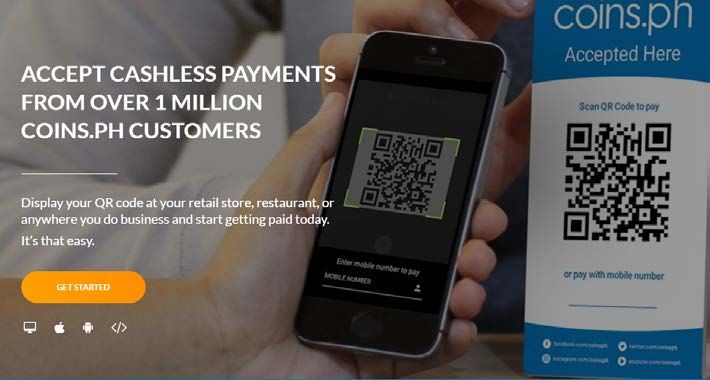
01
Tech for a Better Future
A better future from where we stand;
and how we believe technology can help

          2017, L’Atelier BNP Paribas © | No distribution or reproduction without authorization | https://atelier.bnpparibas/en   3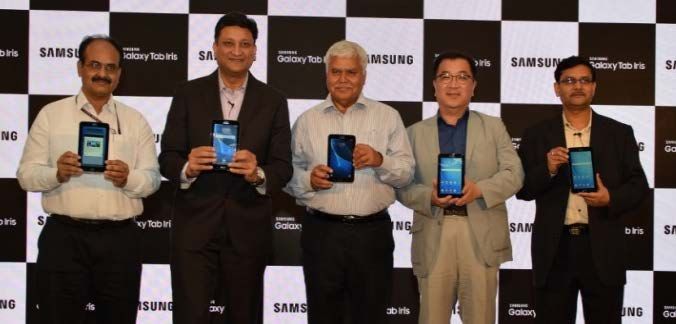
Towards a better future: “Building a prosperous, fairer world
     while safeguarding the planet’s resources”
          L’Atelier believes that helping to achieve the UN’s 17 Sustainable Development Goals (SDGs)
                                    is a pathway towards building a better future

 UN Sustainable Development Goals (2015)                                                The five SDG broad themes
  1.    No Poverty                                                                                        Empowering People
  2.    Zero Hunger                                                                                       Countries have resolved to end poverty and hunger and
  3.    Good Health and Well-Being                                                                        ensure that everyone is able to fulfill his/her potential in dignity
  4.    Quality Education                                                                                 and equality and in a healthy environment
  5.    Gender Equality
  6.    Clean Water and Sanitation                                                                        Safeguarding the Planet
                                                                                                          Protect the planet from degradation and take urgent action on
  7.    Affordable and Clean Energy
                                                                                                          climate change
  8.    Decent Work and Economic Growth
  9.    Industry, Innovation and Infrastructure
                                                                                                          Creating Shared Prosperity
  10.   Reduced Inequalities                                                                              Ensure that everyone can enjoy a prosperous and fulfilling life
  11.   Sustainable Cities and Communities                                                                and that progress takes place in harmony with nature
  12.   Responsible Consumption and
        Production                                                                                        Peace
  13.   Climate Action                                                                                    Foster peaceful, just, and inclusive societies free from fear
  14.   Life below Water                                                                                  and violence
  15.   Life on Land
  16.   Peace, Justice, and Strong Institutions                                                           Strengthening Partnerships
  17.   Partnerships for the Goals                                                                        Mobilise the means to implement Agenda 2030, focusing on
                                                                                                          the poorest and most vulnerable, through strong global
                                                                                                          partnerships
Sources: UN official website, World Bank official website

                                    2017, L’Atelier BNP Paribas © | No distribution or reproduction without authorization | https://atelier.bnpparibas/en              4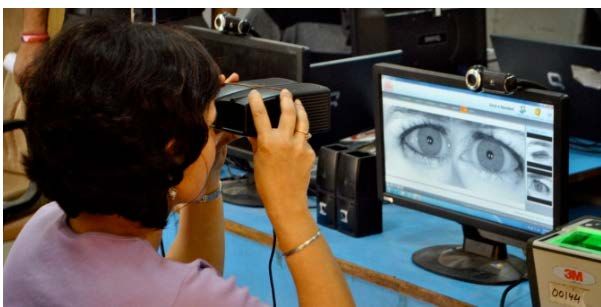
Digital Financial Inclusion and GreenTech are important
     enablers for attaining the Sustainable Development Goals
           L’Atelier recognises that technologies, especially those supporting Financial Inclusion and
                  the Green Economy, are cross-cutting enablers for achieving the SDG targets

                                                                                                       Reducing CO2 emissions and
     Providing access to basic financial services                                                   stopping over-exploitation of natural
      for more people at the base of the pyramid                                                                resources
               Impact relating to Financial Inclusion                                                        Impact relating to the Green Economy

           Technologies for Financial Inclusion                                                          Technologies for the Green Economy

                       •    Digital KYC
                       •    Mobile phone as a service channel                                 •      Renewable Energy
                       •    Lending to under-served                                           •      Efficient energy consumption and
                            populations using alternative data                                       distribution planning using IoT,
                            for credit scoring                                                       Cloud, Big Data, AI, etc.
                       •    Cost savings on the expansion of                                  •      Digital platforms for sharing of
                            banking service infrastructure via                                       vehicles (bikes, electric cars, etc)
                            Open APIs, Cloud, blockchain, etc.                                •      Other
                       •    Other

                   Impact in relation to SDGs                                                                      Impact in relation to SDGs

               SDG 1,2,3, 5, 8,9,10,16, 17…                                                                      SDG 7,11, 12, 13, 15…
Sources: UNSGSA, Achieving the Sustainable Development Goals - The Role of Financial Inclusion, UN Sustainable Development Platform, L’Atelier Analysis

                                 2017, L’Atelier BNP Paribas © | No distribution or reproduction without authorization | https://atelier.bnpparibas/en   5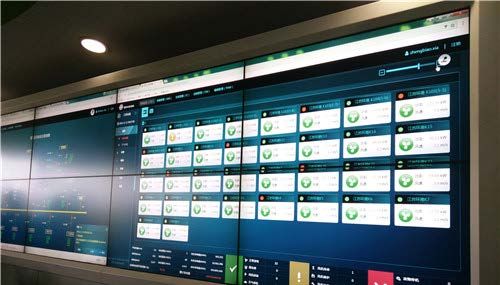
Technology for Financial Inclusion and the Green Economy
   has been increasingly contributing to attaining the SDGs
    Selected examples of the results of applying new tech for Digital Financial Inclusion and the Green Economy

                                               In India, digitising government transfers cut bribes paid in order to receive the
                                               transfer payment by 47% and increased beneficiaries’ receipts by excluding
                                               middlemen who skimmed funds (Muralidharan et al, 2014)

  Mobile money has lifted as many as 194K households – 2% of the
  Kenyan population – out of poverty and has been effective in improving
  the economic lives of poor women and members of female-headed
  households (2016, Study by Georgetown University)

                                                   China’s Mobike, a mobile bike-sharing platform, helped to save 41.5 million
                                                   litres of gasoline, thus avoiding 130,956 tons of CO2 emissions in China
                                                   in the 1st quarter of 2017 alone (Mobike, 2017)

Sources: UNCDF official website, George Town University official website, Mobike official website, L’Atelier Analysis

                                   2017, L’Atelier BNP Paribas © | No distribution or reproduction without authorization | https://atelier.bnpparibas/en   6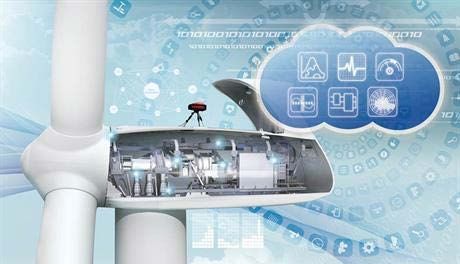
Tech for a Better Future – First Overview by L’Atelier Asia
  To mark the 10-year anniversary of L’Atelier BNP Paribas Asia, our team drew up a case study on
 ‘Technology for a Better Future’, focusing on two main fields, with Asia as geographical perimeter

                  Topic #1                                                                                                Topic #2
 Financial Inclusion and the Impact of                                                      Green Economy and the Impact of
      Digital Technology in Asia                                                             Emerging Technologies in Asia

                                                                                                         * Contents for the case studies on the following pages

                    2017, L’Atelier BNP Paribas © | No distribution or reproduction without authorization | https://atelier.bnpparibas/en                     7
02
Tech for a Better Future:
 Financial Inclusion

       2017, L’Atelier BNP Paribas © | No distribution or reproduction without authorization | https://atelier.bnpparibas/en   8
2.1.
Overview of Financial Inclusion and the
Impact of Digital Technology in Asia

       2017, L’Atelier BNP Paribas © | No distribution or reproduction without authorization | https://atelier.bnpparibas/en   9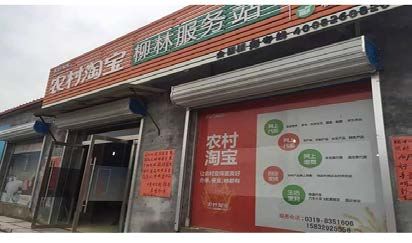
Financial Inclusion

        “Financial inclusion means that individuals and businesses have access to useful and affordable
         financial products and services that meet their needs – transactions, payments, savings, credit
                        and insurance – delivered in a responsible and sustainable way.”*

                Financial Inclusion especially concerns certain groups that are more excluded from basic
                                                        services

                                                                                        Financially excluded groups identified by the World Bank
                                                                                        Women
                                                                                        • In developing countries, 59% of men reported having a bank account
                                                                                        in 2014, while only 50% of women did.

                                                                                        Rural poor
                                                                                        • 440 million unbanked adults in developing countries receive cash
                                                                                        payments for the sale of agricultural products

                                                                                        Remote or hard-to-reach populations
                                                                                        • 80% of all adults in Fragile and Conflict-Affected States are outside
                                                                                        the formal financial system
           Approx. 2 billion
        adults worldwide do not                                                         Micro- and small firms
                                                                                        • 200+ million formal and informal micro-, small and medium-sized
       have a basic bank account                                                        enterprises (MSMEs) in emerging economies lack adequate financing

**Definition provided by World Bank / Source: World Bank Official website (2014 Data)

                                  2017, L’Atelier BNP Paribas © | No distribution or reproduction without authorization | https://atelier.bnpparibas/en    10
73% of the world’s unbanked population is concentrated in
25 nations, with a predominant proportion in Asia
Figure 1: % of the world’s unbanked adult population* in each focus country (2014)
Population Acct (%)
India 20.60% 1.357 billion 79%
China 11.60% 1.252 billion 53%
Indonesia 5.60%
Pakistan 5.20%
Bangladesh 3.70%
Nigeria 2.70%
Mexico 2.60%
Egypt 2.40%
Brazil 2.40% India and China together
Vietnam 2.40% account for ~ 1/3 of the
world’s unbanked population
Philippines 2.20%
Ethiopia 2.10%
* Working-age adults worldwide who do not hold a basic banking account and do not have access to
Source: World Bank Official website (2014 Data) formal financial services
2017, L’Atelier BNP Paribas © | No distribution or reproduction without authorization | https://atelier.bnpparibas/en 11Financial Inclusion has become a worldwide priority, and is an
urgent issue for developing nations in Asia
Global organisations regard financial inclusion as a key Developing nations, including India and China,
enabler for mitigating poverty and achieving sustainable have achieved strong growth in account
growth ownership
Figure 2: % of adults in developing countries
holding bank accounts (2011-2014)*
• Financial inclusion has been
identified as an enabler for 7 of the
17 Sustainable Development Goals.
Region 2011 2014 Growth
• The G20 has committed to Overall 51% 62% 22%
implementing the G20 High-Level
Principles for Digital Financial
Inclusion. China 64% 79% 23%
• The World Bank Group regards India 35% 53% 51%
financial inclusion as a key enabler
for reducing extreme poverty and
boosting shared prosperity and has Indonesia 20% 36% 80%
put forward the ambitious goal of
reaching Universal Financial Access
(UFA) by 2020.
* Numbers are rounded up
2017, L’Atelier BNP Paribas © | No distribution or reproduction without authorization | https://atelier.bnpparibas/en 12Digital technology-led solutions are being developed and
applied to overcome key constraints to financial inclusion
Solutions via Digital
Key objectives Key constraints
Technology
Make sure everyone has
valid identification • Globally, a lack of ID and necessary • Digital ID for acct. opening such
KYC documents and a low-cost, documentation makes it hard to open a as biometric authentication,
accessible means of bank account and access capital/credit reliance authentication, et al
authentication
• Limited number of ATMs/ bank branches
Last mile Ensure financial access and • Mobile as a primary financial
and typically more costly both for
solution services extend to hard-to- service delivery channel:
customers and providers
delivery reach populations insurance products etc.
• Distance from a financial service provider
• More accessible banking IT
• Overall, 59% of adults without a bank
infrastructure enabling easier
account cite lack of money as a key
Devise useful, affordable entry to service provision
Affordable reason
and relevant financial • Big Data analytics for designing
products/ • MSMEs cite lack of collateral, absence of
products, tailored to digital financial products more
services credit history and informal business
consumer needs suited to the needs of
practices as the main reasons for not
unbanked individuals
having an account (Alibaba service)
• Alternative funding channels
Establish robust financial
• RegTech / cyber security for
Security & consumer protection • Lack of trust in financial service
improving supervision of digital
Customer frameworks, and adapt providers is one of the cited reasons
financial services such as NLP,
Protection relevant regulatory and for not having an account
blockchain, etc.
supervisory authorities
Sources: World Bank Official website, L’Atelier Analysis
2017, L’Atelier BNP Paribas © | No distribution or reproduction without authorization | https://atelier.bnpparibas/en 13Digital Financial Inclusion can address a significant part of unmet
demands and contribute to national GDP growth…
Projected impact of Digital
Benefits of Digital Financial Inclusion
Financial Inclusion
Inclusion • Digital stored-value accounts may provide
in the easier access or a path into the financial Estimated to address about 40% of
financial system for the financially excluded, especially the volume of unmet demand for
system hard-to-reach populations payments services and 20% of the
unmet credit needs in the Base of
• Typically lower costs of digital transaction the Pyramid and MSME segments
New platforms: allowing customers to transact
customers locally in irregular, tiny amounts
for core
financial • Additional financial services tailored to
products customers' needs and financial
The cumulative effect of digitally-
circumstances
driven acceleration in financial
inclusion could boost GDP by 2-3%
• Reducing the risks of loss, theft and other
Risk in markets such as Indonesia and
financial crimes posed by cash-based
mgmt. and the Philippines and in Cambodia
transactions; plus also reducing the
security
costs associated with transacting in cash and
using informal providers
Sources: World Bank Official website/ Asian Development Bank Report - Accelerating Financial Inclusion in Southeast Asia with Digital Finance
2017, L’Atelier BNP Paribas © | No distribution or reproduction without authorization | https://atelier.bnpparibas/en 14… and is expected to impact a wide range of stakeholders –
individuals, MSMEs, govts, FS providers – especially in Asia
Potential Impact of Digital Financial Inclusion globally
Inclusion in the financial
New customers for core financial products Risk mgmt. and security
system
Figure 3: Individuals Newly Figure 4: MSMEs & Individuals – New Credit ($US Bn) Figure 5: Reduction in
included in Financial System (%) government leakage per
annum in $US Bn
South Asia 753
Southeast Asia 295 32
33% South Asia Latin America 455 27
Africa/Middleeast 448 20
Eastern Europe/Central Asia 197
Southeast
14% Asia 12
10 9
8% China Figure X: FS providers – New deposits ($US Bn)
Africa/ China 1098
25% Middle East
Southeast Asia
Africa/Middle East
Southeast Asia 368
Europe/Central Asia
South Asia
Latin America
China
South Asia 111
Eastern
11% Latin America
Africa/Middleeast 758
7% Eastern Latin America 535
Europe
Category 1 Eatern Europe/Central Asia 376
Source: McKinsey Global Institute Analysis 2016 report
2017, L’Atelier BNP Paribas © | No distribution or reproduction without authorization | https://atelier.bnpparibas/en 15Digital Financial Inclusion solutions are developed through
collective efforts by both the public and private sector
Global Intergovt. Org. Local Government Traditional FIs FinTech Players
Make use of alternative
Put in place an enabling
Put in place guidelines data and shared
regulatory and policy Develop digitally-enabled
and offer advisory and infrastructure in order to
environment to allow banking services with
technical assistance for provide affordable and
banks and non-banks to lower thresholds and
establishing Digital accessible banking
innovate and expand easy onboarding
Financial Inclusion services to
access to financial experience
solutions un/underbanked
services
populations
Public Sector Private Sector
Governmental Organisations Financial Services Providers
2017, L’Atelier BNP Paribas © | No distribution or reproduction without authorization | https://atelier.bnpparibas/en 162.2.
Case Study on Digital Financial
Inclusion Initiatives in Asia
2017, L’Atelier BNP Paribas © | No distribution or reproduction without authorization | https://atelier.bnpparibas/en 17Asia leads on investment volume in digital finance; solutions
for individuals and SMEs account for the major proportion
Figure 6: Volume of FinTech Venture Financing Figure 7: Capital deployment in the FinTech Sector
(2015-2016) Unit: $US Bn (2015)
11.2 Personal/SMEs
X2 9.2
73%
5.2
10% Asset Mgmt.
2015 2016 2016 [VALU
E] Insurance
Asia- Pacific Region US 4,00% Investment Banking
3,00% Corporate Banking
Category 1
Sources: CB Insights, Accenture, Citi Bank GPS report
2017, L’Atelier BNP Paribas © | No distribution or reproduction without authorization | https://atelier.bnpparibas/en 18…impacting end-to-end financial inclusion – from lowering
the entry barrier to upholding security
Digital Financial Inclusion Framework
Lowering the entry Offering necessary and affordable
1 barrier
2 products
3 Guaranteeing security
Offering basic to more sophisticated
Customer side: financial services
Enabling easier access
to financial services e.g. Bank Account, Payment, Financing,
Savings, Insurance
Monitoring abuses of
e.g. Digital KYC the digital financial
Delivering financial services to the last mile
system and protecting
customers’ rights
e.g. mobile phones as the service channel,
Supplier side: mobile agents with digital devices, alternative
e.g. government
Enabling easier entry to PoS at retail stores such as convenience stores
regulatory support and
financial services and pawnshops
guidelines for FinTech/
provision Cybersecurity, RegTech
Enablers for customized products for the
e.g. Open APIs, un/under banked population
Blockchain, Cloud
computing e.g. use of alternative data for credit scoring
2017, L’Atelier BNP Paribas © | No distribution or reproduction without authorization | https://atelier.bnpparibas/en 19Digital Financial Inclusion Initiatives in Asia
Lowering the entry Digital ID Authentication for KYC
1 barrier ‒ Aadhaar ID – iris scanning ID system in India
Last-mile payment/ money transfer solution
Payment
2 ‒ Money wallet and alternative PoS by Coins.Ph in the Philippines
Offering Inclusive digital financing for the under-banked by Ant Financial
necessary Credit scoring using alternative data for personal finance
and ‒ Sesame scoring by Ant Financial in China
Financing
affordable Financing for rural farmers and micro-enterprises via Big Data
products credit scoring
‒ My Bank, Ant Financial in China
Insurance
Flexible and affordable digital insurance products
‒ BIMA (Asia)
Customer data protection technology
Guaranteeing security ‒ Chinese government – systematic support for digital financial inclusion and
3
regulations to prevent abuses of digital financial solutions
2017, L’Atelier BNP Paribas © | No distribution or reproduction without authorization | https://atelier.bnpparibas/en 201 Lowering the Entry Barrier
Digital KYC – Aadhaar ID – iris scanning ID system in India
““The most sophisticated ID program in the world“
Pual Romer, World Bank Chief Economist
Enrolment in Aadhaar
Demographic Data Biometric Data
Compulsory data Photograph
Name
• Age
• Date of Birth
Iris scanning at an Aadhaar registration center in Delhi • Gender All 10 Fingerprints
• Address
Aadhaar (‘Foundation’ in English) is a 12-digit unique-
identity number issued to all Indian residents based Optional Data
on their biometric and demographic data • Mobile number Both Irises
• Email address
• The data is collected by the Unique Identification Authority of
India, a statutory authority established in January 2009 by the
Government of India
• More than 99% of the estimated population in India aged 18
and over had an Aadhaar number assigned (Aug. 2017)
• The system is built entirely on open standards and open source
platforms so as to avoid vendor lock-in
• Aadhaar enrolment is not mandatory, and opinions have been 12-Digit Aadhaar Number
expressed regarding data leakage and lack of privacy in India ‘Unique, lifetime, biometrics-based Identity’
Source: Unique Identification Authority of India
2017, L’Atelier BNP Paribas © | No distribution or reproduction without authorization | https://atelier.bnpparibas/en 211 Lowering the Entry Barrier
Aadhaar was introduced in order to overcome the barrier
which identity proof represents for the poor in India
Aadhaar enables widely accessible authentication scheme for different services
Key constraints in India for financial inclusion
A resident is receiving
her old age pension
Large number of hard-to-reach and base- payment based on
of-pyramid residents Aadhaar fingerprint
• 640K villages, ~60% living on under authentication
$US2 per day
• Less than 3% of the population pay
income tax, and less than 20% pay India’s vision of Aadhaar use cases
banking tax
Build a truly ‘online identity platform’ enabling
Absence of standard verifiable identity many government and private applications
• $US50bn in direct government subsidies
are paid every year, and most • Digital signature &
Electronic Documents
programmes are plagued with phantom
• Credit Registries
claimants and multiple identities, causing • Electronic Payment
leakage of 20~40% • Mobile Commerce
• Various service providers had different • Insurance, Banking
document and information requirements, • Govt. Services
while Indian residents often lacked the • Citizen Portals &
Contents
necessary documentation
Source: Data from 2014 presentation by Dr. Varma of Unique Identification Authority of India
2017, L’Atelier BNP Paribas © | No distribution or reproduction without authorization | https://atelier.bnpparibas/en 221 Lowering the Entry Barrier
Aadhaar is being increasingly adopted by financial services
providers in India to replace a traditional KYC scheme
Aadhaar is increasingly being adopted for … with financial services providers offering account
authentication and eKYC… opening and transaction services based on Aadhaar
Unit: One million times
Figure 8: Aadhaar authentication trend in 2017
88% 3482.41
75%
1850.02
1058.56
177.74
Dec-16 Q1 2017 Q2 2017 Q3 207 Samsung India has launched Galaxy Tab Iris featuring iris-recognition
technology ready for Aadhaar authentication applications such as
Figure 9: Aadhaar eKYC trend in 2017 banking, eGovernance services (passport, taxation, healthcare, etc)
51% 1135.89 • DCB Bank launched a service to allow customers to open bank
51% accounts using iris scan for Aadhaar authentication using a DCB
753.50 Bank ‘phablet’ device.
499.40 • On DCB ATM, cash withdrawals and other transactions can be made
187.76 by using Aadhaar number and fingerprints
• The bank ran a pilot programme at around 10 branches in rural or
semi-urban areas over the past three weeks, processing about 200
Dec-16 Q1 17 Q2 17 Q3 17 accounts, including opening 100 fresh accounts.
Data Source: Unique Identification Authority of India
Source: DCB Bank Press Releases, Feb 2017
2017, L’Atelier BNP Paribas © | No distribution or reproduction without authorization | https://atelier.bnpparibas/en 232 Offering Necessary and Affordable Products
Coins.Ph last-mile mobile payment solution in the Philippines
Main features of Coins.Ph
Accessible
• Mobile number or email address
to open an account, no need to
have a bank account
• Last-mile solution by providing
cashing in and out at 22K+
locations including 7 Eleven
convenience stores.
Affordable
• No minimum cash in
Coins.Ph is Southeast Asia’s leading mobile amounts
bitcoin blockchain-enabled platform, which • No monthly fees charged on
enables those without bank accounts to easily the account
access payment and remittance services
• Founded in 2014 by Silicon Valley entrepreneurs Ron Hose Wide range of payment
and Runar Petursson scenarios
• It offers online and offline mobile wallet load, payment, and • Supports online and offline (QR
cash in/out via a broad partnership network with code) payment
merchants, major banks, telcos, and convenience stores • 80 types of bills including airtime,
• Within 3 years, it has grown its customer base to 1M+ utilities, insurance and tuition
• Raised a Series A funding of $US5 million from Naspers (a • Payments to 100K online
major investor in Tencent Holdings) merchants
Source: Coins.ph official website, Press Releases
2017, L’Atelier BNP Paribas © | No distribution or reproduction without authorization | https://atelier.bnpparibas/en 242 Offering Necessary and Affordable Products
Young demographic and high mobile penetration in the
Philippines present opportunities for m-payment solutions
Although the Philippines currently has low …mobile wallet solutions like Coins.ph
bank account penetration... are rapidly filling the gap
Figure 10: Unbanked population (2014) Mobile wallet services by major telcos in the
Philippines
Total Account Mobile
Country
Population (% Age 15+) penetration
Mainland
1.357 billion 79% 74% (50.9%)
China
India 1.252 billion 53% 75% (26.3%)
Philippines 98.39 million 15% 113% (36.6%)
Mobile wallet services by startups in the
(XX%): Smartphone penetration Philippines
The Philippines has a low account penetration due to the relatively
high minimum balance requirement and small bank branch
networks. The country’s high mobile penetration and a large
proportion of mobile native millennials in the population …
(median age: 23.4 yrs old, 2010) present an opportunity for mobile …
wallet services
Source: World Bank, 2014 data /Philippines Statistics Authority
2017, L’Atelier BNP Paribas © | No distribution or reproduction without authorization | https://atelier.bnpparibas/en 252 Offering Necessary and Affordable Products
Coins.ph offers a last-mile payment solution to local
residents without the need for a bank account…
End-to-end online-to-offline payment/money transfer service by Coins.ph
Account Money
Cash in Payment Cash out
opening Transfer
*Additional KYC documents such as online
Require
• Mobile • Coins.ph account
ments
ID verification, uploading of photograph with
phone • Mobile phone ID etc. are required for larger deposits or
• Network • Network transactions
Online Online Online Online Online
• PC • Gcash • Partner e- • Bitcoin • Other mobile
• Mobile (Mobile commerce transfer via money wallets
payment by (Payment API) Coins.ph Offline
Globe telco) • Various bill application, • Cardless ATM,
Channels
payment wallet-to- instant payout
Offline menus within wallet (24/7)
• Convenience the app transactions • Bank branches
store (7- Offline (BPI, EastWest
Eleven ) • Partnering Offline Bank…)
• Pawnshop offline • Cash transfer • Cash Card (Smart-
(Cebuana, M retailers, at partnering telco- Money
Lhuillier) payment via pawnshops card…)
QR code • Cash Pickup at
scanning pawnshops
2017, L’Atelier BNP Paribas © | No distribution or reproduction without authorization | https://atelier.bnpparibas/en 262 Offering Necessary and Affordable Products
…and bridges the remittance gap for underbanked
Overseas Filipino Workers (OFWs)
Due to a lack of bank accounts and high fees, OFWs Catering to OFWs’ needs, Coins.Ph provides a
depend on informal channels for remittances remittance and fiat currency cash-out service
Figure 11: Breakdown of the remittance methods of OFWs’ remittance needs
OFWs in 2016
Financial support for the family back home
Total Remittances Total Cash Remittances
• Total number of OFWs estimated at 2.2 million (2016)
202,917m Pesos 146,029m Pesos
• Most OFWs’ family members rely on the OFW’s income
• Low personal savings among the local population puts them in
a vulnerable situation at a time of emergency (medical, large
bills, natural disasters etc.)
60,3
[VALU 60.3%
0% Banks
Cash sent E]
Solution by Coins.ph
Cash brought 39,7
39.7% Others
home 22.5% 0% 1. Remittance via mobile bitcoin wallet:
In kind Allows transactions at lower fee and with shorter
5.5%
clearing/settlement period than the local bank
Category 1 Category 1
Remittances through unofficial channels
2. Cash-out at offline channels:
(agencies, door-to-door, friends, etc.), including
Cardless withdrawals at partnering bank ATMs/ pawnshops
illegal channels, account for 30-40% of total /convenience stores
Source: Philippine Statistics Authority (Data release in April 2017)
2017, L’Atelier BNP Paribas © | No distribution or reproduction without authorization | https://atelier.bnpparibas/en 272 Offering Necessary and Affordable Products
Digital Financial Solutions have greatly contributed to the
financial inclusion of under-banked provinces in China…
The introduction of digital financial solutions greatly improved financing penetration in
provinces with concentrations of 3rd- and 4th-tier cities versus 1st -tier cities such as Shanghai
Figure 12: Digital credit financial services Index in Mainland China, by province
Narrowing the gap between
provinces
Shanghai
Liaoning
Yunnan
Hubei
Xinzhang
Beijing
Year 2011 Year 2015
(Left side) (Right side)
Source: Beijing University Publication
2017, L’Atelier BNP Paribas © | No distribution or reproduction without authorization | https://atelier.bnpparibas/en 282 Offering Necessary and Affordable Products
… and Ant financial has played a significant role in the
rapid growth in Internet financing offers
Digital financial services have achieved exponential
growth in the past several years in China… … led by Internet giants such as Ant Financial
Figure 13: Volume and growth rate of Internet Credit Figure 14: The level of Internet Credit Balance volume
Balance in China 2013-2016e (Unit: 100 million RMB) by FinTech player in China, 2015 (Unit: 100 million RMB)
11 601
Over
74.9% 500
147.8% 6 634
200
280.0%
2 677
704
2013 2014 2015 2016e
100
Source: iResearch, 2016 * Numbers are rounded up / Official announcements by each player
2017, L’Atelier BNP Paribas © | No distribution or reproduction without authorization | https://atelier.bnpparibas/en 292 Offering Necessary and Affordable Products
Ant Financial and Alibaba in China
Alibaba Group Business Lines:
Ant Financial is Alibaba’s financial services arm
Digital Media& Local O2O
Core Commerce
Entertainment Services
Retail Commerce in China
Alibaba/ Ant Financial
Founder Jack Ma
Wholesale Commerce in China
Ant Financial Services Group is an affiliate
company of the Chinese Alibaba Group*, which Data Intl’/ Cross-border Commerce
owns 33% of Ant Financial. It is the most Driven Data
B2B Cross-border
valuable FinTech company in the world, with a Refuel
market valuation of $US50bn in 2016.
Ant
• It was established in October 2014, rebranded from Payment & Financial
Financial
Alipay (founded in 2004)
• It provides extensive products covering individual and Logistics
MSME financial needs including payment, investment,
financing and insurance
• It launched an Internet-only bank catering for MSMEs Advertising
called ‘My Bank’ in 2015
• Its payment product Alipay is the world’s biggest third- Cloud Computing
party payment service, with 451 million active users
*China’s biggest online services provider, founded by Jack Ma in 1999/ Source: Ant Financial published company reports (2016)
2017, L’Atelier BNP Paribas © | No distribution or reproduction without authorization | https://atelier.bnpparibas/en 302 Offering Necessary and Affordable Products
Ant Financial leverages the favorable market conditions and
massive user base from its e-commerce and payment services
Factors for Internet players’ prosperity in the Financial Services Market in China
Favorable market situation Upper hand in user-base and data
Growing Internet • >731m Internet users and 659m • 439m annual active buyers on
mobile Internet users, i.e. 53.2% Massive Alibaba’s China retail marketplaces
and Mobile
and 47.9% penetration respectively customer base • 450m people used Alipay in 2016
penetration
• Customers expect Internet
• The average number of credit cards player-level convenience for
owned per person was 0.31 in 2016 financial services
Big market Q2 (2.24 in the U.S. at end 2015). • Alibaba offers a sticky
opportunity for • Small and micro-enterprises Meeting experience and encourages
under-served accounted for 32.1% of the total diversified customer loyalty by building a
populations corporate loan balance at end 2016. user-needs digital ecosystem for different
life scenarios
• Govt. encouraging FIs and • Massive data on users’ daily
Internet companies to invest in Superior consumption and behaviour
Supportive innovative financial solutions • Improving risk mgmt. ability,
• Policies promoting healthy
Data and IT using Big Data and Artificial
regulatory
development of Internet finance capability Intelligence technology.
environment
Source: CNNIC, PBOC, Ant Financial Report, L’Atelier Analysis
2017, L’Atelier BNP Paribas © | No distribution or reproduction without authorization | https://atelier.bnpparibas/en 312 Offering Necessary and Affordable Products
Ant Financial’s inclusive digital financial services in China
Inclusive Digital Financial Products by Ant Financial
Product Feature Key Metrics
Sesame Credit Credit Scoring using
130 million cumulative
Alternative Data used for the
users for the reference
consumer credit reference
My Bank – Wang Nong Dai
Digital loan products for
-
farmers and rural people
My Bank - Wang Shang Dai Micro-loan products to micro-
3 million cumulative
and small-sized e-commerce
users
merchants
Source: Ant financial company published reports (2016) – non-exhaustive list
2017, L’Atelier BNP Paribas © | No distribution or reproduction without authorization | https://atelier.bnpparibas/en 322 Offering Necessary and Affordable Products
Sesame credit scoring by Ant Financial in China (1/2)
Collecting and assessing 200+ data points including Alipay transactions and assets
Example of a user’s Sesame score Break-down of parameters used in Sesame scoring
• Sesame scores are indications of the user’s creditworthiness, ranging from
350 to 950 points.
• Users can check their Sesame scores both in the Alipay Wallet mobile app
and through merchant websites that accept Sesame credit services.
• The scores are calculated using five different factors, each with different
weightings, which can vary according to individual profiles.
Social Status
Quality Parameter Description
Reflects a user’s past payment history and
Credit History
indebtedness, for example on credit cards
Financial Behavior and Reveals a user’s online behaviour on the websites
Behaviour
Liability Preference s/he visits, the product categories they shop, etc.
Shows a user’s ability to fulfil his/her contractual
Performance -
obligations. Indicators include use of financial
Fulfilment Capacity
products and services and Alipay account balances.
Examines the extent and accuracy of personal
Personal Personal
Credit History information, for example home address and length of
Relationship Characteristics
time of residence, mobile phone numbers, etc.
Connections/ This parameter reflects the online characteristics of a
Interpersonal user’s friends and the interactions between the user
Relationships and his/her friends.
Source: Alibaba Press Release
2017, L’Atelier BNP Paribas © | No distribution or reproduction without authorization | https://atelier.bnpparibas/en 332 Offering Necessary and Affordable Products
Sesame credit scoring by Ant Financial in China (2/2)
The score applied as a reference for consumer loan approval offered by Ant Financial
Shopping on Alibaba’s B2C e- Choose ‘Consumer Credit’ Access credit via Alipay
commerce platforms payment option based on the Sesame score
Mobile Tmall site
Mobile Tmall site Alipay Sesame
check-out Page
Payment Page Credit Score Page
Users can choose what kind of
payment method they prefer.
HUABEI* consumer credit product
offered by Ant Financial is displayed
at the top among other options
HUABEI loan approval and the
credit limit are calculated by
referring to the Sesame score.
Your Sesame credit score can
be accessed via the Alipay app.
Buy
*Huabei (virtual credit card): 15% per annum (credit card)/Min 1K~Max 50K
2017, L’Atelier BNP Paribas © | No distribution or reproduction without authorization | https://atelier.bnpparibas/en 342 Offering Necessary and Affordable Products
Wang Nong Dai, Farmer loan by Ant Financial in China
Providing a last-mile loan solution for farmers by using mobile agents and alternative data
Service Channel:
Using mobile agents with wireless devices
Wang Nong Dai is a digital financing The farmer visits ‘Rural Taobao Service Centers’ (Alibaba is
product for farmers in China planning to build 100K village-level outlets nationwide) to apply
for a loan. The service agent assists farmers with the onboarding via
developed by Ant Financial’s My a wireless terminal. When applying for loans, Internet banking will be
Bank verified in real time after the loan. This solution has solved the
problem of a shortage of bank branch networks in the rural areas of
• Provides loans to under-banked farmers in China.
rural areas
• Loans of up to RMB 500K may be granted,
Credit Scoring:
without collateral or the need to provide Leveraging alternative sets of multi-dimensional data
guarantees for the loan period of 6
months, 12 months and 24 months In setting the credit limit, My Bank
• The loan interest rate (0.016%/day to assesses the farmer’s assets
0.047%/day) depends on the farmer’s (livestock, tools, etc.,), online
credit score shopping records, past bank loan
• The service extends to over 16,500 history, debt situation, and also
villages and 27 provinces in China (2016) his/her reputation in the village.
Source: Alibaba/Ant financial Press Releases
2017, L’Atelier BNP Paribas © | No distribution or reproduction without authorization | https://atelier.bnpparibas/en 352 Offering Necessary and Affordable Products
Wang Shang Dai, MSME loan by Ant Financial in China (1/3)
Catering to underserved MSMEs by leveraging Big Data capability
MSMEs’ underserved Systematic Ant Financial’s SME
financial needs government support Data capability
• MSMEs represent 97% of • Transaction data collected
• Government’s ‘Five-Year from SME e-commerce
all businesses in China Plan’ (2016) encouraging merchants (Alibaba)
SME financing
• Loan volume growth 09 -13:
Total business loans (up • Big Data for working
• Promoting SME credit capital needs and credit
176.5%) versus SME loans system and information-
(up 209.9%) eligibility analysis
sharing
• 54.5% of SME bank loans • Development of a
with collateral requirement Financial Cloud
Opportunities for serving Growth potential for Internet
SMEs finance for SMEs
Sources: OCED Report, Chinese Government announcement, L’Atelier Analysis
2017, L’Atelier BNP Paribas © | No distribution or reproduction without authorization | https://atelier.bnpparibas/en 362 Offering Necessary and Affordable Products
Wang Shang Dai, MSME loan by Ant Financial in China (2/3)
Offering multiple products via multiple channels catering to diversified MSME credit needs
Ant financial micro credit loan offers to SMEs
Target Customer Service Channel Products
“Small amount, Short period, No collateral”
My Bank Internet Bank of
• Micro- and small-sized Ant Financial
merchants on e-commerce
under Alibaba group
Alibaba B2B E-commerce
Loan Type Ali Credit High-Speed Quick
Payback
C2C
B2C Taobao C2C E-commerce ‘Pure – ‘Loans
‘VIP-Client-
Online loan against order
Only Service’
service’ receivables’
Risk Management
B2B
Max. loan
• Online risk model; amount RMB 1m RMB 1m RMB 0.5m
Mining of online data (≦ 1m)
• Other small business
owners meeting set loan Features Max. loan
qualifications Max. loan Funds to the period 15
period 1yr customer days
• Ali finance had a
Min. interest account Min. payback
NPLR ratio of 0.87% rate 0.038% within 1 day commission
in 2013, compared RMB2.5
with between 5.5%-
6% for commercial
banks Ant Financial’s loan unit lent ≧RMB 400 bn to small
Details on the following page businesses between 2010 and March 2015)
Source: Ant Financial Press Releases
2017, L’Atelier BNP Paribas © | No distribution or reproduction without authorization | https://atelier.bnpparibas/en 372 Offering Necessary and Affordable Products
Wang Shang Dai, MSME loan by Ant Financial in China (3/3)
Low NPL without collateral requirement achieved by leveraging Big Data capability
Data set applied to Chinese SME supplier credit scoring
Existing Big Data base
Loan application by
Data sourced from Alibaba ecosystem Alibaba Supplier
E- B2C/C2C/ B2B
Implications
commerce (Alibaba)
E-commerce
ID authentication
Payment Alipay data Alipay data
Business Wangwang, • Business info –
network Laiwang • National ID Fund Flow
official registration,
Video Youku address, contacts info
• Ongoing sales/ • Assets under Wealth
Loan
Browser UC Web
purchases Alibaba or Rejection
affiliate’s
Search Yitao • Historical
Wealth Mgmt. Revenue or
transaction data
Game Ali-game • Client feedback account Approval
• Payment, E-commerce
Music Xiami music net • Client creditworthiness
recommendations Money,
Travel Qiongyou Net • Logistics data Transfer Judge Sales record,
record Check address
Map Gaode Map
Operations,
Logistics Cainiao healthiness, etc.
National Payment/E-
ID commerce acct. Ali-Cloud Data Analytics
Source: Company data, Gao Hua Securities Research (Over 30 Petabytes every day)
2017, L’Atelier BNP Paribas © | No distribution or reproduction without authorization | https://atelier.bnpparibas/en 382 Offering Necessary and Affordable Products
BIMA, mobile-delivered insurance in emerging Asian markets
Reaching out to the Base of the Pyramid
• 90% of the customers
buying insurance for the
first time via BIMA, and
93% of all BIMA
customers, live on less
than $US10 a day
• The average insurance
BIMA simplifies the choice of premium is $US0.02 per
BIMA provides an affordable pay-as- insurance products to one
day and it takes ~3 days
you-go insurance and health policy per category
for claims to be paid out
products that can be bought via a
mobile air-time fee. It operates in Last-mile service channels
emerging markets in Asia and
• BIMA makes use of mobile agents to
Africa.
on-board residents of rural and hard-
• BIMA was founded in April 2017 in to-reach areas
Stockholm • The insurance is distributed via
• It raised $US82.2m in 4 rounds from six partnerships with mobile operators,
investors and gathered 24m customers with microfinance providers & banks and
a 50% active base other corporates and consumer outlets
• Developed a bespoke portfolio of over 40
micro-insurance and mobile health
• Customers can apply for insurance via
products SMS and pay for it using pre-paid
airtime credit or post-paid billing
Source: BIMA official site, Crunchbase
2017, L’Atelier BNP Paribas © | No distribution or reproduction without authorization | https://atelier.bnpparibas/en 393 Guaranteeing Security
Systematic support and regulatory guidelines for digital
financial inclusion from the Chinese government
History of Financial Inclusion initiatives by Chinese government (2012-2016)
June 2012 Previous Chairman Hu Jintao referred to Financial Inclusion at the G20 summit in
IMAGE Mexico – the first time a top Chinese leader had mentioned Financial Inclusion in a
public speech
Nov 2013 The Party’s central committee approved an important document entitled “Decision of
the Central Committee of the Communist Party of China on Some Major Issues
IMAGE Concerning Comprehensively Deepening the Reform”. The document clarified China’s
intention to develop Inclusive Finance on a national scale.
Jan 2015 CBRC established a Financial Inclusion department under the committee
to oversee micro-finance, micro-loans, P2P lending* and issues
regarding agriculture, farmers and rural areas.
Jan 2016 The State Council issued a circular and drew up a five-year plan to develop Inclusive
Finance in China. The goal of the five-year plan is to set up an inclusive financial
system in coordination with the construction of a moderately prosperous society by
2020 and to satisfy people’s (including MSMEs’) needs for financial services.
Source: CBRC Official site, Lend Academy *Further details on the following page
2017, L’Atelier BNP Paribas © | No distribution or reproduction without authorization | https://atelier.bnpparibas/en 403 Guaranteeing Security
To combat fraudulent platforms, CBRC* published draft
regulations to increase the transparency of P2P platforms
Increasing number of fraudulent P2P platforms necessitated
the drafting of stricter regulations
Figure 4: Number of problematic P2P platforms
In Dec 2015, draft
regulations were published
896 calling for more transparent
226% management of P2P platforms
Requirements on platforms,
including stronger security and
275 guarantee measures, will
increase
Players with a trustworthy
2014 2015
name in the industry are likely
to take a leading position in
In February 2016, E-Rent Treasure, an the market
online financial platform, used a ‘Ponzi
scheme’ to illegally collect up to RMB 50
billion in funds, harming 900,000
investors in China
Source: China Daily, CBRC Official Site, L’Atelier Analysis *CBRC: China Banking Regulatory Commission
2017, L’Atelier BNP Paribas © | No distribution or reproduction without authorization | https://atelier.bnpparibas/en 4103
Tech for a Better Future:
The Green Economy
2017, L’Atelier BNP Paribas © | No distribution or reproduction without authorization | https://atelier.bnpparibas/en 423.1.
Overview of the Green Economy
and the Impact of Emerging
Technologies in Asia
2017, L’Atelier BNP Paribas © | No distribution or reproduction without authorization | https://atelier.bnpparibas/en 43Achieving sustainability requires a shift to the use of renewable
resources and improvements in resource use efficiency
The term ‘Green Economy’ was first coined in a pioneering 1989 report commissioned by the UK
government, entitled ‘Blueprint for a Green Economy’.
Definition
In The Green Economy Report released in 2011, UNEP* defines a ‘green’ economy as “one
that results in improved human well-being and social equity, while significantly reducing
environmental risks and ecological scarcities. It is low-carbon, resource-efficient, and
socially inclusive.”
Three pillars of the Green Economy
Social
Equitable Bearable
Sustainable
Economic Environmental
Viable
* United Nations Environment Programme
2017, L’Atelier BNP Paribas © | No distribution or reproduction without authorization | https://atelier.bnpparibas/en 44Traditional natural resource economies create global challenges
resulting in a number of social and economic issues
Population explosion
• The world population grew at an unprecedented rate in
the 20th century, reaching 6.1 billion in 2000.
• It will keep increasing and is expected to rise to 8.6 billion Health problems
by 2030 and to stand at 9.8 billion in 2050.
Economic losses
Environment issues
• Excessive emissions of greenhouse gases and other
untreated contaminants cause a range of environmental Food security issues
problems such as climate change, water pollution,
desertification and loss of biodiversity.
Inequality
Resource shortages
• Water: the UN predicts that the world water supply will fall
short of need by at least 40% from 2015 to 2030. Other challenges
• Land: Arable land per capita decreased by 46.6% from
1964 to 2014.
• Energy: Fossil fuels are finite; e.g. oil reserves are
forecast to run out in around 50.7 years.
Sources: UN World Population Prospects 2017, UN World Water Development Report 2015, World Bank, BP Statistical Review of World Energy 2016
2017, L’Atelier BNP Paribas © | No distribution or reproduction without authorization | https://atelier.bnpparibas/en 45Asia is facing more serious challenges as a result of its
overpopulation and pollution problems
Asia is the world's most populous continent… … with a huge burden of pollution
Asia population proportions*:
Location of monitoring stations and PM2.5**
concentrations, 2008-2015
59.6% of the world’s
population live on
Asia land area proportions: 29.9% of the land surface
*Asia population proportion: Data up to 2016
**PM2.5: Fine particulate matter of 2.5 microns or less
Source: World Bank, World Health Organisation Ambient Air Pollution Report
2017, L’Atelier BNP Paribas © | No distribution or reproduction without authorization | https://atelier.bnpparibas/en 46Five sectors closely related to the environment and economy
• In its 2011 Green Economy Report, UNEP classified sectors under the green economy into two categories
Classification by UNEP Selected sectors by L’Atelier
• These sectors produce products from natural
resources including geological formations,
Sectors soil, air, water and all living organisms.
Agriculture Green Agriculture
derived from • They have a material impact on the economy
natural capital as they form the basis for primary production,
and because the livelihoods of the rural poor
depend directly upon them.
• These sectors are usually regarded as Energy Renewable energy
‘brown’ sectors, but in fact they present
Sectors sizeable opportunities for energy and Transport Green transportation
derived from resource savings
‘built’ capital • If these savings opportunities are scaled up, Building Green buildings
they can become drivers of economic
growth and employment Waste Waste management
2017, L’Atelier BNP Paribas © | No distribution or reproduction without authorization | https://atelier.bnpparibas/en 47The world is experiencing a revolution in
emerging technologies
• Emerging technologies, such as Artificial Intelligence, 3D printing and the Internet of Things, are
gradually becoming part of people’s lives through their various applications in consumer products.
• The trend is towards more production sectors adopting these technologies in order to resolve pain
points and improve efficiency.
Technologies Use cases
Smart appliances
Internet
Shopping recommendation
of Things
Consumption Mobile payments
…
Big Data
Industrial sensors
Production Process optimisation
Mobile
Internet Supply chain management
…
2017, L’Atelier BNP Paribas © | No distribution or reproduction without authorization | https://atelier.bnpparibas/en 48These technologies can bring
significant benefits to the Green Economy
Emerging technologies can provide benefits in … and more companies are investing in
a number of areas… these activities
Number of companies which mention AI in CSR
• Monitor and quantify pollutant (Corporate Social Responsibility) reports and
Early pollution emissions CDP (Carbon Disclosure Project) filings
detection • Pinpoint pollution sources
faster and more accurately 100
80
• Improve the production and
Resource 60
resources use efficiency
conservation • Reduce the usage and 40
prevent wastage 20
0
Sustainability • Reduce risks through more 2011 2012 2013 2014 2015 2016
development accurate prediction
• Facilitate optimisation and Sample: 8000+ public and private companies
acceleration
future planning
“AI applications for sustainability are still at an early stage, but the data suggests they can
bring significant benefits in the medium term”
- Conor Riffle, Co-founder of ESG Trends
Source: Esgtrends.com
2017, L’Atelier BNP Paribas © | No distribution or reproduction without authorization | https://atelier.bnpparibas/en 493.2.
Case Study on Green Economy
Technology Initiatives in Asia
2017, L’Atelier BNP Paribas © | No distribution or reproduction without authorization | https://atelier.bnpparibas/en 503.2.1.
How IoT is promoting
the Green Economy
2017, L’Atelier BNP Paribas © | No distribution or reproduction without authorization | https://atelier.bnpparibas/en 51Renewable Energy
Two factors driving the application of new tech in the renewable
energy industry in China
Technical limitations in the renewable Increasing market demand for
energy industry unresolved ‘green’ energy in China
• Renewable power1 is the
• Diffusion: Although renewable fastest-growing energy sector,
energy resources (RES) are with a 14.1% increase in overall
essentially boundless, energy energy consumption in 2016
capture efficiency is not high
Support • China is the largest renewable
• Intermittency: As RES are highly energy consumption market
from new
dependent on weather conditions with a 20.5% global share in
technology
(e.g. wind speed and direction), it 2016.
is difficult to ensure stable and
efficient power generation • With the shift towards a lower
carbon component in the energy
mix, RES are expected to
account for 11% of China’s total
energy consumption by 2035,
compared with 2% in 2015
Note1: ‘Renewable energy’ refers to the energy which is collected from renewable resources including sunlight, wind, rain, tides, waves and
geothermal heat
Source: BP Statistical Review of World Energy 2017
2017, L’Atelier BNP Paribas © | No distribution or reproduction without authorization | https://atelier.bnpparibas/en 52Renewable Energy
Energy IoT being used in Envision’s smart wind turbine
• Envision Energy is a China-based wind turbines, energy management software and energy technology
services provider. The company ranks No. 2 in China in the wind turbine market in terms of installed
capacity (2016).
Predict & Optimise
Sensor- embedded turbine Monitor & Control system
system
Data Data
Real-time monitoring of turbine
Each turbine is armed with 150 Control for performance. Integrates data
Detects equipment wear-and-
sensors that track a variety of better from weather and terrain maps,
tear so as to enable preventive
attributes including vibration, performance and calculates necessary
maintenance
temperature, wind speed, etc. adjustments to turbines in order
to maximise output
Turbine adjustment & preventive maintenance
Source: Chinese Wind Energy Association
2017, L’Atelier BNP Paribas © | No distribution or reproduction without authorization | https://atelier.bnpparibas/en 53Green Building
Intelligent sensors in Zero Energy Buildings (ZEB) make
automatic adjustments according to the environment
• The ZEB in Singapore, located at Singapore’s Building and Construction Authority (BCA) Academy, is
retrofitted from an existing building
• The ZEB began operating entirely on solar power in 2009; the building is the first of its kind in South-
East Asia
ZEB has three sections A range of sensors are installed in the ‘Office of the Future’
Zone #1 Visitor Centre CO2 Sensors
Zone #2 The Solar Installed inside rooms, the sensors serve to regulate the
Energy Panorama amount of fresh air provided by triggering the speed
control of the fresh air fan
Zone #3 The Office
of the Future
Motion Sensors
Activation of light and fans based on detection of
occupant movement and activity
Daylight Sensors
Detection of sufficient daylight will result in automatic
reduction in artificial lighting so as to optimise energy
consumption
2017, L’Atelier BNP Paribas © | No distribution or reproduction without authorization | https://atelier.bnpparibas/en 54You can also read


