THE ICRC'S COVID-19 RESPONSE - IRAN
←
→
Page content transcription
If your browser does not render page correctly, please read the page content below
IRAN
FACTS AND FIGURES

                    THE ICRC’S COVID-19 RESPONSE
                    MARCH-AUGUST 2020

                    INFECTION CONTROL MEASURES
                         The ICRC has worked to address the immediate needs of vulnerable people at risk of being infected by COVID-19. Joint activities
                         carried out by the ICRC, the Iranian Red Crescent Society and Pars Development Activists include the following:
                            e have provided information on COVID-19 infection control to vulnerable migrants in Zahedan and Iranshahr, in the province of
                           W
                           Sistan and Baluchestan.
                           We have provided 1,780 hygiene kits to 200 migrant families in Zahedan and to 85 families in Iranshahr.

                    RAISING AWARENESS ABOUT RISKS
                              The ICRC and the Iranian Red Crescent Society work together to raise awareness about weapon contamination and mine
                              risks among Iranians and Afghans living in Iran:
                               e have provided nomads in the province of Kermanshah, western Iran, with information on mine risks during Red
                              W
                              Crescent activities on COVID-19 prevention.
                               ed Crescent focal points shared information about mine risks on local social media channels, with an estimated 2,000
                              R
                              people reached in the provinces of Kurdistan and Kermanshah in March and April 2020.

                              We plan to integrate information about COVID-19 with messages about mine risks for Iranians living in contaminated areas.

                              In addition, the Iranian government and the Iranian Red Crescent Society have approved a range of activities to support
                              Afghan returnees. About 1,000 people a day are returning to their home country. Returnees at the Iran–Afghanistan border
                              will receive hygiene items and information about mine risks, COVID-19 and family links services. These activities have
                              already started.
                              Also, despite the COVID-19 challenging times, the RC/RC Movement (ICRC – IRCS) continues to offer its Restoring of
                              Family Links (RFL) services to anyone needing them.

                                                                                        SUPPORTING THE NATIONAL
                    PROVIDING GUIDANCE                                                  SOCIETY
                       We have shared COVID-19 guidance with the authorities,                    The ICRC contributed CHF 500K to the IRCS to support
                       such as ICRC documents on how to store and manage the                     their Covid-19 response. This contribution was allocated
                       dead.                                                                     for provision of PPE and food parcels to vulnerable
                                                                                                 people mainly those with special health conditions.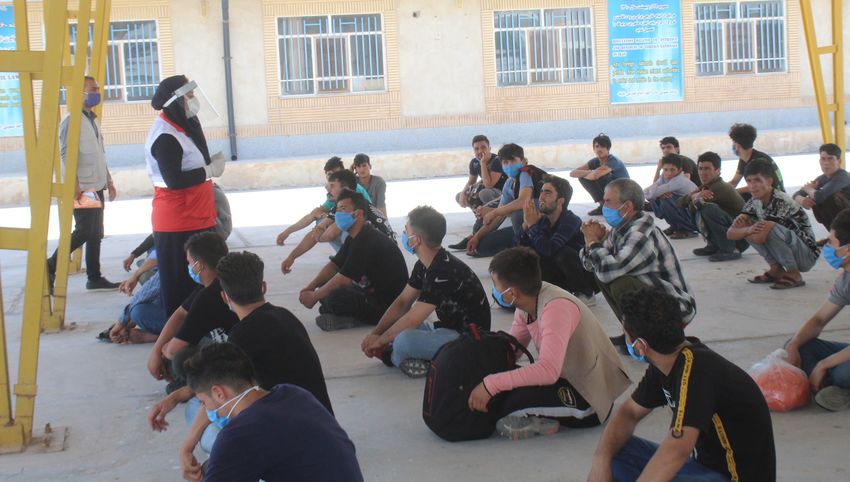
MINE RISK EDUCATION (MRE)
    The ICRC and the Iranian Red Crescent Society work together to raise awareness about weapon contamination and mine risks
    among Iranians and Afghans living in Iran:
    We have provided nomads in the province of Kermanshah, western Iran, with information on mine risks along with COVID-19
    prevention messages.
    Red Crescent focal points shared information about mine risks on local social media, provincial TV channels, etc. with an
    estimated 1,343,691 people reached in the 5 western contaminated provinces.
    We integrated information about COVID-19 with messages about mine risks for Iranians living in contaminated areas.
    Moreover, in the last two months Kermanshah and Khuzestan provinces stared their face to face MRE training plan, following the
    protocols and keeps the social distance. 335 individuals have participated in these sessions.
    Since the beginning of March till the end of August: 41,956 Afghan returnees received MRE/COVID-19 training (335 face to face
    and 466,281 online).
    Regarding the ICRC’s operational response to COVID-19, the Tehran delegation managed to provide the Afghan returnees
    (crossing the Dougharoun border) with MRE/COVID19/RFL risk awareness messages and basic protective items. 26,000
    individual packs (including a surgical mask and antiseptic liquid) along with MRE/COVID/RFL leaflets (in 2 Farsi Dari and Farsi
    Pashtou languages) were distributed among the beneficiaries who cross the border to their country, Afghanistan in average
    every day around 1,250 Afghan people receive this service. This activity is being undertaken under the joint MRE project of the
    ICRC and the Iranian Red Crescent Society (IRCS) at Dogharoun (one of the Iran-Afghanistan borders) and will be extended for
    another 2 months in 2020.
    Plus, the Mine Risk Education (MRE) animations (jointly designed and produced by the ICRC and the Iranian Mine Action
    Center) were also uploaded to the ICRC’s channel on Aparat (the Iranian local video-sharing platform, equivalent to Youtube in
    Iran). One of its episodes called “A Bomb in the Farm” had more than 55K views so far, Which is a viewership record of ICRC
    communication products on Aparat.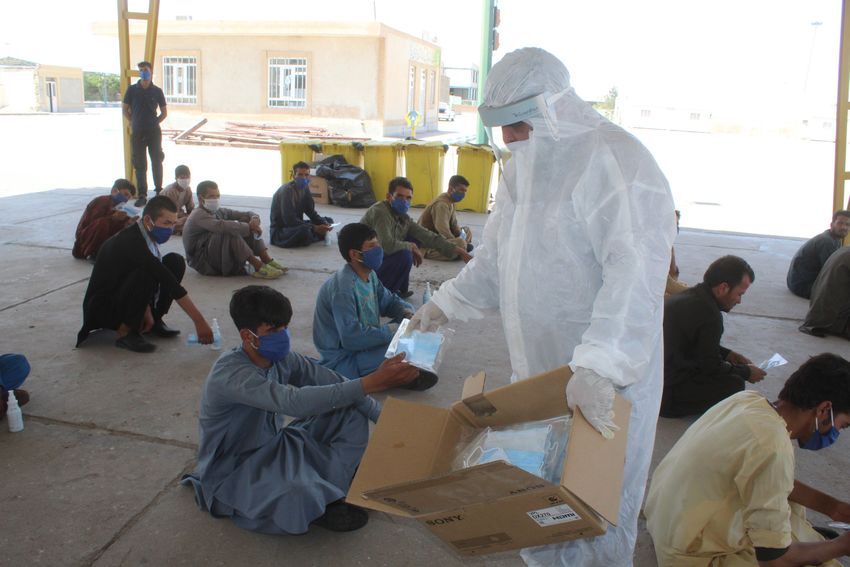
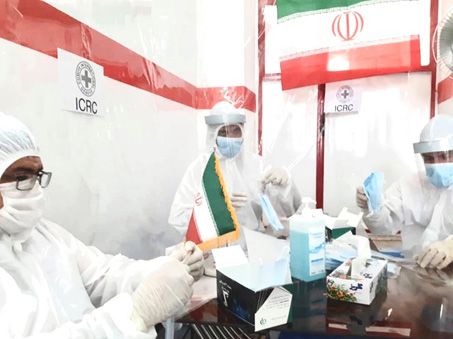
The MRE focal points of the IRCS as well as the ICRC’s national WeC consultant made sure that all the hygiene protocols were followed
                  during the whole process storage of the cargo, preparing the individual packs, distribution, etc…

    The outdoor MRE training session in Dougharoon center were hold following all the protocols and keeping the social distance.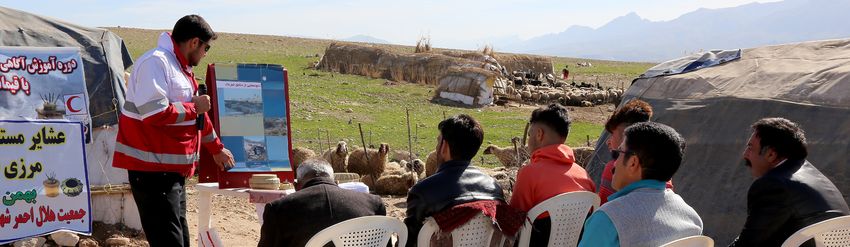
Short presentation on MRE, COVID19, and RFL preventive measures before leaving Iran.

                                                                                                     Cover photo: Mehrnaz Shapouri/ICRC

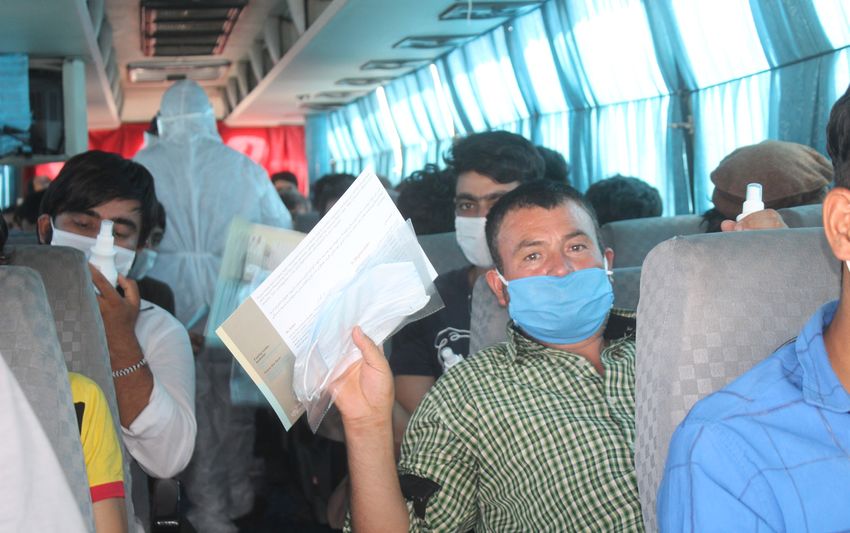
                     An Afghan returnee (having received a sanitary pack) crossing the border.

International Committee of the Red Cross
No. 4, Azar Dead-end, Next to Akhtar hospital,
Sharifimanesh St., Elahieh, Tehran, Iran                              facebook.com/icrc
                                                                                                     07.2020

Tel: +98 21 22645821-4
www.ir.icrc.org                                                       twitter.com/icrc
© ICRC, September 2020                                                instagram.com/icrc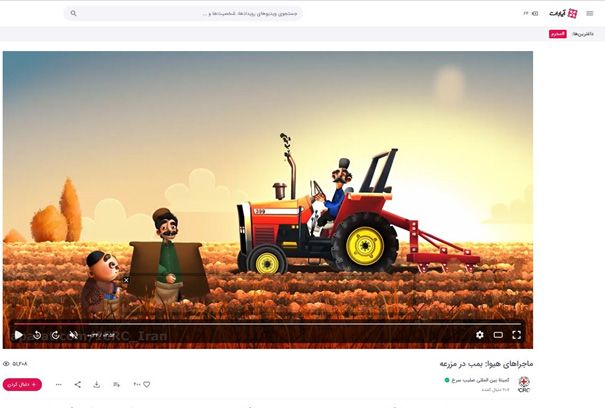
You can also read


