The Satisfaction Rate among Patients and Surgeons after Periareolar Surgical Approach to Gynecomastia along with Liposuction
←
→
Page content transcription
If your browser does not render page correctly, please read the page content below
Taheri et al. 287
Short Communication
The Satisfaction Rate among Patients and Surgeons
after Periareolar Surgical Approach to Gynecomastia
along with Liposuction
Ahmad Reza Taheri, Mohamad Reza Farahvash*, Hamid Reza Fathi*, Koorosh
Downloaded from wjps.ir at 14:13 +0430 on Wednesday July 17th 2019
Ghanbarzadeh, Bijan Faridniya
Department of Plastic Surgery, Tehran
University of Medical Sciences, Tehran, Iran ABSTRACT
BACKGROUND
Surgery, as the main approach in higher stages of gynecomastia,
has different techniques regarding the staging of the disease.
The more the grade of gynecomastia, the more complicated the
used surgical techniques, conventionally. This study assessed the
success rate of the simplest surgical technique in higher grades of
gynecology as well as the satisfaction rate in patients and surgeon
to offer using the technique for higher grades of the disease.
METHODS
To evaluate the success and the satisfaction rates of periareolar
incision and liposuction among patients with grade II and III
gynecomastia, this cross-sectional study was conducted.
RESULTS
The satisfaction rate was the main concern of the present study.
The patients had a mean satisfaction score of 8.1±1.396 with the
range of 5-10 from total 10 score. The majority of the patients
expressed their satisfaction by 9 score. The total mean of physician
satisfaction score was 8.36 at all levels.
CONCLUSION
Like aesthetic reasons which lead individuals to seek solutions
for their annoying gynecomastia, aesthetic satisfaction is a
prominent concern for people who undergo surgical approach.
So, the least surgical scar and complications are absolutely the
most area of focus in this regard.
KEYWORDS
Gynecomastia; Periareolar incision; Liposuction; Satisfaction
rate
Please cite this paper as:
Taheri AR, Farahvash MR, Fathi HR, Ghanbarzadeh K, Faridniya B.
The Satisfaction Rate among Patients and Surgeons after Periareolar
*Co-corresponding Authors:
Surgical Approach to Gynecomastia along with Liposuction. World J
Hamid Reza Fathi, MD;
Plast Surg 2016;5(3):287-292.
Bijan Faridniya, MD;
Department of Plastic Surgery,
Tehran University of Medical Sciences, INTRODUCTION
Tehran, Iran
Received: March 3, 2016 Gynecomastia is defined as a benign increased fibroglandular
Revised: June 11,2016 tissue in male breast more than 2 cm which is much palpable under
Accepted: June 21, 2016 the nipple and areola. This condition is more prevalent in Juvenile
www.wjps.ir /Vol.5/No.3/September 2016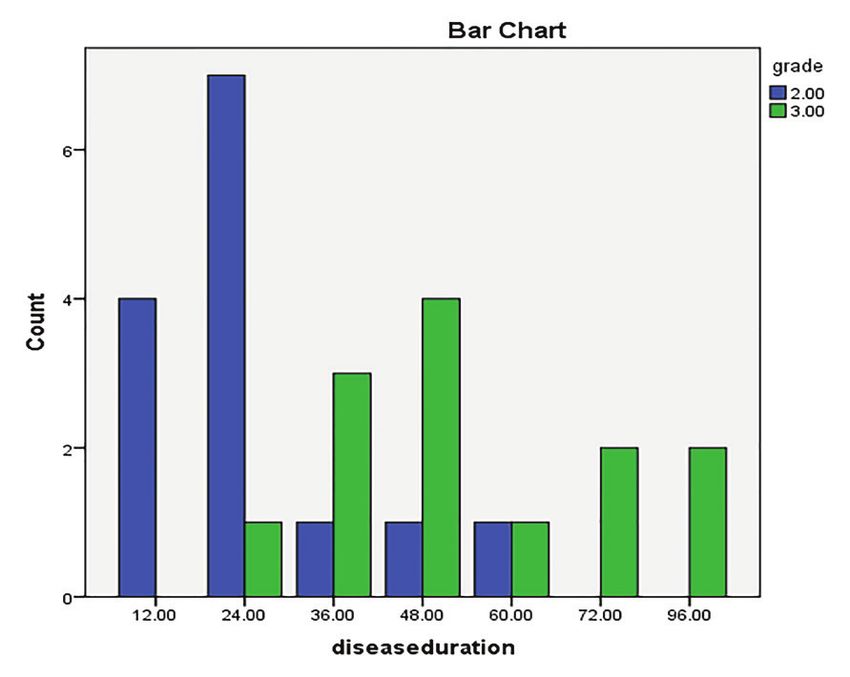
288 Periareolar surgery in gynecomastia

                                                                     and elderly people.1 Global data showed a 32-        periareolar surgery plus liposuction , all the
                                                                     36% prevalence worldwide.2 The mechanism             records between 2011 and 2013 were enrolled
                                                                     refers to a benign cell infiltration and glandular   regarding inclusion and exclusion criteria. All
                                                                     cell proliferation as the main occurrence in         the procedures were done in Imam Khomeini
                                                                     male breast3-5 which is idiopathic in 25%.6          Hospital in Tehran, Iran, as the referral center
                                                                     Medications like H2-blockers and anabolic            for plastic surgery. The charts which contained
                                                                     drugs, particularly in athletes, are responsible     no informed consent signed by patients and the
                                                                     for 10-20% of determined etiology before some        patients who did not refer to be followed up in 6
                                                                     medical conditions such as malnutrition and          months from surgery were excluded.
Downloaded from wjps.ir at 14:13 +0430 on Wednesday July 17th 2019

                                                                     cirrhosis (8%), primary hypothyroid (1.5%) and           A questionnaire was provided to include
                                                                     renal diseases (1%).3                                chart records such as demographics; general,
                                                                         Generally, gynecomastia is somehow a             family, drug and medical history; reasons to
                                                                     consequence of an imbalance between androgens        surgery; outcomes; complications; and other
                                                                     and estrogens in males.7,8 During first 1-2 years,   surgery information. Complications and
                                                                     the disease is too slow to develop and could         problems faced during surgery like bleeding,
                                                                     be retreated using drugs before collagen fibers      anatomical disorders, anesthetic insufficiency,
                                                                     start to agglomerate around glandular tissue         and unusual drug use were also recorded. Acute
                                                                     and ducts to run a fibrosis and hyalinization        consequences like pain, fever, bleeding, etc.
                                                                     in breasts in more developed cases.9-11 This is      were checked after surgery. Visual analogue
                                                                     the stage just treatable by surgery, as authors      scale (VAS) was widely used for pain rating
                                                                     indicate. Surgery, as the main approach in higher    with scores 0-10 which mean “no pain” and
                                                                     stages of gynecomastia, has different techniques     “extraordinary pain”, respectively.
                                                                     regarding the staging of the disease. The more           Numbness, hypoesthesia and any sensory
                                                                     the grade of gynecomastia, the more complicated      changes, breast size change, motion limitation,
                                                                     the used surgical techniques, conventionally.        limited physical activity , surgical scar size,
                                                                         Otherwise, surgery has its own complications     complete or partial areolar necrosis, chest wall
                                                                     and limitations. For instance, pedicle nipple        asymmetry, auxiliary fat condition, and excess
                                                                     reconstruction as well as free nipple technique      and sagging skin as well as patient’s shame to
                                                                     always has the concern of the excessive remaining    be in popular places were also checked in the
                                                                     skin on the chest due to breast tissue excision      studied charts as the prominent consequences of
                                                                     which, in turn, forces surgeons to use extensive     surgery. Satisfaction was rated using a similar
                                                                     and long incisions and remove the skin at the area   system for pain scoring which contained score
                                                                     of surgery leaving large scars on chest. Other       “0” to express no satisfaction and “10” to say
                                                                     complications lie also beneath; such as nipple       that patient and/or surgeon got the best result of
                                                                     necrosis, areolar necrosis, hypoesthesia and other   the surgery.
                                                                     chronic problems. This is why we try the simplest        Gynecomastia was graded scaling system
                                                                     technique in grade II and III of the disease,        which contained three to four known grades.
                                                                     periareolar incision along with liposuction, which   Grade I gynecomastia was the condition of
                                                                     is used often for grade I gynecomastia.              accumulation little fat around the areolar area of
                                                                         This study assessed the success rate of the      breast which was palpable but did not shift the
                                                                     simplest surgical technique in this regard as well   areola out of its anatomical position on the cross
                                                                     as the satisfaction rate in patients and surgeon     point of the major pectoralis muscle and the fifth
                                                                     to offer using the technique for higher grades of    rib on the chest wall. In grade II, the areola and
                                                                     the disease. Decreased tissue trauma, faster and     inframammary fold (IMF) were below their
                                                                     simpler surgery, and shorter hospital stay are the   anatomical normal horizontal level due to much
                                                                     most popular advantages. Liposuction helps the       fat and fibroglandular tissue. Pedicle nipple
                                                                     chest wall symmetry and smoothness via skin          reconstruction surgery was usually advised to
                                                                     which facilitates skin retraction with no obvious    approach to this grade as a choice.
                                                                     scar after a while.                                      In terms of the most severe condition, much
                                                                                                                          more fat and fibroglandular tissue were present
                                                                     MATERIALS AND METHODS                                under the breast and above person’s abdomen
                                                                                                                          in addition to more dislocation in areola and
                                                                     Referring to the charts of the cases who underwent   IMF position in grade III of gynecomastia. This

                                                                     www.wjps.ir /Vol.5/No.3/September 2016
Taheri et al. 289
grade is usually corrected by free nipple surgical after surgery. This elastic bandage was usually
technique. In this study, the simplest technique changed into standard compressing vest after a
was assessed for subjective and objective day. Patients were always advised wearing the
satisfaction referring patients and surgeons to vest for 6 weeks, continuously and take it off
use it instead of more complex techniques which only for taking shower.
was used ordinarily for grades II and III of Chi-square test and independent t-test were
gynecomastia. used to report frequencies by SPSS for windows
First, patients weere asked to stand upright (Version 21, Chicago, IL, USA). We considered
to assess the excessive tissue and determine the a 95% confidence interval and significance with
Downloaded from wjps.ir at 14:13 +0430 on Wednesday July 17th 2019
area of surgery by markers, especially the incision P value < 0.05. All the patients’ charts were
line at sub-areolar border between hours 3 and 9. checked, at first, for informed consents to allow
Our patients used general anesthesia after getting the data to be used by researches as the first
supine position in operating room with bilateral inclusion criterion. Patients who agreed to be
extended upper extremities before disinfection visited by the researchers were examined and
process in chest and upper abdomen. Diluted asked for acute or chronic surgery complications
50 ml of 1% lidocaine in 1 lit of ringer lactate and their satisfaction. All the private information
solution was infused intravenously after antibiotic were safely kept by the principal investigators as
prophylaxis before starting the marked line to patients’ secrets.
incise. Fibroglandular tissue was removed leaving
2-3 cm of the tissue beneath the nipple and areola RESULTS
and 1 cm tissue thickness under the breast skin.
Tissue removal was done by a blade which During 2011-2013, twenty seven candidates
separated the fat from the skin in anterior and were enrolled in the study. The mean age was
from the major pectoralis muscle in posterior 24.52±5 years with the mode of 18 years. The
face. Then, liposuction was started from deepest patients’ age ranged 17-36 years and the majority
layers towards superficial ones between sub- suffered from gynecomastia for 24 months. The
clavicular area and the 10th rib through the mean time of disease was 40±23.8 months. (12-
incision described before. Liposuction used a 96 months). Out of 27, 14 had gynecomastia in
4 mm-diameter cannula while its sharp edge grade II while 13 (48.1 %) were in grade III. For
was held inward with no connection to muscles. probable etiology of gynecomastia, 21 (77.87) got
This was to protect the skin and subcutaneous idiopathic origins of the disease while drugs were
compartments from suction. Pinch test was blamed for 4 individuals, while 2 patients had a
used to check chest wall symmetry after enough history of hypothyroidism. Family history was
tissue and fat removal by the surgeon before positive in 8 patients (29.6%). Table 1 and 2 and
providing an elastic bandage fixed for 24 hours figure 1 summarizes the data.
Table 1: Demographics, disease and procedure information
Age Disease Pain score Surg Patient MD1 MD2 MD3
duration duration satisf satisf satisf satisf
N Valid 27 27 27 27 27 27 27 27
Missing 0 0 0 0 0 0 0 0
Mean 24.5185 40.0000 4.5926 134.8148 8.1111 8.5926 7.9259 8.5556
Mode 18.00a 24.00 3.00a 120.00 9.00 8.00 8.00a 9.00
Std. Deviation 4.94096 23.76811 1.90665 29.62852 1.39596 .74726 .95780 .97402
Minimum 17.00 12.00 1.00 90.00 5.00 7.00 6.00 6.00
Maximum 36.00 96.00 8.00 210.00 10.00 10.00 9.00 10.00
MD1: The Surgeon; MD2: The principal investigator; MD3: The fellow of plastic surgery.
Table 2: The frequency of the grades and etiologies of gynecomastia
Etiology Frequency (%) Grade Frequency (%)
Idiopathic 21 (77.8) II 14 (51.9)
Medication 4 (14.8) III 13 (48.1)
Hypothyroid 2 (7.4)
www.wjps.ir /Vol.5/No.3/September 2016290 Periareolar surgery in gynecomastia
Downloaded from wjps.ir at 14:13 +0430 on Wednesday July 17th 2019
Fig. 1: The etiologies and their frequencies for Fig. 2: Correlation between the grade and chronicity
gynecomastia among our patients of gynecomastia. (2=gradeII; 3=gradeIII)
Since disease chronicity can develop respectively. The breast size, after surgery,
the disease grade, we tried to evaluate any satisfied 25 patients to get 92.6% total success
correlation between the time of involvement rate. All patients, but 2 (7.4%) expressed their
from and the grade of gynecomastia and happiness of experiencing no excessive chest
interestingly found a positive relationship in this wall skin 6 months later when visited. Three
regard (p=0.018). Figure 2 shows the frequency patients confessed that they were not 100%
of the grades regarding the lasting time of the satisfied by their appearance, finally (11.12%)
disease. The mean surgery time was 82.8±17.6 which was totally different from their satisfaction
minute which ranged 70-100 minutes. Twenty from their breast size. Unpleasant surgical scars
one patients stayed at hospital for 2 days after occurred in one (3.7%) subject, at the physicians’
surgery but the rest were discharged 3 days after point of view while partial areolar necrosis was
their surgery. So the mean postoperative hospital noticed in 4 (14.8%) individuals. Chest wall
stay was 2.22±0.42 days with no correlation with asymmetry was seen in only one (3.7%) case.
operation time (p=0.85). The operation time was Auxiliary fat was successfully removed in 26
neither correlated to the grade of the disease (96.3%) patients.
(p=0.30) even by Fisher’s exact test.
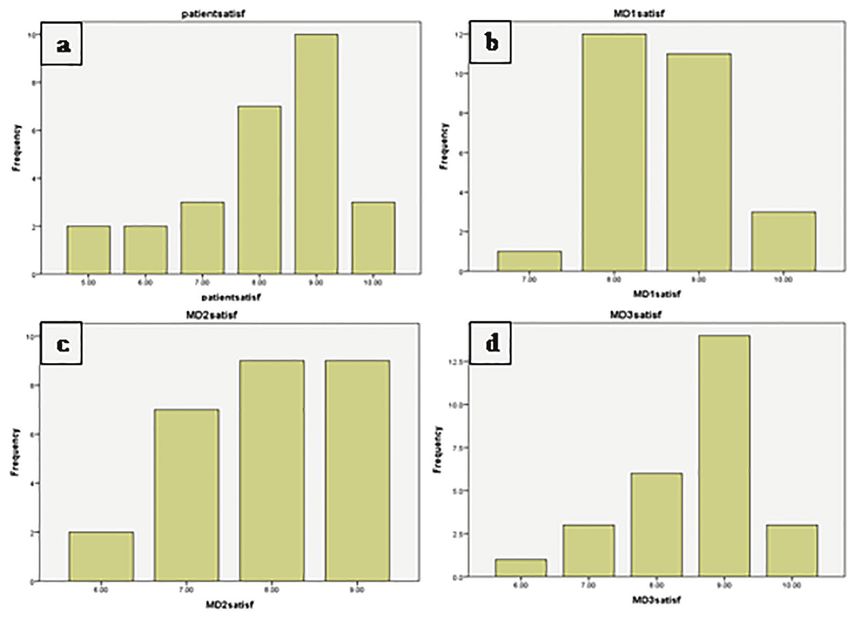
The satisfaction rate was the main concern DISCUSSION
of the present study. The patients had a mean
satisfaction score of 8.1±1.396 with the range This study headed to assess the efficacy and
of 5-10 from total 10 score. The majority of the outcome of periareolar incision technique in
patients expressed their satisfaction by 9 score. grades II and III of gynecomastia, which are
Physicians gave also their satisfaction score at usually corrected by other techniques with wider
three levels including the surgeon, the principal area of procedure. The minimum invasion of
investigator of the present research, and the fellow this technique would make it more acceptable if
of plastic surgery who resided in the ward. The has even the same outcomes and complications
surgeon’s score was 8.59±0.75 (7-10) in average of the advanced ones in higher grades of
with the mode of 8 of 10. The researcher faculty gynecomastia. Twenty seven individuals and
member gave 9/10 to the surgeries. The total total 53 breasts underwent surgery through the
mean of physician satisfaction score was 8.36 studied time period by the current performance.
at all levels as can be seen in table 1 and figure In a similar study in the Northern Staffordshire
3. There was no linear correlation between the Hospital during 2001-2009, 29 male patients were
grade of the disease and satisfaction score of the studied.12 The researchers evaluated the outcome
surgery at all (p=0.17). of three procedures including only liposuction,
When surgical complications were concerned, only excisional surgery, and the combination of
7 (25.97) and 2 patients (7.4%) complained from them to find 37.9% of patients who called their
sensory changes and hypoesthesia in areola, surgery perfect, while our patients presented
www.wjps.ir /Vol.5/No.3/September 2016Taheri et al. 291
Downloaded from wjps.ir at 14:13 +0430 on Wednesday July 17th 2019
Fig. 3: Satisfaction scores reported by the patients (a) and three physicians (b-d)
92.6% success rate and 89% accuracy. The gynecomastia. The majority of their patients
satisfaction rate was 96.5% totally containing had the grade III of the disease and the lower
perfect, good and satisfying cases, which is not rate was reported for grade II (46% and 40.5%).
much more than ours (92.6%). Furthermore, Subcutaneous mastectomy and liposuction
100% of our patients were completely satisfied were done in 26 out of 37 patients (70%). They
by the absence of excessive skin on their chest concluded better results for the combination
wall after 6 months of surgery in addition to of mastectomy and liposuction with more
96% success rate in auxiliary fat removal. aesthetic satisfaction, probably because of
Through a different incisions (criss-cross selecting children.
incision right on the nipple), a similar technique In other study, Wolter et al.15 used water-
was introduced to remove fibroglandular tissue jet assisted liposuction along with periareolar
along with liposuction like our report.13 Between mastectomy in patients who had grades I-III
2012 and 2013, 28 cases were treated through two by Simon’s classification. For IIb, they used
6-7 mm incisions on both sides of the chest using circumferential mastopexy in addition to
number 4 liposuction canullae. They started the above technique and inferior pedicled
the procedure with liposuction before making mammoplasty was applied for grade III. The
the criss-cross incision and this is unlike our most satisfaction rate was reported 88% by their
experience which conducted liposuction through study which is too low comparing ours, although
the only periareolar incision. So we could get they used globally advised techniques for each
rid of two scars on both sides of patient’s chest. grade of gynecomastia.
Results showed that all 28 their patients were Kasielska et al. showed the best results of
satisfied by the outcomes. surgical approach for subcutaneous mastectomy
In terms of postoperative excessive skin on using circumareolar incision without liposuction
the chest wall and its aesthetic points, children in terms of aesthetic affairs.16 Brafa et al. used
were shown to have more skin retract ability periareolar inferior or inverted “omega” incision
in comparison to older people. This fact lead and circumareolar incision and liposuction
the researchers to conduct a retrospective study in their experience for surgical approach to
on patients who were younger than 18 years gynecomastia in 126 candidates between 2000
and got surgical approach for their idiopathic and 2006. Their average satisfaction score was
www.wjps.ir /Vol.5/No.3/September 2016292 Periareolar surgery in gynecomastia
8.2/10 with a complication rate of 17.72% which Gynecomastia associated with cirrhosis of
is comparable to our rates.17 the liver. Proc Soc Exp Biol Med 1939;42:97.
To conclude, like aesthetic reasons which 8 Rochefort H, Garcia M. The estrogenic
lead individuals to seek solutions for their and antiestrogenic activities of androgens
annoying gynecomastia, aesthetic satisfaction in female target tissues. Pharmacol Ther
can be a prominent concern for people who 1983;23:193-216.
undergo surgical approach. So, the least surgical 9 Nicolis G, Modlinger R, Gabrilove J. A study
scar and the least complications is absolutely the of the histopathology of human gynecomastia.
most area of focus in this regard. J Clin Endocrinol Metab 1971;32:173-8.
Downloaded from wjps.ir at 14:13 +0430 on Wednesday July 17th 2019
10 Bannayan G, Hajdu S. Gynecomastia:
CONFLICT OF INTEREST Clinicopathologic study of 351 cases. Am J
Clin Pathol 1972;57:431-7.
The authors declare no conflict of interest. 11 Hassan M, Olaizola M. Ultrastructural
observations on gynecomastia. Arch Pathol
REFERENCES Lab Med.1979;103:624-30.
12 Arvind A, Khan MA, Srinivasan K, Roberts
1 Motamed S, Hassanpour SE, Moosavizadeh J. Gynaecomastia correction: A review of our
SM, Heidari A, Rouientan A, Nazemian M. experience. Indian J Plast Surg 2014;47:56-60.
Successful excision of gynecomastia with 13 Mishra RK. Tr a n s - n i p p l e
nipple repositioning technique utilizing the removal of fibro-glandular tissue
dermoglandular flap. World J Plast Surg ingynaecomastia surgery without additional
2015;4:163-7. scars: An innovative approach. Indian J Plast
2 Petty PM, Solomon M, Buchel EW, Tran Surg 2014;47:50-5.
NV. Gynecomastia: Evolving Paradigm of 14 Fischer S, Hirsch T, Hirche C, Kiefer
Management and Comparison of Techniques. J, Kueckel hau s M, Germann
Plast Reconstr Surg 2010;125:1301-8. G,Reichenberger MA. Surgical treatment
3 Lista F, Ahmad J. Power-Assisted Liposuction of primary gynecomastia in children and
and the Pull-Through Technique for the adolescents. Pediatr Surg Int 2014;30:641-7.
Treatment of Gynecomastia. Plast Reconstr 15 Wolter A, Scholz T, Diedrichson J, Liebau
Surg 2008;121:740-7. J. Surgical treatment of gynecomastia:
4 Braunstein GD. Gynecomastia. N Engl J Med an algorithm. Handchir Mikrochir Plast
1993;328:490-5. Chir 2013;45:73-9.
5 Neumann JF. Evaluation and treatment 16 K a siel s k a A , A nt o sz e ws k i B.
of gynecomastia. Am. Fam. Physician Surgical management of gynecomastia: an
1997;55:1835-44. outcome analysis. Ann Plast Surg 2013;71:471-5.
6 Biro FM, Lucky AW, Huster GA, Morrison 17 Brafa A, Campana M, Grimaldi L, Nisi
JA. Hormonal studies and physical maturation G, Brandi C, Lazzeri D, Gatti G, Massei
in adolescent gynecomastia. J Pediatr A, D’Aniello C. Management of gynecomastia:
1990;116:450-5. an outcome analysis in a multicentric study.
7 Edmondson HA, Glass SJ, Soll SN. Minerva Chir 2011;66:375-84.
www.wjps.ir /Vol.5/No.3/September 2016You can also read


