THEMES QUARTERS PROJECTS - HAFENCITY HAMBURG
←
→
Page content transcription
If your browser does not render page correctly, please read the page content below
27 | March 2017 | English

Themes
Quarters Projects

A unique high-rise                    Sustainability                       Überseequartier
At Elbbrücken HafenCity is striking   Europe’s largest locally oriented    Digging out of the building site
out in new directions – with a        innovation project for car-sharing   began in early 2017, only then can
striking sculptural tower             and electric mobility                construction begin
Page 51                               Page 56                              Page 28

                                                                                                                01
Contents

Status of development

Editorial

Project
About HafenCity 06
The Masterplan 12

Quarters
Am Sandtorkai/Dalmannkai 16
Am Sandtorpark/Grasbrook 19
Brooktorkai/Ericus 22
Strandkai 28
Überseequartier 28
Elbtorquartier 34
Am Lohsepark 39
Oberhafen 43
Baakenhafen 46
Elbbrücken 51

Themes
Sustainablity 56
Infrastructure 61
Cultural development 66
Social development 73
Public spaces 76

Data and facts
HafenCity Hamburg GmbH 82
HafenCity: out of a port a city emerges 84
Data and facts 86

HafenCity street directory

Imprint

                                             02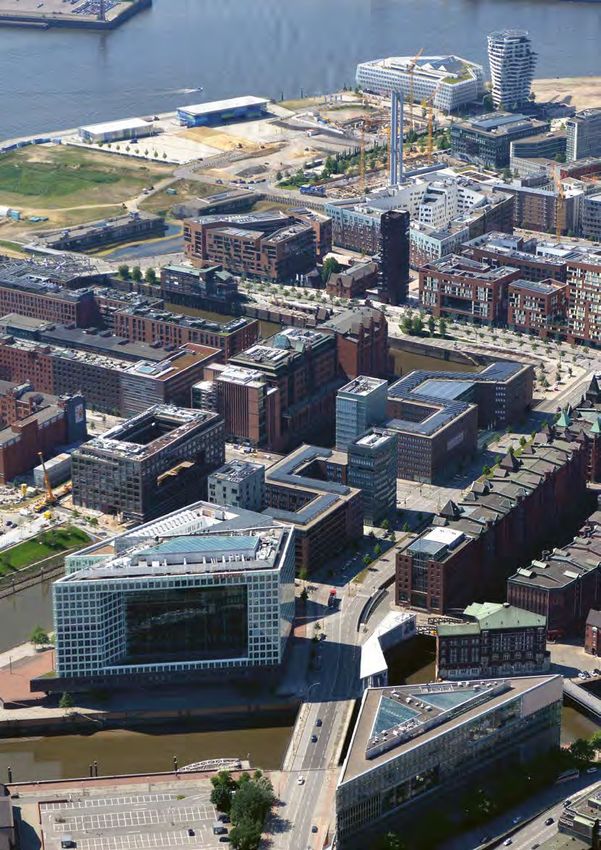
Status of development
01 Baumwall subway station (U3)
A Am Sandtorkai/Dalmannkai
02 Jungfernstieg Quarter
living and working at
03 Binnenalster Sandtorhafen/Traditional
Ship Harbor
04 Town Hall
B Am Sandtorpark/Grasbrook
05 Speicherstadt Quarter
(historic warehouse district) living, working and school by
the park
06 Mönckebergstrasse (prime
shopping location)
C Brooktorkai/Ericus Quarter
living and working at
07 Messberg subway station (U1)
central entry to
03 08 Main rail station HafenCity
08
02 06 09 Hamburger Kunstmeile
09
(museum mile) D Strandkai Quarter
living and working at
10 Kehrwiederspitze Strandkai
04 07 built 1996-1999
U U
11 Elbphilharmonie E Überseequartier
concert halls, hotel, living, HafenCity's heart
parking
with shopping, culture,
entertainment, offices and
16 C 12 Traditional Ship Harbor
05 homes
13 Marina at Grasbrookhafen
19 20 H
U F G F Elbtorquartier
01 05 B 14 Schools: primary school at
14 22 knowledge quarter with
E Sandtorpark, primary school at
12 21
A 14 Baakenhafen and secondary HafenCity University,
17 U
10 U U school at Lohsepark Elbe Arcades, working and
11 15 U 18 living
13
U 15 Kühne Logistics University/
H
MSH Medical School Hamburg G Am Lohsepark Quarter
D
J 23 16 Cruise Center HafenCity/ Hotel
H Oberhafen Quarter
17 Überseequartier
S creative and cultural
subway station (U4)
quarter
18 HafenCity University
19 International Maritime I Baakenhafen Quarter
Museum of Hamburg living, leisure and work
between double waterfronts
20 denk.mal Hanover
Railroad Station
J Elbbrücken Quarter
21 HafenCity University subway metropolitan, business and
station (U4) residential neighborhood
22 Sports ground in HafenCity
23 Elbbrücken subway and rapid
transit station (U4)
completed sites allocated site development in
preparation
under construction/ tender/ready for
preparing to build allocation
03 04 01
51
                                                                                                                                                                Elbbrücken neighborhood: bids for the next plots
                                                                                                                                                                are out to tender. This will be a very urban place
                                                                                                                                                                of innovation with first-rate infrastructural
                                                                                                                                                                connections

                                                                                                                        56
                                                                                                                        Innovation: HafenCity sets pioneering
                                                                                                                        standards through sustainable urban
                                                                                                                        transformation – with new mobility
                                                                                                                        concepts, heating supply and “green”
                                                                                                                        building qualities

     34
     Completion: by early 2018 a new landmark will embellish
                                                                                                                                                                    28
                                                                                                                                                                    Building starts: the huge task of digging out the site for Überseequartier
     Elbtorquartier: a waterside office tower about 70 m high                                                                                                       south begins in 2017. This will be HafenCity’s most metropolitan and
     with 18 stories                                                                                                                                                intensively visited neighborhood

                                                                39
                                                                denk.mal Hanover Railroad Station:
                                                                                                                                       46
                                                                                                               Building starts: construction gets under way
                                                                the inauguration of the central historic      in the central neighborhood zone of southern
                                                                place of remembrance is on May 10 2017     Baakenhafen. The sustainable “urban village” in
                                                                                                             the midst of the big city is taking on contours

02                                                                                                                                                                                                                                               03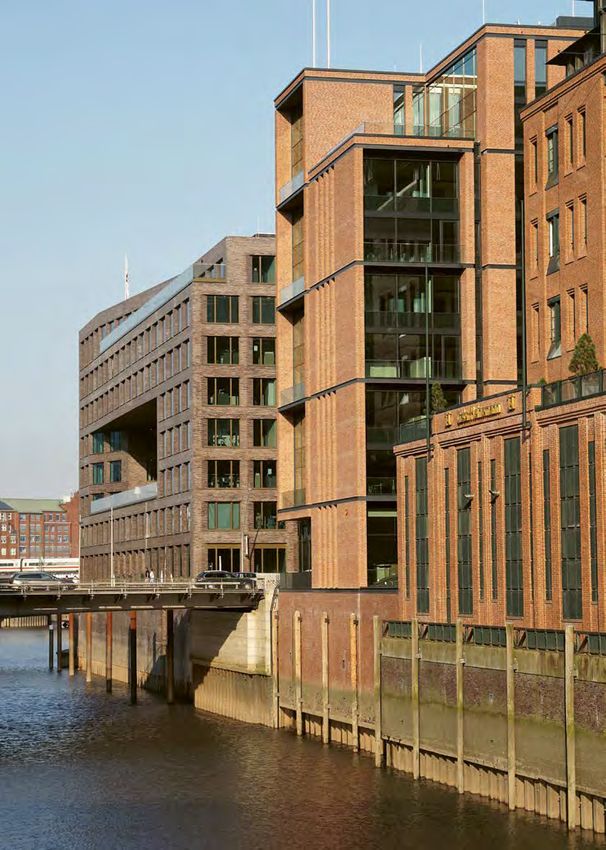
ditoria   T
                 he excavators roll. Cranes rotate in the air. The
                 sound of hammering and drilling is everywhere.
                 Many parts of HafenCity simultaneously resem-
          ble an enormous building site in spring 2017. That is no
          surprise, given that a total of nine new projects account-
          ing for 180,000 sqm gross floor area (GFA) are under
          construction. This includes the last plot in northern
          Überseequartier, the huge site of the Watermark, Free-
          port and Shipyard building ensemble with its soaring
                                                                       tectural competition is in process, the international
                                                                       photovoltaics company Enoparc is also realizing a cor-
                                                                       porate headquarters. The innovative building concept
                                                                       will integrate employee start-ups and ambitious sus-
                                                                       tainable standards. OVG Real Estate GmbH is also real-
                                                                       izing an innovative “high-tech smart building” featuring
                                                                       the highest standards of digitization and sustainability,
                                                                       representing an outstanding growth environment.

                                                                       And finally, HafenCity is treading new paths on the
                                                                       easternmost point of the quarter, next to the Elbe
                                                                       bridges. A new southern entrée to the inner city is a
                                                                       possibility in the shape of an imposing, sculptural high-
                                                                       rise. Its possible uses could include office, hotel, public
          70 m tower, as well as the first projects in Baakenhafen     amenities and even residential. Options on this inter-
          neighborhood. Work on another 320,000 sqm GFA will           nationally superlative project could still be awarded
          be under way this year when construction begins on           before the end of 2017.
          Strandkai residential building, including two high-qual-
          ity residential towers (encompassing around 500              Last of all a word on our behalf: just as Hamburg’s
          apartments); on the central neighborhood area of Baa-        HafenCity today is different from what it was in the
          kenhafen quarter, as well as southern Überseequartier.       early phases – no longer predominantly building sites,
          In terms of its intense mix and size of realization, the     but also a vital, culturally diverse home to 2,800 resi-
          latter is unparalleled internationally. Twenty-three per-    dents, a workplace for another around 12,000 people
          cent of the space provided will go to retailing premises,    in over 730 businesses, as well as a place of learning for
          with the rest for gastronomy, entertainment, offices         5,000 students; In the same way that its planning and
          and hotel space, as well as around 1,100 apartments          conceptional fundamentals evolve continuously while
          and some 6,100 job opportunities.                            HafenCity Hamburg GmbH is generating innovative
                                                                       ways forward for its urban development; so communi-
          But that is far from everything. In eastern HafenCity        cation of the new city is developing further. In this con-
          we will be seeing another face of the city of the future     nection, HafenCity’s corporate identity, its successful
          in just a few years: a highly urban place of innovation,     public face for more than 15 years, has been critically
          with superb infrastructural connections. Then at the         examined to see whether its appearance has kept up
          latest it will be clear to everyone that intelligent urban   with the times and is fit for the future and the corporate
          development can never be achieved simply by keeping          design updated correspondingly. In your hands you are
          on building a city. The crux is to achieve an effective      holding the result of what was far more than an esthetic
          transformation of the city with all of its aspirations –     process: the 27th edition of our main information bro-
          from urbanity to sustainability, through to its function     chure “Themes. Quarters. Projects.” We hope you have
          as a driver of innovation. At the moment the foundations     an enjoyable and informative read.
          are being laid for this in the eastern neighborhoods of
          HafenCity, where the next residential and commercial         Your
          buildings are in planning with high ecological require-      HafenCity Hamburg GmbH
          ments and ambitious concepts for sustainable mobil-
          ity. On its own, the easternmost and largest quarter of
          HafenCity, Elbbrücken, comprises a newbuild volume of
          560,000 sqm GFA. It entails potential for 13,000 jobs,
          as well as enormous possibilities as an attractive resi-
          dential location with some 1,100 homes. So far options
          to plan have been granted on three projects. More will
          follow in coming months. In addition to a joint center for
          prevention to be built for the employer liability insur-
          ance associations BGW and VBG, for which an archi-

  04                                                                                                                                 05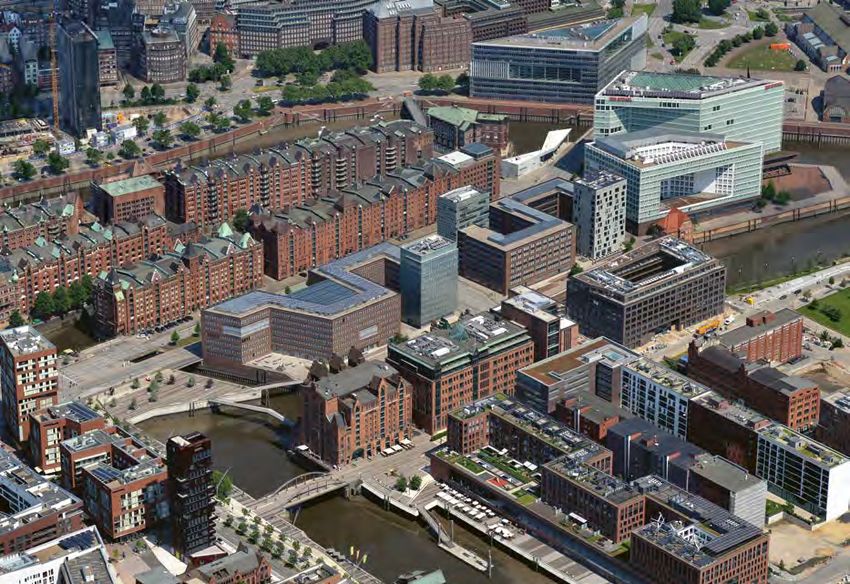
About
rojec HafenCity
Europe’s largest inner-city urban development project as a blueprint
for the new European city on the waterfront
I
n developing a new urban area on the Elbe, for creation of a new urban level provided by the
Hamburg is setting new standards in Eu- raised “warft” or compacted mound concept,
rope and beyond as an ambitious integrat- which included new infrastructure. Additionally,
ed urban development, answering both local with the exception of a few distinctive buildings,
needs and global requirements. On an area of the site of HafenCity was once largely occupied
157 ha, a lively city with a maritime feel is taking by single-story sheds. Few of these could be
shape, combining workplace and residential retained or were worth preserving, as in Ober-
uses, education, culture and leisure, tourism and hafen. Thus more than 2.4 million sqm gross
retailing – in a way that is quite unlike down- floor area (GFA) is to be constructed. Around
towns dominated by offices and shops. What 7,000 residential units for over 14,000 residents
sets it apart from many other major interna- are being built, as well as business premises
tional urban waterside development projects is offering in excess of 45,000 job opportunities
the area’s very central location and the high ex-
pectations of quality reflected, for instance, in
its fine-grained mix of uses, urbanity concept
and ecological sustainability, its social mix and
potential for encounter, and many smaller and
larger innovations. The intensive interaction
between land and water can also be regarded as
unique, for despite the risk of occasional flood-
ing, HafenCity is neither surrounded by dikes,
nor cut off from the water. Instead, with the ex-
ception of the quays and promenades, the
whole area will be raised to between 8 and 9 m
above sea level. The concept of building on arti-
ficial compacted mounds (warfts) lends an area
once dominated by port and industrial uses a
new, characteristic topography, retaining ac-
cess to the water and the typical port atmo-
sphere, while guaranteeing protection from
floods.
New urban concept for a waterfront
The aims of HafenCity development are very
extensive. A new city area by the water is to be
defined through its urban layout, architecture,
inherent uses and identities, as well as emotion-
ally. There are various reasons why HafenCity
consists almost exclusively of new buildings: Land and water are closely interlinked in HafenCity and lend the cityscape its
first of all, the need for flood protection called special character
06 07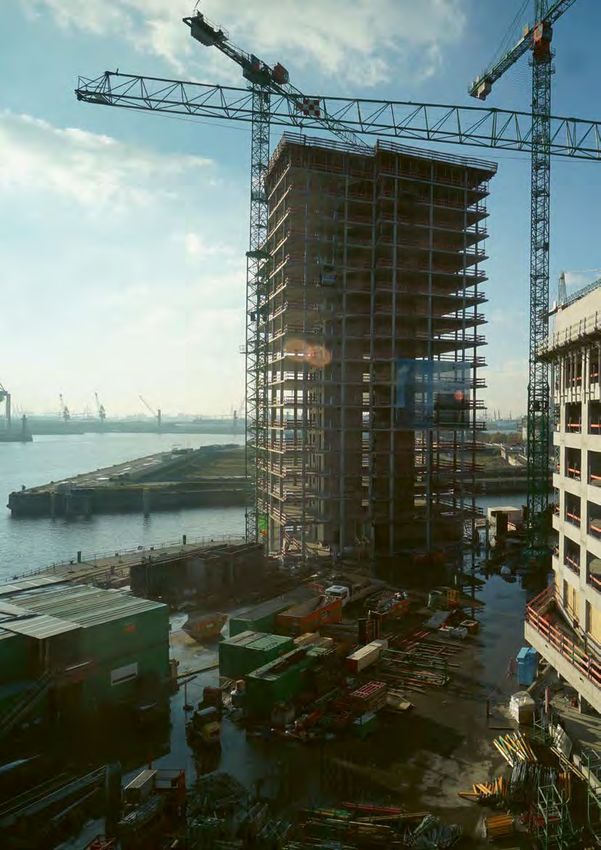
Project | About HafenCity

     (of which 35,000 will be in offices), plus educa-
     tional institutions, restaurants and bars, retail,
     cultural and leisure amenities, with parks, pla-
     zas and promenades – after overall completion,
     80,000 visitors per day are expected.

     The point of departure for the urban planning
     and architectural reinterpretation of the place,
     however, centers on Hamburg’s established
     structures. Its milieu is informed by the Spei-
     cherstadt, the characteristic harbor basins, a
     few existing buildings and, importantly, its hor-
     izontal nature and the visual axes of the inner
     city. The use of red clinker brick opposite the
     Speicherstadt and in the center of HafenCity is
     another defining element.

     Development from west to east

     HafenCity is being developed from west to east
     and from north to south – 62 projects are com-
     pleted and another 70 under construction or in
     the planning stage; deals through sale of land or
     exclusive options have been closed on around
     1.29 million sqm GFA. The new district’s ur-
     banity is already very noticeable in the west-
     ern neighborhoods. In the meantime, HafenCity
     has established its popularity as a place to live
     and work. Well over 1,800 living spaces have
     been completed; more than 500 companies
     have moved into HafenCity. In 2017, companies
     such as Engel & Völkers, nearing completion
     of its new company headquarters in western
     HafenCity, or OVG Real Estate, planning high-
     tech smart buildings in Elbbrücken, are creating
     new sustainable and integrated worlds of work.

     In 2009, Am Sandtorkai/Dalmannkai led the
     way as the first completed neighborhood in
     HafenCity’s development. The beginning of
     2017 saw the opening of Hamburg’s outstand-
     ing and internationally applauded new Elbphil-
     harmonie Concert Hall, designed by Herzog &
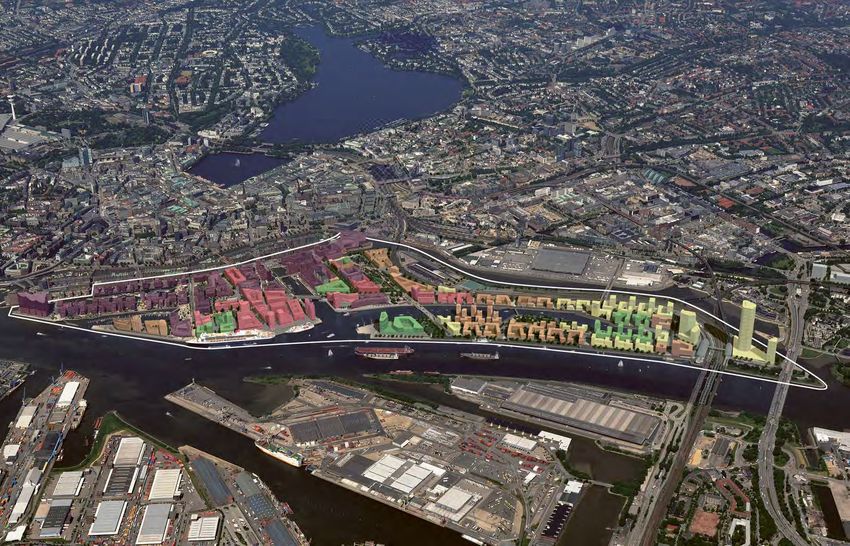
                                                                                                               With the advent of HafenCity, the land area of Hamburg City grows by 40 percent. South of the historic Speicherstadt, a completely new inner-city
     de Meuron, which sits atop the historic Kaispei-                                                          district is emerging, a mix of living, working, learning, cultural, recreational, tourist and commercial uses (photo shows status in summer 2016)
     cher A warehouse building. The new Hamburg
     landmark accommodates two concert audito-
     ria, a five-star hotel and around 45 apartments.     tistory, won multiple awards. At the same time,                       ished in 2011, Brooktorkai/Ericus neighborhood                        overall development and realization of southern
     Close by, completion of the second large neigh-      the first open spaces directly adjoining the River                    is the location of the two largest office users in                    Überseequartier, the whole utilization concept
     borhood, Am Sandtorpark/Grasbrook, popular           Elbe were opened up.                                                  HafenCity so far, DNV Germanischer Lloyd and                          and urban structure plans were thoroughly re-
     with many young families, followed at the be-                                                                              the Spiegel group.                                                    worked in 2015, with new architectural designs
     ginning of 2011. The first primary school with       Now, on the site to the east, Engel & Völkers’                                                                                              for all 11 buildings. Since early 2017 preparation
     kindergarten opened here in 2009, followed in        new corporate head office, incorporating res-                         In northern Überseequartier more than 500 res-                        of the building site has been under way, pav-
     2013 by the popular Grasbrook park – primary         idential construction, will be ready by early                         idents have moved in already, many shops and                          ing the way for construction. By 2021 the site
     school children were also involved in its de-        2018, while building works for the last large un-                     services have opened along Überseeboulevard                           will probably have become Europe’s largest in-
     sign. Meanwhile, on Strandkai to the south, the      built site in western HafenCity, western Strand-                      and it is popular for corporate premises. The                         tegrated real estate project, offering a total of
     first buildings completed there in 2009, Unile-      kai, get under way in mid-2017. The ensemble                          U4 subway started regular services to Über-                           around 270,000 sqm GFA for retailing, restau-
     ver headquarters and the Marco Polo Tower, an        will include two towers and several seven-story                       seequartier station in December 2012. After                           rants and bars, a hotel, entertainment, offices,
     ensemble of office building and residential mul-     buildings providing nearly 500 apartments. Fin-                       Unibail-Rodamco assumed responsibility for                            residential and the new cruise terminal.

08                                                                                                                                                                                                                                                                 09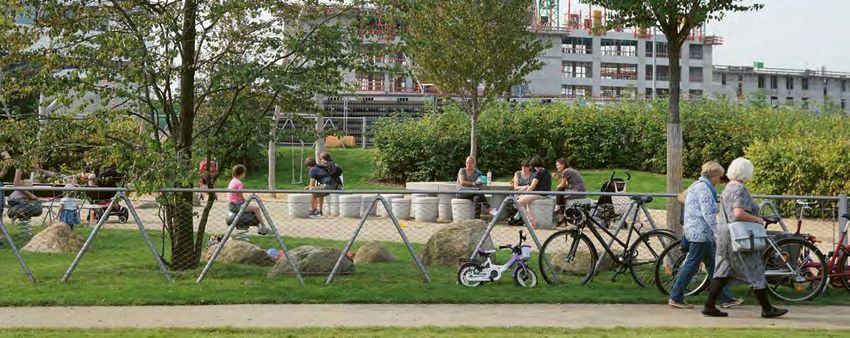
Project | About HafenCity
Making for new shores shape. Building work kicks off on a total five development, property owner and develop- the building permit is granted (and the purchase
plots in 2017 alone around the central Lola Rog- er of infrastructure. Since October 1, 2006, the made); until then it has adequate time to hone
In Elbtorquartier, where the International Mar- ge square; two other projects are already under HafenCity area has had so-called priority area the quality of its product, secure finance and
itime Museum opened in 2008 in the histor- construction on the northern bank of the har- status: all zoning plans are discussed by the perhaps acquire additional users. At the same
ic Kaispeicher B warehouse building and which bor. By the end of 2017 all planning options for Commission for Urban Development set up for time the city retains its ability to safeguard the
has been home to the Ecumenical Forum since all the neighborhood’s residential plots will be in this purpose, representing all political parties building’s quality by intervening during the de-
2012, around 2,500 students moved into the hand; many already under construction. in Hamburg’s City Parliament. Building permis- velopment process which continues for one and
new HafenCity University (HCU) building on sions are granted by the Urban Development a half years after award of the option. This en-
the Elbe embankment in April 2014. Since Au- At Elbbrücken, HafenCity’s easternmost neigh- and Housing Ministry. Since the aim is to set in- sures that the use concepts and time schedules
gust 2013, U4 subway services have been serv- borhood, the infrastructural contours of a ternational standards for conceptual and archi- originally submitted will be adhered to, since the
ing HCU’s dedicated subway stop, while the densely built, highly urban residential and busi- tectural quality, it is very important to attract purchase cannot go through until the building
flood-protected arcades of the Elbe Arcades ness district are gradually taking shape, in the developers and users willing to cooperate in permit is received. In short: this encourages co-
and the pier skirting Magdeburger Hafen basin wake of the successful conclusion of the urban setting high-quality benchmarks and in tread- operative, exacting and reliable developer be-
have become a popular meeting place. Adjacent planning and open space competitions for the ing innovative paths. Tenders are invited for havior – with both city and developer reducing
to HCU, the Freeport, Watermark and Shipyard area. The tracks of the U4 subway extension, plots scheduled for residential use; the compe- risks and costs, optimizing quality. For Hamburg,
ensemble of buildings will be finished by 2018, whose 1.3 kilometers mostly run underground, tition result is decisive. It is not the highest bid HafenCity is not first and foremost a major real
comprising a 70-meter office block, and hous- are already being laid. At the end of 2018 the that succeeds – the crucial factor for award- estate project in which individual projects need
ing further residential and office buildings. above-ground Elbbrücken station will be in op- ing the contract is the quality of the use con- to be realized as quickly and efficiently as pos-
eration. Because it will be linked by a glazed cepts submitted. Sites for office buildings, on sible – it is the vehicle for achieving exempla-
And in Am Lohsepark neighborhood, oil corpo- pedestrian bridge with another rapid transit (S- the other hand, are not generally processed this ry urban quality and defining the city anew for
ration Marquard & Bahls moved into its new cor- Bahn) station, also new, a new public transport way. Instead, companies planning to staff 60– the 21st century. But this is by no means con-
porate headquarters on Shanghaiallee in late junction will be created. Infilling of the site for 70 percent of a building or site for their own pur- fined to urban planning, architecture or uses.
summer 2016. Lohsepark itself has been fin- Amerigo Vespucci square at the head of Baak- poses can apply to HafenCity Hamburg GmbH. Since continual adjustments are being made to
ished since July 2016 and has become a popular enhafen basin is already in place; its opening is the planning and concept for HafenCity, new
meeting place for residents and other Hamburg- in 2019. Real estate development is under way, However, whatever the type of land use, the facets are currently being applied to the con-
ers. At the same time, the part of the denk.mal with acquisition of developers; architectural necessary ratification by the Land Commis- cept of sustainability with regard to sustainable
Hanover Railroad Station memorial that is inte- competitions are in progress. During the course sion is followed by an exclusive option peri- mobility, also making an important contribution
grated into the park was also inaugurated. The of 2017 further plots will be put out to tender od with an obligation to plan. Then the builder/ to the necessary urban transformation strate-
historic area of the memorial with its listed and and options to plan granted. user, in agreement with the Ministry and Hafen gy through HafenCity. Social sustainability and
partially preserved platform follows in May 2017. City Hamburg GmbH, has to proceed in staging social resilience are other topics that are subject
Development process an architectural competition and preparing for to ongoing strategic development. Thus today,
While the next cultural and creative users move building approval, and may also commission site HafenCity’s most important task is to achieve
in by summer 2017 in Oberhafen, over in Baa- Since 1997, HafenCity Hamburg GmbH (un- surveys. Throughout this process, Hafen City a simultaneous definition of continuity in urban
kenhafen, a dense mix of intensive residential til 2004 known as Gesellschaft für Hafen- und Hamburg GmbH, the authorities and the buy- development and redefinition of the city for the
and recreational uses with more than 3,000 Standortentwicklung – GHS) has been pulling er remain in constant dialog. The advantage of Hanseatic City of Hamburg and its future.
apartments, green open spaces, workplac- the strings, overseeing all aspects of Hafen this process for the developer is that financing
es and education and leisure center is taking City’s development as the city’s manager of of the purchase price is postponed until after
Brooktorkai/Ericus
Am Lohsepark
Oberhafen
Am Sandtorpark/
Am Sandtorkai/ Grasbrook Elbtorquartier
Überseequartier
Dalmannkai
Strandkai Baakenhafen
Elbbrücken
HafenCity is made up of ten different neighborhoods
10 11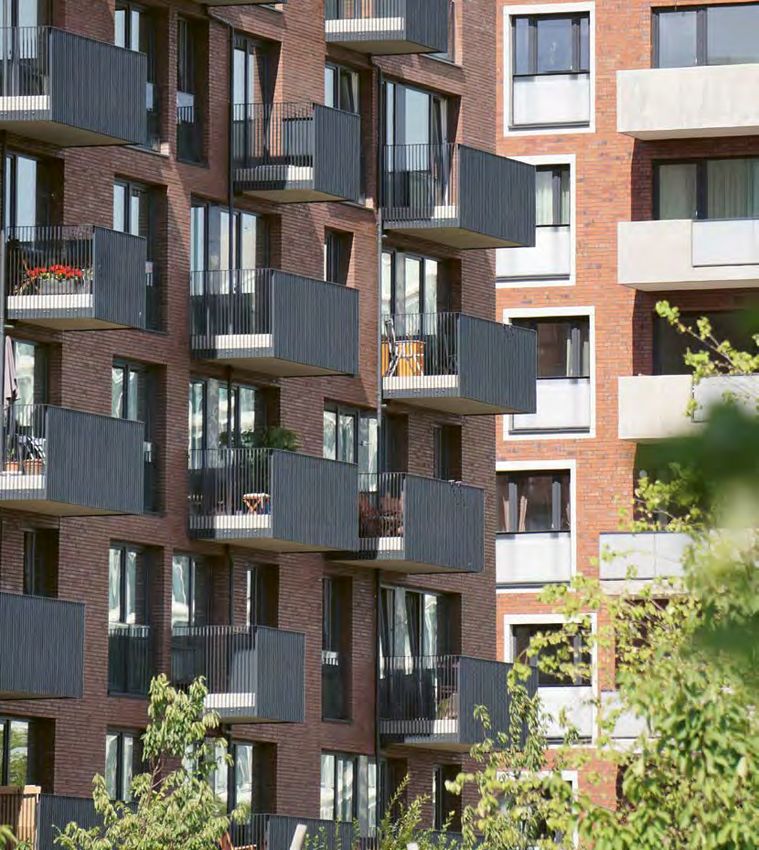
Project | The Masterplan: starting point for development
The Masterplan:
starting point for H
afenCity is among the most outstand-
ing urban development projects on the
landscape planning competitions, architectural
competitions for individual buildings and infra-
development
waterfront anywhere. Based on a so- structure competitions for bridges, but also the
phisticated concept, it is expanding the area of function plan drafts, coordination procedures
Hamburg City by 40 percent. It also has spin- resulting from urban planning competitions. It
off effects for the existing city center, the also enables strategies to be set for building
whole of the Hanseatic city state with its 1.8 sustainability, the social mix, mobility and new
million inhabitants and its surrounding metro- uses.
politan region with a population of some five
million. Hamburg’s identity as a maritime port Prameters change.
city will be underscored in the process and Masterplan revisited 2010
A flexible matrix of different urban neighborhoods as the point of HafenCity itself serve as a blueprint for the de-
velopment of the European city of the 21st cen- Over a period of ten years, the Masterplan with
departure for good urban development tury. It is already regarded as a model for major its concept for horizontal and vertical mixes of
international urban development projects, al- uses and flexible framework of disparate urban
though its development timescale continues neighborhoods proved to be a good point of de-
through to 2025/30. parture for redevelopment of former port areas
south of the inner city. However, the document
Masterplan 2000: the development failed to offer an adequate planning basis for
framework the three eastern quarters, Oberhafen, Baaken-
hafen and Elbbrücken. In addition, the underly-
A masterplan approved by the senate of the ing conditions there had altered considerably:
city of Hamburg on February 29, 2000 has es- whereas eastern HafenCity had been regarded
tablished itself as a successful development initially as a suburban city area, it had evolved
framework for HafenCity up to today. The doc- in the meantime into part of the new core inner
ument, which consists of plans and primary city, partly due to new subway connections that
objectives, sketches out the basic goals of had previously not been foreseen. For this rea-
HafenCity development. It arose out of an in- son the Masterplan was completely reworked
ternational competition prepared by the then between 2008 and 2010, then approved by the
Urban Development Ministry and the GHS (to- Senate as the Revised Masterplan in 2010.
day: HafenCity Hamburg GmbH). The convinc-
ing winning design was by the Hamburgplan Redefinition of the Masterplan was led by
team with Kees Christiaanse | ASTOC through HafenCity Hamburg GmbH in conjunction with
its underlying principles of a fine-grained mix the then Hamburg Urban Development and Envi-
of a variety of uses, the many references to the ronment Ministry as well as the principal authors
existing inner city, a few selective, skillful urban of the original Masterplan, Kees Christiaanse,
planning interventions for special locations, with ASTOC. At the same time there was inten-
as well as the flexible underlying framework of sive public discussion, with a program of more
different city quarters. With a similarly broad than 40 events. Since then the reworked draft
range of urban typologies, the Masterplan has has been honed increasingly in further phases
been instrumental up to today in realizing a to- (urban design competitions, open space compe-
tal of ten neighborhoods with different char- titions, zoning plans and architectural competi-
acters. tions by private building companies).
The Masterplan was conceived from the outset Eastern districts with distinct identities
as a flexible, updateable concept, designed to
be refined and firmed up over the course of the Compared with western and central HafenCity,
planning and development process. Thus, for the three eastern neighborhoods (Oberhafen,
traffic, flood protection or open space planning Baakenhafen and Elbbrücken) are spatially
it simply prescribes basic technical parameters more isolated and less integrated into the exist-
which are continuously evolved: important el- ing city. Their proximity to transport routes also
The revision of the 2010 Masterplan urban planning concept for eastern HafenCity lends the whole area form and continues the success story of the
western neighborhoods through to Elbbrücken (February 2017)
ements in this context are urban planning and calls for special noise protection planning. But
12 13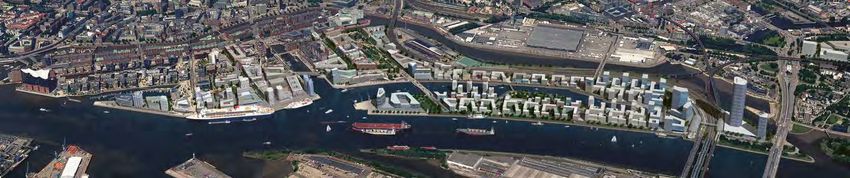
Project | The Masterplan: starting point for development

      this also creates opportunities to give the east-    The fact that eastern HafenCity is shaped by
      ern neighborhoods individuality: Am Baaken-          major transport routes does lead to high noise
      hafen will become an intermixed “city for ev-        exposure in the north and east, however. Thus
      eryone”, a residential and leisure neighborhood,     intelligent urban planning and technical con-
      offering several thousand job opportunities;         cepts are needed to enhance these locations:
      Oberhafen will become the creative and cultural      the main eastern traffic artery Versmann-
      quarter, and Elbbrücken an urban residential but     strasse will be lined primarily with office build-
      primarily business locality, home to new highly      ings turning their broad backs toward the road
      innovative worlds of work.                           to provide noise-protected areas to the south-
                                                           ern side. The semi-enclosed residential ensem-
      Thanks to the revision of the Masterplan, it is      bles will also form inner courtyards, providing
      possible to realize much more useable space          shelter for neighborly coexistence.
      throughout HafenCity: due to the intense build-
      ing density and the relocation of large port         The high ecological standards of the western
      businesses, the total gross floor area (GFA)         and central neighborhoods will also actually be
      realizable increased from 1.5 million to 2.4 mil-    bettered in the east. As well as establishing an
      lion sqm. Land reclamation at the eastern end        innovative heating energy concept, nearly all
      of Baakenhafen harbor basin and for its green        buildings will meet the demanding criteria for
      peninsula also boost overall land area from 123      the gold HafenCity Ecolabel. At the same time,
      to 127 ha.                                           car pool systems overlapping neighborhood
                                                           boundaries and located in underground garag-
      Many more homes to be built                          es will feature a growing proportion of electric
                                                           vehicles. Combined with electric and normal
      Reworking of the Masterplan also means that          bicycle use, this will result in a big reduction in
      a much higher number of homes can be built.          spending on individual mobility – already at a
      Since more than 3,000 housing units will be          very low level thanks to the fine-grained mix
      built in Baakenhafen and Elbbrücken alone,           of uses and subway connections. The pub-
      the total number of homes in HafenCity in-           lic sphere will also benefit from the many car-
      creases from 5,500 to over 7,000. As a result,       parking spaces no longer provided.
      possibilities for increasing the social mix have
      been strengthened and joint building ventures        Reinvention of the city
      now receive more consideration in site tenders
      and, since 2011, one third of residential space      The reworking of the Masterplan has further ex-
      developed is publicly subsidized. An additional      panded and reinforced HafenCity’s function as
      primary school, two secondary schools, as well       a city. At the same time, the urban development
      as several more kindergartens will also enhance      area has been thought through to its eastern-
      HafenCity’s attractions as a place for families      most point, with its new opportunities. It is clear
      to live. The number of potential jobs also ris-      therefore that the Masterplan is not a blueprint
      es markedly, with the increase from 40,000 to        or a plan to be strictly adhered to or realized.
      45,000 primarily generated in leisure, retail, ca-   Instead it provides the point of departure for a
      tering and hotels.                                   complex strategy which will continually create
                                                           new opportunities. After all, urban development
      The leafy character of HafenCity has also been       is a process that leads inevitably to a reinven-
      intensified. Squares, small and large, linked        tion of the city – which is redefined not only by
      together underline urban spatial integration.        its changing use.
      Lohsepark, HafenCity’s central public park,
      extends down through Baakenhöft park to the
      River Elbe. In the south, an Elbe promenade en-
      courages people to stroll on to Entenwerder is-
      land, and Baakenpark, an artificial green play
      and leisure peninsula, will enhance Baakenhafen
      neighborhood. Public open spaces through-
      out HafenCity now cover an area of more than
      28 ha, compared with the initially planned 24 ha
      (not counting publicly accessible private areas),
      while the total length of shoreline extends from
      almost 10 to 10.5 km.

14                                                                                                               15
Quarters | Am Sandtorkai/Dalmannkai
Am Sandtorkai/Dalmannkai
Fine-grained and alive
Am Sandtorkai/Dalmannkai in northwest HafenCity was
the first quarter to be completed
I
t is finished! On January 11, 2017 the Elb- oldest artificial harbor basin dating from 1866,
philharmonie concert hall was officially the pontoons of today’s Traditional Ship Harbor
opened in the presence of Chancellor An- form a floating plaza providing moorings for up
gela Merkel, the federal president of Germany to 30 historic vessels, where residents, visitors
and Hamburg’s first mayor. After almost ten and people working locally can relax or stroll.
years of construction, its wave-crested glass
construction of up to 110 m in height crowns the To the north of the harbor is Sandtorkai, bor-
painstakingly preserved cubage and imposing dering the listed Speicherstadt on its other side.
façade of what was once Warehouse A, de- To the south are Dalmannkai promontory and
signed by architect Werner Kallmorgen. The Grasbrookhafen harbor. Views from the eight Am Sandtorkai/Dalmannkai quarter was the first neighborhood to be completed in HafenCity in 2009 after just six years of construction.
successful creation of a globally unique archi- buildings on Sandtorkai and the 15 buildings on The photo shows the Speicherstadt, the World Heritage Site adjoining Sandtorkai
tectonic hybrid, consisting of the concert house, Dalmannkai encompass the city center, as well
a hotel with 244 rooms, 45 apartments and a as the River Elbe.
parking garage for around 500 vehicles, visually
blends contemporary building skill with the Open, multidimensional topography
port’s tradition and its historic architecture,
connecting it with the new identity of Hafen All urban spaces extend mainly over two levels. largest squares in HafenCity so far: like an am- A variety of lifestyles side by side
City as a whole. The new district acts as a met- All buildings and roads are built on artificial- phitheater, the 5,600 sqm of the Magellan Ter-
aphorical resonance chamber for the new ly raised, flood-protected bases at around 8 m races descend in steps to the water. The steps Lifestyles of residents are as disparate as the
architectural icon. This can be understood best above sea level, but embankment promenades of the 7,800 sqm Marco Polo Terraces with their architecture: around 1,000 people live and
perhaps on the freely accessible plaza of the remain at 4–5.5 m above sea level. The differ- grass islands and wooden decking invite pass- work in the quarter. Young working singles and
Elbphilharmonie between the original building ence in height is particularly noticeable to the ersby to take a break under the trees. Vasco families live side by side with older couples or
and its new glass crown. This is much more than north of Sandtorkai. There unusually, in consid- da Gama Plaza, a smaller neighborhood square seniors whose children have left home. They
just a huge space; it is the atmospheric inter- eration of the adjacent Speicherstadt, the road nearby, also offers a basketball court. take part in sport and cultural clubs and mix
face between the actual uses of the building (Am Sandtorkai) lies at the low level of the Spei- socially through associations such as Hafen
and the public urban environment – with a fan- cherstadt, and the newly built basement foun- While almost all plazas and promenades City Netzwerk e.V. This socially differentiated
tastic panoramic view from a height of 37 m dations on the other side resemble a wall. While throughout western HafenCity were planned by structure is also the result of a call for expres-
over the whole city, the port and HafenCity. the pontoons in the Traditional Ship Harbor ef- EMBT of Barcelona, landscaping of basements sions of interest procedure: as of 2003, sites for
fectively form a third level on the water, which and promenades on Sandtorkai was designed housing no longer go to the highest bidder. In-
At the foot of the building begins Am Sand- rises and falls twice daily with the tide by more by BHF Landschaftsarchitekten (Kiel). The ar- stead the developer with the best use concept
torkai/Dalmannkai quarter, an animated ur- than 3 m, the Elbphilharmonie plaza has added chitecture itself reflects the variety in the quar- is given an exclusive option on the property at a
ban neighborhood on the waterfront. In spring a fourth level. ter: on Dalmannkai alone, the 15 buildings were previously agreed price. This means that many
2009, this became HafenCity’s first completed realized by 27 developers and 26 firms of archi- rental or owned apartments are affordable for
neighborhood, opened after just six years of Multidimensional typical topography continues tects, to ensure adequate diversity. mid-income earners, while some are in the luxu-
construction. Around Sandtorhafen, Hamburg’s on the Magellan and Marco Polo Terraces, the ry segment. Much more reasonably priced living
16 17Quarters | Am Sandtorkai/Dalmannkai
accommodation was realized through building
cooperatives and three joint building ventures.
retailers and cultural uses offer a wide choice.
Shops, cafés, restaurants, galleries and bars are Am Sandtorpark/Grasbrook
As well as the residents, employees of the ap-
clustered in almost 6,500 sqm of ground floor
space.
Green and metropolitan
proximately 50 businesses also influence the
quarter’s atmosphere. Most are modern ser- It was here for the first time that public ame-
vices businesses in the media and logistics nities were successfully integrated into ground With its two leafy parks, Am Sandtorpark/Grasbrook
sectors. Residents, office workers and visitors floors on a larger scale within the framework of neighborhood offers ideal conditions to residents,
encounter each other continually, for example a major project. The condition in sale contracts
in the ground floors of almost all neighborhood and zoning plans making 5 m ceilings manda- employees of surrounding companies and Katharinenschule
buildings, in which a great variety of eateries, tory throughout ground floors of buildings here, primary pupils alike
reduced prices for ground floor space and the
developer’s obligation to seek suitable users,
paved the way for a vitality that will flourish
even more now the Elbphilharmonie is completed.
Of course the principle of a dense mix of uses
also presents challenges which demand inno-
vative solutions. To safeguard areas of priva-
cy for residents, building ensembles on south-
ern Dalmannkai are grouped around internal
courtyards opening toward the south, allowing
unobstructed views of Grasbrookhafen harbor
and the river, but which are difficult to see into
from the lower-lying promenade. It is not incon-
A
gruous that the private and public exist side by m Sandtorpark/Grasbrook is the second
side in Am Sandtorpark/Dalmannkai – quite the large neighborhood to be all but com-
contrary: their coexistence is a definite sign of pleted. This area, extending from Sand-
quality, in this neighborhood and the whole of torhafen harbor in the west to Überseequartier
HafenCity. in the east, with its primary school and family
homes around Grasbrook park, is a haven of
neighborly life. The small, yet popular Sandtor-
park, around which many of the buildings clus-
ter, is a key local element setting the urban
scene. HafenCity’s first small park was inaugu-
rated with a neighborhood street party in April
2011. Landscaping of the green play areas is
dominated by lawns and hillocks. By continuing
the main design elements of the Magellan Ter-
races (such as the paving) through to here, ar-
chitects EMBT of Barcelona, winners of the
open space landscaping concept for western
The diversity of the neighborhood is reflected in its
HafenCity, have successfully and visibly drawn
architecture: on Dalmannkai street alone, 15 buildings were
planned or built by 27 builders and 27 architects’ offices together the various areas.
In August 2013, the 7,100 sqm Grasbrookpark
was completed. Popular way beyond Hafen
City, this large grassy play park with its many
play and recreational features for children and
adults forms the southern interface to Strand-
Am Sandtorkai/Dalmannkai Homes kai quarter.
746 (plus 44 in the Elbphilharmonie)
Area Family-friendly housing
10.9 ha, Total GFA: 261,000 sqm Special institutions
Elbphilharmonie, Traditional Ship Harbor Classes at HafenCity’s Katharinenschule school
Jobs on Sandtorpark started at an early stage, in late
c. 2,700 Development timeframe summer 2009. School activities for 450 children
2003 till 2009 overall also include kindergarten, after-school
Commercial uses care or various types of all-day supervision. The
Corporate, office, retail, c
atering integrated sports hall is intensively used after
school as well, e.g. by Störtebeker sports club or
18 19Quarters | Am Sandtorpark/Grasbrook
sports groups from local companies. The school the Dahler & Company group, most businesses
building, designed by architects Spengler & are of small and medium size, with retailers and
Wiescholek, which also houses 30 apartments, catering on the ground floor.
is one of the few in Germany to integrate a mix
of uses, as well as having most of its play area Further south on Grosser Grasbrook, Kühne Lo-
on the roof. The ecological building also carries gistics University (KLU) and the Medical School
the gold HafenCity Ecolabel. Right next to Kat- Hamburg (MSH) moved into the former SAP
harinenschule school live the new occupants of building in fall 2013. Right next door is logistics
the Hafenliebe joint building venture in their 55 group Kühne + Nagel, which relocated its head-
family-friendly homes. Another 68 apartments quarters here in 2006.
were subsequently realized in the Hofquartier
project.
The emphasis of the neighborhood’s final proj-
ect, construction of the building to the north
of Grasbrookpark, is also residential. Under
construction since the end of 2015 to plans by
BKK-3 architects (Vienna) are 135 apartments,
a kindergarten as well as other units for an or-
ganic restaurant and retail uses. The apart-
ments are a mix of cooperative and subsidized
homes, alongside ateliers and student accom-
modation. Completion of the building is expect-
ed in spring 2018.
Sandtorpark: corporate location
Overall the neighborhood is highly interna-
tional and has attracted many companies.
In the Hamburg-America-Center designed
by renowned US architect Richard Meier, the
Amerikazentrum Hamburg e.V. society offers a Many companies have moved in along Grosse Grasbrook
program of varied cultural events. The largest Sandtorpark/Grasbrook
area of space in the office building bordering
Sandtorpark has been occupied since fall 2011 Area
by the Buss group’s offices. 5.7 ha
Total GFA: 119,000 sqm
The three buildings of the adjacent Internation-
al Coffee Plaza were also conceived by Pritzker An urban yet neighborly atmosphere: attractive lifestyle in an international corporate Jobs
environment
prizewinner Meier. The plaza was developed by c. 2,600
the Neumann family, whose eponymous group
of companies occupies the 13-story Ellipse Commercial uses
tower, one of the neighborhood’s architecton- Office, education,
ic landmarks, with the German headquarters of social institutions,
the Eukor shipping line. In mid-2013, the major retail, catering
Korean shipping line Hanjin Shipping moved into
the building opposite. Art dealer Gregor Bröcker Homes
opened two galleries on the ground floor at the 278
beginning of 2015.
Special institutions
Own focus on sustainability Sandtorpark, Grasbrookpark,
Katharinenschule (all-day
Right on Sandtorpark two other large buildings supervision with after-school care),
also offer space for companies: on the north- Kühne Logistics University (KLU),
ern side, the 16,000 sqm SKAI building, built Medical School Hamburg (MSH),
in 2009, with its eye-catching façade of cop- Hamburg-America-Center, thermal
per elements, was designed by the Hamburg power plant (district heating, built in
firm, Böge Lindner architects; to Sandtorpark’s the 90s)
south is the Centurion Commercial Center
(14,600 sqm gross floor area), holder of the Development timeframe
gold HafenCity Ecolabel, in which, apart from 2003 till 2018
20 21Quarters | Brooktorkai/Ericus
Brooktorkai/Ericus
Central corporate location
in the Speicherstadt
Brooktorkai/Ericus’ position at the interfaces of both
Speicherstadt and existing city center makes it a suitable
corporate location
The Spiegel publishing house and Ericus Contor form the central entryway
into HafenCity. The huge “windows” in their façades add a metropolitan
touch. Among companies housed in the adjoining meandering structure of
Brooktorkai is DNV GL
T
he Brooktorkai/Ericus neighborhood has of Finance & Management have been preparing
a really maritime feel: it is framed by the students for future business careers since 2010
historic brick buildings of the Speicher- and 2011 respectively.
stadt, by Brooktorhafen basin, and the water
passage linking Holländischbrookfleet canal. Major publishing house marks
Also characteristic of Brooktorkai is its mean- entry to HafenCity
dering building structure, punctuated and loos-
ened up by three nine-story towers. The The most conspicuous buildings on Ericusspitze,
Speicherstadt, whose colors are echoed in the the northeastern entrance to HafenCity, are the
red-brick facings, is clearly referenced here. Spiegel group’s publishing house and the Ericus
Urban planning for Brooktorkai (less Ericus- Contor building. In September 2011, the noted
spitze) stemmed from Hamburg architects media group transferred its business activi-
gmp – Gerkan, Marg und Partner, while the win- ties into a new building here of around 30,000
ning architectural concepts for the buildings sqm GFA, which was awarded the HafenCi-
here came from gmp, as well as Jan Störmer ty gold Ecolabel in 2012. The publishing house
Architekten (Hamburg) and Antonio Citterio and Ericus Contor (20,000 sqm GFA) with their
and Partners (Milan). pale façades and massive shared plinth were
planned by Henning Larsen Architects (Copen-
Traffic noise and the narrow layout of the hagen). In closely referencing the Speicherstadt
neighborhood mean that, unusually, the res- as well as the Elbphilharmonie Concert Hall, the
idential element in this quarter is of little sig- architectural concept also rightly pays tribute
nificance. Although one of the three towers in to the location’s significant urban planning role
the ensemble does have 30 apartments with as the entrée to HafenCity.
views of Lohsepark, the quarter is primarily an
important base for businesses. The move of From Ericusspitze to the Elbe
1,600 employees of Germanischer Lloyd into
their 54,000 sqm gross floor area (GFA) Brook- Several bridges cross Brooktorhafen harbor.
torkai office here in March 2010 was the biggest Ericus bridge, renovated since June 2014, was
ever corporate relocation into HafenCity. In ad- originally built in 1870 as a swing bridge for
dition, right next door the International School rail traffic. Now it links the neighborhood with
of Management (ISM) and the Frankfurt School Lohsepark, while Shanghaibrücke road bridge,
22 23Quarters | Brooktorkai/Ericus
Changing levels Strandkai
WES & Partner Landschaftsarchitekten (Ham- Prime location: places to live and work by the water
burg) was responsible for the design of other
open spaces on Brooktorkai dock and Ericus-
spitze. This included a 30 m long stone sofa on
Brooktorkaipromenade offering views of the
Directly by the Elbe, a location punctuated by seven towers offering
harbor basin. A spacious flight of steps at Er- spectacular views from attractive apartments and outstanding office
icusspitze invites a change of level – steps for
sitting or walking lead onto a plaza with sweep-
buildings
ing views over the Ericus canal and Oberhafen
harbor basin.
S
een from the Elbe bridges, Strandkai The ground floor, with its shops and events, is a
quarter is a prominent element in Ham- public open space accessible to the public even
burg’s southern city silhouette. The outside office hours, linking the Marco Polo Ter-
basic structure conceived by Böge Lindner ar- races to the newly landscaped Elbe waterfront
chitects (Hamburg) for the neighborhood is of promenade and the Elbterrassen steps.
perimeter blocks structured in seven high points
rising 55 to 60 m, all of which are residential Maco Polo Tower wins
buildings. The six to seven-story perimeter real estate "Oscar"
blocks feature several tower tops and also inte-
grate solitaire towers or are built free-standing. Like the Unilever headquarters building, the
Depending on their position, they also provide Marco Polo Tower (58) next door, with some 60
spectacular views of the River Elbe, the port, the apartments, has also won multiple awards. In
Elbphilharmonie, Grasbrook harbor, as well as 2010, the residential tower won the real estate
designed by Dietmar Feichtinger (Paris, Vien-
the inner city. Whereas the south-eastern end “Oscar”, the MIPIM award, in the residential de-
na), creates additional open space. The bridge,
of the neighborhood opposite the cruise termi- velopments category. The previous year it was
which seems more like a square, almost as wide
nal on the Elbe mainly comprises office space named best building in the European Proper-
as it is long, offers generous space for pedestri-
for modern service businesses, residential con- ty Awards. The whole ensemble has become a
ans and cyclists.
struction dominates at Grasbrookpark, as well
as on the eye-catching tip of the promontory
Brooktorpromenade leads under the bridge,
(55-57), and in nearby Überseequartier.
past Brooktorhafen basin, to Dar es Salaam
square, inaugurated in June 2011. On the way
Outstanding sustainability
the route also traverses the León bridge, an-
Brooktorkai/Ericus
other Dietmar Feichtinger design, this time for
In summer 2009, the first building was complet-
pedestrians only. Finally the promenade follows
Area ed to the south of the Marco Polo Terraces: the
the embankment of Magdeburger Hafen – tak-
4 ha, Total GFA: 106,000 sqm ensemble, by Behnisch Architekten (Stuttgart),
ing in Störtebeker Ufer, Busanbrücke bridge
consists of an office building and a residential
and Elbtorpromenade – toward HafenCity Uni-
Jobs tower. The 25,000 sqm gross floor area (GFA)
versity (HCU) and Baakenhafen. With Buenos
c. 3,350 office building (59) has been in use since then by
Aires quay completed since late summer 2014,
consumer goods group Unilever and the 1,100
a road-crossing-free link now runs from Ericus-
Commercial uses employees of its German-speaking markets
spitze down to the Elbe, highlighting once again
Office, education, retail, catering organization. The building’s sustainability cre-
how bridges combined with promenades form
dentials are impressive: in 2011 it was the first
the backbone of HafenCity’s close-knit pe-
Homes office building to be awarded the gold Hafen
destrian infrastructure on the waterside, repre-
30 City Ecolabel. The interior of the multi-award-
senting a special quality of the new cityscape.
winning Unilever office building features an
Development timeframe atrium flooded with natural light, open-plan of-
2007 till late 2011 fices and horizontally staggered work stations.
24 25Quarters | Strandkai
62
58 60
55 56
57 63
59 61
landmark, with the tower around 60 m high and 3,000 sqm, as well as catering. Option holders
its staggered stories visible from far away, as are Aug. Prien Immobilien, HANSA Baugenos-
striking as the Unilever building with its con- senschaft, Gemeinnützige Baugenossenschaft
spicuous façade. Bergedorf-Bille and Bauverein der Elbgemein-
den. The forward 93 m of the quay point will
Adjoining it to the east, Quantum Projektent- remain unbuilt – providing a new public urban
wicklung GmbH and Engel & Völkers Develop- space, while western HafenCity will acquire a
ment GmbH are building new headquarters for new city façade facing the Elbe, which will be
Engel & Völkers (60) which will house the Engel & continued at southern Überseequartier.
Völkers Akademie and an exhibition. Around half
of the 21,000 sqm GFA to be created is desig-
nated for about 66 privately owned apartments,
30 rental apartments and for public amenities.
Designed by the New Yorker and Pritzker prize-
winner Richard Meier, an architectonic land-
mark will be built by early 2018 to the south of
Grasbrook harbor. Further to the east, the cur-
rent Cruise Center HafenCity will be replaced This architectonic landmark was built to plans by New Yorker and Pritzker prizewinner Richard Meier
by 2021 by a new vertically organized terminal
integrated into the southern section of Über-
seequartier. With two berths it will be capable
of handling more than 3,600 passengers simul-
taneously. In addition to cruise ship operations,
the complex building ensemble with its under-
ground bus station, car parking slots and taxi Around 500 apartments will be built on the quay point from mid-2017, while the front
end of the quay remains free of building
stand, as well as hotel and retail space, will also
incorporate other uses which are ingeniously in- Strandkai
terlinked. Since terminal operation will continue
during construction of Überseequartier, plots 61, Area
62 and 63 cannot be built upon until 2021. 6.9 ha, Total GFA: 190,000 sqm
Living on the quay point Jobs
c. 4,770
In the area on the prominent site on Strandkai
point (55-57) west of Unilever House around Commercial uses
500 residences are to be realized from mid-2017 Office, hotel, retail,
among them many building-cooperative and catering
affordable apartments. Perimeter block typol-
ogies are planned, to designs by Léon Wohlhage Homes
Wernik (Berlin), LRW Architekten und Stadt- 733
planer (Hamburg) and BE Berlin, as well as two
residential towers (about 60 m high, levelling Special institutions
with Marco Polo Tower), designed by Ingenhoven Cruise terminal (now Überseequartier),
Architects (Düsseldorf) and Hadi Teherani Ar- KinderKulturHaus
chitects (Hamburg). Unusual cultural uses
will move in at ground floor level: a 1,000 sqm Development timeframe
children’s arts center (KinderKulturHaus) and 2005 till 2021, 2021 till 2025
the fairytale attraction Märchenwelt on some (plots 61–63 currently blocked)
26 27Quarters | Überseequartier
Überseequartier Today northern Überseequartier and
Überseeboulevard already breathe a
Highly complex diversity in a central location
metropolitan atmosphere
While northern Überseequartier gradually unfurls its urban qualities,
realization of the southern area at the heart of HafenCity successfully
continues
Ü
berseequartier is the most metropolitan to eat and drink have opened. More than 340
and most visited part of HafenCity. apartments were built and are rented out. At
The former harbor master’s office, Altes area has been affected by the delay in develop-
Here 6,100 jobs will be created. Retail- the same time, the 32,600 sqm of office space
Hafenamt, one of the few remaining original ment of its southern counterpart.
ing occupies 23 per cent of premises, with spac- is occupied by well-known firms such as lawyers
buildings in HafenCity, opened successfully in
es for food and drink, entertainment, offices, a Esche Schümann Commichau or the oil multi
March 2016 after undergoing extensive conver- Fresh start for southern
vertically integrated cruise center and a variety BP. At the beginning of 2015 a special German
sion as an upmarket hotel. Überseequartier
of hotel uses providing around 1,150 rooms, as real estate fund managed for several long-term
well as some 1,100 apartments. This 14 ha ur- investing pension funds by Hines Immobilien
In contrast to the conventional shopping formats An optimistic atmosphere has been rekindled
ban mass of Überseequartier will be more than GmbH acquired most of the completed build-
of Hamburg’s city center with its passageway in southern Überseequartier since the overall
just another urban quarter. With what even by ings (34/1-34/4 & 34/7). Sumatrakontor (34/6)
malls and main-street-format Mönckeberg development and realization of the project was
HafenCity standards is an extremely eclectic had already been sold to Blackstone.
strasse and Spitalerstrasse, northern Übersee- taken over by Unibail-Rodamco in December
mix, this development illustrates just how far
quartier, with its owner-run boutiques, its post 2014, which was a major milestone. Europe’s
HafenCity has developed as a city in terms of Last unbuilt sites developed
office, drug store and supermarket, as well as leading quoted real estate concern is invest-
its integrated complex mix of uses. It is setting
several exciting gastronomic attractions and ing around EUR 960 million in the 270,000 sqm
international standards. By spring 2018, the last remaining vacant sites
regular weekly food truck markets, already has GFA to be developed. Of this, about 80,500
in the northern section of the neighborhood will
a profile of its own. The area around the old har- sqm will be retail, 57,000 sqm residential and
The northern section: be under development. Between Sandtorkai
bor master’s office, Altes Hafenamt, is livelier 64,000 sqm commercial. In addition, cultural
largely completed and Tokiostrasse (34/15 and 34/16), an unusu-
and more visited – even so the whole northern uses will occupy some 11,000 sqm; bars, cafés
ally sophisticated mix of homes, a hotel and
Since the spatial realization of HafenCity is entertainment complex with premium cinema
taking place from north to south, the northern is reinforcing the urbanity of northern Übersee-
part, offering around 140,000 sqm gross floor quartier.
area (GFA) for living, offices, retail, catering and
hotel uses, has been more or less finished since Prime responsibility for realization of the KPTN
2010, with the exception of one site (34/15&16). project is DC Developments. Design of the build-
Its structure is based on an overall urban plan- ing sited to the north (34/15) is by Nalbach +
ning concept by international architects, found- Nalbach Architekten of Berlin. Here the founder
ed on the urban planning blueprint developed by of the Cinemaxx cinema chain, Hans-Joachim
Trojan Trojan + Partner. Public spaces through- Flebbe, will run an Astor Kino Lounge movie
out Überseequartier and areas around Magde- house with three auditoria and more than 440
burger Hafen basin were realized according to a seats. The Pierdrei Hotel offering around 220
concept by Catalan landscape architect Beth rooms will also be opened here by Miniatur
Galí and her firm BB+GG arquitectes. The char- Wunderland’s Frederic and Gerrit Braun with
acteristic striped ground surfaces composed hotelier Kai Hollmann (25hours Hotel) and Nor-
of reddish, gray and light-colored natural stone bert Aust of Schmidts Tivoli Theater. The archi-
slabs is thus omnipresent throughout central tect of the southern residential building (34/16)
HafenCity. is blauraum of Hamburg. It will comprise 219
rental apartments of up to 134 sqm; one third
In the northern neighborhood section, which of them will be publicly subsidized. In addition,
features less retail than the still to be built 40 long-stay apartments are being realized by
south, more than two dozen shops and places Ipartment GmbH. A small street market takes place regularly on Überseeboulevard. In the background: The former harbor master’s office, Altes Hafenamt, one of
the few original buildings in HafenCity. Today it is a hotel and bar
28 29You can also read


