TOTAL WATERMARK CITY AS A CATCHMENT - Clearwater
←
→
Page content transcription
If your browser does not render page correctly, please read the page content below
1

TOTAL WATERMARK
CITY AS A CATCHMENT
3

FOREWORD
Relying on a single centralised water supply for urban             This document provides a new framework to build on
areas is no longer a sustainable option.                           these initiatives and a platform for a ‘water sensitive city’
                                                                   approach.
Cities must reduce their water consumption and source
water in different ways. Greater investment is needed              It establishes water conservation and water quality
in rain and stormwater harvesting, water recycling and             targets, including a commitment to eliminating the use
accessing groundwater to ensure cities a water supply              of drinking-quality water for open spaces managed by
at an efficient cost that also leaves sufficient water for rural   the City of Melbourne.
communities and environmental needs. It is also important
                                                                   It sets a water balance which quantifies all ‘sinks’
for cities to treat stormwater to minimise the impact of
                                                                   and ‘sources’ for the city, as well as a pollutant balance
pollution and protect the health of their waterways.
                                                                   that quantifies loads from impermeable surfaces.
To integrate these ideas into how the City of Melbourne            These demonstrate that when combined with reducing
operates, we have approved this landmark water                     our water consumption, stormwater harvesting can
management strategy, Total Watermark – City as a                   substantially meet municipal water demands while
Catchment.                                                         removing pollutants from runoff.

Total Watermark – City as a Catchment is based on the              The City of Melbourne is leading the way in sustainable
vision of a ‘water sensitive city’ where water sensitive           water management and we commend Total Watermark –
urban design (WSUD) techniques conserve, re-use and                City as a Catchment to other local governments and water
recycle water, and manage the quality of stormwater                management authorities across Australia.
runoff.

The City of Melbourne has made significant progress to
date in this by improving the water-efficiency of Council-
owned buildings as well as our irrigation systems, and by
better landscaping parks and gardens we manage.                    Robert Doyle
Other sites throughout the city showcase how stormwater            Lord Mayor
can be improved for harvesting, recycling and discharging
to waterways. Examples include the Royal Park wetlands,
the Queen Victoria Market rainwater harvesting project and
numerous rain gardens throughout the city’s streetscapes,
car parks and public open spaces.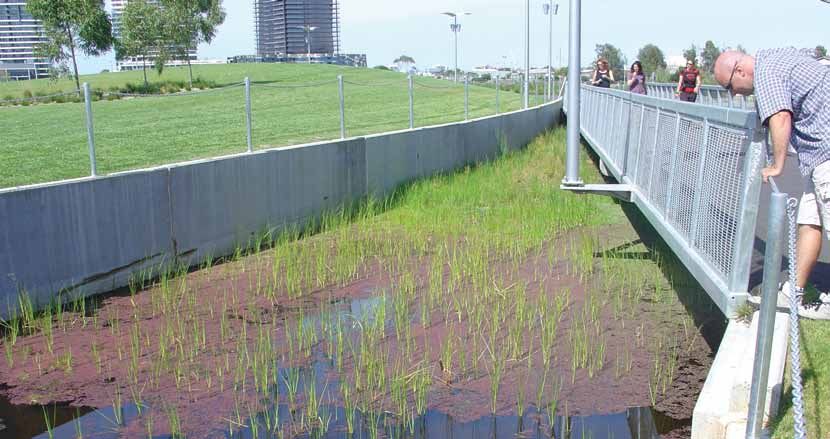
4

     TABLE OF CONTENTS
         Foreword                                                                                                                           3

         Executive summary                                                                                                                  5

1.       Introduction                                                                                                                       9

2.       Background                                                                                                                        11

3.       The basis for city as a catchment                                                                                                 15

4.       Framework for a ‘water sensitive city’: a strategy for resilience                                                                 18

5.       City of Melbourne: a ‘water sensitive city’                                                                                       22

5.1 The City of Melbourne’s water balance                                                                                                  23

5.2 Pollutant budget for the City of Melbourne                                                                                             31

5.3 Water cycle management targets for the City of Melbourne                                                                               34

6.       Current status of sustainable urban water management practices                                                                    39

7.       Developing a strategy for resilience                                                                                              42

7.1 Implementation hierarchy                                                                                                               42

7.2 Achieving 2020 interim targets across the municipality                                                                                 45

         Appendix A – Traditional water management                                                                                         48

         Appendix B – National and state context                                                                                           51

         Appendix C – Source of information to calculate water balance and pollutant loads                                                 55

         Appendix D – Groundwater                                                                                                          56

         Appendix E – Advantages and challenges of water sources                                                                           59

         Appendix F – Stormwater pollutant budget for the City of Melbourne                                                                61

         Appendix G – Stormwater pollutant load data                                                                                       62

         Appendix H – Detailed spreadsheet of current WSUD project benefits                                                                63

         Appendix I – Example of future WSUD projects required to attain 2020 targets                                                      67

         Appendix J – Gross pollutant (litter) loads and reductions to date                                                                69

         References                                                                                                                        70

         This strategy has been developed based on a report issued to Council entitled ‘City as a Catchment: a strategy for adaptation’,
         by EDAW’s Ecological Engineering Practice Area.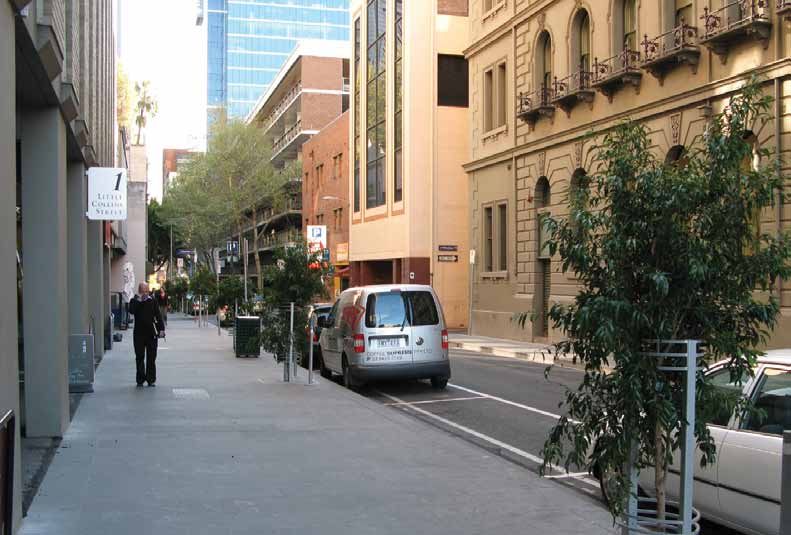
5

EXECUTIVE SUMMARY
LEADING THE WAY IN SUSTAINABLE WATER                                 The health of these waterways is strongly influenced
                                                                     by the pollutants contained in stormwater that flows
MANAGEMENT
                                                                     into them. Major forms of stormwater pollution include
The City of Melbourne has practised total water-cycle                suspended solids, an excess of nutrients (such as nitrogen
management since 2002, supported by its adoption of the              and phosphorus), and toxins (such as pesticides and
Total Watermark policy in 2004 and the Water Sensitive               herbicides and heavy metals).
Urban Design (WSUD) Guidelines in 2005.

This new policy revises Total Watermark to place it within
                                                                     SUSTAINABLE WATER MANAGEMENT
a ‘city as a catchment’ context and outlines the City of             GUIDELINES
Melbourne’s goal to become a water sensitive city. A water           Total Watermark – City as Catchment adopts a sustainable
sensitive city aims to protect our waterways, respond to             water management hierarchy incorporating water supply
climate change and sustainable manage the total water                within and beyond the local catchment. This hierarchy is
cycle.                                                               supported by the Model WSUD Guidelines developed by
This document focuses on conserving and improving                    the City of Melbourne in conjunction with the cities of Port
water quality in the City of Melbourne. It promotes a                Phillip, Stonnington, and Yarra.
localised water management model to reduce reliance                  The management considerations within the hierarchy are
on systems that impact other regions and provides a                  set out as flows:
framework that contributes to adapting to climate change.
                                                                     Within the local catchment:
Relying on a single centralised water supply for Melbourne
                                                                   • Reduce water demand to conserve water and minimise
is not a sustainable option. Reduced rainfall in southern
                                                                     the generation of wastewater, across all new building
and eastern Australia has meant less surface water
                                                                     and infrastructure works, as well as refurbishments and
availability in centralised water catchments. Without new
                                                                     extensions.
alternative sources of supply, these reductions in water
storage pose a threat to the water security of the City            • Consider rainwater harvesting as a simple and low impact
of Melbourne.                                                        alternative water source requiring little, if any treatment.

Understanding how water flows through our municipality             • Consider stormwater harvesting providing the dual
as well as the resulting pollutants is essential to the ‘city as     benefits of water savings, and improving water quality
a catchment’ approach. The City of Melbourne is home to              (by preventing polluted water going down the drain).
three important waterways: the Yarra River, Maribyrnong            • Consider water recycling with a focus on low-energy,
River and Moonee Ponds Creek. These waterways provide                low maintenance systems.
important habitat, aesthetic, recreational, and economic
value to industry and the broader community.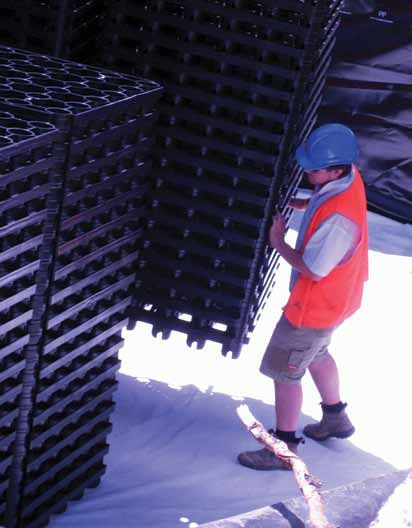
6

  EXECUTIVE SUMMARY
  Beyond the local catchment:                                   Alternative water use targets
• Consider wastewater carried along the Melbourne             • Council will source 30 per cent of its water needs from
  Water Sewerage Transfer Network. Use low energy               alternative water sources by 2020
  technology, and ensure that demand is great enough
                                                              • Non-Council land managers will source nine per cent of
  to maximise the system.
                                                                their water needs from alternative water sources by 2020.
• Consider stormwater in the Yarra River, Maribyrnong
  River and Moonee Ponds Creek. At the ‘bottom of the           Stormwater quality targets
  catchment’ the City of Melbourne is not generally limited   • 20 per cent reduction in total suspended solids (soil, tyre/
  by environmental flow requirement, but it is necessary        car residue etc.) on Council and non-Council land by 2020
  to assess other environmental factors.                      • 30 per cent reduction in litter on Council and non-Council
• Consider potable water use from the centralised               land by 2020
  mains system if none of the above water management          • 15 per cent reduction in total phosphorus
  approaches are suitable for a particular site.                (fertilisers, detergent etc.) on Council land by 2020
• Consider groundwater. This is a low priority for the        • 25 per cent reduction in total phosphorus
  City of Melbourne as the groundwater in the municipality      (fertilisers, detergent etc.) on non-Council land by 2020
  is shallow and saline.
                                                              • 30 per cent reduction in total nitrogen (airborne pollutants,
  OUR TARGETS                                                   fertilisers etc.) on Council land by 2020

  Total Watermark – City as a Catchment commits the           • 40 per cent reduction in total nitrogen (airborne pollutants,
  City of Melbourne to achieve targets for saving water,        fertilisers etc) on non-Council land by 2020.
  increasing water sourced from alternative supplies,
                                                                Wastewater reduction target
  improving stormwater quality, reducing wastewater
                                                              • 30 per cent reduction in wastewater across the
  and supporting groundwater.
                                                                municipality by 2020.
  Water saving targets
                                                                Groundwater quality target
• 50 per cent reduction in potable water consumption
                                                              • Where groundwater needs to be re-injected to prevent
  per employee by 2020
                                                                land subsidence, it needs to be of equal or better quality
• 40 per cent reduction in potable water consumption            to the water in the aquifer.
  per resident by 2020

• 90 per cent reduction in potable water consumption
  by Council by 2020

• 25 per cent ‘absolute’ water saving target by 2020.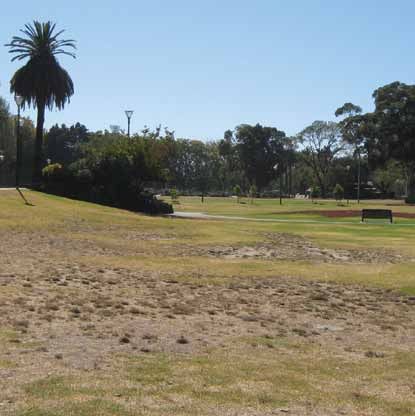
7

  EXECUTIVE SUMMARY
  ACHIEVING OUR TARGETS                                              • Stormwater harvesting – starting with the Grant Street and
                                                                       Shrine of Remembrance stormwater harvesting projects.
  To achieve its 2020 targets, the City of Melbourne aims to
                                                                       The scheduled 5 ML expansion of the Royal Park wetland
  undertake a range of on-ground works across the public
                                                                       storage capacity will further assist with irrigation in Royal
  and private sectors. These include:
                                                                       Park. Stormwater harvesting being established at Flagstaff
  Projects for Council-managed assets:                                 Bowls Club will be used to water the bowling green.
• Further reduce potable water use in parks (dependent on            • Sewer mining – starting with the CH2 sewer mining plant
  impending research into the horticultural assessment of              for watering street trees, with endeavours to establish
  different water needs) through:                                      sewer mining plants within parks to reduce the reliance on
  –	irrigation efficiencies (subsurface, soil moisture sensitive,     trucking.
     technological improvements, limited time)                       • Investigate offsets to assist and/or fund water reductions
  –	understanding of soil types and subsequent soil                   outside the responsibilities of Council to cover the water
     moisture needs                                                    used by Council. To achieve 100 per cent reduction in
                                                                       potable water use in parks and gardens, Council aims to:
  – mulching to prevent evaporation
                                                                       – reduce demand for water (40 per cent)
  – planting drought tolerant species
                                                                       – source alternative water (50 per cent)
  – staff training programs and contract provisions.
                                                                       – offset remaining potable water (10 per cent).
• Reduce water use in Council-owned buildings through:
                                                                     • Stormwater treatment for streetscapes and parks –
  – efficient fittings – flow restrictors on taps, showerheads         program of WSUD works includes:
  – efficient toilets – dual flush, reduced header tank flow           –	laneway improvements – starting with Bullens Lane
  –	fire-sprinkler testing (reduced from weekly to monthly,              sand filters
     or recirculating)                                                 –	raingarden implementation – starting with Bellair St,
  – cooling tower efficiencies                                            Grant St, Royal Park Zoo Northern Entrance, and
                                                                          Flagstaff Bowls Club
  – staff training, contract provisions, education and
  behaviour change programs.                                           –	swales and small wetlands – to be implemented in the
                                                                          City of Melbourne
• Rainwater harvesting – starting with the Public Record
  Office rainwater tanks.                                              –	porous and permeable paving – to be implemented in
                                                                          the City of Melbourne.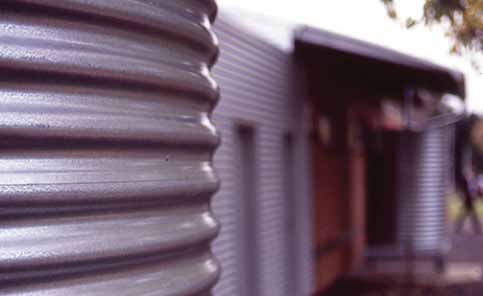
8

  EXECUTIVE SUMMARY
• Program of alternative water source projects for Council        • Commercial business on smaller sites – alternative water
  buildings through:                                                sources

  –	rainwater harvesting – starting with Queen Victoria            –	encourage uptake rate of rainwater tanks on private
     Market capturing rainwater for flushing public toilets            commercial properties to 50 times the current uptake/
                                                                       installation rate a year (increase to 300 tanks per year).
  –	water recycling – where appropriate, starting with
     Fawkner South Pavilion                                         Projects for residential buildings
  – s ewer mining – starting with activation of the CH2          • Low-rise residential:
    sewer mining plant.                                             – efficient fittings (flow restrictors on taps, showerheads)

  Projects for the commercial buildings                             –	appliances (efficient washing machines and
• Commercial business – demand reduction:                              dishwashers)

  –	fire sprinkler testing (reduced from weekly to monthly,        – gardens (efficient species, layout and irrigation)
     or recirculating).
                                                                    – swimming pools (pool covers, re-use of backwash)
  – cooling tower efficiencies.
                                                                    – householder behaviour change through education.
  –	appliances (efficient washing machines and
                                                                  • High-rise residential:
     dishwashers)
                                                                    –	balance ring mains, fire sprinkler and cooling tower
  – efficient fittings (flow restrictors on taps, showerheads).
                                                                       efficiencies
  – gardens (efficient species, layout and irrigation)
                                                                    – efficient fittings and appliances
  –	property management and tenant behaviour change
                                                                    – householder behaviour change through education.
     programs.
                                                                  • Residential – alternative water sources
• Commercial business on large sites – alternative water
  sources and WSUD treatment:                                       –	rainwater tanks for toilet flushing on private residential
                                                                       properties
  –	proceed with proposed water harvesting and treatment
     schemes at Royal Botanic Gardens, Southern Cross               –	consider water recycling for toilet flushing in high-rise
     Station, Public Record Office, Melbourne Museum,                  residential apartments.
     MCG, Melbourne Convention Centre and Flemington                Total Watermark – City as a Catchment as a will be fully
     Racecourse                                                     reviewed in 2012 to align with any changes in policy,
  –	facilitate new WSUD schemes – perhaps ports,                   design, technology, behaviour and other factors. Action
     Melbourne Exhibition Centre, universities, hospitals and       plans will be undertaken annually and yearly progress
     schools.                                                       towards achieving the targets will be reported in the City
                                                                    of Melbourne annual report.
9
1. INTRODUCTION
Total water-cycle management These solutions aim to reduce the reliance on one
in the City of Melbourne centralised water supply source – potable mains water.
The City of Melbourne has practised total water-cycle They also aim to minimise the environmental and social
management since 2002, supported by its adoption impacts associated with upstream sources supplementing
of the Total Watermark policy in 2004 and the Water the centralised water system (such as the Thompson and
Sensitive Urban Design (WSUD) Guidelines in 2005. Goulburn rivers and potential desalination plant).
Total water-cycle management is the integrated
Understanding the quantity and location of water flowing
management of all components of the hydrological cycle
through a municipality, and the pollutants being carried
within urban areas and landscapes – including water
with these flows, will help local governments like the City
consumption, stormwater, wastewater and groundwater –
of Melbourne to initiate and assess sustainable water
to secure a range of benefits for the wider catchment.
management projects.
This new strategy revises Total Watermark to place
The ‘city as a catchment’ approach explores interactions
it within a ‘city as a catchment’ context.
between supply, the quality and quantity of stormwater
What is ‘city as a catchment’? and wastewater, land use, climate, social capital and the
‘City as a catchment’ is a fundamental principle and receiving waterways (rivers and bays). Furthermore, it is an
approach supporting the creation of a ‘water sensitive adaptation strategy in response to climate change.
city’1. It recognises the important role of the natural It provides the basis for moving towards an informed
catchment but works primarily with the artificial city ‘city as an ecosystem’ approach that encompasses
catchment (including its roads, roofs and impermeable greenhouse mitigation and habitat protection and
surfaces) to minimise mains water consumption, stretches beyond single municipal boundaries.
reduce wastewater generation and lessen the impact
of stormwater discharges on receiving waters.
This approach seeks local solutions to achieve
sustainable water management, including the adoption
of demand-management practices and harvesting
alternative water supplies.
1 A concept developed by Wong and Brown (2008), a ‘water sensitive city’ recognises the links within and between the urban water cycle, built form and landscape,
and organisational and community values. It has access to a diversity of centralised and decentralised water sources, providing cities with the flexibility to access a
‘portfolio’ of water sources at least cost and with least impact on rural and environmental water needs. See chapters 3 and 4 for more information.10 1. INTRODUCTION Where to from here? The City of Melbourne is applying the ‘city as a catchment’ approach in the following ways: • implementing WSUD through the revised WSUD Guidelines (see the Council’s map of water initiatives) • helping other metropolitan municipalities to apply the ‘city as a catchment’ approach (a regional strategy will enable wider and increased implementation) • working to achieve zero potable water use in Council-managed parks • introducing changes to roads maintenance, building and construction practices to better provide for water saving, water harvesting and improving water quality and the health of our waterways • assisting large non-Council sites to implement WSUD, such as the Shrine of Remembrance, Public Record Office, Flemington Racecourse and the MCG • undertaking climate adaptation analysis and works to feed into stormwater harvesting and microclimates • continuing the sustainable building program with the private sector to reduce water, energy and waste • supporting continued research into urban advancement towards ‘water sensitive cities’ using the City of Melbourne as a pilot.
11

  2. BACKGROUND
  What has the City of Melbourne already                        Since 2002, the City of Melbourne has been saving water
  achieved in sustainable water management?                     while meeting additional sustainable water objectives,
  Total Watermark 2004 introduced the City of Melbourne’s       including:
  commitment to sustainable urban water management
                                                              • finding ways to save mains water through efficiency,
  covering the total water cycle, including water supply,
                                                                design and behavioural changes
  stormwater, wastewater and groundwater.
                                                              • minimising wastewater disposal to the sewer through
  This was followed in 2005 with the release of the
                                                                demand management, and some recycling
  WSUD Guidelines, which provides Council staff and the
  broader industry with guiding principles, case studies      • treating stormwater to improve water quality for harvesting
  and fact sheets to demonstrate how sustainable water          and re-use and/or discharge to waterways
  management practices can be integrated into a range         • protecting groundwater from contaminants and disruption
  of urban landscapes.
                                                              • managing catchment hydrology, particularly for aquatic
  Additional policy and guideline commitments for               habitats.
  sustainable water management include:
                                                                In addition to this, the City of Melbourne is committed
• Construction Management Plan Guidelines: setting out          to advocating for logging to cease in Melbourne’s water
  Council’s best-practice requirements for stormwater           catchments. Logging can reduce water yields and quality
  management procedures on development sites. It also           significantly, because young regrowth trees require more
  provides requirements that can be transferred into            water, thus reducing stream flow to water catchments.
  contracts for city development, including parks.              The loss of water through logging activities also
• Greening Your Building Toolkit: helping building managers     undermines water saving efforts elsewhere in the
  to save water, energy and waste.                              catchment.

• Corporate reports: reporting on efforts to reduce water
  consumption and improve stormwater quality (reduction         Sustainable water management
  in total suspended solids reaching our waterways).            progress to date includes:
                                                              • 28 per cent reduction in Council water use since 2000
• Environment Local Law: addressing waste, stormwater
  and noise management.                                       • 39 per cent reduction in water use per resident living
                                                                in the municipality since 2000

                                                              • 48 per cent reduction per employee working in the
                                                                municipality since 2000

                                                              • 4 per cent reduction in water pollution entering our
                                                                waterways since 2005 (total suspended solids).
12
2. BACKGROUND
Why is the City of Melbourne improving What wider catchment area does
its water management approach? the City of Melbourne sit within?
Total Watermark 2004 outlines the City of Melbourne’s The City of Melbourne is located at the junction of the
water policy and will be superseded by this strategy, Yarra and Maribyrnong rivers. It is the business centre
Total Watermark – City as a Catchment, which goes of a broader catchment region consisting of rural
further in terms of integrating the different parts of landscapes, agricultural industry, industrial and commercial
sustainable water management – water conservation, premises, parks and reserves, indigenous vegetation,
stormwater, wastewater and groundwater. water storages, thousands of kilometres of waterways
and Port Phillip Bay where the catchment meets the sea2.
The City of Melbourne’s traditional approach to water
management has come a long way, as shown in Appendix The Port Phillip and Westernport catchment is now wholly
A on page 48. under the responsibility of Melbourne Water for delivery of
regional drainage, floodplain and waterway services.
To date, water conservation and stormwater quality
improvements have been driven by separate water
management programs at both the state and local Waterways and drainage boundary
Extended waterways
government levels. Better accounting is needed of the and drainage boundary
Previous waterways
multiple benefits that are achieved across programs and MARIBYRNONG and drainage boundary
Maribyrnong
CATCHMENT Whittlesea
across the urban water cycle. Gisborne
YARRA
CATCHMENT
WERRIBEE ySunbury
With rapid progress in the WSUD field, the City of CATCHMENT
Hurstbridge
Healesville
Bacchus
Melbourne’s WSUD Guidelines have been updated Marsh
Warburton
to include new examples of design, technology, and Melton
Melbourne
environmental and risk management that incorporate the
Werribee Dandenong
‘city as a catchment’ approach.
DANDENONG Pakenham
Port Phillip Bay CATCHMENT
The WSUD Guidelines are being implemented through Drouin
Frankston
the Inner Melbourne Action Plan (IMAP), which WESTERN PORT
N
CATCHMENT
incorporates the cities of Melbourne, Port Phillip, Yarra and Western Port
Stonnington. Rosebud
Bass Strait
Cowes
0 25
Kilometres
Figure 1: Melbourne Water’s drainage boundary
and the major catchments, including Yarra and
Maribyrnong (Melbournw Water)
2 Port Phillip and Westernport Catchment Management Authority (2003)13
2. BACKGROUND
There are three major waterways within the City of Groundwater contributes to base flows in our rivers
Melbourne: and water depths in our wetlands. The interrelationship
between groundwater and surface water should not be
• The Yarra River is the most prominent waterway within the
underestimated.
City of Melbourne. The Yarra rises in the Yarra Ranges to
the east of Melbourne and runs through the Yarra Valley Groundwater aquifers underlie most of the Port Phillip
and Melbourne’s eastern suburbs before discharging region. They are mostly interconnected and range in
into Port Phillip Bay. The Yarra drains much of eastern depth from several hundred metres to less than one
and northern Melbourne with the City of Melbourne metre. The groundwater supplies in the City of Melbourne
constituting less than one per cent of the entire catchment are generally not a mineable resource, as in most areas
area of the Yarra River. they are too saline. No clear information exists about the
balance of water extraction and recharge.
• The Maribyrnong River enters the City of Melbourne along
its western boundary. Its catchment rises to the north- The City of Melbourne is one of the most urbanised
west of Melbourne and drains into the Yarra River. The municipalities in metropolitan Melbourne, which has meant
Maribyrnong River catchment covers 1430 km2. a great loss of indigenous vegetation within its boundaries.
However, local community groups are undertaking
• The Moonee Ponds Creek flows from Melbourne’s
revegetation schemes along the Maribyrnong River and
northern suburbs and enters the Yarra River upstream of
Moonee Ponds Creek.
Appleton Dock in a realigned channel beside the Bolte
Bridge. The Moonee Ponds Creek catchment covers a
total area of 145 km2.
Groundwater is a significant resource for Melbourne’s
wider catchment, not only for irrigation, commercial, urban
and residential uses, but most significantly as a natural
body that forms an essential part of the water cycle and
geological structure.14
2. BACKGROUND
How does the City of Melbourne work with its stakeholders?
The City of Melbourne works with a range of stakeholders to deliver its sustainable water management program.
This includes, but is not limited to, the partnerships set out in Table 1.
Table 1: List of the City of Melbourne’s water partnership programs 2008
No. Partner/s Program Description
1 Melbourne Water Living Rivers Stormwater Assistance and funding to deliver a WSUD project on the ground.
Program
2 Inner Melbourne Action Plan Action 9.1 Environmental Action 9.1 addresses consistency of environmental targets across
(IMAP): Yarra, Port Phillip and Targets the IMAP councils.
Stonnington councils Action 9.3 Water Action 9.3 addresses consistent guidelines and local policies for
Sensitive Urban Design implementing WSUD.
Action 9.6 Water in Parks Action 9.6 addresses water management in parks including
irrigation efficiency and alternative water solutions.
3 Environment Protection Yarra River Investigations Assistance and funding to deliver stormwater pollution
Authority (EPA) Victoria and Response Program improvement projects.
4 Melbourne Water, Lower Yarra Litter Partnership program to deliver litter reduction projects to protect
Sustainability Victoria, EPA Strategy our waterways.
and Yarra, Stonnington and
Boroondara councils
5 International Council for ICLEI Water Campaign To date we have achieved Milestone 4 in Community Water Use
Local Environmental and Milestone 3 in Corporate Water Use.
Initiatives (ICLEI)
6 Clinton Climate Initiative Building Retrofit Program To deliver building retrofit works for Council buildings to save water
and energy.
7 Sustainable Water Use Council-run partnership This reference group was established by the City of Melbourne to
Reference Group pursue sustainable water management projects in parks, business
and across the community. Partners include City West Water,
South East Water and the Plumbing Industry Commission.
The City of Melbourne welcomes continued and new partnerships to deliver sustainable water management.15
3. THE BASIS FOR CITY AS A CATCHMENT
In a time of drought, climate change and population These remain challenges today, but they can be managed
growth, it is necessary for urban communities to in ways to ensure water is re-used where possible, and
incorporate design strategies for water management that waterways are protected from runoff pollution.
provide resilience to future uncertainty.
Moving towards a ‘water sensitive city’ (Figure 2)
In the past it was an urban challenge to provide piped can provide solutions for water management.
water, sewerage services and flood mitigation.
Drivers
Population growth Public health Population growth Social amenity ‘Limits to growth’ Intergenerational
and development and enviro health equity, resilience
to climate change
Water supply city Sewered city Drained city Waterway city Water cycle city Water sensitive city
Supply hydraulics Separate sewerage Drainage/flood Point source Diverse, fit for Adaptive and
scheme protection and diffuse purpose sources multi-functional
(stormwater) and conservation infrastructures
pollution promoting and and landscapes-
management linked with reinforcing water
waterway protection sensitive behaviours.
Management Response
Figure 2: Urban water management transition framework: ‘water supply city’ to ‘water sensitive city’
(Brown et al. 2008)
A traditional ‘water supply city’ is based on a single, The ‘water-sensitive city’ considers natural waterways
centralised infrastructure, which provides limited alongside traditional water infrastructure to create a
flexibility for water management and re-use in times more integrated approach to water management.
of changing climate. As this approach effectively changes the urban landscape,
new forms of urban design and architecture will be
The framework for a ‘water sensitive city’ focuses on
required within the built environment.
the links within and between the urban water cycle, built
form and landscape, and organisational and community For local governments this means demonstrating full
values. It uses diverse infrastructure associated with the commitment to sustainable water management by
harvesting, treatment, storage and delivery of the water implementing WSUD across all of their assets (including
from both centralised and decentralised water supply parks and gardens, buildings and roads).
schemes. Any stormwater or wastewater not harvested
is treated before discharge to the environment.16
3. THE BASIS FOR CITY AS A CATCHMENT
Local government influence must extend beyond adoption How is climate change likely to impact on water
within the public domain, through to education, incentives, management in the City of Melbourne?
partnerships with industry and regulation to facilitate Victoria is expected to become drier with annual average
the uptake of WSUD in the private sector (including rainfall decreasing by about four per cent by 2030, with
commercial and residential sites). most of the decrease expected in winter and spring. The
projected decrease in rainfall and more evaporation, along
The City of Melbourne is a recognised leader
with warmer temperatures, is likely to increase drought risk
in the application of WSUD but has relied to date
and severity3.
on one-off demonstration projects. Committing to
the ‘city as a catchment’ approach is a more strategic By 2030, the decline in annual rainfall and higher
way to apply sustainable water management practices evaporation is expected to cause less runoff into rivers.
in the urban landscape. Total Watermark – City as a For Melbourne, average stream flow is likely to drop 3–11
Catchment will strengthen the Council’s commitment to per cent by 2020 and 7–35 per cent by 20504.
rollout these practices across its land and buildings, as
One of the major impacts of the rainfall decline in southern
well as the residential and commercial/industrial sectors
and eastern Australia has already been a reduction
of the community.
in surface water available in our centralised water
catchments. Victoria has experienced a 20 per cent rainfall
decrease since the mid 1990s, translating into an inflow
reduction of about 40 per cent5. Without new alternative
sources of supply, these reductions in water storage pose
a large threat to the water security of the City.
3 CSIRO (2008a)
4 CSIRO (2007b)
5 CSIRO (2007b)17
3. THE BASIS FOR CITY AS A CATCHMENT
Table 2: Projected seasonal changes (%) in Melbourne rainfall
2030 Low 2030 High 2070 Low 2070 High
Summer 0 to -5% -5 to -10% -5 to -10% -20 to -30%
Autumn 0 to -5% 0 to -5% 0 to -5% -5 to -10%
Winter 0 to -5% 0 to -5% 0 to -5% -10 to -20%
Spring -5 to -10% -10 to -20% -10 to -20% -30 to -40%
Average seasonal changes (per cent) in Melbourne rainfall for 2030 and 2070 relative to 1990, for the CCAM (Conformal Cubic
Atmospheric Model) Mark 2 (CSIRO 2007).
Even though the overall rainfall for Victoria is expected to decrease, extreme rainfall events are projected to increase.
The future precipitation regime will have longer dry spells interrupted by heavier precipitation events6.
Table 3: Percent change in average intensity of 1-in-40-year rainfall in South Central Victoria
DJF MAM JJA SON ANN
2030 2070 2030 2070 2030 2070 2030 2070 2030 2070
+12% +11% = +28% -4% = -4% -18% -10% -1%
CCAM (Mark 2) percentage changes in average intensity of 1-in-40-year rainfall in South Central Victoria, relative to the average
simulated for 1961–2000. (ANN = Annual; DJF = December, January, February; MAM = March, April, May; JJA = June, July, August;
SON = September, October, November) (CSIRO 2007).
By 2050, higher sea levels and more intense storms, The City of Melbourne’s draft Climate change adaptation
coupled with increased storm surge heights of strategy – Risk assessment and action plan discussion
approximately 20 per cent, will greatly expand the area paper (July 2008) identified two key high-value adaptation
likely to be inundated by storm events. Modelling indicates measures that have potential to provide benefits across
that most of this height increase will be due to sea-level many risks. The first is ‘stormwater harvesting which can
rise, with a small fraction due to wind speed increase7. assist in flash flooding events and limited water supply’.
This Total Watermark – City as a Catchment strategy is
Increased storm intensity and longer dry spells need
central in responding to this climate adaptation need.
to be considered as part of the City of Melbourne’s
ongoing commitment to sustainable water management.
It is important that WSUD works that are used to meet
sustainable water management goals take into account
the impact of climate change.
6 CSIRO (2007b)
7 CSIRO (2007b)18
4. FRAMEWORK FOR A ‘WATER SENSITIVE CITY’:
A STRATEGY FOR RESILIENCE
The purpose of a ‘water sensitive city’ approach is to What are the main steps to implementing a ‘water
implement best-practice water sensitive urban design sensitive city’?
(WSUD) techniques to conserve, re-use and recycle There are three fundamental attributes for implementing a
water, and manage the quality of stormwater runoff. ‘water sensitive city’8. These are described in detail below,
Such an approach provides a framework for adaptation and include:
to climate change by responding to various water
1. access to a diversity of water sources (both centralised
supply opportunities. Risks and opportunities for water
and decentralised)
management are considered on the basis of infrastructure
renewal, climate change impacts, urban consolidation and 2. provision of ecosystem services for the built and natural
population growth. environment
See Appendix B on page 51 for the national, state and 3. community engagement (socio-political capital for
regulatory context for implementing a ‘water sensitive city’. sustainability).
1. Access to a diversity of water sources
Melbourne’s drinking water is of a very high quality.
This service is reliant on catchment runoff and is vulnerable
to drought and climate change.
To reduce their vulnerability, cities like Melbourne need
to lessen demand on their mains water supply, and source
their water in various ways9, including water harvesting,
water recycling and groundwater.
Not all of these solutions are suitable for sites in the City
of Melbourne because of the municipality’s geography,
geology, topography and wider environmental concerns.
A hierarchy of sustainable water management solutions
best suited to the City of Melbourne is set out in Section
5.1 of this report on page 29.
8 Wong and Brown (2008)
9 PMSEIC (2007)19
4. FRAMEWORK FOR A ‘WATER SENSITIVE CITY’:
A STRATEGY FOR RESILIENCE
What is ‘fit-for-purpose’ water use?
High Quality of water required for urban demands Low
Human consumption kitchen
Water cascade
High
Shower and bathroom taps
Quality of alternative water source
Hot water system
Clothes washing
Garden irrigation
Mains drinking water
Irrigation of sporting
facilities and park
Rainwater runoff (roof)
Toilet flushing
Stormwater runoff
Catchment runoff
Low Greywater
Wastewater
Figure 3: Cascading consideration and uses of alternative water sources (modified after Holt, 2003)
The concept of ‘fit-for-purpose’ water use helps to 2. Provision of ecosystem services
priorities alternative water sources to different water for the built and natural environment
demands – based on a cascading range in quality Landscapes are the product of natural (ecological
(as shown in Figure 2). With the exception of landscapes) or built forms. The ‘water sensitive city’
wastewater, the closer the match in quality of the recognises that ecological landscapes are bound by
source and demand, the less treatment required (and built landscapes including roads, roofs and impermeable
generally the less energy intensive and most cost efficient). surfaces. Ecological and built landscapes are not static
If the preferred source-demand arrangement is not but shaped by local microclimates interacting within
viable then other combinations in the context of local a regional and global ecosystem.
site conditions need to be considered.
At the local scale, landscapes can be categorised as
a ‘source’ (e.g. sites that can harvest stormwater such
as a road, or harvest rainwater such as a building with
a large roof) or a ‘sink’ (e.g. a park, sports field or large
water-using business). Water-cycle links can be made
between these landscapes.20
4. FRAMEWORK FOR A ‘WATER SENSITIVE CITY’:
A STRATEGY FOR RESILIENCE
The design of these landscapes may encompass 3. Community engagement for sustainability
the perspectives of nature conservancy through to Organisational commitment and community acceptance
creating urban ecologies, all of which are dependant on for WSUD is fundamental to the City of Melbourne’s
sustainable water management practices to ensure their capacity to deliver the Total Watermark – City as a
longevity. Three broad functioning themes are defined Catchment strategy.
by Wong (2007) to help characterise design objectives,
Local governments and communities will play an important
distinguished by the degree of urban density and
role in bringing sustainable urban water management
complexity. They are:
practices into the mainstream.
• Nature conservancy – conserving and protecting
Projects led by local government should involve
biodiversity in flora and fauna across terrestrial and aquatic
community participatory action models, including
environments.
workshops to jointly envisage sustainable water futures
• Natural/urban interface – managing the urban/natural and action-based forums to develop local strategies and
environment interface, protecting areas of significant WSUD plans. These models provide the greatest chance
conservation value, and mitigation and rehabilitation of gaining community ownership of local WSUD initiatives.
of environmental impacts associated with catchment
Projects proposed independently by the community
urbanisation. The focus is the transitioning of natural
should be supported as much as possible. This includes
environments into a more complex and balanced
finding opportunities to link beneficial community projects
landscape of natural and created features that provide
into the City of Melbourne’s operations.
enhanced physical, biological and social outcomes.
Mainstream adoption of WSUD requires behavioural
• Urban ecology – urban design where the role of bio-
change and the uptake of sustainable urban water
mimicry10 in promoting ecosystem services is actively
management practices across the private domain. For
integrated into the urban landscape. Natural features,
this to occur, the City of Melbourne must empower the
built landscapes, art and science all influence the design
community to get involved and contribute to reducing
of the urban landscape.
demand on potable water supplies and protect
The City of Melbourne recognises the biodiversity value downstream environments through minimising wastewater
of WSUD features in the urban environment. To further and stormwater generation.
enhance this, WSUD works will involve diverse planting
Investment must be directed at translating scientific water-
to support local biodiversity.
cycle management insights into information that helps
raise community awareness of the issues and WSUD
solutions. This will help create community confidence
that decentralisation of water infrastructure will provide
safe, reliable and cost-effective solutions with positive
environmental and social outcomes.
10 A discipline that studies and imitates nature’s best designs and processes to solve human problems.21
4. FRAMEWORK FOR A ‘WATER SENSITIVE CITY’:
A STRATEGY FOR RESILIENCE
Supporting behavioural change in the community A long-term management approach is the most effective
Water studies have shown that household water way to encourage behavioural change. The City of
consumption is influenced by three variables: household Melbourne will continue to invest in an ongoing education
size, appliance ownership and attitudes to water use.11 program and community participation campaign to expose
the public to the issues, ideas and solutions associated
It is understood that simply providing information will rarely
with water management.
result in behaviour change. Despite rational economic
theory suggesting that people will change practices when Ongoing research is needed to ensure that Total
it is in their financial interests to do so, it appears that Watermark – City as a Catchment continues to be relevant
people need additional convincing that the change is and takes into account the rapidly changing knowledge
warranted.12 The threat of resource depletion quite often base. Relevant research from the water industry and other
seems to have little influence on behaviour towards better sources will be incorporated into the strategy through the
environmental practices. annual revision of its action plans.
Behaviour change is most effectively achieved through How people think about water
initiatives delivered at the community level13 and includes Water users have been shown to think about water in
the following: different ways, including:
• making the change as easy, attractive and normal • lifestylers – water is important in all aspects of the lives
as possible of these people
• acknowledging the role that self-interest plays in • conservationists – water conservation is important to
the adoption of new practices and technology14 these people and they do not see it as a consumer item
• using regulatory controls as the most effective means • utilitarians – to these people, water is purely a consumer
to create change (although this is not applicable in item or service similar to electricity and transport, and they
all instances) should not be limited in their use
• gaining commitment by involving the community, setting • indifferent – water is not significant in any way to these
goals, or intervening in such a way as to involve personal people.
contact.15
Interestingly, the ways people think about water is not
Community involvement and participation is a powerful reflected in their water-using behaviour. This reflects the
way to achieve behavioural change16, and local action gap between intentions and behaviour.18
groups have demonstrated they can help improve
environmental outcomes.17
11 Nancarrow and Syme (2003) 15 Kurz, Donaghue and Walker (2006)
12 Kurz (2002) 16 McKenzie-Mohr and Smith (1999)
13 McKenzie-Mohr and Smith (1999) 17 Breen and Lawrence (2003)
14 Taylor and Wong (2002) 18 Nancarrow and Syme (2003)22
5. CITY OF MELBOURNE:
A ‘WATER SENSITIVE CITY’
The City of Melbourne is located at the bottom of the it owns and this can have a profound influence on
Port Phillip Bay catchment and is home to three important practices in the private domain (commercial and
waterways: the Yarra River, Maribyrnong River and residential) through education, policy reform, financial
Moonee Ponds Creek. They all provide important habitat, incentives and enforcement.
aesthetic, recreational, tourism and economic value to
The remainder of this section presents the City of
industry and the broader community. The area of land
Melbourne’s water balance and pollutant budget.
within the municipality is 3766 ha.
Information on water demands, mains water supply,
By identifying the movement of water (expressed wastewater, groundwater, water conservation and
as a water balance) through the municipality, it is possible stormwater treatment has been sourced from a variety
to better implement sustainable urban water management. of documents and databases, as listed in Appendix C
Council can act immediately on the land and buildings on page 55.
What is a water balance? A water balance can be considered in the context of
A water balance assesses the movement and identifying opportunities to minimise mains water use
transformation of water (including potable water) to through demand management while still meeting the water
sewer, how much water is used as irrigation and lost as needs of the site.
evapotranspiration or to groundwater, and wastewater A water balance can assist design ‘fit-for-purpose’ water
generation. sensitive urban design (WSUD) solutions that achieve
It helps determine the amount of water needed on a site, desired water conservation and water quality improvement
and the alternative water sources that are available to help outcomes. The minimisation of wastewater should also be
meet this need. considered as part of a water balance.
Rainwater Evapotranspiration Under the ‘city as a catchment’ approach, a stormwater
pollution budget can also be developed by assessing
the type of surface that rainwater is likely to fall on,
and calculating the pollutants that the stormwater would
pick up as a result of different land-use practices. By
Potable Site calculating the amount of rain falling on roads, footpaths,
open space, roofs or other impervious areas, we can
mains water Wastewater
estimate the amount of total suspended solids (e.g. soil,
tyre and car residue), total phosphorus (detergent and
fertilisers) and total nitrogen (air-borne pollutants and
Stormwater Infiltration fertilisers) that will need to be managed in the municipality.
Figure 4: Water balance schematic for a site23
5. CITY OF MELBOURNE:
A ‘WATER SENSITIVE CITY’
5.1 THE CITY OF MELBOURNE’S WATER BALANCE
The City of Melbourne’s water balance shows potable water, wastewater and rainfall flows. The stormwater runoff is
substantial, highlighting the potential for harvesting to help meet local water demand. Increased stormwater treatment
and harvesting, water saving and climate change are reflected in the Target 2020 water budget.
Water Budget, City of Melbourne, Baseline 2000 Rainfall
21,260 ML
Evapotranspiration
Mains Water > 220 ML
25,000 ML
Consumed
Other Impervious Roofs
surfaces 50 ML
Council Commercial Residential 4,250 ML
4,990 ML
1,686 ML 18,243 ML 5,541 ML
Open Space Irrigation
1,020 ML
Public Open Roads
Space 2,850 ML Garden Watering
Treatment 970 ML
1,940 ML
Plant Wastewater
17,600 ML WSUD
City of Melbourne Municipality 250 ML
Treated
Wastewater Sewerage
Discharged Infiltration 7,560 ML Transfer Network
(ground water recharge Stormwater 110,000 ML
280 ML) Runoff
13,470 ML
Yarra River, Maribyrnong River, WSUD Water
Port Phillip Bay Moonee Ponds Creek 325,200 ML (Total) Quality Treatment
Water Budget, City of Melbourne, Target 2020 Rainfall
20,622 ML
Evapotranspiration
Mains Water > 220 ML
18,500 ML
Consumed
Other Impervious Roofs 38 ML
surfaces 4,123 ML
Council Commercial Residential
4,840 ML
0.18 ML 11,127 ML 7,419 ML
Open Space Irrigation
0 ML
Public Open Roads
Space 2,765 ML Garden Watering
Treatment 941 ML
1160 ML
Plant Wastewater
13,000 ML WSUD
City of Melbourne Municipality 3,300 ML
Treated
Wastewater Sewerage
Discharged Infiltration 7,334 ML Transfer Network
(ground water recharge Stormwater 110,000 ML
280 ML) Runoff
9,797 ML
Yarra River, Maribyrnong River, WSUD Water
Port Phillip Bay Moonee Ponds Creek 325,200 ML (Total) Quality Treatment
ML TBC
Figure 5: Water balance for the City of Melbourne – showing baseline and targets24
5. CITY OF MELBOURNE:
A ‘WATER SENSITIVE CITY’
Where is water being used Stimulating demand-management practices across the
in the City of Melbourne? commercial sector is critical to conserving mains water
Figure 6 shows that in the base year of 2000, commercial and reducing wastewater flows across the municipality.
practices placed the greatest demand on mains water
Approximately 11 per cent of mains water (2959 ML/yr)
supply (18,243 ML/yr), followed by residential (5541 ML/yr)
is used for outdoor purposes in the municipality, including
and Council (1585 ML/yr) demands.
residential garden watering and irrigation of public open
Even though Council’s demand represents a relatively spaces. Irrigation of the City of Melbourne’s public open
small proportion of the total, it has an important role to spaces represents 65 per cent of its potable water use.
provide leadership in the community. The implementation Ample stormwater is available to meet the municipality’s
plan, detailed in Section 7 on page 42, discusses how mains water demands, such as irrigation requirements,
Council can directly contribute to achieving sustainable by tapping into catchment drainage that flows adjacent
water management targets. to parks and gardens.
Approximately 88 per cent of potable water is used
and then discharged to the sewer as wastewater
(22,510 ML/yr) from the municipality.
City of Melbourne (includes Industry - 3%
parks, gardens and reserves) - 6%
Residential - 22%
Commercial - 69%
Figure 6: Total water consumption in the City of Melbourne in base year 1999–200025
5. CITY OF MELBOURNE:
A ‘WATER SENSITIVE CITY’
What water saving efforts are underway and continue to be promoted?
See below for Council and community water saving efforts that are underway and continue to be promoted.
Sector Demand reduction measures
Council Parks: reduce potable water use in parks through:
• irrigation efficiencies (subsurface, soil moisture sensitive, technological improvements, limited time)
• understanding of soil types and subsequent soil moisture levels
• mulching to prevent evaporation
• planting climate responsive, drought-tolerant species
• recirculating and recycled water in fountains
• staff training programs and contract provisions.
Buildings: reduce water use in Council-owned buildings through:
• efficient fittings – flow restrictors on taps, showerheads
• efficient toilets – dual flush, reduced header tank flow
• fire sprinkler testing (reduced from weekly to monthly, or recirculating)
• cooling tower efficiencies
• staff training, contract provisions, education and behaviour change programs.
Residential Residential: reduce water use in households through:
• efficient fittings – flow restrictors on taps, showerheads
• appliances – efficient washing machines and dishwashers
• gardens – efficient species, layout and irrigation (to be maintained when water restrictions are not in place)
• swimming pools – pool covers, reuse of backwash
• householder behaviour change through education
• high-rise residential – balance ring mains, fire sprinkler and cooling tower efficiencies.
Commercial, Commercial: reduce water use in commercial/industrial settings through:
including industrial • fire sprinkler testing (reduced from weekly to monthly, or recirculating)
• cooling tower efficiencies
• appliances – efficient washing machines and dishwashers
• efficient fittings – flow restrictors on taps, showerheads
• gardens – efficient species, layout and irrigation (to be maintained when water restrictions are not in place)
• property management and tenant behaviour change programs.
Table 4: Demand reduction measures for Council, residential and commercial sectors
Once the above demand-management measures are in place, alternative water can be sourced to meet as much
remaining demand as possible.26
5. CITY OF MELBOURNE:
A ‘WATER SENSITIVE CITY’
Where and how much rain is falling
Groundwater recharge - 1%
in the City of Melbourne?
Infiltration - 35%
The mean annual rainfall volume across the municipality is
21,260 ML, of which approximately 63 per cent (13,470
ML) is discharged as surface runoff, 1 per cent (220 ML)
is returned to the atmosphere through evapotranspiration
processes and 35 per cent (7560 ML) infiltrates into the
underlying soils. Approximately 1 per cent (280 ML) of
the infiltrated runoff contributes to groundwater recharge
across the municipality.
A total of 4230 ML/yr of roof runoff is generated across
Evapo-
residential and commercial sites, providing an abundance transpiration - 1%
of water with the potential to be harvested and used for Surface runoff -63%
garden irrigation, toilet flushing, hot water and laundry
purposes. Private impervious areas and roads are other
sources of runoff that could be harvested to provide a Figure 7: Rainfall end point in the City of Melbourne
valuable supply. 2005
How is climate change factored into Total Watermark – City as a Catchment?
The rainfall data used across the Victorian water industry is based on historical rainfall patterns. It is acknowledged
that these patterns show higher rainfall than has been experienced in the past 10 years and that future rainfall is
forecast to be less than that shown in historical rainfall patterns.
The Total Watermark – City as Catchment targets for water saving have factored in reduced rainfall of 3 per cent by
2020, which is an average figure used by the City of Melbourne and guided by the CSIRO findings set out on page
17 of this report.
The City of Melbourne strongly advocates that rainfall data be modified in the industry’s water modelling tools to
reflect the growing understanding of climate change impacts on rainfall and storm events.27
5. CITY OF MELBOURNE:
A ‘WATER SENSITIVE CITY’
How much of local water needs can be met Capturing stormwater requires
by the rain falling in the City of Melbourne? water sensitive urban design
The water budget shows that combining stormwater and Water sensitive urban design (WSUD) embraces a range of
roof-water runoff could, on paper, meet 70 per cent of the measures that are designed to avoid, or at least minimise,
potable water needs of residents and businesses in the the environmental impacts of urbanisation by reducing the
City of Melbourne. demand for water and the potential pollution of natural
waterways.
This offers great potential, however, in reality all
70 per cent is not available for use – as it is unfeasible WSUD is able to treat stormwater before it enters the
to build the large storage capacity needed to capture waterway or before it is re-used for another purpose.
all of this rainfall. A preliminary feasibility study looking It benefits the environment by saving water and improving
at seven parks and one boulevard in the City of Melbourne stormwater quality, and also has the following advantages:
shows that the stormwater harvesting potential for these
• replacement of pipes with natural elements for drainage,
sites will, on average, meet 43 per cent of the water
such as wetlands;
needed for the sites. This gives a general idea of the
stormwater harvesting capacity that is available for the • enhanced aesthetics through increased vegetation,
municipality, which together with demand management aquatic elements and landscaping;
practices, could provide well over half the water needs of • ‘visible infrastructure’ combining functionality and natural
the City of Melbourne. elements; and
Stormwater harvesting will not provide all of the • linked urban and natural environments.
municipality’s water needs, but forms an important
WSUD treatments can include:
component of integrated urban water management.
The benefits of stormwater harvesting reach beyond mains • porous and permeable pavement to allow water to
water conservation in that it reduces stormwater pollutant seep into the water table, rather than rushing into the
loads discharged to receiving waters, reduces excessive stormwater system; and
runoff flows (higher than natural volumes when it rains) to • street trees in roadways designed to ensure the tree is
waterways and thereby protects the health of our water watered from stormwater flowing into its base from the
bodies at the same time. It is important that stormwater road, and then filtering the pollutants from the excess
flow volumes are not reduced to such a level that the lack stormwater before it enters the drain and ultimately the
of flow negatively affects the waterways. For the City of waterway.
Melbourne, being at the bottom of the catchment means
that such stormwater flows are not as essential as they are
for upstream areas.You can also read


