Treatment Outcomes of Childhood Tuberculous Meningitis in a Real-World Retrospective Cohort, Bandung, Indonesia
←
→
Page content transcription
If your browser does not render page correctly, please read the page content below
RESEARCH

         Treatment Outcomes of
   Childhood Tuberculous Meningitis
     in a Real-World Retrospective
      Cohort, Bandung, Indonesia
               Heda M. Nataprawira,1 Fajri Gafar,1 Nelly A. Risan, Diah A. Wulandari, Sri Sudarwati,
                    Ben J. Marais, Jasper Stevens, Jan-Willem C. Alffenaar, Rovina Ruslami

 We retrospectively evaluated clinical features and out-              treatment is provided (2). After infection with My-
 comes in children treated for tuberculous meningitis (TBM)           cobacterium tuberculosis, children
Childhood TB Meningitis, Bandung, Indonesia
in this vulnerable population. In this context, our formulation tablets, where available. Patients re-
study aimed to assess clinical features of childhood ceived facility-based directly observed therapy (DOT)
TBM and to evaluate factors associated with poor during hospitalization. After discharge, patients re-
outcomes, including in-hospital death, postdis- ceived home-based DOT under the supervision of
charge death, and neurologic sequelae. parents or other family members. Most patients re-
ceived adjunctive oral prednisone (2–4 mg/kg/d) for
Methods the first 4–8 weeks, tapered according to the national
guidelines (17). We treated patients with increased
Patients and Setting intracranial pressure with hypertonic saline or man-
This real-world retrospective cohort study consecu- nitol 20% (0.5–1 g/kg) every 8 hours. We performed
tively included children 12 when neuro-
less drug resistance was proven in Xpert MTB/RIF imaging was available or ≥10 when neuroimaging
or drug-susceptibility testing. We excluded TBM pa- was unavailable. We defined possible TBM as a total
tients with drug-resistant TB from the study. score of 6–11 when neuroimaging was available or
6–9 when neuroimaging was unavailable (18). We
Treatment classified TBM staging according to the modified
We based treatment regimens on the 2010 WHO British Medical Research Council grading system
guidelines in accordance with the Indonesian Pae- (20), as follows: stage I, GCS 15 without focal neu-
diatric Society guidelines for TBM treatment in chil- rologic deficit; stage II, GCS 11–14, or 15 with focal
dren, consisting of daily isoniazid at 10 mg/kg (range neurologic deficit; and stage III, GCSRESEARCH hearing, visual, and neurodevelopmental function additional variables with a p value 2 consecutive months). “Not CIs, to estimate the association between explanatory evaluated” or “unknown treatment outcome” cat- variables and outcomes. We defined statistical signifi- egories were patients who were transferred back to cance as p10 cells/µL, 76.8%), and lymphocytic predomi- We calculated time to death on the basis of length nance (>50%, 81.8%), followed by a low CSF-to- of stay by subtracting day of admission from day plasma glucose ratio (100 mg/dL, 51.8%), and hypoglycorrhachia months of hospitalization; in this case, we assumed (
Childhood TB Meningitis, Bandung, Indonesia

seizures, 17 (6.0%) had visual impairment, 12 (4.2%)                       persistent vegetative state, and 5 (1.8%) were dis-
had hearing impairment, and 27 (9.5%) had anti-TB                          charged against medical advice. The remaining 44
drug-induced hepatotoxicity. Adjunctive oral cortico-                      (15.5%) died; median time to death was 7 days (inter-
steroid was administered to 262 (92.6%) of patients.                       quartile range 3–13 days) after admission (Table 3).
In addition, 1 of the patients (a 6-month-old boy with                         We performed univariate (Appendix Table 4)
stage II TBM) had severe acute respiratory syndrome                        and multivariate (Table 4) analyses of risk for in-
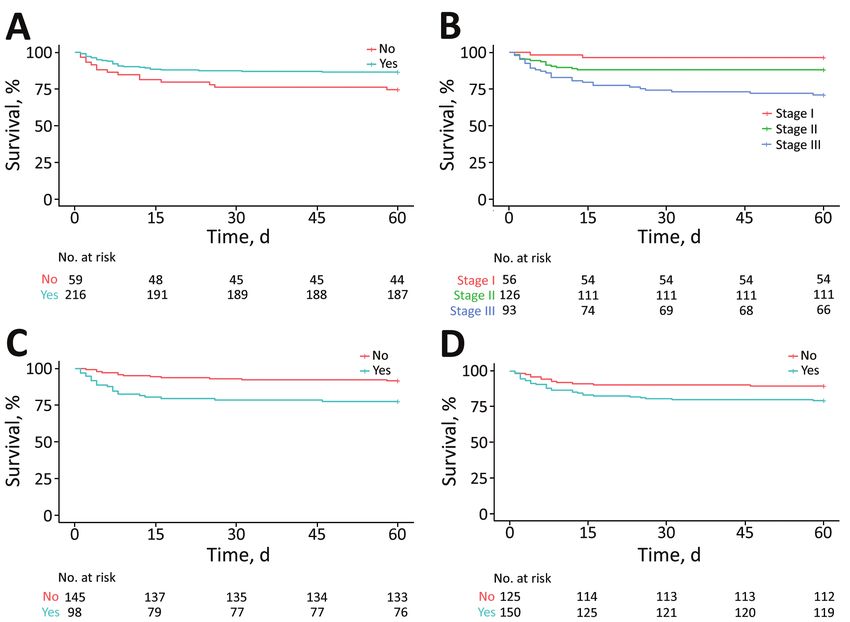
coronavirus 2 coinfection (Appendix).                                      hospital death. In multivariate analysis, factors
                                                                           associated with increased risk were stage III TBM
In-Hospital Death                                                          (aHR 5.96 [95% CI 1.39–25.58]), hydrocephalus
Upon discharge, 231 (81.6%) of 283 patients had re-                        (aHR 2.32 [95% CI 1.13–4.79]), male sex (aHR 2.10
covered (with or without disability), 3 (1.1%) had a                       [95% CI 1.09–4.05]), low-income parents (aHR 2.59

Table 1. Demographic and clinical characteristics at admission of children with TBM treated at Hasan Sadikin Hospital, Bandung,
Indonesia, 2011–2020*
                                                 Total patients
RESEARCH
Table 2. Laboratory and radiographic findings at admission of children with tuberculous meningitis treated at Hasan Sadikin Hospital,
Bandung, Indonesia, 2011–2020*
Total patients AgeChildhood TB Meningitis, Bandung, Indonesia
observed in 23% of patients diagnosed with TBM at outcomes after hospital discharge, the case-fatality
stage I, 31% at stage II, and 58% at stage III. rate recorded is probably an underestimate.
We performed univariate (Appendix Table 6) A diagnosis of TBM alone has been associated
and multivariate (Table 6) analyses of odds for neu- with an increased risk for childhood death compared
rologic sequelae. In multivariate analysis, factors as- with other types of TB (22), and this risk may be ex-
sociated with higher odds of severe neurologic se- acerbated by specific risk factors identified in this
quelae were baseline temperature >38°C (aOR 6.68 study. TBM diagnosis in stage II or III, hydrocepha-
[95% CI 1.55–28.85]), stage III TBM (aOR 5.65 [95% lus, and seizures are not surprising risk factors for
CI 1.21–26.43]), and motor deficits at baseline (aOR death because they reflect more advanced disease.
3.64 [95% CI 1.19–11.16]). Neurosurgical complications (e.g., shunt blockage or
infections) may have contributed to poor outcomes,
Discussion but we believe the effect was minimal because the
We present important information from Indone- postdischarge death rate was significantly reduced
sia about the high rates of neurologic sequelae and with neurosurgery. The association of tuberculoma
death in children with TBM, even when standard on baseline CT with postdischarge death might be
therapy has been provided. In TBM, treatment re- related to a paradoxical worsening of tuberculomas
sponse is often judged by early morbidity, mortal- during treatment (23). For male sex and low-income
ity, and relapse rates (21). Our overall case-fatality parents, their associations with in-hospital death are
rate for childhood TBM (22.8%) is within the global unclear but could be related to biologic factors (par-
estimates reported in a recent meta-analysis (19.3% ticularly for sex differences) or largely attributed to
[95% CI 14.0%–26.1%]) (2) but is lower than that re- socioeconomic and cultural determinants (24).
ported in the same setting during 2007–2010 (34.4%) This study confirms that TBM mainly affects
(14). The high proportion of unknown treatment young children (8), illustrated by 54% of our patients
outcomes in this study (43%) is unfortunate but com- beingRESEARCH
Table 4. Multivariate Cox proportional-hazards regression model for factors associated with in-hospital death in children treated for
TBM at Hasan Sadikin Hospital, Bandung, Indonesia, 2011–2020*
Variable Died†‡ Alive† Crude HR (95% CI) p value aHR (95% CI) p value
No. cases 44 231
Age, y
140 6 (13.6) 74 (32.0) Referent Referent
Unknown 5 (11.4) 21 (9.1) 2.73 (0.83–8.95) 0.097 2.04 (0.59–7.02) 0.261
Known BCG vaccination
No 15 (34.1) 44 (19.0) 2.01 (1.08–3.76) 0.028 1.97 (1.03–3.76) 0.040
Yes 29 (65.9) 187 (81.0) Referent Referent
Hydrocephalus on CT¶
No 12 (27.3) 133 (57.6) Referent Referent
Yes** 22 (50.0) 76 (32.9) 3.00 (1.48–6.05) 0.002 2.32 (1.13–4.79) 0.022
Unknown 10 (22.7) 22 (9.5) 4.38 (1.89–10.13) 0.001 4.21 (1.77–10.01) 0.001
Seizures on admission¶
No 13 (29.5) 112 (49.5) Referent Referent
Yes 31 (70.5) 119 (51.5) 2.09 (1.09–3.99) 0.026 1.96 (1.01–3.82) 0.048
*Values are no. (%) except as indicated. aHR, adjusted hazard ratio; BCG, bacillus Calmette-Guérin; CT, computed tomography; GCS, Glasgow Coma
Scale; IDR, Indonesian Rupiah; TBM, tuberculous meningitis.
†Including patients who died or had recovered (with or without disability) on hospital discharge, and excluding patients who had persistent vegetative
state or discharged against medical advice.
‡Signs of upper motor neuron lesion was associated with an increased risk of in-hospital death in univariate analysis, but did not remain significant in
multivariate analysis. Signs of raised intracranial pressure with hydrocephalus as well as GCS score with TBM stage had the likelihood of collinearity;
therefore, only hydrocephalus and TBM staging were included in the final multivariate model. For HIV coinfection, although it was significantly associated
with in-hospital death in univariate analysis, we did not include this variable in multivariate analysis due to the selective HIV testing and a very low number
of patients with HIV positive (n = 4).
§Stage I TBM was defined as GCS of 15 with no focal neurologic signs, stage II TBM as GCS of 11–14 or 15 with focal neurologic signs, and stage III
TBM as GCS ≤10 (20).
¶TBM staging might interact with hydrocephalus and seizures on admission; however, due to the low number of patients with stage I TBM who died
during hospitalization (n = 2), these potential interactions could not be assessed in the Cox regression model.
#Parents’ monthly income was estimated based on the current provincial minimum wage for West Java (IDR 1.810.350,00, rounded up to IDR
2.000.000,00, equal to approximately USD 140).
**In-hospital death among children with hydrocephalus was not significantly different between those who received neurosurgical intervention and who did
not receive neurosurgical intervention (p = 0.604).
providers to improve their ability to recognize and toms such as cough, weight loss, and night sweats
diagnose the disease (25). In addition, increasing may be suggestive of TB but are also nonspecific (18).
community awareness of the signs and symptoms of The high risk for death in patients with unknown
TBM by including enhanced messaging in existing BCG vaccination status highlights the importance of
TB advocacy materials has the potential to improve better TB prevention. In young children, BCG vac-
early recognition of childhood TBM (25). cination has consistently shown protection against
The difficulty of early diagnosis is confirmed miliary TB and TBM (29–31) for >10 years after vacci-
by the fact that nearly 80% of our patients had stage nation (29). The global shortage of BCG vaccine since
II or III TBM at admission. This high proportion of 2013, particularly in countries where it was procured
patients with advanced disease at admission is sup- through UNICEF (32), has led to an alarming increase
ported by various studies from high TB incidence in the number of hospital admissions for childhood
countries in Asia and Africa (11,14,26,27), and only TBM (33). In Indonesia, where BCG vaccine is rec-
slightly reduced in low TB incidence countries in Eu- ommended at birth for all infants and annual cover-
rope, where 66% of the patients have stage II or III age has been an estimated ≈90% since 2011 (34), this
TBM at admission (28). In many cases, nonspecific shortage has also been experienced, although the vac-
symptoms such as fever, headache, and vomiting are cine supply depends largely on domestic production
often wrongly interpreted, and other systemic symp- by Biofarma, a state-owned vaccine manufacturer
666 Emerging Infectious Diseases • www.cdc.gov/eid • Vol. 28, No. 3, March 2022Childhood TB Meningitis, Bandung, Indonesia
(32). In addition, among children with prolonged ex- children in South Africa with TBM, severe neurologic
posure to M. tuberculosis, protection with BCG vac- sequelae and death were significantly associated with
cination alone is unlikely to be sufficient. Without cerebral infarctions (11); we did not find this associa-
early initiation of preventive therapy, the risk for TB tion in our study. A high proportion of patients had
disease development among exposed young children hemiparesis or quadriparesis at admission in this
and infants is very high (35), but data on preventive study (55%), comparable to that reported in South
treatment in our patients with known TB contact his- Africa (62.1%) (11), but few patients had cerebral in-
tory were unavailable. Taken together, aside from farcts on brain CT (10%). This finding is difficult to
improving BCG vaccination coverage, it is important explain but is likely attributable to the low sensitivity
to reduce TB transmission in children through con- of early infarct detection with noncontrast CT as com-
tact investigation, coupled with preventive therapy monly used in the study.
among exposed children. Given the substantial levels of neurologic se-
Neurologic sequelae occurred mostly in our pa- quelae and death associated with childhood TBM, the
tients who had stage III TBM at admission (58%), a current standard care for childhood TBM clearly re-
higher rate than for those in stage I (23%) and II (31%). mains suboptimal. New diagnostic strategies should
A meta-analysis in children with TBM confirms this be tested in future clinical trials because of the poor
upward trend with pooled estimates of 27% in stage sensitivity, specificity, or both of available labora-
I, 41% in stage II, and 70% in stage III (2). Recent stud- tory and clinical diagnostic tools (38). For TBM treat-
ies also reported an increase in neurologic sequelae ment, future research should explore the use of inten-
among children with stage II or III TBM (36,37). In sified antimicrobial therapy that contains high-dose
Figure. Survival curves for in-hospital death in children treated for tuberculous meningitis at Hasan Sadikin Hospital, Bandung,
Indonesia, 2011–2020. A) Known bacillus Calmette-Guérin (BCG) vaccination status (yes/no); B) tuberculous meningitis stage (I–III); C)
radiographic evidence of hydrocephalus (yes/no); D) presence of seizures at hospital admission (yes/no).
Emerging Infectious Diseases • www.cdc.gov/eid • Vol. 28, No. 3, March 2022 667RESEARCH
rifampin and other anti-TB drugs with better CSF pen- (10,44–46), particularly for paradoxical TBM reac-
etration and bactericidal activity (39). On the basis of tions and potentially also for TBM in general. There
observational data among children in South Africa, a is no evidence that corticosteroids (the mainstay of
6-month intensified TBM treatment regimen with iso- host-directed therapy) reduce neurologic sequelae al-
niazid, rifampin, and ethionamide at 20 mg/kg/day though they do improve the TBM survival rate (47).
and pyrazinamide at 40 mg/kg/day was reported to be Therefore, optimization of anti-TB drug dosing and
safe and effective, with lower case-fatality rates ranging consideration of immunomodulatory therapy beyond
from 4%–14% (11,12,40). This short-course, high-dose corticosteroids are required to improve childhood
therapy has recently been added by WHO as an alterna- TBM treatment outcomes (9,46). Moreover, under-
tive treatment option for childhood TBM (41). Subopti- standing the disease pathogenesis pathways of child-
mal plasma and CSF concentrations with standard dos- hood TBM, particularly in the cerebral inflammatory
es of oral rifampin at 10–20 mg/kg/day in children with response, is likely to offer valuable insights into po-
TBM have also been reported in recent pharmacokinetic tential targets for new treatment interventions (48,49).
studies (42,43), advocating the use of higher rifampin The main limitation of our study is that, although
doses with further efficacy and safety evaluations. most of the essential information recommended for
Minimizing damaging immunologic responses TBM research was available (50), the retrospective na-
leading to neurologic complications by using anti- ture of the study did not provide us with complete re-
inflammatory drugs such as aspirin, thalidomide, cords on all key variables, especially longer-term out-
and specific tumor necrosis factor α antibodies (e.g., come. Our dataset did not contain information on the
infliximab) also warrants further investigations drug-susceptibility pattern of the source case and was
Table 5. Multivariate logistic regression model for predictors of postdischarge death, tracked until the end of treatment in children
treated for TBM at Hasan Sadikin Hospital, Bandung, Indonesia, 2011–2020*†
Variable Died‡§ Alive‡ Crude OR (95% CI) p value aOR (95% CI) p value
No. cases 18 91
Age group, yChildhood TB Meningitis, Bandung, Indonesia
Table 6. Multivariate logistic regression model for predictors of severe neurologic sequelae at treatment completion in children treated
for TBM at Hasan Sadikin Hospital, Bandung, Indonesia, 2011–2020*†
Neurologic sequelae
Variable Yes‡§ No‡ Crude OR (95% CI) p value aOR (95% CI) p value
Cases, no. 33 58
Age group, y
38°C
No 23 (69.7) 53 (91.4) Referent Referent
Yes 10 (30.3) 5 (8.6) 4.61 (1.42–14.99) 0.011 6.68 (1.55–28.85) 0.011
Motor deficit at baseline
No 8 (24.2) 27 (46.6) Referent Referent
Yes 24 (72.7) 23 (39.7) 3.52 (1.33–9.33) 0.011 3.64 (1.19–11.16) 0.024
Unknown 1 (3.0) 8 (13.8) 0.42 (0.05–3.90) 0.447 0.39 (0.03–4.58) 0.452
*Values are no. (%) except as indicated. aOR, adjusted odds ratio; TB, tuberculosis; TBM, tuberculous meningitis.
†The goodness-of-fit of the model using Hosmer-Lemeshow test was p = 0.473. The performance of the model using the area under the receiver
operating characteristic curve was 0.80 (95% CI 0.70–0.90).
‡Including patients who were tracked until treatment completion, and excluding those who died, who were lost to follow-up and with unknown treatment
outcomes (which represents a large percentage of the cohort (n = 118, 43.3%). Neurologic sequelae were defined as any motor, hearing, visual or
neurodevelopmental impairment that appeared during the illness and persisted through treatment completion.
§Suggestive TB through chest radiography was associated with an increased odd of neurologic sequelae in univariate analysis but did not remain
significant in multivariate analysis. In our subgroup analysis among children agedRESEARCH
About the Author 14. Nataprawira HM, Ruslianti V, Solek P, Hawani D,
Milanti M, Anggraeni R, et al. Outcome of tuberculous
Dr. Nataprawira is a professor of pediatrics at the meningitis in children: the first comprehensive
Universitas Padjadjaran and Hasan Sadikin Hospital. Her retrospective cohort study in Indonesia. Int J Tuberc Lung
primary research interests include pediatric respirology, Dis. 2016;20:909–14. https://doi.org/10.5588/ijtld.15.0555
15. Faried A, Ramdan A, Arifin MZ, Nataprawira HM.
particularly tuberculosis. Mr. Gafar is a PhD student at
Characteristics and surgical outcomes of tuberculous
the University of Groningen. His primary research meningitis and of tuberculous spondylitis in pediatric
interests include the epidemiology and pharmacotherapy patients at Dr. Hasan Sadikin Hospital, Bandung: a single
of pediatric tuberculosis. center experience. Interdiscip Neurosurg Adv
Tech Case Manag. 2018;11:37–40. https://doi.org/10.1016/
j.inat.2017.09.008
References 16. Faried A, Putra SPS, Suradji EW, Trianto, Akbar RR,
1. World Health Organization. Global tuberculosis report Nugraheni NK, et al. Characteristics and outcomes of
2020. 2020 [cited 2021 Dec 28]. https://www.who.int/ pediatric tuberculous meningitis patients with complicated
publications/i/item/9789240013131 by hydrocephalus with or without tuberculoma at Regional
2. Chiang SS, Khan FA, Milstein MB, Tolman AW, Benedetti A, Public Hospital Teluk Bintuni, West Papua, Indonesia.
Starke JR, et al. Treatment outcomes of childhood Interdiscip Neurosurg. 2020;19:100609. https://doi.org/
tuberculous meningitis: a systematic review and 10.1016/j.inat.2019.100609
meta-analysis. Lancet Infect Dis. 2014;14:947–57. 17. Rahajoe NN, Nawas A, Setyanto DB, Kaswandani N,
https://doi.org/10.1016/S1473-3099(14)70852-7 Triasih R, Indawati W, et al. Buku petunjuk teknis
3. Marais BJ, Gie RP, Schaaf HS, Hesseling AC, Obihara CC, manajemen dan tatalaksana TB anak [National guideline
Starke JJ, et al. The natural history of childhood intrathoracic on the management of tuberculosis in children]. Ministry
tuberculosis—a critical review of the pre-chemotherapy of Health of the Republic of Indonesia. Jakarta (Indonesia):
literature. Int J Tuberc Lung Dis. 2004;8:392–402. Ministry of Health of the Republic of Indonesia; 2016.
4. García-Basteiro AL, Schaaf HS, Diel R, Migliori GB. 18. Marais S, Thwaites G, Schoeman JF, Török ME, Misra UK,
Adolescents and young adults: a neglected population group Prasad K, et al. Tuberculous meningitis: a uniform case defi-
for tuberculosis surveillance. Eur Respir J. 2018;51:1800176. nition for use in clinical research. Lancet Infect
https://doi.org/10.1183/13993003.00176-2018 Dis. 2010;10:803–12. https://doi.org/10.1016/
5. Marais BJ, Amanullah F, Gupta A, Becerra MC, Snow K, S1473-3099(10)70138-9
Ngadaya E, et al. Tuberculosis in children, adolescents, 19. World Health Organization. Guidance for national
and women. Lancet Respir Med. 2020;8:335–7. tuberculosis programmes on the management of tuberculosis
https://doi.org/10.1016/S2213-2600(20)30077-1 in children (2nd edition). World Health Organization; 2014
6. World Health Organization. Roadmap towards ending [cited 2022 Feb 5]. https://www.who.int/publications/i/
TB in children and adolescents, second edition [cited 2021 item/9789241548748
Dec 28]. https://apps.who.int/iris/bitstream/ 20. Thwaites GE, Nguyen DB, Nguyen HD, Hoang TQ,
handle/10665/274374/9789241514668-eng.pdf Do TTO, Nguyen TCT, et al. Dexamethasone for the
7. Wilkinson RJ, Rohlwink U, Misra UK, van Crevel R, Mai treatment of tuberculous meningitis in adolescents and
NTH, Dooley KE, et al.; Tuberculous Meningitis International adults. N Engl J Med. 2004;351:1741–51. https://doi.org/
Research Consortium. Tuberculous meningitis. Nat Rev Neurol. 10.1056/NEJMoa040573
2017;13:581–98. https://doi.org/10.1038/nrneurol.2017.120 21. Donald PR. The chemotherapy of tuberculous meningitis in
8. van Toorn R, Solomons R. Update on the diagnosis and children and adults. Tuberculosis (Edinb). 2010;90:375–92.
management of tuberculous meningitis in children. Semin https://doi.org/10.1016/j.tube.2010.07.003
Pediatr Neurol. 2014;21:12–8. https://doi.org/10.1016/ 22. Gafar F, Van’t Boveneind-Vrubleuskaya N, Akkerman OW,
j.spen.2014.01.006 Wilffert B, Alffenaar JC. Nationwide analysis of
9. Hill J, Marais B. Improved treatment for children with treatment outcomes in children and adolescents routinely
tuberculous meningitis: acting on what we know. Arch treated for tuberculosis in the Netherlands. Eur
Dis Child. 2022;107:68–9. https://doi.org/10.1136/ Respir J. 2019;54:1901402. https://doi.org/10.1183/
archdischild-2021-322660 13993003.01402-2019
10. Huynh J, Thwaites G, Marais BJ, Schaaf HS. Tuberculosis 23. Kalita J, Prasad S, Misra UK. Predictors of paradoxical
treatment in children: the changing landscape. Paediatr tuberculoma in tuberculous meningitis. Int J Tuberc Lung
Respir Rev. 2020;36:33–43. Dis. 2014;18:486–91. https://doi.org/10.5588/ijtld.13.0556
11. van Well GTJ, Paes BF, Terwee CB, Springer P, Roord JJ, 24. Chidambaram V, Tun NL, Majella MG, Ruelas Castillo J,
Donald PR, et al. Twenty years of pediatric tuberculous Ayeh SK, Kumar A, et al. Male sex is associated with worse
meningitis: a retrospective cohort study in the western microbiological and clinical outcomes following tuberculosis
cape of South Africa. Pediatrics. 2009;123:e1–8. treatment: a retrospective cohort study, a systematic review of
https://doi.org/10.1542/peds.2008-1353 the literature, and meta-analysis. Clin Infect Dis. 2021;73:
12. van Toorn R, Schaaf HS, Laubscher JA, van Elsland SL, 1580–8. https://doi.org/10.1093/cid/ciab527
Donald PR, Schoeman JF. Short intensified treatment in 25. Basu Roy R, Bakeera-Kitaka S, Chabala C, Gibb DM,
children with drug-susceptible tuberculous meningitis. Huynh J, Mujuru H, et al. Defeating paediatric tuberculous
Pediatr Infect Dis J. 2014;33:248–52. https://doi.org/10.1097/ meningitis: applying the WHO “defeating meningitis by
INF.0000000000000065 2030: global roadmap.” Microorganisms. 2021;9:857.
13. Yaramiş A, Gurkan F, Elevli M, Söker M, Haspolat K, https://doi.org/10.3390/microorganisms9040857
Kirbaş G, et al. Central nervous system tuberculosis in 26. Maree F, Hesseling AC, Schaaf HS, Marais BJ, Beyers N,
children: a review of 214 cases. Pediatrics. 1998;102:E49. van Helden P, et al. Absence of an association between
https://doi.org/10.1542/peds.102.5.e49 Mycobacterium tuberculosis genotype and clinical
670 Emerging Infectious Diseases • www.cdc.gov/eid • Vol. 28, No. 3, March 2022Childhood TB Meningitis, Bandung, Indonesia
features in children with tuberculous meningitis. Pediatr 39. Cresswell FV, Te Brake L, Atherton R, Ruslami R, Dooley KE,
Infect Dis J. 2007;26:13–8. https://doi.org/10.1097/ Aarnoutse R, et al. Intensified antibiotic treatment of
01.inf.0000247044.05140.c7 tuberculosis meningitis. Expert Rev Clin Pharmacol. 2019;
27. Rohlwink UK, Donald K, Gavine B, Padayachy L, 12:267–88. https://doi.org/10.1080/17512433.2019.1552831
Wilmshurst JM, Fieggen GA, et al. Clinical characteristics 40. Donald PR, Schoeman JF, Van Zyl LE, De Villiers JN,
and neurodevelopmental outcomes of children with Pretorius M, Springer P. Intensive short course chemo-
tuberculous meningitis and hydrocephalus. Dev Med Child therapy in the management of tuberculous meningitis. Int J
Neurol. 2016;58:461–8. https://doi.org/10.1111/dmcn.13054 Tuberc Lung Dis. 1998;2:704–11.
28. Basu Roy R, Thee S, Blázquez-Gamero D, Falcón-Neyra L, 41. World Health Organization. Rapid communication on
Neth O, Noguera-Julian A, et al.; ptbnet TB Meningitis Study updated guidance on the management of tuberculosis in
Group. Performance of immune-based and microbiological children and adolescents [cited 2021 Dec 28]. https://www.
tests in children with tuberculosis meningitis in Europe: who.int/publications/i/item/9789240033450
a multicentre Paediatric Tuberculosis Network European 42. Ruslami R, Gafar F, Yunivita V, Parwati I, Ganiem AR,
Trials Group (ptbnet) study. Eur Respir J. 2020;56:1902004. Aarnoutse RE, et al. Pharmacokinetics and safety/
https://doi.org/10.1183/13993003.02004-2019 tolerability of isoniazid, rifampicin and pyrazinamide in
29. Abubakar I, Pimpin L, Ariti C, Beynon R, Mangtani P, children and adolescents treated for tuberculous meningitis.
Sterne JA, et al. Systematic review and meta-analysis of the Arch Dis Child. 2022;107:70–7. https://doi.org/10.1136/
current evidence on the duration of protection by bacillus archdischild-2020-321426
Calmette-Guérin vaccination against tuberculosis. [v–vi.]. 43. Panjasawatwong N, Wattanakul T, Hoglund RM, Bang ND,
Health Technol Assess. 2013;17:1–372, v–vi. https://doi.org/ Pouplin T, Nosoongnoen W, et al. Population
10.3310/hta17370 pharmacokinetic properties of antituberculosis drugs in
30. Gafar F, Ochi T, Van’t Boveneind-Vrubleuskaya N, Vietnamese children with tuberculous meningitis.
Akkerman OW, Erkens C, van den Hof S, et al. Towards Antimicrob Agents Chemother. 2020;65:e00487–20.
elimination of childhood and adolescent tuberculosis in https://doi.org/10.1128/AAC.00487-20
the Netherlands: an epidemiological time-series analysis of 44. van Toorn R, Zaharie S-D, Seddon JA, van der Kuip M,
national surveillance data. Eur Respir J. 2020;56:2001086. Marceline van Furth A, Schoeman JF, et al. The use of
https://doi.org/10.1183/13993003.01086-2020 thalidomide to treat children with tuberculosis meningitis:
31. Trunz BB, Fine P, Dye C. Effect of BCG vaccination on a review. Tuberculosis (Edinb). 2021;130:102125.
childhood tuberculous meningitis and miliary tuberculosis https://doi.org/10.1016/j.tube.2021.102125
worldwide: a meta-analysis and assessment of cost-effective- 45. Abo YN, Curtis N, Osowicki J, Haeusler G, Purcell R,
ness. Lancet. 2006;367:1173–80. https://doi.org/10.1016/ Kadambari S, et al. Infliximab for paradoxical reactions in
S0140-6736(06)68507-3 pediatric central nervous system tuberculosis. J Pediatric
32. Cernuschi T, Malvolti S, Nickels E, Friede M. Bacillus Infect Dis Soc. 2021 Oct 5;piab094. https://doi.org/10.1093/
Calmette-Guérin (BCG) vaccine: a global assessment of jpids/piab094
demand and supply balance. Vaccine. 2018;36:498–506. 46. Gafar F, Marais BJ, Nataprawira HM, Alffenaar JC.
https://doi.org/10.1016/j.vaccine.2017.12.010 Optimizing antimicrobial and host-directed therapies to
33. du Preez K, Seddon JA, Schaaf HS, Hesseling AC, Starke JR, improve clinical outcomes of childhood tuberculous
Osman M, et al. Global shortages of BCG vaccine and meningitis. Clin Infect Dis. 2021 Dec 15 [Epub ahead of
tuberculous meningitis in children. Lancet Glob Health. 2019; print]. https://doi.org/10.1093/cid/ciab1036
7:e28–9. https://doi.org/10.1016/S2214-109X(18)30474-1 47. Schoeman JF, Van Zyl LE, Laubscher JA, Donald PR. Effect
34. World Health Organization. Immunization Indonesia 2021 of corticosteroids on intracranial pressure, computed
country profile. 2021 [cited 2021 Dec 28]. https://www.who. tomographic findings, and clinical outcome in young
int/immunization/monitoring_surveillance/data/idn.pdf children with tuberculous meningitis. Pediatrics.
35. Martinez L, Cords O, Horsburgh CR, Andrews JR, 1997;99:226–31. https://doi.org/10.1542/peds.99.2.226
Acuna-Villaorduna C, Ahuja SD, et al.; Pediatric TB Contact 48. Rohlwink UK, Figaji A, Wilkinson KA, Horswell S,
Studies Consortium. The risk of tuberculosis in children Sesay AK, Deffur A, et al. Tuberculous meningitis in children
after close exposure: a systematic review and individual- is characterized by compartmentalized immune responses
participant meta-analysis. Lancet. 2020;395:973–84. and neural excitotoxicity. Nat Commun. 2019;10:3767.
https://doi.org/10.1016/S0140-6736(20)30166-5 https://doi.org/10.1038/s41467-019-11783-9
36. Bang ND, Caws M, Truc TT, Duong TN, Dung NH, 49. Rohlwink UK, Mauff K, Wilkinson KA, Enslin N, Wegoye E,
Ha DTM, et al. Clinical presentations, diagnosis, mortality Wilkinson RJ, et al. Biomarkers of cerebral injury and
and prognostic markers of tuberculous meningitis in inflammation in pediatric tuberculous meningitis.
Vietnamese children: a prospective descriptive study. Clin Infect Dis. 2017;65:1298–307. https://doi.org/10.1093/
BMC Infect Dis. 2016;16:573. https://doi.org/10.1186/ cid/cix540
s12879-016-1923-2 50. Marais BJ, Heemskerk AD, Marais SS, van Crevel R,
37. Thee S, Roy RB, Blázquez-Gamero D, Falcón-Neyra L, Rohlwink U, Caws M, et al.; Tuberculous Meningitis
Neth O, Noguera-Julian A, et al. Treatment and outcome in International Research Consortium. Standardized methods
children with tuberculous meningitis—a multi-centre for enhanced quality and comparability of tuberculous
Paediatric Tuberculosis Network European Trials Group meningitis studies. Clin Infect Dis. 2017;64:501–9.
study. Clin Infect Dis. 2021 Nov 21 [Epub ahead of print].
https://doi.org/10.1093/cid/ciab982 Address for correspondence: Fajri Gafar, University of
38. Boyles TH, Lynen L, Seddon JA; Tuberculous Meningitis
Groningen, Groningen Research Institute of Pharmacy, Unit
International Research Consortium. Decision-making in
the diagnosis of tuberculous meningitis. Wellcome of PharmacoTherapy, Epidemiology and Economics, Antonius
Open Res. 2020;5:11. https://doi.org/10.12688/ Deusinglaan 1 (Rm: 3214.0450), 9713 AV Groningen, The
wellcomeopenres.15611.1 Netherlands; email: f.gafar@rug.nl, fajri.gafar@gmail.com
Emerging Infectious Diseases • www.cdc.gov/eid • Vol. 28, No. 3, March 2022 671You can also read


