Turkey, Europe, and the Eastern Mediterranean: Charting a Way Out of the Current Deadlock - Brookings ...
←
→
Page content transcription
If your browser does not render page correctly, please read the page content below
POLICY BRIEFING / JANUARY 2021

Turkey, Europe, and the Eastern
Mediterranean: Charting a Way
Out of the Current Deadlock
Galip Dalay1

                                               G
                                                          reco-Turkish maritime disputes,
                                                          couched in competing narra-
                                                          tives of national sovereignty, date
                                               back as far as the founding periods of the
                                               two states. These disputes have tradition-
                                               ally taken the form of a frozen conflict,
                                               with occasional flare-ups. Given this back-
                                               drop, what factors are driving the current
                                               dispute, which is the longest-lasting crisis
                                               between the two countries since Turkey’s
                                               military intervention in Cyprus in 1974?

                                             This policy briefing argues that the cri-
                                             sis has been aggravated and complicated
by energy exploration and the Libyan conflict. It also underscores that this crisis is
more perilous than previous disputes in part due to: 1) the power vacuum created by
the United States downsizing its regional role in the eastern Mediterranean and the
Middle East; and 2) the loss of the European Union (EU) accession framework. The
void left by the United States has set off a scramble for power and influence in the
Mediterranean and Middle East that should serve as a wakeup call for the EU to play
a larger role in de-escalating the crisis.

 Key Recommendations
 • Declare a moratorium on energy                 national level, rather than transferring this
   exploration: The EU should focus its           power to military personnel on the ground.
   diplomacy and mediation on facilitating
   negotiations between Ankara and             • Bring Turkey into the Eastern Mediter-
   Athens. It is therefore crucial that          ranean Gas Forum: While the immedi-
   both sides temporarily stop all drilling      ate goal of the EU should be to freeze the
   and exploration.                              conflict, a frozen conflict always runs the
                                                 risk of thawing and providing opportuni-
 • Avoid transferring decisionmaking pow-        ties for other actors to gain influence in the
   er to military personnel on the ground:       European neighborhood. As such, the EU
   In order to prevent accidents, the quarrel-   should facilitate Turkey’s accession into
   ling parties should make decisions at the     the Eastern Mediterranean Gas Forum.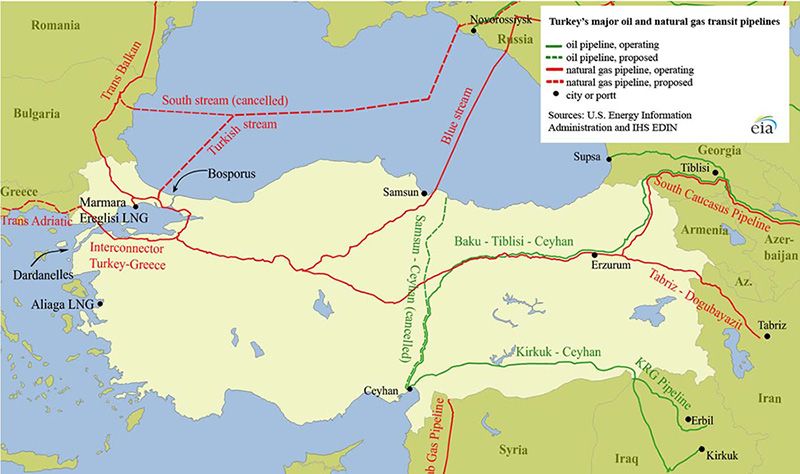
Copyright © 2021 Brookings Institution

The Brookings Institution is a private nonprofit organization. Its
mission is to conduct high-quality, independent research and, based
on that research, to provide innovative, practical recommendations
for policymakers and the public. The conclusions and recommenda-
tions of any Brookings publication are solely those of its author(s),
and do not necessarily reflect the views of the Institution, its man-
agement, or its other scholars.

Brookings recognizes that the value it provides to any supporter is
in its absolute commitment to quality, independence and impact.
Activities supported by its donors reflect this commitment and the
analysis and recommendations are not determined by any donation.
Introduction
    Greco-Turkish maritime disputes, couched in          now dovetail with another set of interlocking
    competing narratives of national sovereignty, are    geopolitical tensions and energy disputes in the
    nothing new. Their genesis dates as far back as      eastern Mediterranean between Turkey and a
    the founding periods of the two states. These dis-   group of countries including France, Egypt, and
    putes have traditionally taken the form of a fro-    the United Arab Emirates (UAE). As such, not
    zen conflict, with occasional flare-ups. Given this  only has the number of countries involved in the
    backdrop, what are the driving factors behind the    crisis grown, but also its scope has broadened
    current dispute, which is the longest-lasting crisis to include new issues, including recent energy
    between the two countries since Turkey’s military    discoveries in the eastern Mediterranean and the
    intervention in Cyprus in 1974?                      ever-sprawling Libyan imbroglio. These issues,
                                                         in turn, have qualitatively changed the nature
    The maritime dispute between the two countries of the crisis.
    centers on three issues: 1) disagreement over the
    boundaries of Greek territorial waters and the Such a turn of events in the eastern Mediter-
    ownership of certain islands or isles in the Aegean ranean raises three interlinked questions: First,
    Sea; 2) the question of the two countries’ exclusive given the long genesis of the Turkish-Greek
    economic zones (EEZs) in the eastern Mediterra- maritime disputes, why has the crisis heated up
    nean; and 3) the unresolved nature of the Cyprus recently? Second, how has the crisis evolved,
    crisis. In addition to these matters, Turkey also with the bilateral Greek-Turkish disputes mor-
    contends that a number of other issues, such as phing into an eastern Mediterranean crisis with
    the sovereignty or demilitarized status of certain multiple actors? And third, why is the crisis
    Greek islands, remain unresolved and hence need more perilous this time?
    to be addressed.2 For its part, Greece rejects these
    demands outright as a violation of its sovereignty. This policy briefing argues that the crisis has been
                                                         aggravated and complicated by two distinct geo-
    Because these disputes are tied to both countries’ political developments, namely energy explora-
    conflicting projections of national sovereignty, tion and the Libyan conflict. It also underscores
    the concessions and compromises that would that this crisis is more perilous than previous
    be necessary for their resolution are inherently disputes in part due to two systemic changes: 1)
    difficult and politically costly. Additionally, the the power vacuum created by the United States
    two sides cannot seem to agree on a framework downsizing its regional role in the eastern Medi-
    within which to address the disputes: Greece terranean and the Middle East; and 2) the loss of
    favors the option of international arbitration, the European Union (EU) accession framework.
    while Turkey prefers bilateral negotiations. But The void left by the United States has set off a
    even if Ankara were to agree to international ad- scramble for power and influence in the Medi-
    judication, only the next dispute to arise would terranean and Middle East that should serve as
    be taken to international court. Furthermore, as a wakeup call for the EU to play a larger role in
    indicated above, Athens wants international ad- de-escalating the crisis.
    judication on a more specific and limited set of
    topics, whereas Ankara wants to put a broader Background
    range of topics on the table.
                                                         The United States no longer views the Euro-
    To make matters worse, the traditional sources pean neighborhood, be it in the South or East,
    of friction between Turkey, Greece, and Cyprus as holding high strategic value. Although Presi-

1   PThflfiff, B1fi12 Jffi24ffi1, 5353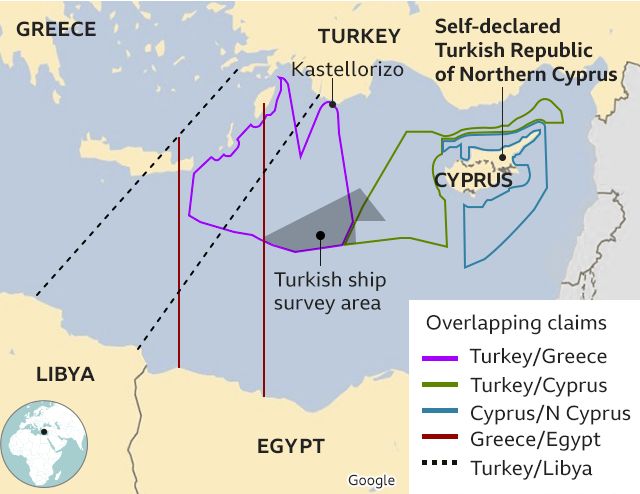
dent Donald Trump was responsible for many                            However, a frozen conflict always runs the
    ill-conceived policy decisions, the partial U.S.                      risk of thawing and providing opportunities
    withdrawal from the region actually started un-                       for other actors such as Russia to step in and
    der President Barack Obama.3 Joseph Biden’s                           gain further influence in the European neigh-
    administration is unlikely to reverse this trend                      borhood. As such, this briefing urges the EU
    in any significant way. At a time of U.S. ab-                         to try to facilitate Turkey’s accession into the
    sence, it falls squarely upon the Europeans to                        Eastern Mediterranean Gas Forum. If this is
    prevent the eastern Mediterranean crisis from                         not possible, efforts should be made to devise
    getting out of hand—as of now, a conflict is                          a trilateral framework involving the Eastern
    unlikely, but not unthinkable. In the end, this                       Mediterranean Gas Forum countries, the EU,
    is not only a crisis in Europe’s neighborhood,                        and Turkey to deal with the crisis and explore
    but also a crisis within Europe, given the deep                       the ways in which eastern Mediterranean gas
    involvement of three EU member states, name-                          reserves can be the source of cooperation, rath-
    ly Greece, Cyprus, and France.                                        er than conflict.

    In this respect, German and European media-                           The eastern Mediterranean crisis, at its core,
    tion efforts to de-escalate the crisis are steps in                   is not about energy. Thus far, no gas has been
    the right direction. However, the future prospects                    found in the disputed territories. Certain-
    of these efforts will be contingent upon sharp di-                    ly, the eastern Mediterranean gas discover-
    agnosis of the crisis, patience, commitment, and                      ies made by Israel in 2009 and 2010 (Tamar
    imaginative policy responses. The core of the cri-                    and Leviathan, respectively), Cyprus in 2011,
    sis is the multi-layered maritime disputes between                    and Egypt in 2015 (Zohr) have precipitated
    Turkey, Greece, and Cyprus. But Turkey-Greece                         and aggravated the crisis.4 Yet, the roots of the
    relations are unfolding against the larger back-                      crisis lie elsewhere, in conflicting claims by
    drop of the European framework. The honey-                            Turkey and Greece regarding maritime bound-
    moon period between Ankara and Athens during                          aries and EEZs on the one hand, and Cyprus
    the late 1990s and 2000s was a natural outcome                        on the other.
    and requirement of Turkey’s EU accession vision
    and process at the time. This was the primary                         With respect to the first issue, Ankara and Ath-
    reason for the Turkish government’s strong sup-                       ens disagree on the roles and extents of the is-
    port for the United Nations (U.N.) plan that was                      lands in generating the EEZs, with the former
    put to a referendum in Cyprus in 2004 on the                          taking a more restrictive view and the latter a
    unification of the island. However, Turkey’s EU                       more expansive one. With respect to the latter,
    accession process and aspirations have long since                     Turkey objects to the Republic of Cyprus (or,
    come to a standstill, which has in turn hurt Turk-                    more specifically, the Greek Cypriots) being
    ish relations with Greece and Cyprus.                                 the sole conductor of energy exploration activi-
                                                                          ties in the eastern Mediterranean. By insisting
    This briefing, therefore, argues that German-Eu-                      on political equality between Greek and Turk-
    ropean mediation should first aim to de-escalate                      ish Cypriots, Ankara contends that the Turk-
    the conflict between Athens and Ankara by ton-                        ish administration in northern Cyprus (which
    ing down the high-pitched rhetoric on both sides                      is only recognized by Turkey) also has rights
    and advocating for a temporary moratorium on                          to undertake energy exploration activities and
    energy exploration in the disputed waters. Fur-                       issue licenses.5
    thermore, there is a need for Germany and France
    to find common ground in their policy approach- In this way, the interlocking set of maritime dis-
    es to the subject.                               putes between Turkey and Greece is strongly tied

2   TThflfiff,, EThfl11ff, 2ffi2 45ff E234ffflffi Mff234ffflfl2ffiff2ffi: C52fl43ffi7 2 W2, OTh4 18 45ff CThflflffffi4 Dff22910fi
to their conflicting projections of national sover- to $220 billion, according to data from the Turk-
eignty. As the following sections will demonstrate, ish Statistical Institute and the Central Bank.7
these maritime disputes have since morphed into In the same period, Turkey’s overall energy bill
geopolitical confrontations and power struggles stood at $213 billion.8 Through hydrocarbon
between Turkey and a set of countries including exploration, Turkey hopes to address its chronic
Greece, Cyprus, Egypt, France, and the UAE as a economic problems; to this end, the country has
result of tensions over energy exploration and the doubled down on its energy exploration activi-
Libyan conflict. ties both in the eastern Mediterranean and the
Black Sea, which recently culminated in a major
Gas Discoveries: Not the gas discovery.9
Cause, but the Trigger
of the Crisis Likewise, Turkey has long aspired to situate it-
self as an energy hub for, and corridor to, Eu-
The recent gas discoveries in the eastern Medi- rope and has signed several oil and gas pipeline
terranean, combined with several other factors, deals with Azerbaijan, Iraq, Iran, and Russia (see
have increased Turkey’s appetite for hydrocar- Figure 2).10 However, its aspirations have largely
bon exploration. Energy trade is the main source remained unfulfilled. Along the same lines, Tur-
of the country’s budget deficit. Turkey imported key wanted any eastern Mediterranean pipeline
72.4 percent of its energy needs as of 2018 (see project to Europe to go through it. Yet, Ankara’s
Figure 1), while energy constituted 16.8 percent difficult relations with almost all other countries
of its overall imports as of June 2020.6 In the last bordering the eastern Mediterranean have made
five years, Turkey’s total budget deficit amounted this option highly unrealistic.
Figure 1: Turkey’s Reliance on Energy Imports (%)
80%
70%
60%
50%
Percentage
40%
30%
20%
10%
0%
1990 1995 2000 2005 2010 2015 2016 2017 2018
Source: Muhammet Mercan, “Turkey’s gas discovery could reduce energy dependency,” ING Think, August 24, 2020,
https://think.ing.com/articles/black-sea-energy-more-to-prove.
3 PThflfiff, B1fi12 Jffi24ffi1, 5353Figure 2: Turkey’s Major Oil and Natural Gas Transit Pipelines
Source: U.S. Energy
Information Administration,
“Turkey: Overview,” accessed
October 2020, https://www.
eia.gov/international/analy-
sis/country/TUR.
Through energy exploration in the eastern ergy independence from these countries: dur-
Mediterranean and Black Sea, Turkey also aims ing the first half of 2020, natural gas imports
to reduce its strategic vulnerability and energy from Iran and Russia declined by 44.8 percent
dependency (see Figure 3). For a long time, and 41.5 percent, respectively, compared to the
the top two exporters of natural gas to Turkey same period of 2019 (though, in Iran’s case,
were Russia and Iran, two countries with which this decline was partially caused by a damaged
Turkey has competitive regional aspirations. In pipeline).11 In contrast, Turkey’s imports from
recent years, Turkey has pursued a policy of en- Azerbaijan increased by 23.4 percent during
Figure 3: Country Breakdown of Turkish Natural Gas Imports
Russia Iran Azerbaijan Algeria Nigeria Other*
100%
90%
80%
70%
60%
Percentage
50%
40%
30%
20%
10%
0%
Kuwait Kuwait Qatar KSA UAE Bahrain
Source: Mercan, “Turkey’s gas discovery could reduce energy dependency.”
4 TThflfiff,, EThfl11ff, 2ffi2 45ff E234ffflffi Mff234ffflfl2ffiff2ffi: C52fl43ffi7 2 W2, OTh4 18 45ff CThflflffffi4 Dff22910fithe same period, giving Azerbaijan the largest recognized Government of National Accord
share in Turkey’s natural gas market.12 (GNA) in November 2019: the Delimitation
of Maritime Jurisdiction Areas in the Mediter-
Despite Turkey’s energy ambitions, the recent ranean Sea and the Security and Military Co-
eastern Mediterranean gas discoveries have operation Agreement.19 The first agreement
deepened its concerns of being sidelined from demarcated Turkey’s maritime boundaries with
the region’s emerging energy and security or- Libya, with the bilateral creation of an EEZ ex-
der.13 This is primarily due to two interlinked tending from Turkey’s southern Mediterranean
reasons: 1) the projected route for the eastern shore to Libya’s northeast coast by disregarding
Mediterranean gas pipeline project and 2) the major Greek islands such as Crete.20 The sec-
creation of the Eastern Mediterranean Gas Fo- ond agreement enabled the GNA to withstand
rum. The envisioned €6.2 billion pipeline to the self-styled Libyan National Army (LNA)
Europe is premised on closer cooperation be- leader Khalifa Hifter’s offensive to take over
tween Greece, Cyprus, and Israel, and excludes Tripoli, as Turkey provided direct military sup-
Turkey.14 This tripartite cooperation gained port to the GNA. At a time when the GNA’s
an institutional form in January 2020 with desperate pleas for military support from Eu-
the creation of the Eastern Mediterranean Gas ropean actors fell on deaf ears, the maritime
Forum, which also includes Egypt, Jordan, the boundaries deal was essentially the price to be
Palestinian Authority, and Italy.15 paid to Turkey in exchange for the military co-
operation deal.
Various geopolitical struggles, uncertainty
over the amount of gas in the eastern Mediter- In this way, the maritime boundaries deal had
ranean, and the EU’s green energy goals have more to do with the eastern Mediterranean
made financing the project less attractive, and than it did with Libya. Because according to
Italy has since withdrawn.16 The pipeline proj- this deal, the proposed Israel-Greece-Cyprus
ect is not economically feasible at this point, gas pipeline would have to partially go through
and is therefore unlikely to be implemented.17 maritime areas claimed by Turkey (according
However, the proposed pipeline and forum, to the Turkish-GNA maritime deal), thereby
as well as the regional realignment that un- conveying Turkey’s intention to disrupt any
derpinned them, have contributed to Turk- projects that aimed to circumvent it. Greece
ish fears of being sidelined from the emerging reacted strongly to the deal by expelling the
energy and security framework in the eastern GNA ambassador from Athens and cultivating
Mediterranean. In response, Turkey has de- closer ties with the LNA.21 However, because
ployed a hard power-driven approach and co- the deal disregards the big Greek islands, such
ercive diplomacy to prevent the emergence of as Crete and Rhodes, it is highly contested
such a framework.18 and on shaky ground from an international
law perspective.
The Libyan Imbroglio:
Linking Maritime Not only has this step further increased tension
Disputes to Geopolitical between Turkey and Greece, but it also paved
Confrontation the way for Greece to sign a similar deal with
Egypt in August 2020 to delimitate their respec-
Turkey’s Libya policy has served its strategy tive maritime jurisdictions.22 The Turkish-Libyan
of disruption in the eastern Mediterranean, deal conflicts with Greece’s view of its own mari-
among other goals. Turkey signed two mem- time boundaries, while the Greek-Egyptian deal
oranda of understanding with Libya’s U.N.- does the same to Turkey (see Figure 4).
5 PThflfiff, B1fi12 Jffi24ffi1, 5353Figure 4: The Overlapping Maritime Claims by Different Actors in the Eastern Mediterranean
Source: Jonathan Marcus,
“The Eastern Mediter-
ranean tinderbox: Why
Greek-Turkish rivalries have
expanded,” BBC News,
August 25, 2020, https://
www.bbc.com/news/world-
europe-53906360.
Note: The Turkish Republic
of Northern Cyprus is only
recognized by Turkey.
The connection between Turkey’s Libya policy ment’s eastern Mediterranean policy domestical-
and its eastern Mediterranean policy is well ex- ly. It draws on the perceived threat that “Turkey
pressed by Turkey’s “Mavi Vatan,” or Blue Home- is being caged to Anatolia” and therefore needs to
land, doctrine (or, more accurately, geopolitical maintain access to and a high profile in the Black
concept).23 The doctrine, which was coined by Sea, the Aegean Sea, and the Mediterranean.25
retired Admiral Cem Gürdeniz, has also been pro- Broadly, apart from its inconsistencies, the doc-
moted by the former Chief of Staff of the Turk- trine signifies an expanded idea of Turkey’s mari-
ish Navy, Rear Admiral Cihat Yayci, who was the time boundaries and power projection, as well as
architect of Turkey’s maritime boundaries deal the re-imagination of Turkey’s place in the world.
with Libya.24 The Blue Homeland doctrine is an
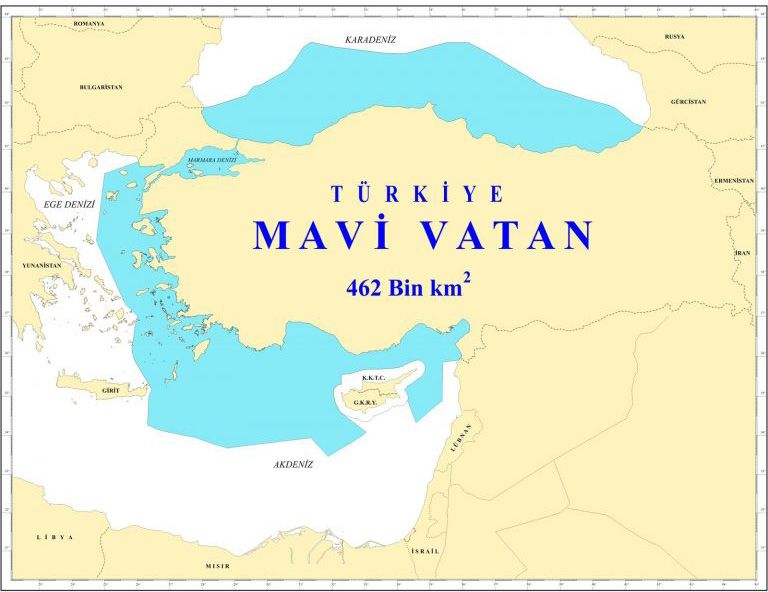
imprecise, nebulous, and unofficial geopoliticalIn practice, the Blue Homeland doctrine effec-
concept, with roots going back to the mid-2000s.tively represents three key ideas. First, it represents
This concept and navy officers’ other geopolitical
an expanded vision and understanding of Tur-
ideas were seen as marginal and were not well re-
key’s maritime boundaries in the Mediterranean;
ceived by the government at that time. However, the maritime deal with Libya is manifestation of
after the failed 2016 coup attempt, anti-West- this.26 The below map, drawn by Yayci himself,
ernism mounted in Turkey and the government clearly illustrates these expanded boundaries.
took a decidedly nationalist turn, paving the way
While the doctrine does not have any legal ba-
for the Blue Homeland doctrine to become more sis, it does indicate Turkey’s determination to de-
mainstream and gain more supporters among the fend and safeguard these projected borders, or at
governing elites in Ankara. least tries to give this impression.27 Second, Blue
Homeland is the Turkish navy’s call to reimagine
Though it is neither an official doctrine nor a and reposition the country as a maritime power.
policy, Blue Homeland nevertheless provides a Third, the doctrine signifies a reimagining of Tur-
powerful narrative for legitimizing the govern- key’s place in the world. For Gürdeniz, Yayci, and
6 TThflfiff,, EThfl11ff, 2ffi2 45ff E234ffflffi Mff234ffflfl2ffiff2ffi: C52fl43ffi7 2 W2, OTh4 18 45ff CThflflffffi4 Dff22910fia certain group of nationalists and Eurasianists, in the Black Sea region, Turkey has formed
Blue Homeland represents the reorientation of closer relations with Ukraine in order to balance
Turkey’s foreign and security policies away from Russian influence.29 These differences have also
the West and toward Russia and China.28 been exemplified by Turkey and Russia’s respec-
tive policies on Syria, Libya, and Nagorno-Kara-
With respect to the first two points, the govern- bakh, which are simultaneously competitive and
ment and the nationalist/Eurasianist supporters cooperative. In any case, the proponents of Blue
of the Blue Homeland doctrine agree. However, Homeland frame Turkey’s Libya policy, and par-
they diverge on the last point, with the govern- ticularly the maritime deal, which set Turkey
ment appearing to be conscious of the limita- and Greece against each other, as a reflection of
tions of Turkish-Russian relations. For instance, their doctrine.
Figure 5: Turkey’s Projected Maritime Boundaries, According to the Architects of the Blue Homeland Doctrine
Source: “Mavi Vatan
Kavramı ve Önemi” [The
Blue Homeland Concept
and Its Importance], Mavi-
Vatan.net, accessed January
20, 2021, https://mavivatan.
net/mavi-vatan-kavrami-ve-
onemi/.
Note: The turquoise color
represents Turkey’s pro-
jected maritime boundaries
(462,000 square meters)
according to the proponents
of the Blue Homeland doc-
trine. This map was drawn
by Cihat Yayci.
In addition, the Libyan conflict has pitted Tur- inked if there were no Turkish-Egyptian rivalry in
key against the UAE, Egypt, and France, with Libya or Turkish-Libyan maritime deal.31 Con-
spillover effects across the eastern Mediterranean. scious of its isolation in the eastern Mediterra-
The UAE and Greece’s decision to hold military nean, Turkey has recently made several gestures
exercises in Crete while Turkish-Greek tensions toward Egypt to explore whether it can find a mo-
were running high, as well as the UAE’s repeated dus vivendi with Cairo in Libya, hoping that such
expressions of support for Greece’s position in the an accommodation will have a spillover effect on
eastern Mediterranean, cannot be delinked from the eastern Mediterranean crisis.32
the deepening rivalry between the UAE and Tur-
key across the region, and particularly in Libya.30 Likewise, because Turkey and France support ri-
In the same vein, arguably the Greek-Egyptian val sides and pursue clashing interests in Libya,
maritime demarcation deal would not have been the conflict has significantly inflamed tensions
7 PThflfiff, B1fi12 Jffi24ffi1, 5353between them, which in turn have aggravated crisis to be solved, but rather multiple crises. For
the crisis in the eastern Mediterranean. France instance, the tensions between Turkey and France
has become the most vocal European power sup- differ from the long-lasting maritime disputes be-
porting the Greek-Cypriot position, underscor- tween Turkey and Greece. Therefore, instead of
ing its position by conducting military drills with negotiating a grand bargain in the eastern Medi-
Greece and sending the Charles de Gaulle nucle- terranean, Germany, which is leading European
ar-powered aircraft carrier to the eastern Medi- diplomacy on the subject, and the EU should
terranean.33 Turkey and France are also at odds focus their diplomacy and mediation first on
with each other on a growing number of foreign de-escalating the crisis between Ankara and Ath-
policy topics, from Syria and Lebanon, to North ens, thereby separating Turkish-Greek maritime
and West Africa. disputes from broader geopolitical power plays
in the region. It is crucial that both sides agree
France has been particularly vocal in its criti- to halt drilling and exploration activities in the
cism of Turkey’s policy in the eastern Medi- contested waters for at least some period of time
terranean. While competition between the if any negotiations are to commence in earnest.
two countries in the eastern Mediterranean is
closely linked to their competition in Libya, Hosting international
unlike in Libya, where France’s position in sup- meetings to promote
port of Hifter is unpopular internationally, in dialogue and de-escalation
the eastern Mediterranean, France can express
solidarity with its fellow EU members, Greece Likewise, a set of international meetings and
and Cyprus, and draw upon international law conferences could serve as an effective means of
to justify its position. In this sense, the east- de-escalation. Turkey has previously called for a
ern Mediterranean has provided France with conference of the littoral countries in the eastern
a more popular way to express its opposition Mediterranean to discuss their disputes, while
to and discontent with Turkey’s foreign policy, European Council President Charles Michel has
which runs counter to France’s geopolitical called for an international conference.34 At this
aspirations in many different contexts. Thus, stage, an international conference, comprised of
the geopolitical confrontation between Turkey, participants from countries bordering the eastern
on the one side, and France, Egypt, and the Mediterranean, plus Europe and NATO, could
UAE on the other, has spilled over into the be a good start to dealing with the crisis within a
eastern Mediterranean and become another multilateral framework.
source of tension.
By pointing to the “failure” of the Berlin confer-
Recommendations ence on Libya, some might cast doubt on the use-
fulness and effectiveness of an international con-
Given this background and context, how can the ference on the eastern Mediterranean.35 However,
involved countries chart a way out of the current unlike in Libya, where all major players work
deadlock in eastern Mediterranean? through proxies, all major players in the eastern
Mediterranean are themselves on the ground. Be-
Pressing pause on drilling cause no one can hide behind the guise of proxies
and exploration activities if they cause an incident, an international confer-
ence is more likely to be effective. Relatedly, in
Talk of solving the crisis is attractive, but not real- the eastern Mediterranean, no party has any in-
istic at this stage, particularly within a short span terest in perpetuating the conflict. All sides have
of time. As argued above, there is not just one escalated the situation with the hope that the
8 TThflfiff,, EThfl11ff, 2ffi2 45ff E234ffflffi Mff234ffflfl2ffiff2ffi: C52fl43ffi7 2 W2, OTh4 18 45ff CThflflffffi4 Dff22910fiother parties will back down and give them a way leaders in the concerned countries tone down
out. An international conference would therefore their rhetoric and adopt responsible narratives.
provide a face-saving exit from the crisis.
Advancing a visionary eu plan
Taking decisionmaking power to deal with the conflict
away from on-the-ground
military personnel All the above-mentioned measures are geared to-
ward de-escalating the conflict, and although de-
Greece and Turkey have already agreed to estab- escalation is essential, it should not be the end
lish a de-confliction mechanism at the NATO goal. Rather, it should be a strategy to facilitate
level.36 This is a welcome development, which negotiations and provide room for more imagina-
significantly decreases—though does not elimi- tive policy alternatives.
nate—the risk of an accident or incident occur-
ring between the two sides. To further reduce this As long as the current eastern Mediterranean cri-
risk, it is crucial that the quarrelling parties make sis remains unaddressed, the region will be at risk
decisions at the national level and do not trans- of new crises. Moreover, any conflict provides an
fer any major decisionmaking power to military opening for actors such as Russia to step in. Eu-
personnel on the ground. As Turkey’s shooting rope therefore needs to advance a more imagina-
down of a Russian jet in 2015 illustrated, endow- tive foreign policy and broader regional vision.39
ing military personnel on the ground with ma- In fact, during the current crisis, there have been
jor decisionmaking power always runs the risk of references to Europe’s past visionary achieve-
miscalculation and unintended escalation.37 ments in the form of calls for a new Schuman
Plan or a new Barcelona Process.40
Toning down rhetoric to
avoid narrative entrapment The Schuman Plan advocates take their inspira-
tion from Europe’s own history and experience.
The eastern Mediterranean crisis is a product of In the beginning of the 1950s, erstwhile foes Ger-
Turkey and Greece’s conflicting views and nar- many and France put the strategic industries of
ratives regarding national sovereignty, making it war, coal, and steel under a joint authority, which
extremely difficult to resolve. In this context, the necessitated cooperation and delivered mutual
nuances between demands and rights, between benefits.41 The EU itself is a child of this visionary
disputes and sovereignty, disappear. moment. Similarly, the original Barcelona Pro-
cess, launched in 1995, aimed at strengthening
On top of this inherent difficulty, when Turk- the relationships between European and south-
ish and Greek political leaders adopt maximal- ern Mediterranean countries. As such, invoking a
ist and high-pitched language to discuss their new Barcelona Process implies a broader region-
disputes, then any compromise or de-escala- to-region dialogue between Europe and southern
tion comes across as weakness, and as compro- Mediterranean countries, with a positive agenda
mising the sovereignty of the concerned coun- for the future.
try. This, in turn, paves the way for narrative
entrapment, which basically annihilates any At the core of these proposals is the idea that
room for dialogue. One example of this was the the eastern Mediterranean should be treated
shouting match that took place among political as a shared common space and that its stra-
leadership in Turkey, Greece, and France dur- tegic resources—oil and gas—should advance
ing Summer 2020, which aggravated the dis- the cause of cooperation, rather than conflict,
pute.38 As such, it is crucial that the political among its littoral states. While there are many
9 PThflfiff, B1fi12 Jffi24ffi1, 5353different ways to achieve these lofty goals, they should be to focus on conflict management,
all require Europe to develop a geopolitical or re-freezing the conflict, rather than conflict
vision and commitment. At present, German resolution, as the latter aspiration is not attain-
Chancellor Angela Merkel is leading European able at this stage.
diplomacy and mediation on the eastern Medi-
terranean conflict. However, she is in her last From this perspective, measures geared toward
year in office and it is not clear whether there de-escalating the conflict are right ones. How-
will be any other European leader of her stature ever, any temporary reduction of tensions or
and credibility that can play the same role once lulls in the conflict should not lead to com-
she leaves. placency, as the eastern Mediterranean con-
flict is likely to cycle through escalation, de-
To be more concrete, though gas discoveries trig- escalation, and re-escalation. Instead, Europe
gered the recent tension, the crisis is essentially and the concerned parties should utilize this
political. Despite early optimism, it now appears narrow window of opportunity to advance a
that the gas reserves are smaller and less lucra- more imaginative policy and plan for the east-
tive than expected, making the projected eastern ern Mediterranean, which can serve the collec-
Mediterranean gas pipeline project to Europe tive security, economic, and energy interests of
highly infeasible. On top of this, European en- all main protagonists. In this regard, the EU
ergy transition and decarbonization goals mean should either try to facilitate Turkey’s accession
that the commercial value of the gas will further into the Eastern Mediterranean Gas Forum or
diminish going forward, which could potentially devise a trilateral framework wherein the East-
open an avenue for conversation between the EU ern Mediterranean Gas Forum countries, the
and littoral states of the eastern Mediterranean on EU, and Turkey could explore ways to manage
energy transition and decarbonization in the Eu- their disputes and cooperate.
ropean neighborhood.
For this to happen, the EU needs to advance a ma-
jor decarbonization vision, along with a plan and
commitment to implement it. At present, given
the division within Europe and disagreement
among Middle Eastern states about the nature of
the regional order, such a grand plan might not
resonate widely. That said, even a discussion of
the subject among officials could shift the nature
of the conversation on the eastern Mediterranean
toward a more cooperative mode, thereby helping
to reduce tensions.
Conclusion
The interlocking set of crises that have un-
folded in the eastern Mediterranean between
Turkey and its rivals are intractable. Given the
actors’ entrenched positions and the sensitivity
of the topics involved, in the short-term, the
priority of German and European diplomacy
10 TThflfiff,, EThfl11ff, 2ffi2 45ff E234ffflffi Mff234ffflfl2ffiff2ffi: C52fl43ffi7 2 W2, OTh4 18 45ff CThflflffffi4 Dff22910fiEndnotes
1 Galip Dalay is a non-resident fellow at the Brook- 7 Anadolu Agency, “Türkiye’nin cari açığında ‘enerji’
ings Doha Center (BDC). He is also the Rich- yük oldu” [Energy has become a major burden on
ard von Weizsäcker Fellow at the Robert Bosch Acad- Turkey’s current account deficit], May 17, 2018,
emy, an associate fellow at Chatham House, and a https://www.aa.com.tr/tr/ekonomi/turkiyenin-cari-
doctoral researcher in the Faculty of History at the Uni- aciginda-enerji-yuk-oldu/1148818.
versity of Oxford. His research focuses on the question
of regionalism and regional order in the Middle East, 8 Ibid.
Turkish domestic and foreign policy, regional Kurdish
politics, political Islam, Turkish-Russian relations, and 9 Charles Ellinas, “Turkey finds gas in the Black Sea,”
the history and politics of Turkish-Western relations. He New Europe, August 28, 2020, https://www.neweurope.
would like to thank the research and communications eu/article/turkey-finds-gas-in-the-black-sea/.
teams, particularly Nader Kabbani, Theodosia Rossi,
Nejla Ben Mimoune, and Sumaya Attia, at the BDC 10 Tuncay Şahin, “Is Turkey becoming an energy hub?,” TRT
for their much appreciated support, as well as internal World, November 6, 2017, https://www.trtworld.com/
and external peer reviewers for their insightful feedback. turkey/is-turkey-becoming-an-energy-hub--11912/amp.
He would also like to thank the Robert Bosch Academy
team for arranging many bilateral meetings, as well as 11 Mercan, “Turkey’s gas discovery could reduce energy
convening a closed online roundtable meeting on the dependency”; Nuran Erkul Kaya, “Turkey’s gas imports
subject. Finally, he is grateful to his wife, Zehra Senem from Russia and Iran fall sharply,” Anadolu Agency,
Dalay, and his son, Ali Emir Dalay, for their uncondi- August 24, 2020, https://www.aa.com.tr/en/economy/
tional support and love. This policy briefing is an exten- turkey-s-gas-imports-from-russia-and-iran-fall-sharp-
sion of an op-ed previously published by Brookings: see ly/1951397; Dalga Khatinoglu, “Iran’s Natural Gas
Galip Dalay, “Is there a new window of opportunity in Exports To Turkey Drop To Zero In Second Quarter,”
the Eastern Mediterranean crisis?,” Order from Chaos Radio Farda, August 30, 2020, https://en.radiofarda.
(blog), Brookings Institution, December 2020, https:// com/a/iran-natural-gas-exports-to-turkey-drop-to-
www.brookings.edu/blog/order-from-chaos/2020/12/09/ zero/30811230.html.
is-there-a-new-window-of-opportunity-in-the-eastern-
mediterranean-crisis/. 12 Kaya, “Turkey’s gas imports from Russia and Iran
fall sharply.”
2 Maria Gavouneli, “Whose Sea? A Greek International
Law Perspective on the Greek-Turkish Disputes,” 13 Sam Meredith, “Turkey’s pursuit of contested oil and
Institut Montaigne (blog), October 16, 2020, https:// gas reserves has ramifications ‘well beyond’ the re-
www.institutmontaigne.org/en/blog/whose-sea-greek- gion,” CNBC, August 18, 2020, https://www.cnbc.
international-law-perspective-greek-turkish-disputes. com/2020/08/18/turkey-greece-clash-over-oil-and-gas-
in-the-eastern-mediterranean.html.
3 Julien Barnes-Dacey, “Trump or Biden: Three ways to
make Europe matter in the Middle East,” European 14 Sue Surkes, “Mistake to leave Turkey out of new East
Council on Foreign Relations, Commentary, October Med gas club – international expert,” The Times of Israel,
15, 2020, https://www.ecfr.eu/article/commentary_ September 27, 2020, https://www.timesofisrael.com/
trump_or_biden_three_ways_to_make_europe_mat- mistake-to-leave-turkey-out-of-new-east-med-gas-club-
ter_in_the_middle_ea. international-expert/.
4 Tolga Demiryol, “Natural gas and geopolitics in the eastern 15 Kostis Geropoulos, “East Med Gas Forum makes Cairo
Mediterranean,” Heinrich Boll Stiftung, Analysis, Septem- HQ,” New Europe, January 17, 2020, https://www.new-
ber 7, 2020, https://tr.boell.org/en/node/21259; Interna- europe.eu/article/east-med-gas-forum-makes-cairo-hq/.
tional Crisis Group (ICG), “Aphrodite’s Gift: Can Cypriot
Gas Power a New Dialogue?,” Europe Report no. 216, 16 Jannis Papadimitriou, “EastMed gas pipeline flowing full
April 2, 2012, https://www.crisisgroup.org/europe-central- of troubling questions,” Deutsche Welle, January 2, 2020,
asia/western-europemediterranean/cyprus/aphrodite-s-gift- https://www.dw.com/en/eastmed-gas-pipeline-flowing-
can-cypriot-gas-power-new-dialogue. full-of-troubling-questions/a-51871424.
5 “Turkey’s role in the Eastern Mediterranean: Threats 17 Michael Leigh, “An appropriate European Union
of Conflict and Prospects for Dialogue,” posted by response to tensions in the Eastern Mediterranean,”
the European Council on Foreign Relations (ECFR), Bruegel (blog), August 28, 2020, https://www.bruegel.
September 17, 2020, https://www.youtube.com/ org/2020/08/an-appropriate-european-union-response-
watch?v=P16Y93p2sHs&feature=emb_logo&ab_ to-tensions-in-the-eastern-mediterranean/.
channel=ECFR.
18 Ibid.; Şaban Kardaş, “Understanding Turkey’s Coercive
6 Muhammet Mercan, “Turkey’s gas discovery could reduce Diplomacy,” The German Marshall Fund of the United
energy dependency,” ING Think, August 24, 2020, States, August 13, 2020, https://www.gmfus.org/publica-
https://think.ing.com/articles/black-sea-energy-more-to-prove. tions/understanding-turkeys-coercive-diplomacy.
11 PThflfiff, B1fi12 Jffi24ffi1, 535319 Daren Butler and Tuvan Gumrukcu, “Turkey signs 29 Associated Press, “Turkey, Ukraine Sign Military Co-
maritime boundaries deal with Libya amid exploration operation Agreements,” Voice of America, October 16,
row,” Reuters, November 28, 2019, https://www.reuters. 2020, https://www.voanews.com/europe/turkey-ukraine-
com/article/us-turkey-libya/turkey-signs-maritime- sign-military-cooperation-agreements.
boundaries-deal-with-libya-amid-exploration-row-
idUSKBN1Y213I; Patrick Wintour, “Libyan government 30 “UAE sends warplanes to Greece for joint drills amid
activates cooperation accord with Turkey,” The Guardian, tensions with Turkey,” The New Arab, August 24, 2020,
December 20, 2019, https://www.theguardian.com/ https://english.alaraby.co.uk/english/news/2020/8/24/
world/2019/dec/20/libyan-government-activates-cooper- uae-sends-warplanes-to-greece-for-joint-drills; Raúl
ation-accord-with-turkey. Redondo, “Emirates supports Arab-European alliance
against Turkish expansionism in the Mediterranean,”
20 Luke Baker, Tuvan Gumrukcu, and Michele Kambas, Atalayar, June 17, 2020, https://atalayar.com/en/con-
“Turkey-Libya maritime deal rattles East Mediterrane- tent/emirates-supports-arab-european-alliance-against-
an,” Reuters, December 25, 2019, https://www.reuters. turkish-expansionism-mediterranean.
com/article/us-turkey-libya-eastmed-tensions-explain-
idUSKBN1YT0JK. 31 Anadolu Agency, “Egypt, Greece sign maritime demarca-
tion deal,” August 7, 2020, https://www.aa.com.tr/en/
21 Reuters, “Greece to expel Libyan ambassador over maritime energy/energy-diplomacy/egypt-greece-sign-maritime-
border MoU,” Ekathimerini, December 6, 2019, https:// demarcation-deal/30122.
www.ekathimerini.com/247268/article/ekathimerini/news/
greece-to-expel-libyan-ambassador-over-maritime-border- 32 “Is Turkey-Egypt rapprochement in the eastern Mediter-
mou; “Libya’s Haftar secretly flies to Greece ahead of ranean possible?,” TRT World, October 14, 2020, https://
Berlin summit,” Al Jazeera, January 16, 2020, https://www. www.trtworld.com/magazine/is-turkey-egypt-rapproche-
aljazeera.com/news/2020/1/16/libyas-haftar-secretly-flies- ment-in-the-eastern-mediterranean-possible-40578.
to-greece-ahead-of-berlin-summit.
33 Liam James, “France steps up military presence in Mediter-
22 Hacer Baser, “Egypt, Greece sign maritime demarcation ranean as tensions rise between Greece and Turkey,” The
deal,” Anadolu Agency, August 6, 2020, https://www. Independent, August 13, 2020, https://www.independent.
aa.com.tr/en/middle-east/egypt-greece-sign-maritime- co.uk/news/world/europe/france-military-greece-turkey-dis-
demarcation-deal/1933927. pute-waters-mediterranean-macron-nato-a9668451.html;
Paul Antonopoulos, “Power balance in the East Mediter-
23 “Mavi Vatan Kavramı ve Önemi” [The Blue Homeland ranean is changing as France sends nuclear-powered aircraft
Concept and Its Importance], MaviVatan.net, accessed carrier,” Greek City Times, September 10, 2020, https://
January 20, 2021, https://mavivatan.net/mavi-vatan- greekcitytimes.com/2020/09/10/power-balance-in-the-
kavrami-ve-onemi/. east-mediterranean-is-changing-as-france-sends-nuclear-
powered-aircraft-carrier/.
24 “Rear Admiral Cihat Yaycı resigns,” Hurriyet Daily News,
May 18, 2020, https://www.hurriyetdailynews.com/rear- 34 “President Erdoğan calls for joint formula to protect
admiral-cihat-yayci-resings-154868. rights of all East Med,” Daily Sabah, August 10, 2020,
https://www.dailysabah.com/politics/diplomacy/
25 Al Sharq Strategic Research, “The Eastern Mediterranean president-erdogan-calls-for-joint-formula-to-protect-
Crisis: Scenarios and Implications,” Webinar Report, rights-of-all-east-med; “Michel calls for conference on
December 18, 2020, https://research.sharqforum. East Mediterranean,” Europe Diplomatic, September
org/2020/12/18/webinar-report-the-eastern-mediterra- 6, 2020, https://europediplomatic.com/2020/09/06/
nean-crisis-scenarios-and-implications/. michel-calls-for-conference-on-east-mediterranean/.
26 Galip Dalay, “Libya conflict: Turkey is looking for a 35 Barbara Bibbo, “Berlin conference: Another failure in
‘third way’ in Sirte,” Middle East Eye, July 21, 2020, the Libya crisis,” Middle East Eye, February 3, 2020,
https://www.middleeasteye.net/opinion/libya-conflict- https://www.middleeasteye.net/opinion/berlin-confer-
turkey--options-. ence-another-failure-libya-crisis.
27 Constantinos Yiallourides, “Some Observations on the 36 Robin Emmott, “Greece, Turkey set up hotline to avoid
Agreement between Greece and Egypt on the Delimita- clashes in Eastern Mediterranean, NATO says,” Reuters,
tion of the Exclusive Economic Zone,” European Journal October 1, 2020, https://www.reuters.com/article/us-
of International Law (blog), August 25, 2020, greece-turkey-nato/greece-turkey-agree-ways-to-avoid-
https://www.ejiltalk.org/18969-2/. accidents-in-eastern-med-nato-says-idUSKBN26M6LZ.
28 “Cem Gürdeniz: Avrasya ittifakı zorunlu” [Cem 37 Nicole Ireland, “Shot-down Russian warplane raises
Gürdeniz: A Eurasian Alliance is Needed], Aydınlık, questions on rules of engagement,” CBC News, Novem-
September 21, 2020, https://aydinlik.com.tr/haber/cem- ber 24, 2015, https://www.cbc.ca/news/world/turkey-
gurdeniz-avrasya-ittifaki-zorunlu-218862. russia-rules-of-engagement-1.3334096.
12 TThflfiff,, EThfl11ff, 2ffi2 45ff E234ffflffi Mff234ffflfl2ffiff2ffi: C52fl43ffi7 2 W2, OTh4 18 45ff CThflflffffi4 Dff22910fi38 Mitat Çelikpala, “Eastern Mediterranean: Conflict
or Compromise?,” Al Sharq Strategic Research,
Expert Brief, September 30, 2020, 7, https://research.
sharqforum.org/2020/10/01/eastern-mediterraneancon-
flict-or-compromise/.
39 George Tzogopoulos, “How the EU should deal with
the eastern Mediterranean,” ECFR, September 25, 2020,
https://www.ecfr.eu/article/commentary_how_the_eu_
should_deal_with_the_eastern_mediterranean.
40 In several meetings, European experts and officials made
sporadic references to the Barcelona Process implying
a broader region-to-region dialogue between Europe
and southern Mediterranean countries with a posi-
tive agenda for the future, through which they believe
the eastern Mediterranean crisis can be addressed.
On the Schuman Plan, see: Anna Diamantopoulou,
“The German EU Presidency and Stability in East-
ern Mediterranean,” Robert Bosch Academy, http://
www.robertboschacademy.de/content/language2/
html/57754_58841.asp; “Yeni Schuman Planı Doğu
Akdeniz savaşını önleyebilir mi?” [Could a new Schu-
man Plan prevent an eastern Mediterranean war?],
DW Türkçe, August 23, 2020, https://www.dw.com/tr/
yeni-schuman-plan%C4%B1-do%C4%9Fu-akdeniz-
sava%C5%9F%C4%B1n%C4%B1-%C3%B6nleyebilir-
mi/a-54663837.
41 Andreas Kluth, “International Law Can’t Solve the
Greco-Turkish Island Problem,” Bloomberg, October
17, 2020, https://www.bloomberg.com/opinion/arti-
cles/2020-10-17/international-law-can-t-solve-greece-
and-turkey-s-kastellorizo-island-problem.
13 PThflfiff, B1fi12 Jffi24ffi1, 5353About the Brookings Doha Center
Established in 2008, the Brookings Doha Center (BDC) is an overseas center of
the Brookings Institution in Washington, D.C. As a hub for Brookings scholar-
ship in the region, the BDC advances high quality, independent research and
policy analysis on the Middle East and North Africa.
In pursuing its mission, the BDC undertakes field-oriented research and pro-
gramming that addresses and informs regional and international policy discus-
sions and engages decision-makers in government, the private sector, civil soci-
ety, the media, and academia on four key areas:
I. International relations between Middle East countries, the U.S.,
and other emerging powers in the world
II. Security, stability, and peaceful coexistence in the Middle East and
their relation to the international community
III. Inclusive growth and equality of opportunity in the Middle East,
with a focus on women, youth, and migrants
IV. Governance, institutional reform, state citizen relations, as well as
other issues pertaining to the region
Open to a broad range of views, the BDC encourages a rich exchange of ideas be-
tween the Middle East and the global community. Since its founding, the BDC
has hosted leading scholars from different countries; convened a large number of
events, including high-level roundtables and policy discussions; and published a
series of influential policy briefings and analysis papers.
14 TThflfiff,, EThfl11ff, 2ffi2 45ff E234ffflffi Mff234ffflfl2ffiff2ffi: C52fl43ffi7 2 W2, OTh4 18 45ff CThflflffffi4 Dff22910fiBrookings Doha Center Publications
2021 2020
Turkey, Europe, and the Eastern Mediterranean: Enclave Governance: How to Circumvent the
Charting a Way Out of the Current Deadlock Assad Regime and Safeguard Syria’s Future
Policy Briefing, Galip Dalay Analysis Paper, Ranj Alaaldin
Economic Diversification in the Gulf: The ‘State-Plus’ Framework: A Confederal
Time to Redouble Efforts Solution for Israel-Palestine
Policy Briefing, Nader Kabbani Analysis Paper, Omar H. Rahman
and Nejla Ben Mimoune
The Organization of Islamic Cooperation’s
National Human Rights Institutions: A Reason Declaration on Human Rights: Promises and Pitfalls
for Hope in the Middle East and North Africa? Policy Briefing, Turan Kayaoglu
Analysis Paper, Turan Kayaoglu
Progress and Missed Opportunities: Morocco Enters
Its Third Decade Under King Mohammed VI
Policy Briefing, Yasmina Abouzzohour
The Islamic Republic of Iran Four Decades On:
The 2017/18 Protests Amid a Triple Crisis
Analysis Paper, Ali Fathollah-Nejad
15 PThflfiff, B1fi12 Jffi24ffi1, 5353BROOKINGS INSTITUTION 1775 Massachusetts Avenue, N.W. Washington, D.C. 20036 U.S.A. www.brookings.edu BROOKINGS DOHA CENTER Saha 43, Building 63, West Bay, Doha, Qatar www.brookings.edu/doha
You can also read


