UPWP FFYs 2022-2023 Unified Planning Work Program - NFRMPO
←
→
Page content transcription
If your browser does not render page correctly, please read the page content below
DRAFT
    FFYs 2022-2023

UPWP
Unified Planning Work Program
FY2022-2023

                              UNIFIED PLANNING WORK PROGRAM

                                          Prepared by:

                                            NFRMPO

                                   419 Canyon Ave, Suite 300
                                     Fort Collins, CO 80521

                                      with assistance from

                         Colorado Department of Transportation (CDOT)

                                            Transfort

                                   Greeley Evans Transit (GET)

                                 City of Loveland Transit (COLT)

 Preparation of this document has been financed in part through grants from the Federal Highway
Administration, the Federal Transit Administration, and the local member communities of the North
                                        Front Range MPO.

                                       Adopted June 2021

                                                i
NORTH FRONT RANGE METROPOLITAN PLANNING ORGANIZATION
                  PLANNING COUNCIL

       Donald McLeod, Chair                   Mayor Town of Severance

    William Karspeck, Vice-Chair              Mayor, Town of Berthoud

  Dave Clark, Immediate Past-Chair         Councilmember, City of Loveland

            Fil Archuleta                     Mayor Town of Garden City

          Elizabeth Austin                     Mayor, Town of Milliken

            Mark Clark                       Mayor Pro Tem, City of Evans

           Paula Cochran                       Trustee, Town of LaSalle

            Lanie Isbell                        Mayor, Town of Eaton

            Scott James                      Commissioner, Weld County

             Lisa Laake                       Trustee, Town of Timnath

           Wade Troxell                       Mayor, City of Fort Collins

            Troy Mellon                   Councilmember, Town of Johnstown

            Brett Payton                    Councilmember, City of Greeley

         Paul Rennemeyer                       Mayor, Town of Windsor

          Kristin Stephens                  Commissioner, Larimer County

          Kathleen Bracke                     Transportation Comission

           Dena Wojtach                             CDPHE-APCD

                                     ii
NORTH FRONT RANGE METROPOLITAN PLANNING ORGANIZATION
            TECHNICAL ADVISORY COMMITTEE

        Mitch Nelson, Chair              Town of Severance
       Eric Tracy, Vice-Chair              Larimer County
    Dave Klockeman, Past Chair             City of Loveland

         Dawn Anderson                      Weld County
           Allison Baxter                  City of Greeley
        Stephanie Brothers                Town of Berthoud
          Brad Buckman                    City of Fort Collins
           Marco Carani                  Town of Johnstown
            Rick Coffin                     CDPHE-APCD
           Eric Fuhrman                   Town of Timnath
           Josie Hadley                    CDOT Region 4
          Omar Herrera                    Town of Windsor
       Pepper McClenahan                  Town of Milliken
        Mark Oberschmidt                     City of Evans
           Jeff Schreier                    Town of Eaton
           No Member                       Town of LaSalle
           No Member                     Town of Garden City
        Amanda Brimmer*                         RAQC
          Aaron Bustow*                         FHWA
           Darren Davis                          GET
            Kaley Zeisel                      Transfort
          Ranae Tunison                          FTA
          Candice Folkers                        COLT
   NoCo Bike & Ped Collaborative
       *Non-voting members

                                   iii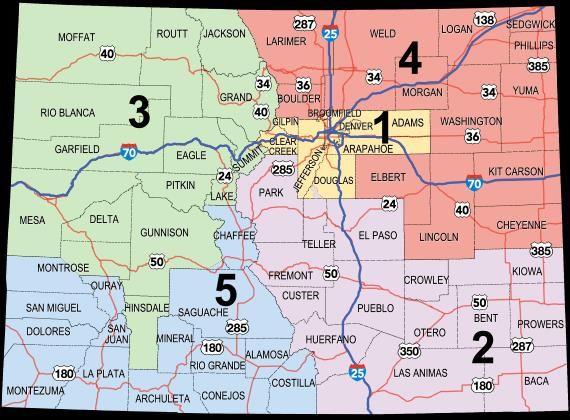
Table of Contents
Prospectus .........................................................................................................................................1
   Introduction .............................................................................................................................................. 1
   Purpose and Process ................................................................................................................................. 1
Federal and State ...............................................................................................................................4
   Fixing America’s Surface Transportation (FAST) Act ................................................................................. 4
   Federal Planning Factors ........................................................................................................................... 5
   U.S. Congressional District ........................................................................................................................ 6
   Colorado Department of Transportation .................................................................................................. 7
Planning Issues ..................................................................................................................................9
   Lead Air Quality Planning Agency Designation ......................................................................................... 9
   Economic Development ............................................................................................................................ 9
   Veterans, Older Adults, and Individuals with Disabilities ....................................................................... 10
   Changing Demographics ......................................................................................................................... 11
   Transportation Funding .......................................................................................................................... 11
FY2020-2021 Activities ..................................................................................................................... 13
   Planning Activities ................................................................................................................................... 13
   Implementation Activities....................................................................................................................... 14
   Implementation of the North I-25 EIS..................................................................................................... 14
   US 34 Planning and Environmental Linkages (PEL) ................................................................................. 15
Unified Planning Activities ............................................................................................................... 16
   Summary ................................................................................................................................................. 16
I. Monitoring.................................................................................................................................... 19
   1.1 Data Collection and Analysis ............................................................................................................. 19
   1.2 Safety and Security ........................................................................................................................... 21
   1.3 Local Plan Reviews ............................................................................................................................ 23
   1.4 Congestion Mitigation Process (CMP) .............................................................................................. 25
   1.5 Performance Measurement and Reporting ...................................................................................... 27
II. Plan Development........................................................................................................................ 29
   2.1 Regional Transportation Plan (RTP) Management ........................................................................... 29
   2.2 Land Use Model Management.......................................................................................................... 31
   2.3 Transportation Model Management ................................................................................................ 33
   2.4 Regional Active Transportation Plan (ATP) Management ................................................................ 35

                                                                              iv
2.5 Statewide Household Survey ............................................................................................................ 37
   2.6 North Front Range Premium Transit Analysis ................................................................................... 39
   2.7 Planning Council and Technical Advisory Committee (TAC) Support ............................................... 41
   2.8 Unified Planning Work Program (UPWP) .......................................................................................... 43
III. Planning Services ........................................................................................................................ 45
   3.1 Special Participation.......................................................................................................................... 45
   3.2 Outreach/Communications............................................................................................................... 47
   3.3 Air Quality Planning And Conformity ................................................................................................ 49
IV. Plan Implementation .................................................................................................................. 51
   4.1 Project Assistance ............................................................................................................................. 51
   4.2 Transportation Improvement Program (TIP) .................................................................................... 53
   4.3 Federal Funds Management ............................................................................................................. 55
   4.4 Mobility Management ...................................................................................................................... 57
   4.5 One Call/One Click Center (RideNoCo) ............................................................................................. 60
V. Administration ............................................................................................................................. 62
   5.1 Program Management ...................................................................................................................... 62
   5.2 Grant Reporting and Management ................................................................................................... 64
   5.3 Human Resources/IT ......................................................................................................................... 66
Appendix A: VanGoTM Work Tasks .................................................................................................... 67
   1) Vanpool Services ................................................................................................................................. 67
   2) VanGo™ Billing and Outreach ............................................................................................................. 67
   3) Vehicle Acquisition and Management ................................................................................................ 67
   4) VanGo™ Grant Management .............................................................................................................. 67
   5) VanGo™ Grant Reporting.................................................................................................................... 68
Appendix B: Local Agency Work Tasks .............................................................................................. 69
   Greeley Multimodal Transportation Plan ............................................................................................... 69
   Evans Transportation Master Plan .......................................................................................................... 71
Appendix C: CDOT Work Tasks.......................................................................................................... 73
   Division of Transportation Development (DTD) and Division of Transit and Rail (DTR) FY2022 Work
   Program Highlights.................................................................................................................................. 73
Appendix D: Budget Amendments .................................................................................................... 77
Appendix E: USDOT Approval ........................................................................................................... 78
Appendix F: NFRMPO Resolutions and Certifications......................................................................... 79

                                                                            v
List of Figures
Figure 1: North Front Range MPO Planning Area ......................................................................................... 2
Figure 2: NFRMPO Planning Relationships ................................................................................................... 3
Figure 3: Colorado Congressional Districts ................................................................................................... 7
Figure 4: CDOT Regions, 2013 ....................................................................................................................... 8
Figure 5: Top 15 Employment Sectors by County in 2017 .......................................................................... 10
List of Tables
Table 1: NFRMPO Planning Factors .............................................................................................................. 6
Table 2: NFRMPO FY2022 Budget ............................................................................................................... 17
Table 3: FY2022 Budget Amendments ........................................................................................................ 77
viProspectus
Introduction
The North Front Range Transportation and Air Quality Planning Council (NFRT & AQPC) was officially
formed on January 27, 1988. It was designated as the Metropolitan Planning Organization (MPO) for
transportation planning on June 28, 1988, and as the Lead Planning Agency for Carbon Monoxide (CO) air
quality planning on June 22, 1993.
Voting members of the NFRT & AQPC are the municipalities of Berthoud, Eaton, Evans, Fort Collins,
Garden City, Greeley, Johnstown, LaSalle, Loveland, Milliken, Severance, Timnath, Windsor, and the
counties of Larimer and Weld. The Colorado Transportation Commission and the Colorado Department
of Public Health and Environment (CDPHE) Air Pollution Control Division (APCD) are also voting members.
The Federal Highway Administration (FHWA) defines the North Front Range Transportation & Air Quality
Planning Council (NFRT & AQPC, dba. NFRMPO) as a Transportation Management Agency (TMA) based on
the 2000 Census data when the population exceeded the 200,000 mark. In addition to the TMA, a second
urbanized area including the cities of Evans and Greeley and the towns of Garden City and LaSalle is also
within the boundaries. The TMA includes Fort Collins, most of Loveland, and portions of Berthoud,
Timnath, and Windsor. As of the 2010 Census, the TMA population was 206,000. The agency’s TMA
designation requires completion of additional planning responsibilities, including development of a
Congestion Management Process (CMP), and a Certification Review every four years by the FHWA, Federal
Transit Administration (FTA), and Colorado Department of Transportation (CDOT), and more transit
planning responsibilities in cooperation with the urbanized areas. A map of the NFRMPO boundary and
the urbanized areas is provided in Figure 1.
Purpose and Process
This Unified Planning Work Program (UPWP) provides a transportation planning work program for the
NFRT & AQPC for Fiscal Years (FY) 2022 and 2023 (October 1, 2021 – September 30, 2023). This document
contains Work Tasks that assign responsibilities for tasks to the Metropolitan Planning Organization
(MPO), its member governments, and to CDOT. The document reflects the Planning Council’s goals, the
Regional Transportation Plan (RTP), and the 2018 Memorandum of Agreement (MOA) with CDOT and the
transit operators in the Cities of Fort Collins, Greeley, and Loveland.
Responsibility for carrying out the Continuing, Comprehensive, and Cooperative (3C) planning process
rests equally with the NFRMPO, CDOT, and the Cities of Fort Collins, Greeley, and Loveland transit, as
described in the 2018 MOA between the five agencies. The “3C” process in the NFRT & AQPC area is
designed to provide for centralized administration combined with maximum participation and direction
from local governments. The planning relationships are detailed in Figure 2.
Development of the UPWP is guided by Federal and State regulations.
1Figure 1: North Front Range MPO Planning Area
2Figure 2: NFRMPO Planning Relationships
3Federal and State
Fixing America’s Surface Transportation (FAST) Act
On December 4, 2015 President Obama signed into law the Fixing America’s Surface Transportation (FAST)
Act (Pub. L. No. 114-94) a five-year long-term authorization for federal transportation funding. The FAST
Act authorizes $305B over FY2016 through 2020, with continuing resolutions through FY2021, for
highway, highway and motor vehicle safety, public transportation, motor carrier safety, hazardous
materials safety, rail, and research, technology, and statistics programs. The FAST Act maintains FHWA’s
focus on safety, keeps intact the established structure of the various highway-related programs they
manage, continues efforts to streamline project delivery, and for the first time, provides a dedicated
source of federal dollars for freight projects. With the enactment of the FAST Act, states and local
governments moved forward with critical transportation projects with the confidence that they will have
a federal partner over the long term.
The FAST Act set the course for the nation’s transportation system with changes and reforms to many
Federal transportation programs including:
• Organizational changes that will provide an opportunity for important structural improvements
with the potential to accelerate the delivery of innovative finance projects.
• Improved project delivery using online systems to track projects and interagency coordination
processes.
• Establishes both formula and discretionary grant programs to fund critical transportation projects
which would benefit freight movements.
• Reinstating the popular bus discretionary grant program and strengthening the Buy America
requirements that promote domestic manufacturing through vehicle and track purchases.
• Establishes a new National Surface Transportation and Innovative Finance Bureau within the
USDOT to serve as a one-stop shop for state and local governments to receive federal funding,
financing, or technical assistance.
• Allocates slightly more formula funds to local decision makers and provide planners with
additional design flexibilities.
• Converts the long-standing Surface Transportation Program into the Surface Transportation Block
Grant (STBG) Program acknowledging this program has the most flexible eligibilities among all
Federal-aid highway programs and aligning the program’s name with how FHWA has historically
administered it with the following set:
o Funding for Transportation Alternatives (TA)
o Two percent for State Planning and Research (SPR)
o Funding for bridges not on Federal-aid highways
• Continues the overarching requirement that Highway Safety Improvement Program (HSIP) funds
be used for safety projects which are consistent with the State’s Strategic Highway Safety Plan
(SHSP) and which correct or improve a hazardous road location or feature or address a highway
safety problem and added the following activities as eligible:
o Installation of vehicle-to-infrastructure communication equipment.
o Pedestrian hybrid beacons.
o Roadway improvements that provide separation between pedestrians and motor
vehicles, including medians and pedestrian crossing islands.
4o Other physical infrastructure projects not specifically enumerated in the list of eligible
projects.
Federal Planning Factors
The FAST Act also modified the planning factors, increasing them from eight to 10. The planning factors
include:
1. Support the economic vitality of the metropolitan area, especially by enabling global
competitiveness, productivity, and efficiency;
2. Increase the safety of the transportation system for motorized and non-motorized users;
3. Increase the security of the transportation system for motorized and non-motorized users;
4. Increase accessibility and mobility of people and freight;
5. Protect and enhance the environment, promote energy conservation, improve the quality of life,
and promote consistency between transportation improvements and State and local planned
growth and economic development patterns;
6. Enhance the integration and connectivity of the transportation system, across and between
modes, for people and freight;
7. Promote efficient system management and operation;
8. Emphasize the preservation of the existing transportation system;
9. Improve the resiliency and reliability of the transportation system and reduce or mitigate
stormwater impacts of surface transportation; and
10. Enhance travel and tourism.
The Planning Factors are addressed in the NFRMPO’s UPWP by work program tasks in FY2022-2023 as
shown in Table 1. The NFRMPO also incorporated these planning factors into the Regional Transportation
Plan (RTP).
5Table 1: NFRMPO Planning Factors
UPWP Tasks 1 2 3 4 5 6 7 8 9 10
1.1 Data Collection and Analysis x x x x x x x x
1.2 Safety and Security x x x
1.3 Local Plan Reviews x x
1.4 Congestion Management Process (CMP) x x x x x x x x
1.5 Performance Measurement and Report x x x x x x x X x x
2.1 Regional Transportation Plan (RTP) Management x x x x x x x x x x
2.2 Land Use Model Management x x
2.3 Transportation Model Management x x
2.4 Regional Active Transportation Plan (ATP) Management x x x x x x
2.5 Statewide Household Survey x x
2.6 North Front Range Premium Transit Analysis x x x x x x x
2.7 Planning Council and Transportation Advisory Committee
x x x x x x x x x x
(TAC) Support
2.8 Unified Planning Work Program (UPWP) x x x x x x x x x x
3.1 Special Participation x x x x x x x x x x
3.2 Outreach/Communications x x x x x x x x x x
3.3 Air Quality Planning and Conformity x x x x x x X
4.1 Project Assistance x x x x x x x x x x
4.2 Transportation Improvement Program (TIP) x x x x x x x x x x
4.3 Federal Funds Management x x x x x x x x x x
4.4 Mobility Management x x x
4.5 One Call/One Click Center x x x x x
5.1 Program Management x x
5.2 Grant Reporting and Management x x x x x x x x x x
5.3 Human Resources/IT x x
U.S. Congressional District
Effective January 1, 2013, the State of Colorado adopted new U.S. Congressional Districts. The NFRMPO
region is entirely within two districts along the county line between Larimer and Weld counties. District
2 (Representative Joe Neguse) encompasses Larimer County in addition to Boulder County and various
mountain communities. District 4 (Representative Ken Buck) covers the entire eastern portion of Colorado
to the state border, including all of Weld County. Figure 3 shows the Colorado Congressional Districts.
6Figure 3: Colorado Congressional Districts
Source: Colorado Department of Education
The NFRMPO engages the Congressional offices and invites them to NFRMPO meetings, mailings, and
legislative actions.
Colorado Department of Transportation
Statewide Plans
CDOT adopted the 2045 Statewide Transportation Plan in May 2020 along with associated updated
Statewide Plans:
• Statewide Transit Plan (June 2020)
• Strategic Highway Safety Plan (April 2020)
• Statewide Transportation System Management and Operations Plan (2013)
• Colorado State Highway Freight Plan (2019)
• Colorado State Freight and Passenger Rail Plan (2018)
• Statewide Bicycle and Pedestrian Plan (October 2012)
• Colorado Aviation System Plan Update (2020)
• Colorado’s Risk Based Asset Management Plan (2019)
• Colorado Statewide Intercity and Regional Bus Network Plan (2014)
• Colorado Transportation Option: Statewide Transportation Demand Management Plan (March
2018)
• Colorado Downtown Streets: A Tool for Communities, Planners, and Engineers (2017)
7The Statewide Transportation Plan incorporates the Colorado Transportation Planning Region’s (TPR)
plans (including the five MPOs). CDOT regions were updated in 2013 and the NFRMPO is located entirely
within Region 4. The five CDOT regions are shown in Figure 4.
Figure 4: CDOT Regions, 2013
Source: Colorado Department of Transportation
8Planning Issues
Lead Air Quality Planning Agency Designation
In 1993, the Governor designated the NFRMPO as the Lead Planning Agency (LPA) for Carbon Monoxide
(CO) for the Fort Collins and Greeley Nonattainment Areas. Both areas achieved compliance with the
federal CO standard and developed limited maintenance plans. The Greeley Nonattainment Area
completed its second 10-year maintenance period in May 2019, while the Fort Collins Nonattainment Area
will complete its second 10-year maintenance period in September 2023. Upon the conclusion of the
second 10-year maintenance period, conformity requirements no longer apply.
The NFRMPO is also a part of a larger nonattainment area for ozone. The ozone area covers seven counties
in the Denver Metro area and most of Weld and Larimer counties in the North Front Range. In 2013, the
Governor designated the Regional Air Quality Council (RAQC) as the LPA for the entire ozone
nonattainment area as a single LPA for each pollutant is typical. As a result, representatives from the
NFRMPO, Larimer County, and Weld County were appointed to serve on the RAQC Board to ensure North
Front Range representation during the ozone planning process. In addition, a representative from the
RAQC has been appointed to the Technical Advisory Committee (TAC) as a non-voting member. The
NFRMPO extends the marketing and outreach for the RAQC to the northern portion of the nonattainment
area providing unified education on the Simple Steps. Better Air. program.
There are currently two ozone standards in effect. The region is designated by the EPA as a Serious
Nonattainment Area for the 2008 8-hour ozone standard of 75 parts per billion (ppb) and as a Marginal
Nonattainment Area for the more stringent 2015 8-hour ozone standard of 70 ppb. It is likely the EPA will
downgrade the region’s designation to Severe for the 2008 standard in early 2022 due to a failure to
reduce ozone levels by the deadline set in the Clean Air Act (CAA). Redesignation to Severe would require
a new SIP and increased regulations. Efforts to control ozone continue as the region works toward
attaining the 75 ppb standard as well as the 70 ppb standard, such as the work of several committees
formed by the RAQC to assess various control strategies.
It should be noted that since 2008 there have been significant improvements made in reducing ozone;
however, the region has not achieved compliance with the standard due to continued reduction in the
standards.
Economic Development
The U.S. economic momentum was strong and the unemployment rate from 2010 and 2018 had steadily
declined. The U.S. Bureau of Labor Statistics showed Colorado had the third fastest employment growth
rate in the country at 24 percent between 2010 and 2018. Only Utah and Nevada were higher at 29
percent and 25 percent, respectively.
Figure 5 shows the top 15 sectors of employment for Weld and Larimer counties. Both counties are
dominated by the government sector, though the retail, heath services, manufacturing, construction, and
accommodation and food services sectors make up a large portion of remaining jobs between the two
counties. While the counties share several similarities, there are many economic differences. Larimer
County has a large portion of professional, scientific, and technical services, while some of Weld County’s
top sectors include mining and agriculture. Even some of the counties’ shared sectors, such as
manufacturing break down into much different subsectors. While the majority of manufacturing jobs in
9Larimer County are computers and electrical equipment, the majority of manufacturing jobs in Weld
County are related to food and beverage products.
Figure 5: Top 15 Employment Sectors by County in 2017
40,000
35,000
30,000
25,000
20,000
15,000
10,000
5,000
0
Larimer County Weld County
Source: DOLA State Demography Office Data Page, Jobs by Sector
However, in early 2020, a worldwide pandemic drastically effected the U.S. economy as businesses were
required to close. The U.S. unemployment rate went from 3.4 to 6.5 and Colorado went from 2.4 to 8.8
according to the U.S. Bureau of Labor Statistics between December 2019 and December 2020. Colorado
lost almost 151,000 jobs.
The unemployment rate between June 2019 and June 2020 increased to 8.3 percent and 9.3 percent in
Larimer and Weld counties, respectively. The economic future for the U.S., Colorado and the North Front
Range area remains uncertain, but predictions are calling for an economic rebound starting 2021.
Veterans, Older Adults, and Individuals with Disabilities
Transportation for individuals with disabilities, veterans, and older adults, particularly those who live in
the rural portions of the region, are extremely limited. With limited coverage areas for public paratransit
services and limited (and costly) private services, the mobility of individuals who use wheelchairs and
other mobility aids are especially constrained when it comes to accessible transportation options. In
addition to limited coverage zones, paratransit is also only available with limited service hours in some
areas of the region, thus further limiting mobility. Taxi service covers a wider geographic area and
expanded timeframe but can be cost prohibitive for all but a few individuals. Seeking employment and
securing jobs, access to medical care and social opportunities, often hinges on transportation or the lack
thereof.
10In both Larimer and Weld counties, veterans have a higher unemployment rate than the general
population. Veterans make up 5.0 percent of Weld County residents and 5.8 percent of Larimer County
residents. Solutions needed to improve mobility for veterans include incorporating veterans and their
families into outreach efforts for the One Call/One Click Center, identifying additional funding
opportunities for transportation, as well as developing deeper relationships and enhanced coordination
with VA Medical Centers in better coordination with VA Medical Centers in Denver and Cheyenne,
Wyoming.
The older adult population will be the fastest growing age group in the State with the over-65 population
projected to increase by 84.9 percent and 146.9 percent from 2018 to 2045 in Larimer and Weld counties,
respectively. The NFRMPO region’s challenge is the large percentage of seniors who reside outside of
urban areas, where few if any transportation alternatives to a personal vehicle exist. Improving mobility
options and access for older adults in the region was the driving force behind the planning efforts for the
One Call/One Click Center Project, called RideNoCo now in motion.
The percentage of people under the age of 65 with disabilities in the region as identified in the US Census
Population Estimates Program (PEP) estimates ranges from 3.3 percent in Severance to 8.6 percent in
Milliken. In Larimer County, 6.4 percent of individuals under age 65 self-identify as having a disability
compared to 7.1 percent in Weld County.
As economic and population growth occur in tandem and continue to push development beyond the
confines of Northern Colorado’s traditional urban boundaries, working to improve mobility options in
both the urban and rural portions of the region is essential to not only meeting the mobility needs of the
general population but also vulnerable groups such as older adults, individuals with disabilities, and
veterans. Another byproduct of this growth is the further dispersal of affordable housing options from the
historic population and economic centers where services and transportation options traditionally lie. It is
critical to ensure that affordable housing is considered in context with the level of services and
transportation options accessible to individuals, especially older adults, veterans, and individuals with
disabilities.
Changing Demographics
Age Distribution – Larimer and Weld counties
The demographics of Weld and Larimer counties are projected to diverge based on the age and family
makeup of the population. Weld County has available land for development and is more oriented to young
families. This may push the median age in Weld County lower in the future.
Larimer County, by contrast, is expected to grow most significantly in the over 60 age bracket. This is
consistent with much of the State. Larimer County has less available land for development due to the high
proportion of State and Federal lands in the County. However, the North Front Range is still expected to
have a strong growth rate, which will almost double the population by 2045 with over a million people.
Transportation Funding
Federal funding for transportation has been declining for decades. Congress has not increased
transportation user fees since 1993. Instead of an increase in formula funds, the federal government has
issued calls for projects through competitive grant applications like Better Utilizing Investments to
Leverage Development (BUILD) (formerly Transportation Investment Generating Economic Recovery
11(TIGER)) or Fostering Advancements in Shipping and Transportation for the Long-Term Achievement of
National Efficiencies (FASTLANE, formerly Infrastructure for Rebuilding America (INFRA)). Neither of these
funding sources is ideal for comprehensive implementation of the region’s needs and generally require
significant state and local contributions.
Colorado last raised the State gas tax in 1991 creating an increasing funding gap at the state level as well.
As of February 2021, there is discussion at the State level about options to increase the transportation
funding. Ideas have included a fee on fuel, a fee on delivery services, increasing the electric vehicle fee
and general fund transfers. The emphasis has been on fees as these do not require a vote to be
implemented.
12FY2020-2021 Activities
Planning Activities
In addition to ongoing planning Work Tasks, special planning activities undertaken included:
Active Transportation Plan (ATP)
The NFRMPO initiated the Active Transportation Plan in January 2020. This Plan is an update of the 2013
Regional Bike Plan and 2016 Non-Motorized Plan. Staff also coordinated with the regional NoCo Bike &
Ped Collaborative. This Plan will be adopted by the NFRMPO Planning Council in May 2021.
Environmental Justice (EJ) Plan
The NFRMPO initiated the EJ Plan in January 2020. This Plan was developed in response to a
recommendation from the 2018 Quadrennial Certification Review for the NFRMPO. This Plan will be
adopted by the NFRMPO Planning Council on April 1, 2021.
Regional Transportation Plan (RTP)
The NFRMPO adopted the 2045 RTP on September 5, 2019. and the Transit Asset Management (TAM)
Targets were adopted in November 2018.
Multimodal Options Funds (MMOF)
The NFRMPO completed the MMOF Call for Projects for $5.6M in February 2020 and selected 13 projects
in addition to two Planning Council set-asides for the One Call/One Click Center and the North Front Range
Premium Transit Analysis.
VanGoTM Program
The COVID pandemic greatly affected the VanGoTM program with requirements for businesses to close,
go to strictly telework, and maintain six feet for social distancing. The program shut down entirely for two
months in March and April 2020, except for essential workers and has slowly started to increase ridership
with fewer people in each van. This program has received federal stimulus funds to maintain the existence
and viability.
VanGoTM Vehicle Replacement
Vans were not purchased in 2020 due to ridership and fare changes due to COVID. Van replacement is
being evaluated for 2021.
VanGoTM Fare Pricing
There was no fare increase for either year; however, a temporary COVID policy was put in place that
waived the seat reservation fee and changed the part time ridership status and fee. This change was
enacted in early 2020 and will be reviewed in the summer of 2021.
Front Range Vanpool Rider Survey
The 2020 Customer Satisfaction Survey was conducted as usual and included questions about the
temporary COVID policies. Ninety nine percent strongly or generally agree that VanGoTM provides timely
and helpful assistance. While 95 percent strongly or generally agree that the temporary COVID policy
exceptions are helpful.
13Annual VanGoTM Safety Meetings
The VanGoTM safety meetings were held virtually. This has increased the actual attendance of the
meetings and has been able to disseminate information to a larger audience. This will be the standard
meeting format going forward.
Implementation Activities
• The City of Fort Collins celebrated the 6th anniversary of the MAX BRT service in May 2020. Prior
to the pandemic, the MAX averaged 3,500 daily passengers in January 2020.
• In Q3 2020-2021, CDOT’s Bustang North service had an average daily ridership of 247 prior to
shutting down due to the pandemic. Service gradually returned after summer 2020.
• The NFRMPO prepared a 10-Year Strategic List of Projects reflecting the region’s transportation
planning priorities and submitted the list to CDOT for incorporation into the Statewide Plan and
list.
• The NFRMPO submitted a BUILD Grant application for Segment 6 (SH402 to SH56) in July 2018
and was awarded $20M in December 2018. Construction on the project is anticipated to begin in
late 2019 and continued through 2020.
Implementation of the North I-25 EIS
The North I-25 Environmental Impact Statement (EIS) was completed in October 2008 and the first ROD
was awarded in December 2011. The EIS extends from Fort Collins to Denver Union Station and from
US287 to US85. The preferred alternative includes three phases, with a portion included in the adopted
NFRMPO 2040 RTP. The main north/south transit improvements include regional express bus service on
North I-25 between Fort Collins and Denver (initiated as Bustang in July 2015), commuter bus on US85
between Greeley and Denver, and passenger rail service on the US287 corridor from Fort Collins to
Denver.
Phase I, with implementation by 2035, calls for the construction of managed express lanes on I-25 from
Weld County Road (WCR) 38 to SH56 and SH392 to the SH14 interchange. It also includes three
interchange upgrades at SH56, SH14, and US34/Centerra Parkway.
In 2013, CDOT embarked on a one-time cash spend down program, Responsible Acceleration of
Maintenance and Partnerships (RAMP), which fast tracked construction projects. CDOT is investing RAMP
dollars into two (2) projects on I-25: extending managed lanes from 120th Ave in Denver north, as well as
replacing bridges at Crossroads Boulevard in Loveland to meet future roadway profile needs. In addition,
CDOT continues to invest in pre-construction activities (i.e. design, ROW, acquisition, utility relocations)
for the entire I-25 corridor. The local communities in Northern Colorado formed an I-25 Coalition in the
fall of 2013 and businesses formed the Fix N-25 Business Alliance. In January 2016, the I-25 Coalition
established a Funding Committee that now meets as needed to identify funding options for N I-25
improvements.
In April 2016, the NFRMPO and CDOT submitted FASTLANE and TIGER applications for two bridges, a
managed lane from north of SH402 to SH14, and transit ramps. FHWA awarded CDOT a $15M TIGER grant
for Phase I improvements on I-25 between SH14 and SH402, which include a managed lane, widening of
two bridges, and replacement of two bridges to accommodate the managed lane. The project will also
construct a 200-space park-and-ride lot and extend Kendall Parkway under I-25, connecting to Centerra.
The local communities in Northern Colorado committed $25M to match the two grants. In addition, the
14City of Fort Collins, and the Town of Timnath have committed an additional $12M for the replacement of
the Prospect bridge over I-25 with an additional $6.5M from Fort Collins for urban design elements. The
City of Loveland, Town of Johnstown, and Larimer and Weld counties contributed $16M for the SH402
interchange reconstruction. Local communities committed nearly $60M to the Interstate expansion.
US 34 Planning and Environmental Linkages (PEL)
The NFRMPO committed funding to the US 34 Coalition to develop a PEL on US 34 from just west of
Loveland to approximately Kersey on the east. This corridor is 34.6 miles in length and goes through many
NFRMPO communities – Loveland, Johnstown, Greeley, and Larimer and Weld counties as well as being
of importance to the Towns of Milliken and Windsor. The PEL opened the opportunity to create or update
Access Control Plans (ACP) on this corridor. A new ACP was developed on this corridor in Larimer County
and the existing ACP in Weld County/Greeley was updated. Additionally, Weld County developed an ACP
on US 402/LCR 18/WCR 54/37th Street in Evans, known as Freedom Parkway (approximately from I-25
east to US 85) working with all the communities and citizens on this corridor.
15Unified Planning Activities
Summary
The Unified Planning Work Program (UPWP) has been prepared to provide details of the NFRMPO
planning process, work scheduled for the October 1 to September 30 fiscal year, and proposed
expenditures by work element. The UPWP seeks to reflect NFRMPO Planning Council and Technical
Advisory Committee (TAC) goals, roles, responsibilities, and available resources. The UPWP will undergo
reevaluation at mid-year and amendments will be made if necessary.
The NFRMPO UPWP presents Work Tasks in five elements that group the types of activities needed to
maintain, update, report, implement, administer, and operate the NFRMPO transportation planning
process. The five major elements and their general content are as follows:
1. Plan Monitoring: These activities are concerned with the regular collection, maintenance, and
analysis of area wide planning related data. Using established data files and accepted data collection
procedures, land use, transportation, employment, demographic and environmental indicators
NFRMPO monitors their influence on the area wide transportation planning process. NFRMPO
structures the monitoring Work Tasks to facilitate their use in the development and periodic
reappraisal of comprehensive plan elements and plan implementation activities. NFRMPO
coordinates the tasks to avoid duplication of the monitoring efforts of local agencies.
2. Plan Development and Detailing: Consistent with policy directives and monitoring activities, NFRMPO
details and revises sub-elements of the NFRMPO RTP when deemed necessary by federal
requirements or Council. Updated activities may focus on a specific geographic area, such as a
particular transportation corridor, or may center on a specific aspect of the RTP such as public transit,
non-motorized facilities or land use.
3. Special Planning Services: NFRMPO intends these Work Tasks to ensure the broad understanding and
consistent use of the planning program's findings by those responsible for public and private plan
implementation activities. This section includes such tasks as governmental and private liaison, the
publication and distribution of transportation planning related materials, participation in special
projects or studies, and representation on regional and local committees under Council direction.
4. Plan Implementation: Incorporating the NFRMPO's responsibilities into plan implementation
activities is the principal focus of this element. Included are such tasks as: reviews and
recommendations pertaining to short- and long-range implementation programs for the area's major
transportation systems, development of a TIP, and allocations and management of federal funds.
5. Program Administration: The purpose of this element is to develop and administer, within the
requirements of the UPWP, responsible program, grants, and contract management activities.
Following the Budget Summary, the individual Work Tasks for FY2022 and FY2023 are detailed. The
objectives of each task are included, with a description of the method used to conduct the task, the overall
impact of the task, and the proposed products. Additionally, Work Tasks provide the estimated person
weeks needed for staff and the estimated budget and NFRMPO funding distribution.
16Table 2: NFRMPO FY2022 Budget
Local
Match FTA 5310 Colorado
FHWA STBG Match STBG FHWA/FTA CPG FHWA SPR FC MM FC Match FTA 5310 CDPHE VanGo TOTAL
CPG Match MMOF
Reserve
PLAN MONITORING
1.1 Data Collection and Analysis - - $79,826 $16,594 - - - - - - - - $96,420
1.2 Safety and Security - - $5,322 $1,106 - - - - - - - - $6,428
1.3 Local Plan Reviews $5,322 $1,106 - - - - - - - - - - $6,428
1.4 Congestion Management Process (CMP) $31,931 $6,638 - - - - - - - - - - $38,568
1.5 Performance Measurement and Report - - $17,332 $3,603 - - - - - - - - $$20,935
PLAN MONITORING SUBTOTAL $37,253 $7,744 $102,480 $21,303 - - - - - - - - $168,935
PLAN DEVELOPMENT
2.1 Regional Transportation Plan (RTP) Management - - $70,093 $14,571 - - - - - - - - $84,664
2.2 Land Use Model Management $67,250 $13,980 - - - - - - - - - - $81,320
2.3 Transportation Model Management $101,832 $21,168 $84,463 $17,558 $77,000 - - - - - - - $302,020
2.4 Regional Active Transportation Plan (ATP)
- - $15,965 $3,319 - - - - - - - - $19,284
Management
2.5 Statewide Household Survey $170,902 $35,526 - - - - - - - - - - $206,428
2.6 North Front Range Premium Transit Analysis - - - - - - - - - - $125,000 $125,000 $250,000
2.7 Planning Council and Technical Advisory
- - $78,481 $16,314 - - - - - - - - $94,795
Committee Support
2.8 Unified Planning Work Program (UPWP) - - $26,608 $5,531 - - - - - - - - $32,139
PLAN DEVELOPMENT SUBTOTAL $339,984 $70,674 $275,610 $57,293 $77,000 - - - - - - - $$1,070,560
PLANNING SERVICES
3.1 Special Participation - - $89,822 $18,672 - - - - - - - - $108,493
3.2 Outreach/Communication - - $108,300 $22,513 - - - - - $5,000 - - $135,813
3.3 Air Quality Planning and Conformity - - $94,703 $19,686 - - - - - $25,000 - - $134,390
PLANNING SERVICES SUBTOTAL - - $292,825 $60,871 - - - - - $25,000 - - $378,697
17PLAN IMPLEMENTATION
4.1 Project Assistance - - $26,609 $5,531 - - - - - - - - $$32,140
4.2 Transportation Improvement Program $55,018 $11,437 - - - - - - - - - - $66,455
4.3 Federal Funds Management $27,664 $5,751 - - - - - - - - - - $33,414
4.4 Mobility Management - - - - - $26,901 $6,725 $54,000 $13,500 - - - $101,126
4.5 One Call/One Click Center - - - - - - - - - - $139,884 $139,884 $279,768
PLAN IMPLEMENTATION SUBTOTAL $82,682 $17,187 $26,609 #5,531 - $26,901 $6,725 $54,000 $13,500 - $139,884 $139,884 $512,903
ADMINISTRATION
5.0 Local only - - - $1,840 - - - - - - - - $1,840
5.2 Grant Reporting and Management - - $23,949 $4,978 - - - - - - - - $28,927
PROGRAM ADMINISTRATION SUBTOTAL - - $23,949 $6,818 - - - - - - - - $30,767
NFRMPO ONLY TOTALS $459,918 $95,606 $721,473 $151,817 $77,000 $26,901 $6,725 $54,000 $13,500 $25,000 $264,884 $264,884 $2,161,707
18I. Monitoring
1.1 Data Collection and Analysis
Objective:
This Work Task continues and expands current data files the NFRMPO maintains on the region’s
transportation system and demographic characteristics. The NFRMPO analyzes short-range planning
efforts and evaluates the Regional Transportation Plan (RTP) objectives, assumptions, and
recommendations using these databases.
Method:
In cooperation with local communities, transportation agencies, and their planning staffs, the NFRMPO
regularly obtains updated information on demographics, land use, and all aspects of the transportation
system, including population, dwelling units, employment, Master Plans, and Zoning Plans. The highway
data collected includes changes in roadway miles, roadway classification and characteristics, as well as
automobile, truck, bike, and pedestrian traffic counts. The NFRMPO also collects transit data, including
service hours, frequencies, routes, fixed-route stop locations, ridership, vehicles, and expenditures from
the appropriate public and private agencies.
The NFRMPO monitors and analyzes travel characteristics at established screen lines to determine trip
volumes, modal splits, and vehicle occupancy. Wherever possible, the NFRMPO will compare the data
collected against information previously collected and the NFRMPO’s RTP projections. The data collected
for this Work Task will be incorporated into the RTP, Active Transportation Plan (ATP), Regional Transit
Element (RTE), and other project-specific reports. These reports will provide a more focused perspective
of transportation issues at the local and regional level. Additionally, staff will geocode traffic crashes
within the region for 2020-2021 to ensure accuracy.
Overall Impact/Intent:
This Work Task provides a historical basis for comparative analysis of the transportation system with
previous years and identifies needed adjustments to the RTP projects and the selection of projects for
federal funding. This Work Task also provides some of the necessary inputs to the NFRMPO’s Regional
Travel Demand Model (RTDM).
FY2022 and FY2023 Products:
1. Expanded and updated data files (On-going)
2. Geocoded traffic crashes for 2020 (4th Quarter 2022)
3. Geocoded traffic crashes for 2021 (4th Quarter 2023)
4. Vehicle travel time collector and bicycle and pedestrian counter data (Reported Quarterly)
5. Summary of On the Move Quarterly Newsletter articles (Reported Annually in Annual Report)
6. Staff memos and working papers (On-going)
7. Assist member communities with Safe Routes to School (SRTS) grant applications (As requested)
19FY2022 FY2023
PERSON/WEEKS: 30 0
Budget
Personnel $65,234 $0
Other Direct $0 $0
Indirect $31,187 $0
TOTAL $96,421 $0
Distribution
Federal
CPG (82.79%) $79,827 $0
CPG match (17.21%) $16,594 $0
TOTAL $96,421 $0
Other Direct
Out of State Training $0 $0
Consultant $0 $0
Other $0 $0
TOTAL $0 $0
201.2 Safety and Security
Objective:
This Work Task collaborates with CDOT in the development of the Colorado Integrated Safety Plan. The
Plan is performance based and documents how well the State is performing in roadway traffic safety,
safety education, and enforcement.
Method:
CDOT is the lead agency in the development, implementation, and monitoring of this Plan. The NFRMPO
collaborates in supplying data and analysis as needed. NFRMPO staff also participates in the I-25 Traffic
Incident Management Plan (TIMP) Standing Program Management Team (SPMT) and the US85 TIMP
Development meetings to address incidents along those corridors.
Overall Impact/Intent:
The mission of the CDOT Safety and Traffic Engineering Branch and the Office of Transportation Safety is
to reduce the incidence and severity of motor vehicle crashes and the human and economic losses
associated with them.
FY2022 and FY2023 Products:
1. Meeting attendance/coordination (As requested)
2. Data files (On-going)
3. Construction location maps in the 3rd Quarter On the Move Newsletter
21FY2022 FY2023
PERSON/WEEKS: 2 0
Budget
Personnel $4,349 $0
Other Direct $0 $0
Indirect $2,079 $0
TOTAL $6,428 $0
Distribution
Federal
CPG (82.79%) $5,322 $0
CPG match (17.21%) $1,106 $0
TOTAL $6,428 $0
Other Direct
Out of State Training $0 $0
Consultant $0 $0
Other $0 $0
TOTAL $0 $0
221.3 Local Plan Reviews
Objective:
This Work Task provides NFRMPO staff time to review local government annexation, plat and
development proposals against Transportation and Comprehensive/Master Plans located within the
NFRMPO boundary. The objective is to provide input from a regional perspective for local government
consideration during the plan development process.
Method:
The NFRMPO staff will work with local governments during the review process and comment on
annexation, plat, and development proposals particularly as it relates to the Regional Transportation Plan
(RTP), Regional Transit Element (RTE), Congestion Management Process (CMP), and Regional Active
Transportation Plan (ATP). Specific attention will be paid to impacts on implementation of the Regionally
Significant Corridor (RSC), Regional Active Transportation Corridors (RATC), and Regional Transit Corridor
(RTC) networks.
Overall Impact/Intent:
This Work Task improves the local planning coordination through early and comprehensive reviews by the
transportation planning and implementing agencies. This Task links land use decisions with the likely
impacts on the transportation system.
FY2022 and FY2023 Products:
1. Copies of Plans reviewed (As requested)
2. List of Plans reviewed (Reported Annually in Year-End Report)
3. Transportation and Land Use comments (As requested)
23FY2022 FY2023
PERSON/WEEKS: 2 0
Budget
Personnel $4,349 $0
Other Direct $0 $0
Indirect $2,079 $0
TOTAL $6,428 $0
Distribution
Federal
STBG (82.79%) $5,322 $0
STBG match (17.21%) $1,106 $0
TOTAL $6,428 $0
Other Direct
Out of State Training $0 $0
Consultant $0 $0
Other $0 $0
TOTAL $0 $0
241.4 Congestion Mitigation Process (CMP)
Objective:
This CMP Work Task defines congested corridors in the region, develops strategies to mitigate the
congestion, and monitors the effectiveness of the identified strategies. Federal requirements state
regions with a population greater than 200,000, known as Transportation Management Areas (TMAs),
must maintain a Congestion Management Process (CMP) and use it to make informed transportation
planning decisions. The Federal Highway Administration (FHWA) defines a CMP as a “systematic
transparent process for managing congestion that provides information on transportation system
performance and on alternative strategies for alleviating congestion and enhancing mobility.” In line with
the FAST Act, the Congestion Management assessment will use the performance measures identified as
part of the CMP and RTP.
Method:
The NFRMPO collects data on congested 2045 Regionally Significant Corridors (RSC) as defined in the 2045
Regional Transportation Plan (RTP) and 2019 Congestion Management Process (CMP) as well as region-
wide when necessary. The NFRMPO obtains data regularly from CDOT, NFRMPO member communities,
and regional transit providers. The NFRMPO will continue to collect travel time information on RSCs. The
NFRMPO will also continue to collect and analyze data from the 12 NFRMPO-purchased vehicle travel time
collectors located on various RSCs throughout the region. The data collected will be incorporated in the
CMP, RTP, and annual reports.
Overall Impact/Intent:
This report documents system-wide performance measures related to congestion. The NFRMPO Planning
Council adopted the region’s updated CMP in July 2019 and will adopt an updated CMP in 2023. The CMP
emphasizes data collection to measure and monitor the transportation system’s performance and provide
a mechanism to inform transportation investment decisions.
FY2022 Products:
1. Data collection and analysis (On-going)
2. Process to update the RSCs for the 2050 RTP (2nd Quarter 2022)
FY2023 Products:
1. Data collection and analysis (On-going)
2. Updated RSCs for the 2050 RTP (1st Quarter 2023)
3. 2023 CMP document adopted by Planning Council (3rd Quarter 2023)
25FY2022 FY2023
PERSON/WEEKS: 12 0
Budget
Personnel $26,094 $0
Other Direct $0 $0
Indirect $12,475 $0
TOTAL $38,568 $0
Distribution
Federal
STBG (82.79%) $31,931 $0
STBG match (17.21%) $6,638 $0
TOTAL $38,568 $0
Other Direct
Out of State Training $0 $0
Consultant $0 $0
Other $0 $0
TOTAL $0 $0
261.5 Performance Measurement and Reporting
Objective:
This Work Task continues the NFRMPO reporting of the federally required performance measures and
targets established in MAP-21 and continued in the FAST Act. These requirements state MPOs must
develop transportation plans and Transportation Improvement Programs (TIP) through a performance-
driven, outcome-based approach to planning.
Method:
This Work Task evaluates the performance of different transportation system components against the
targets adopted by the NFRMPO Planning Council in 2018 as part of the 2045 RTP’s Goals, Objectives,
Performance Measures, and Targets (GOPMT). The performance-based planning process establishes
requirements for performance measures and targets for safety, infrastructure condition, system
performance, freight, and air quality. The NFRMPO’s 2045 RTP includes performance targets which
address performance measures and standards and a System Performance Report for FHWA.
Overall Impact/Intent:
This Work Task will provide more detail to local communities on how the projects selected using federal
funds have moved or not moved the region towards the adopted performance measure targets.
FY2022 and FY2023 Products:
1. Analysis of performance measure data and coordination with CDOT (Annually)
2. Transit Asset Management regional performance targets for transit providers (Annually)
3. Annual System Performance Report Updates (4th Quarter 2022 and 2023)
4. Review regional system performance and reevaluate Targets (3rd Quarter 2022)
27You can also read


