User Manual iGO Navigation app - Navigation software for the iGO Navigation app
←
→
Page content transcription
If your browser does not render page correctly, please read the page content below
User Manual
         iGO Navigation app
Navigation software for the iGO Navigation app
                    UK English
               August 2016, ver. 1.0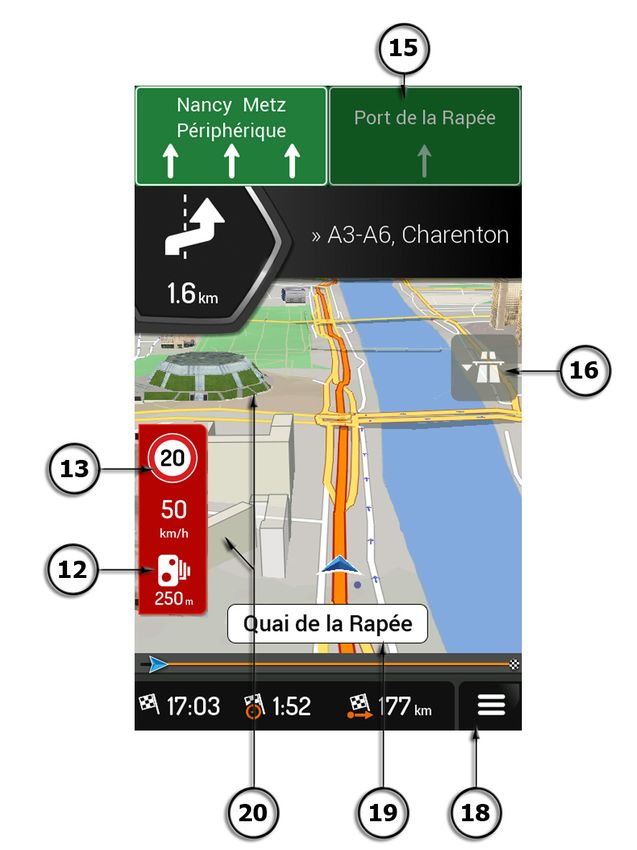
Table of contents
1 Getting started .........................................................................................................5
   1.1 Initial set-up ................................................................................................................... 5
   1.2 Downloading new maps and other content .................................................................... 7
   1.3 Screen controls............................................................................................................... 9
       1.3.1 Using the buttons and other controls.................................................................................... 9
       1.3.2 Using the cursor ................................................................................................................. 11
       1.3.3 Using the keyboard ............................................................................................................ 11
       1.3.4 Using touch gestures .......................................................................................................... 13
       1.3.5 Manipulating the map ........................................................................................................ 14
   1.4 Navigation view ........................................................................................................... 16
       1.4.1 Streets and roads ................................................................................................................ 19
       1.4.2 GPS position markers ....................................................................................................... 19
       1.4.3 Turn preview and next street............................................................................................. 19
       1.4.4 The planned route .............................................................................................................. 19
       1.4.5 Manoeuvre icons ............................................................................................................... 20
       1.4.6 Lane information............................................................................................................... 21
       1.4.7 Signposts ............................................................................................................................ 22
       1.4.8 Junction view ..................................................................................................................... 22
       1.4.9 Tunnel view ....................................................................................................................... 23
       1.4.10 Motorway services ........................................................................................................... 24
       1.4.11 3D object types ................................................................................................................ 24
       1.4.12 Traffic events ................................................................................................................... 25
   1.5 Navigation menu .......................................................................................................... 25
2 Warnings and safety information ........................................................................28
3 Using the navigation..............................................................................................29
   3.1 Selecting a destination ................................................................................................. 29
       3.1.1 Using combined search ...................................................................................................... 29
       3.1.2 Selecting an address ........................................................................................................... 33
           3.1.2.1 Entering an address ................................................................................................................... 33
           3.1.2.2 Selecting a town centre .............................................................................................................. 36
           3.1.2.3 Selecting the midpoint of a street ............................................................................................... 37
           3.1.2.4 Selecting an intersection in a town ............................................................................................ 38
           3.1.2.5 Using the postcode to select a destination ................................................................................. 40
       3.1.3 Selecting a Place of Interest ............................................................................................... 40
           3.1.3.1 Using Quick search categories .................................................................................................. 41
           3.1.3.2 Searching by category................................................................................................................ 43
           3.1.3.3 Searching by name ..................................................................................................................... 45
           3.1.3.4 Searching For A Place Using Online Search ............................................................................. 47
           3.1.3.5 Finding help nearby ................................................................................................................... 49

                                                                            2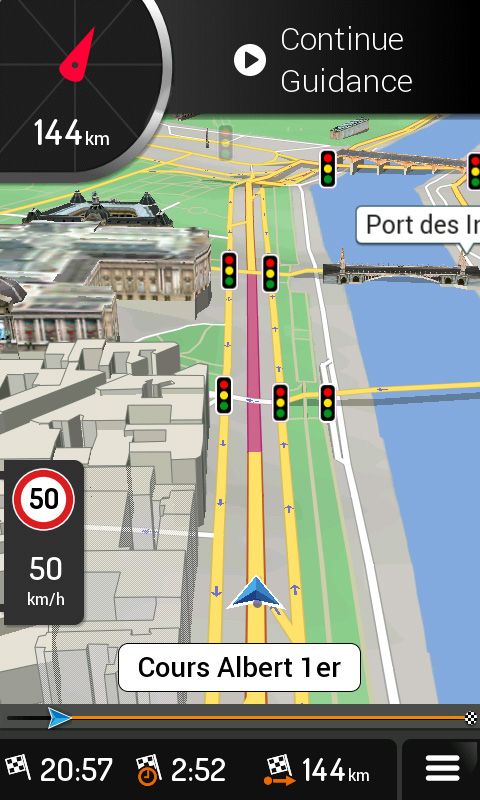
3.1.4 Selecting a Saved Location ................................................................................................ 51
      3.1.5 Selecting a History item ..................................................................................................... 52
      3.1.6 Selecting a saved route ...................................................................................................... 54
      3.1.7 Entering coordinates .......................................................................................................... 55
      3.1.8 Selecting a location on the map ......................................................................................... 57
      3.1.9 Planning a Multipoint Route .............................................................................................. 58
  3.2 Checking route information and alternatives .............................................................. 59
  3.3 Checking Traffic Events ............................................................................................... 61
  3.4 Editing the route .......................................................................................................... 62
      3.4.1 Setting a new starting point................................................................................................ 63
      3.4.2 Adding an additional destination ....................................................................................... 64
      3.4.3 Modifying the list of destinations ...................................................................................... 65
      3.4.4 Saving the planned route.................................................................................................... 66
      3.4.5 Deleting the planned route ................................................................................................. 67
      3.4.6 Selecting a route alternative when planning the route ....................................................... 67
      3.4.7 Selecting a route alternative for an existing route .............................................................. 68
      3.4.8 Setting a detour .................................................................................................................. 69
      3.4.9 Pausing guidance ............................................................................................................... 70
  3.5 Saving a location.......................................................................................................... 70
      3.5.1 Editing a saved location ..................................................................................................... 72
  3.6 Adding an Alert Point .................................................................................................. 72
  3.7 Running a Simulation ................................................................................................... 73
4 Reference guide .....................................................................................................76
  4.1 Concepts....................................................................................................................... 76
      4.1.1 2D/3D GPS reception ........................................................................................................ 76
      4.1.2 Road safety cameras and other proximity Alert Points ...................................................... 76
      4.1.3 Route calculation and recalculation ................................................................................... 77
      4.1.4 Smart Zoom ....................................................................................................................... 77
      4.1.5 Speed limit warning ........................................................................................................... 77
      4.1.6 Real-time traffic ................................................................................................................. 78
      4.1.7 Intelligent navigation ......................................................................................................... 78
          4.1.7.1 Congestion detour on highways ................................................................................................. 79
          4.1.7.2 Real-time alternative routes ....................................................................................................... 80
          4.1.7.3 Parking around destination ....................................................................................................... 81
          4.1.7.4 Hints upon detour ...................................................................................................................... 81
  4.2 Useful Information menu ............................................................................................. 81
      4.2.1 Where Am I ....................................................................................................................... 82
      4.2.2 Trip Monitor ...................................................................................................................... 83
  4.3 Settings menu ............................................................................................................... 84
      4.3.1 Route preferences settings ................................................................................................. 85
          4.3.1.1 Route Planning Method types .................................................................................................... 86

                                                                           3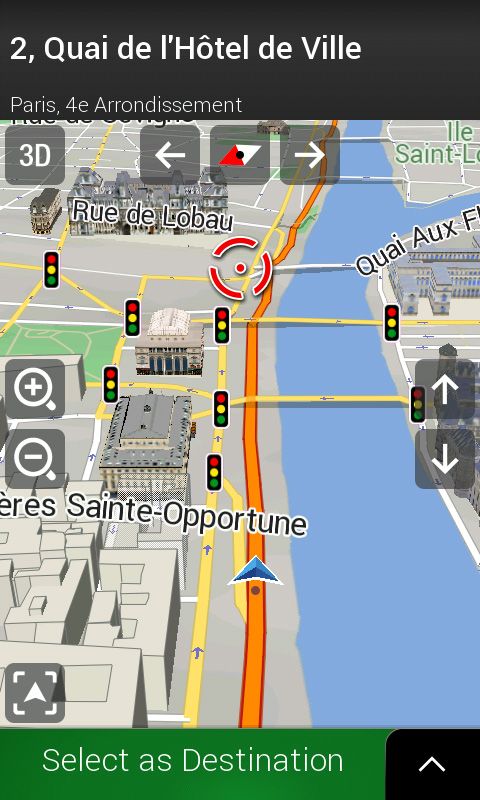
4.3.1.2 Road types.................................................................................................................................. 86
      4.3.2 Sound settings .................................................................................................................... 87
      4.3.3 Warnings settings ............................................................................................................... 89
      4.3.4 Navigation View settings ................................................................................................... 90
      4.3.5 Regional settings ................................................................................................................ 92
      4.3.6 Display settings .................................................................................................................. 93
      4.3.7 Traffic settings ................................................................................................................... 93
      4.3.8 Trip Monitor settings ......................................................................................................... 93
      4.3.9 Usage Reports settings ....................................................................................................... 94
      4.3.10 Advanced Settings ........................................................................................................... 94
5 Troubleshooting.....................................................................................................95
  5.1 GPS signal cannot be received .................................................................................... 95
  5.2 Address cannot be found .............................................................................................. 95
  5.3 The calculated route is not optimal.............................................................................. 95
  5.4 Disabling the speed limit warning ............................................................................... 96
  5.5 Keyboard buttons are greyed out ................................................................................. 97
  5.6 The map is hidden behind an image of a junction ....................................................... 97
6 Copyright note .......................................................................................................98

                                                                             4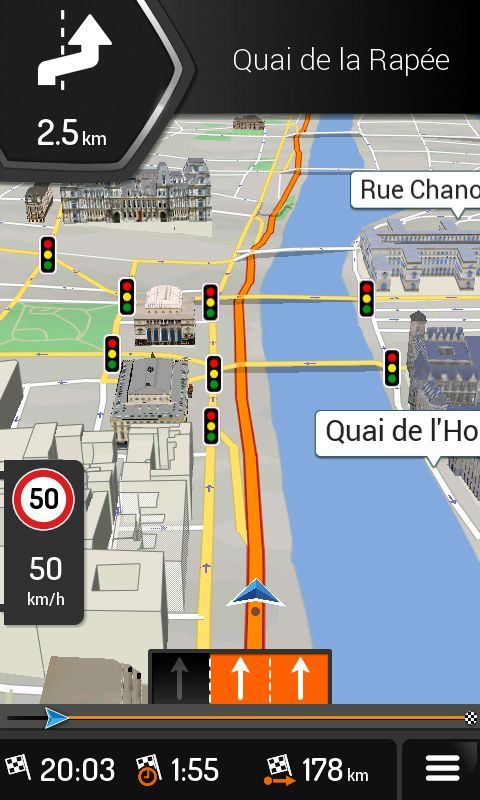
1 Getting started
iGO Navigation app is optimised for in-car or pedestrian use. You can use it easily by tapping
the screen buttons and the map with your fingertips.

Free Map updates
You can download updated maps for your navigation system for free throughout the lifetime of
the product.

1.1 Initial set-up
When using the navigation software for the first time, an initial set-up process starts
automatically.

  1.   The language of the application is taken from the language settings of iGO Navigation
       app. You do not need to select the language.
  2.   You are now asked whether you allow the software to collect usage information and
       GPS logs that may be used for improving the application and the quality of maps. Tap

                           to allow the anonymous statistics or disable this function. Later
       you can turn them on or off individually in Usage report settings (page 94).

  3.   The Configuration Wizard starts. Tap                       to continue.
  4.   Select the language and speaker used for voice guidance messages. Later you can

       change it in Regional settings (page 87). Tap                      to continue.

                                               5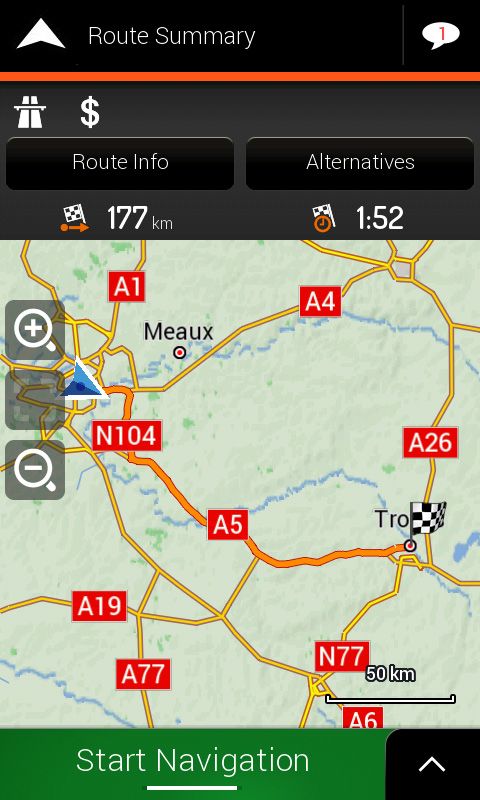
5.   If needed, modify the time format and unit settings. Later you can change them in

     Regional settings (page 92). Tap                       to continue.

6.   If needed, modify the default route planning options. Later you can change them in

     Route Preferences (page 85). Tap                        to continue.

7.   Please read the Content Download Notice about the terms of purchasing and

     downloading map content for navigation. Tap                           to continue.
8.   Please read the Trial Package Notice about the terms of using trial versions of

     navigation content packages. Tap                        to continue.

                                             6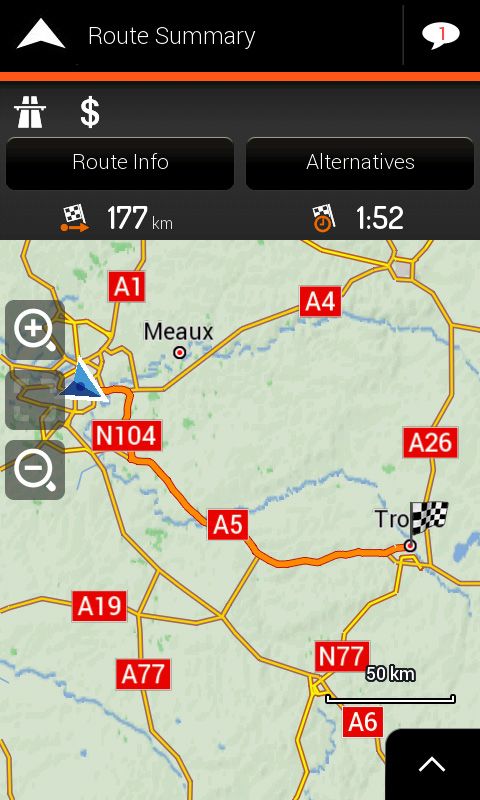
9.   The initial set-up is now complete, tap                    .

 10.   At the end of the set-up process, you are reminded that he application does not contain
       any maps yet. To get the maps that you are entitled to download for free, or to

       purchase further content, tap                    . This will take you to the in-app
       Shop. For instructions on using the Shop, continue with the next chapter in this guide.

1.2 Downloading new maps and other content
Perform the following steps to download free or pay maps or other navigation-related content
to your phone, including:

   •   New map packages
   •   Map updates
   •   Online service subscriptions
   •   Places of interest, 3D buildings, and other extras.

  1.   In the Navigation menu, tap         and                        .

                                                 7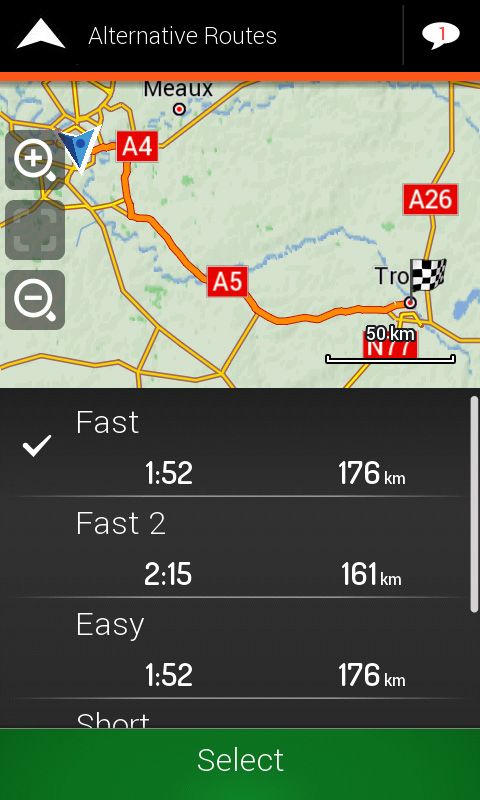
2.   Select the required item and tap                     or the price of the item.

               Items that you have already purchased and have not yet downloaded to your

       Note!
               phone, also appear in the list. Tap                   , any time to
               download them to your phone.
3.   For most content packages, you can further select individual items to download (for
     example, you can select specific country maps within a continent or region.)

     Tap all items that you need, and then tap                     to continue. The
     download process starts.

4.   After the download is completed, tap                      to continue.

                                             8
5.     To complete the installation, the application has to be restarted. Tap

                               in the message box.

                  You can delete a map from your device if are not going to use it for a while
                  and want to free up some space. Deleted maps can be downloaded again
                  from the Shop any time. To delete an installed map, tap its name in the

           Tip!   Shop, then select                       . Alternatively, to delete an entire

                  package in the Shop, do as follows: tap ^, then                        , then

                  again, tap        and finally, tap                     .

1.3 Screen controls
The following sections describe the functionality and use of buttons, sliders, and other screen
controls in iGO Navigation app.

 1.3.1 Using the buttons and other controls
To operate iGO Navigation app, tap the buttons on the touch screen.

  Type              Example                    Description                        Function

Button                                 Opens a new screen where        Tap it once.
                                       you can set a parameter.

                                                 9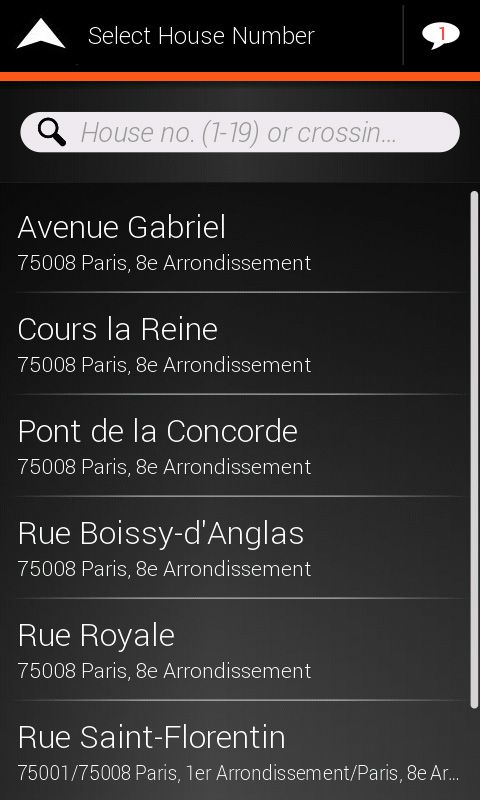
Button       Displays the current value of   Tap it once.
with value   a field or setting where the
             value can be changed. After
             the change, the new value
             is shown on the button.

Icon                                         Tap it once to open a
             Provides additional
                                             screen with additional
             information, for example
             traffic summary or itinerary.   information or options.

List         Shows multiple options.         Grab the list anywhere
                                             and slide your finger up or
                                             down. Depending on the
                                             speed of sliding, the list
                                             scrolls fast or slow, only a
                                             bit or till the end.

Switch       Shows whether a feature is      Tap it to turn the switch on
             enabled when there are only     or off.
             two choices.

Slider       When a feature can be set       Drag the handle to move
             to different values in a        the slider to its new
             range, iGO Navigation app       position.
             shows an indicator on a
                                             Tap the slider where you
             gauge that displays and
                                             want the handle to
             sets the value.
                                             appear.

                                             Each key is a touch
Virtual      Used to enter text and
                                             screen button.
keyboard     numbers.

                       10
The Navigation menu may contain several menu items on one or more pages.
You need to confirm selections or changes only if the application needs to be restarted, if it
needs to perform a major reconfiguration, or if you are about to lose some of your data or
settings. Otherwise, iGO Navigation app saves your selections and applies the new settings
without confirmation as soon as you use the controls.
1.3.2 Using the cursor
You can select a map location in the following ways:
• By tapping the map when navigating
• By tapping the map when you are asked to confirm the destination at the end of a
search.
When a map location is selected, the cursor ( ) appears at the selected point on the
map.
The location of the cursor can be used as the destination of the route or a new Alert Point.
You can also search for Places around it or add this location to your saved locations.
You can also select some of the objects on the map. If you tap the map at the icon of a Place
or traffic event, the object is selected, and you can get information about this object or use it
as a route point.
1.3.3 Using the keyboard
You can type with your fingertips on the screen keyboards and you can switch between
various keyboard layouts, for example English, Greek or numerical. Only those keyboard
buttons are active that can be used to type a name that is available on the map. The other
keys are greyed out.
Action Function
Switching to another
keyboard layout, for
example from an English Tap and select the new keyboard layout from the list.
keyboard to a Greek
keyboard
11Correcting your entry on the
keyboard
Tap to remove the unnecessary character(s).
Tap and hold the button to delete several characters or the
entire input string.
Entering a space, for
example between a first
name and a family name or Tap the button at the bottom centre of the
in multi-word street names screen.
Entering upper and lower
By default, when entering a text, the first character appears in
case letters
upper case while the rest of the text is in lower case. Tap
to enter an upper case letter or tap it twice to turn on
Caps Lock. Tap again to use lower case letters.
Entering numbers and
symbols
Tap to switch to a keyboard offering numbers and
symbols.
Finalising the keyboard
entry
Tap .
Starting a search for a
keyboard entry
Tap .
Hiding the keyboard
Tap .
121.3.4 Using touch gestures
You usually need to tap the screen only once. However, some useful features can be
accessed with other gestures. See the table below.
Action Function
Tapping and
Tap and keep pressing the following buttons to reach extra functions:
holding the
screen • Tap and hold the following button on list and menu screens to
show the Navigation view: .
• Tap and hold any of the following buttons on the Navigation view to
rotate, tilt, or scale the map continuously: , , ,
, , .
• Tap and hold the following button on keyboard screens to quickly
delete several characters: .
Drag the screen in the following cases:
Dragging
• To move the handle on a slider.
• To scroll a list: grab the list anywhere and slide your finger up or
down. Depending on the speed of the sliding, the list scrolls faster
or slower, only a bit or till the end.
• To move the map in map browsing mode: grab the map, and move
it in the desired direction.
Using pinch Use pinch zoom on the Navigation view to zoom in and out by moving two
zoom fingers in a pinch gesture.
131.3.5 Manipulating the map
If you tap the map anywhere during navigation, the map stops following the current position
(the blue arrow arrow is not locked in a fix position on the screen anymore) and control
buttons appear to help you modify the map view.
You can perform the following actions on the map:
Action Button(s) Function
Checking No buttons The top section of the Navigation view shows
location information about the selected point (the cursor
information
).
Moving the No buttons
Move the map in any direction: tap and hold the map
map by
and move your finger towards the direction you want
dragging to move the map.
Zooming in
Change how much of the map is displayed on the
and out
screen.
,
iGO Navigation app uses maps that let you examine
the locations at various zoom levels, always with
optimised content. It always displays street names
and other text with the same font size, never upside-
down, and you only see the streets and objects that
you need.
Map scaling has a limit in 3D map view mode. If you
zoom out further, the map switches to 2D view
mode.
Tap once to modify the view in a large step, or tap
and hold the button to modify it continuously and
smoothly.
14Tilting up and
Change the vertical view angle of the map in 3D
down
, mode.
Tap once to modify the view in a large step, or tap
and hold the button to modify it continuously and
smoothly.
Rotating left
Changes the horizontal view angle of the map.
and right
, Tap once to modify the view in a large step, or tap
and hold the button to modify it continuously and
smoothly.
Changing 2D,
Switch between the 3D perspective, 2D Heading up,
3D, or 2D
and 2D North up map view modes. In Heading up
North up views , ,
mode the map is rotated so its top always points in
the current driving direction. This is the default
orientation in 3D map view mode. In North up mode,
the map faces North.
Checking the
The direction of the compass shows North.
compass
Returning to
Move the map back to follow the current GPS
normal
position. Automatic map rotation is also re-enabled.
navigation
The map manipulation buttons disappear and the
navigation continues.
Selecting
Open a list of additional features like saving a
additional
location, or searching for Places around the cursor.
options
Selecting a
Select the cursor location as a new destination. The
destination route is automatically calculated.
151.4 Navigation view
The navigation view is the main screen of iGO Navigation app that shows the planned route
on a map. iGO Navigation app works with digital maps which are not simply the computerised
versions of traditional paper maps. Similarly to paper road maps, the 2D mode of digital maps
shows you streets and roads. Elevation is also illustrated in colour.
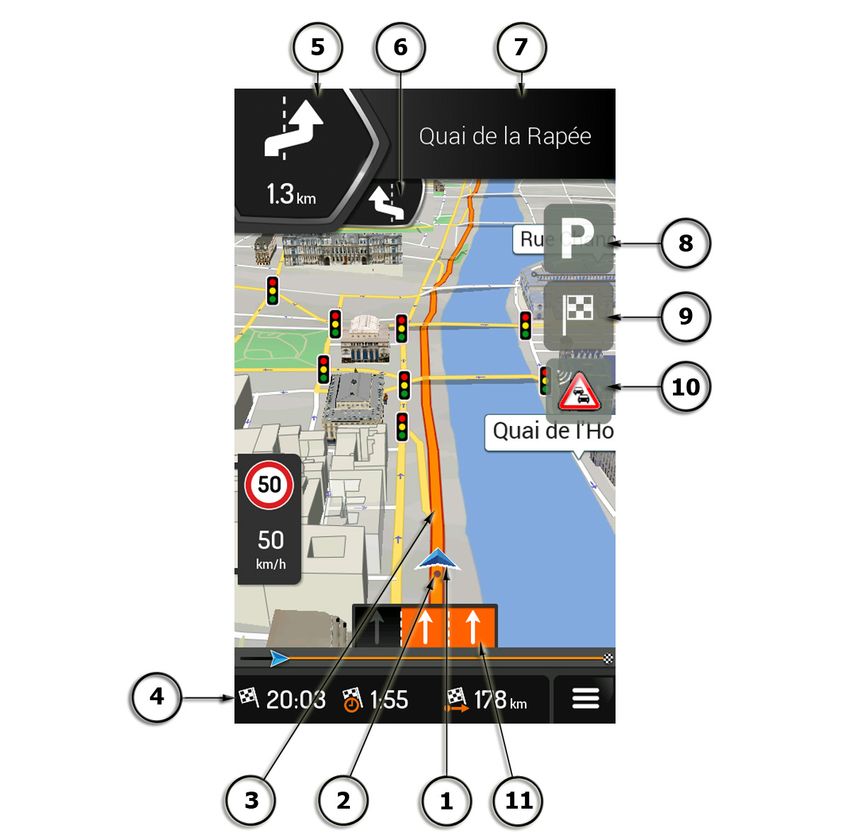
The navigation view displays the following screen buttons, data fields, and route information
on the map during navigation:
Note! Some buttons, fields, or icons may not be available in your product version.
16Number Name Description
1 Current The current position is displayed as a blue arrow arrow by
position default. When there is no GPS position, the current position
marker marker is transparent and it shows your last known position.
See page 19.
2 GPS position The dot near the arrow shows the GPS position as perceived
by the GPS receiver. See page 19.
3 Planned route
The planned route is displayed as an orange line line.
4 Data fields
Three data fields show the following information:
• The estimated time of the arrival at the destination.
• The remaining time of the trip.
• The remaining distance to the destination.
Tap this area to access the Trip Computer screen with
additional information about the current trip on a dashboard
and in the Trip Summary.
You can change the default values in Settings (page 90) or by
tapping and holding the area where the data fields appear.
If you have not selected a destination, you can see your
heading instead of the three data fields.
Next turn It shows the type of the next manoeuvre and its distance. See
5 preview page 19.
6 Second next It shows the type of the second next manoeuvre if it is near the
turn preview first one. See page 19.
7 Next street
It displays the name of the next street. See page 19.
If you have not selected a route destination, you can see
nearby house numbers, if they are available.
8 Parking It appears near the destination. By tapping it, you can check
around the available parking facilities around your destination. See
destination page 81.
9 Destination It appears near the destination. By tapping it, you can check
menu the trip summary, find Places around your final destination,
save the current location, switch to pedestrian navigation or
suspend the navigation.
10 Traffic It shows traffic-related information. See page 61.
11 Lane On multi-lane roads, it shows the lanes ahead and their
information directions. The highlighted arrows represent the lanes and
direction you need to take. See page 21.
1712 Alert point It shows the type of the alert points when approaching a road
warning safety camera or other Alert Points like school zones or
railroad crossings. You must make sure that using this feature
is legal in the country where you intend to use it. See page 89.
13 Speed limit It shows the current speed limit of the road. See page 89.
warning
15 Signpost It shows the available destinations and the road numbers. See
page 22.
16 Motorway By tapping it, you can check the details of the next few service
services stations (petrol stations, restaurants) when travelling on a
motorway. See page 24.
18 Navigation By tapping it, you can open the Navigation menu, where you
menu can reach other parts of iGO Navigation app.
19 Street name
It shows the current street name. By tapping it, you can open
the Where Am I screen. See page 82.
20 3D objects They display hills, mountains, roads, landmarks, and buildings
in 3D.
If you are approaching a motorway exit or a complex intersection and the needed information
exists, the map is replaced with a 3D view of the junction. See page 22.
When entering a tunnel, the map is replaced with a generic tunnel image. See page 23.
181.4.1 Streets and roads
iGO Navigation app shows the streets similarly to paper road maps. Their width and colours
correspond to their importance; you can easily tell a motorway from a small street.
1.4.2 GPS position markers
When your GPS position is available, iGO Navigation app marks your current position. By
default, this marker is a blue arrow arrow. The dot near the arrow shows the GPS position as
perceived by the GPS receiver.
The exact location of the current position marker depends on the vehicle type used for route
calculation. It can be set inRoute preferences (page 1).
• If you choose pedestrian navigation, the current position marker is at your exact GPS
position. The direction of the icon shows your current heading.
• In all other cases, the position marker may not show your exact GPS position and
heading. If roads are near, the GPS position is locked on the road and aligned to the
nearest road to suppress GPS position errors, and the direction of the icon is aligned to
the direction of the road.
1.4.3 Turn preview and next street
When navigating a route, the top section of the Navigation view shows information about the
next route event (manoeuvre) and the next street or the next town.
There is a field in the top left corner displaying the next manoeuvre. Both the type of the
manoeuvre (turn, roundabout, exiting motorway, and so on) and its distance from the current
position are displayed.
A smaller icon shows the type of the second next manoeuvre if it is near the first one.
Otherwise, only the next manoeuvre is displayed. Tap the icon of the actual manoeuvre to
open the Itinerary screen.
1.4.4 The planned route
The planned route is the currently navigated route. Whenever the destination is set, the route
is active until you delete it, reach your destination or suspend navigation. iGO Navigation app
displays the route in the following ways:
19Symbol Name Description
Current GPS
It is your current position displayed on the map.
position
and starting point • In pedestrian mode it is the GPS position.
• If a vehicle is selected for route calculation and
roads are near, the arrow jumps to the nearest road.
• Normally, if GPS position is available, the route
starts from the current position. If there is no valid
GPS position, iGO Navigation app uses the last
known position as the starting point.
Waypoint
It is an intermediate destination of the route before
(intermediate reaching the final destination.
destination)
Destination (end It is the final destination of the route.
point)
Route colour
The route always stands out with its colour on the map,
both in daytime and night colour modes.
Streets and roads You can choose whether you want to use or avoid certain
that are excluded road types (page 85). However, when iGO Navigation app
from the navigation cannot avoid such roads, the route includes them and
shows them in a colour that is different from the route
colour.
Streets and roads Road segments may be affected by traffic events. These
that are affected by streets and roads are displayed in a different colour, and
traffic events small symbols displayed along the route show the type of
the traffic event.
1.4.5 Manoeuvre icons
During navigation the next manoeuvre is displayed in the top left corner. Most of the
manoeuvre icons are intuitive. The following table lists some of the frequently shown route
events:
Icon Function
Turn left.
Turn right.
Turn back.
20Icon Function
Bear right.
Turn sharp left.
Keep left.
Continue straight in the intersection.
Enter the roundabout and take the first exit (next
manoeuvre).
Enter the roundabout (second next manoeuvre).
Enter the motorway.
Exit the motorway.
Board the ferry.
Leave the ferry.
Approaching a waypoint on the right.
Approaching the destination.
1.4.6 Lane information
When navigating on multi-lane roads, it is important to take the appropriate lane in order to
follow the planned route. If lane information is available in the map data, iGO Navigation app
displays the lanes and their directions using small arrows at the bottom of the map.
Highlighted arrows represent the lanes and the direction you need to take.
211.4.7 Signposts
If necessary information is available, iGO Navigation app displays signposts at the top of the
map. The colour and style of the signposts are similar to the real ones you can see above
roads or by roadsides. They show the available destinations and the road numbers.
All signposts look similar when cruising (when there is no planned route). During navigation
only the signpost that points to the lane(s) to be taken is highlighted; all the others are darker.
If you want to hide the currently displayed signposts, tap any of them and the normal
Navigation view returns until new signpost information is received.
You can modify the signpost settings in (page 90).
1.4.8 Junction view
If you are approaching a motorway exit or a complex intersection and the needed information
exists, the map is replaced with a 3D view of the junction. The lanes you need to take are
displayed with arrows. At the top of the screen, road signs show you additional information.
If you want to hide the currently displayed junction and return to the Navigation view, tap the
picture.
There are two kinds of Junction Views:
Provider Junction Views show a realistic view of the junction with realistic pictures of the road
signs.
22Where Provider Junction Views are not available but the necessary information exists,
Generic Junction Views show a generic view of the junction, focusing on the number and
layout of lanes only. The road signs are created from road shield, road number, and
destination information received in the map data.
Junction view can be turned off in . See page 90.
1.4.9 Tunnel view
When entering a tunnel, the map is replaced with a generic tunnel image so that surface
roads and buildings cannot distract you.
The top-down overview of the tunnel displayed in a separate window helps you orientate
yourself. The remaining distance in the tunnel is also displayed.
After leaving the tunnel, the original map view returns.
Tunnel view can be turned off in . See page 90.
231.4.10 Motorway services
When you are driving on a motorway, the button appears at the top right corner of the
Navigation view. Tap it to open a panel with the details of the next few service stations (petrol
stations, restaurants).
Tap any of them to display the exit area on the map. You can now easily add this service
station as a waypoint to your route if necessary.
If you want to display other types of Places at the next few service stations, you can change
the icons in . See page 90.
1.4.11 3D object types
iGO Navigation app supports the following 3D object types:
Type Description
3D terrain iGO Navigation app displays 3D hills and mountains in the Navigation
view, and illustrates them by colouring and shading on the 2D map.
Elevated roads
Elevated roads are complex intersections and vertically isolated roads
(such as overpasses or bridges) displayed in 3D.
3D landmarks Landmarks are 3D representations of prominent or well-known objects.
3D buildings
3D buildings are block representations of full town building data containing
actual building sizes and positions on the map.
241.4.12 Traffic events
Road segments affected by traffic events are displayed in a different colour on the map.
The following icons may appear at the top right corner of the screen:
Button Description
It is displayed when traffic events are not received.
It is displayed when traffic events are received but they do not affect the planned
route.
It shows the type of the next traffic event with the expected delay.
It shows the type of the next traffic event if it does not cause any delay or the delay
is not known.
For more information, see page 61.
1.5 Navigation menu
On the Navigation view, tap to open the Navigation menu.
25You can see the following menu options when you are navigating without a planned route:
Button Function
Select your destination by entering an address or its coordinates, or by
selecting a Place, a Saved Location, or a Saved Route. You can also
look up your recent destinations from the History. When Internet
connection is available, the Online Search option can be a further help
to find your destination.
Build your route from one or more route points. You can also plan a
route independently of your current GPS position by setting a new
starting point.
Check the traffic events affecting your route,
Access additional options and check navigation-related information.
Use the Shop to download free or pay maps or other navigation-
related content to your phone.
Customise the way the navigation software works.
The About section provides you with product information. Read the
Software and Database End User License Agreement, or check the
map and other contents of the application. You can also access
program usage statistics.
With a planned route, the following menu options are also available:
Button Function
Add an intermediate destination to your route.
See route alternatives to avoid parts of the route, or to avoid a specific
road from your planned route.
View the route in its full length on the map and check route parameters
and route alternatives. Tap to access additional options, like
Simulation or Route Preferences.
Delete your route.
Delete the next waypoint or the whole route. It is displayed if there is a
multipoint route.
26In the navigation menu, you have the following additional options:
Button Function
Open the Saved Locations screen where you can save a location as a favourite
destination or edit a saved location.
Set the volume or mute the navigation.
Switch to 2D ( ), 2D North up ( ) view or back to 3D mode.
Suspend navigation.
Resume navigation.
Check those notifications that contain important information but do not require
immediate action from the users. If there are no notifications, this icon is not
displayed.
The Menu button appears when the Navigation view is displayed. Tap it to open the
Navigation menu.
The More button appears on the screen to display additional features. Tap it to
open the list of additional features on certain screens.
Tap it to return to the map from any menu screen.
272 Warnings and safety information
The navigation system helps you find your way to your destination with the built-in GPS
receiver. iGO Navigation app does not transmit your GPS position; others cannot track you.
iGO Navigation app collects usage information and GPS logs that may be used for improving
the application and the quality of maps if you accept it when first using the application. The
data are processed anonymously; no one is able to track any personal information. If you
change your mind later, you can enable or disable the log collection in Settings (page 94).
It is important to look at the display only when it is safe to do so. If you are the driver of the
vehicle, we recommend that you plan and review your route before you start your journey.
Plan the route before your departure and stop if you need to change the route.
You must follow the traffic rules. If you deviate from the planned route, iGO Navigation app
changes the instructions accordingly.
283 Using the navigation
You can select the destination and start navigating to it right away (normal navigation) if you
need a route for immediate navigation.
You can also plan a route independently of your current GPS position even without GPS
reception. To achieve this, you need to set a new starting point in the Multipoint Route menu.
It also suspends guidance so that the route is not recalculated when a new position is
received. See Page 63.
You can plan routes with multiple destinations by selecting a first and a second destination
and adding it to your route. You can add as many destinations to your route as you like. See
Page 58.
3.1 Selecting a destination
You can choose your destination by selecting one of the following options:
• Using combined search to search among different destination types at once, see page
29
• Entering a full address or a part of an address, for example a street name without a
house number, see page 33
• Selecting a Place as your destination, see page 40
• Selecting a previously saved location as your destination, see page 51
• Selecting a location from the History of previously used destinations, see page 52
• Selecting a previously saved route, see page 54
• Entering the coordinate of the destination, see page 55
• Selecting a location on the map, see page 57
• Planning a multipoint route, see page 58.
• Selecting a destination using a picture, see page 1.
3.1.1 Using combined search
There are several ways to select your destination. You can initiate a separate search for
addresses, Places, saved locations, or recent destinations, but the fastest way to search for
any of these is to use combined search.
Perform the following steps to use combined search:
1. Tap on the Navigation view to access the Navigation menu.
2. Tap .
293. Tap . You can see the input field at the top of the screen. Right
next to it you can see the search area, the town around which the search is carried out.
The default search area is the area where you are located. For a local search, skip the
next step.
4. (optional) To search in a different area, tap the input field with the search area, and
start entering the name of the new search area on the keyboard.
You only need to enter a few letters to get a result. The most likely result appears
below the input field as you enter new letters.
a. If the new search area is in a different country, start entering the country and the
town. It is usually enough to type the first few letters of the country or town and
conventional abbreviations can also be used.
b. Tap to see the whole list of the matching results.
305. With the proper search area displayed, start entering the name, address, or category of
the destination you are looking for.
6. Tap to switch to the result screen. You can see all the results in
the list, regardless of their type. Addresses, Places, Place categories, Saved locations,
and recent destinations are mixed in one list. You can immediately select the result you
want to use as your destination or narrow the list of results for only one type (for
example, Places).
7. If necessary, tap on the right side of the list and then tap the corresponding
button to narrow the list of search results by type (the number on the related icon
shows the number of the matching results):
• Tap to see the list of recent destinations with a matching name or
address.
• Tap to see the list of your saved locations with a matching name.
• Tap to see the list of matching addresses.
• Tap to see the list of matching Place category names. Scroll the list and
select one of the categories. You get the list of Places in that category ordered
by their distance from your current position.
31• Tap to see the list of matching Places ordered by their distance from your
current location.
• (optional) If your product contains Places from different data providers, you can
further narrow the list by showing the results from one provider only. Look for
the provider logos. Tap one of them to see Places from that provider.
• Tap the Online Providers button to start the new search using the Online Search
facility. Wait for the results and select an item from the list.
To search for an intersection in the combined search, enter the names of the
streets connected by the '&' sign. You do not need to use spaces before and
after the separator character. For example you can find the intersection of
Collins Street and Douglas Avenue by entering strings, like "Collins St &
Tip! Douglas Ave", "Collins & Douglas", "Col&Doug", etc. The more precise the
input string is, the fewer false results are expected. If you enter "Collins St&",
you get all the intersections of Collins Street and you can select the
appropriate one from the result list.
8. Once the destination is selected, a full screen map appears with the selected point in
the middle. If necessary, tap the map somewhere else to modify the destination. The
cursor ( ) appears in the new location.
9. Check the settings for road types and change them if necessary.
Tap to enable or avoid motorways, tap for roads with Period Charge or
Per-use Toll, tap for ferries, or tap for carpool lanes.
10. Tap to confirm the destination, or tap to select a different
destination.
3211. The route is calculated and the map appears showing the entire route, where you can
check route information and route alternatives. Tap to modify the route
parameters, or tap to start your journey.
3.1.2 Selecting an address
If you know at least a part of the address, this is the quickest way to select your destination.
Using the same screen, you can find an address by entering the following information:
• The exact address, including the house number, see page 33
• The centre of a town, see page 36
• The midpoint of a street, see page 37
• An intersection, see page 38
• Any of the above, starting the search with the postal code, see page 40.
3.1.2.1 Entering an address
To enter an address as the destination, perform the following steps:
1. Tap on the Navigation view to access the Navigation menu.
2. Tap and .
333. By default, iGO Navigation app proposes the country and town where you are (or in
case there is no valid GPS position, the country and town of the last known position). If
necessary, change the country, by performing the following steps:
a. Tap the Country field.
b. In the Select Country screen, you can immediately select a country from the list
below the input field or start entering the first few letters of the country on the
keyboard.
c. Tap to open the list of results and select a country from the
list.
4. If necessary, select a new town by performing the following steps:
a. Tap the Town or Postcode field.
b. (optional) On the Town of Postcode screen, you can select a town from the list
of suggestions.
c. Otherwise, start entering the first few letters of the town. The names that match
the string appear in a list.
34d. To open the list, tap and select the town.
5. Enter the street name by performing the following steps:
a. Tap the Street name field.
b. (optional) On the Select Street screen, you can immediately select a street from
the list of suggestions.
c. Otherwise, start entering the street name on the keyboard. The names that
match the string appear in a list.
d. Tap to open the list of results. Select the street from the
list.
356. A full screen map appears with the selected point in the middle. If necessary, tap the
map somewhere else to modify the destination. The cursor ( ) appears at the new
location.
7. Check the settings for road types and change them if necessary.
Tap to enable or avoid motorways, tap for roads with Period Charge or
Per-use Toll, tap for ferries, or tap for carpool lanes.
8. Tap to confirm the destination. You can also select a nearby point
on the map or tap to select a different destination.
9. The route is calculated and the map appears showing the entire route, where you can
check route information and route alternatives. Tap to modify the route
parameters, or tap to start your journey.
3.1.2.2 Selecting a town centre
The town centre is not the geometric centre of the town but an arbitrary point the map
creators have chosen. In towns and villages, it is usually the most important intersection and
in larger towns, it is one of the important intersections.
361. Go to , , and modify the country as described
earlier (page 33), if necessary.
2. If necessary, select a new town by performing the following steps:
a. Tap the Town or Postcode field.
b. (optional) On the Town of Postcode screen, you can select a town from the list
of suggestions.
c. Otherwise, start entering the first few letters of the town. The names that match
the string appear in a list.
d. To open the list, tap and select the town.
3. Tap . This way the centre of the displayed town becomes the
destination of the route.
3.1.2.3 Selecting the midpoint of a street
To navigate to the midpoint of a street without entering the house number, perform the
following steps:
1. Go to , , and select the country and town as
described earlier. The Select Street screen appears.
2. Enter the street name by performing the following steps:
37a. Tap the Street name field.
b. (optional) On the Select Street screen, you can immediately select a street from
the list of suggestions.
c. Otherwise, start entering the street name on the keyboard. The names that
match the string appear in a list.
d. Tap to open the list of results. Select the street from the
list.
3. Instead of entering the house number, tap . The midpoint of the
street is selected as the destination.
3.1.2.4 Selecting an intersection in a town
To navigate to an intersection, perform the following steps:
1. Go to , , and select the country and city as
described earlier.
2. Enter the street name by performing the following steps:
a. Tap the Street name field.
38b. (optional) On the Select Street screen, you can immediately select a street from
the list of suggestions.
c. Otherwise, start entering the street name on the keyboard. The names that
match the string appear in a list.
d. Tap to open the list of results. Select the street from the
list.
3. Tap the House number or crossing street field and browse the list of crossing streets or
start entering the street name in the field. Select one from the list.
393.1.2.5 Using the postcode to select a destination
You can also select any kind of destination by entering the postal code instead of the city
name. To select the postal code, perform the following steps:
1. Go to , , and modify the country as described
earlier (page 33), if necessary.
2. Tap the Town or Postcode field.
3. Enter the postcode by performing the following steps:
a. Tap to open the numeric keypad.
b. Start entering the postal code.
c. Tap to open the list of results.
d. Find the place you need.
4. Continue the search as described previously (page 33).
3.1.3 Selecting a Place of Interest
You can search for Places of Interest (Places) in the menu.
Using the same screen, you can find a Place by selecting one of the following options:
• Finding frequently searched types of Places with the Quick search categories, see
page 41
• Searching for a Place by its name, see page 45
• Searching for a Place by its category, see page 43
In case of emergency, you can also find help nearby, see page 49
403.1.3.1 Using Quick search categories
The Quick search feature helps you quickly find the most frequently selected types of Places.
Perform the following steps:
1. Tap on the Navigation view to access the Navigation menu.
2. Tap and .
The following Quick search categories appear:
• : If a planned route exists, petrol stations are searched
along the route.
• : If a planned route exists, accommodation is searched
around the destination.
• : If a planned route exists, restaurants are searched along
the route.
• : If a planned route exists, parking lots are searched around
the destination.
If there is no planned route (destination is not selected), the search is carried out
around the current position. If the current position is not available either (no GPS
signal), places are searched around the last known position.
413. Tap any of the quick search buttons to get an instant list of Places.
4. The Places in the list can be ordered by their distance from the current or last known
position, from the destination, or by the length of the necessary detour. If you need to
reorder the list, tap . To filter the list of results by providers, tap and then
the provider logo on the right side of the screen.
5. (optional) If needed, tap to further filter the list of results.
6. Browse the list and tap one of the list items. A full screen map appears with the
selected point in the middle. The name and address of the Place is displayed at the top
of the screen.
7. Tap to see the details of the selected Place, or to save the location. If there is a
telephone number saved for this Place, you can make a call to that number by tapping
the green button at the bottom.
8. If necessary, tap the map somewhere else to modify the destination. The cursor (
) appears at the new location.
9. Check the settings for road types and change them if necessary.
Tap to enable or avoid motorways, tap for roads with Period Charge or
Per-use Toll, tap for ferries, or tap for carpool lanes.
4210. Tap to confirm the destination. You can also select a nearby point
on the map or tap to select a different destination.
11. The route is calculated and the map appears showing the entire route, where you can
check route information and route alternatives. Tap to modify the route
parameters, or tap to start your journey.
3.1.3.2 Searching by category
To search for Places by their categories and subcategories, perform the following steps:
1. Tap on the Navigation view to access the Navigation menu.
2. Tap and .
3. Tap .
4. Select the area around which you would like to search for the Place by tapping
. By default, the search area is around the current position (or if it
is not available, around the last known position). In this case, the following result list is
ordered by the distance from this position.
• Tap to search along the planned route, and not around a
given point. This is useful when you search for a later stopover that results in a
minimal detour only, such as searching for upcoming petrol stations or
restaurants. (The result list is ordered by the length of the necessary detour.)
• Tap to search for a place around the destination of the
planned route. (The result list is ordered by the distance from the destination.)
43• Tap to search for a place within a selected town. (The
result list is ordered by the distance from the centre of the selected town.)
5. (optional) If you have selected , select the town to search in.
6. Select one of the main Place categories (for example, Accommodation), then browse
the subcategories (for example, Hotel or Motel) to find your destination.
447. You can turn the Category View off at any level to list all Places around the selected
location or along the route.
8. (optional) The Places in the list can be ordered by the following criteria:
• Name
• Their distance from the current or last known position
• Their distance from the selected town
• Their distance from the destination
• The length of the necessary detour.
Tap to reorder the list.
To filter the list of results by providers, tap and then the provider logo on the
right side of the screen.
9. Browse the list and tap one of the list items. A full screen map appears with the
selected point in the middle. The name and address of the Place is displayed at the top
of the screen.
10. The process continues the same way as in case of any other search for Places. See
page 41.
3.1.3.3 Searching by name
To search for a Place by name, browse the various Place categories, or use the mixture of
the two search types, perform the following steps:
1. Tap on the Navigation view to access the Navigation menu.
2. Tap and .
3. Tap to open the Search By Name or Category window.
4. Select the area around which you would like to search for the Place. By default, the
search area is around the current position (or if it is not available, around the last
45known position). In this case, the result list is ordered by the distance from this
position. Tap to select one of the following search areas:
• Tap to search for a place within a selected town. (The
result list is ordered by the distance from the centre of the selected town.)
• Tap to search for a place around the destination of the
planned route. (The result list is ordered by the distance from the destination.)
• Tap to search along the planned route, and not around a
given position. This is useful when you search for a later stopover that results in
a minimal detour only, such as searching for upcoming petrol stations or
restaurants. (The result list is ordered by the length of the necessary detour.)
5. (optional) If you have selected , select the town to search in.
46You can search for the name of a Place in all categories by performing the following steps:
1. Tap . Using the keyboard, start entering the name of the Place or
browse in the categories.
2. After entering a few letters, tap to open the list of Places or Place
categories with names containing the entered character sequence.
3. Browse the list, if necessary, and tap the desired list item. A full screen map appears
with the selected point in the middle. The name and address of the Place is displayed
at the top of the screen.
4. The process continues the same way as in case of any other Places search. See page
41.
3.1.3.4 Searching For A Place Using Online Search
If you have an Internet connection, you can search for places with the Online Search service.
1. Tap on the Navigation view to access the Navigation menu.
2. Tap , .
47You can also read


