Welwyn Garden City Town Centre North - Draft Supplementary Planning Document January 2014 - Consultation Home
←
→
Page content transcription
If your browser does not render page correctly, please read the page content below
WGC_TownCentreNorth_SPD_Cover_PRINT_Layout 1 08/01/2014 14:05 Page 1

                                                                       Welwyn Hatfield Borough Council
                                                                       Welwyn
                                                                       Garden City
                                                                       Town Centre
                                                                       North
                                                                       Draft Supplementary
                                                                       Planning Document
                                                                       January 2014

                                            Part of the Planning Framework

                                              www.welhat.gov.uk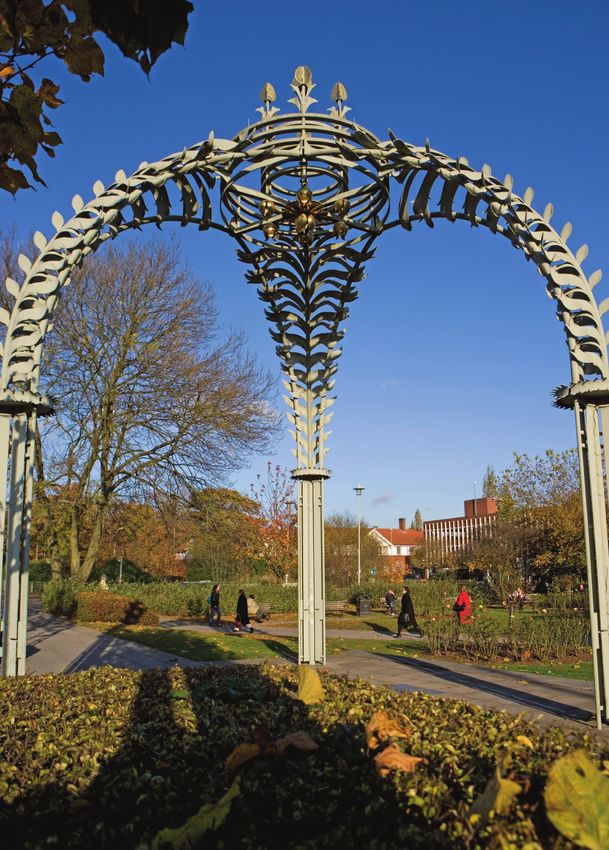
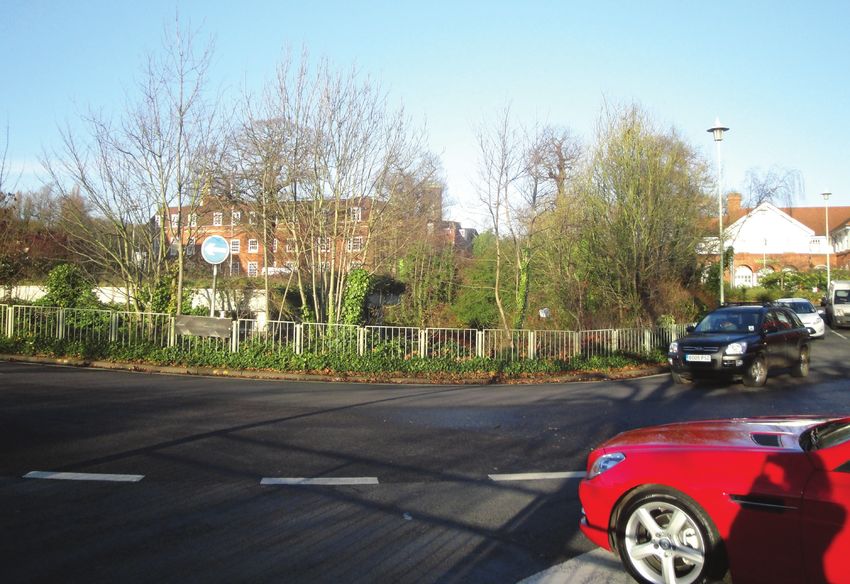
WGC_TownCentreNorth_SPD_Cover_PRINT_Layout 1 08/01/2014 14:05 Page 2

       The Welwyn Garden City Town Centre North Draft                  The Welwyn Garden City Town Centre North Draft
       Supplementary Planning Document is produced                     Supplementary Planning Document is also
       and published by:                                               available to view and download free of charge
                                                                       from the council’s website www.welhat.gov.uk
       Planning Policy and Implementation
       Welwyn Hatfield Borough Council                                 If you would like to receive this document in a
       The Campus                                                      different format please call 01707 357000 or
       Welwyn Garden City                                              email contact-whc@welhat.gov.uk
       Hertfordshire
       AL8 6AE

       Tel: 01707 357532
       Email: planningprojects@welhat.gov.uk
                                                                                                                         4064/PlanningPolicy/Jan14/N/BD

                                             Putting people first.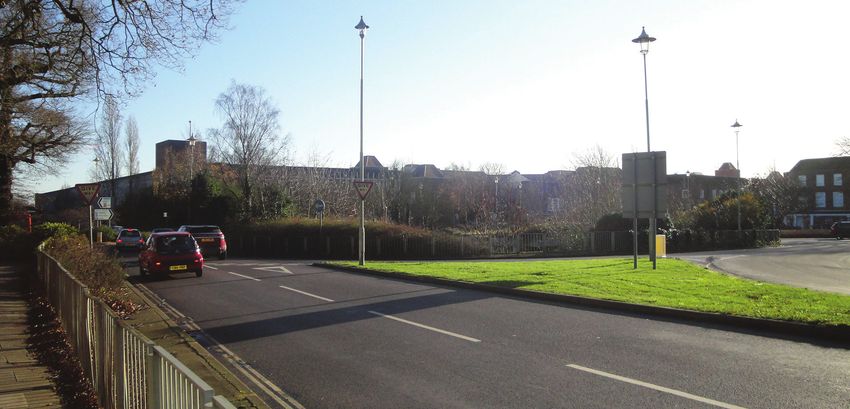
- WGC TCN SPD

                                                  Contents

Welwyn Garden City Town Centre North SPD

1 Introduction                                                    2
  1.1   Purpose of the SPD                                        2
  1.2   Status                                                    3
2 Planning Policy Framework                                       4
  2.1   National Policy                                           4
  2.2   Local Plan Policy                                         4
3 Background                                                      9
  3.1   Site Description and Wider Context                        9
  3.2   Ownerships                                                11
  3.3   Early Work                                                11
  3.4   Retail Need                                               13
  3.5   Market Review                                             14
  3.6   Heritage of Welwyn Garden City                            15
  3.7   Key Conclusions                                           16
4 Land Use Objectives                                             19
5 Key Considerations                                              21
  5.1   Heritage Issues                                           21
  5.2   Access, Circulation and Movement Issues                   23
  5.3   Urban Design Issues                                       26
6 Town Centre North Design Principles                             29
7 Indicative Development Approach                                 33
8 Other Planning Considerations                                   40
9 Implementation                                                  45

Appendices

1 Appendix 1: Planning Policy Context                             48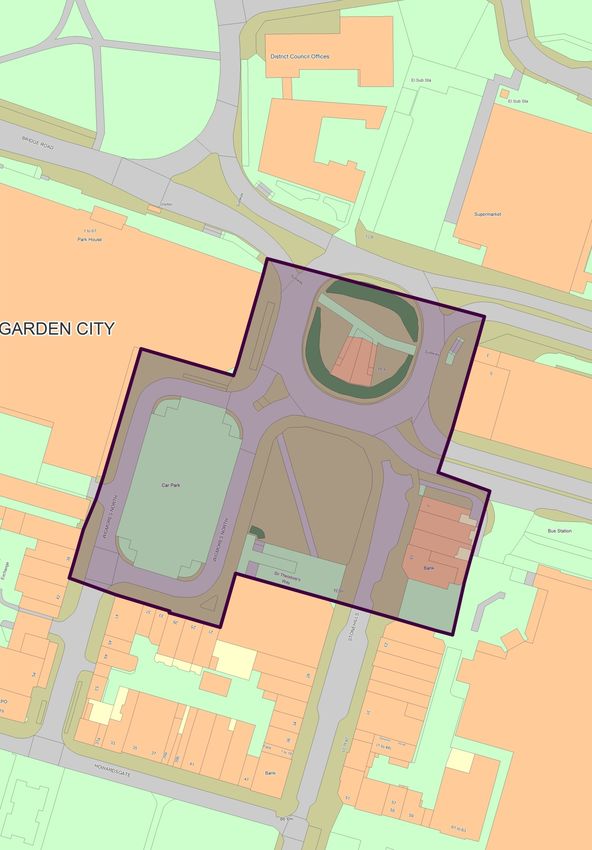
2     - WGC TCN SPD

1   Introduction
    1 Introduction
    1.1     Welwyn Garden City town centre is the main shopping and service centre for
            the borough providing a number of important civic, cultural, leisure and
            community facilities. Even though the town centre has some strengths as a
            primary retail destination it does have gaps in the quality and range of its retail
            ‘offer’ which has resulted in some shoppers choosing other retail centres.

    1.2     In consultation with local residents, retailers and landowners, Welwyn Hatfield
            Borough Council has drawn up a strategy for Welwyn Garden City town centre,
            the primary objective of which is to maintain and enhance the commercial,
            social and environmental success of the town centre and help to meet the future
            retail needs of the borough. The strategy is set out more fully in the adopted
            District Plan (available on the council’s website – www.welhat.gov.uk) and
            identifies three development sites within the town centre, two of which have
            already been delivered: the expansion of Waitrose which has provided additional
            convenience goods floorspace in a part of the town centre well served by parking
            and the redevelopment of Sainsbury's which has helped to re-anchor the
            southern side of the town centre.

    1.3     The remaining development site lies within the heart of the town centre and is
            known as Town Centre North, a site of 1.3 ha which is identified primarily for
            retail development, Policy TCR4 of the 2005 District Plan states that
            development of this site should only come forward in accordance with a planning
            brief which shall be adopted as Supplementary Planning Guidance (now to be
            adopted as a Supplementary Planning Document or SPD).

    1.1 Purpose of the SPD

    1.4     The aim of this planning brief is to provide detailed information to guide
            developers on the type of development, design and layout constraints and other
            requirements for the Welwyn Garden City Town Centre North development site,
            whilst also seeking to highlight how development of this site can help to address
            the wider objectives of the town centre strategy.

    1.5     This SPD will:

                 Confirm the council’s aspirations for the development of the site and ensure
                 that any development supports the wider vision and strategy for Welwyn
                 Garden City town centre.
                 Provide a detailed planning framework for the redevelopment of the site
                 and establish key design principles and development objectives to be
                 achieved.
                 Ensure that the development proposals have the flexibility to achieve their
                 full development potential and do not prejudice development proposals on
                 other sites.
                 Coordinate development, transport and public realm improvements
                 strategies in order to realise a comprehensive approach to development.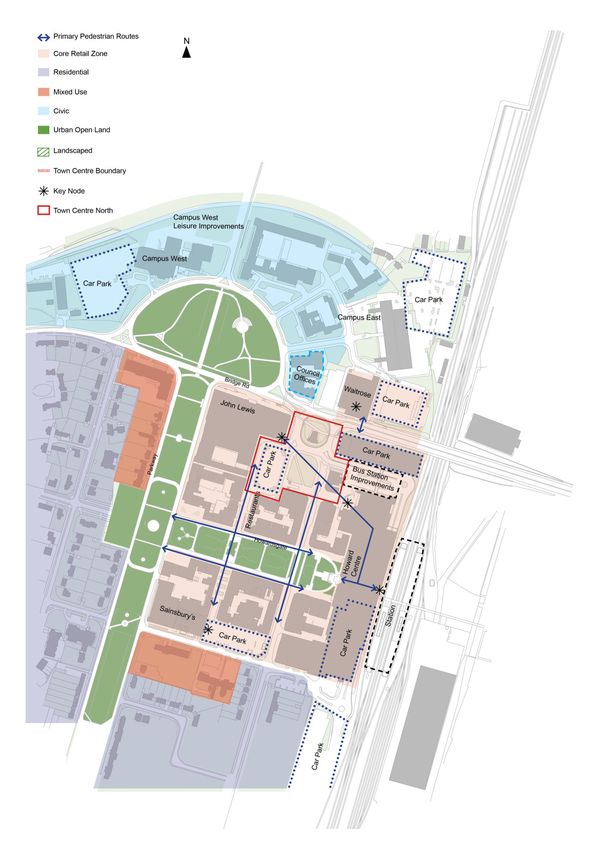
- WGC TCN SPD      3

                                                                   Introduction              1
             Promote and facilitate high quality design and sustainable development.
             Identify the range of potential benefits the council will be seeking from
             future development.
             Provide certainty for landowners and developers.

1.2 Status

1.6   This planning brief has been written by Welwyn Hatfield Borough Council in
      association with Broadway Malyan and Colliers International (a team appointed
      by the council) and is intended to expand upon Policy TCR4 of the Welwyn
      Hatfield District Plan (2005).

1.7   In accordance with European Directive 2001/42/EC the brief has been subject
      to a Strategic Environmental Assessment (SEA) and a sustainability appraisal
      of this draft SPD has been undertaken.

1.8   The council's Statement of Community Involvement (adopted December 2013)
      identifies how the council should consult with the local community. For the
      purposes of this draft SPD, the council will undertake consultation for a period
      of six weeks with various parties including residents, stakeholders, councillors
      and relevant statutory bodies. Comments made on this draft SPD will be
      recorded, analysed and considered, and any amendments that are required
      will be made prior to the SPD being adopted by the council.

1.9   Following the statutory consultation period, this brief (incorporating any
      amendments) will be adopted by the council as a Supplementary Planning
      Document (SPD). The SPD will then be a material planning consideration
      against which any planning application submitted in respect of the land covered
      by this guidance will be determined. Any planning application on this site should
      also accord with national and local policy as outlined in Appendix 1.
4     - WGC TCN SPD

2   Planning Policy Framework
    2 Planning Policy Framework
    2.1     This SPD has been prepared in accordance with the over arching policy
            framework at national and local levels, and good practice guidance. The SPD
            must be considered within the framework of the saved policies of Welwyn
            Hatfield District Plan 2005, the Design SPG, Planning Obligations SPD, the
            Parking Standards SPG and the National Planning Policy Framework. As the
            council's Core Strategy progresses through to adoption this will also become
            a material consideration in relation to any development proposals for this site.

    2.1 National Policy

    2.2     At a national level the National Planning Policy Framework (NPPF) advises
            that local planning authorities should recognise town centres as the heart of
            their communities and pursue policies to support their vitality and viability. In
            addition local planning authorities are required to plan positively and allocate
            a range of suitable sites to meet the scale and type of retail, leisure, commercial,
            office, tourism, cultural, community and residential development needed in town
            centres.

    2.2 Local Plan Policy

    Welwyn Garden City Town Centre Strategy

    2.3     The 2005 District Plan developed a strategy for the town centre to the period
            to 2011 along with the identification of three development sites to deliver local
            shopping needs. Two of these sites, involving the expansion of the Waitrose
            store and the redevelopment of the Sainsbury store in the town centre, have
            now been delivered. The Town Centre North development site is the last of
            these sites to come forward and needs to be considered in the context of the
            current retail climate. In looking forward the town centre strategy has been
            reviewed and the council has worked with the Welwyn Garden City Town Centre
            Partnership to refresh the strategy for the period up to 2029.

    2.4     The council and the Welwyn Garden City Town Centre Partnership have a
            shared vision for the town centre and this is set out in the council's Emerging
            Core Strategy.

        Vision for Welwyn Garden City Town Centre

        To maintain and enhance the commercial, social and environmental success of
        the town centre, building upon its unique heritage and strengths to achieve a
        prosperous and vibrant town centre offering a diverse range of activities in an
        attractive clean and safe environment for the enjoyment of the community and
        visitors alike.
- WGC TCN SPD    5

                                        Planning Policy Framework                            2
2.5   The strategy to deliver this vision has also been prepared in consultation with
      the Welwyn Garden City Town Centre Partnership and is closely aligned with
      the Partnership’s own aspirations for the town centre. The strategy states that
      “the council will support the development of Welwyn Garden City town centre
      as the borough’s primary comparison shopping retail destination. New
      development should make a positive contribution to improving the town centre’s
      viability and vitality, support the creation of a comfortable, safe, attractive and
      accessible shopping environment, and improve both the overall mix of land
      uses in the centre and its connectivity to adjoining areas”.

2.6   This will be achieved by:

          Providing opportunities for new retail investment in the town centre and
          other associated uses, to increase its retail offer and commercial viability
          and maintain or improve its position in the regional and local shopping
          hierarchy.
          Maintaining the centre’s important civic, cultural and community functions
          which should remain focused in The Campus area.
          Improving movement and access within the centre, giving priority to
          pedestrians, cyclists and public transport, whilst maintaining and optimising
          the management of car parking provision.
          Enhancing the quality of its environment, its open spaces and public realm,
          recognising the character of the garden city, in order to improve its
          attractiveness as a centre.
          Increasing the diversity of uses in the centre, in particular cafes, restaurants
          and pubs, but also residential, offices and leisure, so enhancing its
          attractiveness as a centre, extending its life into the early evening and
          providing a broader range of services to local people.
          Providing opportunities for shopping, community and leisure events to
          encourage more people to visit the town centre.

2.7   These actions are considered important if we are to enhance the vitality and
      viability of the town centre. The Town Centre Partnership have three working
      groups looking at issues related to the town centre environment, community
      safety and marketing. Together, these groups are working to help achieve an
      improved public realm, a safe shopping environment and supporting new
      activities and events in the town centre. With regard to the aspiration to maintain
      the town centres civic, cultural and community functions, the council is making
      significant investment in the facilities at Campus West to improve the leisure
      facilities on offer and increase visitor numbers. In terms of improving movement
      and access in the town centre it should also be noted that Hertfordshire County
      Council prepared an Urban Transport Plan for Welwyn Garden City in 2008
      which highlights a number of potential transport improvements in the town
      centre, including the layout of the bus interchange.

2.8   Whilst the council, the county council and the Town Centre Partnership are
      working to achieve shorter term projects and improvements in the town centre
      there is a need to plan for our future retail needs through the planning process.
6     - WGC TCN SPD

2   Planning Policy Framework
    2.9     This planning brief for Town Centre North seeks to further address the objectives
            of the Town Centre Strategy and guide development and enhancements towards
            improving shopping opportunities and enhancing the environment.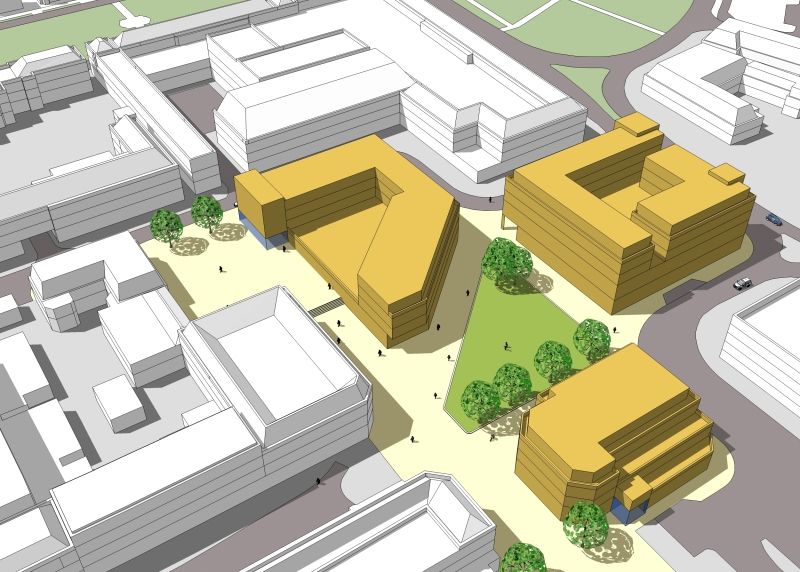
- WGC TCN SPD   7

           Planning Policy Framework                 2

Figure 1. Town Centre Strategy
8          - WGC TCN SPD

2   Planning Policy Framework
    Policy TCR4 - Town Centre North Development Site

    2.10 The Welwyn Hatfield District Plan was adopted in 2005. The District Plan states
         that the Town Centre North development site is the preferred site for retail
         development given its location within the primary retail core and the potential
         linkages with the Howard Centre and John Lewis. Policy TCR4 (Town Centre
         North Development Site) of the District Plan is the planning policy for the site
         and sets out several key objectives that the development of the Town Centre
         North site is required to achieve. The policy is set out in full in the following
         text box:

        Policy TCR4 - Town Centre North Development Site

        Land at Town Centre North in Welwyn Garden City, as defined on Inset Map 2,
        is identified for a major development scheme, in particular for comparison goods.
        Development should only be carried out in accordance with a Planning Brief for
        the site, to be subject to public consultation and approved by the Council as
        supplementary planning guidance, which will give detailed guidance on matters
        such as the quantity of floorspace, design, access and servicing, landscaping
        and open space.

        Should a larger development opportunity come forward in this location, the Council
        will consider its suitability in the light of the need for the additional floorspace and
        the ability of the transport infrastructure in the town centre to accommodate the
        increased number of trips.

        The Council will require any development to be designed to a high standard to:

        i.    Preserve and enhance the character of the Conservation Area;
        ii.   Create a new entrance to the town centre on its north side;
        iii.  Enhance the public realm and landscape within the town centre and achieve
              a strong visual linkage between the town centre and the Campus east
              Development Site;
        iv. Achieve good pedestrian access and linkage with the rest of the town centre;
        v. Ensure efficient vehicle movement on surrounding roads;
        vi. Provide adequate car parking to meet the needs of the development;
        vii. Seek to improve passenger transport provision in the town centre; and
        viii. Provide a range of retail units, which should enhance the quality of the retail
              provision in the town.

    2.11 The development objectives set out in the policy above provide the basis upon
         which the guidance set out in this document relating to the land use objectives,
         design principles and the proposed indicative development proposals have
         been developed and expanded upon.
- WGC TCN SPD 9
Background 3
3 Background
3.1 Site Description and Wider Context
Welwyn Garden City Town Centre
3.1 The town centre is part of the Welwyn Garden City Conservation Area. The
town is one of only two Garden Cities in the country (the other being Letchworth
Garden City) and was also designated as a New Town in the immediate post
war years. This unique history means that the Garden City's importance in
town planning is widely recognised. Sir Ebenezer Howard's Garden City concept
was to create economically independent cities with quality housing, short
commute times to the commercial centre, providing access to local amenity
space and preserved surrounding countryside - inspired as a response to the
poor conditions resulting from the urbanisation of London.
3.2 One of the distinctive features of the Garden City is the town centre. This was
purposefully laid out as the central civic and commercial core of the town and
was originally based around the idea of a single local store - Welwyn Stores -
now the home of John Lewis. Whilst the layout of the town centre, the tree
lined boulevards, wide green open spaces and the neo-Georgian architecture
have all contributed to the town's designation as a Conservation Area it is noted
that many of the town centre retail units are of relatively small footprint and
therefore struggle to accommodate modern retail requirements. The Town
Centre North site lies at the northern end of Welwyn Garden City Town Centre
and comprises four key spaces; the Bridge Road roundabout, Anniversary
Gardens, a surface car park currently leased to John Lewis Partnership and a
two storey retail block to the east of Stonehills.
The Town Centre North Site
3.3 The site is in an important position in relation to the town centre as a whole and
is surrounded by a number of key buildings occupied by major shopping
destinations and retailers. These include:
The former Welwyn Stores building, now occupied by John Lewis;
Hunters Bridge multi storey car park, the main car park for the town centre;
Debenhams and adjacent retailers to the south;
The main entrance to the Howard Centre, the main Welwyn Garden City
shopping mall; and
Waitrose and the council offices to the north across Bridge Road (B195).
3.4 The boundary of the SPD area is set out in Figure 2.10 - WGC TCN SPD
3 Background
Figure 2. Map of Town Centre North site
Crown Copyright. All rights reserved Welwyn Hatfield Borough Council LA100019547 2013- WGC TCN SPD 11
Background 3
3.5 The boundaries of the site effectively outline the gap in the building form in the
town centre and whilst it has no single dominant function it is well used by
pedestrians as part of their route between the Howard Centre and John Lewis.
3.2 Ownerships
3.6 The council has significant ownership in the site and other land/property within
the site is held by a mix of of local and national owner occupiers, investors and
businesses. Throughout the preparation of this brief there has been ongoing
discussion with key landowners in order to understand and help secure their
aspirations whilst achieving the objectives that the council has for this site.
3.3 Early Work
Issues and Opportunities Report – Work undertaken by Urban Practitioners
(2006 – 2008)
3.7 The council originally commissioned a team led by Urban Practitioners to provide
masterplanning and urban design advice to inform the future development of
the Town Centre North development site (alongside other designated
development sites).
3.8 As part of this process Urban Practitioners reviewed the work already completed
prior to 2006 (including the earlier visioning and urban design work undertaken
in the preparation of the 2005 District Plan) and undertook an appraisal of the
development site bearing in mind the policy context relevant at the time.
th
Included as part of this stage an Action Planning Day was held on 15
September 2006. This event allowed local residents, businesses, community
groups and other organisations the opportunity to express their views on key
issues related to the site. In addition further meetings with some of the key
stakeholders also took place. This consultation produced the following
suggestions in relation to the Town Centre North site:
Remove queueing into John Lewis car park.
Deal with the congestion on Stonehills.
Develop a strong pedestrian link between the Howard Centre and John
Lewis, with good retailing.
The John Lewis building is a landmark with distinctive fascia and portals
which should be maintained.
Anniversary Gardens should be adapted as a market place.
Develop new retail for the John Lewis car park, along with restaurants and
evening economy uses on Wigmores South.
Develop stronger links between John Lewis and Campus West.
3.9 In 2006 Urban Practitioners prepared the ‘Future Welwyn Garden City – A Plan
for Our Community: Issues and Opportunities Report’ which summarised their
initial findings and analysis taking on board context, transport analysis, property12 - WGC TCN SPD
3 Background
analysis, urban design analysis and initial consultation findings. This report
established issues and opportunities for key sites in Welwyn Garden City town
centre including the Town Centre North site.
3.10 As well as the suggestions promoted by key stakeholders as part of the
consultation process the report further identifies the following key objectives
for the Town Centre North site:
Establish a clear movement and use structure with hierarchy and definition
between pedestrians, cyclists, buses, cars and servicing.
Strengthen existing pedestrian links and legibility between central ‘anchors’
– John Lewis, Howard Centre, Howardsgate and Waitrose.
Improve pedestrian areas and pedestrian penetration.
Accommodate growth in retail provision within strong existing context,
orientating growth towards weaker areas to lift the whole centre.
Encourage appropriate evening economy uses to extend activity in the
centre.
Enhance informal green and landscaped public space in the centre, building
on the use of existing space, with attention to street furniture detail and
quality.
3.11 The opportunities for the site promoted in the report are set out as below:
Provide attractive surface level crossings over Bridge Road.
Consider the long term potential for the redevelopment of roundabout site
as retail or leisure space.
Partially develop the northern edge of Anniversary Gardens as a south
facing cafe and restaurant space.
Partially develop northern half of the John Lewis car park as retail space
with active uses on its eastern and southern facades.
Establish evening economy hubs along Wigmores North.
Redevelop the bus station area to provide a positive frontage to Howard
Centre, relocating bus station on to Stonehills and using the space for the
extension of retail and/or leisure use.
Reconfigure Stonehills to restrict vehicular traffic and accommodate bus
routes and stops.
Designing the Future, Welwyn Garden City Development Tests Stages 1 and 2,
MVA Consultancy (2009 and 2010)
3.12 This piece of work (summarised in two reports) investigates the feasibility of
the revised highway arrangement required to accommodate retail development
proposals at Town Centre North for 2008, 2016, and 2021 traffic conditions.
Paramics simulation software has been used to model the required changes
to the existing highway network and to identify the impact on local and potentially
wider area trip patterns. Furthermore the study identifies the mitigation
measures that could be considered to improve the performance of the network.- WGC TCN SPD 13
Background 3
3.13 The modelling work demonstrates that at the lowest development scenario
considered (9,300sqm retail floorspace) no further significant investment to the
wider highway network is likely to be required over and above the local highway
changes that are identified. The study recommends a phasing priority for the
mitigation measures recommended and those of a higher priority include; the
provision of a left in/left out arrangement for general traffic between Bridge
Road and Osborn Way; the removal of on street parking on Parkway Northbound
on the approach to The Campus; and, the signalisation of the approaches and
circulating arms of Parkway, Digswell Road and Bridge Road East at The
Campus roundabout. Only when the uppermost range of 28,900sqm of
additional retail provision is modelled would further significant investment into
the local wider highway network be required. The key outputs from this study
are outlined further in this SPD under Chapter 8 - Other Planning Considerations.
3.4 Retail Need
Retail and Town Centre Needs Assessment, Nathaniel Lichfield and Partners
Ltd (2007, with update in 2012)
3.14 As a Local Planning Authority we are required by government to allocate a
range of suitable sites to meet our retail needs (as set out in the NPPF). This
study provides an assessment of the borough's main retail centres and assesses
the future need for retail, commercial, leisure and other town centre uses. The
assessment considers factors such as retail trends, levels of available
expenditure and forecast expenditure, the proximity of competing shopping
destinations as well as feed back from both householder and shopper surveys.
Whilst the original study was undertaken in 2007 an update report was produced
in 2012. The study separately assesses the need for convenience and
comparison goods and also looks at the quantitative and qualitative scope for
new retail floorspace.
3.15 For comparison goods the analysis suggests that a significant amount of goods
expenditure is spent at centres outside the borough and the borough share of
the market is around 31% demonstrating that there is a high outflow of
comparison expenditure - evidence that residents are spending money
elsewhere. This is somewhat linked to the qualitative review of Welwyn Garden
City town centre which notes that whilst the town has a reasonable range of
comparison shops (including some national multiples and independent
specialists) these are ranked below other centres such as St. Albans, Watford,
Luton, Stevenage, and Hemel Hempstead meaning that residents of the borough
have a good choice of alternative high street comparison shoppping destinations.
3.16 The qualitative review of the town centre also highlights that whilst the town
centre has a pleasant shopping environment and the layout of the centre does
encourage shoppers to most parts of the centre, it does not offer the same
quality and range of facilities available at other nearby centres. In particular
there is a low supply of modern premises available to accommodate new14 - WGC TCN SPD
3 Background
operators in the primary retail core and there is also a poor range of leisure and
entertainment facilities in the centre limiting the evening economy to restaurants,
bars and pubs.
3.17 The update undertaken in 2012 reviews the quantitative assessments to take
account of updated information on population, expenditure and turnover levels
as well as taking into consideration the NPPF. Furthermore, the projections in
the 2012 update are rolled forward to 2014, 2019, 2024 and 2029 and given
concerns in relation to current economic growth also look at high and low
forecast growth figures. For the purposes of planning for future retail needs it
is considered that the lower forecast figures are more robust and these are set
out below.
Location Convenience / square metres Comparison / square metres
(gross) (gross)
2019 2024 2029 2019 2024 2029
Welwyn 0 0 0 1,376 6,093 11,229
Garden City
town centre
3.18 These floorspace projections are set out in the Emerging Core Strategy and
the shorter term projections remain the priority as the longer term forecasts are
more susceptible to change. As can be seen from the table above there is no
need for any convenience goods floorspace in Welwyn Garden City town centre
and in 'real terms' the study advises that the priorities for comparison goods
floorspace should be the development of Hatfield town centre and the delivery
of the Town Centre North site in Welwyn Garden City town centre.
WGC Shoppers Survey, WHBC (2010)
3.19 Further to the qualitative assessment noted above, the 2010 Shoppers Survey
provides additional feedback from shoppers on different aspects of the town
centre including the reasons for visiting the town centre, average dwell times,
the range of shops used and their adequacy, the quality of the environment,
availability of parking and how safe shoppers feel in the town centre. The most
common single change stated to improve the town centre given in the survey
is to increase the variety of shops.
3.5 Market Review
Retail Evolution Report, Colliers International (2011)
3.20 Given the changes in the economic climate since 2008 it was considered
reasonable to question the impacts occurring in the retail market and whether
these would affect the appeal of the Town Centre North site. The Retail- WGC TCN SPD 15
Background 3
Evolution Report provides a detailed analysis of the town centre's performance
and provides an assessment of the potential for accommodating retail
development on the Town Centre North site.
3.21 The study considers the changing nature of retailing since the mid 1990's and
examines the impact of the 'credit crunch' in 2008 and the future of retail
markets. In reviewing retailer demand for Welwyn Garden City town centre
and their requirements from a commercial perspective, Colliers International
kept in mind the council's view that new retail development should add to the
character of the town centre rather than simply enlarging the retail offer.
3.22 Assessment of the existing town centre reiterates and adds to the work
undertaken by Nathaniel Lichfield in assessing retail needs. Again it is noted
that the designed nature of the town creates an attractive destination but equally
creates a certain amount of problems for retailers as the existing blocks of retail
units do not supply what modern retailers require. It is noted that whilst modern
centres are designed to allow both subdivision and addition of units to satisfy
width and depth requirements, the majority of units in the town centre are not
deep enough resulting in wide and shallow retail units. In addition the floor to
ceiling heights are lower than one would expect in modern units. In redesigning
existing blocks, the recent Sainsbury's scheme is cited as an example of what
is achievable in resolving these issues whilst retaining the design principles of
the garden city.
3.23 The study provides an understanding of retail supply and demand, whilst
commenting on factors such as the availability of finance, viability and developer
demand, rental levels and feedback from retailers on their requirements for the
town centre. In addition, the study considers a number of locations in the town
centre that may be suitable for future retail development and highlights that the
Town Centre North development site continues to provide the greatest
opportunity within the town centre to provide for the borough's additional
comparison goods retail needs. In concluding the report recommends that the
council pursue a quality development that maximises spend in the town centre
rather than a development that seeks to maximise the size of accommodation
so that Welwyn Garden City can continue to strive to be a first choice for quality
comparison retailing and retain a niche position amongst other competing
centres.
3.6 Heritage of Welwyn Garden City
WGC Conservation Area Appraisal, Conservation, Architecture and Planning
Ltd (2007)
3.24 Welwyn Garden City was founded in 1920 in accordance with a masterplan
prepared by the eminent architect Louis De Soissons. This masterplan was
designed to reflect the aims and broader concepts promoted by Ebenezer
Howard and De Soissons was further involved in the later growth of the town.
Over the years the Garden City has evolved but still retains a unique character
and the town’s importance in town planning is recognised internationally. As16 - WGC TCN SPD
3 Background
such there is a need to ensure that any development serves to protect and
enhance the heritage of the town and to promote this feature to increase the
town centre’s competitiveness.
3.25 The town centre sits within the wider Welwyn Garden City Conservation Area.
A conservation area is, by law, an area of special architectural and historic
interest and in 2007 the council appointed consultants to undertake an appraisal
of the Welwyn Garden City Conservation Area. The appraisal defines why
Welwyn Garden City is special and provides a framework for keeping it that
way. The appraisal also includes plans which highlight key views, vistas and
buildings of particular note, some of which relate to the Town Centre North
development site.
3.26 Whilst the 2007 assessment found that overall the environmental quality of the
town centre is generally very good, the appraisal concluded that there are parts
of the town centre where its character was being eroded. The appraisal provides
a commentary on the town centre including its history, site development
potential, historic value, views and vistas. These points are expanded on further
in Chapter 5 - Key Considerations.
3.27 It is noted in the appraisal that according to the original town masterplan, part
of the Town Centre North site was originally intended for development. Referred
to as the 'Project D' site this area is now occupied by Anniversary Gardens.
The appraisal suggests that whilst Anniversary Gardens functions as an area
of open space it lacks the sense of formal enclosure or focus of activity to make
it more of a meaningful space and the Garden City style building to the south
of the site (now occupied by Debehams) is noted as being a strong reference
for any future buildings in this location.
3.7 Key Conclusions
3.28 The following key opportunities and emerging concepts have been derived from
the understanding of the evidence base, land ownership issues and the existing
site:
Decommissioning the roundabout and its replacement with a new highway
layout allows the opportunity to utilise this part of the site as a stand alone
store. This would reduce traffic and create a better frontage to the gardens
whilst seeking to enhance local pedestrian movement and connectivity to
Campus East.
Using all/or part of Anniversary Gardens for development which could be
retail and/or if appropriate food and leisure. This could expand west to
utilise the John Lewis car park. Development on this part of the site would
enhance the sense of enclosure, support the streetscape and be cognisant
of the viewing line to the main John Lewis entrance to the west of the site.
If all of Anniversary Gardens were to be used for development, the issue
of replacement open space would need to be considered.
Development needs to consider the redevelopment of the Stonehills block
or at least address its poor rear aspect.- WGC TCN SPD 17
Background 3
There is the opportunity to consider the scope for a continuous frontage
west of Debenhams, bringing the front of the existing smaller units forward
thereby expanding these depth of these stores.
Stonehills could be pedestrianised.
There is a longer term potential to deliver units as part of any redevelopment
of Hunters Bridge multi storey car park.18 - WGC TCN SPD
3 Background
Figure 3. Key Opportunities- WGC TCN SPD 19
Land Use Objectives 4
4 Land Use Objectives
4.1 The Town Centre North site is currently a mixture of retail, surface level car
parking, open space and highway land. There is the opportunity to intensify
and diversify these uses in accordance with the objectives of TCR4.
Retail
4.2 The site occupies a significant space within the town centre and the primary
retail core, both abutting and including main retail shopping frontages. In order
to meet the future comparison goods shopping needs of the borough this site
will introduce new retail shopping frontages.
4.3 The retail needs assessment recommends that the council should plan for
approximately 5,000sqm of comparison goods floorspace to meet the needs
up to 2025. This site is the key opportunity to accommodate this growth in retail
provision to help lift the offer in the town centre.
4.4 New buildings on this site should incorporate retail use on the ground floor (and
where opportunity arises lower ground floor and first floor). There is the
opportunity to support the retail function of the site with some food and drink
uses. Development should create larger, flexible retail units with good floor to
ceiling heights, which would meet the requirements for fashion retailers (having
the opportunity to trade adjacent to John Lewis and Debenhams with good
access to the Howard Centre and parking).
4.5 The site area includes four retail units in the Stonehills block. If this block is
demolished or restructured to accommodate development the council will
encourage the relocation of these retailers elsewhere within either the site or
the town centre.
Residential
4.6 Part of the town centre strategy is to diversify the uses within the town centre
and the council wishes to bring further residential development into the town
centre. The inclusion of residential flats as part of the overall development mix
is therefore recommended. These units should be located on upper floors,
above the commercial uses although care will need to be taken to ensure that
residential amenity can be delivered as part of any design.
Open Space, Events and Activities
4.7 An objective of the town centre strategy is to provide opportunities for events
to encourage more people to visit the town centre. At present there is limited
opportunity for the Town Centre Partnership to hold events due to the need to
temporarily close roads and give notice of restricted parking arrangements etc.
As the Partnership grows the council would like to encourage more town centre20 - WGC TCN SPD
4 Land Use Objectives
activities and events and having a designated area that is both accessible and
serviceable is needed. Given the planned nature of the town, this site provides
that opportunity.
4.8 The site currently incorporates an area of amenity land known as Anniversary
Gardens which is a well used landscaped area. Whilst the council would
encourage the efficient use of land it is considered that any development must
include an area of open space to ensure that any enhancements to the public
realm incorporate an element of soft landscaping and to provide a replacement
to the gardens. The council is therefore seeking a designed approach to the
public realm which will incorporate both hard and soft landscaped elements as
part of the provision of new public space in any development proposals.
4.9 The design and provision of this new public space should also help to define
the layout of new development on the site and link with the movement strategy
for the site. The aim should be to establish a clear hierarchy and definition
between different user groups e.g. pedestrians, cyclists, buses, cars and
servicing vehicles, with pedestrians taking priority.
Evening Economy
4.10 As is noted above this site provides a key opportunity to encourage appropriate
evening economy uses to extend activity in the town centre. In particular an
A3 use (Restaurants and Cafés) or possibly an A4 use (Drinking Establishments)
could draw and retain people in this area adding to the evening economy -
another key objective of the Town Centre Strategy.- WGC TCN SPD 21
Key Considerations 5
5 Key Considerations
5.1 Heritage Issues
5.1 As is noted in paragraph 3.1 the whole of the town centre is located within the
Welwyn Garden City Conservation Area and there are key elements of the
character and architecture of the town centre which will need to be considered
in relation to any development on the Town Centre North site.
5.2 The architecture of the town centre, although it is very much 20th Century, is
based on the neo-Georgian approach dominant in the wider conservation area
with elements such as mansard roofs, dormer windows, stucco detailing and
other decorative elements in the form of pilasters and pediments to building
entrances. In the town centre the designs work to reflect these classical
proportions and whilst later additions to the town centre have varied in terms
of materials generally the pattern of development has continued. Further to
this, the architectural emphasis is generally on horizontality of form and
homogeneity with a low urban density. Due to the planned nature of the town
and the fact that it was built on open land, old street patterns did not have to
be followed. The neo-Georgian idiom helps to stress this horizontality and
whilst the approach throughout the town centre is low key with subtle variation,
there is a formal framework, characterised by materials and the rhythmic patterns
of georgian style sash windows which helps larger buildings such as the John
Lewis store to harmonise in terms of scale. Whilst the architecture of any new
development on this site will not be defined in this SPD, any development must
reflect and work with the proportions of the buildings adjacent to the site.
5.3 There are no listed buildings either within or adjacent to the development site.
However, the Conservation Area Appraisal highlights that whilst individual
buildings may not be considered of such merit to warrant statutory listing there
are collections of buildings which together define the character of the garden
city. Within this part of the town centre it is noted that the adjacent John Lewis
store (formerly Welwyn Stores building), the council offices and the Waitrose
building are all identified as key unlisted buildings which are of significance
locally and should be considered and respected in any development proposals
for the site. Furthermore, the view northwards from Fretherne Road and
Stonehills toward the original Cherry Tree public house (now Waitrose) is
identified as a key view in the appraisal and should be respected and maintained.
5.4 With regard to the areas directly adjacent to the site it is noted that Wigmores
North retains a strong frontage and sense of enclosure along the western side
through a range of red brick buildings constructed either during or before the
1960's (although with shopfronts added later). The original Welwyn Stores
building (now John Lewis) designed by the town's architect De Soissions in
1938 also provides a good visual stop to Wigmores North and encloses the
development site.22 - WGC TCN SPD
5 Key Considerations
5.5 The Conservation Area Appraisal also advises that much of the site was part
of a 'Project D' development site located to the east of the John Lewis car park.
Until 1962 this part of the site was occupied by the former Police Station which
provided enclosure for the adjacent open space. Anniversary Gardens (now
sitting on the Project D site) functions as a sitting out space in good weather
and provides a useful pedestrian link between the Howards Centre, Stonehills
and John Lewis but perhaps lacks the type of formal enclosure or focus of
activity to make it a meaningful area of public space. The appraisal notes that
the Debenhams block to the south of the site could also provide a strong
reference for any future buildings on the Town Centre North site.
5.6 Also within the site, Sir Theodores Way was originally envisaged as a shopping
street in de Soissons masterplan for the garden city but is now a paved
pedestrian thoroughfare linking Wigmores North and Stonehills. The original
1950's paving patterns that appeared in this location have been replaced by
standard concrete slabs although the original ironwork can still be seen on the
ramped walk. This pedestrian route continues across Stonehills to the area of
public realm in front of the northern entrance of the Howard Centre. This area
is however, less attractive offering views to the rear of units along Stonehills.
5.7 Dominant in both the town and the town centre is the feature of generous open
spaces and their associated inter-relationships which is at the heart of the
planned nature of the town. Within the town centre the major open spaces
include Parkway, The Campus, Howardsgate and Anniversary Gardens. Of
these Parkway, Howardsgate and The Campus are generously laid out on a
pan-European scale not that common in the UK. Anniversary Gardens, as
noted above however, occupies a site originally intended for building and as a
result lacks the sense of peaceful, civic enclosure.
5.8 Linked to the provision of open space is the approach to planting. Landscaping
is the foremost feature in the character of the conservation area and was
originally designed to provide the public with a continuous park-like environment
throughout the residential, educational and commercial areas of the town. The
quantity, layout and design of landscape and green space in all its forms are
inseparable from the vision, planning and execution of the Garden City. Within
the town centre hedging is the main form of enclosure for both public open
space and lime, horse chestnut, lombardy poplar, hornbeam trees, rose and
shrub beds are set formally within the open spaces of Parkway and
Howardsgate.
5.9 The site is not noted as being of an Area of Archaeological Significance and
given the previously developed nature of the site, the likelihood or the potential
of the site to include heritage assets with archaeological interest is potentially
low. Iron Age and Romano Occupation pottery finds have been discovered
within a 1 mile radius of the site however, and so further investigation may be
warranted.- WGC TCN SPD 23
Key Considerations 5
5.2 Access, Circulation and Movement Issues
Pedestrian Movements
5.10 The grid layout and relatively large block structure prevalent in the town centre
means that pedestrian movement is somewhat constrained to rectilinear routes.
The unstructured nature of the site, however, enables a desire line to be formed
between two of the key shopping destinations in the town centre - the Howard
Centre and John Lewis. Pedestrian movements north/south across the site
are more limited due to the nature of the Bridge Road roundabout and subway
system.
5.11 Key arrival points into the site are generally from principal routes such as
Stonehills, the Howard Centre or via John Lewis. Due to the highway
arrangements noted above, pedestrian access from the north into the site is
generally via the subway arrangement or via a series of disjointed street level
crossings emanating from Bridge Road (adjacent to the Waitrose store entrance).
Cycle Movements
5.12 Whilst there are no defined cycle routes through the site there is provision for
cycle parking currently on site and within the wider town centre.
Public Transport Arrangements
5.13 Welwyn Garden City town centre has a mainline rail station accessed via the
Howard Centre. Whilst this facility would generally be unaffected by the
development of the Town Centre North site it is a key starting point for pedestrian
desire lines running through the site from the northern exit from the Howard
Centre.
5.14 The focal point for non-rail based public transport in the town centre is the bus
station located off Osborn Way. A total of 18 routes/part routes use the bus
station with frequencies ranging from every 7 minutes to once a week. The
bus station is sited to the east of the development site and the need to enhance
this facility is identified in the County Council's Urban Transport Plan for Welwyn
Garden City. Accessibility to the bus station and its operation will need to be
considered as part of any development proposals.
5.15 The main taxi rank is located on Fretherne Road/Howardsgate. The rank
services both the town centre and travellers connecting to the rail station.
Existing Car Movements
5.16 At present car movements are unrestricted to the north of the site due to the
nature of the Bridge Road roundabout and due to the separation of vehicles
and pedestrians this area does feel dominated by traffic. Whist vehicles using
Stonehills are more restricted by the fact that this is not a through road, as this
road also provides on street parking, it also feels dominated by cars and is a24 - WGC TCN SPD
5 Key Considerations
potential source of conflict with pedestrian users. The John Lewis car park to
the west of the site can also be a source of congestion as many shoppers will
wait and queue for a parking space to become available.
Existing Delivery/Servicing Arrangements
5.17 The Stonehills block is currently serviced via the rear of the units which leads
to a poor quality rear elevation and is a potential source of conflict with
pedestrians and buses exiting the bus station. The retail block comprising
Debenhams is serviced via an internal courtyard and so is unlikely to be affected
by the redevelopment of this site. Access to the John Lewis service yard is
however, directly to the west of the development site.
Accessibility
5.18 Given the points noted above the Site Accessibility Plan highlights the key
pedestrian and vehicle movements which would need to be considered in any
development proposals for the site:
The key retail destinations create strong pedestrian desire lines through
the site.
Bridge Road creates a barrier to movement between the Town Centre
North site and the northern Campus East area. Whilst the existing
underpass arrangement provides satisfactory access it does weaken the
movement pattern, only partly supported by the surface level crossing to
Waitrose.
The roundabout and its feeder routes also weaken surface level movement
in this part of the town centre. Again the underpass arrangement is
available to use but is uninviting and worsened by the disused toilets.
The John Lewis car park is very popular but this creates localised
congestions and queueing.
The northern section of Stonehills is a dead end with a small turning circle
thus reducing traffic flow and enhancing pedestrian priority.
The Stonehills block intercepts what might otherwise be a more natural
pedestrian route from the Howard Centre towards John Lewis and Campus
East area.- WGC TCN SPD 25
Key Considerations 5
Figure 4. Site Accessibility Plan26 - WGC TCN SPD
5 Key Considerations
5.3 Urban Design Issues
Existing Built Development
5.19 The Town Centre North site represents an opportunity to complete the planned
nature of the town in this part of the town centre. At present there is little existing
built development on the site other than the block of two storey units along
Stonehills which comprise of ground floor retail with upper floor office space.
Existing built development fronting or adjacent to the site, however, is of a
strong grid structure reflective of the perimeter block layout of the wider town
centre. Whilst, generally there is a strong bias towards three storey building
heights in the town's core there are a mix of two, three, four and five storey
buildings adjacent to the site - the tallest being the John Lewis store, Hunters
Bridge car park and the Howard Centre. These taller buildings provide a framed
backdrop to the site. As would be expected in the town centre, these adjacent
buildings incorporate ground floor retail uses which means that there are active
frontages on all but the northern boundary of the Town Centre North site (which
faces onto Bridge Road).
Topography/Views/Vistas
5.20 There is a change in levels between Stonehills and the John Lewis car park -
evident by the steps at Sir Theodores Way.
5.21 Vistas and views in the town centre are somewhat dominated by its planned
nature and grid layout and this has resulted in views considered worthy of
protection (as noted in paragraph 5.3). Given the open nature of the site views
across the site are dominated by the larger adjacent retail units, some of which
are also noted for the contribution to the architecture of the town. These views
also reflect the key pedestrian desire lines running through the site and will
need to be respected. There are also views across the site to Hunters Bridge
car park. Whilst this is one of the tallest buildings in the town centre it is not
visually attractive.
Public Realm
5.22 Whilst the architecture of the town is of a pared down neo-Georgian style there
is a mixed approach of standard and bespoke materials, signage, lighting and
street furniture within the public realm. The council has been working with the
Town Centre Partnership to develop a streetscape design guide that identifies
the key elements of the public realm and promotes a standard and cohesive
approach to its management and maintenance. Whilst bins, benches, cycle
hoops and paving and kerbing are of a basic and standard design there is a
more bespoke approach to lighting and ornamental railings/street furniture in
the town centre. One of the key aspects is the painted 'Willow Green' colour
of these elements.- WGC TCN SPD 27
Key Considerations 5
5.23 Anniversary Gardens forms a key existing element of the site. In contrast to
the more structured open space and landscaping elsewhere in the town centre
the gardens has more of a pocket park/informal feel to it.
Urban Design Issues
5.24 Given the points noted above an analysis of the site has been undertaken and
presents a number of key issues and constraints which are highlighted in the
Site Analysis Plan:
Overall, the site has poor legibility, primarily due to the road infrastructure
and subway arrangement.
The John Lewis car park has a poor visual impact.
Anniversary Gardens, which are landscaped, provide a local amenity space
within the site.
An important viewing line exists from Stonehills to the John Lewis store
entrance on Wigmores North.
There is a change in levels across the site (east to west) which needs to
be considered.
The roundabout site (which contains the disused public toilets) is sunken
to a lower ground level as part of a subway system linking the Hunters
Bridge multi storey car park to the west and north. As a result vehicles
dominate this part of the site at surface level whilst pedestrian access
north/south is constrained. This sunken topography could, however, be
an opportunity for incorporating uses at basement floor level in any future
development.
The frontage of Hunters Bridge multi storey car park is poor visually
(including the retail units at ground floor).
The rear of Stonehills is also visually weak with a poor quality of public
realm and legibility. This is primarily due to the many functions that this
area provides in terms of servicing arrangements to the retail units along
Stonehills, as an access route to the Howard Centre and the bus station.
Unfortunately the rear of Stonehills is also particularly prominent as it is
opposite the northern entrance to the Howard Centre.
Many of the facades in and around the site have strong frontage with
considerable historic merit, presenting the neo-Georgian architecture that
is characteristic in the town centre - in particular, John Lewis and
Debenhams.
The open space within the site is currently poorly defined as it lacks an
edge.28 - WGC TCN SPD
5 Key Considerations
Figure 5. Site Analysis Plan- WGC TCN SPD 29
Town Centre North Design Principles 6
6 Town Centre North Design Principles
6.1 The urban design principles for the site reflect and expand on the development
objectives set out in Policy TCR4 and also reflect on the context of the urban
design and accessibility analysis set out in the previous Chapter 5. These
design principles are specific to the redevelopment of the Town Centre North
site and must be considered in any future planning applications. The aspiration
is that development on this site should appear as an organic extension to the
planned nature of the town and the aim is to provide a set of parameters and
practical guidelines to enable the successful redevelopment of the site.
The development of the Town Centre North site should:
Design Principle 1: Creating a High Quality Development
Sustain and enhance the significance of the heritage asset i.e. the central
Welwyn Garden City Conservation Area as set out in the NPPF and
preserve and enhance the character of the Conservation Area in line with
Policy TCR4. To achieve this development will need to respond to the
existing formal layout of the town centre, preserving existing valued
buildings and views to them, whilst enhancing the street pattern and formal
spaces.
Establish a permeable block structure for the site in order to ensure that
new development respects the grain of the existing town centre and its
planned layout. It is considered that building blocks should not exceed
four storeys.
Respect and maintain the view northwards from Fretherne Road and
Stonehills northward toward the original Cherry Tree public house (now
Waitrose). This is considered to be a key view. Similarly, the adjacent
John Lewis store (formerly the Welwyn Stores building), the council offices
and the building occupied by Waitrose are all identified as key unlisted
buildings and so should be considered and respected in any development
proposals for the site.
Should be of a design that respects and harmonises with the neo-Georgian
architecture of the town centre. In terms of appearance new development
should be visually appropriate. The council acknowledges the traditional
neo-Georgian approach that is prevalent in the town centre, however, a
more contemporary approach could be utilised as long as this reinforces
local distinctiveness. Whichever form of architectural styling is taken the
blocks should meet the needs of retailers, shoppers and residents.
Choose materials and a colour palette that respects the local context. The
use of a limited number of materials is suggested so that the development
(even if phased and incorporating individually designed buildings) reads
as a single project or at least has a common identity to contribute to the
sense of place that is sought for this site.
Ensure a clear identity and sense of place for this part of the town centre.
To enable shoppers and visitors to understand and orientate themselves
in the town centre new development should introduce both landmark30 - WGC TCN SPD
6 Town Centre North Design Principles
buildings as well as buildings that integrate the site with the wider town
centre. To further assist with legibility the new building lines should create
vistas and frame the new area of open space and public realm also to be
delivered. Building mass should be proportional to the streets adjacent to
the site and the new square created.
Integrate servicing into the building designs and the street layout. It is
recognised that on street servicing will need to be utilised and integrated
into the public realm sympathetically.
Include active retail frontages and seek to minimise and avoid blank facades
particularly along key frontages to the building blocks. Entrances to upper
floor uses should be positioned at street level and can also be used to
provide visual interest and activity. Residential units on upper floors should
have entrances onto the street wherever possible. Such elements can
give rhythm to the street scene and help address the street.
Create a scale of development to ensure that pedestrians and cyclists feel
welcome and encouraged to freely use the site. Buildings should be
accessed from the street to maximise on street activity.
Consider the opportunity to introduce features such as juliet balconies or
canopies to enliven facades.
Follow the advice set out in the council's Shopfront and Advert Design
Guide for Welwyn Garden City town centre when designing new shopfronts
whilst allowing the opportunity for individual shops/retailers to express
their corporate identity in a manner that respects the character of the
Conservation Area.
Design Principle 2: Maximise the Potential of the Site
Provide a range of retail units which should enhance the quality of the retail
provision in the town in line with Policy TCR4.
Seek to deliver additional retail floorspace providing a range of units, in
particular larger footprints not readily available in the town centre. This is
the fundamental reason for bringing this site forward. Floor to ceiling
heights are also important and should meet current retailer requirements.
Consider residential development on upper floors as well as opportunities
for food and drink uses at ground and upper floors. Both will contribute to
the aim of enhancing the attractiveness of the town centre and extending
its life into the early evening. The ground floor of buildings should
encourage activity in the public realm - benefiting from high visibility and
passing trade to support retail/food and drink uses.
Consider opportunities for roof gardens or landscaped roof terraces in
conjunction with both commercial and residential uses to create activity on
upper floor levels.
Design Principle 3: Create a High Quality, Active and Vibrant Public Realm
Enhance the public realm and landscape in the town centre and explore
the opportunity to provide a strong visual linkage between the town centre
and the Campus East development site, in line with Policy TCR4.You can also read


