10Data and marketing trends - that will take over 2021 - Data Axle
←
→
Page content transcription
If your browser does not render page correctly, please read the page content below

10
Data and marketing trends
that will take over 2021

Executive Summary:
Marketing is an ever-evolving landscape, but 2020 illustrated just how quickly brands need to adapt to withstand
those rapid changes. The COVID-19 pandemic has delivered a big blow to the U.S. economy with GDP falling at an
annualized rate of 32.9% in Q2.1

Yet, the pandemic created opportunities that allowed certain businesses to thrive. CPG brands saw record growth,
streaming and video conferencing services, like Netflix and Zoom, saw their stock prices soar.2 Better yet, recently
developed vaccines are driving a rosier economic outlook for 2021 and proactive companies can take advantage of a
market that is ready to bounce back.3 To overcome 2020’s challenges and thrive in 2021, marketers should take a look
at the 10 technology, data, and marketing trends and predictions identified by our expert panel and consider how they
figure into their 2021 plans.

                                                                                                                   pg. 1
Meet our experts

 Asha Despande                   Richard Geiger                     Stacia Goddard              Kyle Henderick
Vice President, Data Science       Senior Vice President,             Senior Vice President,     Senior Account Director
                                    Nonprofit Solutions              Strategy and Consulting

  Jill Holtsinger                   Katy Jordan                    Stephanie Madden                 Lisa Muzic
 Vice President, Analytics &      Vice President, Strategy               Senior Director,        Digital Marketing Director
    Business Intelligence                                               Digital Marketing       Performance and Analytics

    Paolo Pepe                     James Purtle                    Thomas Zawacki
     Account Director          Senior Director, Digital Strategy       Chief Digital Officer,
                                                                     Strategy and Innovation

                                                                                                                         pg. 2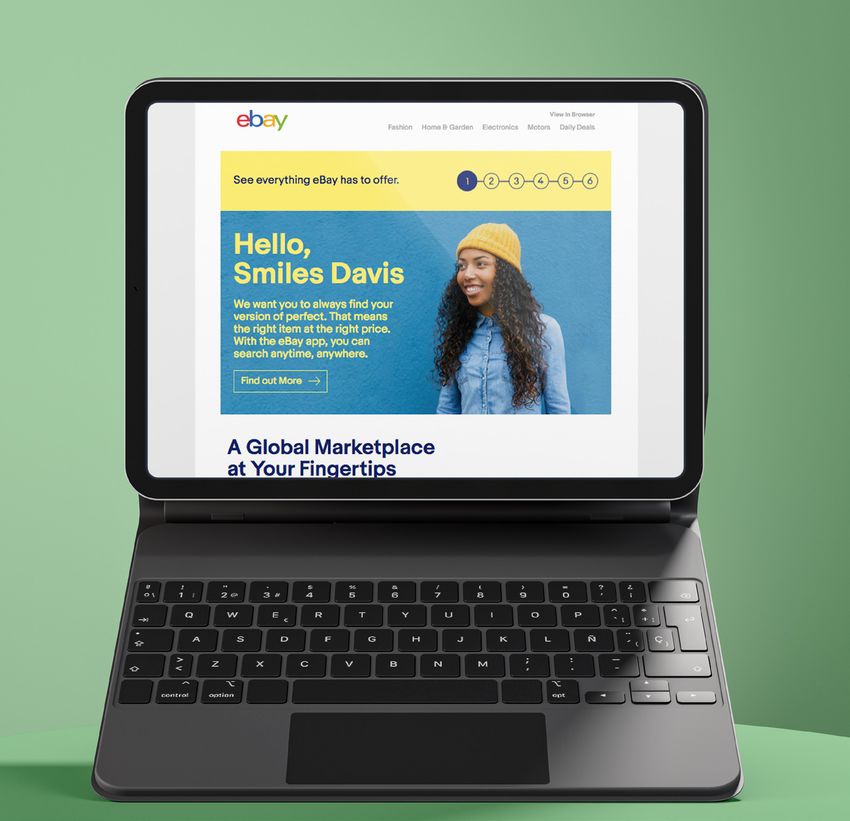
Businesses prepare for a cookie-less world

PREDICTION #1

Marketers will adopt new strategies and techniques to accommodate
shifting privacy regulations and platform policies.
In January 2020, Google announced its plan to phase out third-party cookies (other browsers, such as Firefox and
Safari, have already limited cookies.) Google says increased consumer concern regarding privacy issues led to this
decision.4 Many companies are worried about how this move will impact their digital programs, as cookies are vital to
personalization and campaign success.

A 2019 Google study found when they turned off third-party cookies and users received non-personalized ads,
advertisers saw a 21% increase in clicks to close an ad.5 To thrive in a cookie-less world and enable continued
personalization for users, companies are now prioritizing the acquisition of new data assets.

RECOMMENDATION

Adopt new techniques to enhance the breadth and accuracy of
first-party data.
With third-party cookies impacting cross-site tracking and the ability to target and profile audiences, brands will need
to boost first-party data and fill in the blanks with data from reputable third-party data providers.

                   “ The death of the third-party cookie is a consequence of consumer privacy policy. The question is,
                     how will marketers adjust to consumer privacy policy and legislation? I think the best way to do
                     that is to focus on first-party data. When someone comes to your website, you collect data on that
                     person - that’s a first-party data point. You have interacted with that person organically, and now
                     you can go out and reach them on the internet once you have that data. There will be less reliance
                     on third-party cookies as they are phased out and broader first-party data cookie adoption. This
    James P.         means brands will need to procure a greater breadth of first-party data than they have in the past.”

                                                                                                                      pg. 3
RECOMMENDATION

Acknowledge the growing importance of integrating offline and online PII
data and identity resolution.
As third-party cookies disappear, persistent identity technology, combined with Personally Identifiable Information
(PII), will become more crucial. PII is any data that identifies a specific individual. Offline PII data includes Social
Security numbers, mailing addresses, and phone numbers. Technology has expanded the scope of PII to include IP
and email addresses, login ID’s, social media posts, digital images, geolocation tags, biometric, and behavioral data.

                    “ Data providers, such as Data Axle, are uniquely positioned to help companies onboard their
                      audiences and match them up to search, Facebook, and other data sources. In the digital sense, we
                      are very much a data hub (an axle, if you will) to bring data in and send it out across all marketing
                      channels.”
    James P.

                    “ Major browsers are building, or have already built, anonymized means for digital ad attribution via
                      APIs. Building out a robust architecture to interact with each browser’s unique requirements will
                      be a significant undertaking for marketers. Ultimately, all of this still points to a greater need for
                      investment in identity resolution and building a better direct relationship with the customer to take
                      advantage of first-party data and reporting. Marketers must create their own future by building
                      relationships with customers, so they are more willing to share their data and by investing in ways
     Kyle H.          to identify customers across devices.”

BRAND EXAMPLE

Stylist Magazine
For publishers like Stylist magazine, third-party cookie
data allows their advertisers to profile, segment, and
target people on their site. To prepare for the loss of this
data source, Stylist partnered with competitors to build
100,000 audience profiles based on their collective first-
party data.

The new ad network created by Stylist, News U.K.,
The Guardian, The Telegraph, and the Reach claims
an estimated reach of “99% of online Brits.” This
alliance may seem unlikely, but it offers larger audience
samples for advertisers rather than fragmented buys
across competing media. The publishers could also
theoretically combine learnings from their collective
first-party data set and create content that resonates
with their readers.

The results: The Stylist Group reported growing digital
revenue by 72% between 2018 & 2019.6

                                                                                                                         pg. 4
Data privacy regulations and policies

PREDICTION #2

Data privacy regulations and tech platform policies will continue to take
center stage and influence how marketers plan and execute campaigns.
Google’s reasoning for getting rid of the third-party cookie is valid. A 2019 Data Axle study found that 88% of
consumers are concerned about their data privacy, and 80% are more concerned now than they have been in the past.
The same study also found that nearly 70% of respondents had not heard of E.U. and U.S. legislation designed to
protect them – the General Data Protection Regulation (GDPR) and California Consumer Privacy Act (CCPA).

                   “ All the big tech companies are in front of Congress getting grilled about data and tech, so it’s hard
                     not to contextualize the next year in terms of that. The CEOs of those companies – Facebook,
                     Twitter, Snapchat – are discussing political money and user data and how they will be regulated.
                     These companies dictate what happens in terms of digital, and everyone else will have to change
                     their policies.”
     Jill H.

RECOMMENDATION

Take control of your data
collection processes.

                   “ Companies need to take control;
                     instead of letting Facebook decide
                     for them, they need to shape the
                     legislation.”
    James P.

Companies that invest in privacy experience both
financial and branding benefits. According to Cisco’s
2020 Data Privacy Benchmark Study, businesses that
do that see an average ROI of 270%. In addition,
companies that invest in data privacy see shorter sales
delays, lower data breach costs, and tend to have higher
data maturity.7

                                                                                                                        pg. 5
Ethics in data collection

 PREDICTION #3

 Ethical data collection will play a greater role in building a strong
 brand reputation.

                    “ Companies that ethically collect, refine and deliver data will earn customer trust, improve their
                      market reputation and remain in compliance with regulation.”

     Asha D.

 Cisco’s study found that 73% of companies with data privacy practices are more attractive to investors, and 74% drive
 better loyalty and trust from customers. These findings indicate that investing in data privacy can boost reputation
 and highlight the importance of ethically collected data. Marketers should go the extra mile to ensure that their data
 providers work with ethically sourced data.

 RECOMMENDATION

 For data-mature organizations:
 introduce noise to records.

      Tom Z.

“ Mature organizations that have data hygiene down to
  a tee are looking to protect their data from hackers.
  Data is anonymized for consumer protection, and
  hackers can come in and try to deanonymize this data
  for their own purposes. Savvy, mature organizations
  are introducing “noise” to the record – a.k.a. adding
  incorrect information – to throw off hackers and stop
  them from deanonymizing data.”

                                                                                                                          pg. 6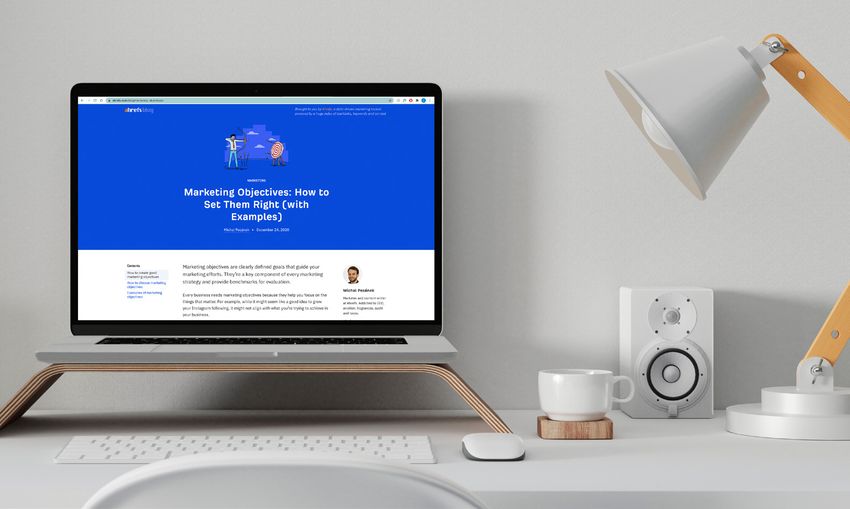
BRAND EXAMPLE

Bonnier AB & Accenture
Bonnier AB is a large media group with more than 180 subsidiaries operating as separate entities in over ten
countries. Europe’s GDPR sent companies across the E.U. scrambling to achieve compliance. Bonnier AB had the
extra hurdle of making sure each of their 180 subsidiaries was compliant. The expense of bringing each company up
to code was astonomical, so the company had to innovate.

Bonnier AB worked with Accentrure to create an automated compliance solution using advanced pattern-matching
and machine learning techniques to discover data across siloed systems along with knowledge graphs that
provided insights into the data. This approach allowed Bonnier AB to achieve compliance and identify new business
opportunities through their data. From developing new offerings and promotions to reducing operational inefficiencies
and identifying new revenue sources, Bonnier AB was able to transform a potential compliance nightmare into a
competitive advantage.8

                                                                                                                 pg. 7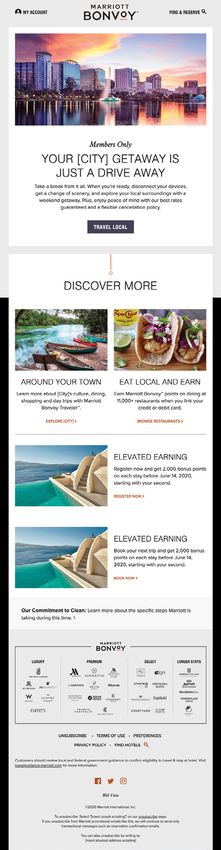
Holistic, omnichannel marketing

PREDICTION #4

Omnichannel experiences will become table stakes to keep pace with
consumer expectations.
According to Worldpay’s research, omnichannel shoppers spend between 50 and 300% more than traditional
shoppers.9 Each industry relies on a tried-and-true combination of a couple of channels. Retailers tend to use
catalog and email, direct to customer retailers might rely on a primarily digital presence, and nonprofits rely heavily
on direct mail.

The benefits of multichannel marketing hold true for both B2C and B2B marketers; Forrester’s research shows that
about 60% of B2B marketers said buyers spend more when interacting with multiple channels.10

RECOMMENDATION

Make sure you have an integrated, holistic channel mix.
                    “ Approaching channels from a holistic POV, having
                      that channel mix, making it a lot more consolidated
                      and interconnected will be a gamechanger in 2021.
                      The pandemic means that traditional channels like
                      direct mail are new again.

     Katy J.         B2B marketers need to reinvent their digital strategy
                     to reach executives who are no longer in the office.
                     Tools such as Data Axle’s B2C Link allow marketers
                     to create a single, unified view of prospects and
                     customers whether they’re sitting at their desk at
                     work or lounging on their couch at home. Reinventing
                     your channel strategy for 2021 is crucial as the
                     need to target customers through a wider variety of
                     integrated touchpoints has become essential.”

                    “ Sales outreach needs to be digitized. Even pre-pandemic, sales professionals using online tools
                      and technologies reported a 63% increase in revenue compared to 41% of non-social sellers.11 The
                      effectiveness of a multichannel approach applies across the board, whether you’re part of a B2B or
                      a B2C organization.”
     Lisa M.

                                                                                                                          pg. 8
RECOMMENDATION

Learn to discern the “new normal” from a quarantine fad.
                   “ The data for digital channels in 2020 will be skewed because of the pandemic. In 2021, people will
                     need to engage in multichannel and surround consumers with digital, mail, and brick-and-mortar.
                     It might take a while to gauge what was just a fad in 2020 and what the ‘new normal’ actually is.
                     Because people are home, we are seeing an uptick in direct mail response. One of the things that
                     make direct mail extraordinary is that we can figure out how consumers activate. We look in the
                     consumer file and see how consumers behave if a piece of mail interests them. Do they go to the
   Richard G.        web to activate?

BRAND EXAMPLE

Ahrefs
Before the pandemic, SEO technology company Ahrefs relied on product quality to drive word of mouth marketing
alongside a robust events strategy. As marketers had to abandon plans for in-person events, Ahrefs created
sponsored content on the ways their SEO tool could help businesses pivot to digital.

The B2B company doubled down on content creation and produced free online courses on blogging for businesses,
pushing employee images to the front to gain readers’ trust. In addition to the online courses, they developed an
aggressive podcast schedule, producing 20 episodes in four months. They also created a multichannel campaign to
push content, including posting on Reddit, an often-overlooked social media channel. The result? Ahrefs reported they
grew from 15 to 50 employees and over $40M in annual recurring revenue.12

                                                                                                                    pg. 9
Ecommerce as the expectation

PREDICTION #5

The pandemic will continue to push ecommerce into the spotlight.
Ecommerce might be the new normal. The shift toward ecommerce was happening before COVID-19, but according
to IBM’s latest data, the pandemic has accelerated it by five years.13 Just in Q2 of 2020, U.S. retail ecommerce went
up 44.5 percent.14

RECOMMENDATION

Invest in a seamless ecommerce experience.

                   “ Sixty-two percent of consumers shop online more now than before the pandemic.15 According
                     to new data from Digital Commerce 360, 36% of consumers shop online weekly since COVID-19
                     hit, up from 28% pre-pandemic.16 I predict this trend will continue to grow through 2021. Although
                     many are excited to shop in-store again, 28% say they will continue to shop mostly online after the
                     pandemic. Brands need to up their digital game if they want to continue to meet customers’ needs
     Katy J.
                     as we leave COVID-19 behind.”

RECOMMENDATION

Get to know your customers all over again.
                   “ Personalization has been trending for years, but
                     now it is up against a myriad new opportunities
                     and roadblocks. People have found new
                     hobbies, revived old ones, and increasingly
                     turned to video tutorials to guide them. They’ve
                     found new shows and entertainers to follow,
  Stephanie M.       new recipes to try. All of these elements pair
                     nicely with highly targeted digital ads, and in
                     2021 marketers will need to focus more and
                     more on personalization and finding those
                     audiences in relevant spaces.”

                                                                                                                    pg. 10
BRAND EXAMPLE
See’s Candies
See’s Candies has been satisfying America’s sweet tooth since 1921.
Pre-COVID, the San Francisco based confectionary’s business model was based around their retail shops, ecommerce
site, and catalogs. The pandemic forced them to close shops and halt production as they redesigned the experience
for safety. See’s had to not only ramp up their e-commerce capacity, but also added curbside pick-up (called Click,
Pick, Go) and later, Door Dash delivery as additional sales channels.
Being on top of consumer needs is always essential, but the pandemic has proven that it’s even more critical today.
Eventually, See’s was able to reopen shops with enhanced safety measures in place, but continues to also offer these
new sales options to meet the evolving needs of their customers.
pg. 11Social media on the rise
PREDICTION #6
Social media usage will continue to grow, and marketers will have to get
more creative to break through the noise.
Digital consumers spend an average of 2 hours and 26 minutes per day on social networks.17 As the pandemic has
forced consumers to stay home and socially distant, 29.7% of respondents were using social media 1-2 additional
hours hours per day.18
“ 2021 carries the lofty promise of an eventual return to normal and the threat of a reduction in online
traffic, but a lot of 2020’s adaptations are here to stay. Brands are striving for more transparency in
the social media space. They also have to think about the emerging spaces like TikTok and Twitch,
a veritable wealth of inventory and reach that requires brands to keep pace with what viewers
want to watch. This just goes to show that the more agile a brand is in the digital space, the more
Stephanie M.
engagement they can expect. Social platforms are here to stay.”
RECOMMENDATION
Keep your tone and messaging
consistent and relevant.
Lisa M.
“ Whether or not a brand has the money to invest
in paid vs. organic, they need to make sure their
social media presence keeps the customer at the
forefront, that it stays relevant and consistent
with targeting and messages across social media
channels – both pre- and post-sale. Some great
ideas to drive traffic: include posting quotes from
content pieces, thought leaders, or infographics.
Think outside the box because the opportunities
and possibilities are endless. Social media can
play a large part in helping to acquire and retain
customers as long as marketers provide value and
consistent messaging.”
pg. 12RECOMMENDATION
Invest in branded social media content.
“ Branded social media content builds awareness for the brand and helps them reach customers that
share their values. It’s content that doesn’t seem like advertising, such as YouTube videos or even
an entire Snapchat web series. Certain industries, such as food & beverage and entertainment,
have had a lot of success with this. Kentucky Fried Chicken made headlines in December of 2020
by announcing it had partnered with Lifetime to create a movie called “A Recipe for Seduction,”
starring actor Mario Lopez. Journalists were writing headlines about it, and people were posting
Paolo P. about it on social media. It was a viral moment before the movie even premiered.”
BRAND EXAMPLE
DBS
Digital banking service, DBS wanted to stand out from
the competition. They decided to forgo traditional
advertising and created a drama series about bankers
and banking, based on real client stories, inspired
by actual customers. The series, titled SPARKS,
depicted a group of young bankers navigating complex
personal lives as they went above and beyond for their
customers. DBS went this route because they wanted to
humanize banking and reconnect with their customers.
The series was available for viewing on YouTube and
Spotify, and the bank advertised on Facebook.
The results: SPARKS episodes 1-8 amassed over 110
million views and over 12 million digital engagements in
DBS’s key markets.19
pg. 13Predictive analytics
PREDICTION #7
Marketers will embrace sophisticated means of anticipating consumer
needs and actions.
Predictive analytics can help brands determine customer responses or purchases, as well as identify cross-sell
opportunities. Predictive models help businesses attract, retain, and grow their most profitable customers. The
benefits from Artificial Intelligence (AI)-powered analytics is significant; McKinsey and Co. reported deep learning
techniques could enable the creation of between $3.5 trillion and $5.8 trillion in value each year.20
RECOMMENDATION
Invest in predictive analytics tools.
“ In 2021, brands need to have a platform or technology that is fueled by real-time data so that
they can predict and manage the ever-changing needs of the consumer. This means focusing on
predictive marketing to anticipate the consumer’s interest, intent, and need.
We have spent most of 2020 in the thick of all of this, as we adjust marketing strategies to
pandemic behaviors and the new normal. Especially for our retail and travel clients, we really need
Stacia G. to help them navigate and service their customers during these times. The travel industry has taken
a hit – business is down by 70-80%. Marriott’s business is not because we are helping them identify
those people who are ready to travel safely and market to them.”
pg. 14BRAND EXAMPLE
Marriott Bonvoy
Marriott has used consumer data to tailor their messaging and mitigate losses stemming from travel restrictions
during the pandemic. Marriott’s 2020 Memorial Day email used dynamic content and personalized messaging based
on consumers’ locales, providing fun ideas for places within driving distance that were safe, outdoors, and near a
Marriott hotel. The email generated above-average unique open and click rates, with an open rate of 16% and a click-
through rate of 9%. The campaign generated the highest conversion rate that month.
Marriott also encouraged a positive attitude with their messaging. During the pandemic, they decided to offer a
sweepstakes titled “Dreaming of Brighter Days” to encourage their customers to be hopeful about what’s to come and
give them a taste of the hotel amenities they’ve been missing while staying at home.
pg. 15Evolution of the cloud
PREDICTION #8
Marketers will tap into new and enhanced cloud capabilities.
Eighty-five percent of companies use the cloud21 – but they aren’t all using it to its full capacity. In fact, only 18 percent
of IT and security professionals stated that they understand the shared cloud security responsibility model, according
to which a company’s security team shares responsibility for cloud security with the provider.22
Cloud computing has become crucial in helping businesses cut costs. A whopping 82% of companies have reportedly
experienced increased cost savings within just six months of adopting cloud technology.23
RECOMMENDATION
Optimize cloud usage to store more data and process it faster.
“ Cloud services technologies (infrastructure, applications, data analytics) and cloud-native
computing will be at the heart of the transformation and will take center stage moving forward.
Speed, storage, rapid computing time, and quick extraction of information are the name of the
game. Companies that embrace cloud technologies and native computing provide more cost-
effective solutions and larger storage.
Asha D. In addition to the major cloud players, such as AWS, Microsoft, and Google, there will be a shift
towards smaller specialized public cloud players who offer features such as competitive pricing,
special functionalities, fusion cloud deployments, and usability.”
pg. 16RECOMMENDATION
Leverage AI + Cloud solutions to drive actionable insights.
“ Though Big Data is not a new concept, it’s taken on new meaning through the sheer volume of data
being ingested every day. Algorithms learn from it, and as they do so, they become better informed
and increasingly sophisticated, leading to solutions, across all industries, that help to understand
the changing patterns of customer behavior. More sophistication means more adaptability, and
more adaptability creates more readily-available, actionable data.
Stephanie M. Cloud computing can deliver these products faster, and cloud-native technologies will continue to
see growth in 2021 and beyond. Furthermore, with 5G powering these cloud-native solutions, big
data will go from a big dream to yielding an actionable audience.”
BRAND EXAMPLE
SunnyD (Formerly Sunny Delight)
SunnyD CIO Shawn Roberts credits cloud analytics software with helping the brand boost profits by roughly $2 million
a year and save $195,000 in staffing costs annually.24 They put together a cross-functional team whose goal was
to “determine the most effective way to produce a data stream that could help identify sales, promotion, as well as
customer trends.” The team evaluated 17 potential tools before settling on a cloud-based one that allowed for easy
data visualization, which helped team members with less technical expertise understand the data.
The insights provided by the tool led the company to learn they were throwing money away by shipping on weekends,
so they changed their promotion days to ship when costs were low. The team also used the tool to identify other
opportunities to boost sales and introduce new production and logistics efficiencies.
pg. 17The future of AI
PREDICTION #9
AI will continue to revolutionize testing.
Traditional A/B testing has been around for decades, but 80% of traditional A/B tests fail to provide positive results,
as it can only detect a limited number of variables simultaneously.25 However, more recent data and technology
advancements allow companies to see testing results and make changes to websites and campaigns within minutes.
As AI technology continues to develop, smart businesses will take advantage of automated testing and improvements
to boost performance.
Testing can help marketers proactively address any number of troubling user experience statistics:
• 53% of mobile users leave websites after 3 seconds.26
• 52% of users say the main reason why they won’t return to a website is aesthetics.27
• 90% of users stopped using an app due to poor performance.28
• Only 1% of users say ecommerce websites meet their expectations every time.29
RECOMMENDATION
Don’t skip the A/B testing – for either large or small decisions.
“ All of the tech companies have websites that change before your eyes. If you go to Amazon, within
5 minutes you might see the interface change because of their A/B testing. Facebook is always
rolling out changes within the app as well. A/B testing is an age-old method. If you aren’t employing
it, I guarantee you will be left behind in 2021. Lifelong marketers will remember A/B testing as a
really cumbersome process. You used to need designers and developers on staff, but fortunately,
Jill H.
new technologies have streamlined the process. There’s simply no reason not to do it.”
pg. 18“ Changes from the simple and cosmetic, like a call-to-action change or switching a button color, to
large changes like page interactivity, are good candidates for testing. Marketers need to explore
what options we provide to help get prospects the information they are looking for. A/B testing can
move the needle on conversion rates as it can identify any barriers to conversion. Breaking down
these barriers can, in turn, pay off exponentially.”
Katy J.
RECOMMENDATION
Cut out the middleman with autonomous testing.
Autonomous testing is the ability to create test cases and execute them without human intervention. AI and machine
learning are making this a reality - using algorithms, data, and predictive models to analyze a web page and offer a
complete breakdown of all well-performing elements. This enables marketers to create a site that combines all the
best-performing features and optimizes conversion rates.
“ Brands should be using big data to test concepts and learn how to use data exhaust in their models
of engagement. What’s not there is as important as what is there. Understanding that is how folks
are going to succeed.”
Richard G.
RECOMMENDATION
Explore natural language processing (NLP).
NLP is a branch of AI that learns from the interaction between computers and humans and uses it to read, decipher,
and understand human languages. Brands use NLP to automate communications in a way that makes sense for
customers and provides them with a better user experience.
“ Natural language processing is interesting and exciting. It’s a subfield of AI concerned with the
interactions between computers and human (natural) languages, particularly how to program
computers to process and analyze large amounts of natural language data. By harnessing NLP,
AI can successfully imitate human speech, form naturally-flowing sentences, and give human-to-
machine interactions a personal touch. NLP can help AI unlock unstructured data in databases and
documents by mapping out essential concepts and values – allowing end-users to use that data for
Jill H. analytics and decision-making. Brands are using NLP to advance in the data world and provide a
better UX experience for customers.”
pg. 19BRAND EXAMPLE
eBay
eBay is known for being an AI/ML early adopter. The ecommerce platform has many users, and as the number has
continued to rise, they needed an automated email generation process that wouldn’t feel impersonal. eBay invested in
an AI-powered copywriting tool. The machine learning was sophisticated enough to keep their brand voice, optimize
email subject lines, and even generate Facebook ad copy.
Before they launched the tool, eBay used A/B testing to determine what subject lines and ad copy were most
effective. The A/B testing helped the tool create copy that sounded natural and kept the personalized touch users had
come to expect.30 31
Subject line:
Your journey starts with the eBay app
pg. 20Opportunity amid disruption
PREDICTION #10
The pandemic will give rise to new marketing opportunities throughout 2021.
The challenges of 2020 have led to a world of opportunity in 2021. Advancements in data collection and technology
mean companies can explore new ways to find, reach, and connect with audiences and hone their products and
services to suit and fulfill customer needs.
RECOMMENDATION
Keep a positive outlook.
“ When COVID-19 hit, many assumed companies would stop analyzing data. Instead, the need for
data science has increased as companies strive to understand their customers more deeply.
Investment in data science in 2021 will continue with a focus on powerful data assets, multiple
data partners, data platforms, advanced visualization, and analytics such as machine learning and
AI techniques. It’s good to see that data science has not just survived but, in fact, thrived.”
Asha D.
RECOMMENDATION
Seize opportunities and pivot quickly to address your customer’s needs.
“ Clients in industries that were booming pre-pandemic, like travel, have taken a hit while others, like
CPGs, have seen business explode. CPG brands experienced a 34% growth since March of 2020
– and sales of packaged comfort foods such as chips and ice cream are up 900% from 2019.32 To
continue this growth, CPG brands need to be savvy about their path forward. Brands operating in
industries that are struggling need to be agile and reinvent business models to thrive.”
Stacia G.
C A B A C C B C B ARECOMMENDATION
Position your company as a conduit for making connections.
“ 2020 was a crazy year, but there is an opportunity for people to be creative. Anything can be turned
into a ritual that connects people in a meaningful way. New businesses have popped up around
how we all live our lives. There are brilliant Zoom and Microsoft Teams comedy shows. There
are apps like Scener and Houseparty that enable families and friends to interact with each other.
Businesses and consumers are using platforms in a very different way. It’s changing how we all
connect with each other, and I hope people don’t miss that.”
Tom Z.
BRAND EXAMPLE
Lands’ End
Apparel retailers have been hit hard by the pandemic, with sales down an average of 44% a month since March of
2020.33 This may seem dire, but Lands’ End knew that consumers still needed their products; they just required items
that fit their new lifestyle. Women might not be buying party dresses, but they are in need of a new pair of comfortable
pants. Lands’ End shifted their messaging to fit their customers’ new needs, offering comfortable clothes they could
wear to work and learn from home.
pg. 22Conclusion
Marketing is a constantly evolving field and the pandemic forced marketers to pivot faster than ever before.
Innovations in technologies such as cloud computing, identity resolution, predictive analytics, natural language
processing and AI have given marketers powerful tools as they grapple with dramatically altered consumer behavior
and spending patterns. Marketers who can see the opportunity in disruption, invest in new technologies and clean
datasets, and take the recommendations proposed by our thought leaders, will set themselves and their companies
up for success in 2021.
Have questions about how to get started or incorporate these trends in your existing programs?
We’re here to help.
Talk to an expert
SOURCES
1 weforum.org 10 forrester.com 18 statista.com 26 ukwebhostreview.com
2 marketwatch.com 11 apollodigital.io 19 shortyawards.com 27 digitalapeel.com
3 npr.org 12 apollodigital.io 20 cmswire.com 28 toptal.com
4 services.google.com 13 techcrunch.com 21 techjury.net 29 forbes.com
5 services.google.com 14 techcrunch.com 22 solutionsreview.com 30 morphl.io
6 thedrum.com 15 bazaarvoice.com 23 salesforce.com 31 johnsnowlabs.com
7 cisco.com 16 digitalcommerce360.com 24 cio.com 32 data-axle.com
8 accenture.com 17 blog.globalwebindex.com 25 ghostwriter.ai 33 shop-eat-surf.com
9 fisglobal.com
Contact Us
Phone 1-866-DATAXLE • Email sales@data-axle.com • Website data-axle.com
pg. 23You can also read


