2021-2022 Course Guide - Franklin Academy High School
←
→
Page content transcription
If your browser does not render page correctly, please read the page content below

Franklin Academy High School

2021-2022
Course Guide
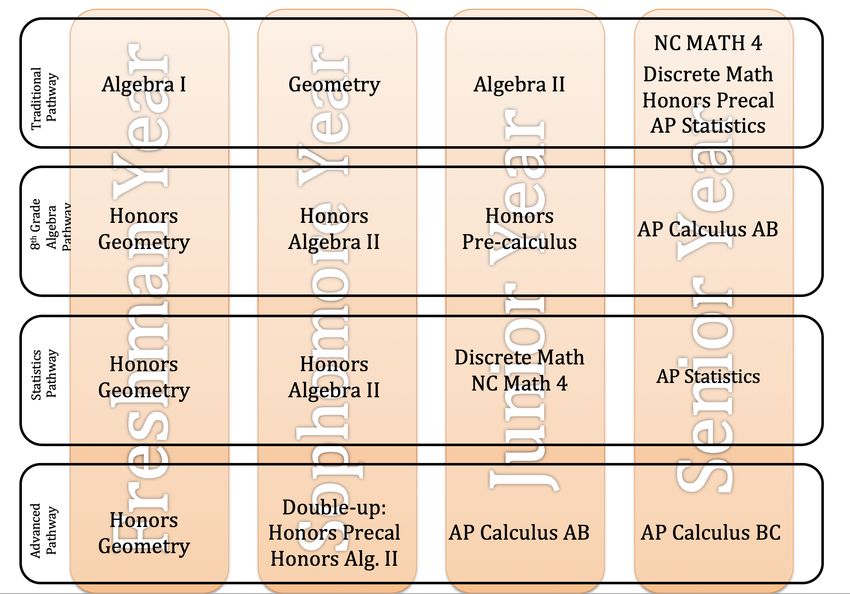
Table of Contents
School Mission and Goals …………………………………………………………………………………………………….                3

Graduation Requirements …………………………………………………………………………………………………….. 4-7

       State & Local Graduation Requirements ………………………………………………………………………… 4

       State Assessments …………………………………………………….…………………………………………… 5

       Community Service ………………………………………………………………………………………………… 5

       Academic Courses ………………………………………………………………………………………………… 6

       Senior Research Project …………………………………………………………………………………………… 6

Diploma Endorsements ………………………………………………………………………………………………………..                  7

Course and Grading Information ……………………………………………………………………………………………..            8-10

       Earned Credits ……………………………………………………………………………………………………… 8

       Pass/Fail Courses …………………………………………………………………………………………………… 8

       Repeating a Course ………………………………………………………………………………………………..                8

       Withdrawal from a Course ………………………………………………………………………………………… 8

       Promotion Requirements ………………………………………………………………………………………….. 9

       Advanced Placement (AP) Courses by Grade ………………………………………………………………….      9

       Honors/AP Course Recommendation Process Overview …………………………………………………….. 9-10

GPA, Class Rank and Board of Valedictorians ……………………………………………………………………………….. 11

       10-Point Grading Scale ………………………………………………………………………………….………… 11

       GPA Calculation ……………………………………………………………………………………………………                   11

       Board of Valedictorians …………………………………………………………………………………..……….            11

Recommendation Criteria & Course Descriptions ………………………………………………………………………….. 12-53

       English ……………………………………………………………………………………………………………….. 12-14

       Mathematics ………………………………………………………………………………………………………… 15-19

       Science ………………………………………………………………………………………………………………. 20-26

       History ………………………………………………………………………………………………………………                       25-32

       World Languages ………………………………………………………………………………………………….                   33-37

       Arts: Performing, Visual, Graphic & Business …………………………………………………………………… 38-50

       Health, Physical Education ………………………………………………………………………………………… 51

Driver’s Education Courses at FAHS …………………………………………………………………………………………           52
School Mission & Goals Franklin Academy Mission The mission of the Franklin Academy Charter High School maintains and continues those qualities of the Franklin Academy Elementary/Middle Schools. In addition, our mission is to have all students complete their high school studies successfully, possessing the knowledge, skills, and character to become productive, responsible, and caring citizens who will meet the challenges and experience the successes of their future. Franklin Academy Goals A safe environment conducive to learning will be provided. The basic character traits of honesty, self-discipline, responsibility, kindness, respect for students, and authority will be emphasized daily. Students will communicate effectively in modalities. Students will be qualified to enter academic or vocational post secondary educational programs. Students will be competent in the use of current technology and will successfully demonstrate this in the courses they take. Students will become lifelong learners. Students will be empowered to become self-motivated and self-directed learners that envision their future opportunities.Work ethic and professionalism will be integrated into the curriculum. Technology will be implemented in all areas of study affording students’ proficiency in related skills.
High School Graduation Requirements
State and Local Requirements for all FAHS Students
All students at the Franklin Academy are expected to meet the graduation requirements as prescribed by the North Carolina
Department of Public Instruction for the Future-Ready Core Course of Study. In addition to these requirements are several other
Local Requirements for graduation. Please see the chart below for these requirements.

          State Graduation Requirements                                     Local (Franklin Academy)
           Future Ready Course of Study                               Additional Graduation Requirements
• 4 Credits in English including I, II, III, and IV           Courses:
• 4 Credits in Math including Math I, II, III, and a fourth   Research & Writing & Public Speaking
  math course aligned with the student's post-graduation      A Public Speaking and Research & Writing course must be passed prior
  plans                                                       to graduating from the Franklin Academy. This is a year long course that
                                                              is normally incorporated into the 10th grade year. Through evaluation
• 3 Credits in Science including Biology, a physical
                                                              of expectations of many major colleges and universities, these courses
  science, and earth/environmental science
                                                              have proven to be invaluable when completed during high school.
• Class of 2022-2023 Graduates: 4 Credits in Social
  Studies including World History, American History I and     History Sequence/Required Courses
  American History II, and Civics and Economics               Class of 2022-2023 Graduates: 4 Credits in Social Studies including
• Class of 2024 Graduates and Beyond: 4 Credits in            World History A & B, American History, and Civics and Economics
  Social Studies including World History, American History,   Class of 2024 Graduates and Beyond: 4 Credits in Social Studies
                                                              including World History, American History, Founding Principals of the
  Founding Principals of the United States and North
                                                              United States and North Carolina: Civic Literacy and Economics and
  Carolina: Civic Literacy and Economics and Personal
                                                              Personal Finance
  Finance
• 1 Credit of Health and Physical Education                   World Languages
                                                              All students are required to take at least 2 consecutive years of a World
• 6 Credits of Electives made up of:
                                                              Language (2 of the 6 elective credits specified in the State
• 2 Credits from any combination of CTE, the Arts, or
                                                              requirements)
  World Languages
• 4 Credits from one of the CTE, the Arts, or any other       Senior Project:
  subject area (A four course concentration in one of these   • The Paper: Every senior will develop an Essen5al Ques5on and Thesis
  areas is highly recommended)                                  Statement which is the founda5on of the research presented in a formal
                                                                paper product.
                                                              • The Presenta5on: A?er submiAng and passing the research paper, each
(Please note that credits in world languages are not            student will present his or her findings to a panel of judges.
required for high school graduation, but they are             • The Product: Preferably, the product will be one that will benefit the greater
required as part of the University of North Carolina            community. The product is a physical manifesta5on of the results of the
                                                                research.
System's minimum admission requirements.)
                                                              • The PorFolio: The final assignment is to create a professional porFolio for
                                                                the judges. The porFolio will include: the final paper, mentor and product
                                                                logs, project proposal and leGer of intent, mentor verifica5on form, and the
                                                                reflec5on on the research process.

                                                              Community Service:
                                                              Students who attend Franklin Academy will be required to complete a
                                                              total of 100 hours participating in community service as a graduation
                                                              requirement. The students should complete a minimum of 25 hours
                                                              per school year, but have the option of completing all of their
                                                              community service hours at any time.

                                                              Please Note: Franklin Academy’s Academic Program requires that
                                                              students will take the PSAT during 9th, 10th and 11th Grades.

  NC Graduation Required Credits: 22 (minimum)                FAHS Graduation Required Credits: 23 (minimum)
Graduation Requirements
State Assessment Requirements
Passing Scores must be obtained on the following End of Course Tests to earn a high school diploma in the state of North
Carolina:
• Algebra I (Math I EOC)
• Biology
• English II
• Algebra 2 (Math III EOC)
These Additional Standardized Tests are given to all students in the specified grades per state requirement:
• Pre-ACT - 10th Grade Students
• ACT – 11th Grade Students
Community Service
Students who attend Franklin Academy will be required to complete a total of 100 hours participating in community service as a
graduation requirement. Please note the following with regard to service hours:
• The students will be required to complete a minimum of 25 hours per school year with the option of completing all of
their community service hours at any time.
• Students who enter the Franklin Academy in the middle of their high school career will need to complete a minimum of
25 hours per school year until their senior year.
• The requirement may be fulfilled in a variety of ways, however students are encouraged to gain pre-approval of
activities prior to completing them.
• Students should count activities that involve direct service to the community through independently arranged activities
or through participation with established agencies.
• Non-performing activities with church youth groups, cultural organizations, and established non-profit agencies are
good choices.
• Any community service activity that may be in question should be preapproved before completing the activity to ensure
it would satisfy the requirements for the school.
• Community service is the most popular requirement of many scholarships closely following a student’s grade point
average. The academy hopes to promote a feeling of community, citizenship, and growth in character through this
requirement.
• Students will need to provide documentation of service hours by filling out a community service form.
• Students should be involved in activities that are volunteer opportunities only.
• A maximum of 8 hours may be earned in one day unless prior administrative approval is given.
• All hours must be submitted to the office within 6 months of completion and all hours must be completed by the end of
May of a student’s senior year.
• Hours submitted after the 6 month deadline will only be worth ½ the credit.Graduation Requirements
Academic Courses
Public Speaking and Research & Writing Students will take a yearlong Research & Writing/Public Speaking Course.
Completion of this course is REQUIRED for graduation. No half-credit may be awarded. These will be conducted as follows:
Research & Writing (Semester-long): This course will sharpen students’ written communication skills and their
knowledge of good research techniques across all core academic disciplines. Students will review and practice the
elements of effective writing for various genres, learn about and implement elements of rhetoric, and practice
documentation of source material in MLA and APA formats. This course places emphasis on how the audience, purpose,
and organization of one’s writing can vary from one assignment to the next and thus equips students with the skills they
need to successfully navigate those differing requirements in their high school and college careers.
Public Speaking (Semester-long): This class is designed to enrich effectiveness of verbal and nonverbal communication
and overall public speaking abilities. Students will study speech communication as a process that includes speaking,
listening, and perception by creating, delivering, and evaluating public speaking. Both courses will be combined for
one credit.
Foreign Language—As a college preparatory school, all students should take at least 2 years of a foreign language.
Franklin Academy expects all students to complete 2 consecutive years of a foreign language during grades 9-12.
Most four-year universities in the State of North Carolina require students to complete a MINIMUM of two years of a
Foreign Language thus our requirements provide all students with that opportunity just through completion of our
program.
Math—Students are expected to take a math class all four years of high school regardless of position within the math course
sequence and the credits required by the state for graduation.
Senior Project
Purpose: The Franklin Academy Senior Project is a capstone; culminating assignment requiring that graduating seniors employ
and improve upon previously acquired skills and knowledge, and then apply these skills in a manner that creates a solution to a
real world problem. These skills include, but are not limited to, inquiry, analysis, synthesis, technology, employability skills,
information retrieval, language – both written and spoken – collaboration and problem solving.
Objectives for Students:
• Develop, organize, and write a rigorous academic research paper with a topic of their choice that answers a real world
problem (e.g. scientifically, politically, economically, or religiously) for faculty to review and assess.
• Collaborate by networking with an expert mentor outside the school community, who supports the research, writing, and
product phase of the project.
• Practice professionalism by collecting a portfolio that collects accomplished project work, logs of communication
between faculty, mentor, and students, and demonstrates student’s competence for maintaining deadlines.
• Create a culminating product that applies the research paper’s conclusion in a manner that employs a solution(s) to a real
world problem (e.g. scientifically, politically, economically, or religiously).
• Demonstrates relevance of product, as an application of the research paper’s conclusion, by presenting research and
product to a panel of judges.Diploma Endorsements
College Endorsement
The student shall complete the Future Ready Core mathematics sequence of Algebra I, Geometry, Algebra II, (Math I, II, III or
Integrated Math I, II, II); and a fourth mathematics course aligned with the student’s post-secondary plans. The fourth math
course must meet University of North Carolina system Minimum Admission Requirements or be acceptable for earning
placement in a credit-bearing college math class under the North Carolina Community College System’s Multiple Measures
Placement policy. The student shall earn an unweighted grade point average of at least 2.6, as well as an ACT reading score of
at least 22 OR an SAT Reading score of at least 480.
College/UNC Endorsement
• Student has completed the Future Ready Core mathematics sequence of Algebra I, Geometry, Algebra II (NC Math 1, NC
Math 2, NC Math 3) and a fourth math course that meets the University of North system Minimum Admission Requirements.
• Student has completed three units of science including at least one physical science, one biological science and one
laboratory science course.
• The student shall complete U.S. History or equivalent coursework
• Student has completed two units of a world language.
• Student has earned an unweighted GPA of at least 2.5, as well as an ACT reading score of at least 22 OR an SAT Reading
score of at least 480.
NC Academic Scholars
In March 1983, the State Board of Education initiated the North Carolina Scholars Program. In March 1990, it was revised and
designated the North Carolina Academic Scholars Program. Again, the State Board of Education revised the requirements in
August 2002 to make it more consistent with graduation requirements and promote rigorous academic study. Students who
complete the requirements for this academically challenging high school program are named North Carolina Academic
Scholars and receive special recognition: Students will…
• Be designated by the State Board of Education as North Carolina Academic Scholars.
• Receive a seal of recognition attached to their diplomas.
• May receive special recognition at graduation exercises and other community events.
• May be considered for scholarships from the local and state business/industrial community.
• May use this special recognition in applying to post-secondary institutions.
• Required Credits for NC Scholars Program: (24 minimum credits)
• Overall 4 year unweighted GPA of 3.5
• 4 English Credits (I, II, III, IV)
• 4 Mathematics Credits (Algebra I, Geometry, Algebra II and at least one higher level math class)
• 3 Science Credits (Physics or Chemistry, Biology, Earth/Environmental)
• 4 History Credits (World History, Civics, US History)
• 2 Foreign Language Credits
• 1 Health/PE Credit
• 4 Elective Credits constituting a concentration in any specific content area recommended from one of the Arts Education,
Second Languages, any other subject area
• Taken at least 3 Honors or AP level courses in junior and senior year combined
Global Languages Endorsement
• Student earns an unweighted 2.5 GPA or above for the four English Language Arts courses required for graduation.
• Student establishes proficiency in one or more languages in addition to English by completing a four-course sequence of
study in the same world language, earning an overall unweighted GPA of 2.5 or above in those courses.Course and Grading Information Earned Credits A “credit” is given for the successful completion of competencies required by a given course. To receive credit, three criteria must be met. These criteria include: • A minimum 130 hours of instructional time per credit earned (semester courses must have 65 hours). • Any course where the minimum seat time has fallen short due to absences must have time made up outside of school hours or the course will receive a grade of 59 (F) due to the missed instruction. • “A”, “B”, “C”, or “D” on as a final grade in the class • Competencies are passed If the final grade in any class is an “F”, that class must be retaken if necessary for graduation unless taken at another approved location during the summer break. The grade for ANY class taken during the summer break must result in the student earning state credit for the class in order to not be required to take the class again during the normal school year. Semester & Final Exams Fall Semester and Final Exams will be given at the end of each semester respectively. All exams count 20% of the student’s final Fall or Spring Semester average per State Requirement. The instructor of the course creates all Fall Semester Exams. Final exams include both state End of Course Tests as well as teacher issued exams. AP Exams are not counted as final exams for any class. Some courses require exams tied to performances, long-term projects, and other non-traditional exam types. Taking Classes Pass/Fail Certain courses may be offered as a Pass/Fail option. Please consult the Student Success Coordinator to determine which courses may qualify for this designation. Pass/Fail option is designated on the transcript and no grade or quality points are awarded. Students must declare a pass/fail status for a qualifying course within the first 10 days of class. This notification must be in writing, signed by both parent and students, and submitted to the Student Success Coordinator. Please understand that changes to grades from standard to pass/fail cannot be made after the fact so a request for a course to be graded as Pass/Fail MUST be made within the first 10 days of class. No exceptions. Courses taken for a grade WILL factor into the students overall GPA regardless of the year taken and may impact class rank. Repeating Course Policy If a student does not pass a course and does not earn credit for that course, he/she may retake the course. Thereafter, if the course is passed, both grades are factored into the student’s overall GPA, and credit is earned. Any course required for graduation must be taken again if not passed the first time. If a student passes a course, he/she may decide to retake the course to improve his/her grade. In this case, the new grade will replace the old grade, and no new credit is earned. Retaking of a class is subject to availability and scheduling constraints. Please discuss with the Student Success Coordinator prior to considering this option to ensure it is the best option. Withdrawal From A Course Withdrawal from a class after the first ten days of school would result in the class being recorded on the student's transcript as either a withdrawn passing (WP) or withdrawn failing (WF). No credit is earned if a student withdraws from a class mid-year.
Drop/Add for NCVPS Courses
Students who have maintained a passing grade for the time that they have been enrolled in the NCVPS course may drop at
anytime within the first 20 days without repercussion. Once the 20 days have passed the student must provide the Online
Learning Supervisor with an official report of his or her current grade. The student will then receive a "WP" on their transcript
reflecting that they withdrew from the course while maintaining a passing grade. Students who are not passing a course and
wish to withdraw may withdraw at any time for a "WF" on their transcript reflecting that they withdrew while they were failing the
course. If a student wishes to bring the course up to a passing grade for withdrawal purposes, the student must maintain a
passing grade until the end of the quarter and provide the Online Learning Supervisor with an official report of the passing
grade. Regardless of a student's reason for dropping an NCVPS course, the student must enroll in new class during the period
in which they were originally taking the NCVPS course. These course options will likely be limited and semester-long in length.
Students must consult the Online Learning Supervisor or Student Success Coordinator for more information about their course
options.

Promotion Requirements
Students will be promoted at the end of each academic year provided they have earned adequate credits through successful
completion of required courses. Five credits must be earned each academic year, one of which must be English, in order for a
student to continue to the next grade level.

Courses Taken By Grade Level
Below is a sample 4-year course progression that outlines when certain courses are typically taken at FAHS. It is important to
note that high school students generally follow an individualized plan of instruction when it comes to course progressions
based upon previously completed high school level courses and individualized interests. As a result, this chart should serve as a
general guide for students.

                                       Sample Course Progression By Grade Level

           9th Grade                     10th Grade                    11th Grade                       12th Grade
                                                                    Required Courses
       Required Courses               Required Courses                                              Required Courses
                                                                  Standard/Honors/AP
   Standard or Honors Level       Standard or Honors Level                                      Standard/Honors/AP Level
                                                                           Level
                                                                     English III OR AP
            English I                      English II                                            English IV OR AP Literature
                                                                       Composition
                                                                 Algebra 2 or Upper Level
     Algebra 1 or Geometry       Geometry and/or Algebra 2                                       One 4th Year Math Course
                                                                           Math
         World History 9               American History                Civic Literacy          Economics & Personal Finance
     Earth & Environmental
                                            Biology                   Physical Science
            Science
      One World Language            One World Language
                                                                                                    Four Elective Courses
                                  Research & Writing/Public
   Physical Education/Health                                       Three Elective Courses
                                           Speak
      One Elective Course            One Elective Course

Senior Exam Exemptions
Graduating Seniors may qualify for final exam exemptions at teacher discretion. To qualify the student must have a 90 or above
for overall for the year AND have no more than 4 absence (excused or unexcused). Please note: College visits (no more than 4)
and school activities (games, field trips) are not to be counted toward absences. Teachers may opt to give and require students
to complete an exam in accordance with the requirements of the course. Please see your teacher for specific information for
their class.
Advanced Placement Classes
The goal of the Franklin Academy High School AP Program is to offer any student who exhibits exceptional ability or the
promise of exceptional ability the opportunity to reach his or her maximum potential. These rigorous and demanding courses
are intended to develop students capable of completing college-level coursework and to help those students recognize, as
well as attain, earlier access to more advanced opportunities.
In order to encourage placement in the most productive learning environment, the AP faculty expect that students will fulfill
certain prerequisites before enrolling in a Franklin Academy AP course. Please see course descriptions for prerequisite
considerations specific to the individual courses. The AP faculty strongly urges students and their parents to attend an
orientation meeting and/or speak personally with the appropriate instructor in order to be fully informed of the expectations
associated with an AP course before enrolling. All students are expected to take the AP exam for that course when
administered in the Spring. Currently, the state is covering the cost associated with taking the exam for all students. Any
student who fails to take the AP Exam will only receive honors credit for the completed course.
AP Course Availability by Grade
Please Note: Students are required to meet recommendation and established prerequisite criteria for AP Course placementmas
outlined in our Course Guide.
Grade 9 Grade 10 Grade 11 Grade 12
AP World History, AP Human AP World History, AP US History, AP World History, AP Human AP World History, AP Human
Geography, AP Earth & AP Human Geography, AP Earth Geography, AP US History, AP Geography, AP US History, AP
Environmental Science & Environmental Science, AP Psychology, AP English, AP Earth Psychology, AP English, AP Earth
Biology & Environmental Science, AP & Environmental Science, AP
Biology, AP Chemistry, AP Physics, Biology, AP Chemistry, AP Physics,
AP Calculus, AP Microeconomics. AP Calculus, AP Microeconomics.
See the full list of courses See the full list of courses
throughout this course guide! throughout this course guide!
Honors and AP Recommendation Process Overview
Teacher recommendations are required in order for students to enroll in an advanced-level course. Recommendations are
required as a means of ensuring students who demonstrate a need for acceleration are placed in an academic setting with the
appropriate level of challenge and rigor. Please consider the recommendation of your child's teacher respectfully. Students
seeking an Honors or Advanced Placement must meet the following criteria in order to receive a recommendation for the
course. Students will not be permitted to enroll in an Honors or Advanced Placement course without a teacher
recommendation signifying successful achievement of this criteria.
Requests for Reconsideration
Students who do not meet the established requirements for an Honors/AP course but who still wish to be considered for a
recommendation to enroll in the course may submit a Request for Reconsideration as outlined below:
• Requests for Reconsideration must be submitted via the Google form link in order for placement recommendations to be
reconsidered.
• Students may obtain the link after FIRST seeking feedback from their teachers in order to understand areas in which they
need to grow and focus their efforts for improvement during the 2nd semester.
• Following their meeting, the teacher will share the link with the student who will then need to complete and submit it.
• Requests for Reconsiderations must be submitted no later than the last day of the Spring track at 3:30p.
• At the conclusion of the school year, the teacher will review the student's performance in relation to the criteria. Teachers
will then have the ability to submit a recommendation change, only if the student's performance in semester 2
consistently meets the criteria for the course, thereby warranting a change.
• Results of Requests for Reconsideration will be sent to the student via email/Canvas once determined in June.
• Once the Reconsideration process is completed, all placement recommendations will be considered final, and overrides
will not be permitted.GPA, Class Rank, and Board of Valedictorians
Implementation of the New NC Grading Scale and
Grade Point Averaging Process
Beginning with the 2021-22 school year, the North Carolina Department of Public Instruction is mandating that all high schools
use a true 10-point scale for GPA calculations beginning with the 2021-2022 school year. This GPA scale, implemented
Statewide, will change how a student’s GPA is calculated. Prior to this change, Franklin Academy used an augmented scale for
GPA points as it pertains to the grade. This change will not effect previously earned grades from years prior to 2021-2022.
GRADING SCALE
A 90 - 100
B 80 - 89
C 70 - 79
D 60 - 69
F 0 - 59
Grade Point Averages (GPA)
Prior to the 2021-2022 School Year, GPAs were calculated based on final course grades, dividing total quality points earned by
the number of units of credit attempted, and rounding the results to three decimal places. Franklin Academy uses the
graduated GPA scale as posted on our school website. This assigns stepped quality points for each numerical average a student
earns for their final grade.
Beginning with the 2021-22 school year, the North Carolina Department of Public Instruction is mandating that all
high schools use a true 10-point scale for GPA calculations beginning with the 2021-2022 school year. This GPA
scale, implemented Statewide, will change how a student’s GPA is calculated. Prior to this change, Franklin
Academy used an augmented scale for GPA points as it pertains to the grade. This change will not effect previously
earned grades from years prior to 2021-2022.
Board of Valedictorians
A 4.4 weighted GPA will be the recognition indicator for the Franklin Academy Board of Valedictorians. (No rounding up).
Please Note: Zero-Period classes, whether taken for a grade OR pass/fail are not calculated when determining BoV placements.
Zero-Period classes taken for a grade WILL factor into the students overall GPA regardless of the year taken.
This policy will only be for Franklin Academy’s determination of the Board of Valedictorians. Official transcripts will continue to
always include a student’s actual calculated GPA and class rank based on current state standards. This method of recognition
acknowledges the challenging and rigorous nature of our academics and facilitates students taking a broad range of courses,
especially their final two years of high school. This method fosters a strong work ethic and educationally sound decision-making
regarding the courses a student can take while in high school. All students who attain this recognition will be listed as "Top of
the Graduating Class", with an equivalent ranking of “1".English
Honors/AP Recommendation Criteria
Honors/AP candidates must demonstrate the following:
Academic Integrity
Demonstrates consistent work completion and submission that reflects their own words, thoughts, and skills, as well as a high level
of personal effort that results in proficiency in content knowledge. Regularly participates in class activities and seeks meaningful
interactions with peers. Consistently displays behavior which demonstrates a desire to work collaboratively to support a
productive learning environment AND
Attendance
Demonstrates regular attendance (no more than 3 absences per quarter with the exception of school-related activities) throughout
the year with limited absences and an ability to stay current with assignments missed when absences occur AND
Content Area Proficiency
English: All Courses
Standard to Honors Placements Honors to Honors Placements
Understands and demonstrates consistent command of written Understands and demonstrates consistent command of written
language skills including mechanics, organization, and idea language skills including mechanics, organization, and idea
development development
AND AND
Maintains a MINIMUM course average of 90% Maintains a MINIMUM course average of 88%
AND AND
a MINIMUM in-class assessment average of 90% a MINIMUM in-class assessment average of 88%
Note: Continued placement at the honors level will require Note: Continued placement at the honors level will require
students maintain an overall course average of 88% or higher students maintain an overall course average of 88% or higher
Standard to AP Placements Honors to AP Placements
Demonstrates an interest in studying and an ability to write Demonstrates an interest in studying and an ability to write
various kinds of analytic or persuasive essays various kinds of analytic or persuasive essays
AND AND
Demonstrates an interest in studying literature of various Demonstrates an interest in studying literature of various
periods and genres and using this wide reading knowledge in periods and genres and using this wide reading knowledge in
discussions of literary topics discussions of literary topics
AND AND
Maintains a 96% overall average Maintains a 93% overall average
AND AND
a MINIMUM in-class assessment average of 96% a MINIMUM in-class assessment average of 90%
Note: Continued placement at the AP level will require students Note: Continued placement at the AP level will require students
maintain an overall course average of 85% or higher maintain an overall course average of 85% or higher
Notes About Recommendations
• All recommendations will be reviewed again by teachers at the conclusion of the school year. Students recommended for AP/
Honors courses are expected to maintain their performance in order to maintain their recommendation. If a student's
performance declines during this time, his/her recommendation may be changed. If a student's performance improves during
this time, his/her recommendation may also be changed.
• Writing will weigh heavily for those seeking placement in AP/Honors courses. Teachers will have examples of appropriate level
writing responses to share with students. Additionally, teachers will seek guidance by way of reviewing student essays (as
needed) to determine appropriate placement.English Course Descriptions English I Credit 1.0 This required year-long course is an exploration of language, literature, and composition. Students will think critically about written and oral communication as a means of personal expression. The course is meant to develop student skill in reading, writing, speaking, listening, and thinking. Students will accomplish these goals through vocabulary development, written expression, and interpretation of a wide variety of literature. English I Honors Credit 1.0 Prerequisite: Teacher Recommendation This year-long course is an exploration of language, literature, and composition, and is designed for the accelerated student who desires an intensive and challenging course of study. Students enrolling in Honors English I should already possess the ability to work independently and think critically and analytically. The course emphasizes communication as a means of personal expression, and is meant to sharpen and enhance higher-level skills in reading, writing, speaking, listening, and thinking. The course includes vocabulary development, challenging writing assignments, and a rigorous study of a wide variety of literature. English II Credit 1.0 Prerequisite: Completion of English I This course is an exploration of classic and contemporary literature from a wide range of world cultures. Students will investigate world literature in a cultural context, and examine the way that artistic and personal expression is often a reflection of cultural experience and nuance. Nearly all of the fictional texts read in this course have been translated into English. Students will also read historical documents or nonfiction texts paired with literary texts. Students will work in class and independently on critical thinking and reading skills through a variety of writing and reading assignments. Students will take the NC End of Course English II Exam at the end of the year. English II Honors Credit 1.0 Prerequisite: Completion of English I and Teacher Recommendation This required year-long course is an exploration of ancient, classic, and modern literature from a range of world cultures, typically based on significant world events. Students will read literature in a cultural and historical context and examine how it shapes our understanding of history. Students will continue to sharpen critical reading and thinking skills, hone writing abilities, and build vocabulary. Students will also read historical documents or nonfiction texts paired with literary texts. Students will work in class and independently on critical thinking and reading skills through a variety of writing and reading assignments. As an honors level course, students will be required to meet higher standards of performance and quality of work over the course of the class. All English II students will take the North Carolina End of Course Exam. English III Credit 1.0 Perquisite: Completion of English II This required year-long course is an exploration of American literature from a social and cultural perspective. Students will continue to develop their critical reading and thinking skills as well as their writing abilities and vocabulary acquisition skills. The course places emphasis on critical analysis in writing and the effective use of argument. English III Honors Credit 1.0 Prerequisite: Completion of English II and Teacher Recommendation English III Honors is a survey of American literature from the 1600s to the present. Students will analyze American literature as it reflects social perspective and historical significance by continually using language for expressive, expository, argumentative, and literary purposes. This course places emphasis on critical analysis in writing, the effective use of argument, and the evaluation of rhetoric.
AP English III: Language & Composition                                                                          Credit 1.0
Prerequisite: Completion of English II and Teacher Recommendation
This year-long course combines an advanced American literature curriculum with a rigorous study of composition and rhetoric.
It is designed for accelerated students desiring a highly challenging course of study. Students must be prepared for a college-
level work load of reading and writing assignments. Students will sharpen their higher-level critical reading/thinking skills,
writing abilities, and vocabulary acquisition skills. The course places emphasis on critical analysis in writing and the effective use
of argument. Near the conclusion of the course, students will have the opportunity to take the AP Exam in Language and
Composition (prepared and scored by the College Board). Students who score well on this exam may be able to earn credit for
a required composition course at a college or university.

English IV                                                                                                      Credit 1.0
Prerequisites: Completion of English III or AP Language & Composition
This required year-long course focuses on a survey of the major genres represented in British literature. Students use a historical
approach to analyzing the relationship between the literature and its importance to the British literary canon. The writing
component of the course includes literary response essays, creative writing, and continued vocabulary and grammar
development. In addition, all seniors are required to complete a comprehensive Senior Research Project which involves the
exploration of a scholarly topic through a research paper, a presentation to a panel of judges, and a product which is an
outgrowth of the research focus.

English IV Honors                                                                                               Credit 1.0
Prerequisites: Completion of English III/AP Language & Composition and Teacher Recommendation
English IV Honors is a survey of British Literature from its origins in the Anglo-Saxon tradition through contemporary British
literature. As we read, we will study each work as an independent work of literary merit. We will also look at these works through
the historical, religious, and political lens from which they were written. Students should be prepared for a rigorous course
schedule of readings and assignments. They will refine their critical writing skills through literary response essays, creative
writing, and continued vocabulary and grammar development. In addition, all seniors are required to complete a
comprehensive Senior Research Project which involves the exploration of a scholarly topic through a research paper, a
presentation to a panel of judges, and a product which is an outgrowth of the research focus.

AP English IV: Literature                                                                                       Credit 1.0
Prerequisites: Completion of English III/AP Language & Composition and Teacher Recommendation
This year long course prepares students who intend to take the English Literature and Composition AP Exam. The readings for
this course include selections from the British, American, and World literary canons. Students will also revisit works previously
explored in high school, and will read prose and poetry selections from college level texts. Students are expected to
demonstrate mastery of higher-level vocabulary, critical thinking, and advanced composition skills through college level writing
assignments. This class is reading-intensive. Students may read novels from Fyodor Dostoyevsky, Hemingway, Virgina Woolf,
James Joyce, George Orwell and others. All seniors are also required to complete a comprehensive Senior Research Project
which involves the exploration of a scholarly topic through a research paper, a presentation to a panel of judges, and a product
which is an outgrowth of the research focus.

Research & Writing/Public Speaking                                                                               Credit 1.0
Required Course: 10th Grade
Students will take a yearlong Research & Writing/Public Speaking Course which will be conducted as follows:
Research & Writing (Semester-long): This course will sharpen students’ written communication skills and their knowledge of
good research techniques across all core academic disciplines. Students will review and practice the elements of effective
writing for various genres, learn about and implement elements of rhetoric, and practice documentation of source material in
MLA and APA formats. This course places emphasis on how the audience, purpose, and organization of one’s writing can vary
from one assignment to the next and thus equips students with the skills they need to successfully navigate those differing
requirements in their high school and college careers. Public Speaking (Semester-long): This class is designed to enrich
effectiveness of verbal and nonverbal communication and overall public speaking abilities. Students will study speech
communication as a process that includes speaking, listening, and perception by creating, delivering, and evaluating public
speaking. Both courses will be combined for one credit. Completion of each course is REQUIRED for graduation. No half-credit
may be awarded.
Mathematics
                                       Honors/AP Recommendation Criteria
Honors/AP candidates must demonstrate the following:

                                                      Academic Integrity
Demonstrates consistent work completion and submission that reflects their own words, thoughts, and skills, as well as a high level
of personal effort that results in proficiency in content knowledge. Regularly participates in class activities and seeks meaningful
interactions with peers. Consistently displays behavior which demonstrates a desire to work collaboratively to support a
productive learning environment AND

                                                          Attendance
Demonstrates regular attendance (no more than 3 absences per quarter with the exception of school-related activities) throughout
the year with limited absences and an ability to stay current with assignments missed when absences occur AND

                                                  Content Area Proficiency

                                                   Mathematics: All Courses
                Standard to Honors Placements                                      Honors to Honors Placements

                                                                   Students must hold and maintain a MINIMUM course average of
                                                                                               88%

Students must hold and maintain a MINIMUM course average of                                      AND
                            93%
                                                                           a MINIMUM in-class assessment average of 88%*
                               AND
                                                                                Additional Course Clarifications
          a MINIMUM in-class assessment average of 93%             Students must maintain a minimum weighted score of 90 (65%
                                                                    Algebra 1 + 35% Honors Geometry) to be recommended to
                 Additional Course Clarifications                                       Honors Algebra 2.
    Students must maintain a minimum weighted score of 92 (65%
     Algebra 1 + 35% Geometry) to be recommended to Honors          Students must maintain an 85% or higher to be recommended
                             Algebra 2.                                       from Honors Pre-Cal to Honors Calculus

                                                                    Students must maintain an 88% or higher to be recommended
                                                                                from Honors Pre-Cal to AP Statistics

                   Standard to AP Placements                                         Honors to AP Placements

Students must hold and maintain a MINIMUM course average of Students must hold and maintain a MINIMUM course average of
                            93%                                                         90%

                               AND                                                               AND

          a MINIMUM in-class assessment average of 93%                     a MINIMUM in-class assessment average of 90%

                                              Notes About Recommendations
•     All recommendations will be reviewed again by teachers at the conclusion of the school year. Students recommended for AP/
      Honors courses are expected to maintain their performance in order to maintain their recommendation. If a student's
      performance declines during this time, his/her recommendation may be changed. If a student's performance improves during
      this time, his/her recommendation may also be changed.
•     In addition, any student new to Franklin Academy, any standard student moving to an honors level course, or honors student
      recommended to double up, will have to demonstrate proficiency on a course specific placement test administered prior to
      enrollment in said course.
Mathematics Course Descriptions
Algebra I Credit 1.0
Algebra I is a comprehensive first year Algebra course. Topics for emphasis include: real number concepts, solving equations
and inequalities, graphs, and systems of equations. Additionally, linear, exponential, polynomial, quadratic, radical and rational
equations and functions will be covered. Students will also be applying algebraic concepts to real world situations. This course
has a state final exam.
Algebra I Honors Credit 1.0
Prerequisites: Teacher Recommendation
Algebra I Honors is a comprehensive course designed for students who have excelled at 8th grade math or who have taken
Algebra I but want to strengthen their Algebra I skills. See Algebra I description for topics of emphasis. In addition to
foundational skills, Honors students will be expected to demonstrate a deeper level of thinking and understanding and apply
these skills to advanced real world problems. This course has a state final exam.
Note to Students Who Completed Algebra 1 in 8th Grade: If a student’s 8th grade performance in Algebra 1
was a 79% or below, we recommend the student repeat Algebra 1 at the high school level.
We are aware that this can be a difficult decision for students and parents. However, it is our experience that
students who do not obtain at least an 80% in 8th grade Algebra 1 will struggle as well in Algebra 2.)
Geometry Credit 1.0
Prerequisites: Completion of Algebra 1
Geometry will develop students' ability to think clearly, logically, critically, and creatively within mathematical and non-
mathematical situations and will preview foundational concepts for Algebra II. Students will acquire an understanding of the
logical structure of Geometry through definitions, postulates, theorems, and deductive/inductive reasoning skills. Application to
real life scenarios is the keystone to learning these geometric concepts. Students will apply geometric concepts through various
activities.
Geometry Honors Credit 1.0
Prerequisites: Completion of Algebra 1 and Teacher Recommendation
Honors Geometry will develop students' ability to think clearly, logically, critically, and creatively within mathematical and non-
mathematical situations and will preview foundational concepts for Algebra II. Students will acquire an understanding of the
logical structure of Geometry through definitions, postulates, theorems and deductive/inductive reasoning skills. Application to
real life scenarios is the keystone to learning these geometric concepts. Students will complete rigorous activities and problem
sets. This course is for the student who is willing to rise to the challenge of a more rapid pace of learning in order to have an
opportunity for application and extension activities.
Algebra II Credit 1.0
Prerequisites: Completion of Geometry
Algebra II is the extension and deeper development of the topics mastered in Algebra I as well as preparing for basic Pre-
Calculus concepts. Topics for emphasis include: real number concepts and skills involving fundamental operations with
numbers, equations, polynomials, and rational expressions. Additionally, linear, quadratic, exponential, and logarithmic
relationships and functions are further developed. This course has a state final exam.
Algebra II Honors Credit 1.0
Prerequisites: Completion of Geometry and Teacher Recommendation
Honors Algebra II is the extension and deeper development of the topics mastered in Algebra I as well as preparing for basic
Pre-Calculus concepts. Topics for emphasis include: real number concepts and skills involving fundamental operations with
numbers, equations, polynomials, and rational expressions. Additionally, linear, quadratic, exponential, and logarithmic
relationships and functions are further developed. Honors students will be expected to learn at a faster pace and will have the
opportunity to extend the concepts through real-world applications in subjects such as physics and chemistry through activities,
projects, and problem sets. This course has a state final exam.You can also read


