Curriculum Overview 2020-2021 Taipei European School British Secondary & High School Section - Digital asset management ...
←
→
Page content transcription
If your browser does not render page correctly, please read the page content below
IB

Curriculum Overview
2020-2021
Taipei European School
British Secondary & High School Section
CONTENTS
The TES High School Section                        3       Geography HL & SL                            26
The International Baccalaureate Diploma            3       History HL & SL                              28
Option Choices                                     3       Economics HL & SL                            30
Subjects and Subject Groupings                     4       Business and Management HL & SL              32
IB Core                                            4       Information Technology in a Global Society   34
Theory of Knowledge                                4       (ITGS) HL & SL
The Extended Essay                                 5       Psychology HL & SL                           36
Creativity, Activity, Service                      5       Group 4: The Sciences                        38
Assessment & Reporting                             5       Biology HL & SL                              39
Core Requirements Point Matrix                     6       Chemistry HL & SL                            41
University and Careers Counselling in H3 and H4    6       Physics HL & SL                              43
The Importance of Reading                          7       Sports, Exercise and Health Science HL & SL 45
Wellbeing                                          7       Computer Science HL & SL                     47
Group 1: Studies in Language & Literature          9       Group 5: Mathematics                         49
English A: Language & Literature HL & SL           9       Mathematical Analysis and                    50
Language A: Literature HL & SL                             Approaches (MAA)
                                                   12
Chinese Language & Literature HL & SL                      Mathematical Analysis and                    51
                                                   15
                                                           Interpretation (MAI)
Chinese A Literature HL & SL                       17
                                                           Group 6: The Arts                            52
French A Literature (HL&SL), German A Language     19
and Literature, Japanese A Literature (HL & SL),           Visual Arts HL & SL                          52
School-supported Self-taught Language A (SL)               Theatre Arts HL & SL                         55
Group 2: Language Acquisition                      20      Music HL & SL                                57
English B HL & SL                                  20      Film HL & SL                                 60
Language B in Chinese, French, German,             22      Core (PSHCE)                                 62
or Spanish (HL & SL)
                                                           ASPIRE                                       63
Language Ab Initio in French or Spanish (SL)       24
                                                           Homework Quality Standards                   64
Group 3: Individuals & Societies                   26
                                                           Student & Teacher Charters                   65

A note on sources:
Information regarding the International Baccalaureate Programme has been taken from the International
Baccalaureate website, www.ibo.org. Some generic information and the wording thereof was taken from the
Saint Kentigern College Senior School Course Handbook. Subject-specific information was provided by the
relevant Heads of Department of TES.
The TES High School
      Section
      Students in the High School Section are offered an
      educational environment that allows them to develop
      their full potential leading to graduation and beyond. We
      are as committed to academic excellence as we are to
      our students’ wellbeing, so that they can flourish in our
                                                                   IB Diploma subjects are assessed by a combination of
      school and in life. This is particularly important for our
                                                                   continuous coursework and external examinations at
      IB students who are preparing to set the course for the
                                                                   the end of the two-year programme.
      first phase of their adult life.
                                                                   More information about the International Baccalaureate
      The final two years of the High School Section - H3 and
                                                                   can be found at www.ibo.org
      H4 - can be viewed as the most challenging, yet in many
      ways the most rewarding of the students’ school years.
      The students in H3 and H4 are starting to look ahead         Option Choices
      to life in higher education and, for many of them, living    Diploma students take six subjects and must choose
      away from their families for the first time. We see it       one subject from each of groups 1 to 5, thus ensuring
      as our duty and privilege to support, encourage and          breadth of experience in languages, social sciences,
      mentor our young adult learners, and to provide them         the experimental sciences, and mathematics. The sixth
      with a world-class education and opportunities.              subject may be an arts subject chosen from Group
                                                                   6 or the student may choose another subject from
      The International Baccalaureate Diploma                      Groups 3 or 4. All choices are made in accordance with
      The International Baccalaureate (IB) Diploma is a two-       availability as per the timetable (students must make
      year course that leads to a qualification that is widely     their choices within the set offerings). The requirement
      recognised by universities around the world. The             to select a subject from each group ensures that the
      IB Diploma programme emphasises high academic                science-oriented student is challenged to learn a foreign
      standards in mandatory areas of literature, a second         language and the natural linguist becomes familiar with
      language, mathematics, humanities and science.               the scientific process. Whilst balance is maintained,
      Academic excellence is coupled with an emphasis              flexibility is catered for, with students choosing Higher
      on personal development in areas such as research,           Level subjects to pursue areas of personal interest and
      philosophy, and social awareness. Its rigorous standards     to meet special requirements for university entrance.
      and in-depth study of subjects require commitment,
      organisation and initiative.

      IB Diploma students take six subjects, of which three
      subjects are studied in depth at Higher Level (HL) and
      three at Standard Level (SL). In addition, the programme
      has three compulsory course requirements, known
      as the IB Core, that are included to broaden the
      educational experience and challenge students to
      apply their knowledge and understanding. The IB Core
      requires students to complete a course in the Theory
      of Knowledge (TOK), write a 4,000 word Extended Essay
      (EE), and participate in a number of Creativity, Activity,
      and Service (CAS) projects.

Curriculum Overview 2020-2021 | 3
Subjects and Subject Groupings

                               IB SUBJECTS OFFERED AT TAIPEI EUROPEAN SCHOOL
 Group 1: Studies in Language & Literature
 Chinese A                            English A                                                               Japanese A
                   Chinese A                          English A          French A           German A
 Language &                           Language &                                                              Language &
                   Language                           Literature         Literature         Literature
 Literature                           Literature                                                              Literature

 Group 2: Language Acquisition
 Chinese B                                                                                  French            Spanish
                   English B          French B        German B           Spanish B
 Mandarin                                                                                   AB initio         AB initio

 Group 3: Individuals & Societies
                                                                         Information
 Business
                   Economics          Geography       History            Technology in      Psychology
 Management
                                                                         a Global Society

 Group 4: The Sciences
                                                      Sports, Health &   Computer
 Biology           Chemistry          Physics
                                                      Exercise Science   Science

 Group 5: Mathematics
 Mathematics,      Mathematics,
 Analysis and      Applications and
 Approaches        Interpretation

 Group 6: The Arts
 Music             Theatre            Visual Arts     Film

IB Core                                                            The course is organised into five Areas of Knowledge:
At the heart of the IB Diploma are three compulsory
core requirements which all students must complete:                  History
Theory of Knowledge (TOK), Extended Essay (EE), and                  Human Sciences
Creativity, Action and Service (CAS).                                Natural Sciences
                                                                     Arts
Theory of Knowledge
                                                                     Mathematics
The Theory of Knowledge course is a fundamental
part of the Diploma. It is a course of interdisciplinary
                                                                   Two optional themes must also be studied. The TOK
study that challenges students to think critically about
                                                                   course is built around the Knowledge Framework
knowledge itself. It poses questions such as: How do we
                                                                   that encourages discussion of knowledge questions
know? What counts as knowledge? What is the value of
                                                                   drawing upon concepts like evidence, certainty, truth,
knowledge? How does it grow? What are its limits? Who
                                                                   interpretation, power, justification, explanation,
owns knowledge? What are the implications of having,
                                                                   objectivity, perspective, culture, values and
or not having knowledge?
                                                                   responsibility. How knowledge is produced and used
                                                                   ethically, including through students’ own experiences
The course encourages students to reflect critically on
                                                                   and the subjects they study at school, is explored to
diverse areas of knowledge and to consider the role and
                                                                   develop the values of curiosity and critical thought.
nature of knowledge in their own culture, in the cultures
of others and in the wider world.
                                                                   There is no examination in TOK. However, students
                                                                   are required to complete a TOK Essay from a list of
                                                                   prescribed titles. The TOK essay is externally assessed.
                                                                   Students must also complete a TOK Exhibition which is
                                                                   internally assessed but externally moderated.

                                                                                                   4 | Curriculum Overview 2020-2021
The Extended Essay                                              Real, purposeful activities with significant outcomes
       The Extended Essay is an in-depth study of a focused            Personal challenge – tasks must extend the student
       topic chosen from the list of approved Diploma subjects         and be achievable in scope
       – usually one of the student’s six chosen subjects for          Thoughtful consideration such as planning, reviewing
       the IB Diploma. This part of the programme focuses on           progress, and reporting
       analysis, evaluation, and reasoning. It provides students
                                                                       Reflection on outcomes and personal learning
       with an opportunity to engage in personal research
       on a topic of their own choice, under the guidance of
                                                                     All proposed CAS activities need to meet these four
       a supervisor (a teacher at the school). This leads to a
                                                                     criteria. It is also essential that they do not replicate
       major piece of formally presented, structured writing,
                                                                     other parts of the student’s Diploma work. Successful
       in which ideas and findings are communicated in a
                                                                     completion of CAS is a requirement for the award of the
       reasoned and coherent manner, appropriate to the
                                                                     IB Diploma. CAS is not formally assessed, but students
       subject chosen. In the Diploma, the Extended Essay
                                                                     need to document their activities and provide evidence
       is the prime example of a piece of work where the
                                                                     that they have achieved eight key learning outcomes.
       student has the opportunity to demonstrate knowledge,
       understanding, and enthusiasm about a topic of his or
                                                                     Assessment & Reporting
       her choice.
                                                                     Feedback on progress to both students and parents
       The Extended Essay is presented as a formal piece             is achieved in a range of ways. Parents receive written
       of scholarship containing no more than 4,000 words,           summative reports on their child's academic and
       the result of approximately 40 hours of work by the           personal progress throughout the year. These reports
       student, concluded with a short interview with the            indicate the current level/grade for each student, and
       supervising teacher. The Extended Essay is assessed           Attitude Towards Learning (ATL) indicators. Each of
       externally against common criteria, interpreted in ways       these ATLs is graded as either ‘Excellent’, ‘Good’, ‘Fair’ or
       appropriate to each subject.                                  ‘Needs Improvement’. Learning conversations between
                                                                     each student and a staff mentor then make formative
       Creativity, Activity, Service                                 use of these reports and lead to target setting and
                                                                     action planning driven by the student. Staff enjoy the
       The aim of Creativity, Activity, Service (CAS) is to foster
                                                                     opportunity to coach students to reflect upon their own
       responsible, compassionate citizens by encouraging
                                                                     learning and together arrive at a plan for progress.
       their participation in artistic activities, sports,
       expeditions, and service projects. The three strands of
                                                                     At the end of the H3 academic year, students receive a
       CAS are characterised as follows:
                                                                     Full Report which includes current grade (A*-E) for each
                                                                     student, Attitude Towards Learning (ATL) indicators, and
       Creativity
                                                                     teacher comments.
       Arts and other experiences that involve creative thinking.
                                                                     IB Diploma subjects are assessed by a combination of
       Activity                                                      continuous coursework and external examinations at
       Physical exertion contributing to a healthy lifestyle,        the end of the two year programme. In each subject
       complementing academic work.                                  candidates are awarded Levels of Achievement, with
                                                                     Level 7 being the highest.
       Service
       An unpaid and voluntary exchange that has a learning           Level 1 – Very Poor
       benefit for the student.                                       Level 2 – Poor

       CAS enables students to enhance their personal and             Level 3 – Mediocre
       interpersonal development through experiential                 Level 4 – Good
       learning. At the same time, it provides an important           Level 5 – Very Good
       counterbalance to the academic pressures of the rest
       of the Diploma. For student development to occur, CAS          Level 6 – Excellent
       should involve:                                                Level 7 – Outstanding/Exceptional

Curriculum Overview 2020-2021 | 5
In addition to this, up to 3 points are awarded for              The average international IB Diploma score is 29 points
performance in the Extended Essay and the Theory of              out of the maximum 45. Most universities consider 26
Knowledge. The Diploma is awarded to students who                points to be the minimum requirement for university
gain at least 24 points, subject to certain minimum              entry, however, more demanding university courses will
levels of performance across the whole programme and             require a higher level of points.
to satisfactory participation in the Creativity, Activity
and Service (CAS) component. The highest total that a
Diploma student can be awarded is 45 points.

Core Requirements Point Matrix
                                                  Theory of Knowledge

 Extended Essay     Excellent (A)      Good (B)       Satisfactory (C)   Mediocre (D)     Elementary (E)    Not Submitted
 Excellent (A)            3                3                 2                 2                N                  N
 Good (B)                 3                2                 2                 1                N                  N
 Satisfactory (C)         2                2                 1                 0                N                  N
 Mediocre (D)             2                1                 0                 0                N                  N
 Elementary (E)           N                N                 N                 N                N                  N
 Not Submitted            N                N                 N                 N                N                  N

University and Careers Counselling in H3 and H4                  In addition to individual advisory meetings and
The University and Careers Counselling (UCC)                     UCC lessons, the university counsellors also deliver
Department in the British Secondary and High School              presentations throughout the academic year for
Section is a team of three counsellors who work                  parents of High School students, and host Parent Coffee
with students on an individual basis, and with whole             Mornings, which are open to all British Secondary and
year groups through both the Core programme and                  High School Section parents.
timetabled class. UCC counsellors guide students
throughout their four years of High School on making             In the British Secondary and High School Section, all
informed decisions about their IB course selections,             H3 students are inducted to a university and careers
standardised testing, career options and, of course,             readiness platform called Maia Learning. Maia Learning
university applications for countries around the world.          is a comprehensive, data-driven online resource that
The UCC curriculum commences in H1 (Year 10) through             can be used to research and explore course options,
the Core programme and builds up to H4 (Year 13),                universities, write college essays, and manage students'
where students have more frequent UCC lessons and                university applications. Students can search for
individual counsellor meetings (students/parents/UCC).           universities and areas of study, as well as create a list of
                                                                 institutions they would like to explore in more depth.
Students begin official meetings with their assigned
counsellor in January of their H3 year in order to prepare
for the task of applying to universities. A parent meeting
is required between April and May of the H3 year to
establish a university application plan for each student.
The H3 year is crucial for students as this is the time
when students need to research different universities
and applications procedures, develop a reasonable
list of universities to which to apply, and take all the
necessary exams for university admissions. The H4 year
is when students complete their applications.

                                                                                                    6 | Curriculum Overview 2020-2021
The Importance of Reading                                         Wellbeing
        In the British Secondary and High School Section, we              The wellbeing of our students is something that the
        are committed to developing a consistent approach                 British Secondary and High School Section takes
        to reading and developing reading skills. Reading                 very seriously. We know that growing up brings its
        often and widely in English is essential for students to          challenges and that the IB years can be especially
        develop the high levels of academic proficiency that              tough. It is important that we prepare students for
        are required to achieve success in the IB Diploma.                these challenges, support them through the IBDP,
        It is the best way to develop language knowledge and              and prepare them for life after secondary school.
        vocabulary.                                                       The Core (PSHCE) programme, run by the Pastoral
                                                                          Leadership Team, is where much of this education
        For four days in each week, there is fifteen minutes              takes place.
        dedicated reading time built in to the timetable –
        ‘drop everything and read’. Students are allowed to               The Core programme is designed with the wellbeing of
        choose literature to read. They are encouraged to                 the students at its heart. The 'Five Ways to Wellbeing’
        make use of the school library services to ensure that            of Connect, Be Active, Take Notice, Keep Learning and
        their choice of reading is at the right level and suitably        Give combined with the School Values of Respect,
        challenging.                                                      Perseverance, Creativity, Responsibility and Participation
                                                                          create the foundation for all that is done in the Core
        There are many benefits of free, voluntary reading.               lessons.
        Research shows that there is a positive relationship
        between reading frequency, reading enjoyment and
        academic achievement. Teachers will also provide
        students with regular opportunities to read a variety
        of different text-types relating to the subjects they
        are studying. Our aim is to provide wide-spectrum
        exposure to academic English.

         TALK & LISTEN,             DO WHAT YOU CAN.           REMEMBER            EMBRACE NEW
                                                                                                                YOUR TIME,
         BE THERE,                  ENJOY WHAT YOU DO.         THE SIMPLE          EXPERIENCES
                                                                                                                YOUR WORDS,
         FEEL CONNECTED             MOVE YOUR MOOD             THINGS THAT         SEE OPPORTUNITIES,
                                                                                                                YOUR PRESENCE
                                                               GIVE YOU JOY        SURPRISE YOURSELF

Curriculum Overview 2020-2021 | 7
In Core lessons, students also spend time exploring                   The Positive Education movement which underpins
their character strengths, as well as their mental                    the school’s wellbeing strategy has shown that
toughness, as they learn more about themselves                        by adopting the five-step PERMA model (Positive
as individuals. Strategies are put in place to further                Emotions, Engagement, Relationships, Meaning &
develop their strengths, as well as to develop their                  Purpose, Accomplishment), students will achieve
confidence and, in turn, their mental toughness.                      improved wellbeing, as well as improved academic
The aim is to allow all students in the school to                     results.
flourish and be the best they can be.

  POSITIVE EMOTION                                                                          RELATIONSHIPS
  Positive emotions are an essential part of
                                                 ENGAGEMENT                                 Everyone needs someone. We enhance
  our wellbeing. Happy people look back on       When we focus on doing the things we       our wellbeing and share it with others
  the past with gladness; look into the future   truly enjoy and care about, we can begin   by building strong relationships with
  with hope; and they enjoy and cherish the      to engage completely with the present      the people around us – family, friends,
  present.                                       moment and enter the state of being        coworkers, neighbours.
                                                 known as ‘flow’.

  MEANING                                                                                   HEALTH
  We are at our best when we dedicate            ACCOMPLISHMENT                             Physical and mental health are essential
  time to something greater than ourselves.                                                 to our wellbeing. The mind and the body
  This might be religious faith, community       Everyone needs to win sometimes.           are linked. When we take care of our
  work, family, politics, a charity, a profes-   To achieve wellbeing and happiness,        bodies we also strengthen our minds.
  sional or creative goal.                       we must be able to look back on our        Healthy people care for themselves by
                                                 lives with a sense of accomplishment:      eating a nutritious diet, getting enough
                                                 ‘I did it, and I did it well’.             sleep, exercising daily and spending time
                                                                                            outdoors.

Adapted from Martin Seligman‘s Flourish, 2011

                                                                                                          8 | Curriculum Overview 2020-2021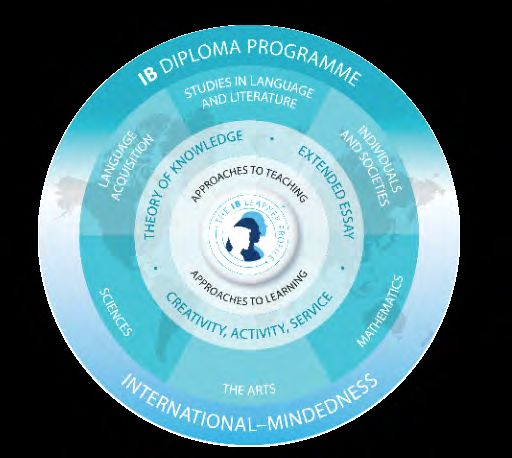
Group 1: Studies in Language & Literature

      English A:                                                     develop skills in listening, speaking, reading, writing,
                                                                     viewing, presenting, and performing

      Language & Literature
                                                                     develop skills in interpretation, analysis and
                                                                     evaluation
                                                                     develop sensitivity to the formal and aesthetic

      HL & SL (2021)                                                 qualities of texts and an appreciation of how they
                                                                     contribute to diverse responses and open up multiple
                                                                     meanings
      In this course, students study a wide range of literary        develop an understanding of relationships between
      and non-literary texts in a variety of media. By examining     texts and a variety of perspectives, cultural contexts,
      communicative acts across literary form and textual type       and local and global issues and an appreciation of
      alongside appropriate secondary readings, students will        how they contribute to diverse responses and open
      investigate the nature of language itself and the ways in      up multiple meanings
      which it shapes and is influenced by identity and culture.     develop an understanding of the relationships
      Approaches to study in the course are meant to be wide         between studies in language and literature and other
      ranging and can include literary theory, sociolinguistics,     disciplines
      media studies and critical discourse analysis among            communicate and collaborate in a confident and
      others.                                                        creative way
                                                                     foster a lifelong interest in and enjoyment of language
      The model for Language A: Language and Literature
                                                                     and literature
      is the same at SL and HL but there are significant
      quantitative and qualitative differences between the
                                                                   The theory of knowledge (TOK) course engages students
      levels. SL students are required to study four literary
                                                                   in reflection on the nature of knowledge and on how it
      works and a number of non-literary texts that are
                                                                   is constructed and represented. Studies in language and
      equivalent in teaching and learning time, whereas HL
                                                                   literature similarly engages students in an exploration
      students are required to study six literary works and
                                                                   of the nature of the human experience and of the
      a number of non-literary texts that are equivalent in
                                                                   ways in which personal views are constructed and
      teaching and learning time.
                                                                   communicated. In relating their studies to TOK, students
                                                                   become aware of the fact that although language
      In paper 1, both SL and HL students are presented
                                                                   and literature offer a powerful means of access to
      with two previously unseen non-literary extracts or
                                                                   knowledge, they are nonetheless a construction rather
      texts from different text types, each accompanied by
                                                                   than a perfectly mimetic representation of life and
      a guiding question. SL students are required to write a
                                                                   reality.
      guided analysis of one of these, while HL students must
      write guided analyses of both non-literary extracts or
                                                                   Additionally, in becoming more aware of the
      texts.
                                                                   perspectives of others through their studies, students
                                                                   develop a stronger sense of their own individual
      In addition, HL students will have a fourth assessment
                                                                   viewpoints, such as their position in time and place. The
      component, the higher level (HL) essay, a written
                                                                   reflection this prompts creates strong links with TOK.
      coursework task that requires students to explore a
      line of inquiry in relation to a studied non-literary text
                                                                   In Language A courses students are constantly engaged
      or texts, or a literary text or work. The outcome of
                                                                   with inquiry, critical thinking and reflection as they
      this exploration is a 1200–1500 word essay in which
                                                                   explore how meaning is generated in texts. Studies in
      HL students are expected to demonstrate a deeper
                                                                   language and literature therefore enhance the students’
      understanding of the nature of linguistic or literary
                                                                   ability to examine diverse ways of knowing and different
      study.
                                                                   knowledge questions. For example, questions regarding
                                                                   the extent to which the reader shapes the meaning of a
      The aims of all subjects in studies in language and          text, the impact of translation on a text, or the way texts
      literature are to enable students to:                        influence understanding of the self and the world are
                                                                   continuously raised in these courses and constitute an
         engage with a range of texts, in a variety of media and   important part of the focus of inquiry in them. Further
         forms, from different periods, styles, and cultures       examples of TOK questions can be found within the
                                                                   description of each of the areas of exploration of the
                                                                   syllabus.
Curriculum Overview 2020-2021 | 9
Group 1: Studies in Language & Literature
Prerequisite Learning Know, Understand and Interpret:
Successful completion of IGCSE First Language a range of texts, works and/or performances,
English and IGCSE World or English Literature (Grade and their meanings and implications
B or above for HL and Grade C or above for SL) or contexts in which texts are written and/or received
equivalent is desirable, but not essential. elements of literary, stylistic, rhetorical, visual and/
or performance craft
Skills Developed features of particular text types and literary forms
All IB options are subject to school approval.
Students who take these courses will often have Analyse and Evaluate
varied language profiles and may be multilingual. ways in which the use of language creates meaning
English A: Language & Literature offers the
uses and effects of literary, stylistic, rhetorical,
opportunity for continued language development
visual or theatrical techniques
and the acquisition of a range of skills including,
relationships among different texts
for example, textual analysis and the expression
of literary appreciation. The choice of this specific ways in which texts may offer perspectives
course will depend on the students’ and teacher’s on human concerns
interests and the individual student’s future
educational plans. Communicate
ideas in clear, logical, and persuasive ways
Course Materials & Resources in a range of styles, registers and for a variety of
In the IB, students will study a range of works, purposes and situations
including classical and modern fiction, play scripts,
poems and media of a literary and popular cultural
standard, all of which are provided by the school.
Teaching hours*
Syllabus component
SL HL
Readers, writers and texts
Non-literary texts are chosen from a variety of sources and media to represent as wide a range of
text types as possible, and works are chosen from a variety of literary forms. The study of the non-
literary texts and works focuses on the nature of language and communication and the nature of 50 80
literature and its study. This study includes the investigation of how texts themselves operate as
well as the contexts and complexities of production and reception. Focus is on the development of
personal and critical responses to the particulars of communication.
Time and space
Non-literary texts and literary works are chosen from a variety of sources, literary forms and media
that reflect a range of historical and/or cultural perspectives. Their study focuses on the contexts
of language use and the variety of ways literary and non-literary texts might both reflect and 50 80
shape society at large. The focus is on the consideration of personal and cultural perspectives, the
development of broader perspectives, and an awareness of the ways in which context is tied to
meaning.
Intertextuality: connecting texts
Non-literary texts and literary works are chosen from a variety of sources, literary forms and media
in a way that allows students an opportunity to extend their study and make fruitful comparisons.
Their study focuses on intertextual relationships with possibilities to explore various topics, thematic 50 80
concerns, generic conventions, modes or literary traditions that have been introduced throughout
the course. The focus is on the development of critical response grounded in an understanding of
the complex relationships among texts.
Total teaching hours 150 240
10 | Curriculum Overview 2020-2021Group 1: Studies in Language & Literature
SL 2021
Assessment component Weighting
External assessment (3 hours)
70%
Paper 1: Guided textual analysis (1 hour 15 minutes)
The paper consists of two non-literary passages, from two different text types, each accompanied by a question. 35%
Students choose one passage and write an analysis of it. (20 marks)
Paper 2: Comparative essay (1 hour 45 minutes)
The paper consists of four general questions. In response to one question students write a comparative essay 35%
based on two works studied in the course. (30 marks)
Internal assessment
This component consists of an individual oral assessment which is internally assessed by the teacher and
externally moderated by the IB at the end of the course.
Individual oral (15 minutes) 30%
Supported by an extract from one non-literary text and one from a literary work, students will offer a prepared
response of 10 minutes, followed by 5 minutes of questions by the teacher, to the following prompt:
Examine the ways in which the global issue of your choice is presented through the content and form of two of
the texts that you have studied. (40 marks)
HL 2021
Assessment component Weightiing
External assessment (4 hours)
80%
Paper 1: Guided textual analysis (2 hours 15 minutes)
The paper consists of two non-literary passages, from two different text types, each accompanied by a question. 35%
Students write an analysis of each of the passages. (40 marks)
Paper 2: Comparative essay (1 hour 45 minutes)
The paper consists of four general questions. In response to one question students write a comparative essay 25%
based on two works studied in the course. (30 marks)
HL essay
Students submit an essay on one non-literary text or a collection of non-literary texts by one same author, or a 20%
literary text or work studied during the course. (20 marks)
The essay must be 1,200–1,500 words in length.
Internal assessment: Individual oral (15 minutes)
This component consists of an individual oral which is internally assessed by the teacher and externally
moderated by the IB at the end of the course.
Individual oral (15 minutes) 20%
Supported by an extract from both one non-literary text and one from a literary work, students will offer a
prepared response of 10 minutes, followed by 5 minutes of questions by the teacher, to the following prompt:
Examine the ways in which the global issue of your choice is presented through the content and form of two of
the works that you have studied. (40 marks)
Curriculum Overview 2020-2021 | 11Group 1: Studies in Language & Literature
Language A:
develop an understanding of relationships between
texts and a variety of perspectives, cultural contexts,
and local and global issues, and an appreciation of
Literature HL & SL how they contribute to diverse responses and open
up multiple meanings
develop an understanding of the relationships
Students will focus exclusively on literary texts, adopting between studies in language and literature and other
a variety of approaches to textual criticism. Students disciplines
explore the nature of literature, the aesthetic function communicate and collaborate in a confident and
of literary language and textuality, and the relationship creative way
between literature and the world.
foster a lifelong interest in and enjoyment of language
and literature
Distinction between SL and HL
The model for Language A: Literature is the same at Studies in language and literature and theory of
SL and HL but there are significant quantitative and knowledge
qualitative differences between the levels. SL students
The theory of knowledge (TOK) course engages students
are required to study 9 works, while HL students
in reflection on the nature of knowledge and on how
are required to study 13. In paper 1, both SL and HL
it is constructed and represented. Studies in language
students are presented with two previously unseen
and literature courses similarly engage students in an
literary extracts or texts from different literary forms,
exploration of the nature of the human experience and
each accompanied by a guiding question. SL students
of the ways in which personal views are constructed and
are required to write a guided analysis of one of these,
communicated. In relating their studies to TOK, students
while HL students must write guided analyses of both
become aware of the fact that although language
literary extracts or texts.
and literature offer a powerful means of access to
knowledge, they are nonetheless a construction rather
In addition, HL students will have a fourth assessment
than a perfectly mimetic representation of life and
component, the higher level (HL) essay, a written
reality.
coursework task that requires students to explore a line
of inquiry in relation to a studied literary text or work.
Additionally, in becoming more aware of the
The outcome is an essay of 1,200–1,500 words in which
perspectives of others through their studies, students
HL students are expected to demonstrate a deeper
develop a stronger sense of their own individual
understanding of the nature of literary study.
viewpoints, such as their position in time and place. The
reflection this prompts creates strong links with TOK.
Studies in language and literature aims
The aims of all subjects in studies in language and In studies in language and literature courses, students
literature are to enable students to: are constantly engaged with inquiry, critical thinking and
reflection as they explore how meaning is generated in
engage with a range of texts, in a variety of media and texts. These courses therefore enhance the students’
forms, from different periods, styles, and cultures ability to examine diverse ways of knowing and different
develop skills in listening, speaking, reading, writing, knowledge questions. For example, questions regarding
viewing, presenting and performing the extent to which the reader shapes the meaning of a
text, the impact of translation on a text, or the way texts
develop skills in interpretation, analysis and
influence understanding of the self and the world are
evaluation
continuously raised in these courses and constitute an
develop sensitivity to the formal and aesthetic important part of the focus of inquiry in them. Further
qualities of texts and an appreciation of how they examples of TOK questions can be found within the
contribute to diverse responses and open up multiple description of each of the areas of exploration of the
meanings syllabus.
12 | Curriculum Overview 2020-2021Group 1: Studies in Language & Literature
Prerequisite Learning English A: Literature offers the opportunity for continued
Successful completion of IGCSE World or English language development and the acquisition of a range
Literature (Grade B or above for HL and Grade C of skills including, for example, textual analysis and
or above for SL) or equivalent is desirable, but not the expression of literary appreciation. The choice of
essential. All IB options are subject to school approval. this specific course will depend on the student's and
Students who take these courses will often have teacher's interests and the student’s future educational
varied language profiles and may be multilingual. plans.
Teaching hours*
Syllabus component
SL HL
Readers, writers and texts
Works are chosen from a variety of literary forms. The study of the works could focus on the
relationships between literary texts, readers and writers as well as the nature of literature and its
50 80
study. This study includes the investigation of the response of readers and the ways in which literary
texts generate meaning. The focus is on the development of personal and critical responses to the
particulars of literary texts.
Time and space
Works are chosen to reflect a range of historical and/or cultural perspectives. Their study focuses
on the contexts of literary texts and the variety of ways literary texts might both reflect and shape
50 80
society at large. The focus is on the consideration of personal and cultural perspectives, the
development of broader perspectives, and an awareness of the ways in which context is tied to
meaning.
Intertextuality: Connecting texts
Works are chosen so as to provide students with an opportunity to extend their study and make
fruitful comparisons. Their study focuses on intertextual relationships between literary texts
with possibilities to explore various topics, thematic concerns, generic conventions, literary 50 80
forms or literary traditions that have been introduced throughout the course. The focus is on the
development of critical response grounded in an understanding of the complex relationships among
literary texts.
Total teaching hours 150 240
Course Materials & Resources Analyse and evaluate
In the IB, students will study a range of works, ways in which the use of language creates meaning
including classical and modern fiction, play scripts, uses and effects of literary, stylistic, rhetorical,
poems and media of a literary standard, all of which visual or theatrical techniques
are provided by the school.
relationships among different texts
Know, Understand and Interpret ways in which texts may offer perspectives on
human concerns
a range of texts, works and/or performances, and
their meanings and implications
Communicate
contexts in which texts are written and/or received
ideas in clear, logical and persuasive ways
elements of literary, stylistic, rhetorical, visual and/
in a range of styles, registers and for a variety of
or performance craft
purposes and situations
features of particular text types and literary forms
Curriculum Overview 2020-2021 | 13Group 1: Studies in Language & Literature
SL 2021
Assessment component Weighting
External Assessment:
Paper 1: Guided literary analysis (1 hour 15 minutes)
The paper consists of two passages from two different literary forms, each accompanied by a question. 35%
Students choose one passage and write an analysis of it. (20 marks)
Paper 2: Comparative essay (1 hour 45 minutes)
The paper consists of four general questions. In response to one question, students write a comparative essay 35%
based on two works studied in the course. (30 marks)
Internal assessment
Individual Oral
Internally assessed by the teacher and externally moderated by the IB at the end of the course. (15 minutes)
30%
Supported by an extract from one work written originally in the language studied and one from a work studied
in translation, students will offer a prepared response of 10 minutes, followed by 5 minutes of questions by
the teacher, to the following prompt: Examine the ways in which the global issue of your choice is presented
through the content and form of two of the works that you have studied. (40 marks)
HL 2021
Assessment component Weighting
External Assessment:
Paper 1: Guided literary analysis (2 hours 15 minutes)
The paper consists of two literary passages, from two different literary forms, each accompanied by a question. 35%
Students write an analysis of each of the passages. (40 marks)
Paper 2: Comparative essay (1 hour 45 minutes)
The paper consists of four general questions. In response to one question, students write a comparative essay 25%
based on two works studied in the course. (30 marks)
Internal assessment
Individual Oral
Internally assessed by the teacher and externally moderated by the IB at the end of the course. (15 minutes)
20%
Supported by an extract from one work written originally in the language studied and one from a work studied
in translation, students will offer a prepared response of 10 minutes, followed by 5 minutes of questions by
the teacher, to the following prompt: Examine the ways in which the global issue of your choice is presented
through the content and form of two of the works that you have studied. (40 marks)
14 | Curriculum Overview 2020-2021Group 1: Studies in Language & Literature
語言 A: 語言與文學
學習者檔案
學習者檔案是語言 A: 語言與文學課程的一個核心要素 , 所有
學生都必須採用它。它是為期兩年的整個課程中學生完成的
語言與文學研究課程是針對語言和文化背景各異的學生們設 作業的個人收藏。
計的 , 他們具有在教育語境中使用課程教學的經驗。其課程
目標是熟練掌握接受技能 ( 聽讀 )、表達技能 ( 說寫 ) 和互動 高級課程論文
交流技能 , 要求所學課程進一步鞏固這些技能。除此以外, 要求學生撰寫一篇正式論文 (1450-1800 漢字 ), 聯繫一篇文
本課程亦要求學生發展他們使用語言的熟練程度、流利程度 本或一部作品探索一個探究線索。論文應當形式正規、條理
和範圍 , 尤其要掌握進行作品 / 文本分析所需要的適當詞彙。 清晰 , 並應證明做了良好的引用和參考注明。
他們還將通過研習文學作品和非文學文本加深他們對所探索 七個核心概念 : 認同、文化、創造力、交流、轉化、觀點、
的廣泛概念的理解 , 從而能夠以清晰、有條理和充分展開的 呈現。
方式解釋 , 分析 , 評價和交流這種理解。
概念性理解
在該課程中 , 學生將學習各種媒體中廣泛的文學和非文學文
本。通過考察跨文學體裁和文本類型的交流行為並開展輔助 認同 :
閱讀 , 學生將研究語言本身的性質以及語言形成身份認同和 同一位作者撰寫的 , 出現在不同文本中的同一個人物 , 增加了
文化 , 並受到它們影響的各種方式。學習該課程的方法應該 討論的複雜性。相反 , 閱讀一件文本時 , 讀者的認同發揮作用
是廣泛多樣的 , 可以包括學習文學理論、社會語言學、媒體 的各種方式 , 實際上對於分析閱讀和詮釋行為來說也至關重
研究和批評性話語分析等等。 要。
學習內容 文化 :
文本如何與其生產和被接受的背景相關聯 , 並與其中流行的
讀者、作者和文本
各自的價值觀、信仰和態度相關聯。將文化這一概念應用於
從各種材料來源和媒體中選擇非文學文本 , 盡可能多地代表 文本研究 , 應促使學生思考文本在多大程度上是特定文化和
廣泛的文本類型 , 並且要選擇各種文學體裁的作品。學習非 文學背景的產物 , 以及文本如何與它們相互作用。
文學文本和文學作品的重點是理解語言與交流的性質 , 以及
文學和文學研究的性質。這方面的研究包括調查文本本身的 創造力 :
運作方式 , 以及創作和理解文本的背景因素和複雜性。重點
應用於閱讀行為時 , 創造力這一概念強調讀者能夠富有想像
是針對交流的細節做出個人的和批判性的回應。
力地與文本進行互動的重要性 , 要從文本中產生一系列可能
的意義 , 高出和超出已被廣泛接受的詮釋。
時間和空間
非文學文本和文學作品選自各種材料來源 , 各種文學體裁和 交流 :
媒體形式 , 反映廣泛的歷史和 / 或文化觀點。對它們的研究
交流這一概念圍繞著通過文本在作者和讀者之間建立關係這
注重使用語言的背景 , 以及文學和非文學文本可以廣泛地反
一問題。在這方面的探索中 , 作家通過他們對文本風格和結
映和塑造社會的各種方式。重點是考慮各種個人的和文化的
構的選擇在多大程度上促進了交流可能是要分析的一個方
觀點 , 發展出更廣泛的各種觀點 , 以及對背景與意義之間的聯
面。作者也可能有意針對特定的受眾 , 這可能意味著已經對
繫的認識。
讀者的知識或觀點進行了假設。
互文性 : 文本的相互聯繫
轉化 :
非文學文本和文學作品選自各種材料來源 , 各種文學體裁和
對文本之間聯繫的研究構成了 3 個探索領域當中的一個領域
媒體形式 , 從而使學生有機會拓展他們的學習並進行富有成
的焦點 , 即互文性 : 文本之間的聯繫。文本相互參考和引用的
效的比較。對它們的研究側重於互文關係 , 也有機會探索在
方式很複雜 , 出於美學或交流的目的 , 文本會此引用一些適當
整個課程中引入的各種主題、專題關注、通用慣例、模式或
的元素 , 這些都證明瞭在創作文本的過程中轉化的重要性。
文學傳統。重點是根據對文本之間複雜關係的理解做出批判
此外 , 無論是對文本還是對讀者來說 , 閱讀行為本身就具有潛
性回應。
在的轉化性質。不同的讀者會用他們的個人詮釋來轉化。
Curriculum Overview 2020-2021 | 15Group 1: Studies in Language & Literature
觀點 : 可能書單 : SL & HL
文本可能提出多種觀點 , 這些觀點可能反映其作者的觀點 , 也 《紐約客》白先勇
可能並不反映作者的觀點。讀者也會有他們自己的觀點 , 他 《兒子的大玩偶》黃春明
們會帶著自己的觀點與文本互動。這種觀點的多樣性會影響 《目送》龍應台
對文本的詮釋 , 因此值得重點關注和討論。閱讀和寫作行為 《杜甫詩選》杜甫
都是發生在特定的時間和地點。 《徐志摩詩選》徐志摩
《聊齋誌異》蒲松齡
呈現 : 《少女小魚》嚴歌苓
有人文學家認定文學應該盡可能準確地呈現現實 , 也有人聲 《撒哈拉歲月》三毛
稱藝術應絕對脫離和擺脫現實 , 在藝術作品中也沒有呈現現 《落地》哈金
實的任何責任。無論這些討論說什麼 , 呈現這一概念對於本 《抵岸》陳志勇
學科來說都是至關重要的。 《Death of a Salesman》Arthur Miller
《A Doll's House》Henrik Ibsen
作品選擇 :
在普通課程的這 3 個探索領域中 , 必須至少研習 4 部作品 , 在
高級課程的這 3 個探索領域中至少要研習 6 部作品。
考試 課程 評估細節 時間長度 比重 校內 / 校外 評估
該試卷由兩篇非文學文本構成 , 它們分屬兩種
試卷 1: 不同的文本類型 , 每一篇文都附有一個問題。
普通課程 (SL) 75 分鐘 35% 校外評估
有引導題的文本分析 學生選擇其中的一篇選文並撰寫一篇對它的
分析文章。( 總分 20 分 )
該試卷由兩篇非文學選文構成 , 它們分屬兩種
試卷 1: 不同的文本類型 , 每一篇文本都附有一個問題。
高級課程 (HL) 105 分鐘 35% 校外評估
有引導題的文本分析 學生針對每一篇選文撰寫一篇分析性文章。
( 總分 40 分 )
試卷中包含 4 道一般性論題。學生要根據在
試卷 2: 普通課程 (SL)、 課程中學習過的兩部作品 , 撰寫一篇對它們進行
105 分鐘 25% 校外評估
比較論文 高級課程 (HL) 比較的論文來回應其中的一道題。
( 總分 30 分 )
學生提交一篇關於一件非文學文本 , 或同一
作者的非文學文本集 , 或在課程中學習過的文學
論文 高級課程 (HL) 文本或作品的論文。( 總分 20 分 ) 20% 校外評估
論文的篇幅須為 1200–1500 個英文單詞
(1450-1800 個漢字 )。
這項評估由一場個人口試構成 , 由授課教師們
進行評估 , 並由國際文憑組織在課程結束時
進行校外評審。
普通課程 (SL)、
個人口試 根據分別出自一篇非文學文本和一篇文學 15 分鐘 30% 校內評估
高級課程 (HL)
作品的節選 , 學生將做一次長達 10 分鐘的有
準備的口頭表達 , 在接下來的 5 分鐘內根據
如下提示回答教師的提問 ( 總分 40 分 )
16 | Curriculum Overview 2020-2021Group 1: Studies in Language & Literature
中文語言 A: 學習者檔案
普通課程與高級課程
學習者檔案是“語言 A:文學”課程的一個核心要素,所有學
生都必須採用它。它是為期兩年的整個課程中學生完成的作業
的個人收藏,是學生探索和反思文學文本,並在它們與本學科
的探索領域和核心概念之間建立聯繫的地方。要求學生在學習
者檔案中反思他們對在相應的探索領域中所學作品的感想和反
在“語言 A:文學”課程中,學生將瞭解文學作為跨文化和貫
應。還要求他們在這些作品與他們以前曾閱讀的作品之間建立
穿整個歷史的強大寫作模式的各種表現形式。他們將探索並發
聯繫,在他們作為讀者的觀點和價值觀以及同學們的觀點和價
展對文學作品的產生和接受起促進作用的各種因素的理解,例
值觀之間建立聯繫。隨著課程大綱的進展,要求學生在探索領
如:
域內和跨領域的作品之間建立這些聯繫,它們將為更廣泛地瞭
解文本、文化和認同之間的相互作用提供基礎。
作者和讀者的創造力;
與作者和讀者各自語境以及與文學傳統的互動性質;
課程要求
語言產生意義和 / 或影響的各種方式;
文學創作和回應的表演和轉化潛力。 下表總結了普通課程與高級課程之間的區別。
通 過 深 入 分 析 多 種 體 裁、 不 同 時 期、 不 同 地 區 的 文 學 文
本, 學 生 將 考 慮 他 們 自 己 的 詮 釋, 以 及 其 他 人 的 批 判 性 觀
點。 反 過 來, 這 將 鼓 勵 探 索 各 種 觀 點 是 如 何 由 各 種 文 化 信
仰 系 統 塑 造 的, 以 及 在 這 些 系 統 中 如 何 形 成 意 義。 學 生
將 探 究 文 本 的 創 作 過 程 和 對 文 本 做 出 批 判 性 回 應 的 過 程,
這 將 説 明 他 們 認 識 到 文 本 是 如 何 影 響 讀 者 的, 以 及 讀 者 如
何 以 各 種 可 能 的 方 式 解 讀 文 本。 本 課 程 聚 焦 於 文 學 作 品,
特別注意培養學生敏銳地認識到語言的優美運用,並使他們能
夠思考文學是如何呈現和塑造世界以及社會和文化認同的。
要求閱讀的作品 普通課程 高級課程
由出現在《國際文憑指定閱讀書單》上的
學習至少 3 件作品 學習至少 4 件作品
作者撰寫的作品譯著
由出現在國際文憑指定閱讀清單上的
學習至少 4 件作品 學習至少 5 件作品
作者撰寫的作品原著
自選作品 學習 2 部自選作品 學習 4 部自選作品
學習作品總計 9 13
校外評估 普通課程 高級課程
針對兩篇以前未曾見過的文學節選或 針對以前未曾見過的文學節選或文本撰寫
試卷 1:有引導題的文學分析
文本中的一篇撰寫一篇 引導下的分析文章。 兩篇 引導下的分析文章。
試卷中包含 4 道一般性論題。 試卷中包含 4 道一般性論題。
學生要根據在課程中所學習過的兩部作品, 學生要根據在課程中所學習過的兩部作品,
試卷 2:比較論文
撰寫一篇對它們進行比較的論文來回應 撰寫一篇對它們進行比較的論文來回應
其中的一道題。 其中的一道題。
一篇 1500-1800 個漢字 的論文,
高級課程論文 聯繫一件學習過的文學文本或作品
進行一系列探究。
Curriculum Overview 2020-2021 | 17Group 1: Studies in Language & Literature
評估概要
評估成分 普通課程 高級課程
試卷 1 附有引導題的文學分析 (75 分鐘 ) 35% 有引導題的文學分析 (135 分鐘 ) 35%
校外評估
試卷 2 比較論文 (105 分鐘 ) 35% 比較論文 (105 分鐘 ) 25%
論文 高級課程論文 20%
根據學過的出自一篇由所學語言寫作的 根據出自學習過的一部用所學語言撰寫的
作品節選和一篇翻譯的文學作品節選, 文學作品原著的節選,和出自一部學習過的
學生將做一次長達 10 分鐘的有準備的口頭 翻譯文學作品的節選,學生將做一次長達
表達,在接下來的五分鐘內根據如下提示 10 分鐘的有準備的口頭表達,在接下來的
校內評估 個人口試
回答教師的提問: 5 分鐘內要根據以下提示回答教師的提問:
通過你學過的兩部作品的內容和形式, 通過你學過的兩部作品的內容和形式,
考察它們介紹你選擇的全球性問題的方式。 考察它們介紹你選擇的全球性問題的方式。
30% 20%
個人口試 文化、認同和社區
信仰、價值觀和教育
個人口試要針對以下提示:
政治、權力和公平正義
通過你學過的兩部作品的內容和形式,考察它們介紹
藝術、創造力和想像力
你選擇的全球性問題的方式。
科學、技術和環境
一個全球性問題具有以下 3 個特徵:
學生學習參考書目:
具有廣泛的重要性 >
具有跨國性 >
其影響在各地的日常生活中能被感受到 >
>
學生可以考察以下一個或多個探究領域,以獲得如何 >
確定在他們的口頭表達中要重點探討的一個全球性問 >
題方面的指導。 >
>
>
>
>
18 | Curriculum Overview 2020-2021Group 1: Studies in Language & Literature
French A Literature School-supported Self-taught Language A (SL)
Another Language A option may be possible and can be
(HL&SL), German A
supported by the school. This option allows students to
study their mother tongue, even if it is not part of the
usual subject offerings. Students will receive support in
Language and school from a literature teacher, although a teacher of
the selected language will not be provided.
Literature (HL&SL), The programme of study is identical to that of the
Language A Literature SL syllabus. However, there are
School-supported differences in procedure for assessments.
Self-taught Language In the past, TES students have taken this option in a wide
range of languages, such as Swedish, Danish, Hungarian,
A (SL)
Swazi, and Spanish.
Français A Littérature (HL&SL)
Dans le cadre du Baccalauréat International, il est
possible de suivre un cours de littérature française à
l’École Européenne de Taipei. Les structures de cours
suivent généralement des formats similaires aux
matières de la langue A détaillées précédemment,
notamment l’Anglais A. Cependant, il y a de nombreuses
similarités avec le Baccalauréat français comme par
exemple, la technique du commentaire oral et écrit et
également les oeuvres choisies.
Deutsch A - Sprache und Literatur (HL&SL)
Die Taipei European School bietet die Option Deutsch
A (Sprache und Literatur) an. Die Kursstrukturen folgen
einem ähnlichen Format wie die zuvor beschriebenen
A-Sprachfächer und die Inhalte ähneln denen des
deutschen Abiturs: gelesen und produziert werden
literarische Texte ebenso wie verschiedenste Sach- und
Gebrauchstexte Die Klasse wird von Lehrkräften der
deutschen Sektion unterrichtet . Die Deutschgruppen
sind in der Regel eher klein und bieten daher den
Schülerinnen und Schülern viele Möglichkeiten, sich
einzubringen.
Curriculum Overview 2020-2021 | 19Group 2: Language Acquisition
English B HL & SL Both SL and HL students will develop oral skills for use
in interactive situations within groups and individual
situations with one other speaker. An additional feature
of the HL course is the study of Literature.
English B is an additional-language learning course
designed for students with some previous English study.
Course Materials & Resources
It aims to give students the necessary language skills and
intercultural understanding to communicate effectively There is a course text book, English B Course Companion,
in a range of contexts in an environment where English published by Oxford University Press. Other texts are
is spoken. These skills are developed through study of gathered from various resources, such as the Internet,
a range of written and spoken material, representing periodicals, and newspapers.
a breadth of different text types and gathered from
a range of contexts. Students have the opportunity HL students will study two literary pieces. Works that
to use English during learner-centred activities, both have been studied in the course in recent years include,
collaborative and individual, in order to develop mastery Stargirl by Jerry Spinelli, A Step from Heaven by An Na, Of
of English for a variety of purposes. Mice and Men by John Steinbeck, and An Inspector Calls
by J.B. Priestley.
Prerequisite Learning
All texts and resources will be provided by the school.
Successful completion of IGCSE subjects or equivalent.
Most students will have studied English as a Second
Skills Developed
Language at IGCSE. Please note that IB options are
subject to school approval and the school has an Throughout the course, students will develop the
obligation to ensure that students are appropriately following skills:
placed in all language courses.
communicating clearly and effectively in a range of
contexts, demonstrating linguistic competence and
Course Content
intercultural understanding
The topics studied at both SL and HL are the same.
using language appropriate to a range of
These topic areas fit into five broad themes, which
interpersonal and/or cultural contexts
allow opportunities for students to communicate
about matters of personal, local or national, and global understanding and using language to express and
interest. These themes are Identities, Experiences, respond to a range of ideas with accuracy and
Human Ingenuity, Social Organisation, and Sharing the fluency
Planet. The aims of studying materials within these organising ideas on a range of topics, in a clear,
topics is not the study of the topics per se, but rather to coherent, and convincing manner
develop language skills and intercultural understanding understanding, analysing, and responding to a range
related to a variety of contexts. of written and spoken texts
understanding and using works of literature written
Both SL and HL students will develop reading skills
in English (HL only)
related to a variety of text types including, but not
limited to, articles, leaflets, news reports, essays,
interviews and reviews. They will also learn the skills to Next Steps
write appropriately for a similar variety of text-types. Successful study in English B provides students with the
language and intercultural skills to enjoy and thrive in
environments where English is spoken, including travel
or university study. High achievement in the English
B course is used by many universities as a language
qualification for admissions.
20 | Curriculum Overview 2020-2021Group 2: Language Acquisition
Assessment
Exam Level Detail Length Weighting Internal/External
Paper 1: 1 hour 15
SL One writing task of 250–400 words 25% External
Writing minutes
Separate sections for listening and reading
Paper 2: Listening Comprehension (45 minutes)
1 hour 45
Receptive SL Reading Comprehension (1 hour) 50% External
minutes
skills Comprehension exercises on three audio passages
and three written texts, drawn from all five themes
Individual A conversation with the teacher, based on a visual
12 to 15
oral SL stimulus, followed by discussion based on an 25% Internal
minutes
assessment additional theme
Paper 1: 1 hour 30
HL One writing task of 450–600 words 25% External
Writing minutes
Receptive skills—separate sections for Listening
and Reading
Paper 2:
Listening Comprehension (1 hour)
Receptive 2 hours 50%
Reading Comprehension (1 hour) External
skills
Comprehension exercises on three audio passages
and three written texts, drawn from all five themes
A conversation with the teacher, based on an
Individual
extract from one of the literary works studied in 12 to 15
oral HL 25% Internal
class, followed by discussion based on one or more minutes
assessment
of the themes from the syllabus
Curriculum Overview 2020-2021 | 21Group 2: Language Acquisition
Language B in Chinese, In addition, the study of at least two literary texts
(originally written in the target language) is compulsory
French, German or
for language B at Higher Level.
Course Materials & Resources
Spanish (HL & SL) Students use the following resources, developed
specifically for the International Baccalaureate:
Language B is a language acquisition course developed at
SL and HL for students with some background in the target Chinese: Easy Steps to Chinese 6/7/8
language. While acquiring a language, students will explore (Beijing Language and Culture University Press)
the culture(s) connected to it. The focus of these courses is French: Course Companion (Oxford) / Le monde
language acquisition and intercultural understanding. francophone (Cambridge University Press)
German: IB: Deutsch im Einsatz
The Language B syllabus approaches the learning of language (Cambridge University Press)
through meaning. Through the study of the prescribed topics
Spanish: Course Companion (Oxford) / Mañana
at SL and HL, plus two literary works at HL, students build
(Cambridge University Press)
the necessary skills to reach the assessment objectives of the
Language B course through the expansion of their receptive,
Classes are also built using authentic websites such as:
productive, and interactive skills.
SL and HL are differentiated by the recommended number
of teaching hours, the depth of syllabus coverage, the study
of literature at HL, and the level of difficulty and demands of
assessment and assessment criteria.
Prerequisite Learning undp.org msf.org fr.unesco.org
Successful completion of IGCSE subjects or equivalent. Most
students will have studied the relevant language as a Foreign
or Second Language at IGCSE. Please note that all IB options
are subject to school approval.
Course Content
The course is structured around the five prescribed themes:
Themes Description Sub-topics
Identities Nature of the self and what it is to be human Lifestyles, health, and wellbeing, language, and identity
Stories of the events, experiences, and journeys Leisure activities, holidays and travel, customs and
Experiences
that shape our lives traditions, and migration
Human Ways in which human creativity and innovation Entertainment, communication and media, and
ingenuity affect our world technology
Ways in which groups of people organised
Social Social relationships, community, social engagement,
themselves, or are organized, through common
organisation education, the working world, law and order
systems or interests
Sharing the Challenges and opportunities faced by individuals Environment, human rights, peace and conflict, equality,
planet and communities in the modern world globalisation, and ethics
22 | Curriculum Overview 2020-2021Group 2: Language Acquisition
Skills Developed Next Steps
The skills developed in Language B aim to: Language B allows students to prepare for future
academic study or their professional life - not only by
develop students’ intercultural understanding being able to communicate in the language studied,
enable students to understand and use the language but also by enabling them to acquire other languages
they have studied in a range of contexts and for a more easily. It also allows students to reflect upon the
variety of purposes benefits of language acquisition and be more effective
communicators.
encourage, through the study of texts and through
social interaction, an awareness and appreciation of the
different perspectives of people from other cultures
develop students’ awareness of the role of language in
relation to other areas of knowledge
develop students’ awareness of the relationship
between the languages and cultures with which they
are familiar
provide students with a basis for further study, work,
and leisure through the use of an additional language
provide the opportunity for enjoyment, creativity,
and intellectual stimulation through knowledge of an
additional language
Assessment
Exam Detail Length Weighting Internal/External
Productive skills
Paper 1: 1 hour 15 (SL)
Writing (30 marks) 25% External
Writing 1 hour 30 (HL)
One written task of 250–400 words (SL) or 450–600 (HL)
Receptive skills
Separate sections for listening and reading (65 marks)
Paper 2:
Listening comprehension (45min in SL or 1 hour in HL) (25 marks)
Listening and 1 hour 45 (SL) 50% External
Reading comprehension (1 hour) (40 marks)
reading 2 hours (HL)
Comprehension exercises on three audio passages and three
written texts, drawn from all five themes
Individual A conversation with the teacher, based on a visual stimulus in SL Internal but
oral or based on an extract from one of the literary works in HL and at 10 minutes 25% externally
assessment least one additional course theme moderated
Curriculum Overview 2020-2021 | 23Group 2: Language Acquisition
Language Ab Initio Course Materials & Resources
In IB Language Ab Initio, we use the following textbooks,
in French or Spanish
specifically developed for the International Baccalaureate:
French: Panorama francophone
(SL) (Cambridge University Press)
Spanish: Panorama hispanohablante
(Cambridge University Press)
Language Ab Initio is a language acquisition course
designed for students who wish to start learning a new These are provided by the school.
language during their IB Diploma studies. Through the
development of receptive, productive, and interactive Skills Developed
skills, students should be able to respond and interact Language Ab Initio aims to:
appropriately in a defined range of everyday situations.
Language Ab Initio is available at SL only. develop students’ intercultural understanding;
enable students to understand and use the language
Prerequisite Learning they have studied in a range of contexts and for a
variety of purposes
No prerequisite learning is necessary. However, students
encourage, through the study of texts and through
who have studied a language for more than a year, or who
social interaction, an awareness and appreciation
have had extended exposure to that language, are not
of the different perspectives of people from other
eligible to take the Ab Initio course. The most important
cultures
consideration is that the Language Ab Initio course should
be a challenging educational experience for the student. develop students’ awareness of the role of language in
Please note that all IB options are subject to school relation to other areas of knowledge
approval. develop students’ awareness of the relationship
between the languages and cultures with which they
Course Content are familiar
The language Ab Initio course is organised into five provide students with a basis for further study, work
prescribed topics. and leisure through the use of an additional language
provide the opportunity for enjoyment, creativity
Each theme has a list of prescribed topics that provide the and intellectual stimulation through knowledge of an
students with opportunities to practise and explore the additional language
language, as well as to develop intercultural understanding.
Themes Description Sub-topics
Personal attributes, personal relationships, eating and
Identities Nature of the self and how we express who we are
drinking, and physical wellbeing
Stories of the events, experiences and journeys that
Experiences Routine, leisure, holidays, festivals and celebrations
shape our lives
Human Ways in which human creativity and innovation affect
Transport, entertainment, media and technology
ingenuity our world
Ways in which groups of people organize themselves,
Social
or are organized, through common systems or Neighbourhood, education, the workplace, social issues
organisation
interests
Sharing the Challenges and opportunities faced by individuals and Climate, physical geography, the environment and
planet communities in the modern world global issues
24 | Curriculum Overview 2020-2021You can also read


