A Fog Computing Solution for Context-Based Privacy Leakage Detection for Android Healthcare Devices - MDPI
←
→
Page content transcription
If your browser does not render page correctly, please read the page content below
sensors
Article
A Fog Computing Solution for Context-Based Privacy
Leakage Detection for Android Healthcare Devices
Jingjing Gu 1, * , Ruicong Huang 1 , Li Jiang 1 , Gongzhe Qiao 1 , Xiaojiang Du 2 and
Mohsen Guizani 3
  1    MIIT Key Laboratory of Pattern Analysis and Machine Intelligence, College of Computer Science and
      Technology, Nanjing University of Aeronautics and Astronautics, Nanjing 211106, China;
      huangruicong@nuaa.edu.cn (R.H.); nuaa_jiangli@nuaa.edu.cn (L.J.); 1002351818@alumni.sjtu.edu.cn (G.Q.)
 2    Department of Computer and Information Sciences, Temple University, Philadelphia, PA 19122, USA;
      dux@temple.edu
 3    College of Engineering, Qatar University, Doha 2713, Qatar; mguizani@ieee.org
 *    Correspondence: gujingjing@nuaa.edu.cn

 Received: 16 January 2019; Accepted: 4 March 2019; Published: 8 March 2019

 Abstract: Intelligent medical service system integrates wireless internet of things (WIoT), including
 medical sensors, wireless communications, and middleware techniques, so as to collect and analyze
 patients’ data to examine their physical conditions by many personal health devices (PHDs) in real
 time. However, large amount of malicious codes on the Android system can compromise consumers’
 privacy, and further threat the hospital management or even the patients’ health. Furthermore,
 this sensor-rich system keeps generating large amounts of data and saturates the middleware
 system. To address these challenges, we propose a fog computing security and privacy protection
 solution. Specifically, first, we design the security and privacy protection framework based on the fog
 computing to improve tele-health and tele-medicine infrastructure. Then, we propose a context-based
 privacy leakage detection method based on the combination of dynamic and static information.
 Experimental results show that the proposed method can achieve higher detection accuracy and
 lower energy consumption compared with other state-of-art methods.

 Keywords: privacy leakage detection; intelligent medical service; fog computing; Android;
 context information

1. Introduction
     Intelligent medical service systems integrate the wireless internet of things (WIoT), such as medical
sensors, wireless communications, and middleware techniques to monitor and analyze the patient’s
physical health in the form of portable, wearable or body-embedding micro-intelligent personal health
devices (PHDs). It can also collect and analyze a large amount of patients’ data by various PHDs
to perform the disease diagnosis and prevention both inside and outside hospitals with a flexible
doctor-patient communication way. In various PHDs with diverse uses, there are a great quantity
of devices with Android installed. With the open-source flexibility, strong content delivery system,
and numerous Android’s consumers, Android-based PHDs present significant advantages for both
designers and consumers.
     However, most intelligent medical devices are vulnerable to external attacks, especially when
connected to the network or to different types of custom cloud servers, where malicious attackers are
ubiquitous. According to the report of Android malicious apps by the 360 Cyber Security Center in
2016 [1], a cumulative of 14.033 million new samples of malicious programs on Android platforms were
intercepted. Things are even worse in the medical field and caused great security concerns. There have

Sensors 2019, 19, 1184; doi:10.3390/s19051184                                  www.mdpi.com/journal/sensors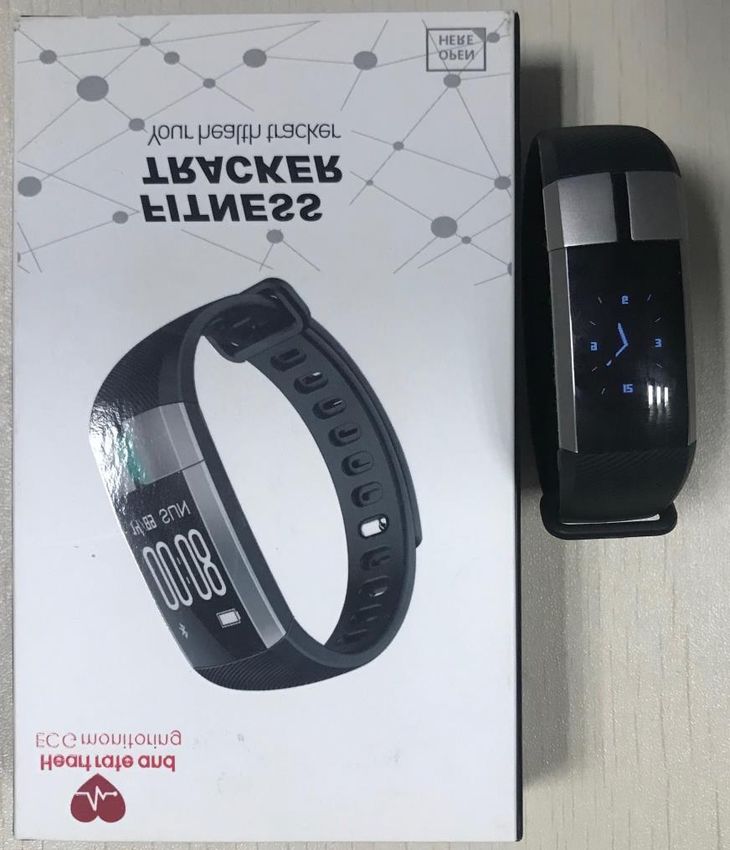
Sensors 2019, 19, 1184                                                                                 2 of 19

been many security accidents caused by hacking of medical equipment or related mobile devices [2,3].
For example, a blackmail software attacked some hospitals both in the USA and Germany [4,5] to
invade patient monitors and drug distribution systems. As reported by Kaspersky Lab’s global
research and analysis team [6], hackers can easily find wireless devices in hospitals and control the
network, or even some PHDs for obtaining the patients’ information. What’s more, a large number
of mobile health applications have actively collected users’ sensitive information and sent it to their
vendors or other third-party domains over HTTP using plaintext [7], which greatly increases the risk
of consumers’ privacy being leaked.
      Therefore, how to build a secure intelligent medical service system and protect patient’s privacy still
remains a very challenging research issue. There have been some works on privacy leakage detection
and privacy protection in the wireless sensor network [8–11], which are generally considered from three
aspects: static analysis, dynamic analysis, and integrated analysis of static and dynamic. (1) Static analysis
uses static data flow to analyze the direction of the sensitive data flow in the program with the Android
package (APK) file [10,12–14]. It could detect efficiently with high code coverage, but is not applicable to
the analysis of apps with multi-thread methods. (2) Dynamic analysis, on the contrary, could avoid the
shortcomings of static analysis when monitoring the running state of software [11,15–18]. It compensates
for static analysis in detection accuracy, but costs much more code coverage, and often lags behind
leakage events during the detection. (3) Integrated analysis combines static and dynamic analysis [19],
which consists of software piling, automated testing, and protective systems. By the integrated analysis,
monitoring codes are inserted through static code piling to obtain data flow information and sensitive
application programming interfaces (APIs) usage data. Then the repackaged software is automatically
tested and a protective layer is provided to protect devices from malicious software attacks [20].
      Our proposal is motivated by such the integration of static and dynamic analysis. However,
most of traditional privacy protection methods are unsuitable because PHDs based on WIoT need
a strong technological foundation for their rapid development from both the hospitals and patients.
Therefore, in this paper, we develop a novel context-based privacy leakage detection method, which
is based on an invented fog computing solution [21] for Android PHDs and services. Specifically,
first, we design a privacy protection framework for intelligent medical service systems based on fog
computing. In this framework, we can monitor privacy leakage of PHDs with the Android system
in real time, and process user’s privacy data and the real-time operation status at the fog. Second,
we propose an privacy leakage detection method based on Android application by utilizing the context
information (described in Section 4). The proposed method combines the static stain analysis with the
dynamic hook monitoring, which could effectively detect privacy leakage and provide protection. The
experimental results show that our method can achieve higher detection accuracy and lower energy
consumption compared with other state-of-art ones.

2. Related Work

2.1. Intelligent Medicine and Fog Computing
     Intelligent medical service and fog computing are hot research topics recently. For example,
Ref. [22] proposed an architecture of personalized medical service based on fog computing, and
optimized it by the clustering method. Ref. [23] proposed a method of combining drivers’ mHealth
data and vehicular data for improving the vehicle safety system to solve the problem of road accidents
and incidents, due to various factors, in particular the health conditions of the driver. To deal with the
increasing false alarms in frequently changing activities, Ref. [24] presented a user-feedback system
for use in activity recognition, which improved alarm accuracy and helped sensors to reduce the
frequency of transactions and transmissions in wireless body area networks. Ref. [25] addressed some
threats of mHealth networks and focused on the security provisioning of the communication path
between the patient terminal and the monitoring devices. To solve the problem of response delay and
resources waste in the case of increasing complexity, Ref. [26] put forward a fog-based cloud model
Sensors 2019, 19, 1184                                                                             3 of 19

for time-sensitive medical applications. Ref. [27] designed a medical and health system based on fog
aided computing, which classified user infection categories by decision tree and generates diagnostic
alerts in fog layer. To diagnose and prevent the outbreak of Chikungunya virus, Ref. [28] put forward a
medical and healthcare privacy data protection scheme based on fog calculation. Ref. [29] proposed a
multilevel architecture based on fog computing. Ref. [21] suggested that fog computing will be widely
used in intelligent medicine in the future.

2.2. Security Based on Android Platforms
      Security issues have always been the focus of network research [30–33]. With the popularity of
Android medical equipment and the emergence of malicious software, the privacy protection of Android
platform has caused widespread concern in the academic field in recent years. Generally, the research
of privacy leakage detection is considered from three aspects: static, dynamic, and integrated analysis
of static and dynamic. Static analysis analyzes the APK file, and uses static data flow to analyze the
direction of the static sensitive data flow in the program. For instance, Ref. [12] proposed a static
privacy leakage analysis system, which first created the mapping between API functions and required
permissions. Refs. [10,13,14] used inter-application interactions in Android to mark the components
in security. By the static analysis, privacy leakage detection of Android had high code coverage of the
software. However, static analyses are incapable of analyzing apps with reflection, multi-threaded, or
reference methods. Since static analysis cannot obtain the running state of the softwares, its accuracy
may be unsatisfied. Dynamic analysis can avoid such a shortcomings when monitoring the running
state of a software. Ref. [15] designed the TaintDroid to perform a dynamic analysis. Ref. [11] performed
a dynamic stain analysis of the running mode defaulted by Google in Android 5.0 and the above
systems. Similar methods, namely to detect privacy leaks by modifying system codes are DroidBox [16],
Mobile-Sandbox [17,34], VetDroid [35], AppFence [36], FlaskDroid [37]. Ref. [38] proposed a privacy
leakage monitoring system to repackage the software and insert the monitoring logic codes. Similar
systems are AppGuard [39] and Uranine [18]. But detection results of the dynamic analysis possibly
lagged behind leakage events [40]. Therefore, some works combined static and dynamic analysis [19,20].
For instance, AspectDroid [19] inserted monitoring codes through static bytecode instrumentation to
automatically test the repackaged software, and added a protective layer to protect the device from
malicious software attacks. AppIntent [20] combined static data flow analysis and dynamic symbolic
execution to verify privacy disclosure, which reduced the search space without sacrificing code coverage.
      The works above can solve the problem of privacy leakage to a certain extent, but there are still
some shortcomings, as follows: (1) static analysis is unable to get the dynamic running information of
the software. Many malicious apps can download executable codes to avoid from the static detection;
(2) dynamic analysis usually sacrifices code coverage, and some methods require modification of the
source codes of Android systems, which increases difficulty of development at the expense of some
system resource; (3) analysis based on app repackaging has some impact on the original app, and some
apps are resistant to these methods by using encrypted packers.

3. The Privacy Leakage Detection Framework Based on Fog Computing
     In this section, we propose a fog computing framework for privacy leakage detection of healthcare
networks to protect the intelligent medical service systems. Basically, it monitors various applications
on PHDs in real time, detects malicious codes, and feeds detection results back to users. Moreover,
this framework is combined with fog computing to conduct encryption, decryption, and identity
authentication of the user’s privacy data.

3.1. Intelligent Personal Health Devices
     The applications of intelligent PHDs can be divided into two parts.
     For data collection, PHDs collect data through diverse sensors on users and upload data to a
healthcare monitoring and management center, so as to perform 24-h health monitoring. PHDs collect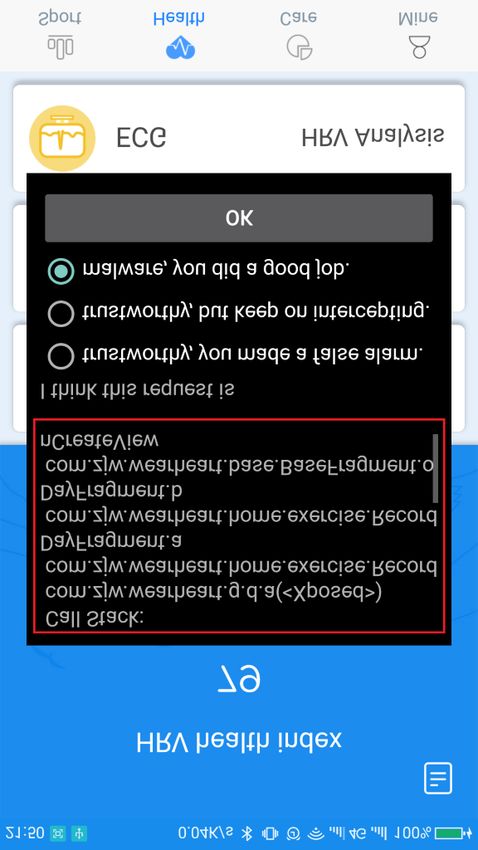
Sensors 2019, 19, 1184                                                                                     4 of 19

and send users’ physiological health data, such as electrocardiography (ECG), heart rate, and blood
pressure. Figure 1 is a diagram of commonly used PHDs, which fall into three categories: (1) portable
small medical devices, or micro-intelligent chip devices which can be worn on or embedded into the
human body; (2) indoor care devices, such as smart medicine boxes; (3) medical equipment used in
hospitals, such as intelligent film extractors.
     For data application, the collected data is sent to the fog for customizing different treatments to
users. For example, smart medicine box reminds the user to take medicine on time. The intelligent
infusion pump adjusts the infusion rate by observing the changes of blood pressure and other
information. The intelligent atomizer can revise the atomization time and dose according to the
body condition. The intelligent film taker reduces the queue waiting time, and outputs corresponding
medical images based on patients’ biological characteristics. The intelligent dispenser can precisely
configure user-defined drugs.

                                                 Figure 1. Healthcare devices.

3.2. System Architecture
     In this paper, we propose a privacy leakage detection method based on fog computing
framework, which is a higy vitalized platform that provides computing, storage, and network services.
The architecture of the designed system here is shown in Figure 2, which shows the components and
interrelationships, namely cloud, fog interface and intelligent medical terminal. Generally, fog nodes
work between terminal devices and traditional cloud computing data centers, which means that they
are physically closer to the users. Besides, fog has less requirements of network bandwidth, so it
reduces the network costs and time delay. Due to these features, fog not only extends the capabilities
of the cloud, but also reduces the requirements for the organization to apply it.

                                                                                   Cloud

                                                                                            Fog

                                                                                                  Smart
                                                                                                  Device
                          Computer
                                                                                                Smart
                         Smart Bracelet
                                                                                         Smart Infusion
                                     Intelligent Blood                                   Film Pump
                                                             Smart     Intelligent Smart
                                     Glucose Meter Smart Kit                             Extractor
                                                             Sphygmo- Dispensing Atomizer
                                                             Manometer Machine

                                              Figure 2. Three-layer architecture.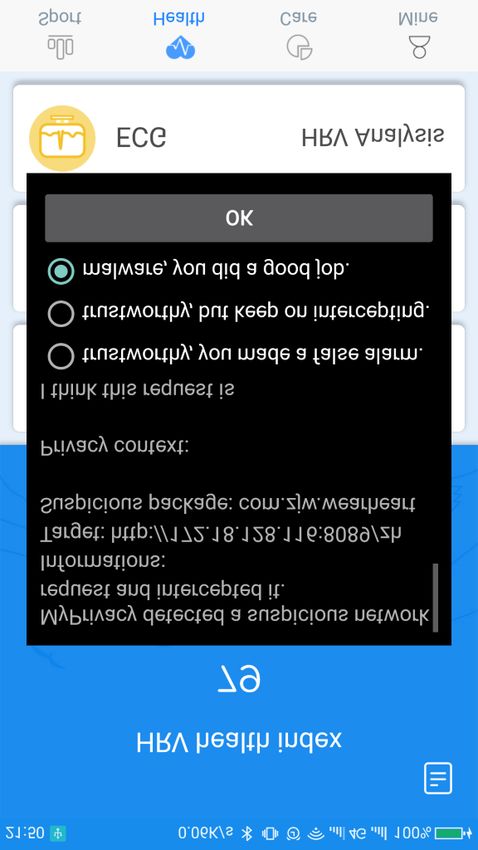
Sensors 2019, 19, 1184                                                                                                                   5 of 19

     As illustrated in the Figure 2, the cloud manages the data storage, computing, and information
processing, while the fog mainly provides computing and storage resources for the lower level,
including making the information of upper and lower levels inter-operable, data analysis and
management, and security protection. As the services could require excessive computing and storage
resources beyond the capacity of the fog, the cloud will provide a replacement service at this situation.
In the lower level, terminal devices carry out the collection of data, transmission and simple processing
of information, and so on.
     Figure 3 is the logical architecture of fog computing for the healthcare network. The first layer
is the intelligent PHDs layer, including smart wristbands, smart blood glucose meters, smart film
extractors, etc. They are mainly used for collecting health information of users, and sending the
information to the fog computing layer for the further processing.

                                                  Medical Data Center                Medical Data Center
                   Cloud
                 Computing    Medical                                                                                 Medical Staff
                             Application
                   Layer      Service
                                                           Medical Data                 Medical Application Service

                              Security            Integrity Verification           Access Control          Privacy Leakage Detection
                               Layer                Digital Signature              Data Encryption            Identity Authentication
                    Fog
                 Computing     Storage                 Data              Data               Data              Data              Data
                                Layer               Construction        Analysis         Processing        Distribution        Storage
                   Layer
                             Monitoring               Activity               Power                   Resource              Security
                              Layer                  Monitoring             Monitoring               Monitoring           Monitoring

                                           4G/5G Cellular Network                                 WiFi

                                                                            Smart Blood
                   Smart                    Smart Kit
                                                                           Glucose Meter
                                                                                                             Smart Wristband
                  Terminal
                   Layer                    Smart Film                                                        Smart Infusion
                                                                           Smart Atomizer
                                             Extractor                                                           Pump

                     Figure 3. Logical architecture of fog computing for the healthcare network.

     The second layer is the fog computing layer, composed of three sub-layers: monitoring layer,
data storage layer, and security protection layer. The monitoring layer includes activity’s monitoring,
power status monitoring, resource monitoring, and service monitoring. In this sub-layer, monitoring
information is sent to users and abnormal information is detected. In the data storage layer, data
received from the intelligent PHDs layer are filtered and pruned for data analysis to extract the privacy
information. In the security protection layer, there are integrity verification, access control, digital
signature, data encryption, identity authentication and privacy leakage detection which is the main
issue in this paper. Specifically, based on fog computing, we design an Android malicious code
monitoring scheme to prevent intrusion by illegal users and dynamic malware monitoring of various
applications on devices.
     The third layer is the medical cloud computing layer for processing, storing and generating user
personal files.

3.3. Privacy Leakage Detection
     In this paper, we design a privacy leakage detection method with the combination of the fog and
users due to the strong capabilities of data processing and network control of the fog. It is mainly for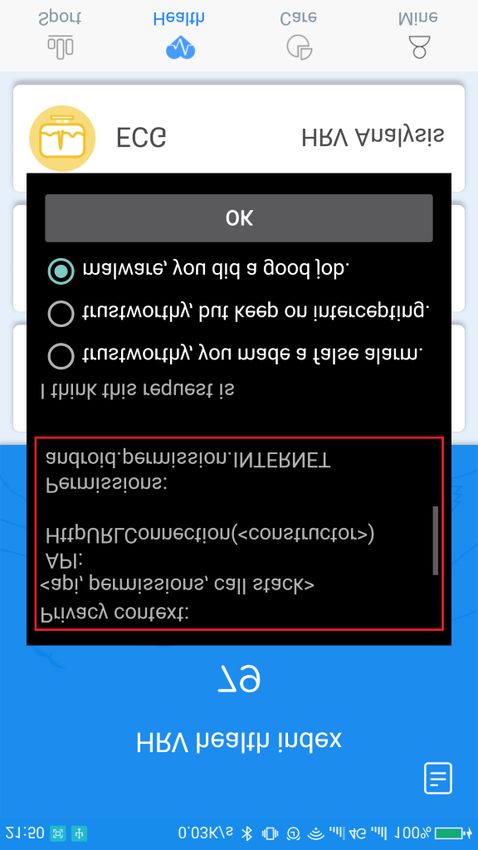
Sensors 2019, 19, 1184                                                                                6 of 19

intelligent PHDs based on Android systems, and protects the user’s private information by monitoring
in real time.
      Basically, we use context analysis technology to design the detection scheme, including static
privacy leakage analysis and dynamic privacy disclosure monitoring, as shown in Figure 4. First,
we use static analysis to analyze the permissions mapping to various API functions, system and user
interface events, static taint propagation path, and function calls. Next, we perform dynamic privacy
leakage monitoring, which mainly includes the following four stages: (1) the users’ information
and system working status are collected by PHDs at the user terminal for constructing the context
information and transmitting to the fog; (2) on the fog, the privacy data is extracted for encryption,
and the monitoring data collected in the user terminal is analyzed for performing the privacy leakage
detection by the access control technology (Section 4.2); (3) if a privacy leakage is detected, the next
data-transmission will be blocked. Meanwhile, the fog will intercept the behavior of the privacy leakage
and notify the user for protecting the user’s information; (4) the fog uploads the user information and
the system status to the cloud periodically.
      Note that, for the convenience, in this paper we use MyPrivacy to present the collection mechanism
of the privacy and system information on the user terminal, and FogPrivacy to present the privacy
protection mechanism (such as privacy leakage detection) on the fog.

                          Static Analysis
                             Permission         System and       Static Taint          Function
                            Mappting Table       UI Events     Propagation Path       Call Graph

                         Dynamic Analysis
                           Fog                                          Terminal
                                  Privacy Leakage                                  Information
                                     Detection                                    Transmission
                                                              WiFi
                            Encryption        Network                    User Data      System Data
                            Decryption       Monitoring      4G/5G       Collection      Collection
                                                             Cellular

                                  Figure 4. Framework of privacy leakage detection.

4. Context-Based Privacy Leakage Detection
      Our context-based privacy leakage detection method includes two parts: static privacy leakage
analysis and dynamic privacy leakage monitoring, which are carried out by the combination of the fog
and the user terminal. The static analysis constructs the context of the privacy-related API function to
predict trigger events and the possible privacy leakage of the API call. Dynamic monitoring intercepts
privacy API by using hook technology to predict the privacy leaks which may be caused by API calls.
If there is a privacy leakage, it will be automatically blocked.

4.1. Static Privacy Leakage Analysis
     The static analysis is used to construct the context of the software privacy-related API functions,
which is based on the FlowDroid [41]. From the static analysis, the path between sources and sinks can
be found, and the sequence of sensitive function calls could be extracted. The framework of the static
privacy leakage analysis mechanism is shown in Figure 5, which contains five parts:

  (1) Static taint propagation path: it inputs the original APK application installation package,
      and configure the sources and sinks function files. Then the system performs the static stain
      analysis through the FlowDroid platform and finds out the possible privacy leakage path. Here,
Sensors 2019, 19, 1184                                                                                        7 of 19

      we use the data of the Susi project [42] to mark the sources and sinks functions for increasing the
      coverage of the privacy functions.
  (2) Function call graph: it extracts the Java codes from the decompiler APK, then constructs the
      function call graph using Soot [43], a Java language optimization framework.

                            Permission                            System and UI
                           Mapping Table                              Event                     Sources
                            Permission   API                                                    Sinks

                            Static Taint          Context
                          Propagation Path      Construstion       Function Call
                                                                      Graph
              Initial                                                                      Privacy
               APK                                                                         Context
                                                                                           Library

                                               FlowDroid

                         Figure 5. Frame of static privacy leakage analysis mechanism.

  (3) Permission mapping table: it generates the permission-API mapping table based on the PScout
      project [44], which describes the relationship between an API and its corresponding permissions
      by scanning the Android code and has a more accurate result than the Google’s official API.
  (4) System and UI event: it analyzes privacy entry functions and triggering conditions from a large
      amount of system and UI event information. Here, the system events include various callback
      functions of Android system (such as receiving text messages and changing network state),
      as well as the lifecycle functions of Android components (onCreate, onRestart, etc.). The UI
      events contain the user’s interaction with the software interface (such as clicking a button,
      pressing the volume key).
  (5) Context construction: it builds the corresponding context information based on Algorithm 1.
      Here, we present the definitions and description of Algorithm 1 as follows.

Definition 1. A function call graph is a directed graph CG = ( N, E), where N represents the set of functions
in the software and E is the set of edges. For example, e( a, b) ∈ E represents that the function a calls function b.

Definition 2. In a path ps2s from source to sink, ps2s = nsource n1 n2 ...nsink , where ni ∈ N (i = source,
1, 2, ..., sink ) are called a privacy leakage path.

Definition 3. In a function call graph CG = ( N, E), if there is a path p = ne n1 n2 ...nsource , and there are
no edges that go into ne (∀n ∈ N, e(n, ne ) ∈/ E), then ne is called a privacy entry point, which means that
no functions in N call ne . Since Android is an event-driven operating system and its components used for
development have their own lifecycles, the privacy entry point functions generally consist of various message
response functions and lifecycle functions.

Definition 4. A privacy API function context information PrivacyContext is a triple shown in Equation (1),

                                  PrivacyContext = ( api, permission, context),                                  (1)

where ‘api’ represents the name of the privacy-related function. The set ‘permissions’ is the set of
permissions that the privacy-related function requires. context is the set of < ps2s , ne > pairs, where
each pair contains a privacy leakage path ps2s and its corresponding entry point function ne .
Sensors 2019, 19, 1184 8 of 19
Algorithm 1 Context construction algorithm.
Input
Function Call Graph CG
Privacy Disclosure Path Paths
System and UI Events Events
Permission Mapping Table Table
Output
Context PrivacyContext
Begin
PrivacyContext = null
context = null
for all e ∈ E do
if e.target ∈ PrivacyAPI then
ne = getEntryPointFromCG (e.origin) //Retrieval entry function from CG
permission = getPermissionFromTable(e.target) //Retrieval API permission
for all path ∈ Paths do
if path.source == e.target then
context.add(< path, ne >) //Add context
end if
end for
PrivacyContext.add(e.target, permission, context)
context.clear ()
end if
end for
return PrivacyContext
The main idea of the Algorithm 1 includes: (1) traverse each edge from the function call graph
CG, and locate the privacy-related function and its corresponding permission using the permission
mapping table; (2) get the privacy entry point functions for the API call from the function call graph.
Privacy entry point functions are defined in Definition 2; (3) for a chosen edge, find out all subsequent
edges in static taint propagation path as possible privacy leakage path for the API call, and generate
the context information for the privacy-related API function. After context construction, the context
information PrivacyContext is loaded into the privacy context library, which will be deployed on
the fog.
Here, we list the general categories of the privacy data in the system of PHDs in Table 1, including
device resource, system information, login data and user data. Here, device resource represents
the information of devices, which depends on the specific input from external devices (e.g., GPS).
Its privacy-related API functions are getLatitude() and getLongitude(). System information describes
attributes and labels of the device systems (e.g., international mobile equipment identity (IMEI)).
Its privacy-related API function is getDeviceId(). Login data is the login data entered by the user,
which mainly includes the account password. Its privacy-related API function is getPasswd(). User
data is user-related information, such as step count, heart beat and sleep status, with the privacy-related
API functions stepListener, heartListener and sleepListener respectively.Sensors 2019, 19, 1184 9 of 19
Table 1. Some sensitive privacy-related API functions.
Classification Example API
Device Resource GPS getLatitude, getLongitude
System Infomation IMEI getDeviceId
Login Data Password getPasswd
User Data StepCount stepListener
User Data SleepStatus sleepListener
User Data Heartbeat heartListener
4.2. Dynamic Privacy Leakage Monitoring
Static analysis cannot reflect the real state of the app. Besides, some malicious apps can download
malicious third party libraries and executable programs and execute them dynamically to steal privacy
information. Static analysis can not detect this kind of attack efficiently. Therefore, we proposed a
dynamic monitoring scheme for privacy leakage based on fog computing, which is realized by the
combination of the fog and user terminal. On the user terminal, dynamic behaviors of the app are
monitored by the key privacy-related API function of dynamic hook technology. Then the real state
of the app is obtained and the relevant information is sent to the fog. At the fog, similarity between
the static analysis results and the dynamic behavior information is calculated to find out the possible
privacy leakage risks of the dynamic API calling behavior. Finally, the result of similarity comparison
is sent back to the user terminal and the software behavior which poses a risk of privacy leakage
would be blocked and informed back to the user. The framework of the proposed dynamic monitoring
mechanism is shown in Figure 6.
FogPrivacy MyPrivacy Dynamic API
Context Matching Call Monitoring
Calculation Malicious API Call
Privacy Context
Library
Message Call Stack
Privacy Leak Transmission Generation
Detection Result
Generation
User Behavior
Block Storage Perception Record Storage
Sending
Storage
Storage
Privacy Leak Monitoring Xposed Framework
Information Database
Fog Platform Application Framework
Figure 6. Dynamic privacy leakage monitoring.
The main modules in the Figure 6 have the following functions:
(1) Dynamic API call monitoring: dynamic API call monitoring module uses Xposed-based hook
technology to write privacy-related API monitoring code. By collecting API function call stack
information, the dynamic API execution context information is constructed and sent to the fog.
(2) Context matching calculation: on the fog, the context information database of privacy API
functions derived from the static analysis is matched with the context information of API
dynamic execution. The matching calculation algorithm is shown in detail below.
(3) User perception: when the detection result of the fog indicates that the suspicious call may cause
privacy leakage, the fog will send the detection results to the user terminal. Through the userSensors 2019, 19, 1184 10 of 19
perception module, the event information that triggers the API and the risk of possible privacy
leakages will be prompted to the user. The system intercepts the invocation of the related API
and blocks the privacy leakage.
(4) Behavioral log module: the behavioral log module makes quick judgments about similar
situations during follow-up monitoring. The module would format and store the information of
each API call and the user’s choice. Then it feeds the information back to the fog, and the fog
will store these information in the privacy leakage monitoring information database.
(5) Privacy leakage monitoring information database: the privacy leakage monitoring information
database keeps information on privacy leakage monitoring of all PHDs on the fog and uploads it
regularly to the cloud for permanent preservation.
The context matching algorithm (Algorithm 2) and its related definitions are introduced below.
Algorithm 2 Dynamic context matching algorithm.
Input
Context DynamicContext, PrivacyContext
Output
The closest pc of the API call
Begin
similarity = 0
result = null
for all pc ∈ PrivacyContext do
if pc.api == DynamicContext.api then
simTemp = Similarity( DynamicContext.stack, pc.context) //Calculate similarity
if similarity < simTemp then
similarity = simTemp
result = pc// Update result
else if similarity == simTemp then
result.add( pc)// Add result
end if
end if
end for
return result
Definition 5. The execution context information of a dynamic API (DynamicContext) represents the api and
call stack information, as shown in expression (2),
DynamicContext = ( api, stack < f uncs >) (2)
where api represents the system function api calls. stack < f uncs > represents the call stack
information of the function.
Definition 6. Given an API dynamic execution context information DynamicContext = ( api,
< f 1 , f 2 , ..., f n >) and a call path p = n1 n2 ...nm in the static function call graph CG, the similarity between
them is calculated according to Equations (3) and (4).
∑in=1 ∑m
j =1 F ( f i , n j )
Similarity = (3)
nSensors 2019, 19, 1184 11 of 19
(
1, fi = nj
F( fi , n j ) = (1 ≤ i ≤ n, 1 ≤ j ≤ m), (4)
0, f i 6= n j
where n is the length of the function call stack in DynamicContext, that is, the number of functions in
the function call stack. m is the length of the call path p. Function F is used to identify whether two
functions for similarity calculation are equal.
From the Equations (3) and (4), the similarity is calculated. Then, we can get the context
information which is closest to the API function call from Algorithm 2. With the information, it is
possible to predict the privacy disclosure that may occur when the API is called. We extract Android
system events from the dynamic execution context information of the API, which directly lead to
the API call. When a privacy leakage occurs, calls are blocked and the leakage is prompted for
privacy protection.
5. Experimental Verification and Results Analysis
In order to verify the effectiveness of the proposed method, we conducted two kinds of
experiments, i.e., the static analysis experiment and the dynamic monitoring experiment. We used a
testing PC machine (CPU: Intel Core i5-6500, RAM: 8GB, OS: 64-bit Ubuntu 16.04) as a fog node and a
Samsung GT-I9500, Samsung Electronics Co., Ltd., Korea (https://www.samsung.com) (Android 4.4.4
system with Xposed) to conduct the experiments. The dataset consisted of 397 malicious samples and
300 benign samples. The malicious samples were selected from the DREBIN dataset [45,46], and the
benign ones included 10 types of apps, all of which are downloaded from Google Store and China
Mall. We use this dataset to verify the algorithm and the reliability of the proposed scheme.
5.1. Privacy Leakage Monitoring Experiments
First, we performed the static privacy leakage detection experiment. We constructed the context
information of the privacy-related API function of the software. In our experiments, we considered
on following types of privacy: international mobile equipment identity (IMEI), international mobile
subscriber identification number (IMSI), integrated circuit card identity (ICCID), short messaging
service (SMS), contacts, phone number, and location. For leakage events, we focus on the network
transmissions, logs and SMS messages. From the context information, we can obtain kinds and
proportions of the privacy data, as shown in Figure 7.
Figure 7. Proportion of privacy leakage types.
From the Figure 7, we can find that leakage of phone number is the most common, reaching about
one quarter (24%), followed by short messages (20%), IMEI (17%), IMSI (14%) and location (14%).
From the privacy-related API context information, we also can get the following data, as shown
in Table 2 by counting the data of each privacy entry.Sensors 2019, 19, 1184 12 of 19
Table 2. Entry point statistics for privacy leakages.
Entrypoint Lifecycle Method System Event UI Event
Proportion 84.5% 9% 6.5%
Table 2 shows that the privacy entry point functions dominated by the lifecycle functions
(described in the Section 4.1). For several apps (package name: com.gp.lights and com.keji.danti607),
the static analysis of them finds that, in order to disguise themselves, malware actions often occur
when the status of Android components change. Privacy leakages that happened on the first run of
the app were rarely seen, for reducing the probability of being discovered by users.
Furthermore, we installed the test application on the real machine, and built the Xposed
framework with the coded MyPrivacy and the FogPrivacy program, which includes:
(1) Detection platform: in order to compare the accuracy of our method, we used the test results
of DroidBox platform as a baseline, which modifies Android systems based on TaintDroid [15]
and has extra functions of stain analysis and call monitoring. With its output (the log), we can
analyze the detection results.
(2) Behavior triggers: Generally, malware actions (such as privacy theft) were set to be triggered
under certain conditions for hiding their sensitive behavior. This type of malware makes function
calls by tapping of system events, which is declared in the AndroidManifest.xml file of all tapping
events in Android. Thus we decompiled the APK file, and extracted the tapping events to be
stored in the the database.
(3) Result analysis: We used manual de-compilation to analyze the results by using JEB2 [47] to find
out the reason that caused the differences.
We compared results of two platforms, as shown in Table 3. From the table, we can observe that
MyPrivacy detects more privacy leakages than DroidBox. MyPrivacy had 2876 pop-up windows and
DroidBox had 2431 MyPrivacy leaks in its log records. There are 1780 same leakage events in the same
operation, which means that both detection platforms successfully detected the same 1780 leakages.
After analyzing the results and manual de-compiling of the software, we found that DroidBox run the
tests with an emulator, which could be detected by some malwares through IMEI number, telephone
number and other information. As a consequence, some malicious codes could not successfully
triggered. MyPrivacy, however, is installed in a real mobile phone, making this type of privacy to
be detected.
Table 3. Accuracy comparison
Platform Total Leakage Count Same Results
MyPrivacy(FogPrivacy) 2876
1780
DroidBox 2431
5.2. Comparison of Experimental Results
As hook technology used in the proposed method, we tested the system performance before and
after the installation of MyPrivacy on the Antutu Benchmark, Quadrant Benchmark respectively, on the
Android phones (Samsung GT-I9500, Samsung Electronics Co., Ltd., Korea, Google Nexus (www.google.
com/nexus/), Xiaomi M6, Xiaomi Technology Co., Ltd., China (https://www.mi.com/global/mi6/) and
Huawei STF-AL10, Huawei Technologies Co., Ltd., China (https://www.huawei.com/cn/)). The results
are shown in Table 4.Sensors 2019, 19, 1184 13 of 19
Table 4. System performance.
Platform Before After Phone Type Extra Energy Consumption
56,333 53,629 SamSung SM-N900 4.8%
40,479 39,186 Google Nexus 5 3.19%
AnTuTu
55,186 52,923 Xiaomi MI6 4.10%
68,357 65,212 Huawei STF-AL10 4.60%
49430 47670 Samsung SM-N900 3.56%
36,320 34,849 Google Nexus 5 4.05%
Quadrant
39,035 37,559 Xiaomi MI6 3.78%
39,882 38,729 Huawei STF-AL10 2.89%
In Table 4, “before” and “after” mean the benchmark results of evaluating the performance of each
hardware before and after MyPrivacy is installed on a device. According to the evaluation results,
MyPrivacy (FogPrivacy) caused a little extra energy consumption (no more than 5%) on all phone
systems and platforms, which was within the allowable range.
Table 5 shows the comparison results between our method and some other privacy leakage
detection methods on the Android system: LeakMiner [15], FlowDroid [11], TaintDroid [35] and
Aurasium [41]. Since most of the comparative methods do not provide test data and system source
codes, we conducted the comparison from the perspective of the analytic methods and features, i.e.,
whether customized system was needed, whether modification of the application itself was needed
and whether this method was able to prevent the leakage.
Table 5. Comparison with other systems.
Customized Modification of Able to Prevent
System Method Type Feature
System Is Needed Application Is Needed Leakages
LeakMiner Static Analysis Function Call Graph No No No
FlowDroid Static Analysis Static Taint Analysis, etc. No No No
TaintDroid Dynamic Analysis Dynamic Analysis, etc. Yes No No
Aurasium Dynamic Analysis App Repackaging No Yes Yes
Static and Function Call Graph,
Our Method No No Yes
Dynamic Analysis Dynamic Analysis, etc.
In the systems shown in Table 5, the methods of privacy leakage detection based on different
analysis and detection strategies (i.e., features) were selected to perform the detection. LeakMiner
used the static function call graph as the basic analysis data, by calling the reachable relationship
of the marked function in the graph to determine whether there is a privacy leakage. The method
was simple to practice, and with high code coverage. Similarly, FlowDroid used static taint analysis,
taking Android lifecycle functions into consideration. These two systems did not need to modify
the app or Android system. However, they were both unable to prevent leakages when the app was
running due to the shortcomings of static analysis, i.e., offline analysis. TaintDroid and Aurasium
were two privacy leakage detection schemes based on dynamic analysis. TaintDroid modified the
system and inserted taint analysis code, and Aurasium repackaged the software itself to add privacy
disclosure decision logic. Both of them can carried out real-time privacy data usage monitoring.
However, TaintDroid can just conduct privacy leakage reports in the form of system notifications, and
it modifies the system codes, making it less adaptive. Aurasium allows users to intercept the leakage,
but repackaging may affect the app, or may fail if the app uses some reinforcement methods. In this
experiment, our method consistently performed the best in all conditions, due to the combination of
the static and dynamic analysis, which ensures the code coverage and the real-time performance. As
hook technology is non-intrusive to Android system, our method could guarantee detection without
sacrificing adaptability.Sensors 2019, 19, 1184 14 of 19
5.3. Security Experiment of Smart Wristband App
To further verify the validity of our method, we conducted a vulnerability analysis of a smart
wristband application to find possible privacy leakage problems. The wristband and its app are shown
in Figure 8. The experiment was carried out as follows:
(a) (b)
Figure 8. Example of a smart wristband. (a) The wristband. (b) App of clients.
(1) Vulnerability analysis: we used FlowDroid to perform static analysis of the original app to
verify its vulnerability. We did find out some vulnerabilities that might be exploited. For
instance, the app uses hard-coded URL, data transmission by HyperText transfer (HTTP) protocol
without encryption, the “send data” function follows immediately after a Java built-in AES
cipher function.
(2) Malicious code insertion: based on the above analysis in (1), we found that the app would send
user data to a specified URL. If the specified URL was modified maliciously to be the server
address of a hacker, the user’s privacy data would be obtained constantly. To simulate such
an attack, we used Apktool, an apk analysis tool to unpack the app, and some malicious codes
were inserted in the unpacked smali file. Specifically, first, we searched for functions that use the
hard-coded URL as a parameter, because those functions may call network transmission APIs
and send the information to this address. Then, we modified the parameter to our server address
and call those functions again. The malicious code copies the user data and sends it to the server
we experimented with. Figure 9 shows the malicious codes in detail.
Figure 9. Malicious codes in Java form.Sensors 2019, 19, 1184 15 of 19
(3) Privacy leakage detection and display: the malicious code inserted in (2) would divulge user’s
privacy, including a user’s login name and password, and health data. Leaked data is illustrated
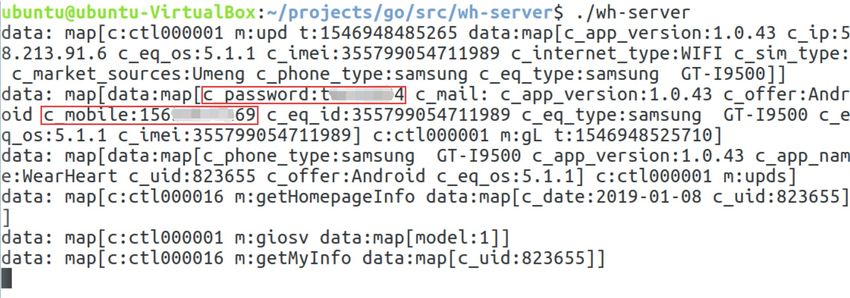
in Figure 10. Some sensitive data are marked in red. As can be seen from the figure, login
password and the phone number was disclosed in plaintext.
Figure 10. Decoded information received from the malicious application.
(4) Detection and interception test: MyPrivacy focused on accessing the dynamic environment
and running information of the user-interface. FogPrivacy was responsible for privacy leakage
detection and interception. When a running application attempts to send information over
the network, the user will be informed of the location to which the data would be sent to
determine target trustworthiness. If the request of an app was rejected by most users, FogPrivacy
and MyPrivacy would mark it as a malicious behaviour and send the rejection record to the
user-interface. From Figure 11, we can see that MyPrivacy poped up a window, because
FogPrivacy had successfully intercepted the suspicious network transmission. The context
information is also shown in the pop-up window, which is in the red rectangle.
In this case, the complete context is:
API
HttpURLConnection()
Permissions
android.permission.INTERNET
CallStack
com.zjw.wearheart.g.d.a()
com.zjw.wearheart.home.exercise.RecordDayFragment.a
com.zjw.wearheart.home.exercise.RecordDayFragment.b
com.zjw.wearheart.base.BaseFragment.onCreateView
(5) Discussion: this attack is a kind of app piggybacking (repackaging) attack, and should have
been the meal of research [48,49]. However, the original app (benign one) does not appear
in most popular app markets, so most detection systems have little knowledge of this app at
the beginning (especially signature information). When they analyze this pair of apps, they
could hardly tell which app is benign or malicious. We once uploaded the original app and the
maliciously modified one to VirusTotal, a malware analysis website, for detection, and found
that both applications passed all security tests. In this situation, wristband users could be easily
cheated to install a compromised app, if it is uploaded to app markets.Sensors 2019, 19, 1184 16 of 19
Figure 11. Interception to the malicious app.
6. Conclusions
In this paper, we studied the privacy protection method of PHDs based on fog computing.
We proposed a framework for security and privacy protection based on fog computing in IoT healthcare
networks. We analyzed the internal mechanism of software accessing private data, presented the
method of constructing the context information base of privacy-related API functions and proposed a
new method of privacy leakage detection method. Experiment results showed that our method had a
efficient detection of privacy leakage and outperformed state-of-the-art methods.
Author Contributions: Conceptualization, J.G.; Data curation, G.Q.; Formal analysis, J.G., X.D. and M.G.;
Supervision, J.G.; Validation, R.H.; Visualization, L.J.; Writing—original draft, J.G.
Funding: This work was supported by the National Natural Science Foundation of China (General Program)
under Grant No.61572253, the 13th Five-Year Plan Equipment Pre-Research Projects Fund under Grant
No.61402420101HK02001, and the Aviation Science Fund under Grant No. 2016ZC52030.
Conflicts of Interest: The authors declare no conflict of interest.
References
1. Cybersecurity Center. Special Report of Android Malicious App (2016). Technical Report, 360
Cybersecurity Center. 2017. Available online: http://zt.360.cn/1101061855.php?dtid=1101061451&did=
490301065 (accessed on 27 February 2017).
2. Xiao, Y.; Rayi, V.K.; Sun, B.; Du, X.; Hu, F.; Galloway, M. A survey of key management schemes in wireless
sensor networks. Comput. Commun. 2007, 30, 2314–2341. [CrossRef]
3. Zhou, Z.; Zhang, H.; Du, X.; Li, P.; Yu, X. Prometheus: Privacy-aware data retrieval on hybrid cloud.
In Proceedings of the 2013 Proceedings IEEE INFOCOM, Turin, Italy, 14–19 April 2013; pp. 2643–2651.
4. Mohney, G. Hospital Hack Spotlights How Medical Devices and Systems Are at Risk. ABC News,
19 February 2016.
5. Millman, R. Ransomware holds data hostage in two German hospitals. SC Media, 29 February 2016.
6. Brook, C. Sergey Lozhkin on How He Hacked His Hospital. Technical Report, Kaspersky Lab, 2016. Available
online: https://threatpost.com/sergey-lozhkin-on-how-he-hacked-his-hospital/116314/ (accessed on
18 February 2016).
7. Papageorgiou, A.; Strigkos, M.; Politou, E.; Alepis, E.; Solanas, A.; Patsakis, C. Security and privacy analysis
of mobile health applications: The alarming state of practice. IEEE Access 2018, 6, 9390–9403. [CrossRef]
8. Du, X.; Chen, H.H. Security in wireless sensor networks. IEEE Wirel. Commun. 2008, 15, 60–66.Sensors 2019, 19, 1184 17 of 19
9. Sicari, S.; Rizzardi, A.; Grieco, L.A.; Coen-Porisini, A. Security, privacy and trust in Internet of Things:
The road ahead. Comput. Netw. 2015, 76, 146–164. [CrossRef]
10. Chin, E.; Felt, A.P.; Greenwood, K.; Wagner, D. Analyzing inter-application communication in Android.
In Proceedings of the 9th international conference on Mobile Systems, Applications, and Services, Bethesda,
MD, USA, 28 June–1 July 2011; pp. 239–252.
11. Sun, M.; Wei, T.; Lui, J. Taintart: A practical multi-level information-flow tracking system for android
runtime. In Proceedings of the 2016 ACM SIGSAC Conference on Computer and Communications Security,
Vienna, Austria, 24–28 October 2016; pp. 331–342.
12. Gibler, C.; Crussell, J.; Erickson, J.; Chen, H. AndroidLeaks: Automatically detecting potential privacy
leaks in android applications on a large scale. In International Conference on Trust and Trustworthy Computing;
Springer: Berlin, Germany, 2012; pp. 291–307.
13. Lu, L.; Li, Z.; Wu, Z.; Lee, W.; Jiang, G. Chex: Statically vetting android apps for component hijacking
vulnerabilities. In Proceedings of the 2012 ACM Conference on Computer and Communications Security,
Raleigh, NC, USA, 16–18 October 2012; pp. 229–240.
14. Yang, Z.; Yang, M. Leakminer: Detect information leakage on android with static taint analysis.
In Proceedings of the 2012 Third World Congress on Software Engineering (WCSE), Wuhan, China,
6–8 November 2012; pp. 101–104.
15. Enck, W.; Gilbert, P.; Han, S.; Tendulkar, V.; Chun, B.G.; Cox, L.P.; Jung, J.; McDaniel, P.; Sheth, A.N.
TaintDroid: An information-flow tracking system for realtime privacy monitoring on smartphones.
ACM Trans. Comput. Syst. 2014, 32, 5. [CrossRef]
16. Lantz, P.; Desnos, A.; Yang, K. DroidBox: An Android Application Sandbox for Dynamic Analysis. Available
online: https://github.com/pjlantz/droidbox (accessed on 25 August 2014).
17. Spreitzenbarth, M.; Schreck, T.; Echtler, F.; Arp, D.; Hoffmann, J. Mobile-Sandbox: Combining static and
dynamic analysis with machine-learning techniques. Int. J. Inf. Secur. 2015, 14, 141–153. [CrossRef]
18. Rastogi, V.; Qu, Z.; McClurg, J.; Cao, Y.; Chen, Y. Uranine: Real-time privacy leakage monitoring without
system modification for android. In International Conference on Security and Privacy in Communication Systems;
Springer: Berlin, Germany, 2015; pp. 256–276.
19. Ali-Gombe, A.; Ahmed, I.; Richard, G.G., III; Roussev, V. Aspectdroid: Android app analysis system.
In Proceedings of the Sixth ACM Conference on Data and Application Security and Privacy, New Orleans,
LA, USA, 9–11 March 2016; pp. 145–147.
20. Yang, Z.; Yang, M.; Zhang, Y.; Gu, G.; Ning, P.; Wang, X.S. Appintent: Analyzing sensitive data transmission
in android for privacy leakage detection. In Proceedings of the 2013 ACM SIGSAC conference on Computer
& Communications Security, Berlin, Germany, 4–8 November 2013; pp. 1043–1054.
21. Yi, S.; Hao, Z.; Qin, Z.; Li, Q. Fog computing: Platform and applications. In Proceedings of the 2015
Third IEEE Workshop on Hot Topics in Web Systems and Technologies (HotWeb), Washington, DC, USA,
12–13 November 2015; pp. 73–78.
22. He, S.; Cheng, B.; Wang, H.; Huang, Y.; Chen, J. Proactive personalized services through fog-cloud computing
in large-scale IoT-based healthcare application. China Commun. 2017, 14, 1–16. [CrossRef]
23. Kang, J.J.; Venkatraman, S. An Integrated mHealth and Vehicular Sensor Based Alarm System Emergency
Alarm Notification System for Long Distance Drivers using Smart Devices and Cloud Networks.
In Proceedings of the 2018 28th International Telecommunication Networks and Applications Conference
(ITNAC), Sydney, Australia, 21–23 November 2018; pp. 1–6. [CrossRef]
24. Kang, J.; Larkin, H. Application of an Emergency Alarm System for Physiological Sensors Utilizing Smart
Devices. Technologies 2017, 5. [CrossRef]
25. Kang, J.; Adibi, S. A Review of Security Protocols in mHealth Wireless Body Area Networks (WBAN).
In Future Network Systems and Security; Doss, R., Piramuthu, S., Zhou, W., Eds.; Springer International
Publishing: Cham, Switzerland, 2015; pp. 61–83.
26. Chakraborty, S.; Bhowmick, S.; Talaga, P.; Agrawal, D.P. Fog networks in healthcare application.
In Proceedings of the 2016 IEEE 13th International Conference on Mobile Ad Hoc and Sensor Systems
(MASS), Brasilia, Brazil, 10–13 October 2016; pp. 386–387.
27. Sood, S.K.; Mahajan, I. A Fog-Based Healthcare Framework for Chikungunya. IEEE Internet Things J. 2018,
5, 794–801. [CrossRef]Sensors 2019, 19, 1184 18 of 19
28. Al Hamid, H.A.; Rahman, S.M.M.; Hossain, M.S.; Almogren, A.; Alamri, A. A security model for preserving
the privacy of medical big data in a healthcare cloud using a fog computing facility with pairing-based
cryptography. IEEE Access 2017, 5, 22313–22328. [CrossRef]
29. Cerina, L.; Notargiacomo, S.; Paccanit, M.G.; Santambrogio, M.D. A fog-computing architecture for
preventive healthcare and assisted living in smart ambients. In Proceedings of the 2017 IEEE 3rd International
Forum on Research and Technologies for Society and Industry (RTSI), Modena, Italy, 11–13 September 2017;
pp. 1–6.
30. Du, X.; Xiao, Y.; Guizani, M.; Chen, H.H. An effective key management scheme for heterogeneous sensor
networks. Ad Hoc Netw. 2007, 5, 24–34. [CrossRef]
31. Suo, H.; Wan, J.; Zou, C.; Liu, J. Security in the internet of things: A review. In Proceedings of the 2012
International Conference on Computer Science and Electronics Engineering (ICCSEE), Hangzhou, China,
23–25 March 2012; Volume 3, pp. 648–651.
32. Du, X.; Guizani, M.; Xiao, Y.; Chen, H.H. Transactions papers a routing-driven Elliptic Curve Cryptography
based key management scheme for Heterogeneous Sensor Networks. IEEE Trans. Wirel. Commun. 2009,
8, 1223–1229. [CrossRef]
33. Xiao, Y.; Du, X.; Zhang, J.;Hu, F.;Guizani, S. Internet protocol television (IPTV): the killer application for the
next-generation internet. IEEE Commun. Mag. 2007, 45, 126–134. [CrossRef]
34. Spreitzenbarth, M.; Freiling, F.; Echtler, F.; Schreck, T.; Hoffmann, J. Mobile-sandbox: Having a deeper look
into android applications. In Proceedings of the 28th Annual ACM Symposium on Applied Computing,
Coimbra, Portugal, 18–22 March 2013; pp. 1808–1815.
35. Pravin, M.N.P. Vetdroid: Analysis using permission for vetting undesirable behaviours in android
applications. Int. J. Innov. Emerg. Res. Eng. 2015, 2, 131–136.
36. Hornyack, P.; Han, S.; Jung, J.; Schechter, S.; Wetherall, D. These aren’t the droids you’re looking for:
Retrofitting android to protect data from imperious applications. In Proceedings of the 18th ACM conference
on Computer and Communications Security, Chicago, IL, USA, 17–21 October 2011; pp. 639–652.
37. Bugiel, S.; Heuser, S.; Sadeghi, A.R. Flexible and Fine-grained Mandatory Access Control on Android for
Diverse Security and Privacy Policies. In Proceedings of the USENIX Security Symposium, Washington, DC,
USA, 14–16 August 2013; pp. 131–146.
38. Xu, R.; Saïdi, H.; Anderson, R.J. Aurasium: Practical Policy Enforcement for Android Applications.
In Proceedings of the USENIX Security Symposium, Bellevue, WA, USA, 8–10 August 2012; Volume 2012.
39. Backes, M.; Gerling, S.; Hammer, C.; Maffei, M.; von Styp-Rekowsky, P. Appguard–enforcing user
requirements on android apps. In International Conference on TOOLS and Algorithms for the Construction
and Analysis of Systems; Springer: Berlin, Germany, 2013; pp. 543–548.
40. Zhang, L.; Zhu, D.; Yang, Z.; Sun, L.; Yang, M. A survey of privacy protection techniques for mobile devices.
J. Commun. Inf. Netw. 2016, 1, 86–92. [CrossRef]
41. Arzt, S.; Rasthofer, S.; Fritz, C.; Bodden, E.; Bartel, A.; Klein, J.; Le Traon, Y.; Octeau, D.; McDaniel, P.
Flowdroid: Precise context, flow, field, object-sensitive and lifecycle-aware taint analysis for android apps.
ACM Sigplan Not. 2014, 49, 259–269. [CrossRef]
42. Arzt, S.; Rasthofer, S.; Bodden, E. Susi: A Tool for the Fully Automated Classification and Categorization of Android
Sources and Sinks; Tech. Rep. TUDCS-2013-0114; University of Darmstadt: Darmstadt, Germany, 2013.
43. Sable Research Group. Soot: A Framework for Analyzing and Transforming Java and Android Applications.
2016. Available online: https://sable.github.io/soot/ (accessed on 1 March 2019).
44. Au, K.W.Y.; Zhou, Y.F.; Huang, Z.; Lie, D. Pscout: Analyzing the android permission specification.
In Proceedings of the 2012 ACM Conference on Computer and Communications Security, Raleigh, NC, USA,
16–18 October 2012; pp. 217–228.
45. Arp, D.; Spreitzenbarth, M.; Hubner, M.; Gascon, H.; Rieck, K.; Siemens, C. DREBIN: Effective and
Explainable Detection of Android Malware in Your Pocket. In Proceedings of the NDSS’14, San Diego, CA,
USA, 23–26 February 2014; Volume 14, pp. 23–26.
46. Michael, S.; Florian, E.; Thomas, S.; Felix, C.F.; Hoffmann, J. Mobilesandbox: Looking deeper into android
applications. In Proceedings of the 28th International ACM Symposium on Applied Computing (SAC),
Coimbra, Portugal, 18–22 March 2013.
47. PNF Software. JEB Decompiler by PNF Software. 2017. Available online: https://www.pnfsoftware.com/
(accessed on 26 December 2017).Sensors 2019, 19, 1184 19 of 19
48. Zhang, F.; Huang, H.; Zhu, S.; Wu, D.; Liu, P. ViewDroid: Towards Obfuscation-resilient Mobile Application
Repackaging Detection. In Proceedings of the 2014 ACM Conference on Security and Privacy in Wireless
& Mobile Networks (WiSec ’14), Oxford, UK, 23–25 July 2014; ACM: New York, NY, USA, 2014; pp. 25–36.
[CrossRef]
49. Zhou, W.; Zhang, X.; Jiang, X. AppInk: Watermarking Android Apps for Repackaging Deterrence.
In Proceedings of the 8th ACM SIGSAC Symposium on Information, Computer and Communications
Security (ASIA CCS ’13), Hangzhou, China, 8–10 May 2013; ACM: New York, NY, USA, 2013; pp. 1–12.
[CrossRef]
c 2019 by the authors. Licensee MDPI, Basel, Switzerland. This article is an open access
article distributed under the terms and conditions of the Creative Commons Attribution
(CC BY) license (http://creativecommons.org/licenses/by/4.0/).You can also read


