A GUIDE FOR PATIENTS - the Canadian Liver Foundation
←
→
Page content transcription
If your browser does not render page correctly, please read the page content below
A GUIDE FOR PATIENTS
The Nutrition In Cirrhosis Guide

                                           The Guide was made possible from extensive feedback
                                           provided by patients, and their family and friends, who
                                           attend The Cirrhosis Care Clinic (TCCC) at the University
                                           of Alberta located in Edmonton, Alberta, Canada.

Funding for the Guide’s creation was obtained from a research grant from the Canadian
Institutes of Health Research (CIHR) and Alberta Innovates - Health Solutions awarded to
Principal Applicant Dr. P Tandon, Founder and Co-Director of TCCC. Alberta Health Services
provided protected time to Ms. V DenHeyer to contribute to the Guide.

                    CIHR   Canadian Institutes of
                           Health Research
                                                     ALBERTA INNOVATES                      Alberta Health
                    IRSC   Instituts de recherche
                           en sante du Canada                                               Services

Many thanks to the following organizations who provided unrestricted educational grants:

                                                                        LUPIN
                                                                        PHARMA CANADA

Copyright © 2017

All rights reserved. The Nutrition in Cirrhosis Guide may be reproduced for non-commercial use as is and in its
entirety without further permission. Adaptations, modifications, unofficial translations, and/or commercial use of
The Nutrition in Cirrhosis Guide are strictly prohibited without prior permission.

Printed in Canada                   First Printing, 2018 (Version 01)

The Cirrhosis Care Clinic
University of Alberta
Edmonton, AB, Canada T6G 2X8
www.wellnesstoolbox.ca
Peer review regarding the content and format of the Guide was obtained from registered
dietitians (RDs) and gastroenterologists in Halifax, Montreal, Toronto, Edmonton, Calgary, and
Vancouver. Additional input was obtained from experts across North America and Europe.
Thank you for your valuable input and assistance.

Thank you to our knowledge dissemination partners including but not limited to the
Canadian Liver Foundation and the Canadian Digestive Health Foundation.

      Authors:       Puneeta Tandon, MD, MSc(Epi)        University of Alberta
                     Vanessa DenHeyer, RD                Alberta Health Services
                     Kathleen P Ismond, MSc, MLIS        University of Alberta
                     Jan Kowalczewski, PhD               University of Alberta
                     Maitreyi Raman, MD, MSc             University of Calgary
                     Tannaz Eslamparast, MSc, RD         University of Alberta
                     Chantal Bémeur, RD, PhD             University of Montreal
                     Christopher Rose, PhD               University of Montreal

      How to cite this work:
                   Tandon P, DenHeyer V, Ismond KP, Kowalczewski J,
                   Raman M, Eslamparast T, Bémeur C, Rose C.
                   The Nutrition in Cirrhosis Guide.
                   University of Alberta, Edmonton, Alberta. 2018. pp. 1- 40.

                                                                            the
                                                                   Cirrhosis
                                                                    Care Clinic
                                                                  ALBERTA HEALTH      UNIVERSITY OF
                                                                         SERVICES     ALBERTA
This Guide covers general topics relevant to all patients with cirrhosis.
Specific nutrition issues are also addressed that may be helpful at other
  times. The Guide is a tool for use throughout your cirrhosis journey.

 The Guide is intended to be read a few pages at a time, beginning with
      those most important to your health or of interest to you.

     The recipes are suitable for all individuals and can be modified to
    accommodate food allergies, dietary restrictions, and preferences.

CONTENTS:

Clinician Primer............................................................................................. 5

My Nutrition Prescription .......................................................................... 6

Chapter 1 Malnutrition - What is it and why is it so important? .............. 7

Chapter 2 What should I eat and what to avoid?.....................................11

Chapter 3 Tips for when you do not feel like eating ...............................25

Chapter 4 Recipe list....................................................................................28

Chapter 5 Using meal supplements ..........................................................32

Chapter 6 Managing weight loss and cirrhosis .......................................34

Chapter 7 What to expect in the hospital .................................................37
Clinician Primer
Many patients with cirrhosis are at risk for malnutrition (a term used synonymously
with ‘under nutrition’ in the Guide).
Malnutrition increases the:
risk of mortality
prevalence of portal hypertension-related complications
infections
length of hospitalization 2-4
Our chapter specific for overweight patients notes that nutritional assessment and
management of this population ideally requires regular involvement of a registered dietitian.
Why use The Nutrition in Cirrhosis Guide in your clinic?
Consensus-based nutrition guidelines have been developed to identify, treat, and prevent malnutrition
in patients with cirrhosis 1, 5-8 .The incorporation of these cirrhosis-specific guidelines into routine care
for hospitalized and non-hospitalized patients has been challenging due to multifactorial barriers,
including:
ready access to dietitians
nutrition education specific to cirrhosis
patient nutrition knowledge
lack of attention given to food avoidance and intolerance 6, 9
This evidence-based Guide distills practice guidelines into simple messages augmented with nutri-
tious, easy-to-prepare, low-cost meal suggestions that fulfill the unique needs of patients with cirrho-
sis. The Guide was co-designed and field-tested by patients and caregivers ensuring that the content is
relevant, meaningful, and accessible.
Who should read The Nutrition in Cirrhosis Guide?
Patients with cirrhosis at any stage will benefit from reading the Guide. The Guide is comprehensive and is not intended
to be read in a single sitting. Certain segments or chapters will be more relevant at different disease stages.
What formats are available for The Nutrition in Cirrhosis Guide?
Please visit www.liver.ca/nutritionincirrhosis or www.wellnesstoolbox.ca to request hard copies or to download and print
a digital copy.
Please provide feedback to your care provider, who can notify our team. Updates will be available on the websites listed.
What are other patient-friendly websites specific to cirrhosis?
To access patient-oriented material about cirrhosis and its complications, we encourage you to direct your patients to:
www.liver.ca/cirrhosis or https://www.hepatitis.va.gov/patient/complications/cirrhosis/single-page.asp or
http://www.catie.ca/sites/default/files/Catie_Cirrhosis_web_EN_July22-2015.pdf
References
1. Amodio P, Bemeur C, Butterworth R, Cordoba J, Kato A, Montagnese S, Uribe M, et al. The 6. Cheung K, Lee SS, Raman M. Prevalence and mechanisms of malnutrition in patients with
nutritional management of hepatic encephalopathy in patients with cirrhosis: International Society advanced liver disease, and nutrition management strategies. Clin Gastroenterol Hepatol
for Hepatic Encephalopathy and Nitrogen Metabolism Consensus. Hepatology 2013;58:325-336. 2012;10:117-125.
2. Gunsar F, Raimondo ML, Jones S, Terreni N, Wong C, Patch D, Sabin C, et al. Nutritional status 7. Ney M, Vandermeer B, van Zanten SJ, Ma MM, Gramlich L, Tandon P. Meta-analysis: oral or
and prognosis in cirrhotic patients. Aliment Pharmacol Ther 2006;24:563-572. enteral nutritional supplementation in cirrhosis. Aliment Pharmacol Ther 2013;37:672-679.
3. Merli M, Riggio O, Dally L. Does malnutrition affect survival in cirrhosis? PINC (Policentrica 8. Tsien CD, McCullough AJ, Dasarathy S. Late evening snack: exploiting a period of anabolic
Italiana Nutrizione Cirrosi). Hepatology 1996;23:1041-1046. opportunity in cirrhosis. J Gastroenterol Hepatol 2012;27:430-441.
4. Tandon P, Ney M, Irwin I, Ma MM, Gramlich L, Bain VG, Esfandiari N, et al. Severe muscle 9. Chaulk J MN, Ramamurthy J, Bailey RJ, Gramlich L, Ma M, Tandon P. Lifestyle interventions in
depletion in patients on the liver transplant wait list - its prevalence and independent prognostic patients with cirrhosis - an assessment of the current status and perceived barriers to
value. Liver Transpl 2012;18:1209-1216. intervention. Can J Gastroenterol 2013;27:166.
5. Plauth M, Cabre E, Riggio O, Assis-Camilo M, Pirlich M, Kondrup J, Ferenci P, et al. ESPEN
Guidelines on Enteral Nutrition: Liver disease. Clin Nutr 2006;25:285-294.
5My Nutrition Prescription
Please ask you dietitian or your health care practitioner to complete this summary page for you.
An online calculator is available at www.wellnesstoolbox.ca to make these calculations easier.
Date:
My height is: My weight is: My BMI is:
My daily calorie intake range should be: (refer to pages 13-14)
My daily protein intake range should be: (refer to pages 16-17)
My daily calcium intake range should be: (refer to page 21) I have edema or ascites. My daily sodium limit is:
(refer to pages 18-20)
Ca++
I need a late night snack. See page 15 for late night snack ideas.
61
Chapter
Malnutrition*
What is it and why is it so important?
Malnutrition means the body is not receiving enough nutrients to perform
necessary bodily functions. Over time, the malnourished body begins losing
important functions and symptoms appear:
Muscle weakness and fatigue, general More frequent
tiredness infections
Longer time needed to heal small wounds Slowed or foggy
or bruises thinking
Skin, hair, and nails become brittle, dry,
and may break easily
Malnutrition can occur rapidly (within a week) or gradually over many weeks.
Each person is different!
Patients with
Signs of malnutrition are:
cirrhosis can be:
• Well nourished • Unexpected weight loss
• Moderately malnourished • Loss of muscle mass in the face, upper arms, chest, and thighs
• Severely malnourished
• Muscle weakness (e.g., unable to climb stairs)
• Loss of appetite and eating less food
Healthcare practitioners will ask about Why does
changes in body weight and eating habits.
malnutrition
Losing weight when not trying to is a good matter?
indicator of malnutrition. Feeling full and
skipping meals or avoiding certain foods Patients with malnutrition
are also indicators that a person may be have worse health
malnourished. outcomes, such as:
A healthcare practitioner may examine • More severe liver disease
muscles in the upper arm or thigh at each
appointment. Measuring muscle mass or • Higher risk of infections
strength is another way of monitoring
* Malnutrition in the Guide malnutrition.
• Higher chance to be
refers to “under nutrition” or hospitalized
lack of adequate nutrition.
• Higher risk of death 7What is the role of the liver in digestion?
1.
Food is broken into small pieces by
biting and chewing. Swallowing helps
the food travel to the stomach.
2.
In the stomach, acids and
enzymes continue to
break the food into
smaller and smaller
pieces.
3.
The food travels to the small intestine
where the digestion process continues.
Proteins, fats, and sugars are absorbed
into the bloodstream.
4.
The liver filters the proteins, fats,
and sugars from the blood and
converts them into simple
building blocks.
5.
The liver stores extra sugars as glycogen.
The liver releases the glycogen into the
blood stream between meals providing a
regular supply of energy to the body.
In many cultures, the The liver is the second The liver performs
liver is believed to be largest organ in the over 500 functions in
the most important body. The largest the body!
organ, not the heart! organ is the skin.
8 Ascites
Pronounced “uh-SIGH-teez”
Describes the situation when fluid
accumulates in the belly. The belly
can swell, be uncomfortable, and
make it hard to breath.
How can cirrhosis symptoms lead to malnutrition?
1. Cirrhosis can reduce the amount of food eaten.
• Feeling full after eating a small amount (“early satiety”), can be caused by fluid retention in the belly
(”ascites”)
• Forgetting to eat meals or snacks due to mental confusion
• Side effects of some medications can cause nausea or vomiting
• Certain medications or nutrient deficiencies can change the smell or taste of food making it
unpleasant to prepare or eat
2. Cirrhosis can cause functional changes in the damaged
liver.
• In cirrhosis, the liver is no longer able to perform all of its many functions. Certain changes affecting
digestion are presented below.
Healthy Liver versus Cirrhotic Liver
Most proteins, fats, and sugars are filtered Some proteins, fats, and sugars are
from the blood stream filtered from the blood stream
Most nutrients are converted into the Some nutrients are converted into
necessary chemicals necessary chemicals
Most excess sugars are formed Some excess sugars are
into glycogen formed into glycogen
Glycogen is released in response to the Some glycogen is released between meals
body’s needs between meals
The cirrhotic liver cannot store as much glycogen as a healthy liver. Without
frequent replenishment from meals or snacks, the glycogen reserve is
consumed quickly.
In desperation, the liver breaks down muscle tissues to fuel the cellular
processes keeping the body alive.
After missing several meals or snacks, the body loses muscle mass, muscle
strength, and body weight. All of these are characteristics of malnutrition. 93. Cirrhosis causes temporary episodes of confusion, known as
hepatic encephalopathy.
• Ammonia is naturally produced by the body and is removed from the bloodstream
by a healthy liver
• In cirrhosis, hepatic encephalopathy occurs when the liver cannot filter ammonia
from the blood stream
• Symptoms of hepatic encephalopathy include changes in memory, sleep, and
concentration. Some patients may have problems with writing, driving,
maintaining their balance, or doing other daily activities.
• During hepatic encephalopathy, patients may forget to eat meals and snacks
Deficiencies in vitamin B12, folate, iron, Hepatic
and zinc can cause taste changes. A daily
multivitamin may correct or prevent some
Encephalopathy
deficiencies. Contact a healthcare
Hepatic encephalopathy is pronounced as:
practitioner, pharmacist, or dietitian for
“heh-PAT-ik en-SEF-uh-LAWP-uh-thee”
assistance.
hyper- 4. Cirrhosis can cause higher than normal
metabolic
energy needs or “hypermetabolism”.
Pronounced:
“hy’per
• 20% of patients with cirrhosis have high energy needs and must
met’a’ball’ik”
eat more food than others
• When diagnosed with hypermetabolism by a physician, one needs to
eat more to prevent malnutrition
Nutrition is important in Tip: If your healthcare practitioner
says that you are hypermetabolic,
cirrhosis because it: you now require more “fuel” (food)
to power your “furnace” (body)
• helps the damaged liver perform its many functions than before. If you continue
• lowers the risk of infections eating the same as before,
you may have unwanted
• lowers the risk of bleeding complications weight loss.
• lowers the risk of fluid retention (ascites)
Caution:
• provides energy for daily activities and socializing! Not every patient with cirrhosis is diagnosed as
• lengthens your life! hypermetabolic. In fact, some patients may be
asked to lose weight by their healthcare
practitioner (see Chapter 6 for managing weight
10 loss and fatty liver disease).2
Chapter
What should I eat
and what to avoid?
This section includes common calculations for:
Ideal body weight if you are overweight or obese
Estimated dry weight if you are retaining fluids (ascites and/or edema)
Daily calorie and protein intakes
In this chapter, we have included detailed explanations and graphs for each of the common
calculations (for those of you who would like to understand where these originate from).
In order to make the calculations easier (and for those of you who don't like math), we have
developed an online calculator at www.wellnesstoolbox.ca. We recommend that you access
this tool to determine these values. Please check all calculations with your health care
practitioner. Certain patients may have special requirements.
Patients with Patients with
Compensated Cirrhosis Decompensated Cirrhosis
Liver Health Have few or no liver-related Have liver-related complications like ascites
complications and hepatic encephalopathy
Need to: Need to:
Diet - Eat healthy, well-balanced meals - Eat healthy, well-balanced meals
- Eat high-protein, low-sodium foods - Eat high-protein, low-sodium foods
- Avoid alcohol - Avoid alcohol
- Patients with higher metabolic rates need to eat
more food
?
When to eat? Need to: Need to:
- Eat 3 balanced meals each day - Eat every 2-4 hours when awake
- Eat snacks between meals if hungry - Have a late evening snack before bed
- Eat a snack in the middle of the night if awake!
Energy
In decompensated cirrhosis, the body may need more calories than it has in the past.
This means increasing the quantity of food eaten and how often one eats.
Two main nutrition goals in cirrhosis are:
Avoid weight loss (unless directed by a physician)
Maintain muscle mass through exercise and eating well
If overweight or obese, ask for a referral to a dietitian and an exercise therapist to
assist in meeting weight loss goals.
See Chapter 6 in this Guide for recommendations specific to obesity and cirrhosis. 11How much do I weigh?
I don’t have excess body
Unexpected changes in body weight are an important sign of malnutrition. fluid. My scale weight is:
If you are not retaining fluids, your body weight will be equal to the weight shown on
the scale (also known as a bathroom scale or body weight scale).
If you are retaining fluid (leg swelling and/or ascites), your weight shown on the scale I am retaining excess
needs to be adjusted by subtracting the extra water weight. This is called your fluid. My “Estimated Dry
“Estimated Dry Weight”. Weight” is:
Your “Estimated Dry Weight” can be estimated in two ways:
1. After a paracentesis using the weight shown on the scale
2. By using your body weight before retaining fluids and needing paracentesis
Paracentesis
What is BMI?
A bedside procedure to
remove excess fluid (ascites) The “Body Mass Index” or BMI is a ratio between height and
from the belly using a
needle and drainage bag. weight or height and estimated dry weight. BMI is used to
determine an individual’s daily caloric intake.
“par-a-cen-tee-sis”
BMI
What is my BMI? My BMI is:
OFF
%
MRC
7
M-
6
M+
9
÷
x
+/- 4 3 6 -
Option 1: Ask a healthcare practitioner for assistance ON/C 1 2 3
+
CE 0 . =
Option 2: Use an online calculator to make these calculations
easier -- this can be found at www.wellnesstoolbox.ca. Check this with your healthcare practitioner.
How many calories should I eat each day to
maintain my weight and prevent unwanted
My daily calorie intake range is:
weight loss?
The number of calories needed for weight maintenance is based on your BMI.
See the next page to estimate the daily caloric intake for your healthy weight.
Patients who are obese and trying to lose weight need to consult their healthcare
practitioner to determine the best way to achieve weight loss.
There are online tools and apps for calorie tracking!
My Fitness Pal www.myfitnesspal.com
Nutrient values of some common foods (for manual tracking)
http://www.hc-sc.gc.ca/fn-an/alt_formats/pdf/nutrition/fiche-nutri-data/nvscf-vnqau-eng.pdf
There are many free apps and tools to use. Calories come in the form of:
Proteins
I can share my progress with my healthcare practitioner! Fats
Sugars (Carbohydrates)
12Daily calorie intake
Patients with cirrhosis should weigh themselves each week and record
their weight at least once a month. Doing so will identify trends in weight
gain, loss, or maintenance and help determine how many calories to eat
each day.
Ask your healthcare
practitioner for assistance with
This activity provides an ESTIMATE of your daily calorie needs. This is
useful to do every 3 months between appointments with your practitioner. this activity.
Your practitioner may need to
Determining your daily calorie intake adjust your daily calorie intake
depending upon your specific
If your BMI is 25 or less, continue on this page. health status.
If your BMI is greater than 25, move on to the next page.
Activity
Step 1: Using Graph #1 below, find your Body Weight in kilograms along My daily calorie intake range is :
the bottom and place your finger on the amount.
Step 2: Now, move your finger directly up in a straight line.
The area between the red and yellow lines is the target calorie
range to eat every day.
3,500
Calories: 40 calories per kg
3,250
ENERGY (in kilocalories)
3,000 Calories: 25 calories per kg
2,750
2,500
2,250
2,000
Graph #1
1,750
1,500
If your BMI is
1,250 25 or less
1,000
45 50 55 60 65 70 75 80 85
BODY WEIGHT (in kg)
Tips to manage your weight
- If you have lost weight recently, are malnourished, or your BMI is less than 20,
you likely need to eat MORE calories.
Set your goal closer to the upper red line (40 calories per kg).
- If your weight has been stable for several months and your BMI is close to 25,
set your daily goal closer to the bottom yellow line (25 calories per kg).
This may help prevent unwanted weight gain.
13If your BMI is greater than 25, continue on this page.
Tip:
The first time you do Step 1: Determine your “Ideal Body Weight” by completing the following:
this, ask your health-
care practitioner for
25 x x = kg
assistance.
My height in metres My height in metres My “Ideal Body Weight”
Your practitioner may
need to adust your
daily calorie intake Step 2: Using Graph #2 below, find your “Ideal Body Weight” along
depending upon your the bottom and place your finger on the number.
specific health status.
Step 3: Now, move your finger directly up in a straight line.
The area between the red and yellow lines is the target calorie
range to eat every day.
Activity
My daily calorie intake range is :
3,500
3,250 Calories: 35 calories per kg
3,000 Calories: 20 calories per kg
ENERGY (in kilocalories)
2,750
2,500
2,250
2,000 Graph #2
1,750
1,500 If your BMI is
greater than 25
1,250
1,000
750
50 55 60 65 70 75 80 85 90 95
BODY WEIGHT (in kg)
The skinny on “fat cells” (if your BMI is greater than 25)
Cells that store body fat are called “fat cells”.
Fat cells do not need energy to survive.
The weight from fat cells should not be used to calculate calorie needs.
Instead, use the Ideal Body Weight to estimate the daily calorie needs.
This will prevent unwanted weight gain.
14Meal and snack timing
Small, frequent, and protein rich meals evenly distributed throughout the day will help preserve muscle mass. This means having
6 small meals every day, or eating every 2-4 hours while awake.
A late evening snack is recommended about 1-2 hours before bedtime and should contain at least 50 g of complex sugars,
such as:
1 bottle (235 ml) of high calorie nutritional meal supplement
Peanut butter on 2 slices of toast and 1 cup of milk mixed with 1 tbsp whey protein powder
3/4 cup greek style yogurt, 1 cup strawberries, 2 tbsp hemp seeds, 1 tsp honey drizzled on top
Chocolate peanut butter smoothie with 1 banana, 1 cup skim milk, 1 tbsp cocoa, 1 tbsp
peanut butter and 1 tbsp whey protein OR 1/2 cup vanilla greek yogurt
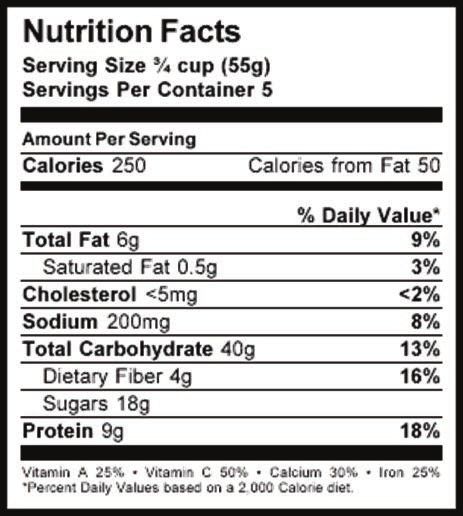
Label Reading Rules
When grocery shopping, pay attention to the Nutrition Facts Table to make the best choices for eating well.
4% DV of
1 Serving size. Start at the top of the label.
fat is a 20% DV of
Compare this to the amount you eat. This
amount will tell you the size of a single serving
little
5%
15 % calcium is
a lot
and the total number of servings per package. % DAILY
VALUE
2 Amount of Calories. Next, check total
calories per serving. The calories listed are for
one serving of the food. A LITTLE A LOT
3 Protein. Protein is a building block of muscle,
and is important for many bodily functions.
% Daily Value (DV):
This tells you how the
People with liver disease need more protein
than everyone else. Look for food products nutrients in one serving
with more protein. contribute to your total
daily diet. The % DV
4 Saturated Fat. Eating too much saturated fat
increases the risk of high cholesterol and
indicates if an item has
“a little” or “a lot” of a
heart disease. Try to eat less than 10 g per day
nutrient.
as recommended by nutrition guidelines.
5 Sodium. Prepackaged foods often contain a
Fibre
You should
high amount of sodium because it is used to have LESS:
flavour and preserve foods. Sodium can make Saturated Fat
symptoms of liver disease worse and should be
Sodium
limited as much as possible. Choose products
with less than 10% DV sodium in each serving.
As a rule, the closer to 0% DV, the better! You should
have MORE:
6 Calcium. Calcium is shown at the bottom of food
labels as a % DV. This percentage is based on
Calcium
Protein
1,100 mg calcium per day. In liver disease you
Fibre
need more calcium compared to the general
population. Choose products that are high in 15
calcium.Protein
The body needs protein for many functions of the body, such as building and maintaining muscle,
healing tissues, and supporting the immune system. Patients with cirrhosis need more protein than
what is recommended in Canada’s Food Guide.
Understanding how much protein you need
The goal in cirrhosis is to eat 1.2-1.5 g/kg of protein each day.
Proceed to the Protein Graph below if your BMI is 30 or less.
If your BMI is more than 30, complete the “Activity” at the bottom of the page then
use the Protein Graph.
Protein Graph 160
1.5 g/kg protein
140
Daily protein intake (in g)
Find your dry weight along the
120 1.2 g/kg protein
bottom axis marked ESTIMATED
DRY BODY WEIGHT (see Chapter 2). 100
80
Then move up to find the range of 60
protein (gray zone between the red
40
and yellow lines) to eat.
20
The range indicates the amount of 0
protein in grams to eat every day. 40 45 50 55 60 65 70 75 80 85 90 95 100
ESTIMATED DRY BODY WEIGHT (in kg)
How to meet your protein goal:
Include a variety of protein-rich foods at every meal and snack (see examples
on next page).
Activity:
An online calculator to determine this is
Eating multiple sources of protein-rich foods will reduce the chance of available at: www.wellnesstoolbox.ca
repetition and food boredom.
You can do this with your healthcare
practitioner!
Concern: If your BMI is more than 30, use what is
In cirrhosis, some protein-rich foods, such as red meats, may no longer be
appealing. called your “Ideal Body Weight.” This
weight is based on a BMI of 25. To
Solution: figure out your “ideal body weight”
follow these steps:
Try eating other protein-rich foods, like meal supplements, protein powders,
dairy products, and vegetable proteins (beans, peas, lentils). 25 x height (metres) x height (metres)
What about calcium? My Ideal Body Weight is:
In cirrhosis, it is necessary to increase the intake of
25 x ______metres x ______metres =
calcium to prevent brittle bones that can easily
fracture or break.
kg
16Tofu
Protein Q
K A
J
2.5 oz of meat is:
the size of a deck of cards
Food Item Measure Equivalents Weight (g) Protein (g) Sodium (mg)
Meat and Meat Alternatives
Beef, Pork, cooked 2.5 oz deck of cards 75 25 45
Chicken, Turkey, cooked 2.5 oz “ 75 20 50
Fish, baked/fried/steamed 2.5 oz “ 75 18 40
Canned fish in water, low sodium 75 g ( /3 cup)
1
75 18 50-70
Egg 1 large 50 6 65
Shrimp, boiled/steamed 6 small 30 6 67
Chick Peas, Beans, Lentils, canned (rinse tennis ball
¾ cup 175 ml 11 30
first) /boiled
Peanut Butter (commercial) 2 tbsp 30 ml 8 149
Peanut Butter (natural) 2 tbsp golf ball 30 ml 7 2
Peanuts, Almonds (unsalted) ½ cup 2 golf balls 37 8 2
Tofu (regular, firm, extra firm) 150 g hockey puck 150 21 26
Dairy Products and Supplements
Milk, skim, 1%, 2%, whole 1 cup 258 9 105
Milk, 1% chocolate 1 cup 258 9 152
Soy beverage, unsweetened 1 cup 257 7 95
Skim milk powder ~ /3 cup
1
25 9 120
Yogurt, Greek, plain, flavoured ¾ cup tennis ball 180 16 65
Yogurt, plain, flavoured ¾ cup tennis ball 180 9 115
Cheddar Cheese (from block) 1.5 oz 9-volt battery 50 12 300
Mozzarella Cheese (from block) 1.5 oz “ 50 10 186
Swiss Cheese 1.5 oz “ 50 13 96
Meal Supplement Drinks, high protein
1 bottle 235 ml 12-15 200-290
plus calories
Whey Protein Powder 2 tbsp golf ball 28 20 120
Grains and Starches
Bread, whole wheat 1 slice 35 5 165
Bread, pita, whole wheat (16.5cm) diameter 1 each 64 7 372
Bagel, plain 1 bagel 71 7 318
Pasta, enriched spaghetti, cooked 1 cup fist 140 8 1
Special K® Protein cereal, Kellogg’s® 1 cup fist 50 10 125
Vector® Cereal, Kellogg’s® 1¼ cup fist & 2 golf balls 55 5.5 220
Edge® Cereal, General Mills® 1 cup fist 58 11 290
Granola Bar, Natural Valley® Protein 1 bar 40 10 180
Vector® Protein Bar, Kellogg’s® 1 bar 40 11 190 17
Clif Builder’s® Bar 1 bar 68 20 200Sodium
The body needs some sodium to function.
In cirrhosis, too much sodium can worsen ascites (belly swelling),
edema (swelling in feet and legs), and esophageal varices (swol-
len veins in the food pipe). A diet high in sodium can also cause
kidney problems.
To maintain health, it is important for a patient with cirrhosis to Tip:
restrict salt intake. The words salt and sodium are not
Fact: exactly the same thing, BUT:
1 teaspoon (6 g) of salt (table
Fact: salt, sea salt, iodized salt)
Salt in most foods is found in the
The average Canadian form “sodium chloride” or “sodium
contains 2,300 mg of sodium
consumes greater than iodide”.
3,400 mg of sodium per day,
Fact: Salt is salt, whether it’s Himalayan,
more than 3/4 comes from Kosher, Rock, Sea, or Table Salt. All
Patients with advanced liver
prepackaged, processed, and of these contain the same amount
disease should consume
restaurant foods. of sodium.
LESS THAN 2,000 mg of
sodium per day
This Guide uses the word “sodium” to
advise a sodium restricted diet. Your
What does this mean? doctor may also call this a “low-salt
Following a low-sodium diet is not as simple as getting rid of the salt shaker.
diet”.
In addition to not adding salt to food, it is important to cook and eat foods
with low sodium contents.
Low sodium cooking: tips and tricks!
Herbs, spices, and marinades add to or enhance the flavour of food without increasing sodium.
In 2-3 weeks, tastes adjust to the new flavour combinations and salt cravings become a thing of the past!
Cooking tips: • Boil potatoes, rices, pasta, and hot cereals with herbs instead of adding salt to add flavour
• Use 3x more fresh herbs than dry herbs to get the same flavour intensity
• For hot foods, add crushed herbs or spices near the end of cooking to get the most flavour
• For cold dishes (e.g., dressings, salads), add the flavourants at the beginning of the preparation
If you like ... Try one or more of these.... Add to.....
HOT Cayenne pepper, chili (fresh, oils, powder), Beans, lentils, tofu, beef, chicken, turkey,
hot dry mustard, horse radish, white anything!
or black pepper, red pepper flakes, wasabi
CITRUS/SOUR Lemon, lime, tamarind, vinegars Asparagus, green beans, tofu, chicken
SWEET Allspice, anise, caraway, cardamom, cinnamon, Apples, beans, potatoes, salads, squash,
cloves, fennel, honey, molasses, nutmeg, yams, rice, chicken
poppy seeds, sesame seeds, star anise
HERBACEOUS Basil, dill, mint, oregano, parsley, rosemary, Asparagus, peas, potatoes, tomatoes, rice,
sage, tarragon, thyme pasta, beef, chicken, fish, eggs
SULFURY Chives, garlic, onion (green, red, white) Potatoes, tomatoes, rice, pasta, beef,
18 chicken, fish, eggsOverview of some low versus high sodium foods
Choose Limit or avoid
Vegetables • Fresh vegetables • French fries, hash browns, and
and Fruit • Vegetables canned with no added salt potato chips, salted
• Tomatoes canned with no added salt • Sauerkraut
• 100% fruit juices • Potatoes from a mix
• Tomato juice, vegetable juice, and
vegetable cocktail
If you are on a low-potassium diet, ask
your dietitian which of these foods are • Tomato sauce, pasta sauce, and
recommended. salsa
• Vegetables canned with salt
Vegetables frozen, with cream, or
tomato sauce
Grain Choose foods with the lowest sodium • Baked goods from dry mixes
Products amounts for the following: • Baked goods (from a restaurant or store-
• Baked goods (homemade) like muffins, bought)
pancakes, or waffles made without added • Rice cakes and crackers (salted, or
salt seasoned)
• Breads, buns, bagels, pitas, English • Hot cereals (instant) with higher
muffins than 15% Daily Value for sodium
• Barley, bulgur, millet, oats, quinoa, rye • Pasta, rice, or noodles that are
• Rice cakes, crackers, and cookies (unsalted) canned, instant, or from a mix
• Cold cereals and hot cereals (not instant) • Stuffing mixes
• Pasta, couscous
• Rice, brown rice
If you follow a low-phosphorus diet,
ask your dietitian which of these foods are
right for you.
Milk and Choose brands with the lowest sodium • Cheese slices or cheese spreads,
Alternatives amounts for the following: (processed)
• Milk (skim, 1%, 2%) or soy beverages • Cheeses having high sodium contents:
• Cheeses: small amounts of hard cheeses blue, feta, and Parmesan
such as cheddar, mozzarella, marble, • Cottage cheese, regular
Swiss • Pudding or custard, instant mixes
• Cheeses (soft) such as cream cheese, brie, • Buttermilk
and ricotta
• Cottage cheese, no salt added
• Yogurt or kefir
If you need to follow a low-phosphorus diet,
ask your dietitian how much of these foods
are right for you.
19Choose Limit or avoid
Meat and • Beans, peas, and lentils (dried), cooked • Meat, poultry, fish (canned) with salt
Alternatives without salt. Rinse canned products. • Meat, poultry, fish (breaded or
• Eggs seasoned)
• Meat, poultry, fish (fresh) • Nuts (salted)
• Nuts and nut butter (unsalted) • Processed meats, such as:
• Tofu • bacon • hot dogs/wieners
• Tuna or salmon (canned), no salt added • bologna • pepperoni
• corned beef • sardines
If you follow a low-phosphorus diet, • deli meat • salami
ask your dietitian how much of these foods (chicken, turkey, • sausages
are right for you. and roast beef) • smokies
• ham
Spices, • Gravies, sauces and dips (homemade) • Sea salt, table salt
seasonings, without salt • Spices or seasoning mixes that have
and • Herbs and spices with no salt added such salt or sodium, such as seasoning
condiments as: salt, garlic salt, onion salt, celery
• basil • mint salt, lemon pepper, channa
• black pepper • onion (fresh masala, chaat masala, meat masala,
or powder) tandoori masala.
• cardamom
• parsley • Pre-made, packaged gravies,
• cayenne pepper
sauces, and dips
• chili oil • paprika
• Bacon fat
• cinnamon • rosemary
• Canned or packaged broth, bouillon
• cumin • tarragon
cubes, or consommé
• dry mustard • thyme
• Condiments such as mustard,
• garlic (fresh or • turmeric
ketchup, relish, tartar sauce, salad
powder ) dressings, and mayonnaise (limit to
• ginger 1 Tbsp (15 mL) per day)
• Lemon or lime juice, vinegar • Salsa, pickles, olives
• “No added salt” seasonings • Sauces such as steak sauce, BBQ
• Sauces with less than 5% Daily Value for sauce, marinating sauces, soy,
sodium teriyaki, hoisin, black bean, or fish
sauce
• Breading and coating mixes
Other foods • Non-hydrogenated margarine (unsalted) • Fast foods and restaurant foods
and vegetable oils. Use small amounts. • Snack foods such as salted chips,
• Soups, homemade (limit the amount nachos, pretzels, popcorn, bhujia,
of sodium/salt added) and crackers
• Check the sodium content on labels of • Soups (canned or dried) such as,
unsalted snacks such as pretzels, tortilla oriental noodle mixes or soup cups
chips, rice cakes, some microwave • Casserole mixes
popcorn, and air popped popcorn. They • Frozen, deli, or take-out foods
may contain salt!
20Calcium
Osteoporosis (bone loss causing weak bones) occurs more often in Ca++
cirrhosis partially from not eating enough calcium.
Because bone loss is common, it is necessary to increase the intake
of foods or supplements that provide calcium. Osteoporosis:
The loss of bone mass to the point where
Calcium is a mineral that helps build and maintain strong bones and bones become brittle and fragile; they can
teeth as well as helping the muscles and heart work properly.
fracture and break easily.
A list of common foods that contain How much calcium do
1 serving of calcium you need when you
Each of the foods listed below have 300 mg of calcium in the have cirrhosis?
portions recommended = 1 serving
A daily calcium goal – Have 4 servings of calcium-rich foods 1,200-1,500 mg/day from a combination
every day. of food sources and supplements is
recommended
Milk and Alternatives Fruits and Vegetables Meat and Alternatives
Cow’s milk – all varieties (1 cup) Spinach, boiled, steamed Sa rdines – canned in water with
or sautéed (1 cup) no salt added, with bones
Soy, rice, or almond beverage,
(100 -120 g/ 3-4 oz )
fortified with calcium (1 cup)
Turnip greens, cooked
(steamed or sautéed) Salmon, canned, unsalted
Cheese: Swiss, cheddar,
(1 cup) with bones (120 g/ 4 oz)
mozzarella , marble (1.5 oz)
Yogurt: plain, flavored, Rhubarb, cooked (1 cup) Tofu, prepared with calcium
Greek, regular (175 ml or sulfate (175 g which is ~¾ cup)
¾ cup) Orange juice , fortified
Beans (white, navy) canned
with calcium (250 ml)
Ricotta cheese, partly or cooked (1½ cups)
skimmed (½ cup)
Kefir (1 cup)
Nutrition Supplement Drinks
(1 cup)
Activity:
Using the table above, Dairy = ______ Fruits/Vegetables = ______ Meat/Alternatives = ______
how many servings of high
calcium foods are you
currently having every day?
Total =
21Vitamins
Patients with cirrhosis can be low in the following
vitamins and minerals:
Vitamins - A, D, E, K, folic acid, B1, B2, B6, B12 Too much copper, manganese, or iron can be harmful
in cirrhosis.
Minerals - zinc, iron, selenium, and calcium Some patients will need to take iron depending on
their specific situation.
To get enough of these vitamins and minerals, take a
no iron containing multivitamin or multi-mineral on a A doctor or dietitian can help make sure you pick the
daily basis. safest option.
Exercise
Muscle mass loss is very common in patients with cirrhosis. This makes daily
activities more difficult and causes tiredness.
A program of exercise in combination with the right nutrition may help to maintain
and even increase muscle mass.
It is helpful to get a pedometer to track your activity level.
If you have cirrhosis, you should try to reach 5,000 steps or more each day.
Your health care practitioner will look for veins in your food pipe (called varices).
Once they have ruled these out (or adequately treated them), ask your health care
practitioner if you can include 3 days per week of moderate physical activity, such as
walking or cycling for up to 30 minutes and 2 days per week of light weights. You can
find exercises at www.wellnesstoolbox.ca.
Talk to your doctor about the exercise program that may be best for you. An exercise
specialist or physiotherapist can help design an appropriate exercise program.
My favourite snack is:
Is it low in sodium and high in protein? Yes No
How can it be adjusted to help my liver?
My favourite meal is:
Is it low in sodium and high in protein? Yes No
How can it be adjusted to help my liver?
22Notes and Goals:
Use this space to set nutrition goals that you would like to work on. For example, “My goal over the next month is
to meet my protein target by eating 1.2-1.5 grams/kilogram per day. For me, this means eating 80 grams of
protein per day”. Seek assistance from your doctor or dietitian to help set these goals!
23Tracking my body weight
Indicate if you are retaining fluids around the belly, legs, or
joints when you measure your weight!
Date: Body Weight:
243
Chapter
Tips for when you do not
feel like eating
Side effects of cirrhosis may decrease appetite or make food unpalatable.
Below are common reasons why patients find it difficult to eat enough and
solutions to overcome these temporary issues.
1 “When I eat, I get full very quickly.”
The sensation of early fullness is also called “early satiety”. This
decreases the amount of food you can eat, and can lead to weight loss and
malnutrition.
Suggestions:
Eat smaller, more frequent meals and snacks every 2-4 hours.
Limit fluid intake when eating to reserve room for food. Tip:
Avoid drinks like coffee, tea, and water since they can reduce your
appetite overall and provide you with little nutrition. Keep a granola bar and meal
Make your calories count! supplement in the nightstand
or bathroom for easy access
Drink high calorie and protein meal replacement drinks or cream soups. during the night.
These are easier to digest than solid foods and are nutritious.
High protein smoothie – see Recipes chapter
Meal replacement drink – see Meal Supplements chapter
Homemade cream soup
Pudding, yogurt, and custard
If you are up during the night, grab a quick snack or meal. Eat
whenever it is possible!
Make sure not to skip meals or snacks.
Alert a healthcare practitioner about fluid retention.
252 “I’m too tired to cook and eat.”
Feeling extra tired is common in cirrhosis. This can interrupt grocery shopping, cooking,
and even eating. Naps during the day may also cause meals or snacks to be missed
unintentionally. Eating is so important because it provides the essential nutrients that
can help with tiredness.
Suggestions:
When you have more energy, prepare meals in advance to store in the fridge or
freezer, like:
Hearty soups, stews, or chili
Packaging leftovers into homemade, inexpensive “TV dinners”
Consider meal delivery programs, such as ‘Meals on Wheels’.
If “heart-healthy” options are available, choose these as they are usually
lower in salt than other options – remember to check the label!
Look into meal-prep businesses – the meal is assembled at their kitchen but
is cooked at home. The benefit is that the groceries are purchased and
already washed or even chopped or measured.
Use grocery shopping services offered by supermarkets or community programs;
some stores have online ordering options.
Rely on simple-to-prepare meals and snacks presented in Chapter 5.
Use meal supplements during the day and night as needed!
Ask friends and family for support by :
Cooking and eating together
Sharing meals
Have a support person or friend prepare meals or snacks when possible
Avoid prepared foods and take out foods! These will only make the symptoms worse
and may hurt the liver! Patients with cirrhosis may experience day/night reversal - this
means a person is awake during the night and naps during the day. If this occurs, have
1 or 2 snacks between naps during the daytime and eat meals during the night.
3 “On days I have procedures or am admitted to the
hospital, it is impossible to stick to a regular eating
schedule.”
Appointments, tests, procedures, and hospital admissions can take a while. In some cases,
“fasting” is also required which makes it more challenging to fit in all of the meals and snacks.
Nevertheless, it is important to stick as closely as possible to a regular eating schedule to help
the liver.
Suggestions:
Eat a large meal just before midnight if required to fast overnight. Take a lunch bag packed
with items that will not spoil to every appointment, procedure, or hospital admission:
Include meal supplements, such as Boost® or Ensure®
Snack bag of unsalted nuts or trail mix
High-protein granola or cereal bars
264 “I don’t have enough money to buy food.”
A healthy liver diet does not have to be expensive. The higher costs of fresh meat and
dairy products means that it is important to watch for sales, look for alternative protein
sources, and be creative to make the most of the grocery budget.
Suggestions:
Only shop the outermost aisles in a grocery store. These include the bakery, produce,
dairy, and meat sections. This avoids the junk food aisles and prepackaged foods.
Purchasing healthier, lower-sodium foods will also reduce grocery costs
Watch for sales
Portion out bulk foods into serving sizes that can be stored and used as needed
Buying meats in bulk can save a lot of money!
Join grocery store clubs or programs - most offer discounts and specials to members
Instead of expensive meats, try substituting vegetable-based proteins, such as beans,
lentils, and chickpeas.
These are low-cost protein sources that provide excellent nutrition
If you are receiving social support, you may qualify for additional funding to cover the
costs of a low-sodium diet.
Talk to a healthcare provider to see if you qualify.
274
Chapter Recipe List
Roasted Cauliflower
½ head of cauliflower, chopped into pieces
3 tbsp olive oil
2 tbsp lemon juice
1 clove garlic, minced
3 tbsp shredded parmesan cheese
Preheat oven to 400 F.
Add all ingredients to a large bowl and toss until all cauli-
flower pieces are coated. Line baking sheet with parchment
paper. Spread cauliflower pieces across the parchment
paper. Bake for 20 minutes or until cauliflower is soft.
Total servings: 3
Nutritional facts per serving:
Low-sodium Beef Taco Meat Calories: 133 kcal
Homemade taco seasoning: Protein: 4 g
1 tbsp chili powder Sodium: 138 mg
2 tsp onion powder
1 tsp ground cumin
1 tsp garlic powder Gourmet Hamburgers
1 tsp paprika ½ cup minced onions
1 tsp ground oregano ¼ tsp garlic powder
Combine ingredients in a bowl and ¼ tsp dried basil
mix together. Set aside. 1 tbsp olive or canola oil
1 tbsp lemon juice
1 lb extra lean ground beef 2 tsp dried parsley
1 tsp water
Add extra lean ground beef to frying pan. Cook 1 lb lean ground beef
beef on medium-high heat until it is no longer pink. Break
up the ground beef with a spatula as it cooks. Mix all ingredients together in large bowl. Form into four 4”
Add homemade taco seasoning (to taste) and 1-2 tbsp of round patties that are ½ inch thick. Fry on medium heat or
water. Cook for another 3-5 minutes on low-medium heat. cook on BBQ until burger is no longer pink throughout.
Total servings: 4 Total servings: 4
Nutritional facts per serving (2 tacos): Nutritional facts per serving ~1 patty:
Calories: 200 kcal Calories: 380 kcal
Protein: 27 g Protein: 38 g
Sodium: 78 mg Sodium: 124 mg
Baked Chicken Thighs Tuna Salad
1 lb boneless, skinless chicken thighs (about 6 medium 1 can (120 g) tuna (canned in water, no salt added)
thighs, thawed) 2 tbsp mayonnaise
1 tbsp sodium-free seasoning (e.g., Mrs. Dash®) 1 splash lemon juice
¼ cup cucumber, chopped
Preheat oven to 425 F. dash of black pepper to taste
Place chicken thighs onto a baking sheet lined
with parchment paper. Season each side of chicken thighs Mix ingredients together in a medium bowl. Spread on
with sodium-free seasoning or a homemade herb blend. bread or crackers.
Bake for 20-25 minutes.
Total servings: 1
Total servings: 3 Nutritional facts per serving (1 cup):
Nutritional facts per serving (2 thighs): Calories: 355 kcal
Calories: 260 kcal Protein: 30 g
Protein: 40 g Sodium: 267 mg
Sodium: 120 mg
28Tangy Coleslaw Hamburger Soup
6 cups pre-chopped coleslaw mix (or chopped cabbage 1 ½ lb ground beef
and 1 shredded carrot) 1 onion, minced
½ medium chopped green pepper 4 carrots, minced
3 celery ribs, thinly sliced
Mix all of the above together in a large bowl. ½ cup barley
28 oz canned diced tomatoes
Dressing: 2 cup water
3 tbsp sugar 3 ½ cups no-sodium-added beef broth
¼ cup white vinegar 1 can sodium reduced condensed tomato soup
2 tbsp light corn syrup 1 bay leaf
2 tbsp oil 1 tbsp parsley
¼ tsp celery seed 1 clove minced garlic
dash garlic powder ½ tsp dried thyme
dash onion powder ½ tsp ground black pepper
Add the dressing to the large bowl with the coleslaw and Crumble ground beef into a large soup pot. Place on
mix well. medium-high heat and cook beef until it is no longer pink.
Drain excess fat. Add remaining ingredients and bring to a
Total servings: 6 boil, stirring frequently. Once boiling, turn the heat to
Nutritional facts per serving (1 cup): medium-low and simmer for 2 hours.
Calories: 105 kcal
Protein: 2 g Total servings: 6
Sodium: 19 mg Nutritional facts per serving (~1.5 cups):
Calories: 320 kcal
Protein: 28 g
Salmon Salad Sodium: 376 mg
1 can (214 g) salmon (canned in water, no-salt-added)
2 tbsp mayonnaise
¼ tsp black pepper (or to taste) Flat Bread Chicken & Mushroom
½ -1 tsp Mrs. Dash® lemon and pepper salt-free spice mix
Pizza
Mix ingredients together in a medium bowl. 1 large/2 small pita breads (choose lowest sodium by
reading food labels)
Total servings: 1 1 boneless and skinless chicken breast
Nutritional fact per serving (1 cup): 4 white button mushrooms
Calories: 265 kcal ½ cup low-sodium tomato sauce
Protein: 21 g 1 cup shredded mozzarella cheese
Sodium: 256 mg
Preheat oven to 350 F.
Season chicken breast with low sodium seasoning (e.g.,
Banana Muffins ‘Garlic and Herb’ or ‘Italian Herb Blend’ by Mrs. Dash®).
3 bananas, mashed Place chicken on a baking sheet covered in parchment
3 tbsp melted margarine paper. Bake chicken for 30 minutes, then let cool. Slice
¾ cup sugar cooked chicken into thin slivers.
2 eggs
¼ cup wheat germ Increase oven to 425 F.
1 ¼ cup white flour Spread tomato sauce over pitas, layer chicken and mush-
1 tsp baking soda rooms to cover whole pizza. Top with shredded cheese.
½ tsp baking powder Place pizzas on a baking sheet lined with parchment paper.
½ cup pecan or walnut pieces (optional) Bake for 5-7 minutes or until cheese is melted and brown-
ing. Sprinkle with pepper, chili flakes, fresh basil leaves, or
Preheat oven to 350 F. parmesan cheese as desired.
Mash ripe bananas in a large bowl using fingers or a
spatula. Add margarine, sugar, and eggs and mix with a Total servings: 2
spatula until smooth. Add remaining ingredients and mix Nutritional facts per serving (1 small pita or ½ large pita):
well. Spray muffin tin with cooking spray and add batter. Calories: 270 kcal
Bake for 35-45 minutes. Protein: 25 g
Sodium: 320 mg
Total servings: 13
Nutritional facts per serving (1 muffin):
Calories: 185 kcal
Protein: 3 g
29
Sodium: 154 mgEgg Salad Chicken Fried Rice
2 hard cooked eggs 1 tbsp canola oil
1 tbsp mayonnaise 1 tsp sesame oil (optional)
½ stalk celery, chopped fine 2 tbsp chopped white onion
⅛ tsp dry mustard ½ cup frozen vegetable mixture (peas, corn, diced carrots)
Dash paprika 1 cup leftover, cooked white rice
3 oz leftover, diced up cooked chicken
Mix ingredients together in a medium bowl. Spread on 1 tsp reduced sodium soy sauce
breads and crackers. 1 tbsp water
Total servings: 1 Sauté onion in the mix of canola and sesame oil in a
Nutritional facts per serving (1 cup): medium fry pan on medium heat for 1-2 minutes or until
Calories: 240 kcal soft. Add frozen vegetables and cook until heated through.
Protein: 13 g Add leftover rice and chicken, stirring them into the mix
Sodium: 201 mg until the rice is broken up. Add reduced sodium soy sauce
and water and stir. Cook for another 2-3 minutes and
serve.
Southwest Egg Burrito Total servings: 2
1 large tortilla (use lowest sodium content)
2 eggs Nutritional facts per serving (1 cup):
1 tsp cooking oil Calories: 302 kcal
2 tbsp diced onions Protein: 19 g
2 tbsp red pepper, chopped into bitesize pieces Sodium:137 mg
2 tbsp frozen corn niblets
2 tbsp shredded cheese
1 tbsp salsa
Optional protein booster: ¼ cup black beans (from can,
Cheese Omelet
2-3 eggs
rinsed prior to using) ¼ cup shredded mozzarella
1 spray of cooking spray
Heat cooking oil in fry pan. Add diced onion and red
pepper; cook until they softened (about 2 minutes). Beat 2 eggs in a medium bowl. Pour the mixture into a
Add frozen corn kernels (and black beans) and cook until warmed and greased non-stick fry pan. Cook for ~1 minute.
heated through. Whisk 2 eggs in a medium bowl then pour Sprinkle ¼ cup shredded mozzarella cheese over entire
into the pan. Continue frying until the eggs are cooked. omelet. Cook on medium heat for another 1-2 minutes.
Transfer the cooked egg mixture to the center fold of the Fold one half over to the other half. Cook another 2-3
wrap and top with salsa. Roll the wrap up. minutes, flipping once.
Total servings: 1 Total servings: 1
Nutritional facts per serving (1 burrito): Nutritional facts per serving (1 omelet):
Calories: 443 kcal Calories: 231 kcal
Protein: 24 g Protein: 17 g
Sodium: 382 mg Sodium: 233 mg
Hummus Fruit Smoothie
15 oz can chickpeas, rinsed Blend together the following ingredients until the desired
1 garlic clove consistency is reached.
¼ cup olive oil ½ cup milk
2 tbsp fresh lemon juice ½ banana
2 tbsp tahini ½ cup frozen fruit (any variety)
1 tsp ground cumin ½ cup Greek yogurt
¼ tsp paprika **Optional protein boosters – 1 scoop whey protein
powder or ½ cup of canned then rinsed white kidney beans
Add all ingredients to a food processor. Blend until the **If too thick, add water or juice to dilute
mixture has a smooth consistency. If it is too thick, add
water as needed. Total servings: 1
Nutritional facts per serving (2 cups) with
Total servings: 5 1 scoop whey protein powder:
Nutritional facts per serving (½ cup): Calories: 385 kcal
Calories: 235 kcal Protein: 32 g
Protein: 8 g
30 Sodium: 260 mg
Sodium: 177 mgBlack Bean Soup
1 tbsp olive oil
½ cup chopped onion
½ cup quinoa or rice
2 cups chicken or vegetable broth (no-salt-added)
2½ lbs (40 oz or 2 large cans) black beans, rinsed
1tsp finely minced fresh garlic
1 tsp chili powder
½ tsp ground cumin
¼ tsp red pepper flakes
2 tbsp fresh cilantro, chopped
1 tbsp lime juice
½ cup unsalted tortilla chips
½ cup shredded cheddar cheese
½ cup plain yogurt or sour cream
Place the olive oil in a large saucepan over medium-high
heat. Add the onion and sauté for 5-6 minutes. Add broth,
black beans, quinoa, and garlic and bring to a boil. Cover
and reduce heat so that the contents are simmering. Cook
until the quinoa is tender, stirring frequently - about 14
minutes. Add the chili powder, cumin, and red pepper
flakes. Purée the cooked mixture with a hand blender or
cool slightly and purée in 2 batches using a blender or food
processor. Return the soup to the saucepan over low heat.
Stir in the cilantro and lime juice. Ladle the soup into
wide-mouthed bowls and top with tortilla chips, cheddar
cheese, and a dollop of yogurt.
Tip: Adding 2-3 tsp of unflavoured whey powder protein to
each bowl provides 8-12 g of extra protein!
Total servings: 6
Nutritional facts per serving (1½ cups):
Calories: 487 kcal
Protein: 30 g
Sodium: 395 mg
315
Chapter Using Meal Supplements
Using nutritional meal supplements can improve the
diet by ensuring a variety of essential nutrients are
consumed.
When choosing a meal supplement, it is important to
find one that is suitable, tasty, and convenient.
When should meal supplement drinks
be used?
Meal supplements can be used freely. For example, use after or
instead of a meal if troubled by a poor appetite or getting full
quickly. Meal supplements can also be snacks between Fibre
meals.
To make a "small meal" more nutritious, consider:
Replacing milk with a vanilla-flavored meal supplement when
eating hot or cold cereal
Adding a meal supplement to a fruit smoothie instead of juice
Some suggestions for
or milk choosing the best meal
supplement
How can meal supplements be altered
Energy/Calories:
to taste better? - Meal supplement drinks range from 200
Sometimes, meal supplements may be too sweet or thick, or you to 500 calories per drink
are craving change in taste. Here are some suggestions: - If you have lost a lot of weight and muscle,
Mix chocolate or vanilla meal supplement with coffee or tea choose a drink with 400 to 500 calories
(hot or cold) - If your weight is stable or you are
Blend a sweet meal supplement with frozen fruit that is tart, overweight, choose a drink with 200 to
like berries 250 calories
Pour the supplement into a glass and add ice
Add the supplement to ice cube or popsicle trays and freeze it Protein:
for a fun, refreshing alternative - Most drinks range in protein from 9 to 20 g
Dilute the supplement with other drinks: milk, soy or almond - Aim to choose drinks that have 10 g
milk, or water protein or more in each bottle
Sodium:
Using food labels to choose the best - After choosing the best options for
meal supplement calories and protein, choose from
the drink that has the lowest amount
Check the "Nutrition Facts Label" for information about the of sodium
calories, protein, and sodium per serving.
32Common nutritional meal supplement
drinks
The table below highlights the available options as of March 2017.
Remember to check the food label in case of manufacturer changes!
Remember that generic brands are usually less expensive than brand
name products. Make sure to compare costs and nutritional content
before purchasing!
Nutritional
Serving Calorie Protein Sodium Calcium Highlights
meal
size (kcal) (g) (mg) (mg)
supplement
Ensure® 1 bottle 235 9.4 250 300 Maintain a healthy weight; increase energy;
Regular (237 ml) (10% DV) (27% DV) balanced nutrition for use between or with meals
Ensure® 1 bottle 355 14 250 300 50% more protein and 120 more calories per
Plus (237 ml) (10% DV) (27% DV) bottle than regular Ensure®; helps gain or
Calories maintain weight
Ensure® 1 bottle 225 12 290 275 For weight maintenance; provides 28% more
High (237 ml) (12% DV) (25% DV) protein than regular Ensure®
Protein
Ensure® 1 bottle 350 20 240 550 Contains HMB (β-hydroxy β-methylbutyrate, a
Enlive® (235 ml) (10% DV) (50% DV) common dietary supplement) plus 20 g of
protein; good for those recovering from
malnutrition to help rebuild muscle tissues,
strength, energy, and gain weight
Ensure® 1 bottle 220 9 170 330 Good if a regular supplement drink is too
Compact (118 ml) (7% DV) (30% DV) filling or need a snack on the fly; is half the
volume of other Ensure® drinks
Glucerna® 1 bottle 225 11 250 275 23 g available carbohydrates; good for
(Ensure® for (235 ml) (10% DV) (25% DV) diabetics and patients with NASH
diabetes) cirrhosis or who are overweight or
obese
BOOST® 1 bottle 240 10 150 330 Use as a mini-meal or snack; has 10 g of high -
Original (237 ml) (6% DV) (30% DV) quality protein
BOOST® 1 bottle 240 15 200 385 Nutritionally complete formula with 15 g of
High (237 ml) (8% DV) (35% DV) high-quality protein; use as a snack or meal;
Protein good for patients with a reduced appetite
BOOST® 1 bottle 190 16 200 280 Nutritionally-complete formula designed
Diabetic (237 ml) (8% DV) (25% DV) for diabetes; contains 17 g of
carbohydrates per serving
BOOST® 1 bottle 360 14 200 385 Concentrated source of calories in a small
Plus (237 ml) (8% DV) (35% DV) volume for patients with high energy needs
Calories
Carnation® 1 bottle Drink Drink Drink Drink Use as a snack or meal
Breakfast (237 ml) 240 10 265 208
(11% DV) (28% DV) When mixed with milk, provides a source of
Essentials
protein and an excellent source of calcium,
( Ready-to- Powder Powder Powder Powder Powder
vitamin D, iron and vitamin C
1/3 cup 150 7 115 220
drink or
powder) (40 g) (5% DV) (20% DV) 33You can also read


