AIRCON 2100 ATS Interfacility Data Communication (AIDC) and On-Line Data Interchange (OLDI) Seminar
←
→
Page content transcription
If your browser does not render page correctly, please read the page content below

International ATM

   AIRCON 2100
   ATS Interfacility Data Communication (AIDC) and
   On-Line Data Interchange (OLDI) Seminar

   Pablo Fernández
   El Cairo / 03-05 March 2014

ATS Interfacility Data Communication (AIDC) and On-Line Data Interchange (OLDI) Seminar

AGENDA

    Agenda Item 1: Introduction
    - General benefits of using AIDC/OLDI
    - Operational advantages of using AIDC/AIDC over voice communication

    Agenda Item 2: Global progress and requirements for AIDC implementation
    - Global development
    - Requirements between adjacent Regions
    - Update from States
    - Clarification on the messages set
    - Introduce AIDC plan

    Agenda Item 3: Technical and operational training requirements
    - ATM System supporting AIDC/ OLDI
    - Operational training
    - Technical personnel training
    - Testing requirements

    Agenda Item 4: Template for bilateral letter of agreement on AIDC
    - Technical and operational requirements between States using AIDC
    - Operational complexities of using AIDC

    Agenda Item 5: Discussions on the development MID AIDC implementation Plan
    - Develop MID Region AIDC Implementation Plan
    - Issues related to AIDC implementation
    - MID IP Network address plan

    Agenda Item 6: Closing
    --------------------

                                                                                          | 2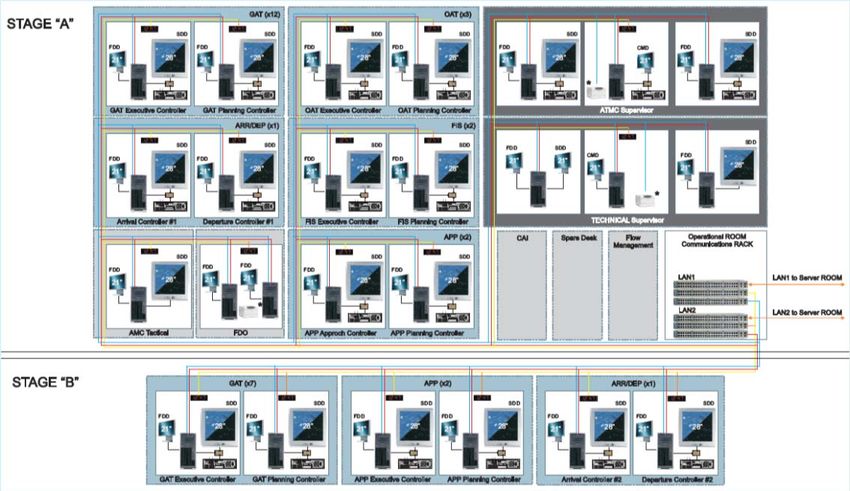
INTRODUCTION

WHAT IS INDRA ATM? - SYSTEM MISSION

To enhance the safety of the flights by providing the controllers
with information of air movements from Surveillance Sensors such
as Radars, ADS B, Multilateration Systems and Weather Data,
Planning information such as Flight Plans, Route Availability and
Flow Management and communicate control via Voice and Data
Link

                                           Aircon 2100 is one of the
                                           most advanced, safe and
                                           reliable automated air traffic
                                           control system and in a
                                           continuous evolution path.

                                           Operating in more than 100
                                           countries worldwide,
                                           integrating the latest & most
                                           advanced ATC functionalities.

                                                                            | 3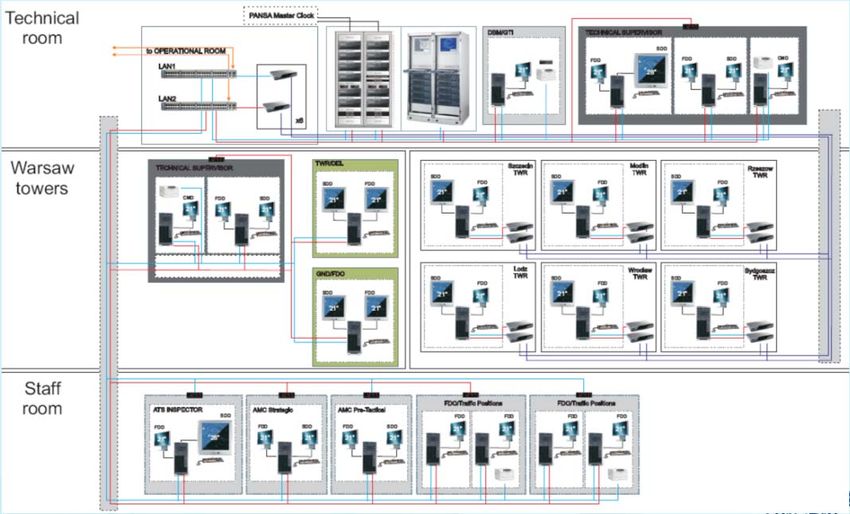
INTRODUCTION
SACTA
SISTEMA AUTOMATIZADO PARA EL CONTROL DE TRÁFICO
AÉREO
Integrated network of automation systems for all
centers and control towers in Spanish Airspace
Implements “Spanish Single Sky”
Continuous technological evolution
SACTA I: 1984-1991
SACTA II: 1992-1996
SACTA III: 1997-2006
SACTA IV: 2007-2013
SDP
Surveillance Data
Processing
FDP
Flight Data Processing
MET/AIS
Meteorological and
Aeronautical Information
| 4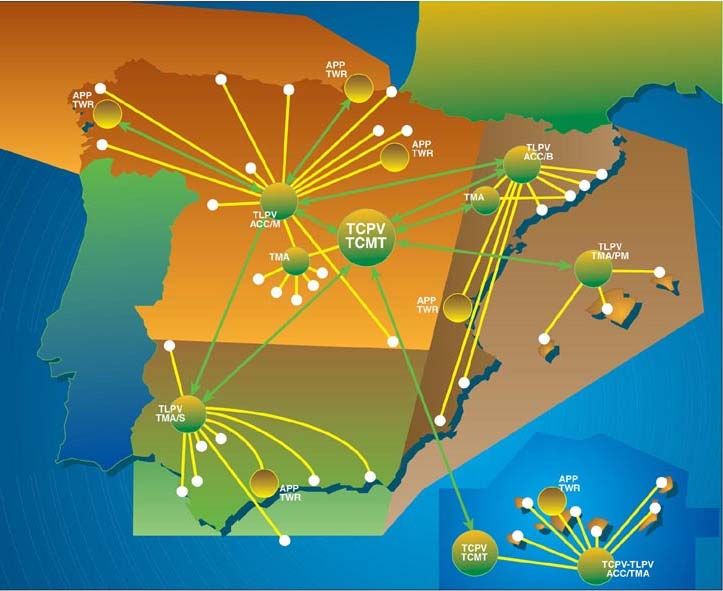
INTRODUCTION
ITEC
INTEROPERABILITY THROUGH EUROPEAN COLLABORATION
Common system for Flight Data Plan …….. Indra has been selected by
Management for AENA (Spain), DFS (Germany) the most advanced European
and NATS (United Kingdom) ANSP to develop the future ATM
Maastricht : first iTEC-like system in operation systems following the Single
December 2008 Sky Concept.
VAFORIT: first system in operation at Germany
in 2009
SACTA/iTEC operational in all Spanish control
centres
NATS/iTEC shall be the central flight data plan
system at United Kingdom.
iTEC, together with Indra Maastricht Flight Data
Plan System, shall be an essential component
of future European Single Sky.
| 5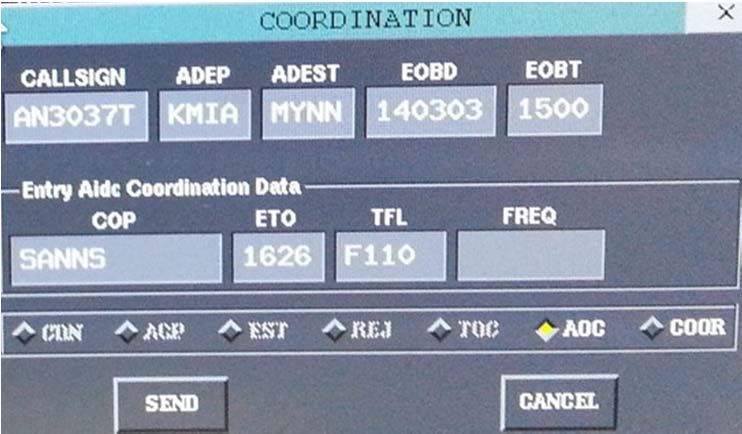
INTRODUCTION
INDRA ATM Systems – In constant evolution in Size
and Scope…
PEGASUS 21 Project: A large country
system implementation using Indra Aircon
System.
POLAND - Warsaw: ACC Center –
Large Installation for Pegasus 21
project. 74 CWP.
InterOperates with 3 TMAs also
supplied by Indra
Implements En Route, Approach and
Tower Functionality
6
| 6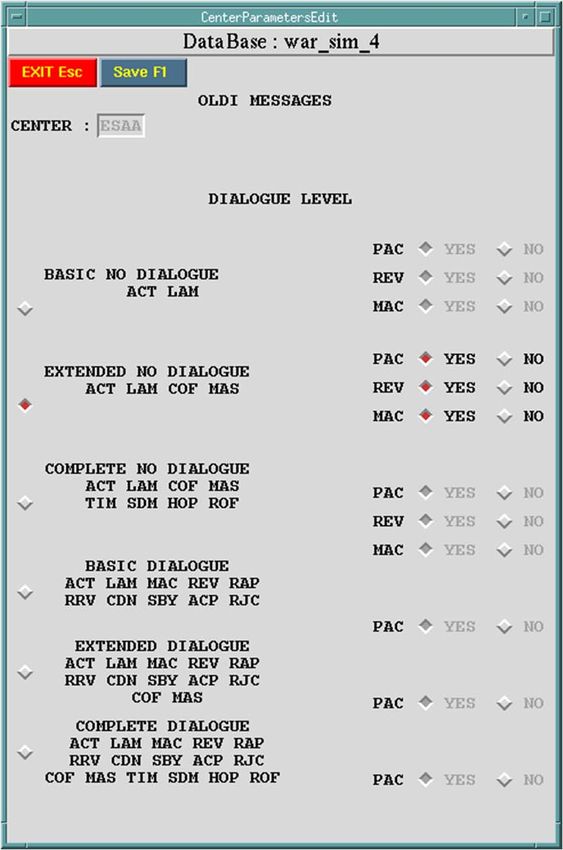
Introduction
TYPES OF COORDINATION
4 Types of coordination in Air Traffic Control
Manual coordination: By Telephonic coordination
ICAO: AFTN EST messages
ICAO: AIDC (ATS INTERFACILITY DATA COMMUNICATIONS)
EUROCONTROL: OLDI (On-Line Data Interchange)
| 7
Introduction
BENEFITS OF COORDINATION
Avoid Telephonic comunication
Coordinate with most precise times and levels based on trajectories
calculations
Dynamic Interaction with the Collateral
Adjust the coordination rules based on LoAs
Customize different kinds of coordinations for the different neighbours
| 8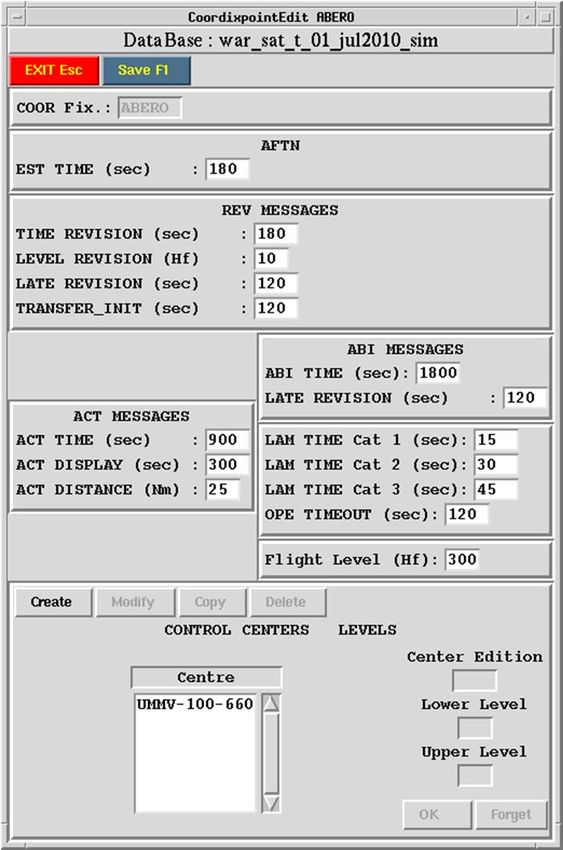
Introduction
SAFETY
Coordination makes flying significantly safer for the aviation
community by providing to the Control Centers the needed data to
manage in advance the flights to avoid future Conflicts
Real-Time interaction with the neighbours
Executive or Planners controllers doesn’t needs to loose time and
attention to the telephone calls from/to collaterals
Strip printing and Flight Plans adjusted based on the coordination
data
| 9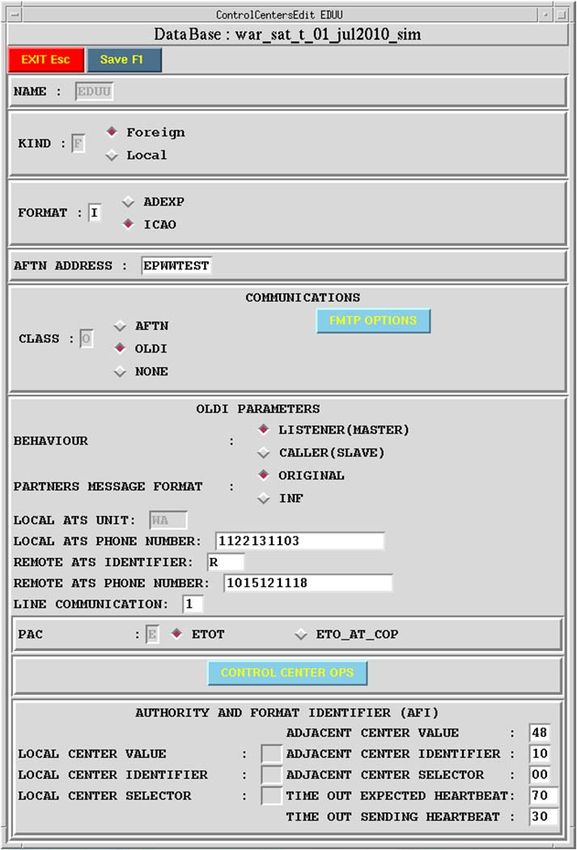
Introduction
EFFICIENCY
Coordination helps to the controllers to reduce the task calling to the
neighbours
Better ATC traffic flow management
Merging and spacing
Enhanced operations in high altitude airspace
Automatic correlation between FPLs and Radar Data based on
received coordination messages
Parameterized alerts on the Data blocks based on the received
Levels, coordination messages,…
| 10Interfaces
ICAO AIDC
The Asia/Pacific Regional Interface Control Document (ICD) for ATS
Interfacility Data Communications (AIDC) defines the Aeronautical
Fixed Telecommunications Network (AFTN) and the future
Aeronautical Telecommunication Network (ATN) as communication
interfaces between centers.
The main adventage is that the infraestructure is done between
Control Centers
The AIDC application supports information exchanges between ATC
application processes within automated ATS systems located at
different ATSUs. This application supports the Notification,
Coordination, and the Transfer of Communications and Control
functions between these ATSUs.
AFTN
ATN
| 11Interfaces
EUROCONTROL OLDI
Flights which are being provided with an ATC service are transferred
from one ATC unit to the next in a manner designed to ensure
complete safety.
The Main adventage is the capability to customize the messages to
be used with each different collateral Control Center
Where it is carried out by telephone, the passing of data on individual
flights as part of the coordination process is a major support task at
ATC units, particularly at Area Control Centres (ACCs). The
operational use of connections between Flight Data Processing
Systems (FDPSs) at ACCs for the purpose of replacing such verbal
"estimates", referred to as On-Line Data Interchange (OLDI), began
within Europe in the early nineteen eighties.
X.25
FMNTP: IPv6 network connection
| 12Interfaces
COMPARISON OLDI VS AIDC
OLDI AIDC
Interfaces X.25 AFTN IA-5
FMTP ATN
Europe Asia/Pacific
Africa
Format to Exchange ICAO AFTN/ADEXP ICAO AFTN
data
Version 4.2 3.0
Last Release December 2010 September 2007
| 13Interfaces
HARDWARE & SW REQUEIREMENTS OLDI VS AIDC
OLDI AIDC
Hardware X.25 or Serial cards
Ethernet Ethernet
Lines X.25 or Serial lines or
IPv6 IPv4
IPv6
Software FDP OLDI capabilities FDP with AFTN or
AMHS and AIDC
capabilities
| 14Interfaces
MAIN DISADVANTAGES
OLDI
• Comunications dedicated to the protocol
• Too much operational messages interchange on the maximun
level of coordination
AIDC
• Low adaptation level: Its not possible to adaptate the kind of
messages taking into account the level of development of the
collateral control center
| 15External Coordination
DIALOGUE PROCEDURE
Message Sequence
ABI/PAC ACT RAP REV RRV MAC SDM TIM HOP SDM COF
A to B
System
B to A ACT LAM* SBY LAM LAM LAM LAM LAM LAM
SDM SDM
Controller
B to A ACP CDN RJC CDN ROF* ROF MAS
System
A to B LAM SBY LAM SBY LAM LAM LAM LAM LAM
Controller
A to B ACP RJC ACP RJC
B to A LAM LAM LAM LAM
Notification Phase Coordination Phase Transfer Phase
| 16External Coordination
DIALOGUE PROCEDURE - AIDC
Message Sequence
| 17Profile. Modelation, Tactical commands, strategic constraints
TACTICAL COMMANDS. Profile Modeling
XFL.- Exit Flight level
When does the XFL value apply to the profile calculation?
1 – XFL value > RFL value
Owner sector Next Sector
NEW EXIT LEVEL
XFL
EXIT LEVEL
RFL
| 18Profile. Modelation, Tactical commands, strategic constraints
TACTICAL COMMANDS. Profile Modeling
XFL.- Exit Flight level
When does the XFL value apply to the profile calculation?
2 – XFL value < RFL value, but the RFL is reached in the owner sector.
Owner sector Next Sector
EXIT LEVEL
RFL
XFL
NEW EXIT LEVEL
| 19Profile. Modelation, Tactical commands, strategic constraints
STRATEGIC CONSTRAINS. Route conditions.
The system establish an exit level (crossing level) at defined fixpoints to flights that fulfils the
defined conditions: Max, Min RFL/ECL, Origin/destination airport, Coordination type or fixpoints
sequence condition, sequentially before and after the COP .
| 20Profile. Modelation, Tactical commands, strategic constraints
STRATEGIC CONSTRAINS. Route conditions
Max RFL/ECL
RFL
Constraint
Min RF/ECL
ECL
S2
S1
The predefined crossing level will apply on
trajectory when the RFL/ECL value is the range
defined in DBM
| 21Internal Coordination
Level negotiation.
For Incoming Track
PEL menu, proposing level Owned track
Inbound track
the owner can re-negotiate through XFL menu:
Accept /Reject or counter-proposal
| 22Internal Coordination
Level negotiation.
For Controlled Track
XFL menu, proposing level Owned track
Inbound track
the inbound track can re-negotiate through PEL menu:
Accept/Reject or counter-proposal
| 23Internal Coordination
Negotiation
Owner Inbound (Next sector) PreInbound (Next-next sect)
| 24External Coordination
Coordination Window
Allows Entry/ Exit
Coordination.
By means of this
window, a coordination
message is manually
send to external centers
both entry and exit
COP Coordination Fixpoint
ETO Estimated Time Over Fixpoint
TFL Transfer Flight Level
FREQ Frequency
MAN Manual coordination (Not available for AFTN)
HOF Handover proposer (Not available for AFTN)
G .ABI ABI Coordination Message (Not available for AFTN)
MAS Manual Assumption (Not available for AFTN)
G .ACT ACT Coordination Message (Not available for AFTN)
CDN Coordination message
COF Change of frequency (Not available for AFTN)
ACP Acceptance message
ROF Request of frequency
RJC Rejection
EST Estimation
COOR Coordination dialogue establishment
ICON DESCRIPTION
SEND Coordination message sending
CANCEL Cancel the coordination message process
| 25External Coordination
COORD IN/ OUT LISTS
These lists includes the information related with flight plans that have pending coordinationdialogue,
and includes, in COM field, the current coordination status
Field Description
H (Hold)
Status Indicator (1 character) F (Conflict)
L (Lost)
ADEP Departure Aerodrome.
ADES Destination Aerodrome
EOBT Estimated Off-Block Time.
It may be filled with "C"; which indicates the reception of
CTOT indication.
ADEP Departure Aerodrome.
ADES Destination Aerodrome
COPN/ XCOP Coordination Point
ETO/ XTO Estimate Time Over Fixpoint
PEL/ XFL Planned Entry/ Exit Level
With (*), Activation level
With (F), the RFL from the FP
COOR Coordination Dialogue Establishment
COM Coordination Status
Total number of flights in “holding” status. It also provides a
menu to sort the flights
| 26External Coordination
COORDINATION DBM TABLES
CONTROL CENTERS
COORDINATION FIXPOINTS
These tables includes the information related to parameters to establish the connections and conditions
to perform the external coordination
CONTROL CENTERS
This table contains all the necessary
information to define a control centre,
its classification, its AFTN address, as
well as its OLDI communications with
adjacent centres, for coordination
operations
| 27External Coordination
COORDINATION DBM TABLES
CONTROL CENTERS
Control Center Options
This window is acceded by clicking on “CONTROL CENTER OPS”
in Control Centers Edit Window.
This window sets the OLDI messages dialogue profile
(from the predefined profiles included in the window,
that also allows optional messages inclusion)
Selected profile will apply in the coordination dialogue
between the system center and the external control center.
| 28External Coordination
COORDINATION DBM TABLES
OLDI OPTIONAL FIELDS
This window sets the OLDI messages configuration
| 29External Coordination
COORDINATION DBM TABLES
COORDINATION FIXPOINTS
This table contains all the necessary information to define the
Coordination Fixpoints (Cops). The parameters defined here will
associate a Fix to a Control Sector.
Also, in order to activate Advanced Boundary Information, ABI,
or Activation (ACT) messages, a set of time and distance
parameters are defined
.
| 30Pablo Fernandez Izquierdo International ATM programs pfizquierdo@indra.es Ctra. de Loeches, 9 PO. BOX: 28850. Madrid, Torrejón de Ardoz Spain T + 34 91 627 11 59 F + 34 91 627 10 05 www.indra.es
You can also read


