Consumer Insights Explorer - Mothers
←
→
Page content transcription
If your browser does not render page correctly, please read the page content below
Consumer Insights
    Explorer

         A sneak peek at

             Mothers

WE USE DATA TO PAINT A BETTER PICTURE OF
            YOUR CUSTOMER
About the Consumer Insights Explorer
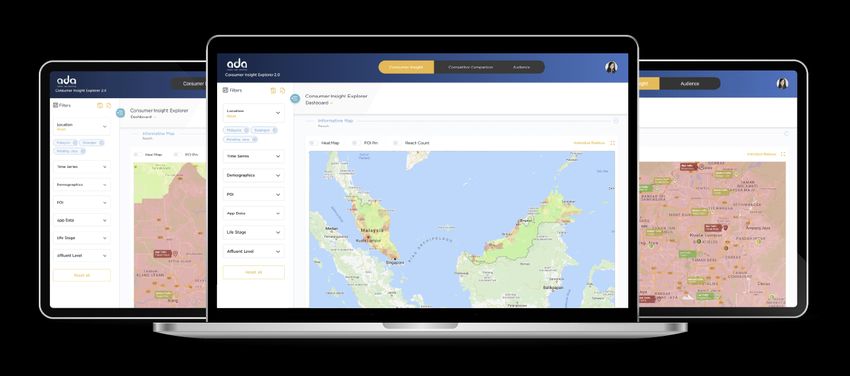
 The Consumer Insights Explorer (CIE) is a proprietary
 audience-building tool built off XACT, ADA’s DMP (Data
 Management Platform).

 ADA’s CIE allows marketers the flexibility of creating
 and precisely segmenting their intended target
 audiences. CIE has a multitude of data points to filter
 according to country, state or province, places-of-
 interest (POI), and by actual customer behaviour, such
 as interests and lifestyle attributes.

 Once the filters have been selected, the tool churns out
 a summary of the total reach, top brand affinities, and
 top behaviour traits. These are further broken down by
 age, gender, and mobile operating system. The tool also
 allows users to extract the IFA or IDFA (Identifier for
 Advertisers), a random device identifier assigned to a
 user's device, to actively target consumers on any
 advertising platform.

                                      How can this be put to use?

                                      Imagine two individuals, with similar job and income profiles, looking
                                      to buy a car. One is a premium seeker while the other is a luxury
                                      seeker. The natural premium seeker cares about features like how fast
                                      the car can go from 0 to 60 mph, and its power to weight ratio. The
                                      luxury seeker cares about the brand.

                                      How do you show them the same product but with different
                                      messaging? And how do you tell these two individuals apart when
                                      typical demographic features (age, gender, income level) do not
                                      allow you to distinguish them?

                                      This is where our Consumer Insights Explorer platform helps us
                                      determine their real inner portrait based on their digital footprints,
                                      and then deliver targeted advertising that brings real business results.

CIE is currently being used by our creative and
advertising teams and was built by our data
engineering team to make XACT easily accessible
across the company. The use of our Consumer Insights
Explorer for marketers outside ADA is currently being
tested.

NOTE: CIE is an improved build from our Audience Explorer.
How to read this report

 Why Mums, and not Dads?

 Simple. We selected mothers because it's the target segment
 our clients and fellow marketers constantly ask us for insights
 on.

 In this report on mothers, we looked into our data - which
 consists of over 33 million individual consumers in Malaysia
 alone – to truly understand mothers with kids.

 Many brands and products are fixated with targeting mothers.
 But few see them beyond the stereotype of a stay-at-home
 mom who spends her days looking after her kids.

 The truth is most mothers have full time careers, interests and
 responsibilities beyond their kids. There are also different types
 of mothers, those with toddlers, teenagers, and those who are
 expecting. However these nuances are overlooked and
 messages from brands often come across as over-generalised.

    Applying this to your business

    Imagine you are a supermarket brand looking to target mothers. You are about to run a pizza
    and movie night campaign for mothers. It’s a brilliant campaign urging mothers to spend time
    with their teenage children without the hassle of cooking.

    However, the data tells us that 80% of mothers have kids below the age of 7, far from being
    teenagers yet. It could end up drawing unwanted ethical or even legal repercussions in
    countries like Malaysia that ban the advertising of fast food to children. They are also more
    interested in games so your tie up with that global video streaming company may not be as
    relevant as you had hoped.

    Now, imagine you’re able to extract these consumer insights before you launch your
    campaign, and how much more effective that would be.

NOTE: CIE is an improved build from our Audience Explorer. This report looks only at mothers with children below the age of 12 as teenagers
represent a larger and separate cohort of individuals.
Mothers Demographics
up to May 2020

                                                                                                      Highlights

                                                                                                      •   Mothers are typically depicted
                                                                                                          as young stay-at-home mums
                                                                                                          with babies or toddlers.
                                                                                                          However, we’ve found that 86%
                                                                                                          are working professionals.
                                                                                                      •   The highest number of mothers
                                                                                                          are within the ages of 30 to 39.
                                                                                                      •   22% of mothers are seen to be
                                                                                                          within 40 to 49 years old, and
                                                                                                          are likely to have significantly
                                                                                                          different considerations than
                                                                                                          younger mothers.
                                                                                                      •   There is also a significant 17% of
                                                                                                          expecting parents that tend to
                                                                                                          be overlooked by marketing.

          Mock sample of Consumer Insights from CIE with the heatmap of mothers in Malaysia

                                       AGE                                                                           GENDER
                         32%

                                                                                                          100%
         27%

                                         27%

                                                          12%

                                                                           3%

      20-29          30-39            40-49            50-59            60-69                         FEMALE                           0%
                                                                                                                                     MALE

                               LIFE STAGE                                                                    LIFE STAGE
                               (PERSONAL)                                                                  (PROFESSIONAL)
          60%

                                                                                                                      86%
                                       23%

                                                                     17%

                                                                                                                                         8%
                                                                                                 6%

                                                                                              STUDENTS              WORKING           OTHERS
 PARENTS WITH                  PARENTS WITH                  EXPECTING                                           PROFESSIONALS
   KIDS (0-6)                    KIDS (7-12)                  PARENTS

NOTE: Data is based on ADA’s XACT with over 375M unique active smartphone devices. Data has been normalised to remove others and unknowns
Mothers Most Used Apps
 up to May 2020

      Expecting Mothers                                   With Kids 0-6                                    With Kids 7-12

    Finance                                      Parenting                                             News

  Shopping                                         Finance                                           Finance

  Education                                      Shopping                                         Education

     Games                                       Education                                         Shopping

   Video
                                                   Religion                                          Religion
 Streaming

                                                  Video
    Religion                                                                                          Games
                                                Streaming

                                                Personal                                            Video
      Music
                                              Productivity                                        Streaming

  Personal                                                                                        Personal
                                                     Music
Productivity                                                                                    Productivity

  Parenting                                          Social                                            Music

      Social                                        Games                                              Social

               0%       10%    20%       30%                  0%    10%       20%      30%                      0%         20%           40%

                    Highlights

                    •   We tend to assume that parents would spend most of their time on parenting apps.
                        However, we’ve discovered that only expecting mothers spend a lot of time on parenting
                        apps and that the interests of mothers are more varied than that.
                    •   Interestingly, mothers use personal productivity apps more than the benchmark average
                        as they have a 21% higher tendency to use apps like WPS Office than the average
                        population.
                    •   Another assumption we hear of from many marketers is that mums are typically stay-at-
                        home mothers that spend their day on video streaming. However, our data shows that
                        they under-index on video streaming apps in comparison to the average population.
                        Mothers use video streaming apps like VIU 7% less than the average population.
                    •   Overall mothers primarily use social apps, however for mothers with kids below the age
                        of 7 we’ve noticed that they tend to use more gaming apps, this is a valuable target
                        segment for brands that are thinking to run partnerships with games.

  NOTE: Data is based on ADA’s XACT with over of 375M unique active smartphone devices. Data has been normalised to remove others and unknowns
Mothers Frequently Visited Places of
Interest
up to May 2020

    Expecting Mothers                                   With Kids 0-6                                      With Kids 7-12

Retail Pharmacy                                        Places of                                              Café
                                                       Worship

           Bank                                        Private                                          Fast Food
                                                      Education

       Places of                                                                                  Retail Pharmacy
       Worship                                 Retail Pharmacy

  Petrol Statio n                                                                                   Petrol Statio n
                                                  Petrol Statio n

             Mall                                                                                             Bank
                                                           Bank

        Hospital                                                                                               Mall
                                                   Convenience

                                                   Government                                        Convenience
   Convenience
                                                    Education

   Government                                                                                         Government
                                               Business District                                       Education
    Education

   Affluent                                                                                       Business District
                                                             Mall
Neighbourho od

                                                   Affluent                                           Affluent
Business District                                                                                  Neighbourho od
                                                Neighbourho od

                    0%    10%       20%                            0%     20%       40%                               0%     10%       20%

             Highlights
             • Contrary to the common stereotype that all mothers are just stay-at-home moms,
               one of the top 3 frequently visited places for mothers are business districts.
             • We also see that expecting mothers and mothers with kids between the age of 7
               to 12 prefer to quickly grab essentials at convenience stores, rather than spend
               time at shopping malls.
             • We’ve also noticed that although mothers are primarily seen in affluent
               neighbourhoods they have a higher tendency to send their kids to government
               schools over private education.
             • Mothers are people too with interests outside of their kids. Mothers between the
               age of 7 to 12 also have a tendency to visit cafes and fast food outlets.
             • Overall mothers appear to prefer doing their banking in person as they have a
               higher propensity to visit bank outlets in comparison to the average population.
               They also have a higher preference towards HSBC and Alliance bank over; but have
               a 37% lower tendency to visit bank branches like CIMB.
             • This group also has a 41% higher tendency to visit retail pharmacies like Watsons in
               comparison to the average population.

NOTE: Data is based on ADA’s XACT with over of 375M unique active smartphone devices. Data has been normalised to remove others and unknowns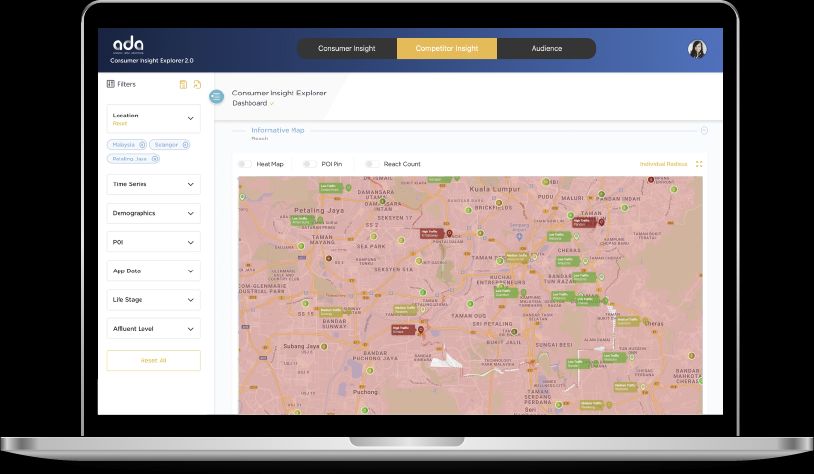
Mothers Brand Usage – Supermarkets
(Sample)

Deep dive into the specific demographics of footfall to
outlets of various brands within the country. Here we take a
look at supermarket brands Tesco and AEON.                                                                          Highlights

                                                                                                                    •      Overall there are
                                                                                                                           several stores for both
                                                                                                                           brands that experience
                                                                                                                           low footfall. This is
                                                                                                                           likely due to social
                                                                                                                           distancing measures.
                                                                                                                    •      Moms between the
                                                                                                                           ages of 20-29 prefer
                                                                                                                           Tesco while moms
                                                                                                                           above 39 prefer AEON.
                                                                                                                    •      Moms who are working
                                                                                                                           professionals prefer
                                                                                                                           AEON while expecting
                                                                                                                           mothers and mothers
                                                                                                                           with younger kids
                                                                                                                           prefer Tesco.

                        Mock sample of Brand Usage from CIE with the heatmap of mothers in Malaysia

                                                      AGE                                                                     GENDER
                                                                                                                    100%

                                                                                                                            100%
                                 42%

                                       39%
          36%

                 28%

                                                            18%
                                                      12%

                                                                                8%

                                                                                                      7%
                                                                           5%

                                                                                                5%

                                                                                                                                         0%

          20-29                  30-39                40-49                50-59                60-69               FEMALE               MALE 0%

                  LIFE STAGE                                                                                   LIFE STAGE
                (PROFESSIONAL)                                                                                 (PERSONAL)
                                                                                 63%
                                                      76%

                                                                                                                     49%
                                                                                          46%
                                              55%
           45%

                                                                                                              26%
                       24%

                                                                                                                                        11%

                                                                                                                                              5%

         STUDENTS                         WORKING                           WITH KIDS 0-6                  WITH KIDS 7-12          EXPECTING PARENTS
                                       PROFESSIONALS

                                                             Tesco                                             AEON

NOTE: Data is based on ADA’s XACT with over 375M unique active smartphone devices. Data has been normalised to remove others and unknowns.
Our Brand Usage data also covers retail outlets, airports, automotive showrooms, education centers, bank branches, petrol stations, hospitals,
entertainment centers and more.
Mothers Brand Usage – Convenience Stores
(Sample)
Deep dive into the specific demographics of footfall to outlets of
various brands within the country. Here we take a look at
convenience stores – 7 Eleven, Family Mart and MyNews. Highlights
• Overall there are
several stores for both
brands that experience
low footfall. This is
likely due to social
distancing measures.
• Mothers below the age
of 30 prefer 7 Eleven
while mothers who are
working professionals
prefer Family Mart and
MyNews.
• Expecting mothers and
mothers with kids aged
0-6 also prefer 7
Eleven.
Mock sample of Brand Usage from CIE with the heatmap of mothers in Malaysia
AGE GENDER
36%
100%
100%
100%
33%
32%
31%
31%
28%
26%
25%
25%
10%
11%
5%
4%
2%
0%
0%
0%
1%
20-29 30-39 40-49 50-59 60-69 FEMALE MALE
LIFE STAGE LIFE STAGE
(PROFESSIONAL) (PERSONAL)
59%
75%
75%
54%
52%
64%
42%
40%
33%
36%
25%
25%
8%
6%
6%
STUDENTS WORKING WITH KIDS 7-12 WITH KIDS 0-6 EXPECTING PARENTS
PROFESSIONALS
7 Eleven Family Mart MyNews
NOTE: Data is based on ADA’s XACT with over 375M unique active smartphone devices. Data has been normalised to remove others and unknowns.
Our Brand Usage data also covers retail outlets, airports, automotive showrooms, education centers, bank branches, petrol stations, hospitals,
entertainment centers and more.
Mothers Campaign Ideas
             Karen

             As a researcher that has to
             work extra long hours during
             the pandemic, Karen worries
             about her kids’ usage of
             technology while she’s not
             around.

             Brands can contribute by
             creating guides to help educate
             kids on how to use technology
             safely. Similarly, a
             pharmaceutical company
             created digital kits with
             Sesame Street.

             Sheera

             Expecting mother Sheera has
             to juggle a busy career on
             top of navigating her first
             pregnancy. By showing that
             they’re seeking to empathise
             with her journey, a brand’s
             campaign will resonate with
             her.

             For example, a maternity
             company launched a social
             media movement “the juggle
             is real” encouraging mothers
             to document their stories in
             exchange for maternity
             essentials.

             Nora

             As a mom to an inquisitive girl
             and an energetic little boy,
             sometimes Nora would like a
             break where she isn’t just a
             “mother”.

             Brands can help by making it
             convenient for Nora to take time
             to relax. One such campaign was
             when this global consumer
             goods brand paid a caretaker to
             look after the kids while they
             treated moms to a day off.
About ADA
   ADA is a data and artificial intelligence
   company that designs and executes
   integrated digital, analytics and
   marketing solutions.

Operating across 9 markets in South and
Southeast Asia, ADA partners with leading
brands to drive their digital & data maturity
and achieve their business goals.

About Our Data
Their Digital behaviour culled
from 400,000 apps

Their Offline behaviour
gathered from 1 million
point of interests

Their Content Consumption
                                                                                                                               375 M
Patterns derived from                                                                                                               CONSUMERS
800 million videos views

Their Social media use
analysed from 150 million
sources

 ada-asia.com/contact-us/

 © 2020 ADA. All rights reserved.
 ADA” refers to Axiata Digital Advertising Sdn Bhd and all related corporations and subsidiaries. The information contained in
 this publication is for general guidance on matters of interest only. ADA is not responsible for any errors or omissions, or for
 the results obtained from the use of this information. Certain links in this publication connect to other websites maintained
 by third parties over whom ADA has no control. ADA makes no representations as to the accuracy or any other aspect of
 information contained in other websites.
 To read more on our privacy terms, or to contact us, please visit www.ada-asia.com
You can also read


