Appropriate Assessment Stage 1 Screening for Wild Salmon and Sea Trout Tagging Scheme (Amendment) Regulations 2020
←
→
Page content transcription
If your browser does not render page correctly, please read the page content below
Appropriate Assessment Stage 1 Screening for
     Wild Salmon and Sea Trout Tagging Scheme
           (Amendment) Regulations 2020

November 2020

Prepared by: INVAS Biosecurity
44 Lakelands Avenue, Stillorgan, County Dublin.
Tel: +353874175925
Email: wearle@invas.ie
Web: www.invasbiosecurity.ie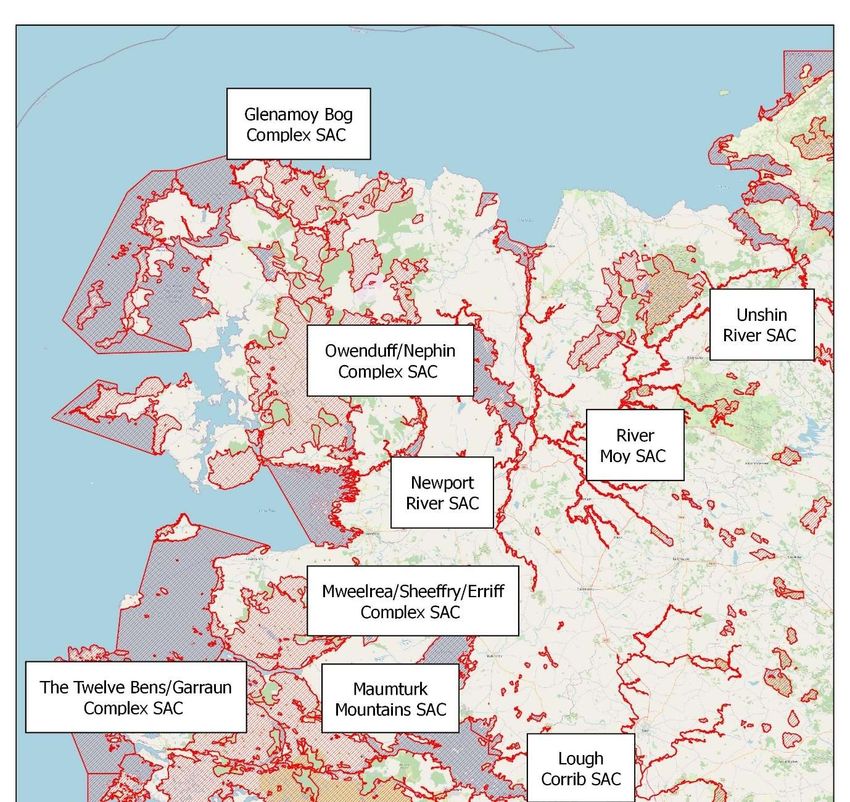
Rev   Date       Details      Prepared by         Checked by    Approved by
0     Nov 2020   Stage 1 AA   Dr. William Earle   Tom Donovan   Prof Joe Caffrey
                                                  (Director)    (Director)

                                       i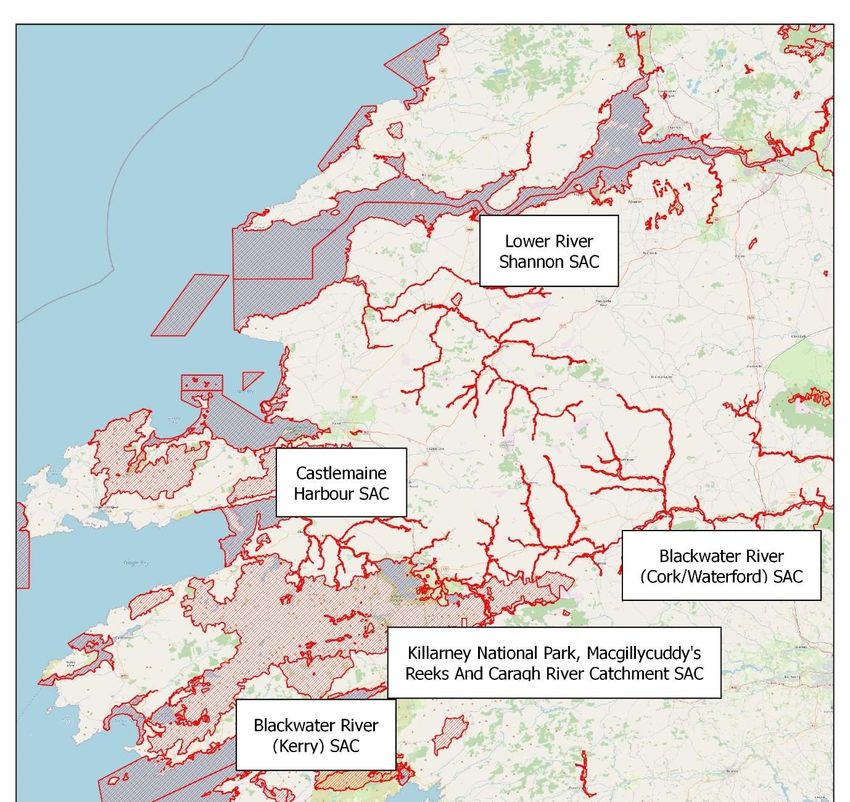
Table of Contents

1.         INTRODUCTION..................................................................................................................... 3
1.1.       INVAS Biosecurity Company Background ................................................................................ 4
1.2.       Legislative context of Appropriate Assessment.......................................................................... 6
1.3.       Stages .......................................................................................................................................... 8
2.         PROJECT DESCRIPTION ..................................................................................................... 9
2.1.       Background ................................................................................................................................. 9
2.2.       Description of the proposed project ............................................................................................ 9
3.  STAGE 1 APPROPRIATE ASSESSMENT SCREENING OF NATURA 2000 SITES
POTENTIALLY AFFECTED AND THE BYE-LAWS.................................................................. 24
4.         ANGLING ACTIVITY AND IN-COMBINATION ASSESSMENT ................................. 74
4.1.       Noise Assessment ..................................................................................................................... 74
4.2.       Source/Pathway/Receptor Assessment ..................................................................................... 74
4.2.1. Source ....................................................................................................................................... 74
4.2.2. Pathway ..................................................................................................................................... 74
4.2.3. Receptor .................................................................................................................................... 74
4.3.       In-Combination Effects ............................................................................................................. 74
5.         CONCLUSIONS ..................................................................................................................... 75
6.         REFERENCE MATERIAL ................................................................................................... 77

Appendices                                                                                                                                                78

                                                                             ii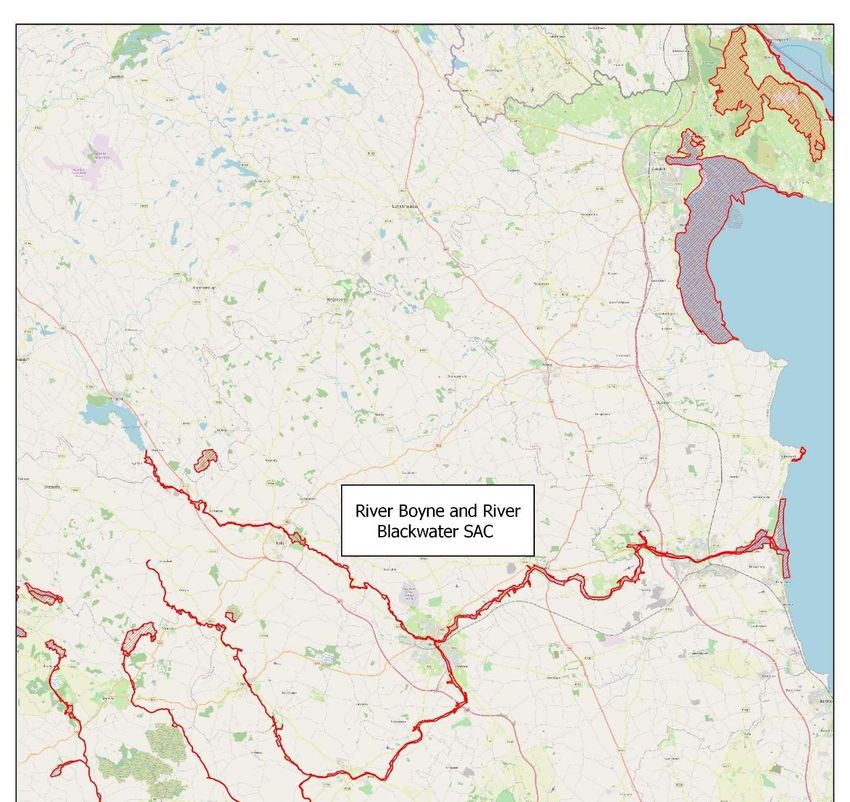
1. INTRODUCTION
Atlantic salmon populations are listed in Annex II of the EU Habitats Directive (92/43/EEC)
and their conservation is mandated in European countries. Sea Trout are not specifically
protected by the EU Habitats Directive. The protection and conservation of salmon
internationally is managed through North Atlantic Salmon Conservation Organization
(NASCO) with which Ireland is aligned through the European Union. Following advice from
ICES and NASCO, Irish salmon stocks have been managed on a river-by-river basis since 2007
with biological reference points (BRPs) or conservation limits (CL) based on maximum
sustainable yield (MSY) (J. White et. al. 2016). The Wild Salmon and Sea Trout Tagging
Scheme Regulations 2018 (S.I. No. 585 of 2018) provides protection to both of these species
in Ireland.

The decline in wild Atlantic Salmon (Salmo salar) is an international issue manifesting in rivers
in all countries around the North Atlantic with scientific analysis from International Council
for the Exploration of the Seas (ICES) estimating that marine survival of migrating salmon has
been at or below 5% in the North Atlantic for more than a decade. Marine survival is considered
to have the biggest influence on return, from far North Atlantic feeding grounds in the waters
surrounding the Faroe Islands, Norwegian Sea and western Greenland, to all rivers on Atlantic
coasts. There is evidence that heavy sea-lice infestation from salmon farming has resulted in
additional mortality in respect of migratory North Atlantic salmon generally (O. Torrissen et.
al. 2013). In freshwater, water quality and a range of pressures such as afforestation, drainage,
effluent discharge, siltation and agricultural enrichment can all have a negative impact on
juvenile salmon survival.

Inland Fisheries Ireland (IFI) is the statutory body with the responsibility for the protection,
development and management of the inland fishery resource within the State. As part of their
responsibility for protecting Salmon (Salmo salar) and Sea Trout (Salmo trutta L.), Inland
Fisheries Ireland advise the Minister for State at the Department of Communications, Climate
Action and Environment in drafting angling and commercial fishing regulations, as well as
byelaws directed at the conservation of wild salmonid (salmon and sea trout) stocks.

IFI is supported in its management role by the independent Standing Scientific Committee
(SSC), comprising scientists from a range of organisations. Scientific and management
assessments of each of the distinct stocks are carried out annually with IFI engaged in extensive
stock monitoring which feeds into the SSC's annual reviews. The SSC uses catch returns to

                                               3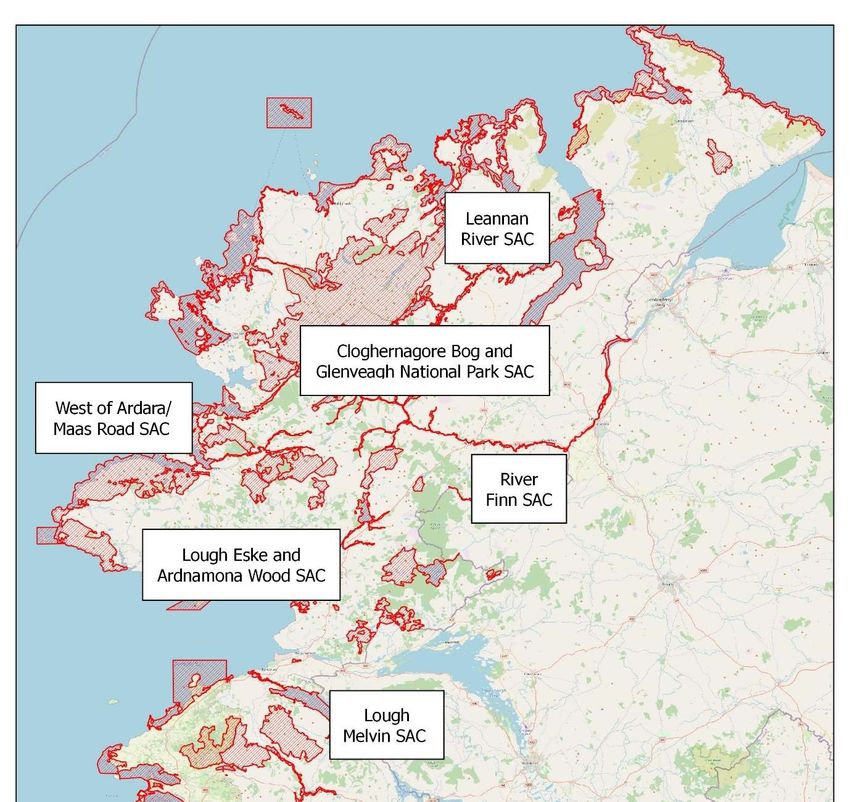
individual rivers (rod catch, catch and release and any commercial catch) to estimate the total
salmon returns in each of the previous five years. The use of a five-year average ensures that a
good or bad year does not have a disproportionate impact on the stock assessment in any single
year.

Each river has an individual CL which is the number of adult salmon required to maintain a
healthy population of wild Atlantic Salmon. Rivers exceeding 100% of CL are open for salmon
angling with a total allowable catch in place. In the absence of a surplus on a river, Catch and
Release (C&R) options are set for rivers meeting between 50% -100% of their Conservation
Limit. This permits recreational angling while having a negligible impact on vulnerable fish
stocks. This also encourages the shared responsibility to contribute to conservation and the
potential rebuilding of these stocks. Rivers meeting below 50% of CL were Closed unless
Catchment Wide Electro-Fishing surveys showing an average number of fry caught in 5
minutes of 15.0 or greater warranted the opening of rivers on C&R only basis.

The management proposal on when a commercial fishery can be open is based on a usable
harvestable surplus. A useable harvestable surplus is considered a surplus greater than 10% of
the CL and or more than ten tags for each potentially available commercial fishing licence - as
outlined in the CFSO when the last fishery opened and private commercial licences. It is also
proposed that where a usable harvest surplus is not available where a commercial fishery exists
the rod and line fishery should only remain open on a catch and release basis. Where
commercial fisheries are in operation the quota will be split accordingly.

   1.1. INVAS Biosecurity Company Background
INVAS Biosecurity Ltd. is an Irish company that uses the most up-to-date applied research and
science to inform its environmental consultancy and contracting services. The team includes
experienced contractors and world-renowned scientists. The company specialises in the control
and management of harmful invasive species on land and in water, and on developing materials
and methods to conduct and promote best biosecurity practice by all. Clients include State and
semi-State organisations, cross-border bodies, Local Authorities, Consultants, Contractors,
among others. Staff are currently involved with a number of national and multi-national
European projects, all with a primary focus on the judicious management of invasive species.

Prof Joe Caffrey (Company Director), who joined INVAS in January 2015, having been a
Senior Research Officer (SRO) with IFI since 1976. While working with IFI and its predecessor

                                               4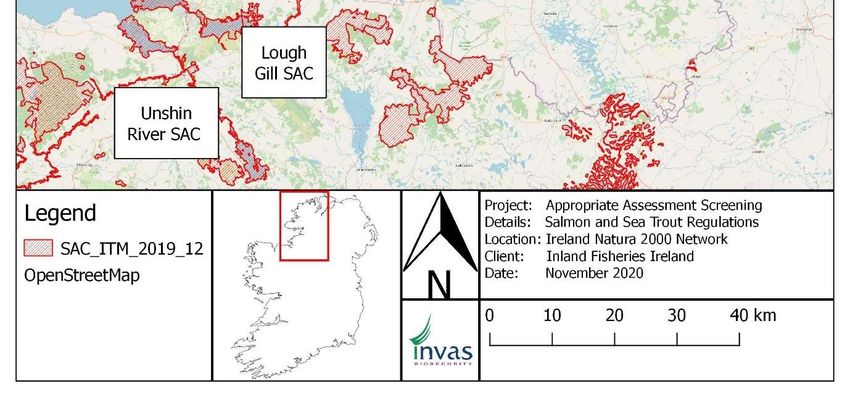
organisations, Joe was the SRO-in-charge of the Invasive Species Section within Research. Joe
is also a biosecurity specialist who has prepared protocols for national bodies and targeted
stakeholders and has developed new and innovative biosecurity products for broad-scale use.
He has a broad range of experience with invasive terrestrial and aquatic plant sampling,
identification, control and management, as well as habitat restoration post-traumatic events
(e.g. biological invasions). Since the year 2000, he has been involved in several major national
and international projects, mostly dealing with invasive species management, including;
Life+ CAISIE from 2009 to 2013 – project leader
Interreg IVA CIRB from 2010 to 2014 – project partner
Life+ Mulkear from 2009 to 2014 – technical advisor
EPA 3-year project on ‘Prevention, control and eradication of invasive alien species’
(2016 –2020), where INVAS is project partner with IT Sligo and QUB
River Suck peat siltation project, monitoring salmonid stocks in the River Suck
tributaries 1980 – 1984.
With a specialist skillset including;
Netting for fish using all net types (e.g. braided / multimesh gill, fyke, seine, trawl) in
streams, rivers, canals, lakes and estuaries
Electrofishing in small streams and from boats in large rivers/lake littorals, using 240v
and 600v pulsed electricity
Stream/river rehabilitation techniques
Habitat restoration post-traumatic events (e.g. biological invasions, dredging)
Lake fishery creation (including design, planting, fish stocking) in cutaway bogs
Biosecurity specialist who has prepared protocols for targeted stakeholders (e.g.
anglers, boaters, paddle sports, divers, field staff, etc.) and has developed new and
innovative biosecurity products for broad-scale use.
Dr. William Earle has a Ph.D. in invasive species management and is working full-time as a
biosecurity manager with INVAS since 2016. His Ph.D. focused on Lagarosiphon major, an
5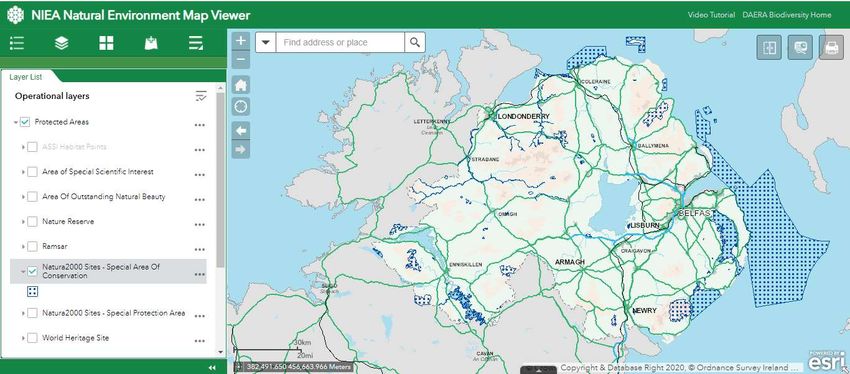
aquatic invasive weed that can severely impacts on salmonids, particularly in Lough Corrib.
William is responsible for Invasive Alien Species (IAS), macrophyte and ecological field
surveys using drone and GPS technology. He is in charge of GIS mapping and map production
in INVAS, as well as site survey reports and Appropriate Assessment preparation. William has
produced AA Screening reports for IFI on the management of Natura sites and their
conservation objectives in the west of Ireland. He has developed and implemented site-specific
Management Plans for several invasive terrestrial and aquatic plant species at sites throughout
Ireland.

   1.2. Legislative context of Appropriate Assessment
The Habitats Directive (92/43/EEC) and the Birds Directive (2009/147/EC) provide a legal
framework for Europe's nature conservation policies. In Ireland, both Directives have
combined to establish an ecological network of protected areas, known as Natura 2000 sites,
which require special consideration when planning projects or developments. The overall aim
of the Habitats Directive is to maintain or restore the favourable conservation status of habitats
and species of community interest. The network consists of Special Protection Areas (SPA),
for the protection of Annex I birds, regular migratory birds and their habitats and Special Areas
of Conservation (SAC) for the protection of Annex I habitats and Annex II flora and fauna,
other than birds. Also included as part of the network are candidate Special Areas of
Conservation (cSAC) and proposed Special Protection Areas (pSPA).

European and national legislation places a collective obligation on Ireland and its citizens to
maintain habitats and species in the Natura 2000 network at favourable conservation condition.
The Government and its agencies are responsible for the implementation and enforcement of
regulations that will ensure the ecological integrity of these sites. A site-specific conservation
objective aims to define favourable conservation condition for a particular habitat or species at
that site. The maintenance of habitats and species within Natura 2000 sites at favourable
conservation condition will contribute to the overall maintenance of favourable conservation
status of those habitats and species at a national level.

Article 6 (3) of The Habitats Directive sets out the requirement for Appropriate Assessment in
relation to Natura 2000 sites for any plan or project that is likely to have a significant effect on
the conservation objectives of a Natura 2000 site. An Appropriate Assessment is an evaluation
of the potential effects of the proposed plans, on their own or in combination with other
projects, on the habitat types and species protected by the Natura 2000 network.

                                                 6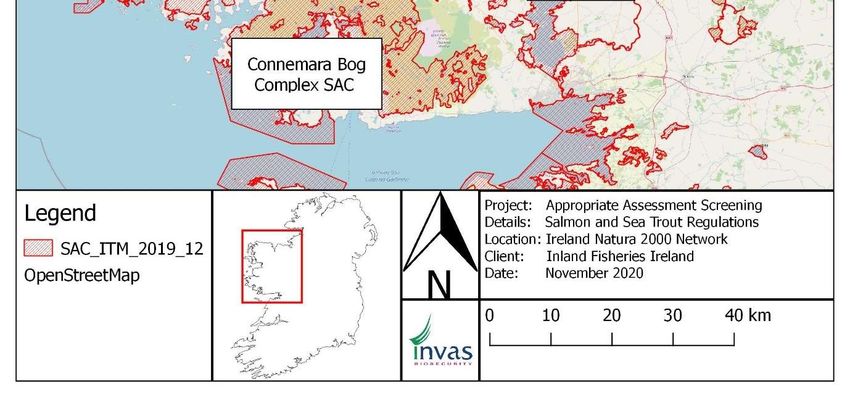
“Any plan or project not directly connected with or necessary to the management of
       the site but likely to have a significant effect thereon, either individually or in
       combination with other plans or projects, shall be subject to appropriate assessment of
       its implications for the site in view of the site’s conservation objectives. In the light of
       the conclusions of the assessment of the implications for the site and subject to the
       provisions of paragraph 4, the competent national authorities shall agree to the plan
       or project only after having ascertained that it will not adversely affect the integrity of
       the site concerned and, if appropriate, after having obtained the opinion of the general
       public.”

Article 6 (4) of The Habitats Directive forms part of the procedure of assessment and possible
authorisation, by the competent national authorities, of plans and projects likely to affect a
Special Area of Conservation (SAC), a Special Protected Area (SPA) or a Site of Community
Importance (SCI).

       ‘If, in spite of a negative assessment of the implications for the site and in the absence
       of alternative solutions, a plan or project must nevertheless be carried out for
       imperative reasons of overriding public interest, including those of a social or
       economic nature, the Member State shall take all compensatory measures necessary to
       ensure that the overall coherence of Natura 2000 is protected. It shall inform the
       Commission of the compensatory measures adopted. Where the site concerned hosts a
       priority natural habitat type and/or a priority species, the only considerations which
       may be raised are those relating to human health or public safety, to beneficial
       consequences of primary importance for the environment or, further to an opinion from
       the Commission, to other imperative reasons of overriding public interest’.

Each stage of the appropriate assessment method is a source of origin for the next stage. Each
decision made will influence the outcome of the assessment, so a careful approach to the
documentation of the results at each stage is needed for sufficient traceability and transparency
of each decision. The AA will provide a detailed investigation into the possible risks that a
proposed plan or project may have on a Natura 2000 site, with respect to its objectives for
conservation. The aim of an AA is not to prohibit a project, plan or activities. An AA is to
address any concern for possible threats that a project or plan may have to Natura 2000 sites,
with Article 6(3) at the forefront of each decision in each stage, this includes any decision
relating to funding and other supports.

                                                7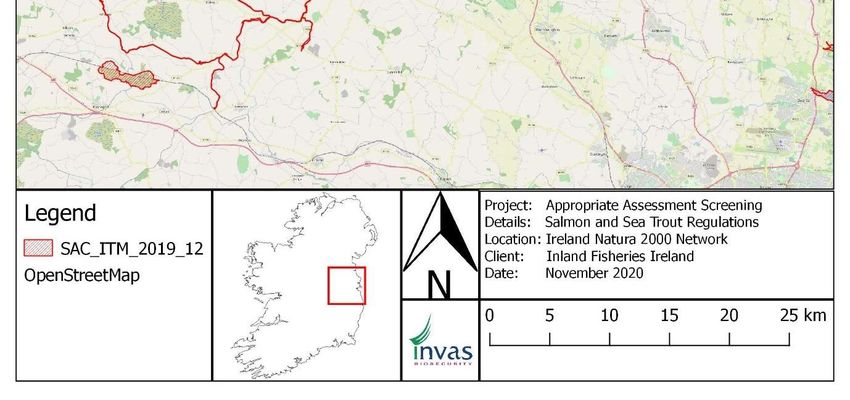
1.3. Stages
The European Commission’s methodological guidance promotes a four-stage process, as set
out below, to complete an Appropriate Assessment:

Stage One:

Screening — the process which identifies the likely impacts upon a Natura 2000 site of a project
or plan, either alone or in combination with other projects or plans, and considers whether these
impacts are likely to be significant;

Stage Two:

Natura Impact Statement (NIS) — the consideration of the impact on the integrity of the Natura
2000 site of the project or plan, either alone or in combination with other projects or plans, with
respect to the site’s structure and function and its conservation objectives. Additionally, where
there are adverse impacts, an assessment of the potential mitigation of those impacts;

Stage Three:

Assessment of alternative solutions — the process which examines alternative ways of
achieving the objectives of the project or plan that avoid adverse impacts on the integrity of the
Natura 2000 site;

Stage Four:

Assessment where no alternative solutions exist and where adverse impacts remain — an
assessment of compensatory measures where, in the light of an assessment of imperative
reasons of overriding public interest (IROPI), it is deemed that the project or plan should
proceed (it is important to note that this guidance does not deal with the assessment of
imperative reasons of overriding public interest).

                                                8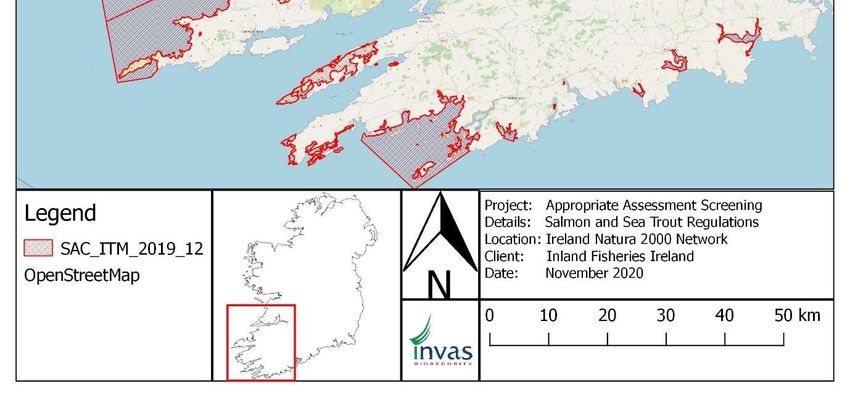
2. PROJECT DESCRIPTION

   2.1. Background
The Wild Salmon and Sea Trout Tagging Scheme Regulations 2018 (S.I. No. 585 of 2018) was
introduced to protect fish stocks of both species in Ireland. The goal of the regulations is to
protect and conserve salmon and sea trout stocks (above 40cm). All aspects of Salmon and Sea
Trout Tagging Scheme Regulations (S.I.585 2018) must be adhered to by all recreational or
commercial licence holders (Appendix 1). Inland Fisheries Ireland (IFI) is the statutory body
with the responsibility for the protection, development and management of the inland fishery
resource within the State. As part of their responsibility for protecting Salmon and Sea Trout,
Inland Fisheries Ireland advise the Minister for State at the Department of Communications,
Climate Action and Environment in drafting angling and commercial fishing regulations
directed at the conservation of wild salmonid (salmon and sea trout) stocks. Each year the IFI
reviews the predicted abundance, based on sound scientific principles, of salmon stocks and
identifies rivers closed to exploitation, opened under Catch and Release angling and provides
a harvestable surplus in catchments where salmon returns are estimated to exceed conservation
limits. In 2019, an amendment to the 2018 Regulations was introduced in the form of The Wild
Salmon and Sea Trout Tagging Scheme (Amendment) Regulations 2019 (S.I. No. 669 of 2019).
Following consultation with Inland Fisheries Ireland and using sound scientific principles,
Schedule 2 of S.I. No. 585 of 2018 was amended to provide an updated list of those angling
and commercial fishing districts that were closed, partially open or open.

   2.2. Description of the proposed project
Following consultation with Inland Fisheries Ireland (IFI), The Minister of State at the
Department of Environment, Communications, and Climate will make changes to The Wild
Salmon and Sea Trout Tagging Scheme Regulations 2018 (S.I. No. 585 of 2018). These
Regulations may be cited as the Wild Salmon and Sea Trout Tagging Scheme (Amendment)
Regulations 2020 and shall come into operation on 1 January 2021. The amendment will
involve the substitution of Schedule 2 for an updated list of total allowable catch within the
river waters of fishery districts in Ireland. Based on established CL for each river and sound
scientific principles this amended schedule will outline date restricted fishing on some rivers,
as well as river closures, catch and release systems and total allowable catch to be harvested
from open rivers (Table 2.1). It will define the maximum number of tags that may be issued in
respect of taking wild salmon or sea trout from each river. The amendment will also involve

                                               9
the substitution of Schedule 4 for an updated list of Fishery Districts and rivers to which brown
tags apply.
The preparation of the Regulations could be interpreted as the preparation a national Plan as
defined by the Habitats Directive. For this reason, IFI wish to carry out an Appropriate
Assessment for the preparation of the regulations in reference to the Habitats Directive. The
purpose of the Appropriate Assessment is to determine if the permitting of the removal of
Salmon from some rivers has the potential to have an adverse impact on the integrity of the
Natura 2000 Sites. The stage 1 Appropriate Assessment Screening (AAS) will focus
specifically on SAC sites where Salmon are designated as Features of Interest. The Birds
Directive aims to protect all of the 500 wild bird species naturally occurring in the European
Union. This AAS will concentrate on Salmon as a qualifying feature and therefore SPA’s will
not be included in this document. Those rivers that are to be closed to angling for 2021 will be
provisionally screened out on the basis that Salmon will not be subject to any angling pressures
due to the failure of the watercourse to reach the CL. The closure of these rivers is in an effort
to preserve the Salmon stocks that are present with a goal to reaching or exceeding the CL in
the future. If the recovery of salmon stocks in a river is sufficient this in turn could allow the
partial or full reopening of these watercourses to recreational angling in the future. Those rivers
with no hydrological connection to a Natura 2000 site where Salmon are designated as a
feature of interest, will also be screened out at this point. These sites will be excluded from the
AAS as each of Irelands Salmon rivers are known to have their own genetically unique stock
and the removal of Salmon from these rivers will not impact on Natura 2000 sites where
Salmon are a qualifying interest (Aas, Ø et al. 2011).
The following SAC are designated for the protection of wild Atlantic Salmon (1106).
Cloghernagore Bog and Glenveagh National Park SAC (IE0002047), Leannan River SAC
(IE0002176), Lough Eske and Ardnamona Wood SAC (IE0000163), Lough Gill SAC
(IE0001976), Lough Melvin SAC (IE0000428), River Finn SAC (IE0002301), Unshin River
SAC (IE0001898) and West of Ardara/Maas Road SAC (IE0000197) (Figure 2.1). Connemara
Bog Complex SAC (IE0002034), Glenamoy Bog Complex SAC (IE0000500), Lough Corrib
SAC (IE0000297), Mweelrea/Sheeffry/Erriff Complex SAC (IE0001932), Maumturk
Mountains SAC (IE0002008), Newport River SAC (IE0002144), Owenduff/Nephin Complex
SAC (IE0000534), River Moy SAC (IE0002298), The Twelve Bens/Garraun Complex SAC
(IE0002031) (Figure 2.2). Blackwater River (Kerry) SAC (IE0002173), Castlemaine Harbour
10SAC (IE0000343), Killarney National Park, Macgillycuddy's Reeks and Caragh River
Catchment SAC (IE0000365) and Lower River Shannon SAC (IE0002165) (Figure 2.3).
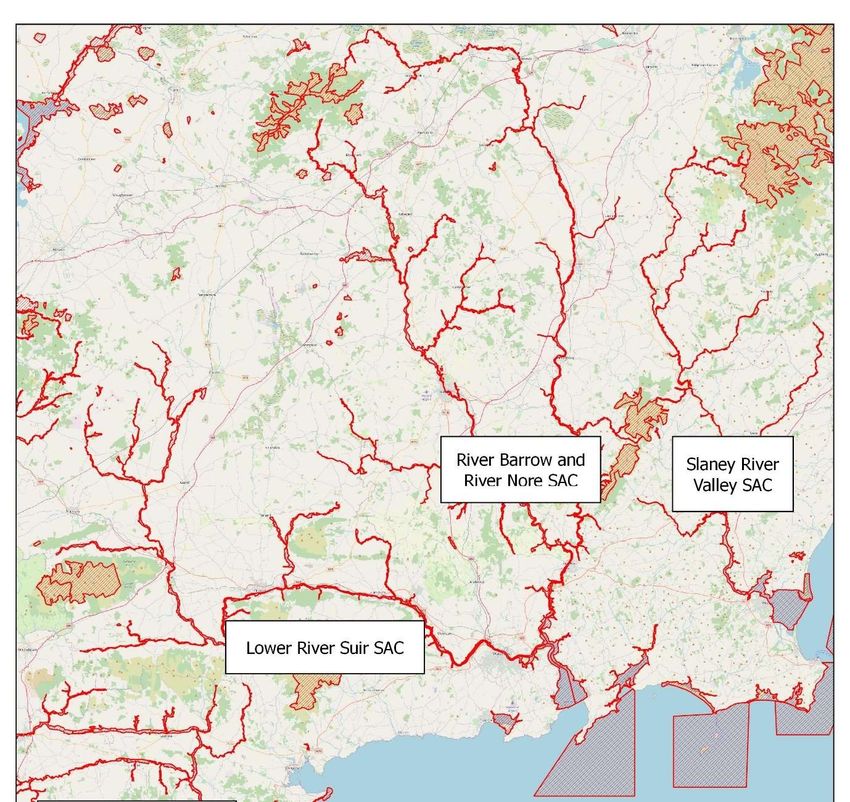
Blackwater River (Cork/Waterford) SAC (IE0002170), Lower River Suir SAC (IE0002137),
River Barrow and River Nore SAC (IE0002162) and Slaney River Valley SAC (IE0000781)
(Figure 2.4). River Boyne and River Blackwater SAC (IE0002299) (Figure 2.5). Lough Melvin
SAC (UK0030047), Owenkillew River SAC (UK0030233), River Faughan and Tributaries
(UK0030361), River Foyle and Tributaries (UK0030320) and River Roe and Tributaries
(UK0030360) (Figure 2.6).
Table 2.1: Provisional screening for each fishery district with the river status relating to
recreational angling and commercial fishing for 2021. Details are included pertaining to the
maximum number of tags that may be issued for each watercourse and the presence of a
hydrological link to an SAC where Salmon is a qualifying interest.
Hydrological
Maximum link to an
number of SAC with
Fishery Waters of the River status Screened
tags that Salmon as a
District River for 2021 In/Out
may be Qualifying
issued Interest
Yes/No
Dargle Closed 0 No Out
Upper Liffey Closed 0 No Out
Dublin Lower Liffey
Partially
(downstream of 0 No Out
Open: C&R
Leixlip Dam)
Vartry Closed 0 No Out
Partially
Open: C&R
Slaney between 1st 0 Yes In
Wexford April to 31st
August.
Avoca Closed 0 No Out
Owenavorragh Closed 0 No Out
Partially
Barrow 0 Yes In
Open: C&R
Partially
Waterford Pollmounty 0 Yes In
Open: C&R
Partially
Nore 0 Yes In
Open: C&R
11Suir including
Clodiagh, Lingaun, Partially
0 Yes In
and Waterford Open: C&R
Blackwater
Colligan Closed 0 No Out
Corrock Closed 0 No Out
Owenduff Closed 0 No Out
Mahon Closed 0 No Out
Tay Closed 0 No Out
Blackwater Open 6,420 Yes In
Shared
Glenshelane Open with Yes In
Blackwater
Shared
Finisk Open with Yes In
Lismore Blackwater
Partially
Bride 0 Yes In
Open: C&R
Lickey Closed 0 Yes Out
Tourig Closed 0 Yes Out
Womanagh Closed 0 No Out
Owenacurra Closed 0 No Out
Partially
Open: C&R 755 - from
Lower Lee No Out
to 11/05, 12/05/2020
Open 12/05
Bandon Open 568 No Out
1061 (755
Ilen Open 1SW + 306 No Out
2SW)
Cork
Mealagh Open 191 No Out
Coomhola Open 151 No Out
Upper Lee Closed 0 No Out
Glengarriff Open 332 No Out
Partially
Argideen 0 No Out
Open: C&R
Owvane Open 562 No Out
Adrigole Open 35 No Out
Roughty Open 415 No Out
Partially
Kerry Blackwater (Kerry) 0 Yes In
Open: C&R
Sneem Open 695 Yes In
12276 (237
Waterville Open 1SW + 39 Yes In
2SW)
477 (349
Caragh Open 1SW + Yes In
128 2SW)
3201
(2,242
Laune Open Yes In
1SW+ 959
2SW)
Shared
Cottoners Open Yes In
with Laune
Maine Open 264 Yes In
Castlemaine
Open 558 Yes In
Harbour
Behy Closed 0 No Out
Emlagh Closed 0 No Out
Owenmore Open 210 No Out
Croanshagh
(Glanmore River Open 254 No Out
and Lake)
Sheen Open 1,236 No Out
Partially
Inny 0 Yes In
Open: C&R
Kealincha Closed 0 No Out
Lough Fada Closed 0 Yes Out
Owenshagh Closed 0 No Out
Partially
Cloonee 0 No Out
Open: C&R
Finnihy Closed 0 Yes Out
Owenreagh Closed 0 Yes Out
Emlaghmore Closed 0 No Out
Carhan Closed 0 No Out
Ferta Open 140 Yes In
Partially
Owenascaul 0 No Out
Open: C&R
Partially
Milltown 0 No Out
Open: C&R
Feohanagh Closed 0 No Out
Lee Closed 0 No Out
Feale including Partially
0 Yes In
Galey and Brick Open: C&R
Limerick
Partially
Mulkear 0 Yes In
Open: C&R
13Maigue Closed 0 Yes Out
Upper Shannon
Closed 0 Yes Out
(Above Parteen)
Partially
Lower Shannon 0 Yes In
Open: C&R
Fergus Closed 0 Yes Out
Deel Closed 0 No Out
Owenagarney Closed 0 Yes Out
Partially
Doonbeg 0 No Out
Open: C&R
Skivaleen Closed 0 No Out
Annageeragh Closed 0 No Out
Inagh Closed 0 No Out
Aughyvackeen Closed 0 No Out
Corrib Open 4,540 Yes In
Aille (Galway) Closed 0 No Out
Kilcolgan Closed 0 No Out
Galway Clarinbridge Closed 0 No Out
Knock Closed 0 Yes Out
Owenboliska
Closed 0 Yes Out
(Spiddal)
Cashla Open 97 Yes In
Partially
Screebe 0 Yes In
Connemara Open: C&R
Ballynahinch Open 234 Yes In
Lough Na Furnace Closed 0 Yes Out
Erriff Open 155 Yes In
95 (71
Bundorragha Open 1SW + 24 Yes In
2SW)
Common estuary Open 227 Yes In
Owenglin (Clifden) Open 37 Yes In
Ballinakill Dawros Open 589 Yes In
Culfin Open 232 Yes In
Partially
Carrownisky 0 Yes In
Open: C&R
Partially
Bunowen 0 Yes In
Open: C&R
Owenwee Partially
0 No Out
(Belclare) Open: C&R
Srahmore Partially
Bangor 0 Yes In
(Burrishoole) Open: C&R
14750 (538
Owenduff
Open 1SW + Yes In
(Glenamong)
212 2SW)
502 (258
Carrowmore Lake Open 1SW + No Out
244 2SW)
Owenmore Open 224 Yes In
Common Estuary
Open 252 Yes In
Owenmore
400 (355
Newport (including
Open 1SW + 45 Yes In
Lough Beltra)
2SW)
Glenamoy Open 129 Yes In
Owengarve River Closed 0 Yes Out
Muingnabo Closed 0 Yes Out
Moy Open 12,908 Yes In
Easkey Open 315 No Out
Cloonaghmore Partially
0 No In
Ballina (Palmerstown) Open: C&R
Ballinglen Closed 0 No Out
Brusna Closed 0 Yes Out
Leaffony Closed 0 No Out
Ballysadare Open 2,587 Yes In
Drumcliff Open 138 No Out
Sligo Garvogue (Inc.
Partially
Lough Gill and 0 Yes In
Open: C&R
River Bonet)
Grange Closed 0 No Out
Partially
Duff 0 No Out
Open: C&R
2,362
(2,024
Drowes Open Yes In
1SW +
338 2SW)
Partially
Eany 0 No Out
Open: C&R
Ballyshannon Partially
Glen 0 No Out
Open: C&R
Owenwee (Yellow
Open 28 No Out
River)
Erne Closed 0 No Out
Partially
Eske 0 Yes In
Open: C&R
Abbey Closed 0 No Out
15Ballintra (Murvagh
Closed 0 No Out
R)
Laghy Closed 0 No Out
Partially
Oily 0 No Out
Open: C&R
Partially
Bungosteen 0 No Out
Open: C&R
Owenea Open 199 Yes In
Shared
Owentocker Open with Yes In
Owenea
316 (284
Gweebarra Open 1SW + 32 Yes In
2SW)
Clady Open 144 Yes In
Tullaghobegly Open 121 Yes In
Crana Open 187 No Out
Gweedore (Crolly
Open 118 Yes In
River)
Partially
Ray 0 Yes In
Open: C&R
Partially
Open:
154 - from
Letterkenny Lackagh Closed to Yes In
12/05/2020
11/05, Open
12/05
Partially
Leannan 0 Yes In
Open: C&R
Bracky Closed 0 No Out
Owenamarve Closed 0 Yes Out
Glenna Closed 0 Yes Out
Swilly Closed 0 No Out
Isle (Burn) Closed 0 No Out
Mill Closed 0 No Out
Clonmany Closed 0 No Out
Straid Closed 0 No Out
Donagh Closed 0 No Out
Glenagannon Closed 0 No Out
Culoort Closed 0 No Out
Partially
Drogheda Boyne 0 Yes In
Open: C&R
Castletown Closed 0 No Out
Dundalk
Fane Open 29 No Out
16Partially
Glyde 0 No Out
Open: C&R
Partially
Dee 0 No Out
Open: C&R
Flurry Closed 0 No Out
17Figure 2.1: A map of the north west of Ireland showing the SAC’s where Salmon are a
qualifying interest and to be assessed as part of the Salmon and Sea Trout Tagging Regulations.
18Figure 2.2: A map of the west of Ireland showing the SAC’s where Salmon are a qualifying
interest and to be assessed as part of the Salmon and Sea Trout Tagging Regulations.
19Figure 2.3: A map of the south west of Ireland showing the SAC’s where Salmon are a
qualifying interest and to be assessed as part of the Salmon and Sea Trout Tagging Regulations.
20Figure 2.4: A map of the south east of Ireland showing the SAC’s where Salmon are a
qualifying interest and to be assessed as part of the Salmon and Sea Trout Tagging Regulations.
21Figure 2.5: A map of the east of Ireland showing the SAC’s where Salmon are a qualifying
interest and to be assessed as part of the Salmon and Sea Trout Tagging Regulations.
22River Faughan and
Tributaries SAC
River Foyle and
Tributaries SAC
River Roe and
Tributaries SAC
Owenkillew
River SAC
Lough
Melvin SAC
Figure 2.5: A map of Northern Ireland showing (a) the SAC’s and (b) those where Salmon are
a qualifying interest and to be assessed as part of the Salmon and Sea Trout Tagging
Regulations.
233. STAGE 1 APPROPRIATE ASSESSMENT SCREENING OF NATURA 2000 SITES POTENTIALLY
AFFECTED AND THE BYE-LAWS
Following the guidance provided in DEHLG (2010) and the precautionary principle, all rivers where a harvestable surplus has been obtained or
opened as a C&R fishery are included as part of the AA Screening (Table 3.1). Where a total allowable catch has been allocated to each river this
is quantified and presented in table 3.1. Those rivers with a hydrological connection to a SAC where Salmon are designated as Features of Interest
are also included. Table 3.1 identifies the conservation objectives, potential impact and in-combination effects of the proposed amendment to the
Salmon and Sea Trout tagging Regulations in 2020 on each of Natura 2000 site. A CL is defined by NASCO as “the spawning stock level that
produces longterm average maximum sustainable yield as derived from the adult to adult stock and recruitment relationship”. The target is based
on the SSCS annual model output of CL attainment levels. Attainment of CL estimates are derived from direct counts of adults (rod catch, fish
counter) or indirectly by fry abundance counts.
Table 3.1: A list of NATURA 2000 sites with a direct hydrological link to waterbodies where open or catch and release (C&R) angling for wild
Atlantic Salmon will be allowed in 2021.
Site name River Potential impacts on Natura 2000 site In combination effects
Slaney River Valley Slaney (C&R) Conservation Objectives - To maintain or restore the favourable Bye-Law provides for catch and release in
SAC conservation condition of Atlantic Salmon. angling for salmon (any size) and sea trout (over
IE0000781 40cm) in the River Slaney, during the period 1st
As the predicted abundance of salmon stocks was below the April to 31st August, otherwise closed. Bye-law
conservation limit proportion required for full opening with a also provides for the use of artificial fly only
harvestable surplus, the River Slaney has been partially opened using single or double barbless hooks upstream
under Catch and Release angling only in 2021. As the removal of of the Railway Bridge in Enniscorthy and
Salmon from the watercourse is not permitted, angling activity will provides for the use of single barbless hooks
have a negligible impact on Salmon stocks. Under the Catch and and a ban on worms as bait downstream of the
Release system there should be no Salmon mortalities. Fisheries Railway Bridge Enniscorthy, Co. Wexford
Officers regularly patrol rivers to enforce the Regulations and when angling for salmon or sea trout (any size).
24byelaws to ensure Salmon stocks are protected. All Salmon caught
on this watercourse must be returned to the river unharmed and The byelaws limits the fishing methods that
allowed to remain in the population. The byelaws limit the fishing may be used to catch Salmon in this watercourse
methods that may be used to catch Salmon in this watercourse increasing the difficulty of landing a fish. It also
increasing the difficulty of landing a fish. The combination of outlines a specific season where catch and
increased angling difficulty and the ban on removal of fish from the release angling is permitted. As previously
watercourse will contribute to the maintenance of the Salmon mentioned the combination of increased angling
population on this watercourse while allowing the enjoyment of difficulty and the ban on removal of fish from
recreational angling and increasing the involvement and awareness the watercourse will contribute to the
of local stakeholders.This will preserve salmon numbers and maintenance of the Salmon population on this
contribute to the recovery of this feature of interest within the SAC. watercourse while allowing the enjoyment of
recreational angling and increasing awareness
No likely significant effect. No further Assessment required. of local stakeholders.
No likely significant effect.
River Barrow and Barrow Conservation Objectives - N/A
River Nore SAC (C&R) To maintain or restore the favourable conservation condition of
IE0002162 Atlantic Salmon. No likely significant effect.
As the predicted abundance of salmon stocks was below the
conservation limit proportion required for full opening with a
harvestable surplus, the River Barrow has been partially opened
under Catch and Release angling only in 2021. As the removal of
Salmon from the watercourse is not permitted, angling activity will
have a negligible impact on Salmon stocks. Under the Catch and
Release system there should be no Salmon mortalities. Fisheries
Officers regularly patrol rivers to enforce the Regulations and
byelaws to ensure Salmon stocks are protected. All Salmon caught
on this watercourse must be returned to the river unharmed and
allowed to remain in the population. The byelaws limit the fishing
methods that may be used to catch Salmon in this watercourse
increasing the difficulty of landing a fish. The combination of
increased angling difficulty and the ban on removal of fish from the
watercourse will contribute to the maintenance of the Salmon
25population on this watercourse while allowing the enjoyment of
recreational angling and increasing the involvement and awareness
of local stakeholders
This will preserve salmon numbers and contribute to the recovery of
this feature of interest within the SAC.
No likely significant effect. No further Assessment required.
Pollmounty Conservation Objectives - To maintain or restore the favourable N/A
(C&R) conservation condition of Atlantic Salmon.
No likely significant effect.
As the predicted abundance of salmon stocks was below the
conservation limit proportion required for full opening with a
harvestable surplus, the Pollmounty River has been partially opened
under Catch and Release angling only in 2021. As the removal of
Salmon from the watercourse is not permitted, angling activity will
have a negligible impact on Salmon stocks. Under the Catch and
Release system there should be no Salmon mortalities. Fisheries
Officers regularly patrol rivers to enforce the Regulations and
byelaws to ensure Salmon stocks are protected. All Salmon caught
on this watercourse must be returned to the river unharmed and
allowed to remain in the population. The byelaws limit the fishing
methods that may be used to catch Salmon in this watercourse
increasing the difficulty of landing a fish. The combination of
increased angling difficulty and the ban on removal of fish from the
watercourse will contribute to the maintenance of the Salmon
population on this watercourse while allowing the enjoyment of
recreational angling and increasing the involvement and awareness
of local stakeholders
This will preserve salmon numbers and contribute to the recovery of
this feature of interest within the SAC.
No likely significant effect. No further Assessment required.
26Nore (C&R) Conservation Objectives - To maintain or restore the favourable N/A
conservation condition of Atlantic Salmon.
No likely significant effect.
As the predicted abundance of salmon stocks was below the
conservation limit proportion required for full opening with a
harvestable surplus, the River Nore has been partially opened under
Catch and Release angling only in 2021. As the removal of Salmon
from the watercourse is not permitted, angling activity will have a
negligible impact on Salmon stocks. Under the Catch and Release
system there should be no Salmon mortalities. Fisheries Officers
regularly patrol rivers to enforce the Regulations and byelaws to
ensure Salmon stocks are protected. All Salmon caught on this
watercourse must be returned to the river unharmed and allowed to
remain in the population. The byelaws limit the fishing methods that
may be used to catch Salmon in this watercourse increasing the
difficulty of landing a fish. The combination of increased angling
difficulty and the ban on removal of fish from the watercourse will
contribute to the maintenance of the Salmon population on this
watercourse while allowing the enjoyment of recreational angling
and increasing the involvement and awareness of local stakeholders
This will preserve salmon numbers and contribute to the recovery of
this feature of interest within the SAC.
No likely significant effect. No further Assessment required.
Lower River Suir Suir (C&R) Conservation Objectives - To maintain or restore the favourable Bye-Law provides for catch and release in
SAC conservation condition of Atlantic Salmon. angling for salmon (any size) and sea trout (over
IE0002137 40cm) in the River Suir (including the waters of
As the predicted abundance of salmon stocks was below the the Rivers Clodiagh, Lingaun and Blackwater)
conservation limit proportion required for full opening with a and also prohibits the use of worms, prawn,
harvestable surplus, the River Suir has been partially opened under shrimp or any other crustacean or artificial
Catch and Release angling only in 2021. As the removal of Salmon forms thereof as bait and any fish hooks other
from the watercourse is not permitted, angling activity will have a than single or double barbless hooks during the
negligible impact on Salmon stocks. Under the Catch and Release period 17 March to 30 Sept.
27system there should be no Salmon mortalities. Fisheries Officers
regularly patrol rivers to enforce the Regulations and byelaws to No likely significant effect.
ensure Salmon stocks are protected. All Salmon caught on this
watercourse must be returned to the river unharmed and allowed to
remain in the population. The byelaws limit the fishing methods that
may be used to catch Salmon in this watercourse increasing the
difficulty of landing a fish. The combination of increased angling
difficulty and the ban on removal of fish from the watercourse will
contribute to the maintenance of the Salmon population on this
watercourse while allowing the enjoyment of recreational angling
and increasing the involvement and awareness of local stakeholders
This will preserve salmon numbers and contribute to the recovery of
this feature of interest within the SAC.
No likely significant effect. No further Assessment required.
Blackwater River Blackwater Conservation Objectives - Shared surplus between River Finisk and River
(Cork/Waterford) (Open) To maintain or restore the favourable conservation condition of Glenshelane.
SAC Atlantic Salmon.
IE0002170 No likely significant effect.
As the predicted abundance of salmon stocks exceeded the CL
proportion required, the Blackwater River (Cork/Waterford) will be
fully opened for angling in 2021. A harvestable surplus means a total
allowable catch of 6,420 Atlantic Salmon over 40cm in length may
be taken from the Blackwater. This surplus will be shared with the
River Glenshelane and River Finisk. As the removal of Salmon from
the watercourse is limited to the surplus number of fish above the
CL of this watercourse, angling activity will have a negligible
impact on Salmon stocks. Under the Catch and Release system there
should be no Salmon mortalities. Fisheries Officers regularly patrol
rivers to enforce the Regulations and byelaws to ensure Salmon
stocks are protected. All Salmon caught on this watercourse must be
tagged and logged to maintain a record of the numbers of Salmon
being removed from the population. The byelaws implement bag
28limits and limit the fishing methods that may be used to catch
Salmon in this watercourse increasing the difficulty of landing a
fish. The combination of increased angling difficulty and the limit
on removal of fish from the watercourse will contribute to the
maintenance of the Salmon population on this watercourse while
allowing the enjoyment of recreational angling and increasing the
involvement and awareness of local stakeholders. The close
management of the surplus will preserve salmon numbers above the
CL and contribute to the maintenance of the favourable conservation
condition for this feature of interest within the SAC.
No likely significant effect. No further Assessment required.
Glenshelane Conservation Objectives - Shared surplus between River Blackwater
(Open) To maintain or restore the favourable conservation condition of (Cork/Waterford) and River Finisk.
Atlantic Salmon.
No likely significant effect.
As the predicted abundance of salmon stocks exceeded the CL
proportion required, the Glenshelane River will be fully opened for
angling in 2021. A harvestable surplus means a total allowable catch
of 6,420 Atlantic Salmon over 40cm in length may be taken from
the Glenshelane. This surplus will be shared with the River
Blackwater (Cork/Waterford) and River Finisk. As the removal of
Salmon from the watercourse is limited to the surplus number of fish
above the CL of this watercourse, angling activity will have a
negligible impact on Salmon stocks. Under the Catch and Release
system there should be no Salmon mortalities. Fisheries Officers
regularly patrol rivers to enforce the Regulations and byelaws to
ensure Salmon stocks are protected. All Salmon caught on this
watercourse must be tagged and logged to maintain a record of the
numbers of Salmon being removed from the population. The
byelaws implement bag limits and limit the fishing methods that
may be used to catch Salmon in this watercourse increasing the
difficulty of landing a fish. The combination of increased angling
difficulty and the limit on removal of fish from the watercourse will
29contribute to the maintenance of the Salmon population on this
watercourse while allowing the enjoyment of recreational angling
and increasing the involvement and awareness of local stakeholders.
The close management of the surplus will preserve salmon numbers
above the CL and contribute to the maintenance of the favourable
conservation condition for this feature of interest within the SAC.
No likely significant effect. No further Assessment required.
Finisk (Open) Conservation Objectives - Shared surplus between River Blackwater
To maintain or restore the favourable conservation condition of (Cork/Waterford) and River Glenshelane.
Atlantic Salmon.
No likely significant effect.
As the predicted abundance of salmon stocks exceeded the CL
proportion required, the Finisk River will be fully opened for
angling in 2021. A harvestable surplus means a total allowable catch
of 6,420 Atlantic Salmon over 40cm in length may be taken from
the Finisk. This surplus will be shared with the River Blackwater
(Cork/Waterford) and River Glenshelane. As the removal of Salmon
from the watercourse is limited to the surplus number of fish above
the CL of this watercourse, angling activity will have a negligible
impact on Salmon stocks. Under the Catch and Release system there
should be no Salmon mortalities. Fisheries Officers regularly patrol
rivers to enforce the Regulations and byelaws to ensure Salmon
stocks are protected. All Salmon caught on this watercourse must be
tagged and logged to maintain a record of the numbers of Salmon
being removed from the population. The byelaws implement bag
limits and limit the fishing methods that may be used to catch
Salmon in this watercourse increasing the difficulty of landing a
fish. The combination of increased angling difficulty and the limit
on removal of fish from the watercourse will contribute to the
maintenance of the Salmon population on this watercourse while
allowing the enjoyment of recreational angling and increasing the
involvement and awareness of local stakeholders. The close
management of the surplus will preserve salmon numbers above the
30CL and contribute to the maintenance of the favourable conservation
condition for this feature of interest within the SAC.
No likely significant effect. No further Assessment required.
Bride (C&R) Conservation Objectives - To maintain or restore the favourable N/A
conservation condition of Atlantic Salmon.
No likely significant effect.
As the predicted abundance of salmon stocks was below the
conservation limit proportion required for full opening with a
harvestable surplus, the Bride River has been partially opened under
Catch and Release angling only in 2021. As the removal of Salmon
from the watercourse is not permitted, angling activity will have a
negligible impact on Salmon stocks. Under the Catch and Release
system there should be no Salmon mortalities. Fisheries Officers
regularly patrol rivers to enforce the Regulations and byelaws to
ensure Salmon stocks are protected. Fisheries Officers regularly
patrol rivers to enforce the Regulations and byelaws to ensure
Salmon stocks are protected. All Salmon caught on this watercourse
must be returned to the river unharmed and allowed to remain in the
population. The byelaws limit the fishing methods that may be used
to catch Salmon in this watercourse increasing the difficulty of
landing a fish. The combination of increased angling difficulty and
the ban on removal of fish from the watercourse will contribute to
the maintenance of the Salmon population on this watercourse while
allowing the enjoyment of recreational angling and increasing the
involvement and awareness of local stakeholders
This will preserve salmon numbers and contribute to the recovery of
this feature of interest within the SAC.
No likely significant effect. No further Assessment required.
Blackwater River Blackwater Conservation Objectives - To maintain or restore the favourable N/A
(Kerry) SAC (Kerry) conservation condition of Atlantic Salmon.
IE0002173 (C&R) No likely significant effect.
31As the predicted abundance of salmon stocks was below the
conservation limit proportion required for full opening with a
harvestable surplus, the River Blackwater in Kerry has been
partially opened under Catch and Release angling only in 2021. As
the removal of Salmon from the watercourse is not permitted,
angling activity will have a negligible impact on Salmon stocks.
Under the Catch and Release system there should be no Salmon
mortalities. Fisheries Officers regularly patrol rivers to enforce the
Regulations and byelaws to ensure Salmon stocks are protected. All
Salmon caught on this watercourse must be returned to the river
unharmed and allowed to remain in the population. The byelaws
limit the fishing methods that may be used to catch Salmon in this
watercourse increasing the difficulty of landing a fish. The
combination of increased angling difficulty and the ban on removal
of fish from the watercourse will contribute to the maintenance of
the Salmon population on this watercourse while allowing the
enjoyment of recreational angling and increasing the involvement
and awareness of local stakeholders
This will preserve salmon numbers and contribute to the recovery of
this feature of interest within the SAC.
No likely significant effect. No further Assessment required.
To maintain or restore the favourable conservation condition of
Atlantic Salmon.
Killarney National Sneem (Open) Conservation Objectives - N/A
Park, To maintain or restore the favourable conservation condition of
Macgillycuddy's Atlantic Salmon. No likely significant effect.
Reeks and Caragh
River Catchment As the predicted abundance of salmon stocks exceeded the CL
SAC proportion required, the Sneem River will be fully opened for
IE0000365 angling in 2021. A harvestable surplus means a total allowable catch
of 695 Atlantic Salmon over 40cm in length may be taken from the
32Sneem. As the removal of Salmon from the watercourse is limited
to the surplus number of fish above the CL of this watercourse,
angling activity will have a negligible impact on Salmon stocks.
Under the Catch and Release system there should be no Salmon
mortalities. Fisheries Officers regularly patrol rivers to enforce the
Regulations and byelaws to ensure Salmon stocks are protected. All
Salmon caught on this watercourse must be tagged and logged to
maintain a record of the numbers of Salmon being removed from the
population. The byelaws implement bag limits and limit the fishing
methods that may be used to catch Salmon in this watercourse
increasing the difficulty of landing a fish. The combination of
increased angling difficulty and the limit on removal of fish from
the watercourse will contribute to the maintenance of the Salmon
population on this watercourse while allowing the enjoyment of
recreational angling and increasing the involvement and awareness
of local stakeholders. The close management of the surplus will
preserve salmon numbers above the CL and contribute to the
maintenance of the favourable conservation condition for this
feature of interest within the SAC.
No likely significant effect. No further Assessment required.
Waterville Conservation Objectives - Brown tags with the designated code C3 will
(Open) To maintain or restore the favourable conservation condition of be an additional requirement up to the 11th of
Atlantic Salmon. May 2021 and will not be required from the
12th of May onwards on the Waterville.
As the predicted abundance of salmon stocks exceeded the CL
proportion required, the Waterville River will be fully opened for No likely significant effect.
angling in 2021. A harvestable surplus means a total allowable catch
of 276 Atlantic Salmon over 40cm in length may be taken from the
Waterville. This number will be divided as 237 for 1SW and 39 for
2SW. As the removal of Salmon from the watercourse is limited to
the surplus number of fish above the CL of this watercourse, angling
activity will have a negligible impact on Salmon stocks. Under the
Catch and Release system there should be no Salmon mortalities.
33Fisheries Officers regularly patrol rivers to enforce the Regulations
and byelaws to ensure Salmon stocks are protected. All Salmon
caught on this watercourse must be tagged and logged to maintain a
record of the numbers of Salmon being removed from the
population. The byelaws implement bag limits and limit the fishing
methods that may be used to catch Salmon in this watercourse
increasing the difficulty of landing a fish. The combination of
increased angling difficulty and the limit on removal of fish from
the watercourse will contribute to the maintenance of the Salmon
population on this watercourse while allowing the enjoyment of
recreational angling and increasing the involvement and awareness
of local stakeholders. The close management of the surplus will
preserve salmon numbers above the CL and contribute to the
maintenance of the favourable conservation condition for this
feature of interest within the SAC.
No likely significant effect. No further Assessment required.
Caragh Conservation Objectives - N/A
(Open) To maintain or restore the favourable conservation condition of
Atlantic Salmon. No likely significant effect.
As the predicted abundance of salmon stocks exceeded the CL
proportion required, the Caragh River will be fully opened for
angling in 2021. A harvestable surplus means a total allowable catch
of 477 Atlantic Salmon over 40cm in length may be taken from the
Caragh. This number will be divided as 349 for 1SW and 128 for
2SW. As the removal of Salmon from the watercourse is limited to
the surplus number of fish above the CL of this watercourse, angling
activity will have a negligible impact on Salmon stocks. Under the
Catch and Release system there should be no Salmon mortalities.
Fisheries Officers regularly patrol rivers to enforce the Regulations
and byelaws to ensure Salmon stocks are protected. All Salmon
caught on this watercourse must be tagged and logged to maintain a
record of the numbers of Salmon being removed from the
34population. The byelaws implement bag limits and limit the fishing
methods that may be used to catch Salmon in this watercourse
increasing the difficulty of landing a fish. The combination of
increased angling difficulty and the limit on removal of fish from
the watercourse will contribute to the maintenance of the Salmon
population on this watercourse while allowing the enjoyment of
recreational angling and increasing the involvement and awareness
of local stakeholders. The close management of the surplus will
preserve salmon numbers above the CL and contribute to the
maintenance of the favourable conservation condition for this
feature of interest within the SAC.
No likely significant effect. No further Assessment required.
Inny (C&R) Conservation Objectives - To maintain or restore the favourable There is one commercial draft net on the River
conservation condition of Atlantic Salmon. Inny with a risk of bye-catch of sea trout. Bye-
law no. 971, 2019 prohibits the taking of sea
This river exceeded 100% of its CL, however, the value by which it trout by any means in the Waterville area of Co.
was exceeded was so low it was decided to classify the river as Catch Kerry. Catch and release is, however, permitted.
and Release as surpluses are too low for practical management The Bye-law also prohibits any person to have
purposes. The River Inny has been partially opened under Catch and in their possession or control on or near the
Release angling only in 2021. As the removal of Salmon from the waters to which this Bye-law applies any sea
watercourse is not permitted, angling activity will have a negligible trout taken from those waters which is not alive.
impact on Salmon stocks. Under the Catch and Release system there Therefore surplus reduced to 0 and a Catch and
should be no Salmon mortalities. Fisheries Officers regularly patrol Release system is the best option.
rivers to enforce the Regulations and byelaws to ensure Salmon
stocks are protected. All Salmon caught on this watercourse must be No likely significant effect.
returned to the river unharmed and allowed to remain in the
population. The byelaws limit the fishing methods that may be used
to catch Salmon in this watercourse increasing the difficulty of
landing a fish. The combination of increased angling difficulty and
the ban on removal of fish from the watercourse will contribute to
the maintenance of the Salmon population on this watercourse while
allowing the enjoyment of recreational angling and increasing the
involvement and awareness of local stakeholders.
35This will preserve salmon numbers and contribute to the recovery of
this feature of interest within the SAC.
No likely significant effect. No further Assessment required.
Ferta (Open) Conservation Objectives - N/A
To maintain or restore the favourable conservation condition of
Atlantic Salmon. No likely significant effect.
As the predicted abundance of salmon stocks exceeded the CL
proportion required, the Ferta River will be fully opened for angling
in 2021. A harvestable surplus means a total allowable catch of 140
Atlantic Salmon over 40cm in length may be taken from the Ferta.
As the removal of Salmon from the watercourse is limited to the
surplus number of fish above the CL of this watercourse, angling
activity will have a negligible impact on Salmon stocks. Under the
Catch and Release system there should be no Salmon mortalities.
Fisheries Officers regularly patrol rivers to enforce the Regulations
and byelaws to ensure Salmon stocks are protected. All Salmon
caught on this watercourse must be tagged and logged to maintain a
record of the numbers of Salmon being removed from the
population. The byelaws implement bag limits and limit the fishing
methods that may be used to catch Salmon in this watercourse
increasing the difficulty of landing a fish. The combination of
increased angling difficulty and the limit on removal of fish from
the watercourse will contribute to the maintenance of the Salmon
population on this watercourse while allowing the enjoyment of
recreational angling and increasing the involvement and awareness
of local stakeholders. The close management of the surplus will
preserve salmon numbers above the CL and contribute to the
maintenance of the favourable conservation condition for this
feature of interest within the SAC.
No likely significant effect. No further Assessment required.
36You can also read


