Fishing Guide Vermont 2020 & Regulations - eRegulations
←
→
Page content transcription
If your browser does not render page correctly, please read the page content below
F R O M T H E V E R M O N T F I S H & W I L D L I F E D E PA R T M E N T

Vermont 2020

Fishing Guide                                                     & Regulations

Baitfish Updates “What’s New”
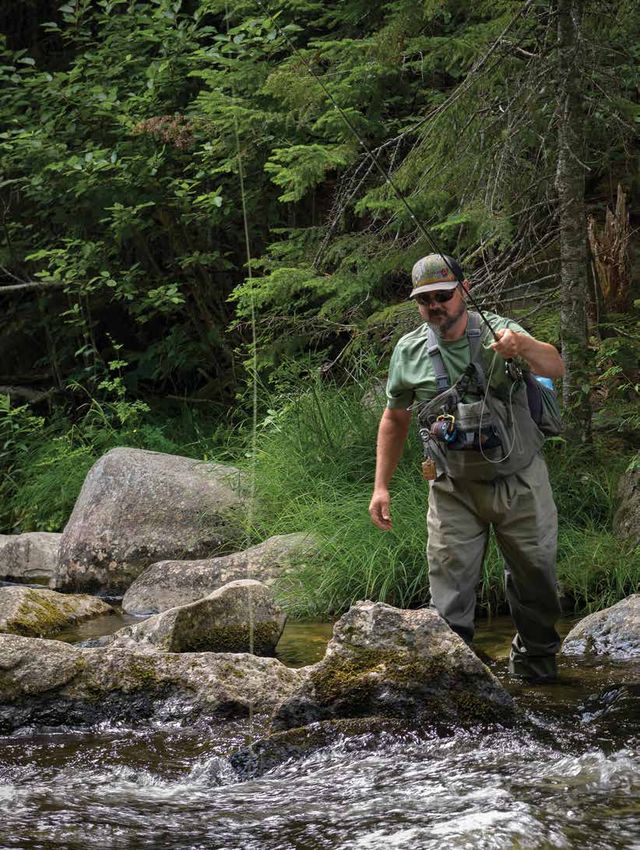
Off-Road Brook Trout
Special Lake Champlain Section

www.vtfishandwildlife.com
BOAT
               HEADQUARTERS
      VERMONT’S LARGEST PONTOON BOAT DEALER!
 FEATURING
8 BOAT LINES

                       VERMONT’S LARGEST VOLUME MERCURY OUTBOARD DEALER!

POWERED BY

                                                                         VERMONT’S EXCLUSIVE
                                                                          FOUR WINNS DEALER!
                    We are a new- and used-boat dealer located in Northern Vermont’s Franklin county,
                    minutes away from the shores of Lake Champlain.
                    At BOAT HEADQUARTERS, we have earned the reputation for honesty and integrity.
                    Our professional team is committed to working with you to meet all your boating needs.
                    We take care of all aspects of buying, selling, service and storage and have a proven track
                    record.

           Smartphone users                                BOAT HEADQUARTERS
           scan here to visit                 183 NORTH RIVER STREET • SWANTON, VT 05488
           our website.                       802.868.4444 • WWW.BOATHEADQUARTERS.COM
Quick
Reference
For complete fishing
regulations, see page 24.
Guide
Kurt Budliger
VERMONT FISHING SEASONS
Note: The season dates listed below are for some of Vermont’s general fishing seasons. They apply to most Vermont waters, but not all. Prior
to fishing, please reference pages 59–90 for special season and regulation information for specific waters, including seasonally closed waters.
Harvest Seasons
Trout and Landlocked Salmon..................................................................... Second Saturday in April to last day of October
Trout and Landlocked Salmon (Lake Champlain)............................................................................... No Closed Season
Largemouth and Smallmouth Bass...................................................... Second Saturday in June to last day of November
Pickerel, Northern Pike, Yellow Perch, and Smelt.............................................................................. No Closed Season
Walleye (all waters except Chittenden Reservoir and the Connecticut River)...........First Saturday in May to March 15, 2021
Chittenden Reservoir.....................................................................................First Saturday in June to March 15, 2021
Connecticut River........................................................................................................................ See Table 10 (page 90)
Catch and Release (see pages 59–90 for exceptions, including closed waters)
Largemouth and Smallmouth Bass......................................................................................Year-round, open-water fishing
Trout..................................................................................................................................................Year-round, open-water fishing
Free Fishing Days
Summer Free Fishing Day.......................................................................................................................... Second Saturday in June
Winter Free Fishing Day.............................................................................................................................. Last Saturday in January
VERMONT FISHING LICENSES
Resident
Fishing (ages 18–65)...........................................................................................................................................................$28.00
Youth Fishing (ages 15–17; under age 15, no license needed)....................................................................................... $8.00
Permanent Licenses (residents only, age 66 or older) .................................................................................................$60.00
Five-Year Fishing License.............................................................................................................................................$134.00
Three-Day Fishing (1).......................................................................................................................................................... $11.00
Combination Fishing and Hunting...............................................................................................................................$47.00
Five-Year Combination License..................................................................................................................................$229.00
Youth Combination Fishing and Hunting (age 17 or under)....................................................................................$12.00
Nonresident
Fishing....................................................................................................................................................................................$54.00
Youth Fishing (ages 15–17; under age 15, no license needed)..................................................................................... $15.00
Five-Year Fishing License.............................................................................................................................................$264.00
One-Day Fishing (1).............................................................................................................................................................. $21.00
Three-Day Fishing (1)...........................................................................................................................................................$23.00
Seven-Day Fishing (1).......................................................................................................................................................... $31.00
Combination Fishing and Hunting............................................................................................................................$143.00
Five-Year Combination License..................................................................................................................................$709.00
Youth Combination Fishing and Hunting (age 17 or under)...................................................................................$30.00
(1)
Term Licenses: All dates are inclusive and consecutive.
ALL LICENSE FEES LISTED ARE FOR 2020.
2020 Fishing Guide & Regulations 1
Courtesy of Vermont Fish & Wildlife
6 ! !
( (
Courtesy of Lake Champlain Sea Grant
!
(
14 29 10
Kurt Budliger
Reference Information
Features
5 How to Use this Guide 1 Quick Reference 24 General
Guide Requirements,
6 Baitfish "What's New" Basic fishing season Definitions, and
10 Off-Road Brook Trout dates and license fees. Prohibitions
Understanding regulation
14 Aquatic Invasive Species Laws 4 Commissioner’s terms, what’s allowed and
29 MAP: Baitfish Zones and Letter what’s not.
And Vermont’s
Black-list Waters !
( !
( Online Fishing 35 Where the Fish Are
Regulations Tool. Handy guide to what
species are found in
Cover Photo: !
( 18 License waterbodies across
! Information
F R O M T H E V E R M O N T F I S H & W I L D L I F E D E PA R T M E N T
(
Vermont 2020
Danielle McAree of Burlington,
! Vermont.
Fishing Guide (
VT proudly shows off this
Types of licenses for
38 Fish Identification:
& Regulations both residents and
beauty of a walleye caught
on Lake Champlain. During the
nonresidents, and What a Difference
2019 fishing season Danielle
related rules. a Fin Makes
caught more than five different Brook or brown trout?
21 General Smallmouth or largemouth
fish species, all exceeding the Regulations
minimum qualifying lengths bass? Find out here.
Basic regulations
Baitfish Updates “What’s New” of the Vermont Master Angler to know before 42 Maps
Off-Road Brook Trout Program, earning her the going fishing. Find fishing spots, access
Special Lake Champlain Section
title of Master Angler and areas, public lands, and
www.vtfishandwildlife.com bragging rights! special fishing regulations.
!
(
2 Vermont Fish & Wildlife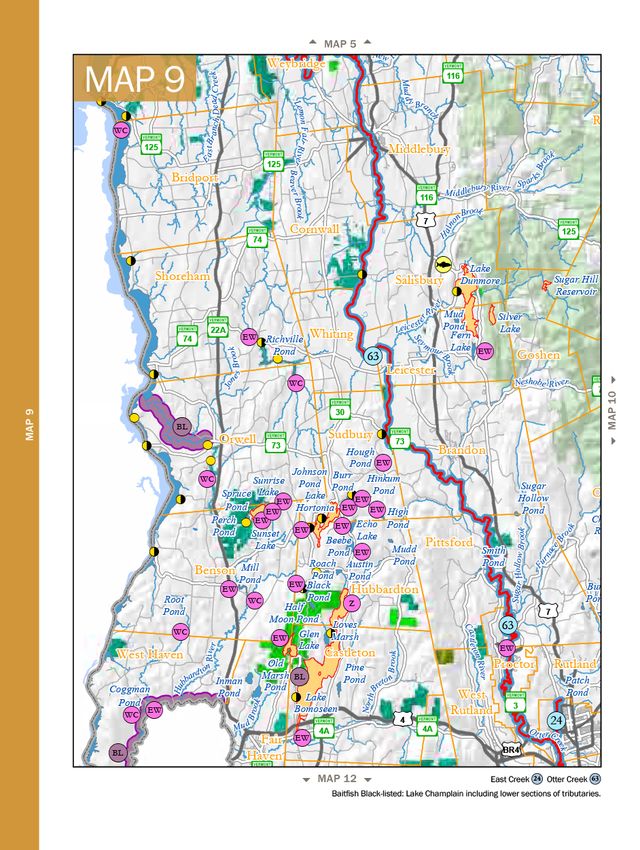
35 42
Kurt Budliger
Kurt Budliger
84 88 90
Kurt Budliger
Tom Rogers
Tom Rogers
s
59 Index of Rivers 88 Lake Champlain www.vtfishandwildlife.com/fish
Regulations Visit us online to learn more about:
and Streams
Sections of rivers and General fishing regulations
streams with specific for Lake Champlain. Fishing Boating
regulations, references Opportunities
to maps, and 90 Connecticut River
regulation tables. Regulations Fishing Fishing
General fishing regulations Regulations Events/Programs
71 Index of Lakes for the Connecticut River.
and Ponds
Listing of lakes and 92 Fish & Wildlife
ponds with specific Department
regulations, references Contact Information Fish & Wildlife Laws
to maps, and Who to contact for help or
Vermont’s fish and wildlife laws help protect, manage, control,
regulation tables. additional information. and conserve the fish and wildlife of the state. Every individual
who hunts, fishes, or traps is responsible for knowing the fish
84 Fish Regulation 94 Index and wildlife laws. This lawbook provides the Vermont Fish
Tables & Wildlife Department’s interpretation of fishing laws. It is
General fishing formatted to make the laws easier to read and understand.
regulations for various For a complete wording of Vermont’s fish and wildlife statutes
and regulations, consult Vermont Statutes Annotated, Part 4,
waterbodies as
Title 10, available at town clerks’ offices and on the internet at
indicated by the indexes https://legislature.vermont.gov/statutes/title/10.
of rivers and streams Any questions you have regarding these laws should be
and lakes and ponds. directed to your local game warden.
2020 Fishing Guide & Regulations 3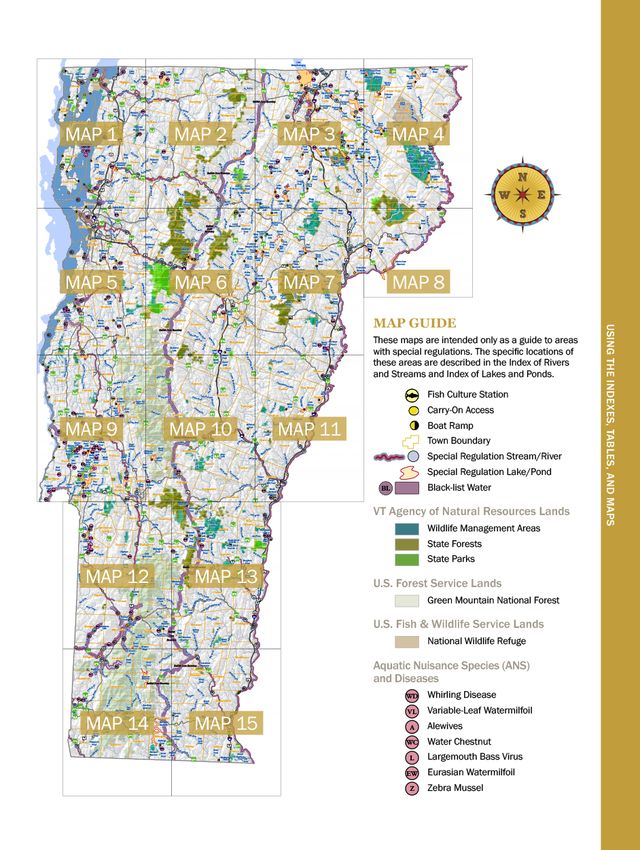
A Special Message
INTERACTIVE,
From the
INSTANTANEOUS
Commissioner
Long-time Vermonters know that many of the best Vermont’s
Online
fishing holes are not next to the road, but require
forethought and the willingness to step off the beaten
path. In this year’s Fishing Guide & Regulations,
one of our great biologists encourages anglers to Fishing Regulations
indulge in some trout fishing accessed by foot. Tool
This year also marks a major change in baitfish
regulation. For years, anglers have been asking the Our Online Fishing Regulations Tool
uses technology to make accessing
department to re-examine
regulation information quick and simple,
the baitfish regulation whether you’re at home planning your
put in place after a next Vermont fishing trip or out
on the water!
dangerous fish disease,
VHS, was discovered in Features of the Fishing Regulations Tool
the Great Lakes. The Interactive Map
regulation was designed System: Allows users ••••• 10:00 AM
to protect fish populations, to select any waterbody
Courtesy of Vermont Fish & Wildlife
in the state and have
but it made fishing with
instantaneous access
bait cumbersome. to fishing regulations
specific to that body
More recent analysis by our of water.
biologists led to enacting a
Current Location
new regulation to establish Feature: The map
a better balance between protecting fisheries resources works in coordination
and providing angler opportunity. These changes with the Global
Positioning System (GPS) in many
include creating two baitfish zones, east and west, mobile devices, allowing users to view
allowing for more transport of baitfish, except from a list fisheries regulations for their current
of black-listed waters which are at high risk for disease location.
or invasive species. See the article on page 6 and the Lookup Tables: Allows users to view
regulation on pages 25–29 for more information. regulations by selecting a waterbody,
town, or county from a comprehensive
This year is a great chance to get off the pavement to lookup list.
find new fishing holes, and it offers more opportunity Regardless of the pathway, the final
to use baitfish. I hope you will find time to pick up your result is a simple and clear list of fisheries
rod and get out there to explore Vermont’s waters. regulations for all of Vermont’s great
fishing spots!
Visit www.vtfishandwildlife.com
to use the tool!
Louis Porter, Commissioner, Vermont Fish & Wildlife
4 Vermont Fish & Wildlife
HOW TO USE THIS GUIDE
Step by Step
If you’re new to fishing in Vermont or just checking out the latest regulations,
follow these steps to make using this guide quicker and easier.
Step 1 Do you know where you’re going to fish?
Yes NO
Step 2 Go to the main Map Guide on page 43.
Locate the general area of the state where you want to fish
(from Maps 1 to 15).
Step 3 Go to the individual Maps 1 to 15 on pages 44 to 58 and
determine the waterbody on which you want to fish.
The Maps will also help you identify important points of interest
such as access points, boat ramps, and boundaries. It will also show
stream section numbers (blue) and lakes (tan) that point to specific
regulations in the Indexes. Almost all the stream section numbers
and related regulations are in alphabetical order in the Indexes if
not noted in the footer.
Step 4 Go to the alphabetical Index of Rivers and Streams on pages 59 to 70 or
the Index of Lakes and Ponds on pages 71 to 83.
If you only know the waterbody by name (for example, Dog River) but not which towns the
waterbody is in, this will point you to the right Map and you’ll be able to identify the town.
Step 5 Identify any special regulations for that waterbody, including those for
specific stream sections or lakes, in the Index. Special regulations override
general regulations and must be followed.
The Index lists the correct Open Water and Ice Fishing Regulations Tables for
that waterbody.
Step 6 Go to the Table for the waterbody you are planning to fish on pages 84 to 90.
Note length rules, legal methods, daily limits, and open seasons. These include:
If your waterbody — a river or stream — does not appear in a specific Index, go to
page 84 Table 1: General Regulations for Rivers and Streams as this covers all
the others except the Connecticut River.
If your waterbody — a pond or lake — does not appear in a specific Index, go to
page 85, Table 2: General Regulations for Lakes and Ponds as this covers all
the others except Lake Champlain.
You can also visit the department website, www.vtfishandwildlife.com, for the Online Fishing
Regulations Tool or call for more information, 802-828-1000.
2020 Fishing Guide & Regulations 5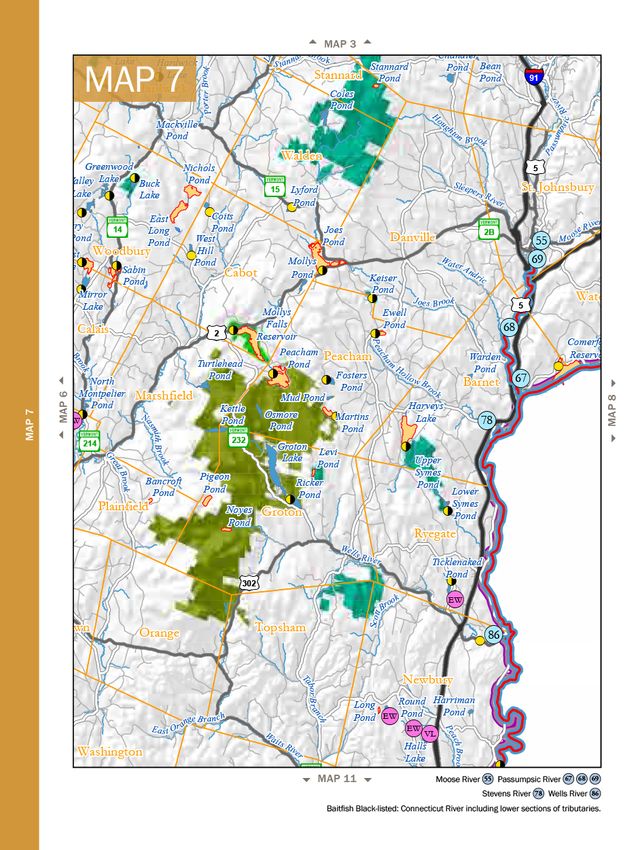
Baitfish
“What’s
New”
Courtesy of Vermont Fish & Wildlife
6 Vermont Fish & Wildlife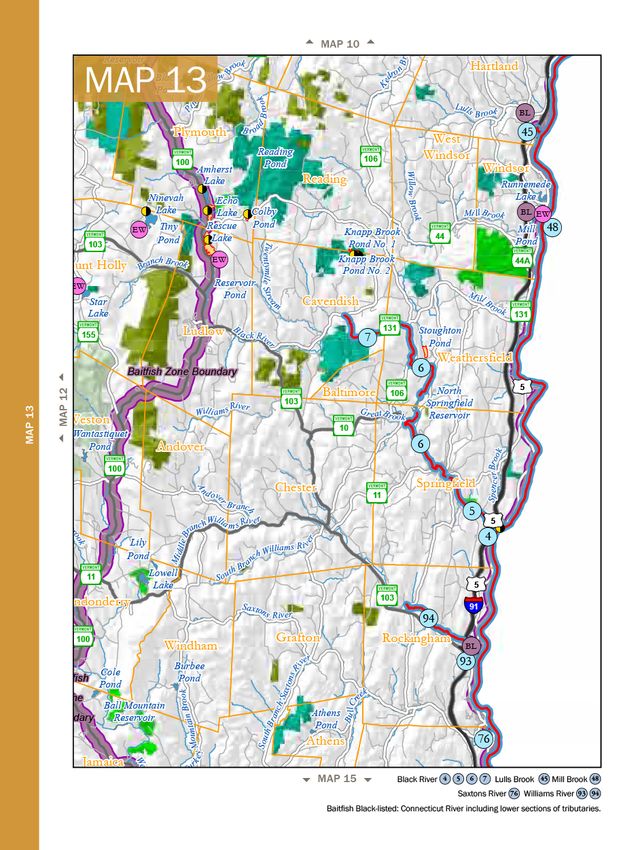
By Adam Miller
Vermont Fish & Wildlife
V
ermont Fish & Wildlife has `` Establish an east and a west baitfish zone within
which baitfish can be used (not between). To see
changed the way baitfish more about the east/west boundaries, see the
use is regulated to attain a Map Guide on page 29.
better balance between protecting `` Establish a list of black-list waters that have high
fish disease or invasive species risk. Baitfish can
Vermont’s fisheries resources and be used on these waters but may not be used on
providing recreational angling other waters. Also see, Black-list Waters on
pages 27–28.
opportunities. Effective January
`` Extend the time that baitfish transportation
1, 2020, new baitfish regulations receipts are valid from 4 days to 10 days.
will provide more opportunity `` Establish new baitfish holding rules that account
for baitfish zones and black-list waters.
to Vermont anglers while also
`` Allow commercial baitshops to harvest approved
protecting the health of Vermont’s wild baitfish species from a baitfish zone
fish populations. (i.e rainbow smelt, white sucker, etc.) and sell
them to anglers for use in that same baitfish zone.
Also see, Commercial Bait Dealers on page 28.
`` Allow anglers to harvest and move approved wild
Why are baitfish regulations important? baitfish species from waterbodies through a wild
baitfish endorsement that can be added at no cost
Activities associated with the movement and use of
to an angler’s fishing/combination license.
baitfish are known to spread dangerous fish diseases
and aquatic invasive species that can cause large
scale fish die-off’s or alter our native aquatic food
webs. This can negatively affect the state’s fisheries
and impact Vermont’s fishing economy and public
welfare. By carefully managing the movement of
baitfish through regulations, anglers can slow the
spread of fish disease and invasive species, thus
preserving quality fishing opportunities for current
and future generations of anglers.
Courtesy of Vermont Fish & Wildlife
What’s changed?
New regulations now allow for the movement of
baitfish from one waterbody to another through
a zone system. This is meant to provide more
flexibility to anglers who might want to harvest
baitfish in one waterbody and use it in another. In The movement and use of baitfish are known to spread
short, the new baitfish regulations do the following: dangerous diseases that can cause fish die-offs.
2020 Fishing Guide & Regulations 7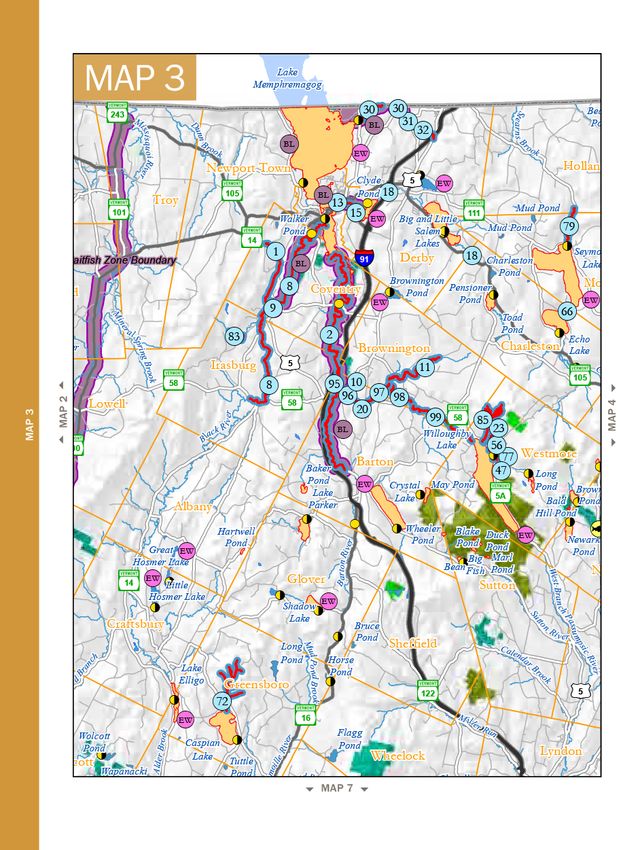
I buy my baitfish to go fishing, `` A person transporting unused commercially
what’s changed for me? purchased baitfish away from a waterbody to
use later may store them in any non-black-list
Under the previous baitfish regulations, water within the baitfish zone listed on the
commercially purchased baitfish were only valid baitfish transportation receipt as long as:
for the specific waterbody recorded on the baitfish
The baitfish did not come in contact with a
transportation receipt. New baitfish regulations
black-list water, and
allow for the following:
The baitfish cannot be stored in waters
`` Purchased baitfish may only be used in the
where baitfish use is prohibited.
baitfish zone or black-list water recorded on the
baitfish transportation receipt (valid for 10 days `` A person transporting unused commercially
from the time and date of sale). purchased baitfish away from a waterbody to
use later may not store them in waters of a
`` A person may transport unused commercially
different baitfish zone. These baitfish must be
purchased baitfish away from a waterbody and
kept in a closed container isolated from any
use it within 10 days in the same baitfish zone or
flow of lake, pond, or stream water.
black-list water as indicated on the receipt:
Zoned baitfish receipt (East Zone/West Zone) Want to learn more about using baitfish?
Can be used on multiple non-black-list waters
These changes to Vermont’s baitfish regulations are
in the same zone.
meant to provide more angling opportunity to the
Can be used on a black-list water in that zone,
public while still promoting healthy fish populations.
but once on that water it cannot be taken off
Vermont Fish & Wildlife continues to work hard to
the water.
ensure all anglers have the chance to make lifelong
Cannot be used in a different baitfish zone fishing memories with friends and family. Fishing
other than what’s on the receipt. in Vermont is getting better each year, so make
Black-list water baitfish receipt sure you get out and enjoy all that Vermont fishing
Can be used back and forth ONLY on that has to offer!
black-list water (Exception: commercially
purchased rainbow smelt cannot be If you’d like to learn more about the baitfish
transported off the specific black-list water regulations visit: vtfishandwildlife.com/
once they are brought onto it). using-baitfish-in-vermont
Courtesy of Vermont Fish & Wildlife
The new baitfish regulations provide more flexibility to anglers while still protecting the state’s fisheries by allowing the movement of
baitfish from one waterbody to another through a zone system.
8 Vermont Fish & WildlifePersonal Harvest of Wild Baitfish
Creek Chub Blacknose Dace
© Joseph Tomellen
Northern Redbelly Dace Common Shiner
I want to harvest and use my own wild wild baitfish endorsement is a means of educating
caught baitfish. What do I need to know? anglers who want to catch and use personally
harvested baitfish on the potential risks of moving
Under the previous baitfish regulations, anglers were
baitfish to reduce the risk of spreading aquatic
not able to harvest and use their own wild caught
invasive species and fish diseases.
baitfish anywhere other than where is was caught.
Under the new baitfish rules, any person who wants How do I get a wild baitfish endorsement?
to use, sell, or transport personally harvested wild
baitfish beyond the waterbody in which they were In short here's what you need to do to get a wild
harvested must have a wild baitfish endorsement baitfish endorsement so you can catch and use your
on their fishing/combination license. To obtain this own wild baitfish.
endorsement, anglers must successfully complete Goto www.vtfishandwildlife.com/
a wild baitfish certification course. The course wild-baitfish to review the wild baitfish
instructs anglers wanting to use wild harvested certification course materials and learn the
baitfish not only the legal requirements of personally rules and regulations regarding harvesting and
harvesting baitfish but also the risks associated with moving personally harvested wild baitfish.
moving baitfish and the potential to spread fish Successfully complete the wild baitfish
diseases and aquatic invasive species. certification quiz to be eligible to receive a
wild baitfish endorsement.
Why do I need a wild baitfish endorsement?
Once you've successfully completed
The wild baitfish endorsement course educates the certification, go online to
anglers on risks associated with the movement www.vtfishandwildlife.com to update
and use of baitfish. Moving wild caught baitfish your fishing or combination license to
increases the risk of spreading fish diseases and include your wild baitfish endorsement.
aquatic invasive species that can cause large scale This endorsement is a free add-on that you
fish die-off's or alter our native food web. This can must have on your license.
negatively affect the state's fisheries and impact You're now ready to personally harvest and
Vermont's fishing economy and public welfare. use wild baitfish! Be sure to have your fishing
When an angler catches and transports personally or combination license with your wild baitfish
harvested wild baitfish to another waterbody, they endorsement with you while you harvest,
must accept increased personal responsibility transport, or use personally harvested wild
in slowing the spread of fish disease and aquatic caught baitfish and be sure to follow all other
invasive species by taking proper precautions. The pertinent baitfish rules.
To learn more about rules associated with catching and using your own wild baitfish
and the endorsement course, please go to: www.vtfishandwildlife.com/wild-baitfish.
2020 Fishing Guide & Regulations 9Off-Road
Brook
Trout
Kurt Budliger
10 Vermont Fish & WildlifeBy Jud Kratzer
Fisheries Biologist
Vermont Fish & Wildlife
E
ach fish species has a unique them once they do. Others are prized
combination of features that less for their performance in the water
endear them to certain subsets and more for their performance on the
of the angling community. Some table. Still others hold a special place
species are favored because of their because of aesthetics, beauty both
large size. Some are beloved because in the fish themselves and the places
of the challenging sport they provide they’re found. Such is the case with
in coaxing them to strike or landing brook trout.
While brook trout are easily accessible throughout
much of Vermont, some of the best and most
fulfilling brook trout fishing can be had well off
the beaten path. Road-side streams see more
fishing effort simply because many anglers lack
the initiative to walk more than a few steps away
from their car or truck. While these road-side
streams never get “fished out” completely, anglers
selectively harvest the larger fish leaving behind
smaller, educated fish that may have been hooked
and released a few times. For these reasons, some
of the best brook trout fishing, not to mention
better scenery, might be just a few thousand steps
away. Here are same basic clues to find hidden
brook trout stream gems.
Cold Water, Deep Pools, Plenty of Cover
The single most important defining characteristic
of brook trout biology is their need for cold water.
If you find a Vermont stream with cold water, you
are likely to find brook trout. How cold? A few years
ago, the Vermont Fish and Wildlife Department
performed a study to determine what factors were
the most important predictors of brook trout
Daria Kratzer
abundance in northeastern Vermont. Biologists
found that the best brook trout streams rarely
The author fishing a northeastern Vermont brook trout stream. exceeded 68°F, even in the summer.
2020 Fishing Guide & Regulations 11They also found that brook trout tended to be more
abundant in streams with deeper water and large
amounts of woody material. Woody material, in the form
of logs and branches contributed from the surrounding
forest, provides hiding places for brook trout and can
also increase depth by creating small impoundments
upstream and plunge pools downstream.
Use a Map to Locate Hillside Streams and
Public Access
Joe Norton
Finding cold water is one of the most important
considerations when planning a wilderness brook trout
trip. Look for streams flowing off wooded hillsides. If This would be considered a very big fish in most small brook
the stream is small enough that the surrounding forest trout streams.
provides shade for most of the day, there is a good
chance that it will be cold enough to support a fishable
population of brook trout. One exception is pond
outlet streams, which usually consist mostly of warm
waters skimmed from the pond’s surface. If in doubt,
take the stream’s temperature during a hot summer
day. If it is less than about 68°F, it is cold enough for
brook trout. A good map and a look at something like
Google Earth can help with assessing the amount of
forest cover along the stream and whether there are
any ponds that might warm the water.
A map can also be helpful for determining land
ownership, which is another important consideration
when planning a wilderness fishing trip. Fortunately,
Vermont offers several thousand acres of forested
lands that are open to public access including state
wildlife management areas, state forests, national
forests, federal refuges, and private timber company
lands with public access easements. A call to a local
fisheries biologist might also help to narrow the search Kurt Budliger
for good brook trout streams on publicly accessible
lands. Or check the Vermont Fish & Wildlife website,
www.vtfishandwildlife.com/wilderness-brook-trout, The Vermont Fish and Wildlife Department shows students how
for maps, fishing tips and more. electrofishing can be used to sample wild brook trout populations.
The diverse and abundant sport fishing opportunities enjoyed each year by anglers across
Vermont are a direct result of fisheries management and restoration activities conducted by
the Vermont Fish & Wildlife Department. These activities are funded through the Federal Aid in
Sport Fish Restoration Program — money generated by user purchases of fishing equipment and
motor boat fuels. The department’s fisheries management and restoration projects help maintain
and restore healthy aquatic ecosystems, clean water, and good habitat, benefiting anglers by
supporting and providing quality sport and recreational fishing opportunities across Vermont.
12 Vermont Fish & WildlifeHELPFUL TIPS
Why Habitat Really Matters
to the Wild Brook Trout
(and why they’re so small)
Courtesy of Vermont Fish & Wildlife
There are many waterfalls and cascades that are only enjoyed by the rare few that venture off road in search
of wilderness brook trout.
Depth and cover are important for brook trout because of the second most defining
characteristic of brook trout biology, namely that it is really hard to be a brook trout.
Because of the brook trout’s all-important need more typical small stream habitat, they have a high
for cold water, they are often limited to relatively mortality rate, which means that each fish has a
small, shallow streams. At least, that is the case in very high likelihood of dying of natural causes each
much of Vermont. Living in small, shallow streams year. In Vermont streams, approximately 90%
is difficult for several reasons. Fish in tight quarters of brook trout are less than 6 inches long, which
are easier targets for predators like mink, otters, roughly corresponds to 2 years of age. This is true
herons, and kingfishers. It can be especially easy even in streams that see little or no fishing effort.
for predators during summer droughts when brook They don’t have time to grow to large sizes, but
trout are forced to congregate in the relatively few they don’t need to because they mature early, with
deep pools or at cold spring seeps. Winter can be some brook trout able to reproduce at age one and
even more difficult as brook trout find themselves nearly all reproducing by age two. They are also
squeezed into even tighter quarters by ice sheets prolific spawners, keeping the streams well-stocked
that can take up most of the water column. with the next generation. The brook trout’s high
mortality and reproductive rates mean that anglers
This hard life is why stream-dwelling brook should feel good about keeping some fish for the
trout tend to be small. They only reach trophy table, especially on lightly fished back-country
proportions in ponds and larger rivers where they streams. If anglers don’t harvest them, predators
have adequate cold water, depth, and food to allow or Old Man Winter surely will.
for multiple year survival and fast growth. In their
2020 Fishing Guide & Regulations 13HELPFUL TIPS
Aquatic Invasive Species Laws
PROHIBITED SPECIES: The possession of zebra mussels, quagga mussels, rusty crayfish, Asian
clam, spiny water flea, fishhook water flea, and all aquatic plants is prohibited.
VESSEL INSPECTIONS: All watercraft operators are required to inspect their own vessels and
trailers and remove and dispose of all aquatic plants and aquatic invasive species prior to
launching and upon leaving a state water.
DRAINING OF VESSELS: Prior to leaving state waters, all watercraft operators are required to
drain their vessels, trailers, and all other equipment of water, including water in live wells, ballast
tanks, and bilge areas. When transporting vessels on the road, all drain plugs, bailers, valves,
and other devices that are used to control the draining of water must be removed or placed in the
open position. Bait buckets, water hauling, and emergency-response vehicles are exempted from
this requirement.
MANDATORY BOAT INSPECTIONS: Boat inspections are mandatory whenever a Vermont
Department of Environmental Conservation (DEC) authorized inspection station is present, is
open/staffed, and one’s vessel is identified as requiring inspection. Refusing to comply with a
mandatory inspection and decontamination is considered a violation of state law.
NOTE: the term “vessel” means any type of watercraft that can be used as a means of transportation on water,
including boats, canoes, kayaks, paddleboards, personal watercraft, and so on.
Aquatic Invasive Species Identification
It is illegal to possess or transport the following aquatic invasive species found in Vermont:
Rusty Crayfish Alewife Water Chestnut
North American Native Fishes Association B. Smorgans
Asian Clam Variable-Leaf Watermilfoil
Jeff Gunderson, Minnesota Sea Grant
GB Nonnative Species Secretariat Dennis Roberge, Courtesy of Maine VLMP
An invasive crayfish species that Eurasian Watermilfoil Zebra Mussel
can displace native crayfish and
destroy aquatic habitat. Rusty
crayfish can reach 5 inches in
length and can be identified by
dark reddish spots on either Alison Fox, University of Florida, Bugwood.org U.S. Fish & Wildlife Service
side of their shell and large, Spiny Water Flea
strong, smooth claws that can Note: Transporting any aquatic plant
be a brownish-olive color or a or aquatic plant part, zebra mussel,
reddish-brown color with black or quagga mussel on the outside of a
vehicle, boat, personal watercraft, trailer,
or orange tips. or other equipment is illegal. Violators
Jeff Gunderson, Minnesota Sea Grant are subject to a penalty of up to $1,000.
14 Vermont Fish & WildlifeHELPFUL TIPS
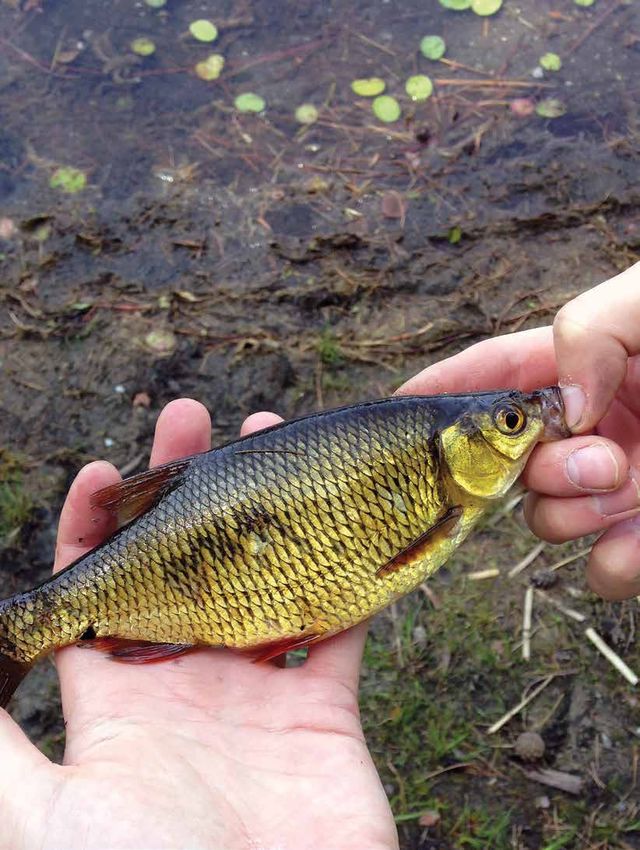
Get a Grip on Your Fish
Are you
holding
your fish
correctly?
Kurt Budliger
While some anglers prefer to harvest and eat their catch, others opt to practice catch and
release. Vermont Fish & Wildlife offers several catch and release–only seasons along with
regular fishing seasons to provide a diversity of angling opportunities, and the department
has developed a series of tips that provide guidance on landing and safely releasing fish to
ensure they will survive to be caught another day.
Vermont Fish & Wildlife views thousands of Good pointed out a couple of other key
fish photographs each year showing some of the tips for holding fish.
best fish catches annually from across the state.
According to department fisheries biologists, one “Using two hands to support the fish horizontally is
commonly seen mistake is how fish are held for a the best way to lift a fish for a photo,” said Good. “A
photograph before being released. good way is to place one hand just under or behind
the head and the other under the belly or around
“Holding a fish horizontally, not vertically, is the the narrow part just ahead of the tail.”
best if you must hold a fish up for a photo,” said
Shawn Good, fisheries biologist with Vermont Additionally, Good cautions not to squeeze a fish’s
Fish & Wildlife. “There’s a lot of pressure on a side too hard, or bend its jaw down at an extreme
fish’s internal organs when held out of the water, angle as often seen when anglers hold bass.
especially when held vertically. Fish live in a
neutrally buoyant environment — the water helps “Also, keep your fingers out of the fish’s gills as
support their internal organs. Holding a big fish they’re very sensitive and can cause the fish to
vertically could cause internal damage.” bleed if damaged,” concluded Good.
2020 Fishing Guide & Regulations 15Catch and Release Tips
ALWAYS BE GENTLE
Remove hooks carefully. Never rip out a hook!
Use the “hook shake” technique. Reach into the fish’s mouth and grasp the hook shank
with fingers or pliers. Lift the fish and rotate the hook shank down and shake gently, allowing
the fish to slide off the hook.
Hooked in the gills, throat, or stomach? Cut the hook off and leave it in. It will rust out
of the fish in a short time period.
Consider using barbless Before releasing a tired
hooks and replacing fish, cradle it in a
treble hooks. swimming position.
Single hooks reduce injury Move it gently in an “s”
and make live release quicker pattern to force fresh water
and easier on the fish. through its gills until the fish
is able to maintain an upright
position on its own.
Using live bait?
Watch your line and set the
hook as soon as possible to avoid Keep the fish in the water,
having the fish swallow the bait. if possible.
Limit the fish’s contact with
other objects to protect its
Don’t wear out the fish! slime coating, which is critical
Exhausted fish are at higher risk to fish health.
of dying after release. Landing
and releasing a fish quickly will
improve its recovery. Ice fishing?
Avoid exposing the fish to
the freezing air. Unhook in
Use the right size net! the water.
Big fish shouldn’t be folded
into small nets.
Vermont Fish & Wildlife offers many catch and release fishing opportunities to anglers,
including special seasons and waters that are designated as catch and release only.
To learn more, visit www.vtfishandwildlife.com/fish.
16 Vermont Fish & WildlifeHey! Let Me Go!
The Vermont Fish & Wildlife Department works to protect and restore rare and endangered
fish species. To help us in this effort, we’re asking anglers to learn to identify these species
and release them immediately if caught while fishing.
Muskellunge (or “muskie”) Sturgeon Sauger
More than 50,000 muskies have The lake sturgeon is listed Sauger populations are declining
been stocked in the Missisquoi as an endangered species across their range and Vermont is
region in an effort to bring this in Vermont. Biologists have no exception. To help protect this
majestic fish species back to Lake documented spawning activity fish, a new regulation prohibits
Champlain. If these muskies survive in Vermont rivers that were anglers from harvesting sauger.
and begin reproducing naturally, historical sturgeon spawning Since walleye and sauger are
they will provide an exciting sites, and they are working to similar in appearance, anglers
fishing opportunity in Vermont. restore sturgeon by improving should learn how to distinguish
They are sometimes difficult to habitat, restoring stream flow, between the two. If a sauger is
distinguish from northern pike or removing obstructions in rivers, caught incidentally, anglers must
chain pickerel, or the increasingly and lessening the impact of release it and should report the
common pike-pickerel hybrid. sea lamprey predation. Anglers sighting to the department.
While anglers may legally target may not target sturgeon and
muskie statewide with artificial must release them if caught
flies and lures, all muskie caught incidentally. Please report the
anywhere in Vermont must be sighting to the department.
released immediately.
SAUGER OR WALLEYE?
Please Learn the Difference
Black membrane
between last two
or three spines
on dorsal fin.
No dark spots on
WALLEYE the membrane of
the dorsal fin.
White tip on
Black spots bottom of tail
on dorsal fin
SAUGER
Dark, mottled
coloration often
present on sides
2020 Fishing Guide & Regulations 17License
Information
Tom Rogers
Buying Your License 2. Visit one of our district offices or archery deer season, muzzleloader deer
authorized license agents. A list of season, and turkey seasons (each with
Anyone can apply for a fishing license. license agents is available at their own tags).
There is no requirement to have had a www.vtfishandwildlife.com, or you
previous fishing license. can call us at (802) 828-1190 for Resident Status
Important things to remember: an agent closest to you.
In order to obtain resident annual
Fill in your information as you wish 3. Print a license application from licenses, a person must have lived in
it to appear on your license. Your www.vtfishandwildlife.com, fill out, Vermont for the six months immediately
printed license and a photo ID should and send in with your payment. prior to applying for a license and NOT
be carried whenever you go fishing, claimed residence elsewhere for any
hunting, or trapping. Licenses Are Required other reason.
If you are purchasing a term fishing Any person engaged in fishing, hunting, An applicant for a resident lifetime
license (a fishing license for a shorter or taking any wild animals must be license must have been a resident for at
properly licensed, except as listed below
LICENSE INFORMATION
duration than the whole year), make least 12 months or must be a dependent
sure you specify the day you plan to under exceptions. Wild animals are of a resident.
start fishing. Term fishing licenses are defined by law as ALL animals, including
birds, amphibians, and reptiles, other A nonresident student who is enrolled in
for consecutive days. a high school, college, or university within
than domestic animals.
If you are purchasing a hunting, the state is entitled to a resident fishing,
combination, archery, or trapping hunting, or combination license.
license, you must have held a License Possession
To qualify, the student must have
previous hunting, combination, Appropriate licenses must be carried successfully completed two successive
archery, or trapping license in while hunting, fishing, trapping, or semesters at his or her Vermont
Vermont, any other state, or Canada, transporting fish, game, or furbearers. secondary school, college, or university,
or have passed a state of Vermont– The licenses must be exhibited on must present an admission card, and
approved safety course. You may demand of a state game warden or other must pay the resident fee.
complete the license affidavit form enforcement officer, or the owner of the
certifying that you have held this type land on which such person is hunting,
of license previously or passed a state fishing, or trapping. See Title 10 V.S.A. Exceptions to License
of Vermont–approved safety course. Section 4266. An electronic or digital Requirements
We offer three easy ways to purchase copy of the license is acceptable, except A resident owner of land in Vermont, his
all fishing or combination licenses: for minor children who are hunting with or her spouse, and minor children may
rifle or bow must still carry a paper hunt within the boundary of that land
1. Go online to license signed by their parent. and take fish from a private pond within
www.vtfishandwildlife.com. the boundary of that land without a
You will need the following: FREE Fishing Days license within season (except if their
A printer to print your license. The second Saturday in June and right to obtain a license is under
Printing requires Adobe Acrobat the last Saturday in January are Free suspension). A nonresident owner of
Reader on your computer. Fishing Days in Vermont. Residents and land has equal privilege if his or her land
You can download the free nonresidents may fish without a license. is NOT posted (except if their right to
Acrobat Reader software from All legal fishing methods and limits apply. obtain a license is under suspension).
our website. “Posted” means any signage that would
lead a reasonable person to believe that
A credit card. We accept My License Covers What? hunting is prohibited on the land, except
Visa, Discover, or MasterCard
for payment. Fishing licenses cover fishing throughout for “Safety Zone” signs. Children under
the year. 15 never need a license to fish.
Nice to have ready if you have one:
Your Conservation Identification Combination licenses include a late- Military Personnel
Number or CID #. You can look season bear tag and a November-
season legal buck tag. They also cover Any resident of Vermont who is serving
up your Conservation ID on the
small-game hunting. Add-on licenses on active duty in the armed forces of
website or find it on your
are required for early season bear, the United States or is performing, or is
previous license.
under orders to perform, a homeland
18 Vermont Fish & Wildlifedefense or stateside contingency fishing or combination license, if qualified, Lifetime Licenses
operation for a period of 120 or more upon presentation of a certificate issued
consecutive days may obtain at no by the Department of Veterans Affairs so A resident or nonresident lifetime fishing,
cost a hunting or fishing license or certified by Title 10 V.S.A. Section 4255. hunting, or combination fishing and
combination hunting and fishing license. hunting license may be obtained from the
To see if you qualify for the license, call Fish & Wildlife Department. Applications
A person who obtains a license under Licensing at (802) 828-1190. If you are available on our website or from the
this provision may keep the license until meet the requirements, you will need to office. Fees are as follows:
it expires, whether or not the person present a copy of your VA documentation
continues to serve in the armed forces. listing your service-connected disability for children < 1 year old = 8x
rating. You can obtain a copy of this current adult license price;
A nonresident member of the armed
forces of the United States who is on documentation from benefits.va.gov/ for children 1–15 years old = 16x
active duty and stationed at a military, benefits. If you qualify for a combination current adult license price;
air or naval post, station or base within license, you will also receive turkey and for adults 16–24 years old = 31x
Vermont may buy a license to hunt or fish muzzleloader deer licenses. If you qualify current adult license price;
at the resident fee. for an archery license, you will receive one.
for adults 25–64 years old = 26x
Any questions on eligibility for Permanent licenses do not include duck current adult license price.
military licenses? stamps or entries into the moose and
antlerless lotteries or permits.
Call (802) 828-1190 or email
fwlicensing@vermont.gov.
Vermont Fish & Wildlife Department
Attn: Licensing
1 National Life Drive, Dewey Building VERMONT IS A MEMBER OF THE
Montpelier, VT 05620-3208
Permanent Licenses
Any Vermont resident who is 66 or
older may apply for and purchase a Interstate
Wildlife
LICENSE INFORMATION
permanent license on our website, at
an authorized license agent, at our
district offices, or by mail.
If a permanent license holder wishes
to hunt for more than one archery deer,
he/she must purchase additional Violator
archery licenses. If waterfowl hunting,
he/she must also purchase state and
Compact
Bear Cieri
federal duck stamps and register with
H.I.P. each year.
Permanent licenses do not include duck
stamps or entries into the moose and The Interstate Wildlife Violator Compact (IWVC) ensures that, in
antlerless lotteries or permits. participating states, nonresident violators will receive the same
treatment as resident violators. IWVC member states reciprocate
Permanent Disability in the suspension or revocation of licenses and permits resulting
Licenses from violation of hunting, fishing, or trapping laws.
A legally blind person who is a Vermont
resident may apply for a free permanent If an individual’s license or permit privileges are revoked in
fishing license. Information is available
one compact member state, they are subject to suspension or
from the Fish & Wildlife office or
www.vtfishandwildlife.com. revocation in all other member states. For example, if a Vermont
A Vermont resident who is paraplegic or
resident has their hunting privileges suspended in Minnesota,
who is certified by a physician to have their privileges may also be suspended in Vermont and in all
permanent severe physical mobility other compact states. This helps prevent habitual violators from
disability may receive a free permanent relocating their illegal activities to other member states.
fishing, hunting, or combination license, if
qualified, with the proper proof of disability.
The IWVC also has established procedures that cause a nonresident
“Paraplegic” is a person with permanent violator who fails to comply with the terms of a citation issued in a
paralysis of the lower half of the body
with involvement or loss of both legs. A participating state to face the possibility of the suspension of their
Statement of Disability form is available wildlife license privileges in their home state until the terms of the
from the office or our website. citation are met. The goal of the IWVC is to facilitate improved
A Vermont resident who is a veteran of the enforcement of hunting, fishing, and trapping laws through the
armed forces of the United States and who cooperation of law enforcement units in member states.
is 60 percent disabled due to a service-
connected disability may receive a free
2020 Fishing Guide & Regulations 19Lifetime and Permanent Asigned affidavit attesting to having Suspensions
a prior hunting, combination, archery,
License Renewal or trapping license from Vermont or
For 10 to 14 points accumulated in
five years: one-year suspension.
If you intend to hunt, fish, or trap this any other state or province.
year, you must update by reprinting For 15 to 19 points accumulated in
A person under age 16 must have his or five years: two-year suspension.
your lifetime, permanent disability
her parent or guardian sign to obtain a
or permanent license regardless of For 20 points or more accumulated in
hunting license.
whether or not you used your tags. five years: three-year suspension.
This statutory requirement has been NOTE: Federal firearms laws, found at
Conviction of carelessly or negligently
put in place to allow the department to 18 U.S.C. Sect. 922, prohibit certain
wounding a person by gunshot, or
collect accurate harvest and licensing individuals, including those convicted
manslaughter by the careless and
information for lifetime licenses. There is of felonies or any domestic violence
negligent use of firearms, will, by
no penalty for the failure to renew. offense, those subject to a final relief
statute, revoke the hunting license
from abuse order, and unlawful users of
This updated license will include current privilege or the right to obtain such
controlled substances, from possessing
year tags. You may update your license at license for five years.
centerfire and rimfire firearms. For a
no cost online at www.vtfishandwildlife. It is illegal to hunt, fish, or trap while
complete list of prohibitions, contact the
com. If you are unable to go online, a license or right to obtain a license is
Bureau of Alcohol, Tobacco, Firearms,
you can call (802) 828-1190 or go to under suspension in Vermont or any
and Explosives at (802) 865-4020.
any authorized license agent or Fish other state that is a member of the
& Wildlife office. A license agent may State Border Requirements Interstate Wildlife Violator Compact.
charge you up to $1.50 for a reprint.
A person with a resident Vermont Landowners may not hunt, fish,
fishing license may take fish anywhere or trap on their land if their license
Requirements for in the Connecticut River, subject to is suspended.
Hunting, Combination the regulations of Vermont and New Fine: up to $2,000 and additional
Hunting and Fishing, Hampshire. Hunting licenses for suspension period.
Archery, and Trapping residents and nonresidents are only valid Remedial Course: A person whose
to the New Hampshire state boundary,
Licenses which is the low-water mark on the
license is revoked with 15 or more
points accumulated in five years must
An applicant for a hunting, combination Vermont side of the Connecticut River. successfully complete a remedial
LICENSE INFORMATION
hunting and fishing, archery, or trapping For Lake Champlain fishing license course designed to teach hunters,
license must present either information, see Lake Champlain trappers, and anglers correct legal
A previous or current hunting, Regulations, page 88. and ethical behavior while hunting,
combination, archery, or trapping License Revocation trapping, and fishing.
license from Vermont or any state or Suspension Per Family Court Orders:
Canadian province; or 10 V.S.A. Sect. 4502 — the “Uniform
Vermont hunting, fishing, and
Point System” — provides that hunting,
A certificate or a letter of proof showing trapping licenses and permits may be
fishing, and trapping licenses will be
satisfactory completion of an approved suspended for failure to comply with
revoked based on the number of points
hunter safety, archery, or trapping child support orders of the Family
received when a person is convicted of
education course from Vermont or any Court. 15 V.S.A. Sect. 798(b).
violating a fish or wildlife law.
other state or province; or
OPEN 7 DAYS A WEEK
Indoor Archery Range!
Weight Station
Live Bait • Fishing • Kayaking
Paddlesports • Camping
Sporting Goods • Archery • Guns
Ammo • Outdoors
Other Outdoor Ventures!
5343 Ethan Allen Highway, New Haven, VT • 802-453-2000
20 Vermont Fish & WildlifeGeneral
Regulations
and
Definitions
Tom Rogers
“Take” and “Taking”: This means Violators: A person who drives, penalties are capped at $42,500 for
pursuing, shooting, hunting, killing, transports, scouts, counsels, or otherwise a single violation. The complete list of
capturing, trapping, disturbing, harrying, aids another person in a violation, or threatened and endangered species is
worrying, wounding, snaring, or netting who knowingly possesses, consumes, or available on the Fish & Wildlife website
fish, birds, or other animals. It includes otherwise shares in the proceeds of such (www.vtfishandwildlife.com). The list
placing, setting, drawing, or using any net a violation by receiving or possessing fish includes lake sturgeon, channel darter,
or other device commonly used to take or wild animals, or any parts thereof, shall eastern sand darter, stonecat, timber
fish or wild animals, whether they result be punished as a principal. rattlesnake, bald eagle, spruce grouse,
in taking or not. It includes every attempt beach heather, great laurel, Canada lynx,
to take and every act of assistance to Damage to Fish & Wildlife Property: marten, little brown bat, and Indiana bat.
GENERAL REGULATIONS AND DEFINITIONS
another person in taking or attempting to A person who damages or destroys a Federal penalties also may apply.
take fish or wild animals. wildlife facsimile (decoy) owned by the
Camping and Trespass: It is illegal
Fish & Wildlife Department shall pay Posted Property Under
restitution for its replacement or repair.
to park, drive, or camp on another
Whoever intentionally or recklessly
Fish & Wildlife Law
person’s land without permission of Hunting, fishing, or trapping on properly
damages, injures, interferes with, or
the landowner. You must immediately posted land is illegal without written
destroys any property, real or personal,
leave the property when the landowner permission. This includes land posted
belonging to or controlled by the state
requests it, whether the property is for hunting, fishing, or trapping by
for fish, game, or wildlife purposes shall
posted or not. Roadside or public permission only. Properly posted land
be fined not more than $2,500 and
highway turnouts are not legal for will have records filed with the town clerk
pay restitution to repair or replace the
overnight camping. and the Fish & Wildlife Department. See
damaged property.
Importation of Wildlife: It is illegal Title 10, V.S.A., Sections 5201 to 5206.
to bring live wild mammals, birds, Reimbursement for Whether the property is posted or not, a
amphibians, reptiles, or fish into Illegally Taken Fish hunter or angler shall show their license
Vermont without previously obtaining
an importation permit from the Fish & or Wildlife if requested by the landowner.
Wildlife Department. In addition to any court penalties, anyone It is illegal to damage or remove posters
convicted of illegally taking, destroying, prohibiting hunting, fishing, or trapping.
Interfering With Hunters, Anglers,
and Trappers: It is illegal to intentionally or possessing wild animals must pay, as A person must leave the land
interfere with someone who is lawfully restitution, into the fish and wildlife fund immediately on demand of the owner,
taking fish or wild animals, or to disrupt no more than the following amounts: whether the land is posted or not.
the taking of any fish or wild animal
by harassing or disturbing the fish
Big Game...............................$2,000.00 Posting and By Permission
or animal. Endangered Threatened Only Signs
Species (T10, 5401).............$2,000.00 A landowner, or a person having the
Interstate Highways: No one may legally
Small Game............................. $500.00 exclusive right to take fish or wild
travel on foot within the right-of-way or
animals on land or the waters thereon
cross-boundary fences along interstate Fish...............................................$25.00 may maintain signs stating that hunting,
highways. Rest areas and pullouts are
fishing, or trapping, or any combination
NOT access areas for hunting, fishing, or
entering on adjacent lands unless posted Threatened and of the three is prohibited or by
permission only.
as such. Endangered Species
See 10 V.S.A. Appendix Sect. 14 for
Private Roads and Lands: Vermont law Anyone who takes or injures a Vermont
fish stocking requirements to post
prohibits obstructing private driveways, Threatened or Endangered Species is
against fishing.
barways, or gateways with motor subject to either civil enforcement or
vehicles. People shall not drive over criminal prosecution for a big game Permission Only signs shall state the
private lands or enter these lands for violation. Criminal penalties include owner’s name and a method by which to
the purpose of camping without the up to 60 days incarceration, a $500 to contact the owner or a person authorized
permission of the landowner. $2,000 fine, a $2,000 payment to the to provide permission to hunt, fish, or
fish and wildlife fund, and restitution trap on the property.
Season Dates: All season dates in this
costs. Agency civil enforcement
book are inclusive.
2020 Fishing Guide & Regulations 21You can also read


