ASPIRE Laboratory Aspirator - USER MANUAL - Accuris Instruments
←
→
Page content transcription
If your browser does not render page correctly, please read the page content below
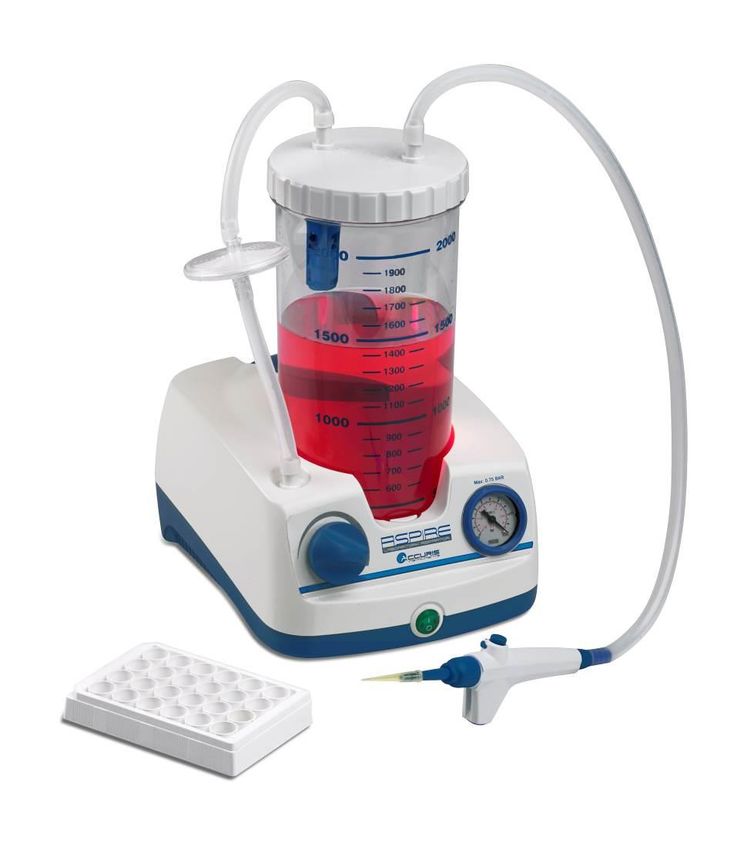
ASPIRE Laboratory Aspirator

                                             USER MANUAL
Rev 2/14/18

Accuris Instruments / Benchmark Scientific

Ph: (908) 769-5555
E-mail: info@accuris-usa.com
(C) Benchmark Scientific, 2018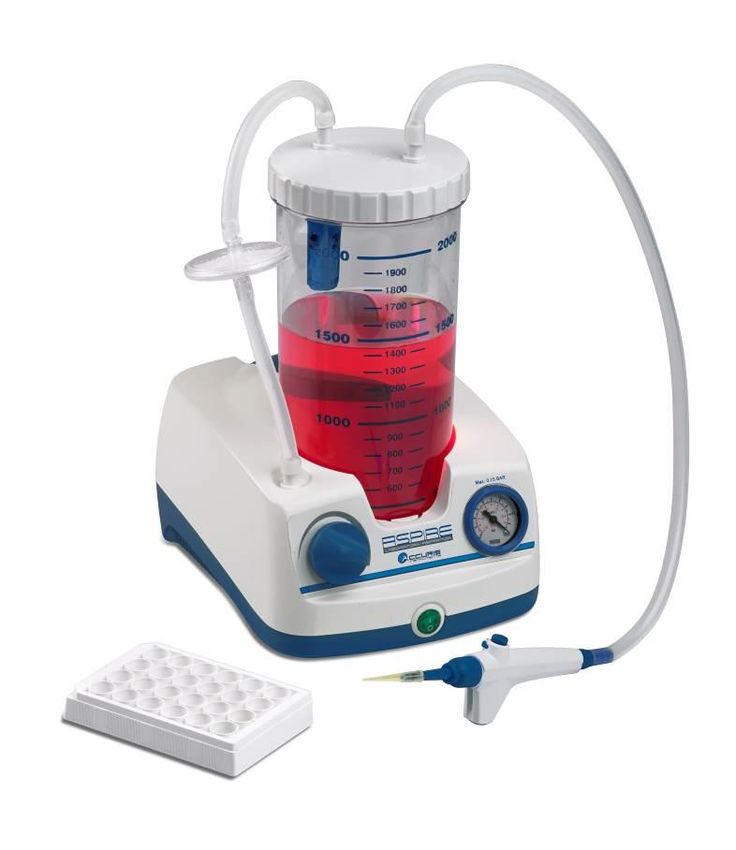
THE ACCURIS ASPIRE LABORATORY ASPIRATOR is a portable instrument that operates on 115V~/60Hz or
230V~/50Hz power input. It is designed for the aspiration of liquid samples and suitable for removal of
tissue culture media and supernatant from laboratory plates, tubes and vessels.

The ASPIRE is housed in a heat-resistant, and electrically insulated plastic casing, incorporates a vacuum
regulator on the front panel, and also includes a polycarbonate autoclavable bottle and lid with overflow
protection valve, silicone tubing, hydrophobic filter, and handheld vacuum pipette.

                                          GENERAL WARNING

        READ THE INSTRUCTION MANUAL IN ITS ENTIRETY AND CAREFULLY BEFORE USE

        THE INSTRUMENT SHOULD ONLY BE USED BY PROPERLY TRAINED LABORATORY PERSONNEL
        THE INSTRUMENT’S PUMP UNIT MUST NOT BE DISASSEMBLED. FOR SERVICE ALWAYS CONTACT
        BENCHMARK SCIENTIFIC

       DO NOT LEAVE BLEACH OR BLEACH SOLUTION IN THE COLLECTION BOTTLE AS IT WILL DAMAGE THE
       POLYCARBONATE MATERIAL.

                                 IMPORTANT SAFETY INSTRUCTIONS

1. Check the condition of the unit before each use. The housing, collection bottle, and all components
   should be carefully inspected for visual damage.
2. Check the main power cable and do not connect to power if damage is apparent;
3. Before connecting to power, check that the electric input data indicated on the data label and the type
   of plug used, correspond to that of the electrical outlet and electrical supply
4. If the plug supplied with the appliance is incompatible with the power supply outlet, contact qualified
   staff for replacement of the plug with a suitable type. The use of simple or multiple and / or extension
   adapters is not generally recommended.
5. Always follow general safety requirements for electrical appliances:
   • Use original components and accessories provided by Benchmark Scientific to guarantee
        performance and safety;
   • Do not operate the aspirator without the bacteriological filter in place between the collection
        bottle and vacuum;
   • Never immerse the aspirator pump unit in water or other liquids;
   • Install the aspirator on a stable and flat surface;
   • Position the instrument in a way that the air vents on the back and sides are not obstructed;
   • Don’t use in the presence of flammable gases;
   • Don’t touch the device with wet hands and always prevent the appliance from coming into contact
        with liquids;
   • Keep out of reach of children and unauthorized personnel;
   • Always use care when removing the power cord from the instrument;
   • Always use the instrument at a safe distance from heat sources;

                                                     2
6. For repairs, contact Benchmark Scientific technical services at 908-769-5555 and always use original
spare parts and accessories. Failure to comply with the above can jeopardise the safety of the user of
the device;
7. This laboratory instrument must be used exclusively for its intended applications as described in this
manual.
8. Any different use could be dangerous; the manufacturer will not be responsible for damage due to
improper use or connection to an electrical system not complying with current regulations;
9. Internal electrical and mechanical parts are not designed to be repaired by customers or end-users. Do
not open the pump unit, do not mishandle the electric / mechanical parts. Always contact Benchmark
Scientific for technical assistance
10. Using the device in environmental conditions different than those indicated in this manual may be
dangerous to the user and may cause damage to the instrument.
TECHNICAL SPECIFICATIONS
MODEL ACCURIS ASPIRE LABORATORY ASPIRATOR
VOLTAGE 115V,50/60Hz or 230V, 50/60Hz
POWER CONSUMPTION 105VA / 184VA
FUSE F 1 x 4A 250V / F 1 x 1.6A 250V
MAXIMUM SUCTION PRESSURE (without jar) -75kPa (-0.75 Bar)
Adjustable from -75kPa (-0.75bar) to -10kPa (-0.10 bar)
MAXIMUM SUCTION FLOW (without bottle / 15 l/min
filter)
WEIGHT 4.8 Lbs / 2.2 Kg
DIMENSIONS 250mm x 190mm x 160 mm
SICILICONE TUBE SIZE Ø 6 x 10 mm
ACCURANCY OF VACUUM INDICATOR ± 5%
AMBIENT OPERATING CONDITIONS Room temperature: 5 to 35°C
Room humidity percentage: 30 to 75% RH
Altitude: 0 to 2000m
STORAGE AND TRASPORT CONDITIONS Room temperature: -40 to 70°C
Room humidity percentage: 10 to 100% RH
SYMBOLS
Class II isolation equipment
Warning, consult the instruction manual
Keep in a cool, dry place
Storage/transport temperature: -40 ÷ 70°C
Type B equipment
Fuse
~ Alternate Current
3Hz Mains Frequency
I ON
O OFF
Please note technical specifications may change without notice.
Guidance and manufacturer’s declaration – Electromagnetic Emissions
The ACCURIS ASPIRE LABORATORY ASPIRATOR is intended for use in the electromagnetic environment
specified below.
The customers or the user of the ACCURIS ASPIRE LABORATORY ASPIRATOR should assure that it’s used
in such an environment.
Emissions Test Compliance Electromagnetic environment -
guidance
Power disturbance Group 1 THE ACCURIS LABORATORY
CISPR11 ASPIRATOR
RF emissions are very low and will
not cause interference in
proximity to any Electronic
appliances.
Irradiated / Conducted emissions Class [B] THE ACCURIS LABORATORY
CISPR11 ASPIRATOR can be used in all
Harmonic emissions IEC/EN Class [A] environments, including domestic
61000-3-2 and those connected directly to
Voltage fluctuations / flicker Complies the public mains distribution that
emissions supplies power to environments
IEC/EN 61000-3-3 used for domestic scopes.
Guidance and manufacturer’s declaration – Electromagnetic Immunity
THE ACCURIS LABORATORY ASPIRATOR is intended for use in the electromagnetic environment specified
below.
Users of this product should assure that it’s used in such an environment.
Immunity Test Compliance Electromagnetic environments -
guidance
Electrostatic discharge (ESD) ± 6kV on contact Floors should be wood, concrete
IEC/EN 61000-4-2 ± 8kV in air or ceramic tile. If floors are
covered with synthetic material,
the relative humidity should be at
least 30%.
Electrical fast transient / burst ± 2kV power supply Mains power quality should be
IEC/EN 61000-4-4 that of a typical commercial
environment.
Surge ± 1kV differential mode Mains power quality should be
IEC/EN 61000-4-5 that of a typical commercial
environment.
Loss of voltage, brief voltage 5%UT for 0.5 cycle Mains power quality should be
interruptions and variations 40%UT for 05 cycle that of a typical commercial
IEC/EN 61000-4-11 70%UT for 25 cycle environment.for 5 sec
Magnetic field 3A/m The power frequency magnetic
IEC/EN 61000-4-8 field should be measured in the
intended installation location to
assure that it’s sufficiently low.
Conducted Immunity 3Vrms 150kHz to 80MHz -
IEC/EN 61000-4-6 (for appliances that aren’t life -
supporting)
Irradiated Conducted 3V/m 80MHz to 2.5 GHz -
IEC/EN 61000-4-3 (for appliances that aren’t life -
equipment)
Note UT is the value of the power supply voltage
ACCESSORIES SUPPLIED
DESCRIPTION
COMPLETE COLLECTION BOTTLE
2000ml, with threaded cover and
silicone gasket
TUBING SET (3 pieces)
HANDHELD VACUUM CONTROLLER
2 ADAPTERS (PIPETTE TIP AND FINE
POINT METAL TUBE)
ANTIBACTERIAL FILTER
Antibacterial Filter: The filter is produced with (PTFE) hydrophobic material which prevents fluids entering
the pump unit and also offers protection to prevent bacterial contamination of the pump unit. When the
filter is wet, it’s not possible to use the unit therefore the filter should be changed immediately.
In case of possible contamination or discoloration of the filter, change the filter immediately.
Do not use the instrument without the filter properly installed.
CLEANING OF ACCESSORIES
Aspire Housing:
To clean the plastic housing of the device wear disposable protective gloves and clean with denatured
alcohol or diluted (10%) hypochlorite solutions.
Collection Bottle, Hand Held Vacuum Controller, and Adapters:
Washing and / or cleaning the autoclavable collection bottle, vacuum controller, and pipette adapters can
be carried out as follows:
• Wear protective gloves and apron (glasses and face mask if necessary) to avoid contact with
contaminating substances;
• Disconnect the bottle from the device
• Disconnect all tubes from and the filter, and hand held controller
• Remove adapters from the handheld controller
• Empty and properly dispose of the contents in the collection bottle
• Separate all parts of the cover (overflow valve, o-ring);
5Thoroughly rinse all parts in cold water then soak in warm water (temperature not to exceed 60°C). Wash
thoroughly and if necessary use a non-abrasive brush to remove and deposits. Rinse in running warm
water and dry all parts with a soft cloth (non-abrasive).
Do not leave bleach solutions in the collection bottle. If required for disinfection, use a 10%
bleach to water solution for cleaning, but then rinse thoroughly with water. Bleach can damage
the polycarbonate material of the collection bottle.
The collection bottle, lid, silicone o-ring, vacuum tubing, handheld controller, pipette adapters can be
autoclaved by placing the parts into an autoclave and running one sterilization stem cycle at 121°C (1 bar
relative pressure) making sure that the jar is positioned upside down.
Mechanical resistance of the jar is guaranteed up to 30 cycles of sterilization and cleaning at the indicated
conditions (EN ISO 10079-1). Beyond this limit the physical-mechanical characteristics of the plastic may
decrease and replacement of the part is therefore recommended.
After sterilization and cooling at ambient temperature, make sure that the parts are not damaged.
Assemble the bottle as follows:
• Place the overflow valve into its seat in the cover (under VACUUM connector)
• Insert floating valve keeping the o-ring towards the opening of the cage
• Place the o-ring into its seat around the cover
• After completing assembling operations always make sure that cover seals correctly to avoid
vacuum or liquid leakage.
DO NOT WASH, STERILIZE OR AUTOCLAVE THE ANTIBACTERIAL FILTER
MAINTENANCE
The ACCURIS ASPIRE LABORATORY ASPIRATOR does not require any routine maintenance or lubrication.
It is, however, necessary to inspect the unit before each use. Unpack the instrument and always check the
plastic parts for any damage that may have occurred during prior use. Connect cable to an appropriate
electrical outlet with correct voltage and turn the power switch to on.
Close the aspiration outlet by blocking with a finger and with suction regulator set to maximum check that
the vacuum gauge reaches at least -75 kPa (-0.75 bar) maximum. Rotate the knob from right to left and
check the aspiration regulating control.
The vacuum indicator should go down to -25 kPa (-0.25 bar). Check that no loud noises are present.
A fuse (F 1x4A 250V) is located in the plug to protect the instrument. In the event of a fuse blowing, replace
with another or the correct type.
Fault type Cause Solution
1. The vacuum Cable is damaged Replace the cable
system doesn’t work
External power source failure Check the external power source
2. No aspiration Bottle Cap not screwed down Unscrewed the cap, and re-attach carefully
properly
3. No aspiration Silicone cap seal (o-ring) not Unscrew the cap and insert the seal properly.
seated properly
4. The Vacuum power a) Vacuum regulator set to a) Turn the vacuum regulator clockwise and check
on the sample side is very minimum the value of the vacuum on the gauge
low or absent b) Protection filter blocked or b) Replace the filter
damaged c) Replace or reconnect the tubes, check the bottle
6c) Connection tubes blocked, connections
kinked or disconnected d) Empty the bottle, or disconnect the tube from
d) Shut-off valve blocked or the bottle and unblock the shut-off valve. The
damaged unit twill only work in the upright position.
e) Pump motor damaged e) Refer to authorised service personnel
5. The float in the overflow If the cap has been washed, Insert the float into its proper position
valve doesn’t close ensure that the float is not
partially detached
6. The float in the overflow The float it’s covered by dirty Unscrewed the cap, wash the overflow valve in
valve doesn’t close material clean water, and replace.
7. Low suction Foam inside the bottle Fill the bottle to 1/3 capacity with water
Faults 1 - 2 - 3 - 4 - 5 - 6 - 7 None of the remedies has Contact Benchmark Scientific for Service
achieved the desired results Assistance
If the overfill valve system fails, continued aspiration will cause liquid to contact the bacteriological filter
and air flow will be blocked.
Should this back-up security also fail, there is a risk of liquid entering the vacuum pump system. Do not
attempt to continue using the Aspirator in the event of liquid entering the vacuum pump system. Contact
Benchmark Scientific for Service Assistance.
Benchmark Scientific will provide upon request electric diagrams, components list, descriptions, setting
instructions and any other information to assist with quick repair.
IN THE EVENT OF DAMAGED PARTS OR ABNORMAL OPERATION, PLEASE CONTACT BENCHMARK
TECHNICAL SERVICE. THE MANUFACTURER CANNOT HONOR THE WARRANTEE IF THERE HAS BEEN AN
UNAUTHORIZED ATTEMPT AT REPAIRING THE INTERNAL COMPONENTS.
OPERATING INSTRUCTIONS
• Place the Aspire Aspirator on a flat, horizontal surface
• Connect one end of the short silicon tube to the suction connection on the pump unit.
• Attach the filter to the other end of this short tube. Ensure that the side of the filter marked “IN” is
facing toward the collection bottle.
• The other short vaccum tube is connected to the filter (on the “IN” side” and is connected to the port
on the bottle cap labelled “VACUUM”. This is the port with the overflow prevention valve directly
below. When the collection bottle is 90% full, the overflow prevention valve will be activated to block
liquid from traveling to the filter and pump system.
WARNING: Ensure that the filter is installed correctly and that the side marked “IN” is toward the
collection bottle. If the filter is installed incorrectly, liquid may come through the filter and cause damage to
the pump system.
• Connect the long silicone tube to the “SAMPLE” port on the bottle lid.
• Connect the other end of the long silicon tube to the hand held vacuum controller.
• Connect the power cord to the device then connect the power cord to an appropriate electrical outlet.
• Optional: Put some water, disinfecting solution, and/or antifoam agent into the collection bottle prior
to aspiration of samples. It may be filled to 1/3 capacity with this liquid. Adding liquid prior to use will
7provide easier cleaning, may help prevent growth of biological contaminants, and will also increase the
speed to reach full vacuum level.
• Push the green power switch on the front of the instrument to the on “I” position to start suction.
• During operation the collection bottle must remain in a vertical position to prevent the overflow
protection valve from cutting off suction. Should this happen, switch off the device and disconnect the
tube from the jar cover (from “VACUUM” outlet).
• Once finished push the power switch to the OFF position and unplug.
• After usage it is recommended to remove the tubing and accessories and clean with water and mild
detergent or autoclave.
WARNING: NEVER USE THE DEVICE WITHOUT THE COLLECTION JAR AND FILTER PROPERLY
INSTALLED
REQUIREMENTS FOR RETURNING AND REPAIRING
Accuris Brand Products carry a 24 month warranty from the date of purchase, covering manufacturing
defects.
In the event of a service related issue, contact Benchmark Scientific’s Service Department at 908-769-5555.
In the event that the Aspirator unit needs to be returned to Benchmark for repair, contact Benchmark
Scientific for a Return Authorization number. It is necessary to properly disinfect and decontaminate the
instrument and accessories prior to returning. Put the instrument and accessories in a plastic bag with
certificate of decontamination, and properly package the instrument and accessories prior to returning for
service.
Benchmark Scientific cannot be held liable for accidental or indirect damages should the device be
modified, repaired without authorization or should any of its component be damaged due to accident or
misuse.
8You can also read


