Attachment 3B: Works Approval Application Information - Miralga Creek DSO Project
←
→
Page content transcription
If your browser does not render page correctly, please read the page content below
Attachment 3B:
Works Approval Application Information
Miralga Creek DSO Project

23/12/2020

180-LAH-EN-RPT-0004 v 1.0
Works Approval Application Information
Miralga Creek DSO Project

Authorisation
 Version      Reason for Issue                         Prepared             Checked   Authorised         Date
    1.0       Submission to DWER                      S. Springer           B. Pola     N. Bell        23/12/2020
                                                      D. Morley

                                                                                                   Level 17, Raine Square
                                                                                                   300 Murray Street
                                                                                                   Perth WA 6000
This document is the property of Atlas Iron Pty Ltd (ABN 63 110 396
168) and must not be copied, reproduced, or passed onto any other                                  T    +61 8 6228 8000
party in any way without prior written authority from Atlas Iron Pty Ltd.
Uncontrolled when printed. Please refer to Atlas Document Control                                  E atlas@atlasiron.com.au
for the latest revision.                                                                           W atlasiron.com.au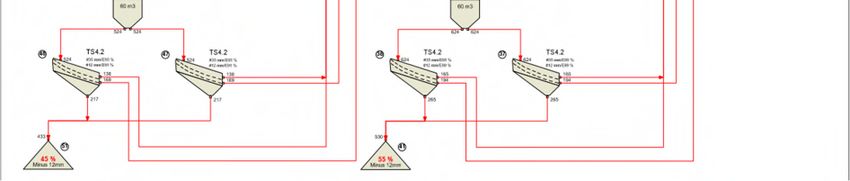
Works Approval Application Information
Miralga Creek DSO Project
Table of Contents
1     Introduction ................................................................................................................................................. 1
    1.1       Project Description .................................................................................................................................. 1
    1.2       Purpose of This Document ..................................................................................................................... 1
2     Applicant Details ........................................................................................................................................ 3
3     Premises Details .......................................................................................................................................... 3
4     Proposed Activities .................................................................................................................................... 3
    4.1       Category 5 – Crushing and Screening ................................................................................................ 3
      4.1.1      Inputs ..................................................................................................................................................... 7
      4.1.2      Process................................................................................................................................................... 7
      4.1.3      Outputs .................................................................................................................................................. 7
    4.2       Time Limited Operations ........................................................................................................................ 8
    4.3       Other Activities ......................................................................................................................................... 8
5     Index of Biodiversity Surveys for Assessment.......................................................................................... 8
6     Other DWER Approvals .............................................................................................................................. 8
7     Other Approvals and Consultation .......................................................................................................... 9
8     Applicant History ...................................................................................................................................... 10
9     Emissions, Discharges and Waste .......................................................................................................... 10
    9.1       Crushing and Screening....................................................................................................................... 10
    9.2       Waste Management ............................................................................................................................ 11
    9.3       Controls ................................................................................................................................................... 11
    9.4       Environmental Setting ........................................................................................................................... 12
      9.4.1      Climate ................................................................................................................................................ 12
      9.4.2      Surface Hydrology............................................................................................................................. 13
      9.4.3      Biodiversity .......................................................................................................................................... 13
    9.5       Key Receptors ........................................................................................................................................ 13
10        Submission of Other Relevant Information ........................................................................................ 14

180-LAH-EN-RPT-0004 v 1.0                                                     23/12/2020                                                                                     ii
                                               Uncontrolled when printed. Refer to Atlas Iron ECMS for the latest version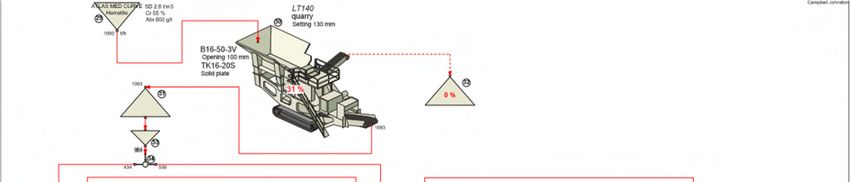
Works Approval Application Information
Miralga Creek DSO Project

List of Tables

Table 3-1: Premises Legal Description .................................................................................................................. 3
Table 4-1: Summary of the Crushing and Screening Plant .............................................................................. 4
Table 7-1: Project Stakeholders ............................................................................................................................. 9
Table 8-1: Atlas's Prescribed Premises Instruments ........................................................................................... 10

List of Figures

Figure 1-1: Regional Location ................................................................................................................................ 2
Figure 4-1: Indicative Schematic of Crushing and Screening Plant Layout ................................................. 5
Figure 4-2: Indicative Layout – Crushing & Screening Area............................................................................. 6

List of Other Attachments

Attachment 1A: Proof of Occupier Status
Attachment 1B: ASIC Company Extract
Attachment 2: Premises Maps
Attachment 5: Other Approvals and Consultation Documentation
Attachment 6A: Emissions and Discharges
Attachment 7: Siting and Location
Attachment 9A: Proposed Fee Calculation (Proposed Works Approval Fee)

180-LAH-EN-RPT-0004 v 1.0                                                 23/12/2020                                                                          iii
                                             Uncontrolled when printed. Refer to Atlas Iron ECMS for the latest version
Works Approval Application Information
Miralga Creek DSO Project
Abbreviations
 ASIC                       Australian Securities and Investments Commission

 ASX                        Australian Securities Exchange

 DAWE                       Department of Agriculture, Water and the Environment

 DMIRS                      Department of Mines, Industry Regulation and Safety

 DPLH                       Department of Planning, Lands and Heritage

 DWER                       Department of Water and Environmental Regulation

 EP Act                     Environmental Protection Act 1986

 EPBC Act                   Environment Protection and Biodiversity Conservation Act 1999

 km                         Kilometre

 kVA                        Kilovolt-amperes

 ML                         Megalitre

 MOC                        Mining Operations Centre

 Mtpa                       Million tonnes per annum

 RIWI Act                   Rights in Water and Irrigation Act 1914

 ROM                        Run of mine

 WA                         Western Australia

 WWTP                       Wastewater Treatment Plant

180-LAH-EN-RPT-0004 v 1.0                                    23/12/2020                                      iv
                                Uncontrolled when printed. Refer to Atlas Iron ECMS for the latest version
Works Approval Application Information Miralga Creek DSO Project 1 Introduction 1.1 Project Description Atlas Iron Pty Ltd (Atlas) is currently seeking approvals to develop the Miralga Creek Direct Shipping Ore Project (the Project). The Project is an iron ore mine located in the Pilbara region of Western Australia (WA), approximately 100 km south-east of Port Hedland, along the Marble Bar Road (Figure 1-1). The Project comprises above water table mining of iron ore from five satellite pits within three discrete mining areas, spread over 30 km. The pits will be mined in a staged manner by a small, mobile mining fleet using conventional drill and blast, load and haul methods. The Project will involve mining iron ore at a rate of approximately 2 Mtpa on a day shift only basis for seven days a week over a four to five-year period. Ore will be trucked to the run-of-mine (ROM) pad at Miralga West for crushing and screening (Attachment 2). The plant will produce two products, lump (40 mm – 6.3 mm) and fines (
650000 675000 700000 725000 750000 775000 800000
Port Hedland De
7750000
7750000
Gr
ey
R ive
r
Pa
rd
oo
±
Beebin ga
C
re
ek
0 km 20
rra Creek
1:625,000
Page size: A4
7725000
7725000
Projection: GDA 1994 MGA Zone 50
k
ree
er
aC
Ri v
East St relley River
ley
b
trel
Tab
st S
We
ba
Tab
Tu r
n er R
i ver
Ea st
Pear C reek
7700000
7700000
Mar
b le B
ar R
d
ver
Sha w Ri
Six Mile Cree
Mira
Wa r
lg a
ralo
k
Cre
g Cr n
Development Envelope
ek
Atlas Iron
eek
Prescribed Premise Boundary
r
Rive
Talg a R
Miralga Creek Proposal
k
7675000
7675000
Yu
le Project Tenure ree
eC
n
R
nga
Tu he
( Populated Places r ne Mc
p
i
Coo
ve r
ive
! r Ri
r
ve
Railway Line r
Highways
Abydos
Main Roads
Great Northern Hwy
Minor Roads
Major Watercourse
Marble Bar
650000 675000 700000 725000 750000 775000 800000
File Name: GIS_3153.mxd Source & Notes: Figure No:
Date: 21/12/2020 R e g io n a l L o c a tio n 1 -1
Author: Chris.Maude
M IR A L G A C R E E K A tla sWorks Approval Application Information
Miralga Creek DSO Project
2 Applicant Details
Atlas Iron Pty Ltd (ACN 110 396 168) is the Applicant of this Proposal. Atlas was acquired by Hancock
Prospecting Pty Ltd in 2018, at which time it was de-listed from the Australian Securities Exchange
(ASX). Atlas is an Australian and Securities and Investment Commission (ASIC) listed company, as
demonstrated in Attachments 1A and 1B.
3 Premises Details
The prescribed premise is located entirely within mining tenement M 45/1282 (Table 3-1), which is
currently in the final stages of being granted to Atlas. Atlas will provide confirmation of the granting
of M 45/1282 when available. Atlas currently holds exploration tenement E 45/4987 covering a similar
area.
The indicative location of the crushing and screening facility is shown in the premises map
(Attachment 2).
Table 3-1: Premises Legal Description
Prescribed Premise Category Premises Legal Description
Category 5 – Processing or beneficiation of
M 45/1282
metallic or non-metallic ore
4 Proposed Activities
This chapter provides a description of the Project’s prescribed activities. Clearing has been
approved under Ministerial Statement No. 1154 dated 23 November 2020 and is not included in this
application (see also Section 6).
Subject to the receipt of key approvals, construction of this Project is anticipated to commence in
April 2021, with mining commencing in January 2022. The project has a mine life of four to five years
with expected completion in 2026.
4.1 Category 5 – Crushing and Screening
A crushing and screening plant (also referred to as an ore handling plant or OHP) is required to
process ROM ore to the target product sizes prior to road transport to the port at Utah Point.
The crushing and screening plant will be brought to site and assembled after key environmental
controls are in place. For construction, the key controls are stormwater diversion structures and a
downstream sediment control area that will be built prior to the plant being constructed, to enable
dirty stormwater and or spilt chemicals (e.g. diesel) to be controlled within the prescribed premise
boundary.
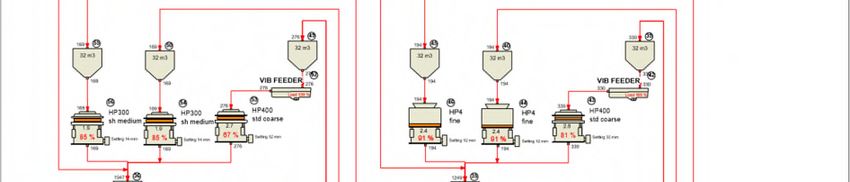
A summary of the crushing and screening facility details is provided in Table 4-1. An indicative
schematic of the crushing and screening plant layout and its location within the ROM pad is
provided in Figure 4-1 and Figure 4-2.
180-LAH-EN-RPT-0004 v 1.0 23/12/2020 3
Uncontrolled when printed. Refer to Atlas Iron ECMS for the latest versionWorks Approval Application Information
Miralga Creek DSO Project
Table 4-1: Summary of the Crushing and Screening Plant
Component Overview
Crushing and screening plant, operating on dayshift only, 7 days per
week, with a design capacity and expected production rate of
2 Mtpa.
Pending the receipt of necessary approvals, key dates are as follows:
Indicative Timing
Scope, size and scale, Development Stage
(Calendar Year)
including details as to
Obtain key environmental approvals Q1 2021
frequency, production
and design capacity Commence site construction Q2 2021
Commence mining Q4 2021
Commence shipping Q2 2022
Mining ceases Q3 2026
Decommissioning and closure Q3 2027
The crushing and screening plant will include the following:
1x feeder and grizzly.
1x jaw (primary crusher).
1x (secondary) cone crusher.
Key infrastructure and
1x triple deck sizing screen.
equipment
2x radial stackers.
2x cross belt samplers.
Weightometers.
Metal detection units.
Unique or non-standard
None.
processes or operations
Emission discharge points at the crushing and screening plant include
transfer chutes and stacker discharge as shown in the crushing and
screening process flow diagram (Figure 4-1). Potential emissions from
the crushing and screening facility and associated discharge points
are:
Noise
Crushing and screening plant.
Associated vehicle movements and equipment and
machinery operation (e.g., rock breaker and diesel
Emissions and emission generators).
discharge points Dust:
ROM stockpile (feeds the crushing and screening plant).
(Emissions are discussed
Crushing screening plant, specifically primary feed hopper,
further in Section 9)
conveyor transfer points and stackers
Product stockpiles
Associated vehicle movements and equipment and
machinery operation.
Light:
The plant will operate on day shift only. Occasional
maintenance activities may occur at night which will require
lighting.
Contaminated stormwater from the ROM pad collected at the
downstream sediment control area.
180-LAH-EN-RPT-0004 v 1.0 23/12/2020 4
Uncontrolled when printed. Refer to Atlas Iron ECMS for the latest versionWorks Approval Application Information
Miralga Creek DSO Project
Figure 4-1: Indicative Schematic of Crushing and Screening Plant Layout
180-LAH-EN-RPT-0004 v 1.0 23/12/2020 5
Uncontrolled when printed. Refer to Atlas Iron ECMS for the latest version73 8 0 0 0 73 9 0 0 0 74 0 0 0 0 74 1 0 0 0 74 2 0 0 0 74 3 0 0 0
Location
0
±
Kilometers 1
Camp
Overview
Sca le 1:30,00 0 M iralga
76 7 8 0 0 0
76 7 8 0 0 0
Pag e size: A 4 W e st
Projection: G DA 199 4 M G A Zo ne 50
76 7 7 0 0 0
76 7 7 0 0 0
Laydown 0 Kilometers 5
Haul Road
Haul Road
To M ira lg a E a s t
76 7 6 0 0 0
76 7 6 0 0 0
0 Meters 200
ROM
R o a d Tra in
R o u te s M ira lg a W e st
Stockpile
76 7 5 0 0 0
76 7 5 0 0 0
(Mineralised
C ru s h e r Waste)
Haul Road
E x -P it
R O M F in g e rs
76 7 4 0 0 0
76 7 4 0 0 0
R o a d Tra in Waste
Rock
F in g e rs
Dump
Pit
76 7 3 0 0 0
76 7 3 0 0 0
P re sc rib e d P re m is e B o u n d a ry
H aul R oad
Laydow n
76 7 2 0 0 0
76 7 2 0 0 0
P it
ROM
S to c k p ile (M in e ra lis e d W a s te )
W a s te R o c k D u m p
73 8 0 0 0 73 9 0 0 0 74 0 0 0 0 74 1 0 0 0 74 2 0 0 0 74 3 0 0 0
File N am e : G IS _ 31 3 9 .m xd Fig ure :
Da te : 15 /1 2/202 0 So urce & N o te s: In d ic a tiv e R O M P a d L a y o u t 4 -2
Autho r: C hris .M a ude
M IR A L G A C R E E K A tla sWorks Approval Application Information
Miralga Creek DSO Project
4.1.1 Inputs
Once operational (and during commissioning) the key inputs to the crushing and screening plant
are:
Power (diesel generators).
Water for dust suppression and conditioning of the ore.
Mined ore.
4.1.2 Process
Ore mined from the open pits will be hauled via haul trucks to the ROM pad, where it will be
stockpiled prior to processing. The ROM area will include a ROM stockpile (capacity of
approximately 20,000 t), an oversize ore stockpile, rock breaker, crushing and screening plant,
product stockpiling area, load-out loop, weighbridge, contractor workshop and parking area for
heavy mining equipment.
Front end loaders will feed the stockpiled ore into the crushing and screening plant, where it will
undergo two crushing stages and two screening stages before the ore is fed out onto the product
stockyard (with an approximate total capacity of 40,000 t) via two radial stackers (one for lump
product and one for fines product). The capacity of the live product stockpiles (below the radial
stackers) will be approximately 20,000 t.
Oversized ore (too large for the crusher feed) will be separated into an oversize ore stockpile which
will be periodically processed using a rock breaker before being re-fed into the crushing and
screening plant.
The plant is expected to have an average throughput of 600 tonnes per hour (tph). Instantaneous
plant throughput rates may be up to 800 tph. The plant will be operated during day shift only and is
expected to operate approximately 3,300 hours per annum. Based on the maximum instantaneous
throughput, the crusher would have the capacity to process approximately 7 Mtpa.
The in-situ moisture content of the ore prior to processing is expected to range from 1 to 2%. A target
moisture content of 5% for fines and 3% for lump during processing will be achieved by application
of water sprays, which will also limit dust emissions. Water sprays will be installed on the feed bin,
strategic conveyor transfer points and stacker head chutes. In addition, a mobile truck with a water
cannon and/or spray bar will be utilised to manage dust emissions on the ROM pad.
The plant will be powered by diesel fuelled generators and controlled by a centralised control room.
Stormwater diversion structures will be constructed to divert uncontaminated stormwater around the
ROM pad, while water collected within the ROM pad will be directed to a sedimentation basin to
allow for sediment removal prior to discharge. Sedimentation basins will be designed to a 1 in 20
year annual recurrence interval (ARI) rainfall event and incorporate a rock armoured spillway to
encourage settlement of sediment and prevent erosion.
The mobilisation and construction of the crushing and screening facility is anticipated to commence
from April 2021, following which validation and commissioning will be undertaken in accordance
with plant supplier specifications in December 2021, with time limited operations commencing at
approximately the same time.
4.1.3 Outputs
The Project is anticipated to process approximately 2 Mtpa of iron ore over four to five years.
Outputs/emissions include:
180-LAH-EN-RPT-0004 v 1.0 23/12/2020 7
Uncontrolled when printed. Refer to Atlas Iron ECMS for the latest versionWorks Approval Application Information
Miralga Creek DSO Project
Dust.
Noise.
Runoff water from rain or dust suppression.
4.2 Time Limited Operations
Atlas is seeking approval for time limited operations for 90 to 180 days to allow transition from the
Works Approval up until the grant of the licence.
4.3 Other Activities
A number of other activities will be undertaken within the prescribed premise boundary which may
generate emissions that pose a risk to public health and/or the environment, including:
Clearing/ground disturbance. This activity has been considered and approved separately in
accordance with the requirements of the Environmental Protection Act 1986 (MS 1154).
Mining (including drilling, blasting and excavation) from open pits.
Construction of waste rock dumps.
Electricity generation. Diesel generators operating at a maximum capacity of 4.48 MW will be
used. This is below the 10 MW threshold for a category 52 prescribed premise.
Construction of additional infrastructure and supporting facilities including offices, workshops
and roads.
Crib facilities and ablutions at the Mining Operations Centre (MOC), with potential for discharge
of treated sewage, grey water or wash water (below 20 m3/day threshold for category 89)
Storage and use of chemicals, explosives and hydrocarbons including diesel, ammonium nitrate
and chlorine. These amounts will be less than the 1,000 m3 threshold level above which a licence
is required to register bulk storage of chemicals (category 73).
Abstraction of groundwater from the existing borefield in accordance with existing licence
(GWL168045(7)) as regulated under the Rights in Water and Irrigation Act 1914 (RiWI Act). It
therefore does not form part of this assessment.
Vehicle and equipment maintenance and washdown.
Project activities are being considered and assessed via the approval pathways discussed in
Sections 6 and 7.
5 Index of Biodiversity Surveys for Assessment
Atlas understands that DWER requires the submission of relevant biological data prior to the issuing of
approvals under the EP Act. IBSA data will be submitted to DWER as part of the Environmental
Protection Act 1986 Part IV process.
6 Other DWER Approvals
The following DWER-managed approvals are required and are in progress for the Project:
A section 38 referral was submitted on 7 April 2020 and the EPA decided to assess the Project.
The Project received approval under Part IV of the EP Act on 23 November 2020 (Ministerial
Statement No. 1154).
Water licensing is managed by DWER under the RIWI Act. The Project will use bores managed
under existing groundwater licences GWL 176408(4) and GWL 168045(7). These bores have
previously been used for mining water supply and will provide more allocation than is required
for the Project.
180-LAH-EN-RPT-0004 v 1.0 23/12/2020 8
Uncontrolled when printed. Refer to Atlas Iron ECMS for the latest versionWorks Approval Application Information
Miralga Creek DSO Project
More detail on other approvals is provided in Attachment 5.
7 Other Approvals and Consultation
This project does not constitute a Major Project, nor is it subject to a state agreement act.
Attachment 5 details the environment approvals that will be required for the Project.
As the Project has developed, Atlas has had on-going consultation with relevant stakeholders
(Table 7-1). The principal objectives of the stakeholder consultation program have been to:
Identify interested and potentially affected individuals and groups and to understand the nature
of stakeholders’ interest in the Project.
Ensure that stakeholders are properly informed about the Project and that there are adequate
and timely opportunities for stakeholders to provide input and raise issues.
Ensure that any stakeholder issues or concerns are managed with respect, are given due
consideration and are responded to in a timely manner.
Meet the relevant regulatory requirements with regard to appropriate stakeholder input to the
impact assessment and approvals process.
Atlas is committed to continuing consultation with stakeholders through the approval, construction
and operational phases of the Project to ensure stakeholders are regularly informed of Project
developments and address any concerns raised efficiently.
Consultation regarding the Project is ongoing and will continue with key stakeholders throughout the
life of the Project.
Table 7-1: Project Stakeholders
Strelley Station (Strelley Pastoral Co Pty Ltd)
Pastoral stations Hillside-Panorama Station (Hillside Station (WA) Pty Ltd)
Coongan Station (Coongan Aboriginal Corporation)
Whim Creek Mining Pty Ltd
Fastfield Pty Ltd
Mining tenure holders
Venturex Sulphur Springs Pty Ltd
Le Aussie
Nyamal People #1 and Nyamal People #10 Native Title Groups
Native title groups Nyamal Aboriginal Corporation (Registered Native Title Body
Corporate)
Shire of East Pilbara
Shire and local governments
Town of Port Hedland
Department of Mines, Industry Regulation and Safety
Department of Water and Environmental Regulation
Department of Biodiversity, Conservation and Attractions
State government agencies Pilbara Ports Authority
Main Roads Western Australia
Department of Planning, Lands and Heritage
Department of Primary Industries and Regional Development
Australian government agencies Department of Agriculture, Water and the Environment
180-LAH-EN-RPT-0004 v 1.0 23/12/2020 9
Uncontrolled when printed. Refer to Atlas Iron ECMS for the latest versionWorks Approval Application Information
Miralga Creek DSO Project
Marble Bar and Nullagine Community Resource Centre
Local and regional groups
Marble Bar Progress Association
8 Applicant History
Atlas holds or has held several instruments under Part V (Division 2) of the EP Act, as summarised in
Table 8-1.
Table 8-1: Atlas's Prescribed Premises Instruments
Project Instrument Status
L8733/2013/1 Active
Abydos DSO Project W5253/2012/1* Inactive
W5743/2014/1* Inactive
Corunna Downs DSO Project W6043/2017/1 Active
L8678/2012/1 Active
Mt Dove DSO Project
W5181/2012/1* Inactive
L8788/2013/1 Active
W5312/2012/1* Inactive
Mt Webber DSO Project
W5373/2013/1* Inactive
W5667/2014/1* Inactive
L8276/2008/2* Inactive
Pardoo DSO Project W4434/2008/1* Inactive
W5191/2012/1* Inactive
9 Emissions, Discharges and Waste
This section describes potential emissions and discharges that may be generated during the
operation of the crushing and screening facility. Mitigation and/or management measures that will
be implemented to reduce environmental impacts associated with these potential emissions and
discharges are also outlined in this section. A summary table of emission types and impacts can be
found in Attachment 6A.
9.1 Crushing and Screening
The following emissions will result from the construction and/or operation of the crushing and
screening plant (day shift only):
Emissions to air:
o Noise will be generated during construction, and also throughout operations.
o Dust emissions will be generated during ground disturbance activities for construction and
during operations.
o Light will be emitted from the crushing and screening plant at night, on occasion, for
maintenance purposes (the plant will ordinarily operate on day-shift only).
180-LAH-EN-RPT-0004 v 1.0 23/12/2020 10
Uncontrolled when printed. Refer to Atlas Iron ECMS for the latest versionWorks Approval Application Information
Miralga Creek DSO Project
Emissions to land:
o Stormwater carrying contaminants (e.g. potential diesel spill or loss of hydraulic fluid event
may be spilt to ground during construction and operations).
o Stormwater carrying sediment (e.g. fines or undersized products of crushing).
Emissions to water:
o Stormwater carrying contaminants (e.g. potential diesel spill or loss of hydraulic fluid event
may be spilt to ground during construction and operations). The water may travel
downstream to the Shaw River (approximately 450 m away).
o Stormwater carrying sediment (e.g. fines or undersized products of crushing). The water may
travel downstream to the Shaw River (approximately 450 m away).
9.2 Waste Management
All waste generated within the prescribed premise boundary shall be managed appropriately:
Putrescible and inert waste will be disposed of at the licenced onsite landfill (L8733/2013/1).
Hydrocarbon contaminated soil will be taken to the onsite bioremediation farm or disposed of
offsite at a licenced facility.
All other waste streams will be segregated and stored appropriately, with recyclables returned to
the supplier (or recycling facility) and controlled wastes managed and transported offsite in
accordance with the Environmental Protection (Controlled Waste) Regulations 2004.
Tyres will be disposed of in the Miralga West waste rock dump (see Attachment 2) as follows:
In batches separated from each other by at least 100 mm of soil and each consisting of not
more than 40 m3 of tyres reduced to pieces; or
In batches separated from each other by at least 100 mm of soil and each consisting of not
more than 1,000 whole tyres.
As soon as practicable following completion of the final waste levels in the area of tyre disposal
a 500 mm cover of soil will be applied.
9.3 Controls
Atlas’s business as usual pollution control measures include:
Hydrocarbons and dangerous goods and hazardous substances (including wastes) will be stored
and handled in accordance with the Dangerous Goods (Storage and Handling of Non-
explosives) Safety Regulations 2007, relevant Australian Standards including the design
specifications of AS 1940 – Storage and Handling of Flammable and Combustible Liquids and
relevant MSDS.
Adherence to the Atlas Hydrocarbon Management Procedure and Hydrocarbon (and
Chemical) Spill Management Procedure at all times.
Transport of dangerous goods to the project area will be undertaken in accordance with the
Dangerous Goods Safety (Road and Rail Transport of Non-explosives) Regulations 2007, and the
Australian Dangerous Goods Code.
A dangerous goods and hazardous substances register will be maintained onsite and inventory
audits will be regularly undertaken.
Controlled wastes will be managed and transported offsite in accordance with the
Environmental Protection (Controlled Waste) Regulations 2004. Offsite transport and disposal will
be undertaken by a licensed waste contractor.
180-LAH-EN-RPT-0004 v 1.0 23/12/2020 11
Uncontrolled when printed. Refer to Atlas Iron ECMS for the latest versionWorks Approval Application Information
Miralga Creek DSO Project
Spill recovery and clean up materials will be maintained at all hydrocarbon/hazardous material
storage areas. Relevant employees and contractors will be trained in the use of this equipment.
Storage facilities for hydrocarbons/hazardous substances will be contained with impervious
bunds and regularly inspected for evidence of leaks or spills.
Contamination will be reported and managed in accordance with the Contaminated Sites Act
2003.
Equipment will be regularly maintained in accordance with the manufacturer’s
recommendations.
All clearing and ground disturbance will be undertaken in accordance with Atlas Ground
Disturbance Permit Procedure (950-EN-PRO-0006) and Clearing and Grubbing Procedure (950-
EN-PRO-0002).
Clearing will be restricted under certain weather conditions where excessive dust is likely to be
generated.
Implementation of the Dust Management Procedure (950-EN-PRO-0003), including conventional
dust suppression techniques (i.e., water carts).
Vehicle speeds limits will be imposed and enforced on all Project roads.
All site employees must complete a site induction prior to work.
The Project will also implement the following management measures at the crushing and screening
facility to mitigate potential emissions:
Water will be added to the ore during processing to achieve the required dust extinction
moisture (DEM) content.
Installation and operation of water sprayers on the feed bin, strategic conveyor transfer points
and stacker head chutes.
Dust suppression (via sprinkler) on the product stockpiles.
Dust suppression (via water cart) on access roads and work areas within the crushing and
screening plant to minimise dust from vehicles and equipment (e.g., bobcats, loaders).
Regular inspections of the crushing and screening plant to assess the effectiveness of the water
sprayers.
Covered transfer chutes.
Inhalable particulate monitoring (CONTAM monitoring) on personnel as required.
Planned preventative maintenance to ensure the crushing and screening plant is operating as
designed.
Lighting, where required, directed towards the work area.
Stormwater diversion around the ROM pad.
Stormwater collected within the ROM pad will be directed to a sedimentation basin to allow for
sediment removal prior to discharge. Sedimentation basins will be designed to 1 in 20 year
annual recurrence interval (ARI) rainfall event and incorporate a rock armoured spillway to
encourage settlement of sediment and prevent erosion.
Provision of suitable waste management facilities. Siting and Location
9.4 Environmental Setting
9.4.1 Climate
The Project is located 100 km south-east of Port Hedland, along the Marble Bar Road and
approximately 40 km (at its nearest point) from Marble Bar. The region has a semi-desert to tropical
climate with highly variable, mostly summer rainfall (McKenzie, 2002; Leighton, 2004). The Pilbara
climate is significantly influenced by tropical cyclones that develop over the Indian Ocean in
Australia's north (Leighton, 2004), with typical average annual rainfall occurring predominantly from
180-LAH-EN-RPT-0004 v 1.0 23/12/2020 12
Uncontrolled when printed. Refer to Atlas Iron ECMS for the latest versionWorks Approval Application Information
Miralga Creek DSO Project
January to March. The closest official Bureau of Meteorology weather station in operation is located
at Marble Bar, located approximately 40 km south-east of the Premise. The average monthly
maximum temperature ranges from 27°C to 42°C, while the average monthly minimum temperature
ranges from 12.2°C to 26.5°C. Average monthly rainfall ranges from 0.4 mm to 114.7 mm, while the
average annual rainfall is 392.7 mm (BOM, 2020).
9.4.2 Surface Hydrology
The prescribed premise boundary is encompassed within the Pilbara Surface Water Area, regulated
under the RIWI Act.
Drainage from the Miralga West ridge flows both to the south, directly to the Shaw River, and along
some minor drainage lines which flow to the north and north-west before intersecting a minor
tributary of the Shaw River some 1.5 km to the north of the mining area (Atlas, 2020). Several
waterholes were identified near Miralga East, approximately 8 km from the prescribed premise
boundary and in a different sub-catchment.
9.4.3 Biodiversity
Twelve vegetation types (VTs) were mapped by Woodman (2019), with 80% of vegetation being
considered to be in Excellent condition. The VTs present within the prescribed premise boundary
include VTs 2, 6 and 9. None of the VTs are considered to represent Threatened or Priority Ecological
Communities. Clearing impacts to these VTs have been assessed under the Part IV process and are
not considered within this application.
Six terrestrial fauna habitat types mapped were mapped by Biologic (2020a), being Hillcrest/
Hillslope, Low Stony Hills, Major Drainage Line, Sand Plain, Stony Plain and Gorge/Gully. Sixteen caves
known to support the Ghost Bat and/or Pilbara Leaf-nosed Bat were identified, including potential
Ghost Bat maternity roost CMRC-15. Seven conservation significant fauna were confirmed present
including the Northern Quoll, Ghost Bat, Pilbara Leaf-nosed Bat, Peregrine Falcon, Northern Brush-
tailed Possum, Grey Falcon and Peregrine Falcon. The prescribed activities will be located in fixed
locations away from significant biodiversity values. Potential impacts from the Project as a whole
(not simply from the prescribed premise) are being assessed and managed under the Part IV and
EPBC Act processes.
9.5 Key Receptors
The siting and location of the premise to a 10 km radius is provided in Attachment 7. In relation to the
proposed prescribed premise location (proximity):
The nearest town is Marble Bar located approximately 50 km southeast.
The nearest river is the Shaw River, situated within the prescribed premise boundary
approximately 1 km from the ROM pad.
There are no permanent or non-permanent water holes within the prescribed premises.
The Project is located almost entirely within the native title determined area ‘Nyamal People
#10’ (WCD2019/011).
The prescribed premise is located within the Proclaimed Pilbara Groundwater Management
Areaand the Proclaimed Pilbara Surface Water Area.
The nearest environmentally sensitive area is the De Grey River, approximately 60 km north.
The nearest Threatened Ecological Community (TEC) or Priority Ecological Community (PEC) is
over 150 km away, based on a search of DBCA’s database.
The nearest recorded threatened flora is approximately 7.4 km away.
180-LAH-EN-RPT-0004 v 1.0 23/12/2020 13
Uncontrolled when printed. Refer to Atlas Iron ECMS for the latest versionWorks Approval Application Information
Miralga Creek DSO Project
A number of Priority flora records exist within or adjacent to the prescribed premise boundary,
including Euphorbia inappendiculata var. inappendiculata (Priority 2), Acacia glaucocaesia
(Priority 3), Eragrostis crateriformis (Priority 3) and Euphorbia clementii (Priority 3). Impacts to these
species have been considered via the Part IV process under the Environmental Protection Act
1986.
The nearest registered Aboriginal Heritage Site is Sulphur Springs (ID 6046) located approximately
14 km southwest of the prescribed premise boundary.
The nearest Public Drinking Water Source Area is located approximately 100 km west of the
Project.
Acid sulfate soils (ASS) are located in the southeast portion of the boundary, including a high to
moderate risk and moderate to low risk area. The ASS risk mapping is coincident with an
upstream part of the Shaw River approximately 2 km from the ROM pad.
The most significant environmental constraint identified focuses on flora and vegetation and
threatened fauna. These are focused on in the Part IV approval and under the EPBC Act referral to
protect Northern Quoll and Ghost Bat.
10 Submission of Other Relevant Information
The fee is calculated in Part 12 of the form. Further details are provided in Attachment 9.
There is no commercially sensitive or confidential information.
180-LAH-EN-RPT-0004 v 1.0 23/12/2020 14
Uncontrolled when printed. Refer to Atlas Iron ECMS for the latest versionYou can also read


