Baker District Redevelopment Urban Design Master Plan
←
→
Page content transcription
If your browser does not render page correctly, please read the page content below
May 2021 / Draft Report

Baker District Redevelopment
Urban Design Master Plan
Guelph, Ontario
Windmill Development / Urban Equation / Diamond Schmitt Architects / DTAH / Melloul Blamey Construction / RWDI / Stantec Consulting / WSP / Urban Strategies Inc. / GSP Group Inc.
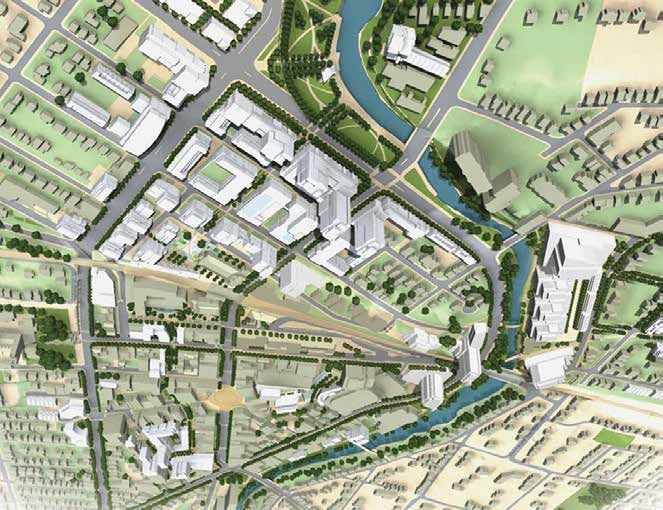
Cover: Aerial Photograph of Downtown Guelph
in Winter, ca. 1940 (Guelph Civic Museum)
Baker District Redevelopment - Urban Design Master Plan

Contents                                            Introduction                         Part 2                                       Part 3
                                                    01 A Vision for the Baker District   25 2.1 Urban Design Master Plan              51 3.1 Development Yields
                                                    01 Vision                            25   Overview                                51 Preliminary Program Areas
                                                    02 Process                           26   Development Concept                     51 Affordable Housing Strategy
                                                    04 Team                              31   Transitions
                                                                                         31   Views and Vistas                        Part 4
                                                    Part 1                               32   Access, Circulation and Loading
                                                                                         33   Bicycle Circulation and Parking         55 4.1 Phasing and Implementation
                                                    07 1.1 Physical Context              33   Vehicular Parking                       55 Phasing + Implementation
                                                    07 Site Definition                   34   Architectural Treatment + Materiality
                                                    08 Site Attributes                   36   Lighting and Signage
                                                    10 Site in Context                   36   Micro-Climate

                                                    16 1.2: Policy Context               44 2.2: Integration with the Public Realm
                                                    16 Official Plan & Secondary Plan    44 Integration with Streetscape
                                                    19 Other Guidelines and Documents    44 Publicly Accessible Open Spaces

                                                    20 1.3: Urban Design Principles      46 2.3: Sustainable Urban Design
                                                    20 Urban Design Principles           46 General
                                                                                         48 Carbon and Energy

                                                                                                                                      Alternate formats are available as per the
                                                                                                                                      Accessibility for Ontarians with Disabilities by
                                                                                                                                      contacting 647-620-2987 or TTY 519-826-9771
                                                                                                                                                                                         iii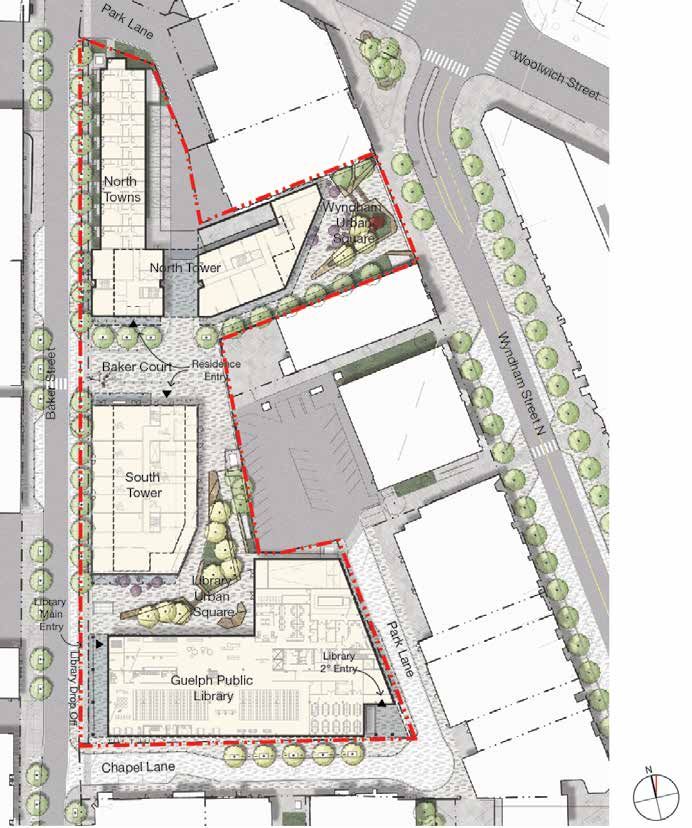
Introduction
Baker District Redevelopment - Urban Design Master Plan

A Vision for the Baker District                     Vision                                                  3. Improve connectivity for pedestrians                 5. Provide public parking intelligently: Public
                                                                                                               cyclists and vehicles: Wyndham Street North             parking will be provided below the Public Library,
                                                    The City of Guelph’s objective for the Baker               will be enhanced by Wyndham Urban Square,               in addition to residents’ parking beneath the
                                                    District Redevelopment is to transform the existing        providing a public gateway to the property. New         residential developments, to accommodate
                                                    municipal parking lot fronting Baker and Wyndham           retail, institutional and residential uses located      visitors to the site and support the objectives
                                                    Streets into a compact district nestled in the city’s      at grade across the site will animate flanking          of the City’s Parking Master Plan. Below-grade
The Baker District Redevelopment will be a          historic core and anchored by a new central library        streets and open spaces and put “eyes on the            parking is provided and its efficiency is proposed
thriving community hub that is physically,          and network of open spaces.                                street” to make them feel safe and inviting.            to be further enhanced by car share spaces
socially, and environmentally connected to                                                                     Public realm improvements will encourage and            and other strategies to reduce overall parking
Guelph’s urban fabric.                              Windmill understands and is aligned with the               support pedestrians and cyclists. There will be         loads within the development. Electric vehicle
                                                    City’s objectives, as outlined in its Strategic Plan       vehicular access from Baker Street through the          charging stations will be provided to encourage
                                                    and other documents, to transform the site into a          site, via Chapel Lane and a new internal road           the transition to a lower carbon footprint.
                                                    vibrant and important part of the Downtown. The            extension of Park Lane, to the two separate             More active modes of transportation will be
                                                    Vision for the Baker District Redevelopment is to          entrances to the below grade parking, one               encouraged by providing ample bike parking and
                                                    meet and hopefully to exceed the City’s stated key         beneath the north tower and the other beneath           convenient access to public transit options as
                                                    objectives, as follows:                                    the Library. Additional pedestrian connections          alternatives to car-oriented solutions.
                                                                                                               through the site from Wyndham Street North
                                                    1. Increase downtown visitation: With the                  further its porosity and interconnectedness          6. Incorporate best practices in
                                                       new Public Library and Library Urban Square,            to existing informal pedestrian pathways. A             environmental design: Windmill Development
                                                       the residential buildings, and the potential            potential additional cycling connection from            has long been known as an environmental
                                                       for additional community facilities, the Baker          Wyndham Street North to the Baker District,             leader in the development community, with
                                                       District will become a lively mixed-use walkable        along with new cycling infrastructure on Baker          projects to date certified to a LEED Platinum
                                                       development in which to live, work, play and            Street and Chapel Lane, will enhance the cycling        standard demonstrating strong leadership
                                                       learn.                                                  network associated with the Baker District.             through a proven track record in this sphere.
                                                                                                                                                                       Currently, Windmill are going “beyond LEED”
                                                    2. Increase the downtown residential                    4. Establish new architectural landmarks: The              by adopting One Planet Living as a framework
                                                       population: The new residential buildings,              proposed development will extend the language           for sustainability for the Baker District, with a
                                                       accommodating hundreds of new residential               of high quality, memorable architectural                particular focus on zero-carbon, local food and
                                                       units, will support the City’s intensification          landmarks in Downtown Guelph. Wyndham                   sustainable transportation opportunities.
                                                       goals and provide a market for the commercial           Urban Square provides an open space anchor
                                                       components of the development as well as for            on Wyndham Street North. The two residential         7. Provide affordable housing for a range of
                                                       other downtown businesses. Integrated outdoor           towers flanking Baker Court provide definition          household types and incomes: Windmill are
                                                       spaces will offer the new urban residents               and active frontages to Baker Street, with              committed to providing homes for a range of
                                                       desirable outdoor amenities to ease their               carefully designed tower forms providing a              incomes including affordable housing as part of
                                                       transition from more traditional housing types.         refined “sculpted” massing to the buildings while       the Baker District Redevelopment. The actual
                                                                                                               accommodating balconies where appropriate.              final affordable component will be a function of
                                                                                                               The new Public Library and Library Urban                working with City programs and other housing
                                                                                                               Square create a civic anchor at the south end of        providers to incorporate this affordability
                                                                                                               the site, reinforcing the prominence of the Baker       component into the development.
                                                                                                               Street and Chapel Lane address.

                                                                                                                                                                                                                          01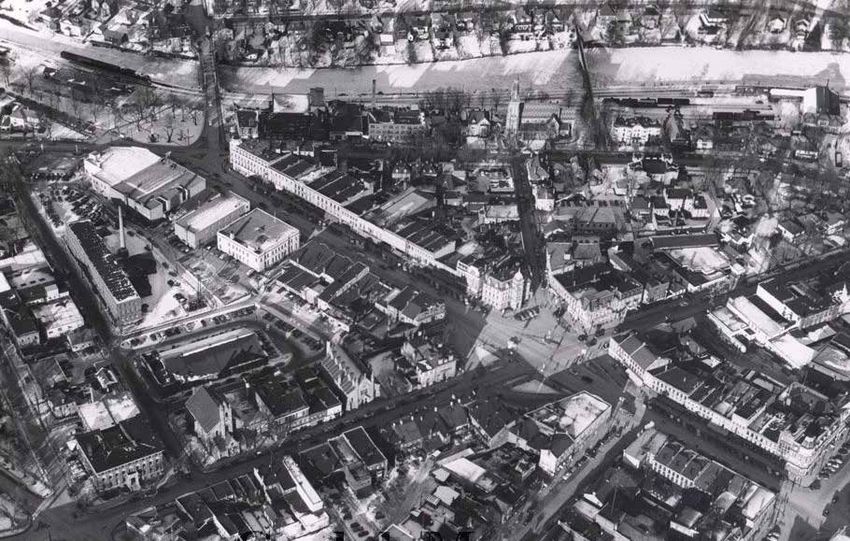
Baker District Redevelopment - Urban Design Master Plan

Process                                                  15, 2019, and focused on informing the public as                                                         and members of the Windmill and Invizij teams,
                                                         to the One Planet Living Sustainability framework                                                        who were on hand to answer questions about
The Urban Design Master Plan for the Baker District      being used for the Baker District, and collect their                                                     each of the project components. The room was
Redevelopment follows the Terms of Reference             feedback on sustainable design priorities. The                                                           outfitted with a series of informational poster
outlined by the City of Guelph. The Plan’s contents      third round of consultation took place on May 29,                                                        boards showcasing the City’s engagement process
are developed in partnership with the City of            2019, and focused on the Guelph Public Library                                                           and timeline and preliminary plans and drawings
Guelph in order for the urban design elements of         component of the project, including preliminary                                                          for the District. In addition to drawings, Windmill
the development to be evaluated, with the ambition       design and programming ideas as well as initial                                                          Development Group also introduced One Planet
to:                                                      considerations pertaining to the proposed Urban                                                          Living design principles—a planning sustainability
• Ensure new developments have examined                  Square.                                                                                                  framework based on a desire to reduce the
    opportunities/constraints of a site; and                                                                                                                      impact of the way we live, build, and consume.
• Provide design solutions that are context-             Sustainable Decision-Making                                                                              This framework will form the foundation of the
    sensitive and respond to urban design policy                                                                                                                  redevelopment. Invizij, the design team tasked
    context.                                             A coordinated approach to community engagement                                                           with developing the new central library program
                                                         fosters understanding between individuals. Through                                                       and concept design, provided information about
The Urban Design Master Plan process for the             a sustainable decision-making approach, City                                                             the programming and concept design work for the
Baker District Redevelopment includes a significant      and project staff build on common ground and                                                             new central Guelph Public Library, and precedent
public consultation program, allowing for multiple       strive to develop sustainable decisions. Financial                                                       imagery demonstrating best practices in library
engagement opportunities for the development             sustainability means the project team can afford                                                         design.
team and key stakeholders to engage with the             to implement the decision or that the decision
public. Through this engagement program and              will have a financial benefit. Cultural and social                                                       Once attendees reviewed the boards, they were
multiple reviews by City staff, the Urban Design         sustainability considers how a decision may impact                                                       invited to record their thoughts at a feedback
Master Plan seeks to summarize the urban design          the culture of an individual or society as a whole.    Figure 1 Relationship between the components of   stations.
ambition and details of the proposed development         Environmental sustainability refers to our natural     sustainable decision-making
sufficient to articulate how the elements of the         environment. Technical considerations determine                                                          Round 2 Consultation
public and private realm will work together to create    if an alternative can be built or used. Stakeholder
a development of high quality that fits well into its    input refers to participant’s opinions about the                                                         On January 15, 2019, the City of Guelph, along
context.                                                 decision to be made.                                                                                     with Windmill Development Group and Invizij
                                                                                                                                                                  Architects Inc., hosted two identical drop-in
Public Consultation Program                              Below are summaries of each event, and feedback                                                          workshops to gather input from the public to inform
                                                         details provided as an Appendix to this report:                                                          the sustainability vision and goals for the Baker
The Baker District Redevelopment engagement                                                                                                                       District redevelopment project. The workshops
strategy (including the new central library) is led by   Round 1 Consultation                                                                                     were focused on site-wide sustainability, including
the City of Guelph and follows the City’s Community                                                                                                               the new central library, residential, commercial, and
Engagement Framework. Windmill provides                  On November 29, 2018, the City of Guelph, along                                                          institutional uses, public parking, and open space
engagement support for the overall Baker District,       with Windmill Development Group and Invizij                                                              design.
and Invizij provided engagement support for the          Architects Inc., hosted two identical public open
library and adjacent urban square in the early           house sessions to deliver an overview of the Baker                                                       In order to communicate the team’s initial
phases of those components’ design.                      District Redevelopment. The open houses provided                                                         sustainability goals and strategies, the room
                                                         members of the public, 270 attendees in total, with                                                      was outfitted with 11 stations related to the new
To date three rounds of public engagement have           an opportunity to learn about the Baker District                                                         central library and each of the ten One Planet
been undertaken by the project team and the City         Redevelopment journey — how we got here and                                                              Living principles. Each station included draft goal
of Guelph. The first round of meetings occurred          where we are going — and how they can get                                                                statements, precedent imagery representing
on November 29, 2018, wherein the project team           involved, stay informed and have their say as the                                                        potential strategies, and space to record feedback
sought to share the project’s origins and vision,        multi-year project progresses.                                                                           about goals and ideas deemed missing.
inform the public as to the project schedule and
current functional plans, and obtain feedback. The       Following a short presentation, attendees were                                                           Upon arrival, public participants were invited to
second round of meetings were held on January            given the opportunity to interact with City staff                                                        provide feedback in a number of ways. First, City

02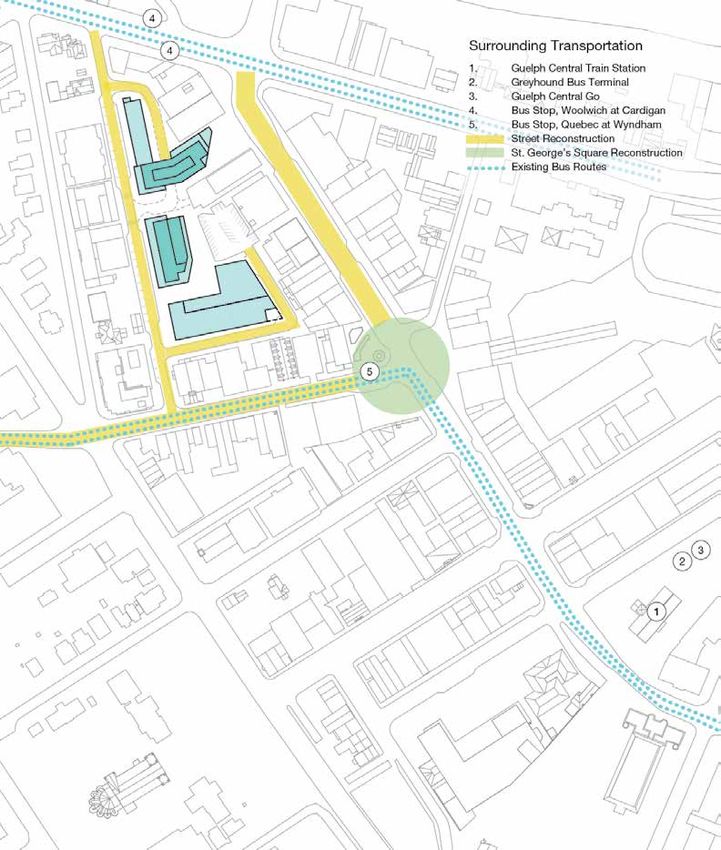
Baker District Redevelopment - Urban Design Master Plan

and project staff were on hand to answer questions        The team also spoke to two working options for the
and receive feedback about all components of the          Urban Square: a water feature and a grassy area.
project. Second, each participant was asked to vote       Following his presentation, John asked participants
for their favourite goal statements (50 statements        which they prefer.
in total) using ten sticky dots handed out at the
sign-in table. Finally, each station was outfitted with   The subsequent open house gave participants an
sticky notes for participants to record feedback and      opportunity to examine a series of scaled models
suggestions about what they liked and what was            showing the design progression from 2018 to today.
missed.                                                   Information boards were also set up providing a
                                                          series of drawings and sketches, including floor
An online survey, hosted on the City of Guelph’s          plans for each level of the library, and a set of
website, was developed for those individuals              preliminary sustainability strategies. Based on this
who could not attend the workshop. The survey             information, participants were asked to validate
provided respondents with the opportunity to vote         the library’s spatial layout, the design of the
on their favourite draft goal statements and provide      Urban Square, and the preliminary sustainability
feedback on what was missed. The survey was live          strategies.
for a period of 17 days.
                                                          After the event, an online survey hosted on the City
Round 3 Consultation                                      of Guelph’s website was made available for those
                                                          individuals who could not attend the open houses.        Figure 2 Audience at first Public Meeting            Figure 3 Audience participation in visioning the
On May 29, 2019, the City of Guelph, along with           The survey included the same questions asked at                                                               Baker Street Redevelopment
Windmill Development Group and Invizij Architects         the open house.
Inc., hosted two identical open houses to validate
the work completed since January 15. 163 people           43 out of the 165 participants voted on whether or
attended the two sessions. The open houses                not the library’s spatial layout provides the types of
focused on the north block of the redevelopment,          services they would expect from a central library.
including preliminary design work on the new              The majority of those who voted (38) said “yes”
central library and the Urban Square. Participants        to the question of whether the preliminary library
were also shown preliminary sustainability                layout includes the services one might expect from
strategies, which emerged from the feedback               a central library.
received at the One Planet Living workshops in
January.                                                  48 out of the 165 participants voted on whether
                                                          or not the Urban Square provides the types of
Each session was divided into two parts: a                experiences they would expect from a civic space.
presentation and an open house. The presentation          The majority of those who voted (33) said “yes”
was delivered by Duncan Bates from Diamond                to the question of whether the preliminary urban
Schmitt Architects and John Hillier from DTAH.            square provides the experiences one might expect
The presentation included an overview of how the          from a civic space.
design has evolved, and the major milestones that
informed that evolution.                                  37 out of the 165 participants voted on whether or
                                                          not the preliminary sustainability strategies reflect
The project team also presented preliminary               their green goals and ambitions for Baker District.
sketches of the library and urban square, including       The majority of those who voted (33) said “yes” to       Figure 4 View of One Planet Living Design Charrette with the Public
floor-by-floor plans. This was the public’s first         the question of whether the sustainability strategies
opportunity to see the proposed spatial layout of         reflect my green goals and ambitions for Baker
the library, including the new catering kitchen and       District.
recording studio.
                                                          Participants were also given comment cards to
                                                          record their feedback.

                                                                                                                                                                                                                           03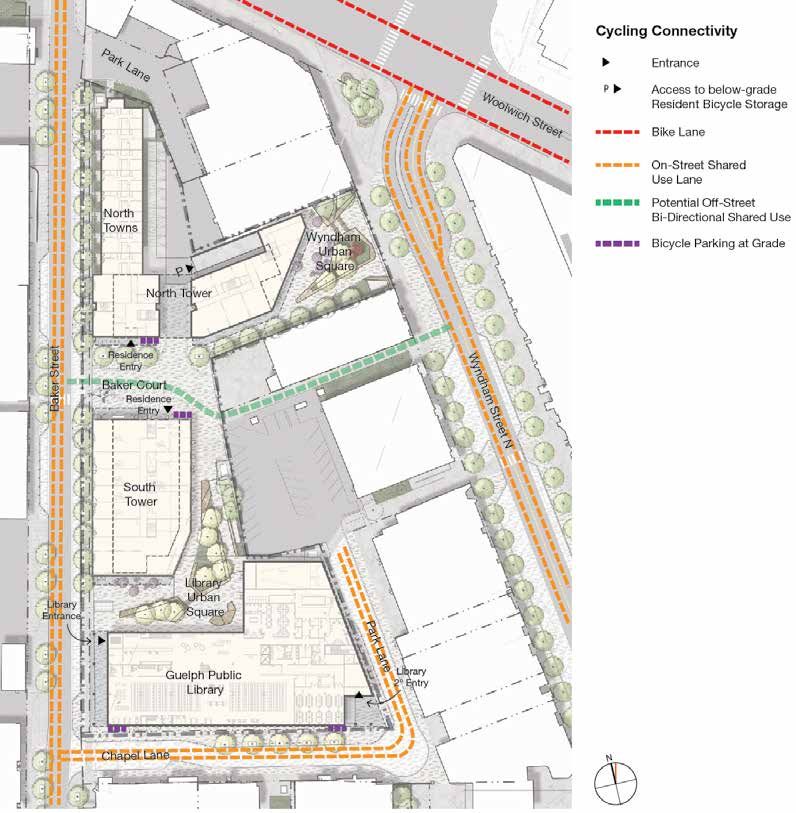
Baker District Redevelopment - Urban Design Master Plan

UDMP Submission + Subsequent Redesign                   •   Wyndham Street frontage is maintained as            Team                                                     Diamond Schmitt Architects Incorporated
                                                            an Urban Square, with potential retail or                                                                    (DSAI)
Following the three rounds of public consultation           institutional uses animating the space; and         Windmill Development Group Ltd (Windmill)
described above a draft Urban Design Master Plan        •   Pedestrian porosity through the block is                                                                     Diamond and Schmitt Architects Incorporated is
was submitted to the City of Guelph in June 2020            maintained by a series of mews and open space       Established in 2003, Windmill is dedicated to            a leading Canadian full-service architectural firm
for Council approval. Due to COVID-19 restrictions          connections.                                        transforming conventional development practices          based in Toronto with a practice that is worldwide.
in place at that time, the submitted UDMP was                                                                   using a triple bottom line approach: People, Planet,     The firm provides a broad range of services - from
posted to the City’s Public Engagement online           The revised design approach for the Baker District      Prosperity. Based in Ottawa and Toronto, Windmill’s      master planning and urban design, feasibility
platform and an oral, taped presentation was            was presented to the Committee of the Whole             work harnesses innovations that optimize the use         studies, and functional programming to interior
prepared by the design team as a summary of the         meeting on Monday, October 5th, 2020 and public         of land, water, air, energy and building materials       design and full architectural services. Our popular
UDMP’s contents. Comments were collected from           deputations and deliberations were conducted            towards the goal of zero ecological footprint            success has been achieved by unremitting attention
the public through the online engagement platform.      that day and during a special City Council meeting      buildings.                                               to user needs and aspirations whereas critical
                                                        Wednesday, October 7th, 2020. Council voted                                                                      recognition has been achieved through commitment
In July 2020 the City of Guelph notified Windmill       8 to 5 in favour of the Baker District alternative      Windmill has completed over $1 billion of new            to planning and design from first principles.
Development Group that the properties on                option, 8 to 5 in favour of the construction of an      developments since its inception and is currently
Wyndham Street North that were anticipated              88,000-square-foot library as proposed in the           actively involved in projects in Ottawa, Toronto and     Sensitive to the needs and aspirations of our clients,
to be acquired by the City so as to become              alternative option. With Council approval for the       Hamilton.                                                we deliver design solutions that meet and exceed
part of the Baker District Redevelopment would          alternative option in place, Windmill Development                                                                expectations of form and function - delivered on
not be acquired. In response to this change in          Group were asked to revise the Urban Design             The Partners of Windmill have held prominent             time and on budget.
property configuration, the Windmill-led design         Master Plan and update the library design for the       positions in the Canadian design, construction,
team prepared an alternative approach to the            stand-alone building in Baker District. Windmill were   brownfield and green real estate industry for            DSAI will have responsibility for the design of the
site’s redevelopment that maintained the design         also asked to conduct two engagements with the          over thirty years resulting in an unmatched value        Guelph Public Library.
principles and intent of the previous vision, but       Downtown Guelph Business Association (DGBA)             proposition when it comes to responsible urban infill
working within the footprint of exclusively the City-   prior to submitting the revised UDMP to Council for     and property revitalization.
owned lands.                                            approval.                                                                                                        DTAH
                                                                                                                Sustainability is at the forefront of Windmill’s team
This alternative project boundary reduced the           DGBA Consultation                                       mission and one of our core beliefs. Our focus           DTAH architects, landscape architects, planners
frontage on Wyndham Street North by half,               Windmill, with the City of Guelph, met with             is on the triple bottom line to create beautiful,        and urban designers, have been offering a unique
triggering the following design responses:              the DGBA first on the Site of the Baker District        sustainable environments that consume significantly      mix of interdisciplinary services since 1972. We
• Library Lane was no longer feasible nor practical     Redevelopment on November 23, 2020 in order to          less energy and are delightful communities in which      share a profound commitment to contextual,
    without removing the Urban Square from              walk the property together and discuss the revised      to live, work and play.                                  responsible, meaningful and beautiful design.
    Wyndham frontage; and                               design approach.                                                                                                 Areas of specialty include community planning,
• Library frontage on Wyndham Street North was                                                                  Windmill is proud of the breadth and depth in our        urban and street design, transportation and bridge
    no longer feasible or practical without removing    Windmill, DTAH and the City of Guelph met again         portfolio of “industry leading” projects. They are       design, renovation/restoration and facilities for
    Urban Square from Wyndham frontage.                 with the DGBA on April 19th, 2021. In this meeting,     walkable mixed-use communities on urban infill           residential, educational, institutional, recreational,
                                                        conducted virtually due to COVID-19, a presentation     sites, employing a wide range of strategies at the       and commercial/retail uses.
The rethink of the Baker District Redevelopment         was made that included details of the emerging          building level and the community level to lower          The studio has established a solid reputation
in light of alternative boundary led to the following   design solution being captured in the UDMP and a        energy and water demands and link transportation         for providing insightful design solutions to often
changes that are captured in the content of this        review and discussion of the DGBA’s stated Goals        systems to the wider community to encourage              complex problems. Its collection of over 160
revised UDMP submission:                                and Synergies as they pertain to the Baker District.    transit use and active transportation. We have           national and international design awards is a vote of
• The Library and the Institutional uses exchanged                                                              focused strong attention on building envelopes,          respect from its peers.
     locations so that the Library can be a stand-      Finally, the Windmill team prepared a preview           energy performance, and geothermal energy
     alone facility with programming, financial and     presentation for the DGBA of the UDMP in its final      systems to provide low carbon solutions for              DTAH will have responsibility for the Urban Design
     construction advantages; and                       form, scheduled on May 25, 2021. There were             heating and cooling. With an emphasis on design          and Landscape Design of the overall project as well
• The institutional/commercial use is moved             no attendees registered from the DGBA, and the          excellence, healthy living, inclusivity and resiliency   as architectural responsibility for the north and
     to within the northern podium where it can         Executive Director decided it would be best to          we are building complete communities for us and          south residential towers.
     be more easily accommodated beneath the            review the UDMP and submit their comments within        for future generations.
     residential tower than the large open spans of     the formal 2-week public comment period instead.
     the Library; and

04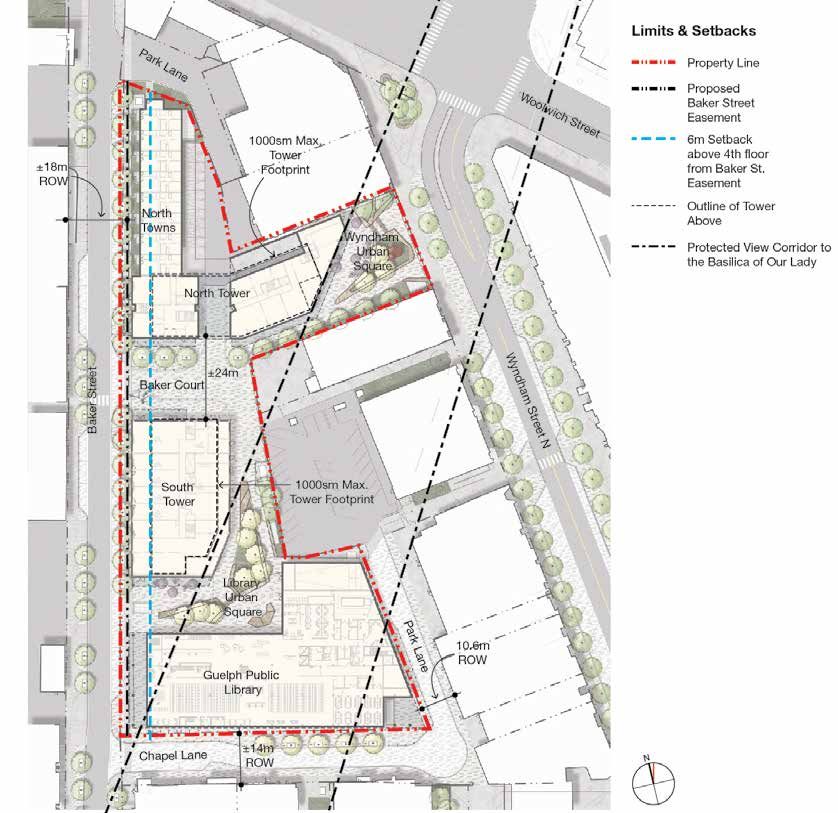
Baker District Redevelopment - Urban Design Master Plan

Urban Equation                                          RWDI will be providing the micro-climate impact          services (as identified through topographic survey       the firm’s expertise is understanding land – its
                                                        study assessments for the Baker District, including      or any historical engineering drawings available)        development, constraints and opportunities and
Urban Equation has been a leader in the North           the Pedestrian Wind Study required as part of this       as well as the existing services surrounding the         the strategies needed to best contribute to a
American real estate sustainable development            Urban Design Master Plan.                                site within the existing rights-of-way (ROW). As         community’s growth and development. At the
consultancy business since 2003 when it was                                                                      part of the FSR, a preliminary/functional Grading        base is a strong foundation in basic planning due
established as BuildGreen Solutions Inc. Urban          Melloul Blamey (MB)                                      and Servicing graphic will be prepared, illustrating     diligence and policy analysis.
Equation applies rigorous financial models to a host                                                             at a high level the feasibility of the development
of sustainable based services to ensure financial       Melloul-Blamey has earned a reputation across            regarding any grading constraints and proposed           Urban Strategies’ role on the team is to provide
viability, quality, sustainable, community scale (re)   Southern Ontario as a leader in construction,            site servicing. The FSR will include a water demand      planning and approvals expertise for the Baker
developments are successfully completed for their       embracing core values of innovation, cooperation         review, sanitary demand calculations, and storm          District.
clients and the stakeholder community at large.         and safety. Its objective is to provide exceptional      runoff review for the proposed development. It is
Urban Equation has built its reputation around its      service to clients, with integrated building solutions   assumed that the City of Guelph will be working          GSP Group Inc.
ability to navigate the rapid changing and complex      that are delivered on time and on budget. With           on the downstream analysis for servicing (water,
realities of the development process with the           over 35 years in business, Melloul-Blamey has            sanitary and storm) and as such, Stantec will be         GSP Group Inc. is a practice specializing in land
aspirations of the developer and the community          completed building projects across all sectors of        working conjointly with the City while working on        use planning, urban design, landscape architecture,
in which the development is taking place.               construction, including award winning projects           the on-site servicing calculations for the Functional    GIS and graphic design, and consulting services
Sustainability has always been and continues to be      for multi-residential, educational, recreation and       Servicing Report. The FSR will also include a            in the planning, design and business operations of
the core principle around which Urban Equation’s        institutional uses so are well suited for this mixed     Stormwater Management strategy to meet City of           cemeteries.
advisory model is framed; this has naturally            use project.                                             Guelph requirements as well as the sustainability
evolved into an increasingly more holistic and                                                                   targets as identified through the One Planet Living      Based in Kitchener and Hamilton, GSP Group have
comprehensive framework over time.                      As one of the first contractors to embrace a green       report.                                                  completed a wide range of projects for private and
                                                        building philosophy, Melloul-Blamey has now                                                                       public sector clients, taking pride in their ability to
Urban Equation have developed the sustainability        completed over 35 LEED buildings, with the flagship      WSP                                                      explore unique design solutions, and undertake
strategy for the Baker District and led the public      project being recognized as the most energy                                                                       meaningful community engagement to deliver
consultation on One Planet Living outlined in this      efficient building in Canada.                            WSP will be preparing all of the transportation-         projects that are embraced by communities.
report.                                                                                                          related analysis and reporting to support the Urban
                                                        MB will provide Pre-Construction Services with           Design Master Plan for the Baker District. This          GSP Group’s role on the team is to provide
RWDI                                                    advice on Budget, Schedule, Constructability,            includes the preparation of the Traffic Impact Study,    additional planning and approvals expertise for the
                                                        Logistics and Procurement.                               Transportation Demand Management Plan, Parking           Baker District.
Founded in 1972, RWDI is a consulting engineering       Based in the KW area and with extensive                  and Loading studies required.
firm with over 45-years’ experience specializing in     experience in the Guelph market, MB will provide
wind, micro-climate and building-science studies.       valuable local expertise to the team on all matters      WSP has approximately 130 offices nationwide (in
RWDI’s expert consultants provide clients with the      related to construction.                                 all major markets) and a resource pool of more
services necessary to make ecological, economical                                                                than 8,300 professional and support staff in Canada
and equitable decisions.                                Stantec Consulting (Stantec)                             (including more than 1,500 in Ontario) to provide
                                                                                                                 both local and regional resources that can fulfill the
The firm, headquartered in Guelph with experience       The Baker Street development Functional Servicing        project requirements on a broad scale. WSP has
on all 7 continents, brings both an intimate            Report is being prepared by Stantec Consulting’s         many experienced and qualified engineers, planners
knowledge of project site and international             Waterloo office, home to the largest Stantec team        and technicians on staff engaged to support the
experience on some of the world’s leading               in Eastern Canada. For over 30 years, Stantec has        Baker District.
developments. Its recently constructed office           worked with various clients and stakeholders to
and laboratory located in the south end of the          help shape their community. With a Community             Urban Strategies Inc. (USI)
city houses two of the largest privately operated       Development team of 70 staff in the Waterloo
wind tunnels in the world and a state-of-the-           office, Stantec are well positioned to deliver           Urban Strategies is a global urban design and
art workplace for over 200 engineers. Its global        and respond to the needs of the Baker District           planning consultancy based in Toronto. The
presence has grown close to 500 total staff across      Functional Servicing analysis and reporting.             firm’s 12 partners, four principals, 19 associates,
18 offices. Its testing facilities and world-class                                                               and complement of planners, designers and
engineering staff will all be fully leveraged to make   The intent of the FSR is to identify servicing and       specialized staff come from diverse backgrounds,
this development a success.                             grading opportunities and constraints and to             including architecture, economics, environmental
                                                        provide a preliminary approach to the servicing          science, landscape architecture, planning, public
                                                        of the site. The FSR will identify the existing site     administration and the visual arts. The core of
                                                                                                                                                                                                                                    05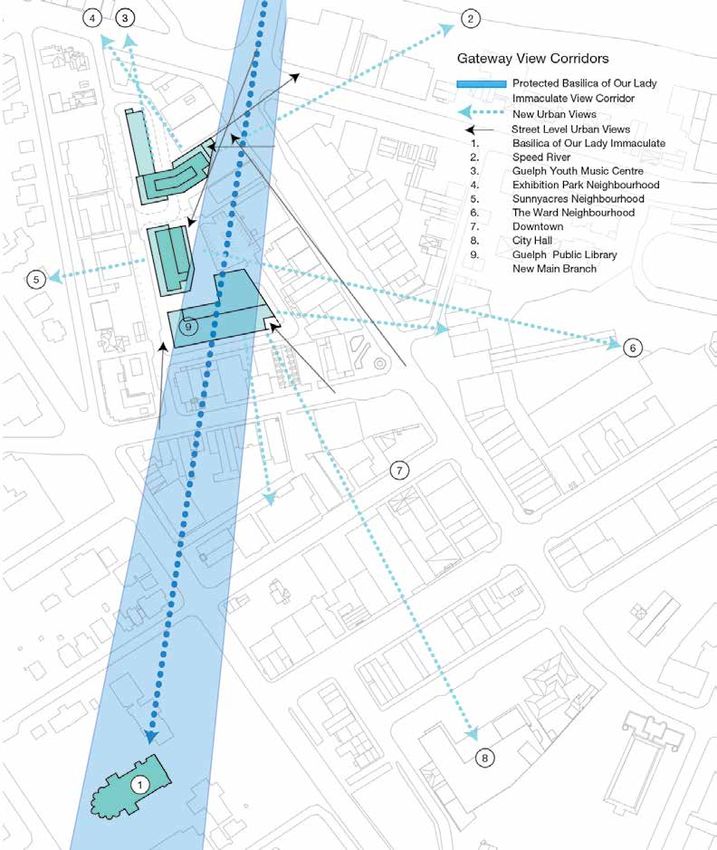
Part 1
Baker District Redevelopment - Urban Design Master Plan

1.1 Physical Context                                Site Definition
                                                    The Baker District Redevelopment is located on the
                                                    large, irregular block bounded by Chapel Lane and
                                                    Park Lane to the south and southeast, Wyndham
                                                    Street North to the northeast, and Baker Street to
The Baker District Redevelopment situates           the west, in the north part of Downtown Guelph.
itself as an important gateway component to         The Baker District Redevelopment Site (“the Site”)
downtown Guelph, and responds uniquely to           is comprised exclusively of the City-owned Baker
its physical, historical and policy context.        Street and Wyndham Parking Lots.

                                                    Additional properties, including 146 and 166
                                                    Wyndham Street North, as well as 138 Wyndham
                                                    Street North owned by the County of Wellington,
                                                    are not presumed to be part of the Baker District at
                                                    this point in time.

                                                                                                           Figure 5 Baker District Site Redevelopment UDMP Boundary

                                                                                                                                                                      07
Baker District Redevelopment - Urban Design Master Plan
Site Attributes The northern portion of the Site remained 2007: The 2006 Stage 3-4 Archaeological
undeveloped until the construction of an industrial Investigations of the Proposed Baker Street Parking
Site History building between the late 1890s and early 1900s. Facility, Former Public Burying Ground (AjHb-
The building was used for the manufacturing of 71), City of Guelph, Ontario, by D.R. Poulton &
Located near the confluence of the Speed sewing machines and sewing accessories, initially by Associates (DRP), P053-061-2006
and Eramosa Rivers, the areas in and around the Raymond Manufacturing Company and later by
modern-day Guelph were known historically to the White Sewing Machine Company of Canada. 2012: The 2010 Stage 3-4 Archaeological
accommodate significant Indigenous occupations. Investigations of Sinkholes in the Baker Street
Iroquoian-speaking communities moved into In 1926, Steel’s Wire Springs Ltd took the building Right-of-Way, Former Public Burying Ground (AjHb-
the area from what is now New York state, and over for the manufacturing of coil wire springs. In 71), City of Guelph, Ontario, by D.R. Poulton &
subsequently Algonkian-speaking groups from the 1960s, both the industrial building and Victoria Associates (DRP), P316-046-2010
northern Ontario arrived at the end of the 17th Rink were demolished and redeveloped into the
century. The Mississaugas came to southern Ontario parking lot that remains today. 2016: Stage 1 Archaeological Assessment: 45
in the 18th century, and it was the Mississaugas Yarmouth Street, Guelph, Ontario, by Stantec,
who ultimately ceded the land including the Site to Archaeological Investigations P083-0270-2015
the Crown as part of Treaty Number 3, documented
in the Euro-Canadian historic record to have A total of five archaeological investigations have A Stage 3 Archaeological Assessment was
occurred on December 7, 1792. been undertaken in and around the Baker District conducted on a small portion of the Site by Stantec
Redevelopment Site in the last two decades: Consulting in January 2018. The objectives of the
The lands on the east side of Baker Street that Stage 3 Archaeological Assessment were to recover
make up the bulk of the Site were subsequently 2006: The 2005 Stage 3-4 Archaeological any human remains fragments and associated
the location of a public burial ground from 1827 to Investigations of Historic Burials in the Baker Street archaeological materials in a controlled manner,
1853 (officially closed in 1879), after which it was Right-of-Way, Former Public Burying Ground, City determine the probable cultural origin or religious
utilized as a public park until the construction of the of Guelph, Ontario, by D.R. Poulton & Associates affiliation of the person whose remains were found,
Victoria Rink on the southern portion of the Site in (DRP), P116-097 and P116101 as well as determine the boundaries and type of the
1892. In 1914, the rink was destroyed by fire but burial site.
immediately rebuilt and remained in use until the Figure 6 Aerial Photograph of Downtown Guelph
1960s. in Winter, ca. 1940 (Guelph Civic Museum)
Figure 7 Portion of 1827 Plan of the Town of Figure 8 Portion of the 1847 Plan of the Town of Figure 9 Portion of 1862 Map of the Town of Figure 10 Portion of the 1877 Map of the County of
Guelph (Guelph Civic Museum) Guelph (Guelph Civic Museum) Guelph (Guelph Civic Museum) Wellington (Historical map from Topographical and
08 Historical Atlas of the County of Wellington Ontario,
1877. Toronto, Walker and Miles.)Baker District Redevelopment - Urban Design Master Plan
The Stage 3 Archaeological Assessment resulted in
the recovery of 47 fragments of human remains,
in addition to 78 Euro Canadian artifacts, found
in the previously disturbed context under the
Baker Street right-of-way. The cultural artifacts
were either deemed non-diagnostic, or dated
after 1870 (for those artifacts dated from 1870
onwards, no additional archaeological assessment
is recommended as per the 2011 Standards and
Guidelines for Consultant Archaeologists (Gov. of
Ontario)).
Given the discovery of human and cultural
remains from past assessments on the Site, it
is recommended that archaeological monitoring
for potential human remains be conducted by a
licensed consultant for any construction within the
former Public Burying Ground as well as 20-meter
buffer area.
In terms of the archaeological process, if
human remains are encountered, all work must
immediately stop and the Site must be secured. The
Police or Coroner, the Registrar of Cemeteries at the
Ministry of Government and Consumer Services,
and the Ministry of Heritage, Sport, Tourism
and Cultural Industries (MHSTCI) will be notified Figure 14 Aerial Photograph of Guelph, ca. 1965. Figure 15 Aerial Photo of Guelph, ca. 1940
immediately. (Guelph Civic Museum) (Guelph Civic Museum)
Once the construction monitoring has been
completed, whether additional archaeological
investigations and the recovery of human remains
occur or not, the licensed archaeologist will submit
a construction monitoring report to the City of
Guelph Planning Department as well as the MHSTCI
for acceptance in the Ontario Public Register of
Archaeological Reports.
Figure 11 Portion of 1892 Map of Guelph (Guelph Figure 12 Portion of City of Guelph Fire Insurance Figure 13 Portion of City of Guelph Fire Insurance
Civic Museum) Plan, 1881, Revised 1892. (Guelph Civic Museum) Plan, 1922, Revised 1929. (Guelph Civic Museum)
09Baker District Redevelopment - Urban Design Master Plan
Site in Context
Site Topography
The existing Site slopes generally down from
north to south toward Quebec Street, with more
significant slopes experienced from the middle of
the Site toward the south. The Wyndham Street
frontage begins to slope down to the north toward
the Speed River in the approximate location of the
existing opening in the Wyndham Street street wall
adjacent to the project Site.
Existing Built Form and Structures
Figure 16 Panorama looking west from Chapel Lane toward Baker Street
No significant structures exist on the Site currently.
As stated elsewhere in this document, historically
significant buildings do flank the project Site,
fronting onto Quebec Street and Wyndham Street
North, however even these buildings present more
subdued and less articulated rear facades facing the
Site.
Existing Vegetation
No significant natural heritage features exist on the
Site currently.
Figure 17 Panorama looking east from Baker Street toward Chapel Lane
Figure 18 Panorama of Wyndham Street looking west with 146 and 166 Wyndham Street North properties visible in the foreground
10Baker District Redevelopment - Urban Design Master Plan
Geotechnical Conditions Soil and Groundwater Conditions Existing Heritage Features It is the intention of the Master Plan to demonstrate
As outlined in the Site History above, when the how the redevelopment of the Baker Street parking
The geotechnical conditions of the Site, as The environmental conditions of the Site as Baker Street parking lot was developed in the lot will interface with these heritage properties
summarized in a November 2019 Geotechnical summarized in the Preliminary Phase Two 1960’s, all existing buildings on the property were through the manner in which the rebuilding of
Report by Jacobs, suggest a top layer of fill varying Environmental Site Assessment by Jacobs (2019) demolished. Flanking properties include multiple adjacent streetscapes contribute to the ongoing
in depth from 0.5m to 4.0m below grade, followed delineates potential soils contamination for a heritage buildings including two church buildings on function of these existing buildings.
by a clayey silt till layer extending to the top of large portion of the property. Extensive soil and the Municipal Register that back onto the Chapel
bedrock. Dolostone bedrock was discovered at groundwater testing revealed a single groundwater Lane frontage of the Site (Knox Presbyterian Church As stated in the Downtown Secondary Plan,
depths ranging from 5.0m to 8.5m below grade. exceedance of provincial standards of a metal, at 20 Quebec Street and Royal City Evangelical Downtown Guelph’s cultural heritage resources are
The first metre of bedrock is highly to slightly specifically, cadmium. This was at a depth of Missionary Church at 50 Quebec Street), as well as key assets that are important from cultural, tourism
weathered, and can be scraped if additional roughly 5.3m to 8.3m below grade. the Dominion Public Building, a designated heritage and economic development perspectives. Of
excavation depth is required. Given the soils building located at 138 Wyndham Street North particular note are the key historic streets including
conditions and depth of bedrock it is anticipated In terms of the soil quality, there were some immediately to the east of the project Site. Wyndham Street, flanking the Baker District
Current Heritage Status of Properties in the Baker Street Redevelopment
that excavations for below-grade parking will minor exceedances of metals; 4 of 69 soil samples Redevelopment.
Study Area
require excavation beyond the depth of fill and till indicated metal contaminants reaching a depth of
layers in order to accommodate +/- two levels of 3.7 m below grade. These are likely related to the The Dominion Public Building at 138 Wyndham
underground parking. The excavations for below- history of manufacturing on the Site which included Street North is a significant heritage resource with
grade parking would also permit foundations to bear the production of sewing machine accessories, wire articulated front and side-yard facades of significant
on bedrock, as recommended in the Geotechnical coils and springs. heritage value. This building is not impacted by
Report. the proposed Redevelopment, and its northern
Minor exceedances in the soil also included sidewall remains visible from the existing pedestrian
Groundwater was encountered within the Petroleum Hydrocarbons (PHCs) and Polycyclic easement from Wyndham Street to the heart of the
geotechnical boreholes at depths ranging from Aromatic Hydrocarbons (PAHs). PHCs were Baker District.
6.5m to 8.0m below grade, typically within the identified in 2 of 66 samples, while 2 of 53 samples
dolostone bedrock encountered on Site. indicated PAHs, up to a depth of 1.4m below grade. Two Wyndham Street properties flank the proposed
Given the proximity to the surface, the source Wyndham Urban Square, known municipally as 146
of these contaminants is believed to be from the and 166 Wyndham Street, and are included in the
asphalt capping of the parking lot. Municipal Register. 146 Wyndham Street North was
built in 1938, and is a modern (International Style)
The soil contaminants will be removed at the commercial building with residential uses above.
time of excavation, while the single instance of 166 Wyndham Street North was built in 1950, and
cadmium in the groundwater will necessitate a Risk is a modern (International Style) theatre.
Assessment study, and a Record of Site Condition,
to allow for the conversion of the property to a As part of the design of Wyndham Urban Square,
residential use. the exposed blank sidewalls of these two buildings
are preserved and enhanced with adjacent planting
and public realm improvements.
No existing heritage features flanking the Baker
Street Redevelopment Site are proposed to be
altered or demolished as part of the scope of the
project. A Cultural Heritage Impact Assessment
will be required as part of the Redevelopment’s
Site Plan Application to confirm impacts to adjacent
protected properties and to the protected view
corridor to the Basilica of Our Lady.
Figure 19 138 Wyndham Street North, street Figure 20 Photo of the rear of Knox Presbyterian Figure 21 Current Heritage Status of Properties
elevation and Royal City Churches (City of Guelph)
11Baker District Redevelopment - Urban Design Master Plan
Pedestrian Circulation Network Bicycle Circulation Network
Pedestrian porosity and connectivity are important The bicycle circulation network of downtown Guelph
aspects of the current function of the Baker Street is supported now and in the future by a growing
parking lot and will influence the design of the network of interconnected bike lanes within the
Baker District Redevelopment. municipal street system. Although the redesign is
not yet finalized, the intention is for the revitalized
Currently, the public who use the Baker Street Baker Street to include bicycle infrastructure in
parking lot circulate throughout the surrounding order to facilitate visitors to and residents of the
downtown context using a number of formal Baker District to be able to utilize bikes as a safe
and informal pathways from the lot that link to and efficient mode of transportation. The renewed
the surrounding public streets. As part of the Wyndham Street North, as illustrated in the City
Redevelopment, the existing flanking public streets of Guelph Downtown Streetscape Manual, is also
including Baker Street and Wyndham Street North anticipated to accommodate bicycles in both
are anticipated to be rebuilt as envisioned in the directions. The improved Chapel Lane and Park
City of Guelph Downtown Streetscape Manual, Lane are also anticipated to accommodate vehicles,
incorporating sidewalks on both sides within an bicycles and pedestrians. A further active cycling
enhanced public realm design, strengthening the connection from the Baker District to Wyndham
pedestrian network of the flanking streets. Street North is being investigated north of the
County of Wellington Building at 138 Wyndham
Chapel Lane, running east from Baker Street, Street North, allowing cyclists to connect from
and Park Lane, running north from the end of Wyndham Street North to Baker Street through the
Chapel Lane and terminating into the rear of the heart of the Baker District.
County of Wellington property, are also anticipated
to be improved as part of the Baker District Cycling is planned to be supported within the
Redevelopment. The improvement of these lanes Baker District by the provision of bicycle parking
is anticipated to support continued access to interior to both proposed residential buildings as
the businesses flanking Wyndham Street North well as outdoor bicycle parking adjacent to principle
as well as vehicular access to the Public Parking building entrances.
below the Library, and informal pedestrian access
from Wyndham Street North into and through the
southern end of the Baker District. The design
of Chapel Lane, and the design of the new Public
Library, also anticipate the planned renewal of St.
George’s Square, and the informal pedestrian traffic
that renewal may bring to the southeast corner of
the Site.
The length of Park Lane at the northern end of the
property is proposed to be extended through the
property to emerge at Baker Court and connect to
Baker Street at the centre of the Site. Baker Court
is positioned to also serve as the terminus for the
proposed pedestrian mews from Wyndham Street
and Wyndham Urban Square, and visually connects
to Library Square further south. This network of
streets and open spaces maximizes pedestrian
porosity across the Site.
Figure 22 Pedestrian Circulation and Porosity
12Baker District Redevelopment - Urban Design Master Plan
Street Network Public Transportation Infrastructure
Streetscape improvements surrounding the Baker Adjacent to the Baker District Site exist significant
Street Development include the provision for the public transportation infrastructure within a 10
expansion of the Baker Street right-of-way to minute walking radius, including the following:
allow two-way traffic and street parking along its
length, and the improvement of Chapel Lane and • Seven Guelph Transit bus routes have stops
Park Lane so that they serve as safe, functional located adjacent to the intersection of
lanes supporting vehicular access to underground Wyndham Street and Quebec Street
parking, and pedestrian access across the • Guelph Central Train Station provides VIA
Site including to the commercial properties on and GoTrain service on the Kitchener Line,
Wyndham Street. providing connections to downtown Kitchener
and London to the west and Brampton and
Parking access and loading for all buildings within Toronto to the east
the development is provided from Baker Street • Guelph Greyhound Bus Terminal provides
via Chapel Lane and Park Lane, and are located in bus connections to regional centres including
such a way as to maintain active frontages along Georgetown, Acton, Mount Pleasant as well as
Baker Street. the Kitchener/Waterloo corridor
Figure 24 On Woolwich Street Looking south on Figure 25 Looking south on Baker Street
Wyndham Street
Figure 27 Looking west on Quebec Street from Figure 26 Looking south on Wyndham Street Figure 23 Surrounding Transportation Networks
Wyndham Street
13Baker District Redevelopment - Urban Design Master Plan
Surrounding Land Uses Surrounding Open Space
In the context of a growing and evolving downtown, A network of publicly accessible open spaces
the City envisions the Baker District Redevelopment including the Wyndham Urban Square, Baker
contributing significantly to the vibrancy and Court, and Library Urban Square, will enhance the
beauty of the downtown through the combination setting for all new development in the Baker District
of public destinations and substantial residential Redevelopment.
development.
Each space is proposed to be compatible and
The proposed development includes a mix of civic, supportive of the surrounding active frontages, and
institutional, commercial and residential uses along designed with plenty of seating and landscaping,
with a strong public realm to achieve and enhance including shade trees. These spaces will also include
that vision. creative or interactive elements intended for play as
well as the potential for public art.
New proposed institutional and commercial
uses located within the ground floors of the new
buildings will animate the lanes and put “eyes on Existing Open Spaces
the street” to make them feel safe and inviting. and Land Uses
Public realm improvements will include new unit Existing Anchors Recent/Current
pavers, lighting and street furniture to encourage a. Basilica of Our Lady Private Developments
and support pedestrians and cyclists. There will be Immaculate 1. 45 Yarmouth
vehicular access from Baker Street, Chapel Lane b. River Run Centre 2. The New Gummer
and Park Lane through the Site and two separate c. Sleeman Centre Development - office/
entrances to the below grade parking, one for the d. City Hall retail/residential
private portion of the garage and another for the e. Old Quebec Street 3. 10 Carden
public portion. Shoppes Development ‘10C’
f. Guelph Youth Music Centre for Social
Centre Innovation
g. Market Fresh Food 4. Petrie Building -
h. Central Public School renovation
i. Farmers’ Market 5. River House
j. Guelph Public Library Condominium
6. River Mill
Established Public Condominium
Space 7. Metal Works
1A. Proposed Wyndham Development
Figure 28 River Run Center Urban Square 8. Market Commons
2A. Proposed Library 9. 40 Wellington Urban
Urban Square Retail Plaza
3A. St. George Square 10. Stewart Mill
4A. Market Square 11. Riverview
5A. Yarmouth Triangle Recent/Current Public
6A. John McCrae Developments
Memorial 12. Wilson Parkade - 496
7A. Basilica of Our Lady spaces (opening 2019)
Immaculate 13. Guelph Central
Station
14. Guelph Civic Museum
15. Market Square
Figure 30 City Hall and Market Square 16. Police Headquarters Figure 29 Open Space and Land Uses
14Baker District Redevelopment - Urban Design Master Plan
Existing Barriers and Potential Connections to Beyond the view corridor to the Basilica of Our Lady
be made by the Site’s Redevelopment Immaculate, the Baker District Redevelopment
considers additional street-level and elevated
The Baker District redevelopment intends to views to and from the Site. Views to the Site from
transform an inhospitable surface parking lot into Wyndham Street North, including from St. George’s
a walkable, connected vibrant district in the heart Square to Wyndham Urban Square and through the
of downtown Guelph. Existing barriers that are BMO Parking Lot to the new Public Library, along
removed by the redevelopment include the current with the Library’s visibility from Quebec Street, give
barrier to walk-ability along Baker Street presented prominent address and visibility to these important
by the existing parking lot and lack of a sidewalk civic spaces. Elevated views from the Site to the
along the east side of the street, and the existing Speed River, Exhibition Park, Sunnyacres and Ward
confused traffic movement patterns created by neighbourhoods are also accommodated.
the parking lots various entrances and exits and
partial one-way street pattern it creates. Additional
barriers removed by the redevelopment include the
construction of an animated urban street wall on
the east side of Baker Street incorporating retail,
live/work and residential uses. Additionally, the
new Wyndham Urban Square creates a northern
focal point to the open space network within the
downtown, a more attractive and meaningful
bookend to the commercial uses along Wyndham
Street North than provided by the existing parking
lot condition.
Public Views, Vistas and View Corridor
The City of Guelph Zoning By-law (1995)-14864
identifies five protected view corridors relating
to the Basilica of Our Lady Immaculate. Section
4.18.2 of the Zoning Bylaw restricts building heights
within these corridors to the geodetic elevation
indicated in Defined Area Map No. 63. These views
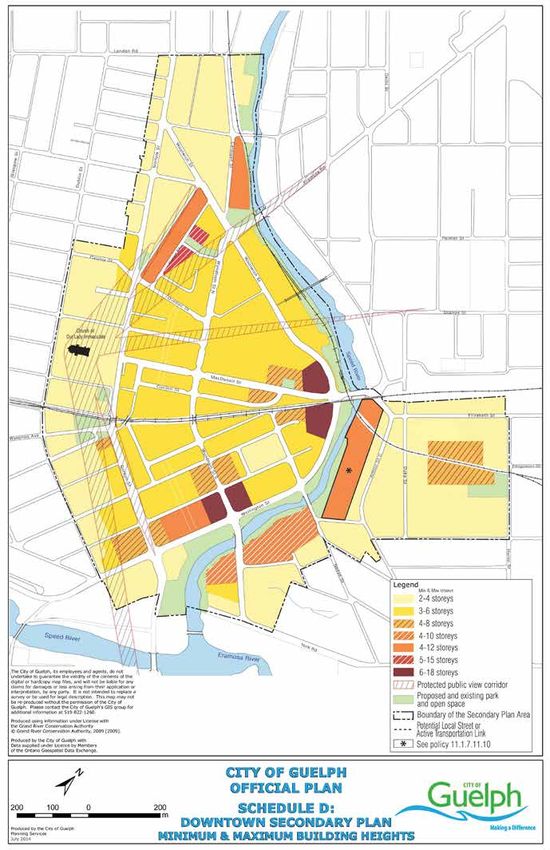
are also illustrated in Schedule D of the Downtown
Secondary Plan (OPA 43). Part of the Baker District
Site falls within a protected view corridor and, as
such, any development concept provided must
comply with the restrictions set forth by the by-law.
The City of Guelph is in the process of updating
their Zoning Bylaw view corridor mapping with
updated geodetic surveys. The survey of the view
corridor from Eramosa Road that impacts the Baker
District has already been produced by Van Harten
Surveying, dated February 5, 2021, and includes
elevations along the plane of this protected view.
The design of the Baker District is relying upon this
updated survey to govern built form and massing
considerations relating to this view corridor.
Figure 32 Area Map 63, Guelph By-Law (courtesy Figure 31 Gateway View Corridors
of City of Guelph)
15Baker District Redevelopment - Urban Design Master Plan
1.2: Policy Context Official Plan & Secondary Plan a range of housing types, forms, tenures and are not permitted. Long building facades visible
densities. It sets an affordable housing target of from a public street must incorporate techniques to
City of Guelph Official Plan 30% of new residential development city-wide. reduce the perceived mass of the façade. (8.6)
Housing proposed in affordable housing Downtown
The City of Guelph Official Plan was adopted by City and Mixed-Use designations is strongly encouraged Tall buildings are generally understood to be
Council in 1994 and approved by the Ministry of for affordable housing because of proximity to buildings above six storeys, thus both the
Development of the Baker District will be Municipal Affairs and Housing in 1995. It was most transit and services. Section 3.1 of this Urban developments on the north block and the south
guided by the City of Guelph’s applicable recently updated in three phases through Official Design Master Plan outlines how the Baker District block of the Baker District would be considered
policy and guidelines, including the Official Plan Amendment 39 Growth Plan Conformity will contribute to the achievement of the City’s to be tall buildings. Tall buildings are intended
Plan, Downtown Guelph Secondary Plan, (approved by MMAH in 2009), Official Plan affordable housing objectives. (7.2) to act as landmarks with a distinctive bottom
Urban Design Manual, and Downtown Amendment 42 Natural Heritage Strategy (approved (podium), middle and top. Floor plate sizes of
Streetscape Manual and Built Form by the Ontario Municipal Board in 2014) and Official Urban Design: The Official Plan’s urban design the tower portion may be limited and adequate
Standards. Plan Amendment 48 Final Phase of the Five-year policies apply to all development within the city, spacing between towers to allow for solar access
Review (the majority of which was approved by recognizing that good urban design is fundamental and privacy is required. The Downtown Guelph
the Ontario Municipal Board in October 2017). The to the creation of enduring, attractive and valued Secondary Plan provides greater detail on floor
Official Plan provides goals, objectives and policies environments. Urban design objectives relate to plate sizes (see below). (8.9)
to guide Guelph’s growth and development to 2031. diversity of use, compact communities, conserving
and celebrating cultural heritage, providing mobility Urban Squares: The public open space facing
The relevant sections of the Official Plan are choice, sustainable urban design and safety Wyndham Street in the Baker District would be
summarized below, with a particular focus on the and accessibility of public and private spaces. classified by the Official Plan as an urban square.
urban design policies. Particularly relevant to the Baker District are Urban squares are publicly-accessible open spaces
policies regarding the public realm, public views and with sitting areas and shade trees that allow for
Growth Management: The Baker District is vistas, built form, urban squares and landscaping. passive use, special events and social interaction.
located within Downtown Guelph, which the Official (8) Urban squares are intended to be framed by
Plan recognizes as an Urban Growth Centre and buildings with ground-floor uses that provide
Major Transit Station Area in accordance with the Public Realm: Official Plan policies require a activity throughout the day. In the case of the
Growth Plan for the Greater Golden Horseshoe. clearly identifiable public realm to be established Baker District, adjacent institutional/commercial
Downtown Guelph is to be planned to achieve a in all residential areas. New developments must be uses will provide this activity. (8.20)
density target of 150 people and jobs combined designed to be integrated with surrounding existing
per hectare by 2031 and to be a focus for high neighbourhoods with full pedestrian and vehicular Landscaping: The Official Plan recognizes
density employment and residential development, access between them. Block lengths should be landscaping as contributing to the creation of a
public infrastructure and services, and multi-modal reasonably short and should create a modified grid- high-quality public realm. In the Baker District,
transportation. (3.8 & 3.9) like street network that is highly interconnected. landscaping in the urban square and along streets
The design of new development must contribute to will be important to the pedestrian experience.
Transportation: The transportation system will a pedestrian-oriented streetscape through the use Official Plan policies state that plant material for
be designed to facilitate efficient, safe, convenient of context-appropriate strategies. (8.2) landscaping should be of appropriate quantity,
and energy efficient movement of people and size, shape, colour and texture to complement and
goods throughout the city. The Official Plan places Public Views and Vistas: Key public views to the contrast the built form and reflect the Site’s size
a particular emphasis on increasing non-auto Basilica of Our Lady are required to be identified and context, and should provide seasonal interest
mode shares by promoting active transportation and protected. The Downtown Secondary Plan and be appropriate to site conditions. Plant material
and public transit, recognizing that transportation provides greater detail on the identified public view is encouraged to be of indigenous stock and from
contributes significantly to energy use and corridor to the Basilica of Our Lady which goes locally grown sources. (8.17)
greenhouse gas emissions in Guelph. Specific through the Baker District (see below). (8.3)
regulations regarding road design and the functional Downtown Guelph Secondary Plan
hierarchy of roads are provided in the Downtown Built Form: The built form policies of the Official
Guelph Secondary Plan (see below). (5 & 5.1) Plan primarily regulate how buildings meet and are The Downtown Secondary Plan (DSP) comprises
perceived from the public realm. Buildings should be Section 11.1 of the Official Plan. It was approved by
Affordable Housing: The Official Plan states located close to the street edge and should address Council in 2012 and brought into effect by Ontario
Figure 33 Conceptual Vision for Downtown Guelph that the City will encourage and support the the street, with principal entrances of commercial Municipal Board decisions in 2013 and 2015. It is
based on the 2012 Secondary Plan development throughout the city by planning for and mixed-use buildings oriented toward the street. now in full force and effect. The purpose of the
Blank facades facing a street, open space or park plan is to provide a policy framework to guide and
16You can also read


