CITY MOBILITY PLAN 2021-2030 - The Edinburgh Reporter
←
→
Page content transcription
If your browser does not render page correctly, please read the page content below
CITY MOBILITY PLAN 2021-2030
CONTENTS

    FOREWORD......................................................1
                                                                                         5   SPATIAL VISION AND THE PATH TO

1
                                                                                             2030.......................................................................51
    INTRODUCTION AND CONTEXT......3                                                          2023 - Delivering now, planning for the future ................52
                                                                                             2025 - Bolder actions ...................................................52
    Purpose and status .......................................................4
                                                                                             2030 - A city transformed .............................................53
    Vision and objectives ....................................................5
                                                                                             Spatial vision ...............................................................53
    Listening to you.............................................................6

                                                                                         6
    Challenges and commitments........................................6
    Placemaking .................................................................11          IMPLEMENTATION.....................................55
    COVID-19 - impacts and recovery ...................................12
                                                                                             Implementation plan approach .....................................56

2
    Our city’s progress.........................................................13
                                                                                             Governance and engagement.........................................56
                                                                                             Project and risk management .......................................56
    PEOPLE.................................................................15                Investment and funding ................................................56

                                                                                         7
    Making sustainable choices ..........................................16
    Equal access to the city..................................................17             MEASURING SUCCESS...........................57
    Mode share targets .......................................................22

3
    People are the plan.......................................................22
                                                                                             APPENDIX 1................................................................59
                                                                                             Policy measures index...................................................60
    MOVEMENT......................................................23
    Sustainable and integrated travel..................................24
                                                                                             APPENDIX 2 ..............................................................69
    Safe and efficient movement..........................................36                  City leadership in a changing world................................69
    Clean air and energy......................................................40
                                                                                             APPENDIX 3...............................................................73

4
    Managing demand........................................................42
                                                                                             Edinburgh Strategic Sustainable Transport Study Phase 2 –
                                                                                             Summary......................................................................74
    PLACE....................................................................45
    Our city .......................................................................46       REFERENCES..............................................................76
    A transformed city centre ..............................................46
    20-Minute neighbourhoods ..........................................47
    Streets for people .........................................................49
FOREWORD Transport is the single biggest
contributor to greenhouse gas
emissions, including carbon1,
These costs directly affect us all
and fall disproportionately on
those on low to middle incomes
Making a positive difference to
people’s lives in a fast-changing
environment requires ambition,
Across the world, progressive cities are embracing the global challenges and central to the damage we are who are struggling week to week courage, focus and a change of
of climate change and inequality with action and vision. Transport, the doing to our planet. If we are to
meet the challenge of becoming
to balance household budgets.
The least able to afford pay the
pace in delivery. We cannot spend
another twenty years building a
way we move people and goods around, and in and out of cities, is being net carbon zero by 2030, our most. single tram line when we need to
transport policies and practises develop a truly integrated public
revolutionised. have to change. Edinburgh needs mobility transport network, including
systems that by 2030 are additional tram lines, in the next
It’s not just the climate cost to carbon emission free, efficient, ten years.
future generations. In Edinburgh, accessible and affordable, and
we spend nearly £1 billion a year allow people to spend more This Plan sets out our
on transport. That’s over £80 time improving their quality commitment to delivering truly
per household per week to move of life. We need a transport sustainable, safe and integrated
around, in and out of the city. By system designed for everyone, mobility for Edinburgh over the
2030 we will be spending £1.3 whatever our location, economic next 10 years. It captures views
billion2. That means we spend circumstances, gender, culture or from several years of varied
more on transport than anything abilities. engagement and reflects what
else apart from mortgages or many of you have told us is most
rents. Over the past ten years Edinburgh important to you.
has made significant progress.
And this doesn’t take into But now is the time for bolder, Though the outcomes set out in
account the cost of transporting more transformational action. this strategy will benefit current
goods and services, nor the cost The COVID-19 pandemic has and future residents of the city we
of unproductive hours spent in significantly changed how people know change can be disruptive.
congested traffic, the societal move around the city. At this We will continue to listen to
cost of fatalities and serious point we remain in a period of you and involve communities
injuries due to traffic or ill health uncertainty, so the Plan will be as solutions for the future are
and early mortality affected by flexible to take account of longer designed and delivered. We are
the impacts of poor air quality. term impacts as they become confident that as a city working
clearer. However, cleaner air, together, for the sake of its future,
more walking, wheeling and we can make this happen.
cycling, more local spending,
and fewer journeys to work are
all outcomes that should be
supported.
Councillor Lesley Macinnes Councillor Karen Doran
Transport & Environment Convener Transport & Environment Vice-Convener
1 / CIT Y MOBILIT Y PLAN contents previous page next page FOREWORD \ 2
1 INTRODUCTION
Transport is the largest producer of carbon emissions in Scotland so the
policies around how people, goods and services are moved around the
country have a key role to play in the battle against global warming. This
Plan puts the climate emergency at the centre of its actions.
AND CONTEXT
This City Mobility Plan sets out Edinburgh’s route to achieving sustainable
and effective mobility across the city and into the region.
If Edinburgh is to play its part and lead on the challenges ahead, if it is
to be a truly sustainable city, where mobility meets the needs of people
As we move through the third and our environment, we need ambition, courage and a shared sense of
decade of the 21st century, the responsibility. The Council will play its part, but success cannot be achieved
greatest threat to humankind is without a shared commitment from everyone.
that of climate change. Across the
world countries are taking steps This chapter focuses on:
• Purpose and Status
It contains a series of objectives
and policy measures under the
This Plan adopts a holistic
approach seeking to focus on the
to reduce carbon emissions. • Vision and Objectives themes of People, Movement choices that people and businesses
The Scottish Government has •
•
Listening to You
Challenges and Commitments
and Place which will, collectively,
achieve the Vision for this Plan.
can make, the role that the Council
has in providing supporting
declared a climate emergency • Placemaking
The policy measures will support
infrastructure and the kind of
• COVID-19 – Impacts and
and Edinburgh is committed
places that are created as a result
the creation of detailed actions
Recovery of this. In doing so we will continue
and action plans, helping to
to being net zero carbon • Our City’s Progress
prioritise investment in mobility
to work closely with other Council
strategies and plans, especially the
by 2030. PURPOSE AND STATUS
across the city.
emerging City Plan 2030 where the
This Plan also sets the context City Mobility Plan will be a material
This City Mobility Plan (the Plan)
for partnership-working with consideration in the determination
sets out the Council’s strategic
local, regional and national of planning applications for new
approach to the sustainable, safe
stakeholders and continuing development.
and effective movement of people
engagement with the
and goods around Edinburgh up This Plan replaces Edinburgh’s
communities of Edinburgh.
to 2030. Local Transport Strategy 2014-2019.
NATIONAL National Transport Strategy
Strategic Transport Project
Review 2
National Planning Framework
REGIONAL Regional Transport Strategy City Region Deal Strategic Development Plan
CITY Edinburgh City Vision 2050
Ending Poverty in
Edinburgh 2030 Sustainability Strategy Economy Strategy
Delivery Plan 2030
City Mobility Plan 2030 City Plan 2030
DELIVERY Key Existing Action Plans/
Schemes
New Action Plans/Schemes
(to be progressed)
Public and Transport Asset Low Emission Zone, Place/Site
Road Active City Centre
Accessible Management Parking Workplace Parking Briefs, Guidance
Safety Travel Transformation
Transport Plan Levy etc etc
contents previous page next page 1 INTRODUCTION \ 4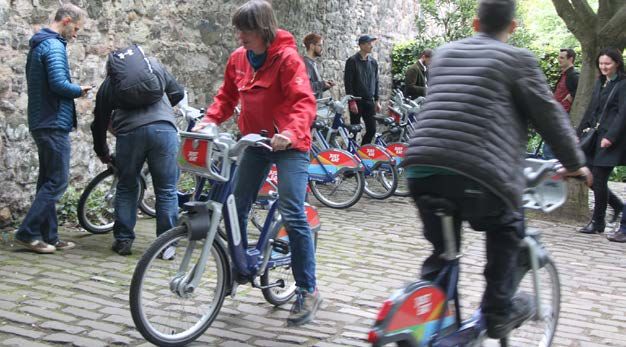
VISION AND OBJECTIVES LISTENING TO YOU policy measures which focused CHALLENGES AND
COMMITMENTS
Vision
on enhancing public transport,
The Vision links directly with This Plan is the result of over
creating people friendly streets,
the Council’s high level aims three years of discussion Across the world cities like
planning sustainably for new
to address climate change, during which citizens and Edinburgh are changing rapidly.
developments and managing
eradicate poverty, promote stakeholders have been engaged They are taking on the challenges
demand. The draft policy
sustainable economic growth and via workshops, meetings, of carbon emissions and
measures received widespread
Edinburgh will be connected create great places. presentations and drop-in events.
support.
unprecedented technological
Engagement was undertaken advances by focusing on climate
by a safer and more inclusive alongside related projects to change, poverty, exclusion,
In response to comments
net zero carbon transport system reinforce the importance of a
made as part of the Draft Plan
inequality and improving safety,
holistic approach. This process health and wellbeing. We have
delivering a healthier, thriving, of co-production has led to the
consultation and to ensure
taken inspiration from cities
fairer and compact capital city key Council priorities are
Plan you see before you and all over the world to develop
fully reflected, a number of
and a higher quality of life your involvement will continue
policy measures have been
this Plan. Key examples of best
as individual strands of the Plan practice are set out in Appendix 2.
for all residents. progress.
strengthened. In addition, a
limited number of new policy
Edinburgh has set out an
measures have been introduced
We published a Draft for ambitious agenda of change.
where key aspects have not
consultation in January 2020. We have committed to being net
previously been covered or
The Draft Plan set out over 50 zero carbon by 2030. Alongside
further clarity was required.
this, the city is also committed to
the eradication of poverty and to
OBJECTIVES becoming data capital of Europe.
People Movement Place
To improve health, wellbeing, To support inclusive and To protect and enhance our
equality and inclusion: sustainable economic growth environment:
and respond to climate
change:
Increase the proportion of
Encourage behaviour trips people make by active Reduce the need to travel
change to support the use of and sustainable travel and distances travelled.
sustainable travel modes. modes.
Ensure that transport Improve sustainable travel Reduce vehicular dominance
options in the city are choices for all travelling into, and improve the quality of
inclusive and affordable. out of and across the city. our streets.
Reduce harmful emissions
from road transport.
Improve the safety for all
travelling within our city.
Maximise the efficiency of
our streets to better move
people and goods.
5 / CIT Y MOBILIT Y PLAN contents previous page next page 1 INTRODUCTION \ 6
The key challenges and Edinburgh population growth will be developed in • Inclusion - Our city welcomes • Health and Wellbeing - The Goods and services stuck in
commitments for this Plan are: projected increase such a way as to maximise everyone. We are a city of transport sector accounts traffic have a direct impact on
• Climate Emergency - Transport, the use of existing transport different cultures, needs, ages for over one-third of the total the cost and productivity of
the way we move people, goods infrastructure and strengthen and abilities. The way that emissions of nitrogen oxides businesses and public services.
13%
and services around places, the viability and accessibility of transport systems recognise and one sixth of fine particles.5 Congestion adversely affects
is the biggest generator of public transport and mass rapid and incorporate peoples’ Both cause air pollution which the communities along these
carbon emissions in Edinburgh. transit. different needs and behaviours harms human health. If we routes, making them more
In 2020, 31% of carbon can have a significant impact on choose active travel modes, polluted, more dangerous and
• Safety - Road users, such as their ability to find and sustain such as walking, wheeling less pleasant places to be. We
emissions are accounted for by
pedestrians and cyclists are
transport.1 Unlike most sources, work, to look after children and (traveling by wheelchair) will tackle this by managing
more at risk of suffering from relatives and to use health, and cycling, we won’t cause demand on our roads and
where carbon emissions are
serious injury if involved in a
reducing, those from transport, 2018 - 2043 education and other public pollution and we will improve enhancing the efficiency of our
collision with a motor vehicle. services. We want to create a our own physical and mental public transport system.
particularly road transport,
Source: National Records for Scotland, We will prioritise resources to city where you don’t need to well-being. We will tackle air
have been increasing. We will Population Projections improve the road safety of our own a car to move around. We pollution and support people to All these issues are highly
lead by example and work in
more vulnerable road users. will therefore ensure that public take more active, sustainable influenced by the way we travel
partnership with citizens and
key stakeholders to meet the • Sustainable Economic Growth - transport, walking, wheeling trips. around, to and from the city,
net zero carbon 2030 target. Edinburgh is the fastest growing and cycling infrastructure and how we deliver goods and
city in Scotland and one of the is prioritised to support the • Congestion - Parts of the services to the places where
• Poverty - We are committed fastest growing cities in the UK. choices available to reduce city’s transport network are people need them.
to eradicating poverty. After By 2043 the city’s population private car use. However, we highly congested. The cost of
housing, transport costs are is forecast to grow by a further recognise that for some people congestion to drivers is £764 The map on page 9 sets
the single biggest household 12% to nearly 600,000.4 Such and in some circumstances per annum.6 The cost to the out some of the key traffic and
expenditure in the UK3. We will growth places a demand on the private cars might be needed. city is £177 million per annum. associated issues for Edinburgh
encourage an increased range city to continue to provide good Congestion adds 41% travel spatially.
of simplified, flexible public quality housing and jobs for an time to each peak time journey.7
transport ticketing options and expanding population. Future
maintain affordable fares to
support low-income passengers.
ustry
ind t
17%
1
ra
ns
por
31%
t
mercial uildings
Generators
of carbon in
b
23%
23% Edinburgh
om
&c
ic
bl
pu
29%
st ic
o me
h o usi ng / d
Source: Climate Emissions Analysis and 2030 City Sustainability Strategy Approach
7 / CIT Y MOBILIT Y PLAN contents previous page next page 1 INTRODUCTION \ 8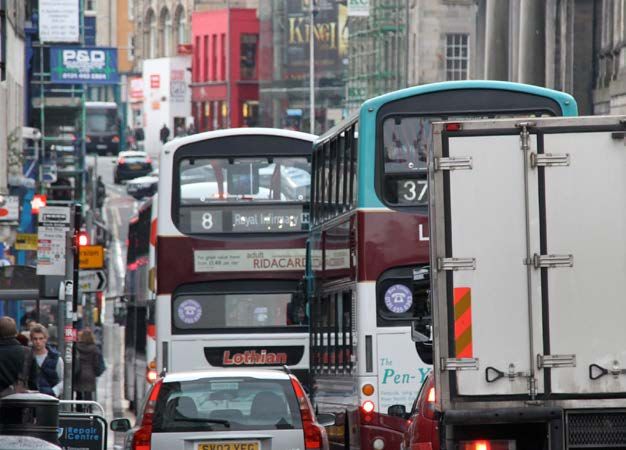
Traffic and associated issues Busiest roads in and out of the city
(>15000 vehicles)
Source: DfT traffic count data, 2019
Busiest roads within the city
(>20,000 vehicles)
Source: SEPA 2019
77000 Congestion hotspots
Source: Tom Tom 2016
SOUTH QUEENSFERRY
Future congestion hotspots
Source: SESplan Cross Boundary and
Land Use, 2017
NW/A90/Queensferry corridor Traffic accident - serious injury
CRAMOND
GRANTON TRINITY
LEITH
Source: 2019 Edinburgh casualty data
MUIRHOUSE
Air Quality Management Areas
46000
INVERLEITH
WARRISTON
KIRKLISTON
BLACKHALL
RESTALRIG
CLERMISTON
NEW TOWN
15000
PORTOBELLO
AIRPORT OLD TOWN
16500
MURRAYFIELD
DUDDINGSTON
CORSTORPHINE
BRUNSTANE
NEWBRIDGE
BRUNTSFIELD
SOUTH GYLE
GORGIE
NEWINGTON
CRAIGMILLAR
71000 RATHO
SIGHTHILL CAMERON
TOLL 46000
MORNINGSIDE
M8
CRAIGLOCKHART
WESTER HAILES
BRAID
HILLS
HERIOT WATT
15500
OXGANGS
COLINTON
GILMERTON
GRACEMOUNT
CURRIE FAIRMILEHEAD
BURDIEHOUSE
22000 23000
KEY POINTS
• Road corridors with high levels of traffic, and existing or anticipated congestion, are those associated
with road safety and air quality isues
BALERNO
20000
• Central Edinburgh is a notable area of concern, as are roads leading into the city centre
NOTE: Air Quality Management Areas (Nitrogen Dioxide): Central, St. John’s Road, Inverleith Row, Great Junction
Street, Glasgow Road (Newbridge).
Air Quality Management Areas (Particulates): Salamander Street
9 / CIT Y MOBILIT Y PLAN contents previous page next page 1 INTRODUCTION \ 10
PLACEMAKING COVID-19 Transport Trend Summary
The kind of city we want to
live in - the streets and spaces
in which we shop, work and
socialise are also formed by the
way people travel around. The
more that people choose walking,
wheeling and cycling the better
the environment and the safer the
streets. This Plan, alongside our
adopted Local Development Plan
and emerging City Plan 2030,
aim to create a city where it is not
necessary to own a car in order to
get around. Source: Strategic Transport Projects Review 2 - Phase 1
Development of the 20-minute COVID-19 - IMPACTS AND Emerging engagement with also present opportunities
neighbourhood concept RECOVERY Edinburgh-based workplaces to address peak time travel
reinforces the importance of
COVID-19 has had a profound reflects a similar picture, with patterns.11
having access to local services
impact on transport demands some predicting a permanent
catering for daily needs within
and mobility patterns.8 At the change in culture to more home Measures to support safe
a 20-minute walk of anyone's
time of this Plan’s publication, a working. Making public transport and efficient travel by public
front door. Edinburgh is already a
high level of uncertainty remains feel safer and improving cycling transport are a key priority and
compact, walkable city supported
especially around medium to infrastructure are cited as key establishment of the South East
by a diverse set of town and local
longer term impacts. factors in supporting the return to Scotland Regional Transport
centres.
workplaces. Transition Plan Group is crucial
Restrictions have resulted in to this effort. Many of the policy
We are therefore able to adopt
increases to walking, wheeling People continue to make fewer measures in this City Mobility
an ambitious approach in If we provide good walking, The streets and spaces of our
and cycling, with more people journeys for retail since the Plan reinforce the enhancement
interpreting the 20-minute wheeling and cycling local centres will be designed in
making local trips and exercising growth in online shopping, and growth of our city’s public
neighbourhood concept, by infrastructure around town and accordance with the street design
closer to home. Public transport and the pandemic has further transport as the most efficient
adopting a 10-minute walk there local centres, this will enhance guidance and will put people first.
has seen a significant downturn increased this trend. 82% form of sustainable travel. This
and 10-minute walk back principle economic sustainability well as
in patronage due to concerns of adults in the UK are now is critical if we are to tackle
as opposed to a 20-minute walk fostering stronger communities
over the spread of the disease shopping online.9 An increase climate change and ensure the
there and 20-minute walk back and reduce the need to make
and Scottish Government advice in delivery and courier vehicles sustainable economic growth of
principle. This is set out in more longer journeys.
not to use it unless essential. has also been experienced. our city.
detail in Chapter 4, Place.
To manage these concerns, Uptake of using online facilities
some have switched from public for socialising, entertainment, As medium to longer term
transport to using private cars. banking, healthcare, adult impacts on travel behaviour
education and attending a place remain difficult to fully predict
Restrictions have forced a of worship has also become the situation must be carefully
significant shift to home working apparent.10 monitored. The ‘Path to 2030’
resulting in less commuter (Chapter 6) and the associated
traffic. Scotland-wide research While many elements are likely Implementation Plan will be
undertaken by Transport Scotland to recover to pre-COVID-19 levels, reviewed when a more settled
and Climate X Change gives an the opportunity to embed some position is reached to better
insight into how people may of the beneficial outcomes of understand these impacts.
travel for work in the future. lower traffic levels should be
Many workplaces suggest more captured - cleaner air, more
activities will be managed online, walking and cycling, local trip-
and that this will have a positive making as part of the 20 minute
impact on reducing organisations’ neighbourhood concept. More
carbon footprint along with time/ flexible working arrangements
financial savings.
11 / CIT Y MOBILIT Y PLAN contents previous page next page 1 INTRODUCTION \ 12
OUR CITY’S PROGRESS
The proposals in this Plan represent a step change
towards addressing the climate emergency. But
1990s
it is not a change in direction for Edinburgh. Over Car Club
the past 25 years, we have been on a journey to
Mid 90s 1995 1996 1999
improve our transport system, to make it cleaner Award-winning scheme Publication of first Edinburgh Princes Street access for buses First UK city to introduce pay
and more sustainable and, through investment, to partially pedestrianise
Royal Mile completed
Streetscape Manual and taxis prioritised as you drive Car Club vehicle, and
Queensferry High Street public
to enhance our streets, community life and health realm improvements completed
and wellbeing. By better connecting our city, we
can transform our places.
2000s
2000 2002 2003 2004 2005 2008 2009
Approximately 25km Lothian Buses first Edinburgh Park Station Launch of Bustracker Park and Ride sites opened at Ingliston Park and Ride extended, Over 200 advanced cycle stop
of off-road cycleway/ voted Best UK Bus opened and new bus Real Time Passenger Ingliston and Hermiston and award-winning scheme to open lines introduced and quiet road
walkway completed Company and Crossrail station at Multrees Walk Information with first completion of over 60km of bus St Andrews Square to public connections developed between
bringing total to 95km scheme completed operational on-street signs installed lanes (since 1996) completed, and Bustracker off-road sections of the national
since 1995 including new Park and on Quality Bus Corridor available via the web Cycle Network (since 2000),
Ride interchange at linking Straiton to Leith Grassmarket public realm
Newcraighall via city centre improvements completed, and first
resident parking permit charges
linked to CO2 emissions
2010s
2010 2012 2014 2015 2016 2017 2018 2019 2020
City’s first Active Travel Large scale pilot of 20mph Tram operational between Borders rail line operational, Edinburgh Gateway Lothian Buses trials First Scottish city to Edinburgh declares 168 electric bikes
ban on leaving trade waste target to be net-zero
Action Plan approved, speed limits in South city centre and Edinburgh interchange opened first all electric buses implement citywide added to citywide
bins out on the city’s streets carbon by 2030, City
Traffic calming, later Central Edinburgh Airport, Haymarket and Gilmerton to and Code of Conduct network of 20mph Centre Transformation public bike hire
accompanied by 20mph Station refurbishment comes into force, School Loanhead walking/ launched as part of roads, citywide scheme and over
strategy approved, Open
Streets initiative operational, Streets programme
speed limits, rolled out to and interchange cycle route completed Paths for Everyone public bike hire 100 secure on-street
upgrades to various sections launched, and
around 35% of Edinburgh’s completed, Edinburgh of Union Canal towpath campaign scheme launched, cycle storage units
construction begins
road network (since 2004), Park Interchange complete, Meadows to and citywide ban on on Tram extension to delivered
and Smartphone apps in opened, Waverley Bridge Innocent Railway cycle link temporary on-street Newhaven, contactless
place to support public pedestrian enhancements complete, and Smarter adverts operational payments introduced
transport journey planning complete, and A90 cycle Choices Smarter Places on all Lothian Buses,
and Granton Promenade
route upgrade complete programme launched cycle/walking route
complete
13 / CIT Y MOBILIT Y PLAN contents previous page next page 1 INTRODUCTION \ 14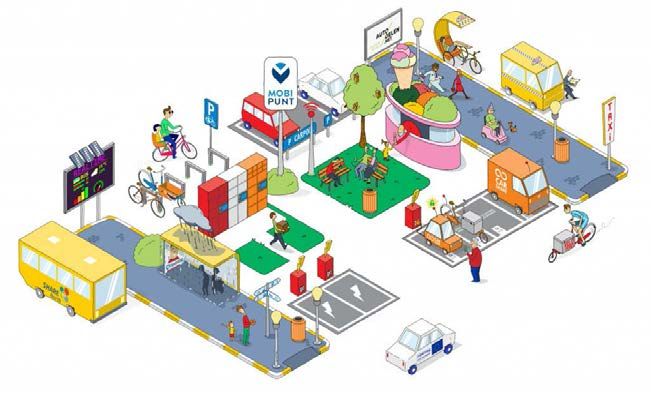
2 PEOPLE
The nature of that experience influences the choices we make around
how we move around the city - our mode of travel. The design of the traffic
system, the streets and spaces in the city all influence accessibility to the
city’s goods and services.
The more opportunity we have to make greener, more sustainable choices
Movement is an important part of everyday life. in how we move around, the greater the chance we have to reduce the
It is about getting to where we want to be. It is about impact of climate change.
how we get to work, meet friends and family, go This chapter focuses on:
shopping or access services. It is a key part of how we
Paths for
• Making Sustainable Choices Policy Measure
• Equal Access to the City PEOPLE 1: Supporting
experience the city. • Public Health and Wellbeing
everyone
Behaviour Change
• Mode Share Targets Encourage changes in
• People are the Plan behaviour towards the use Stay safe, consider others
of sustainable modes of edinburgh.gov.uk/pathsforeveryone
MAKING SUSTAINABLE travel through information
CHOICES provision, initiatives and
People are at the heart of this campaigns.
Plan. People have choices. We Slow right down
would like sustainable transport
- walking, wheeling, cycling The provision of travel
and public transport - to be the information ensures that people
first choice for everyone across have information about the
Edinburgh. options that are available.
Stay left,
For that to happen we need to pass on the right
provide integrated infrastructure
Policy Measure
to support those travel modes.
PEOPLE 2: Travel Plans
People need to feel they are
making an informed choice Require the provision of
and that they will be safe and travel plans for major new
Keep your dog on a lead
comfortable whichever way they developments as well as in busy areas
choose to travel. for existing workplaces,
schools and other major trip
Alongside the provision of generators.
infrastructure, initiatives such
as integrated ticketing and
supporting information are
needed to complement physical
Give each other
changes. space
15 / CIT Y MOBILIT Y PLAN contents previous page next page 2 PEOPLE \ 16EQUAL ACCESS TO THE Isolated communities The map on page 19 shows • Bus operators should ensure Young people It is recognised that there are a
CITY While for many the city has an public transport accessibility routes and timetables adapt Engagement undertaken during wide range of personal challenges
excellent public transport system, levels. It highlights areas with to enable people from all the development of the Scottish that impact on mobility which
Edinburgh is a beautiful city
some areas are poorly served, a high level of public transport communities to access work Government National Transport need to be considered and
and has a great deal to offer
limiting opportunities for those services and areas where there locations – including early Strategy 2 showed that young targeted solutions are required,
its citizens. As one of the most
who live there. are lots of people (housing and shifts and night-time economy people were worried about cost not all of which are specifically
liveable cities in Europe, we
jobs) but with a low level of public jobs - and participate in the life and safety on public transport.16 referred to in this chapter.
need to ensure its benefits are
Many of the most disadvantaged transport services. of the city.
available to everyone.
communities are on the periphery Edinburgh’s buses and tram Scotland’s population is, for
of our city. People who live in Poverty Making it easy and affordable to already have some of the lowest example, ageing. The number of
Safety
these areas often have to travel We recognise that socioeconomic travel on foot, by wheel, bicycle fares in Scotland and we are people over 75 will nearly double
Moving around the city needs
longer distances to get to work barriers exist and influence the and public transport reduces keen to maintain this situation by 2043.17 While historically
to be safe. It also needs to be
within the city centre or on the degree to which certain people the impact of some of these particularly for low income people have tended to travel
perceived as safe.
edges of the city. Lower levels can move around. After housing, socioeconomic barriers. People groups. We will also encourage less as they get older, they are
of car ownership in poorer and transport costs are the single need to be able to access the an improved range of ticketing now fitter, healthier and more
As the volume of cars on our
more peripheral areas of the city biggest household expenditure city’s supply of services as well as options to meet particular needs. active in travelling. Increasingly
streets grows, people are
mean many people are doubly in the UK with an average weekly the labour market to contribute specialist public services like
increasingly concerned about
disadvantaged. Some outer spend of £80.80 or 14% of the to the growth and stability of the health are accessible online or
safety. This can generate more Policy Measure
areas in the city are experiencing household average total weekly city. in hubs but older users may
vehicle trips as, for example, PEOPLE 3: Flexible and
significant population growth and expenditure.3 need to travel to access more
people drive their children to Affordable Fares
are also relatively poorly served The way that transport systems specialised, centralised medical
school. Whilst this may keep Encourage an increased
by public transport. The Poverty Commission 12 sets recognise and incorporate care. Relatives and carers may
the car occupants safe it can range of simplified, flexible
out strong recommendations peoples’ different needs and need to travel to care for people
make the likelihood of accidents public transport ticketing
45%
to tackle poverty in relation to behaviours can have a significant in their homes as the growth
greater by increasing the volume options and maintain
mobility, including: impact on their ability to find of home care over residential
of traffic. of households affordable fares to support
and sustain work, to look after care continues. Elderly people
without access to • Starting with Edinburgh as a children and relatives and to low-income passengers. may also have greater difficulty
The perception of risk that a car test site, Scottish Government use health, education and other accessing information and
pedestrians and cyclists face is should extend eligibility for public services. navigating the public transport
a major obstacle to encouraging concessionary travel to under People with mobility network.
more people to walk, wheel and 25s and to unpaid carers. Women difficulties and our ageing
cycle between the places they 2019 It is recognised that different population We will continue to develop our
live, work and visit. We need to • By the end of this decade,
Source: Scottish Transport Statistics 2019 a fleet of low carbon buses genders have differential access The need for people of all abilities understanding of the variety
think about how we use our road
carries all passengers at no or to transport systems. Twice to be able to move around the city of mobility challenges and
space and how we travel to keep
very low cost to the passenger. as many women as men make safely and conveniently is critical inequalities faced and solutions
people safer. Fewer than a quarter of resident
multi stop and multi-purpose and measures will be put in place to them. For example, exploring
workers have public transport
• Edinburgh Partnership journeys.13 Women and people to support a range of accessible the development of a Mobility
Chapter 3 sets out our policy journey times of less than 20
members should collaborate from identifiable minorities fear travel options. as a Service system is a key tool
measures on improving the safety minutes to work. Public transport
with other partners to provide being assaulted or harassed on that will help to support more
of the most vulnerable road journey times to jobs in the
‘single gateway’ easy access to the public transport network personalised travel options.
users. peripheral areas of the city are
free and concessionary travel, and are more likely to choose to Chapter 3, Movement sets out
almost double those of jobs in
simplifying highly fragmented travel by car or taxi because it is these aspects further.
the city centre. If public transport
schemes already available personally safer.14 15
infrastructure and accessibility
via schools, employability
is configured correctly across
programmes and Job Centres. Enabling gender equality
over
65
the city region, the city’s job
in accessibility benefits all
market becomes more accessible, • Edinburgh Partnership
travellers. Prioritising certain
opening up opportunities for members should combine
transport modes is an important
people from relatively job scarce resources to develop a zero-
factor for increased equality.
communities. interest loan scheme to allow
low-income passengers to buy
The proximity of high-quality of the total
public transport and possibilities
long-term travel passes and
to move around safely on foot, population of the
city by 2043
thus benefit from the lowest
wheel and cycle can offset
fares.
inequalities.
Source: National Records for Scotland, Population Statistics
17 / CIT Y MOBILIT Y PLAN contents previous page next page 2 PEOPLE \ 18Public transport across the city Railway
South Suburban rail line
(Not currently passenger line)
Tram route
Strategic Development Areas
Park and Ride
Railway stations
SOUTH QUEENSFERRY Dalmeny
Areas with good public transport
accessibility
GRANTON AREA NAME High concentration of people (jobs per
CRAMOND TRINITY
hectare or residents per hectare) with
low levels of access to public transport
LEITH
PILTON SEAFIELD
MUIRHOUSE
High concentration of people with low
INVERLEITH
WARRISTON/ levels of access to public transport and
DRYLAW BONNINGTON with no access to a car
CRAIGLEITH
KIRKLISTON STOCKBRIDGE LOCHEND
BLACKHALL CRAIGENTINNY
CLERMISTON
NEW TOWN
Bus Station
EAST CRAIGS PORTOBELLO
NORTHFIELD
Waverley
AIRPORT Haymarket SOUTHSIDE
Edinburgh Gateway OLD TOWN
MURRAYFIELD DUDDINGSTON
Ingliston South Gyle CORSTORPHINE
NEWBRIDGE BRUNTSFIELD Brunstane To Wallyford Park & Ride
CARRICK KNOWE
GORGIE NEWINGTON
SOUTH GYLE MERCHISTON THE GRANGE
Musselburgh
Edinburgh Park Newcraighall
CRAIGMILLAR
SIGHTHILL Slateford CAMERON
TOLL
RATHO
Kingsknowe MORNINGSIDE BIOQUARTER
Hermiston WESTER HAILES
CRAIGLOCKHART
Wester Hailes BRAID
HILLS
HERIOT WATT OXGANGS
COLINTON GILMERTON
GRACEMOUNT Sheriffhall
CURRIE
Curriehill FAIRMILEHEAD
BURDIEHOUSE
KEY POINTS
• Identifies areas of the city with high concentrations of people but with low levels of access to public transport Straiton
• Several of these are areas of multiple deprivation
• These areas also tend to have high levels of households without access to a car
• Many other areas of the city have low levels of access to public transport but are not illustrated (only high concentrations
of people are shown )
NOTE: Public transport accessibility levels are based on the number and frequency of available bus, tram and train services,
and walk distances to stations and stops.
19 / CIT Y MOBILIT Y PLAN contents previous page next page 2 PEOPLE \ 20PUBLIC HEALTH AND Benefits of active travel To support this approach a safe MODE SHARE TARGETS around the city. Once agreed, the improved physical and mental
WELLBEING There is a strong connection traffic environment is essential.
A citywide survey was undertaken mode share targets will be set out health.
between physical activity and Slow speeds of motor vehicles
in autumn 2019 to explore the in a Technical Note to support the
The ability to move around freely reduced risk of obesity and a create a better pedestrian
way residents travel for work, monitoring of this Plan, and will As we move forward and refine
in a pleasant environment, to range of conditions including environment, a more social
education, shopping and leisure. help inform proposals for new the Plan, it will be through a
have access to green space and diabetes, high blood pressure, environment and encourage
This survey, along with other developments across the city as process of keeping people
to breathe clean air is essential cardio-vascular diseases, some cycling. Chapter 3 sets out
sources of mode share data part of City Plan 2030. involved. Without a collective
for people’s health and wellbeing. cancers and joint pain. These policy measures to support safe
including the Scottish Household sense of ownership, it will be
Green areas also support social bring suffering to an individual movement across the city. PEOPLE ARE THE PLAN
Survey, ‘Bike Life’ Edinburgh and difficult to achieve its objectives
interaction between people and and also costs to society. The way
Air Quality census information, provides This Plan has been created in and ambitions.
help to alleviate isolation. we choose our activities and what
a more comprehensive picture collaboration with the people of
we do in our everyday lives also Transport accounts for one third
of how people travel in the city. this city and we wish to maintain Our ask of you is to play your
influences our sense of wellbeing. of the air pollution caused by
Informed by these data sources, close links with everyone who has part in helping our city to achieve
By travelling in more active ways nitrogen oxides and one sixth
mode share targets will be helped to develop it. A sense of a more sustainable future. If we
we contribute to our own physical caused by fine particles. Most of
derived to provide a detailed positive participation and feeling all do our bit, we will meet our net
and mental wellbeing. these emissions are caused by
understanding of the potential for of influence promotes a more zero carbon target.
road transport. Fine particulate
more people to travel sustainably mature democracy and leads to
The more trips that are carried matter is associated with
out using active modes, the around200 attributable deaths
bigger the impact on public in Edinburgh and around 22,500
Mode share data from 2019 citywide survey
health and the greater the sense lost life years across the Scottish 43% 66%
of wellbeing for the individuals. population.
There are multiple benefits in 30%
having cleaner air and in the
UK, the health impacts of poor Travel to
air quality have been estimated 20% work/education Local journeys
at £15 billion per year. The total
One third of women and one fifth of men in economic cost of air pollution in 17%
Edinburgh do not achieve minimum levels of the UK may be as much as £54 14%
billion per year.5 Chapter 3 sets 5%
physical activity
out policy measures to reduce 1% 1% 1% 2% 1%
transport related air pollution.
other other
bus car walk bike tram train walk car bus bike
Nb – Bike Life Edinburgh 2019 reported 8% of
residents travel by bike for work/education.
21 / CIT Y MOBILIT Y PLAN contents previous page next page 2 PEOPLE \ 223
Investment in the city’s travel infrastructure, services and the network’s
MOVEMENT
management needs to be focussed on making sustainable travel the best
choice not just the right choice.
This chapter focuses on: greenfield sites. Meeting the city’s Interventions which support
• Sustainable and Integrated growth needs in this way means the use of sustainable modes
Our decisions on how to get from A to B are based on the Travel
• Safe and Efficient Movement
we can maximise the use of
existing transport infrastructure
of travel for the first and last
miles of our journeys are key to
choices available and how we feel about them. There are • Clean Air and Energy and support the viability, developing a truly integrated
• Managing Demand
several factors which can influence how we choose to move,
accessibility and expansion of door-to-door network.
public transport. This also means
including availability and quality of infrastructure, cost, SUSTAINABLE AND people will have less distance The sustainable transport
INTEGRATED TRAVEL to travel to meet their daily hierarchy prioritises walking
journey time, safety, personal ability and convenience. We Edinburgh is a successful and
needs which is fundamental to and wheeling, then cycling, then
aim to remove the barriers that limit people making more prosperous city, regularly voted
the 20-minute neighbourhood
concept.
public transport, shared transport
including taxis. The use of private
active, sustainable travel choices. as one of the best places in the
world to live, work and visit. With
cars is lowest in the hierarchy.
Of course, many journeys require Investment must continue to
a strong and varied economy,
changes across travel modes. support the hierarchy by focusing
growing inward investment, a
Interchanges between public on enhancing the quality, range
flourishing cultural offering and
transport, active travel and other and integration of our sustainable
being the UK’s second most
modes must be conveniently travel options. The most
visited city by tourists, the Capital
placed, seamlessly integrated significant of these travel options
has solid foundations on which to
and easy to understand. is public transport.
build.
However, this success brings The sustainable transport hierarchy
with it challenges and it is now
more important than ever that we Walking and wheeling
provide a first-class, clean, fully
integrated sustainable transport
system. As Scotland’s fastest
growing city, things simply cannot
continue as they are. The city’s Cycling
transport system must evolve and
in a sustainable way, to cater to
a rapidly growing population and
to support the city becoming net Public transport
zero carbon by 2030.
Edinburgh’s approach to land
use planning remains focussed Taxis and
on supporting the development shared transport
or repurposing of brownfield
(previously developed) land
in higher densities rather than Private car
lower density development on
contents previous page next page 3 MOVEMENT \ 24Public transport Comparison of road space for different travel modes with different routes, timetables Edinburgh will continue to
Public transport moves more Policy Measure and ticket options. There is also develop interchanges across the
people around the city than MOVEMENT 1 Mass Rapid no co-ordination of such services city which maximise connections
any other mode. It is extremely Transit which was recently cited by car between public transport, active
efficient in terms of its use of road Expand the tram/mass drivers in Edinburgh as a key travel and shared mobility
space and fuel and is an essential rapid transport network to disincentive to using public options such as taxis.
part of the city’s sustainable the north and south of the transport.
travel network, connecting people 50 pedestrians city as well as to Newhaven Policy Measure
to employment, health care and and explore the potential We need to review our bus MOVEMENT 3 City
leisure. to develop or extend mass network to ensure it supports Interchanges
rapid transit routes into Fife, strategic priorities including
Develop public transport
If we are to encourage people West, Mid and East Lothian. improved accessibility,
interchanges at key
to travel more sustainably and integration and reduction of
50 cyclists locations in the city to
contribute to reducing carbon Bus Network Review congestion particularly in the city
enable better connections
emissions and congestion, centre. The governance reform
The bus system in Edinburgh between services and
public transport needs to be of the council-owned public
is primarily designed around modes. Support the
fast, affordable, reliable and transport companies will be key
services passing into or through integration of taxi ranks
convenient. to achieving this.
the city centre, in connecting with interchanges.
Mass Rapid Transit 50 people on a bus (full capacity is 80-100 people) origins and destinations around
Where the commercial market
the city, or being the end point for Bus Priority Measures
Mass rapid transit delivers fails to deliver public transport
longer distance services. There
high capacity, reliability, speed provision across the city, the Measures that prioritise public
is a concentration of services in
and quality. It has the power Council will monitor and review transport help to reduce journey
the city centre and on certain
to catalyse regeneration and the requirement for supported times and improve timetable
corridors serving the city centre
unlock housing development and bus services. reliability making public transport
50 people on a tram (1.5 carriages of a standard tram shown, full which needs to be addressed.
employment opportunities. It also more attractive.
helps to reduce air pollution by capacity is 250 people across 7 carriages Policy Measure
In addition, there are notable
providing efficient, sustainable MOVEMENT 2 – Bus Bus priority corridors ensure
service gaps and deficiencies
transport while opening up Network Review that buses and other forms
across the wider city, including
people-friendly transport links for Review the city’s bus of sustainable transport have
areas between key corridors and
individuals and communities from network to better align dedicated road space so are not
in more peripheral locations.
all walks of life. with the Council’s strategic subject to delay or congestion
50 people in cars (assuming 1.5 person occupancy) Changes to service routing priorities including caused by other traffic.
Our existing tram line is an improving accessibility,
need to be made to help
example of a mass rapid integration and reducing
achieve Edinburgh City Centre
transit system which materially Increasing mass rapid transit equity and social inclusion and congestion in the city
Transformation and reduce
enhances public transport is critical if we are to meet the supporting healthier lifestyles. centre.
the number of buses crossing
connectivity between the city needs of our growing city in
the city centre. At the same
centre and the airport. It has a a sustainable way. Phase 1 of The ESSTS2 focusses on a potential
time better connections linking Interchanges
capacity of 250 people per tram, the second Strategic Transport tram extension from the north
peripheral areas of the city can
equivalent to three double decker Projects Review (STPR2) informs (Granton) to south east (BioQuarter An interchange is any place
help address those areas of poor
buses. Construction on the tram’s transport investment in Scotland and beyond), consisting of three where people can switch between
public transport accessibility.
extension to Newhaven is now for 20 years and confirms support route options. The Strategic public transport services or from
Improvements to service routing
underway and will be operational for the extension of Edinburgh’s Business Case will set out further one mode of travel to another,
will improve user experience,
by spring 2023. mass rapid transit system. analysis for consideration. A with a short distance between
encouraging more people to
summary of ESSTS2 is contained in them and minimal waiting times.
travel by bus.
The Edinburgh Strategic Appendix 3. The more modes available at
Sustainable Transport Study an interchange, the higher the
The number of buses along
Phase 2 (ESSTS2) concludes level of multimodal integration.
particular routes is a key factor
that mass transit will contribute Interchanges are essential
in exceeding air quality targets
significantly to supporting to helping us travel more
and in longer bus journey times
wider policy outcomes including sustainably and lowering private
through the city centre. Several
sustainable economic growth, car use.
bus companies operate services
reducing carbon, promoting
around and into Edinburgh, each
25 / CIT Y MOBILIT Y PLAN contents previous page next page 3 MOVEMENT \ 26These corridors often operate Integrated, flexible ticketing is an a clean, sheltered waiting However, within the public
during peak traffic times, when essential part of making public environment with up to date, real transport network, there are
roads are busiest, however transport more convenient. We time transport information where many opportunities for greater
extending operating hours are committed to working with possible. integration in areas like pricing
ensures that buses are not all public transport operators, and ticketing, integrated routing,
delayed at other times of the day. regional partners and the Scottish Shelters must also be designed and creating a better overall
Government to achieve this and located to minimise street public transport experience.
By implementing new, and ambition. clutter and, where possible, retain
enforcing existing, corridors we sufficient space for pedestrian The introduction of the bike
will ensure that public transport Delivering integrated ticketing movement around them. share scheme by Transport
is a reliable and attractive way of between Council-owned public for Edinburgh is an important
moving around the city. transport companies is already Policy Measure recent development. Integration
being progressed. MOVEMENT 7 Bus and of this with the wider public
Tram Shelters transport and active travel
Policy Measure network is critical if the growth
MOVEMENT 4 Bus Priority Policy Measure Continue to provide modern and expansion of travel by
Measures MOVEMENT 5 – Integrated, bus and tram shelters that public transport, cycling and and the Scottish Borders). Strategic interchanges will evolve
Smart and Flexible include real-time service
Expand and enforce public walking/wheeling are to offer a Strengthening cross border public - as gateways into the city they
Ticketing information and balance the
transport priority measures more coherent and affordable transport services will be key will fulfil a multi-purpose role
to improve journey time Ensure ticketing is need for accessibility, safety alternative to the car. to tackling the environmental in supporting more sustainable
reliability and operational integrated across public and refuge whilst also and economic impacts of movement. Provision should
efficiency within the city transport operators and minimising street clutter. Better alignment of strategic significant in-commuting into include electric vehicle charging
and wider region. smart, flexible tickets business planning and Edinburgh. We will continue to and other services such as click
can be purchased via Governance Reform of Council- operational management of work with regional partners and and collect.
contactless payment. Owned Public Transport the Council-owned transport neighbouring local authorities
Ticketing Companies companies with the city’s to coordinate spatial planning Policy Measure
Contactless payment is now Bus and Tram Infrastructure Our publicly owned Lothian Buses transport policies and and transport at a regional level MOVEMENT 9 Regional
widely used in bus, tram and and Edinburgh Tram are award programmes needs to be to support public transport Interchanges
To make the public transport
rail services across the city. The winning companies which operate accelerated if the foundation for a provision across the region.
system attractive to all users, Investigate opportunities to
city’s bike hire service supports two of the most successful and transformational change is to be
the fleet should be modern, safe expand existing and create
payment via an app or online. popular bus and tram services in laid securely. Our city region has seven park
and accessible. As buses and new strategically placed
the UK. and ride facilities which support
trams are large vehicles sharing transport hubs on the edge
Lothian Buses is now operating a the transition from cars to public
road space with other, often Policy Measure of the city where people
smart, contactless ‘tap, tap, cap’ Notwithstanding current impacts transport or active travel. These
vulnerable, modes of transport it MOVEMENT 8 - travelling into Edinburgh
offering, which ensures users are on patronage from the COVID-19 facilities are essential in helping
is also vital that they are operated Governance Reform of can switch to or between
charged the best value product if pandemic, we have a record for us manage congestion and
safely. Council-owned Public public transport and active
making three or more journeys. the highest bus use in Scotland - encourage more sustainable
Transport Companies travel. Interchanges will
This system will also be almost 30% of adults use buses travel in the city.
introduced across the tram and Policy Measure every day - with high passenger Develop and implement include facilities to support
the city’s bike hire service. MOVEMENT 6 – Fleet satisfaction and low fares.18 a new governance and The sub-regional nature of sustainable travel.
Enhancement operating structure for these interchanges means
Ensure that the public Tram patronage has continued the delivery of Council that opportunities to enhance
transport fleet operated by to rise and surpass expectations owned public transport that and expand existing sites and
the Council’s arm’s length with 7.4 million journeys made ensures strong integration create new sites needs to be
transport organisations in 2018.19 Passenger services between modes and takes coordinated at a regional level.
are modern, safe and fully will be running on the extension account of wider public
accessible. to Newhaven by 2023, providing policy drivers. We will continue to work with
better access to employment, regional and local authority
the Airport, the rail network and The Wider Region partners to investigate
The bus and tram system should
supporting the regeneration of opportunities for expanding
be supported by high quality Edinburgh is the hub of a sub-
Leith and the wider waterfront. existing and creating new sites
infrastructure. This includes regional economy that extends
In its opening year additional around the edges of the city to
north (to Fife), west (to West
demand of 7 million passenger tackle the highest levels of in-
Lothian and Falkirk), east (to East
journeys is forecast. commuting and congestion.
Lothian) and south (to Midlothian
27 / CIT Y MOBILIT Y PLAN contents previous page next page 3 MOVEMENT \ 28You can also read


