Climate Change Strategy 2009 - 2014 - Setting direction, enabling action - Webflow
←
→
Page content transcription
If your browser does not render page correctly, please read the page content below
Working for our future – today

          Climate
          Change
         Strategy
                  2009 - 2014

Setting direction, enabling action
This report has been partly funded
                                                                     by the Australian Government
                                                                     Department of Climate Change
                                                                     under its Local Adaptation Pathways
                                                                     Program. It was prepared by Gold Coast
                                                                     City Council who owns the
                                                                     copyright for this document.

Endorsed by Full Council 11 May 2009.

Disclaimer

This document relates to the emerging area of climate change and has been prepared on the basis of information
supplied by third parties. The GCCC does not warrant the accuracy or completeness of the information contained
in this document or that the information is free from error. The GCCC accepts no liability for any loss, damage or
injury (including consequential loss, damage or injury) from any use of the information.

The paper used in this report comes from sustainable forests which are planned and managed to achieve
environmental, social and economic targets. It is elemental chlorine free, using oxygen in the bleaching process
to eliminate the harmful environmental effects of chlorine. All operations are conducted under ISO14001
environmental standards.
Table of
                                        contents
1   Executive summary .................................................. 1
2   Strategy background................................................ 3
    2.1    What is climate change? ............................................................          3
    2.2    Background.................................................................................   4
    2.3    Our Bold Future vision ...............................................................        5
    2.4    Our climate change exposure ...................................................               5
    2.5    Current trends and issues ..........................................................          6
    2.6    Council’s role in community mitigation ....................................                   6

3   The strategy .............................................................. 7
    3.1    Our vision ................................................................................... 7
    3.2    Objectives of the strategy ......................................................... 7
    3.3    Strategic outcomes .................................................................... 8

4   Strategy outcomes, performance
    measures and reporting ........................................... 9
    4.1    Performance of the strategy ..................................................... 9
    4.2    Our carbon footprint ................................................................. 9
    4.3    The role of offsets in this strategy...........................................11
    4.4    Strategic outcomes, key actions and
           performance measures .............................................................11
    4.5    Corporate governance and climate change ............................16
    4.6    Climate change strategy review arrangements ......................16

5   Strategy implementation ...................................... 17
    5.1    Implementation plan ............................................................... 17
    5.2    Financial and resource requirements ...................................... 17
    5.3    Responsibility and accountability ........................................... 17

6   Appendices.............................................................. 19
    6.1    Appendix A – implementation plan: key actions of the
           Climate Change Strategy ..........................................................19
    6.2    Appendix B – Climate Change Strategy
           risk response matrix................................................................. 25
    6.3    Appendix C – carbon footprint analysis:
           Gold Coast City Council operations 2008 ............................... 33
    6.4    Appendix D – acknowledgements .......................................... 39

                                  Gold Coast City Council Climate Change Strategy 2009-2014
1 Executive summary
    The dynamic nature of the Gold Coast – its location, growth,        efficient technology is developing as a climate change
    development and demand for services – makes its exposure to         mitigation and adaptation response. The Gold Coast has the
    climate change particularly unique. Protection of our natural       opportunity to participate in this emerging area and to be
    assets, strengthening the economy, population growth and            an attractive location for business and innovative industry
    building sustainable communities are some of our city’s biggest     to prosper. This strategy considers how such opportunities
    challenges. These challenges are all affected by the potential      may be realised and identifies potential areas for Council
    impact of climate change.                                           and community involvement, particularly in the generation
                                                                        of renewable energy or fuels, and in the provision of energy
    The Gold Coast City Council is responding to these challenges
                                                                        efficient goods, services and technology.
    at many levels. The Climate Change Strategy, for Council
    operations and our community, will provide a comprehensive          The management of climate change risk and opportunity
    approach to climate change on the Gold Coast: setting               should be an integrated responsibility within all areas of
    direction, enabling action. Council envisages that the city’s       Council decision making. Council’s governance arrangements
    leaders and the community will work in partnership to achieve       will reflect its commitment to the treatment of climate change
    climate change resilience for our future.                           risks and its desire to take up relevant opportunities. This will
                                                                        require a coordinated, collaborative approach by Council.
    It is anticipated that climate change will impact Gold Coast
                                                                        A contemporary, adaptive management framework providing
    weather patterns and amplify the occurrence of extreme events
                                                                        support for all program and service owners to deliver climate
    like cyclones and heat waves. Climate change will require more
                                                                        change mitigation and adaptation is required.
    intensive responses to natural disasters like drought, bushfire
    and flood. Council will lead our community in preparing for         This strategy will build on Council’s existing climate change
    these unavoidable events by increasing efforts to mitigate          related activities; however, its main focus is to provide a
    future impacts.                                                     well-defined direction for responding to climate change risks
                                                                        and challenges and to develop resilience to future impacts.
    This strategy looks at the risks of climate change and its likely
                                                                        The effectiveness of this strategy will be managed through
    consequences for Council and the community both in the short
                                                                        monitoring, evaluation and review to ensure it reflects the most
    and long term. Where possible, such impacts can be mitigated
                                                                        recent developments in climate change science and technology,
    by reducing the Gold Coast’s carbon footprint; however, in
                                                                        and delivers on Council’s statutory responsibilities. Council’s
    some areas, climate change cannot be reversed. Council and
                                                                        strategic objectives to achieve this, however, are unlikely to
    the community will need to adapt to changing circumstances
                                                                        change significantly as climate change risks and opportunities
    within our city in response to anticipated climate change.
                                                                        presented to Council and the community that require either a
    Climate change presents opportunities to Council and the            short-term mitigation or a long-term adaptation response will
    community. National and international demand for energy             endure into the future.

1   Gold Coast City Council Climate Change Strategy 2009-2014
Gold Coast City Council Climate Change Strategy 2009-2014 2
2 Strategy b ackground
    The impacts of climate change                               2.1 What is climate change?
                                                                The Intergovernmental Panel on Climate Change (IPCC)
                                                                defines the phenomena of climate change as:

                                                                “a change of climate which is
                                                                attributed directly or indirectly
                                                                to human activity that alters
                                                                the composition of the global
                                                                atmosphere and which is in
                                                                addition to natural climate
                                                                variability observed over
                                                                comparable time periods.”
                                                                IPCC Glossary of Terms 2007

            ■   hotter and cooler temperatures                  International and Australian research indicates that advanced
            ■   sea level rise                                  preparation and planning in response to climate change may
                                                                reduce the severity of its impacts. By assessing the risks to the
            ■   heatwaves
                                                                city, reducing the emission of greenhouse gases and adapting
            ■   increased storm frequency and storm surge       to climate change impacts, Council will prepare the city and
            ■   flooding                                        the community to be climate change resilient. Early mitigation
            ■   biodiversity losses                             and planned adaptation to climate change will lessen the
            ■   drought and increased bushfire risk             cost of climate change on our community, our economy, our
                                                                environment and our lifestyle.
            ■   vector borne disease

3   Gold Coast City Council Climate Change Strategy 2009-2014
Climate change action is taking place at all levels of
government in Australia, by organisations in metropolitan
cities and through communities in regional areas. Emerging
responses from the Australian Government follow from the
policy of reducing Australia’s greenhouse pollution, preparing
for the climate change that we cannot avoid and working with
the international community to develop a global response. In
addition to this, the Queensland Government is putting climate
change targets and initiatives into action. Now is the time
for Council to respond to the emerging risks, challenges and
opportunities that climate change presents to our city.

2.2 Background
Climate change presents a variety of risks for decision makers,
business owners, and the community in the Gold Coast
region. Such risk generates rising expectations of leadership
and appropriate action from Council. Council is committed to
helping our city both mitigate and adapt to the challenges and         The strategy adopts two broad treatment options to
opportunities climate change presents.                                 address the risks of climate change: mitigation and
In December 2007, Council anticipated the need to accelerate           adaptation.
its actions in response to climate change. In addition to its Cities
for Climate Protection (CCP) commitment and research into the              Mitigation
climate change impacts of sea level rise, flooding and storm           Climate change mitigation focuses on reducing the amount of
surge, Council endorsed the preparation of a Climate Change            greenhouse gas we emit into the atmosphere. This action will
Strategy and resolved to take quick carbon footprint reducing          help to avoid future impacts of climate change beyond that
action in the interim. As a result, Gold Coast City Council            which is already projected.
Responding to Climate Change: Carbon Neutral by 2020 was
adopted, see www.goldcoast.qld.gov.au/attachment/                          Adaptation
environment/cc_strategy.pdf
                                                                       Climate change adaptation addresses the climate change that
                                                                       is already projected to occur. Adaptation increases our ability
                                                                       to cope with a changing climate, including its variability and
                                                                       extreme events.

                        MEASURE                                        The strategy is structured around four focus areas set
                                                                       by Council:
                          AVOID
                                                                       ■    Council mitigation – reduction of greenhouse gas emissions
                         REDUCE                                             from Council’s day-to-day operations, fleet and buildings.
                                                                       ■    Community mitigation – reduction of greenhouse gas
                         REPLACE                                            emissions from the Gold Coast community including
                                                                            residential properties, businesses and transport.
                          OFFSET                                       ■    Council adaptation – using our corporate risk management
                                                                            approach to respond to governance, leadership and planning
                                                                            challenges presented by climate change when delivering
                                                                            services to the community now and in the future.
                                                                       ■    Community adaptation – managing and reducing the
                                                                            vulnerability of the Gold Coast community to the potential
                                                                            impacts of climate change and maximising the potential
                                                                            opportunities also presented.
                           2020                                        The strategy’s development was informed by a comprehensive
                                                                       risk assessment of climate change impacts on Council and
Its focus is on Council operations and on achieving the                the community, undertaken in consultation with Council
reduction of greenhouse gas emissions (carbon neutrality) from         stakeholders and service owners. A gap analysis was completed
Council business. Ultimately Council intends for its operations        along with recommended streams of action for the strategy.
to be carbon neutral by the year 2020 through a clear hierarchy        At various stages in the lifecycle of strategy development,
of emission reduction and offset.                                      stakeholders, service owners and Council’s Executive Leadership
                                                                       Team were invited to provide comment.

                                                                                 Gold Coast City Council Climate Change Strategy 2009-2014 4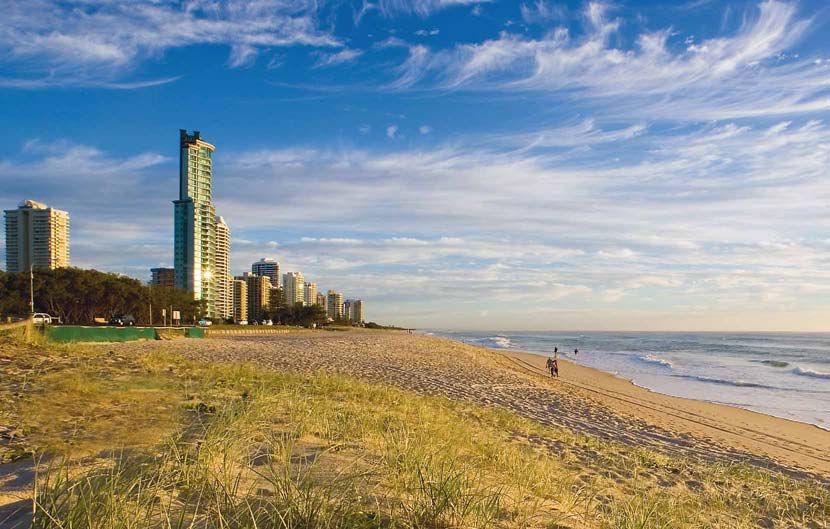
The Climate Change Strategy has interdependencies with
    a number of key Council strategies, plans and visionary
                                                                   2.4 Our climate change exposure
    documents. Some of those include Council’s:                    The Gold Coast has over 55 kilometres of coastline with
                                                                   over 260 kilometres of navigable waterways. Our city has a
    ■   Bold Future Vision
                                                                   unique combination of environmental, social and economic
    ■   Corporate Plan                                             characteristics, coupled with a historic and anticipated high
    ■   Gold Coast Planning Scheme                                 population growth rate. These characteristics present many
    ■   Nature Conservation Strategy                               challenges and opportunities for Council when planning and
    ■   2020 Vision on Waste                                       preparing for our city’s response to climate change.
    ■   Disaster Management Plan, and                              Research on social, economic and environmental impacts of
    ■   Gold Coast City Transport Plan                             climate change for the Gold Coast is ongoing. However, there is
                                                                   still a great amount of uncertainty about the nature of climate
                                                                   change impacts or when they will occur. The risk identification
                                                                   and assessment work completed by Council to date identifies
                                                                   the anticipated risks and priority areas where action should
                                                                   be focused, based on the data available and highlights
                                                                   where more research is required. Planning for climate change
                                                                   mitigation and adaptation in this strategy has been based on
                                                                   the IPCC range (and other sources) for climate change impacts,
                                                                   and under the following assumed parameters:

                                                                   ■   a range of 18-79 centimetres increase in sea
                                                                       level by 2100
                                                                   ■   an increase in annual average temperature
    2.3 Our Bold Future Vision                                         of 1.1° - 4.4° celsius by 2070
    The Bold Future Vision for the future of the Gold Coast is:    ■   an increase in the number of days over 35°
                                                                       celsius up to 14 days per annum by 2070
    “Defined by our spectacular
                                                                   ■   an increase in 1-in-100 year storm surge
    beaches, hinterland ranges,
                                                                       height by 0.35 metres, and
    forests and waterways, the                                     ■   an increase in extreme rainfall intensity for
    Gold Coast is an outstanding                                       2-hour events of 46 per cent by 2070
    city which celebrates nature
                                                                   These parameters (based on 1990 levels) will be reviewed
    and connects distinct                                          regularly for currency with scientific discovery, localised research
                                                                   and alignment with new IPCC findings that are anticipated
    communities with the common                                    every three or four years.
    goal of sustainability, choice                                 Climate change risk extends beyond the physical environment
    and well being for all.”                                       and into the organisation’s financial, legal and reputational
                                                                   risks. Council is acutely aware that at some point its planning
                                                                   decisions and land management considerations for climate
    This vision is supported by six themes with explicit outcome
                                                                   change may be called into question through legal challenge or
    statements. The Climate Change Strategy is a key initiative
                                                                   precedent-setting case law. In this event, Council may need to
    of Council and delivers on a number of these outcomes.
                                                                   argue that it has taken all necessary adaptation and mitigation
    A number of the Climate Change Strategy’s Key Actions
                                                                   action to manage the impacts of climate change on the city.
    outlined in Section 4 form part of the Bold Future signature
                                                                   Should this not be proven, Council’s climate change exposure
    projects. For more information on Bold Future, see
                                                                   will be costly and difficult to manage, impacting the city’s
    www.boldfuture.com.au.
                                                                   reputation and sustainability in a changing climate.

5   Gold Coast City Council Climate Change Strategy 2009-2014
2.5 Current trends and issues                                       2.6 Council’s role in community
All key climate change risks and their consequences have been       mitigation
considered in detail in the preparation of this strategy. The
                                                                    Much of this city’s community greenhouse gas emissions
risk identification, assessment and priority ranking report is
                                                                    are generated by electricity consumption and transportation
located in Appendix B: Climate Change Strategy risk response
                                                                    emissions. Emerging at the Federal Government level is the
matrix. Within the strategy, action is proposed to mitigate or
                                                                    Carbon Pollution Reduction Scheme (CPRS) which will seek to
adapt to climate change risk. Risk priorities are determined on
                                                                    drive behaviours across the nation to reduce emissions in these
risk likelihood and the time horizon over which it occurs. The
                                                                    and other areas in line with national targets. The Queensland
purpose of this strategy is to set direction for the treatment of
                                                                    Government is introducing a complementary range of initiatives
climate change risks by Council and the Gold Coast community
                                                                    that will assist Queenslanders in both the residential and
to enable action to be taken on behalf of the city. This strategy
                                                                    commercial sectors to take up technologies and behaviours to
has been developed using a risk assessment model consistent
                                                                    reduce greenhouse gas emissions.
with Council’s corporate risk framework (adapted from the
Handbook to Risk Management Guidelines Companion to                 Gold Coast City Council has a limited regulatory role in this area
AS/NZS 4360:2004).                                                  beyond development assessment. As such the scope of action
                                                                    in this area is focused on providing support to the initiatives of
In developing this strategy a number of risks associated with
                                                                    the other levels of government in the form of supplementary
climate change have been identified that require priority action
                                                                    initiatives and promotion, and in seeking enhanced regulation
for our community. These are not limited to environmental
                                                                    in the review of the planning scheme.
impacts but also those of a social and economic nature. Over
time climate change is anticipated to affect every part of the
community in varying degrees, including areas like financial
well-being, social connectivity, legal indemnity and insurance,
health and lifestyle, decision making and leadership.

                                                                            Gold Coast City Council Climate Change Strategy 2009-2014 6
3 The s trategy
    3.1 Our vision                                                 3.2 Objectives of the strategy
                                                                   The objectives of this strategy are to:
    “To lead our city in response                                  ■   ensure Council can continue to deliver its services effectively
    to the risks and opportunities                                     to the community in a changing climate
                                                                       reduce the vulnerability of the Gold Coast community to the
    posed by climate change to                                     ■

                                                                       potential impacts of climate change
    the city, the community and                                    ■   enable legal obligations and expectations on the Council and
                                                                       the community to be met comprehensively
    Council’s operations, enabling                                 ■   ensure Council’s response to climate change is capable of
    climate change resilience for                                      adaptation in light of international protocols, technological
                                                                       change, community readiness, state and federal policy and
    our future.”                                                       legislative change, improved knowledge (scientific discovery),
                                                                       etc
    This strategy is a comprehensive approach to managing          ■   equip Council with a robust framework to proactively seek
    climate change on the Gold Coast: setting direction,               opportunities, knowledge and partners to effectively manage
    enabling action. It is envisaged that the city’s leaders and       the challenges and opportunities of climate change into the
    the community will work in partnership toward a resilient          future
    city that can respond to the impacts and opportunities         ■   build capacity and capability of Council’s ability to lead the
    presented by climate change.                                       community in responding to the challenges and
                                                                       opportunities presented to the city by climate change
                                                                   ■   provide a dynamic and pragmatic action plan that will equip
                                                                       Council with a program of practical and sustainable
                                                                       responses to the current risks and challenges posed by
                                                                       climate change, and
                                                                   ■   integrate climate change considerations into governance
                                                                       arrangements and, consequentially, Council’s day to day
                                                                       operations

7   Gold Coast City Council Climate Change Strategy 2009-2014
3.3 Strategic outcomes Advocacy and
Council will take action to mitigate and adapt its operations
awareness
and therefore prepare the community to achieve climate A strategic advocacy and
change resilience for the future. Council’s response to climate awareness focus acknowledges
change risks and opportunities targets five key areas for action: that Council cannot manage
governance and leadership, research, advocacy and awareness, its climate change risk in
infrastructure, and planning and regulation. Achieving the isolation or without support
strategic outcomes for the Climate Change Strategy will from other agencies and levels
allow Council to meet the expectations of our community in of government. Council and the community will need to be
managing climate change. informed and educated to have a voice in climate change issues
and management.
4. The city’s response to climate change is
understood at all levels of government in
Governance and Australia and internationally.
leadership
5. Council and community response to climate
This part of the strategy
change is enabled by improved awareness
directs Council’s organisational
management of climate and understanding.
change (governance) and the
leadership required by Council
to demonstrate its commitment
to the treatment of the climate change risk and drive uptake of
climate change related opportunities on the Gold Coast. Infrastructure
1. Council is a leader in localised action to City infrastructure and assets
address global climate change challenges are at risk from climate change
impacts. Action is required to
and opportunities. ensure that our city continues
2. The Gold Coast is a preferred location for to function and to adapt its
infrastructure to the changing
investment in climate change opportunities
climate.
and technology.
6. The city’s infrastructure is resilient to the
impacts of climate change.
Research
The research component of
this strategy provides for the Planning and
requirement for more specific regulation
information about our unique
The timing of climate change
environment and its climate
impacts such as sea level rise
change exposure to allow
allows for Council to plan and
Council to manage the risk
regulate to manage risk.
to our city.
Other levels of government
3. Council’s response to climate change is impose climate change legislation and regulation on Council
business. Council needs a planned response to climate change
informed by sound research specific to the
and to meet its associated legal obligations.
Gold Coast.
7. Council has a planned climate change
response that meets its statutory
responsibilities.
Gold Coast City Council Climate Change Strategy 2009-2014 84 Strategy o utcomes,
performance measures
and reporting
4.1 Performance of the strategy 4.2 Our carbon footprint
The result of Council action on an issue, risk or opportunity As with every measurable target, a baseline needs to be
of climate change is the basis of the strategic outcomes of established. Council’s forward thinking has resulted in the
this strategy. The measure of performance of these outcomes collection of its operational greenhouse gas emissions data
will determine the success of strategic climate change action since 1998. The greenhouse gas emissions from Council
undertaken, and ultimately, the strategy itself. operations in the financial year of 2007-08 (excluding landfill
gas) were 156,000 tonnes of carbon dioxide equivalent (T
The Climate Change Strategy will be successful when the
CO2-e). Understanding Council’s level of emissions and the
risks to the Gold Coast community and Council operations
source of those emissions from within our operational carbon
associated with climate change are managed by a coordinated
footprint has enabled Council to identify specific mitigation
approach and risks are reduced as a result of strategic
measures to reduce emissions and in turn some operational
action through mitigation or adaptation. Success will also be
costs.
achieved when the opportunities of climate change in our city
are realised and return social, economic and environmental The key areas for Council savings on cost and emissions
benefits. are through energy efficiency or alternatives (primarily air
conditioning changes in Council’s administration buildings
and renewable or efficient energy use in assets across the city
including swimming pools, libraries and community buildings).
Other high emitters with reduction potential are public lighting,
vehicle fleet emissions and landfill gases. A comprehensive
inventory of operational emissions for the purposes of
identifying Council’s carbon footprint is located in Appendix C
– carbon Footprint Analysis: Gold Coast City Council Operations
2007-2008. This inventory provides a baseline to measure
and monitor emissions in order to achieve our carbon neutral
by 2020 target, and the success of proposed actions of this
strategy that produce emission savings.
9 Gold Coast City Council Climate Change Strategy 2009-2014Gold Coast City Council Climate Change Strategy 2009-2014 10
4.3 The role of offsets in this                                                    over the life of this strategy on the reduction of greenhouse
                                                                                       gas emissions from its own operations will return significant
        strategy                                                                       benefits. This includes reduced energy consumption costs and the
    The diagram on page 4 of this strategy indicates a hierarchy of                    avoidance of financial risks associated with anticipated increases in
    action to mitigate greenhouse gas emissions. It is anticipated                     future energy costs flowing from the introduction of an emissions
    that for Council’s operations to achieve the target of carbon                      trading scheme by the Australian Government.
    neutral by 2020, emissions unable to be mitigated by other                         This strategy does however invest in the offsetting of the total
    means will need to be offset.                                                      greenhouse gas emissions resulting from the Council’s fleet and
    The focus of this strategy’s mitigation actions for the next five                  travel. This investment will result in the offset of 11 per cent of
    years for Council’s operations, and subsequently the financial                     Council’s total (without landfill) emissions (2007/08 financial
    investment on those actions, is on initiatives that will return                    year). Offsetting of these emissions has been included as the
    significant reductions of direct greenhouse gas emissions.                         Council’s vehicle fleet is very visible to the community on a daily
    Consequently, this strategy does not focus on offsets as a                         basis throughout the city. By simple messaging displayed on
    primary action to be taken by Council at this time, other                          Council’s vehicles, its leadership in climate change mitigation
    than the offsetting of Council’s fleet and travel, which will be                   can be conveyed to the community. Further, investment in
    discussed below.                                                                   offsets for these specific emissions provides an opportunity
                                                                                       with partners to establish formally recognised carbon sinks into
    It is recognised that offsets have the desirable effect of nullifying
                                                                                       operation in this city and further position the Gold Coast as a
    the climate change impact of greenhouse gas emissions. However,
                                                                                       location for investment in climate change industries.
    the investment in offsets detracts from the financial capacity of
    Council to take substantive action to reduce greenhouse emissions                  It is anticipated that in future reviews of the Climate Change
    at a time when investment in these actions is strategically                        Strategy the mix of reduction and offset actions will change
    important to the achievement of our long term target of carbon                     as the opportunities for significant reduction actions diminish
    neutral by 2020. The investment that Council makes now and                         following the implementation of actions under this strategy.

    4.4 Strategic outcomes, key actions and performance measures

                     Governance and leadership – key actions

      Strategic outcome 1. Council is a leader in localised action to address global climate change challenges
                           and opportunities.
            Performance measures:
            Percentage by which Council’s carbon footprint is reduced
            Percentage of relevant Council decisions and policies that contain climate change considerations
            Percentage of Council staff that undertake training for climate change considerations as part of routine risk assessment

      1.        Review Corporate Governance Framework to integrate and embed climate change risk mitigation and adaptation.

      2.        Review Information Management arrangements to support climate change actions and strategy implementation.

      3.        Ensure climate change considerations and statutory responsibilities are incorporated in the development of new (and the review of
                existing) corporate strategies, plans and policies.

      4.        Implement Climate Change Impact Statements into Council’s decision making and governance framework.

      5.        Deliver the Gold Coast Light Rail Project as a collaborative infrastructure project of Council, and the Queensland and Australian
                Governments to mitigate community greenhouse gas emissions arising from transport within the city.

      6.        Host and deliver in collaboration with the Bold Future Team and Griffith University’s National Climate Change Adaptation Research
                Facility, a Bold Future – Climate Change Summit.

      7.        Investigate financial potential for Council investment in carbon trading and energy generation or technology revenue streams.

      8.        Minimise Council’s financial exposure to emissions trading and legislative penalty from landfill emissions through continued landfill
                gas capture and electricity production and other activities.

      9.        Accelerate Council’s carbon footprint reduction initiatives programme.*

      10.       Accelerate Council’s green fuels programme (including E10 and biofuels) for operational fleet.*

      11.       Upgrade Council’s barbeque facilities to energy efficient technology.*

      12.       Install solar heating at all Council owned public pool facilities.*

      13.       Install solar hot water heating in Council owned Tourist Parks.*

                *existing action already underway as part of Carbon Neutral by 2020 Action Plan, December 2007

11 Gold Coast City Council Climate Change Strategy 2009-2014
Governance and leadership – key actions
Strategic outcome 2. The Gold Coast is a preferred location for investment in climate change
opportunities and technology.
Performance measure:
Percentage of the city’s economic growth attributed to climate change related industry and technology
14. Accelerate the work travel emissions offset program including full offset of Council’s fleet on an annual basis.
15. Undertake a scoping study to develop a bulk purchasing model for energy efficient technology.
16. Undertake a pilot project to plant trees for carbon sequestration on Council land.
17. Investigate options for alternative fuel and renewable energy production and partnerships on the Gold Coast.
Research – key actions
Strategic outcome 3. Council’s response to climate change is informed by sound research, specific
to the Gold Coast.
Performance measures:
Percentage of Council’s budget dedicated to Gold Coast specific climate change research initiatives
Percentage of Gold Coast specific information available compared to broader information for decision making purposes
Percentage of Gold Coast mapped for the impacts of climate change
18. Develop and coordinate a climate change research plan for the Gold Coast partnering with university research facilities.
19. Undertake a planning study to establish specific climate change parameters, based on existing internationally accepted science, for
input into each of Council’s land use, infrastructure and community planning functions.
20. Undertake a planning study to determine the climate change considerations that will inform the Planning Scheme Review.
21. Identify and map the Gold Coast environments most at risk from the impacts of climate change.
22. Having regard to emerging science, analyse the potential risks to the city posed by a range of future climate change scenarios
including sea level rise parameters occurring at a more rapid rate than anticipated.
Gold Coast City Council Climate Change Strategy 2009-2014 124.4 Strategic outcomes, key actions and performance measures
Advocacy and awareness – key actions
Strategic outcome 4. the city’s response to climate change is understood at all levels of government
in Australia.
Performance measures:
Percentage of government funding and grants received by Council for climate change initiatives
Percentage of Council participation in state, national and international climate change partnerships
23. Advocate on behalf of Council and the community for improved climate change outcomes, including energy efficient public
lighting, improved health services and emergency management outcomes.
Advocacy and awareness – key actions
Strategic outcome 5. Council and community response to climate change is enabled by improved
awareness and understanding.
Performance measures:
Percentage decrease in the city’s carbon footprint
Percentage increase in uptake of government programs by the Gold Coast community
Percentage increase in Council staff enquiry for climate change related information and resources
24. Establish information sharing and collaborative partnerships with community service providers to manage the risks of climate
change for the city.
25. Develop and deliver an integrated community-wide education and awareness campaign on climate change mitigation and
adaptation.
26. Develop an internal training and awareness campaign for Council staff to increase understanding and awareness of climate change
risk mitigation and adaptation and its application to decision making processes.
13 Gold Coast City Council Climate Change Strategy 2009-2014Infrastructure – key actions
Strategic outcome 6. the city’s infrastructure is resilient to the impacts of climate change.
Performance measures:
Percentage of city assets and infrastructure that meets climate change design standards
Percentage of Council buildings with 40 per cent or better Greenhouse 5 Star Rating
Percentage decrease in energy consumption across Council buildings and assets
27. Review maintenance requirements for Council’s recreational facilities and public spaces to assess the risk and impacts of climate
change (particularly environmental risk).
28. Identify and prioritise Council infrastructure and assets at risk from climate change impacts.
29. Review and progressively amend design standards of Council infrastructure and assets to include established climate change
parameters (following completion of Action #19).
30. Construct all new Council buildings to a performance standard 40kgCO2-e/m2/annum or better than the Australian 5 star
Greenhouse Building Rating*.
31. Conduct energy audits of Council owned assets to develop and implement management plans for each to address climate change
risks, mitigation and adaptation1.
*existing action already underway as part of Carbon Neutral by 2020 Action Plan, December 2007
1
Energy audits and management plan implementation for facilities management air conditioning and lighting retrofit have already commenced for
Evandale Administration Building through existing funding of $400,000 received in 2008-2009.
Gold Coast City Council Climate Change Strategy 2009-2014 144.4 Strategic outcomes, key actions and performance measures
Planning and regulation – key actions
Strategic outcome 7. Council has a planned climate change response that meets
its statutory responsibilities.
Performance measures:
Percentage increase in public transport services available for the Gold Coast community
Percentage of locally grown food available to the Gold Coast community
Percentage increase in the implementation of Council strategies, plans and policies that meet climate change requirements
and responsibilities
32. Incorporate climate change considerations in the review of Council’s Integrated Transport Plan.
33. Develop a scoping study for local food production and purchase on the Gold Coast.
34. Designate carbon sinks in the Gold Coast Planning Scheme to increase carbon sequestration potential on the Gold Coast.
35. Apply Council’s established climate change parameters (following completion of Action #19) to develop and implement a
shoreline Management Plan to mitigate and adapt to climate change risks.
15 Gold Coast City Council Climate Change Strategy 2009-20144.5 Corporate governance and The monitoring and reporting on the implementation and
performance of the strategy will be directed by the Corporate
climate change Performance Management Framework resulting in quarterly
and annual reporting of strategy implementation and progress
In responding comprehensively to climate change it is essential
to achieving performance measures through the Annual Report
that Council, as a leader in this city, integrates climate change
and the Corporate Performance Report.
considerations into its corporate governance arrangements.
Council will ensure that its overarching Corporate Governance Current requirements for Council on its energy consumption
Framework (CGF) enables climate change considerations to are via the Energy Efficiency Opportunities Act 2006. Emission
permeate the organisational planning, resource allocation, reductions are reported through the Cities for Climate Protection
performance management and the organisational foundation program which Council has participated in since 1998. It is
components that govern Council’s operations. anticipated that Council will report on its carbon emissions via
the National Greenhouse and Energy Report Act 2007.
The elements of the CGF of particular significance to the
integration of climate change into Council business and service
delivery are: corporate planning, service planning, long-term
financial planning, annual budget, performance management, 4.6 Climate change strategy
control environment, risk assessment, control activity and
monitoring.
review arrangements
The implementation of this strategy will be reviewed annually
Given that by its nature climate change poses dynamic risks and
to ensure it is consistent with the most recent and relevant
opportunities, it is necessary for Council’s governance functions
information, science and response methodology available. The
and services to be continually informed by a contemporary
world authority in this area is the IPCC that comprehensively
understanding of climate change. This will result in ongoing
reports on climate change science, indicators and responses. It
adaptive risk-based management responses. It is essential that
is appropriate that this strategy undergoes a full review in the
within the context of the CGF functions, enabling this resilience
year that those reports are released.
and adaptability to occur, that such measures as environmental
scanning and scenario planning occur. However, should an increase in corporate risk scores occur (for
those risks identified as applicable to climate change) this will
As management of climate change challenges requires a risk-
also trigger a review of this strategy. Council will continue its
based, adaptive management approach, Council’s Corporate
collaborative research and knowledge partnerships with the
Risk Management Framework will be the structure within
CSIRO, universities and all levels of government to provide
which Council will ensure its responses to climate change are
informed and localised responses to climate change science.
comprehensive, prioritised and integrated across the organisation.
Gold Coast City Council Climate Change Strategy 2009-2014 165 Strategy implementation
5.1 Implementation plan will require its own funding, but will become embedded in
the operational business of Council through appropriate
A risk-based strategy such as this needs to consider not only governance arrangements, planning and policy. Similarly,
the risks and consequences of climate change but also how additional funding may not be required to support the
those risks and consequences might be treated through the development of climate change resilient assets and
implementation of mitigation and adaptation actions. infrastructure, if existing budget expenditure occurs with regard
The key actions identified in Section 4 are within the focus areas to climate change considerations. Ultimately, however, some
determined in Council’s resolution for developing the strategy, climate change related actions will require substantial financial
being: Council and community mitigation and Council and support and resource input in order to deliver the strategic
community adaptation. These actions are further detailed in outcomes that Council seeks for mitigating and adapting to
Appendix A – implementation plan: key actions of the Climate its climate change risks and capitalising on its climate change
Change Strategy. The implementation, change management associated opportunities. This figure is likely to be, on average,
and communication activities of this strategy will be primarily two million dollars per annum in the initial years of strategy
coordinated by the Strategic & Environmental Planning & Policy implementation.
Branch, in the Planning Environment & Transport Directorate Opportunities for partnerships can reduce the overall cost of
within Council. action for Council, enabling the full cost of action to be offset.
5.2 Financial and resource 5.3 Responsibility and
requirements accountability
The options available for Council and the community to Climate change actions for risk mitigation and adaptation
mitigate climate change risk come at varying degrees of cost within Council will require input across all directorates as will
and resource requirement. Internally focused action, such actions required to capitalise on climate change opportunities.
as that required for Council to mitigate or adapt to its own Service owners are assigned the lead responsibility for actions
operational risks, will require funding, dedicated resources, and directly relating to their businesses. A coordinated approach
capability development across the organisation. to managing the ongoing implementation of the Climate
Human resources will be required for the centralised Change Strategy is necessary in enabling a comprehensive
coordination of the Climate Change Strategy. It will need and adaptable strategy. Council will integrate its climate
to support service owners and coordinate the monitoring, change response into governance arrangements to provide the
measuring and reporting on the strategy. It is important to transparent responsibility and accountability for enacting the
recognise that not all climate change action within Council strategy.
17 Gold Coast City Council Climate Change Strategy 2009-2014Gold Coast City Council Climate Change Strategy 2009-2014 18
6 Appendices
    6.1 Appendix A – implementation plan: key actions of the Climate
        Change Strategy

                  Governance and leadership

      Strategic outcome 1. Council is a leader in localised action to address global climate change challenges
                           and opportunities.

      Key Actions                                           Focus   Cost             Emissions            Responsibility                       When
                                                            Area                     Savings (tCO2-e)

     1. Review Corporate Governance Framework               C-M     $ Cost           This is both a       Corporate Planning &                 End
        to integrate and embed climate change risk          C-A     neutral          mitigation and       Performance, City Governance         2009
        mitigation and adaptation.                          Co-M    (resourced       adaptation           (governance arrangements)
                                                            Co-A    in-house)        action               SEPP, Planning Environment and
                                                                                                          Transport
                                                                                                          (coordination in all directorates)

     2. Review Information Management                       C-M     $50,000          This is both a       SEPP, Planning Environment and       End
        arrangements to support climate change              C-A                      mitigation and       Transport (coordination in all       2009
        actions and strategy implementation.                Co-M                     adaptation           directorates) Office of the CIO,
                                                            Co-A                     action               Organisational Services

     3. Ensure climate change considerations and            C-A     $ Cost           This is an           Corporate Planning &                 End
        statutory responsibilities are incorporated         Co-A    neutral          adaptation           Performance, City Governance         2010
        in the development of new (and the review                   (resourced       action               SEPP, Planning Environment and
        of existing) corporate strategies, plans and                in-house)                             Transport
        policies.
        (Note: Including, but not limited to, Sustainable
        Flood Management Strategy, Water Cycle Strategy
        and Nature Conservation Strategy)

     4. Implement Climate Change Impact                     C-M     $50,000          This is both a       Corporate Planning &                 End
        Statements into Council’s decision making           C-A     (2009-2010)      mitigation and       Performance, City Governance         2009
        and governance framework.                           Co-M                     adaptation           (governance arrangements),
                                                            Co-A                     action               SEPP, Planning Environment and
                                                                                                          Transport
                                                                                                          (coordination in all directorates)

                      Focus Area: C-M: Council Mitigation C-A: Council Adaptation Co-M: Community Mitigation Co-A: Community Adaptation

19 Gold Coast City Council Climate Change Strategy 2009-2014
Governance and leadership
Strategic outcome 1. Council is a leader in localised action to address global climate change challenges
and opportunities.
Key Actions Focus Cost Emissions Responsibility When
Area Savings (tCO2-e)
5. Deliver the Gold Coast Light Rail Project Co-M (Funded as 11,400 – 40,000 per Transport Planning End 2013
as a collaborative infrastructure project of separate annum Branch, Planning
Council, and the Queensland and Australian capital works (measurable once Environment and
Governments to mitigate community program at construction has Transport
greenhouse gas emissions arising from each financial been completed
transport within the city. year) for Sections 2 and
3, Southport to
Broadbeach, and in
operation)
6. Host and deliver in collaboration with the C-M $50,000 This is both a Bold Future Team - SEPP, End 2009
Bold Future Team and Griffith University’s C-A (funded as part mitigation and Planning Environment
National Climate Change Adaptation Co-M of Bold Future adaptation action and Transport (to
actions)
Research Facility, a Bold Future – Climate Co-A coordinate)
Change Summit.
7. Investigate financial potential for Council C-M $ Cost This is both a Economic Development End 2009
investment in carbon trading and energy C-A neutral mitigation and (Liaison), Economic
generation or technology revenue streams. Co-M (resourced adaptation action Development and Major
Co-A in-house) Projects
8. Minimise Council’s financial exposure to C-M (Dependent Fugitive emissions Commercial Services, End 2010
emissions trading and legislative penalty from on actions calculation to Community Services
landfill emissions through continued landfill implemented) be finalised
gas capture and electricity production and
other activities.
9. Accelerate Council’s carbon footprint C-M $ Cost 1000tCO2-e SEPP, Planning Ongoing
reduction initiatives program. neutral per annum Environment and Action
(Note: Funded through electricity savings and Transport, Facilities
coordinated through existing organisational Management,
functions)
Organisational Services
10. Accelerate Council’s green fuels program C-M $ Cost 1,710 (2009-2012) Fleet and Plant Services, Ongoing
(including E10 and biofuels) for operational neutral 6,270 (2009-2020) Engineering Services Action
fleet
11. Upgrade Council’s barbeque facilities to C-M $86,500 6,000 (2009-2012) Parks and Recreational Ongoing
energy efficient technology (2009-2010) 22,000 (2009-2020) Services, Community Action
(projected Services
estimate
$865,000 for
2009-2020)
12. Install solar heating at all Council owned C-M $500,000 750 (2009-2012) City Venues, Community Ongoing
public pool facilities (2010-2012) 2,750 (2009-2020) Services Action
(further
facilities to
be costed on
individual site
requirements)
13. Install solar hot water heating in Council C-M $200,000 To be determined Commercial Services, Ongoing
owned tourist parks (2009-2010) Community Services Action
(funded with tourist park revenue through asset (projected
renewal) estimate
$2,000,000 for
2009-2020)
14. Accelerate work travel emissions offset C-M $220,000 2,680 (2009-2020) Fleet and Plant Services, Ongoing
program including full offset of Council’s (2009-2010) Emissions savings Engineering Services Action
fleet on an annual basis (projected
available 5 years after
(Note: Council will purchase offsets to ensure that estimate
$2,200,000 for planting
emissions generated by Council’s work travel,
including light fleet, are offset. This is linked with 2009-2020)
Action #15)
Focus Area: C-M: Council Mitigation C-A: Council Adaptation Co-M: Community Mitigation Co-A: Community Adaptation
Gold Coast City Council Climate Change Strategy 2009-2014 20Governance and leadership
Strategic outcome 2. The Gold Coast is a preferred location for investment in climate change opportunities
and technology.
Key Actions Focus Cost Emissions Responsibility When
Area Savings (tCO2-e)
15. Undertake a scoping study to develop a C-M $50,000 To be SEPP, Planning Environment End 2009
bulk purchasing model for energy efficient Co-M (2009-2010) determined and Transport
technology.
16. Undertake a pilot project to plant trees for C-M $ Cost To be Parks & Recreational Services, End 2010
carbon sequestration on Council land. neutral determined Community Services, SEPP,
Planning Environment and
Transport, Fleet and Plant
Services, Engineering Services
17. Investigate options for alternative fuel C-A $60,000 This is an Economic Development End 2009
and renewable energy production and Co-A (2009-2010) adaptation (Liaison), Economic
partnerships on the Gold Coast. action Development and Major
Projects
Focus Area: C-M: Council Mitigation C-A: Council Adaptation Co-M: Community Mitigation Co-A: Community Adaptation
Research
Strategic outcome 3. Council’s response to climate change is informed by sound research, specific
to the Gold Coast.
Key Actions Focus Cost Emissions Responsibility When
Area Savings (tCO2-e)
18. Develop and coordinate a climate change C-A $120,000 This is an SEPP, Planning Environment End 2010
research plan for the Gold Coast partnering Co-A (2009-2010) adaptation and Transport
with university research facilities action
(including, but not limited to, the Griffith
University Climate Change Adaptation
Research Facility).
19. Undertake a planning study to establish C-A $120,000 This is an SEPP, Planning Environment End 2010
specific climate change parameters, based Co-A (2009-2010) adaptation and Transport
on existing internationally accepted science, action
for input into each of Council’s land use,
infrastructure and community planning
functions.
20. Undertake a planning study to determine C-A $100,000 This is an SEPP, Planning Environment End 2009
the climate change considerations that will Co-A (2009-2010) adaptation and Transport
inform the Planning Scheme Review. action
21. Identify and map the Gold Coast C-A $50,000 This is an SEPP, Planning Environment End 2009
environments most at risk from the impacts Co-A (2009-2010) adaptation and Transport
of climate change. action
22. Having regard to emerging science, analyse C-A $50,000 This is an SEPP, Planning Environment End 2009
the potential risks to the city posed by a Co-A (2009-2010) adaptation and Transport
range of future climate change scenarios action
including sea level rise parameters occurring
at a more rapid rate than anticipated.
Focus Area: C-M: Council Mitigation C-A: Council Adaptation Co-M: Community Mitigation Co-A: Community Adaptation
21 Gold Coast City Council Climate Change Strategy 2009-2014Advocacy and awareness
Strategic outcome 4. The city’s response to climate change is understood at all levels of government
in Australia and internationally.
Key Actions Focus Cost Emissions Responsibility When
Area Savings (tCO2-e)
23. Advocate on behalf of Council and the C-A $ Cost This is an Economic Development, Ongoing
community for improved climate change Co-A neutral adaptation Economic Development & Action
outcomes, including energy efficient public (resourced action Major Projects
lighting, improved health services and in-house)
emergency management outcomes.
Strategic outcome 5. Council and community response to climate change is enabled by improved awareness
and understanding.
24. Establish information sharing and C-A $ Cost This is an SEPP, Planning Environment Ongoing
collaborative partnerships with community Co-A neutral adaptation and Transport Action
service providers to manage the risks of (resourced action Corporate Risk, City
climate change for the city. in-house) Governance (for risk
management framework)
25. Develop and deliver an integrated Co-M $100,000 This is an SEPP, Planning Environment Ongoing
community-wide education and awareness Co-A (2009-2010) adaptation and Transport Action
raising campaign on climate change action Corporate Communications,
mitigation and adaptation City Governance
(campaign to be based on communication
programs such as waste and water initiatives,
“watch every drop” model).
26. Develop an internal training and awareness C-M $100,000 This is an Organisational Learning Ongoing
campaign for Council staff to increase C-A (2009-2010) adaptation & Development Unit, Action
understanding and awareness of climate action Organisational Services
change risk mitigation and adaptation and SEPP, Planning Environment
its application to decision making processes. and Transport
Focus Area: C-M: Council Mitigation C-A: Council Adaptation Co-M: Community Mitigation Co-A: Community Adaptation
Gold Coast City Council Climate Change Strategy 2009-2014 22Infrastructure
Strategic outcome 6. The city’s infrastructure is resilient to the impacts of climate change.
Key Actions Focus Cost Emissions Responsibility When
Area Savings (tCO2-e)
27. Review maintenance requirements for C-A $100,000 This is an Parks & Recreational End 2009
Council’s recreational facilities and public Co-A (2009-2010) adaptation Services, Community
spaces to assess the risk and impacts of action Services
climate change (particularly environmental City Venues, Community
risk). Services
28. Identify and prioritise Council infrastructure C-A $100,000 This is an Corporate Asset End 2010
and assets at risk from climate change (2009-2010) adaptation Management, City
impacts. action Governance
Corporate Risk,
City Governance
29. Review and progressively amend design C-A $125,000 This is an Technical Services, End 2010
standards of Council infrastructure and (2009-2010) adaptation Engineering Services
assets to include established climate action
change parameters (following completion
of Action #17).
30. Construct all new Council buildings to a C-M (Funded as 1000 tCO2-e Economic Projects, End 2012
performance standard 40kgCO2-e/m2/ separate capital per annum Economic Development
annum or better than the Australian 5 star works program and Major Projects
Greenhouse Building Rating. at each financial
year)
31. Conduct energy audits of Council owned C-M $150,000 4,100 Facilities Management, End 2012
assets and develop and implement (2009-2010) (2009-2010) Organisational Services
management plans for each to address (energy
climate change risks, mitigation and audits and 12,000
adaptation measures. implementation (2009-2020)
plans have already
commenced with
existing funding
of $400,000
received in
2008-2009)
Focus Area: C-M: Council Mitigation C-A: Council Adaptation Co-M: Community Mitigation Co-A: Community Adaptation
23 Gold Coast City Council Climate Change Strategy 2009-2014Planning and regulation
Strategic outcome 7. Council has a planned climate change response that meets its statutory responsibilities.
Key Actions Focus Cost Emissions Responsibility When
Area Savings (tCO2-e)
32. Incorporate climate change considerations in C-A (Funded as a This is an Transport Planning, End 2010
the review of Council’s Integrated Transport Co-A separate strategic adaptation Planning Environment and
Plan. initiative) action Transport
33. Develop a scoping study for local food Co-A $100,000 This is an Economic Development End 2011
production and purchase on the Gold Coast. (Strategy adaptation (Liaison), Economic
development action Development and Major
only 2010-11 not Projects
implementation)
34. Designate carbon sinks as a land use in Co-A No budget This is an SEPP, Planning End 2009
the planning scheme to increase carbon required adaptation Environment and
sequestration potential on the Gold Coast. action Transport
35. Apply Council’s established climate change C-A $50,000 This is an Catchment Management End 2011
parameters (following completion of Action (Development adaptation Unit, Community Services
#18) to develop and implement a Foreshore only - identified action
Management Plan to mitigate and adapt to for 2010-2011)
climate change risks.
Focus Area: C-M: Council Mitigation C-A: Council Adaptation Co-M: Community Mitigation Co-A: Community Adaptation
Gold Coast City Council Climate Change Strategy 2009-2014 24You can also read


