COASTAL & MARINE - Natural and cultural heritage of European coastal communities Volume 29 No. 1 2020 - Interreg Europe
←
→
Page content transcription
If your browser does not render page correctly, please read the page content below
COASTAL & MARINE

        Natural and cultural heritage
                         of European
                coastal communities

                         Volume 29 · No. 1 2020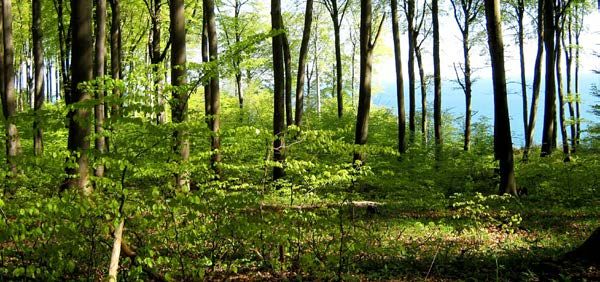
Editorial                                                                        Content
Dear Reader,                                                                    Introduction                                                                3
The World Heritage Committee is globally responsible for delivering             A Place for World Heritage Cooperation                                      4
the World Heritage Convention. The regional and thematic
initiatives are crucially important to encourage and ensure the                 How to protect and promote cultural heritage of
implementation of decisions and recommendations made. Sharing                   fishing communities: the need for policy change in
challenges and positive results from sites is beneficial for all World          European regions                                                            5
Heritage properties, especially for sites in the region in question or          The Naval Port of Karlskrona and its history                                6
sites that share the same features.
                                                                                Trabocchi, between history and mystery                                      7
This issue brings together Coastal Heritage from around Europe
through two special projects: DUNC and CHERISH, whose initiatives               Just a stone’s throw away – the Hanseatic city of Wismar                    8
and works we are passionately informed about throughout the                     Stralsund: where modern meets heritage                                      9
following pages. One of these initiatives was the Baltic Sea World
Heritage Summit. This important forum opened up discussions                     Fishing Tourism: connecting fishing culture with
amongst relevant delegates on common challenges, best practices                 economic opportunities                                                     10
and possible long-term cooperation in the region.                               The Baltic Sea – a treasure chest for maritime heritage                    11
Europe has different regional policies and programmes on cultural
                                                                                Traditional shipbuilding in Europe                                         12
and natural heritage. How do these impact and reflect the coastal
heritage or more specifically fishing communities, the traditional              Cultural heritage of fishing communities in Zeeland                        13
tools and practices as well as sustainability? Here we look for                 Interview: Jasmund National Park – a small forest with
answers to these questions.                                                     great universal value                                                      14
This issue encourages us to visit heritage properties along the Baltic
coast and teaches us about the intangible cultural heritage of coastal          The development of (agri)cultural landscapes                               16
people, a perfect balance between creativity and knowledge.                     Environmental and social sustainability at the Curonian
I wish you an interesting and informative read!                                 Spit National Park                                                         17
                                                                                Traditional Ecological Knowledge Conveys Deep
                                                                                Messages of Our Mother Ocean                                               18
                                                                                The Portuguese sargaço culture                                             20
                                                                                Beach Wrack – a Treasure of the Baltic Sea                                 21
                                                                                Carnikava’s lamprey - the special value of Riga Planning                   22
                                                                                Region
                                                                                Overview of the projects’ partners along Europe’s
                                                                                coastline                                                                  23

                                Burcu Özdemir
                                UNESCO Consultant                               Colophon
                                                                                EUCC’s magazine ‘Coastal & Marine’ Special ‘Natural and cultural
                                                                                heritage of European coastal communities’ (volume 2020-1),
                                                                                ISSN 1877-7953
                                                                                © EUCC. Articles cannot be reprinted for commercial use. The copyright of
                                                                                all illustrations is reserved.
Coastal & Marine Union (EUCC)                                                   Editors: Cristina Nazzari and Theresa Horn (EUCC-Germany,
                                                                                Fr.-Barnewitz-Str. 3, 18119 Rostock, Germany)
The Coastal & Marine Union is dedicated to conserving and maintaining
                                                                                Layout: Bernhard Scholz, Germany
healthy seas and attractive coasts for both people and nature.
EUCC advocates best practice by developing coastal and marine policies,
                                                                                Opinions expressed in Coastal & Marine do not necessarily reflect the official
mobilising experts and stakeholders, providing advice and information,
                                                                                views of EUCC.
and implementing demonstration projects.
                                                                                Cover photo: © Di Nola Nicola
Membership dues for 2020
                                                                                Photo cover inserts: © Karlis Ustups, © Miriam Eriksson, © Christoph Meyer,
€ 48 (€ 80 / 3 years) for Student and Private Members;
                                                                                paperheroes
€ 65 (€ 120 / 3 years) for Professional Members and Non-profit NGOs;
€ 300 (€ 500 / 3 years) for Full Member Organisations;
                                                                                Thanks for support are expressed to:
€ 1000 for Communication Partners;
                                                                                Jane Hofmann, all contributing authors and photographers.
€ 2000 for Programme Partners.
All EUCC members are entitled to a free subscription to 'Coastal&MarinE-News'
                                                                                The contents of this publication are the sole responsibility of the authors
and our e-letters in Dutch, French, German and Spanish.
                                                                                and can in no way be taken to reflect the views of the European Union, the
For info: www.eucc.net.
                                                                                Managing Authority or the Joint Secretariat of the Interreg V A South Baltic
                                                                                Programme 2014 –2020 or of the Interreg Europe Programme 2014 –2020.
EUCC Coastal & Marine Magazine
Coastal & Marine is free for EUCC members (except Friends of the Coast).
Conferences and meetings are listed on
www.eucc-d.de/events-conferences.html

Coastal & Marine Union (EUCC)
P.O.Box 11232, NL-2301 EE Leiden
Telephone: +31.71.5143719
E-mail: admin@eucc.net, www.eucc.net
Visiting address: Rapenburg 8, 2311 EV Leiden, NL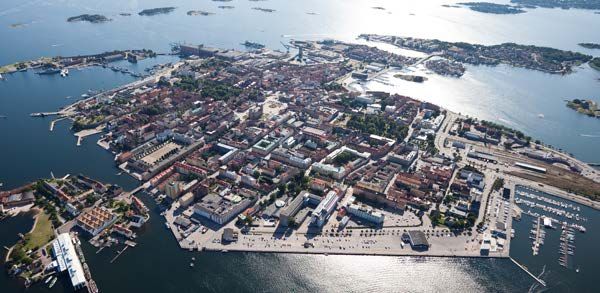
© Christian Wilén
Introduction

The maintenance and preservation of natural and cultural heritage          efficient local value-added chains and cross-sectoral networks can
is an important challenge for European coastal communities. In an          generate synergies and new economic opportunities.
ever-changing world characterised by accelerating globalisation,           Even though every coastal area in Europe has its own history, a
the value of cultural heritage for the identity of a region has recently   lot of the current challenges are quite similar. Experiences and
been rediscovered. Appreciation for tangible and intangible cultural       good practices from foreign communities serve as a starting point
assets as well as natural heritage can be a catalyst for a sense of        for development strategies in other regions. Thus, interregional
place, highlighting the history, uniqueness and traits of coastal          cooperation and knowledge exchange are highly beneficial. Two
areas. Hence, the protection of cultural assets is very important for      Interreg projects DUNC and CHERISH are fostering this interregional
local inhabitants, and makes a region more interesting for foreign         exchange and collaboration with regard to our coastal heritage,
visitors.                                                                  making it worthwhile to discover our cultural roots, to learn from
Capitalising on handicrafts, traditional shipbuilding techniques,          old traditions and to raise the interest of younger generations
characteristic architecture, natural assets, landscapes shaped by          so that they continue to support our heritage. Both projects are
traditional agriculture or culinary heritage can attract tourists and      dealing with this in their own way with the aim to cherish our
businesses to the region. Thereby it is important to create holistic       natural and cultural heritage and to create long-lasting concepts
concepts for sustainable regional development where heritage can           for its preservation and development. Following two articles about
successfully be tapped as development lever. An important step             the background of the projects, the authors introduce fascinating
towards achieving this goal can be a bottom-up approach, bringing          examples of heritage in the various partner regions from Finland
stakeholders from different interest groups together to gain input         to Portugal.
from communities for a well-adapted local development strategy                                                  Theresa Horn & Cristina Nazzari
as well as to strengthen regional cooperation. The establishment of                                         EUCC – The Coastal Union Germany

    CHERISH – Creating opportunities for regional growth                                     DUNC – Development of
      through promoting Cultural HERitage of fISHing                                     UNESCO Natural and Cultural Assets
                  communities in Europe

 CHERISH – Creating opportunities for regional growth through               The project DUNC, funded by the Interreg South Baltic Pro-
 promoting Cultural HERitage of fISHing communities in Europe               gramme, aims to unlock the potential of the South Baltic Sea
 The main objective of the Interreg Europe project CHERISH                  region’s assets by developing an effective, sustainable tour-
 is to improve regional development policies to protect and                 ism strategy for its natural and cultural UNESCO sites. The
 promote cultural heritage in fishing communities in order to               project facilitates networking of tourism stakeholders, cre-
 boost the attractiveness of these regions for businesses, citi-            ating quality activities that help to prolong the tourist sea-
 zens and tourists. Through interregional learning, the project             son, promote economic growth and bring about a real con-
 aims to find common and sustainable solutions for the main                 nection between tourism and the value of the Baltic Sea’s
 challenges faced by coastal fishing communities around Eu-                 heritage. The partners develop solutions that allow more
 rope such as climate change, increasing tourism pressure                   guests to be welcomed, without compromising the envi-
 and the transformation of the European fishing industry.                   ronmental, social and economic sustainability of the region.
 More information: www.interregeurope.eu/cherish                            More information: www.dunc-heritage.eu

                                                                                                                                                    3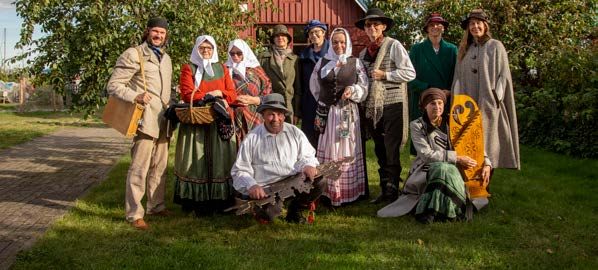
© Karlskrona Municipality
    A Place for World Heritage Cooperation

    Traditionally, coastal communities around common waters have                                 from six different countries came together with other stakeholders
    always had an impact on each other, sometimes even more so than                              to discuss common challenges, exchange best practices and lay the
    that of any country’s inland areas.                                                          foundation for long-term cooperation.
    As in any other part of Europe, people living on the shores of the                           At the summit, Karlskrona also presented its long-term vision
    Baltic Sea have a long history of both cooperation and animosity.                            to create a Baltic Sea World Heritage Centre, which would
    Colonial expansion and trades have shaped the life of coastal people,                        support the development of the sites and ensure a permanent
    creating cities that became important commercial harbours, lively                            base of cooperation. It would provide vital support alongside
    hometowns and beloved tourism destinations. At the same time,                                current national and international networks and associations by
    the coastline has been shaped by natural forces of winds, tides and                          employing experts in the fields of sustainability strategies, business
    waves forming natural spits, cliffs and other amazing landscapes.                            development, project management and finance.

                                                                                                 During the first summit, Mr. Fredrik Reinfeldt, former Prime Minister
                                                                                                 of Sweden, stressed the importance of cooperation across borders
                                                                     © Karlskrona Municipality

                                                                                                 and underlined that the Baltic Sea region stands as a global example
                                                                                                 of how working side by side and meeting each other in trade and
                                                                                                 business can help nations face contemporary challenges.
                                                                                                 At the next summit, we are looking forward to providing tangible
                                                                                                 support and benefits to the World Heritage Sites around the Baltic
                                                                                                 Sea. ‘Sustainable Development’ is not just a buzz phrase for us, it is
                                                                                                 a creed to live by.
                                                                                                                                             Project coordinator DUNC
                                                                                                                                                        Niklas Carlsson
    Teamwork at the first World Heritage Summit                                                                                              Municipality of Karlskrona
                                                                                                                                                                Sweden
    To give official recognition to the ceaseless human and natural
    processes that have changed the coasts over centuries and to
    protect the remarkable traces that we have nowadays, more than 20
    natural and cultural sites along the Baltic coast have been inscribed
    in the UNESCO List because of their outstanding universal value.
    All the coastal World Heritage Sites around the Baltic Sea are
    different and unique; however, they still face many similar
    challenges such as conservation and the management of tourist
    flows. On a positive note, these sites also have the potential to be
    role models for sustainable tourism that are globally recognised for
    their contribution to regional development and the empowerment
    of local communities.

    Thus, the city of Karlskrona (Sweden) has recently come up with the
    unprecedented initiative to use World Heritage Sites as a lever to
                                                                                                                                                                   © Emil Selse

    tie the region together and provide support for a more sustainable
    future.
    Ideas, hopes and plans on how to bridge the Baltic Sea starting
    with its heritage, have been the focus of the first Baltic Sea World
    Heritage Summit, where representatives of coastal UNESCO sites                               The DUNC Team supporting cooperation within the Baltic Sea Region
4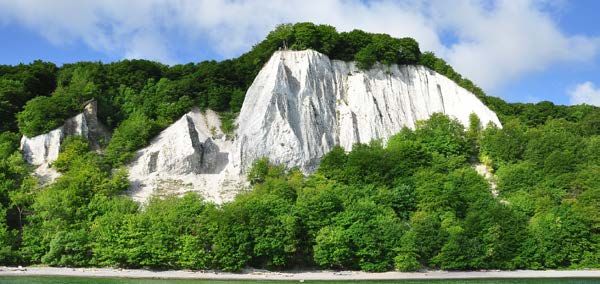
© Jorge Meira
How to protect and promote cultural heritage of fishing communities: the need for policy change in European regions

Fishing communities in Europe share the same challenges with                      the north of Portugal includes cultural and natural heritage in the
regard to climate change, declining fish stocks, tourism pressure                 context of regional tourism, but until now fails to relate this to the
and the transformation of the European fishing industry. Cultural                 fishing communities in the region. Therefore, the Programme has
heritage has a valuable role for sustainable development, and so                  announced a call-out specifically to the fishing communities in
efforts are being increased to better position and profile these fishing          the regions of northern Portugal. Policy and regulation can help
communities. Through the development and implementation of                        fishermen to diversify their work in order to create more revenue;
new strategies utilising cultural assets of fishing communities, new              however, the opposite is also the case, making it more difficult for
jobs and new products or services are being created. However, at                  fishermen to engage in other activities.
the moment, there are policies and regulations in place which do
not allow much room for such developments and in some instances
even hold them back.

Policy change on a regional level
Regional policies and programmes identified in different parts of
Europe have been aiming at developing and improving different
industries, but often they do not mention the possibilities of
combining fishing with tourism and heritage. For example,
Operational Programme South in the Netherlands focuses on

                                                                                                                                                     © Karlis Ustups
innovative SMEs and strengthening cooperation between different
sectors. Even though fishing and tourism are important sectors for
the southern province of Zeeland, in the Netherlands, and cultural
heritage of fishing communities is an asset which can be applied in
a variety of ways, this is not mentioned. The Regional Operational
Programme of Eastern Macedonia - Thrace 2014 – 2020 also focuses                  Fishermen hauling in the nets at sunrise in Latvia
on regional production with the aim to reorganise and improve it. But
again, despite the importance of the fishing industry throughout the              The importance of FLAGs as key stakeholders
history of this Greek region, fishing communities are not specifically            Generally speaking, fishermen and the communities they live in are
mentioned. Regional Operational Programme Norte 2020 from                         not well represented in policy making. At the same time, economic
                                                                                  interests of large-scale fishing and tourism might be favoured over
                                                                                  preserving cultural heritage. Regions where Fisheries Local Action
                                                                                  Groups (FLAGs) are involved as key stakeholders seem to be more
                                                                                  capable of dealing with conflicting interests than regions where
                                                                                  such representative groups are lacking. FLAGs tend to have close
                                                                                  relationships with local fishermen and the population of the fishing
                                                                                  villages. These relationships have been built over the years – creating
                                                                                  trust and a profound understanding of the daily struggles fishermen
                                                                                  encounter. This trust creates an open forum in which possible
                                                                                  solutions for the future of fishing communities can be discussed and
                                                                                  then taken into account in policy making.
                                                                    © Marco Zak

                                                                                                                                          Roos Galjaard
                                                                                                                                            Bureau PAU
                                                                                                                                        The Netherlands
Fisherman hauling in the nets at sunrise in Italy
                                                                                                                                                                        5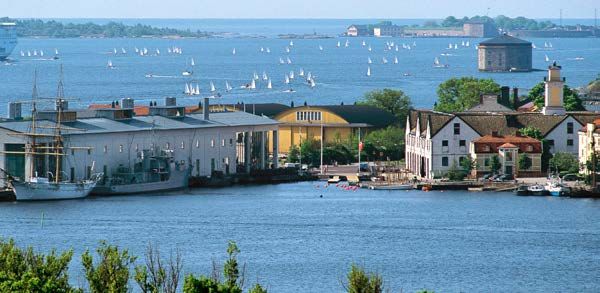
© Birger Lallo
    The Naval Port of Karlskrona and its history

    Karlskrona was listed as one of UNESCO’s World Heritage Sites in                    out in a grid pattern with radiating streets. An extensive fortification
    1998, as an example of an ideal European town and naval dockyard.                   chain was also initially planned to enclose the entire city; however,
    The city was founded in the year 1680 on an almost uninhabited                      the fortification plans were only partially completed, with only
    archipelago in the eastern part of Blekinge County (Sweden). At                     the square and two baroque churches built in the early 1700s. The
    the time of its establishment, Sweden was at its peak when it came                  architect was Nicodemus Tessin the Younger who also introduced
    to warfare and border expansions in northern Europe and the                         Roman and French baroque into the country.
    planned city was to be a manifestation of Sweden’s great ambitions.
                                                                                        The era of the Swedish Empire ended abruptly in the year 1718
                                                                                        and so many of the planned building projects never materialised.
                                                                                        Resources have instead been concentrated around buildings
                                                                                        and complexes connected to the shipyard, which successively
                                                                                        industrialised during the 18th century. Here, an outstanding form
                                                                                        of conventional architecture, with drydocks, storehouses and
                                                                                        workshops developed which united rationality with monumentality.
                                                                                        The most ambitious project was a great sea arsenal, which originally
                                                                   © Visit Karlskrona

                                                                                        included 30 drydocks in a radial plan. The construction was never
                                                                                        fully completed, but five of the docks and a mast crane are still in
                                                                                        use today.

                                                                                        During the late 18th century, an extensive programme started with
                                                                                        aspiration to build a completely new navy, using new technologies
    Kungsholms Fort off Karlskrona’s coast                                              and methods for ship building as well as constructing new types
                                                                                        of ships. A devastating fire struck the city of Karlskrona in the year
    Karlskrona was set to be more than just a manufacturing or small                    1790, and large parts of the old blocks, made up of mostly wooden
    trading centre, the aim was to establish a main naval harbour and                   houses, were destroyed. The city was rebuilt within a decade, this
    a shipyard with the main fortification being towards the southern                   time with residential buildings adjusted to the baroque grid-shaped
    Baltic Sea. Civil districts, docks and industries were brought                      street plan. The city saw some major changes also during the 19th
    together in a city plan shaped with elements from the Roman                         century. Firstly, a large-scale building project launched with the
    Baroque era, incorporating a monumental square and blocks laid                      construction of a new naval castle on the island of Kungsholmen,
                                                                                        as well as a fortification tower on the archipelago. Secondly, there
                                                                                        was a breakthrough regarding the architectural design of caserns in
                                                                                        Karlskrona. Barrack establishments were built which would affect
                                                                                        the characteristics of the city until modern day.
                                                                                        A visit to the naval city of Karlskrona offers a wide range of classical
                                                                                        architecture demonstrating the changes during the 18th and 19th
                                                                                        centuries. The architecture is not lavish, palatial style, but more
                                                                                        casual and downright classicistic, which is to be admired and is
                                                                   © Visit Karlskrona

                                                                                        inspirational for us even in our time.
                                                                                                                                                  Ivar Wenster
                                                                                                                 Heritage Management Consultant, Karlskrona
                                                                                                                                                        Sweden

    Inside the walls of the fortress
6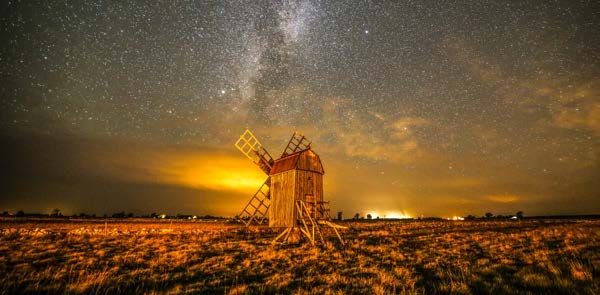
© Marco Bellelli
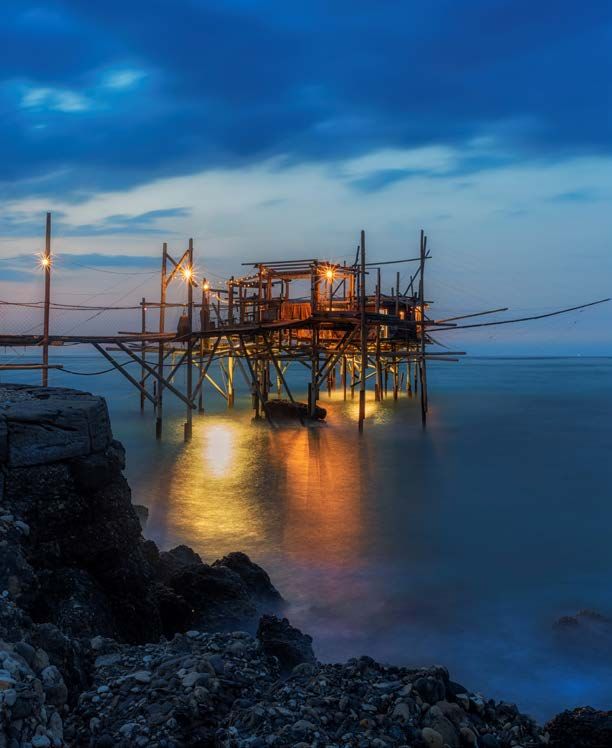
Trabocchi, between history and mystery

The trabocco, a strange fishing machine suspended between heav-                      long walkways, on the rugged coast of southern Abruzzo, served to
en and earth. A long, narrow walkway clinging to the rocks with                      facilitate the boarding of goods onto ships. Most recall documents
poles fixed underwater. A platform with a small wooden structure                     from the 1700s that discuss inventive Jewish families, who came to
for the storage of tools. A winch to lower into the sea and able to                  Italy as a result of religious persecution, who were trained in the
withdraw a large square net, supported by long antennae stretched                    construction of wooden bridges. In Abruzzo, they use their new
out towards infinity. An indistinguishable interweaving of light and                 skills to this end: to be able to fish while remaining firmly anchored
resistant logs, railroad tracks, ropes, wedges, bolts; fragile and in-               to the ground.
destructible, clumsy yet elegant. Spontaneous architectures and
design objects. Bold engineering works and naive constructions
of children. Thus, the trabocchi appear along the Adriatic coast be-
tween Ortona and Vasto in Abruzzo (Italy).

The traboccante, the original worker, half fisherman half farmer,
achieved his daring construction on the shallow rocks, to be able
to throw the nets a few hundred meters from the coastline, in sum-
mer and winter, in calm and rough seas. The catch was sold along
with the harvest of the land, a subsistence economy that until the

                                                                                                                                                       © Daniela Costa
1960s supported dozens of families. A world apart, far from fisher-
men who proudly ventured out to sea with their own boats; away
from the farmers who produced for local markets. Yet, the mysteri-
ous traboccanti remain an important element of coastal Abruzzo,
their trabocchi emanating a charm that knows how to amaze.
                                                                                     Ladder to reach the fishing boats at trabocco turchino – Access only
So, why do the trabocchi have such mysterious origins? As is often                   for the braves!
the case with things considered unimportant, historical sources
are scarce of detail. The research remains a prerogative of very                     Since the 1960s, trabocchi have been experiencing a time of aban-
few scholars and of some curious locals. Myths, history, legends                     donment. Many do not resist the weather with some in a serious
and documents often overlap, sometimes getting muddled. Some                         state of degradation. From the 1980s a sort of rediscovery began
people talk about Phoenician origins whilst others argue that those                  with some courageous restorations. Today most of the trabocchi
                                                                                     have become original restaurants, where one can enjoy the fish of
                                                                                     the Adriatic in enchanted scenery. While some have changed their
                                                                                     original shapes, others have maintained their unique simplicity. In
                                                                                     any case, the trabocchi have become an identifiable facet of Abru-
                                                                                     zzo, the emblem of its south coast. The local community now has
                                                                                     the task of combining innovation and tradition, new functions and
                                                                                     the preservation of this extraordinary cultural heritage.
                                                                  © Marco Bellelli

                                                                                                                                Valerio Roberto Cavallucci
                                                                                                         Director of the FLAG Costa dei Trabocchi, Abruzzo
                                                                                                                                                      Italy

Sunrise fishing nearby the trabocco Sasso della Cajana
                                                                                                                                                                           7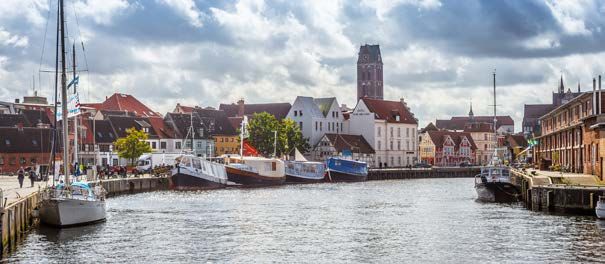
© TZ Wismar, Anibal Trejo
    Just a stone’s throw away – the Hanseatic city of Wismar

    Salty sea air, impressive buildings and a panoramic view of the Baltic
    Sea are the first impressions you get when you visit the Hanseatic
    city of Wismar in northern Germany. Founded in 1229, Wismar once
    belonged to the leading members of the medieval trade association

                                                                                                                                                                           © TZ Wismar, Mouadh Jabberi
    Hanse. Together with Lübeck and Rostock, Wismar completed a
    contract in 1259 to secure the trade routes and as a consequence
    this is how membership of the Hanseatic League began. With the
    wealth acquired through this membership, Wismar had in the past
    been able to build up a beautiful city characterised by brick as the
    main building material.
    Within about 70 years, the city was able to start constructing
    three mighty churches which are finest examples of Gothic Brick
    architecture (see infobox on page 9). The medieval building
    material can also be found in residential buildings of the city as well
                                                                                                         Old harbour of the Hanseatic city of Wismar
    as being used to build fire walls, after city fires, so that flames could
    not spread across to adjacent buildings. These firewalls can still be                                and plot structure has been preserved almost unchanged to this
    seen in many homes today.                                                                            day. The old towns of Wismar and Stralsund therefore still represent
    In 1632 there was a bitter blow to Wismar when the Hanseatic city                                    the ideal Hanseatic city during the heyday of the Hanseatic League
    was taken over by Swedish troops. It was only in 1903 that the                                       in the 14th century. In addition, the medieval harbor basin, for
    kingdom of Sweden renounced the possession of Wismar and the                                         example, has been preserved in Wismar and provides a picture of
    city was definitively incorporated into the Duchy of Mecklenburg.                                    the actual backbone of a medieval sea trading town. The “Grube”
    The Swedish ruled over Wismar and today’s friendship between                                         flowing to the harbor is the last surviving artificially created
    Wismar and Sweden is clearly reflected in the annual Swedish                                         medieval watercourse in a north German old town.
    Festival. Together with the Hanseatic city of Stralsund, Wismar was                                  Another important tradition that helped the development of the
    included in the UNESCO World Heritage List in 2002. Both cities                                      city dates back to the Middle Ages. In the 13th century the fish stock
    were important trading centres of the Hanseatic League during the                                    of the Baltic Sea was rich in herring which annually swam into the
    Middle Ages. Their medieval ground plan with road network, district                                  waters of Wismar bay to spawn there. The herring became very easy
                                                                                                         to catch and a good way to preserve them was soon found so that
                                                                                                         the fish could be stored in wooden barrels to be sold to southern
                                                                                                         Germany.
                                                                                                         However, the shoals of fish and associated revenues have become
                                                                                                         smaller and smaller, leading people to forget over the centuries that
                                                                                                         the herring had such great economic importance for the Hanseatic
                                                                        © Christoph Meyer, paperheroes

                                                                                                         city. Recognition for the fish was relaunched by the Hanseatic Chefs
                                                                                                         Club Wismarbucht which initiated the annual two-week Herring
                                                                                                         Days Festival. The Herring Days start with a parade of herring carts,
                                                                                                         which leads from the Old Port to the marketplace. At the festivities,
                                                                                                         held in March, numerous restaurants in Wismar focus on the
                                                                                                         preparation of the fish, allowing the smell of roasted herring in one
                                                                                                         of Germany’s largest northern marketplaces to take to the air.

                                                                                                                                                            Anica Dommning
                                                                                                                                 Assistance EU Projects Hanseatic City Wismar
                                                                                                                                                                     Germany
    Aerial view of the city centre with the St. Mary’s Church
8
© TZ Stralsund
Stralsund: where modern meets heritage

Centuries ago, the Hanseatic League, a confederation of north                     The tower has since been rebuilt and even if it is only 104 m high,
German towns and merchant guilds, was funded to protect the                       the view from the top, incorporating the town and the Baltic Sea, is
mutual trading interests of its members. The league dominated                     still breathtaking.
trade and commercial fortunes in northern Europe for a long time                  But it’s from the water perspective that one can best admire the still
and all the member cities consequenly gained power, wealth and                    preserved medieval cityscape of the town and the harmony created
importance. The German city of Stralsund, which is now a peace-                   among old and new buildings. Right at the waterfront the building
ful and rather small town, was one of the cities belonging to this                of the oceanographic museum appears in its bright shining white,
confederation. The rich architecture still reflects the past prosperi-            like the colour of sailcloth, curved, as if it would flutter in the wind.
ty and makes it a pleasant city to live in and an interesting holiday             Inside, the visitors are invited to explore the underwater world and
destination.                                                                      learn about the rich biodiversity of the Nordic seas.

The streets of the town are dominated by high gabled houses of                    The coexistence of old and new architectural elements, coupled
the merchants. Right at the heart of the city, the Old Market Square,             with the still intact medieval silhouette, led in 2002 to the inclusion
which is relatively small in size, is characterised by impressive                 of Stralsund’s old town in the UNESCO World Heritage List. This
buildings all around it. The City Hall with its beautifully decorated             important recognition testifies the high level of preservation and
facade, is one of Stralsund´s oldest and most beautiful buildings                 how the city and its community integrate it in their everyday life
in the north German Brick Gothic style. The other gothic highlight                and future development.
visible from the main square is St. Nicholas Church, dedicated to the                                                                     Wibke Rudolph
patron saint of seafarers and tradesmen. It is the most magnificent                                                    Stralsund Tourist Office, Germany
church in Stralsund and its interior is amongst the most complete
and valuable in the whole of northern Germany.                                                                                          Cristina Nazzari
                                                                                                                     EUCC – The Coastal Union Germany
However, the title of being the largest church is held by St Mary’s
Church, that once boasted another interesting record – the church’s
151 m high tower had been the tallest building in the world for
almost one century, until it burned down in 1647.

                                                                                                           Brick Gothic style

                                                                                   Brick Gothic is a particular form of Gothic style that developed
                                                                                   in areas where natural stone was unavailable, as in northern
                                                                                   Europe. Its development was closely associated with the history
                                                                                   of cities along the Baltic Sea coast between the 13th and 16th
                                                                                   centuries and the development of the Hanseatic League. The
                                                                                   brick itself represents a typical feature of this architectural style.
                                                                                   The specific character of the uniform clay bricks superimposed
                                                                                   on each other caused a reduction in the Gothic ornamental
                                                                  © Dirk Paepke

                                                                                   forms. However, the use of specially made bricks eliminated
                                                                                   this shortcoming and Brick Gothic developed its own style of
                                                                                   forms like in arches or ledges, which showed the versatility of
                                                                                   the material.

Old Market Square and City Hall

                                                                                                                                                               9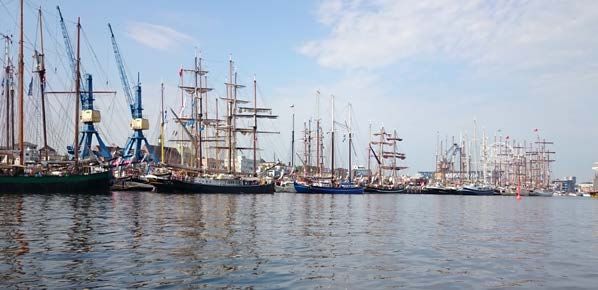
© Efstratios Lales
     Fishing Tourism: connecting fishing culture with economic opportunities

     The fishing sector is playing an important socioeconomic and                              and a small introduction to the history of the village and its fishing
     cultural role in fishing areas. However, the sector is facing a crisis                    activities. Information is given on the areas of ecological importance,
     since the fish stocks are diminishing and as a result the fishermen are                   the local monuments and things one can visit in Zygi and the broader
     seeing their income reduced day by day. Especially for some small                         area. The program continues with the fishing trip where the visitors
     coastal communities which rely on the fishing sector for income and                       can interact with the fishermen and practice the traditional ways of
     food and whose cultural heritage is based on a way of life that has                       fishing.
     not changed for years, it is a particularly serious problem. There is no
     magic solution for intercepting this crisis, however, one practice that
     has gained popularity around the world for its positive economic and
     cultural effects in fisheries areas is fishing tourism.

     Fishing tourism is defined as a set of tourism-related activities carried
     out by professional fishermen in order to supplement their income,
     promote and help recover their profession and socio-cultural
     heritage; and enhance a sustainable use of marine resources by
     means of boarding non-crew individuals on fishing vessels. It is a way
     to offer fishermen the opportunity to diversify their revenues without

                                                                                                                                                                  © Marko Zac
     increasing their fishing effort and raise awareness of the traditions
     that fishing represents.

     Many FLAGs (Fisheries Local Action Groups) are supporting fishing
     tourism activities. Such an initiative has been funded by the FLAG                        Fisherman taking care of his fishing equipment
     Larnaca and Famagusta District Development Agency (Cyprus)
     giving people the opportunity to experience the life of a fisherman                       They can discuss with the fishermen, get to know his secrets, to
     and live for a short time in a fisheries-dependent village, Zygi. A                       discover the way of living and enjoy listening to stories and myths.
     typical daily program includes a tour around the fishing harbour                          There are opportunities to catch fresh fish using old techniques
                                                                                               and to taste the fresh fish cooked by the fishermen who know
                                                                                               the traditional recipes and ingredients needed for such delicious
                                                                                               dishes. Also, recently, taking the example of Pesca tourism from Italy,
                                                                                               fishing tourism legislation has been drafted setting the technical
                                                                                               requirements for the fishing vessels and defining fishing tourism and
                                                                                               services related to fisheries in the attempt to support the fishermen
                                                                                               and preserve the fishing culture.

                                                                                               The FLAG programme of the Greek city of Kavala, as in Cyprus, aims at
                                                                                               creating a distinctive tourism identity, through the development of an
                                                                                               autonomous, competitive and coherent thematic tourism product,
                                                                          © Filio Sarantidou

                                                                                               to stimulate local entrepreneurship, diversify it into new sectors and
                                                                                               improve the quality of life. The remodelling of the tourism product
                                                                                               focuses on fisheries and the sea, with an emphasis on fisheries
                                                                                               tourism integrating fishing tradition in the tourism sector.

     Fishing boats in the port of Kavala, Greece
10
© Armin Steibli
To achieve the above, the FLAG strategy features various initiatives The Baltic Sea – a treasure chest
to facilitate the networking and clustering of relevant stakeholders for maritime heritage
such as the labelling of local fish gastronomy, the collaboration
with fish restaurants, the promotion of the local history of sea Northern Europe and the Baltic Sea Region is home to many
trade, the expansion of fish processing units aiming to attract traditional ships. Nowhere else is the density so high. One meeting
private investments from coastal fishermen. Projects aiming at the point for the family of traditional vessels is the Hanse Sail Festival
transformation of the fishing vessels for touristic purposes fall under in Rostock, Germany. The maritime festival is the biggest annual
the same framework as those from Cyprus, and require special meeting of traditional vessels and museum ships in the world.
attention given to the adaptation process of the vessels to meet It attracts around one million visitors and, since 1991, up to
safety and hygiene requirements for issuing the relevant fishing 200 participating ships join the event every year. Besides a rich
tourism licence. The attention and enthusiasm demonstrated by entertainment programme at the various harbours of the city,
the fishermen and the local communities will make sure that these people can experience traditional seafaring.
innovative ideas and new offerings will grow in the future. The goal to support traditional vessels as European cultural assets
led to the founding of the Baltic Sail Association in 1996. It was
Dr. Eudokia Balamou this decade, at the end of the 20th century, that the Baltic became
FLAG Larnaca and Famagusta Districts Development Agency, Cyprus borderless, and organisers of Baltic maritime festivals started
seeking new forms of cooperation.
Io Chatzivaryti The Baltic Sail Association is a network of eight cities in the Baltic Sea
Municipality of Kavala, Greece Region that supports maritime heritage and promotes the Baltic
as a first-class sailing resort for traditional vessels and museum
ships. The Baltic Sail is a marketing network for large scale maritime
events of the partner cities. Its aim is to promote the respective
festivals beyond the countries’ borders not only to potential
visitors, but especially targeting ship owners. Over the years, this
has culminated in the network being able to encourage numerous
ships to take part in several festivals per season which has created a
unique maritime spectacle.
Daniela Kayßer
Bureau Hanse Sail, Rostock
Germany
Baltic Sail Association
© Bureau Hanse Sail, Rostock
Currently, the association consists of eight member cities:
Gdansk (Poland), Klaipeda (Lithuania), Karlskrona (Sweden),
Nysted (Denmark), Rostock (Germany), Riga (Latvia), Turku
(Finland) and Szczecin (Poland). Interested in joining are Saint
Petersburg (Russia) and Tallinn (Estonia). By winning those two
cities, the Baltic Sail would unite all Baltic countries!
More information: www.balticsail.info
The Hanse Sail: Meeting point of traditional sailing ships
11© Consorci Museu Maritim de Mallorca
Traditional shipbuilding in Europe
Throughout Europe traditional shipbuilding has been under threat use and price of spaces along sea sidewalks, historically intended
for many years. The reasons for this have been known for a long for the mooring of traditional boats and the cuttings of traditional
time; the initial problem being a change that took place in the shipbuilders.
mid-20th century when, for the first time, traditional shipbuilding
was replaced by new ways and techniques to build boats. After the The gradual loss of these magnificent old boats has also led to the
introduction of these new techniques, boats were no longer unique, disappearance of many trades related to traditional shipbuilding.
singular pieces but became “objects” mass produced from a mould. Despite this, however, different projects related to the recovery of
these trades are now taking place in and around Europe as well
as the opportunity to undertake vocational retraining there are
other projects emerging to promote new uses for these boats.
© Consorci Museu Maritim de Mallorca
Each country or region copes with the problem in a different way,
guided by their own policies and in accordance with their own
circumstances. Therefore, it is necessary to share best practice
through international cooperation projects in order to come up
with new approaches, mainly focusing on fleets, trades related to
traditional shipbuilders, training in the field of new construction
and recovery, and proposals for legal protection of this floating
maritime heritage that must also include intangible heritage. A first
step would be to establish common action plans at different levels
with clear focus on smaller realities.
An example of local action plan is the recovery program for
the traditional shipbuilder’s trade, led by the Sustainability and
Environment Department of the Consell de Mallorca. The aim is to
connect the current situation of remaining traditional boats with
© Consorci Museu Maritim de Mallorca
active traditional shipbuilders. To identify the current situation,
cataloguing works of all the 780 traditional boats in Mallorca was
necessary. An in-depth study of the traditional shipbuilder’s sector
was carried out, and of the 30 traditional shipbuilders still active,
the following information was recorded: how they work, the
production system they apply, distribution and restoration criteria,
etc. Finally, a valuation method has been developed to establish a
list of those vessels that are suitable to be under legal protection
following the Historical Heritage Law of Balearic Islands.
This is only a small example of work that can be carried out at local
level, but this is also a well transferrable experience that can be
used and expanded in other regions. At this stage, it is beneficial
Working in progress – Accurate craftsmanship is essential in traditional
to encourage debates in order to generate new, cross-border ideas
shipbuilding
and jointly address common challenges.
The globalisation of production has been another decisive factor
which has spread the design of serial vessels all over the world. Bernat Oliver Font
The fact that mass construction creates lower production and Unitat de Patrimoni Marítim, Consell de Mallorca
maintenance costs has meant that local craft have been substituted. Spain
Moreover, in some regions, tourism has provoked a change in the
12© Cora te Beek
Cultural heritage of fishing communities in Zeeland
The province of Zeeland (The Netherlands) has a relatively long The municipality of Middelburg has made tangible and intangible
coastline which for one part faces the North Sea and, for the other, the cultural heritage more available to the public, leading to a rise of
rivers Westerschelde and Oosterschelde. The villages of Vlissingen visitors. The Arnemuiden Museum has been very successful at col-
and Arnemuiden have the biggest and most modern fleets lecting tangible items of local historic cultural heritage, including a
of Zeeland. complete shop inventory from the early 20th century!
© Municipality of Middelburg
© Hedo Knol
Fishing boat of Zeeland’s fleet in the North Sea Traditional fisherman sweater with unique knitting patterns
Fishermen from both places developed their industry from small Within the city many statues and monuments remind the residents
scale daily fishing near the harbours to large scale fishing opera- and visitors of the rich history of the fishing community. Every year,
tions in the North Sea. the fishery days in Arnemuiden and Middelburg put the history and
Fishermen from Arnemuiden used to fish daily for shrimp and flat- culture of the local fishing communities in the spotlight, attract-
fish. In 1868, the construction of the Sloedam began and made the ing visitors from outside Zeeland. Also, the C.A. Meerman Historic
train connection to Vlissingen possible but also definitively closed Wharf of Arnemuiden has been fortunate in preserving traditional
off Arnemuiden from open water. Nowadays, the home port of the knowledge with regards to shipbuilding and the restoration of his-
fishing fleet of Arnemuiden is in Vlissingen. The historic scenery toric sailing vessels. Young people are learning the crafts while on
and some traditions remained in Arnemuiden. the job and visitors can see them in action while they are restoring
old ships.
Fish-mongers have been honoured with a statue, and in the village
of Arnemuiden the biggest number of women wearing traditional One initiative that has triumphed in making a traditional item pop-
clothing can be found in the province. Unfortunately, traditional ular again, is the sale of fishery sweaters in modern colours. In the
clothing is not as popular as it used to be, and old crafts are not be- past, it was possible to identify the origin of the fishermen by the
ing taught to new generations. Turning the heritage of the villages typical patterns of their sweaters. The production of these sweaters
into a unique selling point is essential for the survival of the fishing stopped for over 80 years, but recently the publicity and sales suc-
communities as recent developments are a threat to their future. cess of the sweaters have turned the Arnemuiden Fishery Sweater
Different political circumstances and decisions such as Brexit, the into a brand, and the initiative has inspired other fishing villages in
construction of offshore windmill parks and the ban on pulse fish- the Netherlands, France and the United Kingdom.
ing can have a great impact on fishery. The latter leads to higher op-
erational costs and the continuation of less environmentally friend- Project coordinator CHERISH
ly fishing methods. Action is needed in order to maintain the fishing Jack Dooms
communities, their histories and their cultural heritage. Municipality of Middelburg, The Netherlands
13© A. Nehring
Interview: Jasmund National Park – a small forest with great universal value
In northern Germany, on the island of Rügen, a small fragment of migration is now visible in Sweden and Scandinavia. The beech
forest holds two honorable titles: national park and UNESCO World has a strong capacity to adapt to different climatic conditions
Heritage Site. Katrin Bärwald, communication expert, presents to and environments, with ideal growing conditions found in central
us the smallest national park of Germany and explains to us why a European areas, both on mountains and at the seaside. Yet, the truth
forest has such a universal value. is that there are only very few intact beech forests where the initial
conditions are still preserved. An intact beech forest is composed
This natural reserve is both a national park and UNESCO World by old, young and even dead trees – only with these components is
Heritage Site. What is behind these two honourable titles? it complete and can regenerate on its own.
The Jasmund National Park is a nature reserve in the northeast What is the difference between an ancient forest and a managed
of Rügen island in Mecklenburg-Western Pomerania, Germany. one? Do your visitors know the difference?
Established in 1990, it is the smallest national park in Germany but
is famous for containing the largest chalk cliffs and the biggest Not many visitors know what the difference is between the two.
beech forest in the Baltic Sea region. Since 2011, this territory A managed forest is a cultivated forest where trees are planted
has also been added to the UNESCO World Heritage List as part and felled, at least partially. An ancient forest is a forest which has
of the Primeval Beech Forests of the Carpathians and the Ancient suffered from almost no disturbance from human activity and
Beech Forests transboundary site. The status of national park and therefore exhibits unique ecological features. We should think of
UNESCO site are both important. Being a national park, the area the ecosystem as a complex system that can function at its best
is protected from exploitation and 90 % of our national park is only with all its parts. Which means, proper conditions for new
declared a core zone – which means that nature protection takes life can only occur when there is a constant process that makes all
precedence. On the other side, being listed in the UNESCO portfolio things come to life, grow, die, and form hummus. Whenever we add
is further recognition of its outstanding universal value and, for us, a or take something out from that habitat, we are spoiling it.
commitment to protect this territory for future generations.
As you mentioned, since 2011 the park is also a UNESCO World
Other than the impressive chalky cliffs, beech trees are the Heritage Site. Can you tell us more about the selection and
real protagonists of the park. Why exactly is the beech so nomination process?
important?
It all started in the Carpathians, where we find the last primeval
The beech survived the last ice age when it once extended to vast beech forests in Europe. In 2007, several forests in the Ukraine
areas of central Europe, before slowly moving north where its and Slovakia were listed as “Primeval Beech Forest” World Heritage
Site. Afterwards, we started to look where the beech forests were
in Germany, taking into account the different types – coastal or in
the mountains. Chief experts were given the special task to look
where in Europe ancient beech forests were still to be found, to
analyse their characteristics and understand their potential. It was a
masterpiece of international cooperation. In 2011 the five German
fragments were added to the list and in 2017 forests in other
European countries were added. Now, all these forests are joined in
the most unique transboundary World Heritage Site that comprises
over 70 forests that stretch over 12 different countries. This is the
only UNESCO site that connects so many countries and is the result
© K. Bärwald
of great collaboration.
14© I. Stodian
In accordance with the protection purpose the park also Centre Königsstuhl and the World Heritage Centre allow visitors to
allows visitors to experience nature and take part in education discover the invisible and reflect on the core values of our treasure.
activities. How do you inform your visitors and ensure a safe Our deepest wish is that people are aware of what makes the park
and educative visit? so unique. This is our hope for the future – that people will know
and therefore respect and take care of this territory.
Since the national park is such a unique place, I wish for visitors to
understand this uniqueness, I don’t want them to visit only because Katrin Bärwald
of what the beautiful scenery offers, a perfect background for a Department for Communication and Environmental Education
picture. This place can offer much more to visitors who take time Western Pomerania National Park Administration, Germany
to discover the park and its secrets. We welcome visitors with signs
and information about the national park and the UNESCO World The interview was conducted by Cristina Nazzari and Theresa Horn
Heritage association. The forest is changing, the cliffs are breaking EUCC – The Coastal Union Germany
down, so we work non-stop to grant all visitors a beautiful and safe
experience in harmony with nature. Furthermore, the National Park
© Atelier Papenfuß, Weimar
Location of the UNESCO World Heritage “Ancient and Primeval Beech Forests of the Carpathians and Other Regions of Europe”
Dark green dots: UNESCO World Heritage Beech Forest; light green areas: natural distribution of beech forests in Europe
15© Margareta Strandmark
The development of (agri)cultural landscapes
In 2000, the Agricultural Landscape of Southern Öland became but to an exceptionally high degree, not depleted still mirroring
Sweden’s 11th World Heritage Site. It is one of very few agricultural the land use that was fundamentally developed during the Middle
landscapes among the world’s 1100 UNESCO sites and, compared Ages. The way this landscape continues to be farmed according to
to many of the world’s most spectacular and monumental ones, a thousand-year-old fragmentation of cultivated land and grazing
Öland’s is probably not as easy to experience. It is all about the fields is unique in Europe. All this comes naturally for Öland’s native-
farmer’s landscape shaped by people and animals interacting with born farmers.
nature, the local climate, the limestone bedrock and Öland’s soil
over a very long time.
Man’s effort for survival and a livelihood is universal. However,
traces of former cultures and farming methods tend to be erased
when new opportunities are developed. Mörbylångadalen on
Southern Öland has transformed from meadows interspersed with
small cultivated fields to a large-scale agricultural landscape, but
the ancient fragmentation of the landscape has been preserved in
large parts of the heritage site. Here, modern tractors roll past early
Iron Age burial fields and Viking Age rune stones. Linear villages are
© Barbro Julstad
still situated as ancient provincial law dictated, along the old routes
on Eastern and Western Öland. Churches stand as monuments
of medieval parish administration and church repentance in the
populous villages of the 19th century.
The characteristics of the land and the soil still determine what can
be grown and harvested, which are the grazing fields, and where Traces of the past – Ancient fragmentation of the agricultural
people can live, travel and be buried. landscape by stone walls
Today’s farmers on Öland use the landscape in the same way as
their forefathers did many generations before. That is why the The ridges in the landscape that form the backbone of the
agricultural landscape on Southern Öland is still here today farmed heritage site can be found on both the western and eastern side
of Öland. These ridges are natural elevations caused by the early
development stages of the Baltic Sea. Along the ridges lies also the
fertile arable land that was put there by the waves from the early
Baltic Sea washing over Öland as the island rose out of the water.
Centrally on Öland, between the ridges, lies the Great Alvar,
shimmering in the summer heat. The alvar is the common outlying
land with its thin layer of soil, which could only offer a meagre
pasturage for sheep, cattle and horses.
Both coasts, on the other hand, are characterised by seaside pastures
© Matilda Christiansson
- the lush grazing fields that line the coast. The grazing quality of
these seaside pastures formed the basis for an already incredible
prosperity during the early Iron Ages. As the seaside pastures and
the alvar were primarily used for grazing, traces of prehistoric
livestock farming can be found here today. In this scenario full of
history, cattle are still peacefully grazing and perfectly meshing
with nature’s cycle.
Thorsten Jansson
Meadow grazing in Ottenby, Öland Sweden
16© Gintautas Beržinskas
Environmental and social sustainability at the Curonian Spit National Park
The Curonian Spit is a long and narrow sand dune peninsula situated first half of the 20th century, this area was ruled for a short time by
in the Curonian Spit National Park in Lithuania and the Kurshskaya different countries such as France, Lithuania, and Germany. Even
National Park of the Russian Federation. The collaboration between though the arrival of the first tourists dates back to the end of the
humans and nature brought the Curonian Spit to the list of the 19th century, this resort area became of great importance in the
world’s most outstanding heritage sites and this durable coherence interwar period. At that time a new tradition, to spend summertime
is obvious today. surrounded by nature and the sea, was formed in Europe.
© S. Pulkauninkienė
© AirPano
An aerial view of the Curonian Spit National Park Exploring the lagoon’s coast by bike
The survival of this unique landscape is a result of persistent human This trend, along with technical progress, had a crucial impact on
efforts to combat the erosion of the Spit; with the sustainable the development of the Curonian Spit settlements, when in a fairly
management of tourism and the community-based revival of short time fishing villages turned into luxurious resorts and Nida
cultural history helping keep this fragile harmony between nature experienced its “golden age”.
and local traditions alive to this day.
The Curonian Spit tradition has been shaped by local inhabitants
Nowadays, amongst other elements, the growing number of tourists and tourists who were getting mingling and living together.
is putting this environment under a serious threat. Environmentally This interconnection is well represented by some of the stories
friendly ways of travelling and the supporting services are a main told during the theatrical representations now offered by the
priority to ensure the sustainability of this region. The Curonian tourism center in Nida. During these tours, visitors can learn
Spit with a 53 km long bicycle path is very well known as part of about myths, legends and real facts of ancestors in Nida and
Route EuroVelo 10 among the cycle tourists. Long-distance cycle about the perspectives of tourists of other times.
paths are arranged in the wilderness to allow visitors to enjoy the Playing as actors in this theatrical representation, inhabitants are
cultural landscape of the Curonian Spit. In order to encourage more encouraged to learn about their history and immerse themselves in
people to use bicycles as eco-friendly transport it is essential to the life of their ancestors.
cover their technical and social needs ensuring comfortable and
safe visits. New multifunctional, solar-powered stations have been Curonian Spit National Park Administration
installed along the cycle path at each station users can take a rest, Lithuania
inflate their tyres or use the tools to repair their bikes, charge their
electronic devices and connect to Wi-Fi.
While cycling along the route, visitors learn about the history of
the Curonian Spit which is extremely rich and unique. During the
17Traditional Ecological Knowledge Conveys Deep Messages of Our Mother Ocean
Human knowledge of the oceans, rivers and lakes has ebbed and stocks to scientists. Hunters passed the carcasses of ringed seals
waned for as long as we have had a relationship with the waters. to researchers who could detect the presence and the extent of
Human societies have formed relationships with their seas through PCB and DDT in the meat of the seals. And further to this, detected
trade, travel, fishing, hunting, access and avoidance and exploration, the impacts of these chemicals in the uteri of female seals, thus
to name some of the drivers of why we have “set sail” through the detecting a fall in stocks and the reason for it. The initial observations
course of history. had been conveyed by the people possessing knowledge of the
local conditions.
This traditional ecological knowledge (TEK) is often defined as ‘the
cumulative body of knowledge held by community members due to
long affiliations to specific landscapes and generational transmission.
The term “knowledge” refers to the myriad of intertwined components
such as experiences, rituals, worldview, social and family institution,
language, traditional land and natural resource use to name a few
© Snowchange Archives
examples.’
Living fishing knowledge is practical in nature and often includes
weather reading and navigational skills, understanding of shore
consistency and depth, also currents and forms of the seabed. A
successful outcome rests upon the positioning of the fishing site,
using triangulation and reading of multiple moving and changing
factors in a live situation.
Fishing communities reflect their cultural heritage in local place
names, which can be very old. In places where actual fishing
practices and number of fishermen have diminished or even ceased
to exist, such place names carry a lot of meaning, history and culture
of a place. Also whilst the ecological carrying capacity of the ocean
may have been lost, traditional boat building and associated skills
can often be revitalised and put to good use in the local community.
All across Europe local small-scale fisheries are facing challenges;
unfair competition with industrial fishing fleets over diminishing
© Snowchange Archives
fish stocks, low prices of fish and unpredictable weather. Traditional
small-scale fisheries are fully dependent on sufficient local fish
stocks, with their knowledge, methods and gear having been
adapted to specific local conditions, and a great care having been
paid to the sustainable harvesting of fish. Small-scale fishers are
rarely able or willing to move to new waters if their home waters
are being depleted of fish. This is because many of these small-
scale fisheries have had customary governance systems and a
Traditional fishing in the first half of the 20th century
locally adapted response capacity to change in the past, prior to
Whilst much attention at present is devoted to the questions of the advent of the industrial fleets, which is building on the local
marine pollution such as marine litter and plastic at sea, monitoring ecosystem capacity and characteristics.
using traditional knowledge has long been the basic ingredient Examples of the use of traditional knowledge can be found all over
of survival for coastal communities. A classic example of using the world in traditional hunting and fishing communities. In the
this knowledge exists from the Baltic Sea from late 1960s, where European Arctic, hunter and fisherman Nuunoq from Attu, West
the traditional seal hunters and fishermen of Kvarken, Finland, Coast of Greenland employs local knowledge to detect urgent
participated and shared their observations of falling seal pup messages of sea ice loss, species on the move, and equity problems
18You can also read


