Developing Regional Cooperation on Air Pollution in Northeast Asia
←
→
Page content transcription
If your browser does not render page correctly, please read the page content below
Developing Regional
Cooperation on Air Pollution
in Northeast Asia
Transferring lessons from Europe and North America,
progress and future development

SEI report
May 2021
Gayoung Choi1
Johan Kuylenstierna2
Sue Kyoung Lee1
Eve Palmer2
Kevin Hicks2
Eunmi Lee1
Dukwoo Jun1
Jaee Nikam2
Diane Archer2
Christer Ågren3 *
Martin Williams4 *
1   Green Technology Center
2   Stockholm Environment Institute
3   Air Pollution & Climate Secretariat
3   Imperial College London

* Christer Ågren and Martin Williams contributed to Section 2

Stockholm Environment Institute
Linnégatan 87D 115 23 Stockholm, Sweden
Tel: +46 8 30 80 44 www.sei.org

Author contact: Johan Kuylenstierna
johan.kuylenstierna@sei.org
Editor: Frances Dixon
Layout: Richard Clay
Cover photo: Air pollution in Seoul City, Republic of Korea © Patrick Foto / Getty

This publication may be reproduced in whole or in part and in any form for educational
or non-profit purposes, without special permission from the copyright holder(s) provided
acknowledgement of the source is made. No use of this publication may be made for resale or
other commercial purpose, without the written permission of the copyright holder(s).

Copyright © May 2021 by Stockholm Environment Institute

Stockholm Environment Institute is an international non-profit research and policy
organization that tackles environment and development challenges.
We connect science and decision-making to develop solutions for a sustainable future for all.
Our approach is highly collaborative: stakeholder involvement is at the heart of our efforts
to build capacity, strengthen institutions, and equip partners for the long term.
Our work spans climate, water, air, and land-use issues, and integrates evidence
and perspectives on governance, the economy, gender and human health.
Across our eight centres in Europe, Asia, Africa and the Americas, we engage with policy
processes, development action and business practice throughout the world.

Green Technology Center
17th Floor, NamsanSquare Bldg., 173 Toegye-ro, Jung-gu, Seoul, 04554 / Republic of Korea
Tel. +82.2.3393.3900 Fax. +82.2.3393.3919

Green Technology Center Korea (GTC) is a government-affiliated research institute under the
Ministry of Science and ICT that fosters national green technology research and development
policies and international cooperation on climate change. Since its establishment in 2013,
GTC has enlarged its roles to grow as a leading research institute in the area of Green
Technology policies, providing dedicated support to the development of national strategies
in line with the UNFCCC’s technology sector, and operating a number of global cooperation
activities connecting developed and developing countries. GTC continues to harness its
expertise on the development of future-oriented policies and strengthen international
cooperation for the continued advancement and transfer of green technologies, to achieve
global goals such as carbon neutrality and the Sustainable Development Goals (SDGs).

Acknowledgements
We would like to acknowledge Jaeryoung Song's role in developing the concept for this
report; So Young Lee and Jooyeon Moon who helped to review and edit Sections 3, 4 and 5;
and the anonymous review for their valuable comments.
In memory of Martin Williams - a champion of regional cooperation on air pollution who
gave his insights and wisdom in the preparation of Chapter 2, but sadly passed away on 21
September 2020. He will be sorely missed.
Contents
    Acronyms.................................................................................................................................................4

Summary............................................................................................................................5

1. Introduction .................................................................................................................7

2. A review of European and USA air pollution policy at urban, national
   and regional scales...................................................................................................10
    2.1 Development of urban and national air quality management in
        Europe and the USA...............................................................................................................10
    2.2 Development of cooperation on transboundary air pollution under
        the Convention on Long-Range Transport of Air Pollution (LRTAP) ........ 15
    2.3 Technology advice by the Convention on LRTAP.................................................25
    2.4 European Union legislation on air quality...................................................................27
    2.5 A focus on international shipping.................................................................................. 29
    2.6 Social acceptance and the role of the media in developing air
        quality management approaches in Europe............................................................ 30
    2.7 The linkages between air pollution and climate change and
        implications for policy development............................................................................ 34
    2.8 Transferring the European approaches to South Asia and Southern
        Africa.............................................................................................................................................. 36
    2.9 Conclusions on regional cooperation on air pollution ........................................37

3. Regional cooperation on air pollution in Northeast Asia............................... 38
    3.1 National programmes to address air pollution....................................................... 38
    3.2 A review of cooperation frameworks and programmes related to
        transboundary air pollution in Northeast Asia........................................................ 41
    3.3 A comparison of cooperation frameworks related to air pollution in
        Northeast Asia........................................................................................................................... 51
    3.4 Summary...................................................................................................................................... 54

4. Strategies for international cooperation to solve air pollution in
   Northeast Asia.......................................................................................................... 56
    4.1 Developing consensus among scientific communities...................................... 56
    4.2 Sharing best practice and assessment of activities and measures
        in China, Japan and Korea...................................................................................................57
    4.3 Promoting technology cooperation in Northeast Asia...................................... 58

5. Conclusions................................................................................................................60
    5.1 Next steps...................................................................................................................................60

References...................................................................................................................... 62
4   Stockholm Environment Institute

Acronyms
                                                                         MOEK      Ministry of Environment in Korea
AATHP        ASEAN Agreement on Transboundary Haze Pollution
                                                                         MOU       memorandum of understanding
AIT          Asian Institute of Technology
                                                                         MEIC      Multi-resolution Emission Inventory for China
APCAP        Asia Pacific Clean Air Partnership
                                                                         MEP       Ministry of Environmental Protection
AQA          Air Quality Agreement
                                                                         NCCA      National Council of Climate and Air quality
ASAM         Abatement Strategies Assessment Model
                                                                         NEACAP    North-East Asia Clean Air Partnership
ASEAN        Association of Southeast Asian Nations
                                                                         NEASPEC   North-East Asian Sub-regional Programme for
BAT          Best Available Techniques
                                                                                   Environmental Cooperation
BREF         Best Reference
                                                                         NEC       National Emission Ceilings
CAPSS        Clean Air Policy Support System
                                                                         NGO       Non-Governmental Organization
CASM         Coordinated Abatement Strategy Model
                                                                         NIER      National Institute of Environmental Research
CCAC         Climate and Clean Air Coalition
                                                                         OAPMP     Online Air Pollution Monitoring Platform
CERL         Central Electricity Research Laboratory
                                                                         OECD      Organization for Economic Co-operation and Development
CREATE       Comprehensive Regional Emissions inventory for
                                                                         PHE       Public Health England
             Atmospheric Transport Experiments
                                                                         PM        particulate matter
Convention
                                                                         PPP       Public-Private Partnership
 on LRTAP    Convention on Long-Range Transboundary Air Pollution
                                                                         RAINS     Regional Air Pollution Information and Simulation
EANET        Acid Deposition Monitoring Network in East Asia
                                                                         RAPIDC    Regional Air Pollution in Developing Countries
EEA          European Environment Agency
                                                                         REAS      Regional Emission inventory in Asia
EGTEI        Expert Group on Techno-Economic Issues
                                                                         SACEP     South Asia Cooperative Environment Programme
EIPPCB       European Integrated Pollution Prevention and Control
                                                                         SCR       Selective Catalytic Reduction
             Bureau
                                                                         SECAs     Sulphur Emission Control Areas
EMEP         European Monitoring and Evaluation Programme
                                                                         SEI       Stockholm Environment Institute
FGD          Flue Gas Desulphurization
                                                                         SIDA      Swedish International Development Cooperation Agency
GAINS        Greenhouse Gas and Air Pollution Interactions and
                                                                         SLCP      Short-lived Climate Pollutants
             Synergies
                                                                         SNAP      Supporting National Action and Planning
GTC          Green Technology Center
                                                                         SOM       Senior Officials Meeting
HLA          High Level Assembly
                                                                         SPC       Science and Policy Committee
HTAP         Hemispheric Transport of Air Pollution
                                                                         SWAP      Surface Water Acidification Programme
IAM          Integrated Assessment Modelling
                                                                         TC        Technical Centres
ICT          Information and Communication Technology
                                                                         TFTEI     Task Force on Techno-Economic Issues
IED          Industrial Emissions Directive
                                                                         TFHTAP    Task Force on Hemispheric Transport of Air Pollution
IGES         Institute for Global Environmental Strategies
                                                                         TEMM      Tripartite Environment Ministers Meeting
IIASA        International Institute for Applied Systems Analysis
                                                                         TPDAP     Tripartite Policy Dialogue on Air Pollution
IMO          International Maritime Organization
                                                                         UNCED     United Nations Conference on Environment and
IPPC         Integrated Pollution Prevention and Control
                                                                                   Development
IRC          International Regulatory Cooperation
                                                                         UNEA      United Nations Environment Assembly
IoT          Internet of Things
                                                                         UNECE     United Nations Economic Commission for Europe
JICA         Japan International Cooperation Agency
                                                                         UNEP      United Nations Environment Programme
JEI-DB       Japan Auto-Oil Programme Emission Inventory Database
                                                                         UNESCAP   United Nations Economic and Social Commission for Asia
KAIST        Korea Advance Institute of Science and Technology
                                                                                   and the Pacific
KOICA        Korea International Cooperation Agency
                                                                         VOC       Volatile Organic Compound
LCP          Large Combustion Plants
                                                                         WG        Working Group
LTP          Long-range Transboundary Air Pollutants in Northeast Asia
                                                                         WHO       World Health Organization
MEIC         Multi-resolution Emission Inventory for China
                                                                         WMO       World Meteorological Organization
MOEJ         Ministry of Environment in Japan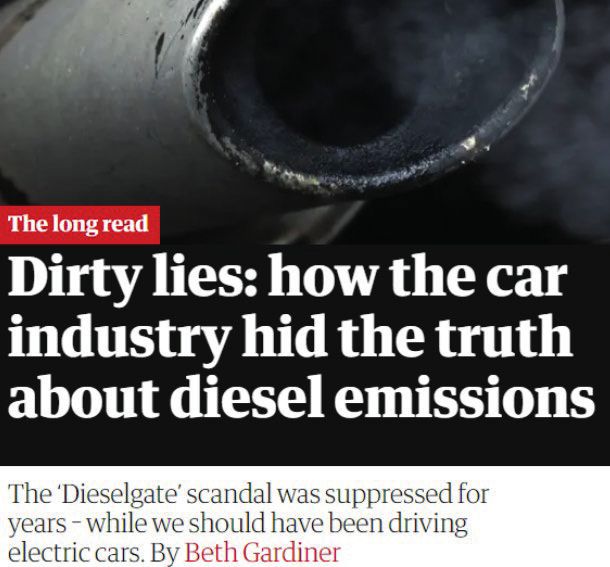
Developing Regional Cooperation on Air Pollution in Northeast Asia   5

Summary
Air pollution is a transboundary issue that requires cooperation at national, regional and global       Air pollution is a
levels. Important examples of implementing solutions to reduce air pollution can be found               transboundary
around the world, and a number of these have achieved significant progress through regional
cooperation. In Europe and North America, the consensus and willingness to cooperate on
                                                                                                        issue that requires
air pollution has been strong. National and regional cooperation has significantly contributed          cooperation at
to achieving a remarkable reduction in pollutant emissions and concentrations, although                 national, regional
problems still remain.
                                                                                                        and global levels
The situation in Northeast Asia is significantly different from that of Europe and North America.
Air pollution is now much higher in Northeast Asia, reminiscent of the highest levels that were
seen in Europe and North America in the mid-20th century. While Northeast Asian countries
are taking strong action at national scales, there is limited regional cooperation. To solve the
severe regional pollution issues, especially related to impacts on human health, it is necessary
to use holistic approaches, combining technology, financial and administrative solutions.
These can encourage increased national action and promote the regional cooperation that
would speed up progress.

This report reviews the cooperation between three Northeast Asian countries: China, Japan and
the Republic of Korea (hereafter Korea), and assesses which aspects of the regional collaboration
from Europe and North America can be transferred to this part of Asia. The report will serve to
advise governments, intergovernmental agencies and others on some key options that can be
used to take further action at either national or regional scales. The report also assesses national
activities in China, Japan and Korea.

The review of the European and North American pollution policy and regional cooperation
focusses mainly on the development of intergovernmental agreements under the UN Economic
Commission for Europe (UNECE) Convention on Long-Range Transport of Air Pollution
(LRTAP), but also on the development of EU legislation, and agreements between the USA
and Canada. There has been a large degree of political will to collaborate, share data and be
transparent in Europe, which has allowed negotiations on emission reductions over the last
forty years, and the EU has been able to harmonize legislation across Europe.

The review of regional cooperation in Northeast Asia covers the activities of EANET (Acid
Deposition Monitoring Network in East Asia), NEASPEC (Northeast Asian Sub-regional
Programme for Environmental Cooperation), APCAP (Asia Pacific Clean Air Partnership) and
the CCAC (Climate and Clean Air Coalition). Under these cooperation programmes, the focus
has been on sharing information and data between countries. This has been on-going, but has
not resulted in significant outcomes in terms of emission reductions. Therefore, the potential
impact of enhanced regional cooperation in Northeast Asia remains unanswered.

This report compares these cooperative programmes based on the willingness to communicate
information; institutional development; amount of funding; and allocation of human resources
to support the process. Overall, most cooperative efforts in Northeast Asia do demonstrate the
willingness of governments and related organizations to communicate with each other, but they
still lack participation by the public. This is a major obstacle, as pressure from the public is a
pre-requisite for action by governments.

A comparison of environmental cooperation between China, Japan and Korea shows that each
country faces different issues and obstacles. Countries have concentrated on national action
and therefore any collaboration between countries has been minimal. However, Northeast
Asia is a very dynamic region and opportunities are arising all the time. Recent changes,
such as China setting a date of decarbonization by 2060, can improve the likelihood of
successful, increased cooperation.
6   Stockholm Environment Institute

                                      Key strategies for regional cooperation among the three countries are considered in the report.
                                      One key aspect is developing a strong consensus among the scientific community and the public
                                      about the air pollution issues and the potential to solve it. Identifying best practices by jointly
                                      assessing and reviewing activities undertaken in China, Japan and Korea, is a crucial component
                                      that can lead to progress. A proposal for technology cooperation among the three countries could
                                      provide a promising strategy, if each country were willing to share their experience of using the
                                      best available technology. This can enhance connections across the private sector in the different
                                      countries and boost business opportunities and the output of industrial goods.

                                      In order to solve transboundary air pollution in Northeast Asia, holistic approaches are important
                                      so that technical expertise, economic resources and administrative support work in parallel to
                                      solve problems. Sharing data and information is a good start, but it is not enough. Developing
                                      appropriate strategies, policies and measures are crucial, if emissions are to be reduced.
                                      This report considers cooperation on key technologies for monitoring, raising awareness
                                      and supporting solutions to air pollution, through active participation of the private sector, in
                                      collaboration with academic institutions. Cooperation can be strengthened by the formation
                                      of networks of scientists, engineers and others, to help governments lay out action plans to
                                      achieve the common goal of reducing air pollution. The formation of these networks can help
                                      increase the participation of the public and private sectors, which in turn can increase the interest
                                      of policymakers. Policymaker engagement can also be enhanced when the public become
                                      increasingly aware of the air pollution issues.

                                      All of these aspects have been ingredients in the journey that has achieved reduced air pollution
                                      in Europe and North America. It is mainly a question of learning from this journey and finding
                                      aspects that could be relevant to processes in Northeast Asia, and highlighting those. This report
                                      tries to investigate this, whilst understanding that these regions have very different geopolitical
                                      contexts and not all elements are applicable.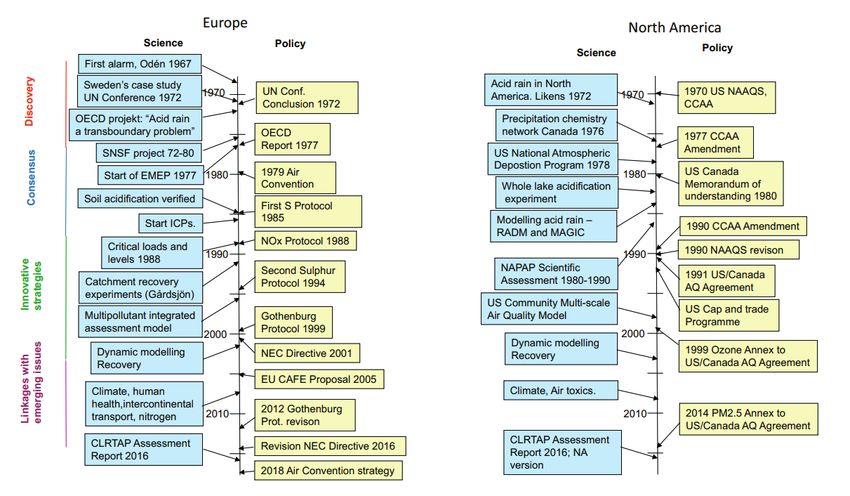
Developing Regional Cooperation on Air Pollution in Northeast Asia     7

1. Introduction
Air pollution is the leading environmental risk factor for premature death, and most of this is                                   Air pollution is the
related to the exposure to particulate matter, especially those particles that are less than 2.5                                  leading environmental
micrometres in diameter (known as small particulate matter). These small particles reach deep
into the lungs, causing damage. They then cross the membranes into the blood stream and are
                                                                                                                                  risk factor for
transported around the body, causing further damage. Premature deaths arise from increases                                        premature death
in ischemic heart disease, stroke, lung cancer, and acute lower respiratory infections associated
with exposure to air pollution. It also affects unborn children, by increasing the risk of preterm
births, which has the potential to cause life-long health implications (Malley et al. 2017). Air
pollution also increases the prevalence of serious asthma attacks across all ages and is a major
cause of childhood pneumonia. Non-fatal health impacts include requiring hospital admission,
reduced well-being, increased use of medication, and damage to the economy, for example
through reduced productivity.

According to estimates for 2012, the Western Pacific (which includes Northeast Asia) and South
East Asian regions already suffer from up to 1.9 million premature deaths per year from ambient
(i.e. outdoor) air pollution. This represents more than half of the 3 million total deaths estimated
to occur from exposure to air pollution across the two regions annually, from both indoor and
outdoor exposure to PM2.5 pollution (WHO, 2016).

According to the Organization for Economic Cooperation and Development (OECD), the number
of premature deaths globally due to high ambient concentrations of PM2.5 and ground-level ozone
(O3)1, could increase from 3 million per year in 2010 , to between 6 and 9 million per year in 2060
(OECD, 2016), with most of the increase occurring in Asia. To avoid this, strong and immediate
policy responses to reduce air pollution are required. The problems caused by PM2.5 in Northeast
Asia are especially serious due to the region’s rapid economic growth and urbanization and
because there are insufficient policies to prevent emissions. Today, emissions of air pollutants in
Northeast Asia are far in excess of the levels currently found in Europe and North America. But this
has not always been the case. For many years, urban areas of Europe and North America had the
highest levels of air pollution – comparable to some of the worst air pollution found in Asia today.

The concentrations of PM2.5 are made up of a mixture of primary particles (pollution emitted
as particles), including black carbon, organic carbon and mineral dust, and secondary particles
(particles formed in the atmosphere through chemical reactions involving different emitted
gases). Secondary particles (sulphate, nitrate, ammonium and secondary organic particles) are
formed from emissions of sulphur dioxide (SO2), nitrogen oxides (NOX,), ammonia (NH3), and
non-methane volatile organic compounds (NMVOCs), which can travel over long distances and
across national boundaries. The concentrations found today in many parts of Northeast Asia
exceed environmental standards by many times, at all times of the year. This poses a major
threat to health, well-being and development in the region (Shim, Seo and Noh, 2013). The
secondary pollutants made up of sulphate, nitrate and ammonium, form a substantial part of the
PM2.5 burden in industrial areas and these are also the pollutants that cause acid rain, causing
associated ecosystem damage.

Another important pollutant affecting human health is ground-level ozone (O3). O3 concentrations
in Northeast Asia have been rising due to the increasing emissions of precursor pollutants.
O3 is associated with different respiratory diseases, such as asthma, pneumonia and Chronic
Obstructive Pulmonary Disease (COPD) (Malley et al. 2017). It is also the main pollutant
affecting crop yields and has been shown to reduce wheat yields by 25–40% in some parts of
Asia (Wahid et al. 2006).

1   Ground-level ozone is a secondary pollutant formed in the lower atmosphere from emissions of the precursors nitrogen
    oxides (NOX), non-methane volatile organic compounds (NMVOCs), carbon monoxide (CO) and methane (CH4) under the
    action of sunlight. Ground-level ozone refers to the concentrations at the ground which people breathe in and which affects
    plants (e.g. crops and trees).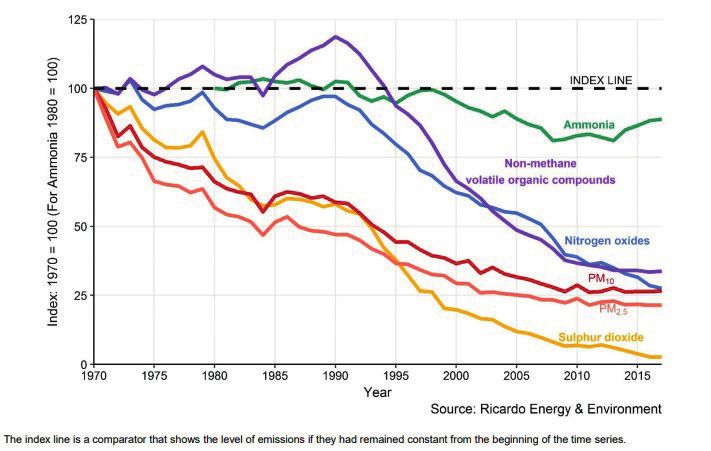
8   Stockholm Environment Institute

                                      Given the large impact of air pollution in Northeast Asia, individual countries in the region are
                                      making efforts to respond to this increasingly serious problem. China, which has been seriously
                                      affected by PM2.5 pollution, due to rapid industrial development and economic growth, has
                                      continued its efforts to improve air quality, declaring a “war on air pollution” in 2013. In particular,
                                      it announced that the most recent implementation of the “Winning the Blue Sky War (2018-2020)”
                                      (Feng, 2018) has had the effect of reducing the concentration of particulate matter and improving
                                      the air quality in key urban areas of China.

                                      Korea has also continued to develop countermeasures to reduce PM2.5 concentrations, as public
                                      concerns about small particles increase. Since its first announcement of “Reduction Measures
                                      for Particulate Matter” in 2005, the Ministry of Environment has: announced an analysis of the
                                      sources of high concentrations of particulate matter; established an environmental concentration
                                      standard for PM2.5; measured ambient concentrations of PM2.5; and identified and implemented
                                      countermeasures for PM2.5 to improve public health. In 2019, the legal and institutional basis for
                                      policy initiatives was strengthened through the enactment of a “Special Act on the Reduction and
                                      Management of Particulate Matter: Particulate Matter Law” (MOEK, 2019).

                                      Japan, the first industrialized country in Northeast Asia, has implemented a number of air
                                      pollution reduction policies that have reduced major sources of emissions since 1980. The first
                                      regulation in Japan was developed in 1932, with a law on particulate matter restriction, which
                                      was initially enacted in the Osaka area (MOEJ, 1932). As air pollution became serious due to the
                                      rapid economic expansion after the Second World War, the Air Pollution Control Act was enacted
                                      in 1968, to enforce strong regulation on air pollutant emissions. Through a process of increasing
                                      regulation and implementation, air pollution in Japan has significantly been reduced.

                                      However, air pollution, such as PM2.5, is not only a problem within any one country, but it is
                                      also a transboundary issue – a common problem in any relatively large area sharing the same
                                      airshed. Since particulate matter can be transported over long distances, it is important for any
                                      international cooperation to identify and manage mechanisms to control the emission of air
                                      pollutants, assess its atmospheric transport and chemical transformation, and understand its
                                      impact across national boundaries.

                                      Internationally, efforts have been made to establish bilateral or multilateral cooperation
                                      frameworks to solve the problems associated with long-range transboundary air pollution.
                                      Members of the UN Economic Commission for Europe (UNECE), including all European countries,
                                      central Asian countries, and also the USA and Canada, have addressed the problem through the
                                      development of the “Convention on Long-Range Transboundary Air Pollution (Convention on
                                      LRTAP)”, which was agreed by the Parties to the Convention in 1979. This initiated the process
                                      of international negotiations on transboundary air pollution, and has led to significant success in
                                      addressing regional air pollution. It was the first international convention to deal with air pollution
                                      at a regional scale, and came into force in 1983, establishing an institutional framework. This put
                                      in place the general principles of international cooperation to reduce air pollution, and to integrate
                                      research and policy. Building on the work of the Convention on LRTAP, the EU has gradually
                                      implemented approximately 300 legal and institutional instruments, such as guidelines, orders,
                                      decisions and recommendations, over the past 30 years, to help implement effective air quality
                                      management policies across the EU (Kuklinska, Wolska and Namiesnik, 2015).

                                      In North America there were separate bilateral negotiations between the USA and Canada on
                                      emission reductions. The United States-Canada Air Quality Agreement (AQA) also established
                                      air quality goals and adopted practical programmes for individual countries. This imposed
                                      obligations to: undertake Environmental Impact Assessments (EIA) on actions, activities and
                                      projects likely to cause transboundary air pollution; implement appropriate reduction measures;
                                      and notify the neighbouring country of their air pollution status. In addition, in the event of a
                                      conflict between countries, consultation and negotiations were conducted, and the two countries
                                      launched the Air Quality Committee to facilitate the implementation of the agreement.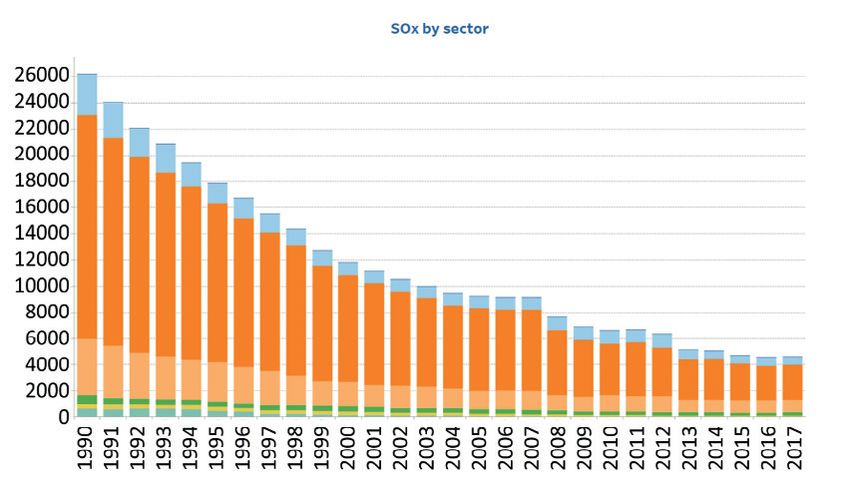
Developing Regional Cooperation on Air Pollution in Northeast Asia   9

Given that it is very difficult to achieve international consensus on international environmental   When thinking about
issues between countries, the Convention on LRTAP and the USA-Canada AQA can be                     the construction of
regarded as important successful cases, where countries agreed to solve their shared issues
together. These can provide important examples of cooperation between countries, to solve
                                                                                                    cooperative frameworks
the same problems now being experienced in Northeast Asia. In the meantime, various                 for transboundary air
practitioners in the Northeast Asian region have been thinking about the establishment of an        pollution in Asia, the
international framework that would be most suited to the region, to provide the appropriate
solutions to these shared air pollution problems. However, when thinking about the
                                                                                                    differences between
construction of cooperative frameworks for transboundary air pollution in Asia, the differences     Europe and Asia need
between Europe and Asia need to be critically analysed.                                             to be critically analysed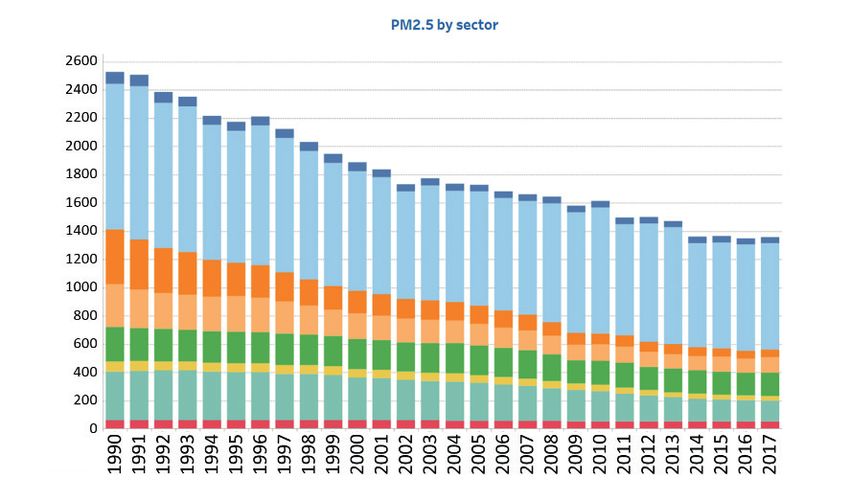
10    Stockholm Environment Institute

                                          2. A review of European and USA air pollution policy at
                                             urban, national and regional scales

                                          2.1 Development of urban and national air quality management in
                                              Europe and the USA
                                          UK and Europe

                                          Air pollution has been an issue for millennia, but it became particularly noticed at urban scales in
                                          Europe when the use of coal in London increased in the early middle ages. In 1661, English writer
                                          John Evelyn wrote about “clouds of sulphur” and even noted the corrosive nature of pollution on
                                          limestone and marble in the city at that time (Brimblecombe, 1987). After the industrial revolution,
                                          cities in Europe started to burn significant amounts of coal in houses and for industry, leading
                                          to a marked decrease in air quality in the late 19th and early 20th centuries (Brimblecombe,
                                                                               Austin and Sturges, 2002). Many smog episodes occurred
Figure 1. The London smog disaster of 1952                                     during this period across industrialized Europe, leading to
                                                                               a marked increase in deaths (Brimblecombe, 2006). There
   The London smogs                                                            was a particularly bad episode in the Meuse Valley, Belgium,
   Between 1948 and 1962 eight air pollution episodes occurred                 in the 1930s, leading to respiratory disorders and over
   in London, but the Great Smog between 5th and 9th December                  50 deaths (Brunekreef and Holgate, 2002). As pollution
   1952 was the most significant. Smoke concentrations reached                 increased, governments attempted to take action. The French
   56 times the ‘normal’ level at the National Gallery and visibility          government, for example, introduced the Morizet Act (1932)
   was so bad that people could not see their own feet! Within                 on the elimination of industrial smoke emissions. This was the
   12 hours of the beginning of the smog some people showed                    first policy on air pollution in France (Brimblecombe, 1998).
     respiratory problems and hospital admissions increased
     dramatically. At least 4,000 people above the normal mortality                 Despite the high frequency of “Pea-souper”2 smog events in
     figures are believed to have died during the smog and in the                   London, few policies were developed to address the sources
     following weeks (see figure below).                                            of pollution (Davis, Bell and Fletcher, 2002). Several coal-fired
                                                                                    power stations were located in the city and coal was widely
                                                                                    used domestically for heating and cooking (Rafaj et al. 2014).
                                                           Death rate,              An early attempt to address emissions was made with the
                                                           smoke and SO2            development of the Public Health Act of 1936, but its effect
                                                           concentration            was limited (Brimblecombe, 1987). The pollution continued
                                                           (daily average)          after the Second World War and was an ever-present problem
                                                           during the               found throughout Europe. Even in Stockholm and other
                                                           Great Smog in            cities of Sweden, air quality was very poor (Hawksworth,
                                                           December 1952.           1971). In the UK, the replacement of old electric trams with
                                                                                    diesel buses (Brunton, 1992) added to pollution and smog
                                                                                    episodes (Cooney, Hawkins and Marriott, 2013). Poorer grade
                                                                                    coal was being burnt after the Second World War, since the
                                                                                    high-grade coal was increasingly being exported (Elsom,
                                                                                    1992). This continued until an especially serious pollution
                                                                                    episode occurred in December 1952, which has been called
                                                                                    the “London Smog Disaster” (Davis, Bell and Fletcher, 2002).
Source: Parliamentary Office of Science and Technology (2002)
                                                                                    This occurred when unusual weather conditions locked in the
                                                                                    pollution for a number of days. People could not see where
                                                                                    they were going, and the death rate soared, with over 4000
                                                excess deaths being recorded between 5–9 December 1952 (Figure 1), which were reported
                                                in Parliament and the media soon after (Elsom, 1992). The mortality count is approximately
                                                12,000, rather than the 3,000–4,000 generally reported for the episode, if the excess deaths
                                                after the episode are taken into account and if these are assumed to be related to air pollution
                                                (Bell, Davis and Fletcher, 2003).
                                          2   “Pea-souper” fogs were a very thick and often yellowish, greenish or blackish fog caused by air pollution that contains soot
                                              particulates and the poisonous gas sulphur dioxide that used to be common in London.
Developing Regional Cooperation on Air Pollution in Northeast Asia 11
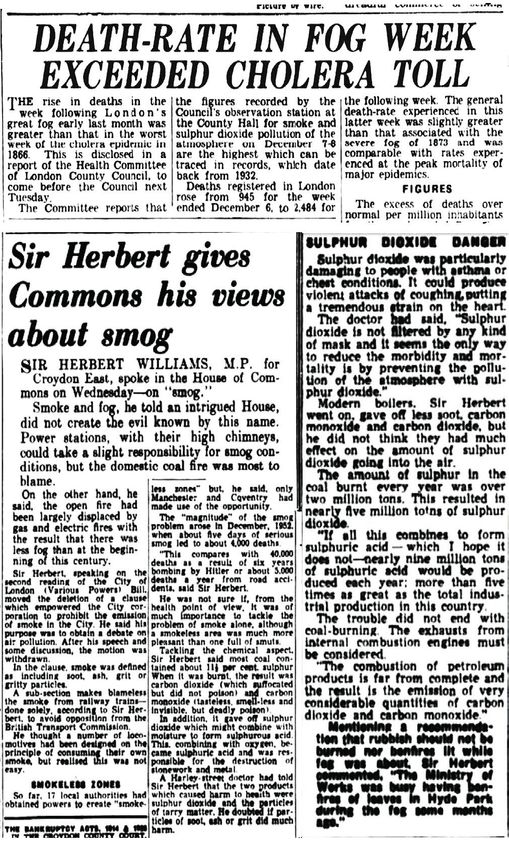
Intense media reporting of this event at the time, created widespread interest in these smog
events, to a much greater degree than had occurred in previous years (Elsom, 1992). The 1952
event caused a massive public reaction, where people demanded that something be done (Davis,
Bell and Fletcher, 2002). The government attempted to calm public concerns by trying, for
example, to blame excess deaths on an influenza epidemic, and avoided having to take action,
which had previously been a successful tactic (Rose, 1990). However, the extreme pressure on
the government to respond, coincided with a Private Member’s Bill3 that was eventually passed by
Parliament and which gave rise to the Clean Air Act of 1956. This was a very successful piece of
legislation that was copied across Europe (Brimblecombe, 2006). It took some time for air quality
to improve and further smog events continued to occur, such as a particularly bad episode in
1962 that killed about 700 people (Elsom, 1992). But gradually, air quality in London improved.
The London Smog of 1952 influenced urban air pollution policy throughout Europe. It had, for
example, a considerable influence in Sweden, increasing interest in the potential impacts on
human health. Doctor Ragnar Spak in Göteborg undertook a study on soot and sulphur dioxide
(Forsberg, 2007). In October 1959, the first
measurements of pollution started, and in Figure 2. Sulphur dioxide in the air in Sweden from 1960 to 2015, with the longest measuring
December 1960, an epidemiological pilot series for Gothenburg
study was initiated, inspired by a British
study on patients with bronchitis (Forsberg,
2007). Figure 2 shows how the high values
for sulphur dioxide concentrations in
Göteborg in the early 1960s, decreased
rapidly in the late 1960s and 70s, and that
these lower concentrations also became the
norm in other Swedish cities.
The UK’s Clean Air Act of 1956, was the
first legislation which attempted to control
domestic as well as industrial sources of
pollution (Elsom, 1992). This was important
because previous to this, policymakers
in the UK had been reluctant to place
restrictions on what people could do in
their own homes (Brimblecombe and
Schuepbach, 2006). However, due to the
serious smog events, citizens were aware
that these sacrifices were small compared
to the advantages of achieving clean air,
thus there was little resistance to the new
Act (Brimblecombe, 1987).
Following the introduction of the Clean Air
Act, there were a number of early policy Source: Forsberg (2007)
initiatives in the UK that were particularly
effective. The first was the establishment
of “Smoke Control Areas” in cities, which forbade the burning of coal in unauthorized appliances,
and stipulated that only smokeless solid fuels could be burnt. Over time, there was a move
among householders to replace coal-fired heating and cooking with natural gas (Brimblecombe
and Schuepbach, 2006). This was not strictly required by policy but a combination of the
Clean Air Act, the economics of gas as a fuel, and the overall ease of using gas, was probably
responsible for this trend. This switch of fuels was copied by most cities in Europe, although the
3 In the UK system, Private Member’s Bills are Public Bills introduced by MPs and Lords who are not government ministers.
As with other Public Bills, their purpose is to change the law as it applies to the general population. A minority of Private
Member's Bills become law, but by creating publicity around an issue, they may affect legislation indirectly.12 Stockholm Environment Institute
response differed. For example,
Figure 3. Changes in smoke, SO2 and NO2 in London from 1956 to 2000
district heating4 was favoured in
Sweden, and restrictions on the
sulphur content of fuels was also
Sulphur dioxide
implemented (Nyberg et al. 2000).
Smoke
In addition, the habit of putting
Nitrogen dioxide
polluting industry in cities was
discouraged and all large industrial
sources, including power stations,
were moved out of the city centres
(Brimblecombe, 1987). They were
built with tall chimneys, as per a “tall
stacks” policy, intended to disperse
the pollutants from large point
sources of pollution (such as coal-
fired power stations) and to avoid
high pollutant concentrations locally
(Elsom, 1992).
Source: Adapted from Brimblecombe (2006)
The consequence of the changes in
cities was that from 1956 onwards,
the levels of pollution in London
improved considerably (see
Figure 3), as it did in cities across
Figure 4. Air pollution values measured in London since the 17th century
Europe. Admittedly, in the UK, levels
of pollution had started to come
down before the Clean Air Act, from
about 1900 (see Figure 4). The
Act was also operating alongside
some significant changes in fuel
use, technology and a shift in
industrial sources of pollution
(Elsom, 1992). The shift from coal
to gas was a radical shift in fuel
use, not originally envisaged in the
1950s, and it avoided the problem
of providing enough smokeless
solid fuel (Brimblecombe, 2006).
It was this shift that caused
much of the reduction of sulphur
emissions (Elsom, 1992). It should
be noted that while pollution was
successfully reduced in cities,
this was partly due to the fact
that industry had relocated away
Source: Brimblecombe (1987)
from the population, and so the
emissions produced in this sector
did not cease, but continued to be produced elsewhere. The effect of this was that the incentive
to cut emissions was removed (Elsom, 1992). Furthermore, it was not understood at the time
that, although tall chimneys reduced local air pollution, they allowed continued high levels of
emissions, and their pollutants travelled long distances. Thus, the pollution still contributed to the
acid rain crisis that arose, after the urban air pollution problem was considered to be solved, or at
least to be work in progress (Rose, 1990).
4 District heating is a system for distributing heat, generated in a centralized location, through a system of insulated pipes for
residential and commercial heating requirements, such as space heating and water heating.Developing Regional Cooperation on Air Pollution in Northeast Asia 13
The Clean Air Act was modified in 1968 and 1993, and the use of gas also spread to power
stations from the 1990s which led to further reductions in air pollution overall in the UK, as
well as in cities (Brimblecombe, Austin and Sturges, 2002). One pollutant that was not being
reduced was nitrogen dioxide. This has since been the subject of intense pressure, requiring
emission reductions. By 2017,
the UK had achieved a 70% Figure 5. Trends in annual emissions of sulphur dioxide, PM2.5, PM105, nitrogen oxides, non-methane volatile
reduction in nitrogen oxide organic compounds and ammonia in the UK between 1970-2017
emissions since 1990 (Figure
5) (DEFRA, 2019). Ammonia
emissions however, mainly
from agriculture, has remained
stubbornly high in the UK
(Grennfelt et al. 2019), and the
emissions of primary PM2.5
particles have only reduced
by a small amount since
2002 (see Figure 5). This
demonstrates that more needs
to be done and is a common
picture across Europe, but
with differences, depending
on national circumstance.
However, the development of
regional air pollution policy in
Europe, since 1979, has had
Source: DEFRA (2019)
a large impact on addressing The index line is a comparator that shows the level of emissions if they had remained constant from the beginning of the time series.
this (Grennfelt et al. 2019).
USA
The USA has a similar air pollution story to Europe. In the early 1940s, Los Angeles, California,
was subjected to a series of photochemical smog episodes, causing nose and eye irritation
(Goodwin, 1979). Some of these smog episodes were different to those experienced in
London, with ground-level ozone pollution being a more prominent problem in California
(Brimblecombe, Austin and Sturges, 2002). Then, smog episodes more typical of the smoke,
sulphur and nitrogen oxide pollution experienced in London and other parts of Europe, began
occuring in other parts of the United States. In 1948, there was “The Donora Episode” in which
six days of smog resulted in 6000 cases of illness and 20 deaths, in a district just south of
Pittsburgh in Pennsylvania (Brimblecombe, Austin and Sturges, 2002). Then, in 1953, there
was another smog episode in New York City, which resulted in 200 deaths (Elsom, 1992).
These events put pressure on the government to develop federal legislation, motivating
the Air Pollution Act of 1955, and the Motor Vehicle Exhaust Study Act in 1965 (Goodwin,
1979). Both of these events led to the provision of funding for research, but did not bring
about immediate reductions of air pollutant concentrations (Elsom, 1992). The Motor Vehicle
Pollution Control Act was produced in California in 1965, five years before the Federal Act by
the same name was introduced. This highlights California’s tendency to lead pollution control
legislation in the USA (Elsom, 1992).
The major piece of legislation to bring about emission reductions in the USA, was the Clean
Air Act of 1970 (Francis and Crandall, 1984). It is described as being “swept into enactment by
the political strength of the environmental movement” (Elsom, 1992, p. 207), demonstrating the
powerful public attitude to air pollution during this era. The Act established the Environmental
Protection Agency (EPA) and set national air quality standards for sulphur dioxide (SO2), nitrogen
5 Particles that are less than 10 micrometres in diameter.14 Stockholm Environment Institute
oxides (NOX), particulate matter (PM), carbon monoxide (CO), ground-level ozone (O3) and lead
(Pb) (Brimblecombe, Austin and Sturges, 2002). There were minimal air quality improvements at
first and in 1977 the Act was amended to set a deadline of 1987 to achieve emission reductions.
After this, the EPA gained authority to provide sanctions for not meeting targets (Elsom, 1992). In
1990, the Clean Air Act was revised and the majority of emission reductions came after this time
(see Figure 6). Overall, the implementation of the Clean Air Act between 1970 and 2014, achieved
a 69% reduction in pollutant emissions, despite a marked increase in GDP, vehicle miles travelled,
energy consumption and population (Grennfelt, 2016).
It was significant that the serious smog
Figure 6. Trends in USA emissions of PM2.5 and its precursors from 1990 to 2014
episodes occurred in California, given
that this State took the lead in developing
solutions to air quality issues (Elsom,
1992). In the USA, California is the only
state permitted to issue emissions and
air quality standards itself, under the
Federal Clean Air Act (Gerard and Lave,
2005). It is also exempt from the Federal
ruling that no state could adopt emission
standards for new vehicles that are more
stringent than the Federal ones (Elsom,
1992). Other states could then choose to
follow the standards set by the California
Air Resources Board (CARB) or Federal
standards (Gerard and Lave, 2005). The
Source: United Nations Economic Commission for Europe (2016) reason for this exception relates to the
time when Federal air quality laws were
being produced, and California was
already developing innovative laws and standards to address its unique air pollution problems
(Gerard and Lave, 2005). For example, in 1978, California required all new cars to be equipped
with three-way catalytic converters, which reduce emissions of nitrogen oxides, one of the
major precursors of ground-level ozone. This then became a requirement for all states under
Federal law in 1981 (Rose, 1990). This illustrates alternative legislative approaches – one of
which was to set emission standards (which was a technology neutral approach), and the other
to require the use of specific technologies.
The technological advance of catalytic converters in the USA enabled similar emission
reductions to be copied in European legislation (Elsom, 1992). One significant factor leading
to the EU legislation was that some countries like Sweden and Germany promoted catalytic
converters on vehicles by, for example, providing subsidies for their purchase. They were first
introduced in Germany in 1985, however, the UK opposed the idea until 1989 (Rose, 1990). It
was important that some countries took early action to promote good practices in Europe, as
it was only in 1993 that EU passenger car emission standards became stringent enough to
require the general application of three-way catalytic converters, and this was only for petrol-
driven cars (Rafaj et al. 2014). It is interesting that despite the existence of proven technology
in the USA, and a Federal law from 1981, it took over a decade for the EU to adopt this in
the framework of the Euro Standards6. There was also a difference in the application of the
legislation – EU car emission standards have traditionally been stricter for petrol-driven cars
than for diesel ones. This has led to higher emissions of nitrogen oxides and primary PM2.5 in
Europe for many years, compared to the USA, where diesel vehicles had been set the same
standards as petrol-driven ones.
6 Euro Standards are European emission standards that define the acceptable limits for exhaust emissions of new vehicles sold
in the European Union and European Economic Area (EEA) Member States. The emission standards are defined in a series of
European Union Directives, staging the progressive introduction of increasingly stringent standards.Developing Regional Cooperation on Air Pollution in Northeast Asia 15
2.2 Development of cooperation on transboundary air pollution under
the Convention on Long-Range Transport of Air Pollution (LRTAP)
The development of intergovernmental agreements under the UN Economic
Commission for Europe (UNECE)
The existence of long-range transport of air pollution has been documented for a long time.
Soot falling on and darkening snow in Norway when the wind blew from Britain was described
in the late 19th century (Brimblecombe, Davies and Tranter, 1967). The science and policy
debates on the long-range transport of air pollution in Europe and North America focused on
the issue of “acid rain” (Pleijel, 2007). This is related to the deposition of sulphur and nitrogen
compounds (Brimblecombe, Austin and Sturges, 2002), which has often been transported over
hundreds or thousands of kilometres from the point of emission (Elsom, 1992). Although these
pollutants could acidify the rain, the ecosystem damage was caused by deposition of sulphur
(in particular) and nitrogen compounds, whether this be in rainfall, dry deposition7 or fog.
Transboundary air pollution started to have serious impacts on the lakes, streams and rivers of
Norway and Sweden, which were increasingly becoming devoid of fish (Grennfelt et al. 2019).
Several scientists highlighted the issue of acid rain and the damage it was doing in the 1960s,
including Professor Svante Odén, a Swedish agricultural scientist, who compiled 15 years of
monitoring data to conclude that the sulphur content in the air created acid rain. The sulphur
could travel long distances across national boundaries, causing environmental issues, such as
damaging rivers and aquatic life, as well as potentially damaging (acidifying) the soil, leading
to forest die-back (Odén, 1968). These findings were published in the media and scientific
literature and his work gained international recognition (Pleijel, 2007). In turn, this meant that
during the Stockholm Conference on Environment and Development in 1972, a lot of space was
devoted to the issue of acid rain (Grennfelt and Larsson, 2018).
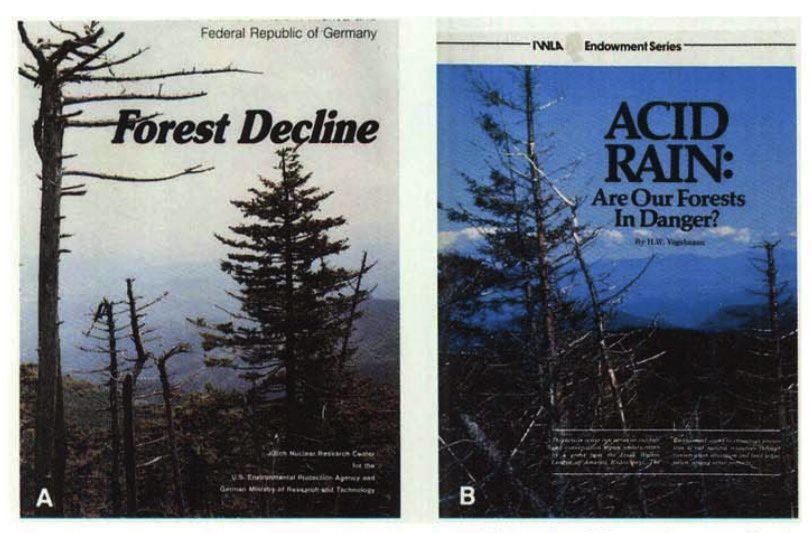
At the same time, as the lakes were suffering in the Nordic countries, people in Germany were
becoming very concerned about “Waldsterben” or forest decline (Wettestad, 1997), which
was also linked to the increase in gaseous pollution and acidic deposition (Ulrich, 1983). There
was an increasing understanding of the effects of acid rain on the corrosion of buildings and
historical artefacts across Europe (Pleijel, 2009). Similarly, the lakes in Canada were becoming
more acidic and equivalent scientific and political arguments started between Canada and the
USA (Thompson and Carroll, 1984).
In the 1970s, OECD’s Environment Policy Committee launched technical projects on
transboundary air pollution, bringing together data from monitoring stations in 11 different
countries, to examine the degree of transboundary transport of pollution (Grennfelt et al.
2019). In the face of a degree of scepticism over the issue, not least in the UK, these data
demonstrated conclusively that a large part of the air pollution emitted in one country, could
be deposited in another, after having been blown hundreds of kilometres, causing various
harmful impacts (Grennfelt et al. 2019). In 1974, the OECD Council published “Guidelines
to Reduce Emissions of Sulphur Oxides and Particulate Matters from Fuel Combustion in
Stationary Sources”. This work provided the building blocks for two major international
achievements: (1) a Cooperative Technical Programme to Measure the Long-range Transport
of Air Pollutants in Europe8, launched in 1978 by UNECE; and (2) the UNECE Convention on
Long-Range Transboundary Air Pollution (the Convention on LRTAP) signed in 1979 by the EU
and 31 industrialized countries, including the USA and Canada (Sliggers and Kakebeeke, 2004).
These countries committed to limit and gradually reduce the emission of air pollutants that
contributed to long-range transboundary air pollution (Grennfelt and Larsson, 2018). This was
the first regional framework developed to address air pollution as a transboundary issue and
7 Dry deposition is the deposition of pollutants, including gases and particulate matter, as they settle out of the atmosphere or
are absorbed by plant tissues in processes not involving rainfall or other forms of precipitation.
8 Referred to unofficially as the European Monitoring and Evaluation Programme or “EMEP”.16 Stockholm Environment Institute
Table 1. The Protocols of the Convention on LRTAP
Date entered
Place/ date Protocol
into force
Long term financing of cooperative programme of EMEP (Cooperative Programme for
Geneva, 1984 1988
Monitoring and Evaluation of the Long-range Transmission of Air Pollutants in Europe)
Reduction of sulphur emissions or their transboundary fluxes (movement across national
Helsinki, 1985 1987
boundaries) by at least 30%
Sofia, 1988 1991 Control of emissions on nitrogen oxides (NOX) or their transboundary fluxes
Geneva, 1991 1997 Control of emissions on Volatile Organic Compounds (VOCs ) or their transboundary fluxes
Oslo, 1994 1998 Further reduction of sulphur emissions
1) Heavy metals (amended in 2012)
Arhus, 1998 1998
2) Persistent organic pollutants (amended 2009) - neither amendments are in force.
Abate acidification, eutrophication and ground-level ozone (amended in 2012 to include primary
Gothenburg, 1999 2005
PM2.5 and provisions on black carbon, and entered into force 2019)
Source: Adapted from Sliggers and Kakebeeke (2004)
subsequently developed into international legally-binding Protocols (see Table 1) (Lidskog and
Sundqvist, 2011).
The Convention on LRTAP has been an interesting and effective process for negotiation
between countries to limit emissions in Europe. It included both Canada and the USA, as
well as Russia and other non-EU countries (Sliggers and Kakebeeke, 2004). Some countries
championed the development of the Convention. Sweden and other Scandinavian countries
were clearly enthusiastic because they wanted to solve the acid rain problem affecting them.
Likewise, Germany was keen to solve their forest decline (Rose, 1990) and there were changes
in Germany at the time that led to their active engagement. This included the Green Party
winning seats in the Parliament for the first time in the early 1980s. This changed policy
considerably, with Germany developing many “green” policies and becoming enthusiastic for
the development of Protocols under the Convention (Underdal and Hanf, 2019). Similarly, in
the UK, green parties did very well in local authority elections in the early 1980s, which also
contributed to a change in policy.
One of the main successes of the Convention on LRTAP is the organizational structure, which
accomplished the effective development of a science-policy interface. The structure of the
LRTAP Convention (see Figure 7) has closely linked the science needed to understand the
flows and impacts of transboundary air pollution, and the modelling strategies that help
understand the impact of air pollution reductions in Europe. This has informed the policy
process (Sliggers and Kakebeeke, 2004). Different task forces and international cooperative
programmes maintained a close network of country experts, developed from the Convention
on LRTAP and from the international scientific community (Sliggers and Kakebeeke, 2004).
This created an all-round international consensus on the effects of air pollution and the
transboundary issues, encouraging action to be taken (Lidskog and Sundqvist, 2011).
The Executive Body and Working Groups of the Convention on LRTAP would often decide
on the scientific information required to support the decision-making and negotiations
within the Convention. Sometimes this would push the Task Forces to produce results at a
faster pace than the scientists within them were used to working (Sliggers and Kakebeeke,
2004). The science produced in these collaborative efforts would not only support
the negotiations, but also contribute to the overall knowledge that was driving policy
(Lidskog and Sundqvist, 2002).Developing Regional Cooperation on Air Pollution in Northeast Asia 17
Figure 7. The organisational structure of the LRTAP Convention
EECCA
COORDINATING GROUP EXECUTIVE BODY IMPLEMENTATION
COMMITTEE
WORKING GROUP EMEP WORKING GROUP ON
ON EFFECTS STEERING BODY STRATEGIES AND REVIEW
TASK FORCE ON
ICP FORESTS EMISSION INVENTORIES TASK FORCE ON
TASK FORCE COORDINATING AND PROJECTIONS REACTIVE NITROGEN
PROGRAMME
CENTRE
CENTRE ON
ICP INTEGRATED EMISSION INVENTORIES TASK FORCE ON
MONITORING AND PROJECTIONS (CEIP) TECHNO-ECONOMIC
TASK FORCE PROGRAMME ISSUES
CENTRE
TASK FORCE ON
MEASUREMENTS
ICP MODELLING
AND MODELLING ICP International
AND MAPPING COORDINATING
TASK FORCE Co-operative
CENTRE Programme
FOR EFFECTS CHEMICAL
COORDINATING WHO World Health
Organization
ICP MATERIALS CENTRE (CCC)
EECCA Eastern Europe,
TASK FORCE MAIN RESEARCH Caucasus and
CENTRE METEOROLOGICAL Central Asia
SYNTHESIZING EMEP European
CENTRE-WEST (MSC-W) Monitoring
ICP VEGETATION and Evaluation
TASK FORCE PROGRAMME Programme
CENTRE METEOROLOGICAL
SYNTHESIZING
CENTRE-EAST (MSC-E)
SUBSIDIARY
ICP WATERS TASK FORCE ON BODIES
TASK FORCE ASSESSMENT TASK FORCE ON
MODELLING INTEGRATED ASSESSMENT TASK FORCES
MODELLING
PROGRAMME/EMEP
TASK FORCE
WHO BONN CENTRE FOR CENTRES
ON HEALTH
INTEGRATED ASSESSMENT
MODELLING (CIAM)
JOINT EXPERT TASK FORCE ON
GROUP ON HEMISPHERIC TRANSPORT
DYNAMIC MODELLING OF AIR POLLUTION
Source: Sliggers and Kakebeeke (2004)
The work of the Convention on LRTAP built upon the progress made by the OECD, by
developing the Cooperative Programme for Monitoring and Evaluation of the Long-range
Transmission of Air Pollutants in Europe (EMEP) (Sliggers and Kakebeeke, 2004) through
the Geneva Protocol in 1984 (see Table 1). Known unofficially as the “European Monitoring
and Evaluation Programme”, EMEP provides a channel for exchanging standardized scientific
information and empirical data at a large scale. Prior to the Geneva Protocol, data exchange
had not happened at such a large scale before and it was deemed necessary for smooth
negotiations and to understand the exchange of pollutants between countries (Pleijel, 2007).
EMEP provides sound scientific support to the Convention, in particular in the areas of:
atmospheric monitoring and modelling; emission inventories and emission projections; and
integrated assessments (Grennfelt and Larsson, 2018). As the source of information on the
emission, transport and deposition of air pollution, EMEP, since its creation, has played a major
role in informing policy development under the Convention (Lidskog and Sundqvist, 2011).
The “Working Group on Effects”, which works in parallel with EMEP, has been instrumental in
quantifying the scope of damage to ecosystems and health, and has shown the improvement in
the impacts on ecosystems since the establishment of the Convention.
In order to make rapid progress, the countries agreed that they would make an across-the-
board reduction in sulphur emissions (Sliggers and Kakebeeke, 2004), – one of the main
transboundary air pollutants – and a good starting point for action on acid rain (Murdoch,
Sandler and Sargent, 1997). The 1985 Helsinki Protocol on the Reduction of Sulphur Emissions18 Stockholm Environment Institute
or their Transboundary Fluxes, aimed to reduce emissions of all signatories by at least
30% from 1980 levels by 1993 (Pleijel, 2007). This was known as the “30 per cent club” and
famously, the UK did not sign, which led to a scientific and political struggle in the 1980s, with
the UK’s Central Electricity Generation Board –who mainly burnt coal in their power stations
without equipment to scrub out the sulphur – lobbying the UK government (Rose, 1990).
The UK government position maintained that the scientific case for the transboundary
transport of air pollution and the subsequent acidification of lakes, was not based on
sufficiently sound science (Mason, 1990). Given that the scientific arguments lay behind
the impasse between the UK and Nordic9 countries, they co-funded the “Surface Water
Acidification Programme” (SWAP), which was undertaken by academics in the UK, Norway
and Sweden (Mason, 1990). Projects within the SWAP helped develop the strong evidence
that encouraged the UK government to change its policy (Rose, 1990). Key research looked
at diatom remains in sediments (small unicellular plants which have different pH preferences),
which showed how the pH in lakes had declined, as sulphur emissions and deposition
increased, and how the pH decrease also mirrored soot deposition in the sediments (Battarbee
et al. 1984). This evidence showed that what was happening in Scotland and the Lake District in
the UK, was also occurring in Scandinavia (Mason, 1990).
The UK Central Electricity Research Laboratory (CERL) produced a document called “Acid
Lakes in Scandinavia – an evolution of understanding” (by P.F. Chester) in 1986, which
signalled this change in UK policy. As it happens, the emissions of sulphur declined in the
UK by more than 30% over the period of the Helsinki Protocol (1985 – 1994) (known as the
first Sulphur Protocol), due to the shift from coal to natural gas with a very low sulphur
content (as described in Section 2.1) (Rafaj et al. 2014), especially in electricity generation
and industry (Elsom, 1992). So, the UK could have avoided a number of years where they
were described as the “Dirty Man of Europe”, especially by Scandinavians, during the
period of inaction (Rose, 1990).
The UK became an active participant in the development and implementation of subsequent
Protocols in the LRTAP Convention (Sliggers and Kakebeeke, 2004), including: the 1988 NOX
Protocol (Protocol concerning the Control of Emissions of Nitrogen Oxides); the 1991 VOC
Protocol (Geneva Protocol concerning the Control of Emissions of Volatile Organic Compounds
or their Transboundary Fluxes), the Oslo Protocol (1994) (known as the Second Sulphur
Protocol); and the 1999 Gothenburg Protocol (the so-called “Multi-Pollutant- Multi Effect
Protocol”) (Table 1). One feature of the development of the so-called “second-generation”
Protocols (from 1994), has been the targeted approach to emission reductions, based on the
impacts that these emissions are having (Grennfelt, 2016). This meant that there was less
pressure on countries to mitigate emissions where their pollution did not have significant
harmful effects on sensitive ecosystems (Lidskog and Sundqvist, 2002).
“Critical loads” were also developed as a way to express nature’s tolerance to withstand
pollution inputs, by setting scientifically-based safe deposition levels of sulphur and nitrogen
compounds (Ringquist and Kostadinova, 2005). Integrating critical loads into policy allows
cost-effective abatement strategies to be used and overcomes the assumption that all
ecosystems have the same sensitivity to acidification, as would be implied with a flat rate
reduction i.e. all countries reducing their emissions by the same percentage (Pleijel, 2007).
The first map of critical loads for acidification to be used in Integrated Assessment Models
(IAMs) that supported the Convention, was developed by the Stockholm Environment
Institute (SEI) (Chadwick and Kuylenstierna, 1990, 1991). This was then replaced by critical
load maps that were developed based on inputs from different countries, and were compiled
into European maps by one of the LRTAP Convention bodies – the Coordination Centre for
Effects (Grennfelt et al. 2019).
9 Specifically Denmark, Norway, Sweden, Finland.You can also read


