Disaster Preparedness - DG ECHO Guidance Note 2021 - European Commission
←
→
Page content transcription
If your browser does not render page correctly, please read the page content below
DG ECHO Guidance Note

Disaster Preparedness

               2021

             European Civil
             Protection and
             Humanitarian Aid
             Operations
DG ECHO Thematic Policy Documents

                                    N°1: Food Assistance: From Food Aid to Food
                                           Assistance
                                    N°2: Water, Sanitation and Hygiene: Meeting the
                                         challenge of rapidly increasing humanitarian
                                         needs in WASH
                                    N°3: Cash and Vouchers: Increasing efficiency and
                                         effectiveness across all sectors
                                    N°4: Nutrition: Addressing Undernutrition in
                                         Emergencies
                                    N°5: Disaster Preparedness Guidance Note
                                    N°6: Gender: Different Needs, Adapted Assistance
                                    N°7: Health: General Guidelines
                                    N°8: Humanitarian Protection: Improving protection
                                         outcomes to reduce risks for people in
                                         humanitarian crises
                                    N°9: Humanitarian Shelter and Settlements
                                         Guidelines
                                    DG ECHO Operational Guidelines: The Inclusion of
                                    Persons with Disabilities in EU-funded Humanitarian
                                    Aid Operations

For more information or questions on the Guidance Note, please consult the DG ECHO webpage on Disaster Preparedness or contact the Unit B2 at ECHO-B2-
SECRETARIAT@ec.europa.eu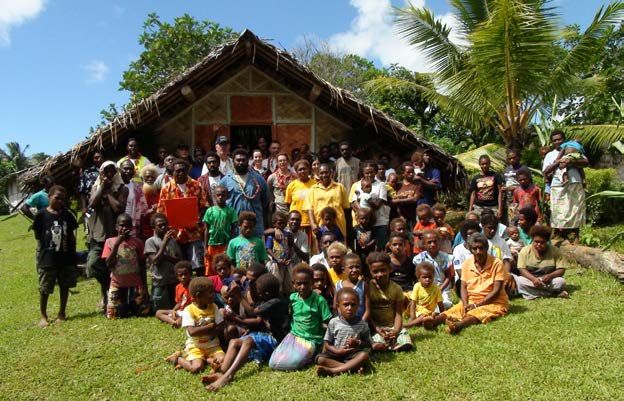
D G   E C H O   D i s a s t e r   P r e p a r e d n e s s   G u i d a n c e   N o t e
                                                                                                      1

Table of contents
Foreword                                                                                                  2
Executive Summary                                                                                         3
1. Introduction                                                                                           5
2. International and EU Policy Frameworks                                                                 6
     2.1 International frameworks                                                                         6
        2.1.1 Sendai Framework for Disaster Risk Reduction                                                6
        2.1.2 Grand Bargain - the Agenda for Humanity                                                     6
        2.1.3 Paris Agreement                                                                             7
        2.1.4 The Agenda 2030 and the Sustainable Development Goals                                       8
     2.2 EU policy frameworks                                                                             8
        2.2.1 Preparedness and DG ECHO’s Mandate                                                       8
        2.2.2 European Consensus on Humanitarian Aid                                                   9
        2.2.3 European Communication on Humanitarian Action                                            9
        2.2.4 European Consensus on Development                                                       10
        2.2.5 EU Joint Communication on Resilience                                                    10
        2.2.6 The European Green Deal                                                                 10
        2.2.7 EU Adaptation Strategy                                                                  10

3. Preparedness & Risk Informed Approach                                                              11
     3.1 Disaster Preparedness                                                                        11
     3.2 Risk Informed Approach                                                                       12
        3.2.1 Risk Assessment                                                                         14
        3.2.2 Anticipatory or Early Action                                                            16
        3.2.3 Mainstreaming Preparedness and Risk Proofing Response Interventions                     16
        3.2.4 Targeted Preparedness Actions                                                           18

4. Key Elements of the DG ECHO Preparedness and Risk-Informed Approach                                19
5. Complementary implementing modalities                                                              22
     5.1 Humanitarian Development Peace (HDP) Nexus                                                   22
     5.2 Partnerships                                                                                 24
     5.3 Union Civil Protection Mechanism (UCPM)                                                      26
6. Preparedness Actions                                                                               27
     6.1 Early Warning System (EWS)                                                                   27
     6.2 Anticipatory Action                                                                          28
     6.3 Logistics                                                                                    29
     6.4 Strengthening Capacity                                                                       30
     6.5 Shock Responsive Social Protection (SRSP)                                                    31
     6.6 Cash Preparedness                                                                            32
     6.7 Institutional, Policy and Legislative Frameworks                                             33
     6.8 Information Management, Data and Technology                                                  34
     6.9 Contingency Planning                                                                         36
     6.10 Advocacy and Awareness                                                                      37
     6.11 Preparedness - Specific Considerations                                                      37
        6.11.1 Climate and environmental resilience interventions                                     37
        6.11.2 Preparedness for Protection                                                            40
        6.11.3 Preparedness in urban settings                                                         42
        6.11.4 Preparedness for conflict and violent situations                                       43
        6.11.5 Preparedness for Drought                                                               44
        6.11.6 Preparedness for Displacement                                                          45

7. Evidence and Learning                                                                              47
Annex                                                                                                 48
    Annex 1. Mainstreaming Preparedness and Risk Proofing Humanitarian Response                       48
    Annex 2. Crisis Modifier Note                                                                     60
    Annex 3. Targeted Preparedness Actions - Global Priorities 2021-2024                              69
    Annex 4. Resources and Tools                                                                      75
    Acronyms                                                                                          79
D G   E C H O   D i s a s t e r   P r e p a r e d n e s s   G u i d a n c e   N o t e
2

Foreword
    While this Guidance Note was being drawn up in 2020, the world was suddenly
    confronted with an unprecedented crisis: the COVID-19 pandemic. Since the beginning
    of the pandemic, countries and organisations across the globe have undertaken
    extraordinary efforts to respond to the crisis and strengthen their preparedness to
    respond to possible new peaks and future emergencies.

    This pandemic has helped us recognise even more that preparedness and effective
    response are closely intertwined. This lies at the heart of DG ECHO’s humanitarian
    approach, in which preparedness plays a critical role. Ensuring that communities
    have the capacity to respond to crises, and to anticipate and address the risks ahead,
    whatever they may be, form an integral part of humanitarian aid. This is why DG
    ECHO strongly promotes preparedness and risk-based interventions throughout its
    humanitarian action.

    As our approach has been evolving and adjusting to the new challenges and risks
    represented by climate change, environmental degradation and the increasing
    overlaps between disasters, conflict and fragile situations, this Guidance Note aims to
    support our staff and, more importantly, our partners in their concrete interventions on
    the ground. As such, we hope that it will contribute to our common final objective of
    helping to save lives.

    This is an ambitious objective and we know that as humanitarian actors we cannot
    achieve it alone. We need to work in partnership with our development colleagues to
    capitalise on mutual strengths and ensure long-term sustainability and resilience. DG
    ECHO is firmly committed to this way of working and to translating it into programming
    and specific initiatives.

    DG ECHO’s work can only be implemented thanks to our humanitarian partners’
    commitment, dedication and tireless work. We will stand by their side and work together
    to put our approach into practice. We look forward to continuing our collaboration, and
    creating a more prepared and resilient world.

    Ms Paraskevi Michou
    Director General
    DG ECHO
D G    E C H O    D i s a s t e r    P r e p a r e d n e s s    G u i d a n c e   N o t e
                                                                                                                                                    3

Executive Summary
Over the past two decades, the nature of
humanitarian crises has gradually become more
protracted, unpredictable and complex. Crises
are increasingly exacerbated by factors such
as climate change, environmental degradation,
rapid urbanisation and industrialisation, and
by the overlaps between disasters, conflict
and fragile situations. Faced with these new
challenges, the humanitarian community
- including DG ECHO - needs to adjust its
practices and tools in order to provide a more
effective early response.
As the humanitarian landscape has changed,
international agreements such as the Sendai
Framework for Disaster Risk Reduction
(SFDRR), the Paris Agreement for Climate
Change, as well as the Grand Bargain have
been adopted. They have redefined the
international    community’s       commitment
towards reducing disaster risk, fighting climate
change and improving the effectiveness
and efficiency of humanitarian action.                                                                                          Civil Protection and
                                                                                                                               Red Cross volunteers
Concurrently, the European Commission (EC) has renewed its commitment to                                                          trained under the
strengthening the resilience of partner countries and to increasing the impact                                               Disaster Preparedness
of its external action through the Joint Communication on Resilience in 20171.                                              programs funded by DG
                                                                                                                            ECHO perform a rescue
As a result of these developments, and the changing humanitarian landscape,                                                         operation, Haiti.
                                                                                                                               © EU/ECHO/I.COELLO
DG ECHO decided to review and renew its work on disaster preparedness and
promote a risk-informed approach to humanitarian action. This Guidance Note
presents DG ECHO’s new approach and its practical application. It is intended to
be a dynamic document, and will be continuously updated to address changes
in the operational environment.
DG ECHO views preparedness as being critically important for the quality
and timeliness of response operations, as well as being a way of improving
anticipation, thus complementing humanitarian assistance in saving lives,
reducing suffering and pre-empting or decreasing humanitarian needs. DG
ECHO recognises that disaster preparedness applies to all forms of risk, ranging
from natural hazards and epidemics to human-induced threats such as conflict
and violence. Understanding and anticipating such risks is essential in order
to define the needs that they might generate and to design and implement
effective preparedness actions and response operations. All humanitarian
action therefore needs to be informed by risk assessment and analysis, which
should consistently complement a needs-based approach.

1. 2017 Joint Communication - A Strategic Approach to Resilience in the EU’s External Action.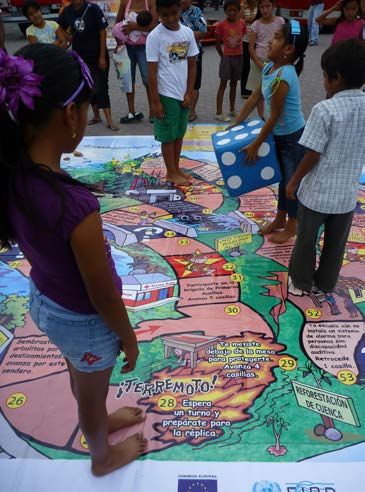
D G    E C H O     D i s a s t e r    P r e p a r e d n e s s      G u i d a n c e     N o t e
4

                     In line with the above, DG ECHO promotes the mainstreaming of a preparedness
                     and risk-informed approach in all its response operations. This approach helps
                     to systematically strengthen the capacity of first responders to be prepared for
                     further problems or aftershocks while responding to a crisis. It also helps to risk-
                     proof response interventions by designing them in a way that reduces immediate
                     and imminent risks. To complement its mainstreaming efforts, DG ECHO also
                     supports targeted preparedness actions as a specific way of strengthening
                     preparedness for the early response to a hazard and/or threat (e.g. establishment
                     of early warning systems, development of contingency plans and Standard
                     Operating Procedures, emergency prepositioning of stock, etc.).
                     Strengthening the capacity of local actors2, involving affected people in the design
                     and implementation of activities, and sensitivity to gender, age and diversity,
                     as well as conflict dynamics, are critical elements of both mainstreaming and
                     targeted preparedness actions. Similarly, the effects of climate change and
                     environmental degradation are increasingly integrated into all interventions
                     in recognition of their role as risk multipliers. Protection and respect for
                     humanitarian principles are integral to all DG ECHO funded interventions.
                     As illustrated by this Guidance Note, DG ECHO supports a very broad range of
                     single sector and multi-sector interventions. Importantly, all these interventions
                     are flexible in nature as they adjust to the context in which they are being
                     implemented and, as such, they respond to actual needs, risks and challenges
                     on the ground.

“
                                                Humanitarian actors are DG ECHO’s primary partners
      Protection and respect                    in the implementation of both mainstreaming and
                                                targeted preparedness actions. In recognition of the
for humanitarian principles are                 importance of the humanitarian-development-peace
integral to all DG ECHO funded                  (HDP) nexus for achieving sustainability and promoting
interventions.                                  resilience, DG ECHO will continue to work closely with
                                                all European Union (EU) services aiming to promote
                                                complementarity and mutual reinforcement between
                 humanitarian and development initiatives – in particular with the Directorate
                 General for International Partnerships (DG INTPA) and with the Directorate General
                 for European Neighbourhood Policy and Enlargement (DG NEAR). A nexus approach
                 needs to be the backbone of preparedness and resilience. Concurrently, DG ECHO is
                 increasingly engaging with a variety of actors, including other donors, climate and
                 environmental organisations, academic, scientific and research institutes, financial
                 institutions, private sector bodies, and civil protection mechanisms, through the
                 European Union Civil Protection Mechanism (UCPM).
                     Finally, alongside its commitment to support risk-informed humanitarian action, DG
                     ECHO is equally committed to ensuring that its humanitarian action is evidence-
                     based and generates learning, which then feeds into its humanitarian policy and
                     practice, so that they remain relevant.

                     2. Local refers to both national and local government actors, civil society, academia, private sector and communities.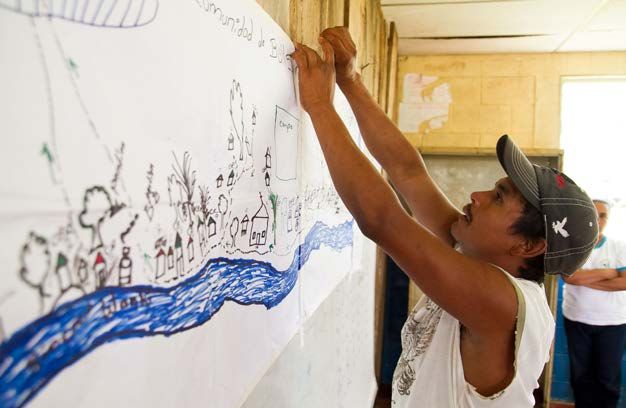
D G    E C H O     D i s a s t e r    P r e p a r e d n e s s     G u i d a n c e     N o t e
                                                                                                                                                             5

1. Introduction
The purpose of this Disaster Preparedness
(DP) Guidance Note is to present and
explain DG ECHO’s disaster preparedness
and risk-informed approach. It aims to
help humanitarian partners, DG ECHO staff,
the staff of relevant Commission services,
and other stakeholders concerned with
DP, to implement the approach through
interventions funded by DG ECHO and other
forms of collaboration with DG ECHO.
This Guidance Note replaces the 2013 DG
ECHO Thematic Policy Note on Disaster Risk
Reduction (DRR)3 and sets out DG ECHO’s
policy and operational recommendations for
the years to come. However, it is intended to
be a dynamic document that will continuously
be updated to reflect changes and emerging                                                                                           Vietnam: Schoolchildren
challenges in humanitarian contexts.                                                                                                 participate in a Disaster
                                                                                                                                          Preparedness class
The Guidance Note is structured into 7 Chapters and 4 Annexes. Following a                                                                   organised by the
brief introductory chapter, Chapter 2 presents the international and EU policy                                                         NGO PLAN, funded by
                                                                                                                                          DG ECHO. © Cecile
frameworks in which DG ECHO’s preparedness work and risk informed approach                                                                Pichon, June 2011,
are grounded.                                                                                                                                       DG ECHO.

Chapter 3 and 4 explore the different components of the DP and risk-informed
approach, and introduce the two main implementation modalities – mainstreaming
and targeted preparedness. Chapter 5 then introduces the nexus approach to
preparedness and complementary implementation modalities.
Chapter 6 provides a broad overview of those actions that DG ECHO considers
as preparedness and includes operational recommendations. It also gives a
series of concrete examples of preparedness actions that can be implemented
by partners.
Chapter 7 emphasises the need to gather evidence and to learn from partners’
preparedness interventions and risk-informed approaches.
Finally, the Annexes 1 to 3 contain guidance on specific topics - namely,
mainstreaming preparedness and risk reduction into response operations, crisis
modifier and global priorities 2021-2024 for the DP Budget Line. Annex 4
contains a list of resources and tools to explore further the matters addressed
in this document.

3. DG ECHO Thematic Policy Document n° 5: Disaster Risk Reduction: Increasing resilience by reducing disaster risk in humanitarian
action.
D G    E C H O     D i s a s t e r    P r e p a r e d n e s s      G u i d a n c e      N o t e
6

2. International and EU
Policy Frameworks
     DG ECHO’s work in disaster preparedness is firmly grounded in international and
     EU policy frameworks that provide orientation to DRR, humanitarian assistance,
     and climate change. The main frameworks of reference are presented in this
     section, others with relevance to specific issues will be mentioned as necessary
     throughout the Guidance.

     2.1 International frameworks
     2.1.1 Sendai Framework for Disaster Risk Reduction

     The Sendai Framework for Disaster Risk Reduction 2015-2030 (Sendai Framework)
     is a global non-binding agreement outlining seven targets and four priorities for
     action to prevent and reduce existing and new disaster risk. In keeping with DG
     ECHO’s principles and risk-based approach to preparedness (see Chapter 5), the
     Sendai Framework places strong emphasis on anticipatory risk management and
     on a wide scope of action - including small-scale and slow-onset disasters as well
     as human-induced, technological, environmental and bio hazards. It also strongly
     embraces principles such as protecting people from the risk and impact of disasters
     as well as an all-of-society approach, based on non-discriminatory participation, the
     empowerment of local communities and increased collaboration among all relevant
     stakeholders, including academia, the scientific community and the private sector.
     Importantly, the Framework clearly recognises the “need to further strengthen
     disaster preparedness for response, take action in anticipation of events, integrate
     disaster risk reduction in response preparedness and ensure that capacities are in
     place for effective response and recovery at all levels”4. As such, DG ECHO’s work in
     preparedness is a primary contribution to the implementation of Sendai Priority 4:
     ‘Enhancing disaster preparedness for effective response, and to “Build Back Better”
     in recovery, rehabilitation and reconstruction’.

     2.1.2 Grand Bargain - the Agenda for Humanity

     The Grand Bargain is an agreement of nine commitments5 between donors
     and humanitarian organisations, launched during the World Humanitarian
     Summit (WHS) in 2016, aimed at improving the effectiveness and efficiency of
     humanitarian aid.

     4. Sendai Framework page 21.
     5. 1. Greater Transparency, 2. More support and funding tools to local and national responders, 3. Increase the use and coordination
     of cash-based programming, 4. Reduce Duplication and Management costs with periodic functional reviews, 5. Improve Joint and
     Impartial Needs Assessments, 6. A Participation Revolution: include people receiving aid in making the decisions which affect their
     lives, 7. & 8. Increase collaborative humanitarian multi-year planning and funding & Reduce the earmarking of donor contributions;
     9. Harmonize and simplify reporting requirements.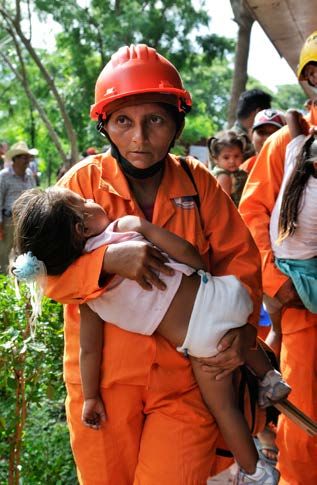
D G   E C H O   D i s a s t e r   P r e p a r e d n e s s   G u i d a n c e   N o t e
                                                                                                                                                  7

                                                                                                       “
As a signatory of the Grand Bargain, DG
ECHO contributes to the implementation of                                   DG ECHO’s disaster
all commitments. Its disaster preparedness               preparedness activities are firmly
approach specifically aims to increase the
efficiency and effectiveness of the response
                                                         grounded in international and EU
and it is specifically relevant to Commitment               policy frameworks that provide
N°2 (More Support and Funding Tools to                    orientation in DRR, humanitarian
Local and National Actors) as this helps to
strengthen the capacity of first responders           assistance, and climate action.
- including national and local governments,
communities, Red Cross and Red Crescent
National Societies and civil society. Reinforcing local capacity is an explicit
objective of DG ECHO, which recognises that the localisation of humanitarian
action is a means for increasing sustainability and strengthening the resilience
of crisis-affected people.

2.1.3 Paris Agreement

The Paris Agreement establishes a long-term goal to limit global temperature
rise to ‘well below 2° Celsius’ and to pursue efforts to limit the rise in temperature
before the end of the century to 1.5°C. In addition to establishing a legally-
binding framework to guide global efforts for this purpose, the Agreement also
aims to increase the ability to adapt to the adverse impacts of climate change
and foster climate resilience. The EU is supporting partner countries to do so,
recognising the critical importance of adaptation and disaster risk management
in the global response to the climate crisis.
Closer to DG ECHO’s mandate, the Paris Agreement recognises the importance
of averting, minimising and addressing loss and damage6 associated with
the adverse effects of climate change. The Agreement calls for enhanced
cooperation, action and support in different areas, including those in which DG
ECHO operates, such as early warning systems, and emergency preparedness.

                                                                                                                          Thanks to improved
                                                                                                                          coordination mechanisms
                                                                                                                          between different levels
                                                                                                                          of administration,
                                                                                                                          professional rescue teams
                                                                                                                          sent by the municipality
                                                                                                                          also form part of the
                                                                                                                          disaster management
                                                                                                                          mechanism – travelling
                                                                                                                          by boat to reach
                                                                                                                          remote villages such
                                                                                                                          as Tigdaranao. © EU/DG
                                                                                                                          ECHO/Pierre Prakash

6. https://unfccc.int/wim-excom
D G    E C H O     D i s a s t e r     P r e p a r e d n e s s      G u i d a n c e      N o t e
8

                      2.1.4 The Agenda 2030 and the Sustainable Development Goals

                      The 17 Sustainable Development Goals (SDGs), adopted in 2015, form a plan
                      to achieve a better and more sustainable future for all. They address global
                      challenges, including poverty, inequality, food insecurity, climate change,
                      environmental degradation, peace and justice. DG ECHO’s actions contribute to
                      many SDGs, in particular SDG 13 on climate change, which is directly linked to
                      disaster preparedness and early action.
                      With the adoption of the European Green Deal in 2020 and its overall resilience and
                      recovery approach, the European Commission is contributing to the 2030 Agenda for
                      Sustainable Development.

                      2.2 EU policy frameworks
                      2.2.1 Preparedness and DG ECHO’s Mandate

                      Preparedness is embedded into DG ECHO’s mandate as provided by the Council
                      Regulation No 1257/96 of 20 June 1996. Article 1 mentions that ‘aid shall also
                      comprise operations to prepare for risks or prevent disasters or comparable
                      exceptional circumstances”. Furthermore, Article 2.f stipulates that operations
                      should ensure preparedness for risks of natural disasters or comparable exceptional
                      circumstances and use a suitable rapid early warning and intervention system.
                      In line with these articles, support for better preparedness has been gradually
                      mainstreamed in the majority of DG ECHO funded humanitarian aid programmes.
                      Preparedness and risk reduction concerns are included in all DG ECHO thematic
                      humanitarian aid policies, namely: Cash; Disability; Education in Emergencies; Food
                                            Assistance; Gender; Health; Nutrition; Protection; Shelter and
                                            Settlements; and Water, Sanitation and Hygiene.
DG ECHO’s mission is to preserve lives,                   In 1996, DG ECHO created a dedicated programme
prevent and alleviate human suffering                     and budget line to strengthen preparedness capacities
and safeguard the integrity and dignity                   in partner countries: the Disaster Preparedness ECHO
of populations affected by a crisis. DG                   Programme, DIPECHO. Initially rolled out in the Caribbean
ECHO’s protection mandate is also to                      region, the programme was progressively expanded to
encourage and facilitate cooperation                      eight regions7. DIPECHO has allowed DG ECHO to support
between the 33 EU Members and                             its partners in strengthening the quality, timeliness and
participating States in the EU Civil
                                                          effectiveness of a more localised8 humanitarian response,
Protection Mechanism (UCPM) in order
to improve the effectiveness of systems
                                                          and it has shown that investing in preparedness and risk
for preventing and protecting against                     reduction is efficient and contributes to saving lives9. In
natural, technological or human-induced                   addition to community-based interventions, DIPECHO
disasters in Europe.                                      has helped to design national and regional platforms for
                                                          practitioners which allow them to regularly discuss best
                                                          practices and lessons learnt.
                      Since 2015, the DIPECHO approach has focused more strictly on disaster
                      preparedness and early action to avoid overlaps with long-term development
                      instruments used for disaster risk reduction. The programming was streamlined

                      7. Caribbean, Central America, South America, South East Asia, South Asia, Central Asia and Southern Caucasus, Southern Africa
                      including the Indian Ocean, and the Pacific. Even though never formally qualified as a DIPECHO project, a similar approach
                      was developed in the Horn of Africa, which focused on drought from 2006 to 2012 before it was embedded in the countries’
                      interventions and linked to the resilience agenda.
                      8. Reflecting the localisation agenda, “localised” here refers to the capacity of in-country actors, both at national and local level.
                      9. Cf. also international studies such as the Centre for Climate Research - CICERO’s document Disaster Mitigation is Cost-Effective..
D G E C H O D i s a s t e r P r e p a r e d n e s s G u i d a n c e N o t e
9
around five priorities10 and the funding
allocation agreed in accordance with country
or regional strategies.
DIPECHO evaluations11 recommended a more
focused and coherent multi-year preparedness
strategy in countries where operations were
taking place. Specifically, they highlighted the
critical importance of: i. increasing support
to strengthen the capacity of Disaster Risk
Management authorities to complement the
support given to communities, which was
the main focus of DIPECHO interventions; ii.
improving risk/vulnerability analysis as the
basis for preparedness programming; and iii.
strengthening collaboration with development
actors. Additionally, all the evaluations
highlighted the need to increase coordination
with Civil Protection bodies, including the UCPM. Nepal: 3 years after
the earthquake,
The 2021 renewed DG ECHO DP approach recognises and builds on the multiple DanChurchAid conducts
strengths of the DIPECHO programme and its pioneering role in supporting disaster regular awareness
preparedness via a community approach, by linking community-based approaches sessions on Disaster
Risk Reduction with local
with national and regional systems. It also provides guidance on how to implement communities © European
evaluation recommendations and improve coherence and effectiveness. Union 2018 (photo by
Pierre Prakash)
2.2.2 European Consensus on Humanitarian Aid
The European Consensus on Humanitarian Aid which was adopted in 2007,
is the core policy framework that guides the EU’s humanitarian action,
ensuring that it complies with humanitarian principles12. The Consensus clearly
recognises the increasingly complex, multi-hazard/threat nature of current
crises, and takes into account the multiplying effect of climate change, and the
overlapping of disasters and situations of conflict and fragility. The Consensus
also acknowledges that preparedness is essential to saving lives and enabling
communities to increase their resilience to shocks and, therefore, capacity
building in this area is viewed as an integral part of EU humanitarian action.
2.2.3 European Communication on Humanitarian Action
The Communication from the Commission to the European Parliament and the Council
on the EU’s Humanitarian Action: New Challenges, Same Principles (2021) places a
clear emphasis on the need for preparedness and anticipatory action in responding
to climate impacts and addressing environmental concerns through humanitarian aid.
Preparedness is viewed as integral to humanitarian action and a key element of the
broader, longer-term disaster risk reduction agenda. In this respect, the Communication
highlights how the humanitarian-development-peace nexus approach as a primary
vehicle by which to achieve the complementary objectives of disaster risk reduction
and preparedness. The Communication also underlines how anticipatory approaches to
10. 1. Linking Relief Rehabilitation and Development (LRRD) – Disaster Preparedness as part of recovery strategies - opportunities
to build back better; 2. Recurrent and predictable crises - National DP systems, contingency planning and surge models into
key services - e.g. health (epidemic), food security, shock responsive safety nets; 3. Urban preparedness with an emphasis on
mega cities, hence including Asia and the LAC region; 4. Ongoing crises or situations of fragility - early response mechanisms;
5. Institutional partnership with UCPM in support of CP administrative agreements.
11. 2013 Global, 2013 Central Asia, 2016 Latin America and Caribbean, and 2017 Southern Africa and Indian Ocean.
12. The principles of humanity, neutrality, impartiality and independence.D G E C H O D i s a s t e r P r e p a r e d n e s s G u i d a n c e N o t e
10
humanitarian action can help to bolster community resilience, including that of forcibly
displaced people, in regions vulnerable to climate-related and other hazards.
2.2.4 European Consensus on Development
The European Consensus on Development (2017) frames the action of EU
institutions and Member States (MS) in their cooperation with all developing
countries. Responding to the Agenda 2030, the Consensus includes assistance
to populations and countries affected by disasters (natural and human-induced
hazards and threats) among its core objectives. The Consensus clearly mentions
the key role of preparedness in reducing risk, and strengthening resilience to
withstand and recover from shocks and disasters (Article 70), in accord with the
Sendai Framework.
2.2.5 EU Joint Communication on Resilience
The Joint Communication, A Strategic Approach to Resilience in the EU’s external
action (2017), strongly positions resilience as a central priority of the EU’s external
action, and establishes better anticipation, risk reduction and disaster preparedness
as integral components of the EU’s approach. The Communication explicitly states
that resilience requires risk-informed programming for responses to all crises and
situations of fragility. With risk reduction at their core, the EU’s resilience approach
and the Sendai Framework are complementary and mutually reinforcing.
2.2.6 The European Green Deal
The European Green Deal (2019) aims to make Europe the first climate-
neutral, climate-resilient and environmentally sustainable continent by 2050
through a series of actions and measures underpinned by the core principles of
environmental sustainability, climate neutrality and climate resilience.
The vision of the European Green Deal is also expected to guide the external
action of the EU, including in humanitarian aid. Mainstreaming preparedness,
as well as climate and environmental concerns, in humanitarian action will
increase resilience among those who receive EU Aid.
2.2.7 EU Adaptation Strategy
As an essential element of the European Green Deal, the interface between climate
change and DRR is also central to the EU Adaptation Strategy. This strategy
includes an external dimension (i.e. related to non-EU countries) for the first time,
in recognition of the interconnectedness of risks as well as the EU’s responsibility
to help the most vulnerable, including those most affected by climate change. The
new strategy also responds to the need for better preparedness and has dedicated
measures on anticipatory action: climate change adaptation is about understanding,
planning and acting to prevent the impacts in the first place, minimising their
effects, and addressing their consequences.D G E C H O D i s a s t e r P r e p a r e d n e s s G u i d a n c e N o t e
11
3. Preparedness & Risk
Informed Approach
This section presents DG ECHO’s Preparedness and Risk Informed Approach.
It is critical that, when working together, DG ECHO and humanitarian partners are
on the same page in terms of the language they use, given that there may be
differences in emphasis in the broader humanitarian sector. It is also important to
keep in mind that the meaning and application of the approach, and some of its key
elements, may continue to evolve.
DG ECHO recognises that the effectiveness of a response depends on investments
in preparedness, as a component of risk management. It also recognises that a
risk-informed approach is crucial to reduce the humanitarian needs caused by risks.
To this end, it seeks to mainstream preparedness and a risk-informed approach in
all of its response operations. And as a complementary measure, it also promotes
targeted preparedness actions as a specific way of strengthening preparedness
for response and early action.
Although preparedness and risk-proofing are intrinsic to humanitarian action, DG
ECHO acknowledges that development actors play a key role in scaling up and
complementing these interventions, and thus ensuring their long-term sustainability.
As such, DG ECHO promotes a nexus approach with development actors as the
primary implementation modality for preparedness and risk
reduction and seeks concrete opportunities to promotethis
way of working. Disaster
While this chapter focuses on DG ECHO’s mainstreaming DG ECHO’s definition of the term disaster
and targeted preparedness approach, the nexus approach includes all events, as follows:
is discussed in greater detail in Chapter 5, together with • Natural hazards such as earthquakes,
other implementation modalities. cyclones/hurricanes, storms, tsunamis,
floods and drought;
• Conflict and violence;
3.1 Disaster Preparedness • Disease outbreaks and epidemics, such
as Ebola or Covid-19;
Preparedness allows for an early and efficient response • Technological and industrial hazards.
and therefore helps to save lives, reduce suffering and pre- DG ECHO mainly interprets disasters
empt or decrease the extent of needs. In this way it lessens as humanitarian crises, which are
the impact of a hazard and/or threat and contributes to understood by the European Commission
resilience. In particular, DG ECHO views preparedness as a as events or series of events which
way to promote anticipatory actions, early response, represent a critical threat to the
and flexibility which are critical to managing disasters health, safety, security or wellbeing of
(see box for definition) more efficiently and effectively, a community or other large group of
and mitigating their impact. people. A humanitarian crisis can have
natural or human-induced causes, can
Disaster preparedness is ‘the knowledge and capacities have a rapid or slow onset, and can be of
developed by governments, response and recovery short or protracted duration.
organizations, communities and individuals to effectivelyD G E C H O D i s a s t e r P r e p a r e d n e s s G u i d a n c e N o t e
12
anticipate, respond to and recover from the impacts of likely, imminent or current
disasters’ (UNDRR, 2017). DG ECHO embraces this definition and understands
preparedness as an important component of the larger work on Disaster Risk
Management.
Although preparedness does not address the structural causal factors of disasters, it
complements the longer-term risk management strands (Prevention, and Recovery)
that sit within a developmental approach and are within the remit of other services
of the European Commission.
As a humanitarian donor, DG ECHO views ‘hazardous events’ as encompassing
“
both natural hazards and human-induced threats. It views
EU Humanitarian Aid preparedness as relevant to all types of hazards and
threats in a given context.
aims to support people in
addressing their needs and
managing the risks they 3.2 Risk Informed Approach
face.
EU Humanitarian Aid aims to support people in addressing their
needs and managing the risks they face. As such, a sound assessment of these needs
has to be carried out, based on evidence and regular updates, and factoring in an
accurate assessment of the risks people face. In line with the 2016 World Humanitarian
Summit’s commitment to anticipate and better manage risks and crises, a needs-
based approach must consistently integrate risk assessment and analysis.
This allows existing and potential risks to be evaluated and action taken before a crisis
hits or a situation deteriorates, thus reducing suffering and humanitarian needs.
DG ECHO’s risk-informed approach therefore implies that all humanitarian actions
are designed based on an assessment and understanding of risks, and are
implemented to respond to and possibly reduce these risks, with the final objective
of mitigating their impact.
Risk
HAZARD VULNERABILITY Vulnerability is not a fixed criterion attached to
RISK = AND/OR THREATS X specific categories of people, and no one is born
COPING CAPACITY
vulnerable per se. In this regard, it is particularly
important to target the most vulnerable groups,
Risk is “the combination of the consequences of an based on an intersectional analysis (sensitive to
event or hazard and the associated likelihood of its gender, age, disability, ethnicity, displacement
occurrence” (ISO 31010) as defined in the Commission etc.).
staff working paper Risk Assessment and Mapping
Guidelines for Disaster Management (2010). • Coping Capacity: Increasing coping capacity
lowers the level of risk. This covers a very
• Hazard/Threat & Exposure: Depending on broad area and requires careful analysis to
the context and the nature of the hazard, this target investments in capacity development. It is
dimension of risk may be reduced by measures closely linked to the development of resilience.
including prevention or reducing the occurrence or Experiences, knowledge and networks strengthen
extent of the hazard/threat and by reducing the the ability to withstand adverse impact from
exposure of people to the impact of the hazard/ external stressors. The development of many
threat. elements of capacity (such as communication
• Vulnerability: Reducing the vulnerability and organisational capacities) helps reduce the
of exposed people will reduce their risk. risk from a wide range of hazards/threats.D G E C H O D i s a s t e r P r e p a r e d n e s s G u i d a n c e N o t e
13
The concept of risk involves forecasting the probability of future harm. As such, it
involves the capacity for anticipation and dealing with uncertainty.
Effective risk management involves a number of strands, including:
• Prevention (Risk Reduction)
• Preparedness
• Response
• Recovery
These strands are closely connected and overlapping, as illustrated in the graph below.
PREPAREDNESS
A N T I C I PATO RY
ACTION
RESPONSE
PREVENTION
RECOVERY
TIME
Graph 1. Risk management strands
DG ECHO’s support focuses primarily on preparedness and response. Within these
strands, DG ECHO applies a risk-informed approach by:
• Mainstreaming preparedness in, and risk-proofing, response operations
by integrating risk reduction measures (henceforth referred to simply as
‘mainstreaming’);
• Targeted preparedness actions (see chapter 6 for a detailed overview of
targeted preparedness actions).
Both ‘mainstreaming’ and ‘targeted preparedness’ actions are based on a
comprehensive risk assessment. Similarly, risk assessment is key to the design
of effective anticipatory actions, which are another important element of a
risk-informed approach. The following sections focus on risk assessment,
anticipatory action, mainstreaming and targeted preparedness.D G E C H O D i s a s t e r P r e p a r e d n e s s G u i d a n c e N o t e
14
RISK INFORMED
HUMANITARIAN
ACTION
Exposure Vulnerability
socio-economic
Lack of coping
Hazard capacity
RISK
TARGETED Anticipatory actions
PREPAREDNESS Preparedness within
a response
EWS
Gap analysis
Risk-proofing of response
Contingency planning
Build Back Better (BBB)
Stockpiling Strengthening
Greener humanitarian
Capacity building
response
Graph 2. Risk Informed Humanitarian Action
3.2.1 Risk Assessment
Risk assessment must be the basis for designing interventions and should be
considered an integral part of all humanitarian action. Risk assessment should always
be context-specific, examining each situation individually, thus avoiding generalisations
or assumptions, and with a view to generating information that is precise enough to
inform programming decisions. Particularly relevant for humanitarian action are the
following key questions to guide the assessment:
• What are the main hazards/threats faced by people in their context, and what
level of impact or consequences do these have?
• How likely is the hazard/threat to occur (i.e. probability)?
• What level of exposure do people have to these hazards/threats?
• How vulnerable are people to these risks, noting that different groups have
different vulnerabilities?
• What is the coping capacity of the community?
As far as is practicable, a risk assessment should be conducted from the perspective
of the affected population, thus ensuring their engagement in the analysis, decision-
making and implementation of the assessment itself. It should identify risks related
to specific hazards and threats and each component should be disaggregated to a
detailed level. It should reveal the specific dynamics of the situation and help identify
ways that interventions can reduce the associated risks. Risk assessment and risk
analysis should be a continuous process, rather than taking place only at
fixed points within the programme cycle.
Data for risk assessments can come from commercial and open-source
satellite images and maps13, project reports from national and international
13. Low Resolution free imagery: https://www.sentinel-hub.com/ (ESA Sentinel 2/3 imagery and NASA Landsat 8); Medium
Resolution commercial imagery: Planet Labs; High Resolution commercial imagery: DigitalGlobe; Historical data available at:
Google Earth Pro, Yandex, Bing.D G E C H O D i s a s t e r P r e p a r e d n e s s G u i d a n c e N o t e
15
environmental agencies, local knowledge, environmental assessments, national/
international environmental databases, wildlife and fisheries management
plans, development plans, and land tenure records14, climate trends, projections
and adaptation options15.
Considering the unfolding climate and environmental crisis, analysis of current and
future risks stemming from both climate change and environmental degradation
should be included in all risk assessments to identify interlinkages and priorities
for action in specific contexts. Although their causes can be different, the result
of environmental degradation (i.e. environmental hazards) can be the same
as that of climate-related hazards, and they
“
can be made more severe by climate change.
For example, climate change can increase the Considering the unfolding
risk of landslides through increased heavy
rain over time. Deforestation, particularly on climate and environmental crisis,
hillsides, can also increase the risk of landslides analysis of current and future
by destabilising the soil. Furthermore, climate risks stemming from both climate
change impacts and environmental degradation
can also exacerbate existing tensions, increasing change and environmental
risk of conflict and can therefore be seen as degradation should be included
“threat multipliers”16. As such, risks should not
only be assessed individually but their interacting
in all risk assessments to identify
nature should also be considered, to identify so- interlinkages and priorities for action
called ‘compounding’ risks, for example that of in specific contexts.
climate and environment crises interacting with
conflict risk, and compounding vulnerabilities.
Multi-risk analyses can make use of different
context-specific environmental data sources,
e.g. climate data, the location of protected
areas, vegetation/land cover, measurements
of pollution (including information on areas
where there are hazardous and toxic materials),
topographical and hydrological data, biodiversity
levels, the availability of natural resources, and
natural hazard data17.
Finally, it should still be a priority to ensure the
meaningful participation and involvement of
meteorological agencies (governmental and
non-governmental), climate organisations and
research institutes, civil society (including affected
communities), grassroots associations, academia,
voluntary work organizations, and affected
populations, including the most vulnerable,
marginalized and exposed groups, in designing
and carrying out an effective and comprehensive
risk assessment. This, in turn, increases the
ownership of preparedness measures and
This is a drill in which
mechanisms implemented to counter the risks recently trained brigades
that have been jointly identified. perform rescue operations
saving people from
collapsed buildings during
14. https://ehaconnect.org/preparedness/environmental-situation-analysis/how-to-guide/ a fire in Nicaragua’s
15. World Bank Climate Change Knowledge Portal.
16. EU, 2008. Paper from the High Representative and the European Commission to the European Council: Climate Change and capital Managua.
International Security. S113/08, 14 March 2008. © 2013 - © Spanish
17. https://ehaconnect.org/preparedness/environmental-situation-analysis/how-to-guide/ Red CrossD G E C H O D i s a s t e r P r e p a r e d n e s s G u i d a n c e N o t e
16
3.2.2 Anticipatory or Early Action18
Floods risk assessment Anticipatory or Early Actions (AA and EA) are taken
and anticipatory actions when a disaster is imminent (or, in the case of a slow-
onset disaster, when it is about to reach a peak).
Ahead of flooding peaks, it is possible
Therefore, they are carried out before a crisis occurs, or
to quickly disburse unconditional multi-
before a significant development within a crisis. Early
purpose cash grants and distribute
non-food items to transport goods actions are implemented according to a pre-determined
and purify water. The potential at risk protocol, which describes the activities to be undertaken
population and high-risk areas of action and pre-agreed triggers established on the basis of
should be pre-selected on the basis of a historical and current forecast analysis. Ahead of a
risk and vulnerability assessment ahead crisis, forecasts are combined with risk, vulnerability and
of the disaster. Targeting should be exposure indicators to develop an intervention map, and
adjusted once the hazard impact area can dedicated funds are defined to be quickly released when
be forecast more concretely. For reference pre-agreed thresholds are reached. Anticipatory action
see examples in Bangladesh (July 2020) thus reduces the vulnerability of affected communities
by the World Food Programme (WFP) and and strengthens their capacity to manage an emergency
the Bangladesh Red Crescent Society.
and to safeguard their assets. As such, anticipatory
Note: This action was supported through DG ECHO’s action is integral to risk management as it helps pre-
funding via IFRC’s Disaster Relief Emergency Fund define needs and respond to them more effectively, and
(DREF). thus reduce the impact of a hazard or threat on lives and
livelihoods. In so doing, it complements preparedness as
part of an effective response and, as such, it is also part
of preparedness. Anticipatory action is further discussed in section 6.2.
Early Response (ER) refers to actions that are undertaken right after a disaster
occurs. Anticipatory (or early) action is different from ‘early response’ insofar as
the former begins before the hazard and/or threat strikes whereas the latter begins
after it has struck. “In contrast to anticipatory action, early response is based on an
evidenced hazard/threat and observable rather than forecasted needs and does not
require pre-agreed implementation plans”19.
3.2.3 Mainstreaming Preparedness and Risk Proofing Response Interventions
In line with a risk-informed approach, DG ECHO aims to risk proof its humanitarian
response interventions by mainstreaming preparedness and integrating risk
reduction measures. The objective is to make humanitarian assistance more
effective, while increasing the coping capacities and resilience of communities
at risk, and ultimately reducing the need for external assistance. Except in
duly justified cases, preparedness actions should therefore be systematically
mainstreamed into humanitarian operations to strengthen the capacity to
respond to a crisis within a crisis (e.g. sudden floods during a conflict) or any
recrudescence or aftershock.
To make humanitarian action more effective, response interventions should be
designed to reduce immediate and imminent risks, and not add new risks (the
‘do no harm’ principle). By risk-proofing humanitarian interventions, they are
protected against imminent hazards and threats20. Risk-proofing considerations
should be specifically interpreted according to the local context, the nature of
the hazardous/threating event and tailored to the best suited humanitarian
18. For DG ECHO anticipatory actions and early actions are the same concept. In this guidance, they will be used interchangeably,
so in the paragraph 6.2 on anticipatory actions we refer also to early actions.
19. https://cerf.un.org/sites/default/files/resources/CERF_and_Anticipatory_Action.pdf
20. For example: ensuring water points are located above high water levels in flood-prone areas so they are not damaged by floods
or incorporating adequate fire-protection in shelter.D G E C H O D i s a s t e r P r e p a r e d n e s s G u i d a n c e N o t e
17
Women experts reaching
remote communities
action. Risk reduction measures, however, remain relevant to every sector of in Nicaragua. ©EU
2013- Photo credits:
humanitarian assistance. Before and during their implementation, it is important EC/DG ECHO/Silvio
to consider the linkages between sectors. Further guidance on preparedness Balladares
and risk proofing of response operations can be found in the humanitarian
policies of DG ECHO, mentioned in section 2.2, as well as in Annex 1.
In addition to specific guidance on how to integrate preparedness and risk
reduction into humanitarian assistance, DG ECHO has developed two tools, the
Resilience Marker (RM), and the Crisis Modifier (CM) (see Annex 2), to ensure that
programming is risk-informed and that there is a greater degree of financial
flexibility in humanitarian action in order to respond to crises within crises.
The Resilience Marker is included in the DG ECHO electronic Single Form (eSF)
and allows partners to verify whether their programming is effectively based
on a systematic analysis of risks, and how the action addresses these risks and
avoids creating new risks from the design stage. The Crisis Modifier promotes
systematic consideration of preparedness through the integration of a flexible,
early action component to address, in a timely manner, immediate and life-
saving needs resulting from a rapid-onset crisis or a deteriorated situation21
within a DG ECHO-funded action.
The priorities and funding for humanitarian response operations are included
in the regional and/or country Humanitarian Implementation Plans (HIPs),
regularly published by DG ECHO.
21. For example, although a drought is a slow onset crisis, it could trigger acute malnutrition rapidly.D G E C H O D i s a s t e r P r e p a r e d n e s s G u i d a n c e N o t e
18
3.2.4 Targeted Preparedness Actions
Emergency Toolbox Targeted preparedness refers to actions taken in
advance of a hazardous and/or threatening event
The Emergency Response Coordination Centre
and aimed at improving the effectiveness of the
(ERCC)’s instruments include the Emergency
Toolbox, which is a fund that specifically provides response to it. This can involve, for example,
humanitarian assistance to respond to fast-onset the development of early warning systems,
crises that could not be foreseen in DG ECHO’s reinforcing the link between early warning and
humanitarian implementation plans. Three of early action, the development of contingency
the four tools within the Toolbox can be used for plans, anticipatory actions, the emergency
disaster preparedness as well as response: prepositioning of stock, and overall capacity
• The Small-scale Tool is used to assist a limited building for early action/early response, etc.
number of people (< 100,000) affected by a The Disaster Preparedness Budget Line is
natural hazard or human-induced disaster. DG ECHO’s dedicated source of funding22 for
This includes the deployment of preparedness targeted preparedness actions at regional and
activities. All DG ECHO partners can access
country levels. It allows support for preparedness
these tools by submitting a proposal through
to be extended beyond DG ECHO’s regular
the DG ECHO electronic Single Form.
humanitarian funding modalities.
• The Epidemics Tool is used to prevent and
respond to epidemic outbreaks, and is available As of 2021, the DP Budget Line is structured
to all DG ECHO partners through the DG ECHO around a set of global priorities, for a period of
electronic Single Form. five years, in order to maximise the strategic
use of this funding, and bring more focus and
• The IFRC’s Disaster Relief Emergency Fund
coherence to DG ECHO’s support to disaster
(DREF) and Forecast-based Action by DREF
provide National Red Cross and Red Crescent preparedness across regions. Regional and
Societies with funds for early action or for country actions will have to mirror one or more
response. of these priorities, while ensuring that they are
tailored to the specific needs of local contexts
(country and/or regional level). The 2021-2024
priorities are detailed in Annex 3, which will be
regularly updated as the priorities evolve.
The DP Budget Line replaces the previously available DG ECHO Preparedness
Programme (DIPECHO). The DP Budget Line is allocated under the Humanitarian
Implementation Plans HIPs), complementing the budget dedicated to humanitarian
response operations. Funding for humanitarian response and for preparedness is
managed under the same framework to provide a more coherent and cohesive
approach, and to further mainstream preparedness into humanitarian assistance.
22. EUR 75 million in 2021.D G E C H O D i s a s t e r P r e p a r e d n e s s G u i d a n c e N o t e
19
4. Key Elements of the
DG ECHO Preparedness
and Risk-Informed Approach
Humanitarian principles
The humanitarian principles of humanity, neutrality, impartiality and independence,
enshrined in the European Consensus on Humanitarian Aid, guide DG ECHO’s disaster
preparedness activities, which are an integral part of humanitarian action. The
humanitarian projects that DG ECHO funds aim to preserve life, and prevent and
alleviate suffering. They also have to adhere to the do no harm principle to avoid
exposing people to additional risks.
Multi-hazard and multi-threat
Crises are becoming more complex, with natural hazards increasingly overlapping
with human-induced ones, or with unprecedented biological hazard situations like the
COVID-19 pandemic in 2020. Consequently, preparedness applies to any type of crisis
and covers all types of risks, from natural and biological hazards, to human-induced
threats, such as technological hazards (e.g. industrial), conflict and violence.
People centred With funding from
DG ECHO, PAH is
For DG ECHO, humanitarian action starts with affected people and communities. implementing and
Interventions aim to meet, or contribute to meeting, the basic needs of affected coordinating water
populations, addressing needs in a demand-driven way. DG ECHO acknowledges and sanitation related
projects,as well as
that effective humanitarian action requires the participation of, and accountability improving preparedness
towards, affected people. DG ECHO also recognises that, in addition to needs and in emergency prone areas
of South Sudan. ©Tomasz
vulnerabilities, affected people - including first responders - have the capacity to Woźny / PAH
manage the risks they face.
Humanitarian projects must be people-centred,
prioritising their impact on people’s lives and
livelihoods. By promoting this approach, DG ECHO
contributes to strengthening people’s resilience
and ensures that preparedness and response
measures address the needs of all, without
barriers, so that no one is left behind.
In pursuing its people-centred approach, DG
ECHO will take note of the provisions in the Grand
Bargain and good practice as elaborated in the
Core Humanitarian Standard.D G E C H O D i s a s t e r P r e p a r e d n e s s G u i d a n c e N o t e
20
In Vanuatu, Disaster
Preparedness measures Gender, age and diversity sensitivity
in such small and isolated
communities take Integrating gender and age enhances the quality of humanitarian programming,
time and effort but the
appreciation expressed by
in line with the EU’s humanitarian mandate. Aid that is not gender- and age-
the communities for such sensitive is less effective. It risks not reaching the most vulnerable people or failing
assistance is heartfelt. to respond adequately to their specific needs. Furthermore, a comprehensive
© EU 2012 - Story
and photo credits: EC/DG
understanding of vulnerabilities must take an intersectional approach, considering
ECHO/Mathias Eick multiple aspects of diversity, which can intersect with gender to produce multiple
discrimination and exacerbate vulnerability23. These aspects influence the impact
that crises have on people, as they affect both vulnerabilities and capacities, and
hence their exposure to risk. This means that risk assessment, and the associated
preparedness and response measures, must fully factor in the particular
characteristics of different groups (age, gender, ability, ethnicity, social status,
etc.) and their circumstances (rural, urban, displaced, wealth and income).
Conflict sensitivity
DG ECHO recognises that violence and conflict are either a key driver or a risk
multiplier in many crises. Hence, all interventions should adopt a conflict sensitive
approach. Conflict sensitivity is defined as the ability of an organization to understand
the context in which it is operating, and the interaction between the intervention
and the context, and thus avoid negative impacts and maximise positive impacts24.
The Centrality of protection
All humanitarian actors need to take protection into account in their programming
- in line with the Inter-agency Standing Committee (IASC) Principals’ statement on
23. DG ECHO Thematic Policy N° 6, Gender: Different Needs, Adapted Assistance.
24 Adapted from International Alert et al., 2004. Conflict-sensitive approaches to development, humanitarian assistance and
peacebuilding: a resource Pack. London: International AlertD G E C H O D i s a s t e r P r e p a r e d n e s s G u i d a n c e N o t e
21
the Centrality of Protection which emphasises the importance of protection and
contributing to collective protection outcomes in all aspects of humanitarian action.
Protection should be central to humanitarian preparedness efforts, and should be
taken into account throughout the duration of the humanitarian response and beyond.
Strengthening local capacity
Anticipatory action and enhanced predictability of response can only be achieved if
local25 preparedness and response capacities are in place as per the Grand Bargain
commitments. Therefore, preparedness actions must strengthen first responders’
capacity to act as locally and as early as possible.
“
While recognising the importance of capacity
strengthening within communities, and of
maintaining a strong focus on it, DG ECHO Protection should be
appreciates that it needs to be well anchored, and central to humanitarian
should complement the capacity of state disaster
management systems at the national and local
preparedness efforts, and should
levels as much as possible. A system wide approach be taken into account throughout
is encouraged to ensure linkages and simultaneous the duration of the humanitarian
capacity-building at community and governmental
level, whenever possible, whilst respecting the do no response and beyond.
harm principle, and other humanitarian principles.
Context specificity
Local context is crucial in shaping risks, vulnerabilities, capacities and the needs of
populations and countries affected, or with a potential to be affected, by a crisis.
Preparedness interventions should therefore always respond, and be adapted, to the
context, including in the choice of target beneficiaries and partners.
Climate change and environmental degradation
Climate change and environmental degradation are risk multipliers26. Climate change
is increasing the frequency and severity of both sudden-onset and slow-onset
climate-related hazards27. This, in turn, is increasing humanitarian needs and posing
greater challenges to humanitarian action (e.g. scale or geographical distribution). It
is increasingly clear that environmental degradation can also trigger significant and
protracted humanitarian crises, e.g. by exposing human food systems to increased risk
of failure through droughts or by increasing the risk of the re/emergence of zoonotic
diseases and increasing human exposure to diseases. In addition, climate change is
an accelerating factor in environmental degradation, including land degradation and
biodiversity loss. The impact of climate change and environmental degradation can
also exacerbate existing tensions, increasing the risk of conflict. As current and future
climate change and environmental degradation may increase the risks faced by people
in affected areas, and may jeopardise the effectiveness of interventions themselves,
these phenomena should be accounted for in humanitarian action. See section 6.11.1
on climate and environmental resilience interventions.
25. Local refers to both national and local government actors, civil society, academia, private sector and communities. It also
includes international partners working in country in support of preparedness and response systems.
26. EU, 2008. Paper from the High Representative and the European Commission to the European Council: Climate Change and
international security. S113/08, 14 March 2008.
27. IPCC, 2013: Climate Change 2013: The Physical Science Basis. Contribution of Working Group I to the Fifth Assessment Report
of the Intergovernmental Panel on Climate Change. [Stocker, T.F., D. Qin, G.-K. Plattner, M. Tignor, S.K. Allen, J. Boschung, A. Nauels,
Y. Xia, V. Bex and P.M. Midgley (eds.)]. Cambridge University Press, Cambridge, United Kingdom and New York, NY, USA, 1535 pp.You can also read


